 All Blog Posts
Fisheries Managers Open Door to Privatizing the Ocean

I’m too often reminded of why politics is pure frustration. Forget about presidential elections (go ahead, try), I’m talking about down-in-the-dirt politics — the process where elected officials discuss public policies ad nauseum. As a reporter, I used to marvel at how often those discussions and votes flew in the face of public consensus.
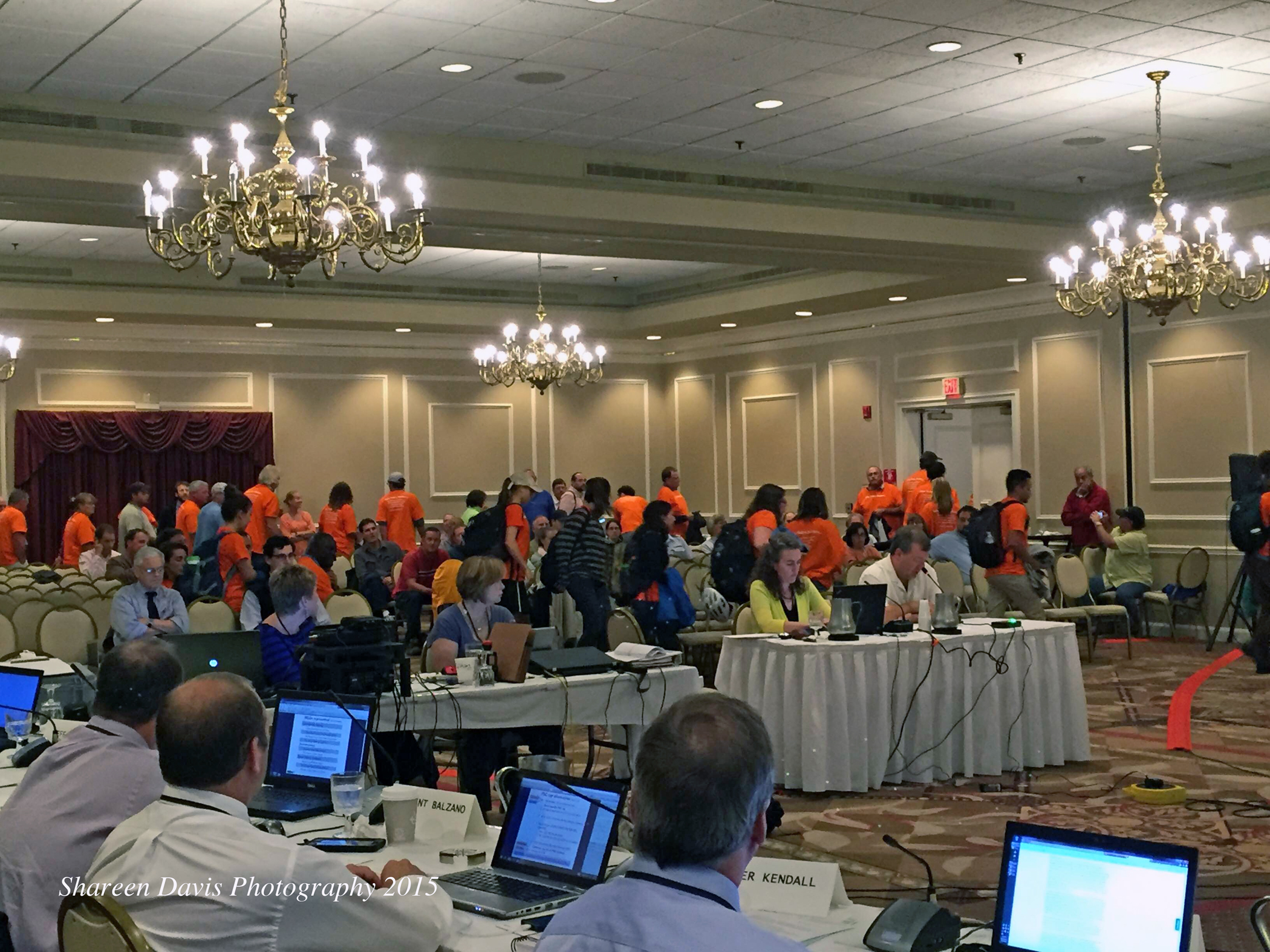
Such was the case Sept. 30 at the New England Fisheries Management Council meeting in Plymouth, Mass. The 16-member committee literally debated the connotation of the word “shelve” (as to whether a permit should be shelved if someone exceeds their catch share) for nearly 45 minutes.
The majority of those in the audience — fishermen, industry activists, students from area universities — were either fuming at the futility of watching the council get lost in minutiae or slipping into a subdued, trance-like state of submission.
At stake in fishermen’s eyes is nothing less than their livelihoods being surrendered to a few deep-pocketed regional or global operations able to control the bulk of the groundfish catch. Under the new catch share rules debated yesterday, seven entities could effectively purchase the permits to harvest most of the available cod, haddock, flounder, etc. limit for any given season.
As fishermen see it, these catch share policies open the gates to transfer fishing rights from local community fishermen to a few giant companies that may have little or no ties to the local community and little care for how to preserve the fisheries. Several fishermen, students and activists spoke with a unified voice: Catch shares don’t work, and they risk not only putting local fishermen out of business, but driving fisheries toward overexploitation.
Catch shares have been a controversial topic since they were first implemented in the 90s. Congress “shelved” catch shares in the mid- 90s to allow fisheries to recover after stocks were low. Fishermen and other marine stakeholders have proposed alternatives that would distribute quota fairly to local fishermen and support fleet diversity. But fishermen say NEFMC has repeatedly supported measures that consolidate the fleet … away from local fishermen who claim to be stewards of the resource. [Click here to see a timeline of the policy and alternate proposals.]
Case in point: One fisherman speaking at the meeting pointed to the northeast quahog fishery as an example of what is happening as a result of current policy. At present, one British company, Lion Capital, owns 23% of the entire domestic canned surf clam/ocean quahog fishery. This happened because the British private equity firm purchased Bumble Bee Tuna, which owns Snow’s (and all of its clam chowder and related products) in 2010 for $980 million. In Dec. 2014, Thai Union, a $4 billion giant and the world’s largest canned tuna producer, announced plans to purchase Bumble Bee. That deal has been sidelined pending a US Dept. of Justice investigation.
End result: If you eat canned clam chowder, you could be profiting someone in London or Thailand while local clammers are being squeezed out by high lease costs just to harvest. Worse, you’re likely paying more money for the seafood, and it’s because current policy makes this type of off-shoring possible.
In fact, one entity earned 25% of the total groundfish revenue in 2013, according to the NEFMC’s own statistics, underscoring the consolidation that has occurred since catch shares were implemented in 2010.
After everyone (including members of the Fish Locally Collaborative, which advocates for local fishing communities) spoke, they walked out of the meeting and held a press conference to protest the council’s continued support for Catch Shares.
Meanwhile, the council voted almost unanimously to support the catch share policy, establishing meaningless quota limits that set the stage for further industry consolidation.
And the political frustration continues…
Photo: Fishermen and activists walk out of New England Fisheries Management Council meeting in protest. credit: Shareen Davis Photography



1 COMMENT
If we continue in this direction we will all be collecting welfare rather than providing fresh local seafood to the public.
Comments are closed.