Skip to content
One Fish Foundation
  • Blog
    • Aquaculture
    • Education
    • Environment
    • Policy
    • Wild Harvest
    • Fish Tales
  • About
    • About One Fish
    • About Colles Stowell
  • Education
    • Elementary School
    • Middle School
    • High School
  • KNOW FISH Dinners®
  • Resources
    • One Fish Podcast
    • One Fish Foundation in the news
    • The 7 C’s of Sustainable Seafood
    • Newsletter Archive
    • Recipes
      • Skate with Capers and Butter — Chef Rizwan Ahmed
      • Grandma Davis’ Fish Chowder — Jane Almeida
      • Ginger Garlic Tamari Scallops — Colles Stowell
      • Fish Stock — Evan Mallett
      • Mussels San Remo — Chef Rob Martin
      • Salted Pollock Croquettes – Chef Mark Segal
  • Connect
    • Contact OneFish
    • Social
      • Instagram
      • Facebook
      • Twitter
All Blog Posts

Invasive Species: What the Sea Bass Said

  • December 22, 2015October 20, 2021
  • by Colles Stowell
Share it!
Share

When it comes to education, I believe a hands-on approach delivers the most immediate message, whenever possible…even if the message is pungent.

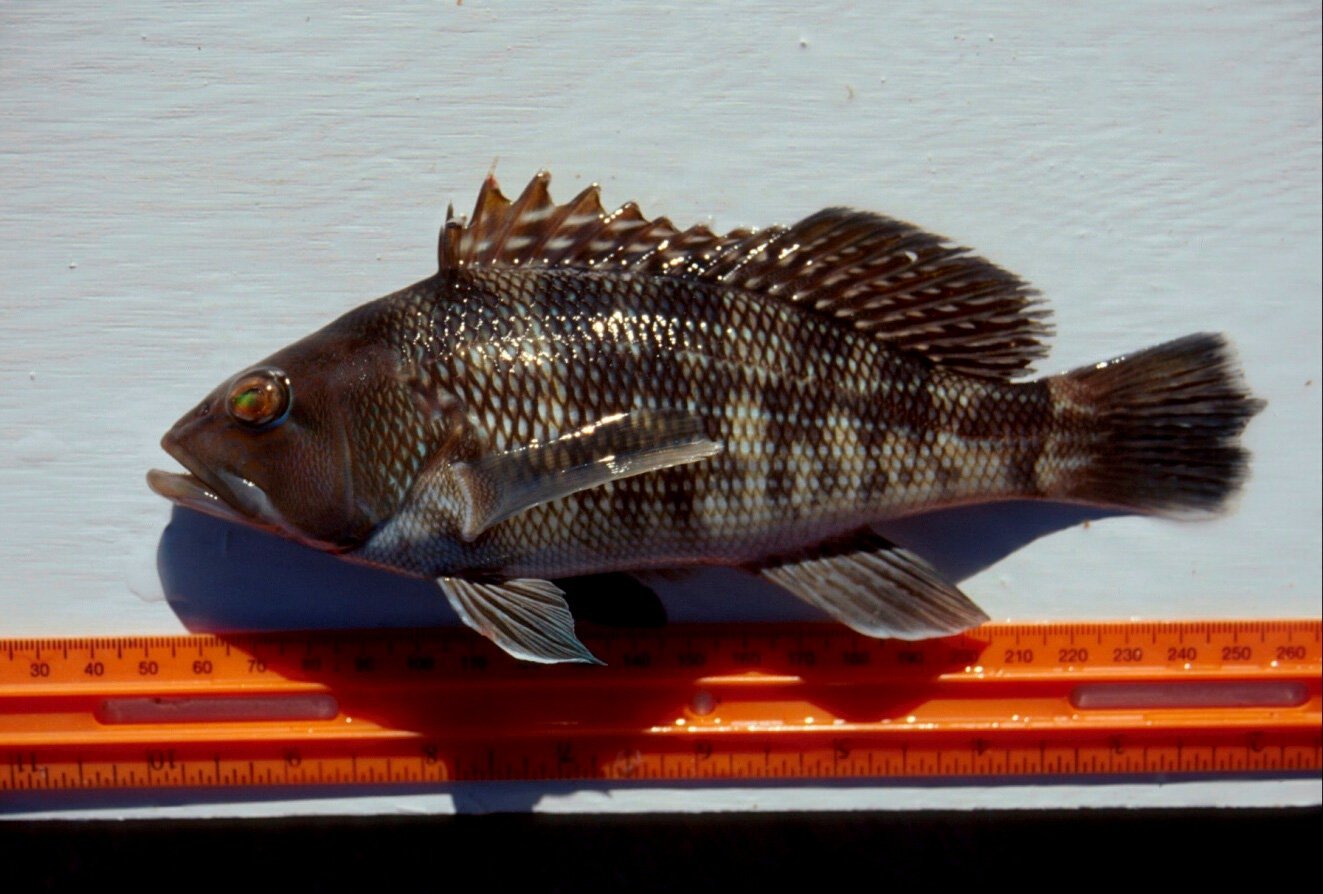
Thus I found myself waving a dead fish at a bunch of 6th graders at the Mahoney Middle School in South Portland last week. And they loved it — in the way you might love watching a horror movie, half wanting to shut your eyes (and nose), half wanting to get closer.

Crowded around the front desk, students fired questions at me about size, color and eating habits of black sea bass and begging to touch the pharyngeal teeth (crushing plates in the fish’s throat). They learned how sea bass swallow fish head first to avoid catching a dorsal fin in the throat, and how the pharyngeal teeth crush baby lobsters and other shellfish. After the first class, students in the other three classes kept asking me, with no shortage of enthusiasm, if they would get to touch the fish.

So why did I bring a fragrant, dead sea bass caught in R.I. to a class in Maine? We were talking about invasive species, non-native animals, plants, fungus, pathogens, etc. that wander into local habitats and tip ecosystems out of balance. We discussed how ever warming waters in the Gulf of Maine have created an inviting environment for species that are native to the mid-Atlantic states and elsewhere. We also weaved terms like “habitat”, “predator/prey relationships”, “carrying capacity”, and “ecosystem balance” into the conversation.

Students learned why black sea bass have been increasingly showing up in lobster pots in Casco Bay, and the implications for lobsters populations and cod, which rely on baby lobsters for food. They learned that lobstermen successfully lobbied the Atlantic States Marine Fisheries Commission this fall to increase the commercial and recreational quota for black sea bass in an effort to slow the influx. We discussed why ASMFC made that decision considering the black sea bass fishery was worth $8 million in 2013, while lobsters raked in over $460 million.

Unfortunately, there is no real, established commercial market for European green crabs. Students learned how most marine invasive species arrive via ships from distant waters, either on the hull, gear or in the ballast, as did the green crabs some time in the mid-1800s. We discussed how green crabs’ preference for warmer water has guided them north along the coasts as temperatures have increased. In the past couple of decades, their numbers in northern New England have skyrocketed, to the point where coastal researchers in Maine view them as “naturalized,” meaning they are comfortable living here.

That said, I spent about an hour stalking around a nearby flat the day before class looking for a green crab to bring to class. No luck. It was 32 degrees and we’d had a couple of cold snaps, so any that may have been around likely moved to warmer water. This too became a teaching point.

Though cold water may keep the crabs somewhat in check for a few months, they come back in numbers during the summer. Students learned green crabs can rock entire ecosystems because they eat larval mussels, clams and oysters and wreak havoc on critical eel grass beds, which are nurseries for said shellfish and many other baby species. They also learned green crabs have no significant natural predators and no commercial market value because they require too much work for too small amount of meat. As such, scientists, fishermen and fisheries managers are scrambling to come up with a viable means of reining in the crabs before they severely damage valuable shellfish markets.

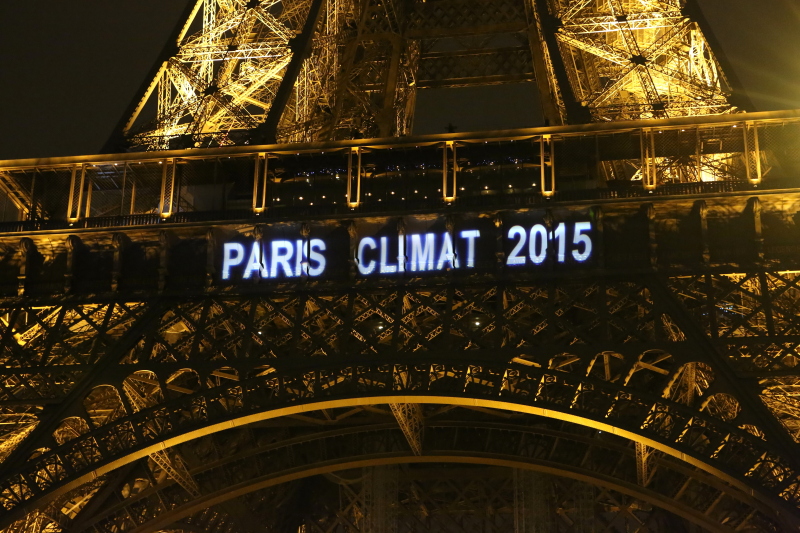
I finished each class with a ray of hope, born of the landmark climate change pact signed in Paris on Dec. 11. Nearly 200 countries, representing almost all nations on the planet, signed a document agreeing that climate change was real, that anthropogenic causes are fueling it and that each country needs to devise a plan to limit carbon emissions and demonstrate progress. Students learned that agreement could be the turning point where collectively, countries around the world took the first step to slow the process by which warming waters are encouraging invasive species to become “naturalized” where they don’t belong.
All Blog Posts

Paris Accord Sets Global Climate Change Commitment

  • December 15, 2015October 20, 2021
  • by Colles Stowell
Share it!
Share

Something happened in Paris on Friday that many thought wouldn’t.

Agreement.

Agreement by nearly 200 countries that climate change is a significant problem with short- and long-term global implications that we must address collectively. It was an uphill slog. Those countries signed a pact to reduce their carbon footprints and slow the pace of global warming in the coming century.

In a nutshell, after months and years of preparation, with weeks of hard back-and-forth negotiation culminating in two overnight sessions, nearly 200 countries agreed that:

  • Climate change exists and has the potential to do irreparable harm to the planet;
  • Global commitment to reduce greenhouse gases is critical to minimizing this harm;
  • Each country must commit to reducing carbon emissions, and revise those commitments to ever stricter standards every five years;
  • Each country must demonstrate what measures it has taken to cut emissions via a transparent process, every five years;
  • The goal is to keep the global temperature increase below 2 degrees Celsius, if not 1.5 degrees;
  • Forest preservation is critical to offsetting carbon emissions, and countries should enact policies to limit logging and save intact forests; and
  • Developed countries like the U.S., France, England, etc. should take the lead in providing funds for programs to reduce global carbon emissions, including those in developing countries.

Establishing a framework

To be sure, this is a first step. Conference organizers in Paris and elsewhere must have looked at this effort like herding cats. Coal gobbling countries like China, India and the U.S. have traditionally held different views on their responsibilities for and the extent of climate change. Smaller developing countries like the Marshall Islands, which are sounding the alarm bell that they’re losing ground…literally, have completely different views.

Such widespread agreement is monumental in the shadow of the failed 2009 climate agreement in Copenhagen. While the 2009 summit only suggested what to do, this accord is an almost Earth-wide acknowledgement that countries need to tackle this collectively, and a legally binding commitment to do so.

Will it stop global warming completely by on its own? No, say many scientists. The real tipping point would be to prevent the average global temperature increase from exceeding 2 degrees Celsius, or 3.6 degrees Fahrenheit. Scientists say that if global annual temperatures rise above 2 degrees, the planet will be past the point of repair, and the Greenland and West Antarctic ice sheets will melt, sea levels could rise 20 feet, etc.

But as written, this agreement will only limit global temperature rise by about 3 degrees Celsius if countries achieve their current emissions reductions commitments, according to some scientists. It’s far better than the status quo, which is on track to bring an increase of more than 4 degrees Celsius and potential catastrophe. Still, on the new path the oceans will continue to rise, and polar caps will continue to melt, only at a slower pace.

To meet the agreement’s goal of avoiding damaging climate change, the nations of the world must step up the ambition of their cuts over time. The pact is voluntary for countries to strive for that 2 degree goal. What is legally binding is that each country commits to some kind of carbon emissions reduction, that they commit to continuing to reduce emissions more significantly every five years, and that they demonstrate what they have done, again every five years.

One of the biggest reasons the Paris agreement does not specify benchmarks for each country is that the United States Congress would have to vote on such a measure. And the Republican-controlled U.S. Senate would have nixed any such wording. Interestingly, the U.S. Republican party is the only political party in a study of nine developed countries that flat out denies “anthropogenic climate change.” More interestingly, the study suggests that opposition to addressing climate change is strongest in countries with large reserves of oil, natural gas, and/or coal (all of which the U.S. has in abundance).

Reason for optimism

Though it will not stop global warming, this binding agreement sets a precedent for global cooperation to combat climate change and hold each other accountable. Five years ago, this seemed like an impossible task. It also hopefully creates momentum to bring the discussion to the forefront of critical diplomatic and business discussions. It sends a signal that fossil fuels do more harm than good, and should stay where they are. It will force countries to start thinking harder about developing infrastructure for alternative energy, and create a path for industries and investors to spur innovation to scale up clean energy.

And perhaps it sets a framework for more aggressive action on a global scale if the scientific evidence shows our climate is changing faster than predicted.

I’m going to teach middle school students this week about how the warming Gulf of Maine has become home to some invasive species. The European Green Crab, for example, is a warm-water invader that has been showing up in increasing numbers for the past couple of decades. It eats larval shellfish like clams, mussels and oysters. It also destroys eelgrass habitats that are nurseries for many species.

Those kinds of invasive migrations are likely to continue for a while. But I look forward to capping off the classes with a ray of hope offered by the events in Paris last Friday.


Here’s some additional reading:

Science Alert: Here’s what you need to know about the new Paris climate deal

National Geographic: Paris Agreement Catalyzes Global Cooperation Toward a Low-Carbon Future

New York Times: Climate Accord Is a Healing Step, if Not a Cure

BBC: What did the Copenhagen climate summit achieve?

2012 Republican Party Platform

All Blog Posts

Going Home to Nature

  • December 1, 2015October 20, 2021
  • by Colles Stowell
Share it!
Share

I have many things to be thankful for, and I reflect on them with more focus this time of year: my loving wife, my imaginative daughter, close family and friends, a roof over our heads and clean water, to be sure.

A strong bond with Nature is also on that list. Countless hours and days on the water or in the woods with my dad taught me to drink in the sights and sounds of fish swimming, birds flying, frogs croaking, deer grazing, bugs buzzing, etc. I’ve learned to accept what Nature has to offer.

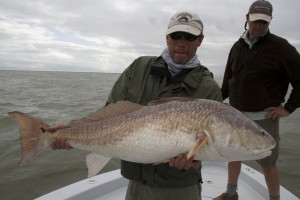
I was reminded of this earlier this month when I flew with my cousin from New England back home to New Orleans to fish for bull red drum in the Mississippi River delta. Since graduating from high school in 1984, I’ve done very little fishing in the waters where I grew up. My dad and I used to fish bayous around Lake Borgne and Lake Pontchartrain, and sometimes we drove down to Venice or Empire to go deep sea fishing.

The excitement was palpable as we left the dock in those days, knowing that in those waters in and around the delta, whether near oil rigs or out in the open, we could catch a wide variety of species. Grouper, snapper, jacks, king mackerel, pompano, sharks. You name it. The Gulf of Mexico had that big of a bounty.

I wondered how things had changed a couple of weeks ago as we stepped onto the Capt. Travis Holeman’s boat heading out of Venice. Several hurricanes, including Katrina, the oil spill and countless other factors had conspired to change the delta dramatically since I’d last been there.

I’d read that the coast is losing up to 30 square miles a year of shoreline, and the problem could get worse as sea levels rise. With 10,000 miles or more of canals dug out of the delta, protective freshwater marshes are being overrun with saltwater that kills the plants and weakens the soil.

Regardless, the biomass in Southeast La. is significant. Even on windy overcast days with fronts that drop the temperature by 10 degrees, marine and avian life seems to bubble over. Multiple shrimp and pogie boats worked offshore, bringing in tons of seafood. The pogies jumped out of the water, often creating enough of a disturbance to entice 20 lb. redfish off the bottom. Pelicans slammed into the water and came up gulping oily mouthfuls of protein. The terns and gulls also worked the water, especially marauding the trail of bait and shrimp left by the shrimp boats.

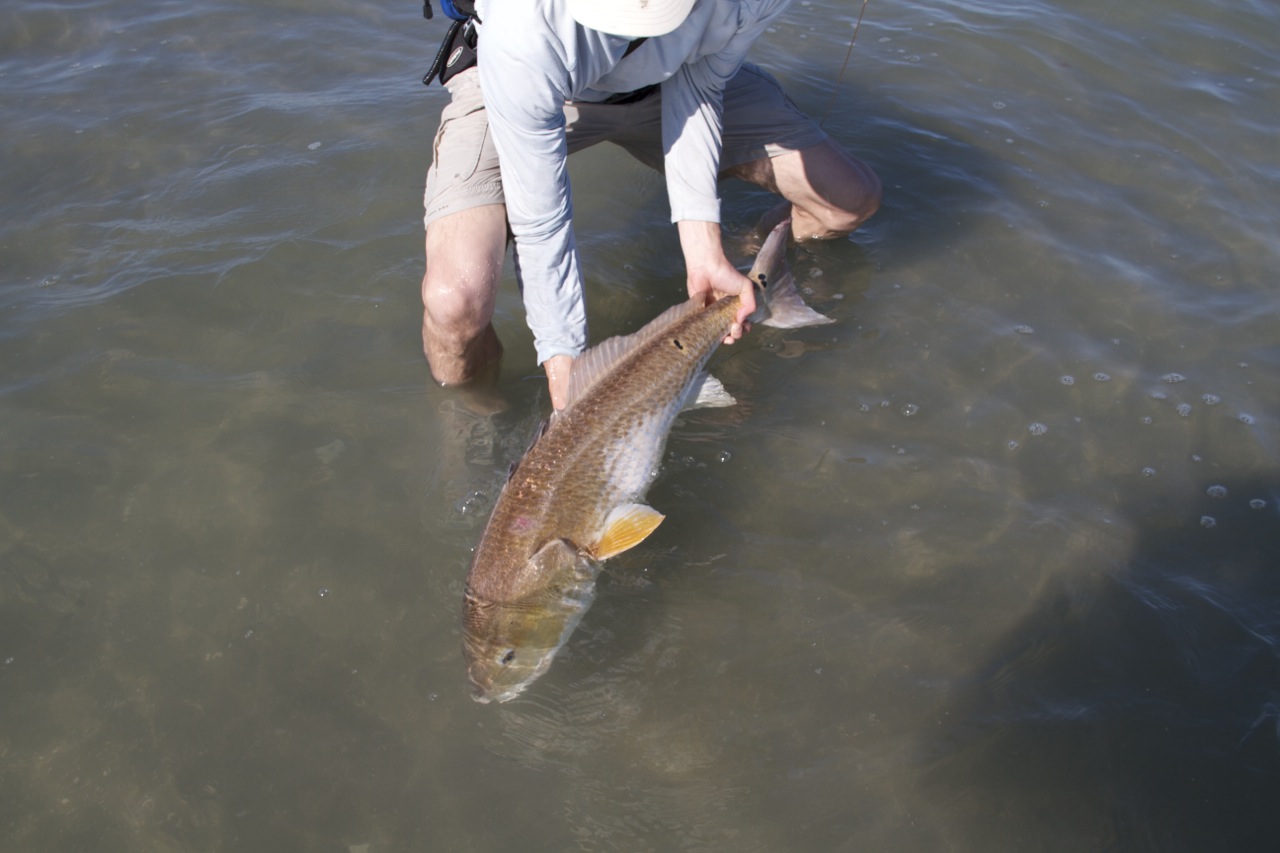
We caught and released several fish ranging from 12 to 30 lbs. We saw sharks and dolphins work the shoreline as giant jacks darted in close to shore to eat, then disappear. We saw how quickly conditions could change out there, based on wind, atmospheric pressure and water clarity spilling out the river, particularly after heavy rains in states up north.Venice grimace

The bottom changes constantly, and even “current” NOAA maps are out of date because lagoons, islands, ponds and other geographic features disappear daily.

That the delta has changed significantly since the last time I was there was evident. That it will continue to change as significantly remains to be seen. But indications are that the coastline will continue to pull back as the ocean gobbles up the fragile, yet protective marshes that are critical nurseries for a variety of important species. The delta is sinking as some scientists predict the Gulf of Mexico could rise about 4.5 feet by the end of the century.

I can only hope the rich biomass can adapt with the coming changes … because it is a special place, unique in its diversity and scope, that holds a strong connection to my past, and the love I’ve always had for Nature.

Recent Posts

  • Hurricane Ida wreaks havoc on Louisiana’s seafood industry
  • EPA Should Use Clean Water Act To Kill Zombie Mine
  • Slow Fish 2021: Relationship Matters
  • Faith, Façades, and Futility
  • Pebble Permit Paused: Politics at Play

Archives

  • September 2021
  • August 2021
  • April 2021
  • December 2020
  • August 2020
  • June 2020
  • February 2020
  • December 2019
  • November 2019
  • October 2019
  • July 2019
  • May 2019
  • April 2019
  • March 2019
  • January 2019
  • December 2018
  • November 2018
  • June 2018
  • May 2018
  • March 2018
  • February 2018
  • January 2018
  • December 2017
  • November 2017
  • October 2017
  • September 2017
  • August 2017
  • July 2017
  • June 2017
  • May 2017
  • April 2017
  • March 2017
  • January 2017
  • December 2016
  • November 2016
  • October 2016
  • September 2016
  • August 2016
  • July 2016
  • June 2016
  • May 2016
  • April 2016
  • March 2016
  • February 2016
  • January 2016
  • December 2015
  • November 2015
  • October 2015
  • September 2015
  • July 2015
  • June 2015
  • May 2015
  • April 2015
  • March 2015
  • February 2015
  • January 2015
Theme by Colorlib Powered by WordPress