Skip to content
One Fish Foundation
  • Blog
    • Aquaculture
    • Education
    • Environment
    • Policy
    • Wild Harvest
    • Fish Tales
  • About
    • About One Fish
    • About Colles Stowell
  • Education
    • Elementary School
    • Middle School
    • High School
  • KNOW FISH Dinners®
  • Resources
    • One Fish Podcast
    • One Fish Foundation in the news
    • The 7 C’s of Sustainable Seafood
    • Newsletter Archive
    • Recipes
      • Skate with Capers and Butter — Chef Rizwan Ahmed
      • Grandma Davis’ Fish Chowder — Jane Almeida
      • Ginger Garlic Tamari Scallops — Colles Stowell
      • Fish Stock — Evan Mallett
      • Mussels San Remo — Chef Rob Martin
      • Salted Pollock Croquettes – Chef Mark Segal
  • Connect
    • Contact OneFish
    • Social
      • Instagram
      • Facebook
      • Twitter
All Blog Posts

Latest Gulf of Mexico Oil Spill Raises More Flags

  • May 20, 2016October 20, 2021
  • by Colles Stowell
Share it!
Share

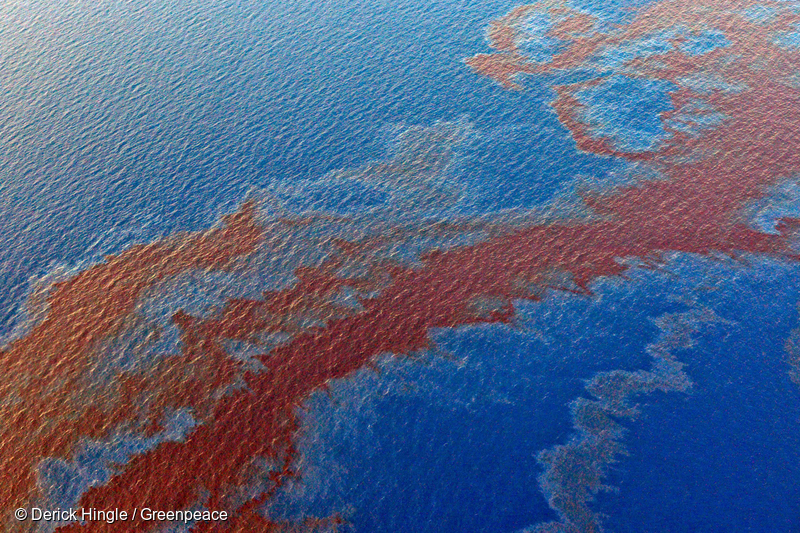
Here we go again. Another giant oil company is responsible for another oil spill in the Gulf of Mexico. Last week, a pipeline owned by Shell Oil sprung a leak, releasing nearly 90,000 gallons of oil that spread out in a slick the size of Manhattan more than 90 miles off the coast of Louisiana.

To be sure, this incident is much smaller than the Deepwater Horizon disaster in 2010, when a BP-owned oil rig caught fire, killing 11 workers and dumping more than 3 million barrels of oil into the Gulf. That disaster, and the downstream environmental, ecosystem and economic impacts it continues to wreak on the region, still qualifies as the largest manmade disaster of its kind in the U.S.

This latest release from Shell is no trifling matter. Shell says it has stopped the leak and shut off flow to the other wells the flow line connected. The Coast Guard deployed five ships and 150 people to place booms in the water to collect the oil/water mixture. The process of skimming the oil is similar to a vacuum cleaner for water, where the booms collect the mixture. Then the oil and water is likely separated, with the water returned to the gulf.

The Coast Guard announced Monday that it had completed the skimming operation, after collecting about 84,000 gallons of oil and water. So as is bound to happen, some of the oil remains in the ecosystem. The question is how much of a direct impact it will have. Some of the oil, which is light, sweet crude oil, will likely evaporate, and some will be consumed by bacteria, according to Tulane Professor Eric Smith.

Since the BP spill, there have been a variety of damning reports about how the oil and the many toxic dispersants released to “control” the situation have effected fish, shellfish and plants. The list includes everything from widely reported deaths of dolphins (up to 1,400 according to NOAA) and countless seabirds such as cormorants and pelicans to damage to juvenile tuna cardiovascular systems.

When I visited Venice, La. last November, I was struck by how much visible infrastructure there is along the Mississippi River delta and out in the Gulf. It looked like more than I could remember from my last time there, some 30 years ago. But what I later learned was the scope of the subsea infrastructure, the network to transport all of that oil and natural gas from the offshore rigs to the mainland. Some satellite overlays make the network look like a very tight, and complex cobweb.

The Shell leak apparently occurred on a transport line near a subsea terminal. And it will likely be awhile before there is any conclusive statement of cause. According to the federal Bureau of Safety and Environmental Enforcement, there have been 147 spills, releasing about 516,000 gallons of oil in the gulf since 2012.

So I have to wonder. With some 31,000 miles of pipeline (some of it installed 60 years ago) sprawled out on the ocean floor, what’s its lifespan? That is, do we really know enough to ensure such failures won’t happen again?

These are the questions I have when we get a reminder like this that placing such infrastructure near critical wildlife habitat has consequences. We can’t just rely on booms, bacteria and sun evaporation to keep cleaning up our messes. The Gulf is still recovering from the last time we relied on those approaches.


photo credit: Derick Hingle/Greenpeace

All Blog Posts

Student Questions Spark Hope For Fisheries Answers

  • May 18, 2016October 20, 2021
  • by Colles Stowell
Share it!
Share

I found myself facing one of the most difficult questions to answer about fisheries management last week. Posed by a senior at Portland (Maine) High School, the question was how to ensure all fishermen have fair access to the resource while still protecting that resource.

We had covered a lot of ground up to that point. We’d discussed the domestic and global seafood systems in broad strokes, touching on demand, and import/export statistics and issues. We’d reviewed different aquaculture approaches, global warming and its impact on the Gulf of Maine and the role invasive species play in altering local ecosystems.

We’d also discussed the unbalanced fishing quota landscape and its impact on fisheries and the fishermen who care about the resource. That prompted the senior, taking an Ocean Sciences course, to ask the hard question many fishermen, policy makers and activists continue to ponder.

I prefaced my answer with a bit of insight from years of studying management issues and listening to fishermen, managers and scientists discuss policy: There are no black-and-white or one-size-fits-all answers. There is no chance, whatsoever, of 100% satisfaction for all stakeholders. Feelings run too deep.

And that’s a large part of the problem. The quota system arose to eliminate the bycatch (discards of unintentionally caught species) and what some activists termed a “race to fish.” The previous management model limited effort, or days at sea, encouraging fishermen to fish as much as possible with a given time period. The quota system divided the ocean into different sectors and allotted quota based on the permits fishermen purchase. The idea was that if you had a permit, you might feel responsible for taking care of the resource.

Instead, the quota system bred new inefficiencies and more disparity in the “haves” and “have-nots.” Larger operators with deep pockets could buy more of the permits, driving up the price of the permits to the point where smaller scale fishermen are priced out of the markets. Local fishermen, those who typically care more about the resource more than the larger operators, are forced to switch gears or stop fishing. Small-scale farmers often face similar struggles against industrial agriculture.

A good bad example

I used the example of Carlos Rafael, the largest seafood distributor in New England, to illustrate how the system is ripe for abuse. Rafael is now under house arrest in his hometown of New Bedford, where he is awaiting trial on federal charges he defrauded the government by hiding his actual catch volumes and mislabeling fish. Rafael allegedly misrepresented species on federal catch quota forms he filed by mail or online. Then the species were sold at a higher price to a New York wholesaler who allegedly paid for the fish with bags of cash.

I answered the student by saying I don’t have an exact solution to the problem. But I explained that allowing all stakeholders, including local, small-scale fishermen, to have a meaningful say in how fisheries are managed would be a significant first step. Many fishermen argue that giving local fishing communities more control over management of their fisheries would prevent the kind of top-heavy, cash-driven management that nurtured the rise of operators like Carlos Rafael.

I see some merit to that approach, but also understand that the Magnuson Stevens Act is essential to creating a federal management backbone to ensure some consistency from coast to coast.

Above all, collaboration among different stakeholders, fishermen, policy makers, scientists, community activists, chefs, consumers, etc. is critical. We won’t move forward if we can’t all meet at the table.

And that underscores the importance of having discussions about where seafood comes from and how it’s managed with students like those seniors at Portland High School. I hope those discussions will eventually lead to more concrete solutions that are fair, equitable and sustainable for fishermen, their communities (read consumers) and most importantly, the resource.

If I can get students to ask intelligent questions, I’m at least sparking the conversation.

All Blog Posts

What’s In Your Imported Farm-Raised Shrimp?

  • May 3, 2016October 20, 2021
  • by Colles Stowell
Share it!
Share

A recent Food and Drug Administration alert about farmed shrimp from Asia raises health questions about the food system that delivers imported shrimp to the U.S. and the rest of the world. The notice also serves as a warning to consumers to know more about where the seafood comes from and how it was grown or harvested.

Forty-five out of 138 shipments (32%) from the Malaysian Peninsula sampled between October 1, 2014, through September 30, 2015 were found to have carcinogenic substances the FDA doesn’t want in our food. So the FDA has given inspectors the authority to reject all shrimp shipments from the Malaysian peninsula, save for a few exceptions, without a physical inspection.

What did they find? Antibiotics called nitrofurans and chloramphenicol, both of which have proved harmful to human health with prolonged exposure. Additionally, prolonged use can create antibiotic-resistant bacteria that can make matters worse.

So carcinogenic antibiotics were found in aquaculture shrimp from Asia.

Shock. Surprise.

The question is why. To better understand, let’s take a quick look at how shrimp farming typically works, and why it should give anyone pause when at a grocery store, seafood market or restaurant.

Big business, big risks

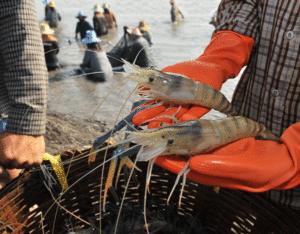
Shrimp farming is a huge business. Some estimates have global farmed shrimp at 3.7 million metric tons in 2014, worth between $12 billion and $15 billion dollars. The drive to grow profits as well as shrimp means increasing production.

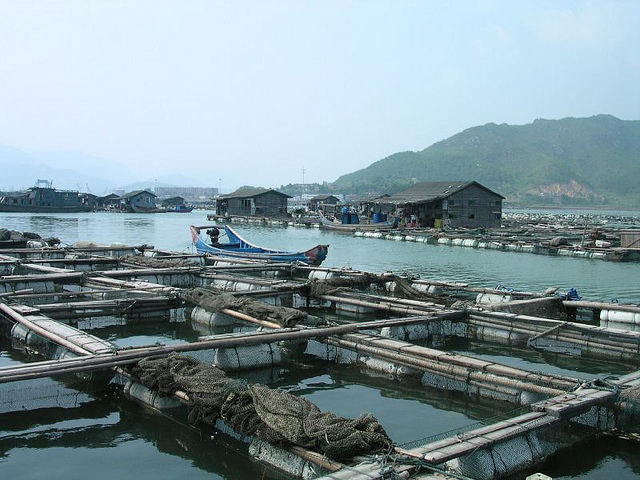
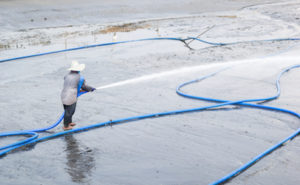
Shrimp farming often starts by destroying and removing ecologically critical mangrove ecosystems (nurseries for many species) to create retention ponds where the shrimp will grow. These ponds are usually fed with seawater that passes through the ponds and often re-enters the ocean … carrying much of the waste filtered through ponds carrying thousands of pounds of shrimp and their feces. Many operations claim they filter the water before it enters the ocean, but…

But because shrimp are the number one consumed seafood around the world, many operations in Third World countries in Central and South America and Asia jam as many shrimp into these ponds as possible. Without proper filtration, those shrimp are highly susceptible to disease, because, you know, they’re swimming in their own poop.

Bad medicine

For the past decade or so, many operators have found it easier to use antibiotics and other potentially harmful materials to fend off the bacteria that could cause disease. Those antibiotics don’t just disappear overnight. They don’t always fend off disease either, resulting in huge losses. Just witness recent cases of “early mortality syndrome (EMS)” in Asia.asianshrimpfarm_405x250

EMS is a devastating disease borne of a microorganism found in estuaries around the world, and showing up in overcrowded ponds that have poor filtration. The bacteria shut down the shrimp’s digestive system, killing the shrimp. Its infection rate is fast and efficient, meaning it can quickly kill all of the shrimp in a pond. EMS has mostly been found in Asia, but has also cropped up in Mexico.

To try and avoid catastrophic losses, growers choose from a menu of preventative measures, such as chlorine, superphosphates and ozone to disinfect the water, probiotics to fight off the bad bacteria and stabilize the water quality and antibiotics to treat illness. Aside from the potential threats to human health, another issue with these approaches appears to be that they may actually make the ponds more susceptible to infection, according to some scientists.

None of this is good for the shrimp or consumers.

Market impact

The Global Aquaculture Alliance estimates EMS causes $1 billion in losses annually. This explains why shrimp farmers are willing to do most anything to bring “healthy” shrimp to market … including using antibiotics the US FDA deems carcinogenic.

Here are some problems with this food system:

  • 90% of the seafood eaten in the U.S. is imported;
  • 50% of the seafood consumed in the U.S. is farm raised;
  • Only 5% of the seafood consumed in the U.S. is farm raised domestically;
  • 90% of the world’s shrimp exports come from Asia and India;
  • 55% of global shrimp production is aquaculture;
  • The U.S. is far more strict about safe aquaculture practices than most of the world;
  • The FDA is understaffed for inspectors, particularly those inspecting incoming seafood.

Source: UN Food and Agriculture Organization 2014 Status of the Stocks

This all means that most of the farmed shrimp consumed in this country was farm-raised in Asia, where there is a greater chance that it was treated with chemicals deemed unsafe to consume by the FDA. And there aren’t enough inspectors checking all of the imports.

How could this situation get much worse? If the latest trade deal, the Trans-Pacific Partnership, is approved in Congress, the few inspectors checking U.S. imports may have their hands tied. The pact allows signatories like Thailand, Viet Nam and yes, Malaysia to sue the U.S. claiming that applying more strict U.S. health codes to imported seafood constitutes unfair trade practices. The result could be sanctions, fines and an open door to products tainted with carcinogenic substances.

Get smart

In the classroom the message always comes back to awareness. I encourage students to question where their seafood comes from. I considered it a shrimp-diseasemoral victory a few months ago when a 6th grader told the class she stopped her mom from ordering shrimp because it was from Thailand.

It’s that kind of awareness that helps students, their parents and anyone else understand that shrimp coming from Asia, or anywhere outside the U.S. is a good thing to avoid.

So you may want to pause before ordering the shrimp cocktail. Try to find the country of origin. If the shrimp isn’t from the U.S., you may want to consider another option. Because when the FDA sends up a red flag like this, it’s a good idea to take note.


Photo credits in order: Eco News Network, Food Safety News, U.S. Bureau of Labor Statistics

Recent Posts

  • Hurricane Ida wreaks havoc on Louisiana’s seafood industry
  • EPA Should Use Clean Water Act To Kill Zombie Mine
  • Slow Fish 2021: Relationship Matters
  • Faith, Façades, and Futility
  • Pebble Permit Paused: Politics at Play

Archives

  • September 2021
  • August 2021
  • April 2021
  • December 2020
  • August 2020
  • June 2020
  • February 2020
  • December 2019
  • November 2019
  • October 2019
  • July 2019
  • May 2019
  • April 2019
  • March 2019
  • January 2019
  • December 2018
  • November 2018
  • June 2018
  • May 2018
  • March 2018
  • February 2018
  • January 2018
  • December 2017
  • November 2017
  • October 2017
  • September 2017
  • August 2017
  • July 2017
  • June 2017
  • May 2017
  • April 2017
  • March 2017
  • January 2017
  • December 2016
  • November 2016
  • October 2016
  • September 2016
  • August 2016
  • July 2016
  • June 2016
  • May 2016
  • April 2016
  • March 2016
  • February 2016
  • January 2016
  • December 2015
  • November 2015
  • October 2015
  • September 2015
  • July 2015
  • June 2015
  • May 2015
  • April 2015
  • March 2015
  • February 2015
  • January 2015
Theme by Colorlib Powered by WordPress