Skip to content
One Fish Foundation
  • Blog
    • Aquaculture
    • Education
    • Environment
    • Policy
    • Wild Harvest
    • Fish Tales
  • About
    • About One Fish
    • About Colles Stowell
  • Education
    • Elementary School
    • Middle School
    • High School
  • KNOW FISH Dinners®
  • Resources
    • One Fish Podcast
    • One Fish Foundation in the news
    • The 7 C’s of Sustainable Seafood
    • Newsletter Archive
    • Recipes
      • Skate with Capers and Butter — Chef Rizwan Ahmed
      • Grandma Davis’ Fish Chowder — Jane Almeida
      • Ginger Garlic Tamari Scallops — Colles Stowell
      • Fish Stock — Evan Mallett
      • Mussels San Remo — Chef Rob Martin
      • Salted Pollock Croquettes – Chef Mark Segal
  • Connect
    • Contact OneFish
    • Social
      • Instagram
      • Facebook
      • Twitter
All Blog Posts

Slow Fish Rises to the Challenge

  • March 22, 2016October 20, 2021
  • by Colles Stowell
Share it!
Share

To say Slow Fish 2016 (March 10-13) in New Orleans was a success is an understatement. Overcoming last-minute weather challenges that shut down the planned venue, moving several thousand pounds of food around and getting people to deliver and attend informative, compelling presentations at three different, distinct venues was a stroke of genius from the event organizers and their motivated team. Here is the blog I wrote about the experience. 

It’s a surreal, if a bit funny experience to eat oysters surrounded by larger-than-life representations of male and female anatomy. Kind of a Harold-Robbins-meets-Jules-Verne aura.

How a bunch of fishermen, chefs, scientists and seafood activists from around the world ended up in a dilapidated warehouse surrounded by lewdly, yet very craftily decorated Mardi Gras floats for the Krewe du Vieux (pronounced “croo du voo” and which pulls no punches lambasting anything/anyone political or sexual) is a study in adaptation.

We had gathered for the Slow Fish 2016 event in New Orleans to discuss important fisheries issues, make connections and celebrate locally caught, fresh and delicious seafood. Naturally, intense Louisiana spring weather turned carefully planned scheduling on its head with impending violent thunderstorms and potential flooding. Not one hour into the 150-person event at the Old US Mint, the state called for emergency evacuations and closed our base of operations for the next three days.
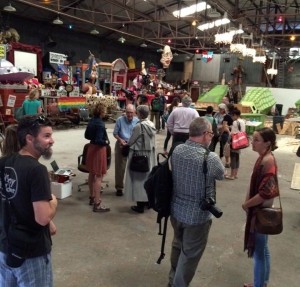
Krewe du Vieux warehouse, where Slow Fish 2016 attendees got an eyeful in New Orleans.
Krewe du Vieux warehouse, where Slow Fish 2016 attendees got an eyeful.

So instead of celebrating the gathering on the grounds of a historic building, we found ourselves feasting on pompano and sea bass in the shadows of papier-mâché sex. Ironically, that kind of mandatory last-minute logistical two-step closely parallels the rapid fire challenges many family fishermen face, constantly having to adapt to ever-shifting polices, seafood markets, climate, etc. beyond their control. We banned together at Slow Fish to pull it off, perhaps serving as proof that collaboration and flexibility are critical to addressing broader policy and market challenges ahead. That was the first of several truly unique experiences at Slow Fish 2016.

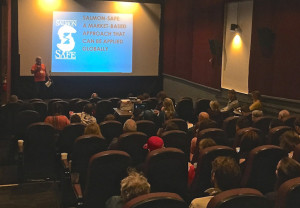
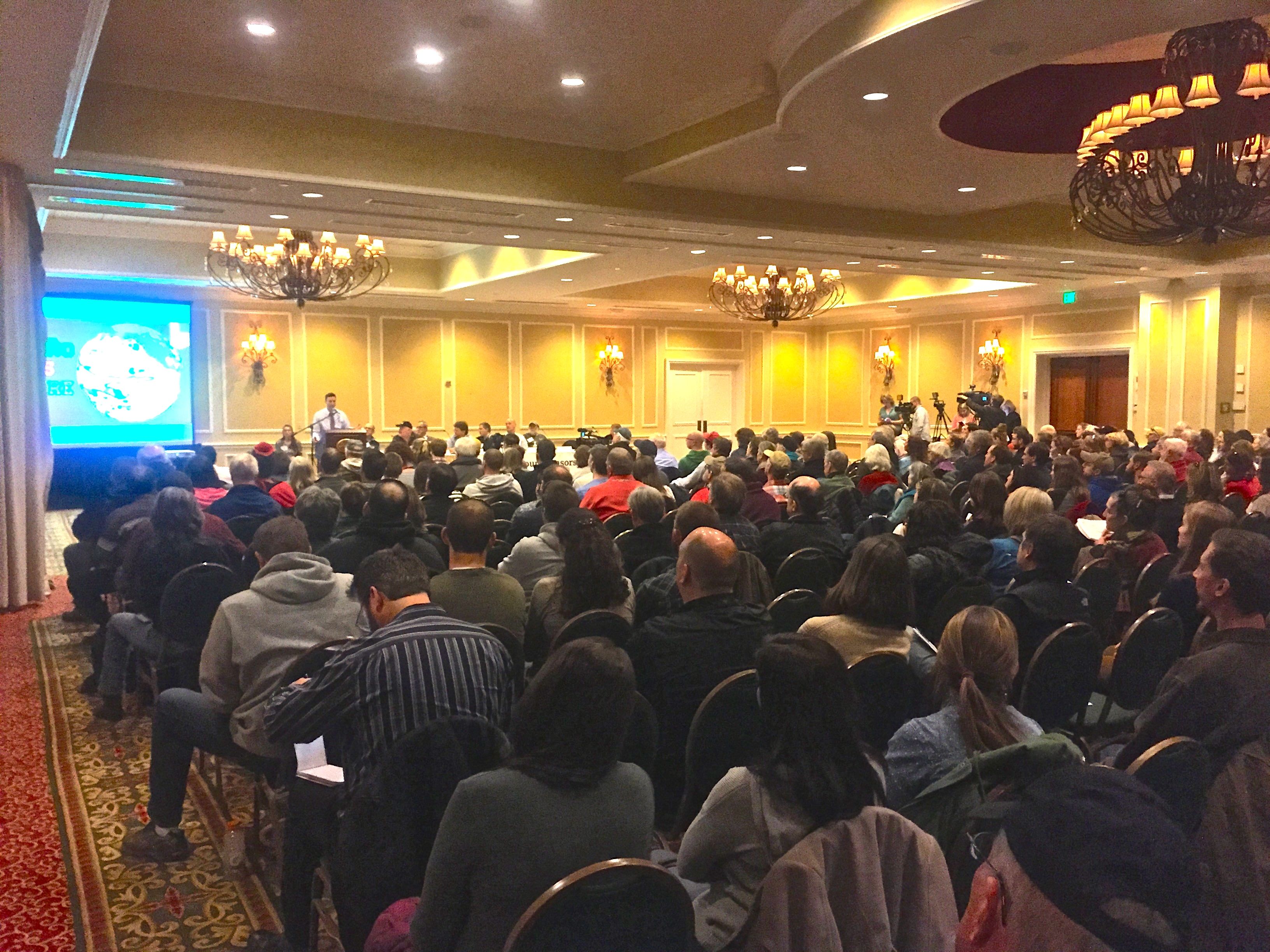
The next was the following day at the quirky Broad Theater in Mid City, a neighborhood at the heart of New Orleans. There, fishermen ranging from Alaska to California, and from Louisiana to Maine shared stories about their watersheds, community-based fisheries traditions and the management policies changing the landscape of how, when and where they can fish.Kevin Scribner discusses Salmon Safe's success.
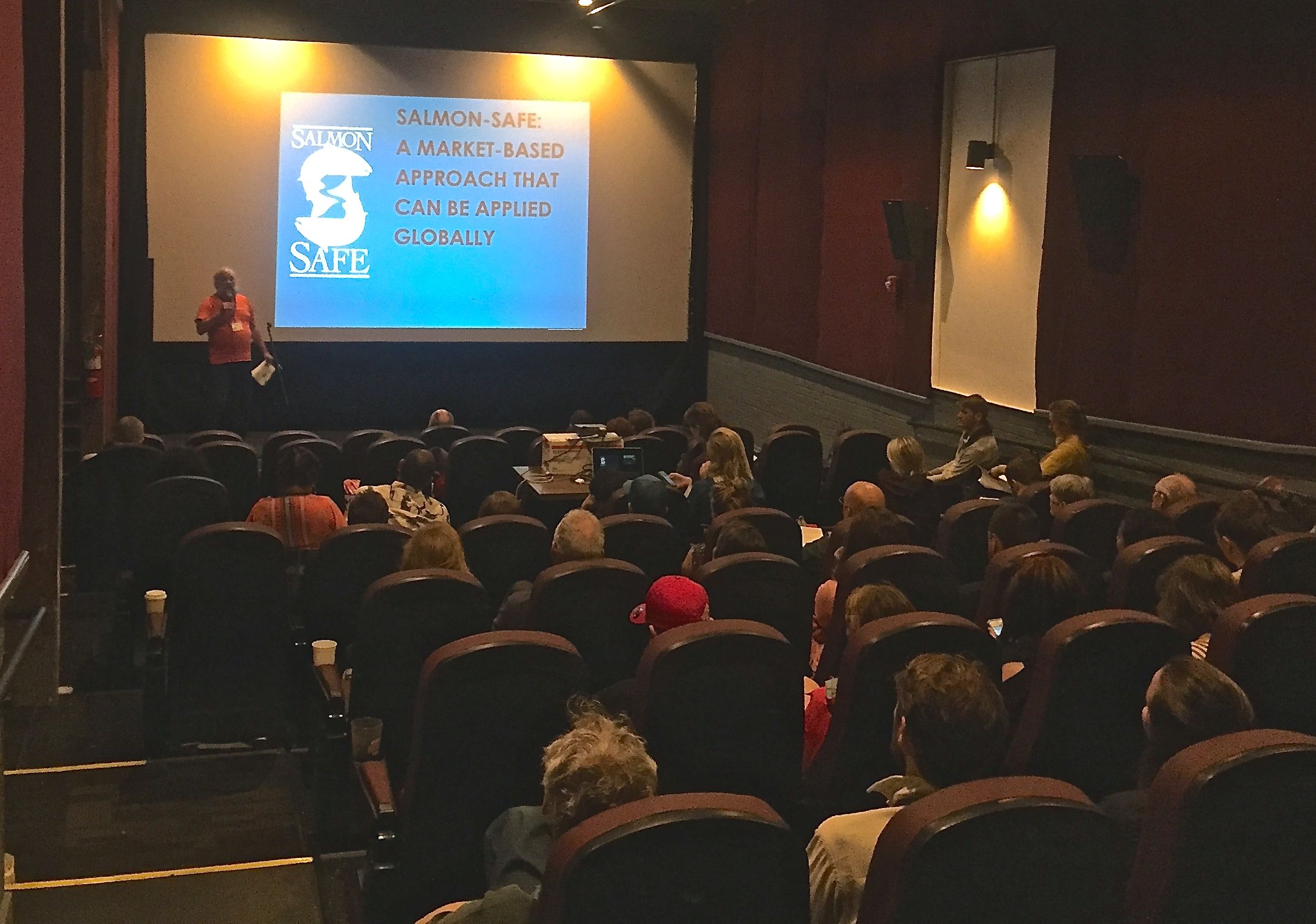
Kevin Scribner highlights Salmon Safe's success.
Kevin Scribner highlights Salmon Safe’s success.

They discussed challenges such as privatization and resource allocation, biodiversity, policy impacts and ways to protect watersheds and fishing community heritage. Former Alaskan salmon fishermen and current Slow Fish board member Kevin Scribner described how the Salmon Safe program has worked with farmers, businesses and urban planners to reduce downstream impacts on native salmon habitat. This means the owners or tenants of more than 95,000 acres of agricultural and urban land (including the Nike campus, and several major farms) in three states and British Columbia have committed to reducing harmful nutrient and pollutant discharge into precious streams.

Kindra Arnesen spoke passionately about the challenges facing fishing families on the Mississippi River delta. She described her Herculean efforts to unite struggling fishermen after the BP oil disaster, first to get jobs helping with cleanup, then to challenge BP, the EPA, NOAA and other local, state and federal agencies on their methods of cleanup, cover-up and compensation. It was yet another story of adaptation and survival.
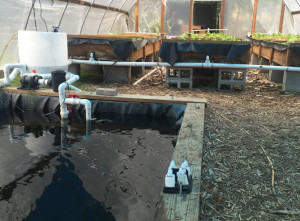
Happy Recirculating Farms Coalition catfish swimming in water filtered through lava rocks holding the lettuce in the background.

Other presenters discussed creating direct channels between fishermen, retailers and chefs to bring fresh seafood inland from the coast. Marianne Cufone, executive director of Recirculating Farms Coalition, showed the audience how a motivated team was able to start a clean, productive aquaponics operation right in a Central City neighborhood. Restaurants have already expressed interest in the fresh lettuce and catfish growing in recirculated water.

Set to the backdrop of compelling images, each story brought to life some of the common struggles many fishermen and coastal communities face, and some of the successful solutions to those challenges.
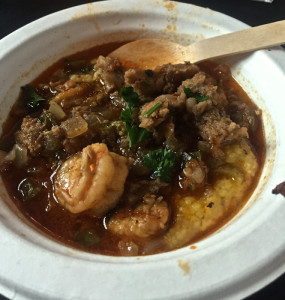
Alligator, shrimp and grits, down and dirty in New Orleans.

The adaptation of the Slow Fish 2016 continued Saturday at the Dryades Market, whose previous life had been a public school in Central City, another neighborhood steeped in diversity. Groups of concerned fishermen spoke about adequately addressing quotas and fairness issues and ways to promote local fisheries management. One common theme that emerged, perhaps prophetically, was the issue of adaptation.
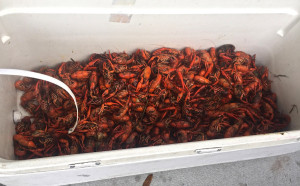
And of course crawfish. Deeper down, dirtier and delicious!
And of course, crawfish. Deeper down, dirtier and delicious!

Louisiana fishermen are constantly forced to adapt to changing ecosystem habitats, based on the chilling statistic that the coastline loses a football field of marsh every 45 minutes. Okanagan tribes have to adapt to the ebb and flow of wild sockeye migrating several hundred miles into incredibly diverse watersheds straddling the border between British Columbia and Washington state. Maine fishermen have to navigate the fluctuations in their fisheries due to the rapidly warming Gulf of Maine and the seemingly arbitrary nature of regional management.
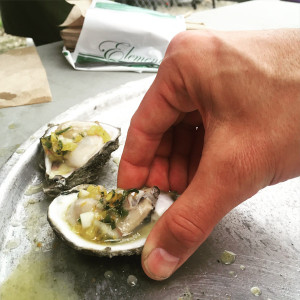
Two of about three hundred dozen oysters brought to the event.

Perhaps it was divinely appropriate that Mother Nature decided to throw a curveball and forced organizers to scramble. Because it is that instinct to go into auto pilot in the face of adversity and figure out a solution that determines success. For a Pacific salmon, that instinct to swim several hundred miles to its natal waters to spawn, die and give sustenance to its young is pure survival. For fishermen, it’s the ability to chase different available species when Nature or policy forces their hands. It’s in banding together to work toward a common cause to bring communities closer to their seafood.

Through all of the rain and high wind and last-minute venue changes, the shuttling of food from here to there…and back again, the audio-visual challenges, the taxis, carpools and long walks through a noisy French Quarter, Slow Fish 2016 attendees made connections. They found common ground. They discussed ways to organize, set goals and pursue them. They made friends.
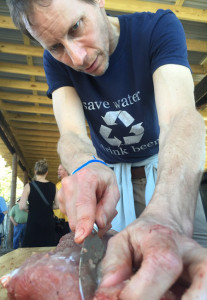
I learned some skills from Chef Zack Engel (chef de cuisine at Shaya Restaurant) and pit master Howard Conyers.

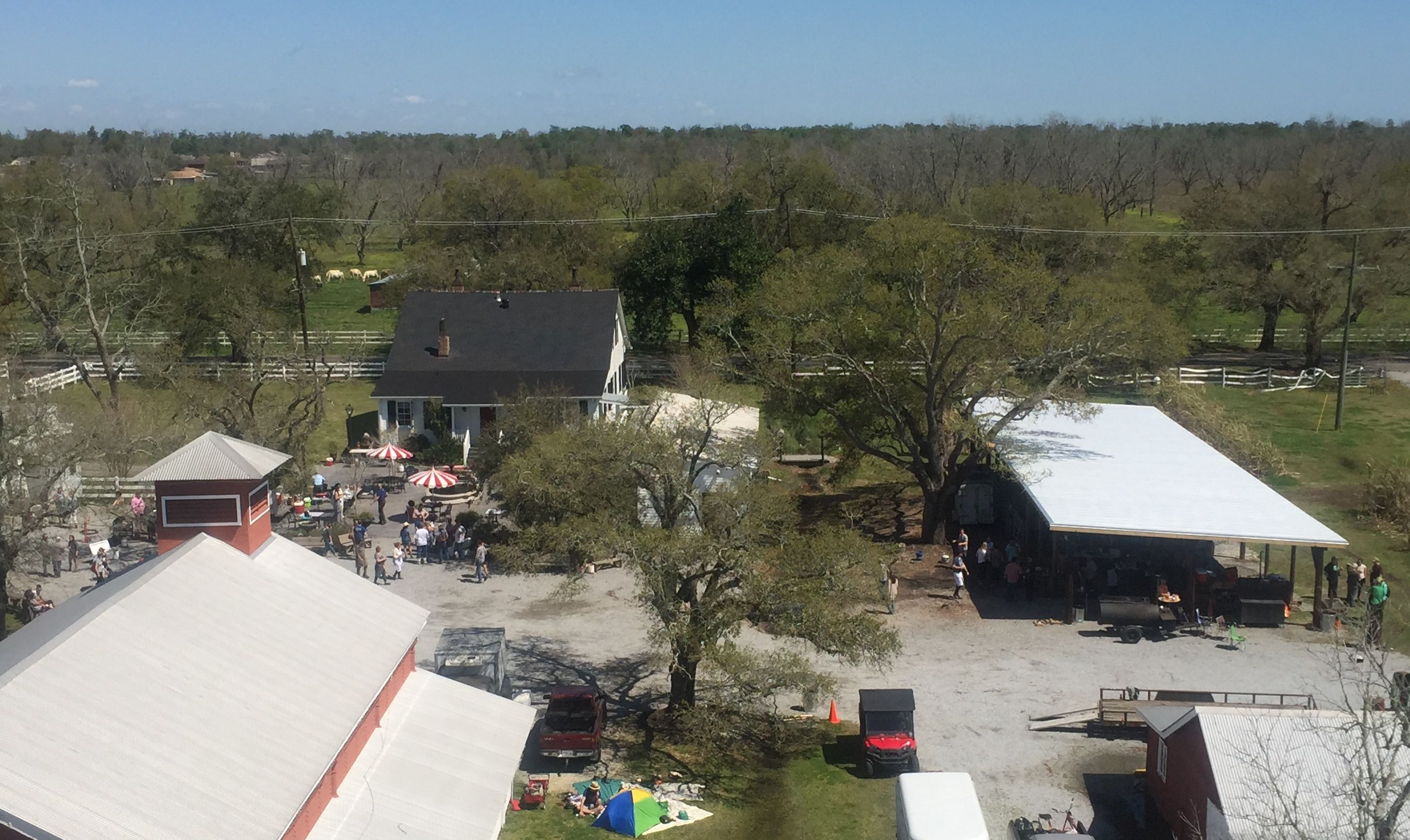
Perhaps the skies dawned on a warm,bluebird day on the tail end of the gathering at Docville Farm in Violet, La., a boucherie and seafood feast, as a reckoning of sorts. Adapt. Persevere. Hope. Something good will come out of it.

The memory of the food, the conversation, the energy and camaraderie will stay with all of us for a long time.


All Blog Posts

Changing Oceans, Changing Fishermen

  • March 6, 2016October 20, 2021
  • by Colles Stowell
Share it!
Share

Should fishermen be the face of climate change?

This was one of the more compelling questions posed at the Maine Fishermen’s Forum in Rockland on March 4.

It’s an interesting posit with many implications. For anyone in and around the industry, the answer is pretty straightforward. Fishermen are on the frontlines of how climate change impacts fisheries around the world. Along with researchers, fishermen are the first to see changes in everything from migratory patterns to spawning success and recruitment and predator/prey relationships.

Just ask Linda Williams. She is former chair of the Western Rock Lobster Council in Western Australia. Her husband and son fish for western rock lobster. She told a crowd of 300-400 that fishery has undergone mammoth changes in the past decade. Ten years ago, the average annual haul was 10 million kilograms, brought in by 600 boats during a roughly nine-month season. Now it is 5-6 million kilograms, brought in by 250 boats year round. The interesting catch? They are now logging record profits and working less.

So how did this happen? In 2009, lobstermen and researchers noticed a significant drop in the number of late larval stage lobsters in normal locations. Females were releasing eggs earlier than ever, which affected migratory patterns of the lobsters as they grew from larvae. The end result would be fewer lobsters caught in season and a downward spiral. This coincided with a warming trend of about 1-3 degrees Celsius over long-term summer averages, which also coincided with changing currents along the Western Australia coast.

Seeing the potential for disaster, lobstermen, scientists and policy makers worked together to form a quota system based on predictive analyses of future harvests determined by current larval settlement (the numbers and location of late larval stage lobsters). The industry anticipates how changing water temperatures and shifting currents will affect harvest 3-4 years in advance. Now the fishery operates profitably, even as the oceans are warming around them.

That kind of adaptation was the theme from other commercial fishermen. John Mellor fishes for Dungeness crabs and sablefish (black cod) off California. He sensed trouble in the water a year ago, noticing a milky, bluish hue and seeing big schools of anchovies flopping around the surface gasping for air. The culprit was algal blooms sucking up too much oxygen and releasing high concentrations of domoic acid (a neurotoxin) along the West Coast. California’s witness to climate change has coincided with this year’s El Nino, which extended a three-year period of lower than average storm and wind activity that would otherwise mix up the currents and slow the progress of algal blooms and the resulting red tides.

Filter feeders like clams, mussels and worms absorb the neurotoxin, and the crabs eat them, posing a threat to human health. Mellor explained the devastation to the industry when shortly before this season was to begin, California shut down the fishery indefinitely. Crabs represent 2/3 of his income, and he said he was fortunate to have a sablefish permit just to keep operating. Many fishermen are facing foreclosure etc.

“I see you enjoying your lobster fishery,” he said to the audience. “I suggest you keep an eye on the water. If you see it start to change a milky blue, be prepared.” He said fishermen need to adapt as quickly as the oceans are changing to survive.

Keith Colburn, who fishes Alaska king crab and has appeared on the TV show “The Deadliest Catch,” said in 30 years on the water, the most dramatic weather and water changes have occurred in the last 15 years, including the three coldest years and the three warmest years in Alaska. He said 20 years ago, they might have one storm that registers 50-knot winds per year. Now they may have 10-15 storms of that magnitude.

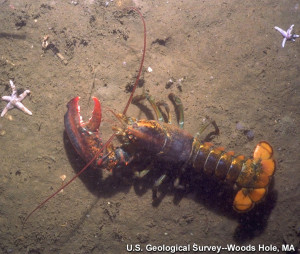
Noting the migration of the lobster fishery out of Long Island South and north of Cape Cod, he said somewhat jokingly, “If I was a Maine lobsterman, I’d be thinking about getting a Canadian passport soon. Each of you came out here to discuss a topic no one wants to think about. But we need to think about it.”lobster

A fisherman from Point Judith, R.I. noted that their lobster fishery has been devastated by black sea bass (a mid-Atlantic species following warming waters north along the coast) and dogfish devouring larval lobsters. As regional waters warmed, more of these predators invaded the region and outnumbered the lobsters and other local species. The local fleet dropped from 150 boats 10 years ago to zero now, by his reckoning.

Scientists keep ringing the alarm bell

Scientists on the front edge of the latest climate research such as John Hare of NOAA and Andy Pershing of Gulf of Maine Research Institute highlighted just how much the water has warmed in the Gulf of Maine and how much that has impacted several native species.

Pershing noted how the Gulf of Maine is warming faster than 99% of the oceans on the planet at a rate of .23 degrees C or .4 degrees F per year, almost four times faster than anywhere else. He said because of the record warmth of the past several months allowing to El Nino, normal current variability and the recent warming trend, lobstermen could expect this year’s shed (when lobsters shed their shells) to happen anywhere from two to three weeks before the usual timeframe of the first week in July. That kind of predictability helps lobstermen at least have some idea of when their season will be most productive and profitable and plan ahead.

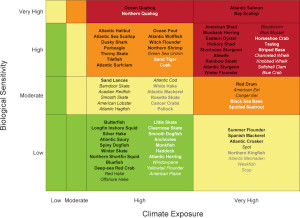
John Hare discussed his recent research methodology, which helps scientists, fishermen and policy makers better predict how climate change will impact growth and migratory patterns of 82 Northeast species. He said 42% of those species have a very high potential vulnerability to climate change, while 50% are likely to change their distribution because of warming waters. (See chart below).

Overall climate vulnerability is denoted by color: low (green), moderate (yellow), high (orange), and very high (red). Certainty in score is denoted by text font and text color: very high certainty (>95%, black, bold font), high certainty (90–95%, black, italic font), moderate certainty (66–90%, white or gray, bold font), low certainty (<66%, white or gray, italic font). Source: Hare et al (2016)

“Warming oceans and acidification are posing a significant threat to fisheries,” Hare said. “I firmly believe we can only face these changes together.”

Which brings us back to the original question posed by chef and author Barton Seaver. He asked if fishermen could be the voice of social change at a time when politicians and scientists are often seen as bloviating by those who deny climate change exists. Perhaps fishermen, whose lives depend on the weather, could deliver a broad enough, “Everyman” appeal to spark a larger movement to minimize greenhouse gases, slow global warming and better manage the health of our oceans. Colburn, the Alaskan king crab fisherman responded, “Being that fishing is America’s oldest job, I think as fishermen we could ban together, we could start to change our patterns.”

But perhaps the question isn’t so much should fishermen be the face of climate change, but will they? As Colburn said, “A lot of fishermen want to believe that the environment is not changing.” So, getting them to sound an alarm may be a tough ask. But as the ranks of those fishermen pushed to the brink swell, like California’s Mellor, or those that found a way to adapt, like Western Australia’s Murray, perhaps there will be enough momentum for a unified voice, as Seaver suggested.

Forums like this one, uniting scientists and fishermen to understand how things are changing and how quickly they’re changing, and to work together to figure out how to adapt are significant starting blocks. And if you can get policy makers, such as John Bullard, Northeast Regional Administrator for NOAA Fisheries, to not only attend such meetings, but state publicly that we need to do something about climate change (as he did here), perhaps there is enough accountability and unity in place for us to do something to protect the climate collectively.

If we can get all of these stakeholders at the same table, working together, as John Hare suggested, we can do better adapting to how rapidly the oceans are changing, and maybe even limit the long-term damage. Doing so would help us better deliver on the Slow Food promise of good, clean, accessible and fair seafood for all.

As consumers grappling with the implications of global warming on the seafood we eat, we should understand that “eating within the ecosystem” is now more important than ever. That is, we should eat what is locally available, sustainably harvested and seasonal. Choosing “invasive” black sea bass here in Maine rather than big name species facing multiple stresses — including climate — is a step in the right direction.


Additional reading

 Check out this column by Bren Smith, a commercial fisherman who adapted to the changing climate by embracing the “eating within the ecosystem” philosophy.


Recent Posts

  • Hurricane Ida wreaks havoc on Louisiana’s seafood industry
  • EPA Should Use Clean Water Act To Kill Zombie Mine
  • Slow Fish 2021: Relationship Matters
  • Faith, Façades, and Futility
  • Pebble Permit Paused: Politics at Play

Archives

  • September 2021
  • August 2021
  • April 2021
  • December 2020
  • August 2020
  • June 2020
  • February 2020
  • December 2019
  • November 2019
  • October 2019
  • July 2019
  • May 2019
  • April 2019
  • March 2019
  • January 2019
  • December 2018
  • November 2018
  • June 2018
  • May 2018
  • March 2018
  • February 2018
  • January 2018
  • December 2017
  • November 2017
  • October 2017
  • September 2017
  • August 2017
  • July 2017
  • June 2017
  • May 2017
  • April 2017
  • March 2017
  • January 2017
  • December 2016
  • November 2016
  • October 2016
  • September 2016
  • August 2016
  • July 2016
  • June 2016
  • May 2016
  • April 2016
  • March 2016
  • February 2016
  • January 2016
  • December 2015
  • November 2015
  • October 2015
  • September 2015
  • July 2015
  • June 2015
  • May 2015
  • April 2015
  • March 2015
  • February 2015
  • January 2015
Theme by Colorlib Powered by WordPress