Skip to content
One Fish Foundation
  • Blog
    • Aquaculture
    • Education
    • Environment
    • Policy
    • Wild Harvest
    • Fish Tales
  • About
    • About One Fish
    • About Colles Stowell
  • Education
    • Elementary School
    • Middle School
    • High School
  • KNOW FISH Dinners®
  • Resources
    • One Fish Podcast
    • One Fish Foundation in the news
    • The 7 C’s of Sustainable Seafood
    • Newsletter Archive
    • Recipes
      • Skate with Capers and Butter — Chef Rizwan Ahmed
      • Grandma Davis’ Fish Chowder — Jane Almeida
      • Ginger Garlic Tamari Scallops — Colles Stowell
      • Fish Stock — Evan Mallett
      • Mussels San Remo — Chef Rob Martin
      • Salted Pollock Croquettes – Chef Mark Segal
  • Connect
    • Contact OneFish
    • Social
      • Instagram
      • Facebook
      • Twitter
All Blog Posts

Boom and Bust of Gulf of Maine Scallops

  • March 25, 2017October 20, 2021
  • by Colles Stowell
Share it!
Share

Northern Atlantic sea scallops are a good example of how fisheries management has rescued a stock from the perils of overfishing. Sadly, they are also proof of how those same policies could just as easily doom the stock in the not too distant future.

How does this happen?

It comes down to fishery access. Several decades ago, the scallop fishery in the Northern Gulf of Maine (NGOM) was teetering because the annual harvest had reduced the stock’s ability to sustain its population. So limits were put in place to reduce the overall harvest in that area.

As the stocks rebounded, fisheries managers established a new system that would guarantee smaller boat operators with specific permits to scallop in a designated area up to 60 miles off shore from Downeast Maine to Cape Cod. They were allowed to catch 200 lbs a day up until the point all of these fishermen landed a total allowable catch (determined by stock assessment), which is now 70,000 pounds.

The managers also allowed larger boats with federal permits to not only scallop beyond the 60-mile limit, but also inside the 60-mile limit. The managers said that these larger boats, fishing under what is called a limited access permit, could land as many scallops as permissible under the federal permit during a set number of days while they were in the 60-mile zone the smaller boats fish. Once the smaller boats hit their 70,000 lb total allowable catch, the entire fishery would shut down.
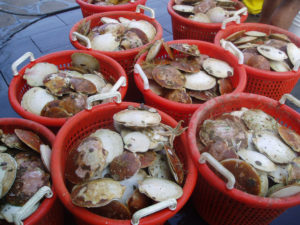
Photo: NOAA

For example, in the 2015-2016 season, limited access boats caught more than 300,000 lbs of scallops in the northern gulf of Maine area before the smaller boats hit their 70,000 lb quota and the fishery was shut down.

Sound fair? No. And these limited access boats are fishing within their permitted rights. As an attorney for a lobby group representing scallopers was quoted in the Boston Globe, “These vessels are doing what they’re allowed to do.”

Here’s the worst part. NOAA projects that the current season will end with over 1 million pounds of scallops being harvested, still with only 70,000 lbs coming from the smaller boats. NOAA scientists said last year that the fishery could withstand a total haul of 400,000 lbs from this area this year.

Consumer impact

So why does this matter to consumers?

If the stock tumbles as it did a couple of decades ago, there will be fewer local scallops and the price will skyrocket. More importantly, you should be concerned if you care about the resource and the people in and around your community whose livelihoods depend on it.

Here’s another concern. Small-boat scallopers in Maine and Cape Cod deliver a higher quality product called “dry scallops,” which have not been soaked to preserve freshness and potentially add market weight to the product. This is a common practice among the larger limited access boats. Soaked scallops lose flavor and don’t cook well. A collapse of the NGOM stocks could reduce or eliminate dry scallop availability.
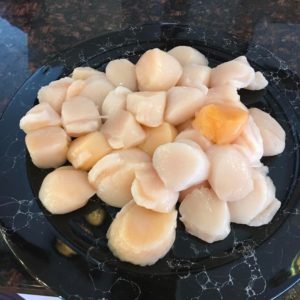
Dry scallops. Photo: Cape Ann Fresh Food

I attended a discussion about the scallop fishery at the Maine Fisherman’s Forum a couple of weeks ago, and several small boat scallopers who operate in the NGOM zone complained about seeing larger boats from New Bedford and elsewhere hoovering up all of the scallops. Their complaints hinged on two fronts: 1. The unfairness of being hamstrung by a low total allowable catch in a fishery that a NOAA scientist had claimed a few minutes earlier was strong, and NOT experiencing overfishing. 2. They worried about the long-term survival of this fishery in the face of the massive hauls taken by the limited access boats.

The NOAA staff fielding the questions were sympathetic to the plight of the small-boat fishermen. But they repeatedly said that any comprehensive change would have to come from a rule change established by the New England Fishery Management Council (NEFMC), which manages scallops in New England waters.

A slow process

And therein lies the rub. The council’s mission is to protect the resource and those who use it. Unfortunately, the council can be slow to react, and it doesn’t always stand up for the access/rights of small operators.

As Ben Martens, executive director of Maine Coast Fishermen’s Association wrote in a recent blog, “The system as it is currently structured is destined to fail. User conflicts between permit types have become unavoidable since the biomass returned, and instead of putting a band-aid on this issue, the council must go through the process of fully protecting and planning for the long-term future of this fishery.”

I asked Ben what a fair solution would look like. He suggested a rule giving all stakeholders the same trip limit of scallops harvested, so one user group wouldn’t be favored over another.

I agree.

The NEFMC discussed the scallop harvest and fishermen’s concerns at a meeting last November. The council will entertain recommendations from the scallop subcommittee that meets next week and possibly take action in April.

Hopefully, they can get this straight…and fast.
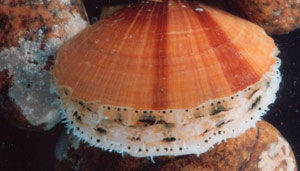
Eyes of the scallop. Photo: NOAA

I like scallops. But there is an environmental cost of dragging a 400- to 2500-pound steel cage across the ocean bottom. Bycatch is one. Disturbing the ecosystem on the ocean floor is another. Yes, some areas are more resilient than others and can bounce back fairly quickly. But there is still a consideration.

So we don’t eat scallops as often as we used to. Hopefully, we’re not forced into a situation where our local options for scallops are further limited and prohibitively expensive because our fisheries managers couldn’t find a comprehensive solution that is fair and that protects the resource.


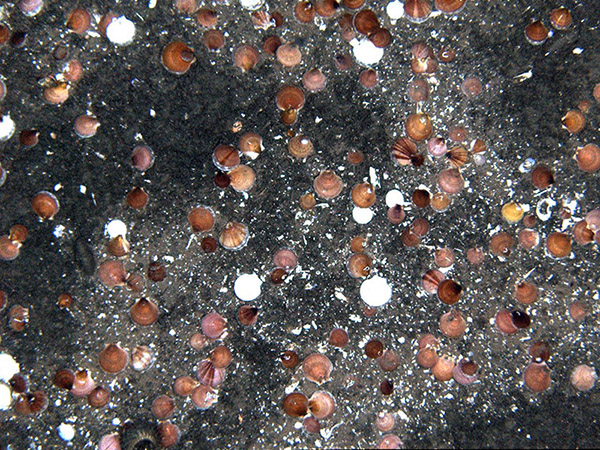
Top photo credit: NOAA
All Blog Posts

Challenging Next-Gen Scientists

  • March 21, 2017October 20, 2021
  • by Colles Stowell
Share it!
Share

Call it irony.

Last week I was putting the finishing touches on a presentation about climate change impacts on seafood for two classes when I saw a news brief about how ocean acidification is spreading quickly in the western Arctic Ocean.

Specifically, a report from NOAA cited a new study showing how high acidity waters have spread more than 300 nautical miles almost to the North Pole and have increased in depth from 325 feet to 800 feet in the past 20 years. This rate of expansion is more than twice the global average, and it could harm mussel, clam and sea snail (food for salmon) populations.

So I had some fresh, relevant news to discuss with these students.

The classes were part of a statewide symposium bringing high school students interested in marine sciences to Salem State University. I was one of a dozen or so teachers speaking with students that day. I focused on four significant but interrelated climate factors that affect seafood webs in and around the Gulf of Maine: temperature increase, changes in current and salinity, and ocean acidification.

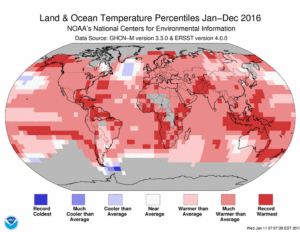
2016 was the warmest year on record. NOAA graphic

First, I briefly discussed seafood as an economic resource, and why we should care about where, when, how and by whom it was harvested. Next we talked about 2016 being the fifth year in a row for setting global land and ocean temperature records, and that the first 16 years of the 21st century are among the 17 warmest on record (138 years). We talked about how the Gulf of Maine is warming four times faster than 99% of the oceans on the planet.

Influential currents

Students asked questions about new research showing that some key currents in the Atlantic Ocean may be slowing down because of warming waters in the Arctic. The Atlantic Meridional Overturning Circulation or AMOC, (known as the ocean conveyor belt), drives global ocean currents and climates.

http://qkl.fa0.mwp.accessdomain.com/wp-content/uploads/2017/03/thermohaline_conveyor_30fps.mp4

Scientists think that if warming continues, the collision of warm and cold water in the Arctic that drives the global currents could slow or even stall, eventually putting Europe in a deep freeze and baking the southern hemisphere. This could significantly change the number and intensity of Atlantic hurricanes and Pacific Monsoons.

It could also have major impacts on a wide swath of seafood in the Gulf of Maine. These types of temperature and current fluctuations dramatically affect salinity and ocean acidification. All of these changes can alter ecosystems, including spawning areas and timing, migration, plankton production (which is the base layer of the ecosystem) and predator-prey relationships.

NOAA photo

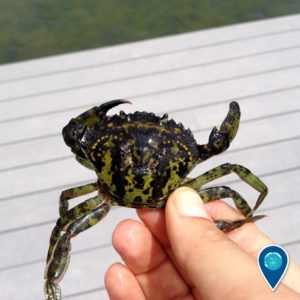
To drive the point home, I brought out some live green crabs. The students were all about hearing how the green crab can wipe out entire mini-ecosystems of eel grass as they root out mussels and clams to devour. They also learned about increasing efforts to determine how to best control green crab populations as they’ve become omnipresent in the Gulf of Maine as temperatures increase. Though they’ve been around since the early 1800s, they’ve become much more populous here because they have adapted to the seasonal temperature changes and they are prolific.

Throwing down a challenge

I ended the class with a challenge. I described discussions I’ve had with scientists on the forefront of the research on climate impacts on seafood … all leading to the same conclusion. We currently know a fair amount about the impacts of temperature, current, salinity and OA on different ecosystems. But we don’t have a real good, long-term, predictive view of how these (and other) factors work in concert to affect ecosystems and even specific species.

We need the next generation of scientists to help us find these answers. As Marcus Carson, lead scientist on the in-depth Arctic Resilience Report on climate change said, “It’s frustrating always being two or three steps behind climate change.”

We need bright minds to dive into the advanced geophysical, meteorological, metabolic and organic shifts climate change will impose on our marine ecosystems to help us better understand how to adapt to these changes. It’s unlikely we’ll fully stop climate change. But perhaps if we begin collectively cutting carbon emissions and planning ahead, we can slow it down enough for future scientists to help us better anticipate, rather than react to these changes. That’s how we take care of seafood as a resource.

So yes, the NOAA acidification report was timely, if a bit ironic … another unfortunate red flag that should serve as a call to arms.


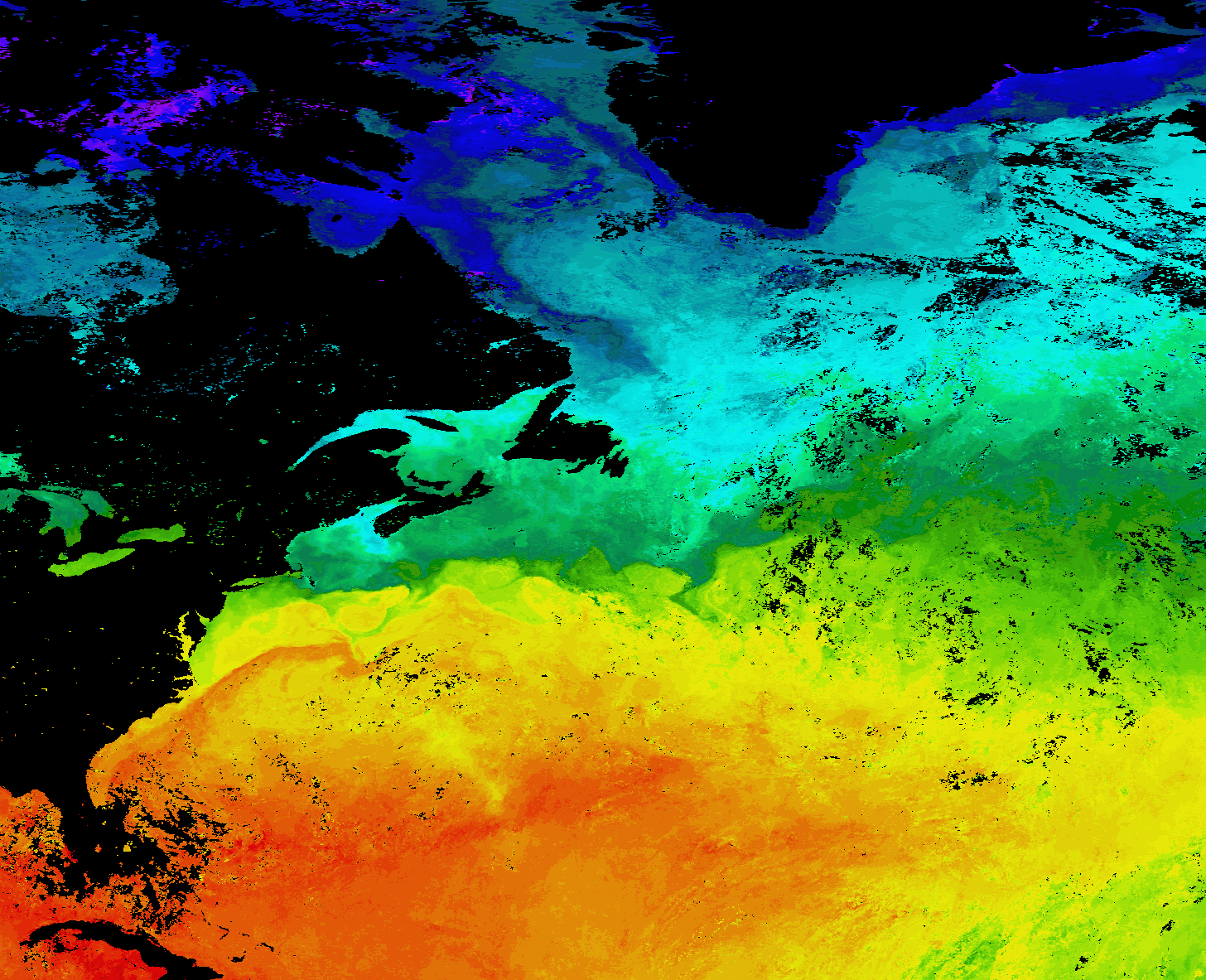
Top image credit: NASA spectroradiometer view of thermal variations in the Northwest Atlantic ocean. The warm Gulf Stream is the orange streak along the Eastern seaboard.


All Blog Posts

“One Word: Plastics” … and the damage to our…

  • March 6, 2017October 20, 2021
  • by Colles Stowell
Share it!
Share

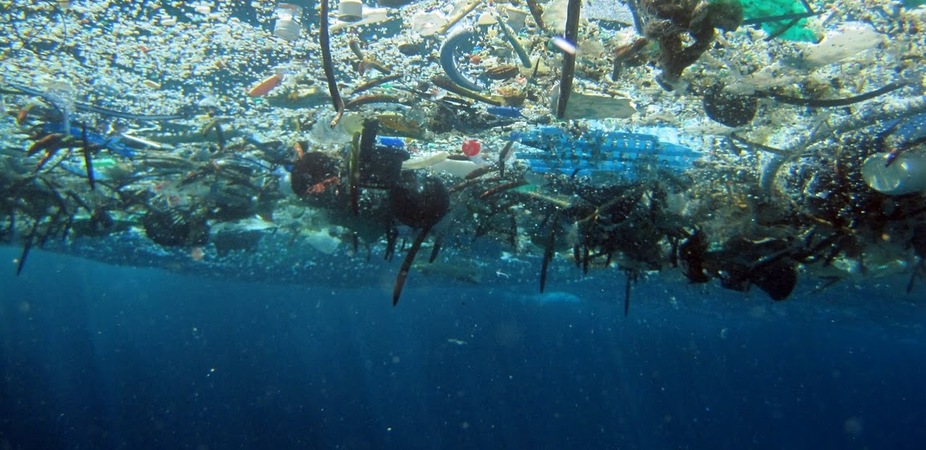
Here’s a sobering thought: There will be more tonnage of plastic than fish in the world’s oceans by 2050 if we continue to produce, consume and dispose of plastic as we are now.

Think about the implications. In fact, some scientists estimate that a minimum of 5 trillion pieces of plastic weighing more than 250,000 tons are floating in our oceans. That’s just the plastic that is floating. Another study from 2015 suggests that oceans now hold more than 4.8 million metric tons of plastic, much of which now rests on the sea floor. The most offensive item? Plastic bags. Approximately 500 billion plastic bags, or 150 per person on the planet, make their way into the waste stream. And those numbers are rising. They can take up to a 1,000 years to break down, and are often mistaken for jellyfish by a wide variety of marine species.

You don’t have to look far to find horrifying stories and gruesome pictures of dead whales, seabirds, turtles and other marine organisms with organs jammed full of plastic bags, containers, expanded polysterene products (Styrofoam™) and other human detritus. As many as 100,000 marine animals die from interactions with plastic, as do 1 million sea birds. It’s not hard to see that the more plastic that floods into oceans, the less healthy marine ecosystems become.

A recent study released last month by the World Economic Forum suggests a major re-think of how we produce, consume and reuse plastic items.

Here are some highlights:

  • More than 40 years since the recycling symbol appeared, we only recycle 14% of plastic produced today.
  • Every year up to $120 billion worth of plastic packaging material is lost to the economy as single-use plastic. Much of which ends up in our oceans.
  • UNEP suggests the cost of all of this packaging spilling into the environment at $40 billion.
  • 30% of plastic packaging (such as lids, straws, plastic tear offs, polysterene cups and to-go packages, etc.) will never be recycled and likely will continue to be loosed on the environment unless we significantly re-design and reconfigure them.
  • 20% of packaging can be reused as a result of new designs that replace single-use packaging for such items as cleaning and personal care products.
  • A retooling of the recycling system, including the design of packaging products and the materials could render the remaining 50% of plastic packaging products economically feasible for recycling. This is a big deal. To date, most recycling operations have been money-losing operations. This was certainly the case for the omnipresent plastic bags doled out at grocery stores. The Clean Air Council has estimated that recycling one ton of plastic bags costs $4,000. The recycled product can be sold for $32.
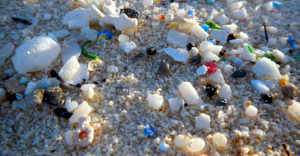
Microplastics are insidious because they’re hard to clean up, and they find their way into marine food webs, causing sickness and death. NOAA photo

It’s not just the big visible plastic bags, lids, floating polysterene etc. that may appear as food to some sea creatures, which ingest it then die of suffocation or starvation. It’s the tiny particles as well.

But truly addressing this problem is about people and their actions, not plastic.

Those microplastics that were once touted as the most efficient way to clean your bathtub or restore vitality to your cheeks? They hitchhike a ride through municipal water systems and into streams, rivers, lakes, marine estuaries and bays. Once there, they disperse and end up in seafood webs because they take a long time to break down.

In a study published last year in the Proceedings of the National Academy of Sciences, researchers found that filter feeders such as oysters, mussels, sea cucumbers and zooplankton are particularly vulnerable to the hazards of plastic.

The study focused on the impacts to oysters, which feed on the plastics they filter in. Researchers observed these oysters experienced drops in fertility, reproduction and larval development (some affected larva grew 18% smaller than healthy specimens).

Yes, the convenience of plastics have proved minor in the face of the mounting waste heap of trash floating, drifting or sinking in our oceans and the impact that has on seafood.

But truly addressing this problem is about people and their actions, not plastic. We first have to change our thinking on plastic so it is no longer  the daily, disposable necessity we take for granted. We need to think of it in terms of how to minimize global environmental impact. As such, I agree with the larger premise of the PNAS report that we should re-think how we manufacture, consume and recycle plastic to minimize production, and single-use products.

Similarly, I agree with one researcher’s  conclusion about ocean conservation. In a recent National Geographic op-ed piece, she writes “…ocean conservation is not about fish. It’s about people.”

She’s right. We have to change our attitudes about how we look at ocean conservation. I may not agree with her concept of zoning the ocean into areas that are and aren’t open to fishing as that would be very controversial and impractical on a global scale. But her approach to starting from the ground up, in this case, talking with local fishermen and using their input to manage the fishery, is essential to their buy-in. That investment in the outcome by the fishermen is crucial to the success of the fishery management and to the conservation of the resource.

Here are some additional resources:

  • National Geographic article on the volume of plastics in the ocean
  • National Geographic article on plastics and the great Pacific Garbage Patch.
  • Reuters story on using shrimp shells to make biodegradable plastic bags.
  • Statistics from Ocean Crusaders.
  • More statistics from Save the Bay.
  • Huffington Post graphic on how plastic enters marine ecosystems.

Top photo credit: NOAA

Recent Posts

  • Hurricane Ida wreaks havoc on Louisiana’s seafood industry
  • EPA Should Use Clean Water Act To Kill Zombie Mine
  • Slow Fish 2021: Relationship Matters
  • Faith, Façades, and Futility
  • Pebble Permit Paused: Politics at Play

Archives

  • September 2021
  • August 2021
  • April 2021
  • December 2020
  • August 2020
  • June 2020
  • February 2020
  • December 2019
  • November 2019
  • October 2019
  • July 2019
  • May 2019
  • April 2019
  • March 2019
  • January 2019
  • December 2018
  • November 2018
  • June 2018
  • May 2018
  • March 2018
  • February 2018
  • January 2018
  • December 2017
  • November 2017
  • October 2017
  • September 2017
  • August 2017
  • July 2017
  • June 2017
  • May 2017
  • April 2017
  • March 2017
  • January 2017
  • December 2016
  • November 2016
  • October 2016
  • September 2016
  • August 2016
  • July 2016
  • June 2016
  • May 2016
  • April 2016
  • March 2016
  • February 2016
  • January 2016
  • December 2015
  • November 2015
  • October 2015
  • September 2015
  • July 2015
  • June 2015
  • May 2015
  • April 2015
  • March 2015
  • February 2015
  • January 2015
Theme by Colorlib Powered by WordPress