Skip to content
One Fish Foundation
  • Blog
    • Aquaculture
    • Education
    • Environment
    • Policy
    • Wild Harvest
    • Fish Tales
  • About
    • About One Fish
    • About Colles Stowell
  • Education
    • Elementary School
    • Middle School
    • High School
  • KNOW FISH Dinners®
  • Resources
    • One Fish Podcast
    • One Fish Foundation in the news
    • The 7 C’s of Sustainable Seafood
    • Newsletter Archive
    • Recipes
      • Skate with Capers and Butter — Chef Rizwan Ahmed
      • Grandma Davis’ Fish Chowder — Jane Almeida
      • Ginger Garlic Tamari Scallops — Colles Stowell
      • Fish Stock — Evan Mallett
      • Mussels San Remo — Chef Rob Martin
      • Salted Pollock Croquettes – Chef Mark Segal
  • Connect
    • Contact OneFish
    • Social
      • Instagram
      • Facebook
      • Twitter
All Blog Posts

Hurricane Ida wreaks havoc on Louisiana’s seafood industry

  • September 8, 2021October 20, 2021
  • by Colles Stowell
Share it!
Share

This time, the levees around New Orleans held. The reduced flooding in the city after Hurricane Ida helped minimize the catastrophic loss of life following Hurricane Katrina 16 years ago.

But some levees in southern parishes didn’t fair as well. And Ida’s widespread devastation fueled by sustained 150 mph winds will have long-term consequences for Louisiana’s seafood industry.

I spoke with Lance Nacio, owner of Anna Marie Seafood in Montegut, La. on Monday to get a sense of what folks down there are dealing with. Here is a quick snapshot of our conversation:

  • He and his family are fine, living on his two fishing boats and in his house. The house, the boats and the processing facilities all weathered the storm pretty well, though there are some things to fix.
  • His boats are trapped in the canal across the street from his house until Sept. 29, which is the estimated time when power should be restored to allow the drawbridges to raise and let the boats motor to the Gulf of Mexico and begin fishing.
  • More than 60% of the structures in Terrebonne Parish (the 2,000-square mile parish south and west of New Orleans where Lance and many other fishermen live) are uninhabitable, according to authorities.
  • Lance predicts that many residents will not return in what may be a more expansive exodus than after Katrina.
  • This exodus will not only include fishermen, but also those who run critical infrastructure operations like docks, ice houses, boat maintenance operations, processing facilities, etc.
  • He will be working with Chef Dana Honn of Carmo to provide meals for first responders and line crews from across the country.

In essence, the industry in the state that provides the highest volume of domestically harvested wild shrimp and crab is in trouble. The entire regional seafood supply chain from boat to plate will likely be a shell (take or leave the pun) of itself in just a few months, sending shock waves across the country and around the world. As Dana said, “The fish will be out there. But with no infrastructure in place, who’s going to come back?” Louisiana Congressman Garrett Graves has formally called on the US Department of Commerce to declare a Fisheries Disaster Determination for the region to unlock funds to counteract the pending economic damage.

Worse still is the likelihood that further climate change will spin off more intense hurricanes like Ida and Katrina more frequently, leaving the Gulf Coast more vulnerable to long-term ecosystem damage.

This summer alone has seen several catastrophic events highlighting how climate change can have severe impacts on food systems:

  • the sweltering heat weave that smothered the Pacific Northwest for several days, literally cooking some oysters in their shells;
  • the anemic wild Pacific salmon runs in the Yukon territories, forcing remote Indigenous communities to scramble for winter food stores;
  • the devastating fires across California and other western states that have devoured millions of acres of old growth forest (very important to watersheds) and farmland.

Want to get involved? Here are a few ways to do so with a focus on Hurricane Ida’s aftermath:

  • Several people and organizations are raising funds for relief efforts, including providing food, shelter, medical services and supplies, debris removal, and repairs. Here are a couple of resources:
    • Chef Dana is raising money to support Lance’s efforts to help his community and feed first responders and line workers.
      • Venmo: @Lance-Nacio
      • PalPal: orders@annamarieshrimp.com
      • Zelle: Lance Nacio
    • Coastal Communities Consulting, Inc. is a nonprofit organization supporting coastal businesses and fishermen in La. It is doing good work to provide info on everything from prescriptions to food and water as well as coordinating donations.
    • Gulf South Rapid Response Community Controlled Fund provides disaster relief directly to frontline communities in the Gulf South impacted by climate disasters. Local leaders have committed to a transparent and accountable process for the money – which will allow communities to practice self-governance and self-determination.
  • The Gulf Coast Center for Law and Policy is hosting a national press conference Thursday Sept. 9 from 10:30 am – 11:30 am CDT to address Ida’s impact on the Gulf Coast region and the nation. Here’s a link to more information.
  • Learn more about the Sustaining America’s Fisheries for the Future Act, which is a congressional bill that mandates accounting for climate change when setting fisheries policy in the U.S. This bill officially calls for the re-authorization of the Magnuson-Stevens Act, the primary fisheries management policy for the U.S. If you agree with its direction, contact your Congressional representatives and tell them to support it.
  • Learn more about the Keep America’s Waterfronts Working Act, a congressional bill that aims to preserve working waterfronts, like the ones in jeopardy in southern Louisiana following Hurricane Ida. Again, if you like what you see, contact your Congressional representatives.

The last thing we can all do is spread the word. The more folks know what’s going on and what’s at stake, the more the broader community can get involved and help chart the industry’s future.

We’ll post more updates in this blog and via our Facebook page.


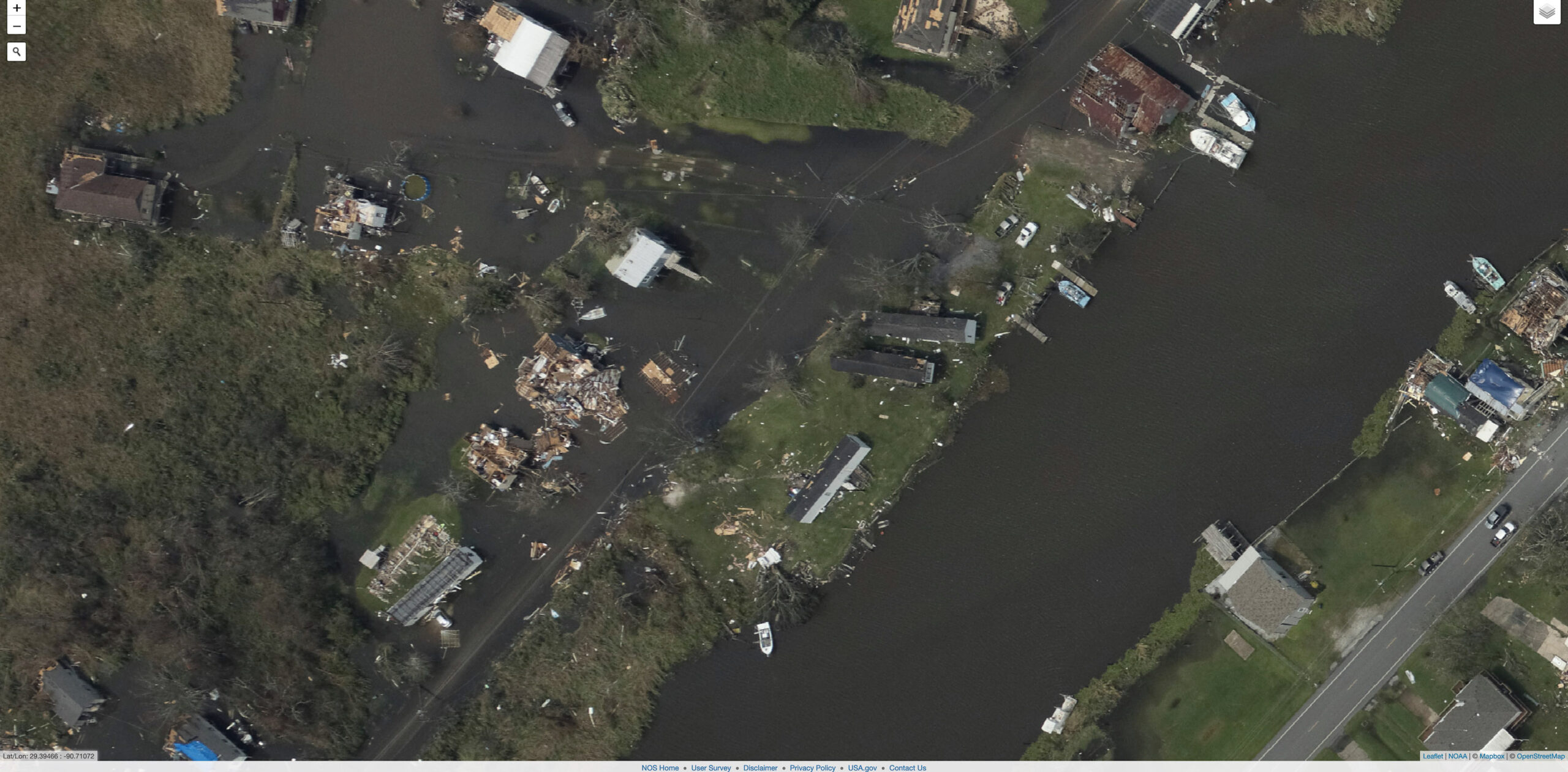
Top photo: NOAA satellite image of Hurricane Ida’s destruction in Terrebonne Parish.
All Blog Posts

EPA Should Use Clean Water Act To Kill Zombie…

  • August 5, 2021October 19, 2021
  • by Colles Stowell
Share it!
Share

More than 65 million sockeye salmon returned to Bristol Bay, Alaska this year, setting an all-time record and proving, yet again, that healthy habitat and sound management lead to productive fisheries. Home to the world’s largest wild sockeye run, the watershed provides the cold, clear salmon-spawning waters that ultimately support more than 16,000 jobs and a $2.2 billion annual economic boost.

Perhaps recognizing the ecological and economic value Bristol Bay provides to the state, the US Army Corps of Engineers denied the federal permit request for the proposed Pebble Mine last November.

So why are we still talking about it?

In a nutshell, greed. Geologists for Canadian-based Northern Dynasty Minerals, which owns the rights to the mine site at the headwaters of two of the bay’s most productive river systems, believe the area is home to a massive ore deposit of copper, gold and other precious metals. The company and its investors see huge profits.

Everyone else, including a majority of folks in the state, sees a humongous threat to the very lifeblood of Bristol Bay and to the state.

Bumpy ride

I’ve talked to many folks directly connected to the bay during the past five years: commercial fish harvesters, recreational fishing lodge owners, processors, economic development directors, scientists, and indigenous leaders whose communities depend on the salmon for their lives. They are determined and fiercely committed to defending the natural resource.

And they’re tired of the seemingly endless battle to safeguard their livelihoods from the zombie mine that won’t die. Standing up to foreign, well funded mining interests for close to two decades has been an emotional, psychological, and at times physical roller coaster.

The long, pitched battle appeared near an end in 2014 when the Obama Administration Environmental Protection Agency released proposed protections that would block certain mining activities in Bristol Bay’s headwaters. Unfortunately, the EPA wasn’t able to finalize that determination due to a legal challenge from the mine’s owners.

The tug of war over this priceless natural resource continued, as the US Army Corps of Engineers appeared close to approving the federal wetlands permit last August. One tweet from Donald Trump, Jr. and a series of scathing under-cover videos showing Pebble’s owners bragging about political strong-arming and lying about the mine’s scale, and the momentum turned on a dime. Suddenly the mine’s inevitability seemed very tenuous. Optimism for Bristol Bay’s future grew, and the US Army Corps denied the permit in November.

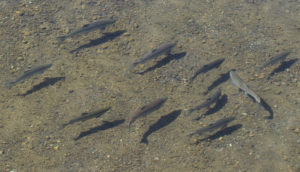
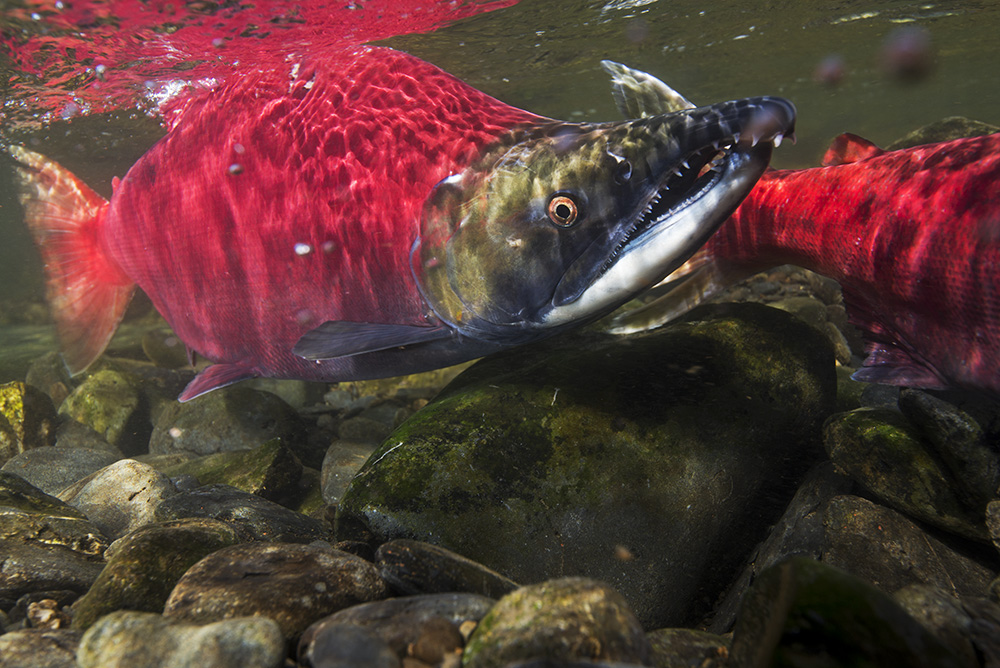
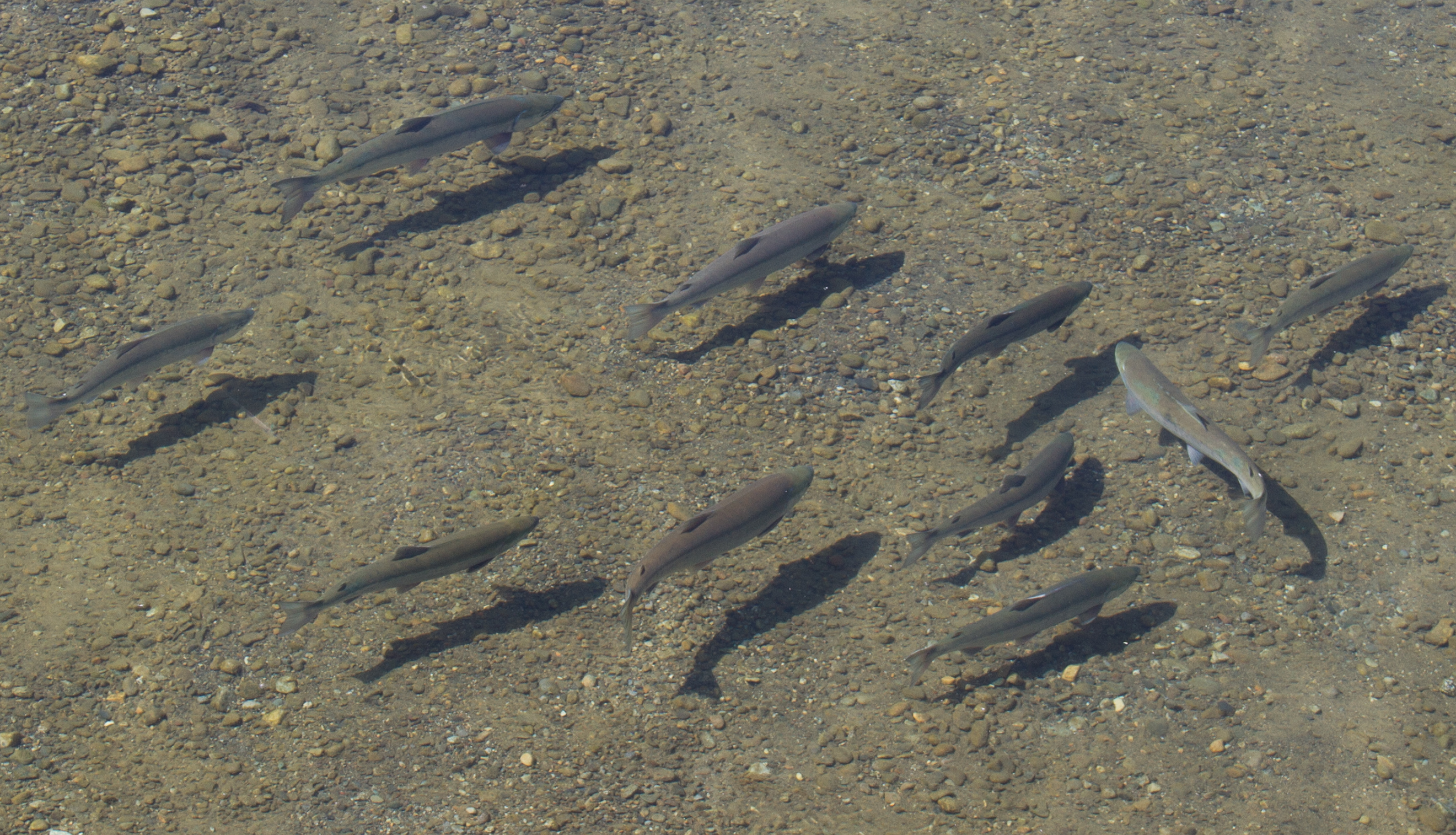
These sockeye are happily swimming in 3-4 feet of gin clear water below Brooks Falls near Naknek and Brooks lakes at the headwaters of the Naknek River.

Closing the door

To be sure, the mine’s owners have vowed to keep fighting, and have filed an appeal with the US Army Corps of Engineers requesting a reconsideration of the permit denial.

That’s why everyone should take notice, regardless of geography. This isn’t a NIMBY issue. What happens in Bristol Bay sends tremors throughout the continental US. If a giant mine can be forced upon people who don’t want it in an ecologically and economically crucial watershed in Alaska, what would stop something similar from going in an equally sensitive and important area elsewhere?

You might ask what could go wrong if Pebble were to be built. This week marks the seven-year anniversary of when the Mt. Polley mine in British Columbia failed, dumping 6.6 billion gallons of toxic waste in the Fraser River watershed, once home to millions of returning wild salmon. The Pebble Mine would produce 10.2 billion tons of toxic waste, which if unleashed, could permanently destroy the Bristol Bay salmon fishery.

Several politicians have changed their tune, now voicing support for Bristol Bay and the effort to compel EPA to outright stop the Pebble project via the Clean Water Act. They’ve done so as the people of Bristol Bay have collectively asked the Biden administration to finish the job started in 2014 of putting Clean Water Act protections in place immediately. In fact, August 8 is the one-year anniversary of candidate Biden’s pledge to protect the bay.

Invoking the Clean Water Act is the most direct and immediate path toward ensuring robust sockeye returns. It’s an important first step that should happen soon to ensure the process can be fully completed … prior to the next presidential election when yet another political momentum shift could again change the dynamic.

Following an EPA Clean Water Act determination, the next step to permanently protect Bristol Bay would be a Congressional declaration that safeguards the entire watershed from any harmful mining projects in perpetuity.

U.S. Senator Lisa Murkowski is exploring what that potential legislative solution could look like, meeting with local Bristol Bay leaders and stakeholders earlier this summer.

Again, Step 1 is to call on the EPA to do its job and protect Bristol Bay and its priceless natural resources.

To learn more or get involved, check out the resources below.

Resources

Stop Pebble Mine Now: Great resource site with direct action links, like telling EPA to do its job.

Brief video from #vetoPebbleMine featuring dear friend and colleague Capt. Kat Carscallen explaining what’s at stake.

Video produced by the United Tribes of Bristol Bay.

Follow these links to hear One Fish Foundation interviews with some of the folks from around Bristol Bay:

  • Kat Carscallen, commercial fisherwoman and executive director of Commercial Fishermen for Bristol Bay: Video on Youtube. Audio-only download.
  • Nanci Morris Lyon, co-owner, Bear Trail Lodge in King Salmon. She’s been fighting Pebble since about the time her daughter, Rylie, now a lodge guide, was born.  Video on Youtube.  Audio-only download.
  • Melanie Brown, community organizer with SalmonState and indigenous commercial fish harvester out of Naknek, AK.  Video on YouTube. Audio-only download.
  • Steve Kurian, captain of the F/V Ava Jane driftnetter fishing out of Naknek and co-owner of Wild for Salmon, a retail and wholesale operation based in Pa.   Video on Youtube.  Audio-only download.
  • Norm Van Vactor, CEO of Bristol Bay Economic Development Corporation and long time Bristol Bay resident, fisherman, and processor.  Video on YouTube. Audio-only download.
  • Gayla Hoseth, director of natural resources with Bristol Bay Native Association, Second Chief of the Curyung Tribal Council, and subsistence fish harvester.  Video on YouTube. Audio-only download.

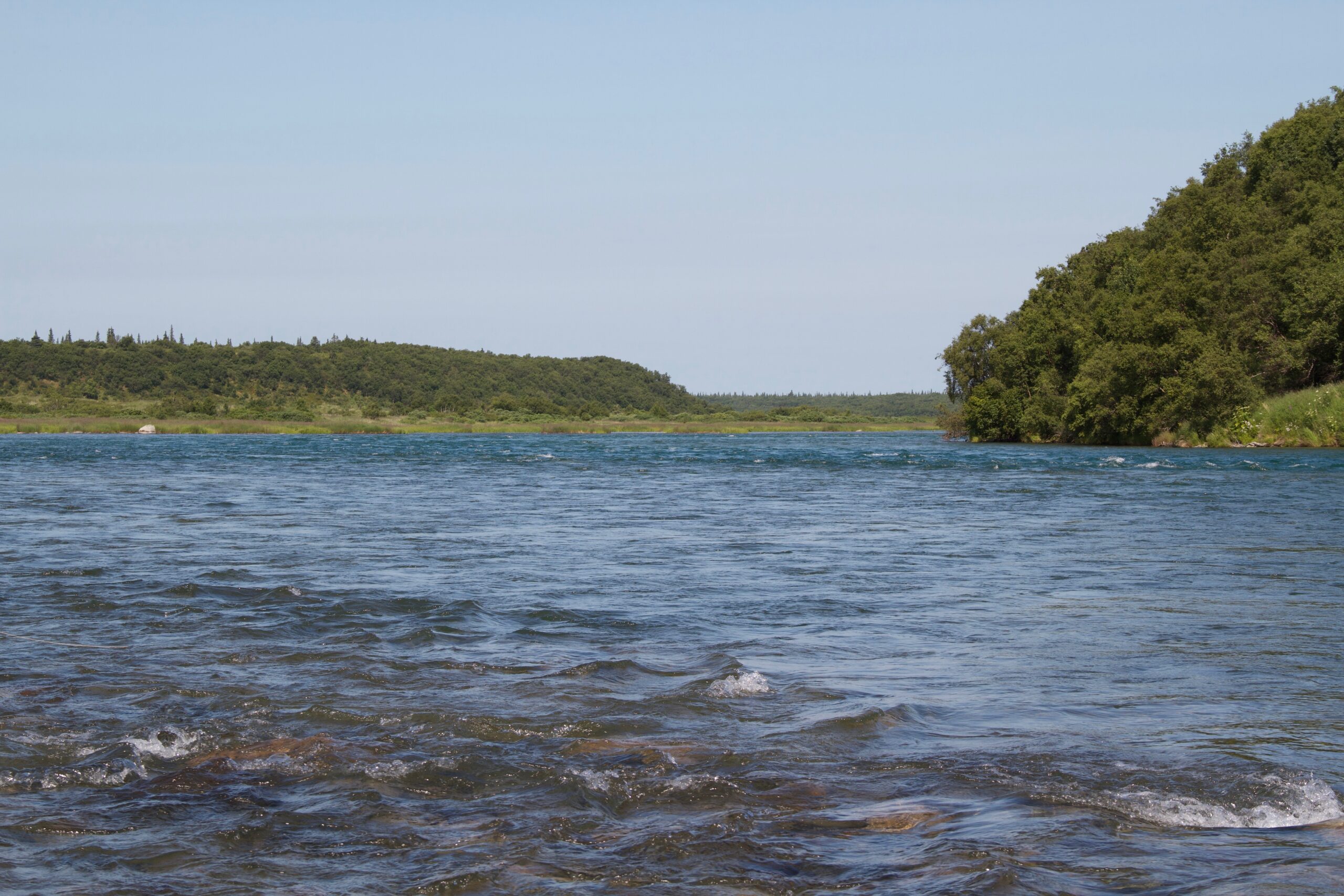
Top Photo: Upper Naknek River, where I watched a steady parade of chrome-colored, pre-spawn sockeye pushing their way upriver in 2019.

All Blog Posts

Slow Fish 2021: Relationship Matters

  • April 14, 2021October 19, 2021
  • by Colles Stowell
Share it!
Share

Slow Fish is about relationships. Our relationships with seafood, those who harvest and sell that seafood, our broader communities, our oceans and waterways, and with each other.

Since the pandemic shut down our planned Slow Fish 2020 in-person event last March, we’ve been reimagining how we re-establish, strengthen, and explore these connections. Planning a virtual event was new for all of us. We learned you can’t apply the same thought process to a remote event.

The theme of relationships was prominent throughout Slow Fish 2021, held online from March 18-20 and March 25-27.

We heard it from Jim Embry, who spoke about the importance of striving for equity, inclusion, and justice even as racism persists in our water- and land-based food pathways. Keynote speaker Buck Jones of the Columbia River Intertribal Fisheries Commission reemphasized the importance of preserving both indigenous and non-indigenous connections to food sources.

Know your fishermen and women!

The theme of relationships cropped up again in the Seascape World Café where attendees joined rotating conversations about growing the network, advocacy and action, and young fish harvesters.

One central theme from the Seafood Supply Chain Deep Dive is that direct connections between fish harvesters and customers, retailers, and other harvesters are increasingly essential to growth and survival. Covid’s devastating impact on industrial supply chains continues to wreak havoc. In the end, the definition of “local” is becoming less about geography and more about relationships.

We heard this from several storytellers. Kayla Cox at New England Fishmongers based in NH described customer enthusiasm for the amazing shrimp from Anna Marie Shrimp in LA and wild salmon from Yakobe Fisheries in AK. Lance Nacio explained how these types of business networks have helped both Anna Marie Shrimp and its customers who buy all of the scallops he can get from New England Fishmongers.

These are the kinds of relationships that help fishermen and women troubleshoot logistical challenges like collective marketing, business questions, or mentorship. These are the connections that grow the network of folks that share Slow Fish values of good, clean, fair seafood.

Natural connections

Relationships to the land, the water, the fish, the birds, animals and Nature in general is at the center of Indigenous culture, and it was the foundation for many powerfully spiritual stories in the Indigenous Access to Food Sources Deep Dive. We heard perspectives from Indigenous communities from Martha’s Vineyard, MA. all the way to AK., including stories from smaller and bigger river systems in northern CA. and OR.

We heard resilience in the stories of opposing a massive proposed mine in the Bristol Bay, AK watershed, restoration of Indigenous access to wild salmon runs on the Columbia River; preservation of cultural knowledge around seasonal, balanced ocean and land harvests in northern California, and the continued efforts from all geographies to protect treaty rights around access to natural resources. The upshot? If we take care of our natural resources, they will take care of us. Protecting Indigenous access to cultural food sources is an important part of that equation.

This connection to natural resources and marine habitats played a crucial role in the Aquaculture Deep Dive, where we learned about small-scale, ecosystem-balanced operations like an oyster farm near Miami, seaweed farming in Maine, and wild seaweed harvest in British Columbia. We also heard about collective efforts to oppose industrial-scale finfish and shrimp farming and other operations, which upset marine ecological balance and often socio-economically displace coastal communities that depend on local fisheries for their lives.

The Rivers Connect the World discussion featured compelling stories of habitat restoration and preservation from the Mississippi, Danube, Snake, and Copper rivers as well as the rivers of Cork, Ireland. These efforts continue to succeed because of the collaboration within and among communities along those rivers, regardless of political borders.

Shared Resources

The Blue Commons Deep Dive explored how the industrial-scale development of the Blue Economy typically saps the lifeblood from coastal communities and their local economies, and cripples the independent fish harvesters living in those communities. Blue Economy plays such as massive fish farms, huge offshore wind farms, or large, investment-backed no-fish zones essentially privatize large sections of the ocean and have the most devastating impacts on independent, artisanal, and subsistence fishermen.

The Blue Commons is a counter-narrative to the Blue Economy, in which communities gather around a shared set of values to treat marine and estuarine water bodies as shared resources. We again heard stories of resilience, such as how the Okanagan Nation’s Alliance worked to restore wild sockeye salmon runs on the Snake River in their home waters in British Columbia. We learned about a Rhode Island community working to re-establish a vibrant, locally managed quahog fishery and provide more access to more fishermen despite consolidation by market forces.

We also learned how a fishing community in Sitka, AK worked to ban trawl nets in sensitive fishing areas to minimize halibut bycatch; develop a collaborative science approach to monitor rockfish biomass to ensure healthy stocks; and create an innovative program to train young fish harvesters. These types of commoning fortify the relationships between communities and their surrounding natural resources.

All of these discussions prompted thoughtful idea exchanges and questions in very active chat sessions, with 2,424 messages spread out over both weekends. This does not include the very vibrant feedback during the live panel discussions following the screenings of “Last Man Fishing” and “The Wild” films during the first weekend.

On the final day of the event, Slow Fish North America Oversight Team members Tasha Sutcliffe and Kevin Scribner provided a thorough synthesis of common threads arising from these discussions. Relationships, food sovereignty, equity and social justice, habitat protections, and intergenerational knowledge transfer or mentorship were some of the most common threads woven into the fabric of the event and of Slow Fish values. To see the full synopsis from Kevin and Tasha, follow this link.

Follow this link in case you’d like to see recordings of the different discussions from Slow Fish 2021. Scroll down the library until you see “Aquaculture.” The eight videos following Aquaculture were all part of the event.

A team of between 30 or so people worked tirelessly for several weeks to coordinate what turned out to be a stellar event. We met or exceeded our goals of strengthening and growing the community; empowering folks in the network to share their stories and become our values standard-bearers; spark meaningful conversations around several crucial topics to the Slow Fish network; and celebrate the community and collective energy of our shared values.

I am truly thankful to everyone who participated. Hopefully, the next event is in person!


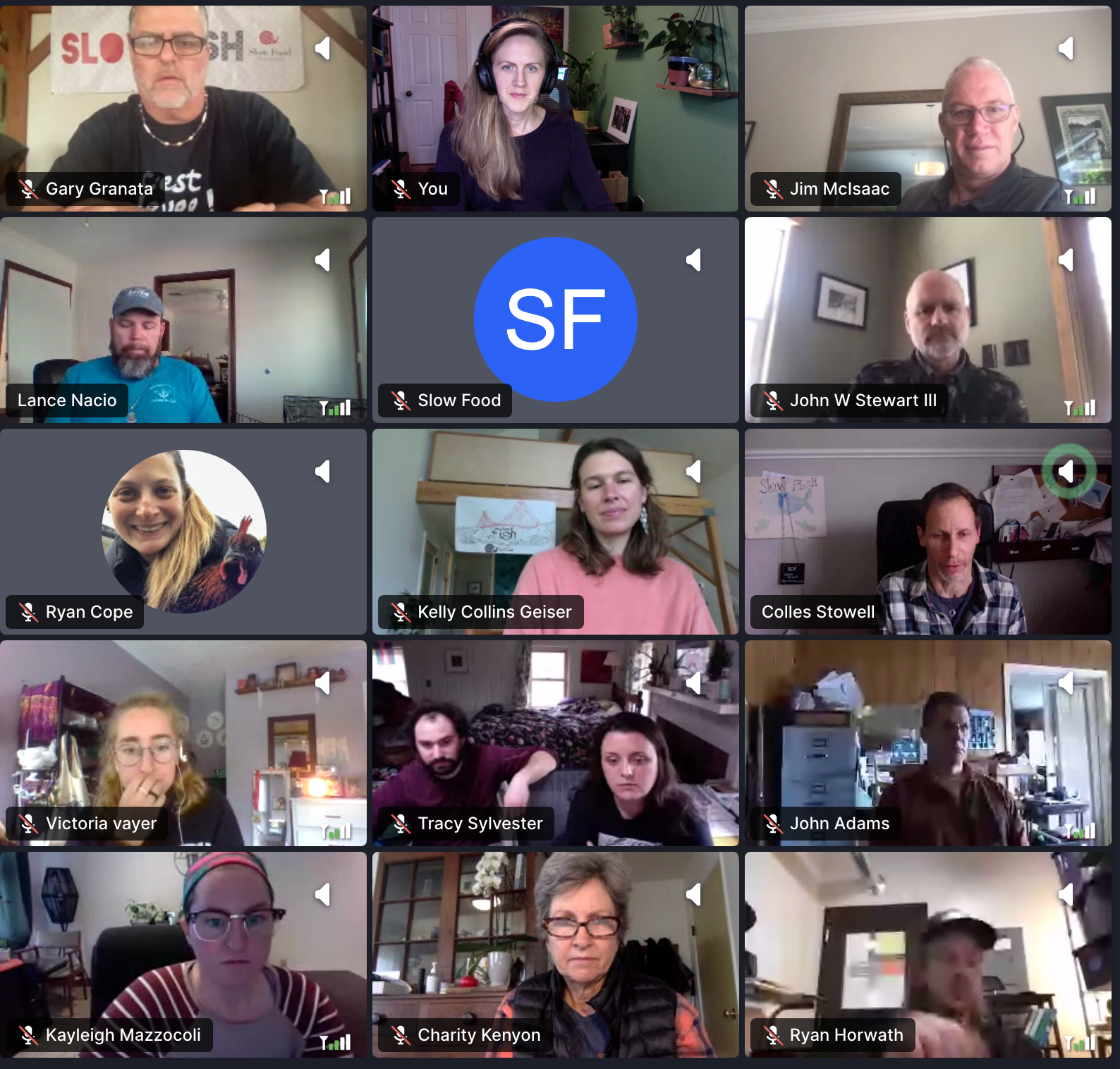
Top photo: Screenshot from the final day of Slow Fish 2021. Credit: Sister Denisa Livingston of Slow Food Turtle Island

All Blog Posts

Faith, Façades, and Futility

  • December 9, 2020October 19, 2021
  • by Colles Stowell
Share it!
Share

Politics can be a complex cocktail of all three.

Too often our faith that politicians will do the right thing falters behind false promises and frustration.

Such is the case with environmental protections. Heavily influenced by giant corporations spending billions in lobbying efforts to extract oil, natural gas, timber, minerals, etc., folks in Congress walk a fine line between their concern for staying in office (which requires funding), and following up on their promises to constituents. They often defend their positions with vows to increase jobs and boost the economy while still expressing concern for the environment. That is, they want constituents to believe all these things can co-exist with extractive industries, when they rarely can. You can’t have your cake and eat it too.

Witness the roller coaster ride to protect wild salmon habitat throughout Alaska in the past few months.

You may have noticed the US Army Corps of Engineers recently denied the permit for the proposed Pebble Mine in Bristol Bay. This is great news, and it’s an astounding turnabout from as recently as July when the Corps had issued its final environmental impact statement (EIS) essentially paving the way for the permit’s approval.

Contact Creek, Bristol Bay. These crystal clear waters invite countless salmon to migrate to their spawning grounds.

The EIS blatantly ignored several glaring environmental threats posed by what would have been North America’s largest open pit copper and gold mine. Chief among those threats is the risk of a failed tailings dam (which holds toxic waste rock from the mining process) because of potential design flaws, earthquakes, and other natural forces. Moreover, because there’s no magic wand that would make several million tons of toxic waste disappear, the threat of a dam failure would be permanent, which the Army Corps failed to address in the EIS.

Changing tides

Then the momentum changed rapidly. First, several prominent Republicans, including Donald Trump, Jr., spoke out against the mine, setting off a chain reaction of other public figures, including President-elect Joe Biden, denouncing the project. The Corps then sent a letter to Pebble’s owners in late August calling for a mitigation plan that would explain how Pebble would mitigate for the wetlands, rivers, and streams its project would permanently destroy. This was the first signal from the Corps that it was willing to acknowledge the science clearly showing the Pebble Mine would cause significant harm to the Bristol Bay watershed and its salmon fishery.

Then a series of damning secret tapes released in September revealed the greed and audacity of the mine’s owners, who bragged about controlling the state’s governor and US Senators. The mine’s owners also boasted on tape that they viewed the mine not as the 20-year project stated in the permit, but as a much larger 200-year mining operation.

The Corps took the next step on Nov. 25 when it announced its denial of Pebble’s permit, stating the project did not meet its mitigation standards and the proposal was contrary to the public interest. The permit denial was a surprising and much welcome gift to the people of Bristol Bay who have been fighting for their homes, livelihoods, and traditions since the Trump Administration re-opened the door for the mine to proceed in 2017.

Sockeye on the move in the Brooks River, Bristol Bay.

Seeking permanence

Again, this is great news. I think of all of the salmon warriors I’ve met in the past several years who continue to dedicate so much of themselves to protect the world’s largest intact wild salmon run. I think of the amazing coalition of different user groups like commercial, recreational, and subsistence fishermen and women, who are often at loggerheads, that continue to stand united against this imminent threat to their salmon and their lives.

However, the Bristol Bay watershed is not fully protected. Pebble is stopped for now. But this salmon-rich region will not be fully safe from such threats until permanent protections are in place. If we have learned anything from the last four years, it’s that Bristol Bay is at risk from changes in political winds. So we need to ensure that it is protected for generations to come.

On December 2nd, the Bristol Bay region released its vision for what these long-term protections should look like and a two-step roadmap for how we might get there. First, the EPA needs to use its authority under the Clean Water Act to veto the Pebble Mine and establish clear, science-based restrictions on mining activity in Bristol Bay’s headwaters. The region has been asking for an EPA veto from the outset.

Second, Congress needs to designate a national fisheries area to provide permanent federal protection for the watersheds of Bristol Bay against any toxic mine waste from any project like Pebble.

Captain Steve Kurian and crew aboard the F/V Ava Jane, fishing for sockeye in the mouth of the Naknek River.

Copper, wood, and oil 

All of this comes back to the question of why the administration changed its mind so fast. And it speaks to the façades so prominent in politics. Alaska Governor Mike Dunleavy has been quite vocal in his support of the mine, even posing for a photo aboard Air Force One ostensibly during a meeting to promote the mine.

Until recently, Alaska’s US Senators Lisa Murkowski and Dan Suillivan have said they opposed the mine, but they’ve been fairly non-committal about actually stopping Pebble … even after a majority of Alaskans had said they oppose the mine. Neither senator called for a clear, outright rejection of the project until after the release of the Pebble Tapes claiming they were in the pockets of Pebble’s owners and sitting quietly in the corner while the permitting process played out. Strange timing.

Bristol Bay is just one example of the pitched battles to protect vital natural resources across Alaska and throughout the US. During all of the publicity around the mounting political opposition to Pebble, the administration began to redouble efforts to green light other extraction projects it had advocated for in the past couple of years.

Brown bear on the prowl below Brooks Falls near Naknek and Brooks lakes.

The administration accelerated a push to remove the so-called “roadless rule” protection from the Tongass National Forest, the largest intact temperate rainforest in the world. Removing this protection literally paves the way for clear-cut logging in this pristine, 9 million acre forest, which has been described as the lungs of North America because of its oxygen output and carbon sequestration. It also contains thousands of streams that are home to myriad species, including many anadromous fish like wild salmon and trout.

At the same time, the administration opened up the Arctic National Wildlife Refuge (in Northern Alaska) to oil drilling, having posted the auction for permits on Dec. 7.

Is it a coincidence that these two environmental threats were more actively pushed forward while Pebble was retracted?

Ironically, Murkowski, Sullivan, and Congressman Don Young released a joint statement on Oct. 25 supporting logging in Tongass as creating jobs. The same delegation released another joint statement on Dec. 3 praising the administration’s decision to formally open ANWR to oil drilling by selling leases.

The timing of all of this raises questions considering the Army Corps called for the mitigation plan in late August and denied the permit on Nov. 25. Some observers who closely watch environmental politics suspect a deal was made. Save Bristol Bay, but sweep aside the roadless rule and open up drilling in ANWR.

Perseverance 

Enter the futility of politics. If in fact a deal was made to save Bristol Bay at the expense of the others, the frustration is maddening. The notion of trading precious natural resources like poker chips is appalling. Especially when the pristine ecosystems in question support myriad species as well as Alaska citizens and tens of thousands of jobs in industries that carry a multi-billion dollar economic impact to the state … without the ecological threat of rampant logging and mining.

Sadly, backroom deals happen all the time.

Here’s what we know:

  1. It would be folly to assume that Bristol Bay got the reprieve at the expense of Tongass and ANWR simply because of a backroom deal. There are too many mitigating factors for these decisions to be made solely based on one such deal. The issues are just too complex.
  2. We may never know for sure if any deal may have at least played some role in the overall outcome. Even if so, that doesn’t change the reality that all three regions absolutely need permanent protections.
  3. Bristol Bay’s reprieve remains temporary until protections become permanent.
Melanie Brown, salmon warrior. She fishes commercially on the site her great grandfather established on the Naknek River.

The sheer will and collective unity to protect the resource, the people, and the Native cultures that depend on the annual return of Bristol Bay salmon is at the heart of why the Pebble Mine is not now operating. Even when the mine seemed inevitable back in July and countless folks on the frontlines felt burned out from standing up to the mine for as long as 15 years, the fight continued. More people from diverse backgrounds rallied to the cause. This powerful coalition will continue to fight until Bristol Bay gains permanent protection.

Perhaps we should view the collective efforts that put the Pebble Mine on its deathbed as a blueprint for how to address similar threats to important natural resources. It’s a testament of how standing up to heavily funded corporations and confounding politics to protect priceless resources is not only possible, but definitely achievable.

There are already long-standing, dedicated movements to safeguard both Tongass and ANWR (see calls to action below). The success of this opposition, as with every other effort to protect critical habitat, again hinges on the continued persistence, time, energy, and faith of a broad coalition willing to persevere against what seems like long odds. In the end, our voices matter, whether we live in the region, state, or even time zone where these ecological challenges exist.

For if we don’t unite to navigate the political waters to protect our most precious resources wherever they are, the resulting cocktail will prove toxic.


Calls to action

Here are ways to learn more and engage:

Stop Pebble Mine Now: Direct calls to action to ask EPA to veto Pebble Mine and ask Congress to permanently protect Bristol Bay.

Salmonstate Tongass Action Page: Direct appeal to the incoming Biden administration to protect Tongass.

Defend the sacred: Here is a specific month-long targeted call to action.


All Blog Posts

Pebble Permit Paused: Politics at Play

  • August 26, 2020October 19, 2021
  • by Colles Stowell
Share it!
Share

The salmon arrived in Bristol Bay, Alaska in big numbers again this year, following a trend over the past few years that highlights what ensuring clean habitat and science-based management can provide.

Driven by millennia of evolution and genetic imprint, wild salmon do what they do because pure instinct makes their lives fairly straightforward. Survive or die trying. Propagate the species. Standing in their way are forces largely beyond their control: bears, seals, whales, other predators, changing habitat, and of course, man.

They arrived this summer blissfully unaware that greed and politics threaten their genetic promise and the generational contract they keep with the future.

Northern Dynasty Minerals, a Canadian-owned mining interest, has been pushing for nearly two decades to excavate one of the world’s largest open pit mines in Bristol Bay, at the headwaters of the world’s largest intact wild salmon run to extract gold, copper, and molybdenum. In the process, the mine would create, and must permanently and securely store, billions of cubic feet of toxic cyanide, arsenic, and other materials forever.

The past few weeks have seen dramatic shifts in the saga of the proposed Pebble mine.

To recap,

  • On July 24: The US Army Corps of Engineers released an environmental impact statement claiming that the mine would not cause undue harm to salmon habitat. Scientists from around the world have roundly criticized this statement and the science behind it;
  • Congress has taken note: The US House of Representatives voted in late July to prevent the Army Corps of Engineers from using federal funds to issue the permit (the spending amendment has not reached the Senate); and, the House Oversight and Reform Committee requested the Department of Defense’s Inspector General and the EPA launch formal investigations into the Pebble permitting process.
  • Since then, a series of high-profile Republicans have spoken out against the mine, including those close to and inside the current administration;
  • On Aug. 24, the Army Corps of Engineers did an about-face and said that because the mine would damage “aquatic resources,” the permit process is on hold until Pebble’s owners can produce an adequate plan to mitigate these adverse impacts;

To be sure, a pause is great news. It means the administration has not issued the federal permit the mine’s owners need to proceed.

That the mine has not yet been built after nearly two decades of trying is a testament to the incredible, unfailing drive of hundreds of people on the front lines of this opposition. Imagine the emotional, spiritual, and psychological toll of enduring the ebb and flow of a pitched battle for what many in the region feel like is the fight for their lives.

I can imagine this. I’ve interviewed several people who have been standard-bearers for Bristol Bay’s natural resources and the people who depend on these resources. They have stood up for the fish. I’ve worked with many others on the campaign to stop the mine. Their passion and energy are an inspiration to me.

Follow these links to hear some of the voices from around Bristol Bay.

  • Nanci Morris Lyon, co-owner, Bear Trail Lodge in King Salmon. She’s been fighting Pebble since about the time her daughter, Rylie, now a lodge guide, was born.  Video on Youtube.  Audio-only download.
  • Melanie Brown, community organizer with SalmonState and indigenous commercial fish harvester out of Naknek, AK.  Video on YouTube. Audio-only download.
  • Steve Kurian, captain of the F/V Ava Jane driftnetter fishing out of Naknek and co-owner of Wild for Salmon, a retail and wholesale operation based in Pa.   Video on Youtube.  Audio-only download.
  • Norm Van Vactor, CEO of Bristol Bay Economic Development Corporation and long time Bristol Bay resident, fisherman, and processor.  Video on YouTube. Audio-only download.
  • Gayla Hoseth, director of natural resources with Bristol Bay Native Association, Second Chief of the Curyung Tribal Council, and subsistence fish harvester.  Video on YouTube. Audio-only download.

This is why I view the permitting pause with some degree of caution. In 2014, the mine was essentially left for dead when the previous administration had used the Clean Water Act to effectively preempt the permit process, stating that the mine as proposed should not be built because it would threaten the salmon habitat. But the mine’s owners sued and held off the final signing of that EPA decision until the new administration arrived. It took just a few months to undo most of those safety precautions put in place under the Clean Water Act.

So here we are. Pebble’s owners have 90 days from Aug. 20 to submit their mitigation plans. That 90-day window unsurprisingly comes after the Nov. election. And given what has happened in recent weeks, who knows what will happen before the end of the year.

What I do know is that the vigilance and united front that has staved off the mine thus far and resulted in this permitting pause (what otherwise looked like a freight train headed straight toward the permit), is now more critical than ever before in the history of this battle.

This pause is indeed a good thing. We should all take a moment to celebrate, and even put some Bristol Bay sockeye on the grill to toast all the hard work that led us to this point.

And then we should prepare to keep up the resistance. Of all of the remaining options, an all-out veto of the permit from the EPA is the best, most effective way to stop the mine. And that is where we must put our energies, even if it feels like we’re swimming upstream.

For now, here are a couple of things you can do to learn more and stand with those from around the continent who continue to oppose the mine.

  • “The Wild” Salmon Rising livestream event 29 at 6:30 EDT. Check out friend and colleague Mark Titus’ powerful documentary film about the incredible life force that is the annual wild salmon return to Bristol Bay. He spotlights the fish, the people, and what’s at stake in the face of the Pebble mine. Also, there will be live music and a cooking class with celebrity chefs like Tom Douglas and Renee Erickson. Full disclosure: 50% of ticket sales from this link go to One Fish Foundation.
  • Tell the EPA to veto the mine: Stop Pebble Mine Now. THIS IS VERY IMPORTANT! This is the most effective way at this time to stop the mine.

Additional Resources

  • Rolling Stone article discussing the administration’s push to extract resources from Bristol Bay and the Tongass National Forest. Thorough discussion of what’s at stake in both regions.
  • New York Times article about the US ACE release of the environmental impact statement. Great visuals of the land, the people, and some of the impact.

Top Photo: The Bristol Bay fleet, by Chris Miller. Photo courtesy Eva’s Wild.

All Blog Posts

Keeping Salmon Wild

  • June 16, 2020October 19, 2021
  • by Colles Stowell
Share it!
Share
Top photo: Spawning sockeye salmon
From the book, The Salmon Way: An Alaska State of Mind, by Amy Gulick
©Amy Gulick/amygulick.com
To buy the book: www.thesalmonway.org


If we humans were to be judged by how we treat natural resources, we’d be up a creek … likely a toxic creek.

We don’t need to look far for evidence. Oceanic and atmospheric pollution, polluted groundwater, dammed rivers, etc. Bad policies, bad habits, and slow reaction to warning signs have compounded the problem.

I’ve focused on the proposed Pebble Mine in Bristol Bay, Alaska for several years. This would be a massive open pit copper and gold mine at the headwaters of the world’s largest wild sockeye salmon run. It would jeopardize the runs of several salmon species and the water supply and food source for thousands in and around the bay as well as the livelihoods of thousands of fish harvesters and those working at processors. Not to mention the impact on millions of Americans who eat wild Alaska salmon.

These types of mines generate billions of tons of highly toxic waste like cyanide, arsenic, and copper that are deadly to fish and their habitat. And they have a long and incontrovertible history of failure.

The Pebble mine’s Canadian owner, Northern Dynasty Minerals, has spent millions of dollars on lobbying Alaska’s governor and the Trump Administration to steamroll its scientifically flawed, questionably ethical permit application through the Army Corps of Engineers. The Corps has already said it will NOT take into account the worst-case scenario of a tailings (toxic waste) dam failure because it does not consider it likely … despite the fact the site is in a very seismically active area and tailings dam failures have happened elsewhere around the world.

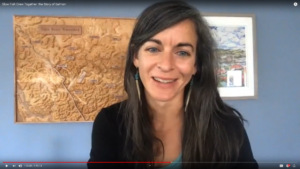
Elizabeth Herendeen of SalmonState providing some good perspective on opposition to the Pebble Mine during the Slow Fish Crew Together Webinar.

As Elizabeth Herendeen of SalmonState mentioned during the last Slow Fish Crew Together Webinar on June 5, a majority of folks in Bristol Bay and throughout Alaska have consistently opposed the mine. And yet, Pebble sits on the precipice of gaining the federal permit it needs to move forward. The Corps of Engineers could make an announcement some time in June or early July.

Others we heard from during the webinar about the perils of the mine and what we can do now include dear friends Captain Katherine Carscallen, “The Wild” film director Mark Titus, Melanie Brown of SalmonState, and Jon Broderick, who launched the amazing Fisher Poet Gathering in Astoria, Oregon and sang a lament about the loss of the wild salmon in Bristol Bay if the Pebble Mine were to ever be approved.

Captain Katherine Carscallen aboard her F/V Sea Hawk.

Born and raised in Dillingham, Alaska, Katherine is a drift netter who shared a heartfelt  and compelling viewpoint about her deep personal connection to the bay, the fish and the community, and why she has been fighting this mine for more than a decade. “Our concern is that it would be a permanent, and irreversible and hugely damaging change to our entire region. It’s salmon country. That’s what Bristol Bay is about, and this [mine] is proposing to change that entirely,” she said.

“The only reason we don’t have a mine and a mine hasn’t been built in the past 16 years since it’s been threatened is because not just Bristol Bay residents and Alaskans, but really people all over the nation have come together to help us on this issue and speak out about it,” Katherine said. “It really makes my heart swell that so many people who’ve never even been to Bristol Bay care so much about this issue.”

Mark Titus shared an equally personal story about starting to film “The Wild” shortly after leaving rehab for addiction in 2016. He returned to the bay to tell this story in part as a way to reconnect to the bay, the land, the salmon, and the community that he’d fallen in love with decades before.

“The Wild” Film Director Mark Titus reconnecting with Bristol Bay.

“I was really called back from this place that I was in by this love for these wild salmon which are the ultimate symbol to me of sacrifice and of giving of themselves so that life itself can continue,” he said. “This film is about that journey and using the metaphor of my own recovery from addiction to paint the picture about where we are as a people and as a species and how we treat this planet.”

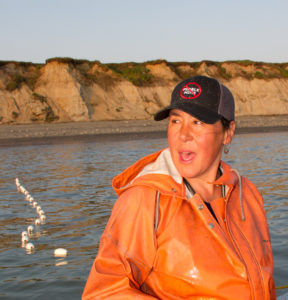
Melanie Brown began the webinar with a spiritual tone, telling the story of her great grandparents who were orphaned by the Spanish flu in 1918, and who had to make their way into adulthood on their own. Her great grandfather transferred his setnet lease to her. Last summer, Melanie taught me how to pick sockeye out of the net from the same spot.

“I truly believe it was the salmon who gave the people who were in despair hope and taught them a path forward, and were their guides literally,” she said. “I’m here because of the salmon and because of the strength of my great grandparents. My people ended up here in Bristol Bay because they followed the salmon. I’m so blessed to be of this land.”

Melanie exudes good cheer and hope, even during the fourth set of the day heading toward midnight.

Speaking of the mine, she said, “It instills in me great fear. But that fear is overridden by the hope that salmon give me. I hope that you find hope in the salmon stories that you hear today.”

And it was that hope and a general call to get involved that resonated from everyone’s words.

As I said at the outset of the webinar, “In many ways, the story of salmon and how we treat them and their environment reflects the story of ourselves.”

We need to get this right. We want our children and successive generations to be able to experience wild places like Bristol Bay, where crystal clear waters call the wild salmon home every year to keep sustaining this magical life force.

Elizabeth, who’s spent more than a decade at the forefront of the opposition to the mine, encapsulated the urgency of the situation: “I think this is a really critical moment for anyone who cares about wild fish and wild salmon. This is our last chance to do it right the first time. We all need to share responsibility and take the time to be engaged.”

I’ve included some links below on how to learn more and get involved. These next few months for Bristol Bay will be important, and every voice matters.


Resources

  • Defend Bristol Bay Take Action page (to contact your elected officials in Washington, D.C.)
  • Information about “The Wild” film and upcoming screenings by Mark Titus. Here’s a link to the official trailer.
  • Save Bristol Bay website
  • United Tribes of Bristol Bay video update on current status of the mine
  • Slow Fish Crew Together Webinar: The Story of Salmon Youtube recording


All Blog Posts

Frankenmine: Pebble’s Worst-Case Scenario

  • February 10, 2020October 19, 2021
  • by Colles Stowell
Share it!
Share

Let me know if this makes sense to you.

The US Army Corps of Engineers is the federal agency responsible for ensuring that large civil engineering projects dealing with wetlands and other natural resources meet exacting specifications to ensure minimal impact on those resources.

This same agency announced on Jan. 23 that it would NOT consider a worst-case scenario tailings dam failure for the proposed Pebble Mine at the headwaters of the world’s largest wild sockeye salmon run in Bristol Bay, Alaska. Dam tailings are the highly toxic waste byproduct of open pit mining that must, in theory, be stored forever to preserve surrounding habitat. Any release of this material, which may contain arsenic, sulfur acid and other highly toxic material, could do irreparable harm to the natal streams and rivers that support the $1.5 billion economic engine driven by healthy wild salmon stocks.

Three days after this stunning announcement, Bristol Bay residents near King Salmon woke to an earthquake measuring 3.6 on the Richter scale.

So let’s do the math here. The USACE, which is supposed to ensure all of the nasty mining byproduct doesn’t leach into the landscape, ever, still feels confident nothing could go wrong.


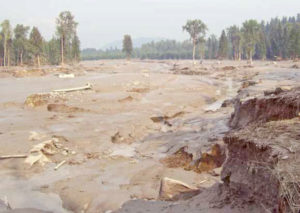
Aftermath of Mt. Polley tailings dam failure in 2014. This dam was initially engineered by the same firm slated to engineer Pebble’s tailings impoundment. What could possibly go wrong? Photo from Mining Watch/Chris Blake.


I guess it’s just a minor inconvenience that the damn tailings dam would be strategically located in a seismically active area along a geologic zone called the Ring of Fire due to constantly grating tectonic plates that force magma up through the earth’s crust and create volcanoes.

How active is it? According to the Alaska Earthquake Center, 2018 and 2019 ranked first and second respectively in the number of earthquakes tracked in Alaska, with only 50,289 reported earthquakes in 2019 ranging in depth between 0 and 165 miles. There were two quakes measuring 6.4 along the Aleutian Islands.

This would be great fodder for a Saturday Night Live skit if it weren’t so staggeringly unconscionable.


Contact Creek just south and a bit west of King Salmon in Bristol Bay. Pristine water like this is essential to salmon spawning. It could be irreversibly damaged by a tailings dam failure. USACE doesn’t seem to think that’s a possiiblity.


Frankenmine is alive…again

Credit goes to the fierce determination of the mine’s opponents that Pebble has not been permitted in the past nearly two decades since it was first proposed.

The twists and turns in the Pebble saga are dizzying. Consider:

  • Three of the world’s largest four mining corporations walked away from the project, citing massive opposition and gigantic economic risks;
  • A fourth, smaller potential financial backer also stepped away for the same reason in 2019;
  • The Obama administration had the mine on its deathbed, concluding after years of scientific review that as initially proposed, the mine would violate the Clean Water Act and threaten precious salmon habitat;
  • A 30-minute conversation between the Pebble Limited Partnership’s CEO and former EPA Administrator Scott Pruitt just a few months after the current administration took office in 2017 reversed course and put the mine back on track;
  • Alaska Governor Mike Dunleavy is a Pebble Limited Partnership puppet who has publicly courted potential backers while working with President Trump to streamline and accelerate approval. In fact, you may have seen this photo of Dunleavy and Trump on Air Force One, planning more “development” that would destroy Alaska’s precious natural resources despite widespread opposition;
  • Dunleavy appointed a former mining industry executive to head the state’s Department of Environmental Conservation;
  • The regional EPA office publicly decried the highly questionable conclusions in the USACE draft environmental impact statement, only to be forced by the administration to walk those comments back a few days later.
  • Most Alaskans don’t want the mine. Annual polls show that opposition has never dropped below 50%, and support has never risen above 40%. This despite all the money giant pro-mining corporations pour into changing opinions.

So the shaker near King Salmon had impeccable timing. It’s as if Mother Nature is rattling a warning.

Melanie Brown on the Naknek River, doing what she loves best on the set net fishing site her great-grandfather established several decades ago.

Here’s the real worst-case scenario writ in big bold lettering so that even pro-mine “executives” in their big white offices should be able to understand. No matter how much you attempt to “store” all that toxic crap piled 500 feet high in a giant 1,000-acre “facility,” you cannot guarantee that an earthquake won’t shake it loose.

And if it does happen, and it likely would, the contamination would have an excellent chance of being near total, and potentially permanent. Thousands of people living downstream would be in danger. Wild salmon would lose their spawning grounds and the ability to ensure the longevity of the species.

I wonder what the Army Corps of Engineers would say then.

The fishing fleet in the Naknek River. The processing plants are visible along the shore. The population swells by a factor of 10 during the fishing season.

Defend Bristol Bay

For those of us in the lower 48 continuing to endure wave after wave of senseless rollbacks of environmental protections for precious natural resources across the country, the Pebble issue may seem like just another chapter in a painful narrative.

But this issue affects us all. If you eat wild salmon, you’re eating salmon that depends on crisp, clean, clear water in virtually undisturbed wilderness. Even if you don’t eat salmon, the battle to protect wild spaces is one you should care about.

I’ve met several people who have been fighting this fight for years. I’ve seen their land, their water, and their salmon. To those folks in Bristol Bay, this is a battle for their way of life – and their lives. They have no option but to continue to stand up to the blind greed, political bullying, and outright sham of the process.

We would do well to stand with them and set an example of how to change the narrative.

If you want to make your voice heard, contact your congressional representatives here. If you’d like to do more than that, check out the Defend Bristol Bay action page.

If you’d like to see what life is like in Bristol Bay for those who live and fish there, check out The Wild, the award-winning film directed by friend and colleague Mark Titus. Follow this link to see screenings near you.


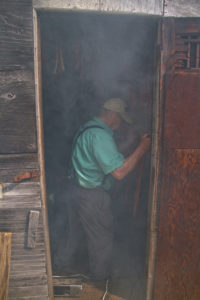
Eighty-eight-year-old Al Aspelund, an Aleut native, working his smoke shack magic as he has done for some six decades. Indigenous subsistence traditions like this are at stake.

Resources

Here are a couple of ways to get more info and get involved:

  • One Fish Foundation Fish Tales Podcasts:
    • Gayla Hoseth: Natural Resources Program Director and Second Chief of the Curyung Tribal Council
      • Audio only (downloadable)
      • Video (with photos)
    • Norm Van Vactor: President and CEO of Bristol Bay Economic Development Corporation
      • Audio only (downloadable)
      • Video (with photos)
  • Salmon State: Good resource for history of project and ways to get involved.
  • Pebblewatch, which also has some cool maps
  • National Park Service in-depth analysis of the long-term effects of tailings impoundment failures.
  • Bristol Bay Native Corporation: Good background on some of the indigenous opposition to the mine.
  • Bristol Bay Native Association: Another organization supporting the tribes of Bristol Bay.
  • Informative Anchorage Daily News Op-Ed about how the Trump and Dunleavy administrations have worked to gut the clean water act and its protections in Alaska.
  • Businesses of Bristol Bay
  • Bristol Bay Economic Development Corporation
  • July 1 EPA Region 10 letter from Administrator Chris Hladick, voicing concerns over Army Corps of Engineers’ Environmental Impact Statement


All Blog Posts

Swimming On: the Slow Fish USA gathering from 2016…

  • February 8, 2020October 19, 2021
  • by Colles Stowell
Share it!
Share

The inaugural Slow Fish event in North America took place in New Orleans in 2016. It was an enormous first step, fraught with last-minute adaptation forced by a 500-year flood event in a city that is rather accustomed to flooding. Who knew we’d be eating shrimp and oysters in a warehouse full of floats from perhaps the most raunchy Mardi Gras parade in the city? Nothing says seafood like having every part of outsized human anatomy in lewd, brightly decorated papier-mâché looming over you.

But we made it work! Everyone adapted to the unforeseen circumstances and we had great conversations about consolidation, youth in fisheries and overall messaging and values. We capped Slow Fish 2016 off with an incredible Cajun hog harvest celebration called a “boucherie” across the Mississippi River.

We gathered in San Francisco for Slow Fish 2018 following an intense, but amazingly productive four-month planning period that was delayed by the threat and lingering angst of devastating forest fires in the region. But for the commitment, creativity, and sheer will of everyone involved, Slow Fish San Francisco wouldn’t have happened. That gathering made space for fabulous networking, collective problem-solving, and energy dedicated to shared values for our seas and their stewards.

The San Francisco event took place in a cool warehouse (no sex floats) that we adapted to suit large group discussions, as well as smaller World Café roundtables and PechaKucha (or “Peche” Kucha) mini slide presentations/stories. We also had a Seafood Throwdown, off-site oyster, dinner, and movie events..

Fast forward two years and that energy is still strong. This year, Slow Fish 2020 will go down on March 19-22 in Seacoast N.H., with a Working Waterfront Tour, kick-off dinner, Sunday Fishtival and the programming of a two-day conference at the University of New Hampshire Peter T. Paul College of Business and Economics in Durham.

Setting the tone with the Slow Fish 101 presentation in San Franciso. Photo credit: Lance Nacio.

Circling back to Slow Fish USA origins on campus

We chose New England for 2020 to continue varying the geography of these events and give fish harvesters, fishmongers, and others from the region a chance to engage in these conversations.

New Hampshire is important because students at UNH were among the first in the country to embrace Slow Fish values back in 2013. At the time, they encouraged UNH Dining Services to sign a pact to source responsibly harvested seafood and  adhere to Slow Fish values. That pact is still in effect today. Bringing the conference to New Hampshire this year affirms how much the movement has grown in the years since and the importance of youth in the movement.

Rallying young people is especially important in New England as fish harvesters here are fighting against restrictive policies and well-funded efforts to consolidate the industry. This monopolization has created impossibly high barriers of entry for young fishermen and led to an ever-increasing age of the average fisherman, often called the “graying of the fleet.”

Moving the event around to key fisheries regions helps democratize the impact. Slow Fish continues to aim to create an open table for meaningful thinking around the core values of providing good, clean, and fair seafood to all.

At a time when equity, inclusion, and justice issues are increasingly visible, Slow Fish aims to ensure that small-scale and indigenous fish harvesters have fair access to the resource in a market too often dominated by billion-dollar corporations that only care about profits.


Sharing ideas, asking questions, expanding network connections, and collaborating on meaningful change. That’s the Slow Fish formula that will be at work at Slow Fish 2020 in New Hampshire. Photo credit: Eric Buchanan.

Diving deep

We’re going to talk about these and other critical issues in New Hampshire this year. For the first time, we’re going to merge the Slow Fish North America gathering and a regional Slow Food Northeast event, allowing members of both groups to get a better sense of how each group is working to shorten the distance from food source to plate.

Here is a sneak peek of what’s on tap for Slow Fish 2020, and why you should consider joining the conversation:

  • Deep Dive discussions on issues like aquaculture, climate change, and the Blue Commons;
  • Interactive World Café roundtables to explore challenges and opportunities facing youth, women, and indigenous fish harvesters; alternative seafood business leaders; and the Slow Fish Ark of Taste;
  • “Pesce” Kucha storytelling with slides;
  • Delicious food from all over the continent;
  • Tour of the seacoast N.H. working waterfront followed by an opening night feast;
  • Seacoast Restaurant Fish Week from Feb. 13 through Feb. 21 (restaurants in Seacoast NH and Maine provide a special Slow Fish menu and donate a portion of proceeds to Slow Fish);
  • Closing dinner event with music at the Paul College at UNH;
  • Fishtival on Sunday at Throwback Brewery (more food, music, beer, and hands-on demonstrations);
  • Several hands-on demonstrations of nose-to-tail, oyster shucking, etc.
  • A chance to dig into issues, collaborate, and kick it with old and new friends.

I can tell you first-hand that we are planning this year’s gathering with as much, if not more energy and drive as with NOLA and San Fran, and hopefully without any major and unexpected meteorological or other events.

So come join the conversation, expand your network, make new friends, hug old friends, eat fabulous food, and see what the New England Slow Fish and Slow Food communities have to offer!


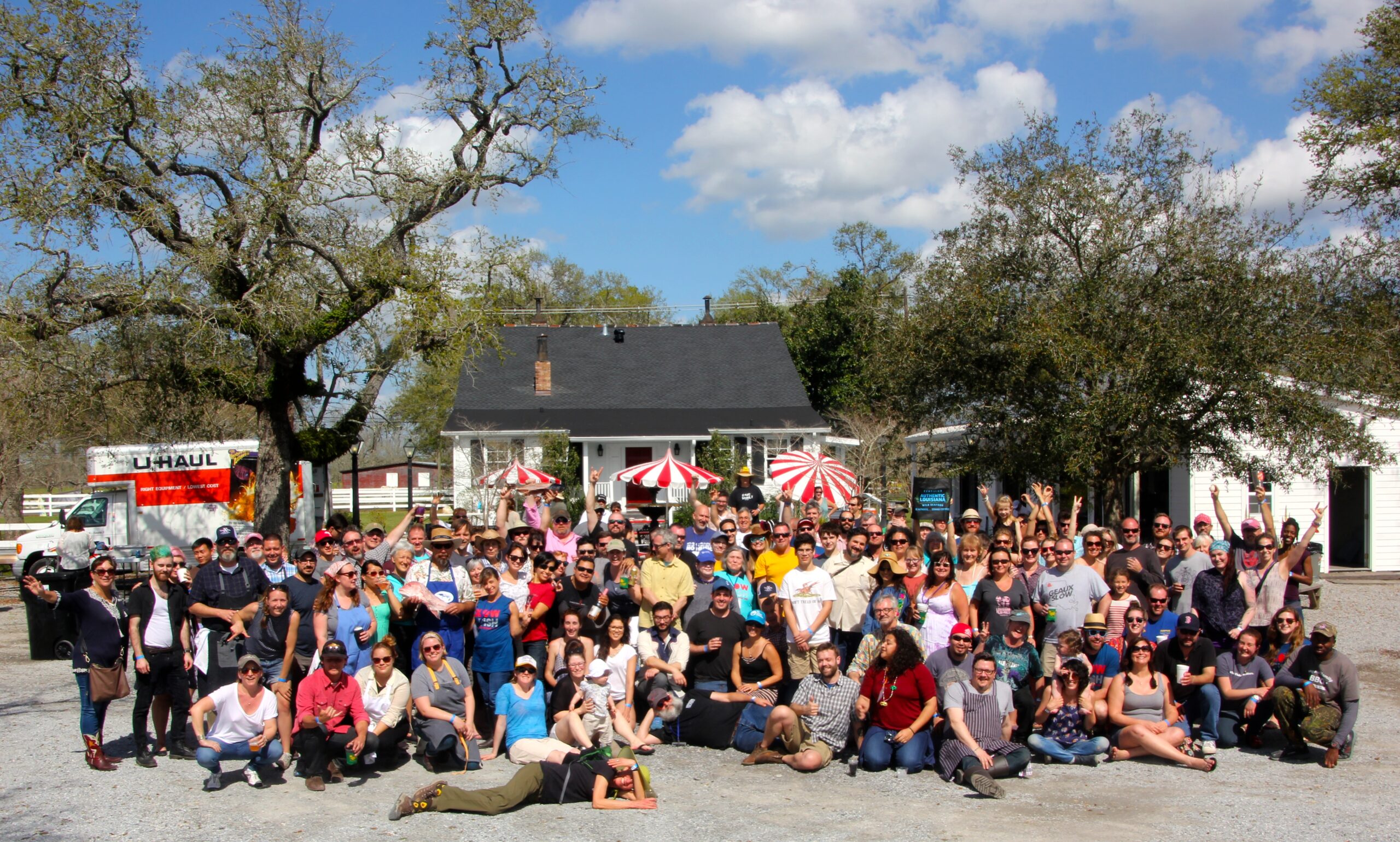
Top photo: Slow Fish 2016 in New Orleans, during the boucherie at Docville Farm. Credit: Eric Buchanan.

All Blog Posts

Seafood Learning Expeditions

  • December 9, 2019October 19, 2021
  • by Colles Stowell
Share it!
Share

With apologies to Charles Dickens, the Tale of Two Salmon began with a description of how it was the best of times, and then, how it was the worst of times.

How one species, Atlantic salmon, was pushed to near extinction because of 300+ years of intense fishing and damming of much of its critical habitat throughout New England and into Canada. How another group of salmonids, wild Pacific salmon (including king, sockeye, coho, pink and chum) were given lifelines by better management and some degree of habitat preservation.

And how the Pacific salmon in Alaska continue to provide largely abundant runs, serving a variety of stakeholders including commercial, recreational and subsistence fish harvesters. We discussed how policy there is a dynamic tool that better incorporates input from these different stakeholders, as well as up-to-the-minute harvest and escapement (fish that continue upstream to spawn) analysis to determine how and when the harvest starts and stops.

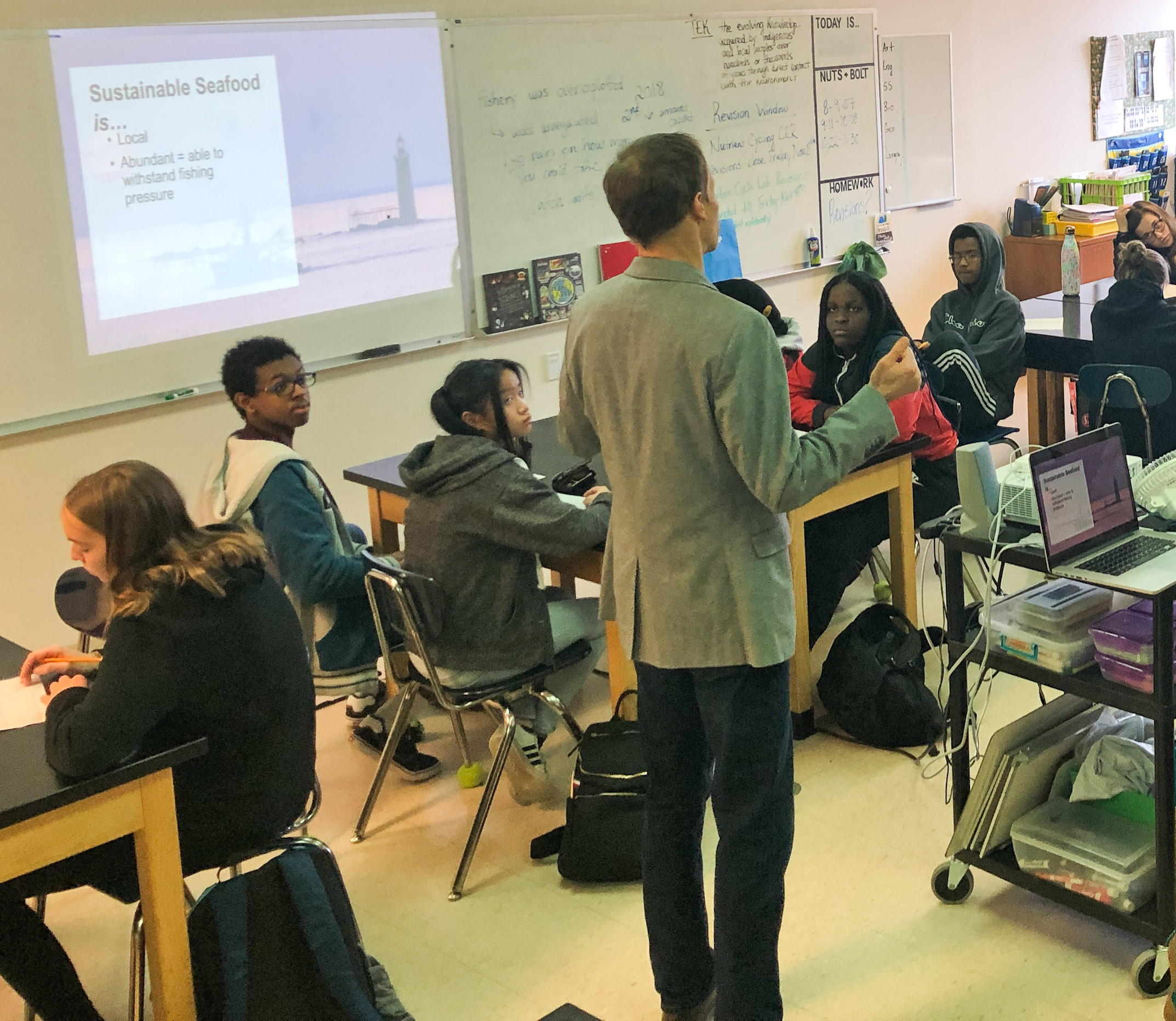
The focus on indigenous subsistence fishing was of particular importance to the 9th graders in Jenny Crowley’s ecology class at Casco Bay High School for Expeditionary Learning in Portland last month. They were learning about human interaction with natural resources and the impact humans can have on their surrounding environments. CBHS immerses students in “expeditions,” which allow them to dive deep into particular issues or topics while incorporating other facets of their education.

We talked about the delicate balance of policy on how to ensure different stakeholders have fair access to the resource. I shared my experience in Bristol Bay, Alaska this summer, talking with indigenous and subsistence fish harvesters there who described the traditions of learning to live in harmony with the salmon, the water and the land.

Finding that natural balance, taking only what they need to eat throughout the year and passing on that knowledge (like how to properly fillet a salmon using a traditional ulu knife and how to use the entire fish) are essential to maintaining that harmony from generation to generation.

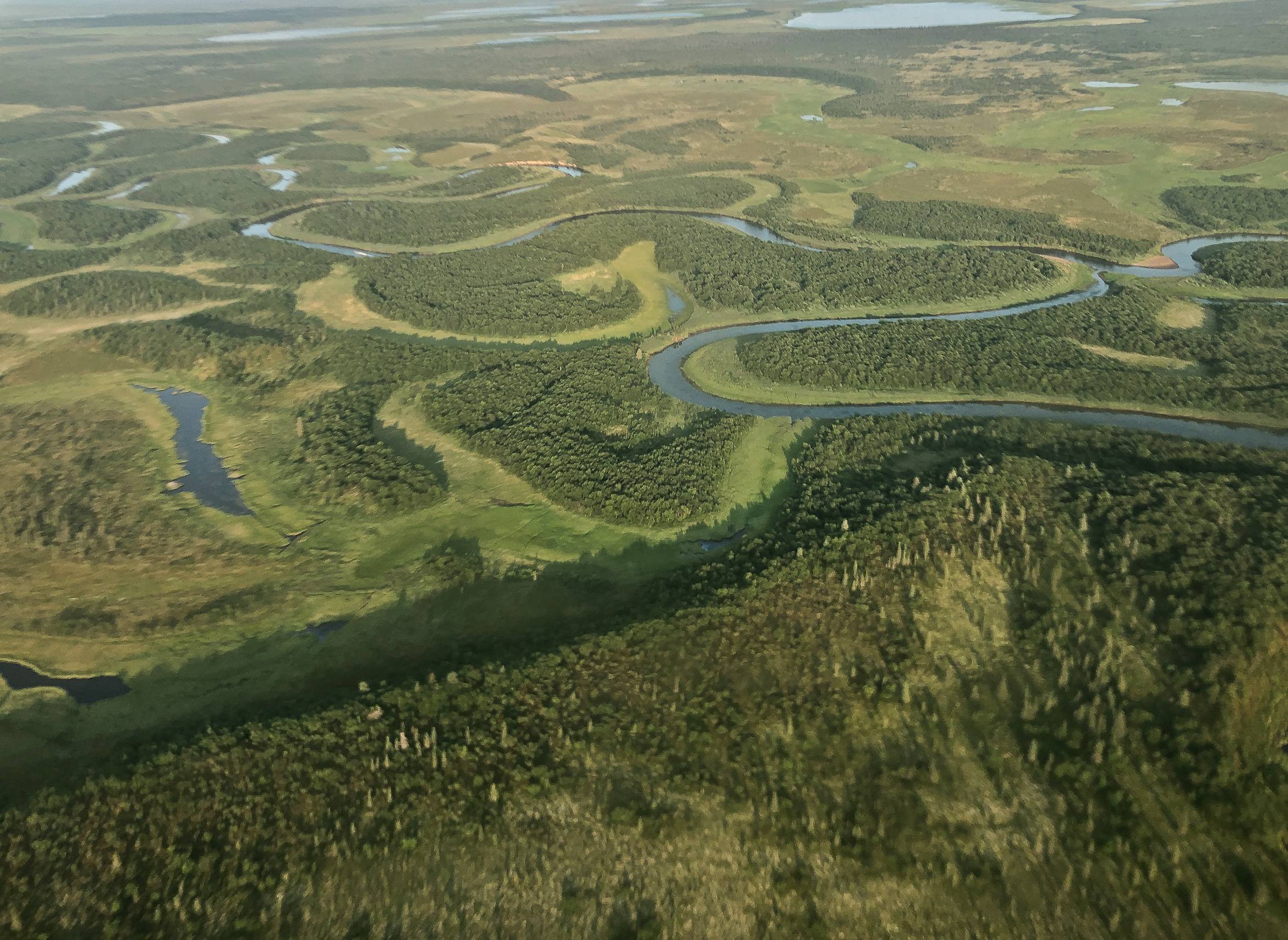
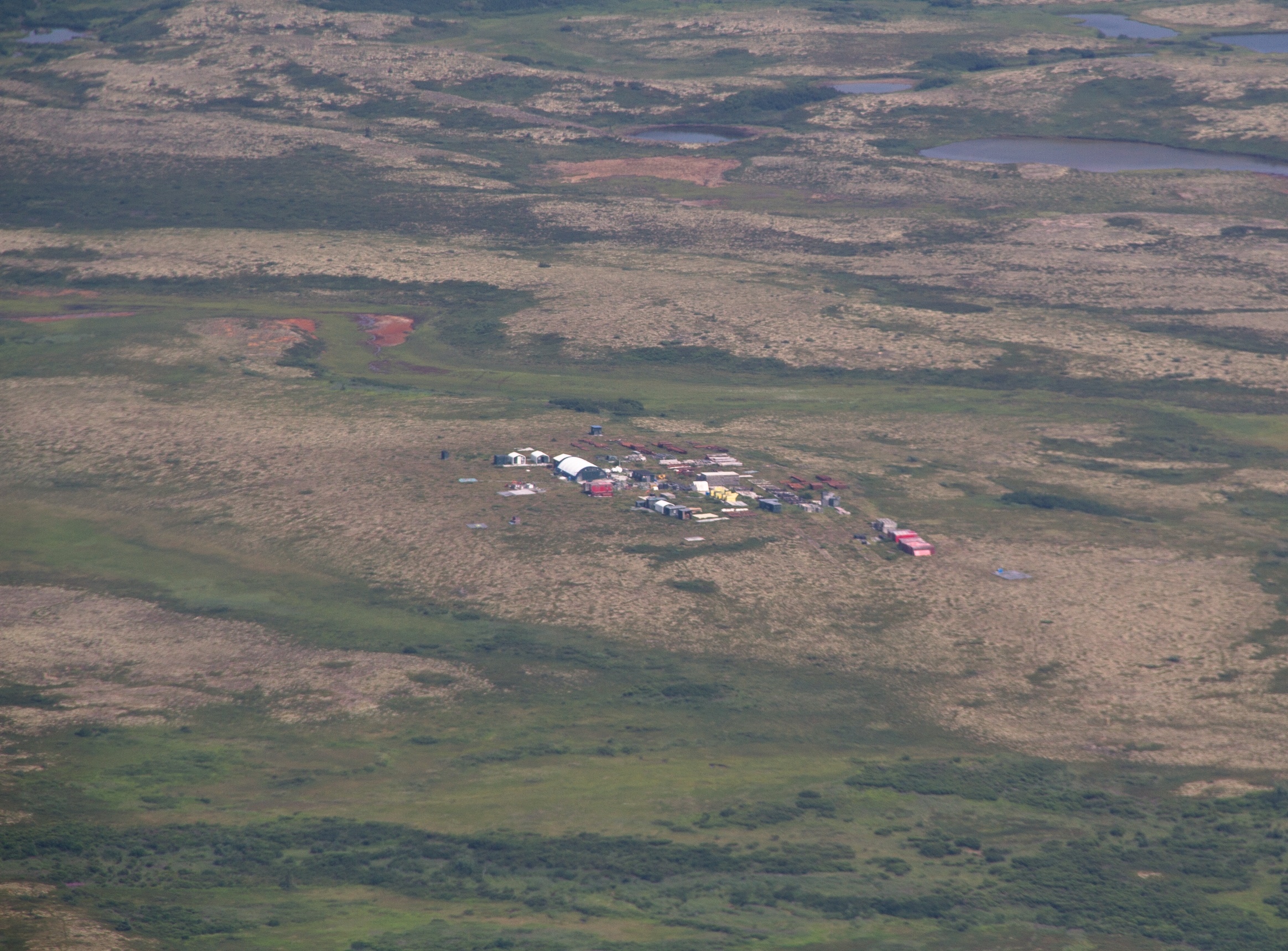
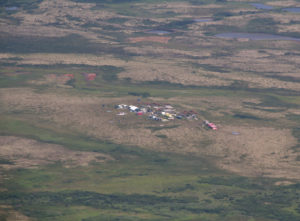
Pebble Mine exploration site. I took this photo during a flight to see how the mine would affect the headwaters of the world’s largest wild salmon run. I shared other photos depicting the breathtaking landscape that is veined with water. Students understood this one human “input” could result in devastation of that habitat.

We also spoke about how the different user groups in Alaska have united together in the past nearly two decades in solidarity to oppose the proposed Pebble Mine. It is largely due to that collaboration and the fierce determination to protect the resource that the proposed gigantic open pit copper and gold mine has not yet been built.

We talked about the tragedy of the commons and how communities working together to determine how best to manage the resource so it continues to provide for the entire community is absolutely essential.

So the students and I took those expeditions together in one-hour increments, talking about important socio-economic issues and how our choices affect the salmon and all marine life.

Collectively, we came to the conclusion that the type of community thinking in Alaska is one reason wild Pacific salmon there shade closer to the best of times.

Perhaps we should apply that model more diligently elsewhere.

All Blog Posts

Building Community Over Seafood

  • November 7, 2019October 19, 2021
  • by Colles Stowell
Share it!
Share
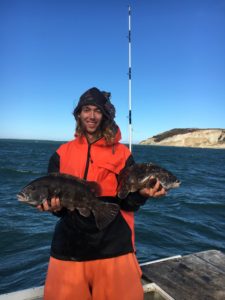
Otto Osmers with the freshly caught tautog for the dinner at Atria. Know the story of your seafood!

Otto Osmers sat down at a table with white linen, nice wine glasses, shiny silverware, an impressive printed menu featuring several courses and wine pairings and a bunch of folks he didn’t know. Sporting a ball cap, long hair and an easy smile, he calmly introduced himself as the stern man on the fishing boat that caught part of the night’s meal.

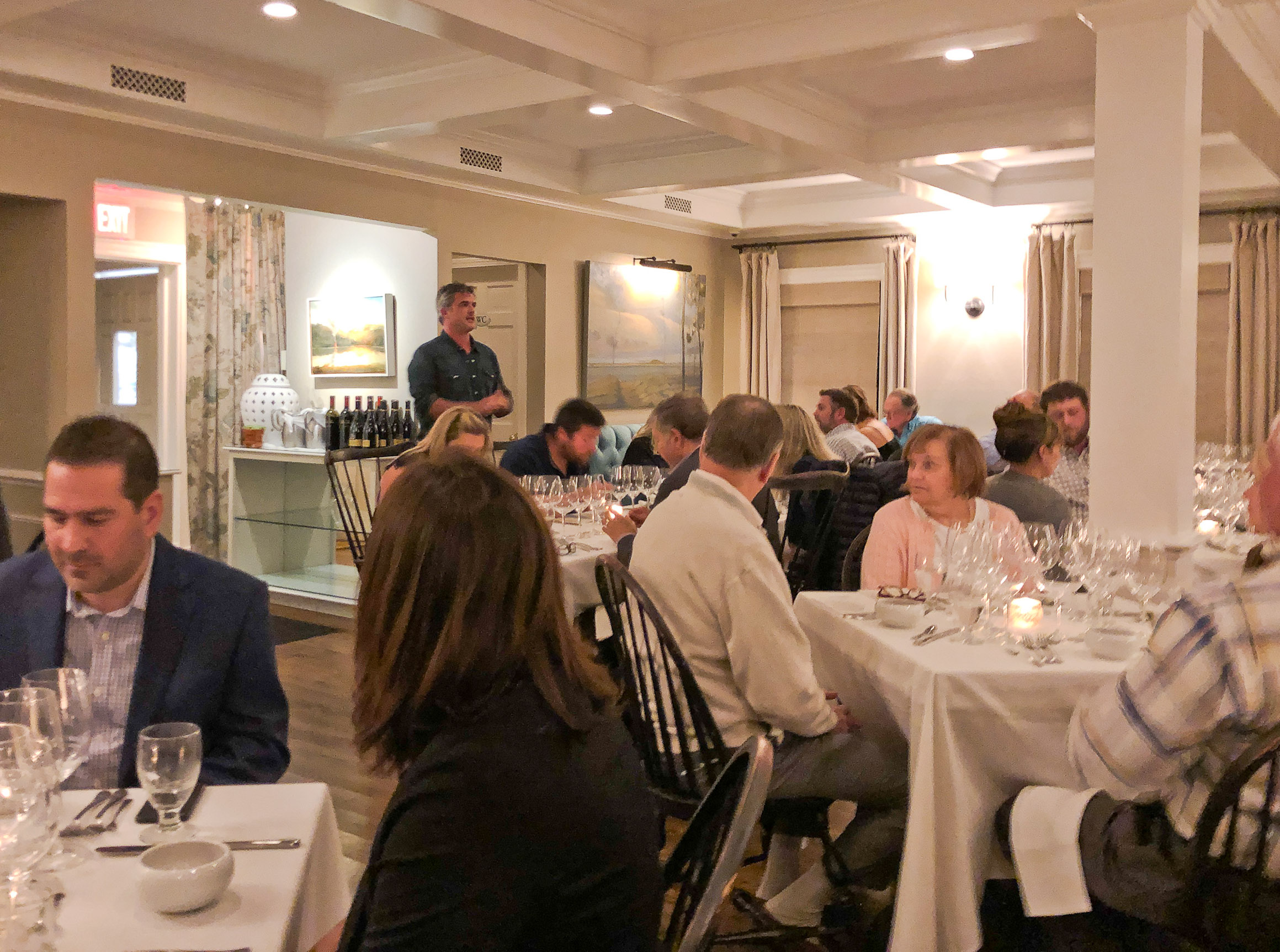
Though he’d initially expressed some reservation about being able to contribute to the conversation in a meaningful way, he earned the respect and attention of everyone at the table (and a round of applause from the nearly 60 people in the restaurant) by the end of the night.

Not bad for a 19-year-old who’s been fishing commercially since he was 15.

Score another success for the KNOW FISH Dinner® series.

Fishermen’s tales

The most recent KNOW FISH Dinner took place at Atria Restaurant in Edgartown on Martha’s Vineyard Oct. 26. The dinner was part of the annual Martha’s Vineyard Food and Wine Festival and was the product of the kind of collaboration that unites chefs, fishermen and advocates in ways that give hope to the notion we can change the industrial food supply chain.

How?

Relationships.

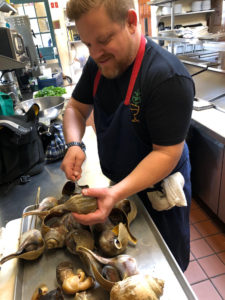
Chef Brendan Vesey removing the conchs that Capt. Andrew harvested.

Chef Brendan Vesey of Botanica Restaurant and Gin Bar in Portsmouth, N.H. was among the group of thinkers that helped build the KNOW FISH Dinner series in 2015. He and other Portsmouth, NH-area chefs were planning to participate in the massive tasting event during the Food and Wine Festival, but decided they wanted to do their own dinner during the four-day event.

So Brendan contacted me about doing a dinner that promotes the connection between seafood harvester and consumer and upholds the values behind a truly responsible seafood supply chain. This was in late Sept. Brendan connected me with Chef Christian Thornton at Atria, who is close friends with Chef Duncan Boyd, one of the original One Fish Foundation board members.

I then reached out to One Fish Foundation Board member and fellow Slow Fish colleague, Brett Tolley, who put me in touch with Shelley Edmundson of the Martha’s Vineyard Fishermen’s Preservation Trust. Shelley and her team work to support the livelihoods of the fishermen on Martha’s Vineyard. She connected me with Otto, Capt. Nick Wilbur, Captain Andrew Wheeler and Captain Arno Ewing.

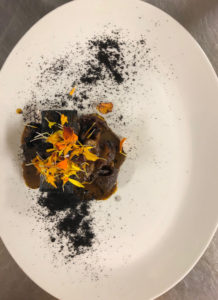
Chef David Vargas with a tasty and colorful presentation of Capt. Andrew’s cured conch and squid ink tamale.

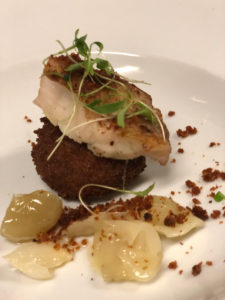
Capt. Nick and Otto caught the tautog (think a brutish looking bottom fish with big lips and human-like teeth, per Otto’s great description to the crowd) that was served with the green crab gumbo prepared by Chef William Myska of Ore Nell’s Barbecue in Kittery, ME. Captain Andrew harvested the conch that Chef David Vargas of Vida Cantina in Portsmouth, NH turned into masa miso cured conch with squid ink tamale.

Chef Christian brought in Ryan Smith of Signature Oysters, whose Katama oysters Atria chefs turned into a trio of preparations: andouille roasted; cucumber granita mignonette; and yuzu broiled.

Captain Keper Connell caught the bluefin tuna that Chef Jeremy Glover of Raleigh Wine Bar and Eatery in Portsmouth, NH crafted into an amuse bouche of raw bluefin tuna in a peach boshi broth.

Chef Brendan broiled the locally sourced fluke from Menemsha Fish Market and served it with Hubbard squash and charred oyster mushrooms with a red wine leek sauce.

Capt. Nick Wilbur’s tautog resting on a fried okra cake prior to being smothered in smoked green crab gumbo prepared by Chef Will Myska. Perfect for New England fall.

All of the food was excellent. And the stories the chefs and the fishermen told about the seafood, how it was harvested, how it was prepared, helped stitch together this newly created ad hoc community of chefs, fishermen and consumers.

So yes. Relationships matter. As friend, colleague and founder of responsibly harvested seafood network Local Catch Josh Stoll often says, the definition of “local” is changing, becoming less about geography and more about relationships.

The KNOW FISH Dinner at Atria reinforced that. Yes, both the seafood and produce were “local,” or as local as possible (from Gulf of Maine, and some farms in N.H. and Maine). But what stood out to everyone in attendance were the stories from those who harvested and prepared the food.

Everyone, including those from the island and off-island, left knowing something more about the food they ate and the different links in the seafood supply chain. Before closing out the event, I asked folks to carry those stories with them and that sense of community we’d built. I asked them to try and establish relationships with fishermen or fishmongers and chefs in their community. Build the trust that elevates the community and the values we discussed. Ask questions.

And spread the message.


Big thanks to everyone who helped make this event happen, including the fish and shellfish harvesters: Otto, Capt. Andrew, Capt. Nick, Capt. Arno Ewing, Ryan, Capt. Keper, and Shelley for making the connections. Thanks to the chefs: Brendan, David, Will, Jeremy, and the entire crew at Atria. Special thanks to Chef Christian Thornton for hosting the event. Thanks also to Shauna Troy and J. Lohr Wines for providing the great vintner’s accompaniment to each course. Thanks to the Martha’s Vineyard Food and Wine Festival.  And many thanks to everyone who attended and elevated the discussion!


Top photo: Capt. Keper Connell tells the story of the bluefin tuna he caught and that everyone was enjoying.


All Blog Posts

Seafood Lovers and the Supply Chain

  • October 17, 2019October 19, 2021
  • by Colles Stowell
Share it!
Share

Most American consumers don’t know where their seafood comes from. In fact, a recent report from the Food Marketing Institute suggests that less than 30% of domestic consumers consider themselves knowledgeable about the seafood they eat.

 So why is that? And what can we do about it? What is the consumer’s role in the supply chain? It would be a fair assumption that the remaining 70% of those surveyed by FMI take a passive role. That is, they either rely on third-party information like eco-labels or they just don’t care. They surrender responsibility of the decision to someone else.

 No wonder our markets are so jammed with cheap, unhealthy imports.

 This topic was the crux of the fifth installment in the SlowFish webinar series, Slow Fish 201: Role of the Consumer, held on Sept. 23. To follow is a blog written by One Fish Foundation Intern Jennifer Halstead. In it, she captures some of the most salient points about how fishermen, fishmongers and others in the supply chain can help engage consumers in conversations about why they should care where, when, how and even by whom their seafood was harvested.


by Jennifer Halstead

Throughout the Slow Fish 201 Webinar series, expert panelists from different backgrounds, geographies and perspectives shared thoughts on how each link in the supply chain can help ensure the availability of responsibly harvested seafood. During the most recent webinar, Role of the Consumer, each panelist was thought-provoking, sharing their stories on how to engage consumers in the supply chain. Attendees left the discussion with a clear understanding of how consumers can become better informed (ASK QUESTIONS!!!) and assume a more active role in the supply chain.

On the panel were:

Patty Lovera, Food and Water Program Director, Food & Water Watch

Chef Evan Mallett, Chef, Co-owner, Black Trumpet

Capt. Tim Rider, New England Fishmongers

Charlie Lambert, Fisherman, Co-founder, Ocean2Table

Kirk Hardcastle, Premium Sales Accounts, Seafood Producers Cooperative

Colles Stowell, President, One Fish Foundation

Jessica Hathaway, Editor and Chief, National Fisherman, served as moderator

Each of them views the supply chain from a different perspective. But all of them agree that change within the supply chain is not only possible, but that it in many ways depends on consumers making smarter choices.

Fraud, mislabeling and a lack of transparency continue to cast a shadow over seafood sales in the U.S. It’s easy to see how consumers can feel helpless when it comes to fixing such issues. There are so many eco-labels providing conflicting guidelines and grocery store displays touting green-label “fresh, sustainably raised farmed salmon from Chile.”

As discussed during the webinar, well-informed seafood eaters have the power to pressure suppliers into knowing more about the products they are selling and to source from community-based fishermen who care about the resource.

Where to start

Panelists agreed that consumers should be asking restaurants and grocers a couple of questions just to get a part of the story of the seafood. It doesn’t have to be complicated or intimidating. You learn much just asking where, when and how it was harvested or grown. Even better if you can find out who harvested it. Is it local? Regional? Domestic? The U.S. has some of the best seafood safety and fisheries management policies in the world. If you can’t get domestic seafood, you’re better off choosing something else. Imported products carry a high risk of having been unsustainably farm raised or harvested.

“There is a lot of burden on the consumer,” said Patty Lovera. “We have to ask a lot of questions. The status quo in the supply chain isn’t good enough.” She and Colles Stowell both mentioned the influence consumers can have over retail seafood sourcing. If suppliers don’t know the answer to these questions, they will either feel compelled to learn, or responsible consumers will feel compelled to spend their money elsewhere.

What’s in season?

Chef Evan Mallett, Capt. Tim Rider and Charlie Lambert spoke about the importance of consumers better understanding seasonality. Just like when you go to the grocery store or market for vegetables and find different items available throughout the year, fish have their own seasonality. In New England, the height of the scallop season is in winter, while squid are generally available for a few weeks in the spring. Understanding what should be available during different times of the year will help consumers filter out which purveyors are supplying fresh, local fish and which are importing or using frozen, stored fish. “Being a chef is understanding sense of place, seasonal food, and the changes that the seasons bring,” said Mallet. That should also be true for consumers.

Eating seasonally enables consumers to enjoy fresh product throughout the year, experience cooking and preparing new species, support local fishermen, and promote healthy ecosystems by reducing fishing pressure on more popular species.

Location, location, location

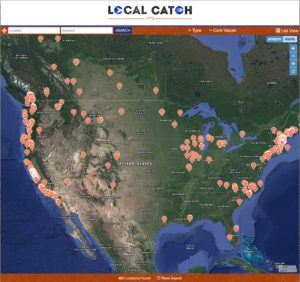
Some tools, such as the Local Catch nation-wide Seafood Finder, can help seafood eaters find local, responsibly harvested fish, shellfish and seaweed. In a map or list view, you can search for purveyors by location and species.

All agreed that consumer education is critical. Once consumers have enough information, they’ll feel empowered to own those decisions and will likely make smarter decisions again in the future. “Instead of telling people what to buy, which is what eco-labels do, we need to educate and equip them with tools to make the decision on their own,” said Colles. Charlie added, “We’re providing them with information and letting them complete the thought process on their own, … and not force-feeding the consumer.”

Buying local benefits the consumer, economies, and even the ecosystem. Fewer food miles, fresher products, strengthening local economies by building relationships with fishermen, and supporting healthy ecosystems are all advantages that consumers can feel good about.

Charlie acknowledged that carbon footprint is a growing concern for his customers. The average distance seafood travels from boat to plate in the U.S. is an astounding 5,000 miles. “The supply chain was largely hidden, and when it was exposed, it was very nasty. The West Coast is famous for market squid and calamari, but the supply chain is tumultuous. [The squid] is landed, frozen, shipped overseas, thawed, processed, refrozen, shipped back, thawed, then distributed to local businesses and consumers. The amount of food miles is not right,”he  said.

Quality is everything

Distance traveled can also (but not always) affect freshness. A fresher product tastes better and has a better shelf life. Rider said both his restaurant and retail customers note the long shelf life of his product because his crew properly bleeds and brines the fish on board the vessel at the time of catch, ensuring the fish is as fresh as possible for as long as possible. “Shelf life is huge. If something comes up and you can’t cook it when planned, it’s still good four days later.”

Chef Evan agreed: “ It was really with the first fish I got from Tim that I saw a marked difference between everything that I was getting from the Gulf of Maine before that.”

Product quality is integral to attracting and keeping customers. Kirk Hardcastle drove this point home, drawing on his decades of experience as fisherman, chef, distributor and now marketer with Seafood Producers Cooperative. “It starts with the fishermen, not the eco-labels, … making sure the quality of the product really comes through. … If it gets to someone’s house and the fish is poorly handled… You can put millions into messaging and you’ve burned it all away with the first bite of fish. Go for quality first and everything after that is easy,” he said.

Know your fisherman!

Charlie and Capt. Tim both sell directly to consumers: Charlie providing product from the network of fish harvesters he sources from in Monterey Bay up to San Francisco to his community supported fishery (CSF) customers, and Capt. Tim from the two boats he and his crew operate out of Maine and Mass. via drop-off points and farmer’s markets. When fishermen come off their boats into the community to sell their fish and meet customers, they’re building relationships that help support a stronger local economy.

These relationships build trust and help harvesters and consumers alike have open discussions about the industry, fishing methods, problems and challenges that fishermen have.

In the end, failure to know the story of seafood surrenders consumer decisions to other elements in the supply chain, which is often driven by industrial players with only profit in mind. Complacency in the supply chain will only ensure that consumers receive sub-par products, and the supply chain grows more opaque, rather than transparent. Lack of communication and interest can lead to what started this conversation last year, intentional mislabeling to turn a buck.

Smarter, responsible consumers and the relationships they forge with fishermen and fishmongers will help shift supply chains away from industrial-driven structures and toward a supply chain rooted in trust and knowledge.

In short, the role of the consumer is to ask questions and make responsible decisions. However, fishermen, chefs, retailers, distributors, educators, advocates and others in and around the supply chain should help consumers get smarter. That means telling the story of the seafood they’re selling.

Not sure where to start? Seafood eaters should ask the questions mentioned above. Check out the 7 C’s of Sustainable Seafood. If you can, buy local. If you can’t buy local, buy US caught and processed.

Fishermen, chefs and retailers should get to know their customers and tell them more about the seafood they’re selling them.

A supply chain built on trust is the best path forward.


Resources

7 C’s of Sustainable Seafood

Local Catch Core Values: Another reference point for how to think about the seafood supply chain.

Slow Fish Values: More values regarding seafood’s journey from boat to plate.

Eating with the Ecosystem, The 5 Anchors: A New England-focused view of values to consider when choosing seafood.

To view a recording of the webinar, follow this link.


Top photo: Boat to consumer…literally.  Opening day for the Tuna Harbor Dockside Market in San Diego. Credit: Eric Buchanan

All Blog Posts

Administration Forces EPA About-Face, Revokes Bristol Bay Protections

  • July 31, 2019October 19, 2021
  • by Colles Stowell
Share it!
Share

Boy, was my Alaska trip’s timing impeccable. I got to see the pulse and vibrance of the fishery and the economy it supports. I got to see the deep connections people of all stripes have to the salmon, the water, the land. I arrived during the heart of the world’s largest sockeye run.

I also arrived just as the Environmental Protection Agency District 10 in Seattle issued a blistering statement castigating the US Army Corps of Engineers’ draft Environmental Impact Statement on the proposed Pebble Mine. The letter claimed the EIS had some serious flaws, and “…may result in substantial impacts to waters of the United States within the Bristol Bay and Cook Inlet watersheds.”

Folks I spoke with about the EPA statement felt bolstered by the statement after fighting the mine for over a decade, particularly given the administration’s push to approve the mine in the past two years.

But as I said before, this is a chess match, and the administration yesterday pulled what I’m sure they consider a “trump” move by rolling back federal Clean Water Act protections for Bristol Bay established during the Obama administration.

Make no mistake. This is outright politics at the expense of natural resources and the 15,000 people who depend directly and indirectly on those resources, whose total economic impact is now valued at over $1.5 billion. At stake is a truly priceless, irreplaceable resource that can continue to fuel the region’s economic engine … or billions in profits for a small group of investors. Do corporate interests really outweigh the rights of citizens?

Think of the colossal irony. Think of Chris Hladick, the EPA Region 10 Administrator who penned the July 1 letter slamming the EIS, only to be forced to publicly backtrack. Several entities supporting the mine claimed they wanted to see the science that this mine could harm the natural resource. Hladick pointed out some of the flaws in the EIS in his July 1 letter. The EIS itself essentially skated over the original finding from the EPA under the Clean Water Act in 2014, declaiming the potential devastating harm of such a mine on the salmon and its habitat.

Yesterday’s announcement demonstrates the folly that mine supporters call “due process,” but is more a proof point of power politics, influence, potential collusion and graft. It screams, “JUST JOKING! We mean to railroad this mine through and strip the very protections we said would preserve the resource in the region.”

I’ve just talked to a couple of people fighting the fight. They are angry and sadly unsurprised at the political arm-twisting from the administrations of both governor and president. Particularly as this arm-twisting is in support of a mining company based in Canada, not the U.S.

A deckhand on a tender weighs part of Melanie Brown’s set net sockeye harvest during the heart of the season.

But the folks I spoke to are still resolved.

They have to be. In their view, their lives and livelihoods are essentially at stake. As for the mine’s investors, their bank account profits are at stake.

This issue forces people to check their moral compass. If we can’t protect the salmon, their habitat, and the thousands who depend on them, where are we headed? What does this mean for other priceless public spaces?

If this issue has struck a cord, follow this link for more information on how to speak out and get involved. Contact your representatives and senators in Washington, D.C., regardless of where you live. Every voice counts.

Also, stay tuned for the Fish Tales Podcast, which will feature the voices of those on the front lines of the battle to save Bristol Bay from such wanton development. You’ll hear what life is like in Bristol Bay, and why preserving it matters so much to those who live and work there.


Other resources:

Commercial Fishermen for Bristol Bay Press Release regarding EPA’s reversal

United Tribes of Bristol Bay Press Release

July 1 EPA Region 10 letter from Administrator Chris Hladick, voicing concerns over Army Corps of Engineers’ Environmental Impact Statement

Posts pagination

1 2 3 … 9

Recent Posts

  • Hurricane Ida wreaks havoc on Louisiana’s seafood industry
  • EPA Should Use Clean Water Act To Kill Zombie Mine
  • Slow Fish 2021: Relationship Matters
  • Faith, Façades, and Futility
  • Pebble Permit Paused: Politics at Play

Archives

  • September 2021
  • August 2021
  • April 2021
  • December 2020
  • August 2020
  • June 2020
  • February 2020
  • December 2019
  • November 2019
  • October 2019
  • July 2019
  • May 2019
  • April 2019
  • March 2019
  • January 2019
  • December 2018
  • November 2018
  • June 2018
  • May 2018
  • March 2018
  • February 2018
  • January 2018
  • December 2017
  • November 2017
  • October 2017
  • September 2017
  • August 2017
  • July 2017
  • June 2017
  • May 2017
  • April 2017
  • March 2017
  • January 2017
  • December 2016
  • November 2016
  • October 2016
  • September 2016
  • August 2016
  • July 2016
  • June 2016
  • May 2016
  • April 2016
  • March 2016
  • February 2016
  • January 2016
  • December 2015
  • November 2015
  • October 2015
  • September 2015
  • July 2015
  • June 2015
  • May 2015
  • April 2015
  • March 2015
  • February 2015
  • January 2015
Theme by Colorlib Powered by WordPress