Skip to content
One Fish Foundation
  • Blog
    • Aquaculture
    • Education
    • Environment
    • Policy
    • Wild Harvest
    • Fish Tales
  • About
    • About One Fish
    • About Colles Stowell
  • Education
    • Elementary School
    • Middle School
    • High School
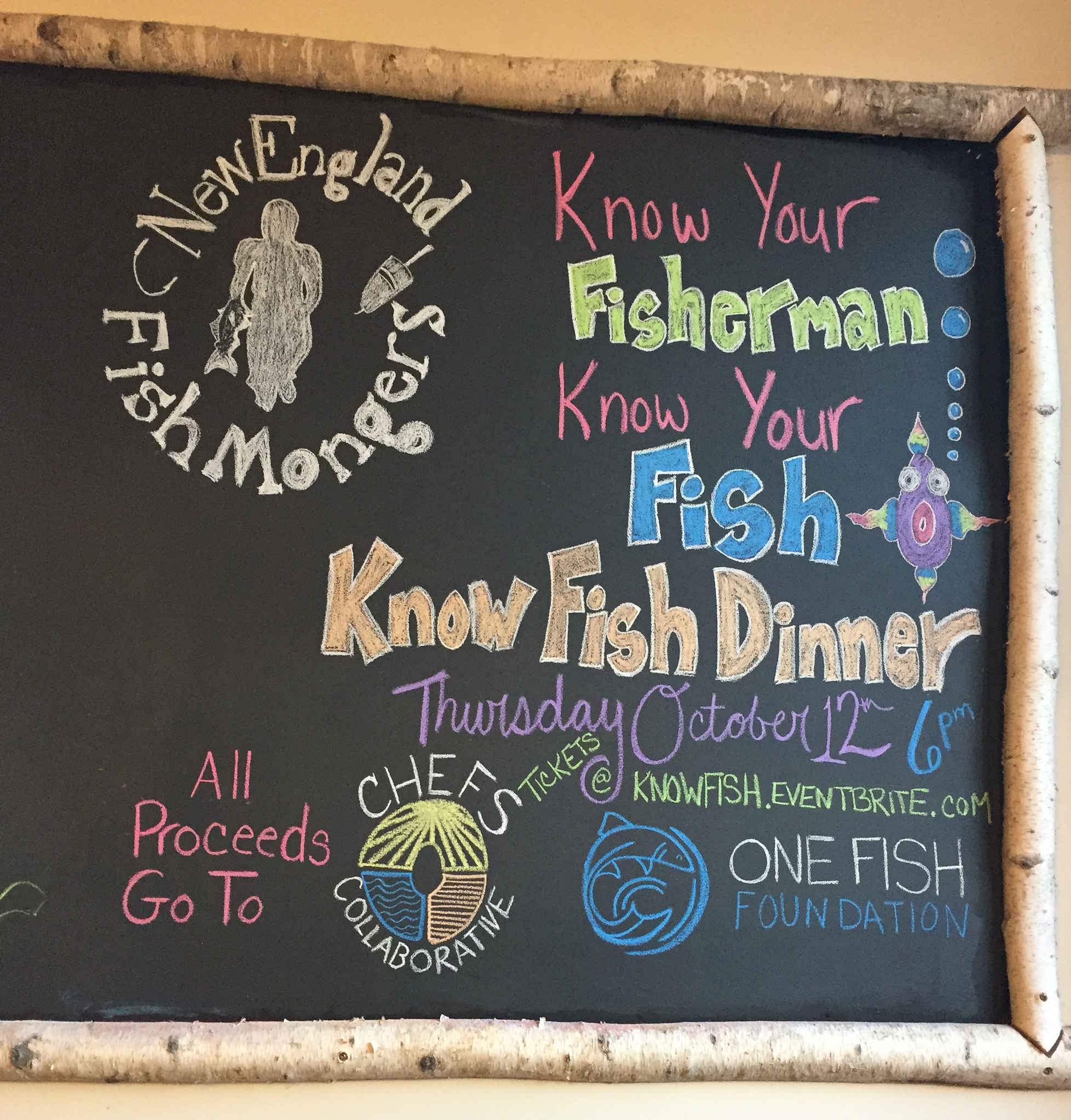
  • KNOW FISH Dinners®
  • Resources
    • One Fish Podcast
    • One Fish Foundation in the news
    • The 7 C’s of Sustainable Seafood
    • Newsletter Archive
    • Recipes
      • Skate with Capers and Butter — Chef Rizwan Ahmed
      • Grandma Davis’ Fish Chowder — Jane Almeida
      • Ginger Garlic Tamari Scallops — Colles Stowell
      • Fish Stock — Evan Mallett
      • Mussels San Remo — Chef Rob Martin
      • Salted Pollock Croquettes – Chef Mark Segal
  • Connect
    • Contact OneFish
    • Social
      • Instagram
      • Facebook
      • Twitter
All Blog Posts

Getting Seafood Smart!

  • May 14, 2018October 20, 2021
  • by Colles Stowell
Share it!
Share

“What happens if you live in Kansas and you want sustainable seafood?” I get this question occasionally. Interestingly, Kansas seems to be the state most often cited. Perhaps it’s because it’s flat as a pancake and just about as far away from any coastline as any state in the union.

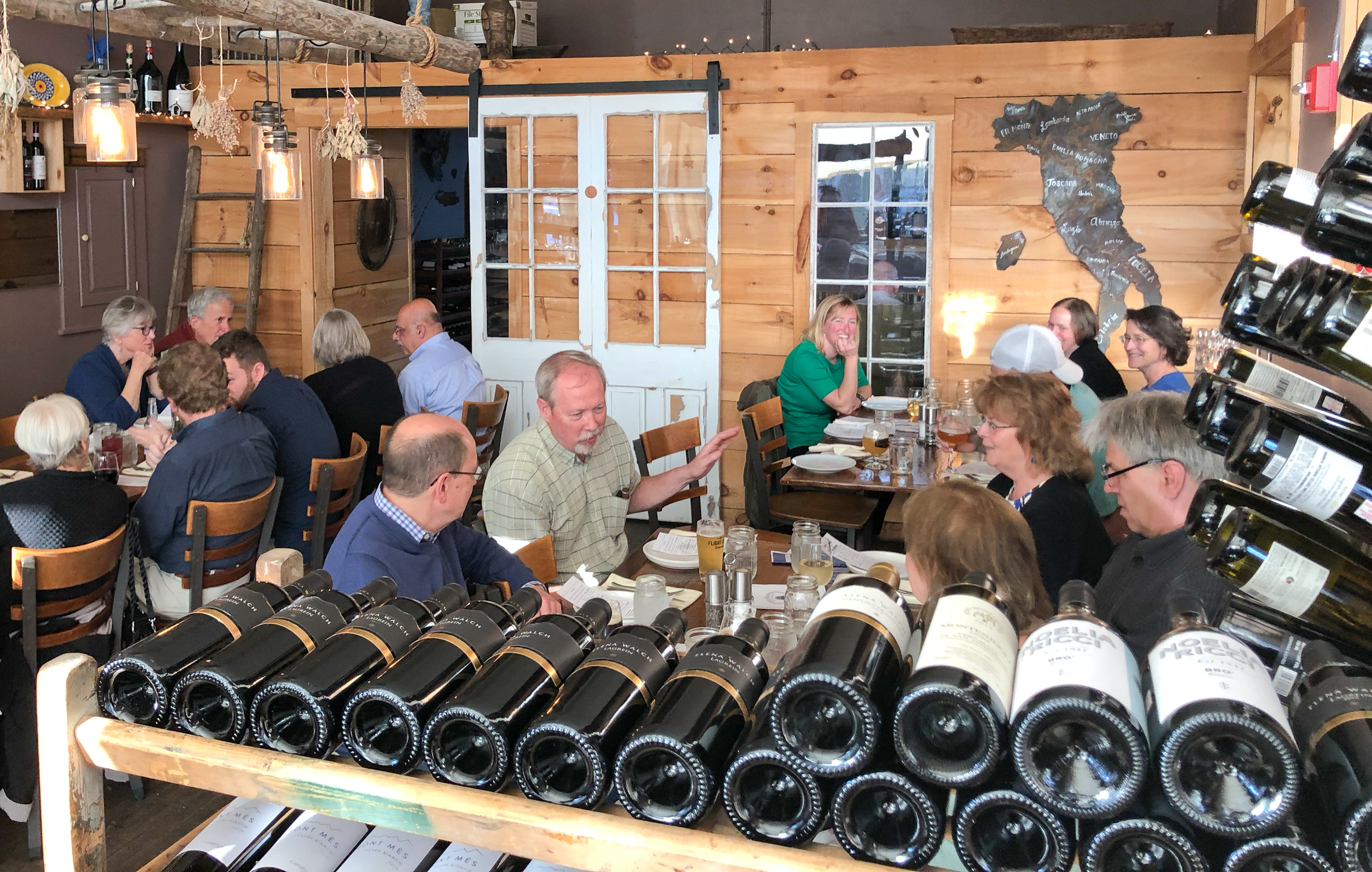
But, it’s a valid question, and one that came up Wednesday night at the latest KNOW FISH Dinner® at Enoteca Athena in Brunswick, Maine. This was the 10th in the series of events aimed at bringing communities together to meet the harvester who caught or grew the seafood they’re eating and learn more about why their choices matter. The question of knowing the story of your seafood permeated the discussion throughout the evening. We’ll return to that question in a bit.

Chef Tim O’Brien went above and beyond the call of duty by staying up until 2 a.m. that day figuring out the most efficient way to skin a couple dozen skate wings (think gloves, towels, a sharp knife and some strong language). This was part of the prep for a fabulous meal also featuring yellowtail flounder, haddock, European green crabs and oysters from Mook Sea Farm.
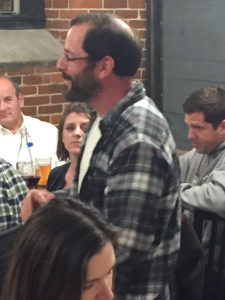
Jeff Auger talking about having the “Mookie Blues.” Credit: Steve Wyman

Jeff Auger of Mook Sea Farm talked about the long time between receiving spat (or seed) and growing oysters to market weight and the many variables, such as climate, that can affect the success of the process. As he spoke, we feasted on his Mookie Blues oysters from Damariscotta that Tim had fried perfectly and served with a spicy lemon aioli.

Tim emphasized the importance of local sourcing, or at least, knowing the source of the food he serves. He mentioned connections with different fish and shellfish providers and local distributors as we enjoyed delicately balanced yellowtail flounder ceviche (“cooked” in blood organge and balsamic vinegar) caught the day before by Capt. Tim Rider of New England Fishmongers. The flounder was served amid a crisp spring, palate-awakening salad of greens, chives watermelon radish and pine nuts.
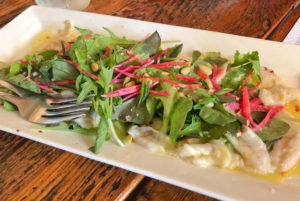
Perfect spring-into-summer ceviche.

As we discussed getting seafood smart about underutilized species, we devoured a risotto made with green crab stock, green crab roe and haddock. European green crabs have been around the U.S. coast for almost 200 years, can eat up to 40 mussels a day and can produce up to 160,000 eggs a year. They destroy eelgrass beds while devouring larval mussels, clams and oysters.
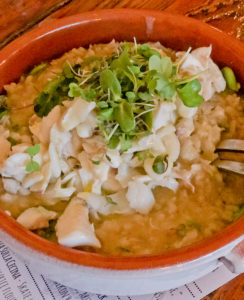
Green crabs make an excellent stock. The roe and the roasted haddock made this risotto sing. Credit: Steve Wyman

So it was good to hear from Marissa McMahan of Manomet that a collaboration of researchers and fishermen are sorting out the soft shell timing of green crabs in hopes of creating a consumer market to eat the invasive species. An established market already exists in Italy. The stock and roe added a fabulous flavor to the risotto, which also featured roasted haddock and daikon radish. Excellent balance.
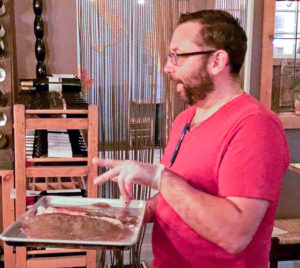
Risky move showing the before side of the skate story? Nah, it’s all part of getting to know your seafood. Chef Tim O’Brien describing the process and the benefits of this under-loved species.

The last course was “Razza Sull Cecina”, the heretofore mentioned skate wing pan-seared with rice flour and finished atop cecina, which is an outstanding preparation of wine and butter braised chickpeas, leeks, garlic and black pepper. The skate was tender but flavorful with the cecina backdrop.
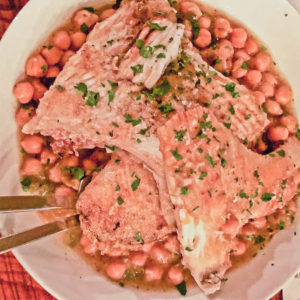
 

The skate may be a beast to skin, but it’s delicate and carried the flavor of the cecina very well. Credit: Steve Wyman

A fisherman’s tale

As we discussed the importance of knowing the story behind the seafood, I talked about Capt Tim Rider, who also provided the haddock and the skate for the dinner. He planned to attend the dinner and tell his story so people would have context behind the fish they were eating.

Sadly, he was unable to make it because he had to tow in a fellow rod-and-reel fisherman whose boat broke down offshore. New England Fishmongers forges close relationships with chefs to bring in fresh, properly handled seafood harvested in the Gulf of Maine. Capt. Tim and his crew often leave the dock at 1 a.m. and return late in the afternoon or in the evening, only to turn around and do it again. If someone is broken down out on the ocean, they help them out.

That is his story, and it’s the story of many fish harvesters. Knowing who caught your fish, when, where and how they caught it is great if you can discover that. Those of us fortunate enough to live around the Gulf of Maine live in the cradle of one of the seafood capitals of the world. We don’t have to work too hard to find fresh, locally harvested fish and shellfish, and the story behind it.
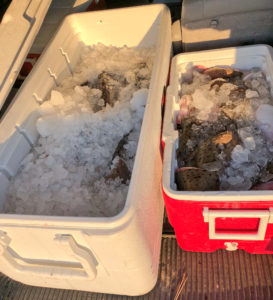
Fresh off the boats. The haddock came from Capt. Tim’s Finlander I in Porstmouth, NH, and the flounder and skate came from his Finlander II in Gloucester, Mass. All delivered to Chef Tim in Brunswick the night before.

Back to the question

Folks in Kansas? Not so much. So my answer to the question about what they can do stems from the premise behind One Fish Foundation: Know your seafood. I believe habit, driven by price is one of the main catalysts behind the astronomically high rate (90%!) of imported seafood in the US.

You want salmon for dinner in the Heartland? You go to your local Walmart or other chain, grab the salmon in the case and head for the checkout. You may even read the label and see that it was “all natural” and farm-raised “fresh” in Chile. And that may be all the information you need to make your decision to buy.

But it’s also all the information you need to give you pause. Suppose you knew that Chile salmon farming operations have the highest rate of antibiotics use, by far, of any country in the world. Even with all of that antibiotic use, Chile suffered a massive algal bloom in 2016 due to a confluence of environmental and management issues such as improper net pen siting and overcrowding. Twenty-four million fish died at a roughly $1 billion cost to the industry.

To get around the BIG hurdle of habit, we need to be having more of these conversations about why our choices matter. So yes, knowledge is power. For folks in Kansas, some knowledge could help them realize that even though they can’t get pollock right off the boat, they may be able to get some that has been caught domestically. The technology for frozen-at-sea products is such that the freshness of the fish or shellfish is preserved as if it had just come out of the water, if done properly. This was an enlightening discussion at Slow Fish 2018.

The US has some of the highest standards for food safety and fisheries management in the world. And if your local store doesn’t have anything that fits the bill, apply some pressure. It may take some time, but consistent pressure can change their buying policies.

Also see if there is some sort of community-supported fishery that may provide good, responsibly harvested domestic seafood. Like a CSA for farm produce, a CSF offers nearly direct from the boat fish delivered weekly (or whatever timeframe) for buying a share up front. Some operations provide this service in the heartland.

If price is a factor, look for a species that is abundant, and not salmon, tuna, cod, etc. Try cusk, for example. Also, some seafood counters offer the small pieces that can’t be sold alone at affordable prices. Cost can be the elephant in the room, particularly for those who may not be able to afford “sustainable seafood,” and it will be a topic for a future blog.

So the KNOW FISH Dinner at Enoteca was again a great discussion set to the backdrop of an outstanding meal prepared with locally harvested seafood with a compelling story behind it.

We’ll keep trying to change the import dynamic, one conversation at a time.

Stay tuned.


Top photo credit: Steve Wyman


All Blog Posts

Slow Fish 2018: Telling tales

  • May 9, 2018October 20, 2021
  • by Colles Stowell
Share it!
Share

Slow Fish is making a difference.

Think of it as a collaboration of fish harvesters, scientists, chefs, students, food-lovers and activists around the world working toward one goal: good, clean fair seafood for all. This was on display throughout the three-day Slow Fish 2018 event in San Francisco April 14-16.

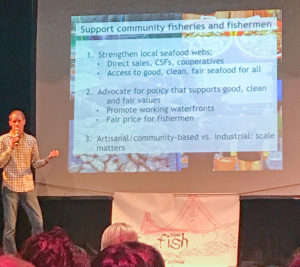
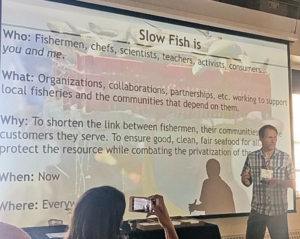
Setting the tone with the Slow Fish 101 presentation. Credit: Lance Nacio

Some of these successes were writ large on the main screen on the first morning of content programming in the Slow Fish 101 presentation.

  • Melanie Brown, a set net fish harvester from Bristol Bay, Alaska, spoke of indigenous ties to the land, the water and the resource. She spoke passionately about how wild salmon runs have sustained her family over time, and why that way of life is under threat from the proposed Pebble Mine. She also spoke of the coalition of disparate groups not normally siding with one another that oppose the mine: indigenous tribes, commercial fish harvesters, recreational fishing groups, environmental activists and politicians among others.
  • Jordyn Kastlunger reminded everyone of the importance of family connections and supporting the youth movement in fisheries as she described the trajectory of the Tuna Harbor Dockside Market in San Diego. Born of a coordinated effort of fishermen, food policy activists and lawmakers, the market features fisher folk docking on the pier and selling directly to customers. About 500 customers come every Saturday to buy about 12,500 pounds of locally harvested seafood.

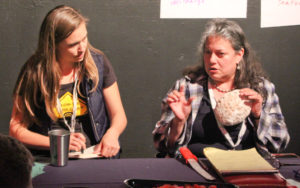
    Jacquelyn Ross tells the story of abalone from Bodega Bay at the World Cafe. Credit: Eric Buchanan
  • Jacquelyn Ross of the Southern Pomo/Coast Miwok tribes spoke about her indigenous fishing lineage along Bodega Bay, hand harvesting abalone, and witnessing the changes to the fishery wrought by temperature, current and acidification. She too spoke of family love and respect for the resource, the land and the water and the importance of sharing those stories in the hopes that others will appreciate those connections to natural resources.
  • Paula Barbeito came from Italy to describe the work of Slow Fish International and highlight the story of the Thorupstrand Fishing Guild in Denmark. Several years ago, fishermen in the community of Thorupstrand pooled their resources to buy quota so they could provide access to the fishery without being overrun by industrial operations. The guild is a reminder of how fishermen can self-identify and protect their access by working together.

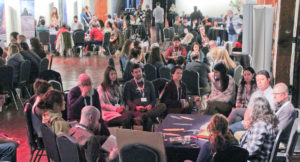
    World Cafe action. Just some of the discussions where things happen. Credit: Eric Buchanan

A parade of perspectives

These compelling narratives were just a few among many shared over the weekend. We heard from longtime fish harvester and policy activist Linda Behnken, who has fished commercially in the Gulf of Alaska and Bering Sea for over 30 years. She has drawn on that experience at the helm of her boat as she helped shape policy to protect small-scale fishing as a member of the North Pacific Fishery Management Council.

We also heard from Anne Mosness, who like Linda, has spent decades at the helm and in the trenches battling industrial scale operations. Anne described her longstanding campaigns against industrial aquaculture and genetically engineered salmon to the discussion, as well as the need to honor women’s voices and rights in fishing.

Filmmaker Mark Titus talked about his upcoming feature, The Wild, which shines a bright spotlight on the world’s largest wild sockeye salmon run in Bristol Bay, and what’s at stake in the battle against the Pebble Mine.

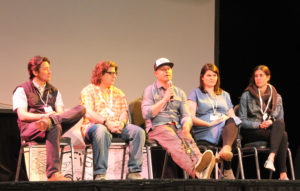
Know Your Supply Chain: Kenny Belov talks about choosing and selling responsibly harvested seafood. Left to right: Alan Lovewell, Real Good Fish; Joe Falcone, FishLine; Kenny; Anna Larsen, Dock to Dish; Jordyn Kastlunger, Tuna Harbor Dockside Market. Credit: Eric Buchanan

Kenny Belov talked about his mission in opening Fish. Restaurant in Sausalito and the TwoXSea sustainable seafood distribution company to provide responsibly harvested, abundant species to customers. Minimizing bycatch and other ecological impacts are critical factors in determining which fish harvesters he will work with.

Lance Nacio’s (right in hat) fried soft shell shrimp were very, very popular. Credit: Eric Buchanan

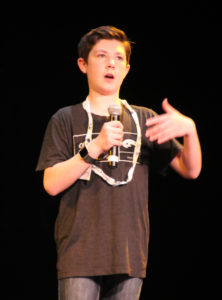
We heard from a broad range of seafood perspectives. Lance Nacio spoke about investing in new technologies such as the plate freezers used to individually quick freeze fresh caught shrimp to preserve the out-of-the-water freshness for shipping around the country. Several oyster growers provided insight on their operations and the myriad factors that go into a successful, delicious oyster harvest. Jack Crofts brought his energy and entrepreneurial spirit to the event, trying to raise visibility and money for this mobile oyster bar, called the Oyster Barrow. Lucas Raymond, a trawl fisherman from New Hampshire, also represented the youth movement at the event.

Young entrepreneur Jack Crofts (he’s 12 going on 13!) wows the crowd with his energy and enthusiasm. Credit: Eric Buchanan

We heard from chefs talking about smart sourcing, as well from seaweed growers like Amanda Swinimer, who described her journey harvesting, by hand, edible wild seaweeds for 17 years for her Dakini Tidal Wilds. Arielle Moinester talked about launching a company that promotes eating invasive species such as Asian Carp. Her GoWild Foods has made “The Silver Skipper” (aka asian carp) the poster child for managing an ecological problem in America’s rivers by eating it.

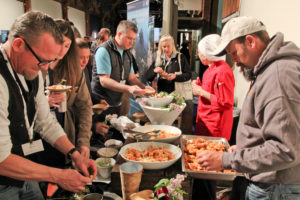
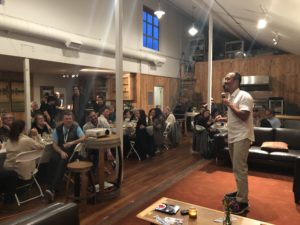
Christopher Wang describes his connection to fishing for salmon in Bristol Bay and why he started The Gypsy Fish Company as attendees listened at the We Are Bristol Bay Dinner.

Ideas, food and fun

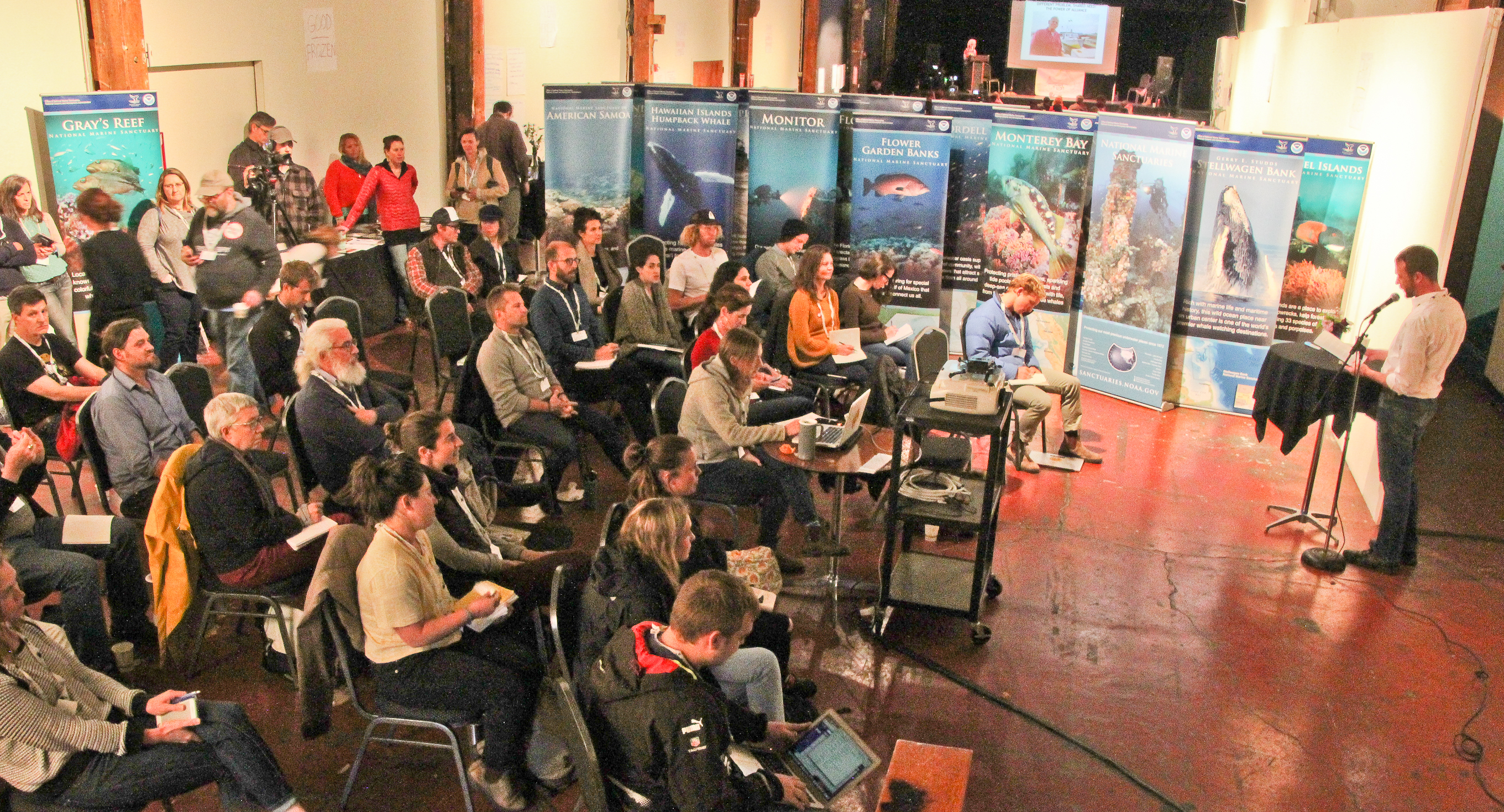
More than 150 people from as far away as Italy, Maine, Alaska, Louisiana, Massachusetts and British Columbia, and as near as Washington, Oregon and right there in San Francisco descended on SOMArts and other venues. We held more than 6 separate events, including the Oyster Social, Seafood Throwdown, We Are Bristol Bay Dinner, and the final Seafood Dinner and film screenings at AirBnB. Core programming on Sunday and Monday included the World Café, 36 Pesce Kucha presentations and lots of interaction.

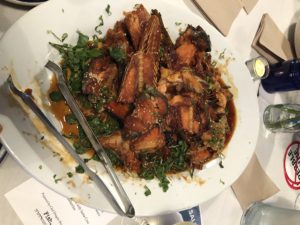
Stellar sticky salmon at the Bristol Bay Dinner.

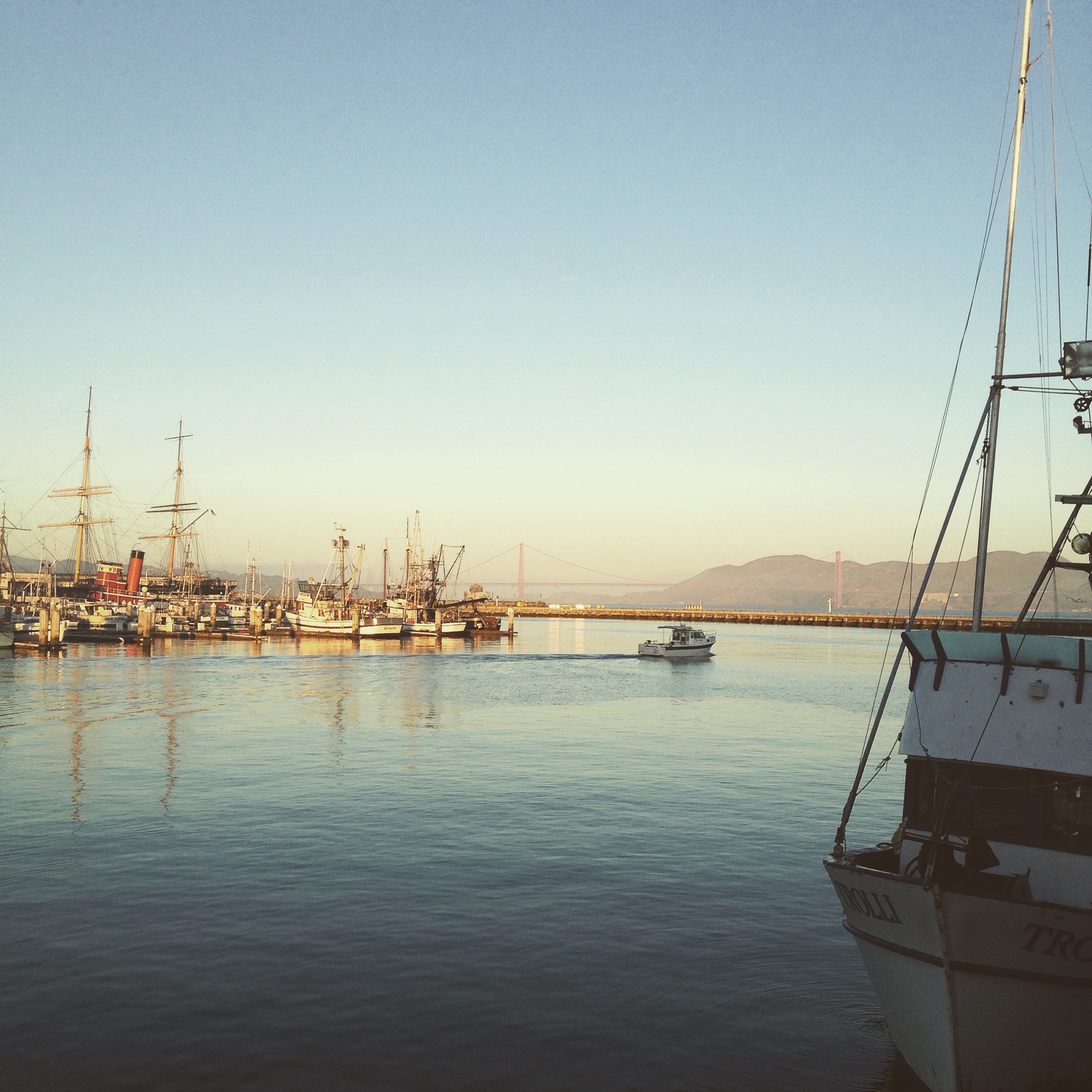
We feasted on delicious wild salmon from Bristol Bay and oysters from Alaska down to Baja. We had fried soft-shell Louisiana shrimp and herring roe captured in a traditional method of submerging hemlock boughs in the bay during the spawn.

The Slow Fish 2018 planning team took on a monumental task to coordinate all of these events in a very short time period ahead of the California salmon season. The small, but very dedicated Slow Food San Francisco board of directors managed countless on-the-ground logistics to ensure everything went smoothly. It was the collective passion of the planners and attendees for the Slow Fish mission to grow the network, share our core values and collaborate on more projects that drove the event’s success.

Chef Matthew Dolen honors winner Chef Aaronette King at the Seafood Throwdown at the Ferry Plaza Farmer’s Market to kick off Slow Fish 2018. The crowd engaged in the process, tasted the food and asked great questions. Credit: Eric Buchanan

We discussed new projects on the horizon, such as a YouTube channel for sharing videos focusing on Slow Fish values, success stories and fisheries-related topics. We also discussed launching a Slow Fish website that will become a destination for those seeking Slow Fish updates, bait boxes to help launch community-based projects like a community supported fishery, Seafood Throwdowns, KNOW FISH Dinners® and more. To enable Slow Fish folks to to ask questions and discuss issues within an informed community, we may launch an online forum. We also discussed an ambitious project to reduce domestic imports from 90% to 50% by 2050. This 50 by 50 project models similar food system-related measures aimed at eating locally (or domestically) produced food.

And so we charted a course for Slow Fish’s future. To most effectively create change, we need to grow the Slow Fish family and foster continued collaboration on future success stories that will help change that massive import dynamic in this country.

And we will.

Stay tuned for Slow Fish 2020.


Top photo: Tyson Rasor of Ecotrust emcees the Know Your Fish Pesce Kucha session. Credit: Eric Buchanan.

All Blog Posts

Opening Eyes and Providing Hope

  • March 23, 2018October 20, 2021
  • by Colles Stowell
Share it!
Share

Every class I speak to has a different dynamic. Aside from age and geography, there are other variables such as social fabric/personalities, ranges of interest in marine sciences, topics already covered in their curricula. These variables can sometimes determine how fast I make connections and get students engaged in the conversation.

This is why I work with teachers in advance to get a sense of the class dynamic and ensure I weave my message into content the students can relate to, either because they have already covered some of the material, or are about to do so.

Such was the case this week when Jennifer Halstead, One Fish Foundation’s intern, and I visited Thornton Academy in Saco, Maine. We had the pleasure of speaking to two groups of seniors. One was a group of AP Environmental Science students already conversant in eutrophication, ocean acidification and thermohaline circulation.

That background knowledge allowed us to dive deeper into issues around environmental impact of industrial aquaculture such as algal blooms (see Chile in 2016), net pen escapes (see Cooke Aquaculture last August) and feed (see West Coast of Africa…ongoing).

The key to successfully engaging students in the discussion about seafood sourcing and personal choices is connecting them emotionally to the narrative. When students care, they join the conversation and carry the salient points with them going forward…hopefully.

As Jennifer walked the environmental science students through how ocean acidification can impact shellfish ability to calcify protective shells, they immediately connected with the images of larval sea snails and blue mussels, both clearly compromised by more acidic waters.

Students in the senior marine science class engaged in the discussion about why European green crabs are capable of significantly shifting ecosystem balance. Naturalized “residents” in North America since the early 1800s, green crabs are everywhere. You can scarcely turn over a rock without finding at least one along New England coasts.
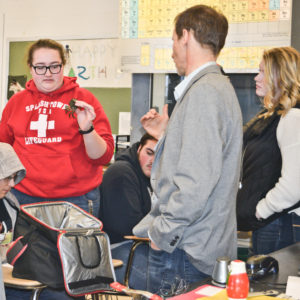
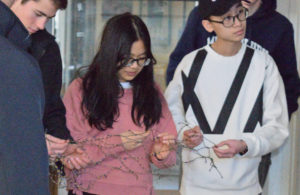
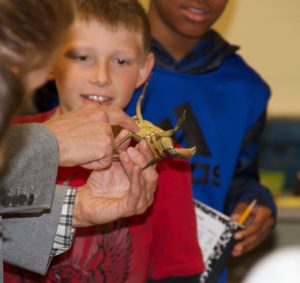
They are fertile (students were surprised to hear that one female can lay up to 190,000 eggs in its lifetime), hardy (they seem to be adapting to winter and changing their spawning habits) and very destructive. They are also voracious eaters. While handling some live crabs, students learned that one crab can eat up to 40 mussels in a day. To get to larval mussels, clams and oysters, green crabs tear up vital eel grass beds, which are precious nursery habitat for a host of species such as hermit crabs, sea snails, other shellfish and even smaller bait fish.


Can you eat this thing? Well, yes, but not easily.

Students asked good questions about what we are doing to try to become the predator that keeps green crabs in check. They learned some chefs make seafood stock with the crabs, while others are working with researchers from the Island Institute, New Hampshire Sea Grant and the Massachusetts Department of Marine Fisheries to determine when the crabs molt. Doing so would help them harvest crabs to cook up as tasty soft shell crabs, just as you’d find in the south.

In both classes, we discussed some of the challenges fishermen, scientists and policy makers must address in ensuring different seafood stock health in the face of issues like climate change, bycatch, industrial scale fishing and aquaculture and environmental impact.

And as we discussed how the fast changing Gulf of Maine affects local species and introduces new invasive species, we also discussed ways the industry is adapting to these changes. Rather than rob students of hope, we talked about our need and ability to adapt to, not solve, climate change and its impact on seafood in the Gulf of Maine.
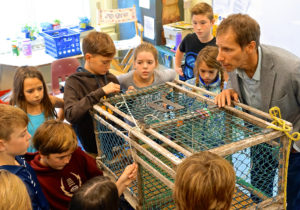
 

All photos credit: Jennifer Halstead


All Blog Posts

How I Became a Slow Fish

  • February 28, 2018October 20, 2021
  • by Colles Stowell
Share it!
Share

While planning some events for Slow Fish 2018 (April 14-16 in San Francisco), I wondered how I became steeped in Slow Fish and the idea of seafood sustainability.

I’m a journalist by trade. I started at a small town daily that required rushing to the scene of a fire, car accident or a moose running loose downtown to prove to editors we were at the scene. After 12 years of crappy pay, frayed nerves and some lifetime friendships, I jumped ship and spent a decade writing about hardware and software at a PR agency representing companies like IBM and Nokia.

I learned much in both of those jobs: How to uncover the hidden story, and how to tell it in a fashion that makes sense to a broader audience.

I backed into writing about fisheries and seafood issues after re-vamping the website of a San Diego-based sustainable fisheries apparel company in 2011. The more I learned about the complexities of fisheries policy, market dynamics, climate change and ecological impacts of different harvest and aquaculture methods, the more I wanted to know and share. A New Orleans native, I grew up with fresh local seafood all around me.


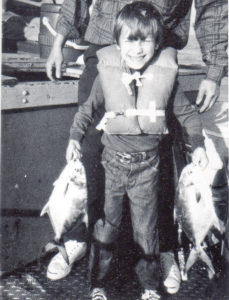
Pampano! It’s what was for dinner.

So in 2015, I started One Fish Foundation, a non-profit whose mission is to bring the sustainable seafood message into communities and classrooms from kindergarten through college.

Some people bristle at “sustainable seafood” as a meaningless cliché. I get it. “Sustainable” has been green-washed to the point of abstraction. And yet, I’ve not come across a term that is as concise and generally widely understood on first reference.

Target audience

The people I’m trying to reach when I’m talking about the perils of industrial finfish aquaculture or climate impacts on different marine species aren’t necessarily those who would react to “sustainable.”

I seek the people who go into their local grocery store and buy frozen, pre-cooked and peeled shrimp without knowing it came from Thailand. I want to talk to those who buy farmed salmon from Chile out of habit because it is cheap, and supposedly “healthy” salmon.

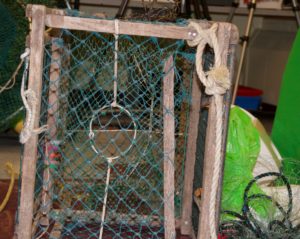
Lobster take-out building. Yes, they walk in and out to feed as they please. It’s just the saps who happen to be in the trap that get caught.

I remember making a poignant connection in one of my first classroom visits. It was a 6th grade geography class I’d visited two weeks before, and we’d talked about why students should care about where, how and by whom their seafood was harvested. We’d rehearsed key questions to ask when they were at a restaurant or grocery store.

At the outset of the follow-up class, one girl said she stopped her mom from ordering shrimp at a restaurant because it was from Vietnam.

I felt like I’d hit a home run.

Breaking the habit

Perhaps that’s at the heart of why I’m so deeply connected with Slow Fish. Most people nod their heads when they learn that 90% of the seafood we eat in this country is imported. But they shudder to learn that a staggering amount of that seafood is coming from countries that pound their products with hormones to make them grow fast or antibiotics to fight disease.

We won’t change that import dynamic without many frank conversations. The Slow Fish mission to ensure everyone has access to good, clean and fair seafood is at the core of these conversations. When I’m talking to a large group of people, I ask them why they think that 90% figure persists. They mention price, policy and complex market dynamics. All of these are key drivers.

Anyone who loves seafood and cares about the resource and the fishermen who harvest it sustainably can be part of the Slow Fish movement. Photo: Kate Masury at Slow Food Nations, Denver, July 2017

But I think another critical factor is habit. Consumer habit drives the equation because people buy what is cheap without checking the provenance of the food they eat. Policy habit also plays a role. There seems to be no urgency to fix policy that allows cheap foreign imports to flood U.S. markets, while a big chunk of domestically harvested seafood goes offshore for astronomical prices.

And the disconnect continues.

The Slow Fish San Francisco mission

Slow Fish aims to change that. While combating inequities in the system that often favor concentrating power and influence in the hands of a few big fishing operations, we also highlight the successes of small-scale operations to bring local, responsibly harvested seafood to their communities and beyond. We encourage people and groups to collaborate on complex issues.

Witness the fierce opposition to the proposed Pebble Mine at the headwaters of the world’s most significant wild salmon run in Bristol Bay, Alaska. But for the persistent collaboration between commercial, recreational and indigenous fishermen, along with advocates and regional politicians, that copper mine would already be up and running. (Check out the We Are Bristol Bay fundraiser dinner at Slow Fish San Francisco on April 15 to eat delicious wild sockeye salmon and talk to the fishermen who may have caught it and learn about why opposing the mine matters.)

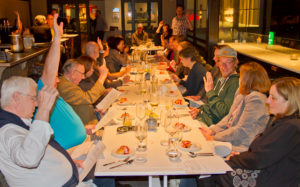
Dinner and conversation give attendees the chance to engage in the seafood issues that matter. A similar scene will take place on April 15 in San Francisco at the We are Bristol Bay Dinner.

This is just one of the topics we’ll cover at Slow Fish San Francisco April 14-16. We’ll talk about the graying of the fleet and innovative ways to attract and support more young fishermen into the profession. We’ll talk about women in fisheries, how to support artisanal fisheries and explore a new mission to reduce domestic seafood imports from 90% to 50% by 2050.

And we’ll have an interactive group discussion on Slow Fish 101, discussing what Slow Fish is and does, what its values are, and how we can grow the network. As the Slow Fish network expands, we fuel collaboration and innovation to solve some of the challenges we face in ensuring good, clean and fair seafood for all.

Come join us! Learn about why you should care, and what you can do to help affect positive change. Here is a link to the Slow Fish website where you’ll find tickets, a schedule and more information about why you’ll want to attend.


All Blog Posts

Don’t Open The Door to the Pebble Mine

  • January 16, 2018October 20, 2021
  • by Colles Stowell
Share it!
Share

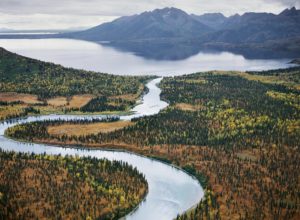
Like a bad horror flick with predictable surprises hidden behind closed doors, we are watching an environmental tragedy unfold and we’re screaming at the top of our lungs at the screen…to no avail. Only this time, the protagonist isn’t some likeable, yet extremely naïve teenager. It’s the administrator for the Environmental Protection Agency. And what’s behind the door isn’t a chainsaw brandishing, mask-wearing lunatic. It’s 10 billion tons of toxic waste threatening the watershed for the world’s largest and most significant wild salmon run.

The carnage is not immediate, but its impact would be permanent.

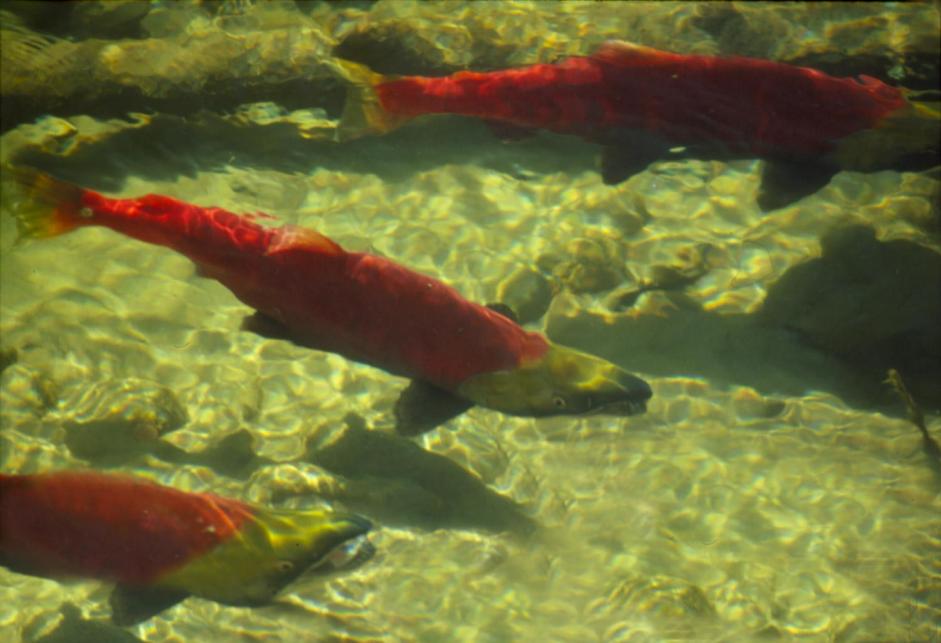
Imagine a flood of toxic waste destroying this wild salmon habitat. NOAA photo

Such is the horror of the proposed Pebble Mine, resuscitated thanks to drastic and surprising reversals of environmental policy under the current administration, which seems to be wielding an axe over the Bristol Bay region of Alaska.

How did we get here?

Talk about drama. Consider that Northern Dynasty Minerals, which acquired leases to begin exploring the region for minerals (copper, gold, molybdenum, etc) in 2001, has said it was ready to begin operations only to backtrack and withdraw promises several times since. It has signed with, then alienated four different financial/mining partners. Two of the largest mining operations in the world, Anglo American and Rio Tinto, pulled out because of massive opposition from Native tribes, commercial fishermen, recreational fishermen, business owners, politicians and US citizens.

Once the financial backing walked, Northern Dynasty’s stock plummeted, and proceeding was fiscally impossible without another partner.

One of many continuing traditions. You know you want some. NOAA photo

The previous administration ruled the mine would violate the Clean Water Act. With its back against the wall, Northern Dynasty filed three separate lawsuits.

Here are some of the concerns scientists and the previous administration had with the project:

  • The initial proposal would have made the Pebble mine the largest in North America and one of the largest in the world, with a 20-square mile footprint (almost the size of Manhattan).
  • The giant pond to hold the tailings, the toxic waste, originally was to be 10 square miles in area, up to 700 feet deep and hold up to 10 billion tons of toxic waste that could devastate critical salmon spawning areas in three major rivers.
  • This tailings impoundment would be “held” by a dam 700 feet high (think the wall in Game of Thrones).
  • The mine’s owners would have to continually treat the toxic waste in that impoundment area to keep it stabilized.
  • The dam would be built over a seismically active area subject to earthquakes.
  • Scientists question whether the proposed dam could withstand a major earthquake, like the one that struck the region in 1964.
  • The dam and the rest of the tailings impoundment are currently scheduled to be designed by the same firm that designed the Mt. Polley Mine dam that failed in 2014, releasing more than 24 million cubic feet of toxic waste into the Fraser River estuary.
  • The toxic waste would have to be held in the Pebble tailings impoundment in perpetuity: translation, forever.

For these reasons and others, the EPA in 2014 preemptively ruled the mine as proposed would pose an imminent threat to the watershed, effectively shutting down the project. In so doing, the administration actively used the Clean Water Act to defend a vital natural resource whose value can be measured in $1.5 billion in revenue from commercial and recreational fishing and supporting 14,000 jobs.

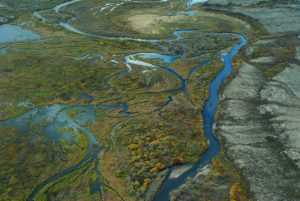
NOAA photo

The difference a year makes

Then we had a regime change, and that haunting piano theme from the original Halloween movie started playing in the background.

Now Northern Dynasty claims it has another financial backer, First Quantum Minerals, which will reportedly pay up to $150 million over four years to secure the federal permitting. The Pebble Limited Partnership filed its permit application with the U.S. Army Corps of Engineers before Christmas. The company claims it is seeking permits for a substantially smaller operation than originally proposed (down to 5.4 square miles with a smaller tailings impoundment). But opponents argue this new plan is a “wolf in sheep’s clothing,” speculating the partnership will quickly move to expand the footprint once operations start.

The question isn’t whether Northern Dynasty will get those permits. That much seems obvious given recent pronouncements from the administration. The question is what happens next in Alaska. Even with the federal permits finalized, the mine’s owners would need to secure some 60 state permits.

This time last year, the political winds in Alaska seemed to have shifted more toward opposing the mine. In 2014, 65% of Alaskans voted in favor of a measure that would require approval by the state legislature (rather than simply the state Department of Environmental Services) of any mine project that would threaten salmon habitat. And people in the legislature and Gov. Bill Walker have voiced strong opposition.

But what are the current political winds in Alaska regarding the mine now that the administration openly favors the project? Is there enough political will to stand up to pressure from the administration? Will legislators and the governor move to protect those 14,000 jobs, which far outnumber the jobs impact of the proposed mine? Do they have the courage to stand for a crucial ecosystem that is woven into the fabric of the state’s identity?

The next few months should be telling.

Today, opponents submitted a ballot initiative accompanied by nearly 50,000 resident signatures to the state legislature that would essentially give the state the same power to review and limit mining projects that would jeopardize wild fish populations as the EPA used under the Clean Water Act in 2014. Called Yes for Salmon, the initiative would be put on the general election ballot next November.

Photo credit: Robert Glenn Ketchum

In the meantime, skip the movie popcorn and go for the computer or phone. If protecting these resources is important to you, then silence is not an option. The EPA has been inundated with more feedback than ever because of this issue. But it’s important to show Alaska state and federal legislators and the governor that people outside of Alaska are concerned.

Once that door is opened, it’s going to be damn hard to shut it again.

Here are some contacts if you want to be heard:

Alaska Governor Bill Walker

Alaska Senator Murkowski – (202) 224-6665
Alaska Senator Sullivan – (202) 224-3004

Here are some links for more info:

Save Bristol Bay: Good resource for the backstory on how we got here and why we should care.

Stand for Salmon: Organization aimed at changing state laws so the legislature has more authority over permitting for operations that could endanger wild salmon populations.

Businesses for Bristol Bay: Advocacy group aimed at supporting the region’s fishery and the industry that it supports.

EPA website explaining why it chose to use Section 404 of Clean Water Act to protect Bristol Bay in 2016. This was before the new EPA administrator reversed that decision last spring in what appears to have been a 30-minute meeting between the administrator and the CEO of Northern Dynasty.

CNN report on the EPA reversal to open the door to the mine last spring.


All Blog Posts

Life Lessons From Rosie’s Gumbo

  • December 4, 2017October 20, 2021
  • by Colles Stowell
Share it!
Share

I remember coming home from school, walking through the gate, past the yew bushes and down the walkway past the open den windows.  The aroma of the trinity (onions, bell peppers and celery) simmering in the roux would grab me. I could smell the sausage, and sometimes even the shrimp. There was something else earthy that I couldn’t identify.

Perhaps it was the filé, or the thyme. Perhaps it was the blend of everything “getting happy” together in the pot.

Or maybe it was just the love. Rosie put a lot of love in her gumbo.

As a child growing up in New Orleans, these were some of the root smells of my evolution. Red beans and rice. Shrimp creole. And Rosie’s gumbo.

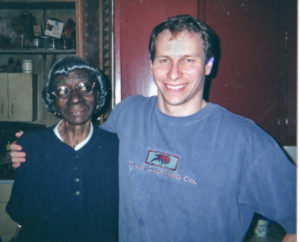
Rosie took care of me when both my parents worked. She also helped my mom around the house. They were best friends. They frequently discussed the latest events on the afternoon soap operas…”The Young and the Restless,” “The Guiding Light”…all that crap. And they confided in each other. They supported each other through some heavy life challenges.

Rosie was the one I’d go to when I was sick. Unlike mom, who had plenty to say on a variety of topics, Rosie was more quiet, saying only what she needed to say, and usually, saying it very directly.

Truth be told, when I was less than 10 years old, I picked out the andouille and smoked sausage, the ham and the shrimp from her gumbo and left the rest. It wasn’t until my teens and early 20s that I truly started to appreciate the magic. It wasn’t until my early 30s that I had the courage to ask her to teach me how to make it.

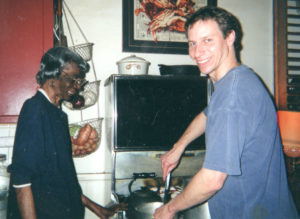
Chef and apprentice. I must have had a good lesson. No visible spoon marks.

I was not afraid of her teaching me a recipe. My mom was an excellent cook, and she taught me how to follow a recipe. She taught me to have the courage to try new things and learn from my mistakes.

The daunting prospect of trying to learn how to cook without a recipe scared the hell out of me. Rosie cooked by instinct. The “recipe” was in her head, a tradition passed down over generations. And gumbo isn’t quite as simple as mac and cheese.

During the two-plus-year process of learning how to make gumbo, my relationship with Rosie grew more profound and more meaningful than we could have imagined. That’s probably because it was an intense experience requiring no shortage of patience from both of us.

She taught me to use all five senses. But it was the process of trying to create a common language that I could understand that proved most challenging.

“First you make the roux,” she’d say. “Get a spoon of oil and a spoon of flour and stir it in the hot pan.”

“How big a spoon?”

“The wooden spoon in your hand.”

“But how much is in that? What if I don’t have a spoon exactly this size?”

WHACK!

The spoon found the side of my head and I didn’t ask that question again.

“You want the roux to be the color of milk chocolate before you add the trinity.”

“What color of milk chocolate? I like a lot of chocolate in my chocolate milk.”

WHACK!

Stir the roux, boy…

Two years and several such reprimands later, I must have taken enough lumps to start to get the hang of it. She taught me to watch the roux until it was LIGHT milk chocolate color; to listen to the sound of the roux as it set up; to smell the nuttiness as it approached the right stage before adding the trinity. I learned to smell that sweet, earthy smell of the vegetables sweating in the roux. I felt the density of the roux ball as I stirred it to make sure not to burn the flour. After adding the water and stock, I learned to taste it to gauge how much salt and pepper to add. I learned the timing of when to add the sausage, shrimp, and other ingredients.

I remember nervously handing over a bowl that I made entirely on my own for her to judge.

“You done good.”

Graduation

I’ve made gumbo many, many times since my formative learning. Before each time, I thank Rosie for showing me how to do it right. Because of her tutelage, I’m now able to scale my gumbo up or down in volume based on the scope of the audience. I can make it with different ingredients. In October, I made gumbo for a chef friend’s wedding using seafood from the Gulf of Maine. I made a lobster stock, added mussels and clams and lobster, and I smoked a skate wing. I added some phenomenal andouille. It went over well.

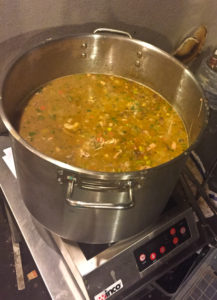
Making roux on an induction burner was nerve racking. What would Rosie think?

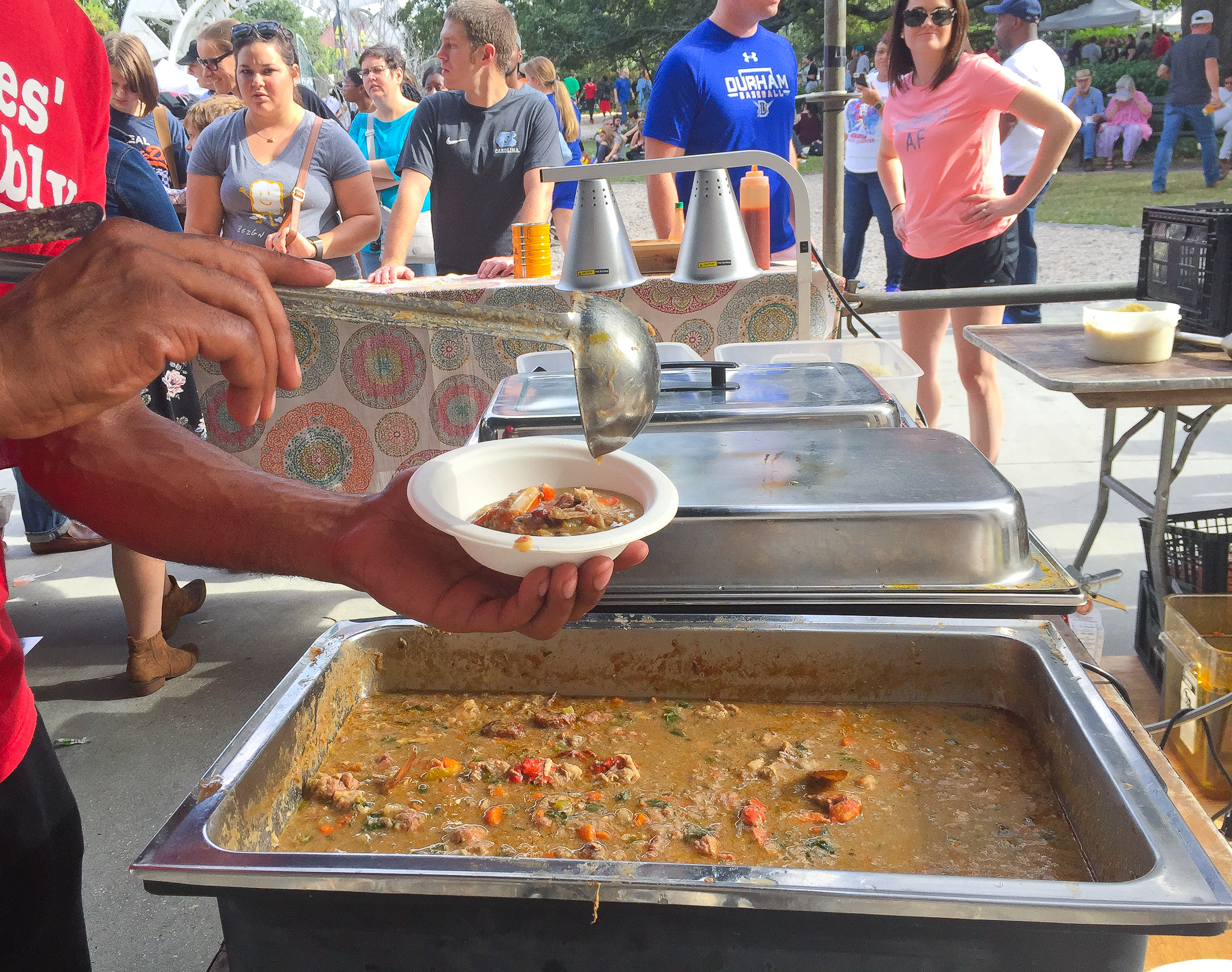
I just recently made more than 90 quarts for the Tremé Creole Gumbo Festival held Nov. 18 and 19 in New Orleans. Dana Honn, colleague, friend and chef/co-owner of Café Carmo in New Orleans invited me down after seeing that I cooked a lot of gumbo at Slow Food Nations in Denver this summer.

Gumbo Fest was a blast. It was exhausting. I think I cooked or helped stage and take down the booth for something like 36 hours over three days. I learned much from Dana and his crew. I learned about what it takes to sell your food. I learned more about what I can do (making gumbo on an induction burner!).

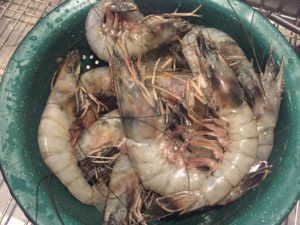
Such a treat to cook with wild caught Gulf of Mexico seafood!

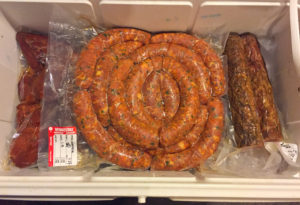
But the highlight for me wasn’t just the end product, or the enthusiastic response from some customers, or the stellar Gulf of Mexico shrimp and crabs from friend Lance Nacio’s Anna Marie Shrimp, or the otherworldly andouille, chaurice and tasso from my friend and pig whisperer Toby Rodriguez.

Got pork? Toby’s products are the best I’ve ever cooked with.

No, the real highlight for me occurred during a panel discussion I was moderating on gumbo heritage and the idea of preserving the tradition of local, sustainable sourcing. On the panel with me were Dana, friend and colleague Gary Granata, who has travelled the world to discover how different people deal with changing waterways, and Ryan Prewitt, chef/partner of the highly acclaimed Pesche Seafood Grill in New Orleans.

We each had a different take on the importance of sourcing your food (whether or not for gumbo) locally from producers you know or from sources you know who take care of their products. We talked about how gumbo is and was a communal event, dating back centuries to West African roots. You don’t cook gumbo for one person. Traditionally, neighbors would bring something to throw into the pot, or something to go with the gumbo.

Toward the end of the discussion, I asked each panelist to talk about his first, most powerful memory of gumbo.

Naturally, I spoke about Rosie. About that smell in the house and the yard. About taking my lumps. About the sense of family around her and her family. About teaching her grandson Gary how to bang on the drums. About the pride I felt in watching him grow and eventually march with one of the best high school bands during Mardi Gras. About the profound sadness of her death in the mid 90s. About the heartbreak of losing track of Gary and his mom Betty after Katrina hit. His home was boarded up with a big X painted on the door by the National Guard.

We tried FEMA. We tried the sheriff’s department. For months I went online checking displaced victims websites. Nothing. We didn’t know if they were alive and had evacuated, … or not.

Just before I’d reached this part of my narrative, a family of four came into the audience and sat down. I mentioned that a month prior to Gumbo Fest, I’d been planning to make gumbo for my chef friend’s wedding, and was thinking about Rosie, as always, and about Gary and his mom, when I got a Facebook message.

It was from Gary.

Fighting to keep my composure in front of the festival audience, I said “Gary, would you please come up here? I just want you all to know that I haven’t seen this person in 20 years, and I hadn’t heard from him until last month.”

We hugged, tears in our eyes, for it had been a long time of not knowing.

It was a seminal moment for both of us for Gary and his family to taste the gumbo his grandmother taught me to make. I often wonder what Rosie would think of my gumbo now that I’ve adapted it to my own particular style.

Gumbo truly is a community event. It brings people together. At the outset of the discussion, I told the audience that for me, the most important ingredient isn’t the roux, or the trinity or okra. (There’s often a vocal battle line drawn between the okra crowd, and the file/roux crowd in Louisiana). It’s love. You’ve got to love the food first. And it’s also important to love the people you’re cooking for. You and they will taste the difference.

This perhaps is the most important lesson I’ve learned as a home cook.

Thanks, mom. Thanks, Rosie.


All Blog Posts

A College Student Walks into a Webinar…

  • November 23, 2017October 20, 2021
  • by Colles Stowell
Share it!
Share

One Fish Foundation Intern Jennifer Halstead is a senior at the University of New Hampshire. She has been instrumental with several One Fish projects, including the coordination of the recent Webinar co-hosted by One Fish Foundation and Local Catch, Fisheries Management: Best Available Science May Not Be Good Enough. Below is her take on the Webinar from the perspective of a college student, and why we should include college students in these discussions more frequently. And she’s right. Why wouldn’t we want to empower future leading researchers, fishermen and policy makers with a broader perspective and a voice?


By Jennifer Halstead

I had to drive to a neighboring town to run some errands immediately following the webinar, and I had a million thoughts swimming around in my head. So, I did what any millennial would do, and I used my smart phone to take notes for me, setting it to record as I drove.

Listening to the recording later, I realized some critical points. First, I was extremely fired up and passionate about the issues, and even a little angry about some of them. Second, I recognized through this webinar that the scientists, fishermen, and others taking part in the conversation represented a broad range of backgrounds and viewpoints, but were united on one theme: that the current fisheries management model doesn’t work for this extremely dynamic, and rapidly changing ecosystem.

Being a college student in marine sciences is exhilarating and intimidating. We’re presented with myriad challenges and questions, and rarely presented with solutions. We’re kind of left in limbo: We have a strong knowledge base, but a wide-open area to apply it, and we’re walking into a field of open-ended questions that have been asked for decades.

The curriculum of marine sciences now has a large portion of time allocated to climate change-related topics and challenges. As students, we’re presented with climate related disasters in all our classes. Not only is this depressing, but the lack of tangible solutions can take away our hope for our future in minutes. Being able to be part of an active discussion about how to change that as part of this Webinar put the last four years of me hearing about these unsolvable problems into a different perspective. I know we need change, because that’s what I’ve paid tuition to learn. An entirely different story starts when I hear other people talking about change, however. Suddenly, there’s a light ahead, collaboration forms, and solutions start to appear to all of those previously unsolvable problems.

Determining lobster sex aboard the F/V Vivian Mae this summer.

I was emboldened by hearing fishermen and scientists talk about how different, fast-changing dynamics throughout the Gulf of Maine necessitate a different data approach: one that is more localized. Hearing them talk about a solution motivated me to keep moving forward and not feel as overwhelmed by the issues. We as college students will listen and take heart when authoritative voices such as fishermen, council members and scientists uniformly agree on the need for change and discuss possible solutions. Hopefully, these credible voices will resonate with the larger community.

To move forward, we need to analyze the current model and determine what the problems are that are highest in priority to address. In addition to this, we need to keep the conversation going, and keep working toward common goals.

The current data collection model is a One-Size-Fits-All model, but the consensus of the discussion was that one size does not fit all. Therefore, the current model is not doing its job and needs to change. The Gulf of Maine is an extremely dynamic region, with highly productive areas, multiple spawning areas and freshwater inputs. Unfortunately, it is feeling climate change impacts at an alarming rate. In a system with this many moving parts, we should not be employing a model that is rigid. Instead of adjusting this model, however, it may be easier to start with new ideas. Relying on data from random trawl surveys that occurred three years ago is not a solid foundation to build a management plan on.

So, let’s change the way we collect data. Fishermen are out on the water every day in different areas, looking for different target species and making different observations. Why not make their observations available for scientists to use, creating an up-to-date, usable set of data? Up-to-date data means that the moving and fluctuating parts of the system can be more accurately accounted for, and we can develop more accurate and successful management plans more quickly. Collaboration between fishermen and scientists when it comes to collection of data and observations is important. It helps refine the current model and bring the sides together while doing it.

A large part of creating change and addressing these problems exists in the need to have active discussions. Everyone sitting at the table, simply discussing the challenges, could lead to change. Different perspectives bring different ideas, and then solutions can start to form. College students taking part in such discussions and offering their perspectives could be integral to the formation of such solutions. That involvement would also likely encourage them (as it has with me) to dive deeper into the issues and help find solutions, rather than be overwhelmed with fear and gloom.

Along with this, it is imperative that all stakeholders be involved in these discussions. If we want to use data that fishermen collect, for example, we need to make sure they’re on board with the idea, and we need to see how much they’re willing to do to create a better system. If too much is put on the fishermen’s plates, or on the plates of any other group for that matter, the new method will work as effectively as the current one. It won’t.


Jennifer Halstead is a senior at University of New Hampshire studying marine biology, and intern for One Fish Foundation.

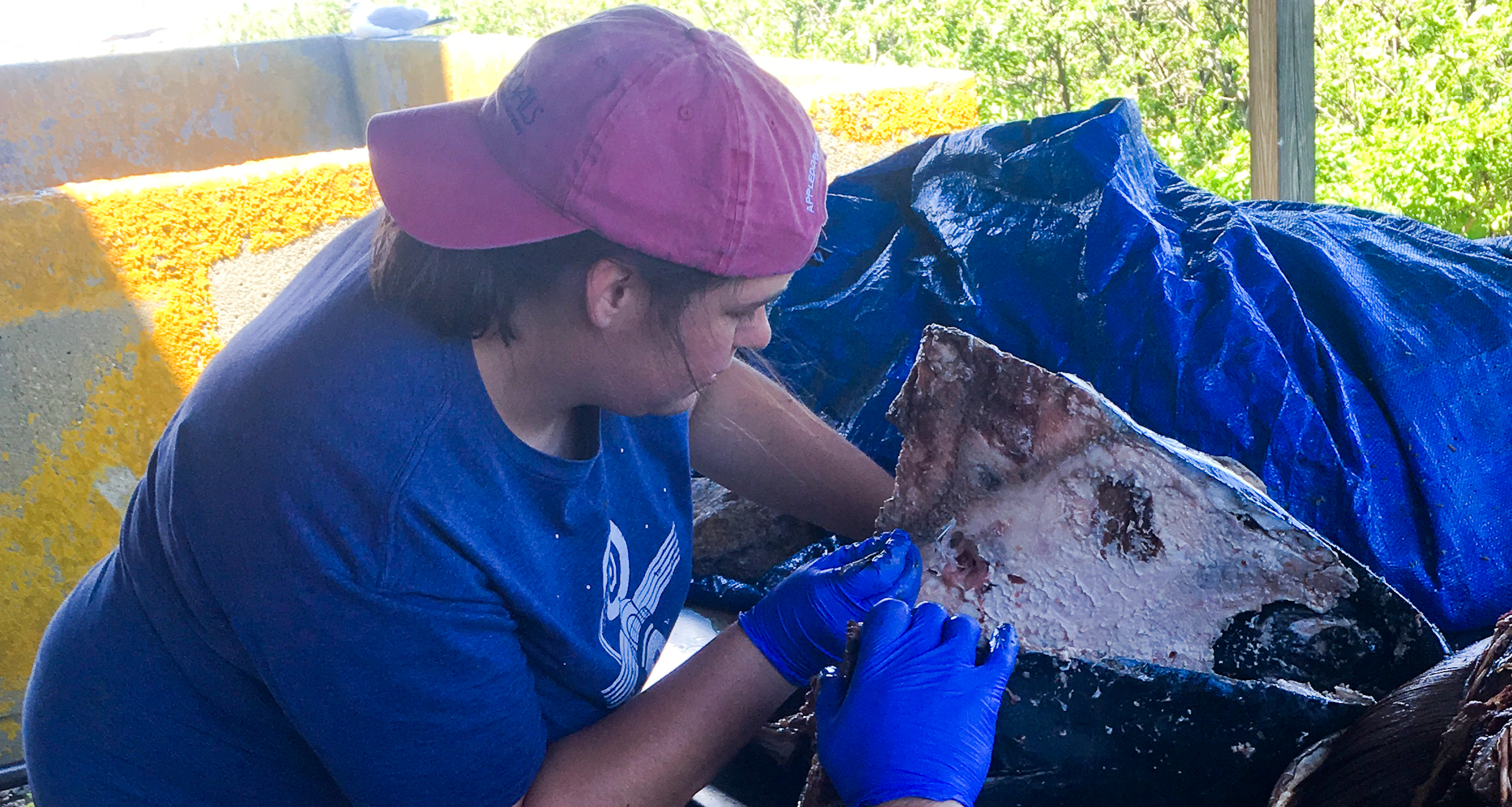
Top Photo: Jennifer extracts the otoliths (ear bones) of a bluefin tuna to determine its age.

All Blog Posts

A scientist, a fisherman and a healthcare rep enter…

  • November 14, 2017November 15, 2017
  • by Colles Stowell
Share it!
Share

Back in January as everyone was adjusting to a new political landscape, I was on a call with Brett Tolley of the Northwest Atlantic Marine Alliance and Bob Steneck, Professor of Oceanography, Marine Biology and Marine Policy at University of Maine. We were talking about a recent report on climate change impacts in the Gulf of Maine, and what fisheries policy may look like in the context of climate impact and the shifting political landscape.

Needless to say there were many unanswered questions. At the time, the administration threatened to cut crucial funding for Sea Grant, climate science and even some fisheries management programs. Our discussion centered on how to adapt more nimbly to climate change impacts on fisheries, and how to make fisheries management more efficient and effective. We also wondered how significantly US fisheries management could shift in a year or two.

That conversation was the seed for last Friday’s (Nov. 3) Webinar: Fisheries Management: Best Available Science May Not Be Good Enough. The discussion was a frank look at the issues with current fisheries policy based on specific examples and some speculation on what management would look like if it were more localized and relied on a different data modeling system.

Joining me on the call were David Goethel, commercial fishermen from Hampton, NH and former three-term member of the New England Fisheries Management Council; John Stoddard, New England Regional Coordinator for Health Care Without Harm’s Healthy Food in Health Care program; and Steneck.

This was a diverse panel with deep knowledge from broad perspectives. Steneck has been at the forefront of research on coral, lobsters, urchins, kelp, forage fish and species interrelationships in coastal ecosystems. Goethel has the unique experience of a commercial fishermen who has had to shift his harvest target and method because of changes in the Gulf of Maine, and who has spent several years either as an advisor to the Atlantic States Marine Fisheries Council or NEFMC. John Stoddard brought an institutional buyer’s perspective to the panel. He knows what healthcare representatives want from the seafood they serve their patients. They do have some concerns about sustainability, and when policy creates market forces that may limit access to locally harvested seafood, they may want to know what can be done to change the dynamic.

How’d we get here?

Steneck methodically walked us through some of the core issues with the current management system. Chief among those is the fact the Gulf of Maine, as well as other US coastal ecosystems, are changing faster than we can manage them. We have been a couple of steps behind climate change because our current data assessment system takes several years between collection and analysis and policy action. In essence, by the time policy has been set, the seascape has changed because of rising temperatures, current shifts, increased ocean acidification, etc. All of these changes have forced commercially valuable species to shift their patterns and adapt.

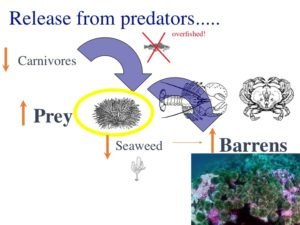
Overfishing of cod resulted in a sea urchin boom in the Gulf of Maine that collapsed in a decade. Interspecies relationships are critical to understanding dynamically changing ecosystems, and are often overlooked with current data management tools.

He pointed to the cod collapse in particular as a bellwether for how we missed the warning signs because of static data analysis, and how that type of “miss” happens frequently due to the data-intensive approach to stock assessment. He showed a brief video featuring a Canadian fisherman who said he had the trip reports to show cod stocks persistently dropping in key areas … data the government ignored because of its current management system.

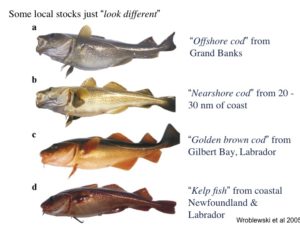
Genetically distinct cod inhabit different ocean ecosystems and should be managed accordingly, not as one, all-inclusive species.

Steneck concluded that we need to “reinvent fisheries management to include multiple, independent indicators”, rather than drill down into details of one species without taking into account other critical factors such as complex interspecies relationships. Taking into account the dynamic changes within spatially appropriate areas of observation will give a more accurate view of fisheries and how quickly they change. Equally importantly, he stressed the need to expand collaboration with fishermen, mining their knowledge base to enhance data collection and analysis.

A unique point of view

David Goethel echoed those concerns. From both perspectives as fisherman and NEFMC member, he saw how current modeling methods’ stagnation meant policy did not match actual stock health and ability to withstand fishing pressure. He pointed to the impact the recent collapse of capelin in Newfoundland had on cod, seals and northern shrimp. Like Steneck, he called for managing fisheries based on the correct spatial scale and with a better understanding of changing predator-prey relationships.

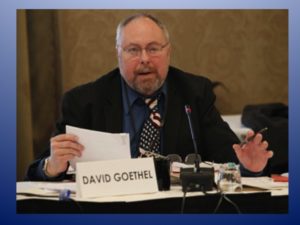
Getting his point across at a management council meeting.

He also urged continued public/fishermen input at council meetings. The system breaks down when fishermen who feel disenfranchised by restrictive policies don’t participate in the process. He decried a lack of transparency in the policy process that frustrates fishermen to the point where many don’t believe it’s worth their time to speak out.

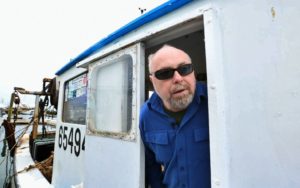
Aboard the Ellen Diane

Goethel agreed with Steneck that data poor methods based on local, spatially appropriate areas of survey would provide the local detail current “big solution” modeling misses. He also agreed that involving more fishermen in the process would play a significant role in collecting more accurate data in a timely fashion, and restoring more fishermen’s faith in the process.

A healthcare approach

Stoddard emphasized Health Care Without Harm’s mission to provide locally sourced, sustainable seafood, with a goal toward supporting community based fishermen. This is a critical issue healthcare industry staff are finding with many patients, especially in coastal New England. Some of these patients have had family or friends who fished commercially, so the some of these issues matter to them.

An example of a successful program providing locally harvested seafood to patients.

He said Health Care Without Harm has steadily moved away from big ecolabels such as MSC to support more locally focused programs. Stoddard highlighted a successful program by which Massachusetts Eye and Ear Infirmary sources locally harvested seafood from Gloucester via the Gloucester Fishermen’s Wives Association. Such programs address patient demand for locally sourced seafood while strengthening healthcare institutions’ support of surrounding communities … and specifically fishermen.

Continuing the dialogue

It was a good discussion, with some engaged back and forth on next steps. For example, one of the parting questions focused on what a successful, cooperative data-poor, localized management program might look like. Steneck suggested a demonstration project within an already existing sample area (under the current management system), using a data poor assessment approach. Goethel suggested using echo system modeling that incorporates multiple species relationships, that he believes would yield a more realistic view of stock health.

The next step in the community discussion about these issues is to begin planning the next conversation. At the outset, I said we weren’t going to solve all of the issues we discussed in one conversation. But the goal is to follow up the conversation with another Webinar that explores a bit deeper what a demonstration project might look like, the type of data to study, and the hoped-for outcomes.

We will aim to set up another Webinar in the first quarter of 2018 tapping the collective knowledge of a well-informed panel, willing to explore the possibilities and elevate the discussion. Ultimately, we hope to build a foundation of knowledge that may lead to a roadmap for change.

Stay tuned.

If you’d like to view the Webinar, click on this link and then the tab that says Watch Now: Fisheries Management: Best Available Science May Not Be Good Enough.


All Blog Posts

Making Good Impressions

  • October 21, 2017October 20, 2021
  • by Colles Stowell
Share it!
Share

Ten- and 11-year olds are very impressionable. I’m reminded of this every time I speak to a fifth grade class and start talking about bycatch and imported farmed shrimp. Their eyes get really big when I talk about how some foreign aquaculture producers use antibiotics to try and prevent disease, or when I show them videos of some bycatch issues with longline and gill nets.

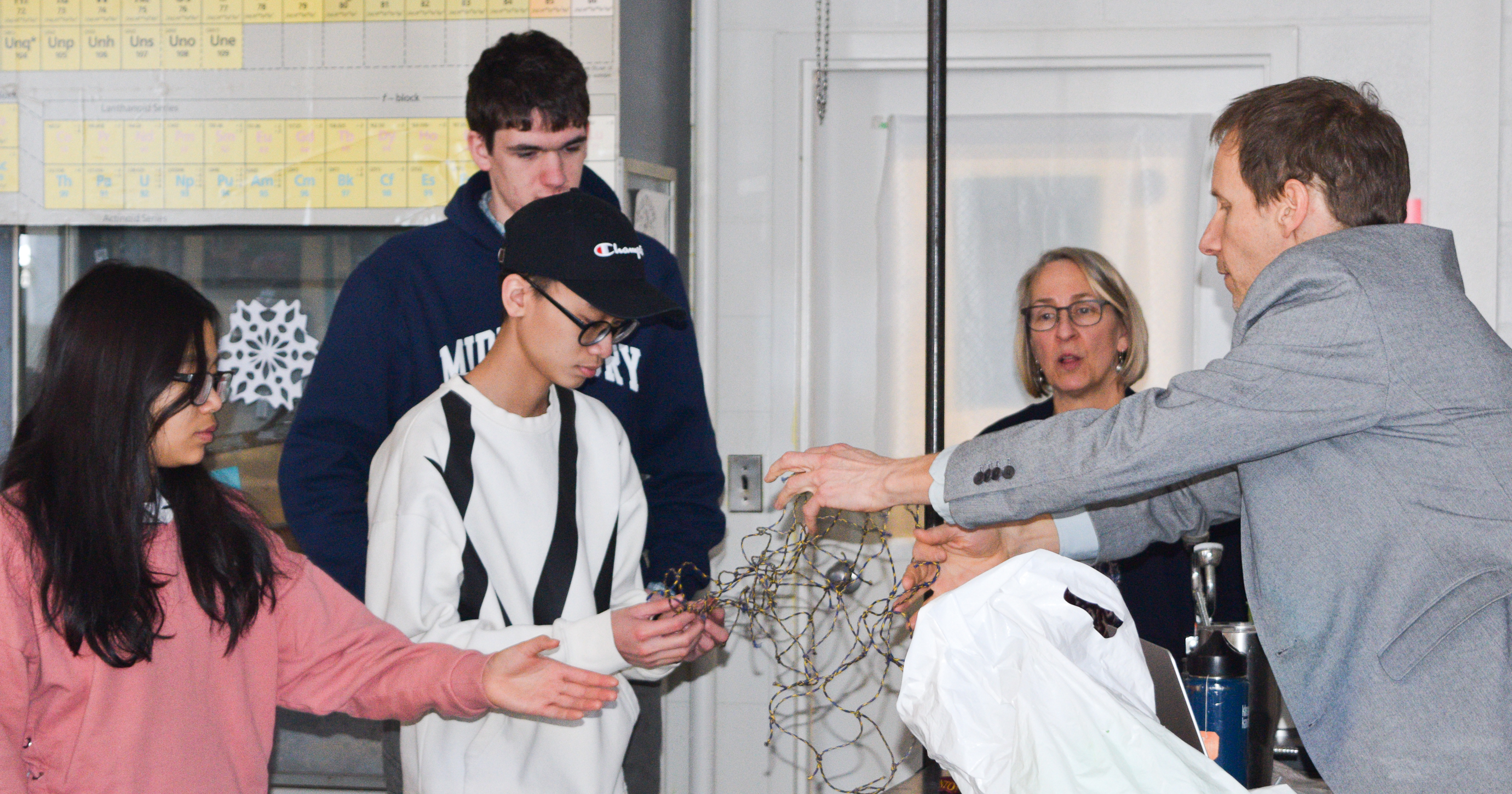
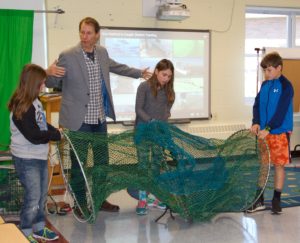
So I’m quick to tell them about some measures to mitigate bycatch, such as changing hook types or using turtle excluder devices. They love handling the big hooped nets. We talk about different harvest methods that have lower ecological impact, and that innovation continues to lessen direct harm.

I show them a pie chart and ask them to choose either the really small slice set aside, or the rest of the pie to represent the domestically harvested seafood eaten in this country. Every now and then, one student will choose the small slice either playing the odds or actually knowing the reality. I love to watch the class discuss the answer and perhaps change their minds. When I tell them the larger section or 90% of the pie represents imports, they don’t mask their surprise.

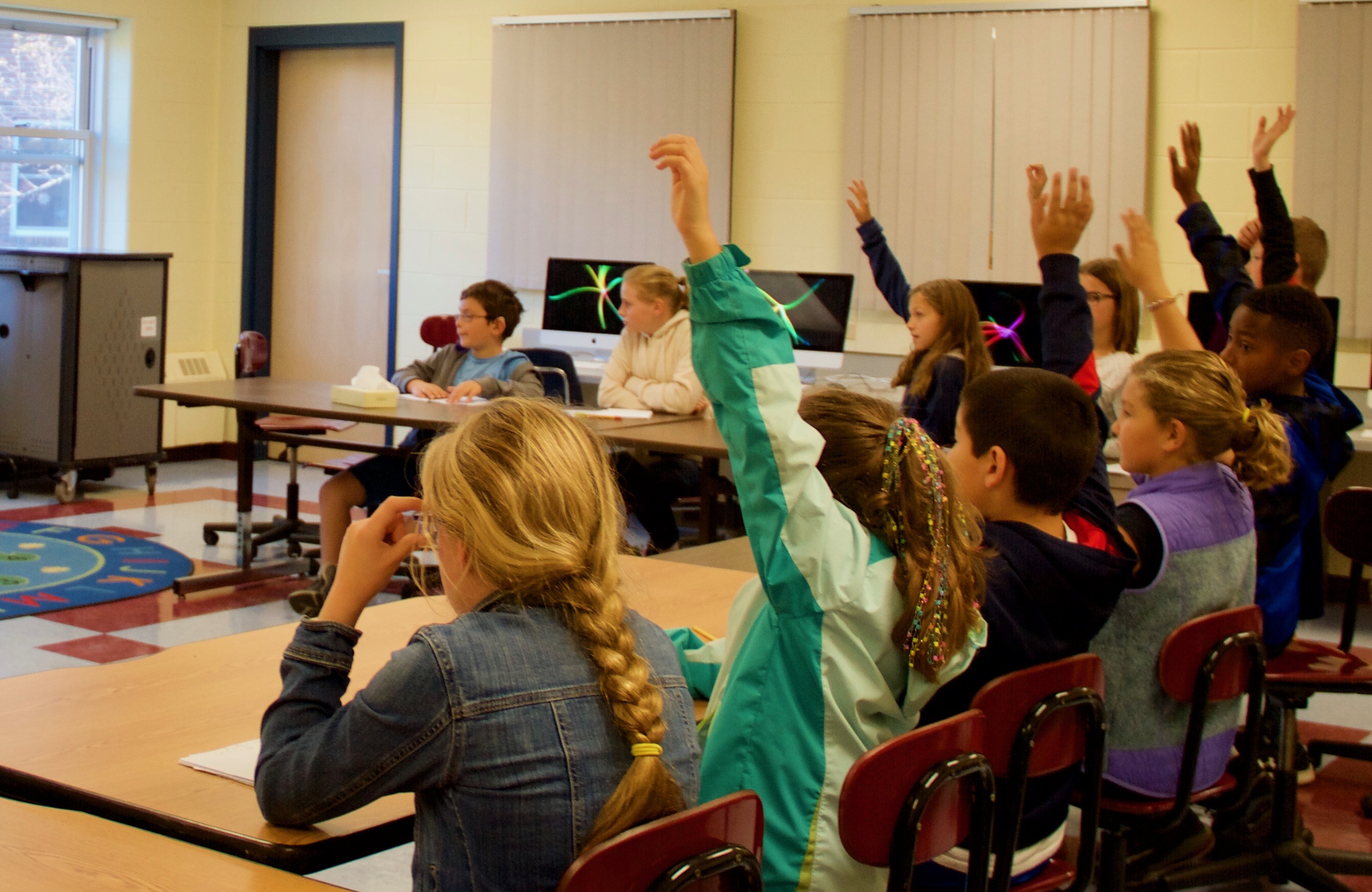
I taught three 5th grade science classes at Rye (NH) Elementary School last week, and took note of students’ interaction with these potentially daunting topics. Typically with classes along the coast, a majority of students raise their hands at the outset when I ask how many like seafood. For those who don’t, I be sure to acknowledge that and tell them that it’s important to understand our relationship to, and impact on the resource, even if we don’t eat it.

The students at Rye Elementary were, as usual, well informed, inquisitive and engaged in learning about where seafood comes from. They were interested to learn about bivalve aquaculture in Maine, and why forage fish such as the mackerel they see right off the docks play a crucial role in the marine food webs.

We talked about gear selectivity, invasive species (live green crabs are always a hit) and that buying locally harvested seafood supports local fishermen in the community. And we talked about their responsibility to ask questions at restaurants and seafood stores.

Each class has a different personality and energy level. So we adapt the content and conversation to those variables and engage as many minds as possible.

Every time I teach a few classes in a row, I walk away energized by the fluidity and enthusiasm of the conversation … and a bit drained. Each class I teach is a renewal of my respect and admiration for teachers who do this day in and day out. This is especially true for teachers helping to stimulate young, impressionable minds.

All Blog Posts

Re-Thinking Current Policy, Data Analysis: a Webinar 11/3/17

  • October 17, 2017October 20, 2021
  • by Colles Stowell
Share it!
Share

Very little in fisheries management is black and white. This is a constant refrain in any conversations I have in classrooms or restaurants. It is often filled with paradoxes. For example, restrictions such as quotas are aimed at preserving a given species, but loopholes, vagaries in the law and profiteering have led to abuses that have jeopardized some stocks.

Look no further than the recent sentencing of Carlos Rafael, AKA the Codfather, after pleading guilty to 28 counts of fisheries fraud, or the administration’s overturning of a federal agency ruling that New Jersey fishermen had landed too many summer flounder (fluke). Both issues are fraught with complexity, and both point to flaws in the current management system.

That’s why we’re hosting a Webinar next month – not to try to solve all of these complex issues, but rather to hone in on one critical piece of the puzzle that often gets overlooked: How to improve fish stock assessments and strengthen collaborative efforts between fishermen, scientists, and managers. We’re going to discuss the idea of turning the current top-down management model on its head by localizing fisheries management and bringing fishermen further into the process of collecting data and determining policy.

We’ll discuss long-term goals and obstacles to achieving a more balanced approach to ensuring the health of marine resources while supporting local fishermen and the coastal communities they serve. This type of approach would allow scientists, policymakers and fishermen working together, to respond more quickly to regional climate-induced ecosystem shifts.

This Webinar will posit these questions: What can we do to bridge the gap between fishermen, scientists and policy makers? Can we build fishermen’s trust in management and data while still safeguarding the resource? Should we re-think the current fisheries management schema, including the data collection model, to respond more nimbly to rapid, often localized climate change impacts? Can we create a system that better protects the resource, supports local fishermen and strengthens coastal communities with a fishing heritage? How would such a system impact individual seafood consumers and institutional buyers?

The hope is this discussion will lay the foundation for more constructive dialogue, which could eventually lead to a framework for fundamental, meaningful change. We recognize that bucking the system carries additional barriers and challenges. That’s why we have Health Care Without Harm (HCWH) joining us. HCWH has a proven track record of leveraging institutional buying power to shift major policy. By breaking out of the fisheries bubble and engaging HCWH, we can lay the groundwork for real change.

Join us online on Nov. 3 at 3 p.m. and become part of the discussion. Would you change fisheries policy now? What does a better management model look like to you? The panel discussion will last for an hour, followed by a moderated audience Q&A.

Here is the link to sign up for the discussion.

Panelists will include:

Bob Steneck: Professor of Oceanography, Marine Biology and Marine Policy School of Marine Sciences, University of Maine Darling Marine Center. Bob has been at the forefront of important research on lobsters, kelp and groundfish in the Gulf of Maine, as well as coral in the Caribbean for decades. He has a unique perspective on the dynamic ecosystem changes in the Gulf of Maine and the Caribbean and the recent history of data-driven policy.

David Goethel: Commercial fisherman out of Hampton, NH and a three-term member of the New England Fishery Management council, which establishes many of the rules regarding groundfish harvest in the Gulf of Maine. He has also served as an advisor to several panels for the Atlantic States Marine Fisheries Commission, which also regulates many New England fisheries species. David brings a powerful perspective having been on both sides of the fisheries management dilemma.
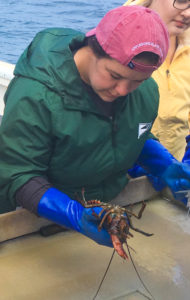
 

John Stoddard: New England Regional Coordinator for Health Care Without Harm’s Healthy Food in Health Care program. John brings a compelling perspective from working with healthcare food services on what healthcare patients, staff and food buyers look for in sustainably harvested seafood. We know that improved science also affects individual consumers and institutional seafood buyers like hospitals. What role can seafood buyers play in helping improve the system?
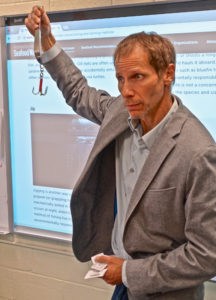
Moderator

Colles Stowell: President of One Fish Foundation, a sustainable seafood education non-profit teaching consumers about why they should care where, when, how and by whom their seafood was harvested. Colles works with students in classrooms from kindergarten through college, and adults via community events to discuss a variety of crucial seafood sustainability topics ranging from harvest and aquaculture methods to climate change impacts and policy.


All Blog Posts

Fifth KNOW FISH Dinner zooms in on critical questions

  • October 15, 2017October 20, 2021
  • by Colles Stowell
Share it!
Share

“How do you know if it’s truly local?”

The question from Jordan Pike of Two Toad Farm in Lebanon, ME. during Thursday night’s KNOW FISH Dinner™ at 7th Settlement Brewery  in Dover, NH was seemingly simple. It is a question any farmer, fisherman, chef, baker or food producer encounters on a regular basis. But its implications are more significant because the complexity of the seafood system in the U.S.

We were discussing the dynamics of the domestic seafood system and some of the drivers behind the fact we import more than 90 percent of the seafood we eat in this country. That’s ironic when you consider we harvest over 5 million tons of seafood domestically on an annual basis… plenty enough to meet the demand.

Brian Gennaco of Virgin Oysters explains why oyster aquaculture is a labor of love. Three years from seed to harvest.

Breaking the habit

One of the largest hurdles is habit. We discussed how habit drives much of the seafood purchases linked to foreign sources. For example, consider the widespread habit of buying the same thing weekly, at the lowest price, without trying to find out more about where things like frozen shrimp or salmon fillets come from. Similarly, there is the habit of continuing with a flawed management system that opens the gate for cheap imports to feed the consumer habit.

Asking questions is one of the most effective ways to change these habits. I told the 35 attendees one of the first questions to ask is “Where is it from?” Buying locally sourced seafood is at least an initial step away from imports.

But Jordan’s question is also at the crux of getting to know our food and improving the relationship we have to our seafood. At its core, the question pits small local food producers against big operators like Monsanto, Thai Union, and the now somewhat defrocked “Codfather”, Carlos Rafael. Rafael, the largest fishing operator on the East Coast, was recently sentenced to nearly four years in prison, three years of additional probation and more than $200,000 in fines after pleading guilty to 28 counts of fisheries fraud. The court also seized a small portion of his assets.

One of Brian’s delicious oysters.

Jordan took the “local” question further. “How do you know the scallops you eat aren’t coming from boats owned by Rafael?”

Become a seafood detective

The answer isn’t simple. The U.S. is lagging in terms of comprehensive, transparent labeling systems that provide easily accessible information. The EU has such a system, and both consumers and fishermen are generally happy with it; consumers for obvious reasons, fishermen because they see it as a competitive advantage.

Absent such labeling, we must try to find such information by owning the responsibility to ask questions. Thursday night, we discussed the importance of forming relationships with fishermen in our communites or with restaurants and stores that buy seafood directly from fishermen in the community or the nearby region.

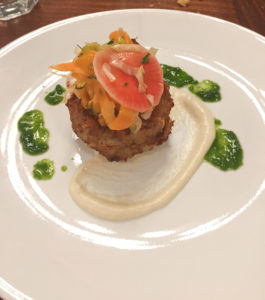
Potato fish cake (pollock), parsley two ways and a bright pickled vegetable salad.

The seafood counters and many of the restaurants I patronize know me and know I’m going to ask questions. They also know I can tell visually how relatively fresh different fish and shellfish are. They may not be able to tell exactly what boat Acadian Redfish on display is from, but they can tell me if it was caught in Casco Bay and when it was cut.

The truth is you may not really be able to learn the provenance of every piece of seafood you buy. Terms like “local” and “organic” have been co-opted improperly so often that their meanings have been diluted. So you ask questions, observe and make educated assumptions. And once you have established a relationship with a fisherman and/or a fishmonger or restaurateur you trust, you will have significantly increased the chance the seafood was harvested responsibly.

It was an excellent question that sparked a good conversation about what we as consumers can do to understand and embrace our relationship to the seafood we eat.

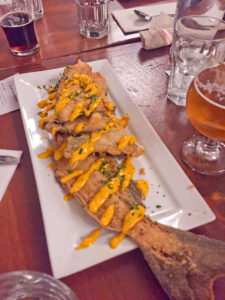
Look at all of that fried goodness! The remoulade was outstanding.

Good food, good convo

And it was just one part of a great evening of storytelling and diving into key issues with perspectives from Capt. Tim Rider of New England Fishmongers who donated the fish, Brian Gennaco of Virgin Oyster Co. who provided the oysters, and Chef Taylor Miller who put on a feast. (How about delightfully seasoned tuna pastrami, perfectly fried pollock carcasses and collars with plenty of meat on the bones, cornmeal dusted fried oyster with chorizo on brioche with garlic aioli, and some especially delicious gin-brined baked pollock served with cornmeal fried pollock with dill salt???)

We also heard from Joe Letourneau, the only other full-time, rod and reel groundfish commercial fisherman in the Gulf of Maine (aside from Capt. Rider); and, Kevin Jackson, who has a unique perspective as a NOAA observer that accompanies fishermen like Tim and Joe to research a variety of species, like wolfish. Kevin’s work is an example of scientists collaborating with fishermen on critical research to learn more about ocean resources.

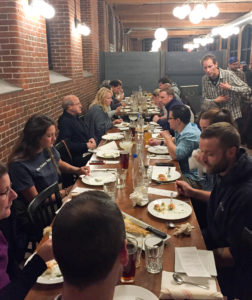
Conversation upon conversation, building a movement.

This was the 5th dinner in the KNOW FISH Dinner series, and it is a continuation of our mission to change minds one conversation at a time. Attendees left with several compelling conversations to think about, as well as a menu with the 7 C’s of Sustainability printed on the back.

The next KNOW FISH Dinner will be at Otis Restaurant in Exeter, N.H. on Nov. 2.

Come join us for great food and a broader seafood perspective!

Get tickets here.

All Blog Posts

Judge Makes Codfather Offer He Can’t Refuse: 46 Months…

  • September 26, 2017October 20, 2021
  • by Colles Stowell
Share it!
Share

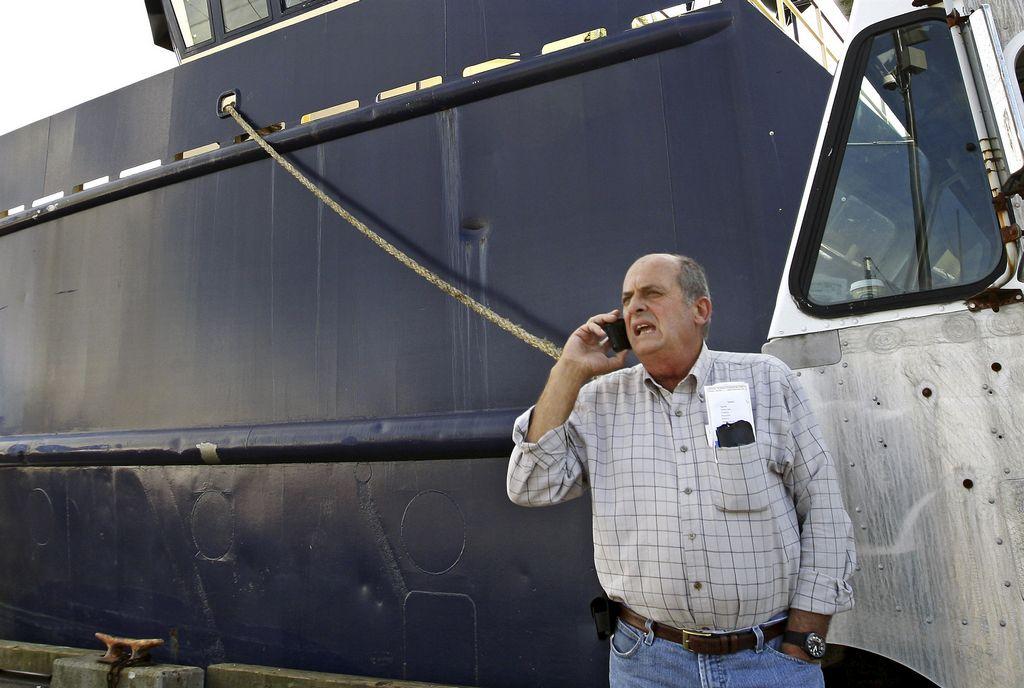
New Bedford fishing kingpin Carlos Rafael was sentenced to 46 months in prison and ordered to pay $200,000 in fines yesterday after pleading guilty to fraudulently mislabeling fish and sending hundreds of thousands of dollars in cash out of the country. He must also pay $108,929 restitution to the U.S. Treasury.

Rafael has become a divisive flashpoint in New England fisheries discussions as activists and smaller scale fishermen have pointed to his case as a glaring example of what’s wrong with much of the current groundfish management system. In court yesterday, his attorney read a statement in which Rafael claimed he essentially committed the crimes he was accused of to benefit his employees, and that it was the stupidest thing he ever did.

Judge William Young wasn’t buying it. “This was not stupid. This was corrupt. This was a corrupt course of action from start to finish,” Young said to Rafael. “… (It was) designed to benefit you. To line your pockets. That’s what it was, and that’s why the court has sentenced you as it has.”

Rafael was arrested a year and half ago after boasting about skirting federal fisheries laws and hiding cash in offshore banks to undercover Internal Revenue Service agents posing as Russian mafia. At the time, he was running the East Coast’s largest fishing operation, with more than 40 fishing vessels and a couple of on-shore processing centers.

A tall tale

How Carlos Seafood got to that point is a story of greed, capitalism and a knack for taking advantage of a flawed management system. The predominant regulation governing New England groundfish is catch shares, which treat access to fishing areas like a market commodity to be traded like stocks, ultimately leading to fleet consolidation. This consolidation raises the cost of doing business so high that many small-scale fishermen are forced out of business.

In Rafael’s case, he not only gobbled up quota and permits, he also controlled a processing facility in New Bedford. Mislabeling fish became much easier when he controlled the captains and crew on the water, and people in the processing plant.

Now, he will serve nearly four years in prison, followed by three years of supervised release. Judge Young also banished him from having anything to do with commercial fishing during his supervised release … which amounts to nearly seven years out of the business.

The underlying issue

Case closed? Not quite. The larger question now is what happens to Rafael’s assets. What happens to the quota he acquired and how will that decision affect regional fisheries markets and fishermen?

The answer to that brings us back to the ever louder claims that the current quota system enabled Carlos Rafael’s rise. What several fishermen and activists have called for is to liquidate the permits and make them available to a broader range of fishermen throughout New England, not just New Bedford. The mayor of New Bedford and several fishermen there said the permits should remain local. Mass. Governor Charlie Baker wants them to stay in the state. At stake are the 13 vessels and the permits that were directly linked to the fraudulent activities, estimated in court documents to be between $27 million and $30 million.

One of the options mentioned in yesterday’s sentencing was to sell all of Rafael’s assets to Richard and Raymond Canastra, the brothers who own and operate the Whaling City Seafood Display Auction as well as the Boston Seafood Display auction. Some fishermen and activists oppose this possibility because Rafael has ties to the Canastras, and because they fear it would result in another vertically integrated entity controlling a large amount of quota. Read: Another version of the Codfather.

The judge essentially said that it is not exclusively up to him to determine allocation of quota, which is governed by NOAA. The hope is NOAA will take the long view on the situation and make a recommendation that benefits a wider swath of fishermen and their communities. In the end, the best decision would also benefit the resource by turning over control of those permits to fishermen who are more likely to obey the law.


For additional reading:

Northwest Atlantic Marine Alliance victim impact statement delivered at sentencing.

South Coast Today news story.

Boston Globe news story

Politico in-depth analysis of the evolution of Carlos Rafael as the Codfather.

Photo credit: Peter Pereira/Standard-Times File/SCMG

Posts pagination

1 2 3 4 5 … 9

Recent Posts

  • Hurricane Ida wreaks havoc on Louisiana’s seafood industry
  • EPA Should Use Clean Water Act To Kill Zombie Mine
  • Slow Fish 2021: Relationship Matters
  • Faith, Façades, and Futility
  • Pebble Permit Paused: Politics at Play

Archives

  • September 2021
  • August 2021
  • April 2021
  • December 2020
  • August 2020
  • June 2020
  • February 2020
  • December 2019
  • November 2019
  • October 2019
  • July 2019
  • May 2019
  • April 2019
  • March 2019
  • January 2019
  • December 2018
  • November 2018
  • June 2018
  • May 2018
  • March 2018
  • February 2018
  • January 2018
  • December 2017
  • November 2017
  • October 2017
  • September 2017
  • August 2017
  • July 2017
  • June 2017
  • May 2017
  • April 2017
  • March 2017
  • January 2017
  • December 2016
  • November 2016
  • October 2016
  • September 2016
  • August 2016
  • July 2016
  • June 2016
  • May 2016
  • April 2016
  • March 2016
  • February 2016
  • January 2016
  • December 2015
  • November 2015
  • October 2015
  • September 2015
  • July 2015
  • June 2015
  • May 2015
  • April 2015
  • March 2015
  • February 2015
  • January 2015
Theme by Colorlib Powered by WordPress