Skip to content
One Fish Foundation
  • Blog
    • Aquaculture
    • Education
    • Environment
    • Policy
    • Wild Harvest
    • Fish Tales
  • About
    • About One Fish
    • About Colles Stowell
  • Education
    • Elementary School
    • Middle School
    • High School
  • KNOW FISH Dinners®
  • Resources
    • One Fish Podcast
    • One Fish Foundation in the news
    • The 7 C’s of Sustainable Seafood
    • Newsletter Archive
    • Recipes
      • Skate with Capers and Butter — Chef Rizwan Ahmed
      • Grandma Davis’ Fish Chowder — Jane Almeida
      • Ginger Garlic Tamari Scallops — Colles Stowell
      • Fish Stock — Evan Mallett
      • Mussels San Remo — Chef Rob Martin
      • Salted Pollock Croquettes – Chef Mark Segal
  • Connect
    • Contact OneFish
    • Social
      • Instagram
      • Facebook
      • Twitter
All Blog Posts

Age Is Irrelevant: Our Seafood Choices Matter

  • April 24, 2017October 20, 2021
  • by Colles Stowell
Share it!
Share

Standing in a light misting rain at a chilly March for Science rally with my daughter on my shoulders, I marveled at the number of families in attendance. The scene struck a chord with me. Science has a story for everyone, regardless of race, sex, age, income, etc. It’s all in how the story is told, and our willingness to listen to it.

Early involvement! Photo credit: Jaime Stowell

This is true for my work with One Fish Foundation. Regardless of where I’m speaking, there is one constant. The age may change, but the overall message is the same: Our seafood choices matter.

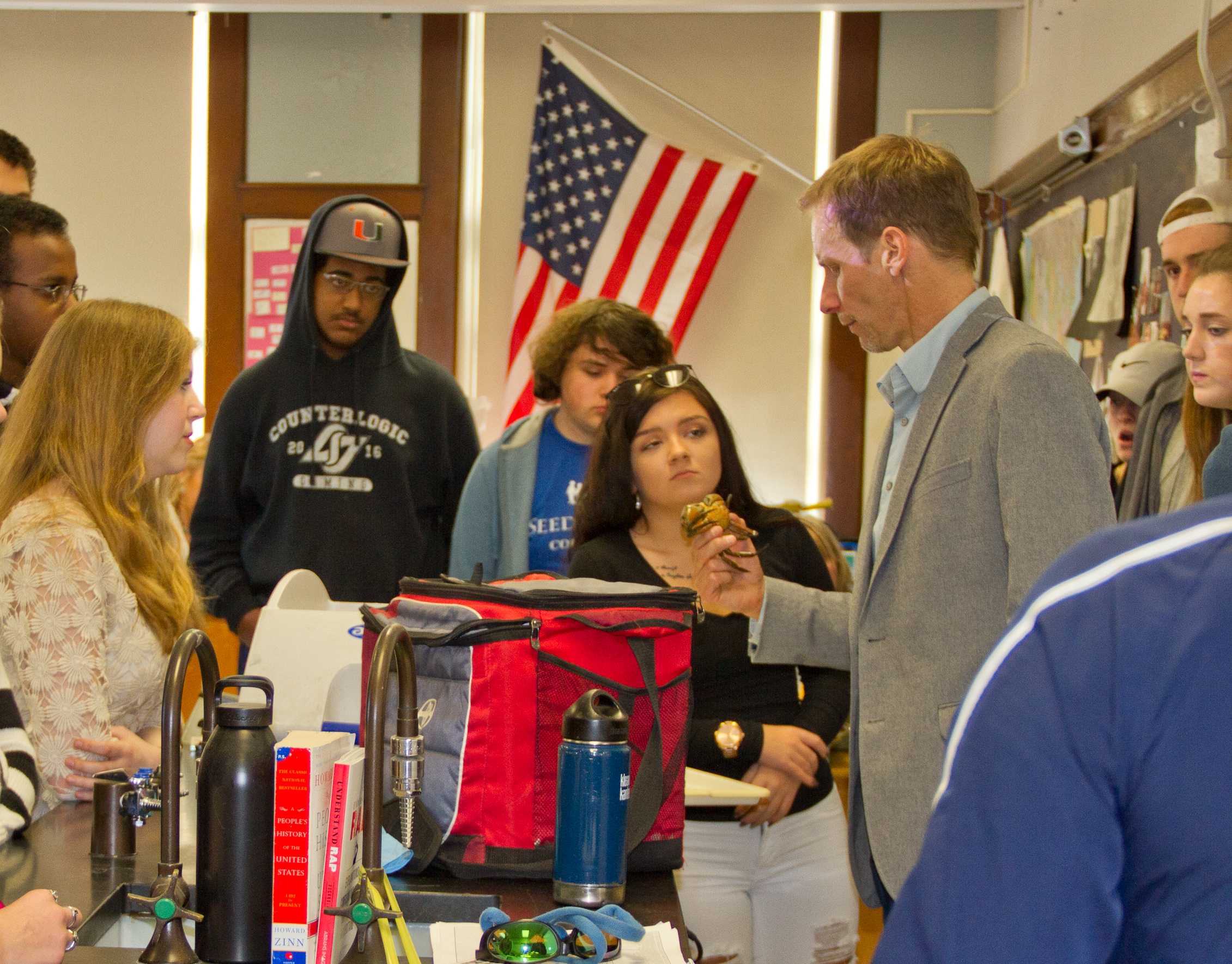
I saw this writ large last week when I spoke to two groups of high school seniors about climate change impacts on seafood in the Gulf of Maine, and then spoke to four groups of elementary students the next morning. That I delivered the latter talks in French was just icing on the cake.

What keeps everyone’s attention is the ability to tell a story that resonates.

Seafood, as a hook for discussing climate change

I initially engaged Portland High School students in the discussion by getting them to tell me what type of seafood they liked. Then we talked about how some of that seafood was likely caught … or farmed and the implications. From bycatch to chemicals, the narrative opened their eyes … quite wide with some stats … as to why they should try and find out where, when, how and even by whom (if possible) their seafood was caught.

That led into a more involved discussion about how climate change impacts, such as warming water, ocean acidification, changes in current and salinity, affect the seafood we eat globally, domestically and regionally in the Gulf of Maine. We talked about the mystery surrounding the collapse of the Northern Shrimp fishery in 2012, and the race for scientists and fishermen to get answers. Right now, scientists believe the shrimp have a narrow comfort range, and that the increasing temperatures in the Gulf of Maine may be affecting everything from reproduction to eating habits.

Students also learned that we’re gaining more information every day about the effects of warming waters, increased ocean acidity (particularly on molluscs’ ability to calcify their shells) and how ocean currents and salinity are changing. But as one of the lead authors of the Arctic Resilience Report told me last fall, we still have a way to go before we understand in depth how disparate climate change factors work in concert to affect different ecosystems or species in those ecosystems.

I left the students pondering the notion that rather than trying to fix climate change (we can’t), we need to learn how to adapt. This means finding more ways to better predict and respond to these changes. It also means that on a personal level, we need to understand what we can do. Students learned they have the right to try and find out when, where and how their seafood was harvested (or farmed). They also learned they can be evangelists for the sustainable seafood message.

Hands-on…the crabs, the dead fish, the gear…

The younger the audience age, the more hands-on the discussion needs to be. So I hauled in a lobster trap, a turtle excluder device, some gillnet, live green crabs and a dead black seabass to L’Ecole Française Du Maine.
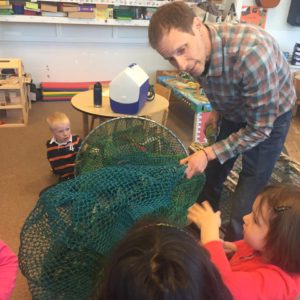
Turtle excluder devices are great conversation pieces…seriously. Photo credit: Elodie Le Nezet

I varied the message to accommodate students between ages 4 and 11. For the younger students we first talked about what seafood they liked before talking about the different methods for ensuring fishermen catch what they’re targeting so they can minimize bycatch. We talked about how a lobster trap works, how videos have shown lobsters can go in and out of these traps at will, and what it means when a lobsterman pulls up a trap filled with black sea bass.

We also used my daughter’s stuffed turtle to demonstrate how a turtle can escape being caught – and ultimately drowned in a trawl – by way of the grate used in a turtle excluder device. The primary message to them is that for the most part, fishermen want to take care of the resource, and that some capture methods are better than others at minimizing bycatch.

I extended that discussion with older students to include predator/prey relationships, and how things like bycatch or climate change are changing ecosystems in the Gulf of Maine. They loved seeing the green crabs up close as we discussed the devastation wrought on eelgrass beds as the crabs dig up clams, mussels and oysters.

All of the students wanted to touch the fish.

In the end, all of the students I spoke with last week, at Portland High School and L’Ecole Française Du Maine, began to understand that yes, where their seafood comes from and how it was harvested matters to them and the resource.


Top photo credit: Taylor Mason, College of the Atlantic
All Blog Posts

KNOW FISH Dinners: A Second Helping

  • April 21, 2017October 20, 2021
  • by Colles Stowell
Share it!
Share

You’d call a dinner and conversation event a success if the parting words of many of the attendees echoed this theme: “We should be having more of these conversations.” By that measure, last fall’s KNOW FISH dinners were a big success. Attendees learned about the provenance of the fish they were eating, they heard from the fisherman who sustainably caught their fish that day and they had a great conversation about why it all matters and what they can do.

So we’re doing it again. This spring’s KNOW FISH dinners will be held at Franklin Oyster House in Portsmouth on May 9, and Tinos Greek Kitchen in Hampton on May 23. Both events will begin at 6 p.m.

This is your chance to learn why the domestic seafood picture is so skewed. Yes, many people know the oft-cited statistic that more than 90% of seafood eaten in the U.S. is imported. But the reasons why are a compelling motivator for finding out where, when and how your seafood was harvested.

New England Fishmongers Partner Amanda Parks getting it done.

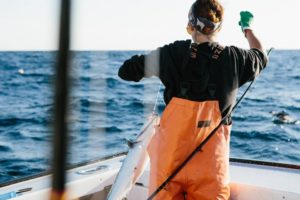
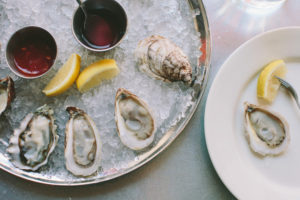
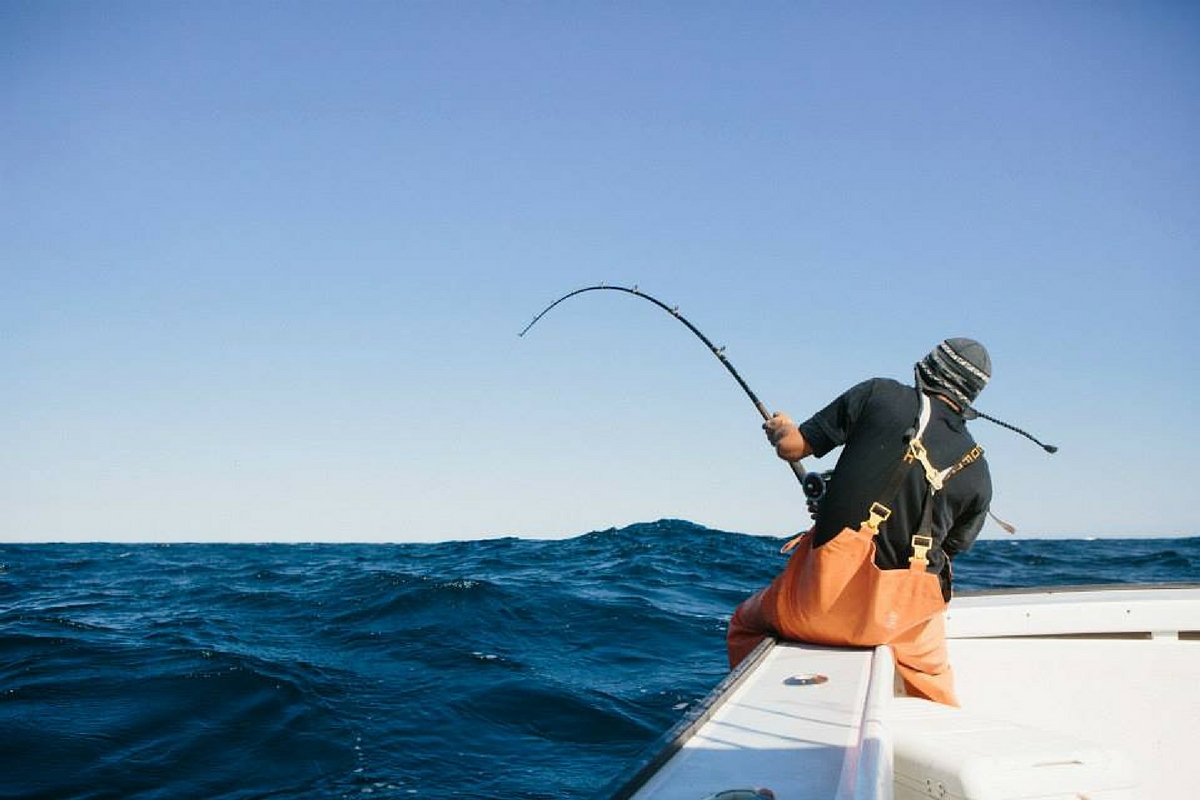
At the KNOW FISH dinners, you’ll be able to ask Capt. Tim Rider of New England Fishmongers why he risks life and limb to haul up to 80 miles offshore in the 36-foot F/V Finlander to fish with rod and reel in up to 400 feet of water. You’ll be able to ask an oysterman like Tim Henry of Bay Point Oyster Company about what it takes to grow oysters and why that is so important. You’ll learn about how their passion for what they do drives them to overcome obstacles and stay focused even as management policies change around them.

And you’ll feast on spectacular meals prepared by Chefs Matt Louis and Matt Decker of Franklin Oyster House and Chef Mark Segal of Tinos, using incredibly fresh, undeniably sustainable seafood. The fish and oysters will be whatever the ocean yields that day.

You’ll learn about some of the key domestic and global market dynamics that affect seafood sustainability. That information will help you better understand why your choices matter at restaurants and seafood stores. We’ll provide you with some memorable tips on buying seafood that is local, abundant, compliant and that minimizes ecosystem and environmental harm.

And we’ll talk about ways you can carry these messages forward into the community, and perhaps effect a sea change in seafood buying habits.

After all, this kind of change happens one conversation at a time … from the ground/sea floor up.

Come join us for great food, conversation and fun!

Get your tickets by following this link to Eventbrite.

All Blog Posts

On the Cafeteria Menu: Local, Abundant Seafood

  • April 12, 2017October 20, 2021
  • by Colles Stowell
Share it!
Share

Hospital food. School cafeteria food. Few menus instill as much dread, appetite aversion or standup comic material.

Fortunately, the farm/boat to table movement continues to grow, beyond the individual consumer to institutions. This message was boldly apparent at the Farm to Institution New England conference last week held in Leominster, Mass.

More than 400 representatives from various parts of the food system discussed many issues, challenges and solutions to streamlining the path for good, locally produced food to New England institutions like schools and healthcare facilities.

While this sounds like a fairly straightforward proposition, the process is by no means easy. Breaking decades of habit- and price-based sourcing patterns from national distributors while changing menus and “customer” palates takes time, patience, lots of education and some trial and error. Education of the palate can be one of the steeper challenges. How are you going to convince a bunch of middle school students to eat pollock?

There’s hake in that burger!

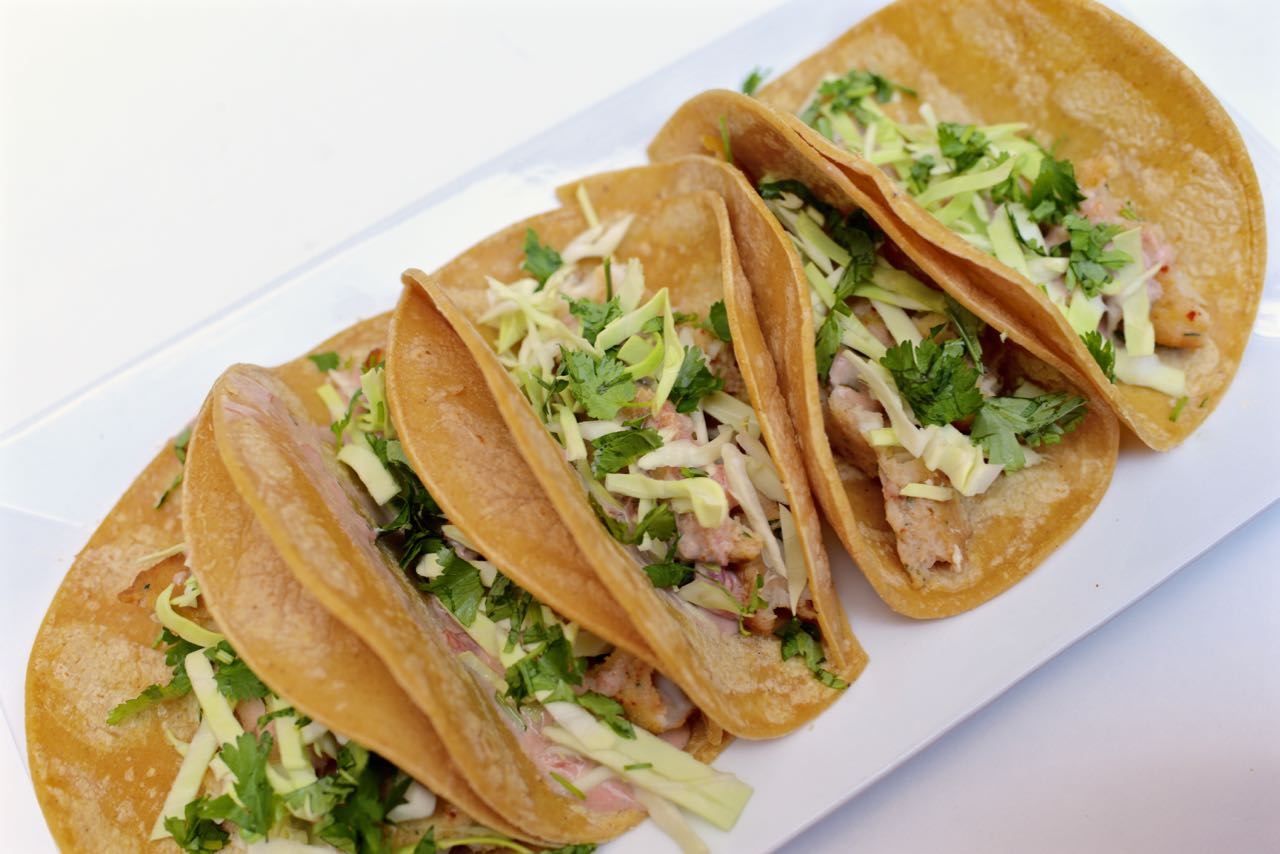
First, you have to make it tasty, and create a dish that is recognizable. For example, Cape Ann Fresh Catch Executive Director Donna Marshall has brought fish burgers and chowder into cafeterias for students to try. She rarely has any leftovers, and the sampling has led to seafood from Cape Ann Fresh Catch prepared and served in these cafeterias.

At the FINE conference, Jennifer Devivo, head chef at the Up Island Regional School District on Martha’s Vineyard described how she plays a game with her elementary and middle school students to guess what the fish of the day on Fridays will be. While eating locally harvested oysters or fried dogfish, students learn about who harvested the seafood (often a neighbor) how and when it was caught, and what role that species plays in the ecosystem.

It’s all in the narrative.

Finding balance

At the FINE Summit I was fortunate enough to moderate a panel about balancing institutional seafood demand with what’s locally available…and abundant. We engaged session attendees in an interesting discussion about abundance. The stock health of different species plays a critical role in eating with the ecosystem, or eating what’s locally available throughout the different seasons and migratory shifts in the ocean.

Titled Eating with the Ecosystem, the discussion began with me providing a brief overview of the regional, domestic and global seafood systems: more than 90% imported to the U.S., the average seafood travels more than 5,000 miles from boat to plate, we’re now growing more seafood for consumption than we’re harvesting, etc. I explained that all of these factors have an impact not just on the resource, but on fishermen and their communities.

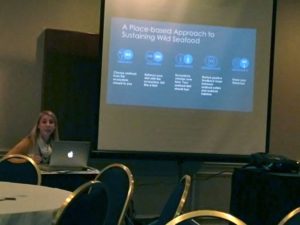
Kate Masury discusses the concept of eating with the ecosystem. Credit: Brett Tolley

Kate Masury, program manager of Eating with the Ecosystem, a Rhode Island non-profit promoting a place-based approach to sustainable seafood, discussed recent research from the University of Rhode Island. The study compares the relative abundance of several species in the Gulf of Maine to how much of that species is landed. This ratio gives a visual of roughly what species are most abundant here because they are being harvested less.

Dogfish are at the top of the list, which is no surprise. However, 99% of U.S. caught dogfish, which by the way is delicious fried, is exported for … you guessed it, fish and chips. Lobsters, on the other hand, while still plentiful, are harvested at a high rate that fisheries managers say is sustainable. Hake, skate and scup were also under-harvested relative to abundance.

Bringing local, abundant seafood to hospitals and schools

Next, John Stoddard, healthy food in health care coordinator for Health Care Without Harm, explained some of the challenges and successes in working with healthcare institutions to choose locally harvested, abundant seafood. He pointed to Boston Medical Center and Massachusetts Eye and Ear as regional facilities sourcing seafood from Cape Ann Fresh Catch and the Gloucester Fishermen’s Wives Association.

Bob Bankhert, chef de cuisine at University of Massachusetts Amherst talked about the school’s successes in bringing locally available seafood to students. Here are some of the highlights:

  • 3,000 lbs of dogfish per month/ 500 lbs every Friday
  • 10,000 lbs of Acadian Redfish per year
  • average student consumes 21 lbs of seafood per year, vs. 14 lbs for average American.
  • UMASS Amherst ranked #1 by Princeton Review for campus food.

We had thoughtful discussion with session attendees about how to replicate this notion of eating what’s locally available and abundant, and how to get schools and hospitals to follow suit.

Again and again, the conversation kept coming back to telling the story … of the fish, the fishermen and the resource. Getting people to understand their relationship to the resource and the social, economic and ecosystem impacts their decisions have.

I walked away from the session and the conference with the sense the One Fish Foundation mission to expand the sustainable seafood conversation is making progress. This is especially true as we help engage partners like chefs, hospital advocates, community groups and the public around these issues.

Recent Posts

  • Hurricane Ida wreaks havoc on Louisiana’s seafood industry
  • EPA Should Use Clean Water Act To Kill Zombie Mine
  • Slow Fish 2021: Relationship Matters
  • Faith, Façades, and Futility
  • Pebble Permit Paused: Politics at Play

Archives

  • September 2021
  • August 2021
  • April 2021
  • December 2020
  • August 2020
  • June 2020
  • February 2020
  • December 2019
  • November 2019
  • October 2019
  • July 2019
  • May 2019
  • April 2019
  • March 2019
  • January 2019
  • December 2018
  • November 2018
  • June 2018
  • May 2018
  • March 2018
  • February 2018
  • January 2018
  • December 2017
  • November 2017
  • October 2017
  • September 2017
  • August 2017
  • July 2017
  • June 2017
  • May 2017
  • April 2017
  • March 2017
  • January 2017
  • December 2016
  • November 2016
  • October 2016
  • September 2016
  • August 2016
  • July 2016
  • June 2016
  • May 2016
  • April 2016
  • March 2016
  • February 2016
  • January 2016
  • December 2015
  • November 2015
  • October 2015
  • September 2015
  • July 2015
  • June 2015
  • May 2015
  • April 2015
  • March 2015
  • February 2015
  • January 2015
Theme by Colorlib Powered by WordPress