Skip to content
One Fish Foundation
  • Blog
    • Aquaculture
    • Education
    • Environment
    • Policy
    • Wild Harvest
    • Fish Tales
  • About
    • About One Fish
    • About Colles Stowell
  • Education
    • Elementary School
    • Middle School
    • High School
  • KNOW FISH Dinners®
  • Resources
    • One Fish Podcast
    • One Fish Foundation in the news
    • The 7 C’s of Sustainable Seafood
    • Newsletter Archive
    • Recipes
      • Skate with Capers and Butter — Chef Rizwan Ahmed
      • Grandma Davis’ Fish Chowder — Jane Almeida
      • Ginger Garlic Tamari Scallops — Colles Stowell
      • Fish Stock — Evan Mallett
      • Mussels San Remo — Chef Rob Martin
      • Salted Pollock Croquettes – Chef Mark Segal
  • Connect
    • Contact OneFish
    • Social
      • Instagram
      • Facebook
      • Twitter
All Blog Posts

Fake News: Making Mountains Out Of The Pebble Mine

  • January 27, 2017October 20, 2021
  • by Colles Stowell
Share it!
Share

If there’s any question that money is directly tied to resource management, look no further than the Dakota Access Pipeline, Keystone XL pipeline and the Pebble Mine. Two of them were dormant for a while, and the first was on hold.

No longer.

That the proposed Pebble Mine in Bristol Bay, Alaska has reared its ugly head again is both alarming and telling. It is alarming because the project, which had been on life support for years, directly threatens one of the world’s largest and last wild sockeye salmon runs. It is telling that the changing political climate has created an atmosphere more weighted toward corporate profits and against environmental protections.
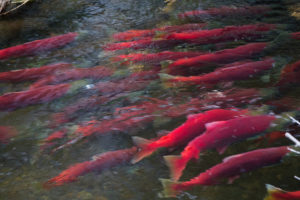
Sockeye approaching spawning beds. Photo: Bristol Bay Regional Seafood Development Authority

The massive copper and gold mine again became a discussion topic earlier this week when its sole investor, Northern Dynasty, claimed it expected to have its permitting issues resolved with the EPA by April, and that it was actively seeking an investor.

Northern Dynasty has been mired in three federal lawsuits aimed at handcuffing the EPA’s authority to reject the mine’s permit because the mine would violate protections in the Clean Water Act. In 2014, the EPA ruled the mine presents a potentially irreversible threat to the stability of the Bristol Bay watershed. At the moment, Northern Dynasty’s only on-site operations include geology tests and equipment storage.

Not surprisingly, three days after the new administration took office, Northern Dynasty’s CEO Ronald Thiessen said President Donald Trump’s administration has “a desire to permit Pebble.” He added, “We will come to a resolution within 100 days” with the U.S. Environmental Protection Agency.
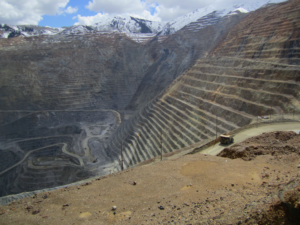
Copper mine in Utah run by Rio Tinto, which backed out of the Pebble Mine. If built, Pebble would be bigger than this. Photo: Deep Green Resistance

Opposition to the mine has been surprisingly universal from a broad range of user groups. That’s likely because Bristol Bay’s salmon population supports 14,000 full-time jobs and a $1.5 billion a year industry, according to federal and industry figures. In a rare instance, commercial and recreational fishermen are speaking with one voice: “Don’t destroy one of the last significant wild sockeye salmon populations!” Many of Alaska’s tribal leaders and several environmental groups have joined the chorus.

Is this Fake News?

That depends. To date I’ve seen no direct statement from the president saying he was going to drive the Pebble Mine through to operation. I’ve only seen Northern Dynasty say that.

If noted anti-resource attorney Scott Pruitt becomes head of the EPA, that could streamline federal permit approval, which accounts for a small number of significant permits.

That leaves the state of Alaska, which would have to issue more than 60 permits before the mine begins in earnest. And that won’t necessarily be an easy process for Northern Dynasty. An interesting political sea change has occurred in the past two years. Prior to the election the mine’s biggest opponent was the Obama administration and the EPA, while the Alaska state legislature was more supportive of the mine.
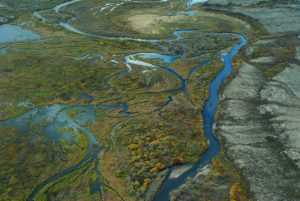
Photo: EPA

The tables flipped a bit in Nov. when the State House gained a bipartisan majority, with the Speaker of the House being from Bristol Bay. So while the federal administration appears to favor projects like the mine, the governor’s office and much of the legislature are signaling support for the state’s natural resources like salmon.

“Pebble doesn’t necessarily have an EPA problem,” says Sam Snyder, Trout Unlimited Alaska Engagement Director and a key figure in the fight against the mine. “But they have an Alaska problem. Sixty-five percent of Alaska residents in every precinct voted against it. Bristol Bay Tribes, villages and residents overwhelmingly oppose Pebble. Eventually this will also have to go through the state legislature.”
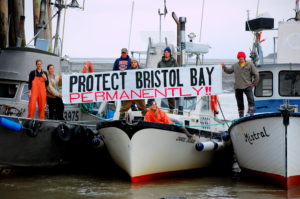
Photo: Seafood News

Here are some harsh realities that make the approval process a steep uphill climb for Northern Dynasty:

  • The political climate in Alaska has brought more scrutiny of the environmental risks of such a mine. The legislature recently put a 90-day delay on a routine permit to allow Northern Dynasty to maintain base operations (testing and equipment storage on site, etc.), because lawmakers wanted a closer look at impacts.
  • While there have been several reports about Northern Dynasty’s stock performance in the past few weeks since the Trump victory, there is context. Yes, the stock jumped nearly 300% in that time … from 75 cents to $2.89 on Jan. 26. That is a shell of the $22 stock price the company had in Feb. of 2011. It’s a penny stock.
  • Two major partners have backed away from the project because of widespread opposition and losses: Anglo American, PLC in 2013 and Rio Tinto in 2014.
  • In 2014, 65% of Alaskans approved a measure that would allow the legislature to ban mines lawmakers believe would harm wild salmon stocks. So a majority of Alaskans are skeptical.
  • That opposition continues. There is support for a new proposal to strengthen laws governing protection of fisheries habitats, which would have to be considered with any state permit for development that impacts salmon habitat.
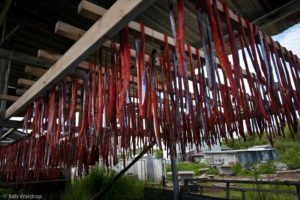
Sockeye drying. Photo: Bob Waldrop

What does this all mean? It means there are several roadblocks and years before the mine would have any chance of operation … if at all. Northern Dynasty would likely have to spend close to $200 million dollars just to secure all of the necessary permits. It would then need another several hundred million dollars to begin operations.

It also means that opposition must continue, within and without the state of Alaska, if opponents want to ensure the safety of the resource.

As the current mantra goes: wrong mine, wrong place.

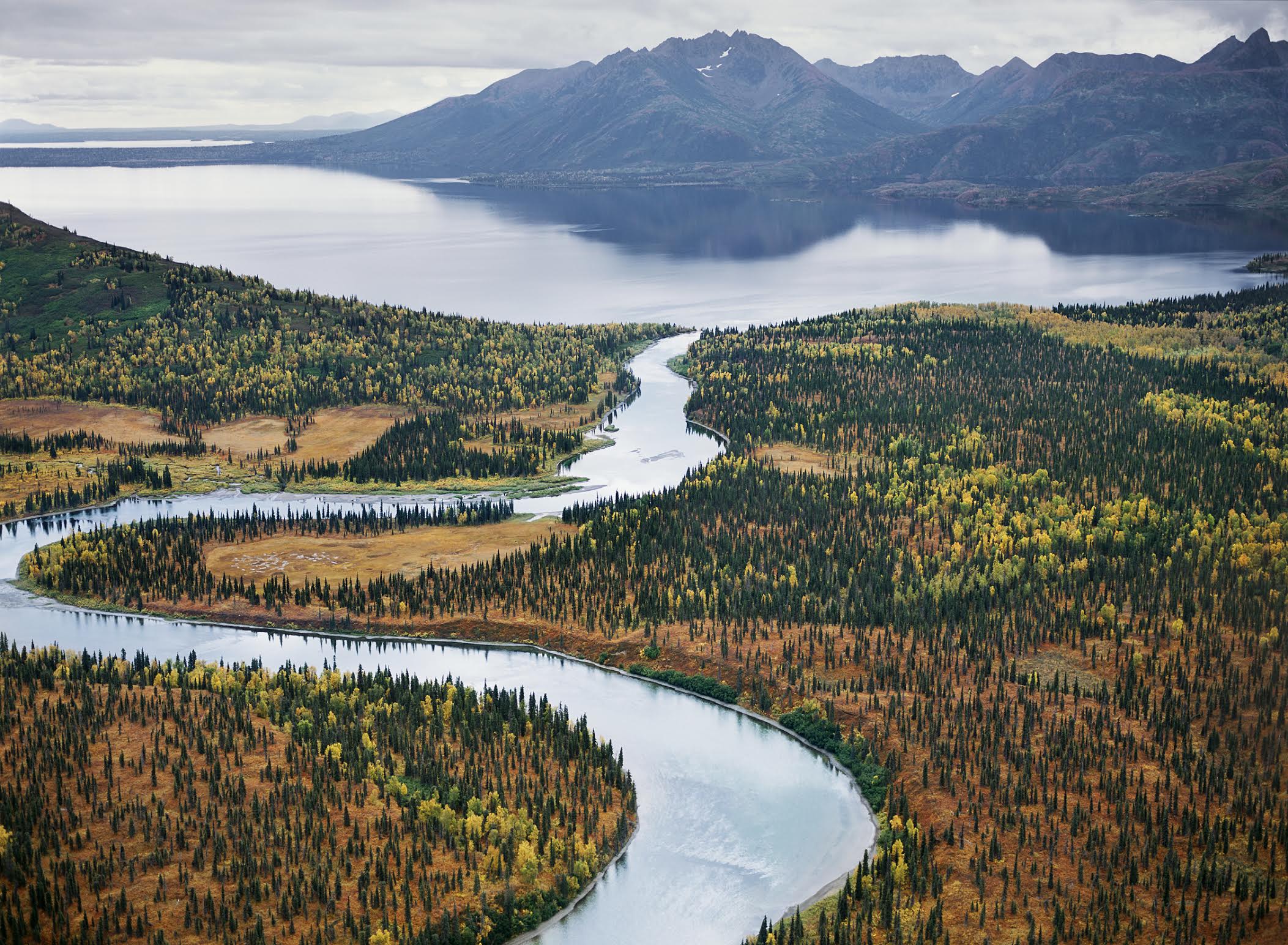
Top photo credit: Robert Glenn Ketchum

Other resources:

Save Bristol Bay : Good resource for background and the mine’s impacts.

One Fish Blog: Further background

Homer News: Public comments on state fisheries protections.

Alaska Daily News OpEd: Wrong mine, wrong place.
All Blog Posts

Aquaculture, Antibiotics and Their Dark Path to Our Diets

  • January 17, 2017October 20, 2021
  • by Colles Stowell
Share it!
Share

“Why does that matter?”

It’s one of the first questions I get when I tell middle school students that 90% of the seafood eaten in this country is imported.

So I begin with the big picture, that much of that seafood is coming from countries that put a lot of chemicals in their seafood. Countries like China, Thailand, Chile and Ecuador don’t have the same health safety standards the U.S. does. I watch their facial expressions as I start talking about how and why antibiotics, hormones, bleach and other chemicals are used.

In just a few minutes, it does matter. They care where their seafood comes from.

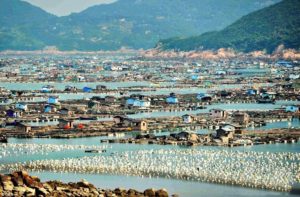
Massive floating community of fish farms in Luoyuan Bay, in south-eastern China’s Fujian province.

Why this happens

Sometimes the middle school students ask why this happens. More often though, that question comes from high school students and adults. I then explain how the FDA is outgunned simply by the fact agents only inspect 1-2% of all seafood imports. Over the past few years, I’ve watched the FDA issue more and more alerts authorizing agents to outright halt various shrimp and other seafood shipments from China, Malaysia, India and other countries because of links to US-banned antibiotics.

But the answer is really more complicated than that. Part of it has to do with U.S. consumption habits. We eat a lot of shrimp, but we don’t want to pay much for it. So the much cheaper product from Asia or South America floods supermarkets where consumers scoop it up without looking at the label or questioning the origin.

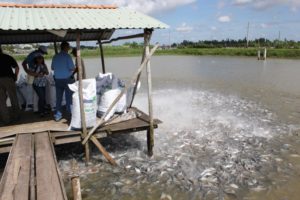
Fish farm in Viet Nam.

Lack of transparency

Part of the answer has to do with profit and the complex international seafood export industry. Bloomberg Business last month released an exhaustively researched, but well narrated story about this complex system. The report details how much of the seafood from China, which owns 60% of the $90 billion global aquaculture market, is shipped through other countries before arriving in the Western Hemisphere, thereby avoiding steep tariffs and close inspection (when it happens). This process is called transshipping, and it’s becoming widespread and difficult to track down, further masking true seafood origin.

I recommend reading the story if you have 20 minutes or so. Here is the link.

Here are a couple of highlights:

  • Asia has a centuries-old tradition of linking aquaculture and agriculture. Waste from pigs goes into ponds where tilapia and geese are raised. The tilapia gets much of their protein and nutrients from that waste.
  • As diseases have increased in pigs, farmers have increased the use of antibiotics to fight the disease. The antibiotics pass to the fish and/or shrimp.
  • Larger operations treat shrimp and fish with antibiotics to ward off disease.
  • Increased antibiotic use has given rise to potentially lethal antibiotic-resistant superbugs, which are becoming more common.
  • A recent study found that between 42% and 83% of Chinese shrimp carry bacteria that can destroy penicillin and most of its variants.
  • A 2006 FDA study found a quarter of all Asian seafood tested had traces of chemicals banned in the U.S. This has led to a succession of FDA bans and alerts.
  • The increased scrutiny has pushed some foreign seafood export operations into transshipping through countries like Malaysia that don’t have the high tariffs and increased inspection standards imposed by the FDA on China, for example.
  • Tracking the origin of transshipped seafood can be difficult. The Bloomberg report cites examples of companies that have been accused by the FDA, and that have folded, with new export companies cropping up shortly thereafter.
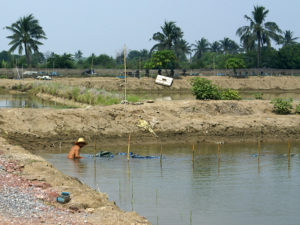
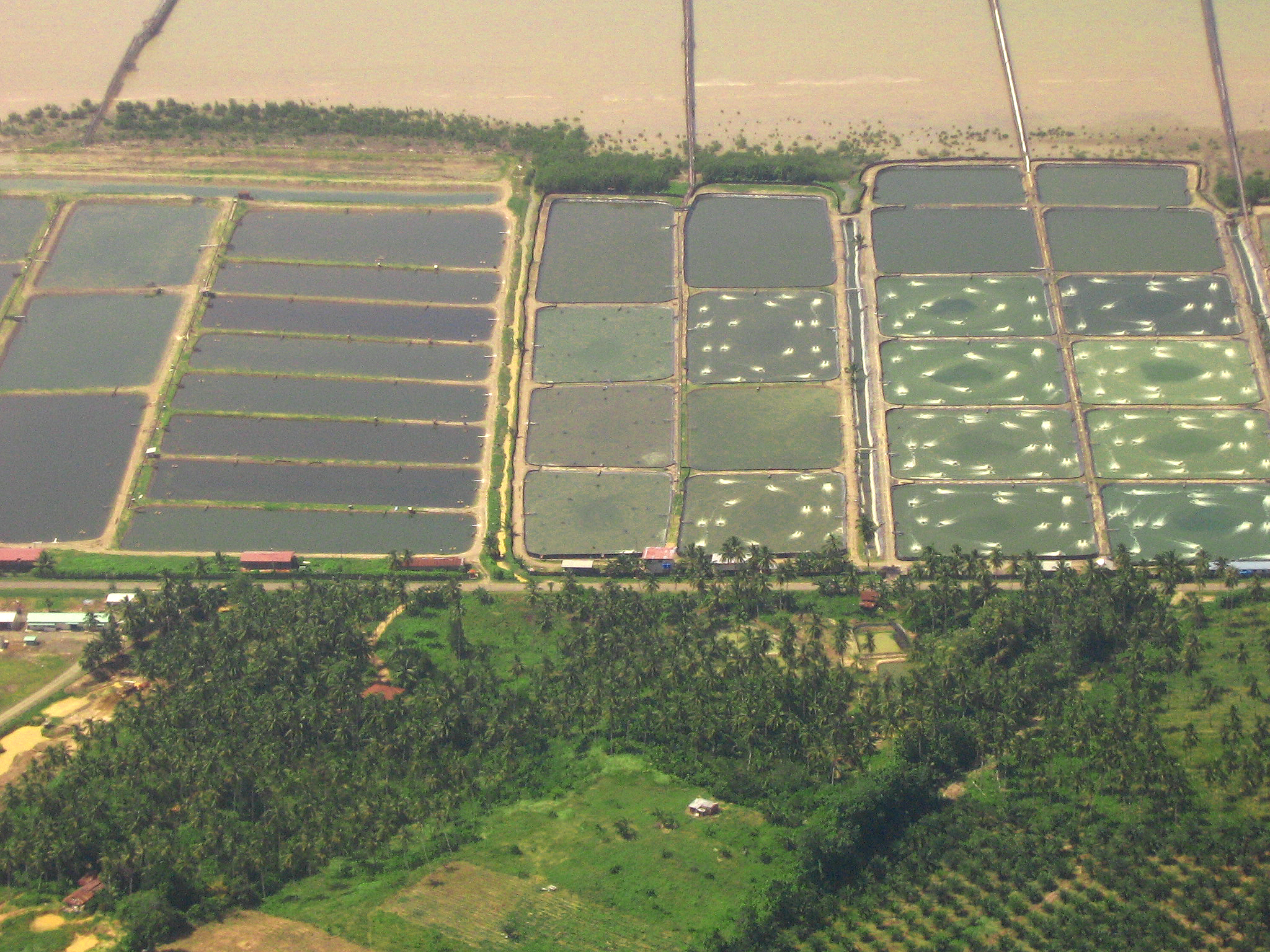
Shrimp pond in Thailand.

So what’s the lesson? Read labels. Ask questions. And if you can’t get seafood that is local or at least domestic to the U.S., consider other options. If you just absolutely have to have the farmed shrimp from Thailand because of the price, understand the implications … to your health and to the support of exporters more concerned with profit than customer health.

We can’t effect change in the domestic seafood web without at least first getting smarter about it.

That we can do.


Top photo: Tiger prawn farm in Malaysia.

All Blog Posts

One Fish Foundation 2017

  • January 8, 2017October 20, 2021
  • by Colles Stowell
Share it!
Share

Happy New Year from One Fish Foundation!

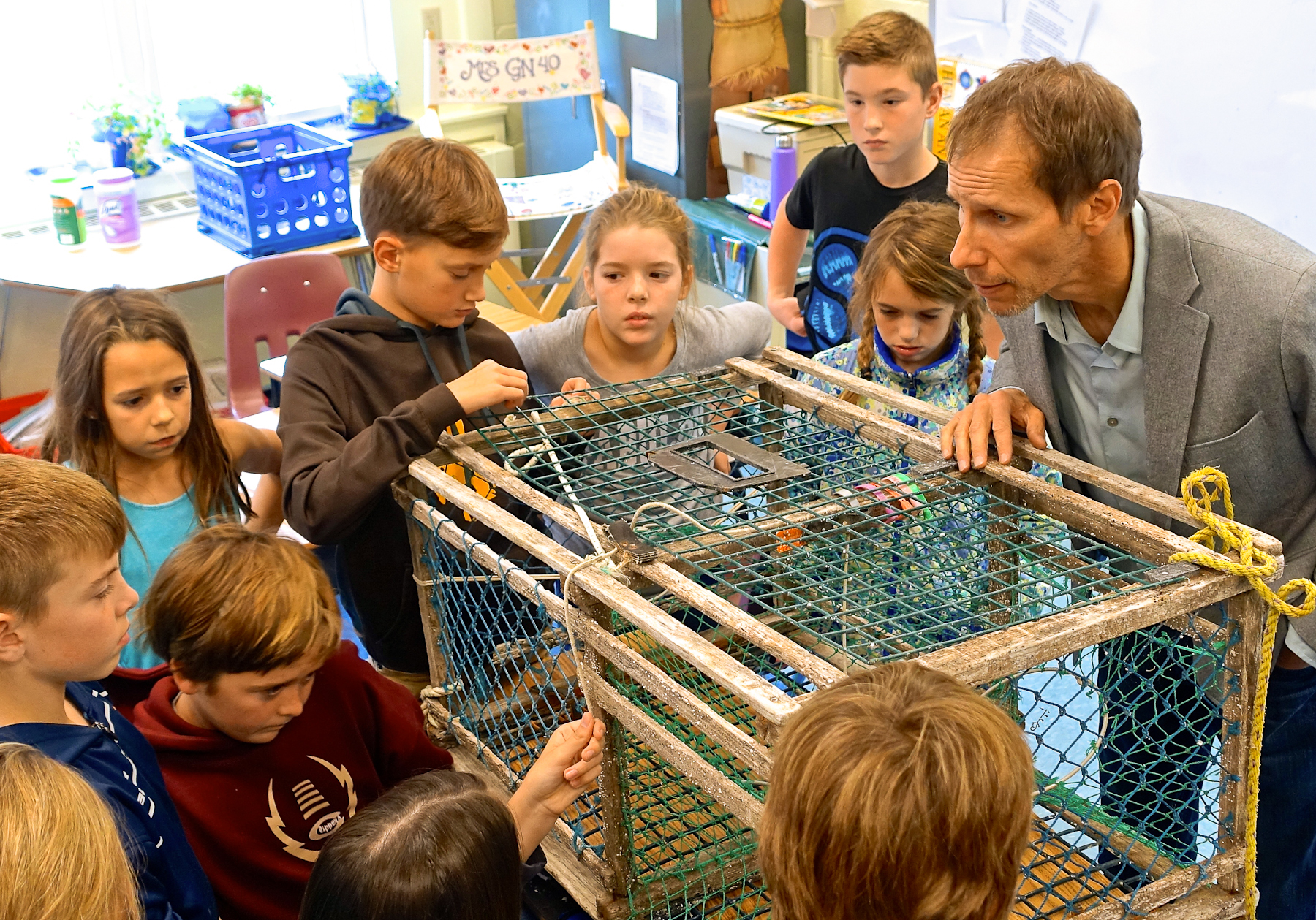
2016 was a year of continued growth, broadened horizons, hands-on experiences, shared stories and several firsts. One Fish remains committed to educating students, parents and communities about why they should care where their seafood comes from, how it was caught and by whom.

Here are a few of the highlights from the past year, including some important firsts that set a precedent for spreading the sustainable seafood message in communities.

  1. The first sustainable seafood dinner was staged at Rosemont Market in Portland in June, bringing interested residents to the historic bakery to have a frank, thoughtful discussion about myriad factors affecting seafood choices.
  2. The KNOW FISH dinners hosted at When Pigs Fly in Kittery, Me. and Black Trumpet in Portsmouth, NH. extended the discussion of the June event to include fishermen, chefs and fishmongers talking about different links in the seafood supply chain. Attendees learned about one fisherman’s unfailing drive to catch groundfish such as haddock and pollock by hand, on rod and reel, up to 80 miles offshore to reduce bycatch and preserve the species.
  3. One Fish Foundation expanded its educational reach into New Hampshire schools.
  4. One Fish Foundation has been featured in the media:
    1. CBSNews.com
    2. The Portland Press Herald
    3. The Coastal Table
  5. One Fish Foundation helped plan and attended Slow Fish 2016 in New Orleans, an international event aimed at sharing fisheries stories from around the world and addressing some of the challenges to fishermen and seafood sustainability.

We have set some ambitious goals for 2017.

  1. We will hire a social media communications coordinator to expand One Fish Foundation’s presence on Facebook, Instagram, and Twitter.
  2. We will extend the website to include more content for students.
  3. We will grow our footprint in Maine, New Hampshire and Massachusetts.
  4. We will host more KNOW FISH dinners along the coast, inviting more fishermen and chefs to share stories about seafood sustainability and offer tips for consumers.
  5. We will launch a newsletter that brings the latest news and events regarding sustainable seafood and what’s going on at One Fish Foundation.
  6. Hats and T-shirts sporting the One Fish logo will be available online, proceeds directed toward the foundation.
  7. One Fish will attend key conferences focused on the front edge of seafood sustainability issues, including climate change impacts, policy changes, new science, community involvement, etc.

It’s going to be an exciting year. Through the blog, the KNOW FISH dinners and in the classroom, we’ve found one inescapable truth: change happens one conversation at a time. The more people we can reach with the message about learning where their seafood comes from, the more we can improve the resource, and the lives of the fishermen who depend on it.

Come join us!

Recent Posts

  • Hurricane Ida wreaks havoc on Louisiana’s seafood industry
  • EPA Should Use Clean Water Act To Kill Zombie Mine
  • Slow Fish 2021: Relationship Matters
  • Faith, Façades, and Futility
  • Pebble Permit Paused: Politics at Play

Archives

  • September 2021
  • August 2021
  • April 2021
  • December 2020
  • August 2020
  • June 2020
  • February 2020
  • December 2019
  • November 2019
  • October 2019
  • July 2019
  • May 2019
  • April 2019
  • March 2019
  • January 2019
  • December 2018
  • November 2018
  • June 2018
  • May 2018
  • March 2018
  • February 2018
  • January 2018
  • December 2017
  • November 2017
  • October 2017
  • September 2017
  • August 2017
  • July 2017
  • June 2017
  • May 2017
  • April 2017
  • March 2017
  • January 2017
  • December 2016
  • November 2016
  • October 2016
  • September 2016
  • August 2016
  • July 2016
  • June 2016
  • May 2016
  • April 2016
  • March 2016
  • February 2016
  • January 2016
  • December 2015
  • November 2015
  • October 2015
  • September 2015
  • July 2015
  • June 2015
  • May 2015
  • April 2015
  • March 2015
  • February 2015
  • January 2015
Theme by Colorlib Powered by WordPress