
Where does seafood come from? How does it get from the ocean to my plate? Elementary school students who aren’t in fishing families may not know how fishermen catch scallops, or the impact European green crabs have on clams, or that some people grow mussels on rope.
More importantly, they may not know the impact their decisions at restaurants or even at grocery stores with their families can have on the resource.
Engaging elementary school students in the story of seafood is a critical objective during One Fish Foundation visits. Interactive, hands-on discussions with students about their relationship to seafood makes them more aware of why we need to take care of the resource, and the role their decisions have on that resource.
“The One Fish Foundation presentation was informative and sparked my students’ natural curiosity. Through the use of visual images, charts, and hands-on experiences, students learned about specific fishing practices and how they affect the fish population. Students learned to identify sustainable fishing practices and to be educated consumers who ask their local fish providers questions to discover the origin of the fish that will end up on their table.” Doris Gianforte, Grade 5 Teacher at Rye (N.H.) Elementary School
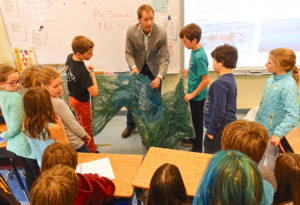
Objective: A One Fish Foundation visit to your classroom allows students to:
- Handle different gear types, from lobster traps to gill nets, while discussing issues like bycatch;
- Touch live green crabs and perhaps a dead black sea bass to learn how the Gulf of Maine is changing;
- Watch animations that demonstrate the benefits and drawbacks of different harvest and aquaculture methods;
- Engage in an interactive discussion about why their choices matter.
Results: Students will be empowered with basic knowledge to help them make smarter decisions. They’ll learn to ask important questions:
- Where was it caught?
- How was it caught?
- If it was farm raised, were any hormones or antibiotics used?
One Fish Foundation will work with you to customize a lesson plan to tailor content to meet students where they are in your curriculum. Depending on the age group, we can have a mix of hands-on demonstrations and a few slides to illustrate different gear types and ways to minimize bycatch. All of this information is colorfully wrapped in stories that make their connection to seafood, whether like to eat it or not, come to life. Students leave feeling empowered knowing their decisions make a difference.