Skip to content
One Fish Foundation
  • Blog
    • Aquaculture
    • Education
    • Environment
    • Policy
    • Wild Harvest
    • Fish Tales
  • About
    • About One Fish
    • About Colles Stowell
  • Education
    • Elementary School
    • Middle School
    • High School
  • KNOW FISH Dinners®
  • Resources
    • One Fish Podcast
    • One Fish Foundation in the news
    • The 7 C’s of Sustainable Seafood
    • Newsletter Archive
    • Recipes
      • Skate with Capers and Butter — Chef Rizwan Ahmed
      • Grandma Davis’ Fish Chowder — Jane Almeida
      • Ginger Garlic Tamari Scallops — Colles Stowell
      • Fish Stock — Evan Mallett
      • Mussels San Remo — Chef Rob Martin
      • Salted Pollock Croquettes – Chef Mark Segal
  • Connect
    • Contact OneFish
    • Social
      • Instagram
      • Facebook
      • Twitter
All Blog Posts

Of Pollock and Perception

  • June 7, 2016October 20, 2021
  • by Colles Stowell
Share it!
Share

I like a good discussion. That is my goal every time I walk into a classroom. I want students regardless of age to ask questions and even challenge me, as was the case a few weeks ago at Portland High School. Within the first five minutes or so, I can get a rough gauge of the overall class dynamic and determine which course the discussion will take.

My classroom last Saturday was a 100-year-old bakery, complete with freshly used dough machines, sacks of flour, wooden kneading blocks, coolers, rolling racks and trays of sealed brownies, blondies and linzer tortes. (I admit to nearly succumbing to covert temptation.)

What a great spot for a delicious dinner and compelling conversation! The location was the original Rosemont Market and Bakery in Portland, Maine. The “students” were in fact area adults interested in learning more about the local and global seafood system.

The discussion was free-flowing, dynamic, interactive, engaging, humorous. Just about all that I had planned for when originally working with Chef Bryan Dame to set up a sustainable seafood dinner a couple of months ago. The goal was to pair creative, tasty dishes featuring local, abundant seafood with a conversation about where the seafood comes from (ie, the boat and/or the harvester), and why knowing this kind of information is important.

So we first talked about a common definition of what sustainable seafood is and isn’t. As I explained how the average seafood consumed in the U.S. travels more than 5,000 miles from boat to plate, we feasted on locally sourced pollock and mussels ceviche served over a creamy corn pudding. The accompanying seaweed biscuits and sea salt nori butter were surprisingly addictive. I mentioned the pollock came from the Finlander out of Eliot, Maine, a boat that travels some 80 miles off shore to jig fish for pollock, haddock and other groundfish species. Jig fishing means virtually no bycatch, or the capture and possibly killing unintended species, a significant problem with some wild harvest methods.

The conversation then turned to the domestic and global seafood picture, with perhaps a little surprise at the revelation that 90% of the seafood eaten in the U.S. is imported. We discussed the implications of that while diving into Acadian rockfish served with local spinach and a bacon jam that would make anything taste better. (I kept thinking about ice cream.) The rockfish, also known as ocean perch or Acadian redfish, was supplied by the Dee Dee Mae II out of Biddeford.Rosemont2-2
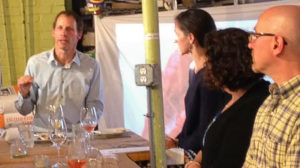
We also looked at how global seafood demand continues to grow as the population surges toward 9 billion by 2050, and how almost 5 billion people now depend on seafood for at least 10% of their per capita annual animal protein intake. And as the wild harvest of seafood has remained relatively constant over the past decade, aquaculture has nearly doubled.

We discussed how bivalve (oyster, clam and mussel) and seaweed aquaculture is growing in Maine as we ate pan-roasted hake served over smoked mussels and spring pea puree with pillow-soft potato gnocchi. The mussels came from Pemaquid Mussel Farms and the seaweed (used in almost every course) came from Maine Sea Fresh Farms. The hake came from the November Gale out of Five Islands, Maine.

Finfish aquaculture and the ramifications of recent U.S. and Canada approvals of GMO salmon sparked lively interaction about balancing the needs of feeding a growing global population and addressing the many concerns with farmed fish. Hormone and antibiotic use, disease, environmental degradation (such as clearing out critical nursery habitats like mangroves for shrimp farms) are all significant challenges to widespread acceptance of fish farming. GMO salmon have a much steeper hill to climb because of the significant issues with the lack of labeling and questionable science.

The group collectively pondered the ramifications while dipping into dessert: dulse panna cotta (a subtle, unique whisper of the sea) with light, toasted sesame cookies.

The food and the narrative were perfect complements. And the evening reminded me why I started One Fish Foundation. Engaging people, no matter the age, in a discussion about where their seafood comes from, and why they should think about their decisions at a restaurant or seafood store is important to them and the resource. Just as with farms, we have a connection to the fish and shellfish we eat, and those who harvest them. And every decision we make has an impact on the resource.

All of the fish we ate was local and abundant, which are two of the most significant factors in determining seafood sustainability. Chef Bryan delivered on the promise of making what was once called “trash fish,” but is now better known as “abundant”, sing in beautifully prepared and creative dishes that we all enjoyed immensely.

We sourced the fish from Harbor Fish Market in Portland, which is where Rosemont gets most of the seafood they offer in their five area markets. Harbor Fish does a good job at sourcing locally, whenever possible, and being forthright about where its seafood comes from. That’s an important factor when deciding where to buy fish. You want to know they’ll tell you the truth about its provenance.

Rosemont owners John Naylor and Molly Thompson were very gracious in welcoming One Fish Foundation into their “kitchen.” The level of dialogue was inspiring, hopefully to the point that the conversation will continue among those who attended, and spread into their communities.

That’s why I do this.


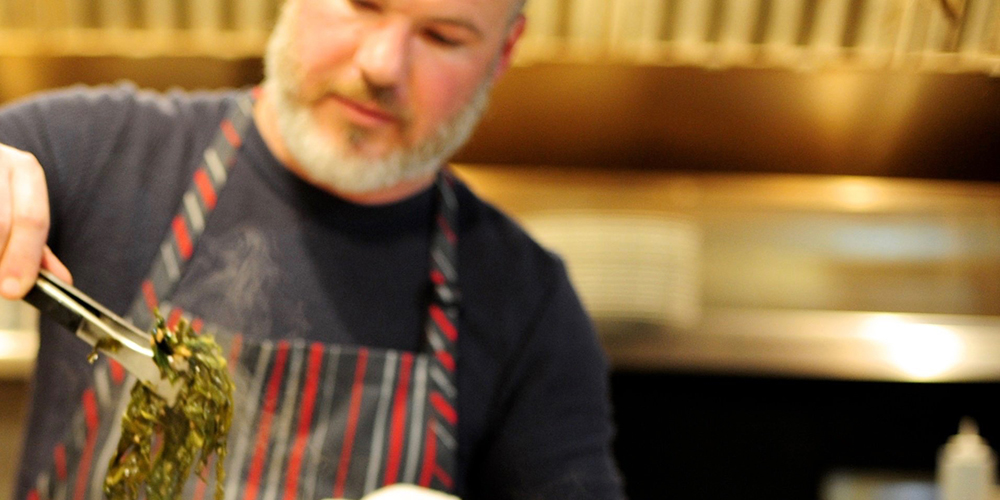
Photo credits: Molly Thompson. Top: Chef Bryan Dame, seaweed whisperer.
Aquaculture

Canada Greenlights GE Salmon

  • June 5, 2016October 20, 2021
  • by Colles Stowell
Share it!
Share

Congrats Canada! You may become the first nation in the world to sell genetically modified animals as food.

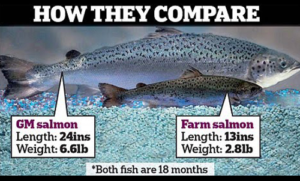
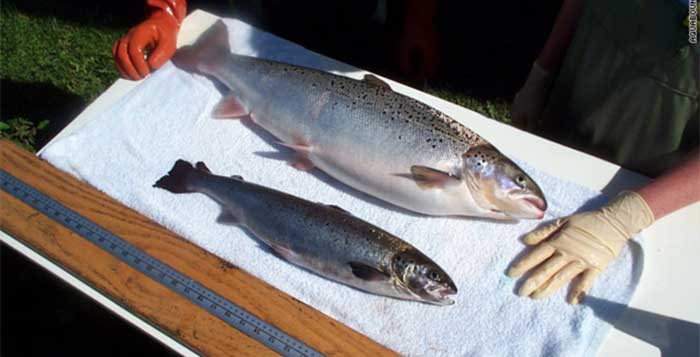
That’s because the health ministry approved Mass.-based AquaBounty’s genetically engineered (GE) salmon as a safe food source for sale May 19. Dubbed “Frankenfish” by critics, AquAdvantage salmon are grown from eggs developed in Prince Edward Island and raised in land-based pens in Panama. AquAdvantage salmon promises to grow to market size twice as fast, requiring about a quarter of the feed than other farmed salmon. Proponents see this as reducing environmental impact while meeting increasing demand. Critics see it as a dangerous money grab setting a bad precedent.

From the Health Canada statement announcing the approval:

“GM [genetically modified] foods are becoming more common every day and are part of the regular diets of Canadians. GM foods that have been approved by Health Canada have been consumed in Canada for many years, and are safe and nutritious. Changes to the genes of plants and animals can improve food quality and production – for instance by reducing the need for pesticides, making crops resistant to drought, preventing bruising, or allowing foods to be grown more quickly.”

I’ll get back to that last sentence. First, some background. The U.S. Food and Drug Administration actually approved AquaAdvantage Salmon for sale last November, but ran into a wall of opposition, including a legal challenge filed by several environmental groups such as the Center for Food Safety, Food and Water Watch and Friends of the Earth. They claim the FDA does not have the authority to regulate GE animals based on a decades-old law used to regulate animal drugs and cosmetics. To wit, the FDA used the 1938 Food and Drug Cosmetic act to qualify the gene manipulation in GE salmon as an animal drug safe for human consumption.

Huh? As I’ve blogged before, this just seems like a ridiculous premise to be basing an important food safety issue potentially affecting millions of U.S. consumers.

So, the U.S. market may have to wait a bit longer for its shot at GE salmon than Canada. Unless there is another legal challenge in Canada. Ecology Action Centre in Halifax is currently appealing a federal court ruling against the centre’s previous suit challenging Canada’s approval of production of the eggs at a plant in PEI.

AquaBounty says it won’t have any market-ready salmon for a year.

Transparency and fairness

The issues surrounding GE salmon are many, but they generally center on transparency and fairness. Most critics want — at a minimum — mandatory labeling of all GE salmon, not to mention all GE foods. But the industry has fought this tooth and nail, claiming that it would unfairly bias consumer decisions because of the negative connotation widely associated with the genetically modified food industry.salmon comp

This has been borne out by several studies showing that despite scientists’ proclamations that GE foods are safe for human consumption, an overwhelming majority of consumers, up to two-thirds or more, do not trust the science. Not only do they think GE salmon isn’t safe, they also don’t think scientists have a clear understanding of all of the potential health risks. Not coincidentally, a majority of scientists in a poll by the Pew Research Center and U.S. members of the American Association for the Advancement of Science suggests 88% of scientists polled believe genetically modified foods are safe to eat, while only 37% of the U.S. public thinks it’s safe.

I am in the same camp. I don’t think enough long-term, independent research has ruled out all risks associated with ingesting this type of hormone. Consider that FDA approval is based on the agency’s analysis of the test results paid for and submitted by AquaBounty … not by an independent third-party group with no vested interest in the outcome. For reference, see page 16 of this Congressional Research Service report, noting concerns over the FDA review process. To me, this leaves too much room to force the results into pre-determined conclusions, and perhaps explains in part why there is so much general skepticism about safety.

As such, I think the transparency issue is paramount. If the FDA or Health Canada deem GE salmon safe, they should require all such products be clearly labeled. One would think that if AquaBounty wants to appear trustworthy, it would label its product to demonstrate it’s not hiding anything from customers.

Ah, but there’s the problem. AquaBounty is following Monsanto’s playbook, spending tons of money to prevent labeling. Both the FDA and Health Canada claim that labeling is not necessary because “scientific research” suggests that there will be no “material difference” in the nutritional profiles between GE products and a non-GE counterpart. The FDA is offering GE producers like AquaBounty the option of voluntarily labeling the product, which is code for “You don’t have to do this.”

Here’s the fairness issue. Consumers wishing to buy organic pancake mix can look at the product to see a seal indicating the producer has paid a fee to have the product inspected and certified, along with a label that clearly indicates all of the ingredients. Hell, the same is true for a box of non-organic cookies. Salt, sugar, fat grams. All of that stuff must be listed somewhere. So why shouldn’t AquaBounty be compelled to tell the public that a hormone from an ocean pout (a completely different species) has been used in the “manufacturing” of that salmon fillet? Even if you can argue that doesn’t change the nutritional profile, it sure changes the ingredient list that yielded the end product.

Several big-name stores like Whole Foods, Trader Joes, Safeway and Kroger have pledged to not sell GE salmon.

It’s a slippery slope. Approving GE salmon using antiquated animal drug legislation or whatever other rationale without a fully thorough, third-party, long-term analysis is bad enough. Allowing AquaBounty to hide its product in a veil of secrecy, deliberately misinforming consumers, is egregious.


Top photo credit: AquaBounty

Recent Posts

  • Hurricane Ida wreaks havoc on Louisiana’s seafood industry
  • EPA Should Use Clean Water Act To Kill Zombie Mine
  • Slow Fish 2021: Relationship Matters
  • Faith, Façades, and Futility
  • Pebble Permit Paused: Politics at Play

Archives

  • September 2021
  • August 2021
  • April 2021
  • December 2020
  • August 2020
  • June 2020
  • February 2020
  • December 2019
  • November 2019
  • October 2019
  • July 2019
  • May 2019
  • April 2019
  • March 2019
  • January 2019
  • December 2018
  • November 2018
  • June 2018
  • May 2018
  • March 2018
  • February 2018
  • January 2018
  • December 2017
  • November 2017
  • October 2017
  • September 2017
  • August 2017
  • July 2017
  • June 2017
  • May 2017
  • April 2017
  • March 2017
  • January 2017
  • December 2016
  • November 2016
  • October 2016
  • September 2016
  • August 2016
  • July 2016
  • June 2016
  • May 2016
  • April 2016
  • March 2016
  • February 2016
  • January 2016
  • December 2015
  • November 2015
  • October 2015
  • September 2015
  • July 2015
  • June 2015
  • May 2015
  • April 2015
  • March 2015
  • February 2015
  • January 2015
Theme by Colorlib Powered by WordPress