Skip to content
One Fish Foundation
  • Blog
    • Aquaculture
    • Education
    • Environment
    • Policy
    • Wild Harvest
    • Fish Tales
  • About
    • About One Fish
    • About Colles Stowell
  • Education
    • Elementary School
    • Middle School
    • High School
  • KNOW FISH Dinners®
  • Resources
    • One Fish Podcast
    • One Fish Foundation in the news
    • The 7 C’s of Sustainable Seafood
    • Newsletter Archive
    • Recipes
      • Skate with Capers and Butter — Chef Rizwan Ahmed
      • Grandma Davis’ Fish Chowder — Jane Almeida
      • Ginger Garlic Tamari Scallops — Colles Stowell
      • Fish Stock — Evan Mallett
      • Mussels San Remo — Chef Rob Martin
      • Salted Pollock Croquettes – Chef Mark Segal
  • Connect
    • Contact OneFish
    • Social
      • Instagram
      • Facebook
      • Twitter
All Blog Posts

Frankenmine: Pebble’s Worst-Case Scenario

  • February 10, 2020October 19, 2021
  • by Colles Stowell
Share it!
Share

Let me know if this makes sense to you.

The US Army Corps of Engineers is the federal agency responsible for ensuring that large civil engineering projects dealing with wetlands and other natural resources meet exacting specifications to ensure minimal impact on those resources.

This same agency announced on Jan. 23 that it would NOT consider a worst-case scenario tailings dam failure for the proposed Pebble Mine at the headwaters of the world’s largest wild sockeye salmon run in Bristol Bay, Alaska. Dam tailings are the highly toxic waste byproduct of open pit mining that must, in theory, be stored forever to preserve surrounding habitat. Any release of this material, which may contain arsenic, sulfur acid and other highly toxic material, could do irreparable harm to the natal streams and rivers that support the $1.5 billion economic engine driven by healthy wild salmon stocks.

Three days after this stunning announcement, Bristol Bay residents near King Salmon woke to an earthquake measuring 3.6 on the Richter scale.

So let’s do the math here. The USACE, which is supposed to ensure all of the nasty mining byproduct doesn’t leach into the landscape, ever, still feels confident nothing could go wrong.
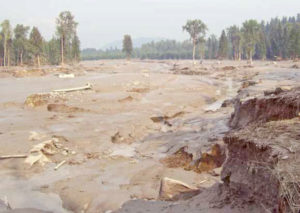
 

Aftermath of Mt. Polley tailings dam failure in 2014. This dam was initially engineered by the same firm slated to engineer Pebble’s tailings impoundment. What could possibly go wrong? Photo from Mining Watch/Chris Blake.


I guess it’s just a minor inconvenience that the damn tailings dam would be strategically located in a seismically active area along a geologic zone called the Ring of Fire due to constantly grating tectonic plates that force magma up through the earth’s crust and create volcanoes.

How active is it? According to the Alaska Earthquake Center, 2018 and 2019 ranked first and second respectively in the number of earthquakes tracked in Alaska, with only 50,289 reported earthquakes in 2019 ranging in depth between 0 and 165 miles. There were two quakes measuring 6.4 along the Aleutian Islands.

This would be great fodder for a Saturday Night Live skit if it weren’t so staggeringly unconscionable.
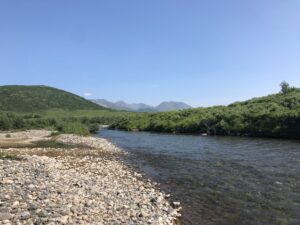
 

Contact Creek just south and a bit west of King Salmon in Bristol Bay. Pristine water like this is essential to salmon spawning. It could be irreversibly damaged by a tailings dam failure. USACE doesn’t seem to think that’s a possiiblity.


Frankenmine is alive…again

Credit goes to the fierce determination of the mine’s opponents that Pebble has not been permitted in the past nearly two decades since it was first proposed.

The twists and turns in the Pebble saga are dizzying. Consider:

  • Three of the world’s largest four mining corporations walked away from the project, citing massive opposition and gigantic economic risks;
  • A fourth, smaller potential financial backer also stepped away for the same reason in 2019;
  • The Obama administration had the mine on its deathbed, concluding after years of scientific review that as initially proposed, the mine would violate the Clean Water Act and threaten precious salmon habitat;
  • A 30-minute conversation between the Pebble Limited Partnership’s CEO and former EPA Administrator Scott Pruitt just a few months after the current administration took office in 2017 reversed course and put the mine back on track;
  • Alaska Governor Mike Dunleavy is a Pebble Limited Partnership puppet who has publicly courted potential backers while working with President Trump to streamline and accelerate approval. In fact, you may have seen this photo of Dunleavy and Trump on Air Force One, planning more “development” that would destroy Alaska’s precious natural resources despite widespread opposition;
  • Dunleavy appointed a former mining industry executive to head the state’s Department of Environmental Conservation;
  • The regional EPA office publicly decried the highly questionable conclusions in the USACE draft environmental impact statement, only to be forced by the administration to walk those comments back a few days later.
  • Most Alaskans don’t want the mine. Annual polls show that opposition has never dropped below 50%, and support has never risen above 40%. This despite all the money giant pro-mining corporations pour into changing opinions.

So the shaker near King Salmon had impeccable timing. It’s as if Mother Nature is rattling a warning.
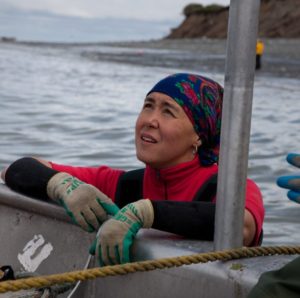
Melanie Brown on the Naknek River, doing what she loves best on the set net fishing site her great-grandfather established several decades ago.

Here’s the real worst-case scenario writ in big bold lettering so that even pro-mine “executives” in their big white offices should be able to understand. No matter how much you attempt to “store” all that toxic crap piled 500 feet high in a giant 1,000-acre “facility,” you cannot guarantee that an earthquake won’t shake it loose.

And if it does happen, and it likely would, the contamination would have an excellent chance of being near total, and potentially permanent. Thousands of people living downstream would be in danger. Wild salmon would lose their spawning grounds and the ability to ensure the longevity of the species.

I wonder what the Army Corps of Engineers would say then.
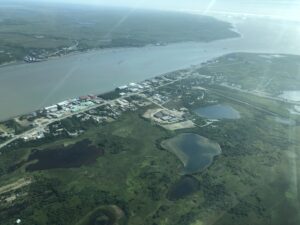
The fishing fleet in the Naknek River. The processing plants are visible along the shore. The population swells by a factor of 10 during the fishing season.

Defend Bristol Bay

For those of us in the lower 48 continuing to endure wave after wave of senseless rollbacks of environmental protections for precious natural resources across the country, the Pebble issue may seem like just another chapter in a painful narrative.

But this issue affects us all. If you eat wild salmon, you’re eating salmon that depends on crisp, clean, clear water in virtually undisturbed wilderness. Even if you don’t eat salmon, the battle to protect wild spaces is one you should care about.

I’ve met several people who have been fighting this fight for years. I’ve seen their land, their water, and their salmon. To those folks in Bristol Bay, this is a battle for their way of life – and their lives. They have no option but to continue to stand up to the blind greed, political bullying, and outright sham of the process.

We would do well to stand with them and set an example of how to change the narrative.

If you want to make your voice heard, contact your congressional representatives here. If you’d like to do more than that, check out the Defend Bristol Bay action page.

If you’d like to see what life is like in Bristol Bay for those who live and fish there, check out The Wild, the award-winning film directed by friend and colleague Mark Titus. Follow this link to see screenings near you.
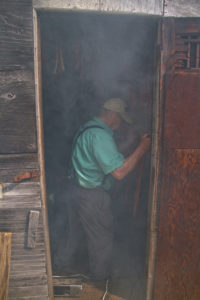
 

Eighty-eight-year-old Al Aspelund, an Aleut native, working his smoke shack magic as he has done for some six decades. Indigenous subsistence traditions like this are at stake.

Resources

Here are a couple of ways to get more info and get involved:

  • One Fish Foundation Fish Tales Podcasts:
    • Gayla Hoseth: Natural Resources Program Director and Second Chief of the Curyung Tribal Council
      • Audio only (downloadable)
      • Video (with photos)
    • Norm Van Vactor: President and CEO of Bristol Bay Economic Development Corporation
      • Audio only (downloadable)
      • Video (with photos)
  • Salmon State: Good resource for history of project and ways to get involved.
  • Pebblewatch, which also has some cool maps
  • National Park Service in-depth analysis of the long-term effects of tailings impoundment failures.
  • Bristol Bay Native Corporation: Good background on some of the indigenous opposition to the mine.
  • Bristol Bay Native Association: Another organization supporting the tribes of Bristol Bay.
  • Informative Anchorage Daily News Op-Ed about how the Trump and Dunleavy administrations have worked to gut the clean water act and its protections in Alaska.
  • Businesses of Bristol Bay
  • Bristol Bay Economic Development Corporation
  • July 1 EPA Region 10 letter from Administrator Chris Hladick, voicing concerns over Army Corps of Engineers’ Environmental Impact Statement
 

All Blog Posts

Swimming On: the Slow Fish USA gathering from 2016…

  • February 8, 2020October 19, 2021
  • by Colles Stowell
Share it!
Share

The inaugural Slow Fish event in North America took place in New Orleans in 2016. It was an enormous first step, fraught with last-minute adaptation forced by a 500-year flood event in a city that is rather accustomed to flooding. Who knew we’d be eating shrimp and oysters in a warehouse full of floats from perhaps the most raunchy Mardi Gras parade in the city? Nothing says seafood like having every part of outsized human anatomy in lewd, brightly decorated papier-mâché looming over you.

But we made it work! Everyone adapted to the unforeseen circumstances and we had great conversations about consolidation, youth in fisheries and overall messaging and values. We capped Slow Fish 2016 off with an incredible Cajun hog harvest celebration called a “boucherie” across the Mississippi River.

We gathered in San Francisco for Slow Fish 2018 following an intense, but amazingly productive four-month planning period that was delayed by the threat and lingering angst of devastating forest fires in the region. But for the commitment, creativity, and sheer will of everyone involved, Slow Fish San Francisco wouldn’t have happened. That gathering made space for fabulous networking, collective problem-solving, and energy dedicated to shared values for our seas and their stewards.

The San Francisco event took place in a cool warehouse (no sex floats) that we adapted to suit large group discussions, as well as smaller World Café roundtables and PechaKucha (or “Peche” Kucha) mini slide presentations/stories. We also had a Seafood Throwdown, off-site oyster, dinner, and movie events..

Fast forward two years and that energy is still strong. This year, Slow Fish 2020 will go down on March 19-22 in Seacoast N.H., with a Working Waterfront Tour, kick-off dinner, Sunday Fishtival and the programming of a two-day conference at the University of New Hampshire Peter T. Paul College of Business and Economics in Durham.

Setting the tone with the Slow Fish 101 presentation in San Franciso. Photo credit: Lance Nacio.

Circling back to Slow Fish USA origins on campus

We chose New England for 2020 to continue varying the geography of these events and give fish harvesters, fishmongers, and others from the region a chance to engage in these conversations.

New Hampshire is important because students at UNH were among the first in the country to embrace Slow Fish values back in 2013. At the time, they encouraged UNH Dining Services to sign a pact to source responsibly harvested seafood and  adhere to Slow Fish values. That pact is still in effect today. Bringing the conference to New Hampshire this year affirms how much the movement has grown in the years since and the importance of youth in the movement.

Rallying young people is especially important in New England as fish harvesters here are fighting against restrictive policies and well-funded efforts to consolidate the industry. This monopolization has created impossibly high barriers of entry for young fishermen and led to an ever-increasing age of the average fisherman, often called the “graying of the fleet.”

Moving the event around to key fisheries regions helps democratize the impact. Slow Fish continues to aim to create an open table for meaningful thinking around the core values of providing good, clean, and fair seafood to all.

At a time when equity, inclusion, and justice issues are increasingly visible, Slow Fish aims to ensure that small-scale and indigenous fish harvesters have fair access to the resource in a market too often dominated by billion-dollar corporations that only care about profits.


Sharing ideas, asking questions, expanding network connections, and collaborating on meaningful change. That’s the Slow Fish formula that will be at work at Slow Fish 2020 in New Hampshire. Photo credit: Eric Buchanan.

Diving deep

We’re going to talk about these and other critical issues in New Hampshire this year. For the first time, we’re going to merge the Slow Fish North America gathering and a regional Slow Food Northeast event, allowing members of both groups to get a better sense of how each group is working to shorten the distance from food source to plate.

Here is a sneak peek of what’s on tap for Slow Fish 2020, and why you should consider joining the conversation:

  • Deep Dive discussions on issues like aquaculture, climate change, and the Blue Commons;
  • Interactive World Café roundtables to explore challenges and opportunities facing youth, women, and indigenous fish harvesters; alternative seafood business leaders; and the Slow Fish Ark of Taste;
  • “Pesce” Kucha storytelling with slides;
  • Delicious food from all over the continent;
  • Tour of the seacoast N.H. working waterfront followed by an opening night feast;
  • Seacoast Restaurant Fish Week from Feb. 13 through Feb. 21 (restaurants in Seacoast NH and Maine provide a special Slow Fish menu and donate a portion of proceeds to Slow Fish);
  • Closing dinner event with music at the Paul College at UNH;
  • Fishtival on Sunday at Throwback Brewery (more food, music, beer, and hands-on demonstrations);
  • Several hands-on demonstrations of nose-to-tail, oyster shucking, etc.
  • A chance to dig into issues, collaborate, and kick it with old and new friends.

I can tell you first-hand that we are planning this year’s gathering with as much, if not more energy and drive as with NOLA and San Fran, and hopefully without any major and unexpected meteorological or other events.

So come join the conversation, expand your network, make new friends, hug old friends, eat fabulous food, and see what the New England Slow Fish and Slow Food communities have to offer!


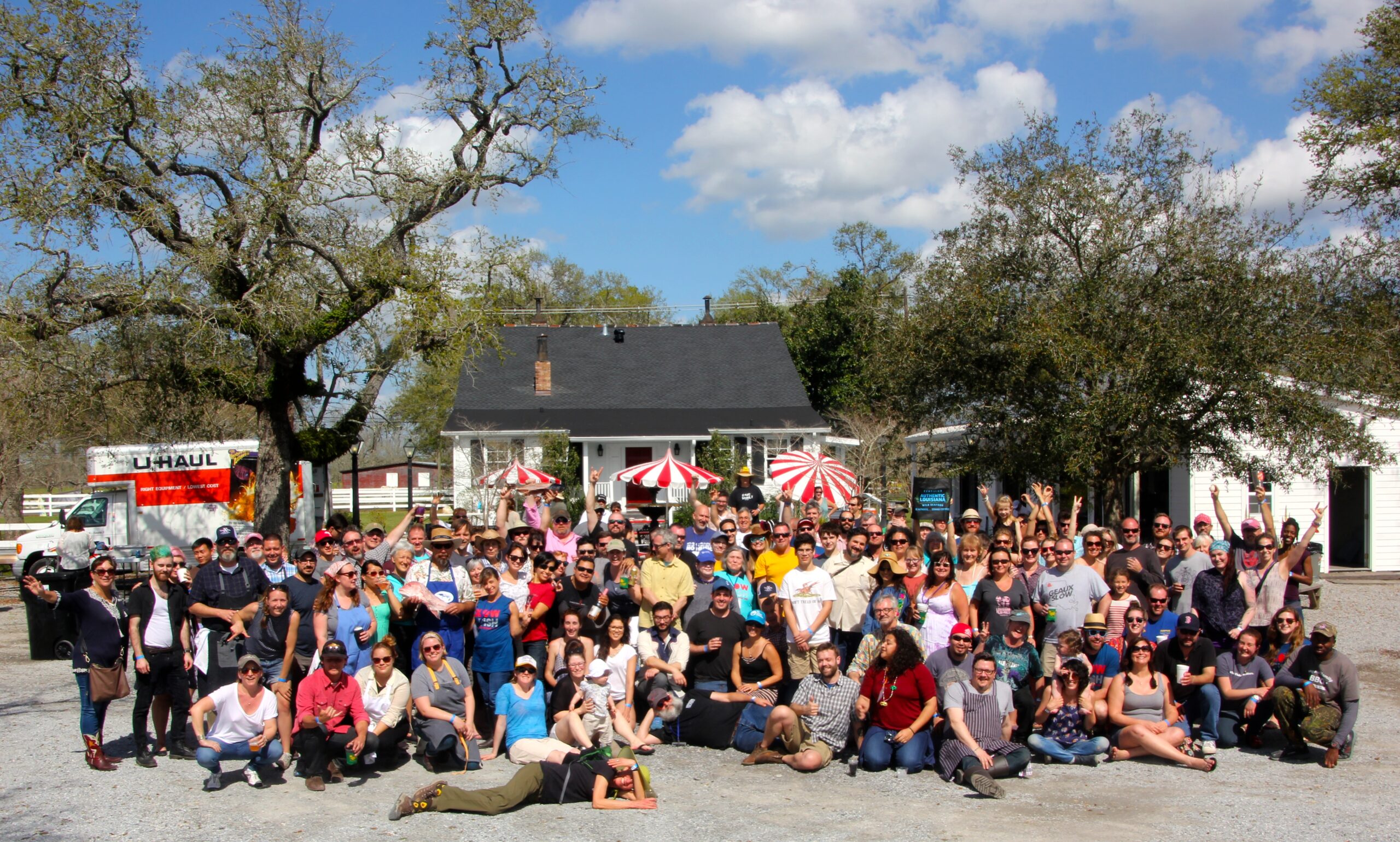
Top photo: Slow Fish 2016 in New Orleans, during the boucherie at Docville Farm. Credit: Eric Buchanan.

Recent Posts

  • Hurricane Ida wreaks havoc on Louisiana’s seafood industry
  • EPA Should Use Clean Water Act To Kill Zombie Mine
  • Slow Fish 2021: Relationship Matters
  • Faith, Façades, and Futility
  • Pebble Permit Paused: Politics at Play

Archives

  • September 2021
  • August 2021
  • April 2021
  • December 2020
  • August 2020
  • June 2020
  • February 2020
  • December 2019
  • November 2019
  • October 2019
  • July 2019
  • May 2019
  • April 2019
  • March 2019
  • January 2019
  • December 2018
  • November 2018
  • June 2018
  • May 2018
  • March 2018
  • February 2018
  • January 2018
  • December 2017
  • November 2017
  • October 2017
  • September 2017
  • August 2017
  • July 2017
  • June 2017
  • May 2017
  • April 2017
  • March 2017
  • January 2017
  • December 2016
  • November 2016
  • October 2016
  • September 2016
  • August 2016
  • July 2016
  • June 2016
  • May 2016
  • April 2016
  • March 2016
  • February 2016
  • January 2016
  • December 2015
  • November 2015
  • October 2015
  • September 2015
  • July 2015
  • June 2015
  • May 2015
  • April 2015
  • March 2015
  • February 2015
  • January 2015
Theme by Colorlib Powered by WordPress