 All Blog Posts
Fishermen and Scientists Discuss Climate Change Impacts On Gulf…

This blog originally appeared Jan. 5, 2014 on the Cape Ann Fresh Catch website.
One of the benefits of writing about sustainable seafood is the opportunity to attend informative workshops and conferences about the subject. The Island Institute hosted a workshop in Portland in December 2014 about current and future impacts of climate change on fishing in the Gulf of Maine. The Island Institute is a nonprofit aimed at supporting the state’s island and working waterfronts. Chief among these is the fishing community.
Scientists from NOAA, Gulf of Maine Research Institute (GMRI) and the National Weather Service met with Island Institute representatives and commercial fishermen to discuss everything from rising water temperatures and ocean acidification to current and future predictive modeling technologies. Fishermen described how they’ve had to change tactics as cod fishing has all but stopped and lobster continue to move down east (north and east along Maine’s coastline) following cooler temperatures. They want to know if they can get more accurate, more predictive data to better plan ahead and adapt for upcoming fishing seasons based on the rapid changes.
Make no mistake. Things are changing quickly in the Gulf of Maine (GOM). In fact, ocean temps are rising faster here than anywhere else in the world. And the dynamic modeling presented at the conference was a bit scary. The water temperature has risen by nearly half a degree Fahrenheit per year for the past 10 years. That’s a big increase ¾ one which analysis suggests has had varied impacts on lobster and cod.
Scientist currently think that warming largely comes from the atmosphere, due to increased CO2 levels stemming from human activity. CO2 accounted for 82% of all greenhouse gases (the main contributor to global warming because it traps solar radiation in earth’s atmosphere) in the U.S. in 2012, according to the Environmental Protection Agency. Atmospheric CO2 levels doubled from 1860 to present. Scientists think they will double again in the next 70 years. That could increase global temperatures by several degrees in the same time period … which could have catastrophic impacts on coastal fishing, as well as coastlines, flood zones, real estate, etc.
Then there are the rising acidity levels. Ocean acidification is already occurring. As atmospheric CO2 rises, the ocean PH (which measures acidity) drops. PH levels are measured in very small increments. But when scientists predict PH levels will drop .2 to .4 in 100 years, the ecological impact could be significant. Even slight changes in PH levels could affect the ability of shellfish to develop normally hard shells to fend off disease. The economic impact could be devastating.
Fishermen in attendance talked about seeing cod fishing vanish and watching as lobstering areas have moved up the coast as waters have warmed. The past couple of years have had good to great landing years, but they have come much earlier than normal, and the effect hasn’t necessarily been good for market price. For example, in 2012 there was a glut of lobster on the market with full traps coming early in the season due to warmer water. But the molting season coincided with the prime trapping season, and Maine lobstermen were stuck with low-value product that could not be shipped to Canada (where such shedding lobster are processed) because the plants weren’t open yet. So the industry had a bumper crop, but the downstream effect was a net loss of millions of dollars.
GOM warming also appears to have a negative effect on cod stocks. Andy Pershing, chief scientific officer at GMRI, said his studies so far indicate that warmer water seems to produce fewer cod, meaning catches would be further reduced.
Fishermen at the meeting said they need better communication of trustworthy information so they can more quickly adapt to imminent fishery changes caused by environmental change. But improving the science and infrastructure to be helpful and accessible to fishermen is one thing. Getting lobstermen and fishermen who’ve been doing the same thing for decades to adapt is a much bigger challenge.
One thing is certain. The Gulf of Maine fisheries are changing more rapidly than many northern New England fishermen are really prepared for. Two fishermen from Chatham, Mass. said they’re making much of their living on dogfish and skates and moving further off shore, which is a bigger capital expense. It was a different story 10 years ago, and will be a different story in another 10 years.
Aside from the eye-popping data, the single biggest take-away for me was the kind of collaboration that is essential for developing and maintaining sustainable fisheries. Fishermen sitting down with scientists talking about the data that is now available and the data they would need to make smart decisions. What’s needed next is collaboration with policy makers to effect management plans that will support sustainability and fishermen.
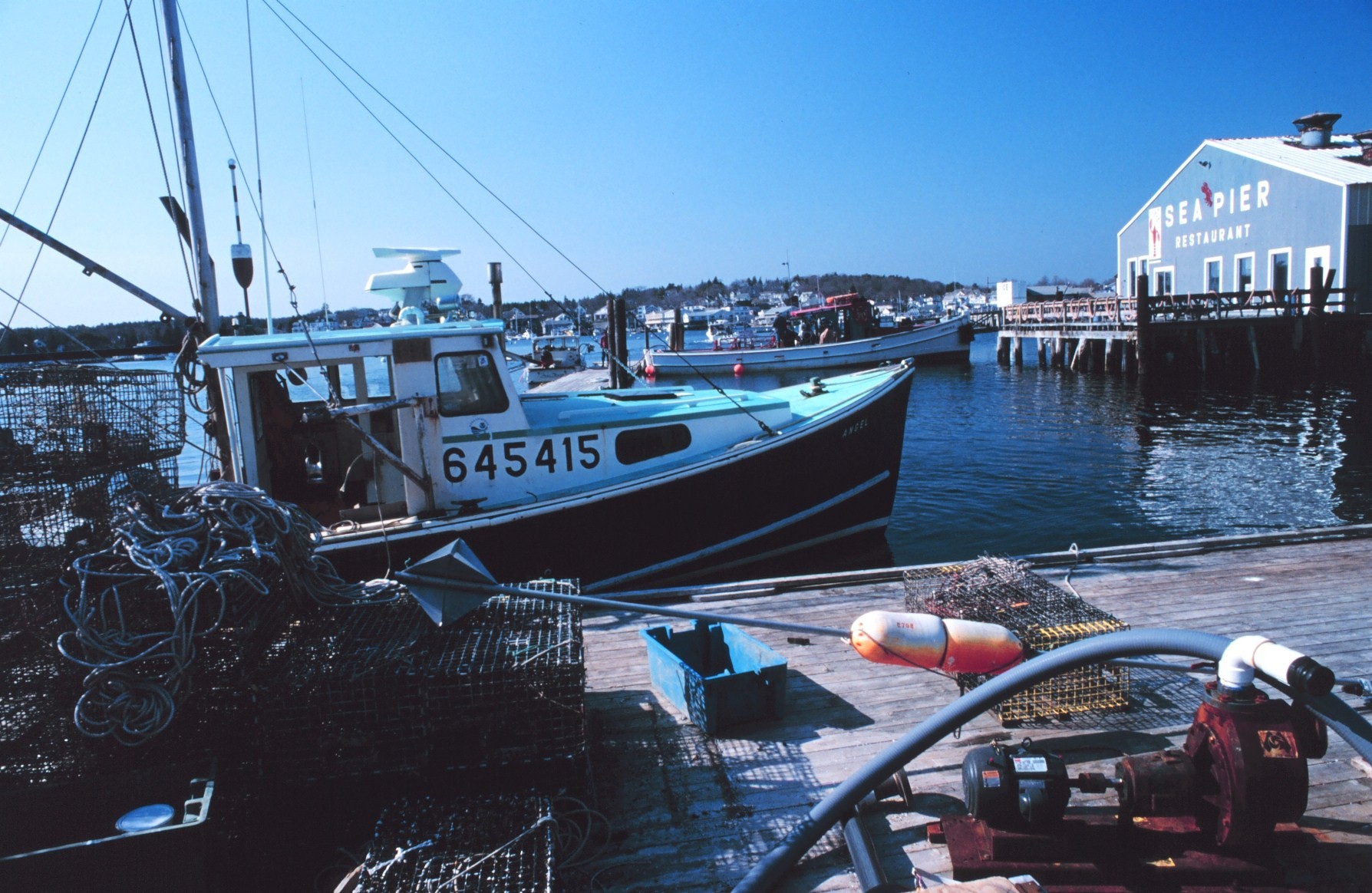
photo: Lobster boat docked at Boothbay Harbor, Maine. William B. Folsom, NMFS