Skip to content
One Fish Foundation
  • Blog
    • Aquaculture
    • Education
    • Environment
    • Policy
    • Wild Harvest
    • Fish Tales
  • About
    • About One Fish
    • About Colles Stowell
  • Education
    • Elementary School
    • Middle School
    • High School
  • KNOW FISH Dinners®
  • Resources
    • One Fish Podcast
    • One Fish Foundation in the news
    • The 7 C’s of Sustainable Seafood
    • Newsletter Archive
    • Recipes
      • Skate with Capers and Butter — Chef Rizwan Ahmed
      • Grandma Davis’ Fish Chowder — Jane Almeida
      • Ginger Garlic Tamari Scallops — Colles Stowell
      • Fish Stock — Evan Mallett
      • Mussels San Remo — Chef Rob Martin
      • Salted Pollock Croquettes – Chef Mark Segal
  • Connect
    • Contact OneFish
    • Social
      • Instagram
      • Facebook
      • Twitter
All Blog Posts

Swimming On: the Slow Fish USA gathering from 2016…

  • February 8, 2020October 19, 2021
  • by Colles Stowell
Share it!
Share

The inaugural Slow Fish event in North America took place in New Orleans in 2016. It was an enormous first step, fraught with last-minute adaptation forced by a 500-year flood event in a city that is rather accustomed to flooding. Who knew we’d be eating shrimp and oysters in a warehouse full of floats from perhaps the most raunchy Mardi Gras parade in the city? Nothing says seafood like having every part of outsized human anatomy in lewd, brightly decorated papier-mâché looming over you.

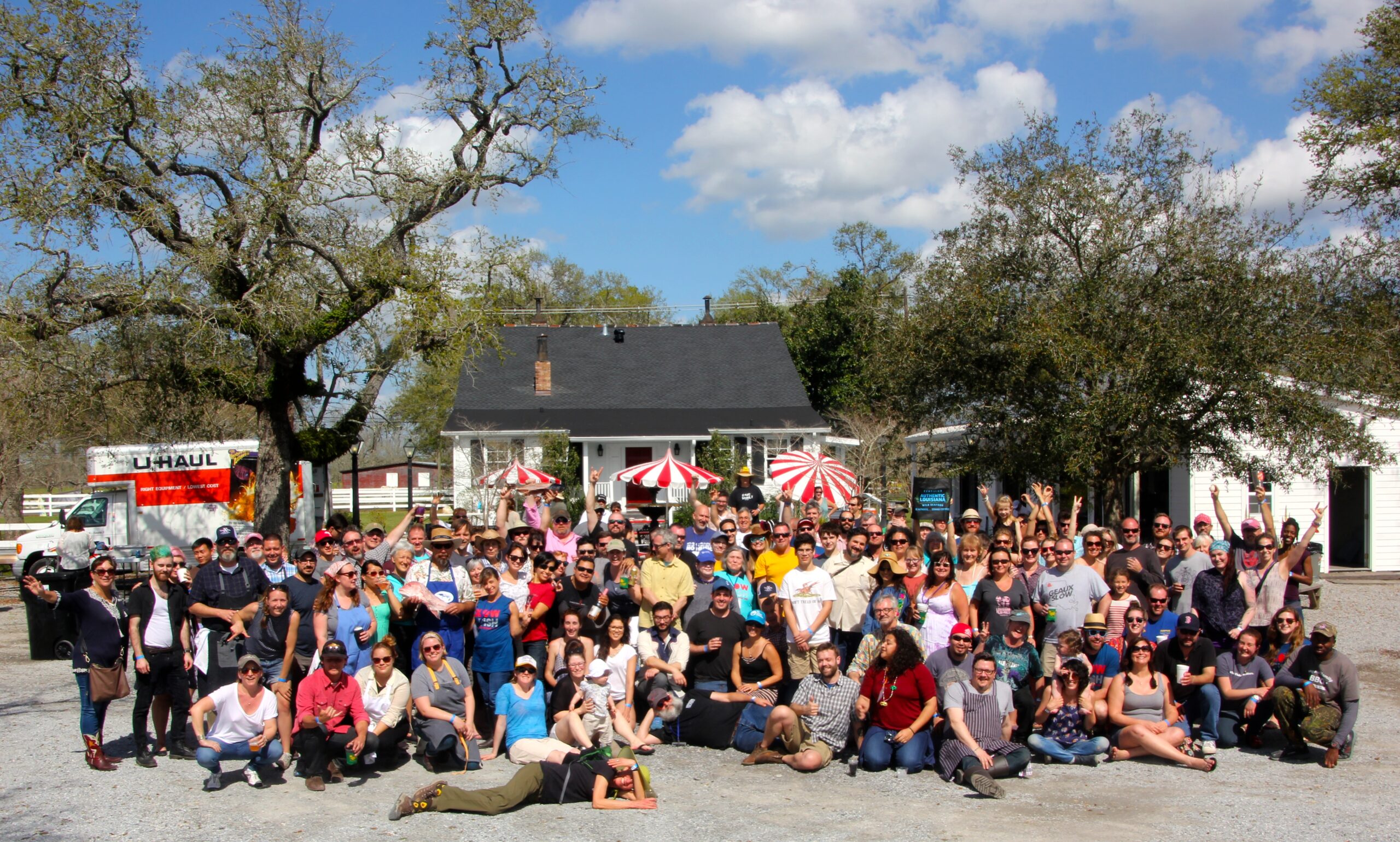
But we made it work! Everyone adapted to the unforeseen circumstances and we had great conversations about consolidation, youth in fisheries and overall messaging and values. We capped Slow Fish 2016 off with an incredible Cajun hog harvest celebration called a “boucherie” across the Mississippi River.

We gathered in San Francisco for Slow Fish 2018 following an intense, but amazingly productive four-month planning period that was delayed by the threat and lingering angst of devastating forest fires in the region. But for the commitment, creativity, and sheer will of everyone involved, Slow Fish San Francisco wouldn’t have happened. That gathering made space for fabulous networking, collective problem-solving, and energy dedicated to shared values for our seas and their stewards.

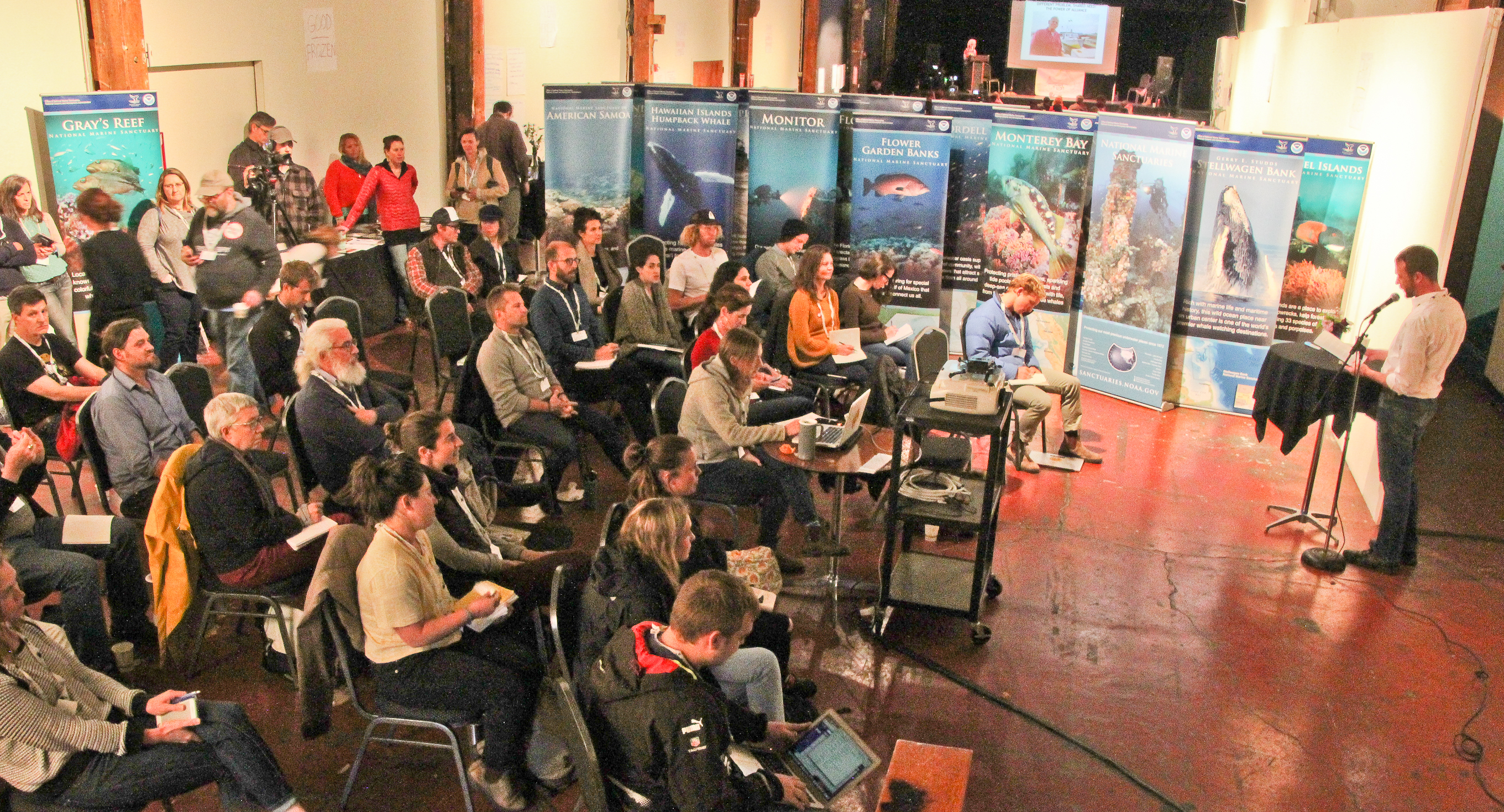
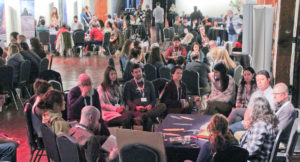
The San Francisco event took place in a cool warehouse (no sex floats) that we adapted to suit large group discussions, as well as smaller World Café roundtables and PechaKucha (or “Peche” Kucha) mini slide presentations/stories. We also had a Seafood Throwdown, off-site oyster, dinner, and movie events..

Fast forward two years and that energy is still strong. This year, Slow Fish 2020 will go down on March 19-22 in Seacoast N.H., with a Working Waterfront Tour, kick-off dinner, Sunday Fishtival and the programming of a two-day conference at the University of New Hampshire Peter T. Paul College of Business and Economics in Durham.
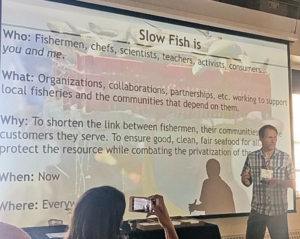
Setting the tone with the Slow Fish 101 presentation in San Franciso. Photo credit: Lance Nacio.

Circling back to Slow Fish USA origins on campus

We chose New England for 2020 to continue varying the geography of these events and give fish harvesters, fishmongers, and others from the region a chance to engage in these conversations.

New Hampshire is important because students at UNH were among the first in the country to embrace Slow Fish values back in 2013. At the time, they encouraged UNH Dining Services to sign a pact to source responsibly harvested seafood and  adhere to Slow Fish values. That pact is still in effect today. Bringing the conference to New Hampshire this year affirms how much the movement has grown in the years since and the importance of youth in the movement.

Rallying young people is especially important in New England as fish harvesters here are fighting against restrictive policies and well-funded efforts to consolidate the industry. This monopolization has created impossibly high barriers of entry for young fishermen and led to an ever-increasing age of the average fisherman, often called the “graying of the fleet.”

Moving the event around to key fisheries regions helps democratize the impact. Slow Fish continues to aim to create an open table for meaningful thinking around the core values of providing good, clean, and fair seafood to all.

At a time when equity, inclusion, and justice issues are increasingly visible, Slow Fish aims to ensure that small-scale and indigenous fish harvesters have fair access to the resource in a market too often dominated by billion-dollar corporations that only care about profits.
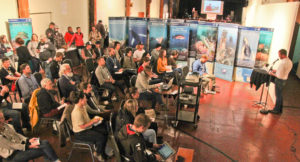
 

Sharing ideas, asking questions, expanding network connections, and collaborating on meaningful change. That’s the Slow Fish formula that will be at work at Slow Fish 2020 in New Hampshire. Photo credit: Eric Buchanan.

Diving deep

We’re going to talk about these and other critical issues in New Hampshire this year. For the first time, we’re going to merge the Slow Fish North America gathering and a regional Slow Food Northeast event, allowing members of both groups to get a better sense of how each group is working to shorten the distance from food source to plate.

Here is a sneak peek of what’s on tap for Slow Fish 2020, and why you should consider joining the conversation:

  • Deep Dive discussions on issues like aquaculture, climate change, and the Blue Commons;
  • Interactive World Café roundtables to explore challenges and opportunities facing youth, women, and indigenous fish harvesters; alternative seafood business leaders; and the Slow Fish Ark of Taste;
  • “Pesce” Kucha storytelling with slides;
  • Delicious food from all over the continent;
  • Tour of the seacoast N.H. working waterfront followed by an opening night feast;
  • Seacoast Restaurant Fish Week from Feb. 13 through Feb. 21 (restaurants in Seacoast NH and Maine provide a special Slow Fish menu and donate a portion of proceeds to Slow Fish);
  • Closing dinner event with music at the Paul College at UNH;
  • Fishtival on Sunday at Throwback Brewery (more food, music, beer, and hands-on demonstrations);
  • Several hands-on demonstrations of nose-to-tail, oyster shucking, etc.
  • A chance to dig into issues, collaborate, and kick it with old and new friends.

I can tell you first-hand that we are planning this year’s gathering with as much, if not more energy and drive as with NOLA and San Fran, and hopefully without any major and unexpected meteorological or other events.

So come join the conversation, expand your network, make new friends, hug old friends, eat fabulous food, and see what the New England Slow Fish and Slow Food communities have to offer!


Top photo: Slow Fish 2016 in New Orleans, during the boucherie at Docville Farm. Credit: Eric Buchanan.
All Blog Posts

Building Community Over Seafood

  • November 7, 2019October 19, 2021
  • by Colles Stowell
Share it!
Share
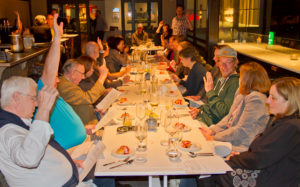
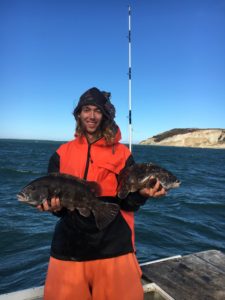
Otto Osmers with the freshly caught tautog for the dinner at Atria. Know the story of your seafood!

Otto Osmers sat down at a table with white linen, nice wine glasses, shiny silverware, an impressive printed menu featuring several courses and wine pairings and a bunch of folks he didn’t know. Sporting a ball cap, long hair and an easy smile, he calmly introduced himself as the stern man on the fishing boat that caught part of the night’s meal.

Though he’d initially expressed some reservation about being able to contribute to the conversation in a meaningful way, he earned the respect and attention of everyone at the table (and a round of applause from the nearly 60 people in the restaurant) by the end of the night.

Not bad for a 19-year-old who’s been fishing commercially since he was 15.

Score another success for the KNOW FISH Dinner® series.

Fishermen’s tales

The most recent KNOW FISH Dinner took place at Atria Restaurant in Edgartown on Martha’s Vineyard Oct. 26. The dinner was part of the annual Martha’s Vineyard Food and Wine Festival and was the product of the kind of collaboration that unites chefs, fishermen and advocates in ways that give hope to the notion we can change the industrial food supply chain.

How?

Relationships.

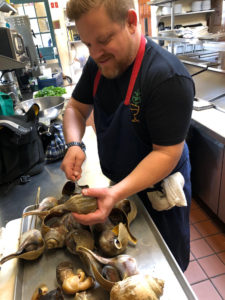
Chef Brendan Vesey removing the conchs that Capt. Andrew harvested.

Chef Brendan Vesey of Botanica Restaurant and Gin Bar in Portsmouth, N.H. was among the group of thinkers that helped build the KNOW FISH Dinner series in 2015. He and other Portsmouth, NH-area chefs were planning to participate in the massive tasting event during the Food and Wine Festival, but decided they wanted to do their own dinner during the four-day event.

So Brendan contacted me about doing a dinner that promotes the connection between seafood harvester and consumer and upholds the values behind a truly responsible seafood supply chain. This was in late Sept. Brendan connected me with Chef Christian Thornton at Atria, who is close friends with Chef Duncan Boyd, one of the original One Fish Foundation board members.

I then reached out to One Fish Foundation Board member and fellow Slow Fish colleague, Brett Tolley, who put me in touch with Shelley Edmundson of the Martha’s Vineyard Fishermen’s Preservation Trust. Shelley and her team work to support the livelihoods of the fishermen on Martha’s Vineyard. She connected me with Otto, Capt. Nick Wilbur, Captain Andrew Wheeler and Captain Arno Ewing.

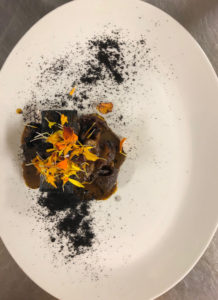
Chef David Vargas with a tasty and colorful presentation of Capt. Andrew’s cured conch and squid ink tamale.

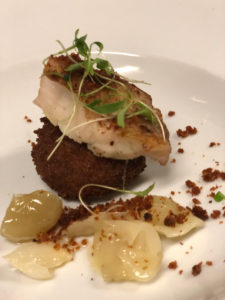
Capt. Nick and Otto caught the tautog (think a brutish looking bottom fish with big lips and human-like teeth, per Otto’s great description to the crowd) that was served with the green crab gumbo prepared by Chef William Myska of Ore Nell’s Barbecue in Kittery, ME. Captain Andrew harvested the conch that Chef David Vargas of Vida Cantina in Portsmouth, NH turned into masa miso cured conch with squid ink tamale.

Chef Christian brought in Ryan Smith of Signature Oysters, whose Katama oysters Atria chefs turned into a trio of preparations: andouille roasted; cucumber granita mignonette; and yuzu broiled.

Captain Keper Connell caught the bluefin tuna that Chef Jeremy Glover of Raleigh Wine Bar and Eatery in Portsmouth, NH crafted into an amuse bouche of raw bluefin tuna in a peach boshi broth.

Chef Brendan broiled the locally sourced fluke from Menemsha Fish Market and served it with Hubbard squash and charred oyster mushrooms with a red wine leek sauce.

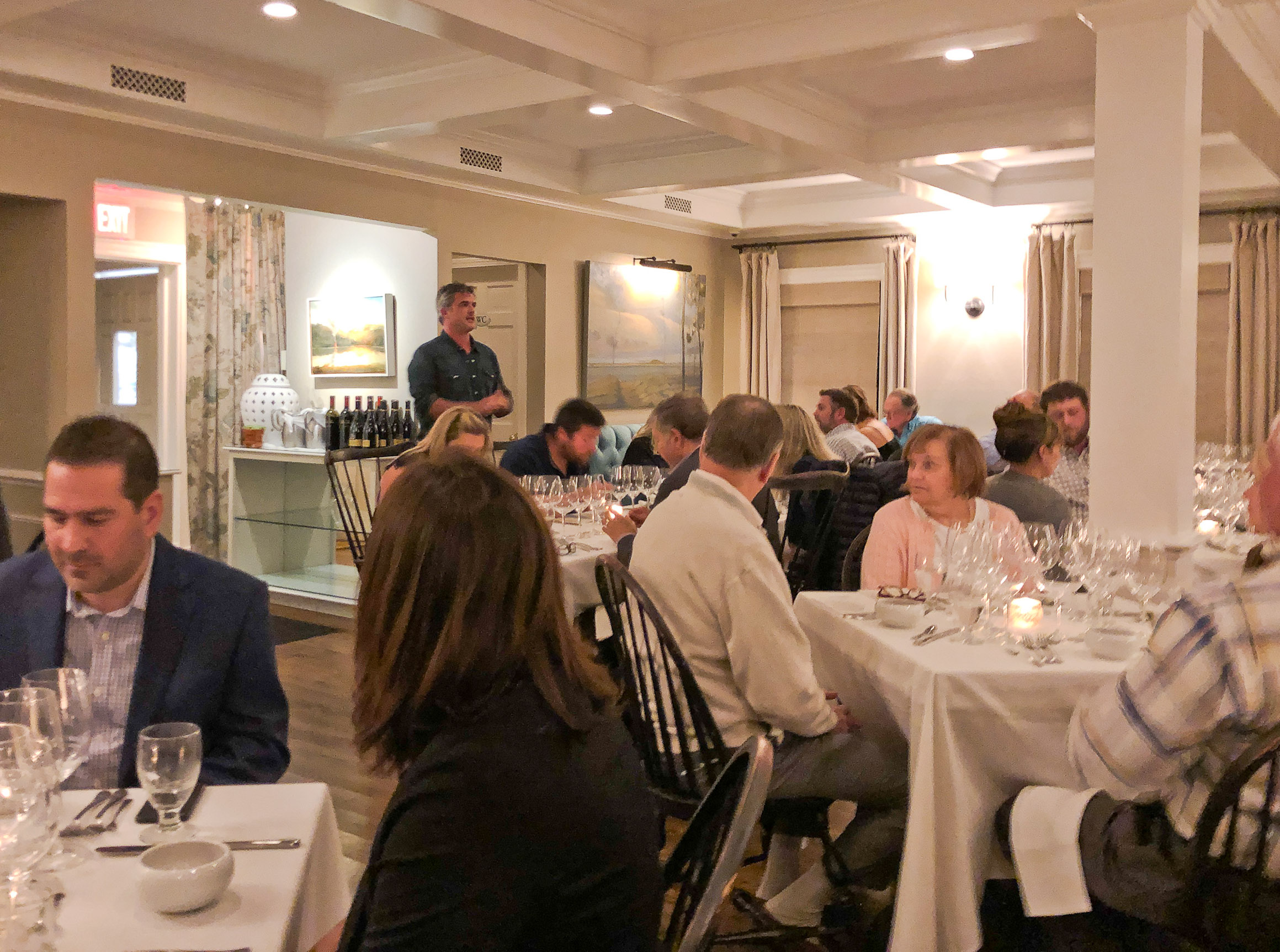
Capt. Nick Wilbur’s tautog resting on a fried okra cake prior to being smothered in smoked green crab gumbo prepared by Chef Will Myska. Perfect for New England fall.

All of the food was excellent. And the stories the chefs and the fishermen told about the seafood, how it was harvested, how it was prepared, helped stitch together this newly created ad hoc community of chefs, fishermen and consumers.

So yes. Relationships matter. As friend, colleague and founder of responsibly harvested seafood network Local Catch Josh Stoll often says, the definition of “local” is changing, becoming less about geography and more about relationships.

The KNOW FISH Dinner at Atria reinforced that. Yes, both the seafood and produce were “local,” or as local as possible (from Gulf of Maine, and some farms in N.H. and Maine). But what stood out to everyone in attendance were the stories from those who harvested and prepared the food.

Everyone, including those from the island and off-island, left knowing something more about the food they ate and the different links in the seafood supply chain. Before closing out the event, I asked folks to carry those stories with them and that sense of community we’d built. I asked them to try and establish relationships with fishermen or fishmongers and chefs in their community. Build the trust that elevates the community and the values we discussed. Ask questions.

And spread the message.


Big thanks to everyone who helped make this event happen, including the fish and shellfish harvesters: Otto, Capt. Andrew, Capt. Nick, Capt. Arno Ewing, Ryan, Capt. Keper, and Shelley for making the connections. Thanks to the chefs: Brendan, David, Will, Jeremy, and the entire crew at Atria. Special thanks to Chef Christian Thornton for hosting the event. Thanks also to Shauna Troy and J. Lohr Wines for providing the great vintner’s accompaniment to each course. Thanks to the Martha’s Vineyard Food and Wine Festival.  And many thanks to everyone who attended and elevated the discussion!


Top photo: Capt. Keper Connell tells the story of the bluefin tuna he caught and that everyone was enjoying.


All Blog Posts

Administration Forces EPA About-Face, Revokes Bristol Bay Protections

  • July 31, 2019October 19, 2021
  • by Colles Stowell
Share it!
Share

Boy, was my Alaska trip’s timing impeccable. I got to see the pulse and vibrance of the fishery and the economy it supports. I got to see the deep connections people of all stripes have to the salmon, the water, the land. I arrived during the heart of the world’s largest sockeye run.

I also arrived just as the Environmental Protection Agency District 10 in Seattle issued a blistering statement castigating the US Army Corps of Engineers’ draft Environmental Impact Statement on the proposed Pebble Mine. The letter claimed the EIS had some serious flaws, and “…may result in substantial impacts to waters of the United States within the Bristol Bay and Cook Inlet watersheds.”

Folks I spoke with about the EPA statement felt bolstered by the statement after fighting the mine for over a decade, particularly given the administration’s push to approve the mine in the past two years.

But as I said before, this is a chess match, and the administration yesterday pulled what I’m sure they consider a “trump” move by rolling back federal Clean Water Act protections for Bristol Bay established during the Obama administration.

Make no mistake. This is outright politics at the expense of natural resources and the 15,000 people who depend directly and indirectly on those resources, whose total economic impact is now valued at over $1.5 billion. At stake is a truly priceless, irreplaceable resource that can continue to fuel the region’s economic engine … or billions in profits for a small group of investors. Do corporate interests really outweigh the rights of citizens?

Think of the colossal irony. Think of Chris Hladick, the EPA Region 10 Administrator who penned the July 1 letter slamming the EIS, only to be forced to publicly backtrack. Several entities supporting the mine claimed they wanted to see the science that this mine could harm the natural resource. Hladick pointed out some of the flaws in the EIS in his July 1 letter. The EIS itself essentially skated over the original finding from the EPA under the Clean Water Act in 2014, declaiming the potential devastating harm of such a mine on the salmon and its habitat.

Yesterday’s announcement demonstrates the folly that mine supporters call “due process,” but is more a proof point of power politics, influence, potential collusion and graft. It screams, “JUST JOKING! We mean to railroad this mine through and strip the very protections we said would preserve the resource in the region.”

I’ve just talked to a couple of people fighting the fight. They are angry and sadly unsurprised at the political arm-twisting from the administrations of both governor and president. Particularly as this arm-twisting is in support of a mining company based in Canada, not the U.S.

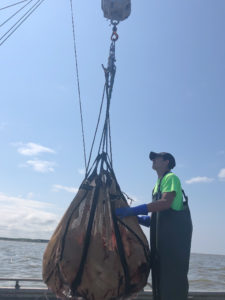
A deckhand on a tender weighs part of Melanie Brown’s set net sockeye harvest during the heart of the season.

But the folks I spoke to are still resolved.

They have to be. In their view, their lives and livelihoods are essentially at stake. As for the mine’s investors, their bank account profits are at stake.

This issue forces people to check their moral compass. If we can’t protect the salmon, their habitat, and the thousands who depend on them, where are we headed? What does this mean for other priceless public spaces?

If this issue has struck a cord, follow this link for more information on how to speak out and get involved. Contact your representatives and senators in Washington, D.C., regardless of where you live. Every voice counts.

Also, stay tuned for the Fish Tales Podcast, which will feature the voices of those on the front lines of the battle to save Bristol Bay from such wanton development. You’ll hear what life is like in Bristol Bay, and why preserving it matters so much to those who live and work there.


Other resources:

Commercial Fishermen for Bristol Bay Press Release regarding EPA’s reversal

United Tribes of Bristol Bay Press Release

July 1 EPA Region 10 letter from Administrator Chris Hladick, voicing concerns over Army Corps of Engineers’ Environmental Impact Statement

All Blog Posts

Bristol Bay Beckoning

  • July 17, 2019October 19, 2021
  • by Colles Stowell
Share it!
Share

Plan for them all you want, but rich experiences often require overcoming some challenges, adapting to surprises and simply making do.

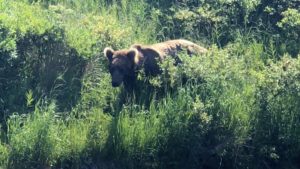
In the past two weeks in Bristol Bay, Alaska, I’ve watched massive brown bears stroll along the banks of the rivers I was fishing as they searched for their own meals, passively taking notice of us humans. Breathtaking.

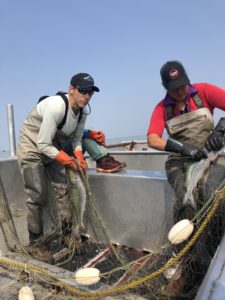
I’ve picked fish out of set nets by hand, learning from a master how to extricate gill plates, untangle fins and bleed the fish quickly and efficiently as we practiced a centuries-old ritual. Working three sets in a 15-hour period gave me a glimpse at just how demanding a full four-week season must be.

I’ve toured one of the eight or so big processing facilities that represent half of the commercial fishing economic equation in Naknek. One million fish a day are vacuumed up a large pipe from the waterfront to a huge warehouse with hundreds of hairnetted seasonal workers that head, tail, gut and fillet the fresh fish. The salmon are then either frozen and packed, or smoked, frozen and packed, each fixed with the private label of one of the fishermen who contract with the plant. It is a very smooth operation.
I’ve hitchhiked (for the first time, feeling at once a tad uneasy and adventurous) along the Alaska Peninsula Highway between Naknek and King Salmon, shortening the 15-mile distance, saving the $40 cab fare (and the $255 per day to rent a Kia) and meeting some really interesting people along the way. Hippie Doug may be a transplant from the 80s, but he sure seems to have carved out a creative, if off-color niche for himself smoking salmon in Bristol Bay.

The flora and fauna

I’ve checked off a significant, life-long bucket list item: fly fishing Alaska’s wild rivers and streams, catching a variety of stunning salmonids with different flies and approaches. The red flame of the rainbow trout and the iridescent pink spots of the Dolly Varden or Arctic Char are seared in memory, recalled at will. Same with the small chrome blue thumbprint marks along the sides of the 30 or so 2-8 inch king salmon smolts I caught while fishing King Salmon Creek alone.

We stood still and watched, being sure to keep a low profile. Click to watch a clip and turn up the volume!

Finding relatively fresh bear, moose and caribou tracks in the same vicinity along one of the creek’s banks spoke to the remarkable stable of wildlife in this place. I found a new sense of awareness following well-worn bear trails along the creek, mindfully following the advice I learned at “Bear Camp” at Brooks Creek by keeping a running conversation with myself. Ironically, I recounted a story I made up for my toddler daughter called “Esty and the Bear Cub.”

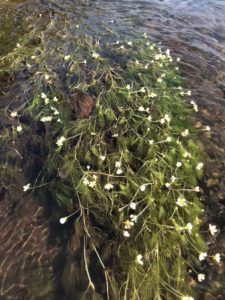
Mouse Ear Chickweed? Could be. Or it could be something else. Whatever it is, I sure did appreciate it at King Salmon Creek.

I drank in everything Nature had to offer. The colors of the fireweed, Toadflax (aka, butter and eggs), some form of lupine, something possibly called Mouse Ear Chickweed and countless other flowers I couldn’t identify. On one trek back from Contact Creek, I took in the cool shape and color of not-quite-ripe cloudberries, and the plethora of blueberry bushes along the trail, promising yet another ample food supply for bears, people and other critters in the next few weeks.

Bald eagles were fairly common, as were magpies, chickadees and some type of thrush providing the soundtrack for the wondrous ecosystem. On the flight from King Salmon to Dillingham, I watched beluga whales swimming in formation, chasing down a school of sockeye.

The people

I’ve also met some wonderful people who are corporeally and spiritually rooted to the land, the water and the resource. I was struck by their generosity, their openness and the power of their convictions. I spoke with both transplants and those whose roots to Bristol Bay extend for generations.

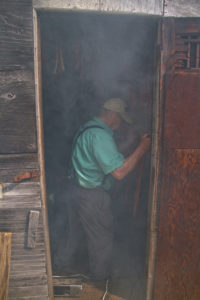
Al working his smoke shack magic.

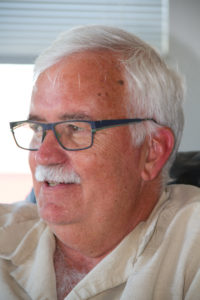
Al Aspelund and his wife Lou were my endearing hosts at Al-Lous B&B in Naknek. At 88, he is a consummate putterer, always fixing something and tinkering with his smoke shack to get the right temperature, air flow, and humidity for the sockeye and king salmon he hangs. A lifelong resident of the area, he practices the craft passed down from the Aleut traditions of his heritage.

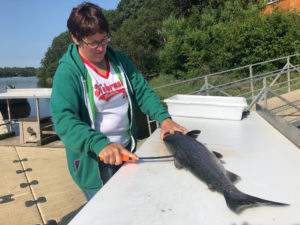
Lodge owner, fishing guide, master fish filleter and outdoors woman, Nanci Morris Lyon carefully cutting a king salmon I’d just landed.

Nanci Morris Lyon is a woman of the wilderness. She grew up on a subsistence farm in eastern Washington state, and has carried that wilderness spirit with her in her journey to become a commercial fisherman, a fishing guide and finally, a sport fishing lodge owner in King Salmon.

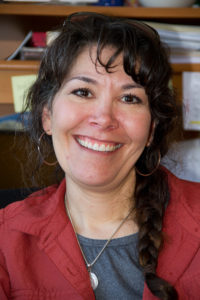
Gayla Hoseth advocates for indigenous rights and preservation of the wondrous natural resources of Bristol Bay.

Gayla Hoseth is a force of nature, striving to protect indigenous rights with a focus on preservation and access to Bristol Bay’s natural resources as director of natural resources at Bristol Bay Native Association in Dillingham, and second chief of the Curyung Tribal Council. Born and raised in the area, she clings to the traditions she fights to preserve for indigenous tribes, such as learning to use an ulu (traditional knife) to fillet salmon from her grandmother.

Years of adaptation on boat decks, in processing plants and running the Bristol Bay Economic Development Corporation have helped Norm Van Vactor put things in perspective.

Norm Van Vactor moved to Dillingham after graduating high school in the Philippines and soon became a deckhand on a tender (a boat which takes the catch from smaller boats to processors on shore). He’s spent much of his life on deck or in processing plants, eventually becoming president and CEO of the Bristol Bay Economic Development Corporation, charged with ensuring the rights of fishermen and others who want to earn a decent living in the area.

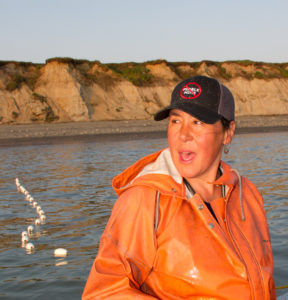
Melanie exudes good cheer, even during the fourth set of the day heading toward midnight.

Melanie Brown radiates love. She almost always has a smile on her face. She set net fishes with her son and daughter on the same sight her great grandfather established at the mouth of the Naknek River in the early 1900s, where thousands of sockeye funnel past heading many miles upriver to spawn. The one time I saw her really lose her smile was when she spoke about the impending threat of the Pebble Mine, showing her passion for protecting her rights, and those of everyone else who depend on the resource.

She wasn’t alone.

Unity in opposition

Everyone I spoke to let their raw emotions show on this topic. And every one of them echoed one clear sentiment. The proposed mine threatens something more valuable than the gold, copper and molybdenum couched in the earth at the headwaters of the world’s largest wild sockeye salmon run: the lives and livelihoods of thousands of people, natives, transplants and transient workers who depend on the health of that resource. And the economic impact of that resource cannot be overstated. The salmon fishery (both commercial and recreational) employs close to 15,000 people and generates a $1.5 billion economic impact.

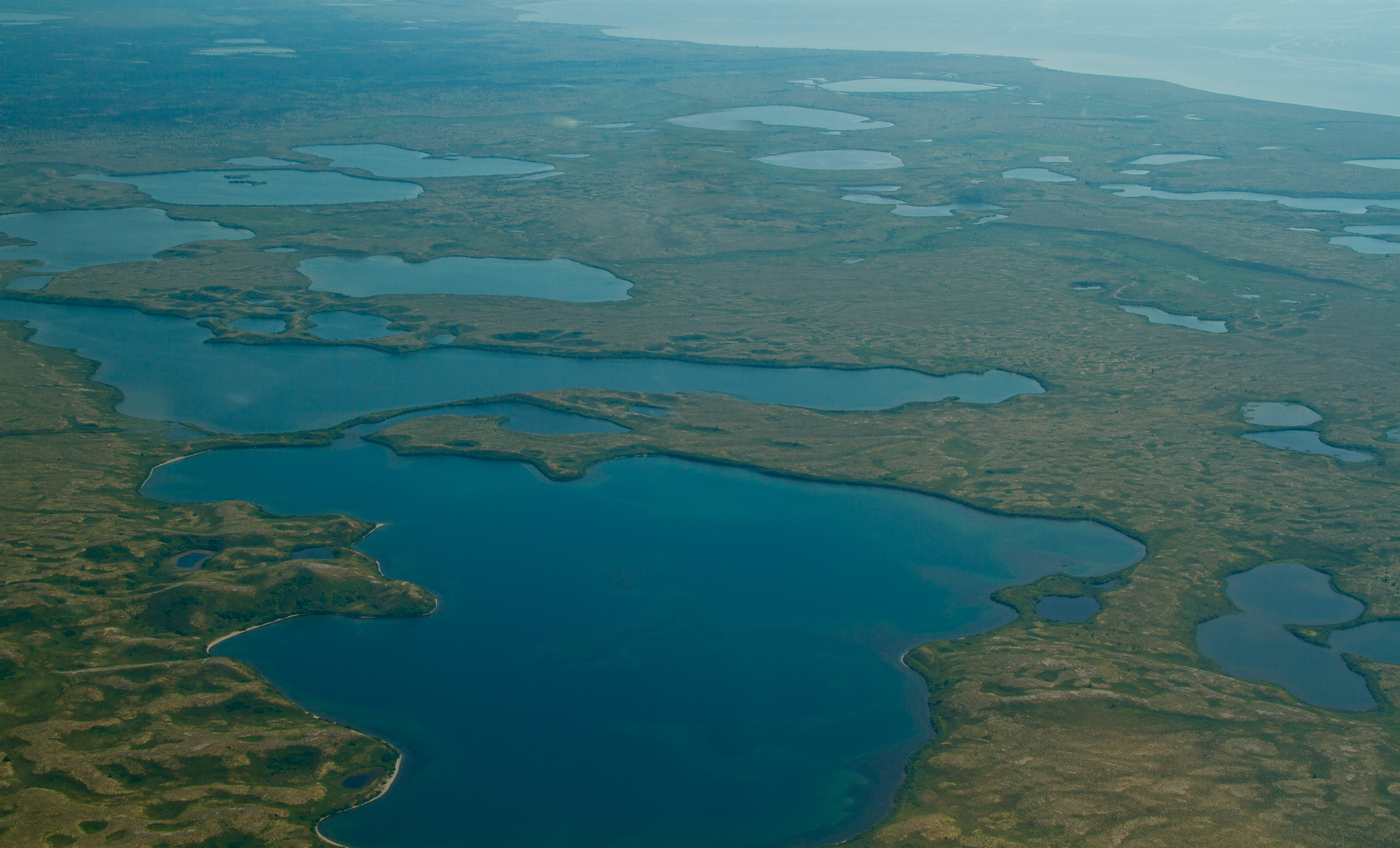
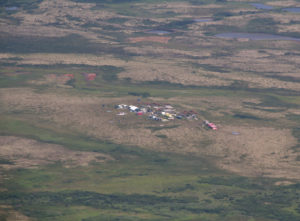
A scar on the tundra near Lake Illiamna, the watershed for much of the world’s largest wild salmon run. Wrong place. Wrong mine. Repeat.

My mission to Alaska was twofold. First and foremost, I wanted to connect with these people and capture their stories for podcasts and blogs that I will share for broad distribution. This pitched battle has national significance, beyond what’s happening in Bristol Bay. These human stories will shed light on what’s at stake when huge multinational interests driven by profit and greed paint a rosy veneer over the devastating impacts of their operations. They want everyone in the lower 48 to assume this mine will bring jobs and boost local economies, ignoring the imminent ecological destruction of when (not if) the mine fails and leaks toxic chemicals into a priceless and fragile ecosystem. Flying over the pristine, water-veined tundra near Lake Illiamna, I wondered how anyone who saw the ugly outcropping of buildings dumped on this wondrous terrain could possibly think this mine was a good idea.

Second, I wanted to experience Bristol Bay firsthand, picking fish in set nets, walking across the tundra to remote rivers and streams to fly fish, seeing life in Naknek and King Salmon, touring a processor, and meeting new people. I visited at a time when the sockeye run is again above projections, showing the resilience and bounty of the resource, especially when it’s properly managed and allowed to thrive in healthy ecosystems.

I’ve done that. And there’s still much more to do. Stay tuned for the upcoming Fish Tales Podcasts featuring Nanci, Melanie, Norm, Gayla, Al and others to hear them tell their stories, and why preserving the resource matters to them, everyone in Bristol Bay, and to all of us who stand witness to the fierce battle to protect a priceless, irreplaceable resource.

All Blog Posts

Getting Seafood Smart!

  • May 14, 2018October 20, 2021
  • by Colles Stowell
Share it!
Share

“What happens if you live in Kansas and you want sustainable seafood?” I get this question occasionally. Interestingly, Kansas seems to be the state most often cited. Perhaps it’s because it’s flat as a pancake and just about as far away from any coastline as any state in the union.

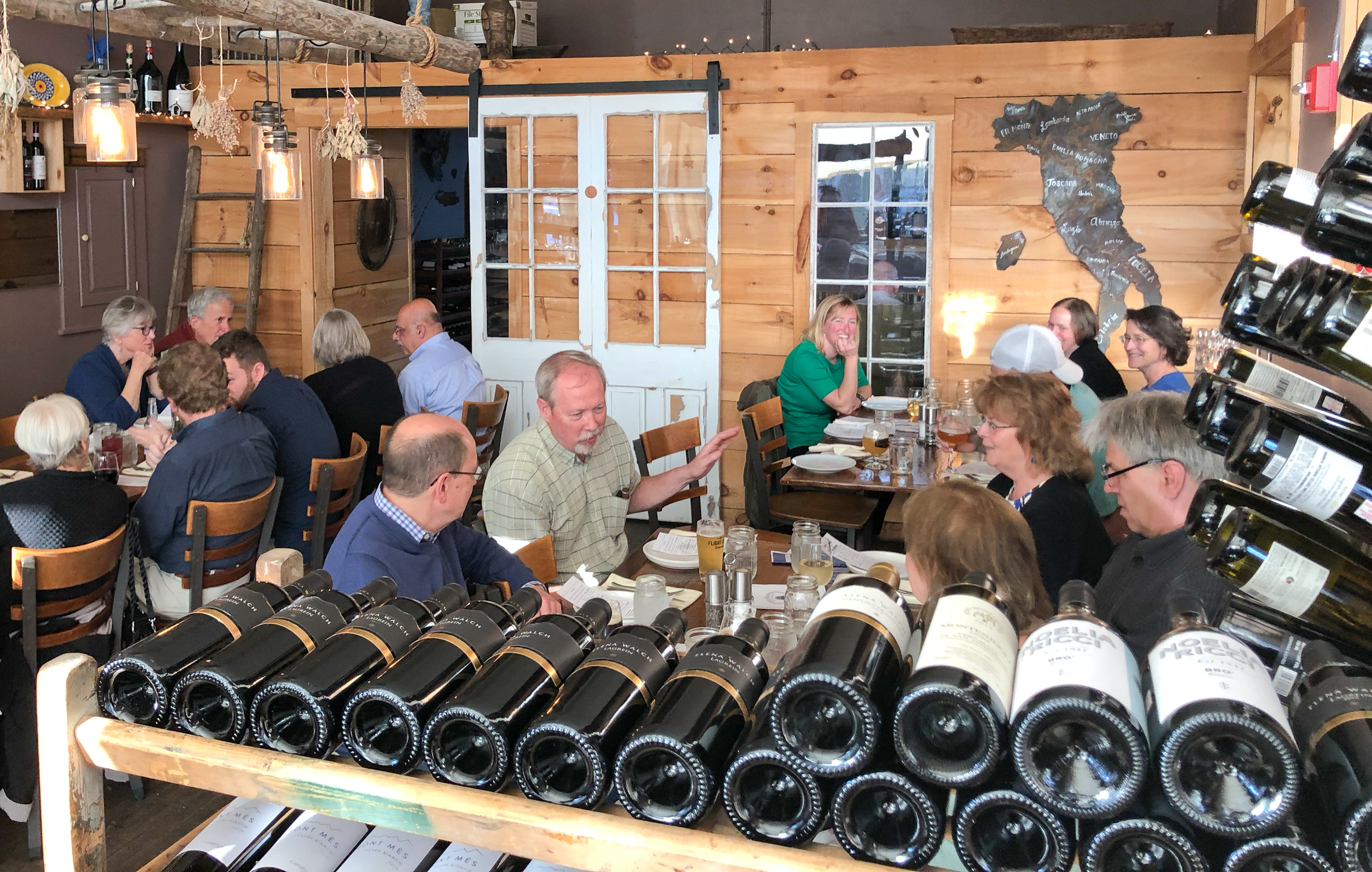
But, it’s a valid question, and one that came up Wednesday night at the latest KNOW FISH Dinner® at Enoteca Athena in Brunswick, Maine. This was the 10th in the series of events aimed at bringing communities together to meet the harvester who caught or grew the seafood they’re eating and learn more about why their choices matter. The question of knowing the story of your seafood permeated the discussion throughout the evening. We’ll return to that question in a bit.

Chef Tim O’Brien went above and beyond the call of duty by staying up until 2 a.m. that day figuring out the most efficient way to skin a couple dozen skate wings (think gloves, towels, a sharp knife and some strong language). This was part of the prep for a fabulous meal also featuring yellowtail flounder, haddock, European green crabs and oysters from Mook Sea Farm.

Jeff Auger talking about having the “Mookie Blues.” Credit: Steve Wyman

Jeff Auger of Mook Sea Farm talked about the long time between receiving spat (or seed) and growing oysters to market weight and the many variables, such as climate, that can affect the success of the process. As he spoke, we feasted on his Mookie Blues oysters from Damariscotta that Tim had fried perfectly and served with a spicy lemon aioli.

Tim emphasized the importance of local sourcing, or at least, knowing the source of the food he serves. He mentioned connections with different fish and shellfish providers and local distributors as we enjoyed delicately balanced yellowtail flounder ceviche (“cooked” in blood organge and balsamic vinegar) caught the day before by Capt. Tim Rider of New England Fishmongers. The flounder was served amid a crisp spring, palate-awakening salad of greens, chives watermelon radish and pine nuts.

Perfect spring-into-summer ceviche.

As we discussed getting seafood smart about underutilized species, we devoured a risotto made with green crab stock, green crab roe and haddock. European green crabs have been around the U.S. coast for almost 200 years, can eat up to 40 mussels a day and can produce up to 160,000 eggs a year. They destroy eelgrass beds while devouring larval mussels, clams and oysters.

Green crabs make an excellent stock. The roe and the roasted haddock made this risotto sing. Credit: Steve Wyman

So it was good to hear from Marissa McMahan of Manomet that a collaboration of researchers and fishermen are sorting out the soft shell timing of green crabs in hopes of creating a consumer market to eat the invasive species. An established market already exists in Italy. The stock and roe added a fabulous flavor to the risotto, which also featured roasted haddock and daikon radish. Excellent balance.

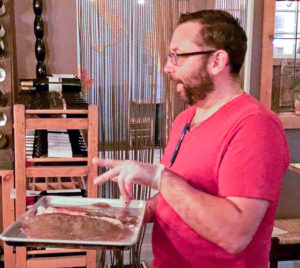
Risky move showing the before side of the skate story? Nah, it’s all part of getting to know your seafood. Chef Tim O’Brien describing the process and the benefits of this under-loved species.

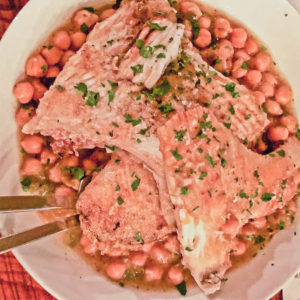
The last course was “Razza Sull Cecina”, the heretofore mentioned skate wing pan-seared with rice flour and finished atop cecina, which is an outstanding preparation of wine and butter braised chickpeas, leeks, garlic and black pepper. The skate was tender but flavorful with the cecina backdrop.


The skate may be a beast to skin, but it’s delicate and carried the flavor of the cecina very well. Credit: Steve Wyman

A fisherman’s tale

As we discussed the importance of knowing the story behind the seafood, I talked about Capt Tim Rider, who also provided the haddock and the skate for the dinner. He planned to attend the dinner and tell his story so people would have context behind the fish they were eating.

Sadly, he was unable to make it because he had to tow in a fellow rod-and-reel fisherman whose boat broke down offshore. New England Fishmongers forges close relationships with chefs to bring in fresh, properly handled seafood harvested in the Gulf of Maine. Capt. Tim and his crew often leave the dock at 1 a.m. and return late in the afternoon or in the evening, only to turn around and do it again. If someone is broken down out on the ocean, they help them out.

That is his story, and it’s the story of many fish harvesters. Knowing who caught your fish, when, where and how they caught it is great if you can discover that. Those of us fortunate enough to live around the Gulf of Maine live in the cradle of one of the seafood capitals of the world. We don’t have to work too hard to find fresh, locally harvested fish and shellfish, and the story behind it.

Fresh off the boats. The haddock came from Capt. Tim’s Finlander I in Porstmouth, NH, and the flounder and skate came from his Finlander II in Gloucester, Mass. All delivered to Chef Tim in Brunswick the night before.

Back to the question

Folks in Kansas? Not so much. So my answer to the question about what they can do stems from the premise behind One Fish Foundation: Know your seafood. I believe habit, driven by price is one of the main catalysts behind the astronomically high rate (90%!) of imported seafood in the US.

You want salmon for dinner in the Heartland? You go to your local Walmart or other chain, grab the salmon in the case and head for the checkout. You may even read the label and see that it was “all natural” and farm-raised “fresh” in Chile. And that may be all the information you need to make your decision to buy.

But it’s also all the information you need to give you pause. Suppose you knew that Chile salmon farming operations have the highest rate of antibiotics use, by far, of any country in the world. Even with all of that antibiotic use, Chile suffered a massive algal bloom in 2016 due to a confluence of environmental and management issues such as improper net pen siting and overcrowding. Twenty-four million fish died at a roughly $1 billion cost to the industry.

To get around the BIG hurdle of habit, we need to be having more of these conversations about why our choices matter. So yes, knowledge is power. For folks in Kansas, some knowledge could help them realize that even though they can’t get pollock right off the boat, they may be able to get some that has been caught domestically. The technology for frozen-at-sea products is such that the freshness of the fish or shellfish is preserved as if it had just come out of the water, if done properly. This was an enlightening discussion at Slow Fish 2018.

The US has some of the highest standards for food safety and fisheries management in the world. And if your local store doesn’t have anything that fits the bill, apply some pressure. It may take some time, but consistent pressure can change their buying policies.

Also see if there is some sort of community-supported fishery that may provide good, responsibly harvested domestic seafood. Like a CSA for farm produce, a CSF offers nearly direct from the boat fish delivered weekly (or whatever timeframe) for buying a share up front. Some operations provide this service in the heartland.

If price is a factor, look for a species that is abundant, and not salmon, tuna, cod, etc. Try cusk, for example. Also, some seafood counters offer the small pieces that can’t be sold alone at affordable prices. Cost can be the elephant in the room, particularly for those who may not be able to afford “sustainable seafood,” and it will be a topic for a future blog.

So the KNOW FISH Dinner at Enoteca was again a great discussion set to the backdrop of an outstanding meal prepared with locally harvested seafood with a compelling story behind it.

We’ll keep trying to change the import dynamic, one conversation at a time.

Stay tuned.


Top photo credit: Steve Wyman


All Blog Posts

Slow Fish 2018: Telling tales

  • May 9, 2018October 20, 2021
  • by Colles Stowell
Share it!
Share

Slow Fish is making a difference.

Think of it as a collaboration of fish harvesters, scientists, chefs, students, food-lovers and activists around the world working toward one goal: good, clean fair seafood for all. This was on display throughout the three-day Slow Fish 2018 event in San Francisco April 14-16.

Setting the tone with the Slow Fish 101 presentation. Credit: Lance Nacio
Some of these successes were writ large on the main screen on the first morning of content programming in the Slow Fish 101 presentation.
  • Melanie Brown, a set net fish harvester from Bristol Bay, Alaska, spoke of indigenous ties to the land, the water and the resource. She spoke passionately about how wild salmon runs have sustained her family over time, and why that way of life is under threat from the proposed Pebble Mine. She also spoke of the coalition of disparate groups not normally siding with one another that oppose the mine: indigenous tribes, commercial fish harvesters, recreational fishing groups, environmental activists and politicians among others.
  • Jordyn Kastlunger reminded everyone of the importance of family connections and supporting the youth movement in fisheries as she described the trajectory of the Tuna Harbor Dockside Market in San Diego. Born of a coordinated effort of fishermen, food policy activists and lawmakers, the market features fisher folk docking on the pier and selling directly to customers. About 500 customers come every Saturday to buy about 12,500 pounds of locally harvested seafood.

    Jacquelyn Ross tells the story of abalone from Bodega Bay at the World Cafe. Credit: Eric Buchanan
  • Jacquelyn Ross of the Southern Pomo/Coast Miwok tribes spoke about her indigenous fishing lineage along Bodega Bay, hand harvesting abalone, and witnessing the changes to the fishery wrought by temperature, current and acidification. She too spoke of family love and respect for the resource, the land and the water and the importance of sharing those stories in the hopes that others will appreciate those connections to natural resources.
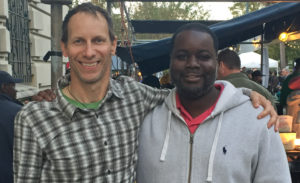
  • Paula Barbeito came from Italy to describe the work of Slow Fish International and highlight the story of the Thorupstrand Fishing Guild in Denmark. Several years ago, fishermen in the community of Thorupstrand pooled their resources to buy quota so they could provide access to the fishery without being overrun by industrial operations. The guild is a reminder of how fishermen can self-identify and protect their access by working together.

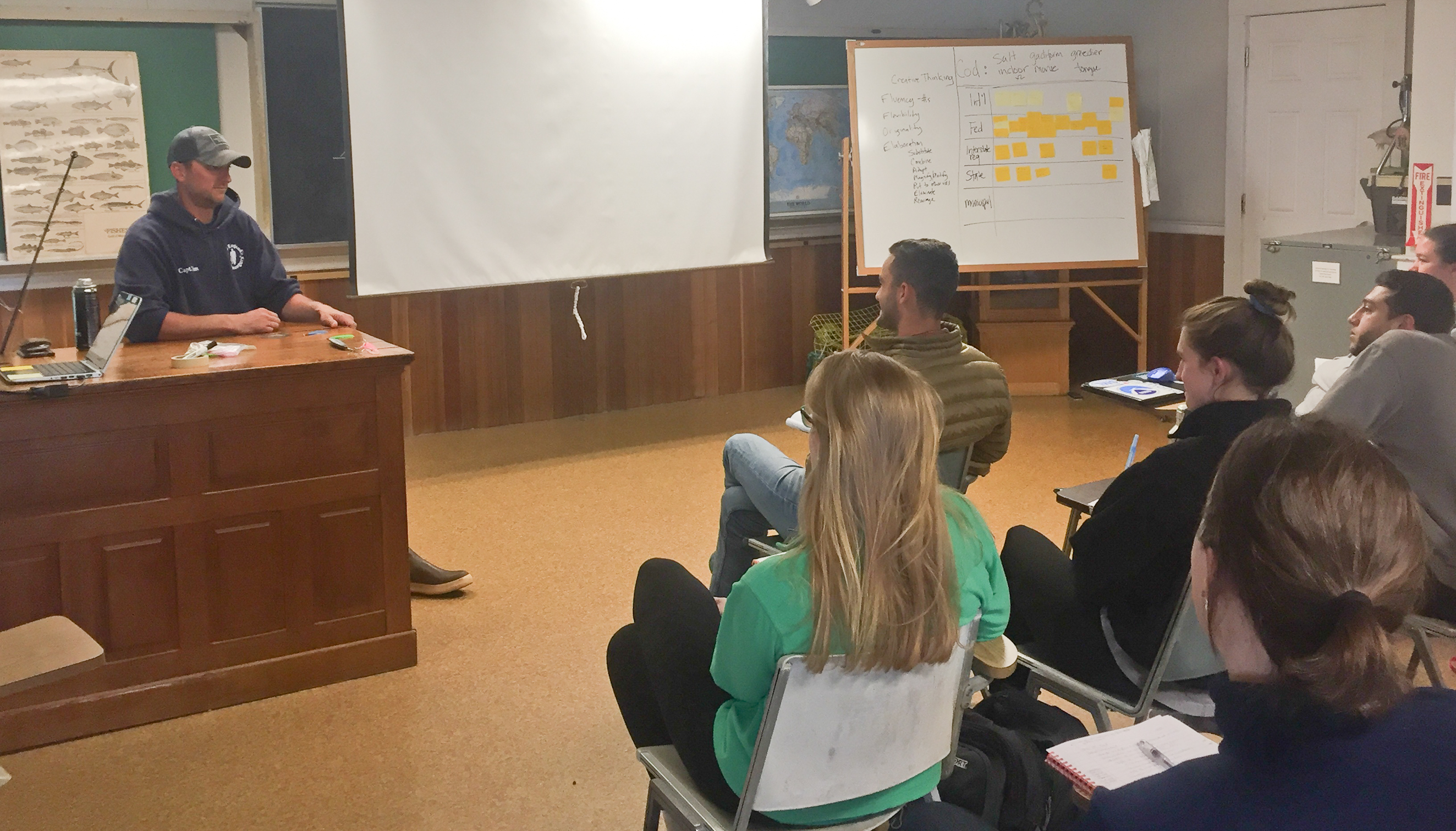
    World Cafe action. Just some of the discussions where things happen. Credit: Eric Buchanan
A parade of perspectives

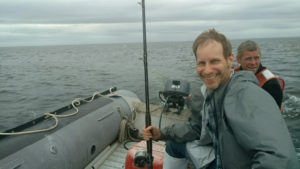
These compelling narratives were just a few among many shared over the weekend. We heard from longtime fish harvester and policy activist Linda Behnken, who has fished commercially in the Gulf of Alaska and Bering Sea for over 30 years. She has drawn on that experience at the helm of her boat as she helped shape policy to protect small-scale fishing as a member of the North Pacific Fishery Management Council.
We also heard from Anne Mosness, who like Linda, has spent decades at the helm and in the trenches battling industrial scale operations. Anne described her longstanding campaigns against industrial aquaculture and genetically engineered salmon to the discussion, as well as the need to honor women’s voices and rights in fishing.

Filmmaker Mark Titus talked about his upcoming feature, The Wild, which shines a bright spotlight on the world’s largest wild sockeye salmon run in Bristol Bay, and what’s at stake in the battle against the Pebble Mine.

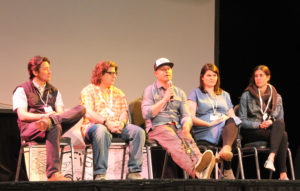
Know Your Supply Chain: Kenny Belov talks about choosing and selling responsibly harvested seafood. Left to right: Alan Lovewell, Real Good Fish; Joe Falcone, FishLine; Kenny; Anna Larsen, Dock to Dish; Jordyn Kastlunger, Tuna Harbor Dockside Market. Credit: Eric Buchanan

Kenny Belov talked about his mission in opening Fish. Restaurant in Sausalito and the TwoXSea sustainable seafood distribution company to provide responsibly harvested, abundant species to customers. Minimizing bycatch and other ecological impacts are critical factors in determining which fish harvesters he will work with.

Lance Nacio’s (right in hat) fried soft shell shrimp were very, very popular. Credit: Eric Buchanan

We heard from a broad range of seafood perspectives. Lance Nacio spoke about investing in new technologies such as the plate freezers used to individually quick freeze fresh caught shrimp to preserve the out-of-the-water freshness for shipping around the country. Several oyster growers provided insight on their operations and the myriad factors that go into a successful, delicious oyster harvest. Jack Crofts brought his energy and entrepreneurial spirit to the event, trying to raise visibility and money for this mobile oyster bar, called the Oyster Barrow. Lucas Raymond, a trawl fisherman from New Hampshire, also represented the youth movement at the event.

Young entrepreneur Jack Crofts (he’s 12 going on 13!) wows the crowd with his energy and enthusiasm. Credit: Eric Buchanan

We heard from chefs talking about smart sourcing, as well from seaweed growers like Amanda Swinimer, who described her journey harvesting, by hand, edible wild seaweeds for 17 years for her Dakini Tidal Wilds. Arielle Moinester talked about launching a company that promotes eating invasive species such as Asian Carp. Her GoWild Foods has made “The Silver Skipper” (aka asian carp) the poster child for managing an ecological problem in America’s rivers by eating it.

Christopher Wang describes his connection to fishing for salmon in Bristol Bay and why he started The Gypsy Fish Company as attendees listened at the We Are Bristol Bay Dinner.

Ideas, food and fun

More than 150 people from as far away as Italy, Maine, Alaska, Louisiana, Massachusetts and British Columbia, and as near as Washington, Oregon and right there in San Francisco descended on SOMArts and other venues. We held more than 6 separate events, including the Oyster Social, Seafood Throwdown, We Are Bristol Bay Dinner, and the final Seafood Dinner and film screenings at AirBnB. Core programming on Sunday and Monday included the World Café, 36 Pesce Kucha presentations and lots of interaction.

Stellar sticky salmon at the Bristol Bay Dinner.

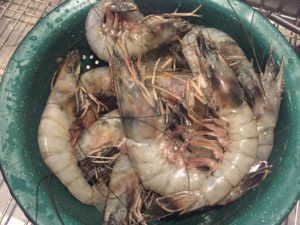
We feasted on delicious wild salmon from Bristol Bay and oysters from Alaska down to Baja. We had fried soft-shell Louisiana shrimp and herring roe captured in a traditional method of submerging hemlock boughs in the bay during the spawn.

The Slow Fish 2018 planning team took on a monumental task to coordinate all of these events in a very short time period ahead of the California salmon season. The small, but very dedicated Slow Food San Francisco board of directors managed countless on-the-ground logistics to ensure everything went smoothly. It was the collective passion of the planners and attendees for the Slow Fish mission to grow the network, share our core values and collaborate on more projects that drove the event’s success.

Chef Matthew Dolen honors winner Chef Aaronette King at the Seafood Throwdown at the Ferry Plaza Farmer’s Market to kick off Slow Fish 2018. The crowd engaged in the process, tasted the food and asked great questions. Credit: Eric Buchanan

We discussed new projects on the horizon, such as a YouTube channel for sharing videos focusing on Slow Fish values, success stories and fisheries-related topics. We also discussed launching a Slow Fish website that will become a destination for those seeking Slow Fish updates, bait boxes to help launch community-based projects like a community supported fishery, Seafood Throwdowns, KNOW FISH Dinners® and more. To enable Slow Fish folks to to ask questions and discuss issues within an informed community, we may launch an online forum. We also discussed an ambitious project to reduce domestic imports from 90% to 50% by 2050. This 50 by 50 project models similar food system-related measures aimed at eating locally (or domestically) produced food.

And so we charted a course for Slow Fish’s future. To most effectively create change, we need to grow the Slow Fish family and foster continued collaboration on future success stories that will help change that massive import dynamic in this country.

And we will.

Stay tuned for Slow Fish 2020.


Top photo: Tyson Rasor of Ecotrust emcees the Know Your Fish Pesce Kucha session. Credit: Eric Buchanan.

All Blog Posts

How I Became a Slow Fish

  • February 28, 2018October 20, 2021
  • by Colles Stowell
Share it!
Share

While planning some events for Slow Fish 2018 (April 14-16 in San Francisco), I wondered how I became steeped in Slow Fish and the idea of seafood sustainability.

I’m a journalist by trade. I started at a small town daily that required rushing to the scene of a fire, car accident or a moose running loose downtown to prove to editors we were at the scene. After 12 years of crappy pay, frayed nerves and some lifetime friendships, I jumped ship and spent a decade writing about hardware and software at a PR agency representing companies like IBM and Nokia.

I learned much in both of those jobs: How to uncover the hidden story, and how to tell it in a fashion that makes sense to a broader audience.

I backed into writing about fisheries and seafood issues after re-vamping the website of a San Diego-based sustainable fisheries apparel company in 2011. The more I learned about the complexities of fisheries policy, market dynamics, climate change and ecological impacts of different harvest and aquaculture methods, the more I wanted to know and share. A New Orleans native, I grew up with fresh local seafood all around me.


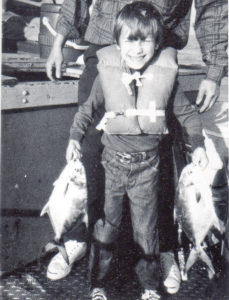
Pampano! It’s what was for dinner.

So in 2015, I started One Fish Foundation, a non-profit whose mission is to bring the sustainable seafood message into communities and classrooms from kindergarten through college.

Some people bristle at “sustainable seafood” as a meaningless cliché. I get it. “Sustainable” has been green-washed to the point of abstraction. And yet, I’ve not come across a term that is as concise and generally widely understood on first reference.

Target audience

The people I’m trying to reach when I’m talking about the perils of industrial finfish aquaculture or climate impacts on different marine species aren’t necessarily those who would react to “sustainable.”

I seek the people who go into their local grocery store and buy frozen, pre-cooked and peeled shrimp without knowing it came from Thailand. I want to talk to those who buy farmed salmon from Chile out of habit because it is cheap, and supposedly “healthy” salmon.

Lobster take-out building. Yes, they walk in and out to feed as they please. It’s just the saps who happen to be in the trap that get caught.

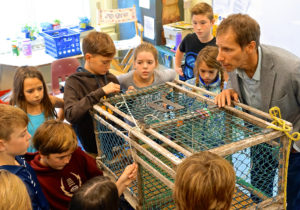
I remember making a poignant connection in one of my first classroom visits. It was a 6th grade geography class I’d visited two weeks before, and we’d talked about why students should care about where, how and by whom their seafood was harvested. We’d rehearsed key questions to ask when they were at a restaurant or grocery store.

At the outset of the follow-up class, one girl said she stopped her mom from ordering shrimp at a restaurant because it was from Vietnam.

I felt like I’d hit a home run.

Breaking the habit

Perhaps that’s at the heart of why I’m so deeply connected with Slow Fish. Most people nod their heads when they learn that 90% of the seafood we eat in this country is imported. But they shudder to learn that a staggering amount of that seafood is coming from countries that pound their products with hormones to make them grow fast or antibiotics to fight disease.

We won’t change that import dynamic without many frank conversations. The Slow Fish mission to ensure everyone has access to good, clean and fair seafood is at the core of these conversations. When I’m talking to a large group of people, I ask them why they think that 90% figure persists. They mention price, policy and complex market dynamics. All of these are key drivers.

Anyone who loves seafood and cares about the resource and the fishermen who harvest it sustainably can be part of the Slow Fish movement. Photo: Kate Masury at Slow Food Nations, Denver, July 2017

But I think another critical factor is habit. Consumer habit drives the equation because people buy what is cheap without checking the provenance of the food they eat. Policy habit also plays a role. There seems to be no urgency to fix policy that allows cheap foreign imports to flood U.S. markets, while a big chunk of domestically harvested seafood goes offshore for astronomical prices.

And the disconnect continues.

The Slow Fish San Francisco mission

Slow Fish aims to change that. While combating inequities in the system that often favor concentrating power and influence in the hands of a few big fishing operations, we also highlight the successes of small-scale operations to bring local, responsibly harvested seafood to their communities and beyond. We encourage people and groups to collaborate on complex issues.

Witness the fierce opposition to the proposed Pebble Mine at the headwaters of the world’s most significant wild salmon run in Bristol Bay, Alaska. But for the persistent collaboration between commercial, recreational and indigenous fishermen, along with advocates and regional politicians, that copper mine would already be up and running. (Check out the We Are Bristol Bay fundraiser dinner at Slow Fish San Francisco on April 15 to eat delicious wild sockeye salmon and talk to the fishermen who may have caught it and learn about why opposing the mine matters.)

Dinner and conversation give attendees the chance to engage in the seafood issues that matter. A similar scene will take place on April 15 in San Francisco at the We are Bristol Bay Dinner.

This is just one of the topics we’ll cover at Slow Fish San Francisco April 14-16. We’ll talk about the graying of the fleet and innovative ways to attract and support more young fishermen into the profession. We’ll talk about women in fisheries, how to support artisanal fisheries and explore a new mission to reduce domestic seafood imports from 90% to 50% by 2050.

And we’ll have an interactive group discussion on Slow Fish 101, discussing what Slow Fish is and does, what its values are, and how we can grow the network. As the Slow Fish network expands, we fuel collaboration and innovation to solve some of the challenges we face in ensuring good, clean and fair seafood for all.

Come join us! Learn about why you should care, and what you can do to help affect positive change. Here is a link to the Slow Fish website where you’ll find tickets, a schedule and more information about why you’ll want to attend.


All Blog Posts

Life Lessons From Rosie’s Gumbo

  • December 4, 2017October 20, 2021
  • by Colles Stowell
Share it!
Share

I remember coming home from school, walking through the gate, past the yew bushes and down the walkway past the open den windows.  The aroma of the trinity (onions, bell peppers and celery) simmering in the roux would grab me. I could smell the sausage, and sometimes even the shrimp. There was something else earthy that I couldn’t identify.

Perhaps it was the filé, or the thyme. Perhaps it was the blend of everything “getting happy” together in the pot.

Or maybe it was just the love. Rosie put a lot of love in her gumbo.

As a child growing up in New Orleans, these were some of the root smells of my evolution. Red beans and rice. Shrimp creole. And Rosie’s gumbo.

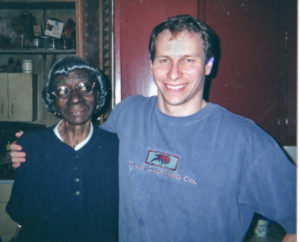
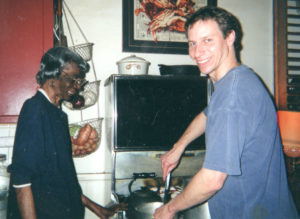
Rosie took care of me when both my parents worked. She also helped my mom around the house. They were best friends. They frequently discussed the latest events on the afternoon soap operas…”The Young and the Restless,” “The Guiding Light”…all that crap. And they confided in each other. They supported each other through some heavy life challenges.

Rosie was the one I’d go to when I was sick. Unlike mom, who had plenty to say on a variety of topics, Rosie was more quiet, saying only what she needed to say, and usually, saying it very directly.

Truth be told, when I was less than 10 years old, I picked out the andouille and smoked sausage, the ham and the shrimp from her gumbo and left the rest. It wasn’t until my teens and early 20s that I truly started to appreciate the magic. It wasn’t until my early 30s that I had the courage to ask her to teach me how to make it.

Chef and apprentice. I must have had a good lesson. No visible spoon marks.

I was not afraid of her teaching me a recipe. My mom was an excellent cook, and she taught me how to follow a recipe. She taught me to have the courage to try new things and learn from my mistakes.

The daunting prospect of trying to learn how to cook without a recipe scared the hell out of me. Rosie cooked by instinct. The “recipe” was in her head, a tradition passed down over generations. And gumbo isn’t quite as simple as mac and cheese.

During the two-plus-year process of learning how to make gumbo, my relationship with Rosie grew more profound and more meaningful than we could have imagined. That’s probably because it was an intense experience requiring no shortage of patience from both of us.

She taught me to use all five senses. But it was the process of trying to create a common language that I could understand that proved most challenging.

“First you make the roux,” she’d say. “Get a spoon of oil and a spoon of flour and stir it in the hot pan.”

“How big a spoon?”

“The wooden spoon in your hand.”

“But how much is in that? What if I don’t have a spoon exactly this size?”

WHACK!

The spoon found the side of my head and I didn’t ask that question again.

“You want the roux to be the color of milk chocolate before you add the trinity.”

“What color of milk chocolate? I like a lot of chocolate in my chocolate milk.”

WHACK!

Stir the roux, boy…

Two years and several such reprimands later, I must have taken enough lumps to start to get the hang of it. She taught me to watch the roux until it was LIGHT milk chocolate color; to listen to the sound of the roux as it set up; to smell the nuttiness as it approached the right stage before adding the trinity. I learned to smell that sweet, earthy smell of the vegetables sweating in the roux. I felt the density of the roux ball as I stirred it to make sure not to burn the flour. After adding the water and stock, I learned to taste it to gauge how much salt and pepper to add. I learned the timing of when to add the sausage, shrimp, and other ingredients.

I remember nervously handing over a bowl that I made entirely on my own for her to judge.

“You done good.”

Graduation

I’ve made gumbo many, many times since my formative learning. Before each time, I thank Rosie for showing me how to do it right. Because of her tutelage, I’m now able to scale my gumbo up or down in volume based on the scope of the audience. I can make it with different ingredients. In October, I made gumbo for a chef friend’s wedding using seafood from the Gulf of Maine. I made a lobster stock, added mussels and clams and lobster, and I smoked a skate wing. I added some phenomenal andouille. It went over well.

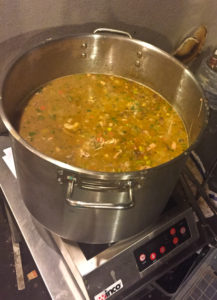
Making roux on an induction burner was nerve racking. What would Rosie think?

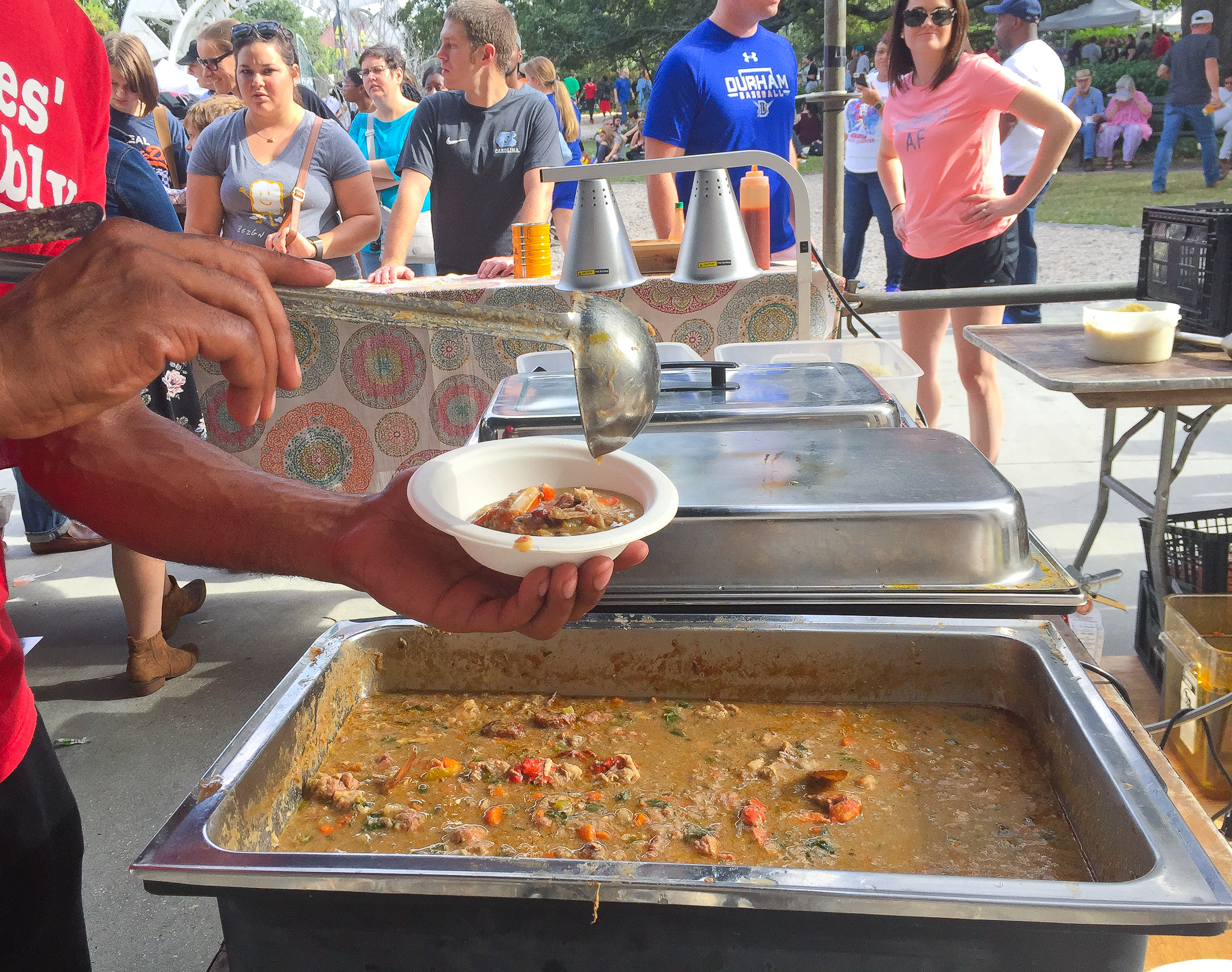
I just recently made more than 90 quarts for the Tremé Creole Gumbo Festival held Nov. 18 and 19 in New Orleans. Dana Honn, colleague, friend and chef/co-owner of Café Carmo in New Orleans invited me down after seeing that I cooked a lot of gumbo at Slow Food Nations in Denver this summer.

Gumbo Fest was a blast. It was exhausting. I think I cooked or helped stage and take down the booth for something like 36 hours over three days. I learned much from Dana and his crew. I learned about what it takes to sell your food. I learned more about what I can do (making gumbo on an induction burner!).

Such a treat to cook with wild caught Gulf of Mexico seafood!

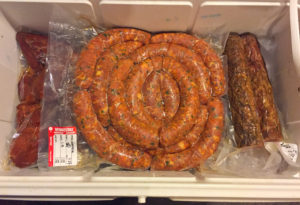
But the highlight for me wasn’t just the end product, or the enthusiastic response from some customers, or the stellar Gulf of Mexico shrimp and crabs from friend Lance Nacio’s Anna Marie Shrimp, or the otherworldly andouille, chaurice and tasso from my friend and pig whisperer Toby Rodriguez.

Got pork? Toby’s products are the best I’ve ever cooked with.

No, the real highlight for me occurred during a panel discussion I was moderating on gumbo heritage and the idea of preserving the tradition of local, sustainable sourcing. On the panel with me were Dana, friend and colleague Gary Granata, who has travelled the world to discover how different people deal with changing waterways, and Ryan Prewitt, chef/partner of the highly acclaimed Pesche Seafood Grill in New Orleans.

We each had a different take on the importance of sourcing your food (whether or not for gumbo) locally from producers you know or from sources you know who take care of their products. We talked about how gumbo is and was a communal event, dating back centuries to West African roots. You don’t cook gumbo for one person. Traditionally, neighbors would bring something to throw into the pot, or something to go with the gumbo.

Toward the end of the discussion, I asked each panelist to talk about his first, most powerful memory of gumbo.

Naturally, I spoke about Rosie. About that smell in the house and the yard. About taking my lumps. About the sense of family around her and her family. About teaching her grandson Gary how to bang on the drums. About the pride I felt in watching him grow and eventually march with one of the best high school bands during Mardi Gras. About the profound sadness of her death in the mid 90s. About the heartbreak of losing track of Gary and his mom Betty after Katrina hit. His home was boarded up with a big X painted on the door by the National Guard.

We tried FEMA. We tried the sheriff’s department. For months I went online checking displaced victims websites. Nothing. We didn’t know if they were alive and had evacuated, … or not.

Just before I’d reached this part of my narrative, a family of four came into the audience and sat down. I mentioned that a month prior to Gumbo Fest, I’d been planning to make gumbo for my chef friend’s wedding, and was thinking about Rosie, as always, and about Gary and his mom, when I got a Facebook message.

It was from Gary.

Fighting to keep my composure in front of the festival audience, I said “Gary, would you please come up here? I just want you all to know that I haven’t seen this person in 20 years, and I hadn’t heard from him until last month.”

We hugged, tears in our eyes, for it had been a long time of not knowing.

It was a seminal moment for both of us for Gary and his family to taste the gumbo his grandmother taught me to make. I often wonder what Rosie would think of my gumbo now that I’ve adapted it to my own particular style.

Gumbo truly is a community event. It brings people together. At the outset of the discussion, I told the audience that for me, the most important ingredient isn’t the roux, or the trinity or okra. (There’s often a vocal battle line drawn between the okra crowd, and the file/roux crowd in Louisiana). It’s love. You’ve got to love the food first. And it’s also important to love the people you’re cooking for. You and they will taste the difference.

This perhaps is the most important lesson I’ve learned as a home cook.

Thanks, mom. Thanks, Rosie.


All Blog Posts

Fishing, Passion and Bad Music

  • June 20, 2017October 20, 2021
  • by Colles Stowell
Share it!
Share

I don’t know if it was Queensryche, Dokken or Whitesnake. Whatever flavor of 80’s hair band, the music was pulverizing my ear drums. As they pulsed laterally, the fluid in my ears splashed up and down every time the bow of the boat jumped six feet and plunged back down on the back side of a wave, punctuated by the incessant hammering of the kick drum in the background.

What were we doing?

I was heading out to the Shoals Marine Laboratory on Appledore Island off the coast of Portsmouth, N.H. to talk with some students from the University of New Hampshire, Cornell University and Carleton College about regional, domestic and global seafood markets, consumer choices, market influences and climate change impacts. The students were participating in a two-week intensive sustainable fisheries course coordinated by N.H. Seagrant. I was riding with Capt. Tim Rider, whose fondness for that particular XM station was amplified by the conditions.

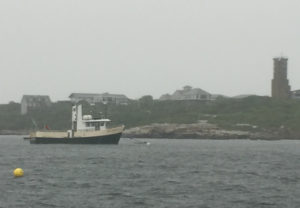
June in New England. Heading to the lab in wind-driven rain, but fortunately out of the six-foot waves … and the music. Photo: Tim Rider

A fisherman’s tale

If you’ve ever attended one of the KNOW FISH dinners, you know Tim is very passionate about what he does: bucking the trend toward high-bycatch harvesting by fishing for groundfish in up to 500 feet of water 80 miles offshore with rod and reel. And he’s not shy about sharing his feelings on current management policies, consolidation of the fleet (forcing small-scale fishermen out) and the need for change.

Perhaps it is this passion and willingness to speak out that has alternately cast him as either a pioneer striving to do the right thing against many odds or a loud-mouthed maverick who refuses to get in line. Perhaps that’s why he’s been lauded by restaurant chefs and consumers for the quality of his product, and vilified – even threatened – by others in the industry who don’t share his views.

That passion, along with a lifelong obsession of fishing and the experiences he’s had trying to survive make for a compelling, if a bit incessant, narrative. He keeps on talking, he says, because he has a lot to say.

The unsuspecting students at the Shoals Marine Laboratory heard stories of being shut down from speaking in New England Fisheries Management Council meetings, excessive and unfounded accusations from law enforcement, and confrontations with other fishermen who don’t like him rocking the boat.

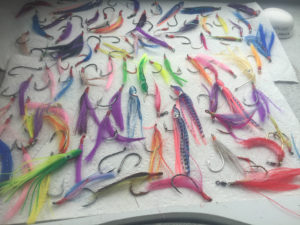
“Bait,” or the tools of the trade.

Struggling against poor policy

He provides a firsthand account of how the current management system has pushed him to the brink of bankruptcy multiple times, even as he’s trying to support his wife and young son and his crew. He talks about the money trail that has played a significant role in dictating fisheries management policy, including controversial catch shares.

Set up to allow fishermen to self-regulate by creating a marketplace for access to different fisheries, catch shares have spawned a money-driven resource grab in which access is bought and sold like stocks. The result is now an unfair system that too often privatizes the resource at the expense of small-scale fishermen who don’t have the money to buy quota or to compete in the limited fisheries allotted to fishermen with no specific quota.

Tim has joined a sector, or group of fishermen with quota, that is primarily “geared” toward fishermen using hooks rather than nets. The hope is to work collectively to promote low-impact fishing and perhaps gain a stronger voice during council meetings.

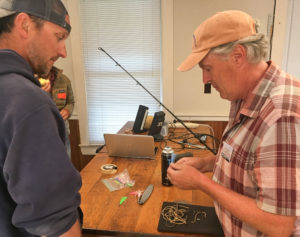
Reviewing new and old fishing gear with Dr. Nathan Hamilton, professor of archaeology at Univ. of Southern Maine. Photo: Owen Nichols

And for as many stories Tim told, the students on Appledore Island were engaged. They asked pertinent and insightful questions. They wanted to know about possible management solutions. They even laughed at some of his jokes.

Most importantly, they took advantage of a special opportunity to speak with a fisherman who gives his blood and sweat 12 days out of 14 (sometimes more than that), leaving the dock at 1 a.m. and returning at 9 p.m. because he believes in what he’s doing.

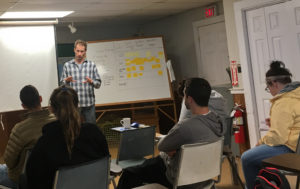
Talking about how consumer habit driven by price and convenience have opened the flood gates to cheap seafood imports. Photo: Owen Nichols

Changing habits

The students also asked smart questions about the big picture of local, national and global seafood dynamics. While Tim pointed to access and quota as two of the biggest issues with fisheries here, I added habit: Policy maker habit in keeping a faulty, skewed system in play; and fishermen and operator habit to own the most quota and to resist change for obvious reasons.

And worse still: Consumer habit. One of the most significant drivers for the amount of imported seafood eaten in the U.S. is consumer choices, dictated largely by price and convenience. We discussed how getting smarter about seafood systems and how to get closer to the domestic source (local fishermen) is crucial to changing that dynamic.

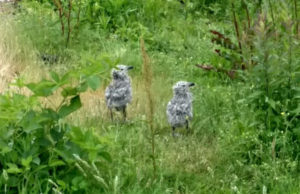
As a annoying as the adults can be, seagull chicks register high on the cute scale. At least we didn’t get attacked by the mamma. Photo: Tim Rider

We also talked about climate change and its impact on everything from native and invasive species to ocean acidification and changing currents. We talked about the need to keep diving into these issues and pursue careers in marine science, climatology, ecology, etc. to help solve some of the complex challenges climate change presents.

Students thanked us for coming and talked about some of the projects they were working on and their planned study focus in college.

Departure, before the fog really set in.

On the ride home, as the grey skies grew darker into dusk and the bow bobbed to the pounding beat of blaring rap music, Tim and I remembered why we took a full day off to plow through some fairly gnarly weather and talk to a handful of college students from across the northeast.


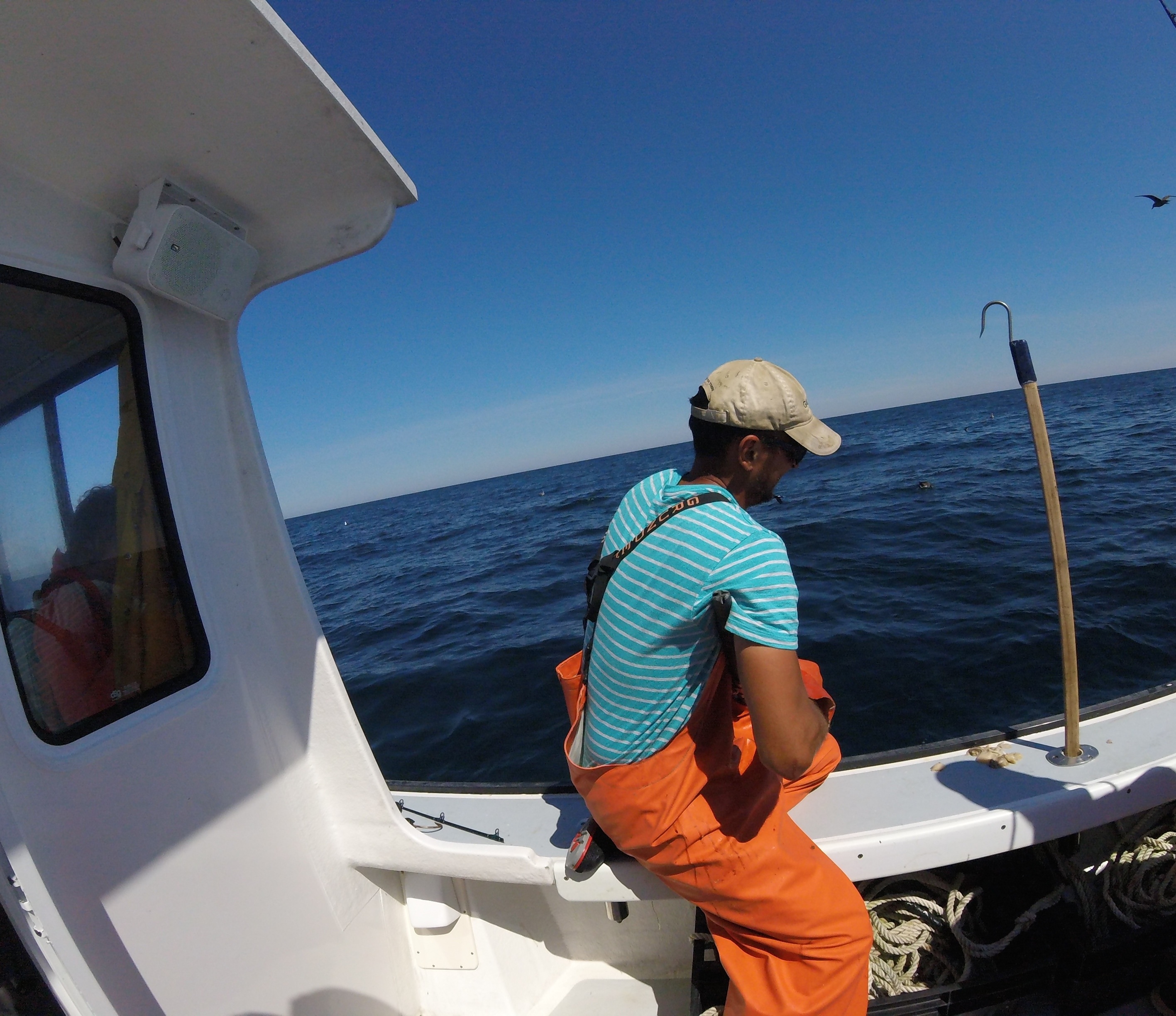
Top photo: Capt. Tim Rider telling fish tales.

All Blog Posts

Day in the Life of a New England Groundfish…

  • September 1, 2016October 20, 2021
  • by Colles Stowell
Share it!
Share

As the last sprays of daylight faded to black, I stepped off the M/V Finlander in Eliot, Maine and tried to get grounded. I was tired. Damn tired. And a bit sore. We’d left the dock at 1 a.m., traveled four hours to the fishing grounds 65 miles out, fished hard for 9 hours with rod and reel and chugged back to port, docking at about 8:30 p.m.

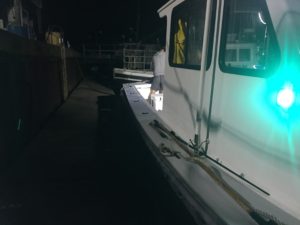
Loading up just after 1 a.m.

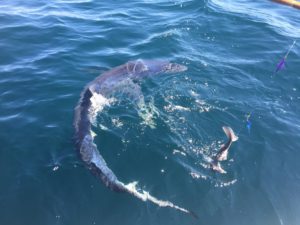
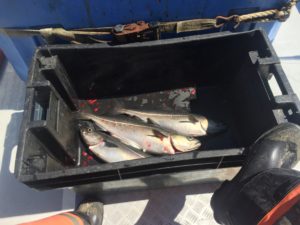
This wasn’t recreational fishing. To get comfortable, I dangled a leg over the gunwale of the 36-foot commercial fishing boat and rested the heavy-duty rod on my leg while jigging a 20-ounce shiny lure and three flies just a foot off the bottom, 400 feet down. When a fish hit, I’d have to crank it all the way up with an industrial-strength reel and hope the 10-foot blue sharks circling the boat wouldn’t steal the fish. Hoist the fish in, measure it after removing the hook, toss it in the tub. Do it again.

Get two fish and you’re likely to be winding 25 lbs or so up 400 feet. POW! A shark hits near the boat and starts smoking line off the reel. The telltale snap two minutes later signals the end of the fight, and you reel up nothing. Time to re-rig. Crank up a couple hundred pounds of fish or so in a few hours, and you’re going to feel it. At least I did. I managed to get past the queasiness and avoid any embarrassment on deck. Any concept of a toilet was sacrificed for an extra bunk to “conserve” some energy on the long rides. The head was a 5-gallon bucket.

It was a long day.

So I had one question for Capt. Tim Rider before I trekked back to my car. “You do this every day?”

Narrow miss
Narrow miss on a dogfish. Check out the video of five sharks circling the boat.

“Just about,” he said, as he cleaned the cabin for the next trip. He’d decided not to fish the next day. We’d brought back 800 lbs. of pollock and haddock, and he would need to drive it to the auction in Portland. (He often sells his catch directly to chefs who share the same beliefs on protecting the resource.) He hadn’t seen much of his family in the past two weeks, having slept in his own bed only two nights in 14 days. The rest of the time he was on the boat.

Paying the price

Fighting to stay awake on I-95 on the way home, I thought about that commitment. Fishing courses through Rider’s veins. It would have to. Otherwise, it sure would be a hell of a lot of work for not a lot of reward. This is particularly true because Rider is part of the Common Pool, a fisheries policy that often forces fishermen like Rider to fish way out because they didn’t have the capital, timing, luck or patience to get the permit to fish the Catch Share sectors. Catch shares are another fisheries policy that operates like a cap-and- trade quota system, often favoring those with the most capital, which can mean access to more desirable fishing grounds.

Quality control Step 1. Bleed the fish.

Currently, the outer edge of where Common Pool fishermen are allowed to fish fluctuates seasonally from 18 to 80 miles out. The difference means a couple of hours of travel and probably $300 or so in fuel, tackle and ice.

But the difference runs deeper than that.

When the Maine Department of Marine Resources distributed NOAA funds to offset losses from the groundfish (read cod) disaster relief last year, the money went to fishermen with quota who had the largest landings of groundfish. Those in the common pool were not invited to the table, and therefore, did not receive any disaster relief.

Many ironies exist in fisheries management. And this is one of the starkest examples. Those most hurt by the reduced fishing income were overlooked when it came time to provide financial support. Those like Rider who are so passionate about protecting the fishery that they jig fish in up to 500 feet of water to reduce bycatch seemingly face steeper hurdles than larger scale trawl fishermen, whose bycatch is much more significant.

Strategizing the next fishing stop.

Sector inequality

It is easy to say this is purely a situation of the haves and have-nots. But fisheries management is much more complex than that. Current New England groundfish regulations were initially established in 2010 on the principal that fishermen would more equitably manage and effectively safeguard the resource by creating a free-market environment. The total allowable catch of groundfish such as cod, haddock, Pollock, flounder and other species was divided and allocated to groups of fishermen in sectors, or harvesting cooperatives, based on who had the largest landings between 1995-2005. Fishermen purchased permits that allowed them to fish for certain species in certain areas within the sector during certain seasons. Under this Catch Share system, they are allowed to continue catching fish during the season until they reach the quota limit for each species.

http://qkl.fa0.mwp.accessdomain.com/wp-content/uploads/2016/08/cabin-sound.mp4

The Finlander’s “purr”…

Unfortunately the Catch Share model overlooks a fundamental truth about fisheries economics: If financial resources determines access, then those with the most financial resources will have the most access. And so, an inequitable system was born and small-scale fishermen like Rider are squeezed … hard. Large-scale operators with the resources are encouraged by the very nature of the “get big or get out” system to grow and gobble up more quota, potentially leading to the type of abuses that led to the arrest of the largest distributor in New England last February.  Carlos Rafael’s arrest underscores another truth about the current system: the bigger players don’t necessarily think in terms of good stewardship.

Ocean classroom

Which brings me back to the reason I wanted to go out with Tim for what was pre-ordained to be a very full day. He’d tried to convince me soon after we passed the Isles of Shoals on the way out under a half moon sky. “Colles. I’m not kidding. Get some sleep. It’s a long @#$%&*! day. You’re going to need it.”

The Finlander heads home. Arrived at dock at 8:30 p.m.

I wanted a glimpse, however brief, of what it’s like to be a New England groundfish fisherman, passionate about the work and the resource, and riding the anxiety of an ever-changing fishery with continually tightening restrictions and razor-thin margins. Debt. Changing ecosystems, but slow-to-change consumer palettes. Perpetually bone tired, fueled on adrenaline and Monster drinks (not me) and taking in what the ocean has to offer: whether it be a full hold to bring back to the dock, un-forecasted six-foot seas, a tuna crashing bait or a giant ocean sunfish lazily cruising the surface.

I’ll think of that experience every time I stand in front of a group of people in a classroom or a restaurant to discuss what sustainable seafood means.


Check out the latest news updates about Capt. Tim Rider and the M/V Finlander crew at New England Fishmonger’s Facebook page. There, you’ll see some of the Seacoast restaurants the Finlander supplies.

Top photo: Capt. Tim Rider tries … unsuccessfully … to finagle his gear back from a blue shark.

All Blog Posts

Going Home to Nature

  • December 1, 2015October 20, 2021
  • by Colles Stowell
Share it!
Share

I have many things to be thankful for, and I reflect on them with more focus this time of year: my loving wife, my imaginative daughter, close family and friends, a roof over our heads and clean water, to be sure.

A strong bond with Nature is also on that list. Countless hours and days on the water or in the woods with my dad taught me to drink in the sights and sounds of fish swimming, birds flying, frogs croaking, deer grazing, bugs buzzing, etc. I’ve learned to accept what Nature has to offer.

I was reminded of this earlier this month when I flew with my cousin from New England back home to New Orleans to fish for bull red drum in the Mississippi River delta. Since graduating from high school in 1984, I’ve done very little fishing in the waters where I grew up. My dad and I used to fish bayous around Lake Borgne and Lake Pontchartrain, and sometimes we drove down to Venice or Empire to go deep sea fishing.

The excitement was palpable as we left the dock in those days, knowing that in those waters in and around the delta, whether near oil rigs or out in the open, we could catch a wide variety of species. Grouper, snapper, jacks, king mackerel, pompano, sharks. You name it. The Gulf of Mexico had that big of a bounty.

I wondered how things had changed a couple of weeks ago as we stepped onto the Capt. Travis Holeman’s boat heading out of Venice. Several hurricanes, including Katrina, the oil spill and countless other factors had conspired to change the delta dramatically since I’d last been there.

I’d read that the coast is losing up to 30 square miles a year of shoreline, and the problem could get worse as sea levels rise. With 10,000 miles or more of canals dug out of the delta, protective freshwater marshes are being overrun with saltwater that kills the plants and weakens the soil.

Regardless, the biomass in Southeast La. is significant. Even on windy overcast days with fronts that drop the temperature by 10 degrees, marine and avian life seems to bubble over. Multiple shrimp and pogie boats worked offshore, bringing in tons of seafood. The pogies jumped out of the water, often creating enough of a disturbance to entice 20 lb. redfish off the bottom. Pelicans slammed into the water and came up gulping oily mouthfuls of protein. The terns and gulls also worked the water, especially marauding the trail of bait and shrimp left by the shrimp boats.

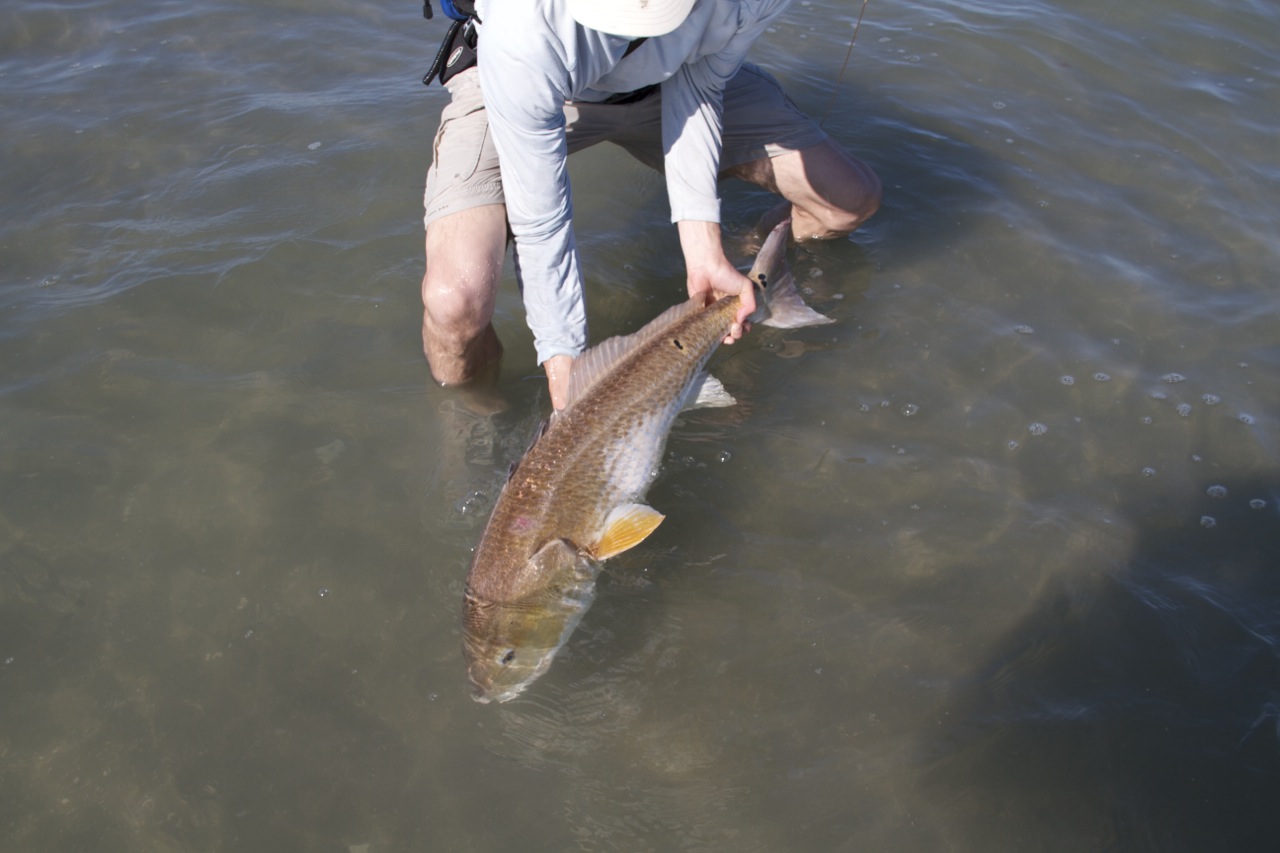
We caught and released several fish ranging from 12 to 30 lbs. We saw sharks and dolphins work the shoreline as giant jacks darted in close to shore to eat, then disappear. We saw how quickly conditions could change out there, based on wind, atmospheric pressure and water clarity spilling out the river, particularly after heavy rains in states up north.Venice grimace

The bottom changes constantly, and even “current” NOAA maps are out of date because lagoons, islands, ponds and other geographic features disappear daily.

That the delta has changed significantly since the last time I was there was evident. That it will continue to change as significantly remains to be seen. But indications are that the coastline will continue to pull back as the ocean gobbles up the fragile, yet protective marshes that are critical nurseries for a variety of important species. The delta is sinking as some scientists predict the Gulf of Mexico could rise about 4.5 feet by the end of the century.

I can only hope the rich biomass can adapt with the coming changes … because it is a special place, unique in its diversity and scope, that holds a strong connection to my past, and the love I’ve always had for Nature.

Recent Posts

  • Hurricane Ida wreaks havoc on Louisiana’s seafood industry
  • EPA Should Use Clean Water Act To Kill Zombie Mine
  • Slow Fish 2021: Relationship Matters
  • Faith, Façades, and Futility
  • Pebble Permit Paused: Politics at Play

Archives

  • September 2021
  • August 2021
  • April 2021
  • December 2020
  • August 2020
  • June 2020
  • February 2020
  • December 2019
  • November 2019
  • October 2019
  • July 2019
  • May 2019
  • April 2019
  • March 2019
  • January 2019
  • December 2018
  • November 2018
  • June 2018
  • May 2018
  • March 2018
  • February 2018
  • January 2018
  • December 2017
  • November 2017
  • October 2017
  • September 2017
  • August 2017
  • July 2017
  • June 2017
  • May 2017
  • April 2017
  • March 2017
  • January 2017
  • December 2016
  • November 2016
  • October 2016
  • September 2016
  • August 2016
  • July 2016
  • June 2016
  • May 2016
  • April 2016
  • March 2016
  • February 2016
  • January 2016
  • December 2015
  • November 2015
  • October 2015
  • September 2015
  • July 2015
  • June 2015
  • May 2015
  • April 2015
  • March 2015
  • February 2015
  • January 2015
Theme by Colorlib Powered by WordPress