Skip to content
One Fish Foundation
  • Blog
    • Aquaculture
    • Education
    • Environment
    • Policy
    • Wild Harvest
    • Fish Tales
  • About
    • About One Fish
    • About Colles Stowell
  • Education
    • Elementary School
    • Middle School
    • High School
  • KNOW FISH Dinners®
  • Resources
    • One Fish Podcast
    • One Fish Foundation in the news
    • The 7 C’s of Sustainable Seafood
    • Newsletter Archive
    • Recipes
      • Skate with Capers and Butter — Chef Rizwan Ahmed
      • Grandma Davis’ Fish Chowder — Jane Almeida
      • Ginger Garlic Tamari Scallops — Colles Stowell
      • Fish Stock — Evan Mallett
      • Mussels San Remo — Chef Rob Martin
      • Salted Pollock Croquettes – Chef Mark Segal
  • Connect
    • Contact OneFish
    • Social
      • Instagram
      • Facebook
      • Twitter
All Blog Posts

Judge Makes Codfather Offer He Can’t Refuse: 46 Months…

  • September 26, 2017October 20, 2021
  • by Colles Stowell
Share it!
Share

New Bedford fishing kingpin Carlos Rafael was sentenced to 46 months in prison and ordered to pay $200,000 in fines yesterday after pleading guilty to fraudulently mislabeling fish and sending hundreds of thousands of dollars in cash out of the country. He must also pay $108,929 restitution to the U.S. Treasury.

Rafael has become a divisive flashpoint in New England fisheries discussions as activists and smaller scale fishermen have pointed to his case as a glaring example of what’s wrong with much of the current groundfish management system. In court yesterday, his attorney read a statement in which Rafael claimed he essentially committed the crimes he was accused of to benefit his employees, and that it was the stupidest thing he ever did.

Judge William Young wasn’t buying it. “This was not stupid. This was corrupt. This was a corrupt course of action from start to finish,” Young said to Rafael. “… (It was) designed to benefit you. To line your pockets. That’s what it was, and that’s why the court has sentenced you as it has.”

Rafael was arrested a year and half ago after boasting about skirting federal fisheries laws and hiding cash in offshore banks to undercover Internal Revenue Service agents posing as Russian mafia. At the time, he was running the East Coast’s largest fishing operation, with more than 40 fishing vessels and a couple of on-shore processing centers.

A tall tale

How Carlos Seafood got to that point is a story of greed, capitalism and a knack for taking advantage of a flawed management system. The predominant regulation governing New England groundfish is catch shares, which treat access to fishing areas like a market commodity to be traded like stocks, ultimately leading to fleet consolidation. This consolidation raises the cost of doing business so high that many small-scale fishermen are forced out of business.

In Rafael’s case, he not only gobbled up quota and permits, he also controlled a processing facility in New Bedford. Mislabeling fish became much easier when he controlled the captains and crew on the water, and people in the processing plant.

Now, he will serve nearly four years in prison, followed by three years of supervised release. Judge Young also banished him from having anything to do with commercial fishing during his supervised release … which amounts to nearly seven years out of the business.

The underlying issue

Case closed? Not quite. The larger question now is what happens to Rafael’s assets. What happens to the quota he acquired and how will that decision affect regional fisheries markets and fishermen?

The answer to that brings us back to the ever louder claims that the current quota system enabled Carlos Rafael’s rise. What several fishermen and activists have called for is to liquidate the permits and make them available to a broader range of fishermen throughout New England, not just New Bedford. The mayor of New Bedford and several fishermen there said the permits should remain local. Mass. Governor Charlie Baker wants them to stay in the state. At stake are the 13 vessels and the permits that were directly linked to the fraudulent activities, estimated in court documents to be between $27 million and $30 million.

One of the options mentioned in yesterday’s sentencing was to sell all of Rafael’s assets to Richard and Raymond Canastra, the brothers who own and operate the Whaling City Seafood Display Auction as well as the Boston Seafood Display auction. Some fishermen and activists oppose this possibility because Rafael has ties to the Canastras, and because they fear it would result in another vertically integrated entity controlling a large amount of quota. Read: Another version of the Codfather.

The judge essentially said that it is not exclusively up to him to determine allocation of quota, which is governed by NOAA. The hope is NOAA will take the long view on the situation and make a recommendation that benefits a wider swath of fishermen and their communities. In the end, the best decision would also benefit the resource by turning over control of those permits to fishermen who are more likely to obey the law.


For additional reading:

Northwest Atlantic Marine Alliance victim impact statement delivered at sentencing.

South Coast Today news story.

Boston Globe news story

Politico in-depth analysis of the evolution of Carlos Rafael as the Codfather.

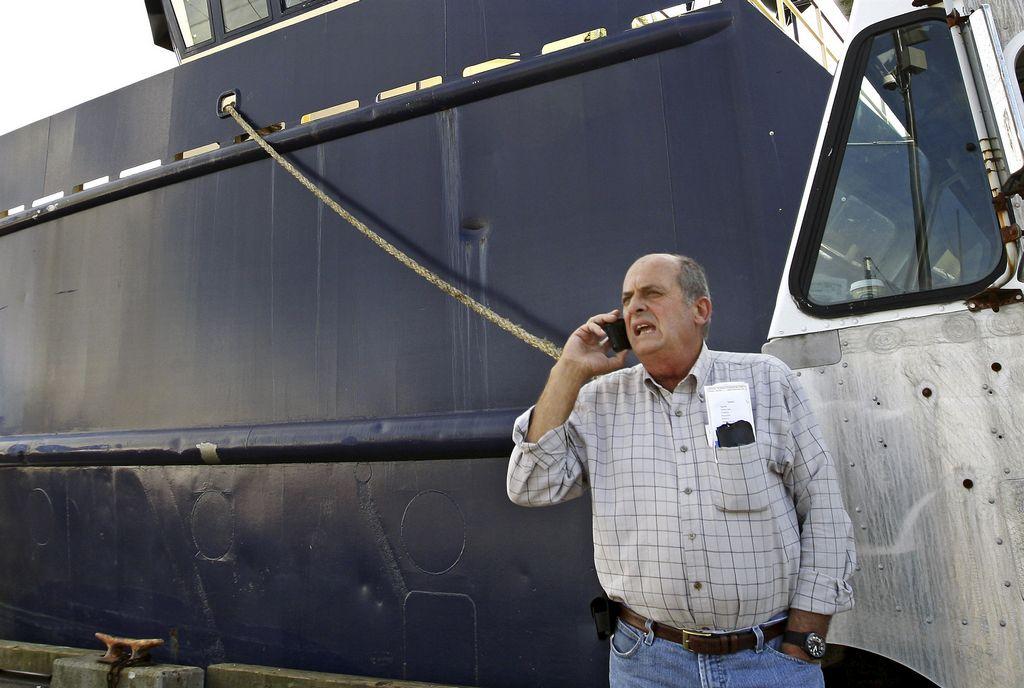
Photo credit: Peter Pereira/Standard-Times File/SCMG
All Blog Posts

One Fish Foundation 2017

  • January 8, 2017October 20, 2021
  • by Colles Stowell
Share it!
Share

Happy New Year from One Fish Foundation!

2016 was a year of continued growth, broadened horizons, hands-on experiences, shared stories and several firsts. One Fish remains committed to educating students, parents and communities about why they should care where their seafood comes from, how it was caught and by whom.

Here are a few of the highlights from the past year, including some important firsts that set a precedent for spreading the sustainable seafood message in communities.

  1. The first sustainable seafood dinner was staged at Rosemont Market in Portland in June, bringing interested residents to the historic bakery to have a frank, thoughtful discussion about myriad factors affecting seafood choices.
  2. The KNOW FISH dinners hosted at When Pigs Fly in Kittery, Me. and Black Trumpet in Portsmouth, NH. extended the discussion of the June event to include fishermen, chefs and fishmongers talking about different links in the seafood supply chain. Attendees learned about one fisherman’s unfailing drive to catch groundfish such as haddock and pollock by hand, on rod and reel, up to 80 miles offshore to reduce bycatch and preserve the species.
  3. One Fish Foundation expanded its educational reach into New Hampshire schools.
  4. One Fish Foundation has been featured in the media:
    1. CBSNews.com
    2. The Portland Press Herald
    3. The Coastal Table
  5. One Fish Foundation helped plan and attended Slow Fish 2016 in New Orleans, an international event aimed at sharing fisheries stories from around the world and addressing some of the challenges to fishermen and seafood sustainability.

We have set some ambitious goals for 2017.

  1. We will hire a social media communications coordinator to expand One Fish Foundation’s presence on Facebook, Instagram, and Twitter.
  2. We will extend the website to include more content for students.
  3. We will grow our footprint in Maine, New Hampshire and Massachusetts.
  4. We will host more KNOW FISH dinners along the coast, inviting more fishermen and chefs to share stories about seafood sustainability and offer tips for consumers.
  5. We will launch a newsletter that brings the latest news and events regarding sustainable seafood and what’s going on at One Fish Foundation.
  6. Hats and T-shirts sporting the One Fish logo will be available online, proceeds directed toward the foundation.
  7. One Fish will attend key conferences focused on the front edge of seafood sustainability issues, including climate change impacts, policy changes, new science, community involvement, etc.

It’s going to be an exciting year. Through the blog, the KNOW FISH dinners and in the classroom, we’ve found one inescapable truth: change happens one conversation at a time. The more people we can reach with the message about learning where their seafood comes from, the more we can improve the resource, and the lives of the fishermen who depend on it.

Come join us!

All Blog Posts

Know Fish: A Dinner Series of Food, Fun and…

  • September 28, 2016October 20, 2021
  • by Colles Stowell
Share it!
Share

For most people, seafood is simply a protein either on a menu, laid across some ice in a display case or pre-packaged in a box at a supermarket. There’s typically no story about where and how the fish was caught, much less by whom. Consumers have little or no idea of how far the fish has traveled, nor whether the fish and shellfish are abundant, stressed or fed antibiotics and hormones at an industrial aquaculture site.

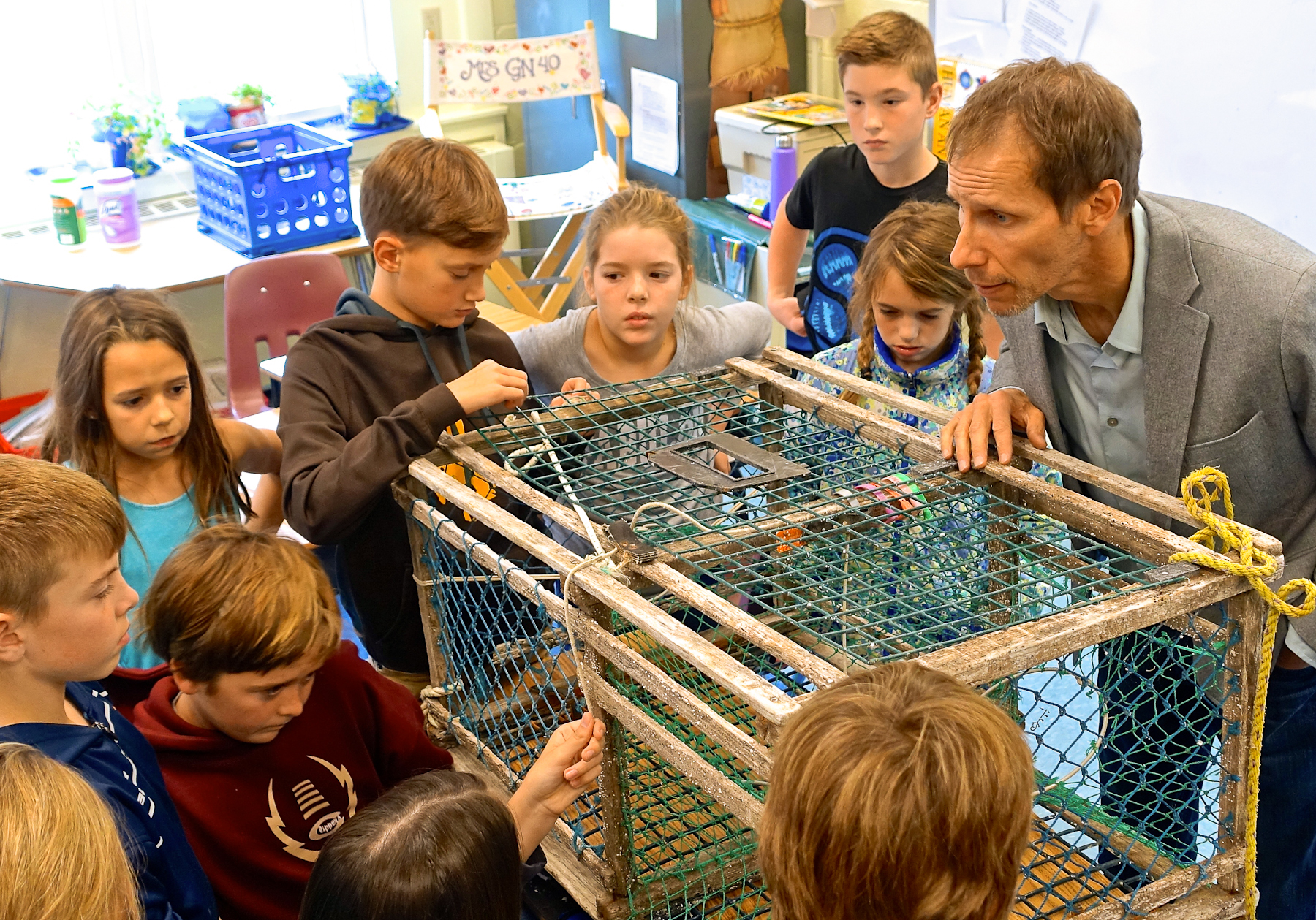
One Fish Foundation arose from a wish to spread the word about our relationship to oceans and specifically to seafood. This means bringing the story behind the seafood we eat into classrooms. I’ll lug in a bunch of fishing gear to talk about different harvest methods and their impact on the resource and marine ecosystems. I’ll throw out eye-popping stats to illustrate how skewed our domestic seafood consumption picture is.

Spreading the word also means going into communities and having conversations with people who care about the environment and want to learn more about the food they eat. That’s what the Know Fish Dinner Series is about. For the past five months, I’ve worked with Seacoast chefs who are passionate about sourcing sustainably harvested seafood; activists who speak out on issues like fisheries management fairness and climate change; fishmongers selling locally abundant, underutilized species; and one fisherman who is bucking the trend toward consolidation, resource depletion and massive bycatch.

These dinners will be a fun, interactive dialogue about why we should be concerned that 90% of the seafood consumed in the U.S. is imported. We’ll eat deliciously prepared, sustainable groundfish caught on rod and reel by Capt. Tim Rider out of Eliot, Me. We’ll discuss why supporting local fishing communities is important and how our seafood choices make a difference: to the resource, the oceans and the fishermen who work them

We’ll have some fun with trivia that sheds light on the resource, the supply chain, marine ecosystems, aquaculture, invasive species, climate change impacts and more. We’ll discuss these topics, ask and answer questions, and bring more of the story to life.

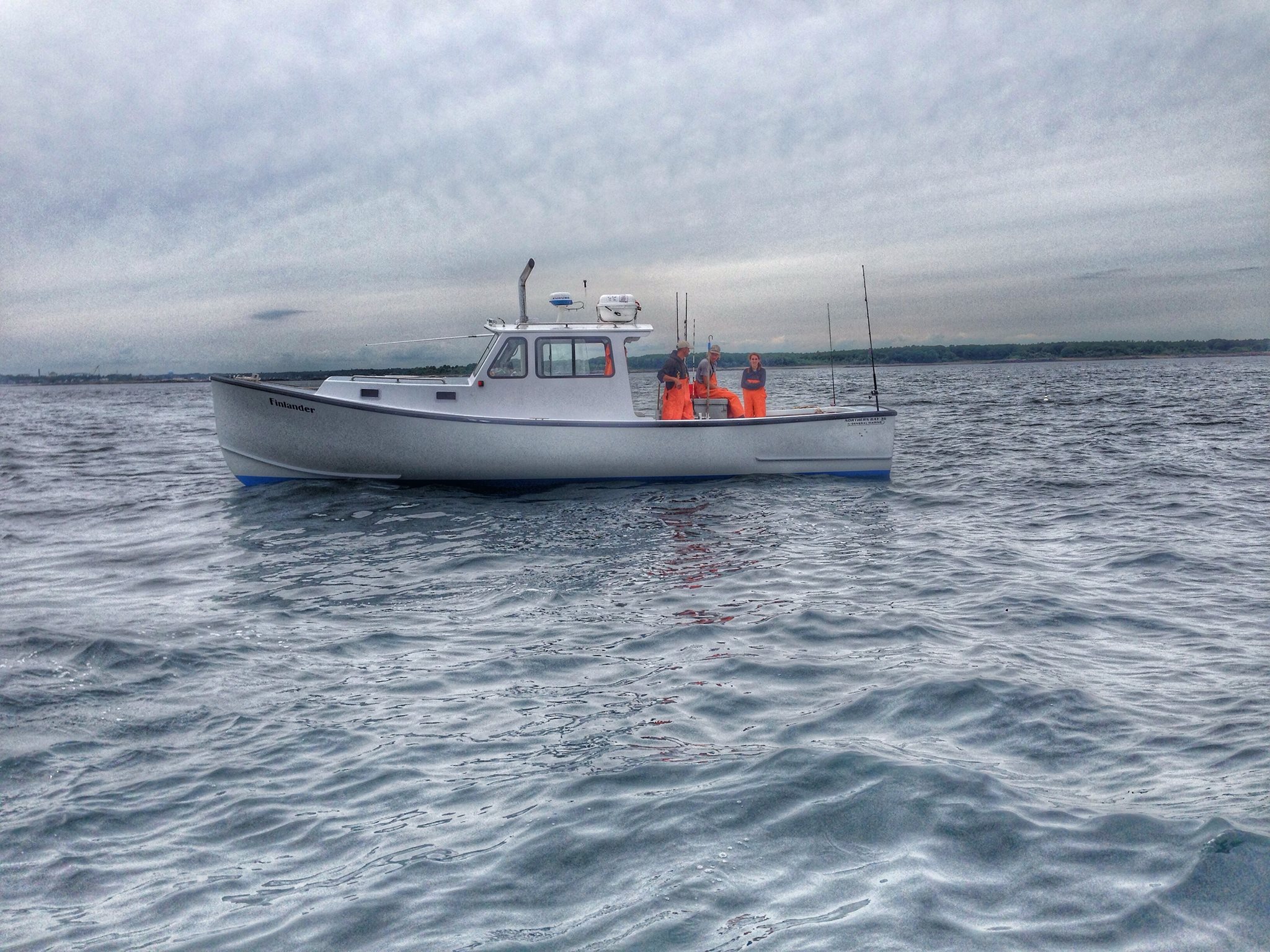
This will be your chance to talk to Capt. Rider about why he spends 18 hours a day or more on the water, fishing with rod and reel in a fishery dominated by trawl nets.

You’ll have the opportunity to talk with chefs Evan Mallett of Black Trumpet, Rob Martin of When Pigs Fly and Brendan Vesey of Joinery Restaurant (Brendan will be cooking with Evan at the Black Trumpet event) about how they choose what seafood to put on the menu.

You’ll be able to ask fishmongers Spencer Montgomery of Dole and Bailey and Amanda Parks of New England Fishmongers about the products they market and handle, and some of the discussions they’ve had around underutilized species.

Got questions about why many small-scale fishermen are struggling? Follow up with one of the event collaborators, Brett Tolley, the community organizer and policy advocate for Northwest Atlantic Marine Alliance. He’s been at the forefront of a campaign to revise current fisheries laws that are consolidating the fleet and squeezing out fishermen like Capt. Rider.

(And, I’ll be on hand to talk about sparking student interest in seafood sustainability, and the effectiveness of waving a dead fish at 6th graders).

This is the team that has volunteered many hours to help organize these events. Everyone brings a great energy and passion to the dinners on Oct. 13 at When Pigs Fly and Oct. 27 at Black Trumpet.

So come out and eat some fabulous seafood, listen to some cool stories, test your seafood trivia, and most of all, get to know your fisherman, your fishmonger, your chefs, a couple of evangelists and your FISH.

Get tickets via the links below.

I hope to see you there!

Oct. 13: When Pigs Fly

Oct. 27: Black Trumpet


All Blog Posts

Fisheries Managers Open Door to Privatizing the Ocean

  • October 2, 2015October 20, 2021
  • by Colles Stowell
Share it!
Share

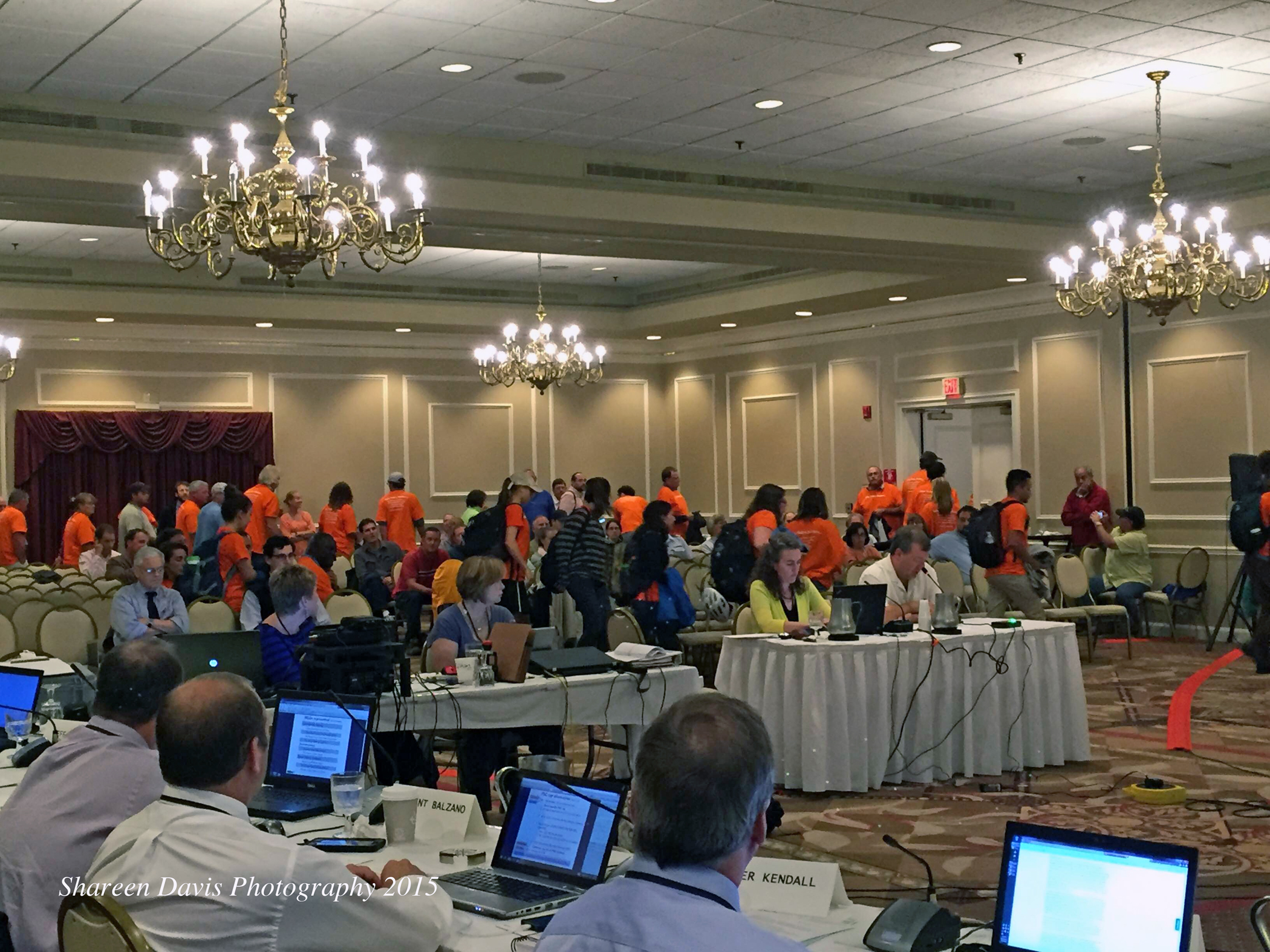
I’m too often reminded of why politics is pure frustration. Forget about presidential elections (go ahead, try), I’m talking about down-in-the-dirt politics — the process where elected officials discuss public policies ad nauseum. As a reporter, I used to marvel at how often those discussions and votes flew in the face of public consensus. Read more “Fisheries Managers Open Door to Privatizing the Ocean” →

All Blog Posts

NOAA Mandated Observer Costs a Bad Precedent

  • September 8, 2015October 20, 2021
  • by Colles Stowell
Share it!
Share

Imagine two months after tax day you get a notice in the mail that the IRS wants to audit you. In order to prove that you did everything right, you also have to pay the IRS $700 for this unpleasant process.

I guess that’s why many fishermen along U.S. coasts are pretty ticked at National Oceanic and Atmospheric Administration (NOAA) for demanding that fishermen now pay to have federally mandated observers on their boats. Many fear that the per-trip cost of $710 will cripple small fishermen already saddled with boat debt, fuel costs, shifting markets and insurance. Read more “NOAA Mandated Observer Costs a Bad Precedent” →

Recent Posts

  • Hurricane Ida wreaks havoc on Louisiana’s seafood industry
  • EPA Should Use Clean Water Act To Kill Zombie Mine
  • Slow Fish 2021: Relationship Matters
  • Faith, Façades, and Futility
  • Pebble Permit Paused: Politics at Play

Archives

  • September 2021
  • August 2021
  • April 2021
  • December 2020
  • August 2020
  • June 2020
  • February 2020
  • December 2019
  • November 2019
  • October 2019
  • July 2019
  • May 2019
  • April 2019
  • March 2019
  • January 2019
  • December 2018
  • November 2018
  • June 2018
  • May 2018
  • March 2018
  • February 2018
  • January 2018
  • December 2017
  • November 2017
  • October 2017
  • September 2017
  • August 2017
  • July 2017
  • June 2017
  • May 2017
  • April 2017
  • March 2017
  • January 2017
  • December 2016
  • November 2016
  • October 2016
  • September 2016
  • August 2016
  • July 2016
  • June 2016
  • May 2016
  • April 2016
  • March 2016
  • February 2016
  • January 2016
  • December 2015
  • November 2015
  • October 2015
  • September 2015
  • July 2015
  • June 2015
  • May 2015
  • April 2015
  • March 2015
  • February 2015
  • January 2015
Theme by Colorlib Powered by WordPress