Skip to content
One Fish Foundation
  • Blog
    • Aquaculture
    • Education
    • Environment
    • Policy
    • Wild Harvest
    • Fish Tales
  • About
    • About One Fish
    • About Colles Stowell
  • Education
    • Elementary School
    • Middle School
    • High School
  • KNOW FISH Dinners®
  • Resources
    • One Fish Podcast
    • One Fish Foundation in the news
    • The 7 C’s of Sustainable Seafood
    • Newsletter Archive
    • Recipes
      • Skate with Capers and Butter — Chef Rizwan Ahmed
      • Grandma Davis’ Fish Chowder — Jane Almeida
      • Ginger Garlic Tamari Scallops — Colles Stowell
      • Fish Stock — Evan Mallett
      • Mussels San Remo — Chef Rob Martin
      • Salted Pollock Croquettes – Chef Mark Segal
  • Connect
    • Contact OneFish
    • Social
      • Instagram
      • Facebook
      • Twitter
All Blog Posts

Slow Fish 2018: Telling tales

  • May 9, 2018October 20, 2021
  • by Colles Stowell
Share it!
Share

Slow Fish is making a difference.

Think of it as a collaboration of fish harvesters, scientists, chefs, students, food-lovers and activists around the world working toward one goal: good, clean fair seafood for all. This was on display throughout the three-day Slow Fish 2018 event in San Francisco April 14-16.
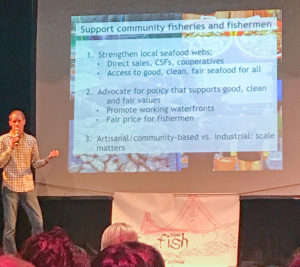
Setting the tone with the Slow Fish 101 presentation. Credit: Lance Nacio

Some of these successes were writ large on the main screen on the first morning of content programming in the Slow Fish 101 presentation.

  • Melanie Brown, a set net fish harvester from Bristol Bay, Alaska, spoke of indigenous ties to the land, the water and the resource. She spoke passionately about how wild salmon runs have sustained her family over time, and why that way of life is under threat from the proposed Pebble Mine. She also spoke of the coalition of disparate groups not normally siding with one another that oppose the mine: indigenous tribes, commercial fish harvesters, recreational fishing groups, environmental activists and politicians among others.
  • Jordyn Kastlunger reminded everyone of the importance of family connections and supporting the youth movement in fisheries as she described the trajectory of the Tuna Harbor Dockside Market in San Diego. Born of a coordinated effort of fishermen, food policy activists and lawmakers, the market features fisher folk docking on the pier and selling directly to customers. About 500 customers come every Saturday to buy about 12,500 pounds of locally harvested seafood.
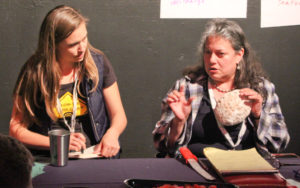
    Jacquelyn Ross tells the story of abalone from Bodega Bay at the World Cafe. Credit: Eric Buchanan
  • Jacquelyn Ross of the Southern Pomo/Coast Miwok tribes spoke about her indigenous fishing lineage along Bodega Bay, hand harvesting abalone, and witnessing the changes to the fishery wrought by temperature, current and acidification. She too spoke of family love and respect for the resource, the land and the water and the importance of sharing those stories in the hopes that others will appreciate those connections to natural resources.
  • Paula Barbeito came from Italy to describe the work of Slow Fish International and highlight the story of the Thorupstrand Fishing Guild in Denmark. Several years ago, fishermen in the community of Thorupstrand pooled their resources to buy quota so they could provide access to the fishery without being overrun by industrial operations. The guild is a reminder of how fishermen can self-identify and protect their access by working together.
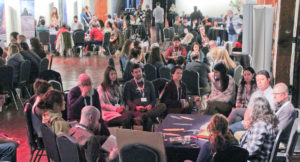
    World Cafe action. Just some of the discussions where things happen. Credit: Eric Buchanan

A parade of perspectives

These compelling narratives were just a few among many shared over the weekend. We heard from longtime fish harvester and policy activist Linda Behnken, who has fished commercially in the Gulf of Alaska and Bering Sea for over 30 years. She has drawn on that experience at the helm of her boat as she helped shape policy to protect small-scale fishing as a member of the North Pacific Fishery Management Council.

We also heard from Anne Mosness, who like Linda, has spent decades at the helm and in the trenches battling industrial scale operations. Anne described her longstanding campaigns against industrial aquaculture and genetically engineered salmon to the discussion, as well as the need to honor women’s voices and rights in fishing.

Filmmaker Mark Titus talked about his upcoming feature, The Wild, which shines a bright spotlight on the world’s largest wild sockeye salmon run in Bristol Bay, and what’s at stake in the battle against the Pebble Mine.
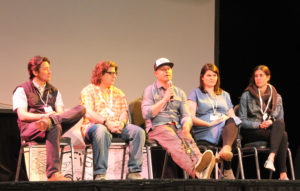
Know Your Supply Chain: Kenny Belov talks about choosing and selling responsibly harvested seafood. Left to right: Alan Lovewell, Real Good Fish; Joe Falcone, FishLine; Kenny; Anna Larsen, Dock to Dish; Jordyn Kastlunger, Tuna Harbor Dockside Market. Credit: Eric Buchanan

Kenny Belov talked about his mission in opening Fish. Restaurant in Sausalito and the TwoXSea sustainable seafood distribution company to provide responsibly harvested, abundant species to customers. Minimizing bycatch and other ecological impacts are critical factors in determining which fish harvesters he will work with.
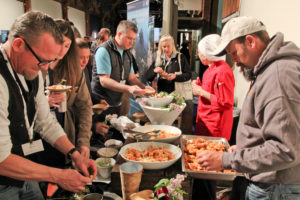
Lance Nacio’s (right in hat) fried soft shell shrimp were very, very popular. Credit: Eric Buchanan

We heard from a broad range of seafood perspectives. Lance Nacio spoke about investing in new technologies such as the plate freezers used to individually quick freeze fresh caught shrimp to preserve the out-of-the-water freshness for shipping around the country. Several oyster growers provided insight on their operations and the myriad factors that go into a successful, delicious oyster harvest. Jack Crofts brought his energy and entrepreneurial spirit to the event, trying to raise visibility and money for this mobile oyster bar, called the Oyster Barrow. Lucas Raymond, a trawl fisherman from New Hampshire, also represented the youth movement at the event.
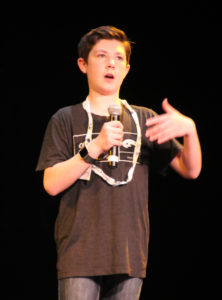
Young entrepreneur Jack Crofts (he’s 12 going on 13!) wows the crowd with his energy and enthusiasm. Credit: Eric Buchanan

We heard from chefs talking about smart sourcing, as well from seaweed growers like Amanda Swinimer, who described her journey harvesting, by hand, edible wild seaweeds for 17 years for her Dakini Tidal Wilds. Arielle Moinester talked about launching a company that promotes eating invasive species such as Asian Carp. Her GoWild Foods has made “The Silver Skipper” (aka asian carp) the poster child for managing an ecological problem in America’s rivers by eating it.
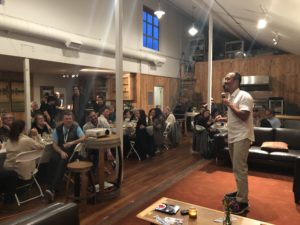
Christopher Wang describes his connection to fishing for salmon in Bristol Bay and why he started The Gypsy Fish Company as attendees listened at the We Are Bristol Bay Dinner.

Ideas, food and fun

More than 150 people from as far away as Italy, Maine, Alaska, Louisiana, Massachusetts and British Columbia, and as near as Washington, Oregon and right there in San Francisco descended on SOMArts and other venues. We held more than 6 separate events, including the Oyster Social, Seafood Throwdown, We Are Bristol Bay Dinner, and the final Seafood Dinner and film screenings at AirBnB. Core programming on Sunday and Monday included the World Café, 36 Pesce Kucha presentations and lots of interaction.
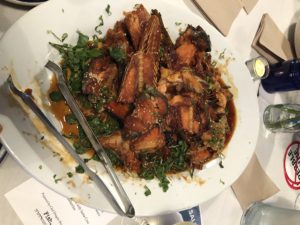
Stellar sticky salmon at the Bristol Bay Dinner.

We feasted on delicious wild salmon from Bristol Bay and oysters from Alaska down to Baja. We had fried soft-shell Louisiana shrimp and herring roe captured in a traditional method of submerging hemlock boughs in the bay during the spawn.

The Slow Fish 2018 planning team took on a monumental task to coordinate all of these events in a very short time period ahead of the California salmon season. The small, but very dedicated Slow Food San Francisco board of directors managed countless on-the-ground logistics to ensure everything went smoothly. It was the collective passion of the planners and attendees for the Slow Fish mission to grow the network, share our core values and collaborate on more projects that drove the event’s success.
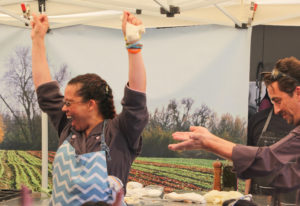
Chef Matthew Dolen honors winner Chef Aaronette King at the Seafood Throwdown at the Ferry Plaza Farmer’s Market to kick off Slow Fish 2018. The crowd engaged in the process, tasted the food and asked great questions. Credit: Eric Buchanan

We discussed new projects on the horizon, such as a YouTube channel for sharing videos focusing on Slow Fish values, success stories and fisheries-related topics. We also discussed launching a Slow Fish website that will become a destination for those seeking Slow Fish updates, bait boxes to help launch community-based projects like a community supported fishery, Seafood Throwdowns, KNOW FISH Dinners® and more. To enable Slow Fish folks to to ask questions and discuss issues within an informed community, we may launch an online forum. We also discussed an ambitious project to reduce domestic imports from 90% to 50% by 2050. This 50 by 50 project models similar food system-related measures aimed at eating locally (or domestically) produced food.

And so we charted a course for Slow Fish’s future. To most effectively create change, we need to grow the Slow Fish family and foster continued collaboration on future success stories that will help change that massive import dynamic in this country.

And we will.

Stay tuned for Slow Fish 2020.
 

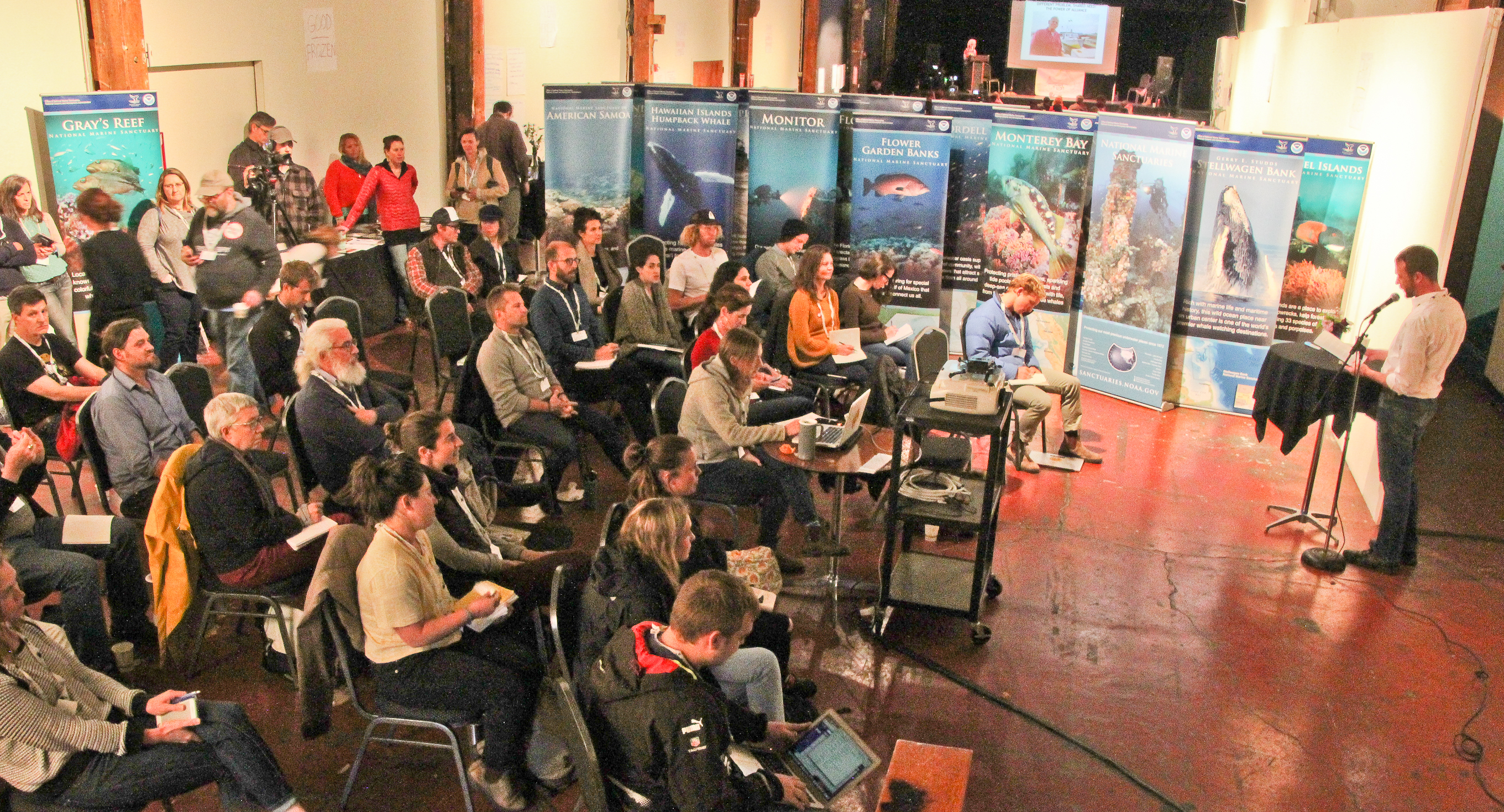
Top photo: Tyson Rasor of Ecotrust emcees the Know Your Fish Pesce Kucha session. Credit: Eric Buchanan.
All Blog Posts

A College Student Walks into a Webinar…

  • November 23, 2017October 20, 2021
  • by Colles Stowell
Share it!
Share

One Fish Foundation Intern Jennifer Halstead is a senior at the University of New Hampshire. She has been instrumental with several One Fish projects, including the coordination of the recent Webinar co-hosted by One Fish Foundation and Local Catch, Fisheries Management: Best Available Science May Not Be Good Enough. Below is her take on the Webinar from the perspective of a college student, and why we should include college students in these discussions more frequently. And she’s right. Why wouldn’t we want to empower future leading researchers, fishermen and policy makers with a broader perspective and a voice?


By Jennifer Halstead

I had to drive to a neighboring town to run some errands immediately following the webinar, and I had a million thoughts swimming around in my head. So, I did what any millennial would do, and I used my smart phone to take notes for me, setting it to record as I drove.

Listening to the recording later, I realized some critical points. First, I was extremely fired up and passionate about the issues, and even a little angry about some of them. Second, I recognized through this webinar that the scientists, fishermen, and others taking part in the conversation represented a broad range of backgrounds and viewpoints, but were united on one theme: that the current fisheries management model doesn’t work for this extremely dynamic, and rapidly changing ecosystem.

Being a college student in marine sciences is exhilarating and intimidating. We’re presented with myriad challenges and questions, and rarely presented with solutions. We’re kind of left in limbo: We have a strong knowledge base, but a wide-open area to apply it, and we’re walking into a field of open-ended questions that have been asked for decades.

The curriculum of marine sciences now has a large portion of time allocated to climate change-related topics and challenges. As students, we’re presented with climate related disasters in all our classes. Not only is this depressing, but the lack of tangible solutions can take away our hope for our future in minutes. Being able to be part of an active discussion about how to change that as part of this Webinar put the last four years of me hearing about these unsolvable problems into a different perspective. I know we need change, because that’s what I’ve paid tuition to learn. An entirely different story starts when I hear other people talking about change, however. Suddenly, there’s a light ahead, collaboration forms, and solutions start to appear to all of those previously unsolvable problems.

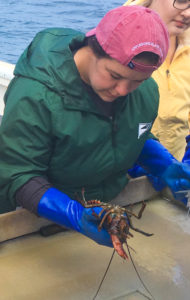
Determining lobster sex aboard the F/V Vivian Mae this summer.

I was emboldened by hearing fishermen and scientists talk about how different, fast-changing dynamics throughout the Gulf of Maine necessitate a different data approach: one that is more localized. Hearing them talk about a solution motivated me to keep moving forward and not feel as overwhelmed by the issues. We as college students will listen and take heart when authoritative voices such as fishermen, council members and scientists uniformly agree on the need for change and discuss possible solutions. Hopefully, these credible voices will resonate with the larger community.

To move forward, we need to analyze the current model and determine what the problems are that are highest in priority to address. In addition to this, we need to keep the conversation going, and keep working toward common goals.

The current data collection model is a One-Size-Fits-All model, but the consensus of the discussion was that one size does not fit all. Therefore, the current model is not doing its job and needs to change. The Gulf of Maine is an extremely dynamic region, with highly productive areas, multiple spawning areas and freshwater inputs. Unfortunately, it is feeling climate change impacts at an alarming rate. In a system with this many moving parts, we should not be employing a model that is rigid. Instead of adjusting this model, however, it may be easier to start with new ideas. Relying on data from random trawl surveys that occurred three years ago is not a solid foundation to build a management plan on.

So, let’s change the way we collect data. Fishermen are out on the water every day in different areas, looking for different target species and making different observations. Why not make their observations available for scientists to use, creating an up-to-date, usable set of data? Up-to-date data means that the moving and fluctuating parts of the system can be more accurately accounted for, and we can develop more accurate and successful management plans more quickly. Collaboration between fishermen and scientists when it comes to collection of data and observations is important. It helps refine the current model and bring the sides together while doing it.

A large part of creating change and addressing these problems exists in the need to have active discussions. Everyone sitting at the table, simply discussing the challenges, could lead to change. Different perspectives bring different ideas, and then solutions can start to form. College students taking part in such discussions and offering their perspectives could be integral to the formation of such solutions. That involvement would also likely encourage them (as it has with me) to dive deeper into the issues and help find solutions, rather than be overwhelmed with fear and gloom.

Along with this, it is imperative that all stakeholders be involved in these discussions. If we want to use data that fishermen collect, for example, we need to make sure they’re on board with the idea, and we need to see how much they’re willing to do to create a better system. If too much is put on the fishermen’s plates, or on the plates of any other group for that matter, the new method will work as effectively as the current one. It won’t.


Jennifer Halstead is a senior at University of New Hampshire studying marine biology, and intern for One Fish Foundation.

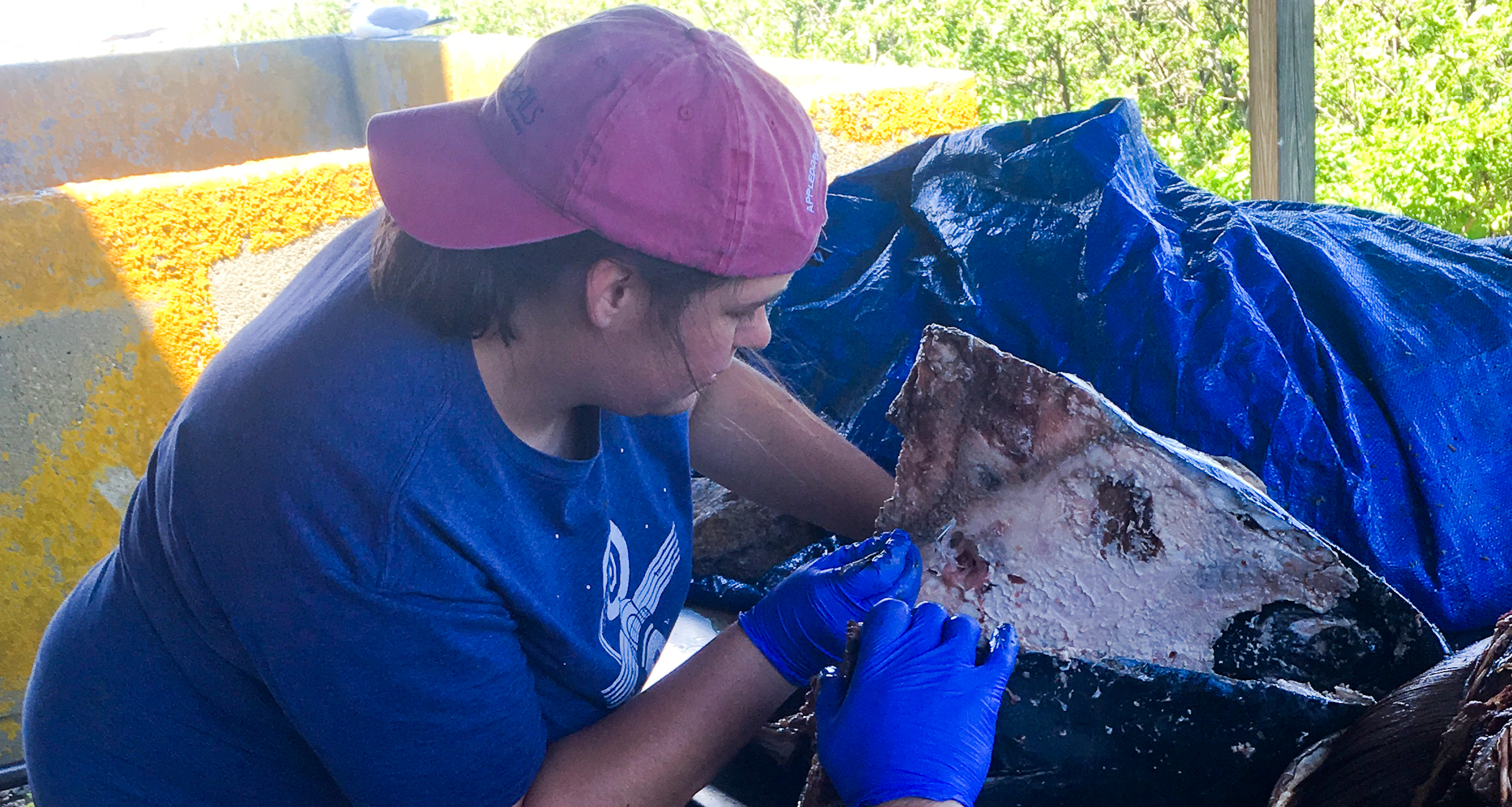
Top Photo: Jennifer extracts the otoliths (ear bones) of a bluefin tuna to determine its age.

All Blog Posts

Judge Makes Codfather Offer He Can’t Refuse: 46 Months…

  • September 26, 2017October 20, 2021
  • by Colles Stowell
Share it!
Share

New Bedford fishing kingpin Carlos Rafael was sentenced to 46 months in prison and ordered to pay $200,000 in fines yesterday after pleading guilty to fraudulently mislabeling fish and sending hundreds of thousands of dollars in cash out of the country. He must also pay $108,929 restitution to the U.S. Treasury.

Rafael has become a divisive flashpoint in New England fisheries discussions as activists and smaller scale fishermen have pointed to his case as a glaring example of what’s wrong with much of the current groundfish management system. In court yesterday, his attorney read a statement in which Rafael claimed he essentially committed the crimes he was accused of to benefit his employees, and that it was the stupidest thing he ever did.

Judge William Young wasn’t buying it. “This was not stupid. This was corrupt. This was a corrupt course of action from start to finish,” Young said to Rafael. “… (It was) designed to benefit you. To line your pockets. That’s what it was, and that’s why the court has sentenced you as it has.”

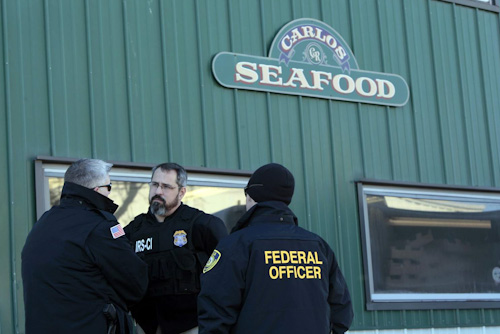
Rafael was arrested a year and half ago after boasting about skirting federal fisheries laws and hiding cash in offshore banks to undercover Internal Revenue Service agents posing as Russian mafia. At the time, he was running the East Coast’s largest fishing operation, with more than 40 fishing vessels and a couple of on-shore processing centers.

A tall tale

How Carlos Seafood got to that point is a story of greed, capitalism and a knack for taking advantage of a flawed management system. The predominant regulation governing New England groundfish is catch shares, which treat access to fishing areas like a market commodity to be traded like stocks, ultimately leading to fleet consolidation. This consolidation raises the cost of doing business so high that many small-scale fishermen are forced out of business.

In Rafael’s case, he not only gobbled up quota and permits, he also controlled a processing facility in New Bedford. Mislabeling fish became much easier when he controlled the captains and crew on the water, and people in the processing plant.

Now, he will serve nearly four years in prison, followed by three years of supervised release. Judge Young also banished him from having anything to do with commercial fishing during his supervised release … which amounts to nearly seven years out of the business.

The underlying issue

Case closed? Not quite. The larger question now is what happens to Rafael’s assets. What happens to the quota he acquired and how will that decision affect regional fisheries markets and fishermen?

The answer to that brings us back to the ever louder claims that the current quota system enabled Carlos Rafael’s rise. What several fishermen and activists have called for is to liquidate the permits and make them available to a broader range of fishermen throughout New England, not just New Bedford. The mayor of New Bedford and several fishermen there said the permits should remain local. Mass. Governor Charlie Baker wants them to stay in the state. At stake are the 13 vessels and the permits that were directly linked to the fraudulent activities, estimated in court documents to be between $27 million and $30 million.

One of the options mentioned in yesterday’s sentencing was to sell all of Rafael’s assets to Richard and Raymond Canastra, the brothers who own and operate the Whaling City Seafood Display Auction as well as the Boston Seafood Display auction. Some fishermen and activists oppose this possibility because Rafael has ties to the Canastras, and because they fear it would result in another vertically integrated entity controlling a large amount of quota. Read: Another version of the Codfather.

The judge essentially said that it is not exclusively up to him to determine allocation of quota, which is governed by NOAA. The hope is NOAA will take the long view on the situation and make a recommendation that benefits a wider swath of fishermen and their communities. In the end, the best decision would also benefit the resource by turning over control of those permits to fishermen who are more likely to obey the law.


For additional reading:

Northwest Atlantic Marine Alliance victim impact statement delivered at sentencing.

South Coast Today news story.

Boston Globe news story

Politico in-depth analysis of the evolution of Carlos Rafael as the Codfather.

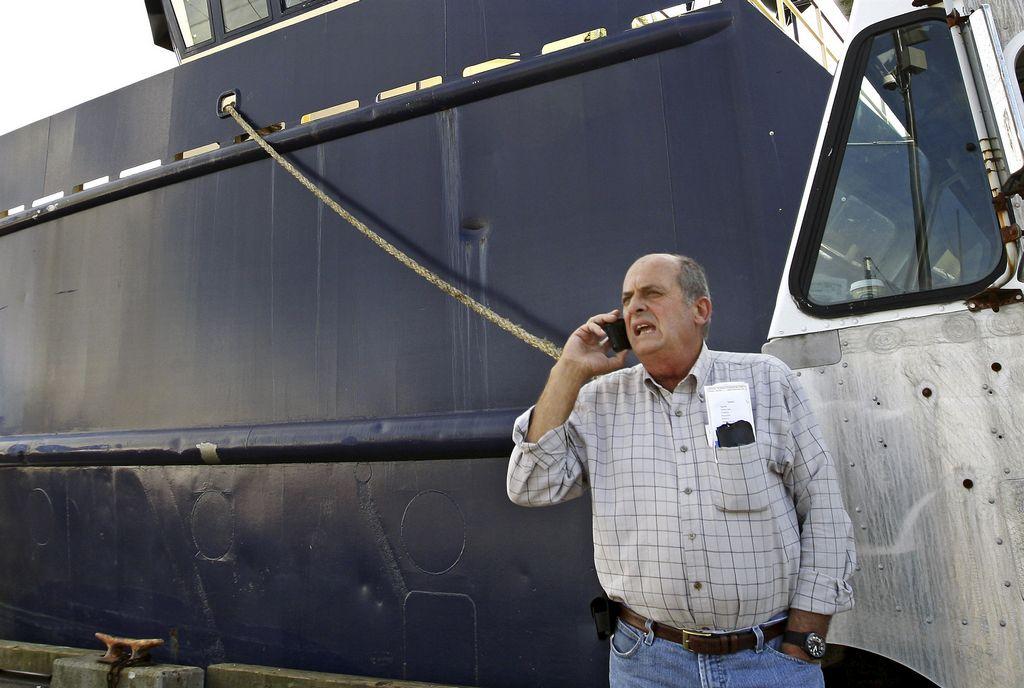
Photo credit: Peter Pereira/Standard-Times File/SCMG

All Blog Posts

Fish Mogul’s Arrest Raises Questions About Fisheries Policy

  • April 1, 2016October 20, 2021
  • by Colles Stowell
Share it!
Share

To hear Carlos Rafael tell it, the oceans are there to make a profit on. It’s up to those who have the most resources to make the most profit.

Or so you might think if you looked at the pending federal criminal charges he faces. Or the electronic bracelet around his ankle, which lets law enforcement know if he’s abiding by his curfew, and that he’s likely not trying to slip another fast one past authorities.

According to federal allegations, he’s slipped several million dollars worth of illegally harvested and labeled seafood through his Carlos Seafood operation in New Bedford, Mass. past authorities for decades. In court documents filed last month, investigators from the Internal Revenue Service claim Rafael, the largest seafood distributor in New England with more than 40 boats in his company’s name, intentionally defrauded the government by hiding his actual catch volumes and mislabeling fish. Prosecutors allege the mislabeling involved an intricate scheme whereby less abundant, more regulated and higher priced species like sole were labled as more abundant lower priced haddock arriving at port. Rafael allegedly misrepresented those species on federal catch quota forms he filed by mail or online. Then the species were sold at a higher price to a New York wholesaler who allegedly paid for the fish with bags of cash.

The brazenness with which he allegedly bragged about how he “did the dance,” as he described his activities, is astounding. “When the [inspector] disappears, that’s when we got a chance to make the fish disappear,” he allegedly told undercover agents posing as Russian mafia interested in buying his business, describing the ease of the deception when investigators did not meet his boats at dock. He boasted of netting $668,000 in less than six months, and that he smuggled some of the cash to bank accounts in Portugal, according to the affidavit.

Rafael is out on a million-dollar bond, wearing the ankle bracelet as a constant reminder of what went wrong after he allegedly tried to sell his business for $175 million, even though his books only reported $21 million in combined assets. The rest, he told undercover agents, was unreported profit, according to the affidavit filed in federal court.

As of last week, the court granted a prosecution request for an extension in seeking an indictment.

The news of Rafael’s arrest on Feb. 26 shook the industry from coast to coast. The aftershocks continue to send ripples throughout the entire supply chain and beyond.

Many commercial fishermen spoke out, pointing to Rafael as an example of how existing fisheries management policy has created an environment that breeds the kind of abuses Rafael is accused of. Specifically, they point to current catch share programs that allow deep-pocketed operations like Rafael’s to buy up the quota and essentially control fisheries. Not only do they gobble up quota and permits, they also snatch up processing facilities on shore, so that defrauding the management system, as prosecutors allege Rafael did, is easier. If you control the captains and crew on the water, the boat, the processor and the supply chain, mislabeling becomes a much easier process.

This schema has several negative impacts. First, it forces out smaller scale fishermen, many of whom are family operations in business for generations and just barely scraping by. If they don’t have the profit to pay for the ever-escalating quota costs, they can’t compete. Secondly, placing control over select fisheries into the hands of a few well-funded operations means there are fewer disparate voices on the water actually taking care of the resource. Put another way, there are fewer people self-policing the fishery to make sure peers aren’t cheating. Also, more eyes on the water can be a first alert to dramatic changes in the fishery, hopefully triggering a fast response to protect the resource.

But here’s another problem that arose in the wake of the news of Rafael’s arrest: Public image. It takes one or two people getting caught cheating the system on a grand scale to cast a long shadow on commercial fishermen. It’s the case of one bad apple taking out the whole bushel. The arrest of Rafael, who is a fleet owner and distributor, not a fisherman, has fueled questions about how rampant this kind of fraud is within the current quota system. Witness this blog from the Conservation Law Foundation. I’ve seen recreational fishing guides discussing this on social media.

The reality is that most commercial fishermen in the U.S. are just trying to make a living. Most know that if they don’t take care of the resource, they could put themselves out of business.

The U.S. has one of the most closely regulated fishing industries in the world. Any fraud or other illegal operations that occur here pale in comparison to what happens in Asia, for example. [Quick side note: It’s kind of frightening to think of what could happen if trade agreements like the Trans Pacific Partnership are fully ratified. Domestic fishermen already fighting an uphill battle against foreign imports and large quota grabs will likely be pushed out even faster, as cheap, largely uninspected foreign seafood floods the market.]

The close scrutiny of U.S. investigators led to the charges against Rafael. Perhaps the fact he’s been convicted of tax evasion and making false statements on landing slips and was acquitted of price fixing charges in the past 30 years helped focus that scrutiny.

If there is a silver lining in this mess, it’s this: First, a significant operator was caught allegedly cheating the system on several boldface fronts. Second, those charges have elevated the discussion of how and why such alleged crimes occurred. Third, the discussion will continue to focus on the current quota system, and how it promotes an uneven system of the “haves” controlling fisheries at the expense of the “have nots.” Fourth, it will hopefully unify commercial fishermen to speak out against current catch share policy, and perhaps take a renewed approach to self-policing violations that could further damage the industry image.


Further reading

Here are two additional examples where operators have exploited weaknesses in current catch share policy … and got caught.

Arne Fuglvog: Alaska fisherman, turned policy maker, turned federal inmate, turned lobbyist.

American Seafood, one of the largest businesses in U.S. Seafood, controlling Pollock quota system, convicted of tampering with the scales used to weigh and report Pollock catches.


photo credit: PETER PEREIRA/THE STANDARD-TIMES/SCMG


All Blog Posts

Fisheries Managers Open Door to Privatizing the Ocean

  • October 2, 2015October 20, 2021
  • by Colles Stowell
Share it!
Share

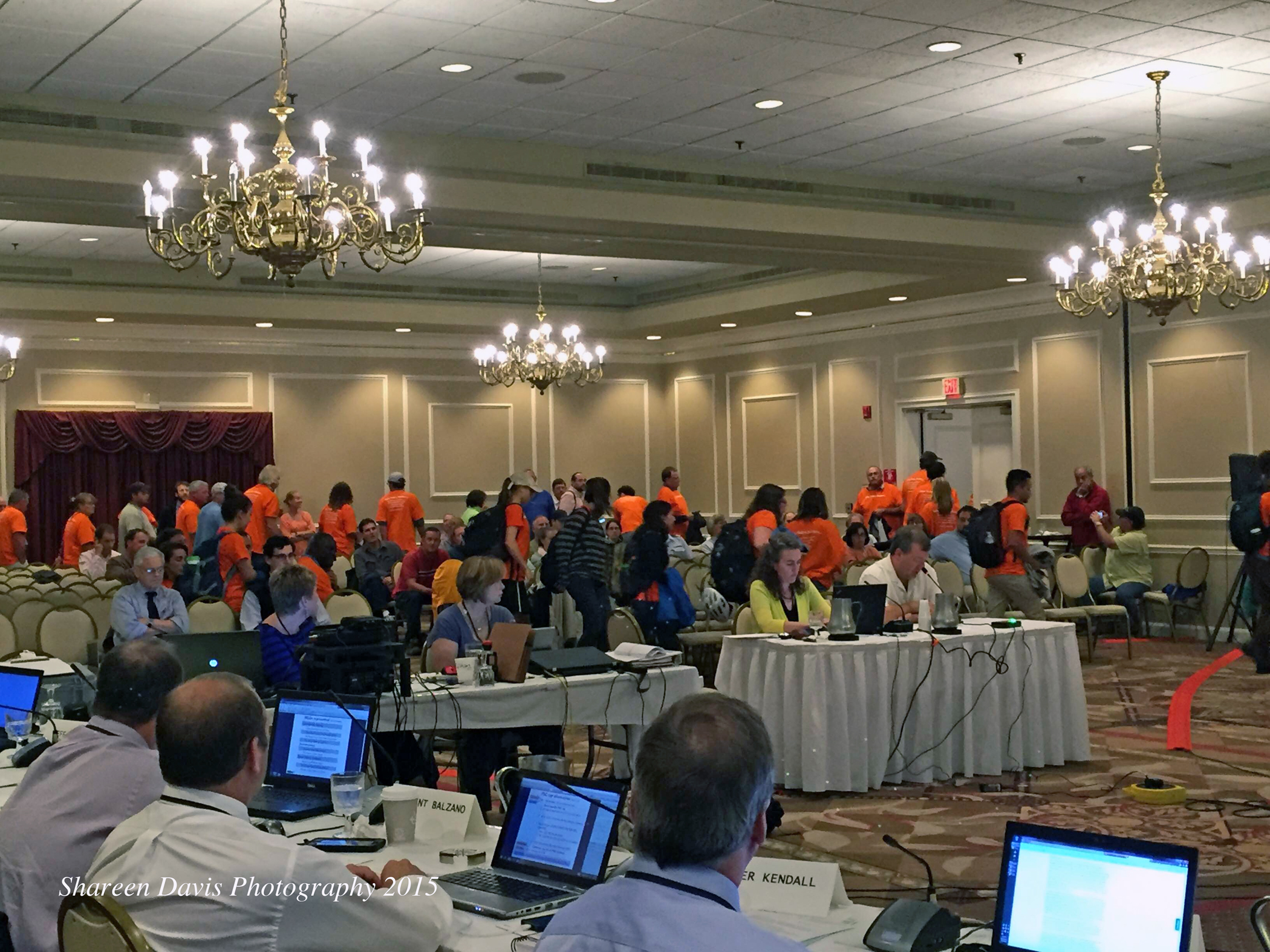
I’m too often reminded of why politics is pure frustration. Forget about presidential elections (go ahead, try), I’m talking about down-in-the-dirt politics — the process where elected officials discuss public policies ad nauseum. As a reporter, I used to marvel at how often those discussions and votes flew in the face of public consensus. Read more “Fisheries Managers Open Door to Privatizing the Ocean” →

Recent Posts

  • Hurricane Ida wreaks havoc on Louisiana’s seafood industry
  • EPA Should Use Clean Water Act To Kill Zombie Mine
  • Slow Fish 2021: Relationship Matters
  • Faith, Façades, and Futility
  • Pebble Permit Paused: Politics at Play

Archives

  • September 2021
  • August 2021
  • April 2021
  • December 2020
  • August 2020
  • June 2020
  • February 2020
  • December 2019
  • November 2019
  • October 2019
  • July 2019
  • May 2019
  • April 2019
  • March 2019
  • January 2019
  • December 2018
  • November 2018
  • June 2018
  • May 2018
  • March 2018
  • February 2018
  • January 2018
  • December 2017
  • November 2017
  • October 2017
  • September 2017
  • August 2017
  • July 2017
  • June 2017
  • May 2017
  • April 2017
  • March 2017
  • January 2017
  • December 2016
  • November 2016
  • October 2016
  • September 2016
  • August 2016
  • July 2016
  • June 2016
  • May 2016
  • April 2016
  • March 2016
  • February 2016
  • January 2016
  • December 2015
  • November 2015
  • October 2015
  • September 2015
  • July 2015
  • June 2015
  • May 2015
  • April 2015
  • March 2015
  • February 2015
  • January 2015
Theme by Colorlib Powered by WordPress