 All Blog Posts
Age Is Irrelevant: Our Seafood Choices Matter

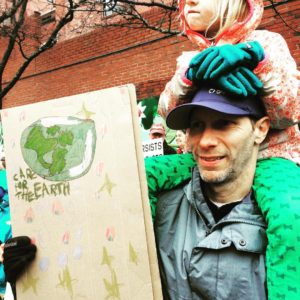
Standing in a light misting rain at a chilly March for Science rally with my daughter on my shoulders, I marveled at the number of families in attendance. The scene struck a chord with me. Science has a story for everyone, regardless of race, sex, age, income, etc. It’s all in how the story is told, and our willingness to listen to it.
This is true for my work with One Fish Foundation. Regardless of where I’m speaking, there is one constant. The age may change, but the overall message is the same: Our seafood choices matter.
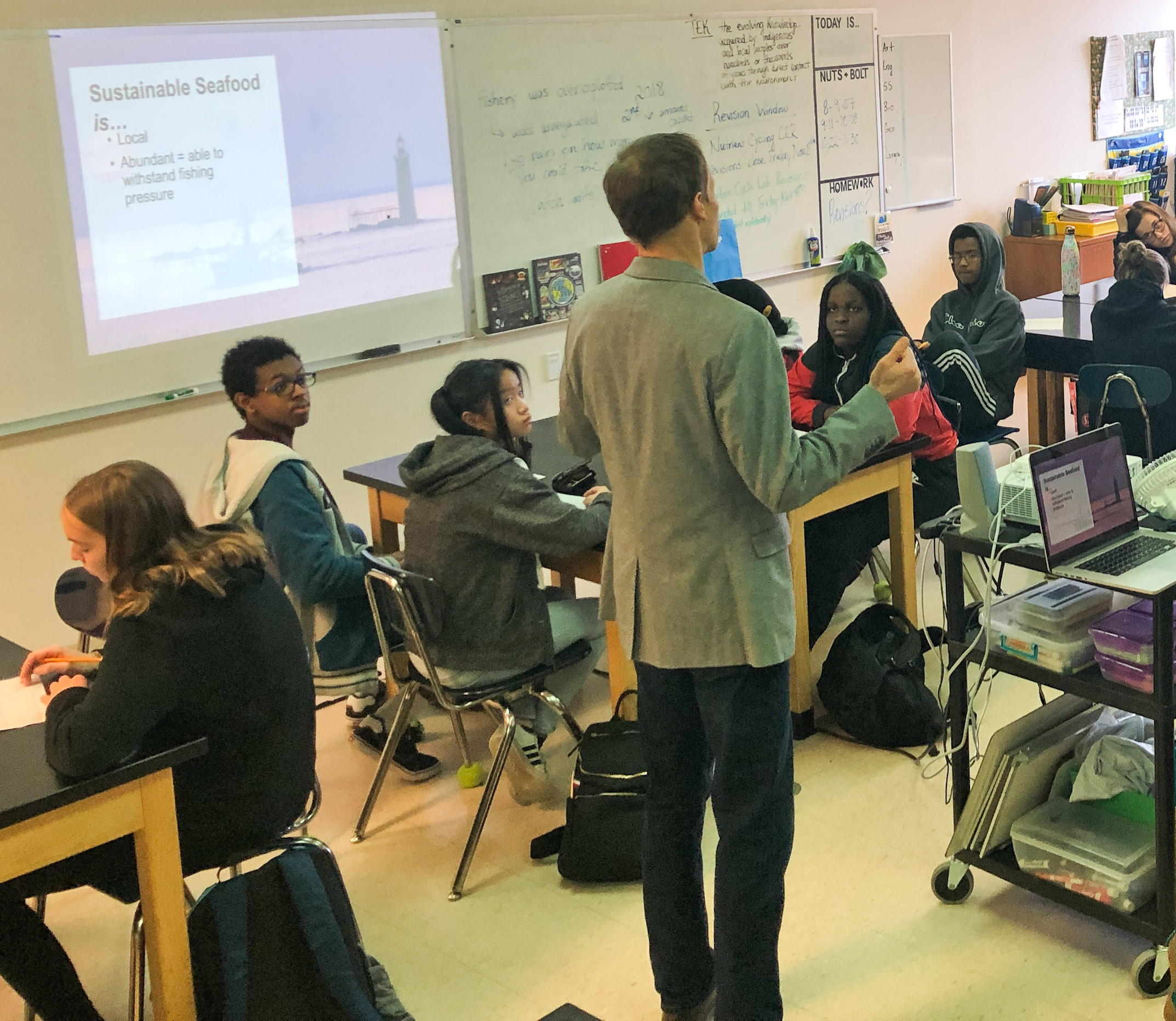
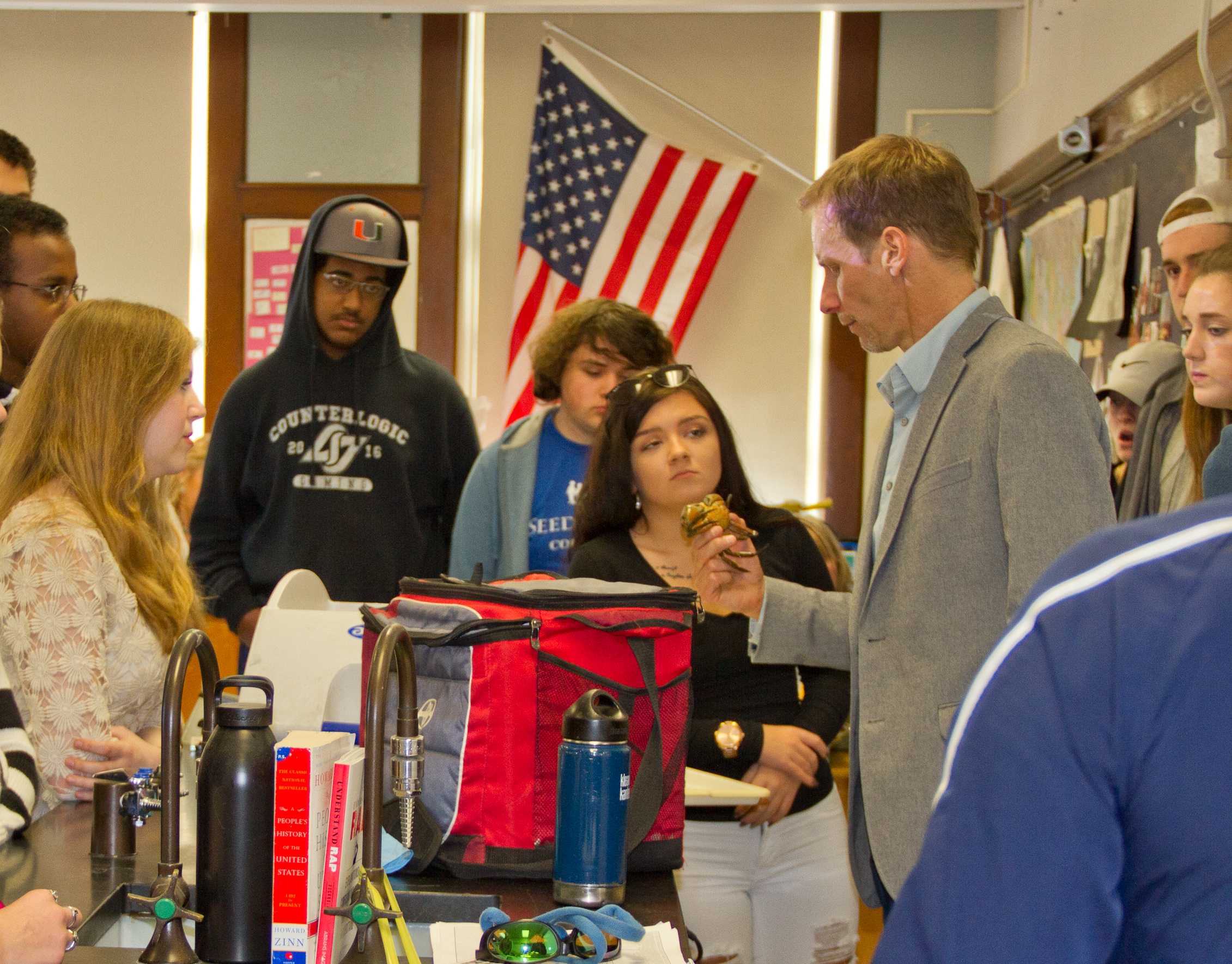
I saw this writ large last week when I spoke to two groups of high school seniors about climate change impacts on seafood in the Gulf of Maine, and then spoke to four groups of elementary students the next morning. That I delivered the latter talks in French was just icing on the cake.
What keeps everyone’s attention is the ability to tell a story that resonates.
Seafood, as a hook for discussing climate change
I initially engaged Portland High School students in the discussion by getting them to tell me what type of seafood they liked. Then we talked about how some of that seafood was likely caught … or farmed and the implications. From bycatch to chemicals, the narrative opened their eyes … quite wide with some stats … as to why they should try and find out where, when, how and even by whom (if possible) their seafood was caught.
That led into a more involved discussion about how climate change impacts, such as warming water, ocean acidification, changes in current and salinity, affect the seafood we eat globally, domestically and regionally in the Gulf of Maine. We talked about the mystery surrounding the collapse of the Northern Shrimp fishery in 2012, and the race for scientists and fishermen to get answers. Right now, scientists believe the shrimp have a narrow comfort range, and that the increasing temperatures in the Gulf of Maine may be affecting everything from reproduction to eating habits.
Students also learned that we’re gaining more information every day about the effects of warming waters, increased ocean acidity (particularly on molluscs’ ability to calcify their shells) and how ocean currents and salinity are changing. But as one of the lead authors of the Arctic Resilience Report told me last fall, we still have a way to go before we understand in depth how disparate climate change factors work in concert to affect different ecosystems or species in those ecosystems.
I left the students pondering the notion that rather than trying to fix climate change (we can’t), we need to learn how to adapt. This means finding more ways to better predict and respond to these changes. It also means that on a personal level, we need to understand what we can do. Students learned they have the right to try and find out when, where and how their seafood was harvested (or farmed). They also learned they can be evangelists for the sustainable seafood message.
Hands-on…the crabs, the dead fish, the gear…
The younger the audience age, the more hands-on the discussion needs to be. So I hauled in a lobster trap, a turtle excluder device, some gillnet, live green crabs and a dead black seabass to L’Ecole Française Du Maine.
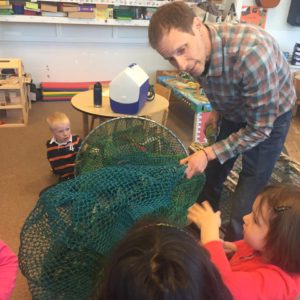
I varied the message to accommodate students between ages 4 and 11. For the younger students we first talked about what seafood they liked before talking about the different methods for ensuring fishermen catch what they’re targeting so they can minimize bycatch. We talked about how a lobster trap works, how videos have shown lobsters can go in and out of these traps at will, and what it means when a lobsterman pulls up a trap filled with black sea bass.
We also used my daughter’s stuffed turtle to demonstrate how a turtle can escape being caught – and ultimately drowned in a trawl – by way of the grate used in a turtle excluder device. The primary message to them is that for the most part, fishermen want to take care of the resource, and that some capture methods are better than others at minimizing bycatch.
I extended that discussion with older students to include predator/prey relationships, and how things like bycatch or climate change are changing ecosystems in the Gulf of Maine. They loved seeing the green crabs up close as we discussed the devastation wrought on eelgrass beds as the crabs dig up clams, mussels and oysters.
All of the students wanted to touch the fish.
In the end, all of the students I spoke with last week, at Portland High School and L’Ecole Française Du Maine, began to understand that yes, where their seafood comes from and how it was harvested matters to them and the resource.
Top photo credit: Taylor Mason, College of the Atlantic