Skip to content
One Fish Foundation
  • Blog
    • Aquaculture
    • Education
    • Environment
    • Policy
    • Wild Harvest
    • Fish Tales
  • About
    • About One Fish
    • About Colles Stowell
  • Education
    • Elementary School
    • Middle School
    • High School
  • KNOW FISH Dinners®
  • Resources
    • One Fish Podcast
    • One Fish Foundation in the news
    • The 7 C’s of Sustainable Seafood
    • Newsletter Archive
    • Recipes
      • Skate with Capers and Butter — Chef Rizwan Ahmed
      • Grandma Davis’ Fish Chowder — Jane Almeida
      • Ginger Garlic Tamari Scallops — Colles Stowell
      • Fish Stock — Evan Mallett
      • Mussels San Remo — Chef Rob Martin
      • Salted Pollock Croquettes – Chef Mark Segal
  • Connect
    • Contact OneFish
    • Social
      • Instagram
      • Facebook
      • Twitter
All Blog Posts

Seafood Learning Expeditions

  • December 9, 2019October 19, 2021
  • by Colles Stowell
Share it!
Share

With apologies to Charles Dickens, the Tale of Two Salmon began with a description of how it was the best of times, and then, how it was the worst of times.

How one species, Atlantic salmon, was pushed to near extinction because of 300+ years of intense fishing and damming of much of its critical habitat throughout New England and into Canada. How another group of salmonids, wild Pacific salmon (including king, sockeye, coho, pink and chum) were given lifelines by better management and some degree of habitat preservation.

And how the Pacific salmon in Alaska continue to provide largely abundant runs, serving a variety of stakeholders including commercial, recreational and subsistence fish harvesters. We discussed how policy there is a dynamic tool that better incorporates input from these different stakeholders, as well as up-to-the-minute harvest and escapement (fish that continue upstream to spawn) analysis to determine how and when the harvest starts and stops.

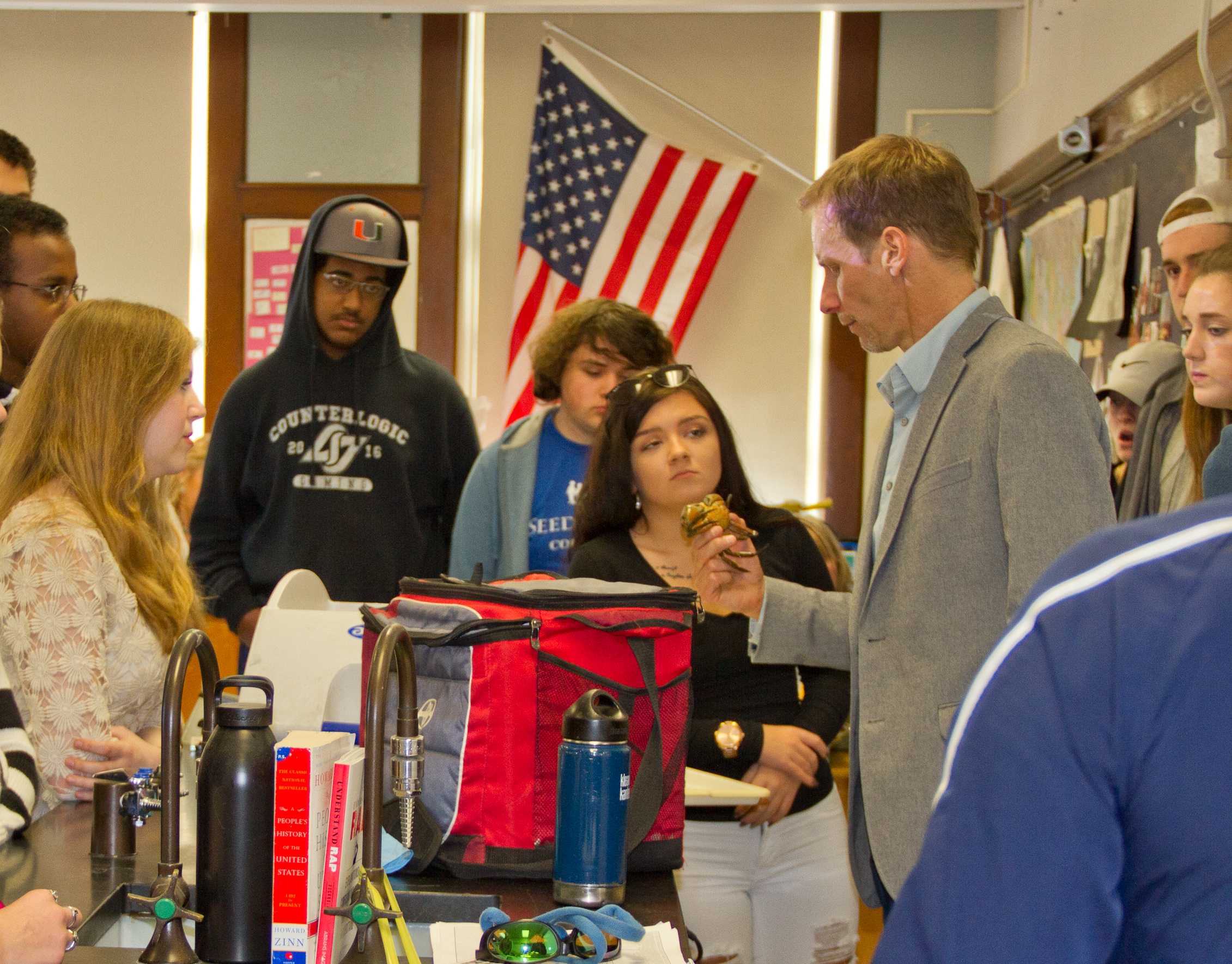
The focus on indigenous subsistence fishing was of particular importance to the 9th graders in Jenny Crowley’s ecology class at Casco Bay High School for Expeditionary Learning in Portland last month. They were learning about human interaction with natural resources and the impact humans can have on their surrounding environments. CBHS immerses students in “expeditions,” which allow them to dive deep into particular issues or topics while incorporating other facets of their education.

We talked about the delicate balance of policy on how to ensure different stakeholders have fair access to the resource. I shared my experience in Bristol Bay, Alaska this summer, talking with indigenous and subsistence fish harvesters there who described the traditions of learning to live in harmony with the salmon, the water and the land.

Finding that natural balance, taking only what they need to eat throughout the year and passing on that knowledge (like how to properly fillet a salmon using a traditional ulu knife and how to use the entire fish) are essential to maintaining that harmony from generation to generation.
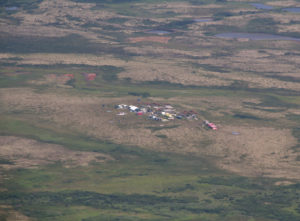
Pebble Mine exploration site. I took this photo during a flight to see how the mine would affect the headwaters of the world’s largest wild salmon run. I shared other photos depicting the breathtaking landscape that is veined with water. Students understood this one human “input” could result in devastation of that habitat.

We also spoke about how the different user groups in Alaska have united together in the past nearly two decades in solidarity to oppose the proposed Pebble Mine. It is largely due to that collaboration and the fierce determination to protect the resource that the proposed gigantic open pit copper and gold mine has not yet been built.

We talked about the tragedy of the commons and how communities working together to determine how best to manage the resource so it continues to provide for the entire community is absolutely essential.

So the students and I took those expeditions together in one-hour increments, talking about important socio-economic issues and how our choices affect the salmon and all marine life.

Collectively, we came to the conclusion that the type of community thinking in Alaska is one reason wild Pacific salmon there shade closer to the best of times.

Perhaps we should apply that model more diligently elsewhere.
All Blog Posts

One Seafood Conversation at a Time

  • November 14, 2018October 20, 2021
  • by Colles Stowell
Share it!
Share

One conversation at a time. That’s been my mantra for changing the seafood purchasing dynamic in the U.S. Whether I’m speaking with a 76-year-old retiree sporting a blue blazer, a group of AP Environmental Sciences students or a cluster of six-year-olds anxious to get their hands on some live green crabs.

The question comes up occasionally. “How do you keep your content fresh?” It’s a good question. A lot of the eye-popping statistics don’t move much year after year. More than 50% of the seafood we eat is farm raised, and 90% of the shrimp we eat is farm raised. The fact remains, sadly, that at least 90% of the seafood we eat here is imported. Some argue the percentage is actually 91 or 94. Either way, the number has not gone down, and it isn’t likely to change substantially in the next few years unless we have some significant policy changes.

For me, it’s not the numbers that change so much. It’s the people I’m speaking with that change. I want to democratize the message. Reach as many people as I can. Tell them the story. Answer their questions. And hopefully convince them to take those messages with them so they change their buying habits and spread the word.

Each new face or group of faces is an opportunity to spread that message. And I’ve found the most effective way to ensure the message resonates is to adapt the way I tell the story to the audience. So the method of the story telling changes too.

This varies dramatically between classrooms by age and subject and also between different restaurant demographics I may be engaging. I look at each new “audience” and venue as a challenge. How do I connect? How do I engage? How do I get them to own the conversation so they own their next seafood decision?

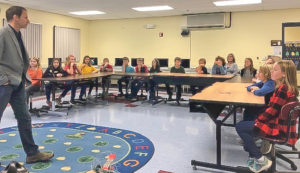
Rye Elementary fifth graders catching on quick that they have the power to ask smart seafood questions at restaurants and stores. Photo credit: Jennifer Halstead

I thought of these questions, as I always do, prior to a couple of school visits last month. Part of my preparation involves strategizing with the teacher beforehand about where the students are in their curriculum and what messaging would best fit with what they’ve learned or with what they will learn.

I’ve established relationships with several teachers who know what to expect. I still check in with them beforehand to make sure there aren’t any new messages they want me to introduce, or advise them of some new content or props (live mackerel, gear, etc.) One of these teachers is Doris Gianforte, a 5th grade science teacher at Rye Elementary School in New Hampshire.

As usual, when I met with her students, they were well prepared. They wanted to know more about why we import so much seafood, and why green crabs are such ecological monsters on this side of the Atlantic, and not in Europe. They couldn’t wait until they had the opportunity to ask questions at a restaurant.

Prior to my visit with 7th grade students at Harpswell Coastal Academy in Maine, I had a good discussion with their teacher Sarah Crockett. We talked about how they were in the middle of field lab work on green crabs in conjunction with an education program at Gulf of Maine Research Institute.

So we discussed introducing green crabs as a climate change marker, one that has implications for local ecosystems and shifting predator/prey relationships.

These students were also very well prepared, accurately talking about when and how European green crabs were introduced in US waters, what they like to eat and why they’re so destructive.

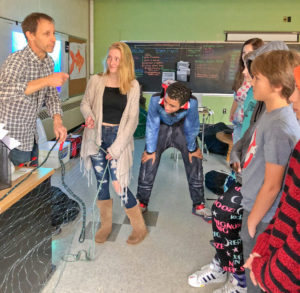
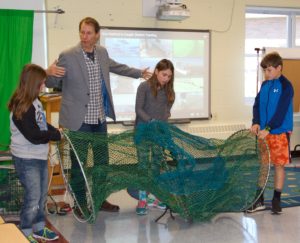
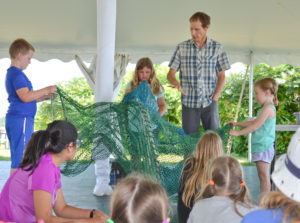
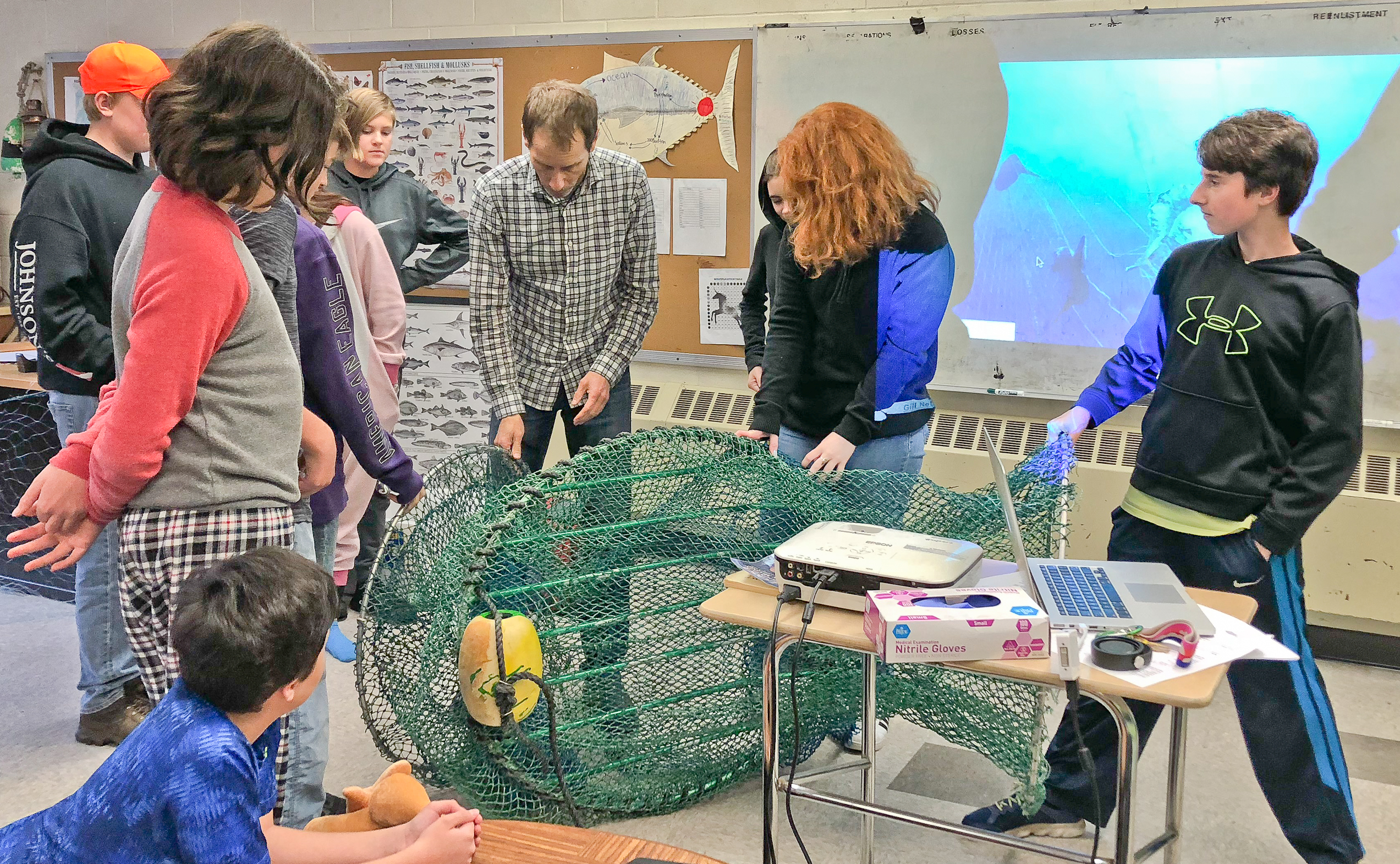
Harpswell Coastal Academy students learning about some measures to reduce gill net bycatch such as shorter soak times and acoustic pingers emitting signals to ward off marine mammals. Guess who didn’t get the memo about “Pajama Day.” Damn! Photo: Sarah Crockett

Students asked great questions about what fishermen and researchers are doing to minimize bycatch associated with different gear types. Like most students, getting their hands on some trawl net and a turtle excluder device helped them better understand efforts to reduce turtle bycatch in the Gulf of Mexico shrimp fishery as well as other fisheries.

These types of connections give me hope that change, real fundamental change, lies within the possibilities and ideas sparked by these conversations.

Even if it’s one at a time.


Top Photo: Harpswell Coastal Academy 7th graders getting their TED (turtle excluder device) talk on. Credit: Sarah Crockett


All Blog Posts

Making Good Impressions

  • October 21, 2017October 20, 2021
  • by Colles Stowell
Share it!
Share

Ten- and 11-year olds are very impressionable. I’m reminded of this every time I speak to a fifth grade class and start talking about bycatch and imported farmed shrimp. Their eyes get really big when I talk about how some foreign aquaculture producers use antibiotics to try and prevent disease, or when I show them videos of some bycatch issues with longline and gill nets.

So I’m quick to tell them about some measures to mitigate bycatch, such as changing hook types or using turtle excluder devices. They love handling the big hooped nets. We talk about different harvest methods that have lower ecological impact, and that innovation continues to lessen direct harm.

I show them a pie chart and ask them to choose either the really small slice set aside, or the rest of the pie to represent the domestically harvested seafood eaten in this country. Every now and then, one student will choose the small slice either playing the odds or actually knowing the reality. I love to watch the class discuss the answer and perhaps change their minds. When I tell them the larger section or 90% of the pie represents imports, they don’t mask their surprise.

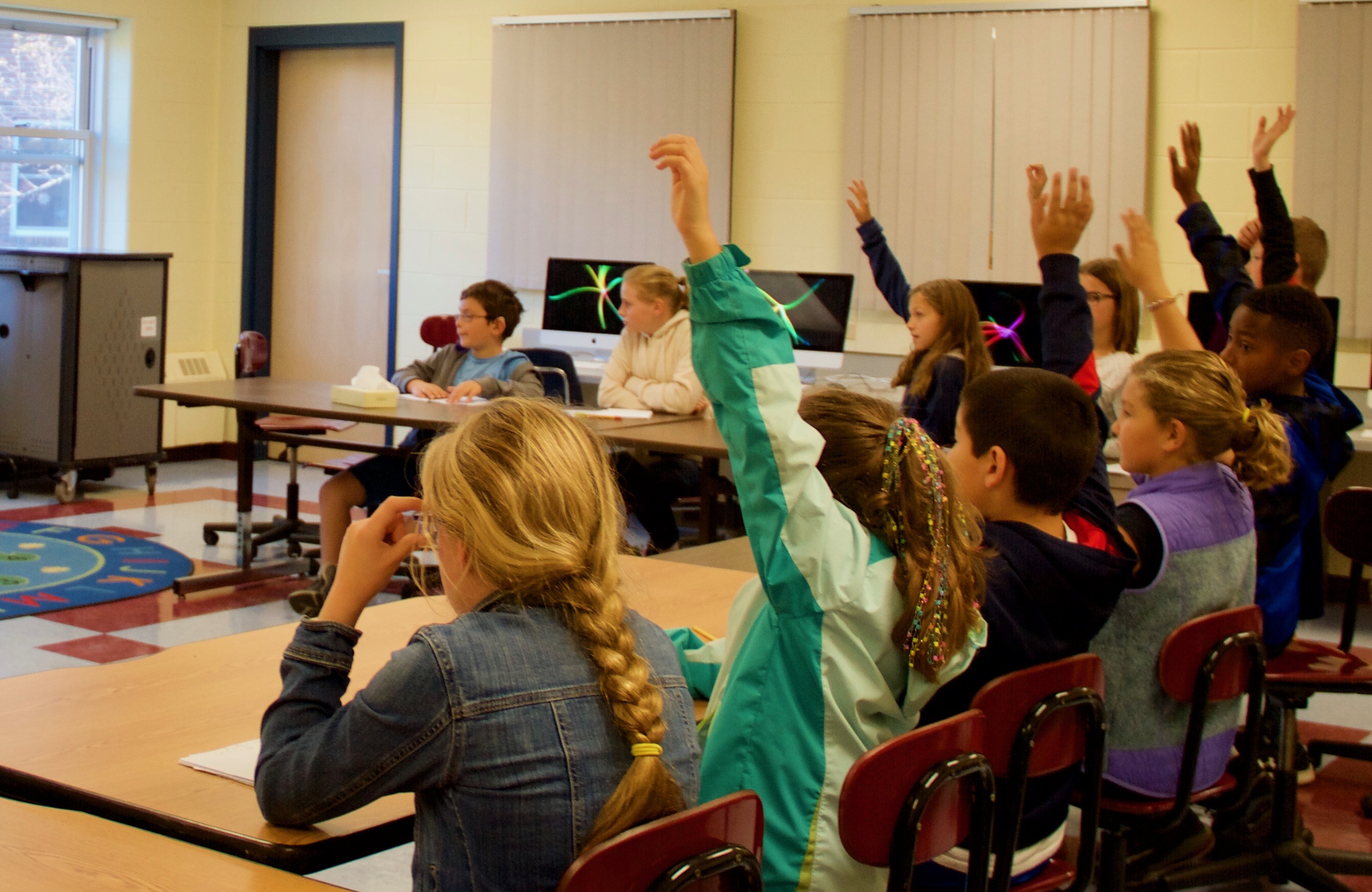
I taught three 5th grade science classes at Rye (NH) Elementary School last week, and took note of students’ interaction with these potentially daunting topics. Typically with classes along the coast, a majority of students raise their hands at the outset when I ask how many like seafood. For those who don’t, I be sure to acknowledge that and tell them that it’s important to understand our relationship to, and impact on the resource, even if we don’t eat it.

The students at Rye Elementary were, as usual, well informed, inquisitive and engaged in learning about where seafood comes from. They were interested to learn about bivalve aquaculture in Maine, and why forage fish such as the mackerel they see right off the docks play a crucial role in the marine food webs.

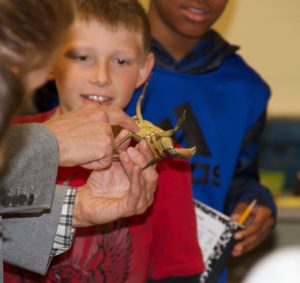
We talked about gear selectivity, invasive species (live green crabs are always a hit) and that buying locally harvested seafood supports local fishermen in the community. And we talked about their responsibility to ask questions at restaurants and seafood stores.

Each class has a different personality and energy level. So we adapt the content and conversation to those variables and engage as many minds as possible.

Every time I teach a few classes in a row, I walk away energized by the fluidity and enthusiasm of the conversation … and a bit drained. Each class I teach is a renewal of my respect and admiration for teachers who do this day in and day out. This is especially true for teachers helping to stimulate young, impressionable minds.

All Blog Posts

Getting Hands Wet and Talking Seafood

  • August 4, 2017October 20, 2021
  • by Colles Stowell
Share it!
Share

Every time I speak to a group of students, campers, adults, etc. I learn something.

First, I learn what the audience knows and doesn’t yet comprehend about seafood sustainability in broad terms. I learn who in the audience is more ready to engage in discussion, who wants to challenge pre-conceived notions, and who isn’t really into the conversation.

Depending on the age group and location, these types of interactions can sometimes provide glimpses into a community’s overall seafood IQ. Observing students while I teach a class also provides a mirror of how effectively I’m getting the message across.

Gill nets are hard to see on land as well as in the ocean. Photo: Rich Harty

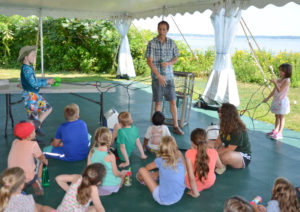
My first observation at the Seacoast Science Center in Rye, N.H. this week was how lucky the Seaside Safari campers were to have such a program. Set on the shore near Odiorne Point, surrounded by acres of tide pools loaded with lobsters, green crabs, seaweed, etc., the camp provides direct, hands-on access to coastal marine ecosystems. Campers handle live green crabs while learning about invasive species; they turn over rocks and hunt for juvenile lobsters while learning about food webs; they talk about the warming Gulf of Maine while learning about climate change.

I wish I had access to a program like that at that age.

So it was a privilege to learn some things from these campers as we chatted. I re-confirmed that green crabs are a very effective, hands-on prop … almost to the point of distraction when they started fighting.

I learned that these campers, when prompted, were generally eager to learn how seafood ends up on their plates. They wanted to know how a turtle excluder device works, and its impact on reducing bycatch.

Demonstrating the escape hatch for turtles. Photo: Rich Harty

Some campers who had fished recreationally before were genuinely surprised that some fishermen use rod and reel to fish commercially. They were intrigued by the weight of the 14 oz jig used to get the flies down 400 feet to where the haddock, cod and pollock are.

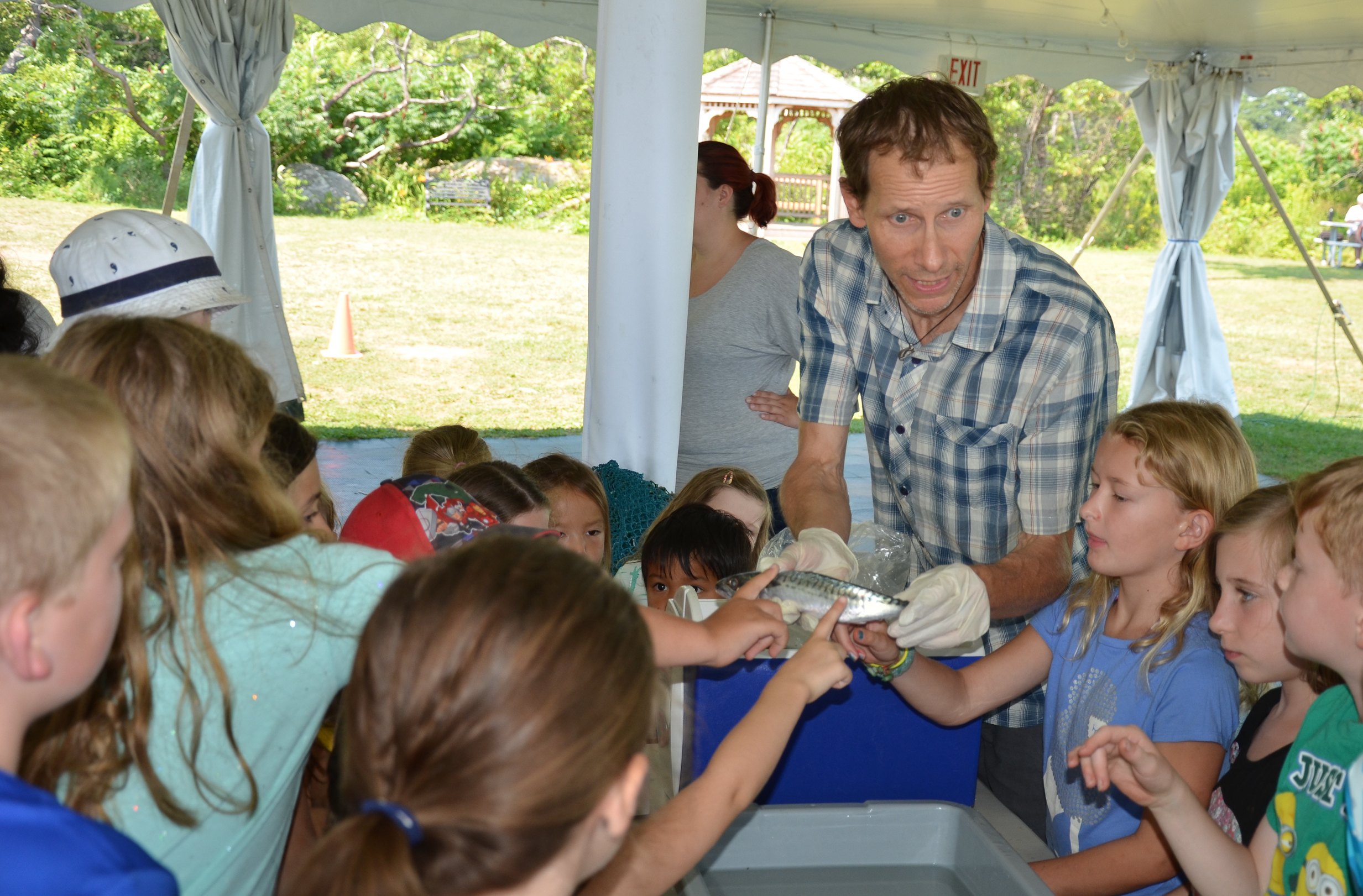
They were also pretty enthusiastic about touching the dead Atlantic mackerel while learning that mackerel are one of several forage fish species that are very important to seafood webs.

And they began to see their relationship to the seafood they eat.

And I learned, once again, that I love what I do.

All Blog Posts

Age Is Irrelevant: Our Seafood Choices Matter

  • April 24, 2017October 20, 2021
  • by Colles Stowell
Share it!
Share

Standing in a light misting rain at a chilly March for Science rally with my daughter on my shoulders, I marveled at the number of families in attendance. The scene struck a chord with me. Science has a story for everyone, regardless of race, sex, age, income, etc. It’s all in how the story is told, and our willingness to listen to it.

Early involvement! Photo credit: Jaime Stowell

This is true for my work with One Fish Foundation. Regardless of where I’m speaking, there is one constant. The age may change, but the overall message is the same: Our seafood choices matter.

I saw this writ large last week when I spoke to two groups of high school seniors about climate change impacts on seafood in the Gulf of Maine, and then spoke to four groups of elementary students the next morning. That I delivered the latter talks in French was just icing on the cake.

What keeps everyone’s attention is the ability to tell a story that resonates.

Seafood, as a hook for discussing climate change

I initially engaged Portland High School students in the discussion by getting them to tell me what type of seafood they liked. Then we talked about how some of that seafood was likely caught … or farmed and the implications. From bycatch to chemicals, the narrative opened their eyes … quite wide with some stats … as to why they should try and find out where, when, how and even by whom (if possible) their seafood was caught.

That led into a more involved discussion about how climate change impacts, such as warming water, ocean acidification, changes in current and salinity, affect the seafood we eat globally, domestically and regionally in the Gulf of Maine. We talked about the mystery surrounding the collapse of the Northern Shrimp fishery in 2012, and the race for scientists and fishermen to get answers. Right now, scientists believe the shrimp have a narrow comfort range, and that the increasing temperatures in the Gulf of Maine may be affecting everything from reproduction to eating habits.

Students also learned that we’re gaining more information every day about the effects of warming waters, increased ocean acidity (particularly on molluscs’ ability to calcify their shells) and how ocean currents and salinity are changing. But as one of the lead authors of the Arctic Resilience Report told me last fall, we still have a way to go before we understand in depth how disparate climate change factors work in concert to affect different ecosystems or species in those ecosystems.

I left the students pondering the notion that rather than trying to fix climate change (we can’t), we need to learn how to adapt. This means finding more ways to better predict and respond to these changes. It also means that on a personal level, we need to understand what we can do. Students learned they have the right to try and find out when, where and how their seafood was harvested (or farmed). They also learned they can be evangelists for the sustainable seafood message.

Hands-on…the crabs, the dead fish, the gear…

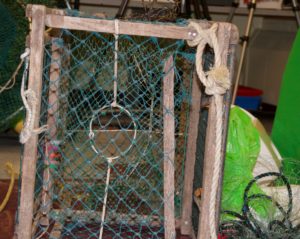
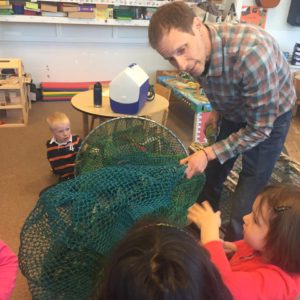
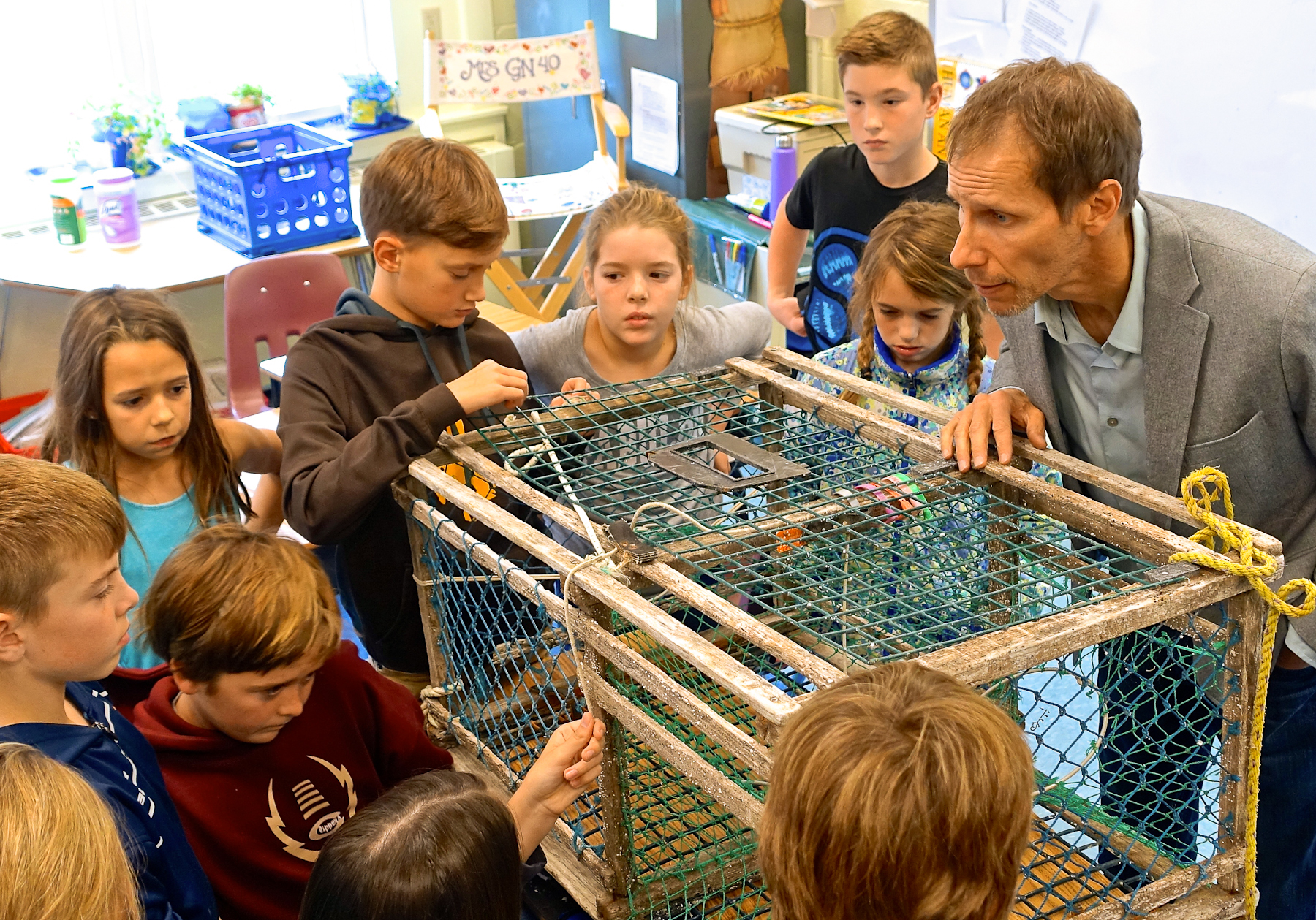
The younger the audience age, the more hands-on the discussion needs to be. So I hauled in a lobster trap, a turtle excluder device, some gillnet, live green crabs and a dead black seabass to L’Ecole Française Du Maine.

Turtle excluder devices are great conversation pieces…seriously. Photo credit: Elodie Le Nezet

I varied the message to accommodate students between ages 4 and 11. For the younger students we first talked about what seafood they liked before talking about the different methods for ensuring fishermen catch what they’re targeting so they can minimize bycatch. We talked about how a lobster trap works, how videos have shown lobsters can go in and out of these traps at will, and what it means when a lobsterman pulls up a trap filled with black sea bass.

We also used my daughter’s stuffed turtle to demonstrate how a turtle can escape being caught – and ultimately drowned in a trawl – by way of the grate used in a turtle excluder device. The primary message to them is that for the most part, fishermen want to take care of the resource, and that some capture methods are better than others at minimizing bycatch.

I extended that discussion with older students to include predator/prey relationships, and how things like bycatch or climate change are changing ecosystems in the Gulf of Maine. They loved seeing the green crabs up close as we discussed the devastation wrought on eelgrass beds as the crabs dig up clams, mussels and oysters.

All of the students wanted to touch the fish.

In the end, all of the students I spoke with last week, at Portland High School and L’Ecole Française Du Maine, began to understand that yes, where their seafood comes from and how it was harvested matters to them and the resource.


Top photo credit: Taylor Mason, College of the Atlantic

All Blog Posts

One Fish Foundation 2017

  • January 8, 2017October 20, 2021
  • by Colles Stowell
Share it!
Share

Happy New Year from One Fish Foundation!

2016 was a year of continued growth, broadened horizons, hands-on experiences, shared stories and several firsts. One Fish remains committed to educating students, parents and communities about why they should care where their seafood comes from, how it was caught and by whom.

Here are a few of the highlights from the past year, including some important firsts that set a precedent for spreading the sustainable seafood message in communities.

  1. The first sustainable seafood dinner was staged at Rosemont Market in Portland in June, bringing interested residents to the historic bakery to have a frank, thoughtful discussion about myriad factors affecting seafood choices.
  2. The KNOW FISH dinners hosted at When Pigs Fly in Kittery, Me. and Black Trumpet in Portsmouth, NH. extended the discussion of the June event to include fishermen, chefs and fishmongers talking about different links in the seafood supply chain. Attendees learned about one fisherman’s unfailing drive to catch groundfish such as haddock and pollock by hand, on rod and reel, up to 80 miles offshore to reduce bycatch and preserve the species.
  3. One Fish Foundation expanded its educational reach into New Hampshire schools.
  4. One Fish Foundation has been featured in the media:
    1. CBSNews.com
    2. The Portland Press Herald
    3. The Coastal Table
  5. One Fish Foundation helped plan and attended Slow Fish 2016 in New Orleans, an international event aimed at sharing fisheries stories from around the world and addressing some of the challenges to fishermen and seafood sustainability.

We have set some ambitious goals for 2017.

  1. We will hire a social media communications coordinator to expand One Fish Foundation’s presence on Facebook, Instagram, and Twitter.
  2. We will extend the website to include more content for students.
  3. We will grow our footprint in Maine, New Hampshire and Massachusetts.
  4. We will host more KNOW FISH dinners along the coast, inviting more fishermen and chefs to share stories about seafood sustainability and offer tips for consumers.
  5. We will launch a newsletter that brings the latest news and events regarding sustainable seafood and what’s going on at One Fish Foundation.
  6. Hats and T-shirts sporting the One Fish logo will be available online, proceeds directed toward the foundation.
  7. One Fish will attend key conferences focused on the front edge of seafood sustainability issues, including climate change impacts, policy changes, new science, community involvement, etc.

It’s going to be an exciting year. Through the blog, the KNOW FISH dinners and in the classroom, we’ve found one inescapable truth: change happens one conversation at a time. The more people we can reach with the message about learning where their seafood comes from, the more we can improve the resource, and the lives of the fishermen who depend on it.

Come join us!

All Blog Posts

Student Questions Spark Hope For Fisheries Answers

  • May 18, 2016October 20, 2021
  • by Colles Stowell
Share it!
Share

I found myself facing one of the most difficult questions to answer about fisheries management last week. Posed by a senior at Portland (Maine) High School, the question was how to ensure all fishermen have fair access to the resource while still protecting that resource.

We had covered a lot of ground up to that point. We’d discussed the domestic and global seafood systems in broad strokes, touching on demand, and import/export statistics and issues. We’d reviewed different aquaculture approaches, global warming and its impact on the Gulf of Maine and the role invasive species play in altering local ecosystems.

We’d also discussed the unbalanced fishing quota landscape and its impact on fisheries and the fishermen who care about the resource. That prompted the senior, taking an Ocean Sciences course, to ask the hard question many fishermen, policy makers and activists continue to ponder.

I prefaced my answer with a bit of insight from years of studying management issues and listening to fishermen, managers and scientists discuss policy: There are no black-and-white or one-size-fits-all answers. There is no chance, whatsoever, of 100% satisfaction for all stakeholders. Feelings run too deep.

And that’s a large part of the problem. The quota system arose to eliminate the bycatch (discards of unintentionally caught species) and what some activists termed a “race to fish.” The previous management model limited effort, or days at sea, encouraging fishermen to fish as much as possible with a given time period. The quota system divided the ocean into different sectors and allotted quota based on the permits fishermen purchase. The idea was that if you had a permit, you might feel responsible for taking care of the resource.

Instead, the quota system bred new inefficiencies and more disparity in the “haves” and “have-nots.” Larger operators with deep pockets could buy more of the permits, driving up the price of the permits to the point where smaller scale fishermen are priced out of the markets. Local fishermen, those who typically care more about the resource more than the larger operators, are forced to switch gears or stop fishing. Small-scale farmers often face similar struggles against industrial agriculture.

A good bad example

I used the example of Carlos Rafael, the largest seafood distributor in New England, to illustrate how the system is ripe for abuse. Rafael is now under house arrest in his hometown of New Bedford, where he is awaiting trial on federal charges he defrauded the government by hiding his actual catch volumes and mislabeling fish. Rafael allegedly misrepresented species on federal catch quota forms he filed by mail or online. Then the species were sold at a higher price to a New York wholesaler who allegedly paid for the fish with bags of cash.

I answered the student by saying I don’t have an exact solution to the problem. But I explained that allowing all stakeholders, including local, small-scale fishermen, to have a meaningful say in how fisheries are managed would be a significant first step. Many fishermen argue that giving local fishing communities more control over management of their fisheries would prevent the kind of top-heavy, cash-driven management that nurtured the rise of operators like Carlos Rafael.

I see some merit to that approach, but also understand that the Magnuson Stevens Act is essential to creating a federal management backbone to ensure some consistency from coast to coast.

Above all, collaboration among different stakeholders, fishermen, policy makers, scientists, community activists, chefs, consumers, etc. is critical. We won’t move forward if we can’t all meet at the table.

And that underscores the importance of having discussions about where seafood comes from and how it’s managed with students like those seniors at Portland High School. I hope those discussions will eventually lead to more concrete solutions that are fair, equitable and sustainable for fishermen, their communities (read consumers) and most importantly, the resource.

If I can get students to ask intelligent questions, I’m at least sparking the conversation.

All Blog Posts

Fish Tales at Slow Fish 2016

  • January 28, 2016October 20, 2021
  • by Colles Stowell
Share it!
Share

I’ve had the privilege of connecting with various organizations on the front lines of fisheries issues, including Cape Ann Fresh Catch, Northwest Atlantic Marine Alliance, Gulf of Maine Research Institute, and others. I’ve recently been working with Slow Fish, the fisheries movement under the Slow Food organization, aimed at ensuring fair, affordable, local and sustainable seafood. As part of the promotion to shine a light on Slow Fish 2016, Gateway to the Americas (March 10-13) several people are blogging about their fisheries experiences. Read more “Fish Tales at Slow Fish 2016” →

All Blog Posts

Starting the Sustainable Seafood Conversation Early

  • November 7, 2015October 20, 2021
  • by Colles Stowell
Share it!
Share

The moment you realize you’re doing the right thing in life is a special one. It’s not a frequent enough occasion (at least not for me). I stumble, literally and figuratively, make mistakes and then do my best not to repeat them.

Sometimes I’m even successful. Read more “Starting the Sustainable Seafood Conversation Early” →

Recent Posts

  • Hurricane Ida wreaks havoc on Louisiana’s seafood industry
  • EPA Should Use Clean Water Act To Kill Zombie Mine
  • Slow Fish 2021: Relationship Matters
  • Faith, Façades, and Futility
  • Pebble Permit Paused: Politics at Play

Archives

  • September 2021
  • August 2021
  • April 2021
  • December 2020
  • August 2020
  • June 2020
  • February 2020
  • December 2019
  • November 2019
  • October 2019
  • July 2019
  • May 2019
  • April 2019
  • March 2019
  • January 2019
  • December 2018
  • November 2018
  • June 2018
  • May 2018
  • March 2018
  • February 2018
  • January 2018
  • December 2017
  • November 2017
  • October 2017
  • September 2017
  • August 2017
  • July 2017
  • June 2017
  • May 2017
  • April 2017
  • March 2017
  • January 2017
  • December 2016
  • November 2016
  • October 2016
  • September 2016
  • August 2016
  • July 2016
  • June 2016
  • May 2016
  • April 2016
  • March 2016
  • February 2016
  • January 2016
  • December 2015
  • November 2015
  • October 2015
  • September 2015
  • July 2015
  • June 2015
  • May 2015
  • April 2015
  • March 2015
  • February 2015
  • January 2015
Theme by Colorlib Powered by WordPress