 All Blog Posts
Getting to KNOW FISH in School

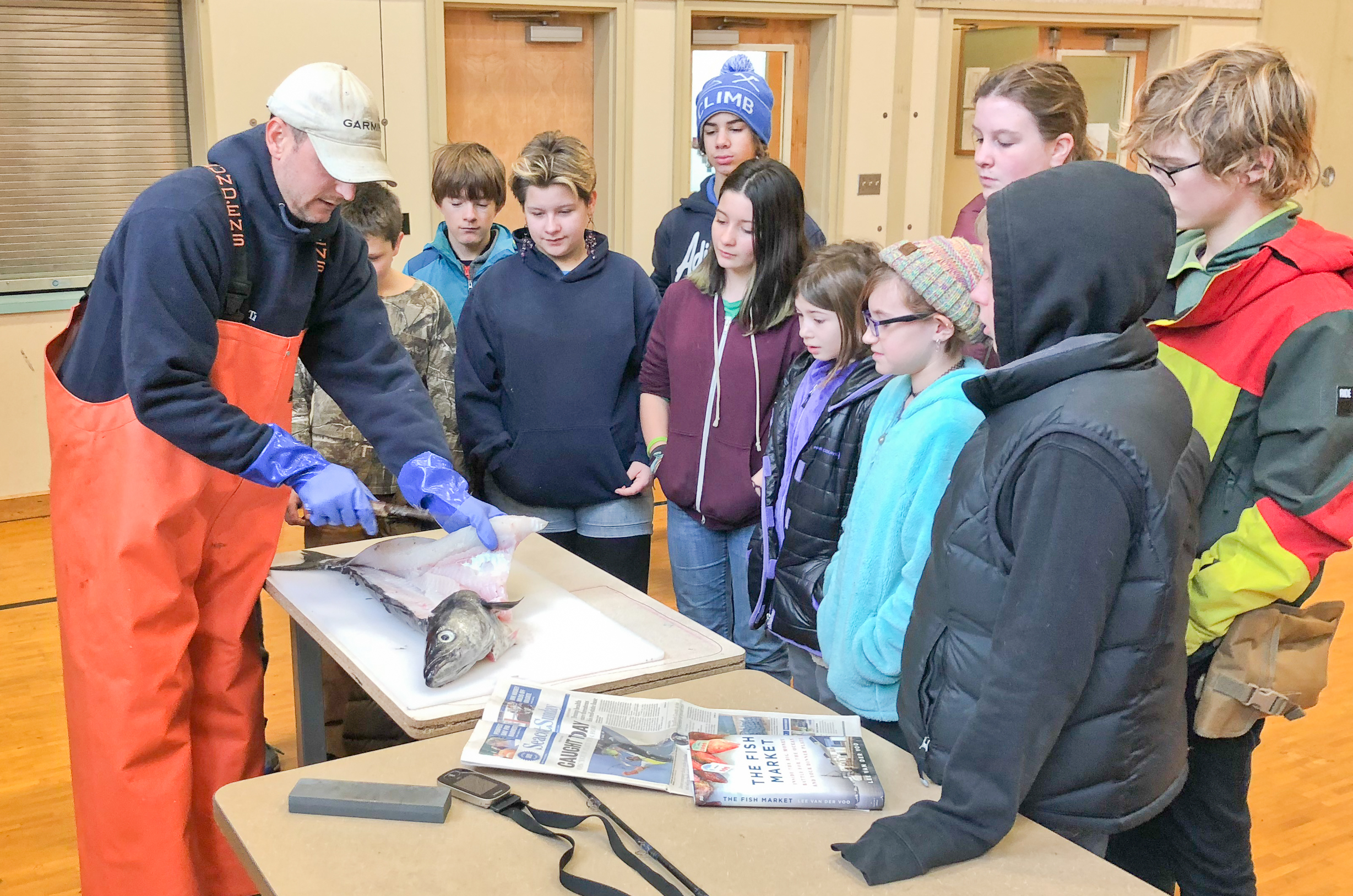
Students wrapped around the table, close, so they could get a good look as Capt. Tim Rider deftly worked the knife through the 15-pound pollock his crew had landed the day before. Neatly separating flesh from bone, he explained that filleting a fish is a matter of taking your time to be safe, but also to extract as much of the delicate meat as possible.
It’s a process he’s done many more times than he can remember. It is now automatic. For most of the middle school students at Harpswell Coastal Academy, this was a first. They asked questions about how the fish was caught, how it was bled and iced to keep it so fresh it almost looked like it could swim off the table.
They learned about the long days, the process of filleting a couple thousand pounds of fish before delivery to restaurants, stores and directly to consumers. They got an inside look at the life of a fish harvester.
This was the mission of the KNOW FISH Lunch® hosted at the school Dec. 11. We wanted students and their families to meet fishermen from their communities and learn how and why they harvest the species they do.
The gym was set up with tables framing a large rectangle with displays featuring clam rakes, lobster traps and some of the heavy steel used for scallop dredges. Students drifted from table to table with a broader perspective of the effort, process and forethought that goes into producing the seafood they eat.
They learned from Mason Warren how to put those wide rubber bands on lobster claws, occasionally getting their hands on a lobster, its claws and the bands. They learned what it’s like to bait and set several hundred traps a day, and what it’s like to get started in the business. Mason’s father is a lobsterman who travels offshore. This time of year, he and other fishermen often have to stay in port because the weather is just too dangerous (read: 20-foot seas).
Wendell Cressey discussed the backbreaking toil of bending over and digging clams and oysters out of the mud. He does mostly wild harvest, and therefore, the clam rake becomes an extension of his arms. He talked about the challenges a frozen mud flat can present in winter.
Students learned how a 2000-pound scallop dredge works from Terrance Kenney. A fisherman for decades, Kenney explained the constant maintenance and plenty of work necessary to get scallops out of the shells and into market shape.
I had set up a table with live green crabs, some gill net, trawl net and a turtle excluder device. Several students wanted to adopt the green crabs as pets…or feed them to their dogs. Funny how live organisms with a hint of creepiness draw students close.
The best part was the ambient buzz as students visited each harvester, shuttling in and out of the gym in three groups, absorbing the stories. At each station, students heard from small-scale local fish harvesters about how choosing locally sourced seafood affects them.
As if to illustrate the point, school chef Nicole Walker made a fabulous fish chowder using the fresh pollock provided by Capt. Tim Rider. Not too heavy, with a good balance of potatoes and seasoning, the chowder let the fish do the talking. And everyone praised the result.
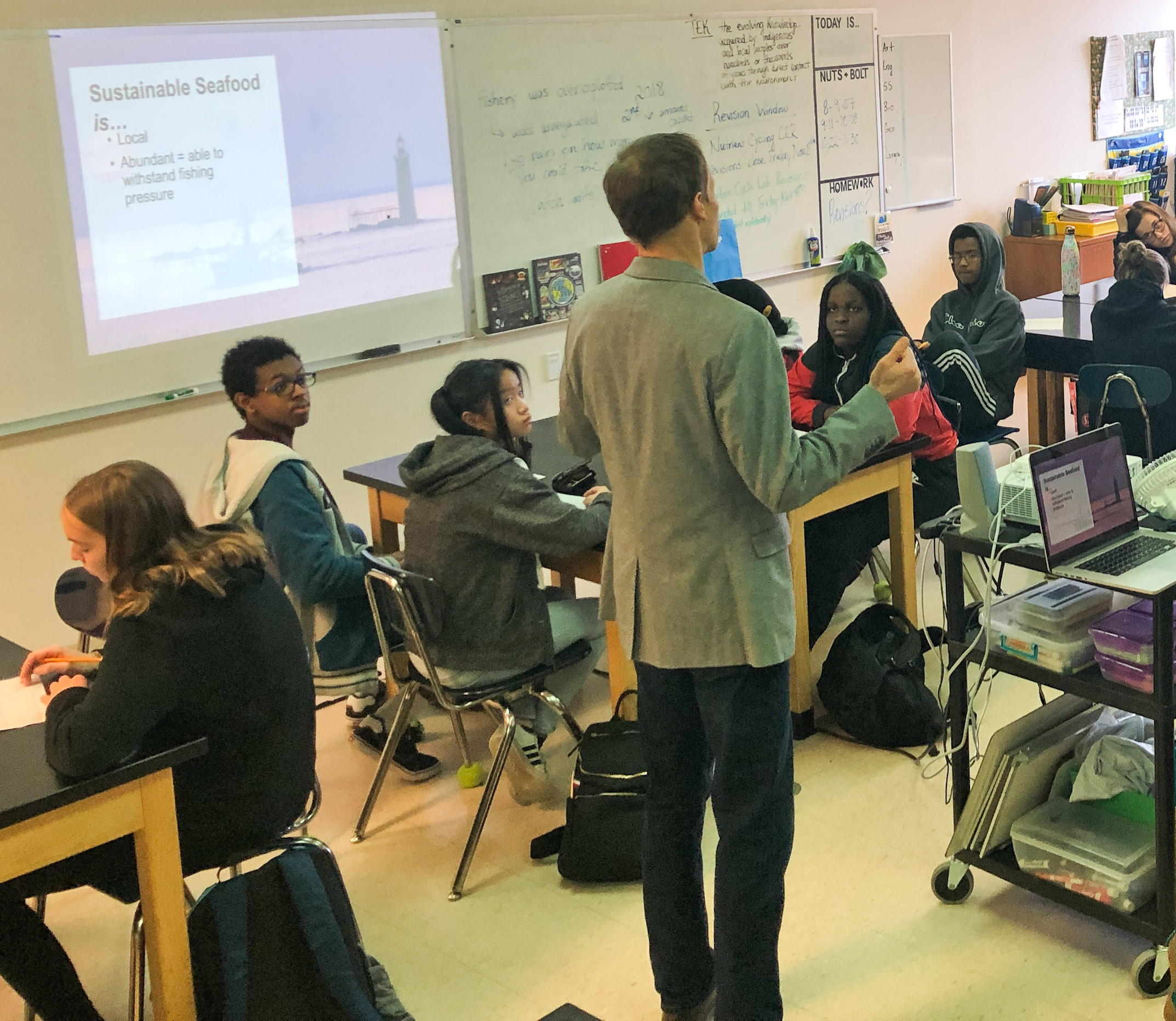
While they finished off first or second helpings of the chowder, I rounded out the message with a quick discussion of the global seafood dynamic, illustrating why choosing local, regional and even domestic seafood is better for fish harvesters, the resource, the local economy and consumer health.
This was the first KNOW FISH event to bring fishermen, their gear and some of their product into a school to engage students, their parents and staff in conversations about how and why their choices matter.
By all accounts, the conversations and the food resonated, with some students saying they still have the 7 Cs of Sustainability stuck to their refrigerators at home after my visit in November.
That’s how I know the message is sinking in. So we’ll keep having these types of conversations in classrooms, or gyms or cafeterias, with students, their families, fishermen and teachers. And we’ll keep shifting the import dynamic away from imports and toward local or domestic seafood purchases.