Skip to content
One Fish Foundation
  • Blog
    • Aquaculture
    • Education
    • Environment
    • Policy
    • Wild Harvest
    • Fish Tales
  • About
    • About One Fish
    • About Colles Stowell
  • Education
    • Elementary School
    • Middle School
    • High School
  • KNOW FISH Dinners®
  • Resources
    • One Fish Podcast
    • One Fish Foundation in the news
    • The 7 C’s of Sustainable Seafood
    • Newsletter Archive
    • Recipes
      • Skate with Capers and Butter — Chef Rizwan Ahmed
      • Grandma Davis’ Fish Chowder — Jane Almeida
      • Ginger Garlic Tamari Scallops — Colles Stowell
      • Fish Stock — Evan Mallett
      • Mussels San Remo — Chef Rob Martin
      • Salted Pollock Croquettes – Chef Mark Segal
  • Connect
    • Contact OneFish
    • Social
      • Instagram
      • Facebook
      • Twitter
All Blog Posts

Building Community Over Seafood

  • November 7, 2019October 19, 2021
  • by Colles Stowell
Share it!
Share
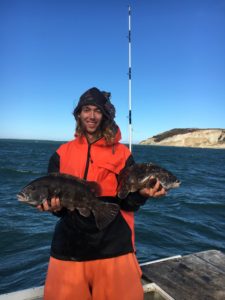
Otto Osmers with the freshly caught tautog for the dinner at Atria. Know the story of your seafood!

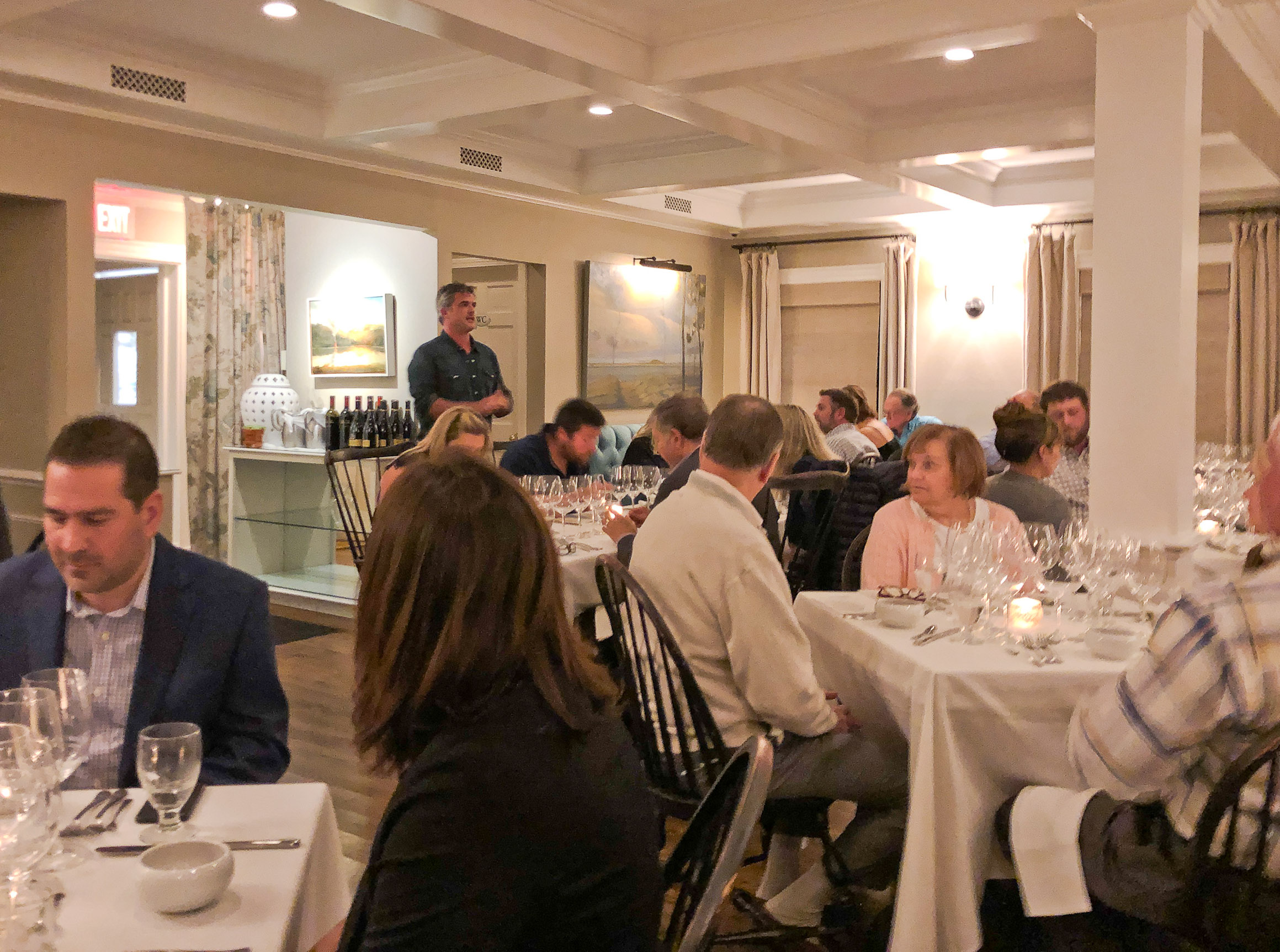
Otto Osmers sat down at a table with white linen, nice wine glasses, shiny silverware, an impressive printed menu featuring several courses and wine pairings and a bunch of folks he didn’t know. Sporting a ball cap, long hair and an easy smile, he calmly introduced himself as the stern man on the fishing boat that caught part of the night’s meal.

Though he’d initially expressed some reservation about being able to contribute to the conversation in a meaningful way, he earned the respect and attention of everyone at the table (and a round of applause from the nearly 60 people in the restaurant) by the end of the night.

Not bad for a 19-year-old who’s been fishing commercially since he was 15.

Score another success for the KNOW FISH Dinner® series.

Fishermen’s tales

The most recent KNOW FISH Dinner took place at Atria Restaurant in Edgartown on Martha’s Vineyard Oct. 26. The dinner was part of the annual Martha’s Vineyard Food and Wine Festival and was the product of the kind of collaboration that unites chefs, fishermen and advocates in ways that give hope to the notion we can change the industrial food supply chain.

How?

Relationships.
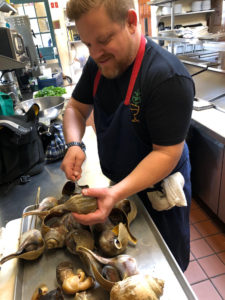
Chef Brendan Vesey removing the conchs that Capt. Andrew harvested.

Chef Brendan Vesey of Botanica Restaurant and Gin Bar in Portsmouth, N.H. was among the group of thinkers that helped build the KNOW FISH Dinner series in 2015. He and other Portsmouth, NH-area chefs were planning to participate in the massive tasting event during the Food and Wine Festival, but decided they wanted to do their own dinner during the four-day event.

So Brendan contacted me about doing a dinner that promotes the connection between seafood harvester and consumer and upholds the values behind a truly responsible seafood supply chain. This was in late Sept. Brendan connected me with Chef Christian Thornton at Atria, who is close friends with Chef Duncan Boyd, one of the original One Fish Foundation board members.

I then reached out to One Fish Foundation Board member and fellow Slow Fish colleague, Brett Tolley, who put me in touch with Shelley Edmundson of the Martha’s Vineyard Fishermen’s Preservation Trust. Shelley and her team work to support the livelihoods of the fishermen on Martha’s Vineyard. She connected me with Otto, Capt. Nick Wilbur, Captain Andrew Wheeler and Captain Arno Ewing.
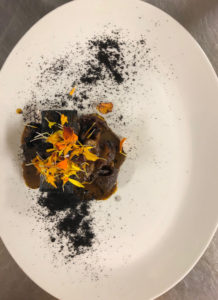
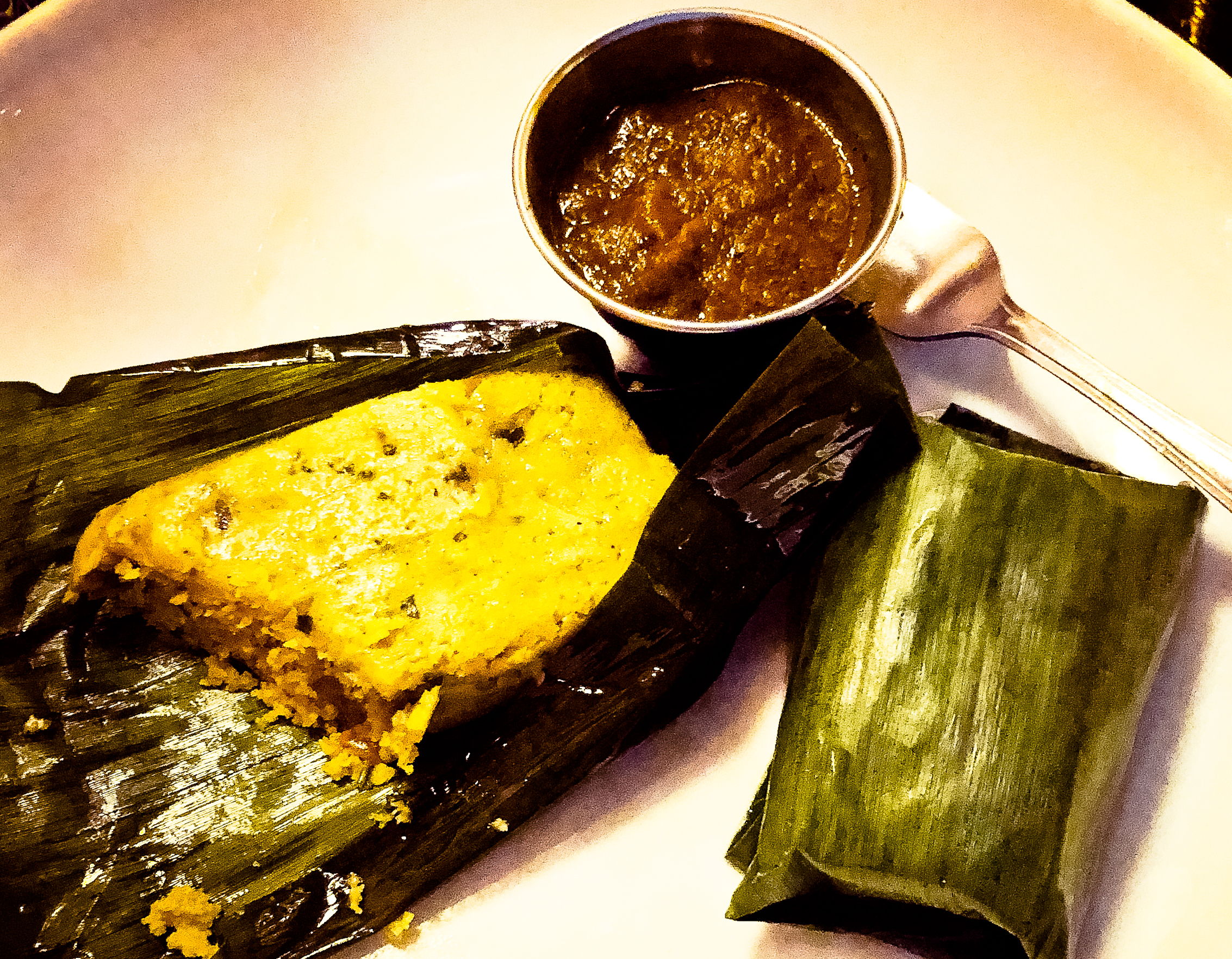
Chef David Vargas with a tasty and colorful presentation of Capt. Andrew’s cured conch and squid ink tamale.

Capt. Nick and Otto caught the tautog (think a brutish looking bottom fish with big lips and human-like teeth, per Otto’s great description to the crowd) that was served with the green crab gumbo prepared by Chef William Myska of Ore Nell’s Barbecue in Kittery, ME. Captain Andrew harvested the conch that Chef David Vargas of Vida Cantina in Portsmouth, NH turned into masa miso cured conch with squid ink tamale.

Chef Christian brought in Ryan Smith of Signature Oysters, whose Katama oysters Atria chefs turned into a trio of preparations: andouille roasted; cucumber granita mignonette; and yuzu broiled.

Captain Keper Connell caught the bluefin tuna that Chef Jeremy Glover of Raleigh Wine Bar and Eatery in Portsmouth, NH crafted into an amuse bouche of raw bluefin tuna in a peach boshi broth.

Chef Brendan broiled the locally sourced fluke from Menemsha Fish Market and served it with Hubbard squash and charred oyster mushrooms with a red wine leek sauce.
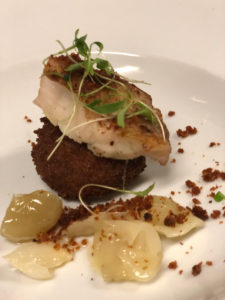
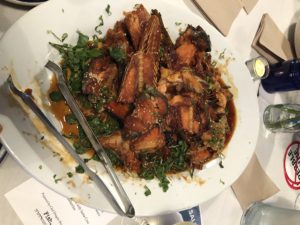
Capt. Nick Wilbur’s tautog resting on a fried okra cake prior to being smothered in smoked green crab gumbo prepared by Chef Will Myska. Perfect for New England fall.

All of the food was excellent. And the stories the chefs and the fishermen told about the seafood, how it was harvested, how it was prepared, helped stitch together this newly created ad hoc community of chefs, fishermen and consumers.

So yes. Relationships matter. As friend, colleague and founder of responsibly harvested seafood network Local Catch Josh Stoll often says, the definition of “local” is changing, becoming less about geography and more about relationships.

The KNOW FISH Dinner at Atria reinforced that. Yes, both the seafood and produce were “local,” or as local as possible (from Gulf of Maine, and some farms in N.H. and Maine). But what stood out to everyone in attendance were the stories from those who harvested and prepared the food.

Everyone, including those from the island and off-island, left knowing something more about the food they ate and the different links in the seafood supply chain. Before closing out the event, I asked folks to carry those stories with them and that sense of community we’d built. I asked them to try and establish relationships with fishermen or fishmongers and chefs in their community. Build the trust that elevates the community and the values we discussed. Ask questions.

And spread the message.


Big thanks to everyone who helped make this event happen, including the fish and shellfish harvesters: Otto, Capt. Andrew, Capt. Nick, Capt. Arno Ewing, Ryan, Capt. Keper, and Shelley for making the connections. Thanks to the chefs: Brendan, David, Will, Jeremy, and the entire crew at Atria. Special thanks to Chef Christian Thornton for hosting the event. Thanks also to Shauna Troy and J. Lohr Wines for providing the great vintner’s accompaniment to each course. Thanks to the Martha’s Vineyard Food and Wine Festival.  And many thanks to everyone who attended and elevated the discussion!


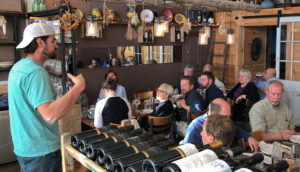
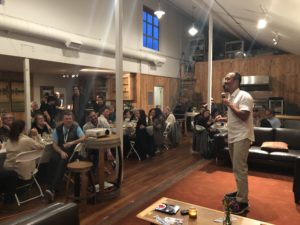
Top photo: Capt. Keper Connell tells the story of the bluefin tuna he caught and that everyone was enjoying.


All Blog Posts

Getting to KNOW FISH in School

  • December 20, 2018October 19, 2021
  • by Colles Stowell
Share it!
Share

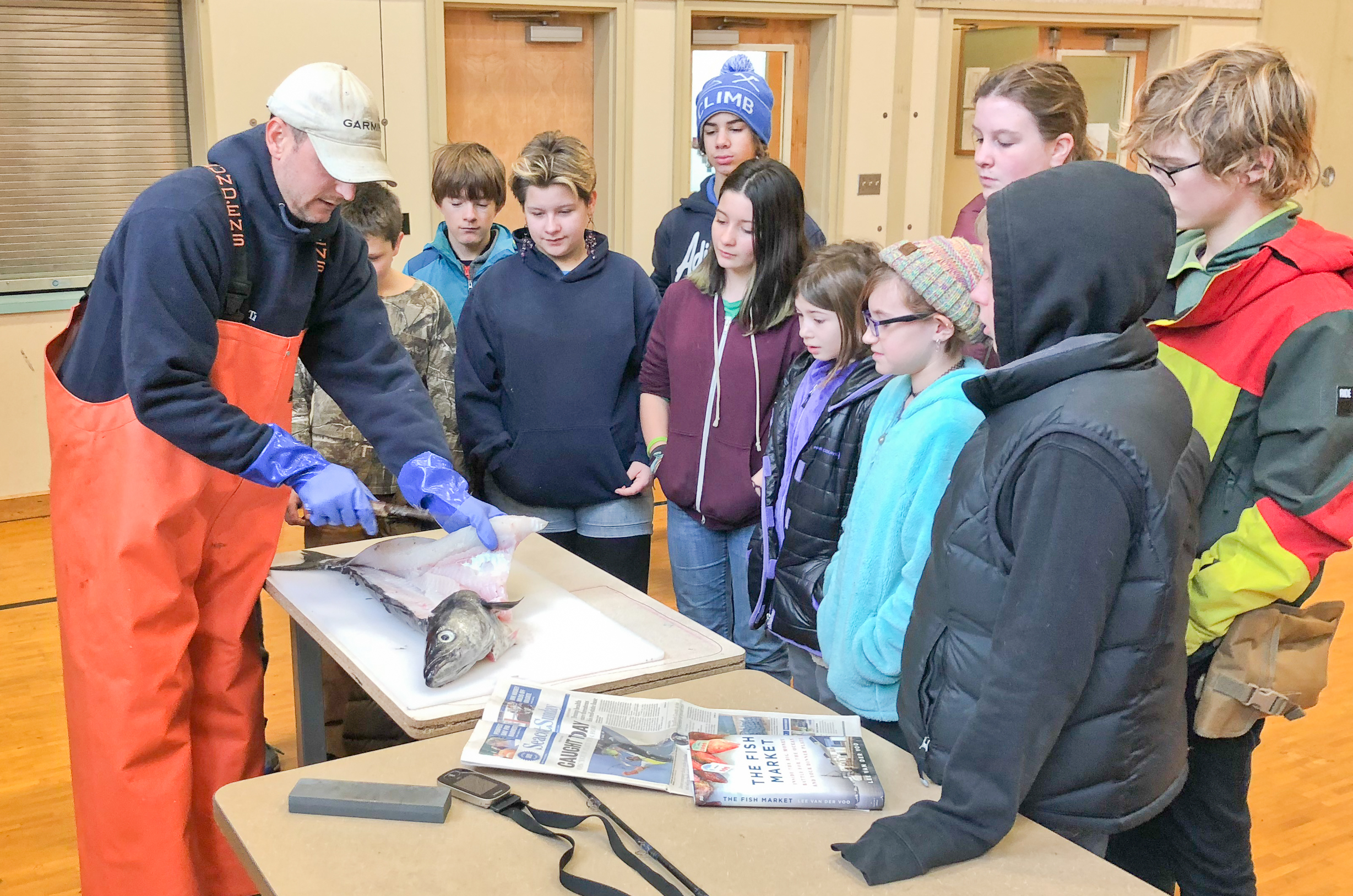
Students wrapped around the table, close, so they could get a good look as Capt. Tim Rider deftly worked the knife through the 15-pound pollock his crew had landed the day before. Neatly separating flesh from bone, he explained that filleting a fish is a matter of taking your time to be safe, but also to extract as much of the delicate meat as possible.

It’s a process he’s done many more times than he can remember. It is now automatic. For most of the middle school students at Harpswell Coastal Academy, this was a first. They asked questions about how the fish was caught, how it was bled and iced to keep it so fresh it almost looked like it could swim off the table.

They learned about the long days, the process of filleting a couple thousand pounds of fish before delivery to restaurants, stores and directly to consumers. They got an inside look at the life of a fish harvester.

This was the mission of the KNOW FISH Lunch® hosted at the school Dec. 11. We wanted students and their families to meet fishermen from their communities and learn how and why they harvest the species they do.

The gym was set up with tables framing a large rectangle with displays featuring clam rakes, lobster traps and some of the heavy steel used for scallop dredges. Students drifted from table to table with a broader perspective of the effort, process and forethought that goes into producing the seafood they eat.

They learned from Mason Warren how to put those wide rubber bands on lobster claws, occasionally getting their hands on a lobster, its claws and the bands. They learned what it’s like to bait and set several hundred traps a day, and what it’s like to get started in the business. Mason’s father is a lobsterman who travels offshore. This time of year, he and other fishermen often have to stay in port because the weather is just too dangerous (read: 20-foot seas).

Wendell Cressey discussed the backbreaking toil of bending over and digging clams and oysters out of the mud. He does mostly wild harvest, and therefore, the clam rake becomes an extension of his arms. He talked about the challenges a frozen mud flat can present in winter.

Students learned how a 2000-pound scallop dredge works from Terrance Kenney. A fisherman for decades, Kenney explained the constant  maintenance and plenty of work necessary to get scallops out of the shells and into market shape.

I had set up a table with live green crabs, some gill net, trawl net and a turtle excluder device. Several students wanted to adopt the green crabs as pets…or feed them to their dogs. Funny how live organisms with a hint of creepiness draw students close.

While eating chowder, students learned about the relationship they have to the seafood they eat. Photo: Micah Depper

The best part was the ambient buzz as students visited each harvester, shuttling in and out of the gym in three groups, absorbing the stories. At each station, students heard from small-scale local fish harvesters about how choosing locally sourced seafood affects them.

As if to illustrate the point, school chef Nicole Walker made a fabulous fish chowder using the fresh pollock provided by Capt. Tim Rider. Not too heavy, with a good balance of potatoes and seasoning, the chowder let the fish do the talking. And everyone praised the result.

While they finished off first or second helpings of the chowder, I rounded out the message with a quick discussion of the global seafood dynamic, illustrating why choosing local, regional and even domestic seafood is better for fish harvesters, the resource, the local economy and consumer health.

This was the first KNOW FISH event to bring fishermen, their gear and some of their product into a school to engage students, their parents and staff in conversations about how and why their choices matter.

By all accounts, the conversations and the food resonated, with some students saying they still have the 7 Cs of Sustainability stuck to their refrigerators at home after my visit in November.

That’s how I know the message is sinking in. So we’ll keep having these types of conversations in classrooms, or gyms or cafeterias, with students, their families, fishermen and teachers. And we’ll keep shifting the import dynamic away from imports and toward local or domestic seafood purchases.


All Blog Posts

Fish, Tamales and Community

  • December 13, 2018October 19, 2021
  • by Colles Stowell
Share it!
Share


The banana leaf pollock dressed in a cilantro peanut tamale did it. I am no chef, but I like to cook and explore new interpretations of dishes I thought I knew. Growing up in New Orleans meant a vast menu of cool, authentic dishes that often transcended expectations.

I still remember the smell, taste and texture of the corn husk-wrapped tamales the neighborhood kids would buy from the old man pushing his cart up and down Napoleon Ave. We had no concept at the time of ingredient sourcing, labor, etc. We just knew that a couple of those tamales for $1 after playing football in the streets made for a great cap to the afternoon.

So biting into Chef David Vargas’ spin on the cod tamale opened my eyes and fired my taste buds. I would not have thought of this combination as a kid (I may not have wanted to try it). But it was a stark reminder of the beauty of culturally diverse approaches to seafood.

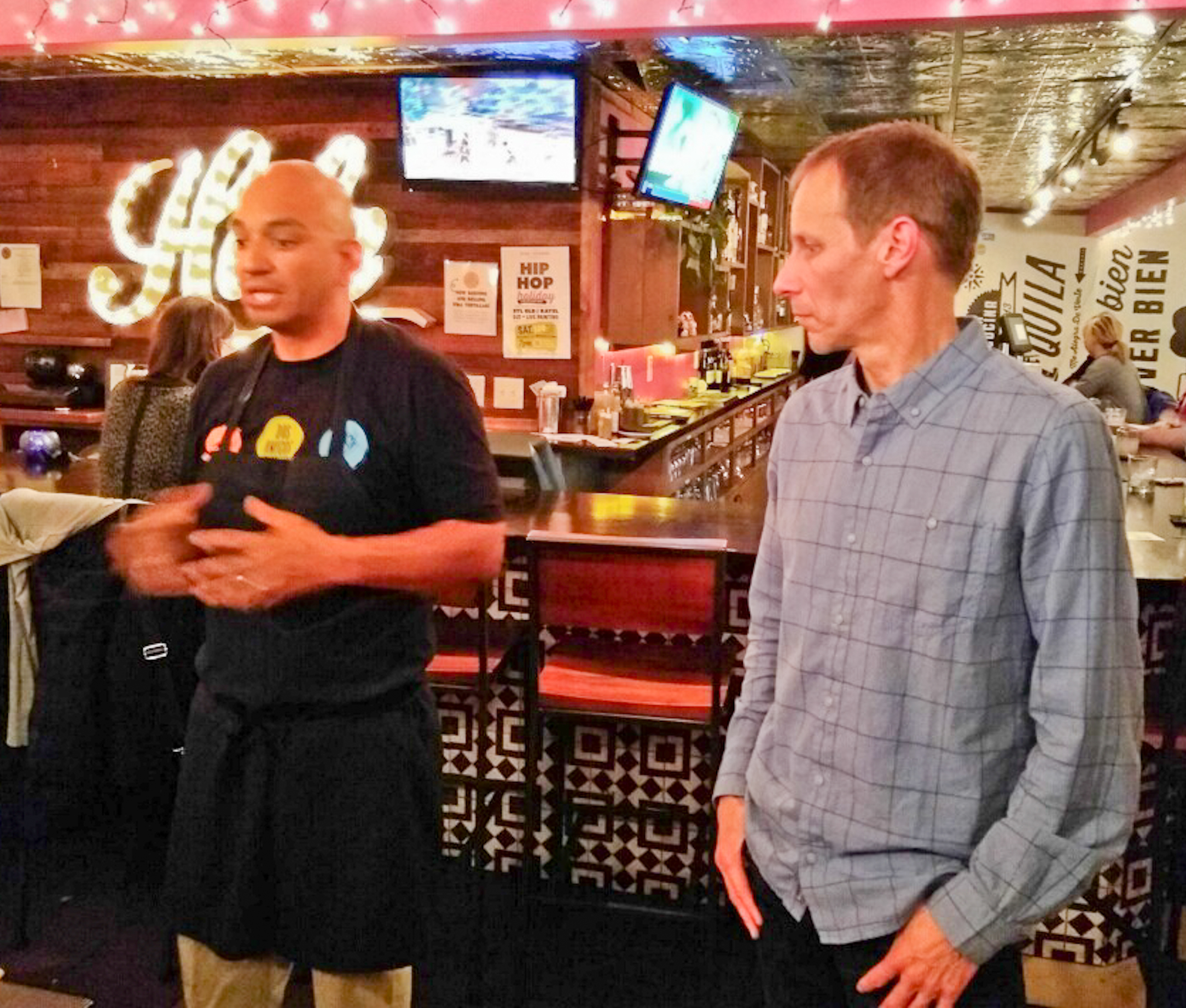
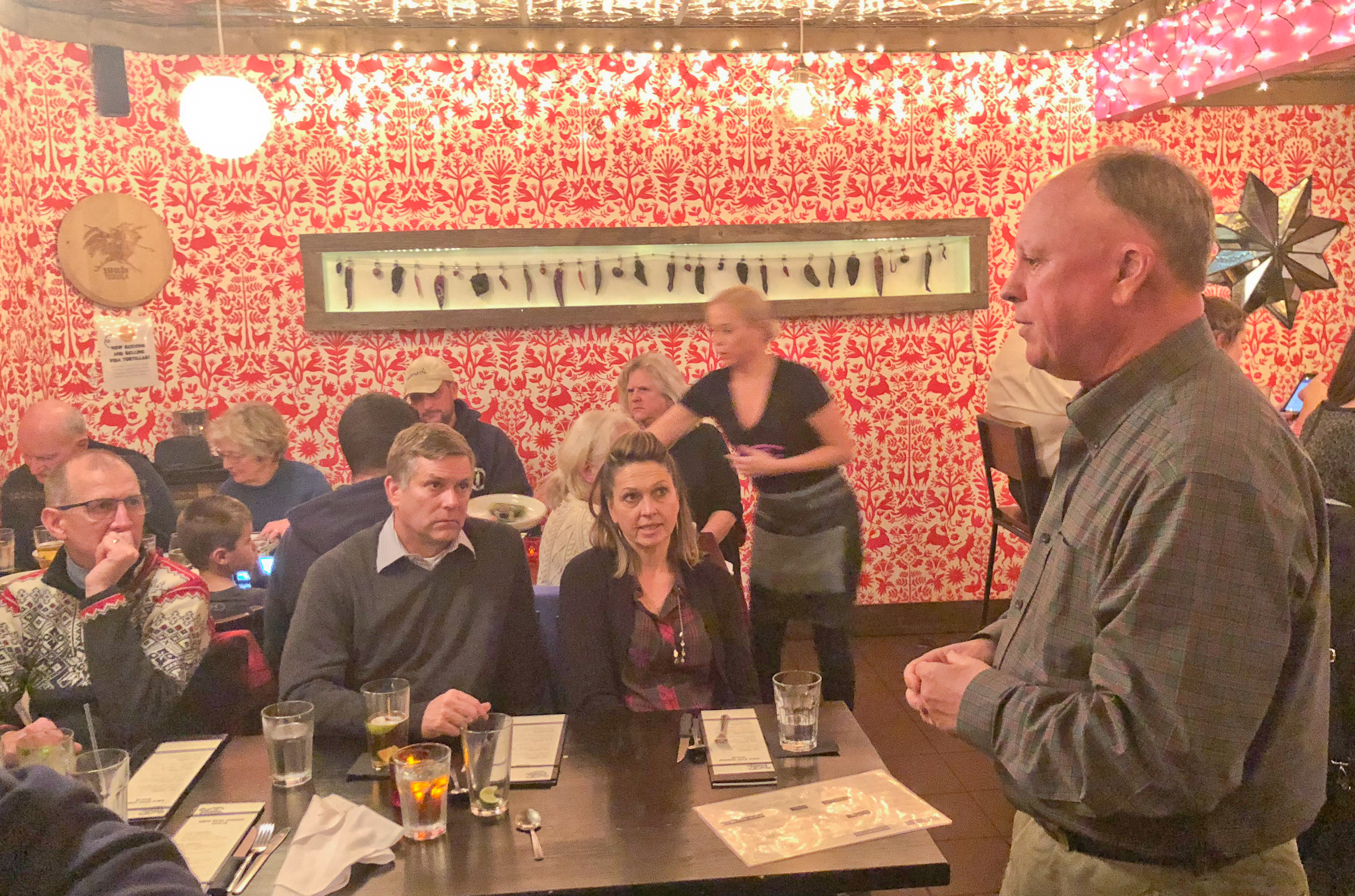
Chef David Vargas discusses his roots in local sourcing.

Deep roots

Chef David spoke about growing up in a Santa Ana (California) neighborhood of little means but deep cultural roots and strong food traditions. His family grew its own vegetables. If they wanted fresh seafood, they went to the local pier and caught it themselves. Local sourcing is ingrained in his DNA and is the bedrock of his menu at Vida Cantina in Portsmouth, N.H.

Chef David spoke about growing up in a Santa Ana (California) neighborhood of little means but deep cultural roots and strong food traditions. His family grew its own vegetables. If they wanted fresh seafood, they went to the local pier and caught it themselves. For him, local sourcing is ingrained in his DNA and is the bedrock of his menu at Vida Cantina in Portsmouth, N.H.

That explains his enthusiasm for hosting a KNOW FISH Dinner®. It was not too far of a leap from the community dining he grew up with, and the embracing of locally sourced food.

Cod ceviche, courtesy of Chef David Vargas and Capt. Tim Rider. Now that’s boat to table…with flair!

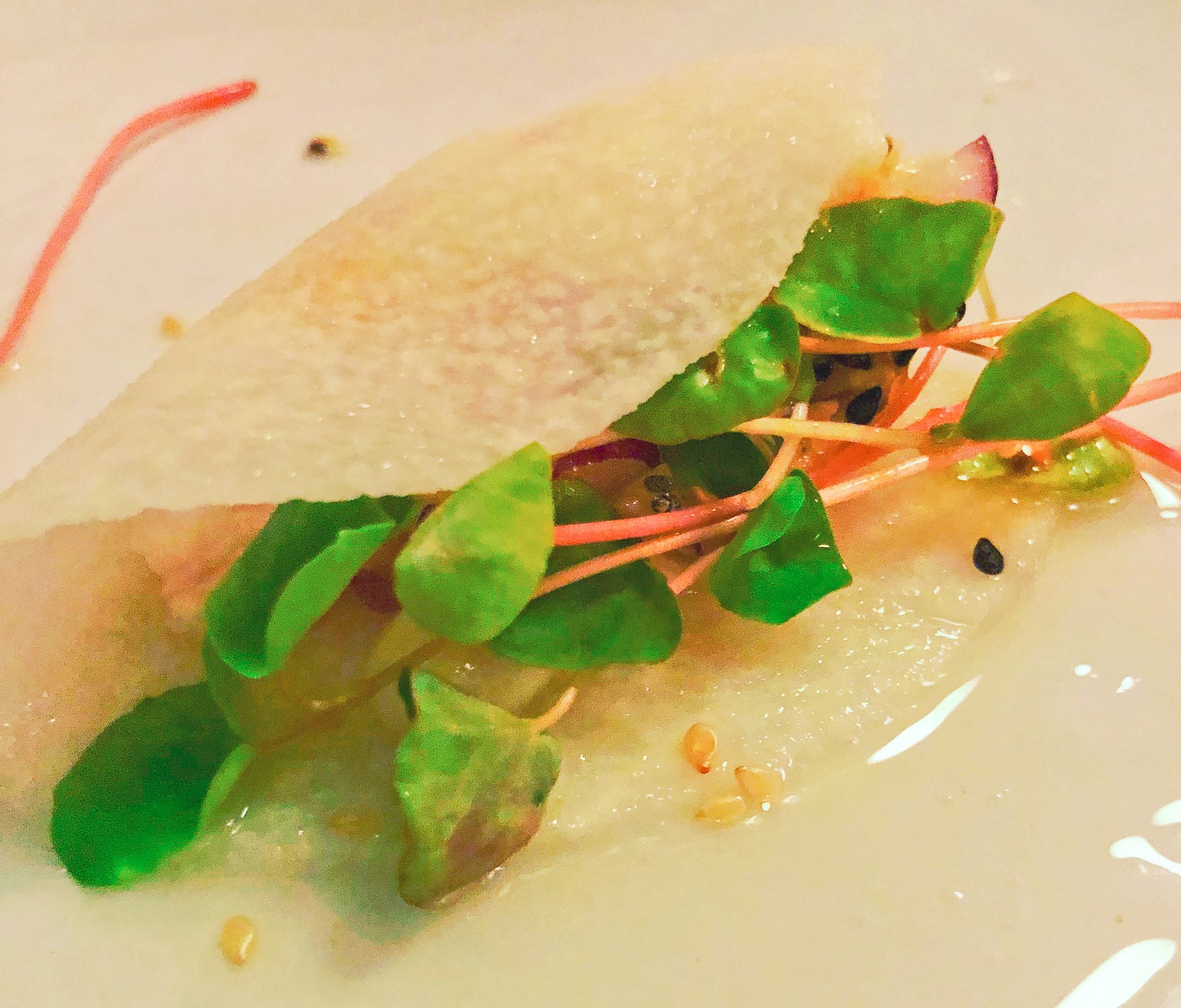
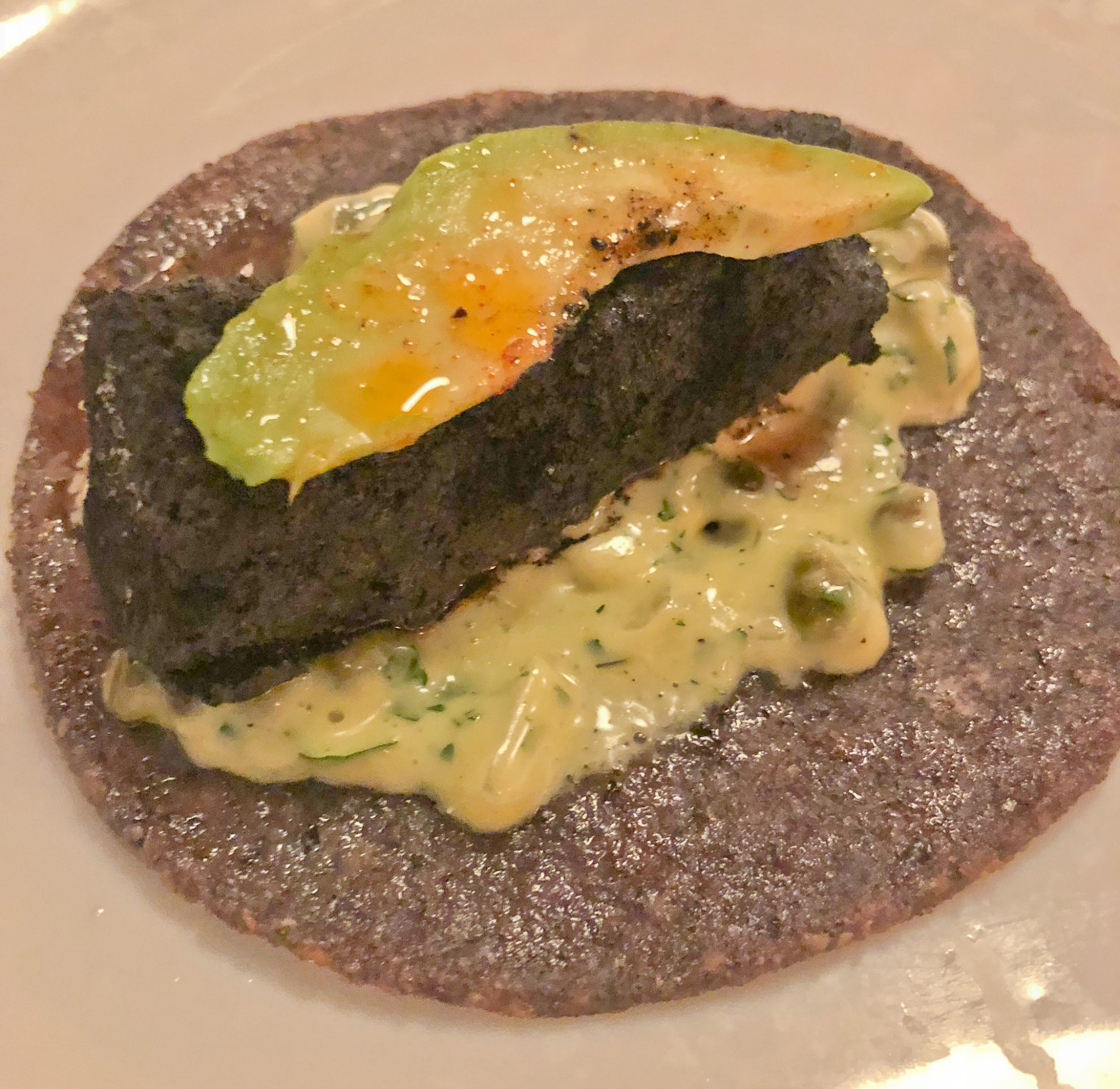
Capt. Tim Rider of New England Fishmongers provided the cod, haddock and pollock (that had been swimming the day before) Chef David turned into south-of-the-border feast fancies: cod ceviche served with a thin, but lightly crisp jicama tortilla and fresh mango, serrano and seeds; charred haddock taco paired with a crispy caper tartar sauce and marinated avocado; and the aforementioned tamale that also came with a mouth-warming charred arbol salsa.

Appreciating fish tales

Capt. Tim also provided some perspective on fishing for a living. He shed light on the passion, drive and unrelenting commitment required just to survive. The long hours, sometimes 20-hour days, sometimes 36 hours, are physically and psychologically draining to be sure.

Charred haddock taco. That marinated avocado complemented the charred coating on the haddock beautifully.

But the attendant pressures to make a living for a captain and crew outside of the actual harvest can be staggering. The expenses can drain bank accounts quickly, which leads to heavy debt. Beyond the table stakes of boat costs such as monthly payments, insurance, fuel, gear, maintenance etc. are, for many, the staggering fees just to be allowed to fish. Someone like Tim may have to pay in excess of $100,000 a year to someone else for the right to fish for cod, pollock, haddock, scallops, flounder and a host of other species in the Gulf of Maine.

It’s the complex, and often debilitating nature of the current fisheries management structure in New England and elsewhere in the United States. Without passion and commitment, facing those kinds of costs and demands on personal well-being would be a short-lived fool’s errand.

And so, KNOW FISH Dinner attendees at Vida Cantina last week gained new appreciation for the fish harvesters who produced the seafood they were eating.

Tim Henry of Bay Point Oyster Company describes the extraordinary patience and commitment to start and run a successful oyster farm.

They also heard from Tim Henry, owner of Bay Point Oyster Company, LLC., who also described the effort to produce top quality oysters right out of Great Bay in New Hampshire. It’s a three-year commitment, requiring tons of patience, significant capital, physical fortitude and an ability to adapt to constantly changing circumstance. Heavy rains can force the state to shut down the harvest, and alter scheduled deliveries, for example.

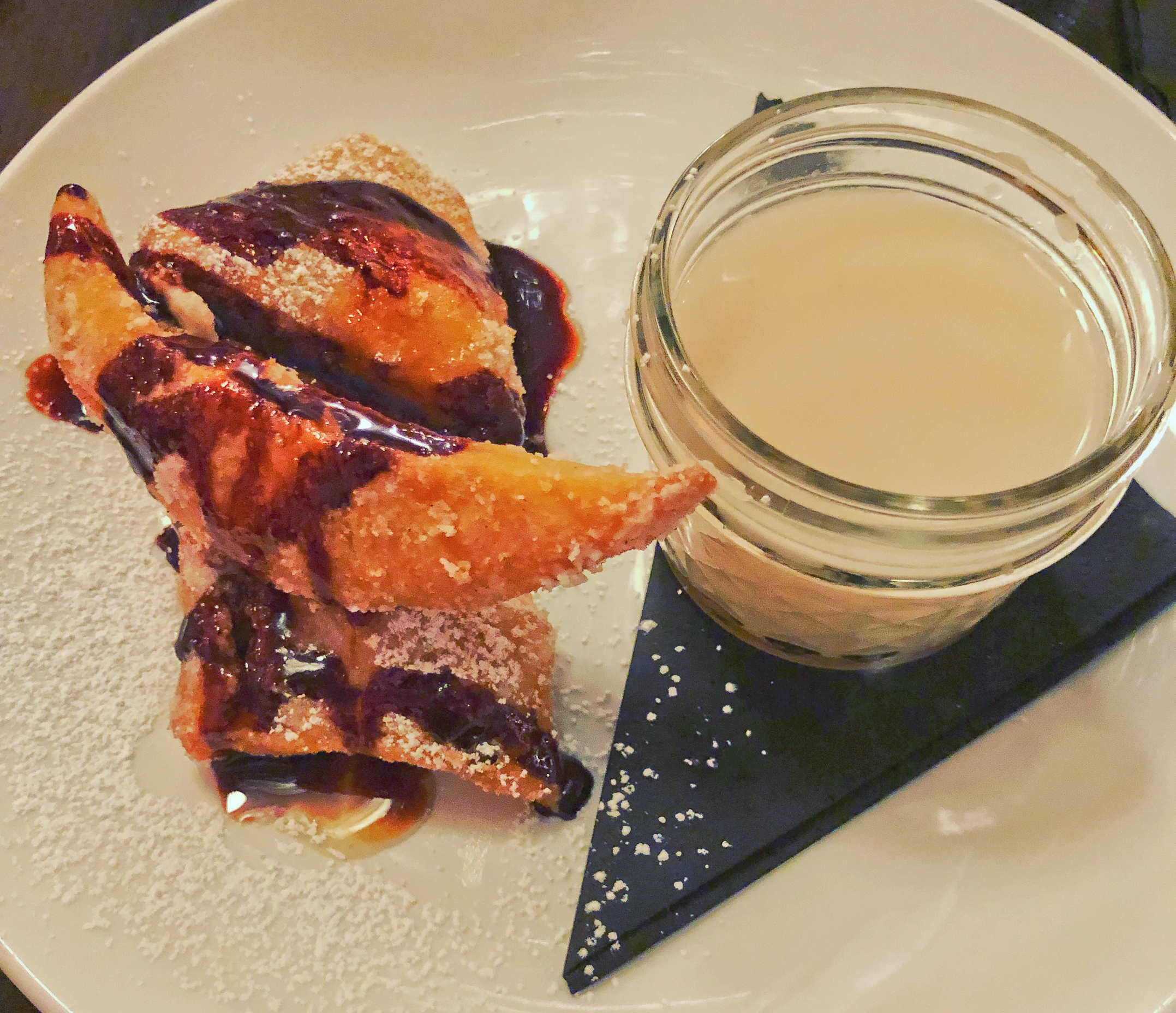
Dessert. This is the first good sopapilla I’d had since childhood.

As we dined on light, crisp sopapillas drizzled in chocolate sauce and local honey, we discussed why knowing the story behind the food we eat, especially the seafood we eat, matters. This is an important point for both classroom and community discussions. When you know when, where, how and by whom your seafood was harvested, you can appreciate the effort that went into producing that seafood. Moreover, you can trust it.

Frozen shrimp from Thailand? Not so much.

All Blog Posts

Getting Seafood Smart!

  • May 14, 2018October 20, 2021
  • by Colles Stowell
Share it!
Share

“What happens if you live in Kansas and you want sustainable seafood?” I get this question occasionally. Interestingly, Kansas seems to be the state most often cited. Perhaps it’s because it’s flat as a pancake and just about as far away from any coastline as any state in the union.

But, it’s a valid question, and one that came up Wednesday night at the latest KNOW FISH Dinner® at Enoteca Athena in Brunswick, Maine. This was the 10th in the series of events aimed at bringing communities together to meet the harvester who caught or grew the seafood they’re eating and learn more about why their choices matter. The question of knowing the story of your seafood permeated the discussion throughout the evening. We’ll return to that question in a bit.

Chef Tim O’Brien went above and beyond the call of duty by staying up until 2 a.m. that day figuring out the most efficient way to skin a couple dozen skate wings (think gloves, towels, a sharp knife and some strong language). This was part of the prep for a fabulous meal also featuring yellowtail flounder, haddock, European green crabs and oysters from Mook Sea Farm.

Jeff Auger talking about having the “Mookie Blues.” Credit: Steve Wyman

Jeff Auger of Mook Sea Farm talked about the long time between receiving spat (or seed) and growing oysters to market weight and the many variables, such as climate, that can affect the success of the process. As he spoke, we feasted on his Mookie Blues oysters from Damariscotta that Tim had fried perfectly and served with a spicy lemon aioli.

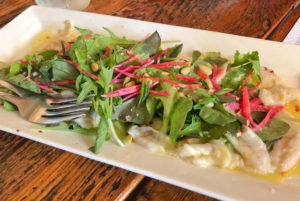
Tim emphasized the importance of local sourcing, or at least, knowing the source of the food he serves. He mentioned connections with different fish and shellfish providers and local distributors as we enjoyed delicately balanced yellowtail flounder ceviche (“cooked” in blood organge and balsamic vinegar) caught the day before by Capt. Tim Rider of New England Fishmongers. The flounder was served amid a crisp spring, palate-awakening salad of greens, chives watermelon radish and pine nuts.

Perfect spring-into-summer ceviche.

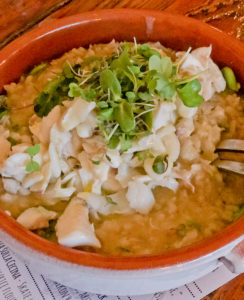
As we discussed getting seafood smart about underutilized species, we devoured a risotto made with green crab stock, green crab roe and haddock. European green crabs have been around the U.S. coast for almost 200 years, can eat up to 40 mussels a day and can produce up to 160,000 eggs a year. They destroy eelgrass beds while devouring larval mussels, clams and oysters.

Green crabs make an excellent stock. The roe and the roasted haddock made this risotto sing. Credit: Steve Wyman

So it was good to hear from Marissa McMahan of Manomet that a collaboration of researchers and fishermen are sorting out the soft shell timing of green crabs in hopes of creating a consumer market to eat the invasive species. An established market already exists in Italy. The stock and roe added a fabulous flavor to the risotto, which also featured roasted haddock and daikon radish. Excellent balance.

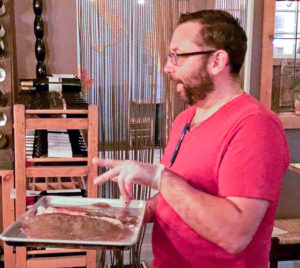
Risky move showing the before side of the skate story? Nah, it’s all part of getting to know your seafood. Chef Tim O’Brien describing the process and the benefits of this under-loved species.

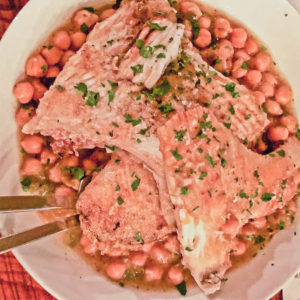
The last course was “Razza Sull Cecina”, the heretofore mentioned skate wing pan-seared with rice flour and finished atop cecina, which is an outstanding preparation of wine and butter braised chickpeas, leeks, garlic and black pepper. The skate was tender but flavorful with the cecina backdrop.


The skate may be a beast to skin, but it’s delicate and carried the flavor of the cecina very well. Credit: Steve Wyman

A fisherman’s tale

As we discussed the importance of knowing the story behind the seafood, I talked about Capt Tim Rider, who also provided the haddock and the skate for the dinner. He planned to attend the dinner and tell his story so people would have context behind the fish they were eating.

Sadly, he was unable to make it because he had to tow in a fellow rod-and-reel fisherman whose boat broke down offshore. New England Fishmongers forges close relationships with chefs to bring in fresh, properly handled seafood harvested in the Gulf of Maine. Capt. Tim and his crew often leave the dock at 1 a.m. and return late in the afternoon or in the evening, only to turn around and do it again. If someone is broken down out on the ocean, they help them out.

That is his story, and it’s the story of many fish harvesters. Knowing who caught your fish, when, where and how they caught it is great if you can discover that. Those of us fortunate enough to live around the Gulf of Maine live in the cradle of one of the seafood capitals of the world. We don’t have to work too hard to find fresh, locally harvested fish and shellfish, and the story behind it.

Fresh off the boats. The haddock came from Capt. Tim’s Finlander I in Porstmouth, NH, and the flounder and skate came from his Finlander II in Gloucester, Mass. All delivered to Chef Tim in Brunswick the night before.

Back to the question

Folks in Kansas? Not so much. So my answer to the question about what they can do stems from the premise behind One Fish Foundation: Know your seafood. I believe habit, driven by price is one of the main catalysts behind the astronomically high rate (90%!) of imported seafood in the US.

You want salmon for dinner in the Heartland? You go to your local Walmart or other chain, grab the salmon in the case and head for the checkout. You may even read the label and see that it was “all natural” and farm-raised “fresh” in Chile. And that may be all the information you need to make your decision to buy.

But it’s also all the information you need to give you pause. Suppose you knew that Chile salmon farming operations have the highest rate of antibiotics use, by far, of any country in the world. Even with all of that antibiotic use, Chile suffered a massive algal bloom in 2016 due to a confluence of environmental and management issues such as improper net pen siting and overcrowding. Twenty-four million fish died at a roughly $1 billion cost to the industry.

To get around the BIG hurdle of habit, we need to be having more of these conversations about why our choices matter. So yes, knowledge is power. For folks in Kansas, some knowledge could help them realize that even though they can’t get pollock right off the boat, they may be able to get some that has been caught domestically. The technology for frozen-at-sea products is such that the freshness of the fish or shellfish is preserved as if it had just come out of the water, if done properly. This was an enlightening discussion at Slow Fish 2018.

The US has some of the highest standards for food safety and fisheries management in the world. And if your local store doesn’t have anything that fits the bill, apply some pressure. It may take some time, but consistent pressure can change their buying policies.

Also see if there is some sort of community-supported fishery that may provide good, responsibly harvested domestic seafood. Like a CSA for farm produce, a CSF offers nearly direct from the boat fish delivered weekly (or whatever timeframe) for buying a share up front. Some operations provide this service in the heartland.

If price is a factor, look for a species that is abundant, and not salmon, tuna, cod, etc. Try cusk, for example. Also, some seafood counters offer the small pieces that can’t be sold alone at affordable prices. Cost can be the elephant in the room, particularly for those who may not be able to afford “sustainable seafood,” and it will be a topic for a future blog.

So the KNOW FISH Dinner at Enoteca was again a great discussion set to the backdrop of an outstanding meal prepared with locally harvested seafood with a compelling story behind it.

We’ll keep trying to change the import dynamic, one conversation at a time.

Stay tuned.


Top photo credit: Steve Wyman


All Blog Posts

Slow Fish 2018: Telling tales

  • May 9, 2018October 20, 2021
  • by Colles Stowell
Share it!
Share

Slow Fish is making a difference.

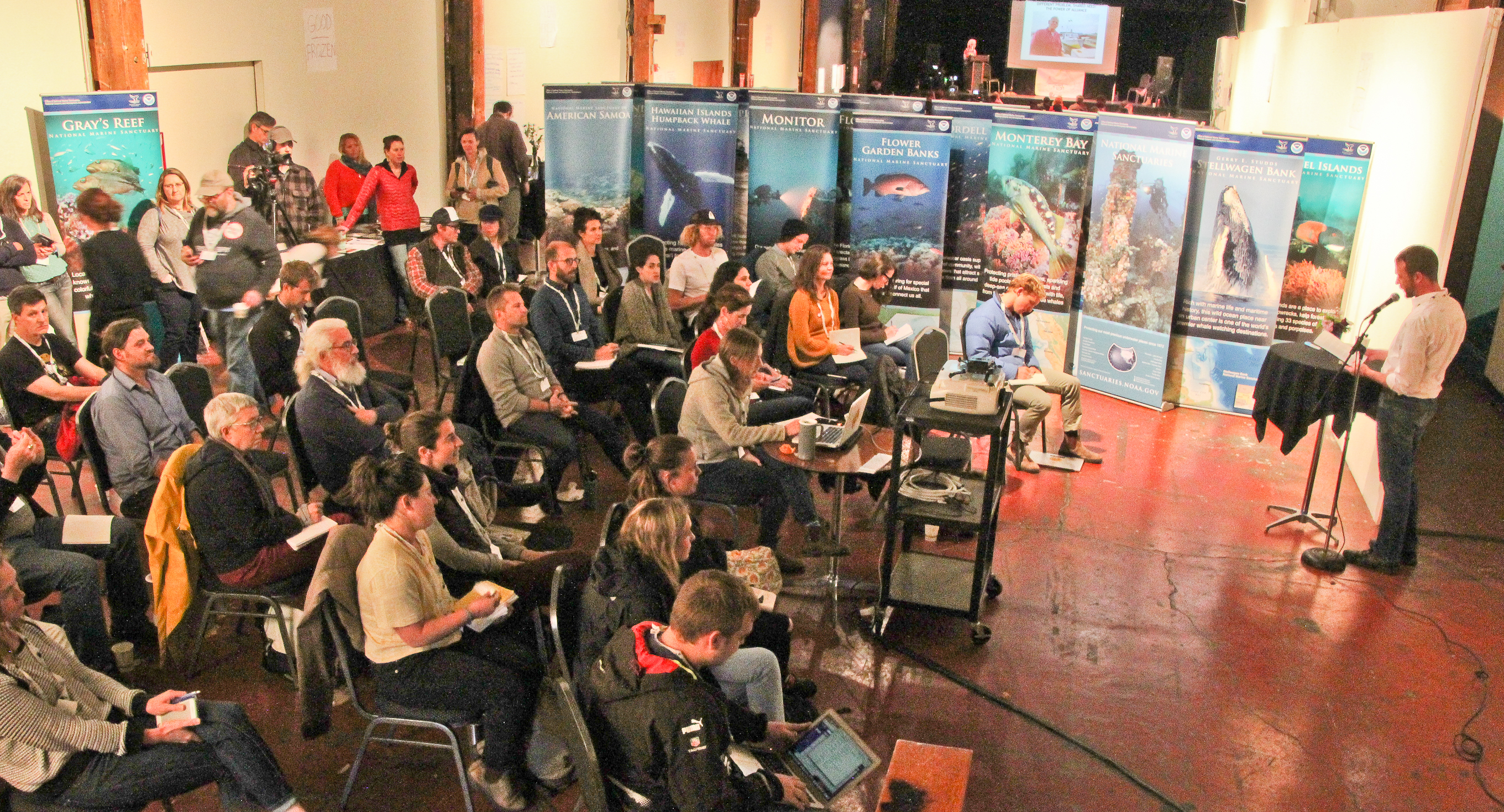
Think of it as a collaboration of fish harvesters, scientists, chefs, students, food-lovers and activists around the world working toward one goal: good, clean fair seafood for all. This was on display throughout the three-day Slow Fish 2018 event in San Francisco April 14-16.

Setting the tone with the Slow Fish 101 presentation. Credit: Lance Nacio

Some of these successes were writ large on the main screen on the first morning of content programming in the Slow Fish 101 presentation.

  • Melanie Brown, a set net fish harvester from Bristol Bay, Alaska, spoke of indigenous ties to the land, the water and the resource. She spoke passionately about how wild salmon runs have sustained her family over time, and why that way of life is under threat from the proposed Pebble Mine. She also spoke of the coalition of disparate groups not normally siding with one another that oppose the mine: indigenous tribes, commercial fish harvesters, recreational fishing groups, environmental activists and politicians among others.
  • Jordyn Kastlunger reminded everyone of the importance of family connections and supporting the youth movement in fisheries as she described the trajectory of the Tuna Harbor Dockside Market in San Diego. Born of a coordinated effort of fishermen, food policy activists and lawmakers, the market features fisher folk docking on the pier and selling directly to customers. About 500 customers come every Saturday to buy about 12,500 pounds of locally harvested seafood.

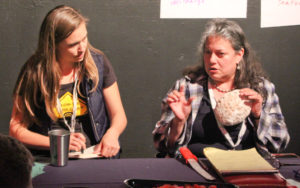
    Jacquelyn Ross tells the story of abalone from Bodega Bay at the World Cafe. Credit: Eric Buchanan
  • Jacquelyn Ross of the Southern Pomo/Coast Miwok tribes spoke about her indigenous fishing lineage along Bodega Bay, hand harvesting abalone, and witnessing the changes to the fishery wrought by temperature, current and acidification. She too spoke of family love and respect for the resource, the land and the water and the importance of sharing those stories in the hopes that others will appreciate those connections to natural resources.
  • Paula Barbeito came from Italy to describe the work of Slow Fish International and highlight the story of the Thorupstrand Fishing Guild in Denmark. Several years ago, fishermen in the community of Thorupstrand pooled their resources to buy quota so they could provide access to the fishery without being overrun by industrial operations. The guild is a reminder of how fishermen can self-identify and protect their access by working together.

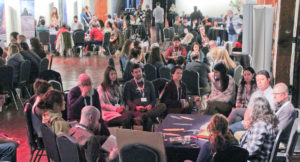
    World Cafe action. Just some of the discussions where things happen. Credit: Eric Buchanan

A parade of perspectives

These compelling narratives were just a few among many shared over the weekend. We heard from longtime fish harvester and policy activist Linda Behnken, who has fished commercially in the Gulf of Alaska and Bering Sea for over 30 years. She has drawn on that experience at the helm of her boat as she helped shape policy to protect small-scale fishing as a member of the North Pacific Fishery Management Council.

We also heard from Anne Mosness, who like Linda, has spent decades at the helm and in the trenches battling industrial scale operations. Anne described her longstanding campaigns against industrial aquaculture and genetically engineered salmon to the discussion, as well as the need to honor women’s voices and rights in fishing.

Filmmaker Mark Titus talked about his upcoming feature, The Wild, which shines a bright spotlight on the world’s largest wild sockeye salmon run in Bristol Bay, and what’s at stake in the battle against the Pebble Mine.

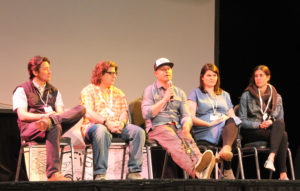
Know Your Supply Chain: Kenny Belov talks about choosing and selling responsibly harvested seafood. Left to right: Alan Lovewell, Real Good Fish; Joe Falcone, FishLine; Kenny; Anna Larsen, Dock to Dish; Jordyn Kastlunger, Tuna Harbor Dockside Market. Credit: Eric Buchanan

Kenny Belov talked about his mission in opening Fish. Restaurant in Sausalito and the TwoXSea sustainable seafood distribution company to provide responsibly harvested, abundant species to customers. Minimizing bycatch and other ecological impacts are critical factors in determining which fish harvesters he will work with.

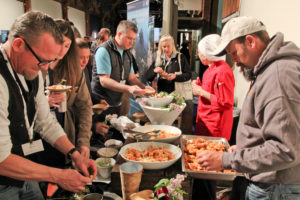
Lance Nacio’s (right in hat) fried soft shell shrimp were very, very popular. Credit: Eric Buchanan

We heard from a broad range of seafood perspectives. Lance Nacio spoke about investing in new technologies such as the plate freezers used to individually quick freeze fresh caught shrimp to preserve the out-of-the-water freshness for shipping around the country. Several oyster growers provided insight on their operations and the myriad factors that go into a successful, delicious oyster harvest. Jack Crofts brought his energy and entrepreneurial spirit to the event, trying to raise visibility and money for this mobile oyster bar, called the Oyster Barrow. Lucas Raymond, a trawl fisherman from New Hampshire, also represented the youth movement at the event.

Young entrepreneur Jack Crofts (he’s 12 going on 13!) wows the crowd with his energy and enthusiasm. Credit: Eric Buchanan

We heard from chefs talking about smart sourcing, as well from seaweed growers like Amanda Swinimer, who described her journey harvesting, by hand, edible wild seaweeds for 17 years for her Dakini Tidal Wilds. Arielle Moinester talked about launching a company that promotes eating invasive species such as Asian Carp. Her GoWild Foods has made “The Silver Skipper” (aka asian carp) the poster child for managing an ecological problem in America’s rivers by eating it.

Christopher Wang describes his connection to fishing for salmon in Bristol Bay and why he started The Gypsy Fish Company as attendees listened at the We Are Bristol Bay Dinner.

Ideas, food and fun

More than 150 people from as far away as Italy, Maine, Alaska, Louisiana, Massachusetts and British Columbia, and as near as Washington, Oregon and right there in San Francisco descended on SOMArts and other venues. We held more than 6 separate events, including the Oyster Social, Seafood Throwdown, We Are Bristol Bay Dinner, and the final Seafood Dinner and film screenings at AirBnB. Core programming on Sunday and Monday included the World Café, 36 Pesce Kucha presentations and lots of interaction.

Stellar sticky salmon at the Bristol Bay Dinner.

We feasted on delicious wild salmon from Bristol Bay and oysters from Alaska down to Baja. We had fried soft-shell Louisiana shrimp and herring roe captured in a traditional method of submerging hemlock boughs in the bay during the spawn.

The Slow Fish 2018 planning team took on a monumental task to coordinate all of these events in a very short time period ahead of the California salmon season. The small, but very dedicated Slow Food San Francisco board of directors managed countless on-the-ground logistics to ensure everything went smoothly. It was the collective passion of the planners and attendees for the Slow Fish mission to grow the network, share our core values and collaborate on more projects that drove the event’s success.

Chef Matthew Dolen honors winner Chef Aaronette King at the Seafood Throwdown at the Ferry Plaza Farmer’s Market to kick off Slow Fish 2018. The crowd engaged in the process, tasted the food and asked great questions. Credit: Eric Buchanan

We discussed new projects on the horizon, such as a YouTube channel for sharing videos focusing on Slow Fish values, success stories and fisheries-related topics. We also discussed launching a Slow Fish website that will become a destination for those seeking Slow Fish updates, bait boxes to help launch community-based projects like a community supported fishery, Seafood Throwdowns, KNOW FISH Dinners® and more. To enable Slow Fish folks to to ask questions and discuss issues within an informed community, we may launch an online forum. We also discussed an ambitious project to reduce domestic imports from 90% to 50% by 2050. This 50 by 50 project models similar food system-related measures aimed at eating locally (or domestically) produced food.

And so we charted a course for Slow Fish’s future. To most effectively create change, we need to grow the Slow Fish family and foster continued collaboration on future success stories that will help change that massive import dynamic in this country.

And we will.

Stay tuned for Slow Fish 2020.


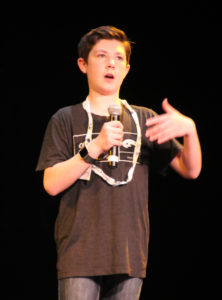
Top photo: Tyson Rasor of Ecotrust emcees the Know Your Fish Pesce Kucha session. Credit: Eric Buchanan.

Recent Posts

  • Hurricane Ida wreaks havoc on Louisiana’s seafood industry
  • EPA Should Use Clean Water Act To Kill Zombie Mine
  • Slow Fish 2021: Relationship Matters
  • Faith, Façades, and Futility
  • Pebble Permit Paused: Politics at Play

Archives

  • September 2021
  • August 2021
  • April 2021
  • December 2020
  • August 2020
  • June 2020
  • February 2020
  • December 2019
  • November 2019
  • October 2019
  • July 2019
  • May 2019
  • April 2019
  • March 2019
  • January 2019
  • December 2018
  • November 2018
  • June 2018
  • May 2018
  • March 2018
  • February 2018
  • January 2018
  • December 2017
  • November 2017
  • October 2017
  • September 2017
  • August 2017
  • July 2017
  • June 2017
  • May 2017
  • April 2017
  • March 2017
  • January 2017
  • December 2016
  • November 2016
  • October 2016
  • September 2016
  • August 2016
  • July 2016
  • June 2016
  • May 2016
  • April 2016
  • March 2016
  • February 2016
  • January 2016
  • December 2015
  • November 2015
  • October 2015
  • September 2015
  • July 2015
  • June 2015
  • May 2015
  • April 2015
  • March 2015
  • February 2015
  • January 2015
Theme by Colorlib Powered by WordPress