Skip to content
One Fish Foundation
  • Blog
    • Aquaculture
    • Education
    • Environment
    • Policy
    • Wild Harvest
    • Fish Tales
  • About
    • About One Fish
    • About Colles Stowell
  • Education
    • Elementary School
    • Middle School
    • High School
  • KNOW FISH Dinners®
  • Resources
    • One Fish Podcast
    • One Fish Foundation in the news
    • The 7 C’s of Sustainable Seafood
    • Newsletter Archive
    • Recipes
      • Skate with Capers and Butter — Chef Rizwan Ahmed
      • Grandma Davis’ Fish Chowder — Jane Almeida
      • Ginger Garlic Tamari Scallops — Colles Stowell
      • Fish Stock — Evan Mallett
      • Mussels San Remo — Chef Rob Martin
      • Salted Pollock Croquettes – Chef Mark Segal
  • Connect
    • Contact OneFish
    • Social
      • Instagram
      • Facebook
      • Twitter
All Blog Posts

Getting to KNOW FISH in School

  • December 20, 2018October 19, 2021
  • by Colles Stowell
Share it!
Share

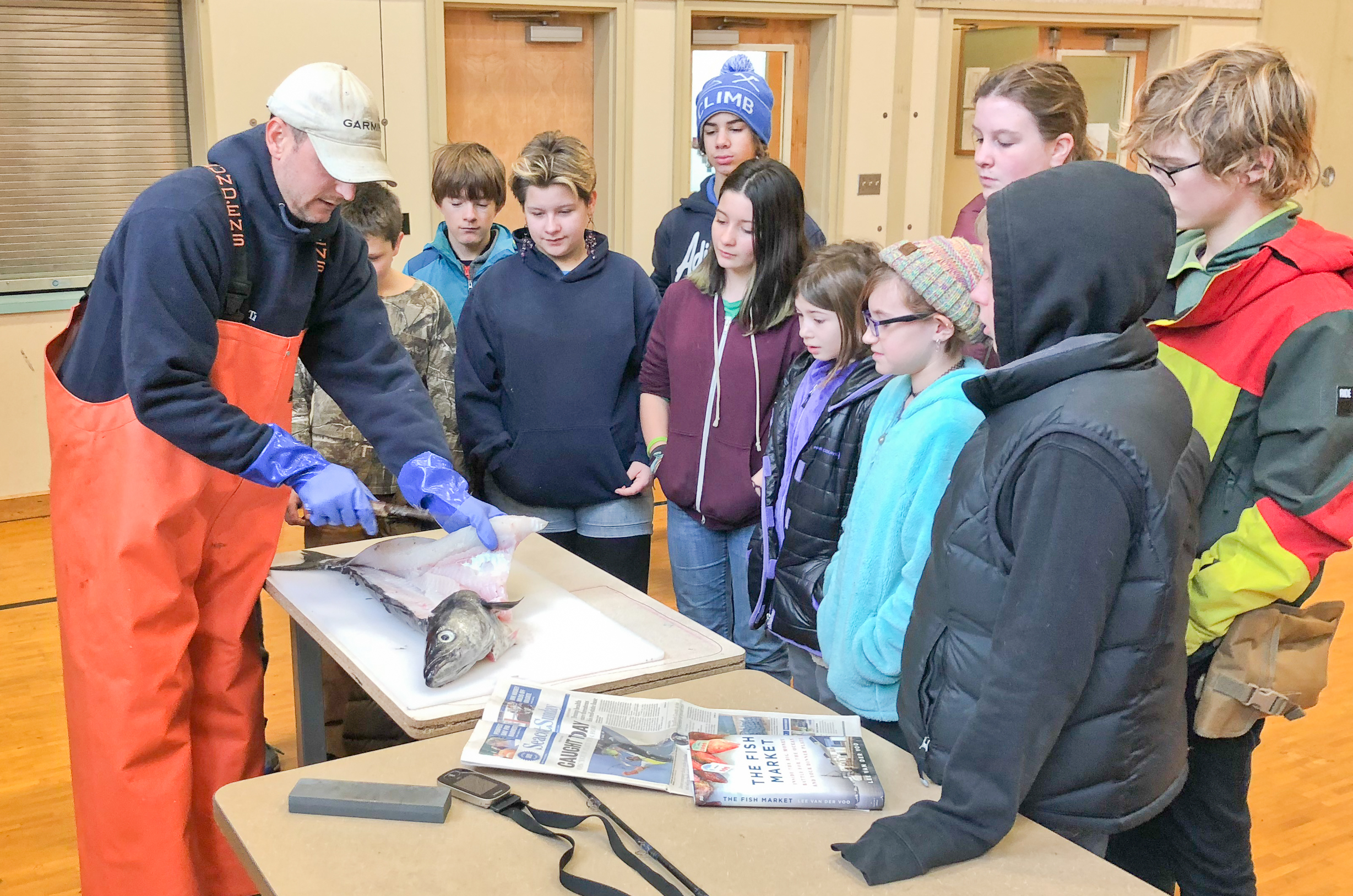
Students wrapped around the table, close, so they could get a good look as Capt. Tim Rider deftly worked the knife through the 15-pound pollock his crew had landed the day before. Neatly separating flesh from bone, he explained that filleting a fish is a matter of taking your time to be safe, but also to extract as much of the delicate meat as possible.

It’s a process he’s done many more times than he can remember. It is now automatic. For most of the middle school students at Harpswell Coastal Academy, this was a first. They asked questions about how the fish was caught, how it was bled and iced to keep it so fresh it almost looked like it could swim off the table.

They learned about the long days, the process of filleting a couple thousand pounds of fish before delivery to restaurants, stores and directly to consumers. They got an inside look at the life of a fish harvester.

This was the mission of the KNOW FISH Lunch® hosted at the school Dec. 11. We wanted students and their families to meet fishermen from their communities and learn how and why they harvest the species they do.

The gym was set up with tables framing a large rectangle with displays featuring clam rakes, lobster traps and some of the heavy steel used for scallop dredges. Students drifted from table to table with a broader perspective of the effort, process and forethought that goes into producing the seafood they eat.

They learned from Mason Warren how to put those wide rubber bands on lobster claws, occasionally getting their hands on a lobster, its claws and the bands. They learned what it’s like to bait and set several hundred traps a day, and what it’s like to get started in the business. Mason’s father is a lobsterman who travels offshore. This time of year, he and other fishermen often have to stay in port because the weather is just too dangerous (read: 20-foot seas).

Wendell Cressey discussed the backbreaking toil of bending over and digging clams and oysters out of the mud. He does mostly wild harvest, and therefore, the clam rake becomes an extension of his arms. He talked about the challenges a frozen mud flat can present in winter.

Students learned how a 2000-pound scallop dredge works from Terrance Kenney. A fisherman for decades, Kenney explained the constant  maintenance and plenty of work necessary to get scallops out of the shells and into market shape.

I had set up a table with live green crabs, some gill net, trawl net and a turtle excluder device. Several students wanted to adopt the green crabs as pets…or feed them to their dogs. Funny how live organisms with a hint of creepiness draw students close.
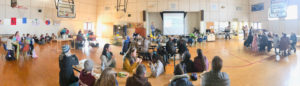
While eating chowder, students learned about the relationship they have to the seafood they eat. Photo: Micah Depper

The best part was the ambient buzz as students visited each harvester, shuttling in and out of the gym in three groups, absorbing the stories. At each station, students heard from small-scale local fish harvesters about how choosing locally sourced seafood affects them.

As if to illustrate the point, school chef Nicole Walker made a fabulous fish chowder using the fresh pollock provided by Capt. Tim Rider. Not too heavy, with a good balance of potatoes and seasoning, the chowder let the fish do the talking. And everyone praised the result.

While they finished off first or second helpings of the chowder, I rounded out the message with a quick discussion of the global seafood dynamic, illustrating why choosing local, regional and even domestic seafood is better for fish harvesters, the resource, the local economy and consumer health.

This was the first KNOW FISH event to bring fishermen, their gear and some of their product into a school to engage students, their parents and staff in conversations about how and why their choices matter.

By all accounts, the conversations and the food resonated, with some students saying they still have the 7 Cs of Sustainability stuck to their refrigerators at home after my visit in November.

That’s how I know the message is sinking in. So we’ll keep having these types of conversations in classrooms, or gyms or cafeterias, with students, their families, fishermen and teachers. And we’ll keep shifting the import dynamic away from imports and toward local or domestic seafood purchases.
 

All Blog Posts

Fish, Tamales and Community

  • December 13, 2018October 19, 2021
  • by Colles Stowell
Share it!
Share


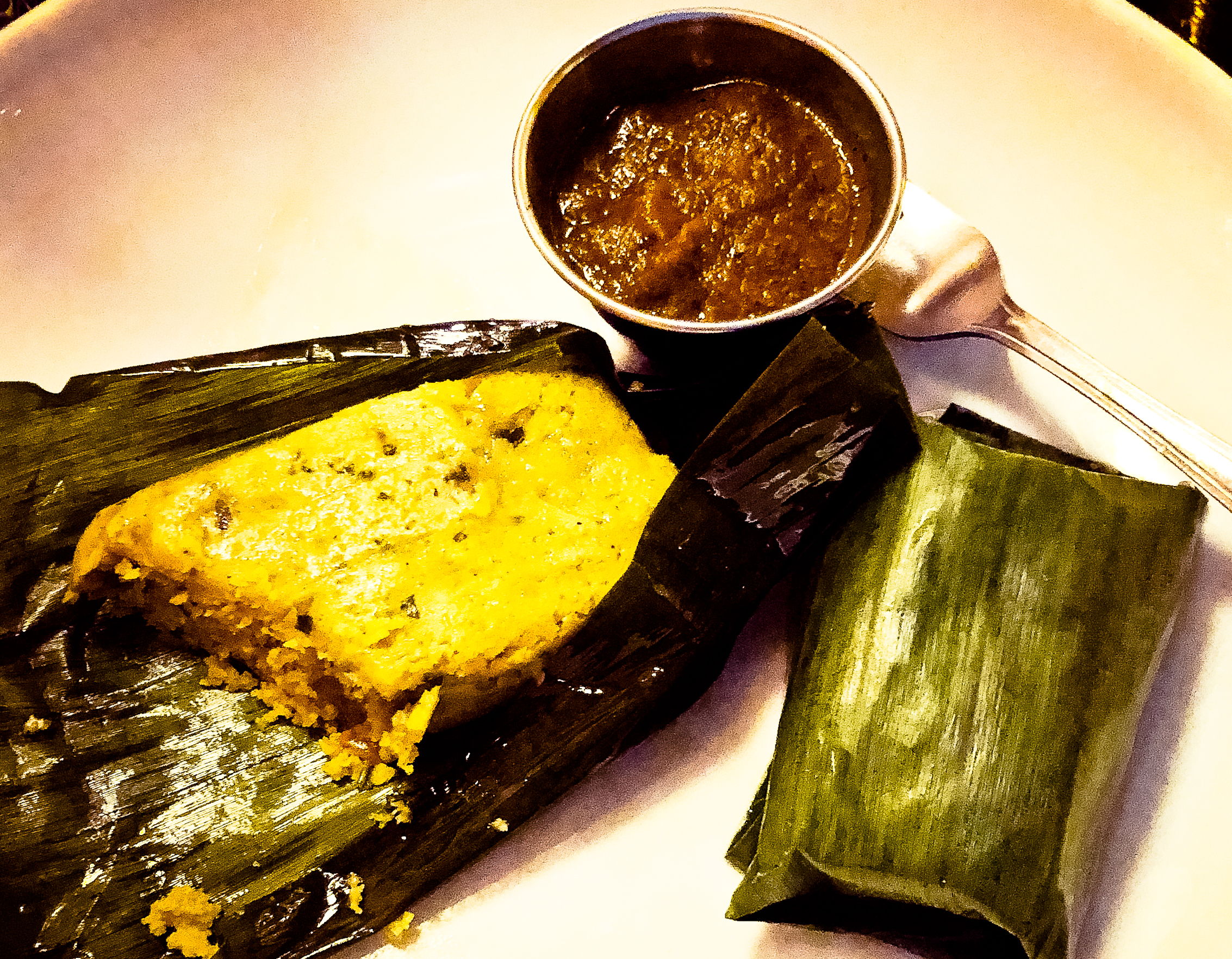
The banana leaf pollock dressed in a cilantro peanut tamale did it. I am no chef, but I like to cook and explore new interpretations of dishes I thought I knew. Growing up in New Orleans meant a vast menu of cool, authentic dishes that often transcended expectations.

I still remember the smell, taste and texture of the corn husk-wrapped tamales the neighborhood kids would buy from the old man pushing his cart up and down Napoleon Ave. We had no concept at the time of ingredient sourcing, labor, etc. We just knew that a couple of those tamales for $1 after playing football in the streets made for a great cap to the afternoon.

So biting into Chef David Vargas’ spin on the cod tamale opened my eyes and fired my taste buds. I would not have thought of this combination as a kid (I may not have wanted to try it). But it was a stark reminder of the beauty of culturally diverse approaches to seafood.

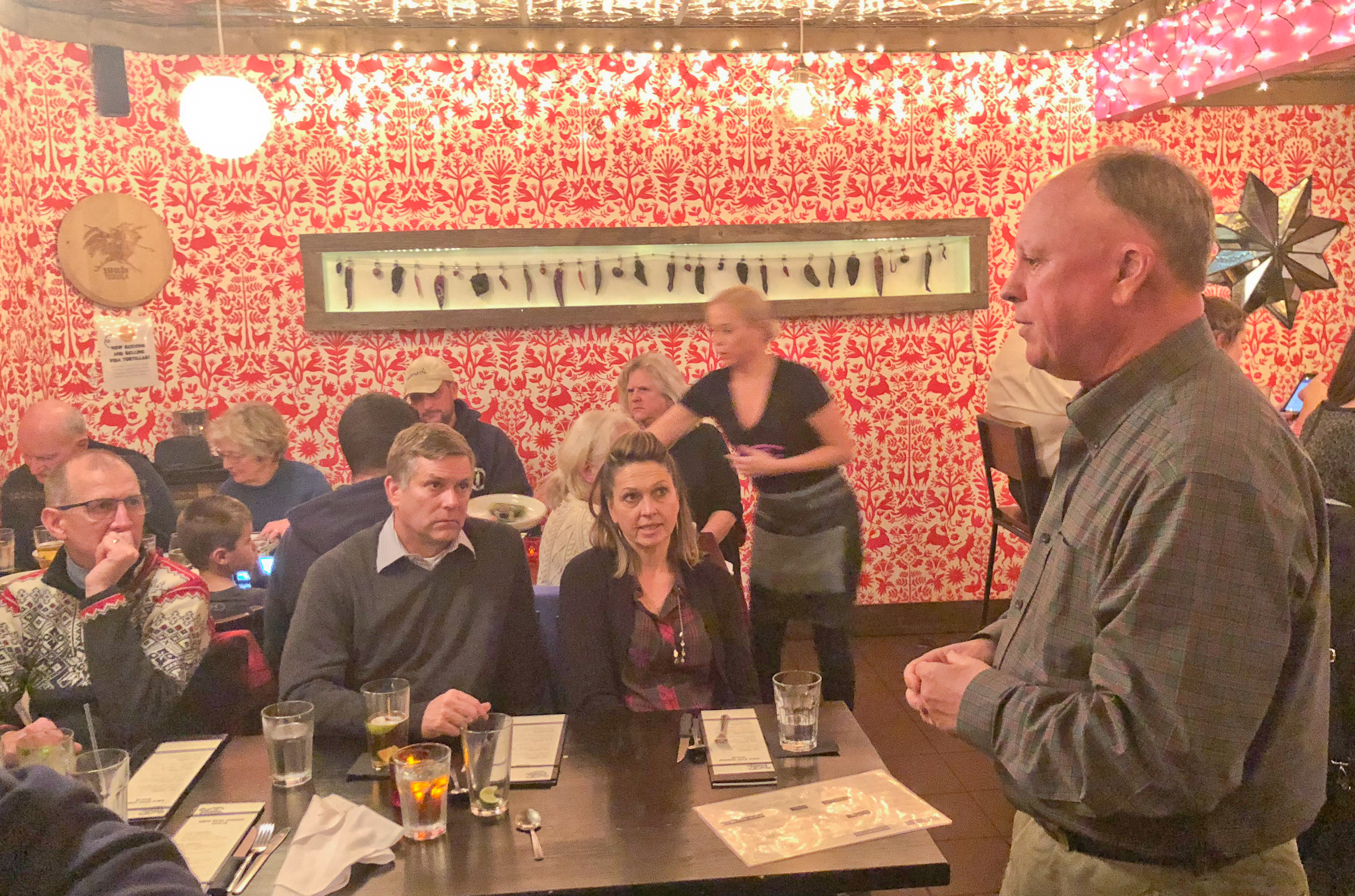
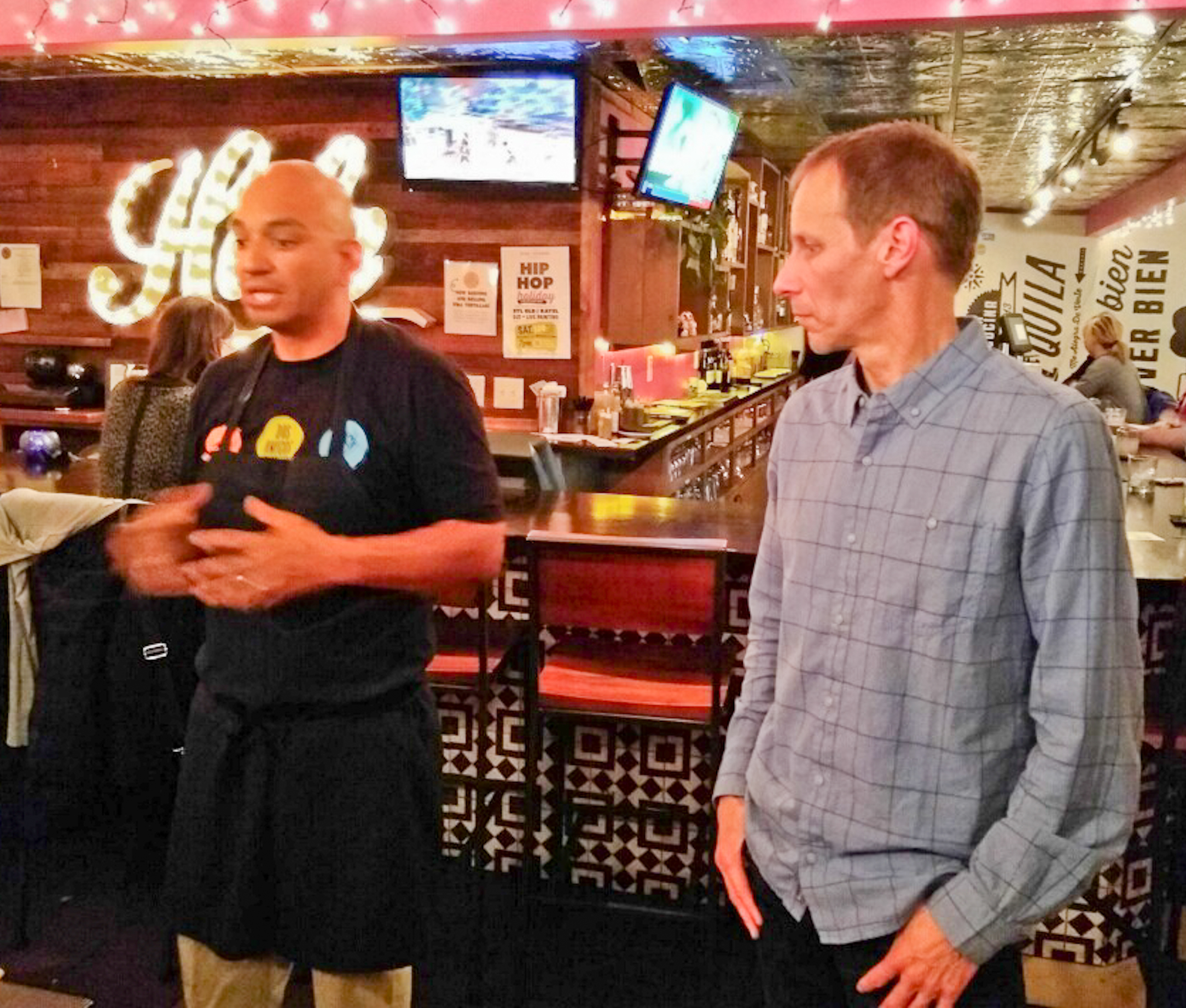
Chef David Vargas discusses his roots in local sourcing.

Deep roots

Chef David spoke about growing up in a Santa Ana (California) neighborhood of little means but deep cultural roots and strong food traditions. His family grew its own vegetables. If they wanted fresh seafood, they went to the local pier and caught it themselves. Local sourcing is ingrained in his DNA and is the bedrock of his menu at Vida Cantina in Portsmouth, N.H.

Chef David spoke about growing up in a Santa Ana (California) neighborhood of little means but deep cultural roots and strong food traditions. His family grew its own vegetables. If they wanted fresh seafood, they went to the local pier and caught it themselves. For him, local sourcing is ingrained in his DNA and is the bedrock of his menu at Vida Cantina in Portsmouth, N.H.

That explains his enthusiasm for hosting a KNOW FISH Dinner®. It was not too far of a leap from the community dining he grew up with, and the embracing of locally sourced food.

Cod ceviche, courtesy of Chef David Vargas and Capt. Tim Rider. Now that’s boat to table…with flair!

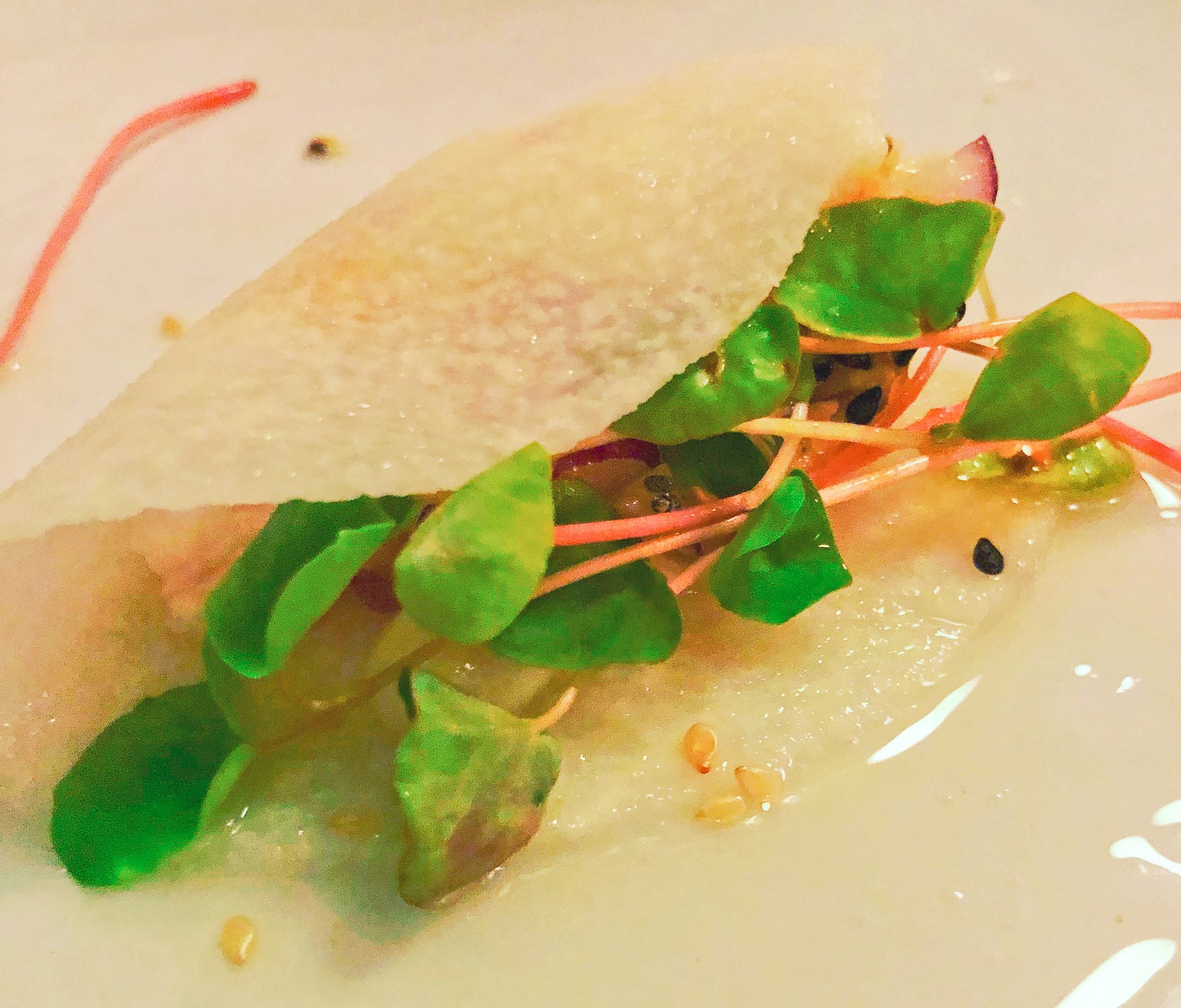
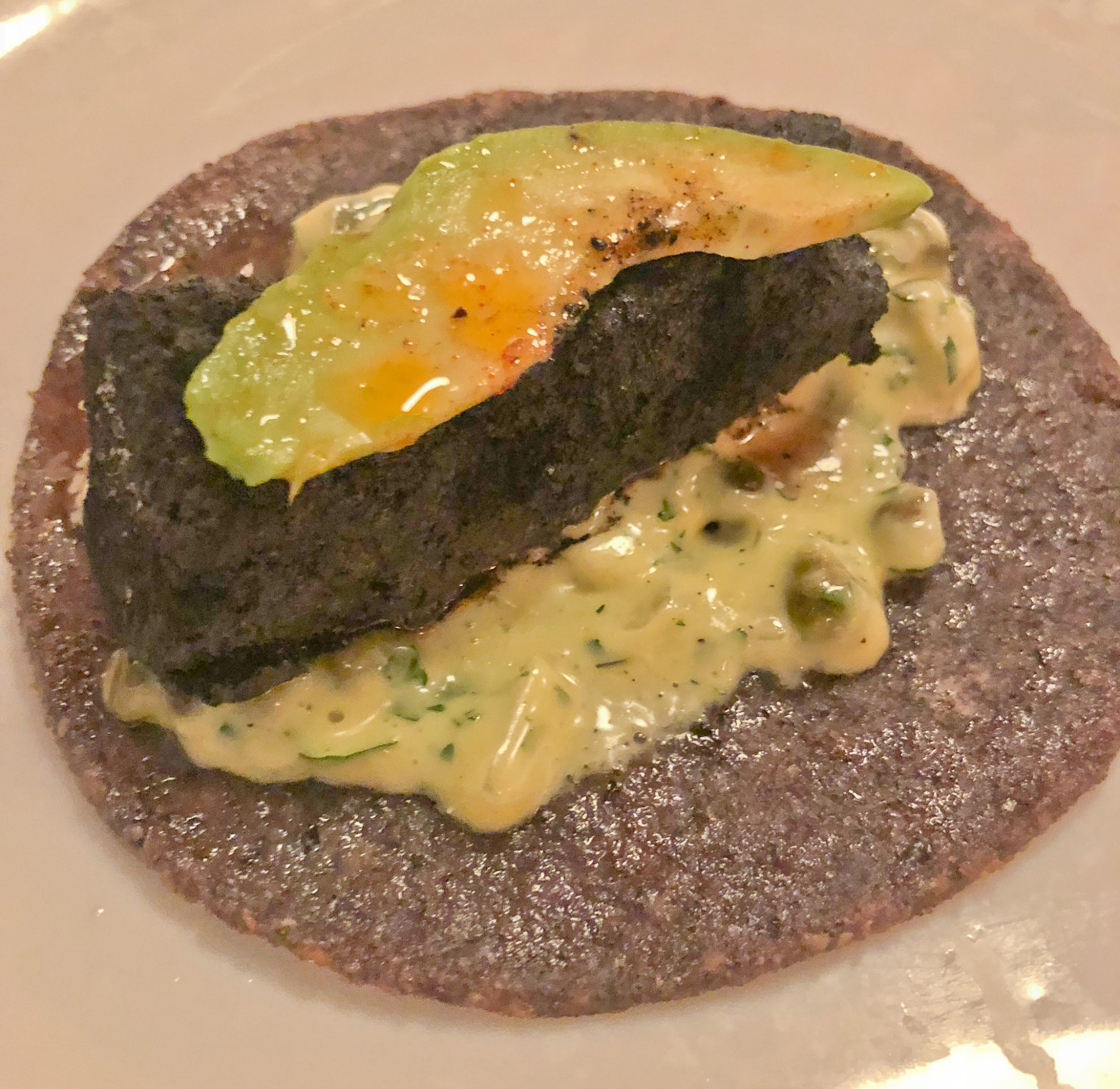
Capt. Tim Rider of New England Fishmongers provided the cod, haddock and pollock (that had been swimming the day before) Chef David turned into south-of-the-border feast fancies: cod ceviche served with a thin, but lightly crisp jicama tortilla and fresh mango, serrano and seeds; charred haddock taco paired with a crispy caper tartar sauce and marinated avocado; and the aforementioned tamale that also came with a mouth-warming charred arbol salsa.

Appreciating fish tales

Capt. Tim also provided some perspective on fishing for a living. He shed light on the passion, drive and unrelenting commitment required just to survive. The long hours, sometimes 20-hour days, sometimes 36 hours, are physically and psychologically draining to be sure.

Charred haddock taco. That marinated avocado complemented the charred coating on the haddock beautifully.

But the attendant pressures to make a living for a captain and crew outside of the actual harvest can be staggering. The expenses can drain bank accounts quickly, which leads to heavy debt. Beyond the table stakes of boat costs such as monthly payments, insurance, fuel, gear, maintenance etc. are, for many, the staggering fees just to be allowed to fish. Someone like Tim may have to pay in excess of $100,000 a year to someone else for the right to fish for cod, pollock, haddock, scallops, flounder and a host of other species in the Gulf of Maine.

It’s the complex, and often debilitating nature of the current fisheries management structure in New England and elsewhere in the United States. Without passion and commitment, facing those kinds of costs and demands on personal well-being would be a short-lived fool’s errand.

And so, KNOW FISH Dinner attendees at Vida Cantina last week gained new appreciation for the fish harvesters who produced the seafood they were eating.

Tim Henry of Bay Point Oyster Company describes the extraordinary patience and commitment to start and run a successful oyster farm.

They also heard from Tim Henry, owner of Bay Point Oyster Company, LLC., who also described the effort to produce top quality oysters right out of Great Bay in New Hampshire. It’s a three-year commitment, requiring tons of patience, significant capital, physical fortitude and an ability to adapt to constantly changing circumstance. Heavy rains can force the state to shut down the harvest, and alter scheduled deliveries, for example.

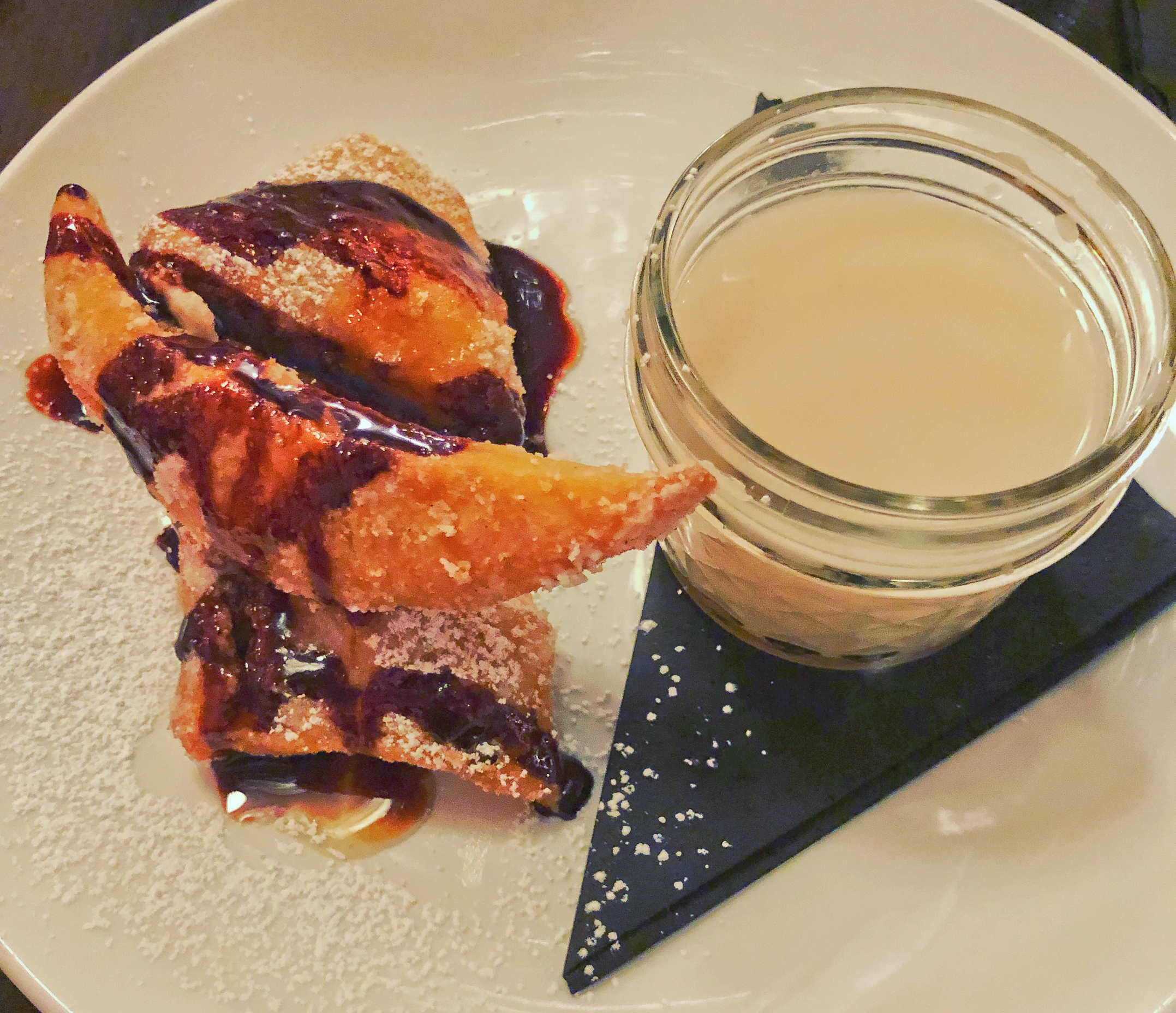
Dessert. This is the first good sopapilla I’d had since childhood.

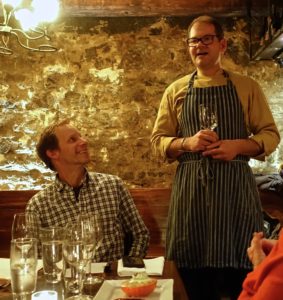
As we dined on light, crisp sopapillas drizzled in chocolate sauce and local honey, we discussed why knowing the story behind the food we eat, especially the seafood we eat, matters. This is an important point for both classroom and community discussions. When you know when, where, how and by whom your seafood was harvested, you can appreciate the effort that went into producing that seafood. Moreover, you can trust it.

Frozen shrimp from Thailand? Not so much.

All Blog Posts

The Story of Seafood

  • May 25, 2017October 20, 2021
  • by Colles Stowell
Share it!
Share

There’s a fair amount of planning that goes into these KNOW FISH dinners. Working with fishermen and oystermen to provide product. Coordinating dates, menus, sales operations, space, staffing etc. with chefs. Logistics.

Despite all of this planning, sometimes things change last minute and you have to adapt. It’s an almost everyday occurrence in the restaurant industry, particularly when you strive to be farm- or boat-to-table.

And so I found myself shucking a few dozen oysters at Tinos Greek Kitchen less than an hour before guests were to arrive last night. As often happens, Mother Nature dictated a deadline change when it dumped heavy rain on Great Bay on the Piscataqua River over the weekend, forcing the state of New Hampshire to close the bay to shellfish harvesting the day before the event.

We scrambled to get some Gulf of Maine oysters, and processed them just in time for dinner. It became a great talking point about eating with the ecosystem (ie, adapting to what’s available and what Mother Nature allows). Fishing is no exception. Capt. Tim Rider of New England Fishmongers, who provided the fish for the dinner, will tell you change is a constant. He could find pollock in the same spot three days in a row in 300 feet of water 60 miles offshore. But on the fourth day, the wind is cranking at 30 knots with eight-foot swells and his boat, the F/V Finlander, stays docked. On the fifth day, the fish have moved out.

Snow Island Oysters, seeded in Quahog Bay off Harpswell, Maine to help clean the bay. Photo credit: Ed Marshall

Seafood stories

At the dinner, we discussed the importance of eating what’s locally available, abundant and in season. For example, squid are cruising in numbers in the Northeast Atlantic. Chef Mark Segal and his team prepared wood grilled squid (from the F/V Rimrack out of Rye, N.H.) with roasted eggplant, roasted red peppers, crispy smashed chickpeas, olives, pepperoncino, feta, egg breadcrumbs and green crab aqua pazzo. Fabulous. The plates went back to the kitchen scraped clean.

Stuffed local squid that didn’t last long in anyone’s dish. Photo credit: Mike McGrail

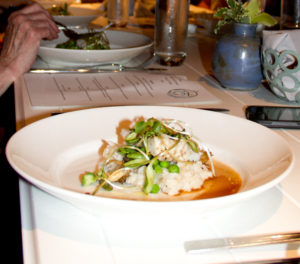
The menu itself testified to the narrative of eating what’s local and fresh. The fourth course was listed as “Local Whitefish al Forno” because Chef Mark prepared the menu not knowing which groundfish Capt. Tim would bring in that day. The pollock, which was fired to the perfect temperature, texture and taste, was served with finnan haddie (cold smoked Finlander haddock) risotto, English peas, fiddlehead ferns, and hen of the woods mushrooms. Stellar.

Fresh pollock al forno landed aboard the F/V Finlander. Photo credit: Mike McGrail

We discussed how every dish has a story, just as every piece of seafood we purchase has a story. The story tells where, when, how and by whom it was harvested. The question is whether we can get that story before we buy; whether we can believe that story; and what that story actually is. Because U.S. seafood consumption is so disproportionately skewed toward cheap imports (more than 90% of the total seafood consumed domestically), finding the truth behind the seafood requires vigilance from consumers. They have the right to find out these stories so they know what they’re eating.

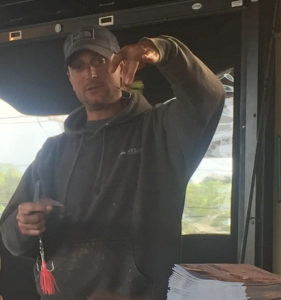
Capt. Tim rider displays a heavy jig and the type of fly used to catch groundfish, like the pollock on the menu. Photo credit: Ed Marshall

The Snow Island Oysters I helped shuck were from Quahog Bay in Harpswell. The Quahog Bay Conservancy seeded the oysters for aquaculture a few years back in an effort to help clean the bay. As filter feeders, oysters remove some of the excess particulate matter like plankton and nitrogen that could choke the bay with harmful algae if left unchecked.

Another course weaving in the local seafood narrative with a Greek twist featured Dolmades, grape leaves stuffed with Maine cultured mussels, golden raisins, red onion and served with saffron avgolemono (a Greek sauce featuring egg yolk, lemon and broth). Again, excellent Mediterranean flavors complementing Gulf of Maine seafood.

Rethinking seafood purchases

On the theme of adaptation, I urged attendees to re-think how they approach seafood purchases by taking a more active role in discovering the story behind the seafood. As with previous KNOW FISH dinners, we printed some sustainable seafood principles, called the 7 C’s of Sustainable Seafood, on the back of the menu. I encouraged them to take those concepts with them the next time they go to a seafood counter or a restaurant. Buying local is like making a covenant with local fishermen: “I trust you to provide good, sustainably harvested seafood. You trust me to pay a fair price.”

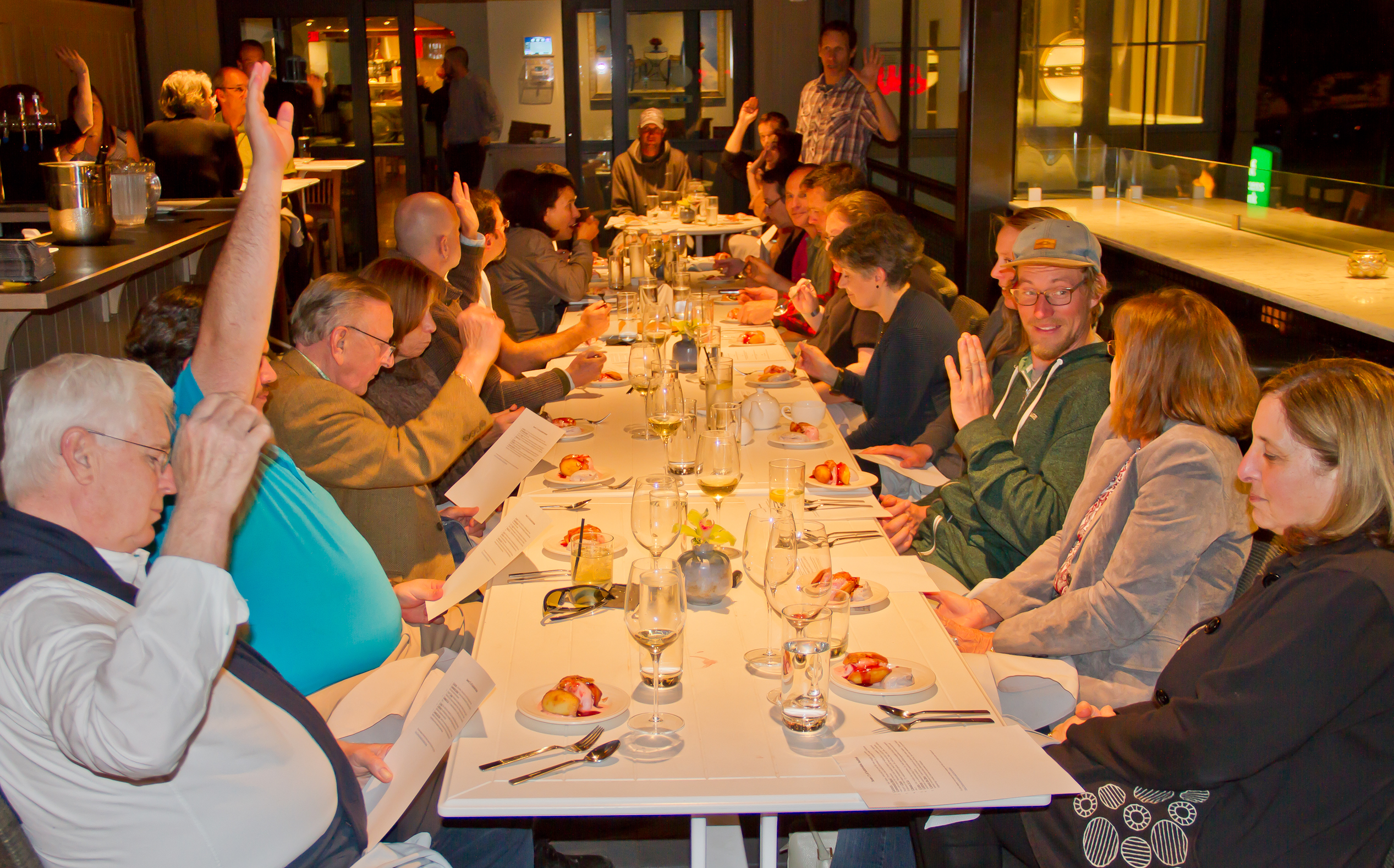
Capping the evening with a mission to spread the word over an inventive, and very satisfying dessert. Photo credit: Mike McGrail

Doing so likely supports fishermen like Capt. Tim Rider, or oystermen like Steve Weglarz of Cedar Point Shellfish and Brian Gennaco of Virgin Oyster, Co., who were both on hand to discuss local oyster aquaculture.

I asked everyone at the table to channel the energy from the event into conversations they have in their communities. Changing a broad national dynamic such as how we buy seafood in the U.S. happens at a grassroots level by spreading the message as often, as loudly, and as passionately as we can.

Top Photo: Reviewing the 7 C’s of Sustainability over dessert — Swedish Fish ice cream, lingonberry glaze, madeleine, almond brittle and blueberry cream legere. . Credit: Mike McGrail

All Blog Posts

Getting to KNOW FISH

  • November 4, 2016October 20, 2021
  • by Colles Stowell
Share it!
Share

The spiny dogfish, abundant in these waters, showed up about two hours before guests arrived. As did the cod.

Want fresh?

Dogfish intimidates some people because, well, it’s a shark, even if less than the length of your arm. But when chefs Evan Mallett of Black Trumpet and Brendan Vesey of Joinery Restaurant put their magic to this fearsome looking creature, the result was a perfectly battered seafood experience driven home by Black Trumpet’s Raisin Hell sauce.

That and the Pemaquid aquaculture oysters served with a tangy tursija (pickled vegetables) were just the greeting for those attending the second KNOW FISH dinner, which was held at Black Trumpet last week.

The food was fabulous, and it was an excellent backdrop for the interactive conversation about why our seafood choices matter.

kf-brandade-10-27-16
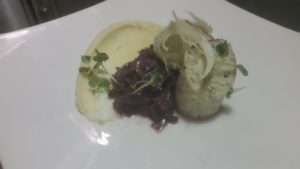
Cusk Brandade

As I explained why we import more than 90% of the seafood we eat in the U.S., we feasted on locally abundant and delicious cusk, which is a bottom fish that worked wonderfully in a brandade. This is a traditional Provence dish featuring salted fish, olive oil and seasoning blended into a paté-like spread accompanied by house-made baguette and kohlrabi sticks.

Cusk made another appearance as Capt. Tim Rider described the extraordinary effort just to get the fish to the restaurant that day because the weather for several days had been inhospitable for his 36-foot F/V Finlander. He and his crew left at 2 a.m. the day of the event, only to turn around shortly after leaving the harbor because the conditions were too dangerous. Fortunately, the crew was able to leave port at 7 a.m. and find enough fish for the dinner and to bring to other customers.

As we feasted on delicately poached cusk and scallop dumplings served with golden beet and green crab broth, Tim shared why he travels up to 80 miles offshore in a small boat to fish for pollock, cusk, haddock, cod and other groundfish with rod and reel. For him, the impact of trawl nets, long lines and similar commercial fishing methods on the resource and the ecosystem is devastating.

kf-cod-10-27-16
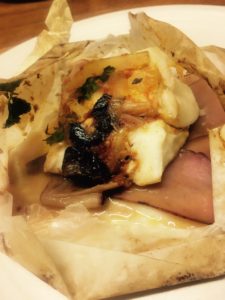
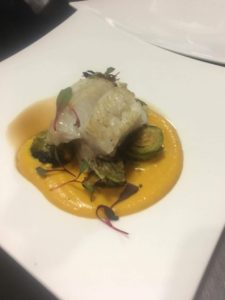
Codfish a la Provencal en Papillote

Attendees heard how the existing quota system used to manage the fishery, run like an open stock market, transfers ownership of the resource away from small-scale fishermen like him to larger operations with multiple boats. The irony is that small-scale fishermen are more likely to take care of the resource. He described efforts to increase the number of fishermen fishing with rod and reel as we dined on beautifully prepared Cod a la Provencal en Papillote (baked in paper).

Amanda Parks, Tim’s partner in New England Fishmongers, spoke of the superior quality of fish that is delivered direct, rather than passing through a series of processors and distributors in the supply chain. She shared tips on how to tell if a fish is fresh, which is crucial given that on average, seafood travels more than 5,000 miles from boat to plate in the U.S.

Black Trumpet co-owner Denise Dwinnells Mallett related a story of how she persistently asked staff at her local grocery store’s seafood counter in Maine when they would carry seafood from the Gulf of Maine. She asked until eventually, locally sourced seafood arrived. Her point? Consumers do have the power to affect change.

evanChef Evan explained the importance of working with fishermen like Tim practicing sustainable harvest methods, and using sustainability as a guide when choosing menu options. The coconut rice pudding baked in red Kuri squash was a refreshingly sweet and colorful taste of autumn.
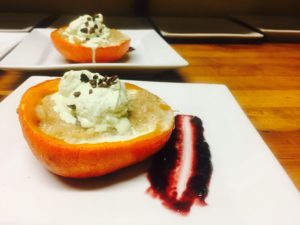
kf-pudding-10-27-16
Coconut rice pudding baked in a red Kuri squash

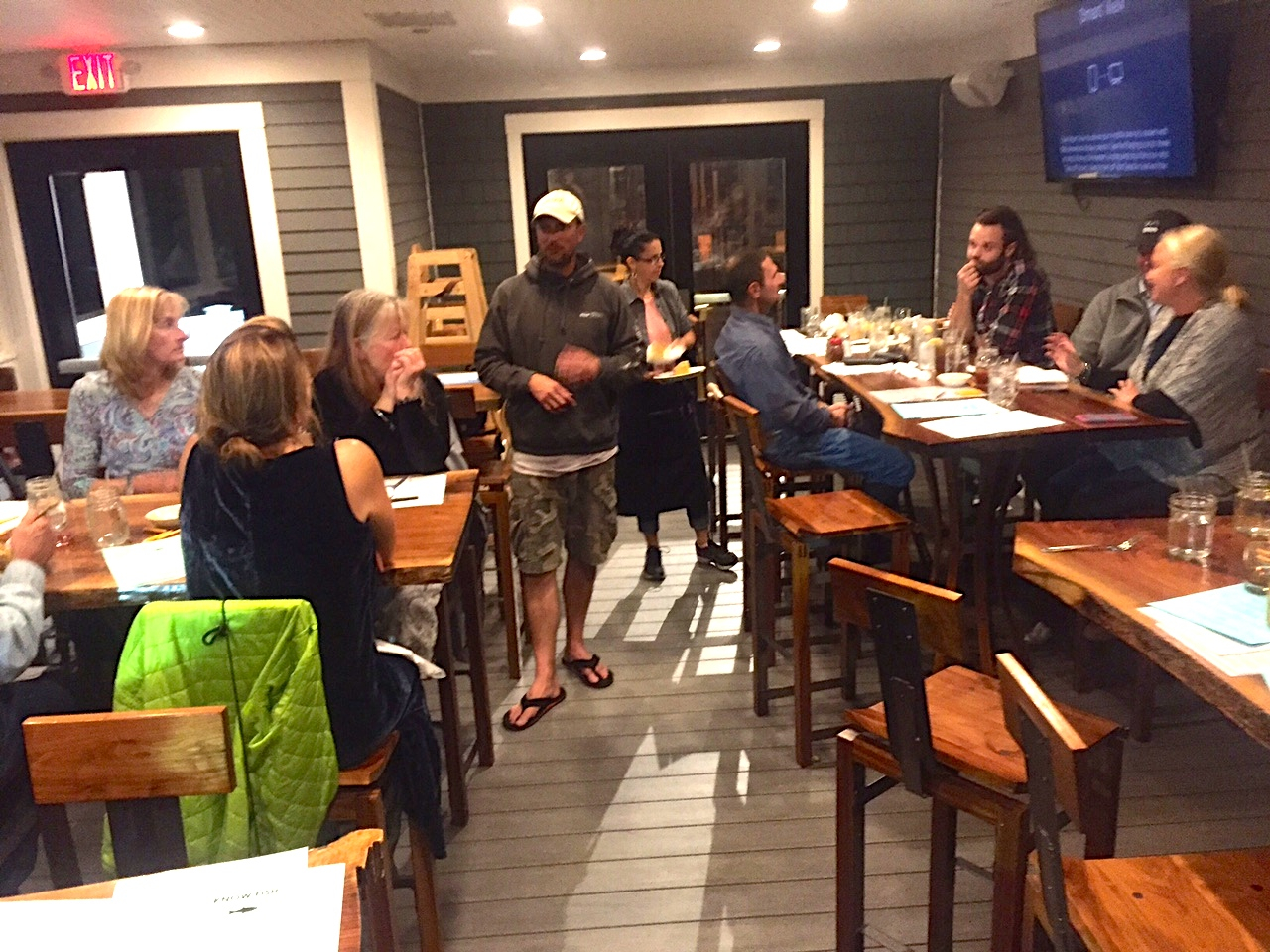
For the second time in a row, the KNOW FISH dinner sparked curiosity and fueled compelling conversation with fishermen, fishmongers, chefs and activists. It proved that engaging the community in intimate discussions about why seafood choices matter can increase public awareness of issues like ocean health, climate change, stock health and fairness for fishermen like Tim.

We want to continue this community dialogue in an effort to spark a groundswell of change at restaurants and seafood counters. We are looking at continuing the KNOW FISH dinner series in the spring.

Stay tuned.


All Blog Posts

Sustainable Seafood: One Conversation at a Time

  • October 18, 2016October 20, 2021
  • by Colles Stowell
Share it!
Share

“We need to be having more of these conversations.”

Yes, we do.

The overriding dynamic we need to change in this country regarding seafood is this: more than 90% of the seafood we eat is imported. This is an oft-cited statistic that seems to raise eyebrows … then disappears into the ether as we go about our business.

That statistic doesn’t really begin to take on significant meaning for people until they see it in context and start connecting the dots as to why this is happening, and what we can do about it.

I launched One Fish Foundation to bring this message to schools and communities. I started the KNOW FISH dinner series with a great team to spark the type of community discussions that get people to ask questions, seek answers and understand they have an impact, however small, on the resource. Hopefully, their decisions and their understanding can spark other conversations and even, dare I say it, start a groundswell.

kfwpfpollock
Pan-seared pollock from the F/V Finlander

Thus, the first KNOW FISH dinner held last week at When Pigs Fly in Kittery was a success. Attendees sat next to fishermen, fishmongers and activists and asked questions. They discussed the domestic seafood picture and why we should care when, where, how and importantly, by whom our seafood is harvested.

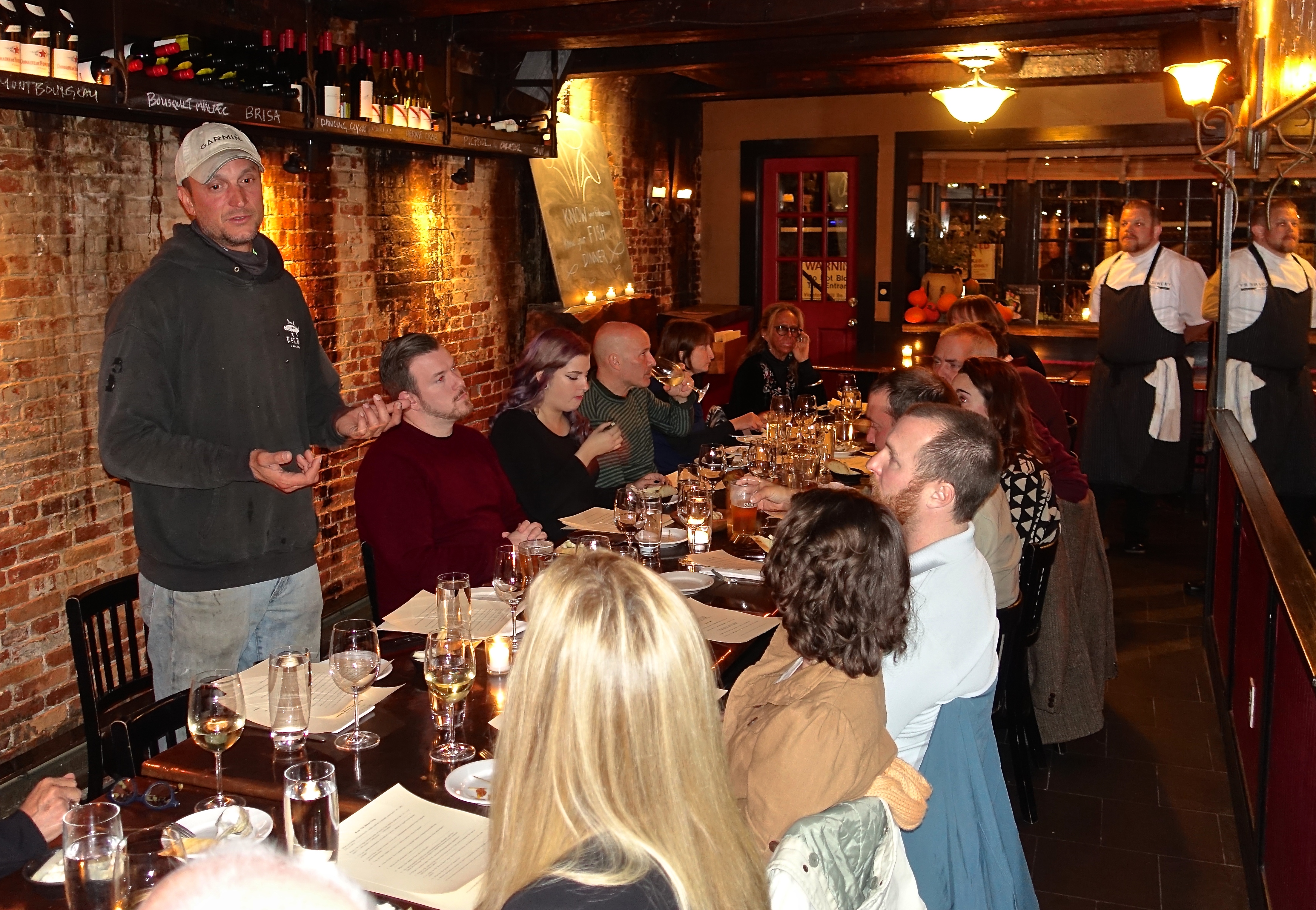
They heard from Capt. Tim Rider, of the F/V Finlander and New England Fishmongers about how small-scale New England fishermen are getting squeezed out by unfair regulations and big operations with deep pockets. They learned what questions to ask and how to get smarter about the choices they make. They learned from Spencer Montgomery of Dole & Bailey and New England Fishmongers why it’s important to shorten the supply chain and buy locally caught seafood. He told them some signs to look for to tell if a fish has been sitting around too long.

They learned interesting trivia about New England and its fisheries. They learned how climate change is impacting the Gulf of Maine.

kfwpfsausage
Unbelievably delicious cusk (local, abundant) sausage from M/V Finlander.

And Chef Robert Martin put on a feast: delicious cusk sausage (trust me here!), pan-seared pollock, and roast cod (all fresh caught and graciously donated by Capt. Rider) and accompanied by tasty, artfully presented seasonal vegetables.

I was encouraged with the comment above and others like it as departing attendees expressed a new perspective and perhaps reflected even a bit of my enthusiasm for sharing the sustainable seafood message. Our decisions make a difference.

Perhaps if we keep having these discussions, that 90% statistic will become a distant memory and the narrative will shift to one of widespread support for domestic, local, sustainable fisheries. One conversation at a time.

The next will be the KNOW FISH dinner on Oct. 27 at Black Trumpet in Portsmouth. Get tickets here.

Come join the conversation … and the feast.

All Blog Posts

Day in the Life of a New England Groundfish…

  • September 1, 2016October 20, 2021
  • by Colles Stowell
Share it!
Share

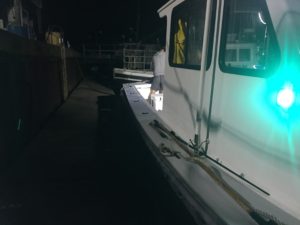
As the last sprays of daylight faded to black, I stepped off the M/V Finlander in Eliot, Maine and tried to get grounded. I was tired. Damn tired. And a bit sore. We’d left the dock at 1 a.m., traveled four hours to the fishing grounds 65 miles out, fished hard for 9 hours with rod and reel and chugged back to port, docking at about 8:30 p.m.

Loading up just after 1 a.m.

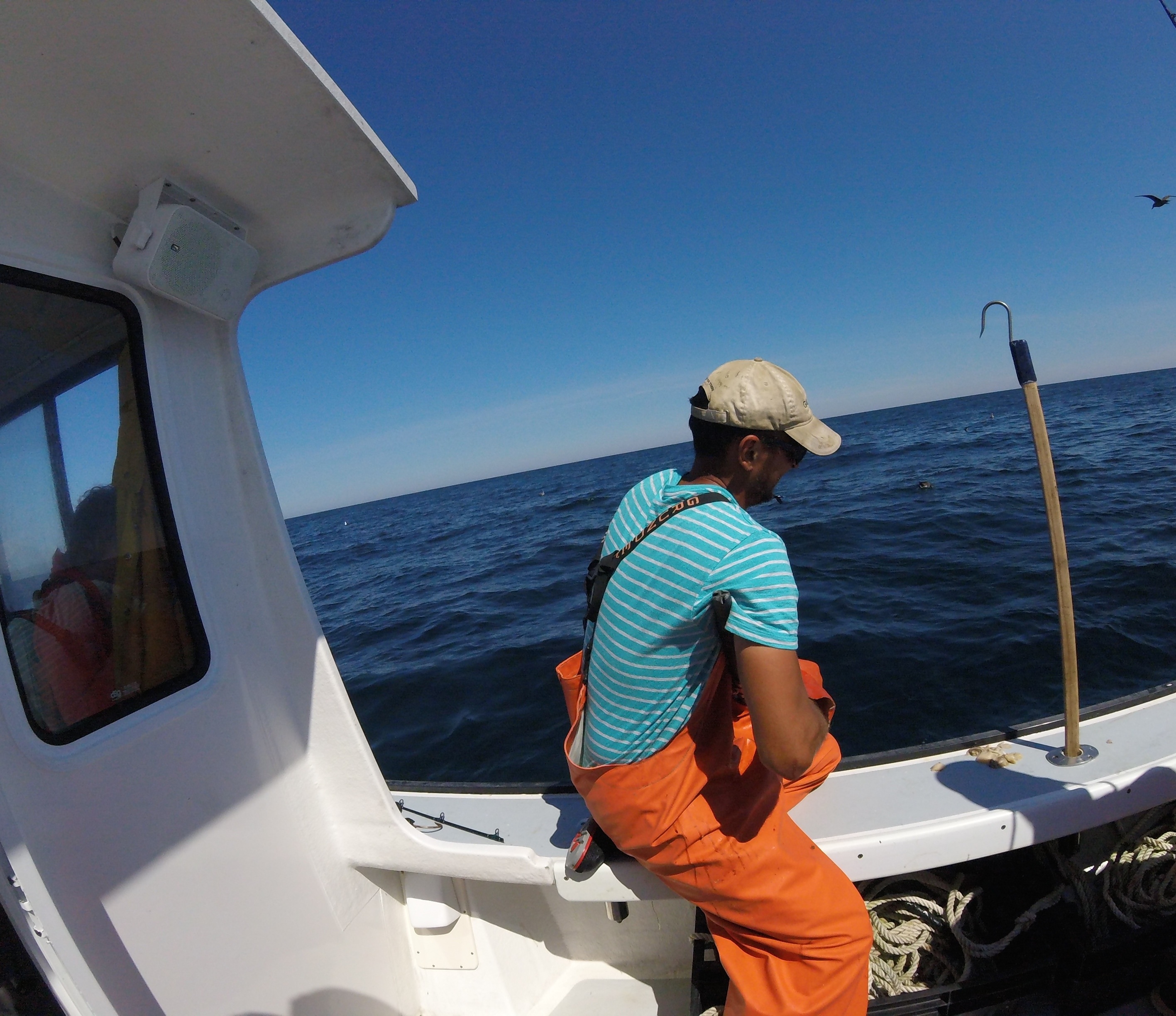
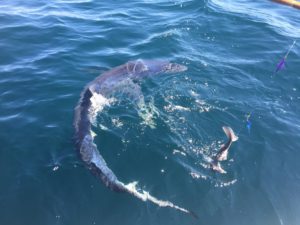
This wasn’t recreational fishing. To get comfortable, I dangled a leg over the gunwale of the 36-foot commercial fishing boat and rested the heavy-duty rod on my leg while jigging a 20-ounce shiny lure and three flies just a foot off the bottom, 400 feet down. When a fish hit, I’d have to crank it all the way up with an industrial-strength reel and hope the 10-foot blue sharks circling the boat wouldn’t steal the fish. Hoist the fish in, measure it after removing the hook, toss it in the tub. Do it again.

Get two fish and you’re likely to be winding 25 lbs or so up 400 feet. POW! A shark hits near the boat and starts smoking line off the reel. The telltale snap two minutes later signals the end of the fight, and you reel up nothing. Time to re-rig. Crank up a couple hundred pounds of fish or so in a few hours, and you’re going to feel it. At least I did. I managed to get past the queasiness and avoid any embarrassment on deck. Any concept of a toilet was sacrificed for an extra bunk to “conserve” some energy on the long rides. The head was a 5-gallon bucket.

It was a long day.

So I had one question for Capt. Tim Rider before I trekked back to my car. “You do this every day?”

Narrow miss
Narrow miss on a dogfish. Check out the video of five sharks circling the boat.

“Just about,” he said, as he cleaned the cabin for the next trip. He’d decided not to fish the next day. We’d brought back 800 lbs. of pollock and haddock, and he would need to drive it to the auction in Portland. (He often sells his catch directly to chefs who share the same beliefs on protecting the resource.) He hadn’t seen much of his family in the past two weeks, having slept in his own bed only two nights in 14 days. The rest of the time he was on the boat.

Paying the price

Fighting to stay awake on I-95 on the way home, I thought about that commitment. Fishing courses through Rider’s veins. It would have to. Otherwise, it sure would be a hell of a lot of work for not a lot of reward. This is particularly true because Rider is part of the Common Pool, a fisheries policy that often forces fishermen like Rider to fish way out because they didn’t have the capital, timing, luck or patience to get the permit to fish the Catch Share sectors. Catch shares are another fisheries policy that operates like a cap-and- trade quota system, often favoring those with the most capital, which can mean access to more desirable fishing grounds.

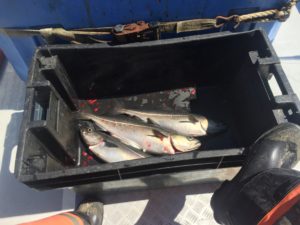
Quality control Step 1. Bleed the fish.

Currently, the outer edge of where Common Pool fishermen are allowed to fish fluctuates seasonally from 18 to 80 miles out. The difference means a couple of hours of travel and probably $300 or so in fuel, tackle and ice.

But the difference runs deeper than that.

When the Maine Department of Marine Resources distributed NOAA funds to offset losses from the groundfish (read cod) disaster relief last year, the money went to fishermen with quota who had the largest landings of groundfish. Those in the common pool were not invited to the table, and therefore, did not receive any disaster relief.

Many ironies exist in fisheries management. And this is one of the starkest examples. Those most hurt by the reduced fishing income were overlooked when it came time to provide financial support. Those like Rider who are so passionate about protecting the fishery that they jig fish in up to 500 feet of water to reduce bycatch seemingly face steeper hurdles than larger scale trawl fishermen, whose bycatch is much more significant.

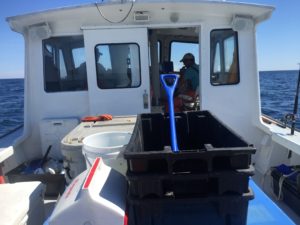
Strategizing the next fishing stop.

Sector inequality

It is easy to say this is purely a situation of the haves and have-nots. But fisheries management is much more complex than that. Current New England groundfish regulations were initially established in 2010 on the principal that fishermen would more equitably manage and effectively safeguard the resource by creating a free-market environment. The total allowable catch of groundfish such as cod, haddock, Pollock, flounder and other species was divided and allocated to groups of fishermen in sectors, or harvesting cooperatives, based on who had the largest landings between 1995-2005. Fishermen purchased permits that allowed them to fish for certain species in certain areas within the sector during certain seasons. Under this Catch Share system, they are allowed to continue catching fish during the season until they reach the quota limit for each species.

http://qkl.fa0.mwp.accessdomain.com/wp-content/uploads/2016/08/cabin-sound.mp4

The Finlander’s “purr”…

Unfortunately the Catch Share model overlooks a fundamental truth about fisheries economics: If financial resources determines access, then those with the most financial resources will have the most access. And so, an inequitable system was born and small-scale fishermen like Rider are squeezed … hard. Large-scale operators with the resources are encouraged by the very nature of the “get big or get out” system to grow and gobble up more quota, potentially leading to the type of abuses that led to the arrest of the largest distributor in New England last February.  Carlos Rafael’s arrest underscores another truth about the current system: the bigger players don’t necessarily think in terms of good stewardship.

Ocean classroom

Which brings me back to the reason I wanted to go out with Tim for what was pre-ordained to be a very full day. He’d tried to convince me soon after we passed the Isles of Shoals on the way out under a half moon sky. “Colles. I’m not kidding. Get some sleep. It’s a long @#$%&*! day. You’re going to need it.”

The Finlander heads home. Arrived at dock at 8:30 p.m.

I wanted a glimpse, however brief, of what it’s like to be a New England groundfish fisherman, passionate about the work and the resource, and riding the anxiety of an ever-changing fishery with continually tightening restrictions and razor-thin margins. Debt. Changing ecosystems, but slow-to-change consumer palettes. Perpetually bone tired, fueled on adrenaline and Monster drinks (not me) and taking in what the ocean has to offer: whether it be a full hold to bring back to the dock, un-forecasted six-foot seas, a tuna crashing bait or a giant ocean sunfish lazily cruising the surface.

I’ll think of that experience every time I stand in front of a group of people in a classroom or a restaurant to discuss what sustainable seafood means.


Check out the latest news updates about Capt. Tim Rider and the M/V Finlander crew at New England Fishmonger’s Facebook page. There, you’ll see some of the Seacoast restaurants the Finlander supplies.

Top photo: Capt. Tim Rider tries … unsuccessfully … to finagle his gear back from a blue shark.

All Blog Posts

Of Pollock and Perception

  • June 7, 2016October 20, 2021
  • by Colles Stowell
Share it!
Share

I like a good discussion. That is my goal every time I walk into a classroom. I want students regardless of age to ask questions and even challenge me, as was the case a few weeks ago at Portland High School. Within the first five minutes or so, I can get a rough gauge of the overall class dynamic and determine which course the discussion will take.

My classroom last Saturday was a 100-year-old bakery, complete with freshly used dough machines, sacks of flour, wooden kneading blocks, coolers, rolling racks and trays of sealed brownies, blondies and linzer tortes. (I admit to nearly succumbing to covert temptation.)

What a great spot for a delicious dinner and compelling conversation! The location was the original Rosemont Market and Bakery in Portland, Maine. The “students” were in fact area adults interested in learning more about the local and global seafood system.

The discussion was free-flowing, dynamic, interactive, engaging, humorous. Just about all that I had planned for when originally working with Chef Bryan Dame to set up a sustainable seafood dinner a couple of months ago. The goal was to pair creative, tasty dishes featuring local, abundant seafood with a conversation about where the seafood comes from (ie, the boat and/or the harvester), and why knowing this kind of information is important.

So we first talked about a common definition of what sustainable seafood is and isn’t. As I explained how the average seafood consumed in the U.S. travels more than 5,000 miles from boat to plate, we feasted on locally sourced pollock and mussels ceviche served over a creamy corn pudding. The accompanying seaweed biscuits and sea salt nori butter were surprisingly addictive. I mentioned the pollock came from the Finlander out of Eliot, Maine, a boat that travels some 80 miles off shore to jig fish for pollock, haddock and other groundfish species. Jig fishing means virtually no bycatch, or the capture and possibly killing unintended species, a significant problem with some wild harvest methods.

The conversation then turned to the domestic and global seafood picture, with perhaps a little surprise at the revelation that 90% of the seafood eaten in the U.S. is imported. We discussed the implications of that while diving into Acadian rockfish served with local spinach and a bacon jam that would make anything taste better. (I kept thinking about ice cream.) The rockfish, also known as ocean perch or Acadian redfish, was supplied by the Dee Dee Mae II out of Biddeford.Rosemont2-2

We also looked at how global seafood demand continues to grow as the population surges toward 9 billion by 2050, and how almost 5 billion people now depend on seafood for at least 10% of their per capita annual animal protein intake. And as the wild harvest of seafood has remained relatively constant over the past decade, aquaculture has nearly doubled.

We discussed how bivalve (oyster, clam and mussel) and seaweed aquaculture is growing in Maine as we ate pan-roasted hake served over smoked mussels and spring pea puree with pillow-soft potato gnocchi. The mussels came from Pemaquid Mussel Farms and the seaweed (used in almost every course) came from Maine Sea Fresh Farms. The hake came from the November Gale out of Five Islands, Maine.

Finfish aquaculture and the ramifications of recent U.S. and Canada approvals of GMO salmon sparked lively interaction about balancing the needs of feeding a growing global population and addressing the many concerns with farmed fish. Hormone and antibiotic use, disease, environmental degradation (such as clearing out critical nursery habitats like mangroves for shrimp farms) are all significant challenges to widespread acceptance of fish farming. GMO salmon have a much steeper hill to climb because of the significant issues with the lack of labeling and questionable science.

The group collectively pondered the ramifications while dipping into dessert: dulse panna cotta (a subtle, unique whisper of the sea) with light, toasted sesame cookies.

The food and the narrative were perfect complements. And the evening reminded me why I started One Fish Foundation. Engaging people, no matter the age, in a discussion about where their seafood comes from, and why they should think about their decisions at a restaurant or seafood store is important to them and the resource. Just as with farms, we have a connection to the fish and shellfish we eat, and those who harvest them. And every decision we make has an impact on the resource.

All of the fish we ate was local and abundant, which are two of the most significant factors in determining seafood sustainability. Chef Bryan delivered on the promise of making what was once called “trash fish,” but is now better known as “abundant”, sing in beautifully prepared and creative dishes that we all enjoyed immensely.

We sourced the fish from Harbor Fish Market in Portland, which is where Rosemont gets most of the seafood they offer in their five area markets. Harbor Fish does a good job at sourcing locally, whenever possible, and being forthright about where its seafood comes from. That’s an important factor when deciding where to buy fish. You want to know they’ll tell you the truth about its provenance.

Rosemont owners John Naylor and Molly Thompson were very gracious in welcoming One Fish Foundation into their “kitchen.” The level of dialogue was inspiring, hopefully to the point that the conversation will continue among those who attended, and spread into their communities.

That’s why I do this.


Photo credits: Molly Thompson. Top: Chef Bryan Dame, seaweed whisperer.

Recent Posts

  • Hurricane Ida wreaks havoc on Louisiana’s seafood industry
  • EPA Should Use Clean Water Act To Kill Zombie Mine
  • Slow Fish 2021: Relationship Matters
  • Faith, Façades, and Futility
  • Pebble Permit Paused: Politics at Play

Archives

  • September 2021
  • August 2021
  • April 2021
  • December 2020
  • August 2020
  • June 2020
  • February 2020
  • December 2019
  • November 2019
  • October 2019
  • July 2019
  • May 2019
  • April 2019
  • March 2019
  • January 2019
  • December 2018
  • November 2018
  • June 2018
  • May 2018
  • March 2018
  • February 2018
  • January 2018
  • December 2017
  • November 2017
  • October 2017
  • September 2017
  • August 2017
  • July 2017
  • June 2017
  • May 2017
  • April 2017
  • March 2017
  • January 2017
  • December 2016
  • November 2016
  • October 2016
  • September 2016
  • August 2016
  • July 2016
  • June 2016
  • May 2016
  • April 2016
  • March 2016
  • February 2016
  • January 2016
  • December 2015
  • November 2015
  • October 2015
  • September 2015
  • July 2015
  • June 2015
  • May 2015
  • April 2015
  • March 2015
  • February 2015
  • January 2015
Theme by Colorlib Powered by WordPress