 All Blog Posts
Making Good Impressions

Ten- and 11-year olds are very impressionable. I’m reminded of this every time I speak to a fifth grade class and start talking about bycatch and imported farmed shrimp. Their eyes get really big when I talk about how some foreign aquaculture producers use antibiotics to try and prevent disease, or when I show them videos of some bycatch issues with longline and gill nets.
So I’m quick to tell them about some measures to mitigate bycatch, such as changing hook types or using turtle excluder devices. They love handling the big hooped nets. We talk about different harvest methods that have lower ecological impact, and that innovation continues to lessen direct harm.
I show them a pie chart and ask them to choose either the really small slice set aside, or the rest of the pie to represent the domestically harvested seafood eaten in this country. Every now and then, one student will choose the small slice either playing the odds or actually knowing the reality. I love to watch the class discuss the answer and perhaps change their minds. When I tell them the larger section or 90% of the pie represents imports, they don’t mask their surprise.
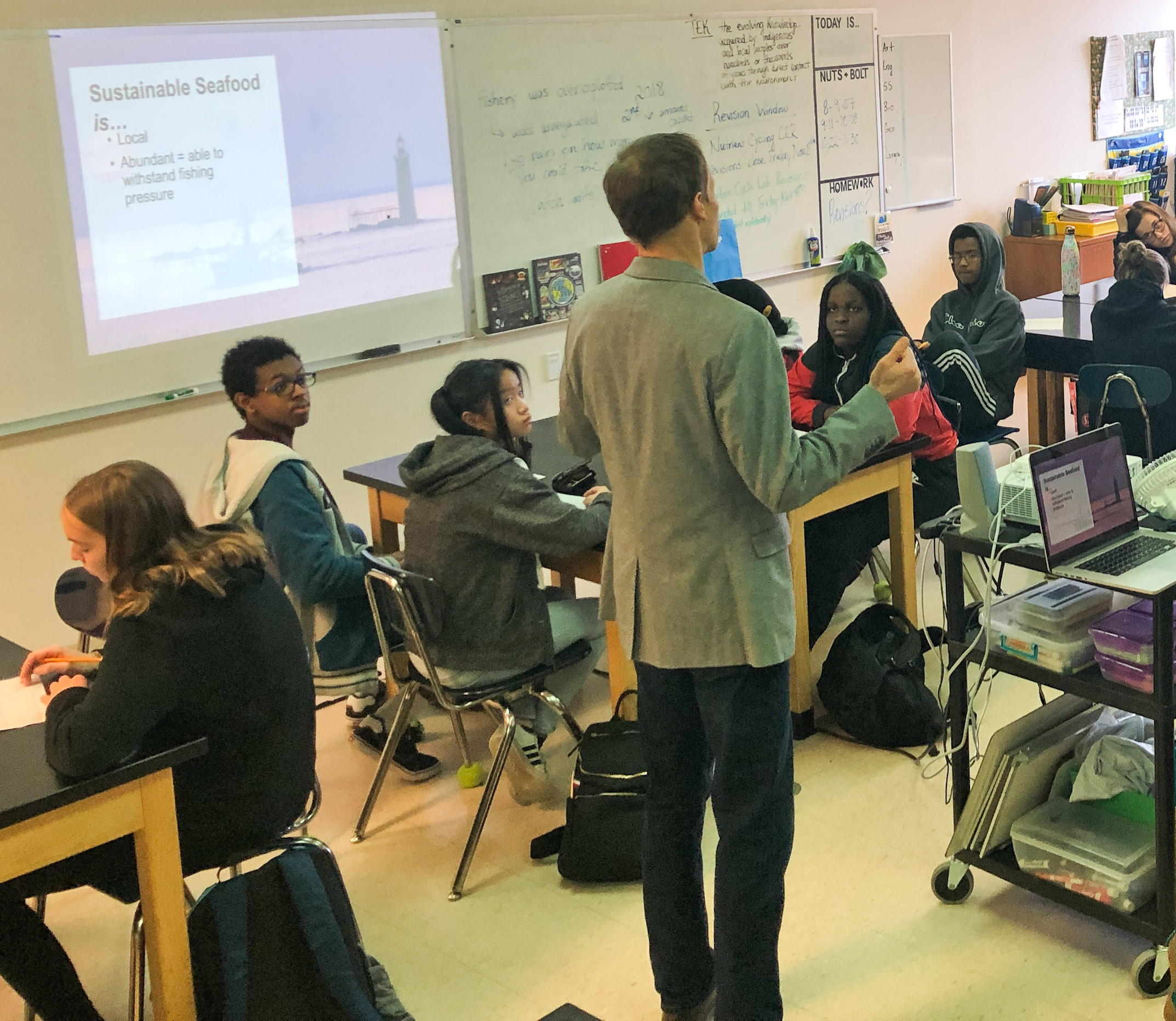
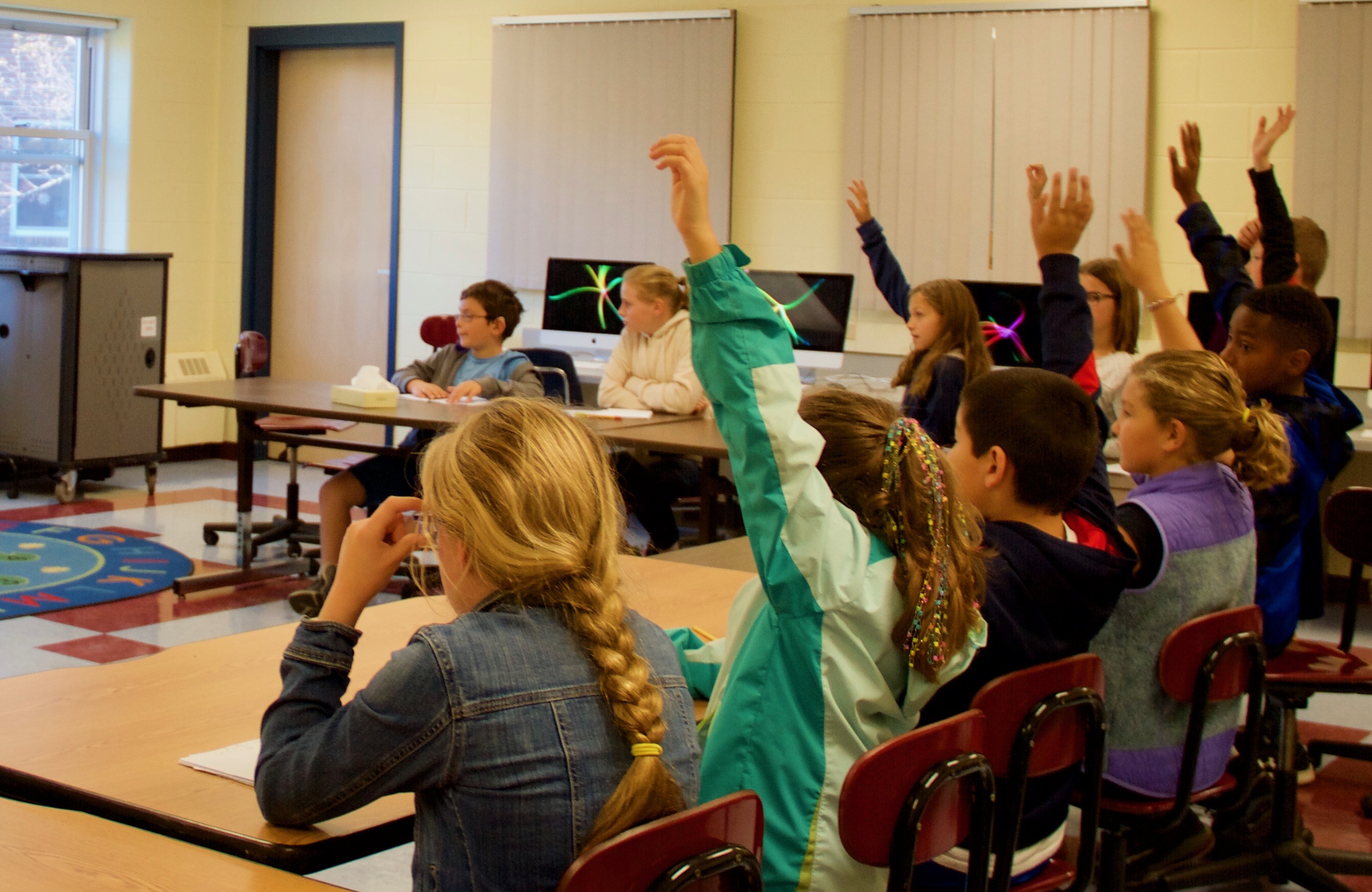
I taught three 5th grade science classes at Rye (NH) Elementary School last week, and took note of students’ interaction with these potentially daunting topics. Typically with classes along the coast, a majority of students raise their hands at the outset when I ask how many like seafood. For those who don’t, I be sure to acknowledge that and tell them that it’s important to understand our relationship to, and impact on the resource, even if we don’t eat it.
The students at Rye Elementary were, as usual, well informed, inquisitive and engaged in learning about where seafood comes from. They were interested to learn about bivalve aquaculture in Maine, and why forage fish such as the mackerel they see right off the docks play a crucial role in the marine food webs.
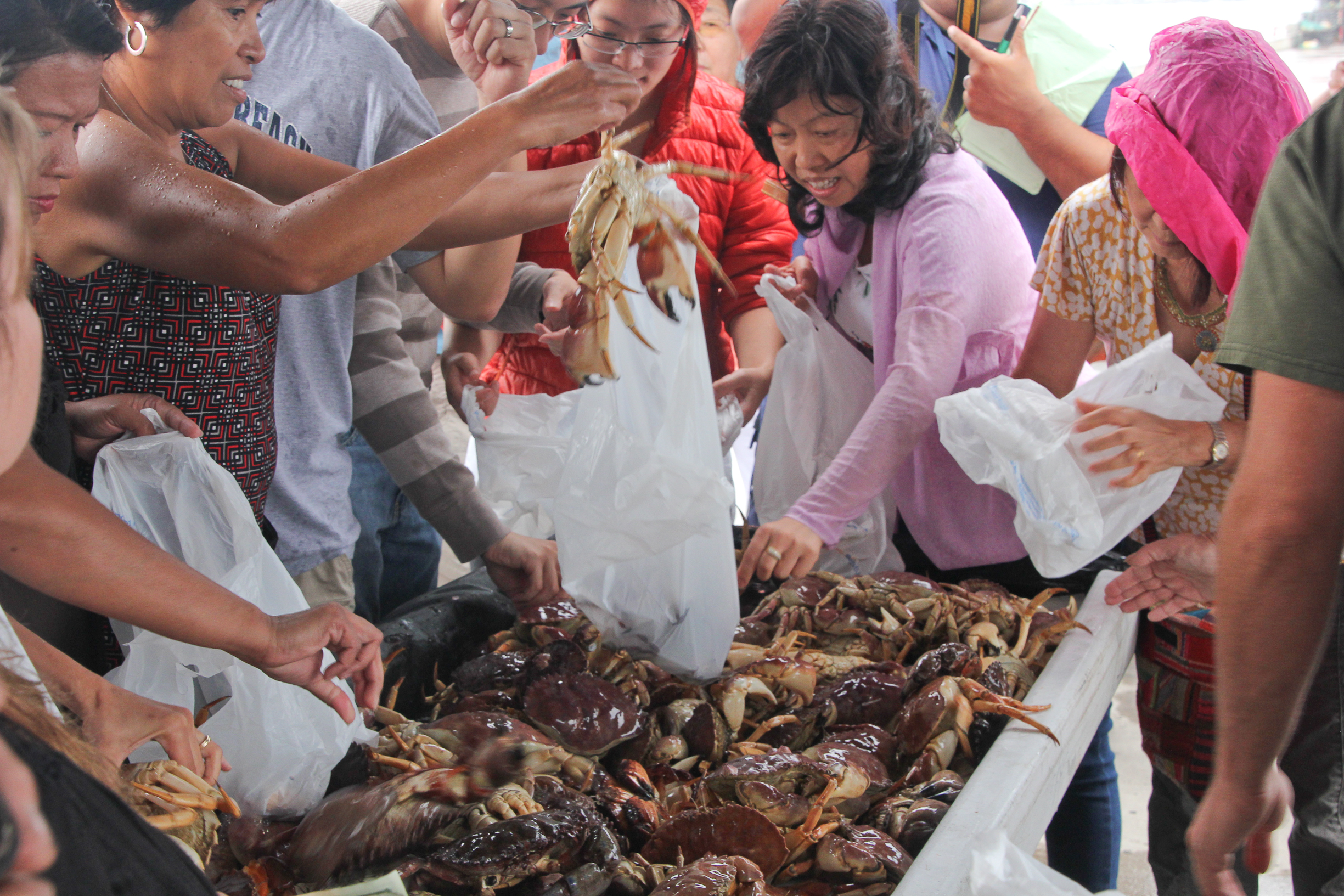
We talked about gear selectivity, invasive species (live green crabs are always a hit) and that buying locally harvested seafood supports local fishermen in the community. And we talked about their responsibility to ask questions at restaurants and seafood stores.
Each class has a different personality and energy level. So we adapt the content and conversation to those variables and engage as many minds as possible.
Every time I teach a few classes in a row, I walk away energized by the fluidity and enthusiasm of the conversation … and a bit drained. Each class I teach is a renewal of my respect and admiration for teachers who do this day in and day out. This is especially true for teachers helping to stimulate young, impressionable minds.