Skip to content
One Fish Foundation
  • Blog
    • Aquaculture
    • Education
    • Environment
    • Policy
    • Wild Harvest
    • Fish Tales
  • About
    • About One Fish
    • About Colles Stowell
  • Education
    • Elementary School
    • Middle School
    • High School
  • KNOW FISH Dinners®
  • Resources
    • One Fish Podcast
    • One Fish Foundation in the news
    • The 7 C’s of Sustainable Seafood
    • Newsletter Archive
    • Recipes
      • Skate with Capers and Butter — Chef Rizwan Ahmed
      • Grandma Davis’ Fish Chowder — Jane Almeida
      • Ginger Garlic Tamari Scallops — Colles Stowell
      • Fish Stock — Evan Mallett
      • Mussels San Remo — Chef Rob Martin
      • Salted Pollock Croquettes – Chef Mark Segal
  • Connect
    • Contact OneFish
    • Social
      • Instagram
      • Facebook
      • Twitter
All Blog Posts

Making Good Impressions

  • October 21, 2017October 20, 2021
  • by Colles Stowell
Share it!
Share

Ten- and 11-year olds are very impressionable. I’m reminded of this every time I speak to a fifth grade class and start talking about bycatch and imported farmed shrimp. Their eyes get really big when I talk about how some foreign aquaculture producers use antibiotics to try and prevent disease, or when I show them videos of some bycatch issues with longline and gill nets.

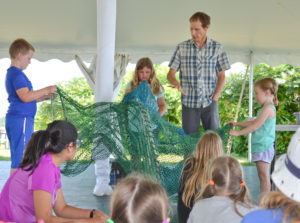
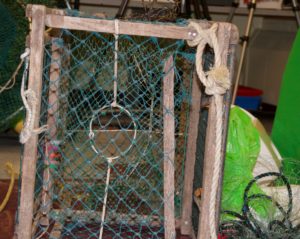
So I’m quick to tell them about some measures to mitigate bycatch, such as changing hook types or using turtle excluder devices. They love handling the big hooped nets. We talk about different harvest methods that have lower ecological impact, and that innovation continues to lessen direct harm.

I show them a pie chart and ask them to choose either the really small slice set aside, or the rest of the pie to represent the domestically harvested seafood eaten in this country. Every now and then, one student will choose the small slice either playing the odds or actually knowing the reality. I love to watch the class discuss the answer and perhaps change their minds. When I tell them the larger section or 90% of the pie represents imports, they don’t mask their surprise.
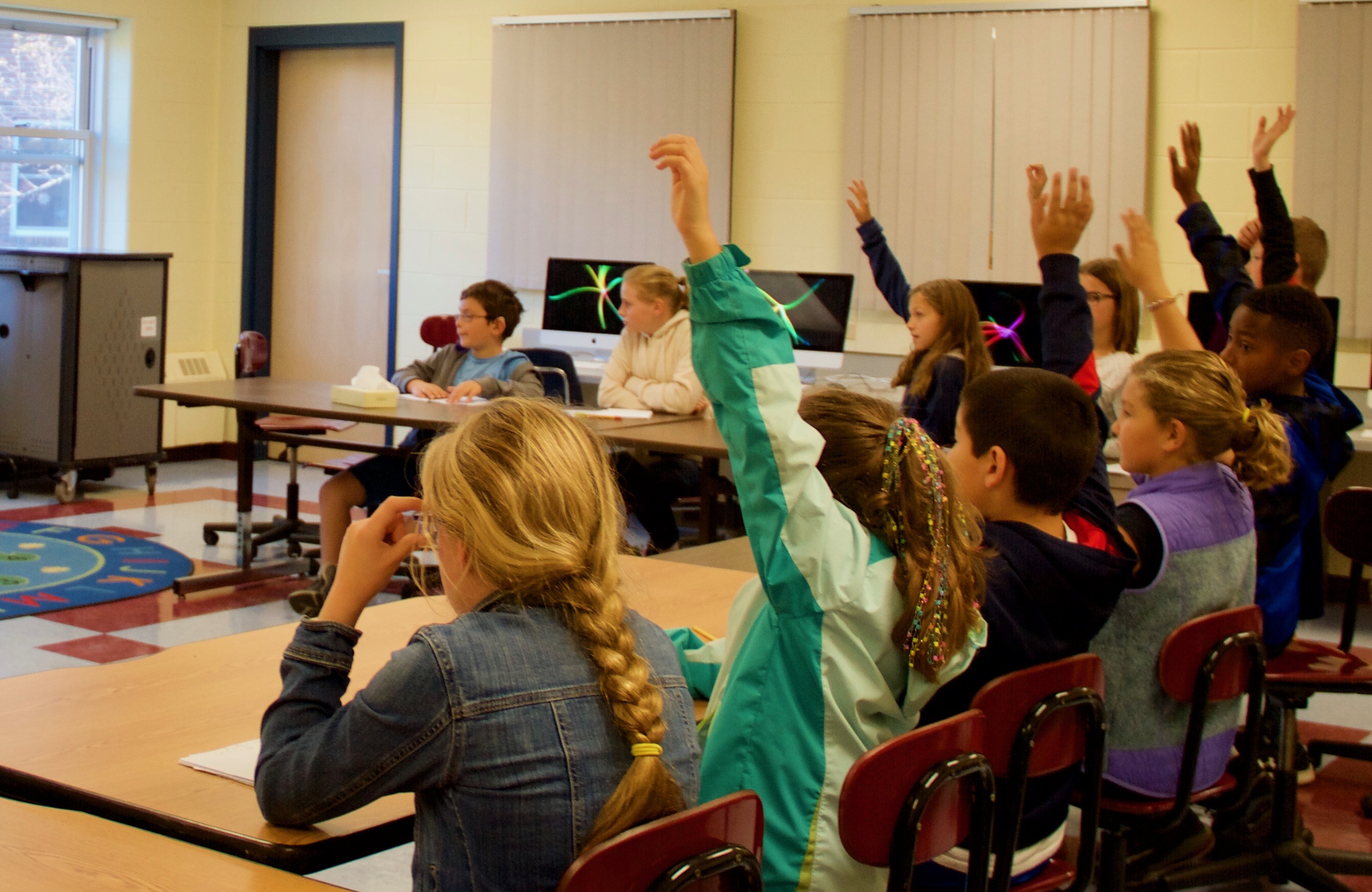
I taught three 5th grade science classes at Rye (NH) Elementary School last week, and took note of students’ interaction with these potentially daunting topics. Typically with classes along the coast, a majority of students raise their hands at the outset when I ask how many like seafood. For those who don’t, I be sure to acknowledge that and tell them that it’s important to understand our relationship to, and impact on the resource, even if we don’t eat it.

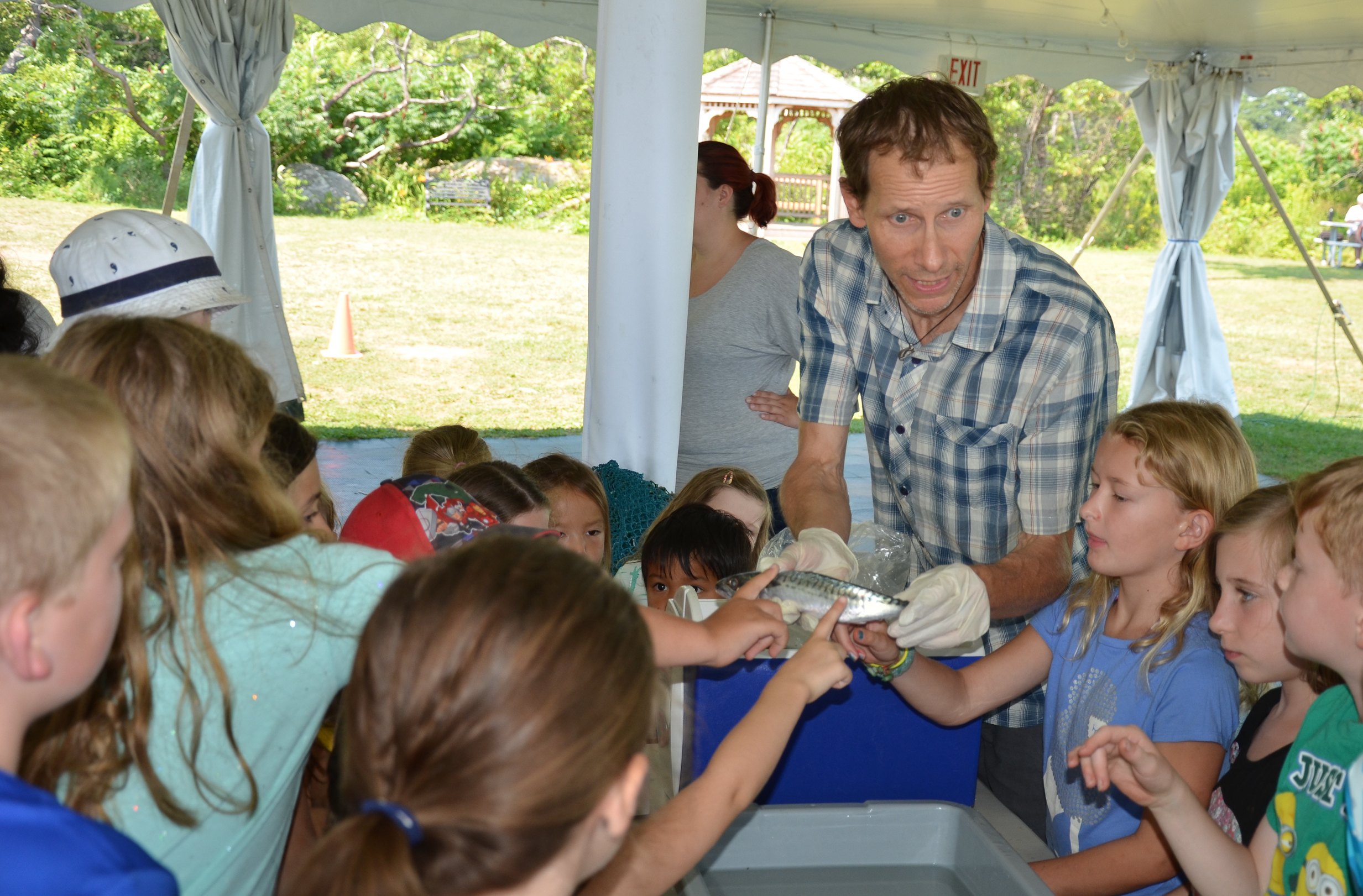
The students at Rye Elementary were, as usual, well informed, inquisitive and engaged in learning about where seafood comes from. They were interested to learn about bivalve aquaculture in Maine, and why forage fish such as the mackerel they see right off the docks play a crucial role in the marine food webs.
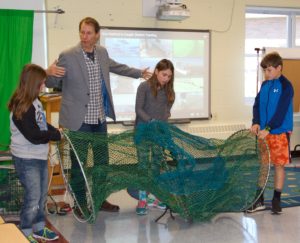
We talked about gear selectivity, invasive species (live green crabs are always a hit) and that buying locally harvested seafood supports local fishermen in the community. And we talked about their responsibility to ask questions at restaurants and seafood stores.

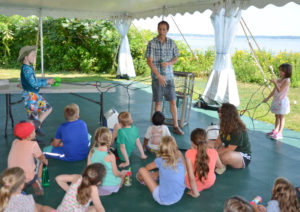
Each class has a different personality and energy level. So we adapt the content and conversation to those variables and engage as many minds as possible.
Every time I teach a few classes in a row, I walk away energized by the fluidity and enthusiasm of the conversation … and a bit drained. Each class I teach is a renewal of my respect and admiration for teachers who do this day in and day out. This is especially true for teachers helping to stimulate young, impressionable minds.
All Blog Posts

Getting Hands Wet and Talking Seafood

  • August 4, 2017October 20, 2021
  • by Colles Stowell
Share it!
Share

Every time I speak to a group of students, campers, adults, etc. I learn something.

First, I learn what the audience knows and doesn’t yet comprehend about seafood sustainability in broad terms. I learn who in the audience is more ready to engage in discussion, who wants to challenge pre-conceived notions, and who isn’t really into the conversation.

Depending on the age group and location, these types of interactions can sometimes provide glimpses into a community’s overall seafood IQ. Observing students while I teach a class also provides a mirror of how effectively I’m getting the message across.

Gill nets are hard to see on land as well as in the ocean. Photo: Rich Harty

My first observation at the Seacoast Science Center in Rye, N.H. this week was how lucky the Seaside Safari campers were to have such a program. Set on the shore near Odiorne Point, surrounded by acres of tide pools loaded with lobsters, green crabs, seaweed, etc., the camp provides direct, hands-on access to coastal marine ecosystems. Campers handle live green crabs while learning about invasive species; they turn over rocks and hunt for juvenile lobsters while learning about food webs; they talk about the warming Gulf of Maine while learning about climate change.

I wish I had access to a program like that at that age.

So it was a privilege to learn some things from these campers as we chatted. I re-confirmed that green crabs are a very effective, hands-on prop … almost to the point of distraction when they started fighting.

I learned that these campers, when prompted, were generally eager to learn how seafood ends up on their plates. They wanted to know how a turtle excluder device works, and its impact on reducing bycatch.

Demonstrating the escape hatch for turtles. Photo: Rich Harty

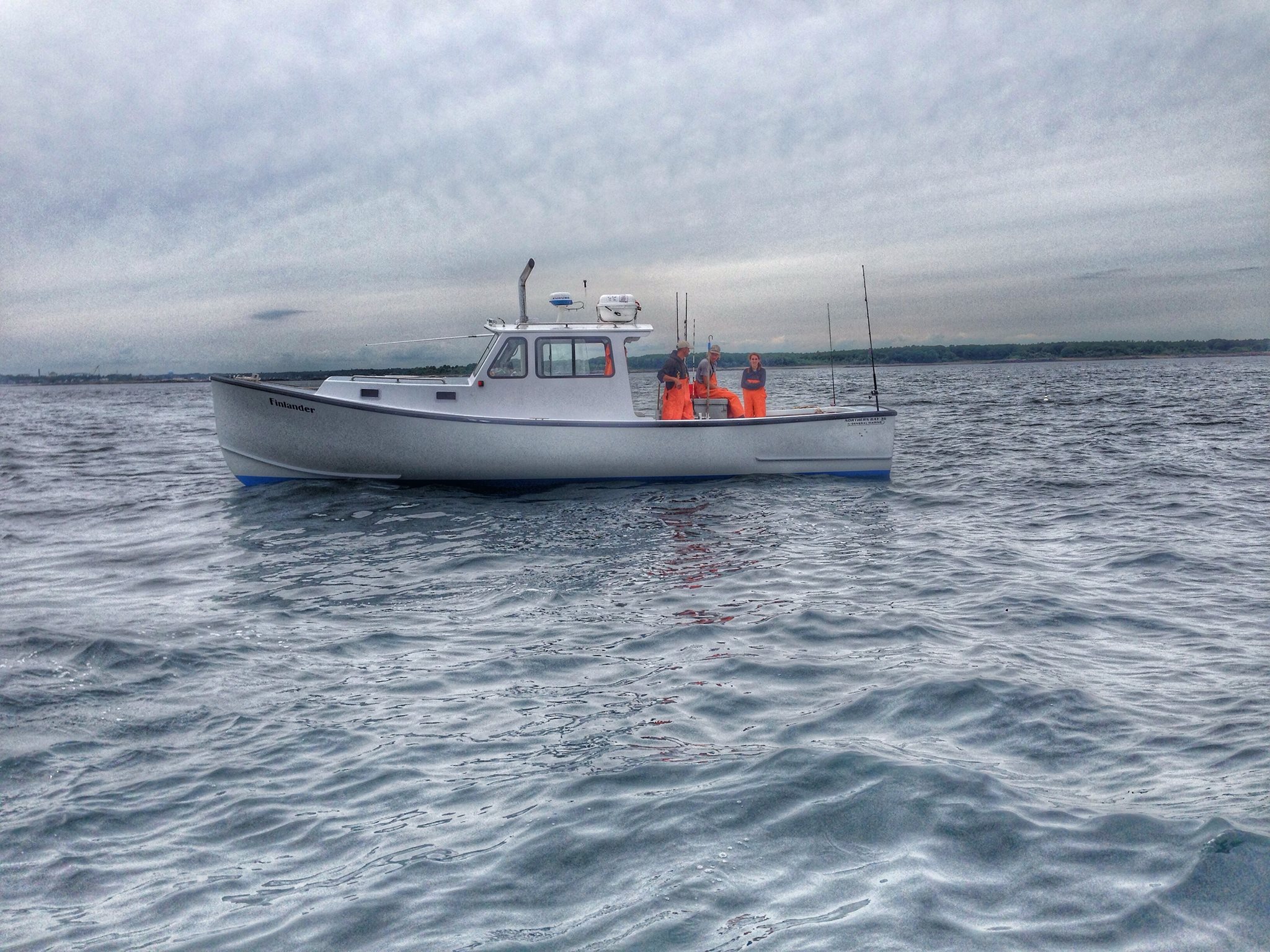
Some campers who had fished recreationally before were genuinely surprised that some fishermen use rod and reel to fish commercially. They were intrigued by the weight of the 14 oz jig used to get the flies down 400 feet to where the haddock, cod and pollock are.

They were also pretty enthusiastic about touching the dead Atlantic mackerel while learning that mackerel are one of several forage fish species that are very important to seafood webs.

And they began to see their relationship to the seafood they eat.

And I learned, once again, that I love what I do.

All Blog Posts

Know Fish: A Dinner Series of Food, Fun and…

  • September 28, 2016October 20, 2021
  • by Colles Stowell
Share it!
Share

For most people, seafood is simply a protein either on a menu, laid across some ice in a display case or pre-packaged in a box at a supermarket. There’s typically no story about where and how the fish was caught, much less by whom. Consumers have little or no idea of how far the fish has traveled, nor whether the fish and shellfish are abundant, stressed or fed antibiotics and hormones at an industrial aquaculture site.

One Fish Foundation arose from a wish to spread the word about our relationship to oceans and specifically to seafood. This means bringing the story behind the seafood we eat into classrooms. I’ll lug in a bunch of fishing gear to talk about different harvest methods and their impact on the resource and marine ecosystems. I’ll throw out eye-popping stats to illustrate how skewed our domestic seafood consumption picture is.

Spreading the word also means going into communities and having conversations with people who care about the environment and want to learn more about the food they eat. That’s what the Know Fish Dinner Series is about. For the past five months, I’ve worked with Seacoast chefs who are passionate about sourcing sustainably harvested seafood; activists who speak out on issues like fisheries management fairness and climate change; fishmongers selling locally abundant, underutilized species; and one fisherman who is bucking the trend toward consolidation, resource depletion and massive bycatch.

These dinners will be a fun, interactive dialogue about why we should be concerned that 90% of the seafood consumed in the U.S. is imported. We’ll eat deliciously prepared, sustainable groundfish caught on rod and reel by Capt. Tim Rider out of Eliot, Me. We’ll discuss why supporting local fishing communities is important and how our seafood choices make a difference: to the resource, the oceans and the fishermen who work them

We’ll have some fun with trivia that sheds light on the resource, the supply chain, marine ecosystems, aquaculture, invasive species, climate change impacts and more. We’ll discuss these topics, ask and answer questions, and bring more of the story to life.

This will be your chance to talk to Capt. Rider about why he spends 18 hours a day or more on the water, fishing with rod and reel in a fishery dominated by trawl nets.

You’ll have the opportunity to talk with chefs Evan Mallett of Black Trumpet, Rob Martin of When Pigs Fly and Brendan Vesey of Joinery Restaurant (Brendan will be cooking with Evan at the Black Trumpet event) about how they choose what seafood to put on the menu.

You’ll be able to ask fishmongers Spencer Montgomery of Dole and Bailey and Amanda Parks of New England Fishmongers about the products they market and handle, and some of the discussions they’ve had around underutilized species.

Got questions about why many small-scale fishermen are struggling? Follow up with one of the event collaborators, Brett Tolley, the community organizer and policy advocate for Northwest Atlantic Marine Alliance. He’s been at the forefront of a campaign to revise current fisheries laws that are consolidating the fleet and squeezing out fishermen like Capt. Rider.

(And, I’ll be on hand to talk about sparking student interest in seafood sustainability, and the effectiveness of waving a dead fish at 6th graders).

This is the team that has volunteered many hours to help organize these events. Everyone brings a great energy and passion to the dinners on Oct. 13 at When Pigs Fly and Oct. 27 at Black Trumpet.

So come out and eat some fabulous seafood, listen to some cool stories, test your seafood trivia, and most of all, get to know your fisherman, your fishmonger, your chefs, a couple of evangelists and your FISH.

Get tickets via the links below.

I hope to see you there!

Oct. 13: When Pigs Fly

Oct. 27: Black Trumpet


Recent Posts

  • Hurricane Ida wreaks havoc on Louisiana’s seafood industry
  • EPA Should Use Clean Water Act To Kill Zombie Mine
  • Slow Fish 2021: Relationship Matters
  • Faith, Façades, and Futility
  • Pebble Permit Paused: Politics at Play

Archives

  • September 2021
  • August 2021
  • April 2021
  • December 2020
  • August 2020
  • June 2020
  • February 2020
  • December 2019
  • November 2019
  • October 2019
  • July 2019
  • May 2019
  • April 2019
  • March 2019
  • January 2019
  • December 2018
  • November 2018
  • June 2018
  • May 2018
  • March 2018
  • February 2018
  • January 2018
  • December 2017
  • November 2017
  • October 2017
  • September 2017
  • August 2017
  • July 2017
  • June 2017
  • May 2017
  • April 2017
  • March 2017
  • January 2017
  • December 2016
  • November 2016
  • October 2016
  • September 2016
  • August 2016
  • July 2016
  • June 2016
  • May 2016
  • April 2016
  • March 2016
  • February 2016
  • January 2016
  • December 2015
  • November 2015
  • October 2015
  • September 2015
  • July 2015
  • June 2015
  • May 2015
  • April 2015
  • March 2015
  • February 2015
  • January 2015
Theme by Colorlib Powered by WordPress