Skip to content
One Fish Foundation
  • Blog
    • Aquaculture
    • Education
    • Environment
    • Policy
    • Wild Harvest
    • Fish Tales
  • About
    • About One Fish
    • About Colles Stowell
  • Education
    • Elementary School
    • Middle School
    • High School
  • KNOW FISH Dinners®
  • Resources
    • One Fish Podcast
    • One Fish Foundation in the news
    • The 7 C’s of Sustainable Seafood
    • Newsletter Archive
    • Recipes
      • Skate with Capers and Butter — Chef Rizwan Ahmed
      • Grandma Davis’ Fish Chowder — Jane Almeida
      • Ginger Garlic Tamari Scallops — Colles Stowell
      • Fish Stock — Evan Mallett
      • Mussels San Remo — Chef Rob Martin
      • Salted Pollock Croquettes – Chef Mark Segal
  • Connect
    • Contact OneFish
    • Social
      • Instagram
      • Facebook
      • Twitter
All Blog Posts

Getting Hands Wet and Talking Seafood

  • August 4, 2017October 20, 2021
  • by Colles Stowell
Share it!
Share

Every time I speak to a group of students, campers, adults, etc. I learn something.

First, I learn what the audience knows and doesn’t yet comprehend about seafood sustainability in broad terms. I learn who in the audience is more ready to engage in discussion, who wants to challenge pre-conceived notions, and who isn’t really into the conversation.

Depending on the age group and location, these types of interactions can sometimes provide glimpses into a community’s overall seafood IQ. Observing students while I teach a class also provides a mirror of how effectively I’m getting the message across.
Gill nets are hard to see on land as well as in the ocean. Photo: Rich Harty

My first observation at the Seacoast Science Center in Rye, N.H. this week was how lucky the Seaside Safari campers were to have such a program. Set on the shore near Odiorne Point, surrounded by acres of tide pools loaded with lobsters, green crabs, seaweed, etc., the camp provides direct, hands-on access to coastal marine ecosystems. Campers handle live green crabs while learning about invasive species; they turn over rocks and hunt for juvenile lobsters while learning about food webs; they talk about the warming Gulf of Maine while learning about climate change.

I wish I had access to a program like that at that age.

So it was a privilege to learn some things from these campers as we chatted. I re-confirmed that green crabs are a very effective, hands-on prop … almost to the point of distraction when they started fighting.

I learned that these campers, when prompted, were generally eager to learn how seafood ends up on their plates. They wanted to know how a turtle excluder device works, and its impact on reducing bycatch.
Demonstrating the escape hatch for turtles. Photo: Rich Harty

Some campers who had fished recreationally before were genuinely surprised that some fishermen use rod and reel to fish commercially. They were intrigued by the weight of the 14 oz jig used to get the flies down 400 feet to where the haddock, cod and pollock are.

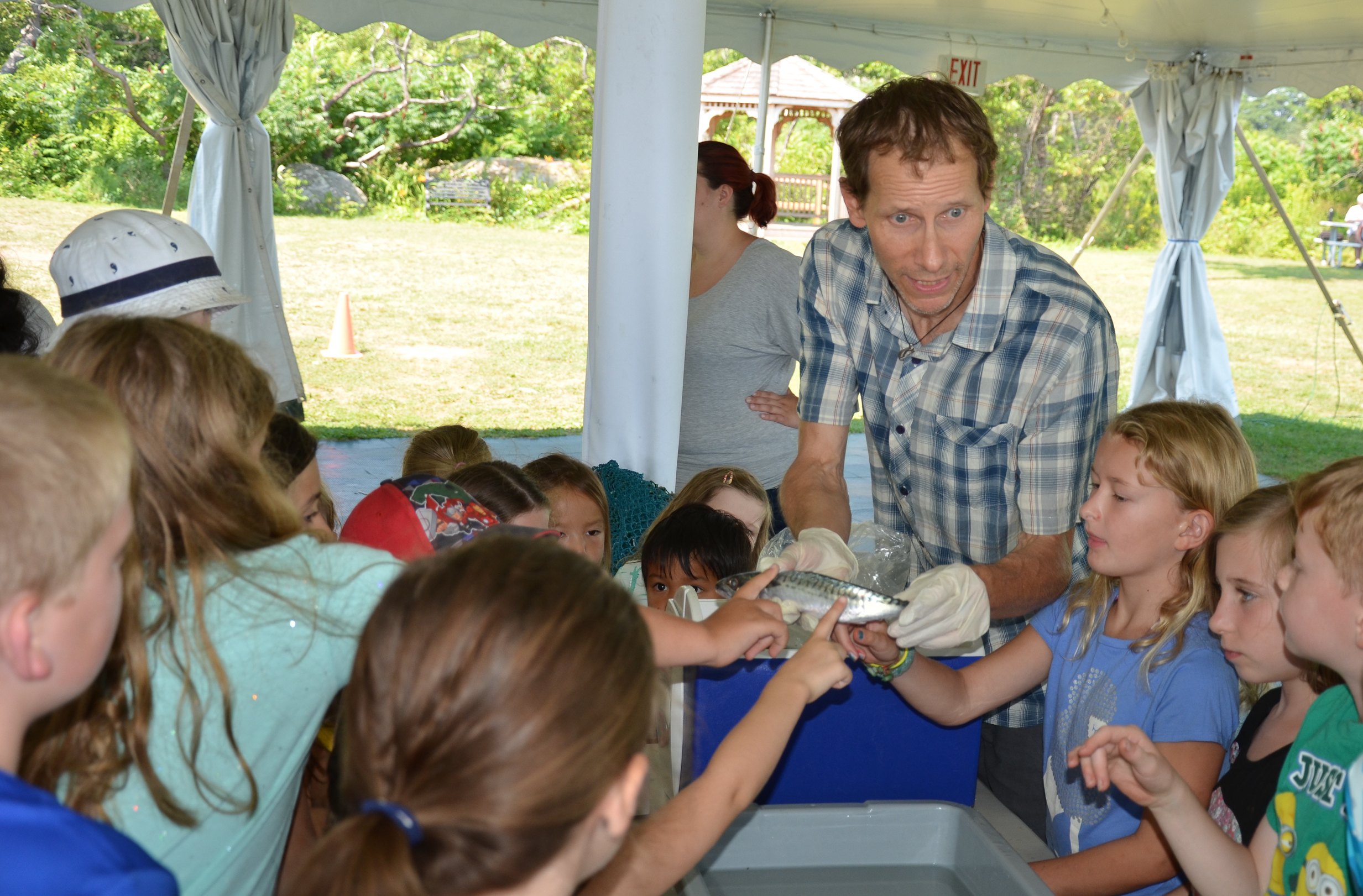
They were also pretty enthusiastic about touching the dead Atlantic mackerel while learning that mackerel are one of several forage fish species that are very important to seafood webs.

And they began to see their relationship to the seafood they eat.

And I learned, once again, that I love what I do.

Making Do at Slow Food Nations, Denver
Farmed Salmon Jailbreak Exposes Systemic Industry Flaws
wpadmin
bycatch education green crab Gulf of Maine lobster mackerel Seacoast Science Center Sustainable Seafood sustainable seafood education tide pool

Related articles

Hurricane Ida wreaks havoc on…
EPA Should Use Clean Water…
Slow Fish 2021: Relationship Matters
Faith, Façades, and Futility
Pebble Permit Paused: Politics at…
Keeping Salmon Wild
Frankenmine: Pebble’s Worst-Case Scenario
Swimming On: the Slow Fish…
Seafood Learning Expeditions
Building Community Over Seafood
Seafood Lovers and the Supply…
Administration Forces EPA About-Face, Revokes…

Recent Posts

  • Hurricane Ida wreaks havoc on Louisiana’s seafood industry
  • EPA Should Use Clean Water Act To Kill Zombie Mine
  • Slow Fish 2021: Relationship Matters
  • Faith, Façades, and Futility
  • Pebble Permit Paused: Politics at Play

Archives

  • September 2021
  • August 2021
  • April 2021
  • December 2020
  • August 2020
  • June 2020
  • February 2020
  • December 2019
  • November 2019
  • October 2019
  • July 2019
  • May 2019
  • April 2019
  • March 2019
  • January 2019
  • December 2018
  • November 2018
  • June 2018
  • May 2018
  • March 2018
  • February 2018
  • January 2018
  • December 2017
  • November 2017
  • October 2017
  • September 2017
  • August 2017
  • July 2017
  • June 2017
  • May 2017
  • April 2017
  • March 2017
  • January 2017
  • December 2016
  • November 2016
  • October 2016
  • September 2016
  • August 2016
  • July 2016
  • June 2016
  • May 2016
  • April 2016
  • March 2016
  • February 2016
  • January 2016
  • December 2015
  • November 2015
  • October 2015
  • September 2015
  • July 2015
  • June 2015
  • May 2015
  • April 2015
  • March 2015
  • February 2015
  • January 2015
Theme by Colorlib Powered by WordPress