Skip to content
One Fish Foundation
  • Blog
    • Aquaculture
    • Education
    • Environment
    • Policy
    • Wild Harvest
    • Fish Tales
  • About
    • About One Fish
    • About Colles Stowell
  • Education
    • Elementary School
    • Middle School
    • High School
  • KNOW FISH Dinners®
  • Resources
    • One Fish Podcast
    • One Fish Foundation in the news
    • The 7 C’s of Sustainable Seafood
    • Newsletter Archive
    • Recipes
      • Skate with Capers and Butter — Chef Rizwan Ahmed
      • Grandma Davis’ Fish Chowder — Jane Almeida
      • Ginger Garlic Tamari Scallops — Colles Stowell
      • Fish Stock — Evan Mallett
      • Mussels San Remo — Chef Rob Martin
      • Salted Pollock Croquettes – Chef Mark Segal
  • Connect
    • Contact OneFish
    • Social
      • Instagram
      • Facebook
      • Twitter
All Blog Posts

Fishing, Passion and Bad Music

  • June 20, 2017October 20, 2021
  • by Colles Stowell
Share it!
Share

I don’t know if it was Queensryche, Dokken or Whitesnake. Whatever flavor of 80’s hair band, the music was pulverizing my ear drums. As they pulsed laterally, the fluid in my ears splashed up and down every time the bow of the boat jumped six feet and plunged back down on the back side of a wave, punctuated by the incessant hammering of the kick drum in the background.

What were we doing?

I was heading out to the Shoals Marine Laboratory on Appledore Island off the coast of Portsmouth, N.H. to talk with some students from the University of New Hampshire, Cornell University and Carleton College about regional, domestic and global seafood markets, consumer choices, market influences and climate change impacts. The students were participating in a two-week intensive sustainable fisheries course coordinated by N.H. Seagrant. I was riding with Capt. Tim Rider, whose fondness for that particular XM station was amplified by the conditions.
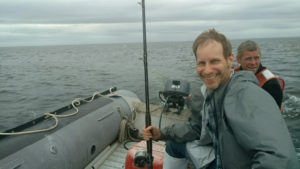
June in New England. Heading to the lab in wind-driven rain, but fortunately out of the six-foot waves … and the music. Photo: Tim Rider

A fisherman’s tale

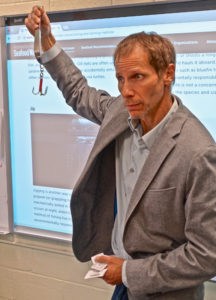
If you’ve ever attended one of the KNOW FISH dinners, you know Tim is very passionate about what he does: bucking the trend toward high-bycatch harvesting by fishing for groundfish in up to 500 feet of water 80 miles offshore with rod and reel. And he’s not shy about sharing his feelings on current management policies, consolidation of the fleet (forcing small-scale fishermen out) and the need for change.

Perhaps it is this passion and willingness to speak out that has alternately cast him as either a pioneer striving to do the right thing against many odds or a loud-mouthed maverick who refuses to get in line. Perhaps that’s why he’s been lauded by restaurant chefs and consumers for the quality of his product, and vilified – even threatened – by others in the industry who don’t share his views.

That passion, along with a lifelong obsession of fishing and the experiences he’s had trying to survive make for a compelling, if a bit incessant, narrative. He keeps on talking, he says, because he has a lot to say.

The unsuspecting students at the Shoals Marine Laboratory heard stories of being shut down from speaking in New England Fisheries Management Council meetings, excessive and unfounded accusations from law enforcement, and confrontations with other fishermen who don’t like him rocking the boat.
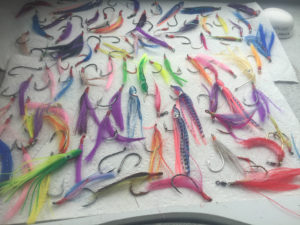
“Bait,” or the tools of the trade.

Struggling against poor policy

He provides a firsthand account of how the current management system has pushed him to the brink of bankruptcy multiple times, even as he’s trying to support his wife and young son and his crew. He talks about the money trail that has played a significant role in dictating fisheries management policy, including controversial catch shares.

Set up to allow fishermen to self-regulate by creating a marketplace for access to different fisheries, catch shares have spawned a money-driven resource grab in which access is bought and sold like stocks. The result is now an unfair system that too often privatizes the resource at the expense of small-scale fishermen who don’t have the money to buy quota or to compete in the limited fisheries allotted to fishermen with no specific quota.

Tim has joined a sector, or group of fishermen with quota, that is primarily “geared” toward fishermen using hooks rather than nets. The hope is to work collectively to promote low-impact fishing and perhaps gain a stronger voice during council meetings.
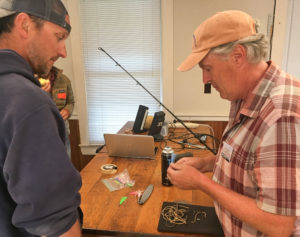
Reviewing new and old fishing gear with Dr. Nathan Hamilton, professor of archaeology at Univ. of Southern Maine. Photo: Owen Nichols

And for as many stories Tim told, the students on Appledore Island were engaged. They asked pertinent and insightful questions. They wanted to know about possible management solutions. They even laughed at some of his jokes.

Most importantly, they took advantage of a special opportunity to speak with a fisherman who gives his blood and sweat 12 days out of 14 (sometimes more than that), leaving the dock at 1 a.m. and returning at 9 p.m. because he believes in what he’s doing.
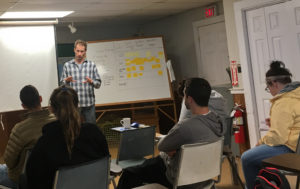
Talking about how consumer habit driven by price and convenience have opened the flood gates to cheap seafood imports. Photo: Owen Nichols

Changing habits

The students also asked smart questions about the big picture of local, national and global seafood dynamics. While Tim pointed to access and quota as two of the biggest issues with fisheries here, I added habit: Policy maker habit in keeping a faulty, skewed system in play; and fishermen and operator habit to own the most quota and to resist change for obvious reasons.

And worse still: Consumer habit. One of the most significant drivers for the amount of imported seafood eaten in the U.S. is consumer choices, dictated largely by price and convenience. We discussed how getting smarter about seafood systems and how to get closer to the domestic source (local fishermen) is crucial to changing that dynamic.
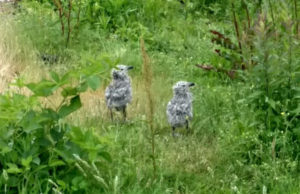
As a annoying as the adults can be, seagull chicks register high on the cute scale. At least we didn’t get attacked by the mamma. Photo: Tim Rider

We also talked about climate change and its impact on everything from native and invasive species to ocean acidification and changing currents. We talked about the need to keep diving into these issues and pursue careers in marine science, climatology, ecology, etc. to help solve some of the complex challenges climate change presents.

Students thanked us for coming and talked about some of the projects they were working on and their planned study focus in college.
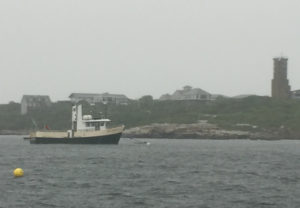
Departure, before the fog really set in.

On the ride home, as the grey skies grew darker into dusk and the bow bobbed to the pounding beat of blaring rap music, Tim and I remembered why we took a full day off to plow through some fairly gnarly weather and talk to a handful of college students from across the northeast.


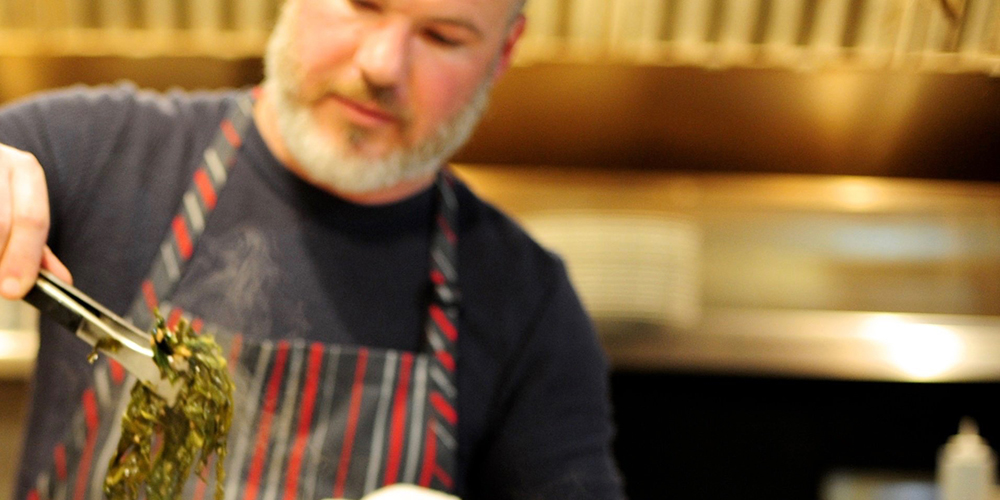
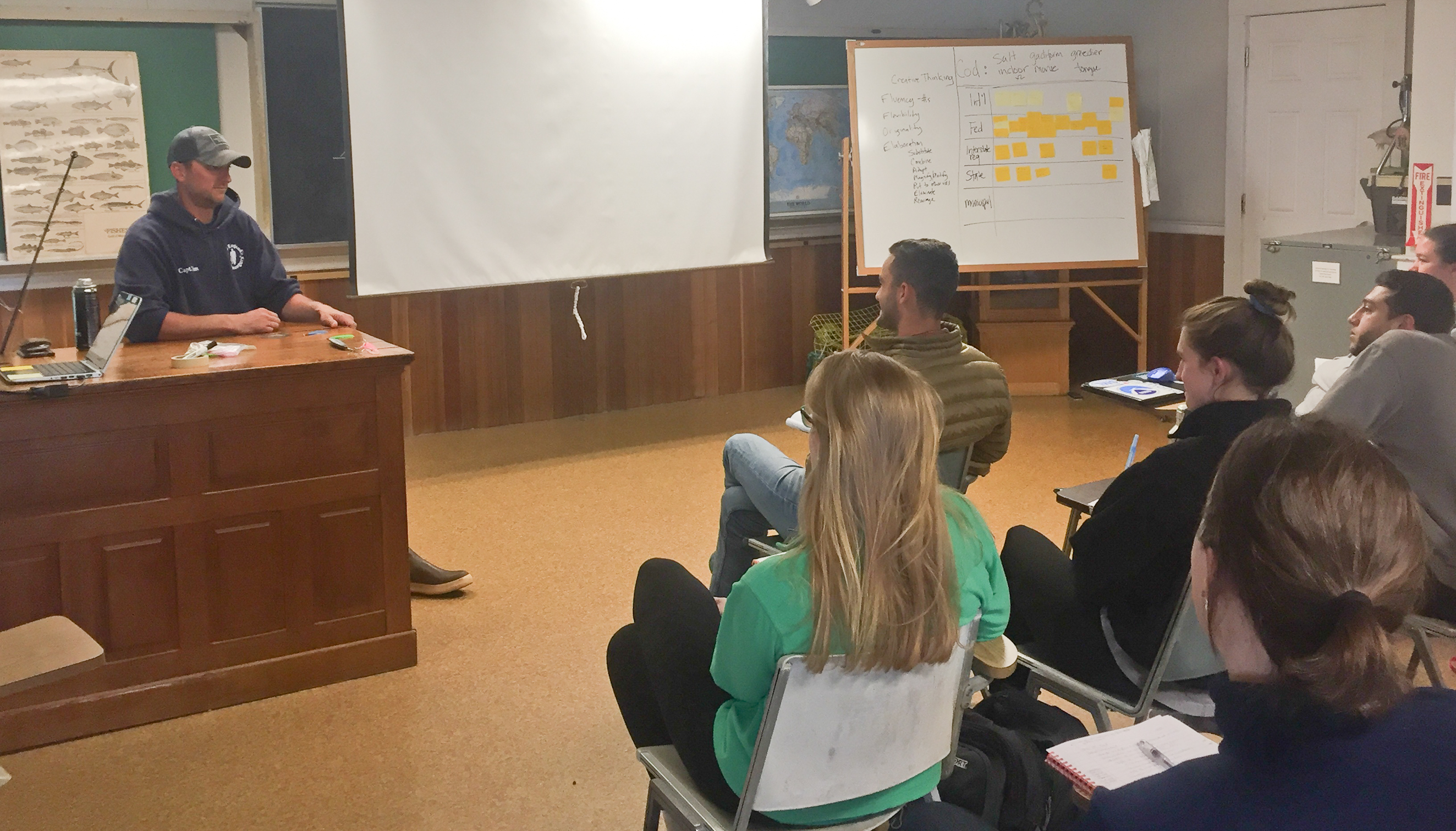
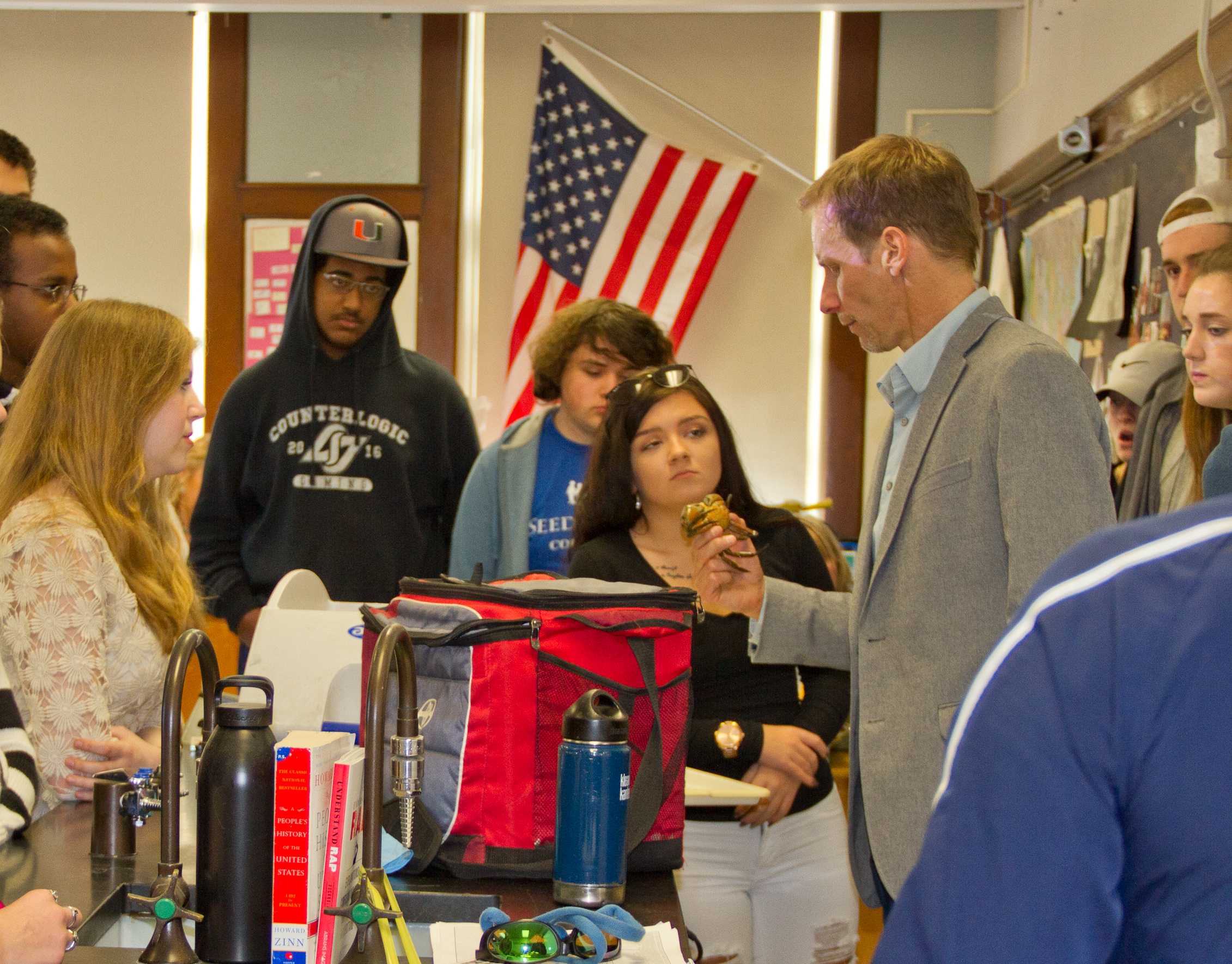
Top photo: Capt. Tim Rider telling fish tales.
All Blog Posts

Age Is Irrelevant: Our Seafood Choices Matter

  • April 24, 2017October 20, 2021
  • by Colles Stowell
Share it!
Share

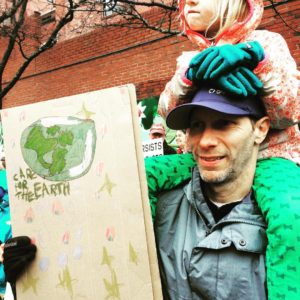
Standing in a light misting rain at a chilly March for Science rally with my daughter on my shoulders, I marveled at the number of families in attendance. The scene struck a chord with me. Science has a story for everyone, regardless of race, sex, age, income, etc. It’s all in how the story is told, and our willingness to listen to it.

Early involvement! Photo credit: Jaime Stowell

This is true for my work with One Fish Foundation. Regardless of where I’m speaking, there is one constant. The age may change, but the overall message is the same: Our seafood choices matter.

I saw this writ large last week when I spoke to two groups of high school seniors about climate change impacts on seafood in the Gulf of Maine, and then spoke to four groups of elementary students the next morning. That I delivered the latter talks in French was just icing on the cake.

What keeps everyone’s attention is the ability to tell a story that resonates.

Seafood, as a hook for discussing climate change

I initially engaged Portland High School students in the discussion by getting them to tell me what type of seafood they liked. Then we talked about how some of that seafood was likely caught … or farmed and the implications. From bycatch to chemicals, the narrative opened their eyes … quite wide with some stats … as to why they should try and find out where, when, how and even by whom (if possible) their seafood was caught.

That led into a more involved discussion about how climate change impacts, such as warming water, ocean acidification, changes in current and salinity, affect the seafood we eat globally, domestically and regionally in the Gulf of Maine. We talked about the mystery surrounding the collapse of the Northern Shrimp fishery in 2012, and the race for scientists and fishermen to get answers. Right now, scientists believe the shrimp have a narrow comfort range, and that the increasing temperatures in the Gulf of Maine may be affecting everything from reproduction to eating habits.

Students also learned that we’re gaining more information every day about the effects of warming waters, increased ocean acidity (particularly on molluscs’ ability to calcify their shells) and how ocean currents and salinity are changing. But as one of the lead authors of the Arctic Resilience Report told me last fall, we still have a way to go before we understand in depth how disparate climate change factors work in concert to affect different ecosystems or species in those ecosystems.

I left the students pondering the notion that rather than trying to fix climate change (we can’t), we need to learn how to adapt. This means finding more ways to better predict and respond to these changes. It also means that on a personal level, we need to understand what we can do. Students learned they have the right to try and find out when, where and how their seafood was harvested (or farmed). They also learned they can be evangelists for the sustainable seafood message.

Hands-on…the crabs, the dead fish, the gear…

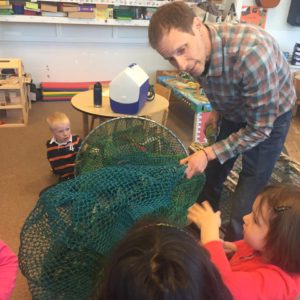
The younger the audience age, the more hands-on the discussion needs to be. So I hauled in a lobster trap, a turtle excluder device, some gillnet, live green crabs and a dead black seabass to L’Ecole Française Du Maine.

Turtle excluder devices are great conversation pieces…seriously. Photo credit: Elodie Le Nezet

I varied the message to accommodate students between ages 4 and 11. For the younger students we first talked about what seafood they liked before talking about the different methods for ensuring fishermen catch what they’re targeting so they can minimize bycatch. We talked about how a lobster trap works, how videos have shown lobsters can go in and out of these traps at will, and what it means when a lobsterman pulls up a trap filled with black sea bass.

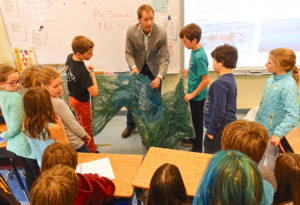
We also used my daughter’s stuffed turtle to demonstrate how a turtle can escape being caught – and ultimately drowned in a trawl – by way of the grate used in a turtle excluder device. The primary message to them is that for the most part, fishermen want to take care of the resource, and that some capture methods are better than others at minimizing bycatch.

I extended that discussion with older students to include predator/prey relationships, and how things like bycatch or climate change are changing ecosystems in the Gulf of Maine. They loved seeing the green crabs up close as we discussed the devastation wrought on eelgrass beds as the crabs dig up clams, mussels and oysters.

All of the students wanted to touch the fish.

In the end, all of the students I spoke with last week, at Portland High School and L’Ecole Française Du Maine, began to understand that yes, where their seafood comes from and how it was harvested matters to them and the resource.


Top photo credit: Taylor Mason, College of the Atlantic

All Blog Posts

Challenging Next-Gen Scientists

  • March 21, 2017October 20, 2021
  • by Colles Stowell
Share it!
Share

Call it irony.

Last week I was putting the finishing touches on a presentation about climate change impacts on seafood for two classes when I saw a news brief about how ocean acidification is spreading quickly in the western Arctic Ocean.

Specifically, a report from NOAA cited a new study showing how high acidity waters have spread more than 300 nautical miles almost to the North Pole and have increased in depth from 325 feet to 800 feet in the past 20 years. This rate of expansion is more than twice the global average, and it could harm mussel, clam and sea snail (food for salmon) populations.

So I had some fresh, relevant news to discuss with these students.

The classes were part of a statewide symposium bringing high school students interested in marine sciences to Salem State University. I was one of a dozen or so teachers speaking with students that day. I focused on four significant but interrelated climate factors that affect seafood webs in and around the Gulf of Maine: temperature increase, changes in current and salinity, and ocean acidification.

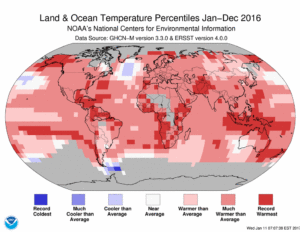
2016 was the warmest year on record. NOAA graphic

First, I briefly discussed seafood as an economic resource, and why we should care about where, when, how and by whom it was harvested. Next we talked about 2016 being the fifth year in a row for setting global land and ocean temperature records, and that the first 16 years of the 21st century are among the 17 warmest on record (138 years). We talked about how the Gulf of Maine is warming four times faster than 99% of the oceans on the planet.

Influential currents

Students asked questions about new research showing that some key currents in the Atlantic Ocean may be slowing down because of warming waters in the Arctic. The Atlantic Meridional Overturning Circulation or AMOC, (known as the ocean conveyor belt), drives global ocean currents and climates.

http://qkl.fa0.mwp.accessdomain.com/wp-content/uploads/2017/03/thermohaline_conveyor_30fps.mp4

Scientists think that if warming continues, the collision of warm and cold water in the Arctic that drives the global currents could slow or even stall, eventually putting Europe in a deep freeze and baking the southern hemisphere. This could significantly change the number and intensity of Atlantic hurricanes and Pacific Monsoons.

It could also have major impacts on a wide swath of seafood in the Gulf of Maine. These types of temperature and current fluctuations dramatically affect salinity and ocean acidification. All of these changes can alter ecosystems, including spawning areas and timing, migration, plankton production (which is the base layer of the ecosystem) and predator-prey relationships.

NOAA photo

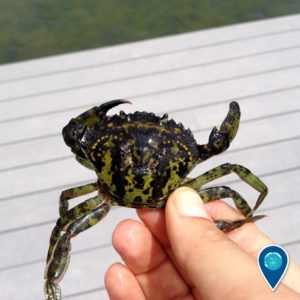
To drive the point home, I brought out some live green crabs. The students were all about hearing how the green crab can wipe out entire mini-ecosystems of eel grass as they root out mussels and clams to devour. They also learned about increasing efforts to determine how to best control green crab populations as they’ve become omnipresent in the Gulf of Maine as temperatures increase. Though they’ve been around since the early 1800s, they’ve become much more populous here because they have adapted to the seasonal temperature changes and they are prolific.

Throwing down a challenge

I ended the class with a challenge. I described discussions I’ve had with scientists on the forefront of the research on climate impacts on seafood … all leading to the same conclusion. We currently know a fair amount about the impacts of temperature, current, salinity and OA on different ecosystems. But we don’t have a real good, long-term, predictive view of how these (and other) factors work in concert to affect ecosystems and even specific species.

We need the next generation of scientists to help us find these answers. As Marcus Carson, lead scientist on the in-depth Arctic Resilience Report on climate change said, “It’s frustrating always being two or three steps behind climate change.”

We need bright minds to dive into the advanced geophysical, meteorological, metabolic and organic shifts climate change will impose on our marine ecosystems to help us better understand how to adapt to these changes. It’s unlikely we’ll fully stop climate change. But perhaps if we begin collectively cutting carbon emissions and planning ahead, we can slow it down enough for future scientists to help us better anticipate, rather than react to these changes. That’s how we take care of seafood as a resource.

So yes, the NOAA acidification report was timely, if a bit ironic … another unfortunate red flag that should serve as a call to arms.


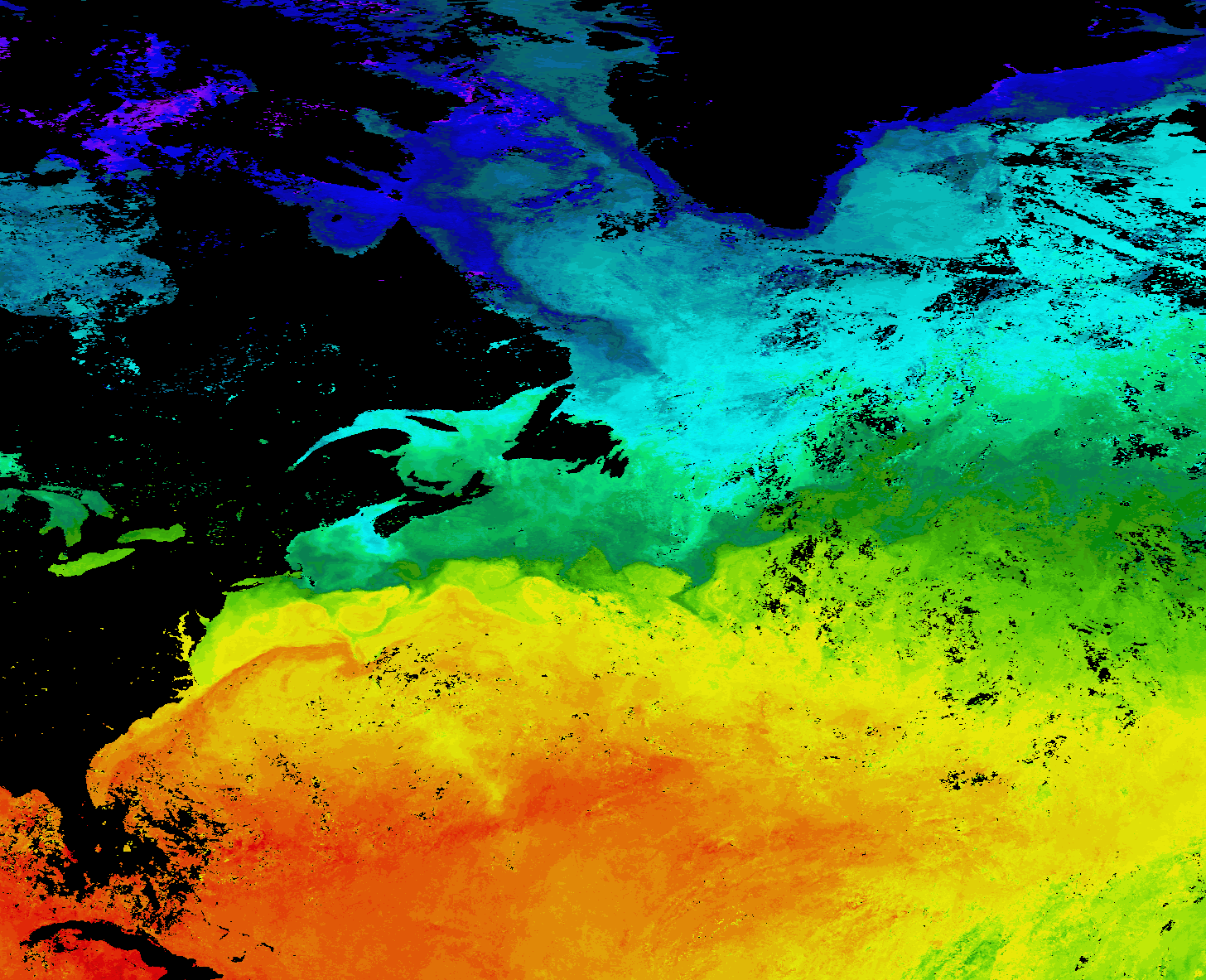
Top image credit: NASA spectroradiometer view of thermal variations in the Northwest Atlantic ocean. The warm Gulf Stream is the orange streak along the Eastern seaboard.


All Blog Posts

Hearing Nature’s Lessons in the Classroom

  • November 22, 2016October 20, 2021
  • by Colles Stowell
Share it!
Share

“Nature has it right. It’s set things up that work. When we interfere, we mess it up.”

We’ve seen a lot of words of wisdom from different mindfulness gurus and healing practitioners in the past couple of weeks. Sometimes they come from a place of unclouded truth, such as the perspective of a fifth grade student.

rye-elem-lobster-trap_
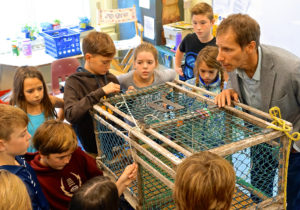
Yes, lobsters can waltz in and out of these traps pretty much as they please.

The quote above stemmed from a conversation about genetically engineered salmon at Rye Elementary School yesterday. We were talking about finfish farming and some of the drawbacks of the fish pellets used as feed, including the demand on ecologically critical forage fish and the reduced nutritional value. We discussed how farmed salmon have been found to have lower beneficial Omega 3s because of their feed than the naturally high Omega 3s of wild salmon. We discussed the same issues with GE salmon, as well as the various unknown risks of engineering fish as food and it’s ecological impact.

So when the student spoke about interfering with Nature’s design, I smiled and asked him to repeat it so that everyone in the class of 20 or so could hear it. Several in the class nodded their agreement.

rye-elem-jigs
Discussing the low bycatch of jig fishing.

I’d made a connection.

Every dialogue with students, their parents, sustainable seafood dinner attendees, etc. is based on telling a story and making connections. A connection that will resonate. A connection that will knit together the information into one cohesive, compelling narrative. A connection that will inform decisions in the future.

When I’ve made a good connection, the effect is immediate and sometimes profound. It is especially rewarding when someone who is 11 years old comes up with such clarity. It is also enlightening. I often learn something about myself and the message I’m sending just by listening to students.

Turtle excluder device: always a crowd pleaser, and a good teaching tool.

The students at Rye Elementary asked thoughtful questions. They were truly engaged in the conversation. We poked at a lobster trap. We stretched out a turtle excluder device and talked about how it is an example of what we’re doing to reduce bycatch. We touched on how climate change is affecting the Gulf of Maine.

By the end of each of the three classes I visited, students seemed to take ownership of the fact that they do have a choice at restaurants or grocery stores and that their choice matters.

They left armed with questions to ask:

Where is it from? How was it caught? Was it farmed? Were there any hormones, antibiotics or pesticides used?

Perhaps they will spread the word … one connection at a time.


Photo credit: Denise Wheeler

All Blog Posts

Sustainable Seafood: One Conversation at a Time

  • October 18, 2016October 20, 2021
  • by Colles Stowell
Share it!
Share

“We need to be having more of these conversations.”

Yes, we do.

The overriding dynamic we need to change in this country regarding seafood is this: more than 90% of the seafood we eat is imported. This is an oft-cited statistic that seems to raise eyebrows … then disappears into the ether as we go about our business.

That statistic doesn’t really begin to take on significant meaning for people until they see it in context and start connecting the dots as to why this is happening, and what we can do about it.

I launched One Fish Foundation to bring this message to schools and communities. I started the KNOW FISH dinner series with a great team to spark the type of community discussions that get people to ask questions, seek answers and understand they have an impact, however small, on the resource. Hopefully, their decisions and their understanding can spark other conversations and even, dare I say it, start a groundswell.

kfwpfpollock
Pan-seared pollock from the F/V Finlander

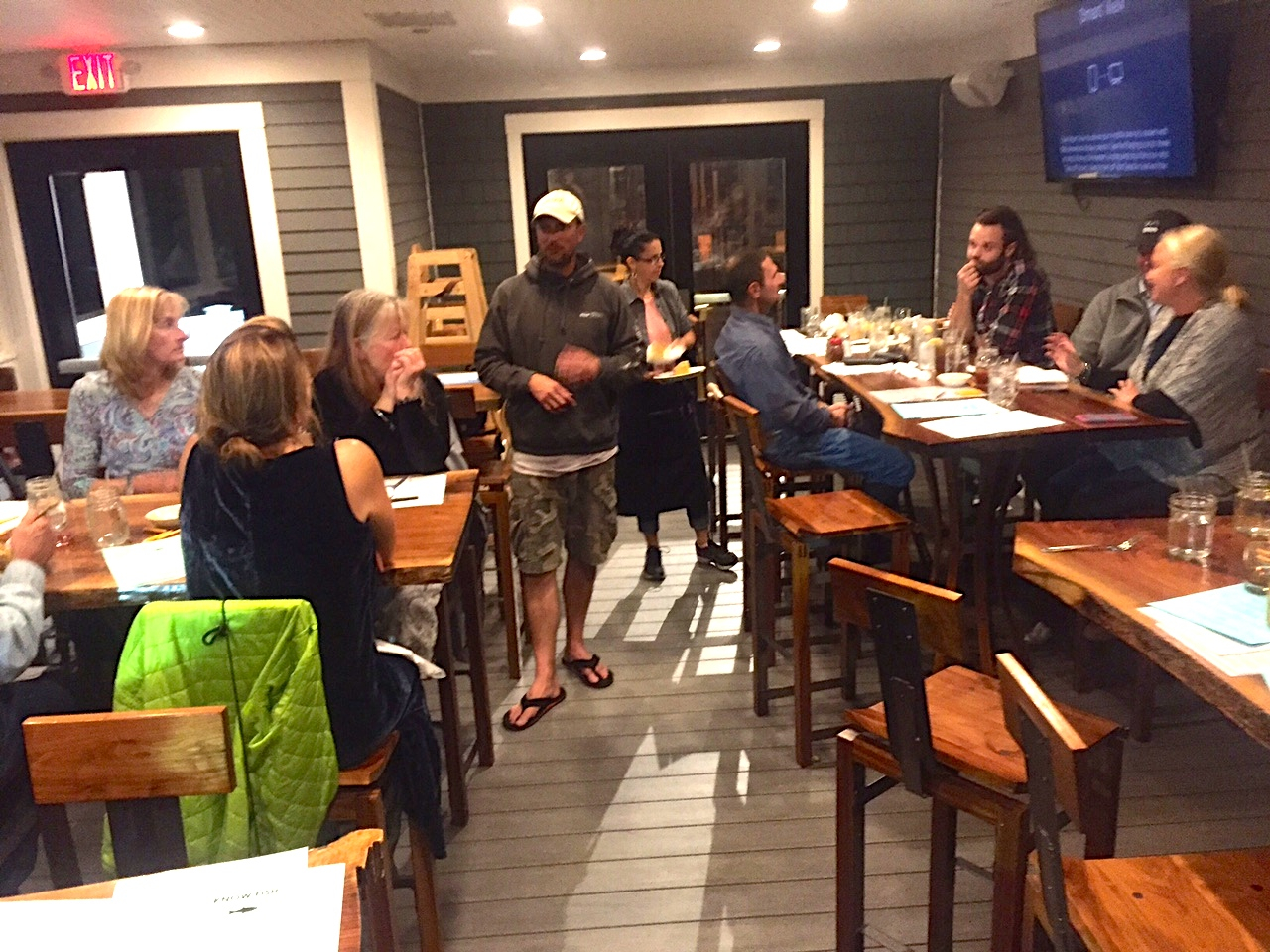
Thus, the first KNOW FISH dinner held last week at When Pigs Fly in Kittery was a success. Attendees sat next to fishermen, fishmongers and activists and asked questions. They discussed the domestic seafood picture and why we should care when, where, how and importantly, by whom our seafood is harvested.

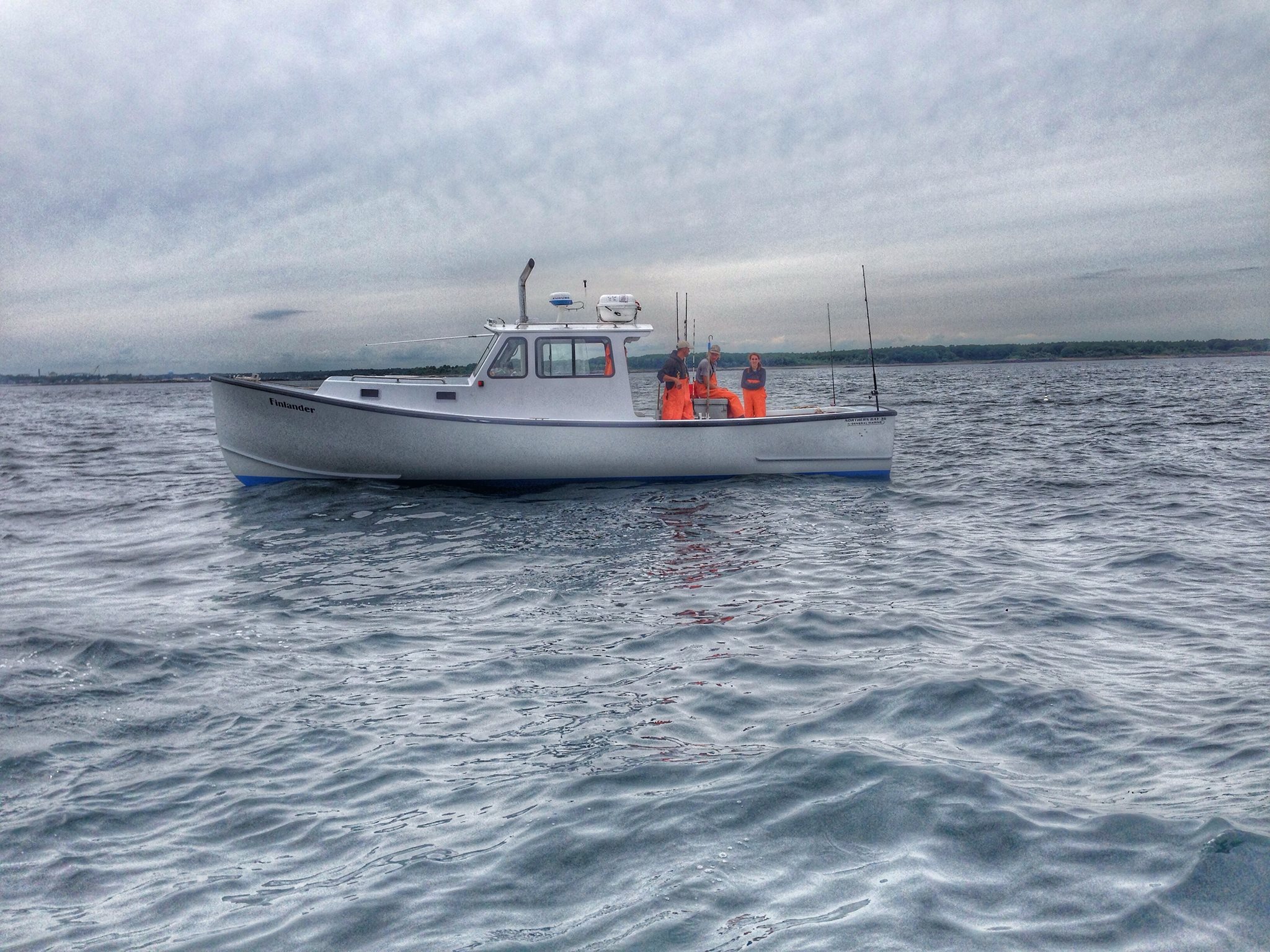
They heard from Capt. Tim Rider, of the F/V Finlander and New England Fishmongers about how small-scale New England fishermen are getting squeezed out by unfair regulations and big operations with deep pockets. They learned what questions to ask and how to get smarter about the choices they make. They learned from Spencer Montgomery of Dole & Bailey and New England Fishmongers why it’s important to shorten the supply chain and buy locally caught seafood. He told them some signs to look for to tell if a fish has been sitting around too long.

They learned interesting trivia about New England and its fisheries. They learned how climate change is impacting the Gulf of Maine.

kfwpfsausage
Unbelievably delicious cusk (local, abundant) sausage from M/V Finlander.

And Chef Robert Martin put on a feast: delicious cusk sausage (trust me here!), pan-seared pollock, and roast cod (all fresh caught and graciously donated by Capt. Rider) and accompanied by tasty, artfully presented seasonal vegetables.

I was encouraged with the comment above and others like it as departing attendees expressed a new perspective and perhaps reflected even a bit of my enthusiasm for sharing the sustainable seafood message. Our decisions make a difference.

Perhaps if we keep having these discussions, that 90% statistic will become a distant memory and the narrative will shift to one of widespread support for domestic, local, sustainable fisheries. One conversation at a time.

The next will be the KNOW FISH dinner on Oct. 27 at Black Trumpet in Portsmouth. Get tickets here.

Come join the conversation … and the feast.

All Blog Posts

Know Fish: A Dinner Series of Food, Fun and…

  • September 28, 2016October 20, 2021
  • by Colles Stowell
Share it!
Share

For most people, seafood is simply a protein either on a menu, laid across some ice in a display case or pre-packaged in a box at a supermarket. There’s typically no story about where and how the fish was caught, much less by whom. Consumers have little or no idea of how far the fish has traveled, nor whether the fish and shellfish are abundant, stressed or fed antibiotics and hormones at an industrial aquaculture site.

One Fish Foundation arose from a wish to spread the word about our relationship to oceans and specifically to seafood. This means bringing the story behind the seafood we eat into classrooms. I’ll lug in a bunch of fishing gear to talk about different harvest methods and their impact on the resource and marine ecosystems. I’ll throw out eye-popping stats to illustrate how skewed our domestic seafood consumption picture is.

Spreading the word also means going into communities and having conversations with people who care about the environment and want to learn more about the food they eat. That’s what the Know Fish Dinner Series is about. For the past five months, I’ve worked with Seacoast chefs who are passionate about sourcing sustainably harvested seafood; activists who speak out on issues like fisheries management fairness and climate change; fishmongers selling locally abundant, underutilized species; and one fisherman who is bucking the trend toward consolidation, resource depletion and massive bycatch.

These dinners will be a fun, interactive dialogue about why we should be concerned that 90% of the seafood consumed in the U.S. is imported. We’ll eat deliciously prepared, sustainable groundfish caught on rod and reel by Capt. Tim Rider out of Eliot, Me. We’ll discuss why supporting local fishing communities is important and how our seafood choices make a difference: to the resource, the oceans and the fishermen who work them

We’ll have some fun with trivia that sheds light on the resource, the supply chain, marine ecosystems, aquaculture, invasive species, climate change impacts and more. We’ll discuss these topics, ask and answer questions, and bring more of the story to life.

This will be your chance to talk to Capt. Rider about why he spends 18 hours a day or more on the water, fishing with rod and reel in a fishery dominated by trawl nets.

You’ll have the opportunity to talk with chefs Evan Mallett of Black Trumpet, Rob Martin of When Pigs Fly and Brendan Vesey of Joinery Restaurant (Brendan will be cooking with Evan at the Black Trumpet event) about how they choose what seafood to put on the menu.

You’ll be able to ask fishmongers Spencer Montgomery of Dole and Bailey and Amanda Parks of New England Fishmongers about the products they market and handle, and some of the discussions they’ve had around underutilized species.

Got questions about why many small-scale fishermen are struggling? Follow up with one of the event collaborators, Brett Tolley, the community organizer and policy advocate for Northwest Atlantic Marine Alliance. He’s been at the forefront of a campaign to revise current fisheries laws that are consolidating the fleet and squeezing out fishermen like Capt. Rider.

(And, I’ll be on hand to talk about sparking student interest in seafood sustainability, and the effectiveness of waving a dead fish at 6th graders).

This is the team that has volunteered many hours to help organize these events. Everyone brings a great energy and passion to the dinners on Oct. 13 at When Pigs Fly and Oct. 27 at Black Trumpet.

So come out and eat some fabulous seafood, listen to some cool stories, test your seafood trivia, and most of all, get to know your fisherman, your fishmonger, your chefs, a couple of evangelists and your FISH.

Get tickets via the links below.

I hope to see you there!

Oct. 13: When Pigs Fly

Oct. 27: Black Trumpet


All Blog Posts

Of Pollock and Perception

  • June 7, 2016October 20, 2021
  • by Colles Stowell
Share it!
Share

I like a good discussion. That is my goal every time I walk into a classroom. I want students regardless of age to ask questions and even challenge me, as was the case a few weeks ago at Portland High School. Within the first five minutes or so, I can get a rough gauge of the overall class dynamic and determine which course the discussion will take.

My classroom last Saturday was a 100-year-old bakery, complete with freshly used dough machines, sacks of flour, wooden kneading blocks, coolers, rolling racks and trays of sealed brownies, blondies and linzer tortes. (I admit to nearly succumbing to covert temptation.)

What a great spot for a delicious dinner and compelling conversation! The location was the original Rosemont Market and Bakery in Portland, Maine. The “students” were in fact area adults interested in learning more about the local and global seafood system.

The discussion was free-flowing, dynamic, interactive, engaging, humorous. Just about all that I had planned for when originally working with Chef Bryan Dame to set up a sustainable seafood dinner a couple of months ago. The goal was to pair creative, tasty dishes featuring local, abundant seafood with a conversation about where the seafood comes from (ie, the boat and/or the harvester), and why knowing this kind of information is important.

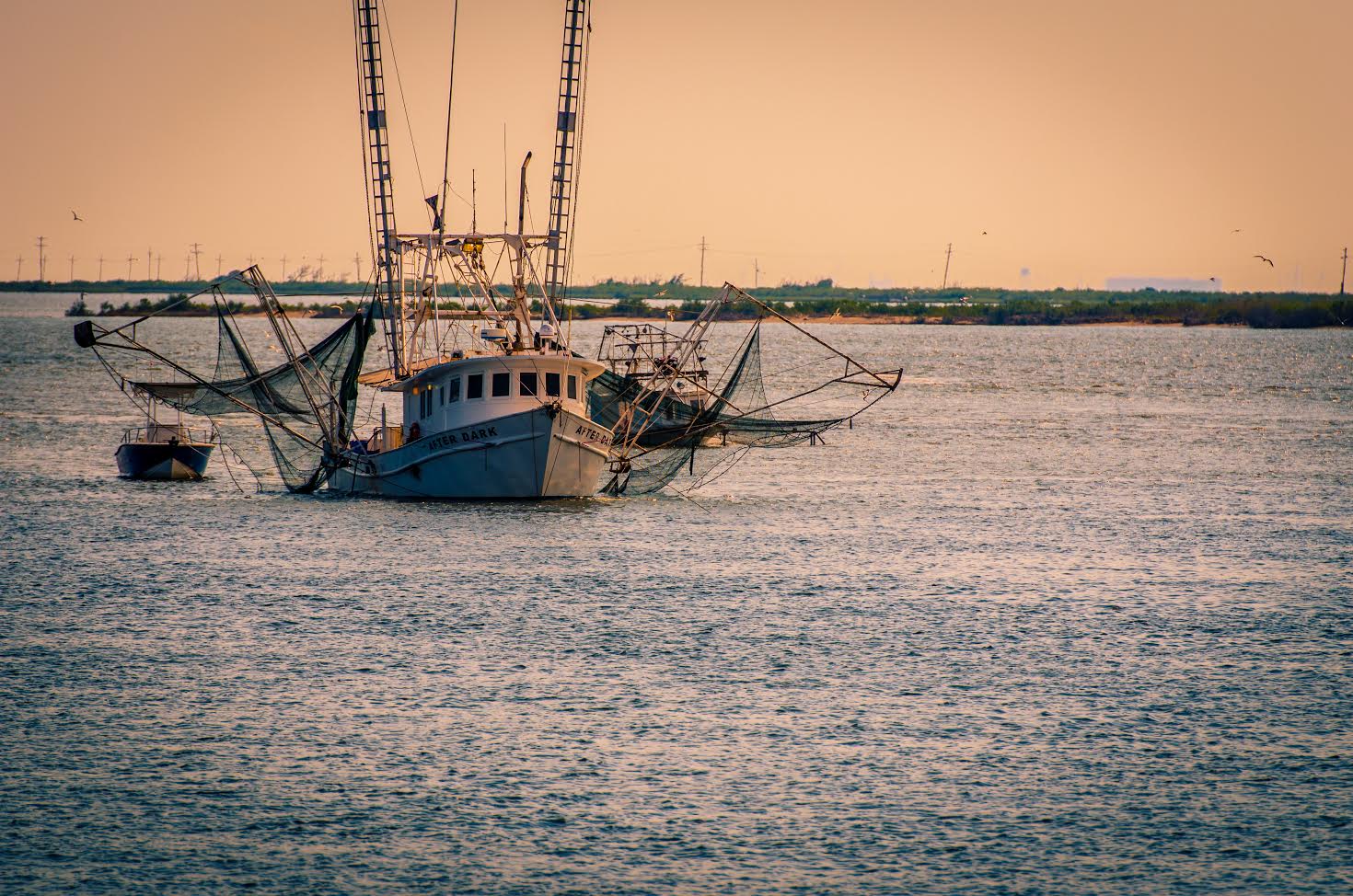
So we first talked about a common definition of what sustainable seafood is and isn’t. As I explained how the average seafood consumed in the U.S. travels more than 5,000 miles from boat to plate, we feasted on locally sourced pollock and mussels ceviche served over a creamy corn pudding. The accompanying seaweed biscuits and sea salt nori butter were surprisingly addictive. I mentioned the pollock came from the Finlander out of Eliot, Maine, a boat that travels some 80 miles off shore to jig fish for pollock, haddock and other groundfish species. Jig fishing means virtually no bycatch, or the capture and possibly killing unintended species, a significant problem with some wild harvest methods.

The conversation then turned to the domestic and global seafood picture, with perhaps a little surprise at the revelation that 90% of the seafood eaten in the U.S. is imported. We discussed the implications of that while diving into Acadian rockfish served with local spinach and a bacon jam that would make anything taste better. (I kept thinking about ice cream.) The rockfish, also known as ocean perch or Acadian redfish, was supplied by the Dee Dee Mae II out of Biddeford.Rosemont2-2

We also looked at how global seafood demand continues to grow as the population surges toward 9 billion by 2050, and how almost 5 billion people now depend on seafood for at least 10% of their per capita annual animal protein intake. And as the wild harvest of seafood has remained relatively constant over the past decade, aquaculture has nearly doubled.

We discussed how bivalve (oyster, clam and mussel) and seaweed aquaculture is growing in Maine as we ate pan-roasted hake served over smoked mussels and spring pea puree with pillow-soft potato gnocchi. The mussels came from Pemaquid Mussel Farms and the seaweed (used in almost every course) came from Maine Sea Fresh Farms. The hake came from the November Gale out of Five Islands, Maine.

Finfish aquaculture and the ramifications of recent U.S. and Canada approvals of GMO salmon sparked lively interaction about balancing the needs of feeding a growing global population and addressing the many concerns with farmed fish. Hormone and antibiotic use, disease, environmental degradation (such as clearing out critical nursery habitats like mangroves for shrimp farms) are all significant challenges to widespread acceptance of fish farming. GMO salmon have a much steeper hill to climb because of the significant issues with the lack of labeling and questionable science.

The group collectively pondered the ramifications while dipping into dessert: dulse panna cotta (a subtle, unique whisper of the sea) with light, toasted sesame cookies.

The food and the narrative were perfect complements. And the evening reminded me why I started One Fish Foundation. Engaging people, no matter the age, in a discussion about where their seafood comes from, and why they should think about their decisions at a restaurant or seafood store is important to them and the resource. Just as with farms, we have a connection to the fish and shellfish we eat, and those who harvest them. And every decision we make has an impact on the resource.

All of the fish we ate was local and abundant, which are two of the most significant factors in determining seafood sustainability. Chef Bryan delivered on the promise of making what was once called “trash fish,” but is now better known as “abundant”, sing in beautifully prepared and creative dishes that we all enjoyed immensely.

We sourced the fish from Harbor Fish Market in Portland, which is where Rosemont gets most of the seafood they offer in their five area markets. Harbor Fish does a good job at sourcing locally, whenever possible, and being forthright about where its seafood comes from. That’s an important factor when deciding where to buy fish. You want to know they’ll tell you the truth about its provenance.

Rosemont owners John Naylor and Molly Thompson were very gracious in welcoming One Fish Foundation into their “kitchen.” The level of dialogue was inspiring, hopefully to the point that the conversation will continue among those who attended, and spread into their communities.

That’s why I do this.


Photo credits: Molly Thompson. Top: Chef Bryan Dame, seaweed whisperer.

All Blog Posts

Student Questions Spark Hope For Fisheries Answers

  • May 18, 2016October 20, 2021
  • by Colles Stowell
Share it!
Share

I found myself facing one of the most difficult questions to answer about fisheries management last week. Posed by a senior at Portland (Maine) High School, the question was how to ensure all fishermen have fair access to the resource while still protecting that resource.

We had covered a lot of ground up to that point. We’d discussed the domestic and global seafood systems in broad strokes, touching on demand, and import/export statistics and issues. We’d reviewed different aquaculture approaches, global warming and its impact on the Gulf of Maine and the role invasive species play in altering local ecosystems.

We’d also discussed the unbalanced fishing quota landscape and its impact on fisheries and the fishermen who care about the resource. That prompted the senior, taking an Ocean Sciences course, to ask the hard question many fishermen, policy makers and activists continue to ponder.

I prefaced my answer with a bit of insight from years of studying management issues and listening to fishermen, managers and scientists discuss policy: There are no black-and-white or one-size-fits-all answers. There is no chance, whatsoever, of 100% satisfaction for all stakeholders. Feelings run too deep.

And that’s a large part of the problem. The quota system arose to eliminate the bycatch (discards of unintentionally caught species) and what some activists termed a “race to fish.” The previous management model limited effort, or days at sea, encouraging fishermen to fish as much as possible with a given time period. The quota system divided the ocean into different sectors and allotted quota based on the permits fishermen purchase. The idea was that if you had a permit, you might feel responsible for taking care of the resource.

Instead, the quota system bred new inefficiencies and more disparity in the “haves” and “have-nots.” Larger operators with deep pockets could buy more of the permits, driving up the price of the permits to the point where smaller scale fishermen are priced out of the markets. Local fishermen, those who typically care more about the resource more than the larger operators, are forced to switch gears or stop fishing. Small-scale farmers often face similar struggles against industrial agriculture.

A good bad example

I used the example of Carlos Rafael, the largest seafood distributor in New England, to illustrate how the system is ripe for abuse. Rafael is now under house arrest in his hometown of New Bedford, where he is awaiting trial on federal charges he defrauded the government by hiding his actual catch volumes and mislabeling fish. Rafael allegedly misrepresented species on federal catch quota forms he filed by mail or online. Then the species were sold at a higher price to a New York wholesaler who allegedly paid for the fish with bags of cash.

I answered the student by saying I don’t have an exact solution to the problem. But I explained that allowing all stakeholders, including local, small-scale fishermen, to have a meaningful say in how fisheries are managed would be a significant first step. Many fishermen argue that giving local fishing communities more control over management of their fisheries would prevent the kind of top-heavy, cash-driven management that nurtured the rise of operators like Carlos Rafael.

I see some merit to that approach, but also understand that the Magnuson Stevens Act is essential to creating a federal management backbone to ensure some consistency from coast to coast.

Above all, collaboration among different stakeholders, fishermen, policy makers, scientists, community activists, chefs, consumers, etc. is critical. We won’t move forward if we can’t all meet at the table.

And that underscores the importance of having discussions about where seafood comes from and how it’s managed with students like those seniors at Portland High School. I hope those discussions will eventually lead to more concrete solutions that are fair, equitable and sustainable for fishermen, their communities (read consumers) and most importantly, the resource.

If I can get students to ask intelligent questions, I’m at least sparking the conversation.

All Blog Posts

Slow Fish Rises to the Challenge

  • March 22, 2016October 20, 2021
  • by Colles Stowell
Share it!
Share

To say Slow Fish 2016 (March 10-13) in New Orleans was a success is an understatement. Overcoming last-minute weather challenges that shut down the planned venue, moving several thousand pounds of food around and getting people to deliver and attend informative, compelling presentations at three different, distinct venues was a stroke of genius from the event organizers and their motivated team. Here is the blog I wrote about the experience. 

It’s a surreal, if a bit funny experience to eat oysters surrounded by larger-than-life representations of male and female anatomy. Kind of a Harold-Robbins-meets-Jules-Verne aura.

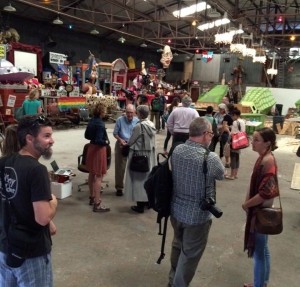
How a bunch of fishermen, chefs, scientists and seafood activists from around the world ended up in a dilapidated warehouse surrounded by lewdly, yet very craftily decorated Mardi Gras floats for the Krewe du Vieux (pronounced “croo du voo” and which pulls no punches lambasting anything/anyone political or sexual) is a study in adaptation.

We had gathered for the Slow Fish 2016 event in New Orleans to discuss important fisheries issues, make connections and celebrate locally caught, fresh and delicious seafood. Naturally, intense Louisiana spring weather turned carefully planned scheduling on its head with impending violent thunderstorms and potential flooding. Not one hour into the 150-person event at the Old US Mint, the state called for emergency evacuations and closed our base of operations for the next three days.

Krewe du Vieux warehouse, where Slow Fish 2016 attendees got an eyeful in New Orleans.
Krewe du Vieux warehouse, where Slow Fish 2016 attendees got an eyeful.

So instead of celebrating the gathering on the grounds of a historic building, we found ourselves feasting on pompano and sea bass in the shadows of papier-mâché sex. Ironically, that kind of mandatory last-minute logistical two-step closely parallels the rapid fire challenges many family fishermen face, constantly having to adapt to ever-shifting polices, seafood markets, climate, etc. beyond their control. We banned together at Slow Fish to pull it off, perhaps serving as proof that collaboration and flexibility are critical to addressing broader policy and market challenges ahead. That was the first of several truly unique experiences at Slow Fish 2016.

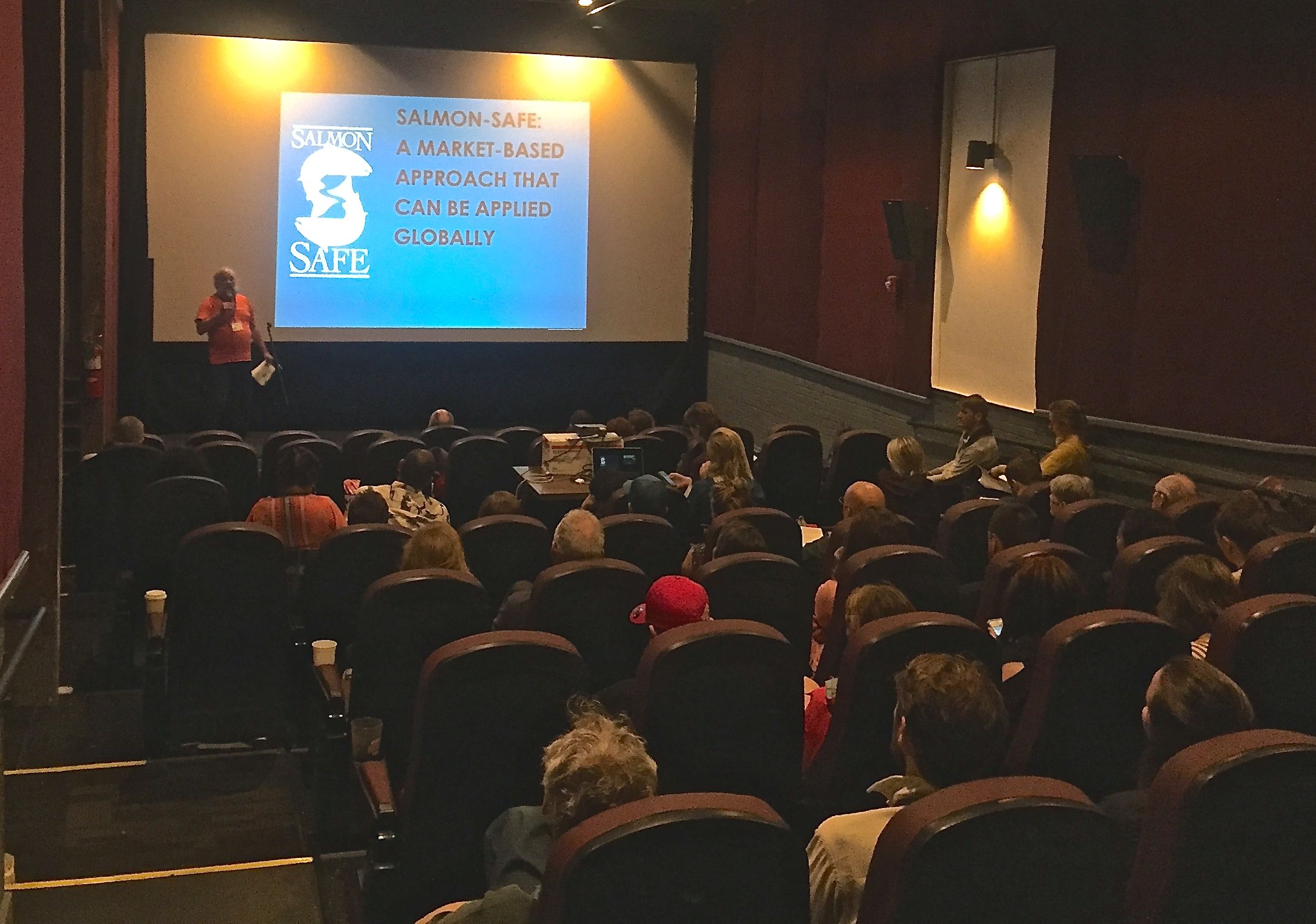
The next was the following day at the quirky Broad Theater in Mid City, a neighborhood at the heart of New Orleans. There, fishermen ranging from Alaska to California, and from Louisiana to Maine shared stories about their watersheds, community-based fisheries traditions and the management policies changing the landscape of how, when and where they can fish.Kevin Scribner discusses Salmon Safe's success.

Kevin Scribner highlights Salmon Safe's success.
Kevin Scribner highlights Salmon Safe’s success.

They discussed challenges such as privatization and resource allocation, biodiversity, policy impacts and ways to protect watersheds and fishing community heritage. Former Alaskan salmon fishermen and current Slow Fish board member Kevin Scribner described how the Salmon Safe program has worked with farmers, businesses and urban planners to reduce downstream impacts on native salmon habitat. This means the owners or tenants of more than 95,000 acres of agricultural and urban land (including the Nike campus, and several major farms) in three states and British Columbia have committed to reducing harmful nutrient and pollutant discharge into precious streams.

Kindra Arnesen spoke passionately about the challenges facing fishing families on the Mississippi River delta. She described her Herculean efforts to unite struggling fishermen after the BP oil disaster, first to get jobs helping with cleanup, then to challenge BP, the EPA, NOAA and other local, state and federal agencies on their methods of cleanup, cover-up and compensation. It was yet another story of adaptation and survival.

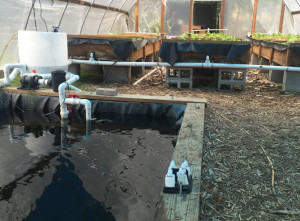
Happy Recirculating Farms Coalition catfish swimming in water filtered through lava rocks holding the lettuce in the background.

Other presenters discussed creating direct channels between fishermen, retailers and chefs to bring fresh seafood inland from the coast. Marianne Cufone, executive director of Recirculating Farms Coalition, showed the audience how a motivated team was able to start a clean, productive aquaponics operation right in a Central City neighborhood. Restaurants have already expressed interest in the fresh lettuce and catfish growing in recirculated water.

Set to the backdrop of compelling images, each story brought to life some of the common struggles many fishermen and coastal communities face, and some of the successful solutions to those challenges.

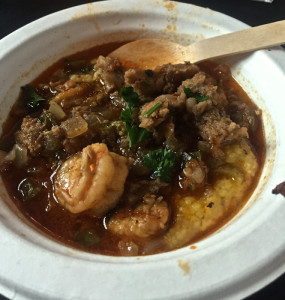
Alligator, shrimp and grits, down and dirty in New Orleans.

The adaptation of the Slow Fish 2016 continued Saturday at the Dryades Market, whose previous life had been a public school in Central City, another neighborhood steeped in diversity. Groups of concerned fishermen spoke about adequately addressing quotas and fairness issues and ways to promote local fisheries management. One common theme that emerged, perhaps prophetically, was the issue of adaptation.

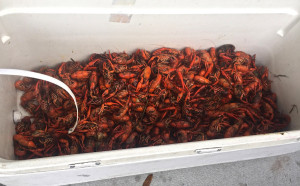
And of course crawfish. Deeper down, dirtier and delicious!
And of course, crawfish. Deeper down, dirtier and delicious!

Louisiana fishermen are constantly forced to adapt to changing ecosystem habitats, based on the chilling statistic that the coastline loses a football field of marsh every 45 minutes. Okanagan tribes have to adapt to the ebb and flow of wild sockeye migrating several hundred miles into incredibly diverse watersheds straddling the border between British Columbia and Washington state. Maine fishermen have to navigate the fluctuations in their fisheries due to the rapidly warming Gulf of Maine and the seemingly arbitrary nature of regional management.

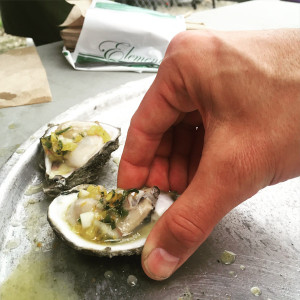
Two of about three hundred dozen oysters brought to the event.

Perhaps it was divinely appropriate that Mother Nature decided to throw a curveball and forced organizers to scramble. Because it is that instinct to go into auto pilot in the face of adversity and figure out a solution that determines success. For a Pacific salmon, that instinct to swim several hundred miles to its natal waters to spawn, die and give sustenance to its young is pure survival. For fishermen, it’s the ability to chase different available species when Nature or policy forces their hands. It’s in banding together to work toward a common cause to bring communities closer to their seafood.

Through all of the rain and high wind and last-minute venue changes, the shuttling of food from here to there…and back again, the audio-visual challenges, the taxis, carpools and long walks through a noisy French Quarter, Slow Fish 2016 attendees made connections. They found common ground. They discussed ways to organize, set goals and pursue them. They made friends.

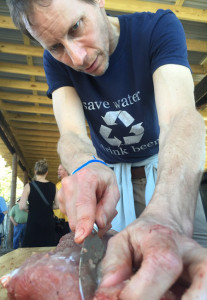
I learned some skills from Chef Zack Engel (chef de cuisine at Shaya Restaurant) and pit master Howard Conyers.

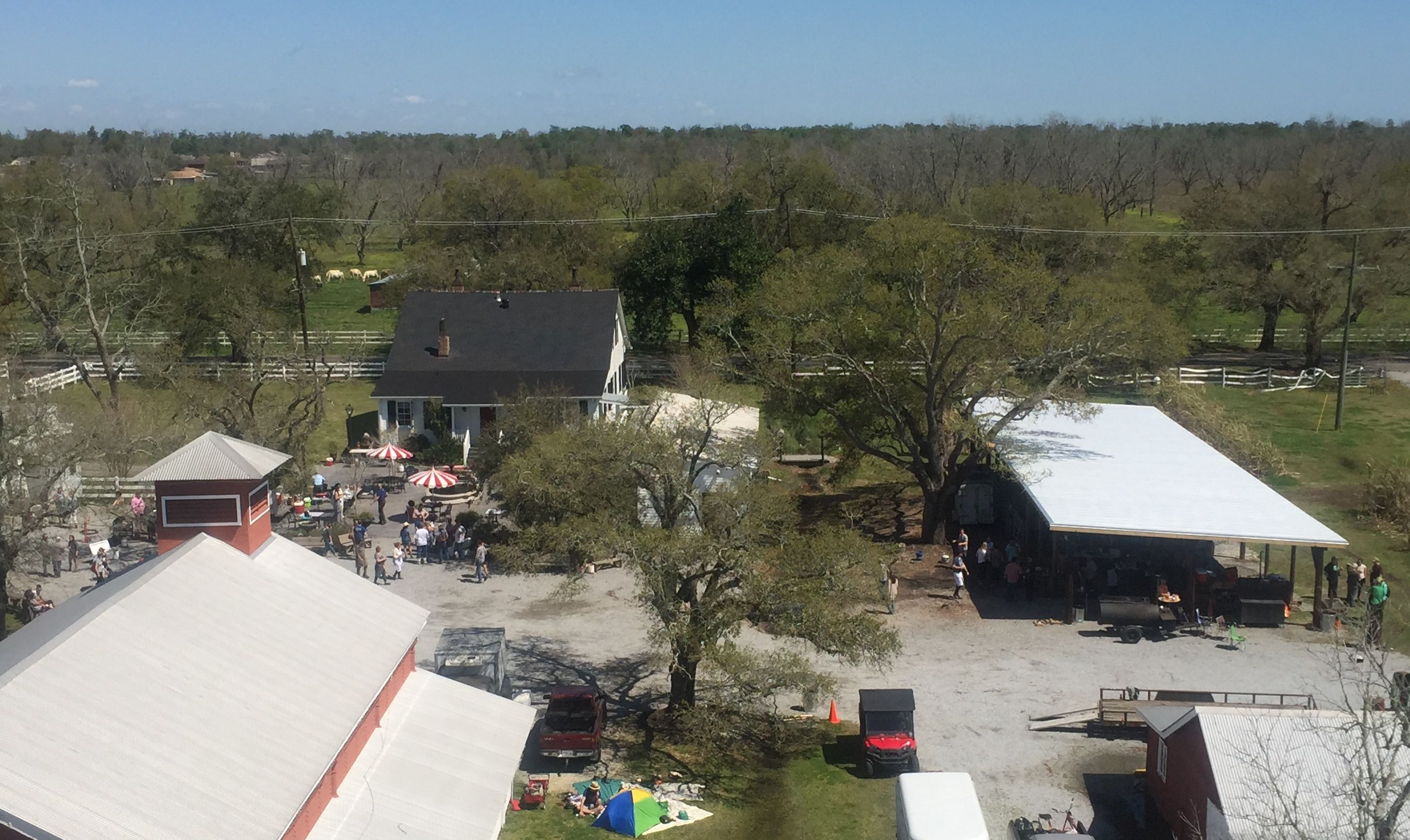
Perhaps the skies dawned on a warm,bluebird day on the tail end of the gathering at Docville Farm in Violet, La., a boucherie and seafood feast, as a reckoning of sorts. Adapt. Persevere. Hope. Something good will come out of it.

The memory of the food, the conversation, the energy and camaraderie will stay with all of us for a long time.


All Blog Posts

The Telltale Cod

  • February 26, 2016October 20, 2021
  • by Colles Stowell
Share it!
Share

This is a blog written by my good friend Chef Evan Mallett for the Slow Fish 2016 website. Slow Fish 2016 is an international gathering of fishermen, chefs, scientists, policy makers and other activists to discuss and share local fishing community challenges and solutions from around the country and the world. One Fish Foundation will be attending. Evan speaks with a clear, informed and passionate voice on why we should care about seafood sustainability.


By Evan Mallet

In 2012, I wrote a blog entitled “Grandpa, What’s a Cod?” The motive for writing that blog was a dramatic realization that my children’s children might someday ask me such a question. Perhaps, I projected, they will see an old menu or read an article, or visit the Cape that bears the name of a mystery fish.

Entire books have been written about cod—citing the fish’s dominion over our national heritage, how it inspired colonization and later, an inestimably rich global seafood trade. As our New World and its human population have expanded from the shores where codfishing boats first landed, cod has been there every step of the way. Until now.

Since I wrote the blog, assessments of the cod population in the Gulf of Maine (my backyard) have only brought more bad news. I am a chef, and I have grown up alongside the bounty of North Atlantic fisheries. In recent years, I have watched those fisheries, and the small family-owned boats that ply our local waters, dwindle to the point of near-extinction. It is clear that a revolutionary shift in mindset is the only solution to a problem we have created over decades of fishing a species to the brink.

Some experts point to changing water temperatures, locally and globally, that might explain a shift in breeding grounds for Atlantic cod and other coldwater species. And, whether as a result of this shift or a three-decade moratorium on cod fishing, there is evidence that Newfoundland—where annual cod harvests once numbered over a million metric tons—might be experiencing a cod comeback of sorts.

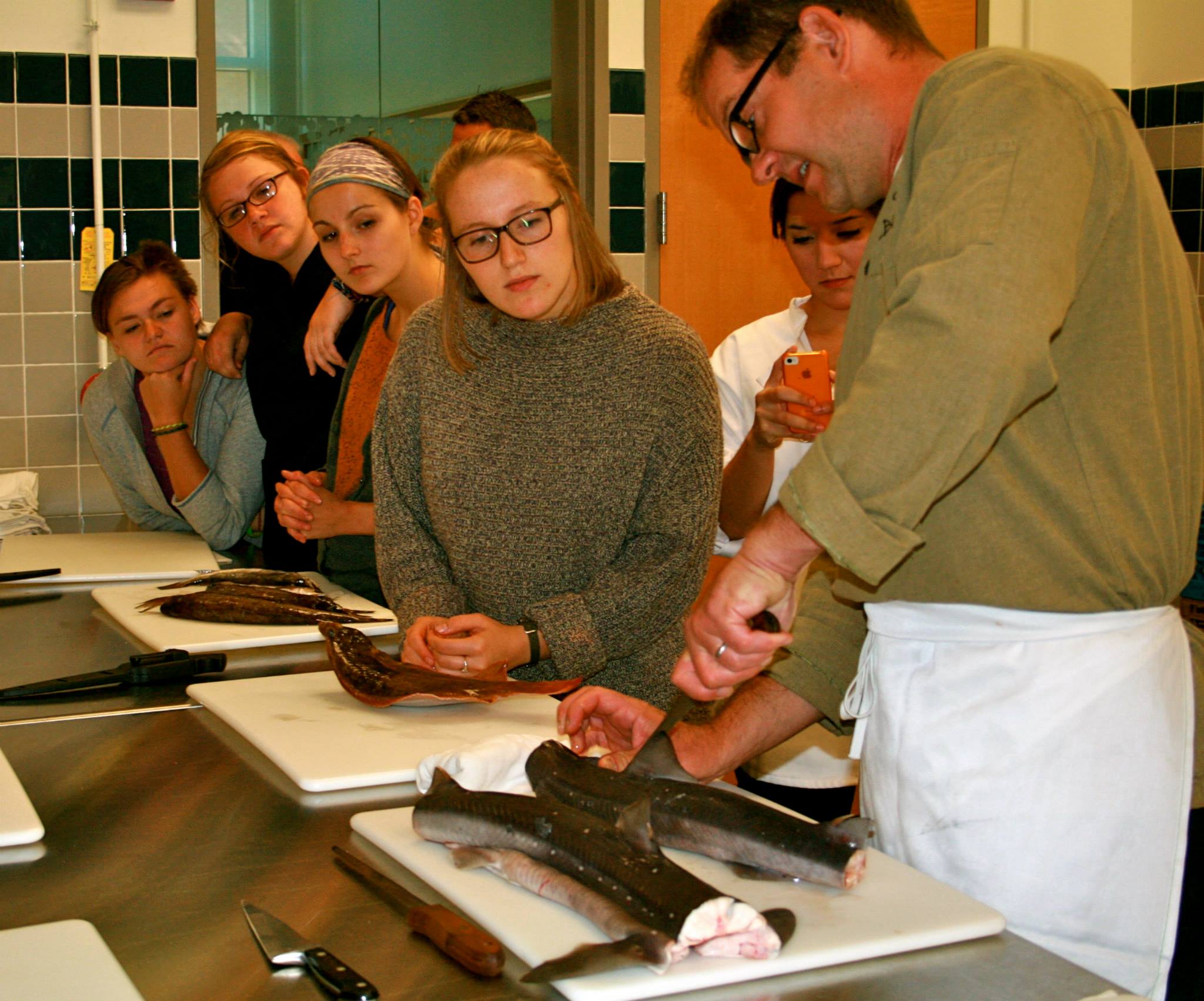
It’s not that I personally hold cod up as the all-seeing banner of virtue and supremacy that our founding fathers did when they marched a “sacred cod” wooden replica to the Massachusetts State House, where it still hangs today. The truth is, I definitely revere cod’s flavor, texture and utility. However, a simple reality check tells us that we have no choice but to consider other species as alternatives to our New England culture’s longtime staple fish. I am one of those few chefs who sells Pollock, Acadian redfish, even dogfish, on my menu, because I believe with all of my heart that we have no choice but to ignite a new awareness now, before the fish we grew up eating are gone.

When I attended Slow Food’s Terra Madre and Salone del Gusto in 2010, I heard a fisherman from Oceania talk about how his family could afford frozen farmed salmon from Northern Europe, purchased in his local supermarket, but could not afford to eat his own fresh, local catch, upon which his livelihood depended. That fisherman’s story started my trip down the undercurrent of insanity that is our global seafood distribution system.

I have yet to understand how the economics of food have so egregiously ignored the ecology of food for so long, and I don’t know if even radical change will come too late. But I do know that right now, every community on our planet needs to wake up to a seafood crisis. At stake is not only the human diet’s most nutritious animal protein, but also the trophic balance of all aquatic ecosystems.

Slow Fish is uniquely positioned to spread this gospel like no other organization, and I look forward to seeing talk of change lead to actions that will preserve both fisheries and fishermen.

Evan Mallett is chef/owner of Black Trumpet in Portsmouth, N.H. He also sits on the national Chef’s Collaborative Board of Overseers, the Slow Food Seacoast Board of Directors and the NOAA Seafood Marketing Steering Committee.

photo: Chef Evan Mallett showing Slow Food UNH students how to prepare dogfish.


SLOW FISH 2106 INFO

REGISTER for Slow Fish 2016.
JOIN our Facebook Event Page.
SUPPORT our Indiegogo fundraising campaign.
HOST a Fisher-Chef Alliance dinner.


All Blog Posts

Fish Tales at Slow Fish 2016

  • January 28, 2016October 20, 2021
  • by Colles Stowell
Share it!
Share

I’ve had the privilege of connecting with various organizations on the front lines of fisheries issues, including Cape Ann Fresh Catch, Northwest Atlantic Marine Alliance, Gulf of Maine Research Institute, and others. I’ve recently been working with Slow Fish, the fisheries movement under the Slow Food organization, aimed at ensuring fair, affordable, local and sustainable seafood. As part of the promotion to shine a light on Slow Fish 2016, Gateway to the Americas (March 10-13) several people are blogging about their fisheries experiences. Read more “Fish Tales at Slow Fish 2016” →

All Blog Posts

Invasive Species: What the Sea Bass Said

  • December 22, 2015October 20, 2021
  • by Colles Stowell
Share it!
Share

When it comes to education, I believe a hands-on approach delivers the most immediate message, whenever possible…even if the message is pungent.

Thus I found myself waving a dead fish at a bunch of 6th graders at the Mahoney Middle School in South Portland last week. And they loved it — in the way you might love watching a horror movie, half wanting to shut your eyes (and nose), half wanting to get closer.

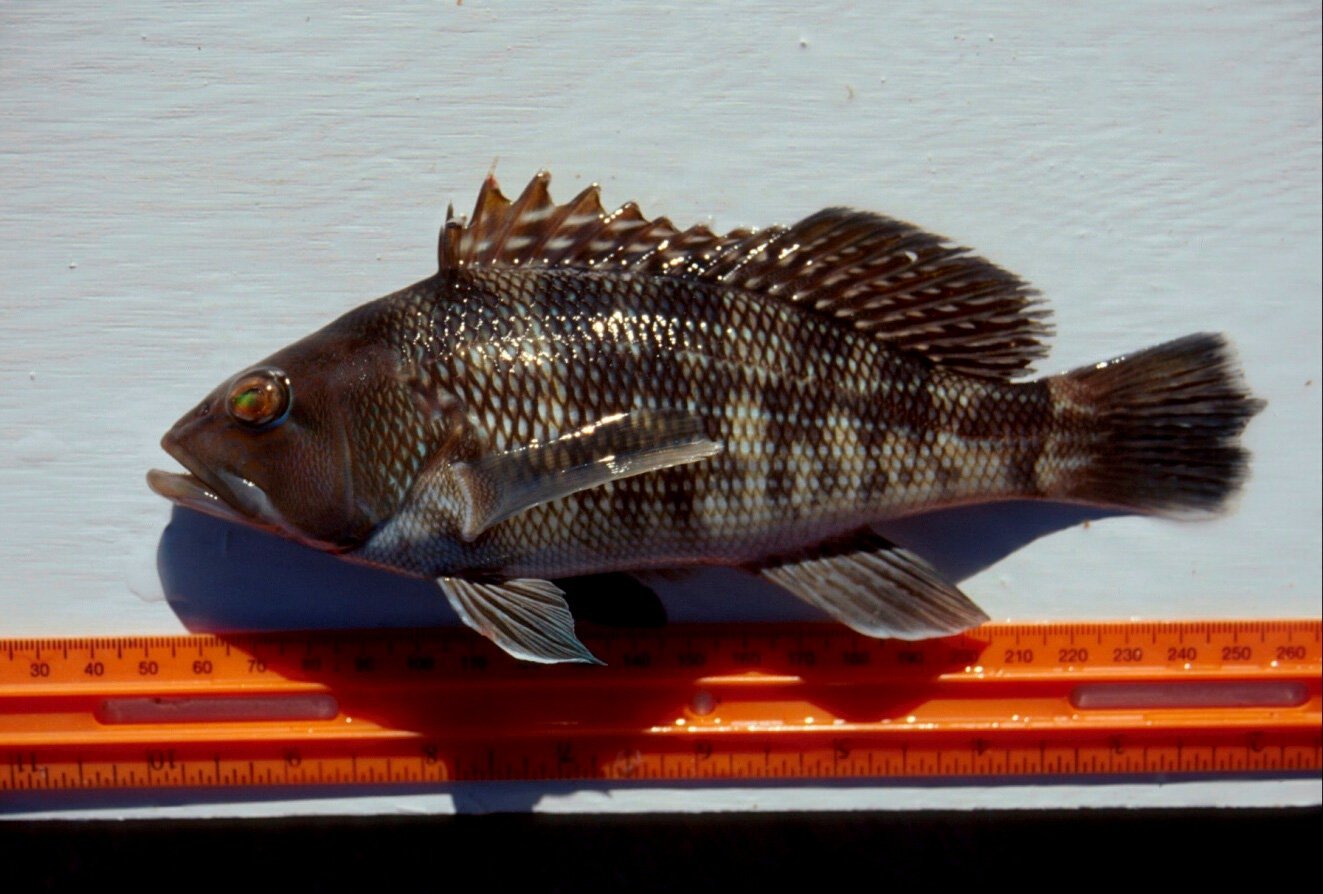
Crowded around the front desk, students fired questions at me about size, color and eating habits of black sea bass and begging to touch the pharyngeal teeth (crushing plates in the fish’s throat). They learned how sea bass swallow fish head first to avoid catching a dorsal fin in the throat, and how the pharyngeal teeth crush baby lobsters and other shellfish. After the first class, students in the other three classes kept asking me, with no shortage of enthusiasm, if they would get to touch the fish.

So why did I bring a fragrant, dead sea bass caught in R.I. to a class in Maine? We were talking about invasive species, non-native animals, plants, fungus, pathogens, etc. that wander into local habitats and tip ecosystems out of balance. We discussed how ever warming waters in the Gulf of Maine have created an inviting environment for species that are native to the mid-Atlantic states and elsewhere. We also weaved terms like “habitat”, “predator/prey relationships”, “carrying capacity”, and “ecosystem balance” into the conversation.

Students learned why black sea bass have been increasingly showing up in lobster pots in Casco Bay, and the implications for lobsters populations and cod, which rely on baby lobsters for food. They learned that lobstermen successfully lobbied the Atlantic States Marine Fisheries Commission this fall to increase the commercial and recreational quota for black sea bass in an effort to slow the influx. We discussed why ASMFC made that decision considering the black sea bass fishery was worth $8 million in 2013, while lobsters raked in over $460 million.

Unfortunately, there is no real, established commercial market for European green crabs. Students learned how most marine invasive species arrive via ships from distant waters, either on the hull, gear or in the ballast, as did the green crabs some time in the mid-1800s. We discussed how green crabs’ preference for warmer water has guided them north along the coasts as temperatures have increased. In the past couple of decades, their numbers in northern New England have skyrocketed, to the point where coastal researchers in Maine view them as “naturalized,” meaning they are comfortable living here.

That said, I spent about an hour stalking around a nearby flat the day before class looking for a green crab to bring to class. No luck. It was 32 degrees and we’d had a couple of cold snaps, so any that may have been around likely moved to warmer water. This too became a teaching point.

Though cold water may keep the crabs somewhat in check for a few months, they come back in numbers during the summer. Students learned green crabs can rock entire ecosystems because they eat larval mussels, clams and oysters and wreak havoc on critical eel grass beds, which are nurseries for said shellfish and many other baby species. They also learned green crabs have no significant natural predators and no commercial market value because they require too much work for too small amount of meat. As such, scientists, fishermen and fisheries managers are scrambling to come up with a viable means of reining in the crabs before they severely damage valuable shellfish markets.

I finished each class with a ray of hope, born of the landmark climate change pact signed in Paris on Dec. 11. Nearly 200 countries, representing almost all nations on the planet, signed a document agreeing that climate change was real, that anthropogenic causes are fueling it and that each country needs to devise a plan to limit carbon emissions and demonstrate progress. Students learned that agreement could be the turning point where collectively, countries around the world took the first step to slow the process by which warming waters are encouraging invasive species to become “naturalized” where they don’t belong.

Posts pagination

1 2 3

Recent Posts

  • Hurricane Ida wreaks havoc on Louisiana’s seafood industry
  • EPA Should Use Clean Water Act To Kill Zombie Mine
  • Slow Fish 2021: Relationship Matters
  • Faith, Façades, and Futility
  • Pebble Permit Paused: Politics at Play

Archives

  • September 2021
  • August 2021
  • April 2021
  • December 2020
  • August 2020
  • June 2020
  • February 2020
  • December 2019
  • November 2019
  • October 2019
  • July 2019
  • May 2019
  • April 2019
  • March 2019
  • January 2019
  • December 2018
  • November 2018
  • June 2018
  • May 2018
  • March 2018
  • February 2018
  • January 2018
  • December 2017
  • November 2017
  • October 2017
  • September 2017
  • August 2017
  • July 2017
  • June 2017
  • May 2017
  • April 2017
  • March 2017
  • January 2017
  • December 2016
  • November 2016
  • October 2016
  • September 2016
  • August 2016
  • July 2016
  • June 2016
  • May 2016
  • April 2016
  • March 2016
  • February 2016
  • January 2016
  • December 2015
  • November 2015
  • October 2015
  • September 2015
  • July 2015
  • June 2015
  • May 2015
  • April 2015
  • March 2015
  • February 2015
  • January 2015
Theme by Colorlib Powered by WordPress