 All Blog Posts
Climate Change: Setting the Wrong Records

Not surprisingly, the latest global climate stats are discouraging. Last September was the warmest September of combined global land and ocean temperatures during the 136-years of recorded climate history. According to the report from the NOAA National Centers for Environmental Information, this is the fifth consecutive month of setting such an ignominious record.
Here are a couple of “high”lights:
- 2015 was 1.62°F above the 20th century average of 59.0°F. The previous record was Sept. 2014.
- 2015 was the highest departure from average for any month in 1,629 months since the record began in January 1880.
- Global sea surface temperatures were 1.46°F above the 20th century average of 61.1°F, the highest departure for September on record. Scientists attribute this to powerful El Niño conditions.
- The first nine months of 2015 comprised the warmest such period on record across the world’s land and ocean surfaces, at 1.53°F above the 20th century average, surpassing the previous records of 2010 and 2014 by 0.21°F.
- Precipitation varied widely globally, with some places like Australia getting much less rain than normal, while some areas in Northwest Africa and Eastern Europe getting 200% of normal rainfall.
What does all of this mean? It means the climate is warming faster than we’ve anticipated in the past, particularly as the range of temperature increases above normal are getting higher. It means this global warming trend is going to continue unless we take some serious steps to curtail greenhouse gas emissions and other manmade climate change factors.
Warming oceans could change how, where and even if we find traditionally local seafood here in New England. The Gulf of Maine is warming faster than most ocean areas on the planet. This trend could force lobsters to move farther north and east to cooler waters, making it more expensive and time-consuming to fish them. Lobster fisheries could effectively shut down in some areas, as has been the case in Long Island sound and around Cape Cod.
I attended a workshop last year about how to better predict climate change impacts on fisheries. The upshot? We need to act now, and collaboratively among scientists, policy makers, fishermen and community activists to figure out a plan to adapt to climate change, and perhaps slow its progress.
Here are some additional resources about the trend:
Union of Concerned Scientists: Climate Hot Map
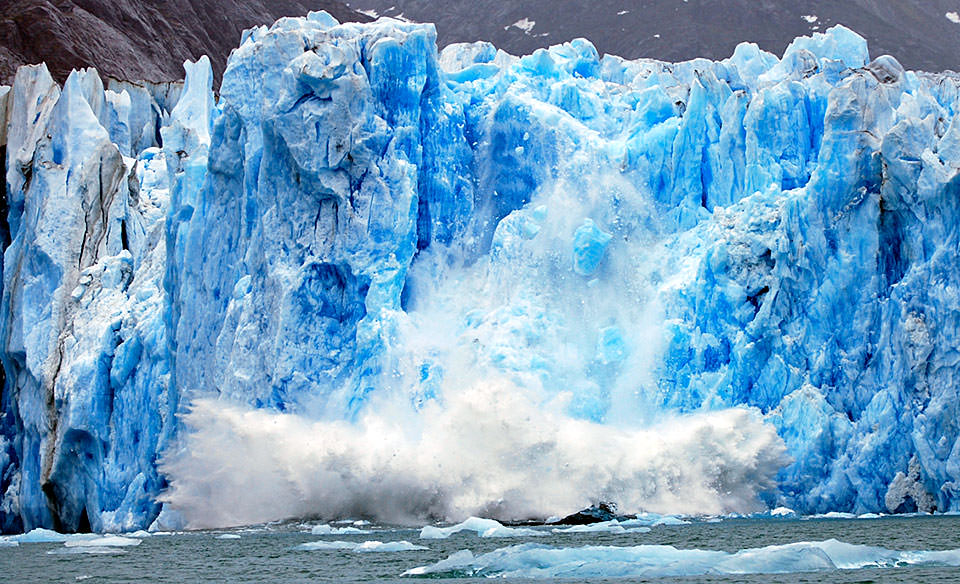
Photo: Calving glaciers are telltales of global warming.
Credit: NOAA




1 COMMENT
[…] etc. that wander into local habitats and tip ecosystems out of balance. We discussed how ever warming waters in the Gulf of Maine have created an inviting environment for species that are native to the mid-Atlantic states and […]
Comments are closed.