Skip to content
One Fish Foundation
  • Blog
    • Aquaculture
    • Education
    • Environment
    • Policy
    • Wild Harvest
    • Fish Tales
  • About
    • About One Fish
    • About Colles Stowell
  • Education
    • Elementary School
    • Middle School
    • High School
  • KNOW FISH Dinners®
  • Resources
    • One Fish Podcast
    • One Fish Foundation in the news
    • The 7 C’s of Sustainable Seafood
    • Newsletter Archive
    • Recipes
      • Skate with Capers and Butter — Chef Rizwan Ahmed
      • Grandma Davis’ Fish Chowder — Jane Almeida
      • Ginger Garlic Tamari Scallops — Colles Stowell
      • Fish Stock — Evan Mallett
      • Mussels San Remo — Chef Rob Martin
      • Salted Pollock Croquettes – Chef Mark Segal
  • Connect
    • Contact OneFish
    • Social
      • Instagram
      • Facebook
      • Twitter
All Blog Posts

Slow Fish 201: Building Accountability in Seafood

  • January 31, 2019October 19, 2021
  • by Colles Stowell
Share it!
Share

Sometimes it’s tough to see the forest through the trees. Or in this case, effective fisheries enforcement through the quagmire of domestic fishing regulations.

Consider that laws established to ensure responsible harvest, proper trade/market practices and truth in advertising throughout the supply chain are enforced by at least four different federal agencies with different agendas, priorities, authority, funding and resources. Factor in state and local agencies involved in the process, and you’ve got layer upon layer of bureaucracy. And yet, there are still gaps.

This is why we conducted the Slow Fish 201 webinar: Building Accountability in Seafood Weds. Jan. 23. We wanted to shed light on this complexity and the challenges it presents as well as some innovative thinking on how to create markets that organically root out fraud (more on that later).

Alphabet soup: NOAA, FDA, CBP, USDA

In broad terms, the National Oceanic and Atmospheric Administration’s Office of Law Enforcement has jurisdiction over seafood entering the U.S., and can conduct warrantless inspections on vessels as they enter US waters. But it does not have the same broad authority once the seafood has crossed the border. The Department of Homeland Security’s Customs and Border Protection also has some authority to inspect and ensure proper labeling of seafood entering the U.S.

Once seafood has passed beyond US borders, the responsibility to enforce labeling, country of origin, food safety and related laws generally belongs to the Food and Drug Administration and to a lesser degree, the US Department of Agriculture (primarily for farm-raised seafood). There are of course, exceptions to these rules where, for example, NOAA does have some jurisdiction on product within US borders (which makes the situation all the more confusing to those in and outside the supply chain.

With all of these layers of protection, intelligence and resources, you’d think we’d have a good handle on fraud.

And still, less than 1% of the seafood we import in this country, representing some 90% of domestic consumption, is inspected. That doesn’t even account for what happens within the domestic seafood supply chain, such as the co-optation of core trusted values, as happened with the Sea To Table news last summer.

No wonder consumers, fish harvesters, retailers and everyone else in the supply chain is confused and likely frustrated. How do you keep tabs on all of that?

A label’s cautionary tale

Patty Lovera, food and water policy director for Food & Water Watch, has spent decades navigating the domestic food policy system. She began the webinar with a high-level view of the matrix of federal agencies and laws responsible for safeguarding the stream of seafood in the supply chain. In short, the very Jenga-like structure leaves many gaps in enforcement, too much room for interpretation and hence, exploitation, and some confusion among supply chain players about how to honestly comply with the law.
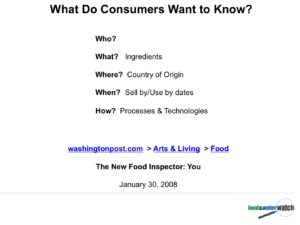
As Patty Lovera mentioned and others echoed, consumer education is critical in the seafood supply chain.

She presented the Certified Organic label as a cautionary tale when laws and values don’t gibe. Established to distinguish farmers who adhere to a set of standards that prohibits hormones, antibiotics, certain pesticides and other additives and destructive practices, the label became a battle cry in the conflict with huge multinational corporations seeking to own the food system.

Millions of dollars, countless hours, political wrangling, lawsuits, arm-twisting, scheming and in some cases, outright capitulation have led to a severely diluted label bearing no resemblance to the original mission. More than three decades of haggling, and products either owned or supported by the likes of industrial agriculture giants Monsanto, Dow Chemical and Tyson foods bear the Certified Organic seal.

The message? Labeling schemes and the values they promote can be co-opted if not rooted in strong values backed by stronger laws.

Congressional commitment

We were fortunate to have Congressman Jared Huffman (D-Calif.) join the conversation. He’s quite busy as he’s just taken the gavel for the powerful House Natural Resources Subcommittee on Water, Oceans and Wildlife, which is responsible for reauthorizing the Magnuson Stevens Act (MSA), otherwise known as the Fish Bill.

“I believe we’ve got to be supporting U.S. fishermen in an increasingly competitive international market.”

Congressman Jared Huffman

In outlining some of his priorities for the subcommittee, he said we need to preserve the health of the oceans, fix some of the environmental rollbacks established by the current administration and do what is necessary to help U.S. fishermen make a good living. “I believe we’ve got to be supporting U.S. fishermen in an increasingly competitive international market,” said Huffman.

He also mentioned “…ways to improve traceability throughout the supply chain. There may be new technology that could be utilized, examples from businesses that are doing some of this work. It’s clear to me that we need to better enforce, maybe even strengthen, existing policies to ensure accurate labeling, increased transparency and consumer trust.”

Marketing, education and leveling the playing field

Noah Oppenheim, executive director of the Pacific Coast Federation of Fishermen’s Associations and the Institute for Fisheries Resources, followed on that theme, saying that fraud has a significant impact on community-based fish harvesters who are trying to abide by the law.

“It’s only fair that the accountability that fishermen have been holding themselves to is rewarded in the marketplace.”

Noah Oppenheim

“Fraud can occur at any place in the market,” Oppenheim said. “It’s a huge problem, and we have to find comprehensive solutions that make it harder for anybody on the end of the chain of custody to mislabel or fraudulently market their product.”

He also spoke of the need to enhance education and marketing to help consumers better understand the value of domestic fisheries. “It’s only fair that the accountability that fishermen have been holding themselves to is rewarded in the marketplace.”

Jes Hathaway, editor in chief of National Fisherman, a national trade publication, echoed Oppenheim’s call for better education and more funding for marketing programs.

She zeroed in on increased funding to boost the infrastructure at our ports to level the playing field between domestic seafood standards and standards for imports. “As long as it’s easier to bring seafood into port in a container than to bring it in your fish holds, we are doing our seafood industry, our fishermen and our citizens a disservice.”

“As long as it’s easier to bring seafood into port in a container than to bring it in your fish holds, we are doing our seafood industry, our fishermen and our citizens a disservice.”

Jes Hathaway

Hathaway also proposed “encouraging region- and fisheries-specific solutions to the problem beyond Magnuson.” One such approach, in her view, would be to provide funding for test programs to track seafood from boat to plate in different regions. While some programs exist, she would like to see more cooperation and investment in such programs, rooted in common values across different supply chains and geographies.

Pier to peer community accountability

One of the webinar’s recurring themes hinged on supplementing better, more comprehensive enforcement of stronger laws with cultural changes within the fishing community. As Hathaway suggested, “Federal legislation is rarely a panacea for every issue in fisheries.” However, one possible path toward ensuring stakeholder buy-in while potentially reducing fraud involves a community accountability model.

Kevin Scribner, owner/operator of Forever Wild Seafood and one of Slow Fish national’s team leaders, described the notion of creating a seafood community accountability program, in effect, a cooperative rooted in a shared set of values. If you agree to uphold the values, you become part of the community that will support those values, identify and address any violation of those values (fraud), and offer support to those who need it.

This type of community accountability promotes a self-policing model that discourages any missteps while promoting the values that engender public trust. Scribner described it as a system in which “We take care of and manage our own.” But it would also be a system that is open to anyone willing to embrace the core values, which may be similar to the Slow Fish values of good, clean, fair, and/or the Local Catch Core Values embracing community-based fishermen.

“…a reliable trusted knowledge-based system of accountability can be developed and maintained by a seafood community that is committed to and guided by core values.”

Kevin Scribner

“We have confidence that with the proliferation of direct and immediate communication tools plus refined methods of traceability and a commitment to transparency, that a reliable trusted knowledge-based system of accountability can be developed and maintained by a seafood community that is committed to and guided by core values,” Scribner said.

A seafood community accountability framework would not seek to rebel against nor replace existing federal, state and local laws in place. Rather, it would operate under the umbrella of existing fisheries laws, augmenting the overall effort to minimize fraud while uplifting the values that support responsibly managed fisheries.

There’s much more to discuss on this topic, including different values and traceability and transparency technologies to support those values, all of which we’ll revisit in the third webinar in the Slow Fish 201 Webinar Series on Feb. 27. Stay tuned for more information regarding time, panelists and questions to be asked and answered.

The webinar closed out with some insightful questions from the audience regarding fair pay for seafood processing employees, economic justice to ensure fair pricing and access to quality seafood for all demographics and ways to measure success in the mission to uphold values and minimize fraud.

We will revisit all of these topics in some form in one of the following webinars.


Resources

If you’d like to watch the video recording of this webinar, follow this link.

If you’d like to watch the video recording of the first webinar, follow this link.

If you’d like to continue the discussion, visit the Local Catch Forum here.

If you’d like to communicate directly with one of the panelists, send an e-mail to colles@onefishfoundation.org.

Want a more in-depth understanding of the federal agencies at work against seafood fraud? Follow these links:

Congressional Research Foundation report on Seafood Fraud

University of Minnesota Food Policy Center Report


All Blog Posts

Re-Thinking Current Policy, Data Analysis: a Webinar 11/3/17

  • October 17, 2017October 20, 2021
  • by Colles Stowell
Share it!
Share

Very little in fisheries management is black and white. This is a constant refrain in any conversations I have in classrooms or restaurants. It is often filled with paradoxes. For example, restrictions such as quotas are aimed at preserving a given species, but loopholes, vagaries in the law and profiteering have led to abuses that have jeopardized some stocks.

Look no further than the recent sentencing of Carlos Rafael, AKA the Codfather, after pleading guilty to 28 counts of fisheries fraud, or the administration’s overturning of a federal agency ruling that New Jersey fishermen had landed too many summer flounder (fluke). Both issues are fraught with complexity, and both point to flaws in the current management system.

That’s why we’re hosting a Webinar next month – not to try to solve all of these complex issues, but rather to hone in on one critical piece of the puzzle that often gets overlooked: How to improve fish stock assessments and strengthen collaborative efforts between fishermen, scientists, and managers. We’re going to discuss the idea of turning the current top-down management model on its head by localizing fisheries management and bringing fishermen further into the process of collecting data and determining policy.

We’ll discuss long-term goals and obstacles to achieving a more balanced approach to ensuring the health of marine resources while supporting local fishermen and the coastal communities they serve. This type of approach would allow scientists, policymakers and fishermen working together, to respond more quickly to regional climate-induced ecosystem shifts.

This Webinar will posit these questions: What can we do to bridge the gap between fishermen, scientists and policy makers? Can we build fishermen’s trust in management and data while still safeguarding the resource? Should we re-think the current fisheries management schema, including the data collection model, to respond more nimbly to rapid, often localized climate change impacts? Can we create a system that better protects the resource, supports local fishermen and strengthens coastal communities with a fishing heritage? How would such a system impact individual seafood consumers and institutional buyers?

The hope is this discussion will lay the foundation for more constructive dialogue, which could eventually lead to a framework for fundamental, meaningful change. We recognize that bucking the system carries additional barriers and challenges. That’s why we have Health Care Without Harm (HCWH) joining us. HCWH has a proven track record of leveraging institutional buying power to shift major policy. By breaking out of the fisheries bubble and engaging HCWH, we can lay the groundwork for real change.

Join us online on Nov. 3 at 3 p.m. and become part of the discussion. Would you change fisheries policy now? What does a better management model look like to you? The panel discussion will last for an hour, followed by a moderated audience Q&A.

Here is the link to sign up for the discussion.

Panelists will include:

Bob Steneck: Professor of Oceanography, Marine Biology and Marine Policy School of Marine Sciences, University of Maine Darling Marine Center. Bob has been at the forefront of important research on lobsters, kelp and groundfish in the Gulf of Maine, as well as coral in the Caribbean for decades. He has a unique perspective on the dynamic ecosystem changes in the Gulf of Maine and the Caribbean and the recent history of data-driven policy.

David Goethel: Commercial fisherman out of Hampton, NH and a three-term member of the New England Fishery Management council, which establishes many of the rules regarding groundfish harvest in the Gulf of Maine. He has also served as an advisor to several panels for the Atlantic States Marine Fisheries Commission, which also regulates many New England fisheries species. David brings a powerful perspective having been on both sides of the fisheries management dilemma.


John Stoddard: New England Regional Coordinator for Health Care Without Harm’s Healthy Food in Health Care program. John brings a compelling perspective from working with healthcare food services on what healthcare patients, staff and food buyers look for in sustainably harvested seafood. We know that improved science also affects individual consumers and institutional seafood buyers like hospitals. What role can seafood buyers play in helping improve the system?
Moderator

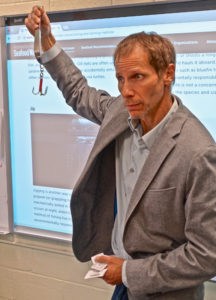
Colles Stowell: President of One Fish Foundation, a sustainable seafood education non-profit teaching consumers about why they should care where, when, how and by whom their seafood was harvested. Colles works with students in classrooms from kindergarten through college, and adults via community events to discuss a variety of crucial seafood sustainability topics ranging from harvest and aquaculture methods to climate change impacts and policy.


All Blog Posts

Boom and Bust of Gulf of Maine Scallops

  • March 25, 2017October 20, 2021
  • by Colles Stowell
Share it!
Share

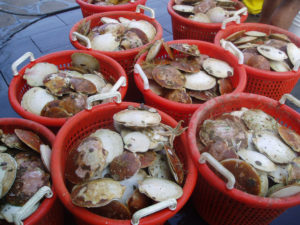
Northern Atlantic sea scallops are a good example of how fisheries management has rescued a stock from the perils of overfishing. Sadly, they are also proof of how those same policies could just as easily doom the stock in the not too distant future.

How does this happen?

It comes down to fishery access. Several decades ago, the scallop fishery in the Northern Gulf of Maine (NGOM) was teetering because the annual harvest had reduced the stock’s ability to sustain its population. So limits were put in place to reduce the overall harvest in that area.

As the stocks rebounded, fisheries managers established a new system that would guarantee smaller boat operators with specific permits to scallop in a designated area up to 60 miles off shore from Downeast Maine to Cape Cod. They were allowed to catch 200 lbs a day up until the point all of these fishermen landed a total allowable catch (determined by stock assessment), which is now 70,000 pounds.

The managers also allowed larger boats with federal permits to not only scallop beyond the 60-mile limit, but also inside the 60-mile limit. The managers said that these larger boats, fishing under what is called a limited access permit, could land as many scallops as permissible under the federal permit during a set number of days while they were in the 60-mile zone the smaller boats fish. Once the smaller boats hit their 70,000 lb total allowable catch, the entire fishery would shut down.

Photo: NOAA

For example, in the 2015-2016 season, limited access boats caught more than 300,000 lbs of scallops in the northern gulf of Maine area before the smaller boats hit their 70,000 lb quota and the fishery was shut down.

Sound fair? No. And these limited access boats are fishing within their permitted rights. As an attorney for a lobby group representing scallopers was quoted in the Boston Globe, “These vessels are doing what they’re allowed to do.”

Here’s the worst part. NOAA projects that the current season will end with over 1 million pounds of scallops being harvested, still with only 70,000 lbs coming from the smaller boats. NOAA scientists said last year that the fishery could withstand a total haul of 400,000 lbs from this area this year.

Consumer impact

So why does this matter to consumers?

If the stock tumbles as it did a couple of decades ago, there will be fewer local scallops and the price will skyrocket. More importantly, you should be concerned if you care about the resource and the people in and around your community whose livelihoods depend on it.

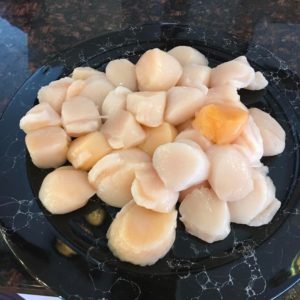
Here’s another concern. Small-boat scallopers in Maine and Cape Cod deliver a higher quality product called “dry scallops,” which have not been soaked to preserve freshness and potentially add market weight to the product. This is a common practice among the larger limited access boats. Soaked scallops lose flavor and don’t cook well. A collapse of the NGOM stocks could reduce or eliminate dry scallop availability.

Dry scallops. Photo: Cape Ann Fresh Food

I attended a discussion about the scallop fishery at the Maine Fisherman’s Forum a couple of weeks ago, and several small boat scallopers who operate in the NGOM zone complained about seeing larger boats from New Bedford and elsewhere hoovering up all of the scallops. Their complaints hinged on two fronts: 1. The unfairness of being hamstrung by a low total allowable catch in a fishery that a NOAA scientist had claimed a few minutes earlier was strong, and NOT experiencing overfishing. 2. They worried about the long-term survival of this fishery in the face of the massive hauls taken by the limited access boats.

The NOAA staff fielding the questions were sympathetic to the plight of the small-boat fishermen. But they repeatedly said that any comprehensive change would have to come from a rule change established by the New England Fishery Management Council (NEFMC), which manages scallops in New England waters.

A slow process

And therein lies the rub. The council’s mission is to protect the resource and those who use it. Unfortunately, the council can be slow to react, and it doesn’t always stand up for the access/rights of small operators.

As Ben Martens, executive director of Maine Coast Fishermen’s Association wrote in a recent blog, “The system as it is currently structured is destined to fail. User conflicts between permit types have become unavoidable since the biomass returned, and instead of putting a band-aid on this issue, the council must go through the process of fully protecting and planning for the long-term future of this fishery.”

I asked Ben what a fair solution would look like. He suggested a rule giving all stakeholders the same trip limit of scallops harvested, so one user group wouldn’t be favored over another.

I agree.

The NEFMC discussed the scallop harvest and fishermen’s concerns at a meeting last November. The council will entertain recommendations from the scallop subcommittee that meets next week and possibly take action in April.

Hopefully, they can get this straight…and fast.

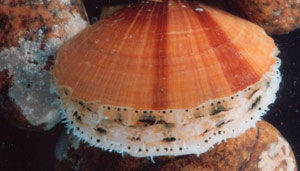
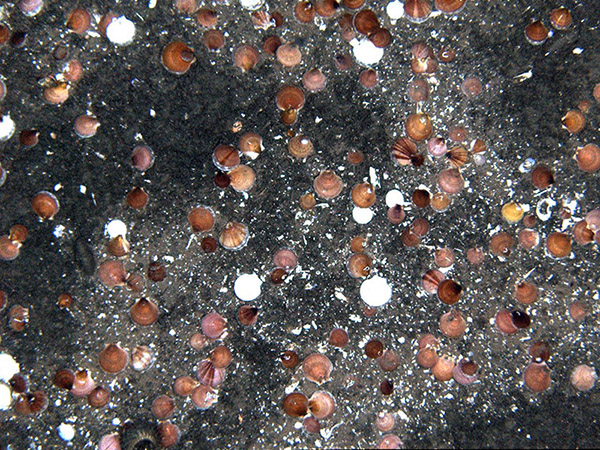
Eyes of the scallop. Photo: NOAA

I like scallops. But there is an environmental cost of dragging a 400- to 2500-pound steel cage across the ocean bottom. Bycatch is one. Disturbing the ecosystem on the ocean floor is another. Yes, some areas are more resilient than others and can bounce back fairly quickly. But there is still a consideration.

So we don’t eat scallops as often as we used to. Hopefully, we’re not forced into a situation where our local options for scallops are further limited and prohibitively expensive because our fisheries managers couldn’t find a comprehensive solution that is fair and that protects the resource.


Top photo credit: NOAA

All Blog Posts

Fisheries Policy A Mixed Bag

  • April 26, 2016October 20, 2021
  • by Colles Stowell
Share it!
Share

The Magnuson-Stevens Fishery Conservation and Management Act (MSA) turns 40 this year. This is significant for fisheries because the law has been the backbone for management policy since its implementation in 1976.

And that fisheries policy is largely working, according to the 2015 Status of the Stocks released by NOAA last week. In short, the annual report boasted the percentage of domestic fish species that are overfished is near record lows. Thirty-nine fish stocks have been rebuilt since 2000 because of effective management policies, (up from 37 stocks in 2014), says the report. The number of stocks experiencing overfishing (when the harvest rate exceeds the stock’s ability to sustain harvest) has increased by 2 since 2014. The number of stocks that are overfished (when the population is too low and may not be able to support harvest) has increased by one to 38 since 2014.

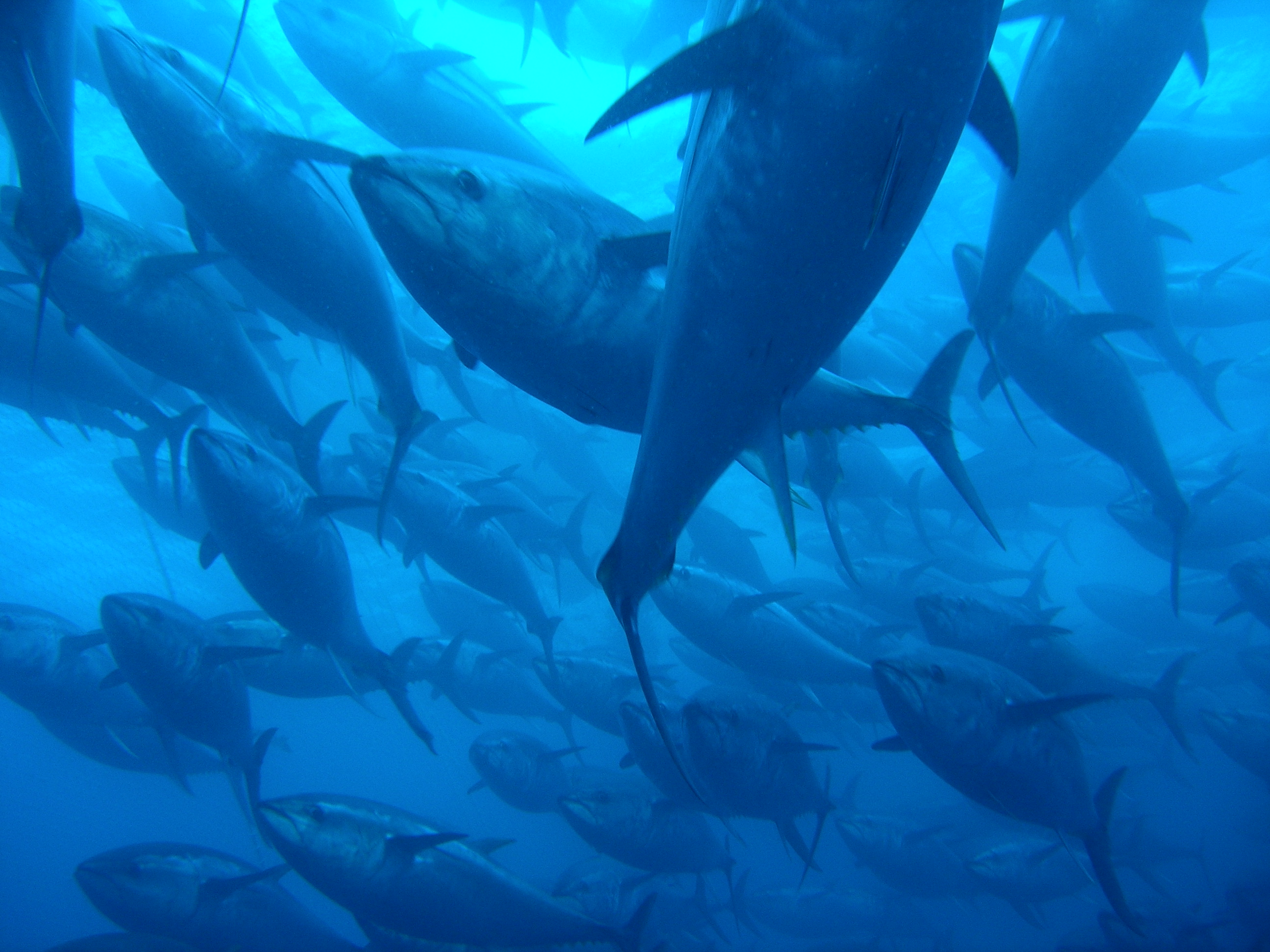
Some of the lowlights of species still considered under threat by NOAA’s standards: Atlantic cod (no surprise), Atlantic and Pacific bluefin tuna (no surprise), Atlantic salmon (longtime resident on this list), red snapper (ditto), different species of flounder, different shark species, Chinook and Coho salmon in different areas of Washington state, Atlantic halibut and Pacific swordfish.

To be sure, a lot of work goes into compiling these reports. And it gives a general barometer of fisheries in US waters, even if some of the species, such as bluefin tuna, are highly migratory and thus, fished by international fleets.

NOAA calls out the annual catch limit as an effective tool for ensuring against overfishing. One of the more recent “tools” added to the NOAA anti-overfishing toolbox is the individual transfer quota (ITQ). In essence, a certain fishery has a certain amount of quota that is available to fishermen…for a price. Fishermen can buy and sell quota within their regulated area just like stock traders can with stocks. The concept was to allow fishermen to self-regulate while managing to a catch limit.

scr_235573_24667

Unintended consequences

The unintended consequence shifted control from the pool of local fishermen to a select few with the money to buy up all of the quota. As quota became more expensive, more smaller scale fishermen were forced out of the equation. So not only is the ITQ system skewing access and control of the fishery away from local commercial fishermen, but it’s actually encouraging greater fishing pressure on the resource by larger operations who care more about profit than the health of the resource.

Many fishermen argue it is this environment that fueled the ascent of large operators, such as Carlos Rafael, the New Bedford distributor arrested last month on fraud charges. Authorities allege that he hid actual catch volumes and mislabeled fish in a scheme to sell regulated species to buyers in New York for bags of cash. He is currently under “house arrest” wearing an ankle bracelet that monitors his whereabouts and ensures he abides by his curfew.

Fisheries management is a complex issue. There’s no one-size-fits-all formula that provides equal protections for Atlantic Striped bass and Pacific Ocean perch. Different species in different ecosystems with different complexes of predator prey relationships and environmental factors require specific, targeted policies to account for all of these variables. And that doesn’t fully encompass the calculus of ecosystem-based management (managing fisheries not just by the narrow window of one specific species at a time, but as an entire ecosystem from plants up to alpha predators like sharks).

It’s hard to get it 100% right.

Magnuson-Stevens provided the framework that has evolved to the point where specific species management is possible. But the scale of the framework and sheer administration needed to manage such a menagerie of diverse fisheries has created what some fishermen see as a type of caste system where the well funded “inherit” the right to control large chunks of the US fishery. Smaller-scale fishermen who depend on the resource for their lives are forced out, and the resource suffers.

Mssing in this equation is a key tenet described in the amendment and renaming of the law in 1996: “Conservation and management measures shall not discriminate between residents of different States. If it becomes necessary to allocate or assign fishing privileges among various United States fishermen, such allocation shall be (A) fair and equitable to all such fishermen; (B) reasonably calculated to promote conservation; and (C) carried out in such manner that no particular individual, corporation, or other entity acquires an excessive share of such privileges.”

So yes, Magnuson-Stevens has provided a critical framework for managing a hugely diverse network of fisheries in U.S. waters. Better science gives us a more realistic idea of what is happening in our marine ecosystems, and policies are in place to help avoid fishing beyond capacity. But there is also room for improvement. Effective fisheries policy must include all stakeholders, including small-scale fishermen. Failure to do so has made the system vulnerable to fraud and disparity that hurts fishermen, consumers and the resource.

A better, more democratic approach that lets everyone have an equal voice is surely available. We just need to break the longstanding habit of repeating the same mistakes.


Photo credits: NOAA

All Blog Posts

Rising Temperatures Raising Global Warming Alarms

  • January 28, 2016October 20, 2021
  • by Colles Stowell
Share it!
Share

Summers in New Orleans can all but suffocate the uninitiated. The heat and humidity in August make a five block walk feel like a five mile run in normal conditions. The last time I experienced it for any length of time was in 1985, when I rode the streetcar to and from downtown for a summer job as an accounting clerk. After a couple of days of showing up drenched in my suit and tie, I began tucking my office clothes in a backpack and wearing shorts for the commute. Read more “Rising Temperatures Raising Global Warming Alarms” →

All Blog Posts

NOAA Opens Door to Aquaculture in the Gulf of…

  • January 16, 2016October 20, 2021
  • by Colles Stowell
Share it!
Share

Federal regulators yesterday announced the country’s first regionally approved aquaculture management program in the Gulf of Mexico. The NOAA “final rule” essentially clears the way for private entities to begin fish and shellfish farming in U.S. federal waters (exclusive economic zone). According to the announcement, those operations must follow the fishery management plan established by the Gulf Coast Fishery Management Council. Read more “NOAA Opens Door to Aquaculture in the Gulf of Mexico” →

All Blog Posts

Climate Change: Setting the Wrong Records

  • October 29, 2015October 20, 2021
  • by Colles Stowell
Share it!
Share

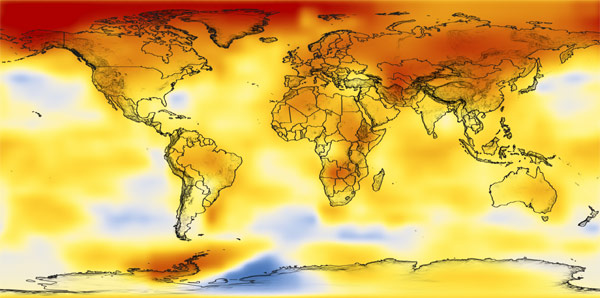
Not surprisingly, the latest global climate stats are discouraging. Last September was the warmest September of combined global land and ocean temperatures during the 136-years of recorded climate history. According to the report from the NOAA National Centers for Environmental Information, this is the fifth consecutive month of setting such an ignominious record.

Here are a couple of “high”lights:

  • 2015 was 1.62°F above the 20th century average of 59.0°F. The previous record was Sept. 2014.
  • 2015 was the highest departure from average for any month in 1,629 months since the record began in January 1880.
  • Global sea surface temperatures were 1.46°F above the 20th century average of 61.1°F, the highest departure for September on record. Scientists attribute this to powerful El Niño conditions.
  • The first nine months of 2015 comprised the warmest such period on record across the world’s land and ocean surfaces, at 1.53°F above the 20th century average, surpassing the previous records of 2010 and 2014 by 0.21°F.
  • Precipitation varied widely globally, with some places like Australia getting much less rain than normal, while some areas in Northwest Africa and Eastern Europe getting 200% of normal rainfall.

What does all of this mean? It means the climate is warming faster than we’ve anticipated in the past, particularly as the range of temperature increases above normal are getting higher. It means this global warming trend is going to continue unless we take some serious steps to curtail greenhouse gas emissions and other manmade climate change factors.

Warming oceans could change how, where and even if we find traditionally local seafood here in New England. The Gulf of Maine is warming faster than most ocean areas on the planet. This trend could force lobsters to move farther north and east to cooler waters, making it more expensive and time-consuming to fish them. Lobster fisheries could effectively shut down in some areas, as has been the case in Long Island sound and around Cape Cod.

I attended a workshop last year about how to better predict climate change impacts on fisheries. The upshot? We need to act now, and collaboratively among scientists, policy makers, fishermen and community activists to figure out a plan to adapt to climate change, and perhaps slow its progress.

Here are some additional resources about the trend:

NOAA Climate Science Strategy

Union of Concerned Scientists: Climate Hot Map

NOAA: What is El Niño?

Climate Nexus


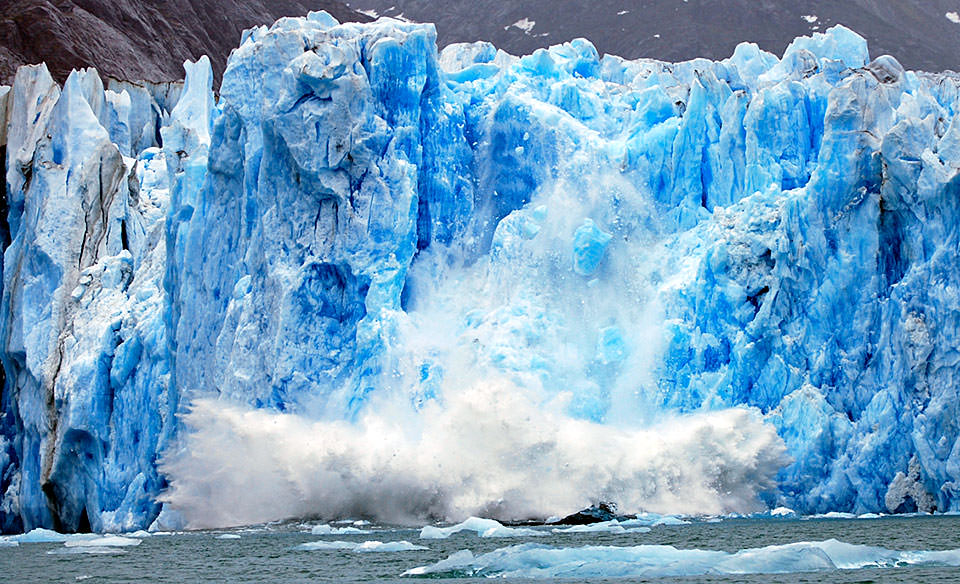
Photo: Calving glaciers are telltales of global warming.

Credit: NOAA

All Blog Posts

NOAA Mandated Observer Costs a Bad Precedent

  • September 8, 2015October 20, 2021
  • by Colles Stowell
Share it!
Share

Imagine two months after tax day you get a notice in the mail that the IRS wants to audit you. In order to prove that you did everything right, you also have to pay the IRS $700 for this unpleasant process.

I guess that’s why many fishermen along U.S. coasts are pretty ticked at National Oceanic and Atmospheric Administration (NOAA) for demanding that fishermen now pay to have federally mandated observers on their boats. Many fear that the per-trip cost of $710 will cripple small fishermen already saddled with boat debt, fuel costs, shifting markets and insurance. Read more “NOAA Mandated Observer Costs a Bad Precedent” →

All Blog Posts

The Bluefish Mercury Telltale

  • July 27, 2015October 20, 2021
  • by Colles Stowell
Share it!
Share

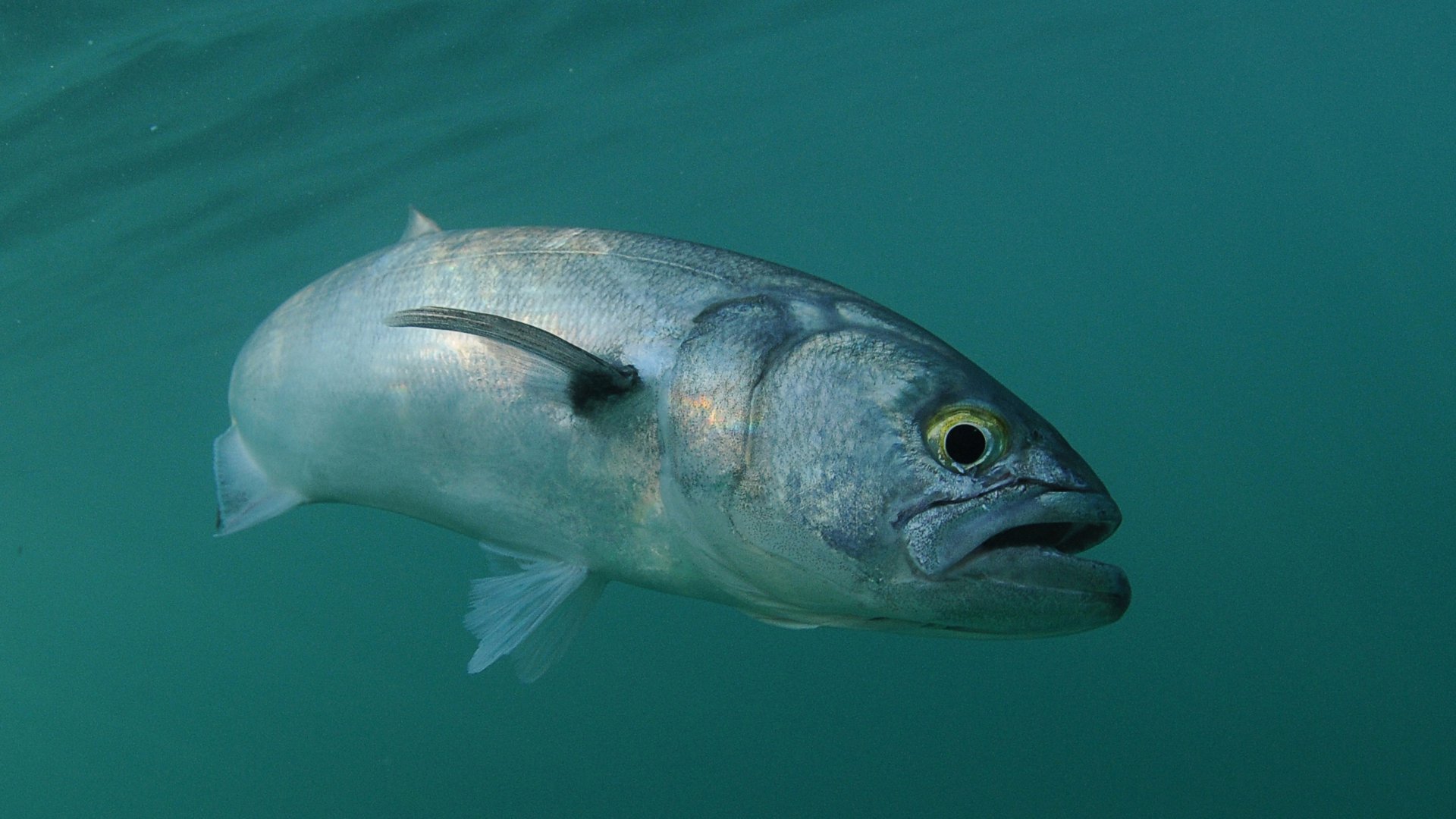
It seems as though we’ve had some success in reducing the amount of mercury our coal stacks spew into the atmosphere. And this isn’t just measured in the reduction of coal plants in the past few decades. We’re now seeing the impact in bluefish along the Mid-Atlantic Bight.

Read more “The Bluefish Mercury Telltale” →

All Blog Posts

Presidential Task Force Sets Sights on Illegal Fishing, Seafood…

  • March 20, 2015October 20, 2021
  • by Colles Stowell
Share it!
Share

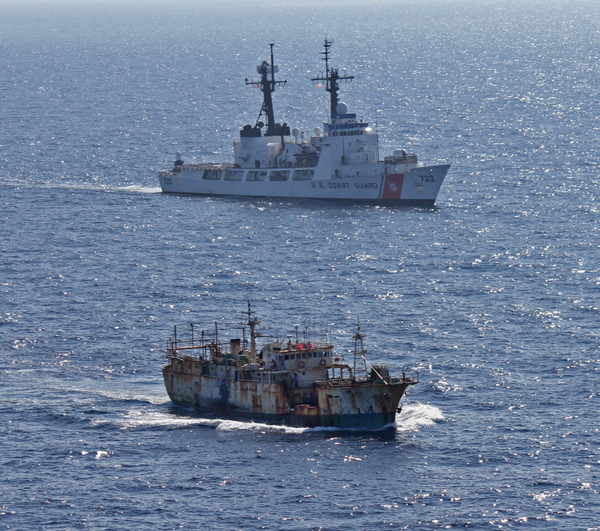
This week the Presidential Task Force on Illegal, Unreported and Unregulated (IUU) Fishing and Seafood Fraud released its action plan to help ensure fair seafood markets around the world. The plan follows close on the heels of the report NOAA issued last month identifying the challenges and objectives in combating IUU.

Read more “Presidential Task Force Sets Sights on Illegal Fishing, Seafood Fraud” →

All Blog Posts

NOAA Releases 2015 Report On Illegal, Unreported and Unregulated…

  • February 10, 2015October 20, 2021
  • by Colles Stowell
Share it!
Share

Illegal, unreported and unregulated fishing is a hot topic at the 2015 SeaWeb Seafood Summit. The chief concern is the unfair advantage rule breakers gain, potentially creating a disincentive for those who want to obey the laws. Representatives from NOAA outlined the 15 objectives of the Presidential task force to combat IUU fishing in one of yesterday’s sessions.

So perhaps it’s no coincidence that NOAA today issued its 2015 Biennial Report to Congress highlighting U.S. findings and analyses of foreign IUU fishing activities. The report not only lists countries that have vessels cited for IUU violations and for bycatch of protected species and shark catch on the high seas, but it also lists countries who have made improvements since being cited in the 2013 report.

Colombia, Ecuador, Mexico, Nigeria, Nicaragua, Portugal were listed in the current report as having vessels engaged in IUU activity in 2013 and/or 2014. NOAA Fisheries will press each of these nations to address these activities and improve their fisheries management and enforcement practices relating to IUU fishing.

The 2015 report also notes that 10 nations identified as having vessels engaged in IUU in the previous 2013 Report to Congress have created or changed their management laws to prevent IUU, sanction the cited vessels and improving monitoring and enforcement. The 10 nations are: Colombia, Ecuador, Ghana, Italy, Korea, Mexico, Panama, Spain, Tanzania, Venezuela. Mexico’s certification has been delay until this May because of bycatch of endangered sea turtles.

The U.S. has higher standards than many nations regarding IUU identification and enforcement. And it carries significant influence when pushing nations with vessels in violation to fix the problem. But there is one niggling detail the U.S. should address … and soon: the international treaty that officially governs IUU law.

Eleven nations, including the European Union counting as one, have ratified the treaty. The U.S. Senate has ratified it, but the necessary legislation actually authorizing U.S. involvement with the treaty has not yet passed. The treaty, commonly called the Port State Measures Agreement, needs 25 country ratifications to take full effect.

Congress should act quickly to pass the measure so the U.S. can stand on firm ground when holding other nations accountable for not effectively policing IUU violations.

All Blog Posts

Fishermen and Scientists Discuss Climate Change Impacts On Gulf…

  • January 5, 2015October 20, 2021
  • by Colles Stowell
Share it!
Share

This blog originally appeared Jan. 5, 2014 on the Cape Ann Fresh Catch website.

One of the benefits of writing about sustainable seafood is the opportunity to attend informative workshops and conferences about the subject. The Island Institute hosted a workshop in Portland in December 2014 about current and future impacts of climate change on fishing in the Gulf of Maine. The Island Institute is a nonprofit aimed at supporting the state’s island and working waterfronts. Chief among these is the fishing community.

Scientists from NOAA, Gulf of Maine Research Institute (GMRI) and the National Weather Service met with Island Institute representatives and commercial fishermen to discuss everything from rising water temperatures and ocean acidification to current and future predictive modeling technologies. Fishermen described how they’ve had to change tactics as cod fishing has all but stopped and lobster continue to move down east (north and east along Maine’s coastline) following cooler temperatures. They want to know if they can get more accurate, more predictive data to better plan ahead and adapt for upcoming fishing seasons based on the rapid changes.

Make no mistake. Things are changing quickly in the Gulf of Maine (GOM). In fact, ocean temps are rising faster here than anywhere else in the world. And the dynamic modeling presented at the conference was a bit scary. The water temperature has risen by nearly half a degree Fahrenheit per year for the past 10 years. That’s a big increase ¾ one which analysis suggests has had varied impacts on lobster and cod.

Scientist currently think that warming largely comes from the atmosphere, due to increased CO2 levels stemming from human activity. CO2 accounted for 82% of all greenhouse gases (the main contributor to global warming because it traps solar radiation in earth’s atmosphere) in the U.S. in 2012, according to the Environmental Protection Agency. Atmospheric CO2 levels doubled from 1860 to present. Scientists think they will double again in the next 70 years. That could increase global temperatures by several degrees in the same time period … which could have catastrophic impacts on coastal fishing, as well as coastlines, flood zones, real estate, etc.

Then there are the rising acidity levels. Ocean acidification is already occurring. As atmospheric CO2 rises, the ocean PH (which measures acidity) drops. PH levels are measured in very small increments. But when scientists predict PH levels will drop .2 to .4 in 100 years, the ecological impact could be significant. Even slight changes in PH levels could affect the ability of shellfish to develop normally hard shells to fend off disease. The economic impact could be devastating.

Fishermen in attendance talked about seeing cod fishing vanish and watching as lobstering areas have moved up the coast as waters have warmed. The past couple of years have had good to great landing years, but they have come much earlier than normal, and the effect hasn’t necessarily been good for market price. For example, in 2012 there was a glut of lobster on the market with full traps coming early in the season due to warmer water. But the molting season coincided with the prime trapping season, and Maine lobstermen were stuck with low-value product that could not be shipped to Canada (where such shedding lobster are processed) because the plants weren’t open yet. So the industry had a bumper crop, but the downstream effect was a net loss of millions of dollars.

GOM warming also appears to have a negative effect on cod stocks. Andy Pershing, chief scientific officer at GMRI, said his studies so far indicate that warmer water seems to produce fewer cod, meaning catches would be further reduced.

Fishermen at the meeting said they need better communication of trustworthy information so they can more quickly adapt to imminent fishery changes caused by environmental change. But improving the science and infrastructure to be helpful and accessible to fishermen is one thing. Getting lobstermen and fishermen who’ve been doing the same thing for decades to adapt is a much bigger challenge.

One thing is certain. The Gulf of Maine fisheries are changing more rapidly than many northern New England fishermen are really prepared for. Two fishermen from Chatham, Mass. said they’re making much of their living on dogfish and skates and moving further off shore, which is a bigger capital expense. It was a different story 10 years ago, and will be a different story in another 10 years.

Aside from the eye-popping data, the single biggest take-away for me was the kind of collaboration that is essential for developing and maintaining sustainable fisheries. Fishermen sitting down with scientists talking about the data that is now available and the data they would need to make smart decisions. What’s needed next is collaboration with policy makers to effect management plans that will support sustainability and fishermen.


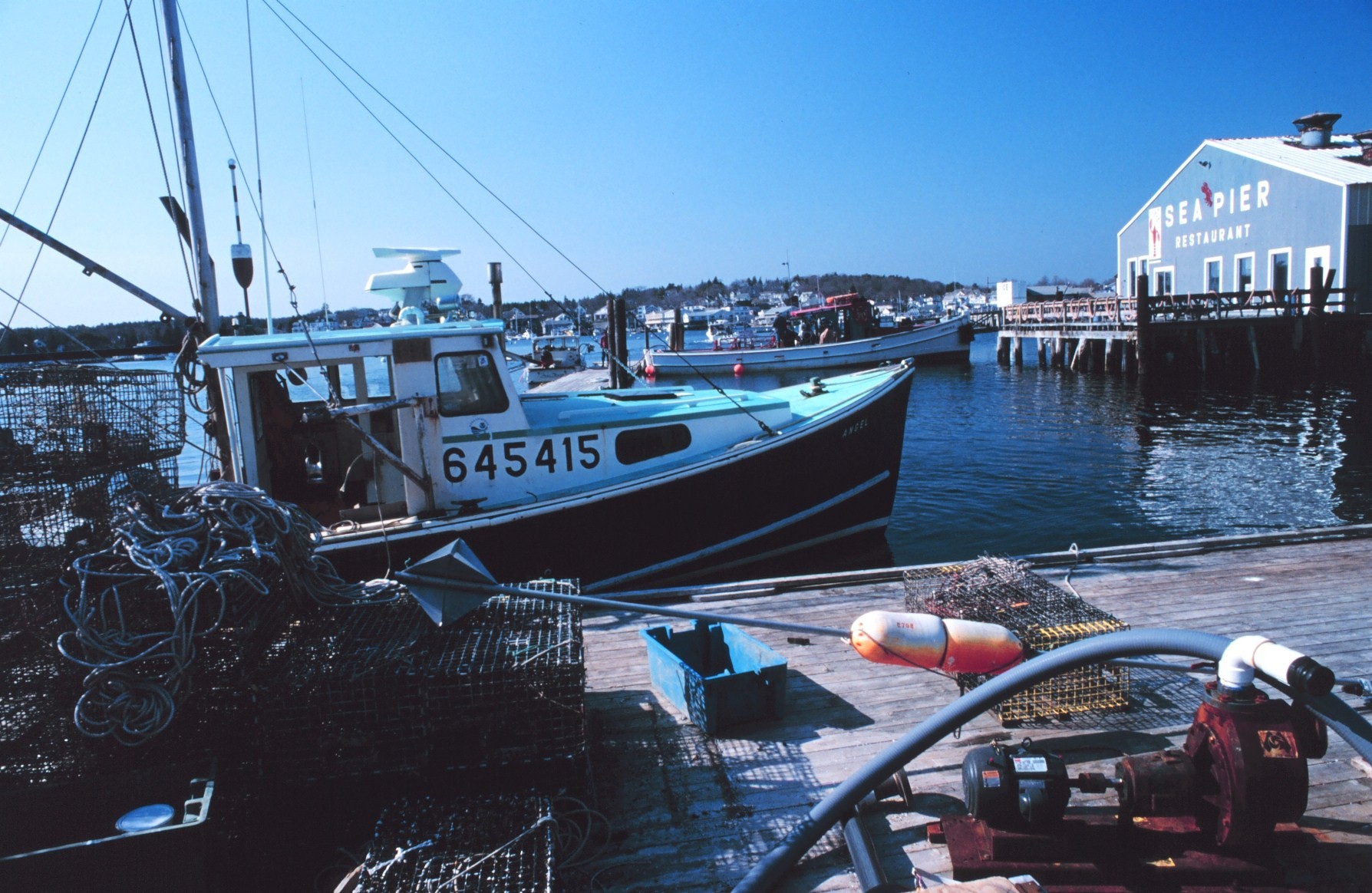
photo: Lobster boat docked at Boothbay Harbor, Maine. William B. Folsom, NMFS

Recent Posts

  • Hurricane Ida wreaks havoc on Louisiana’s seafood industry
  • EPA Should Use Clean Water Act To Kill Zombie Mine
  • Slow Fish 2021: Relationship Matters
  • Faith, Façades, and Futility
  • Pebble Permit Paused: Politics at Play

Archives

  • September 2021
  • August 2021
  • April 2021
  • December 2020
  • August 2020
  • June 2020
  • February 2020
  • December 2019
  • November 2019
  • October 2019
  • July 2019
  • May 2019
  • April 2019
  • March 2019
  • January 2019
  • December 2018
  • November 2018
  • June 2018
  • May 2018
  • March 2018
  • February 2018
  • January 2018
  • December 2017
  • November 2017
  • October 2017
  • September 2017
  • August 2017
  • July 2017
  • June 2017
  • May 2017
  • April 2017
  • March 2017
  • January 2017
  • December 2016
  • November 2016
  • October 2016
  • September 2016
  • August 2016
  • July 2016
  • June 2016
  • May 2016
  • April 2016
  • March 2016
  • February 2016
  • January 2016
  • December 2015
  • November 2015
  • October 2015
  • September 2015
  • July 2015
  • June 2015
  • May 2015
  • April 2015
  • March 2015
  • February 2015
  • January 2015
Theme by Colorlib Powered by WordPress