 All Blog Posts
UN Report: We’re Growing More Seafood Than We’re Catching

So what happens when the world’s wild-caught seafood supply is tapped beyond its capacity to feed the growing population? How do we sustain a human population that could reach 9.7 billion by 2050 when nearly a third of that number currently relies on seafood for 20% of their diet?
These are some of the questions posed, and somewhat answered in the United Nations Food and Agriculture Organization State of the World’s Fisheries 2016 report issued in July. However, the net results may leave many consumers conflicted over the need to fight hunger with the need to address industrial aquaculture’s ecological impacts. This is especially true since producing more food won’t necessarily fix the root causes of hunger.
Aquaculture on the rise…
The report’s authors suggest that aquaculture has, and will continue to play a critical role in meeting this demand. They point to aquaculture’s substantial growth to back this assertion. In 2000, aquaculture produced 27.3 million tons of seafood globally. Wild capture produced 94.8 million tons. In 2014 (the latest year for global UN FAO data), aquaculture was 73.8 million tons, and wild capture was little changed at 93.4 million tons. So as wild capture has remained relatively flat in 14 years, aquaculture increased 170%.
Global per capita fish consumption has risen above 20 kg for the first time in history. If we assume that wild capture stays flat based on global efforts to fish to maximum sustainable yield – the most we can fish without harming stocks’ ability to replenish themselves – then, yes, we need to meet the growing global demand in the face of expected population growth to 9.7 billion by 2050. The questions are how do we do that responsibly and at what cost?
 Let’s dig a bit deeper into the numbers. The general aquaculture totals: Finfish, 49.8 million tons; mollusks, 16.1 million tons; crustaceans, 6.9 million tons; other aquatic animals including amphibians, 7.3 million tons.
The report also states that about half of the 73.8 million tons of farmed seafood comes from fish, shellfish and plants that are non-fed species. That is, carp, mussels, kelp and similar organisms that don’t require the financial and environmental cost of fish pellets, often derived from forage fish, critically important links in the seafood web.
Additionally, for the first time, farmed fish exceeded wild caught fish for food consumption in 2014.
Think about that. We’re making more seafood than we’re harvesting.
…at what cost?
So all of this suggests we’re ramping up to meet the growing demand. Several countries are chipping in. No surprise that China is the big dog, accounting for nearly 60% of all aquaculture products, followed by India, Viet Nam, Bangladesh and Egypt. Salmon and trout are the top produced fish or shellfish (wild caught and farmed) on the planet, taking over the spot long held by shrimp. Norway and Chile are the top salmon producers.
It is the legacy of farmed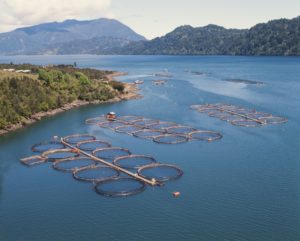 shrimp and salmon that raises red flags. Yes, Chile is the second-largest salmon grower. But its industry is reeling from a disastrous start of the year: posting nearly $1 billion in losses due to ravaging algal blooms that destroyed millions of fish; crippling protests from commercial fishermen who blocked delivery of surviving farmed salmon; and, recent reports of staggeringly high (and ineffective) use of antibiotics.
Couple this with widespread reports of problems with shrimp farming, largely in Asia and South and Central America. Again heavy dosing of antibiotics, hormones to accelerate growth, and destruction of critical mangrove habitat are major issues. Look no further than frequent U.S. Food and Drug Administration alerts on imported farmed shrimp containing antibiotics the agency deems carcinogenic.
As with industrial agriculture, the push to increase seafood production and profits often storms past responsible practices. The result is often product that compares poorly to wild caught species from a nutritional, taste and environmental impact perspective.
The trouble with industrial Ag and Aq
All of these numbers and the consequent narratives of industrial aquaculture gone wrong overseas suggest we need to reassess industrial scale finfish and shrimp production to eliminate collateral damage. It can leave many people conflicted. Yes, hunger and rapid population growth are significant challenges that require global collaboration. And perhaps aquaculture can continue to play a role in addressing those problems.
But there are inherent flaws in the logic that industrial agriculture and aquaculture can “feed the world” or end hunger. First, the industrialization of food systems seeks to increase food supplies. But that model doesn’t address root causes of hunger such as poverty, inequity and fairness. In fact, some researchers believe the world produces more than enough food to feed everyone on the planet…up to 1.5 times as much.
Unfortunately, much of that food goes toward production of grains for industrial agriculture feed and corn for ethanol. This food system does little to address undernourishment. How can someone in Mali eat industrial-produced grains if he or she can’t afford it, much less find it? What about the small-scale fisherman in Oceana who can’t even afford the fresh seafood he harvests?
So no. Aquaculture is not a panacea for world hunger. But small-scale operations, which take a smart, balanced approach t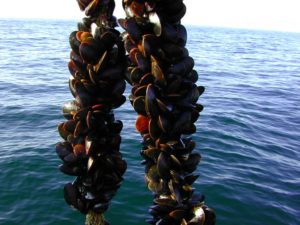 hat minimizes ecological damage, can benefit local and regional food systems by providing locally produced seafood with minimal environmental costs.
For example, raising mollusks like oysters, mussels, clams and scallops is generally cleaner and even beneficial because it requires no feed, and as filter feeders, they actually clean bays and estuaries. Production of aquatic plants falls into the same category. Farming kelp, seaweed and other plants has increased substantially in the past decade, jumping 102% from 13.5 million tons in 2005 to 27.3 million tons in 2014 at a market value of $5.6 billion in 2014. New approaches, such as Bren Smith’s 3D Ocean Farming, are creating clean, self-sustaining and diverse marine polyculture farms that produce shellfish and plants.
A better way needed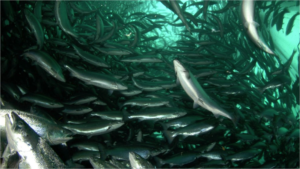
Since industrial aquaculture is already embedded in global food systems, we need to devote more energy to minimize or eliminate the downstream impacts of current industrial scale finfish and shrimp aquaculture. The rapidity with which the deadly virus spread among fish farms in Chile earlier this year confirms a long-held belief by some scientists and environmentalists that cramming tens of thousands of salmon into tight pens creates fertile ground for deadly diseases to spread rapidly. We need to figure out better ways to produce farmed fish and shellfish to minimize those hazards.
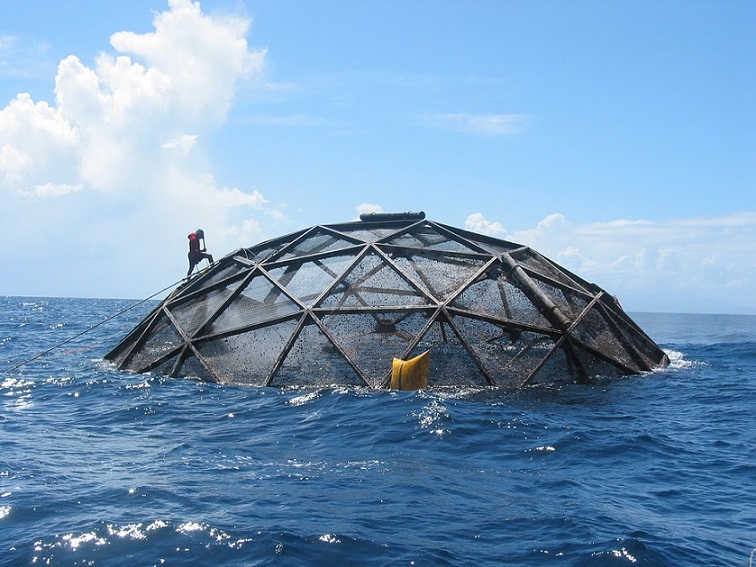
We need to devote more money, time and effort into making closed re-circulating systems – which reduce environmental impacts of escapes, disease spread to wild stocks, and resource depletion – more affordable and accessible to more operators around the world.
Aquaculture practices and regulations vary widely around the world. Regulations are tighter domestically than most anywhere else in the world, significantly restricting the use of antibiotics and hormones. But we can do more to make the industry more sustainable and accountable from a resource, environmental, and health standpoint. We have to. The current situation leaves many consumers conflicted over current practices despite the increasing need to feed the planet and frustrated there hasn’t been enough effort to improve the industry.
A consumer’s best tool is knowledge. Find out more about the provenance of the fish or shellfish we eat, and we can at least safeguard what we and our families eat. When in doubt, ask questions and buy locally caught, responsibly harvested species that are abundant. Together, an informed customer base could perhaps spur some of the change discussed above.