Skip to content
One Fish Foundation
  • Blog
    • Aquaculture
    • Education
    • Environment
    • Policy
    • Wild Harvest
    • Fish Tales
  • About
    • About One Fish
    • About Colles Stowell
  • Education
    • Elementary School
    • Middle School
    • High School
  • KNOW FISH Dinners®
  • Resources
    • One Fish Podcast
    • One Fish Foundation in the news
    • The 7 C’s of Sustainable Seafood
    • Newsletter Archive
    • Recipes
      • Skate with Capers and Butter — Chef Rizwan Ahmed
      • Grandma Davis’ Fish Chowder — Jane Almeida
      • Ginger Garlic Tamari Scallops — Colles Stowell
      • Fish Stock — Evan Mallett
      • Mussels San Remo — Chef Rob Martin
      • Salted Pollock Croquettes – Chef Mark Segal
  • Connect
    • Contact OneFish
    • Social
      • Instagram
      • Facebook
      • Twitter
All Blog Posts

Hurricane Ida wreaks havoc on Louisiana’s seafood industry

  • September 8, 2021October 20, 2021
  • by Colles Stowell
Share it!
Share

This time, the levees around New Orleans held. The reduced flooding in the city after Hurricane Ida helped minimize the catastrophic loss of life following Hurricane Katrina 16 years ago.

But some levees in southern parishes didn’t fair as well. And Ida’s widespread devastation fueled by sustained 150 mph winds will have long-term consequences for Louisiana’s seafood industry.

I spoke with Lance Nacio, owner of Anna Marie Seafood in Montegut, La. on Monday to get a sense of what folks down there are dealing with. Here is a quick snapshot of our conversation:

  • He and his family are fine, living on his two fishing boats and in his house. The house, the boats and the processing facilities all weathered the storm pretty well, though there are some things to fix.
  • His boats are trapped in the canal across the street from his house until Sept. 29, which is the estimated time when power should be restored to allow the drawbridges to raise and let the boats motor to the Gulf of Mexico and begin fishing.
  • More than 60% of the structures in Terrebonne Parish (the 2,000-square mile parish south and west of New Orleans where Lance and many other fishermen live) are uninhabitable, according to authorities.
  • Lance predicts that many residents will not return in what may be a more expansive exodus than after Katrina.
  • This exodus will not only include fishermen, but also those who run critical infrastructure operations like docks, ice houses, boat maintenance operations, processing facilities, etc.
  • He will be working with Chef Dana Honn of Carmo to provide meals for first responders and line crews from across the country.

In essence, the industry in the state that provides the highest volume of domestically harvested wild shrimp and crab is in trouble. The entire regional seafood supply chain from boat to plate will likely be a shell (take or leave the pun) of itself in just a few months, sending shock waves across the country and around the world. As Dana said, “The fish will be out there. But with no infrastructure in place, who’s going to come back?” Louisiana Congressman Garrett Graves has formally called on the US Department of Commerce to declare a Fisheries Disaster Determination for the region to unlock funds to counteract the pending economic damage.

Worse still is the likelihood that further climate change will spin off more intense hurricanes like Ida and Katrina more frequently, leaving the Gulf Coast more vulnerable to long-term ecosystem damage.

This summer alone has seen several catastrophic events highlighting how climate change can have severe impacts on food systems:

  • the sweltering heat weave that smothered the Pacific Northwest for several days, literally cooking some oysters in their shells;
  • the anemic wild Pacific salmon runs in the Yukon territories, forcing remote Indigenous communities to scramble for winter food stores;
  • the devastating fires across California and other western states that have devoured millions of acres of old growth forest (very important to watersheds) and farmland.

Want to get involved? Here are a few ways to do so with a focus on Hurricane Ida’s aftermath:

  • Several people and organizations are raising funds for relief efforts, including providing food, shelter, medical services and supplies, debris removal, and repairs. Here are a couple of resources:
    • Chef Dana is raising money to support Lance’s efforts to help his community and feed first responders and line workers.
      • Venmo: @Lance-Nacio
      • PalPal: orders@annamarieshrimp.com
      • Zelle: Lance Nacio
    • Coastal Communities Consulting, Inc. is a nonprofit organization supporting coastal businesses and fishermen in La. It is doing good work to provide info on everything from prescriptions to food and water as well as coordinating donations.
    • Gulf South Rapid Response Community Controlled Fund provides disaster relief directly to frontline communities in the Gulf South impacted by climate disasters. Local leaders have committed to a transparent and accountable process for the money – which will allow communities to practice self-governance and self-determination.
  • The Gulf Coast Center for Law and Policy is hosting a national press conference Thursday Sept. 9 from 10:30 am – 11:30 am CDT to address Ida’s impact on the Gulf Coast region and the nation. Here’s a link to more information.
  • Learn more about the Sustaining America’s Fisheries for the Future Act, which is a congressional bill that mandates accounting for climate change when setting fisheries policy in the U.S. This bill officially calls for the re-authorization of the Magnuson-Stevens Act, the primary fisheries management policy for the U.S. If you agree with its direction, contact your Congressional representatives and tell them to support it.
  • Learn more about the Keep America’s Waterfronts Working Act, a congressional bill that aims to preserve working waterfronts, like the ones in jeopardy in southern Louisiana following Hurricane Ida. Again, if you like what you see, contact your Congressional representatives.

The last thing we can all do is spread the word. The more folks know what’s going on and what’s at stake, the more the broader community can get involved and help chart the industry’s future.

We’ll post more updates in this blog and via our Facebook page.


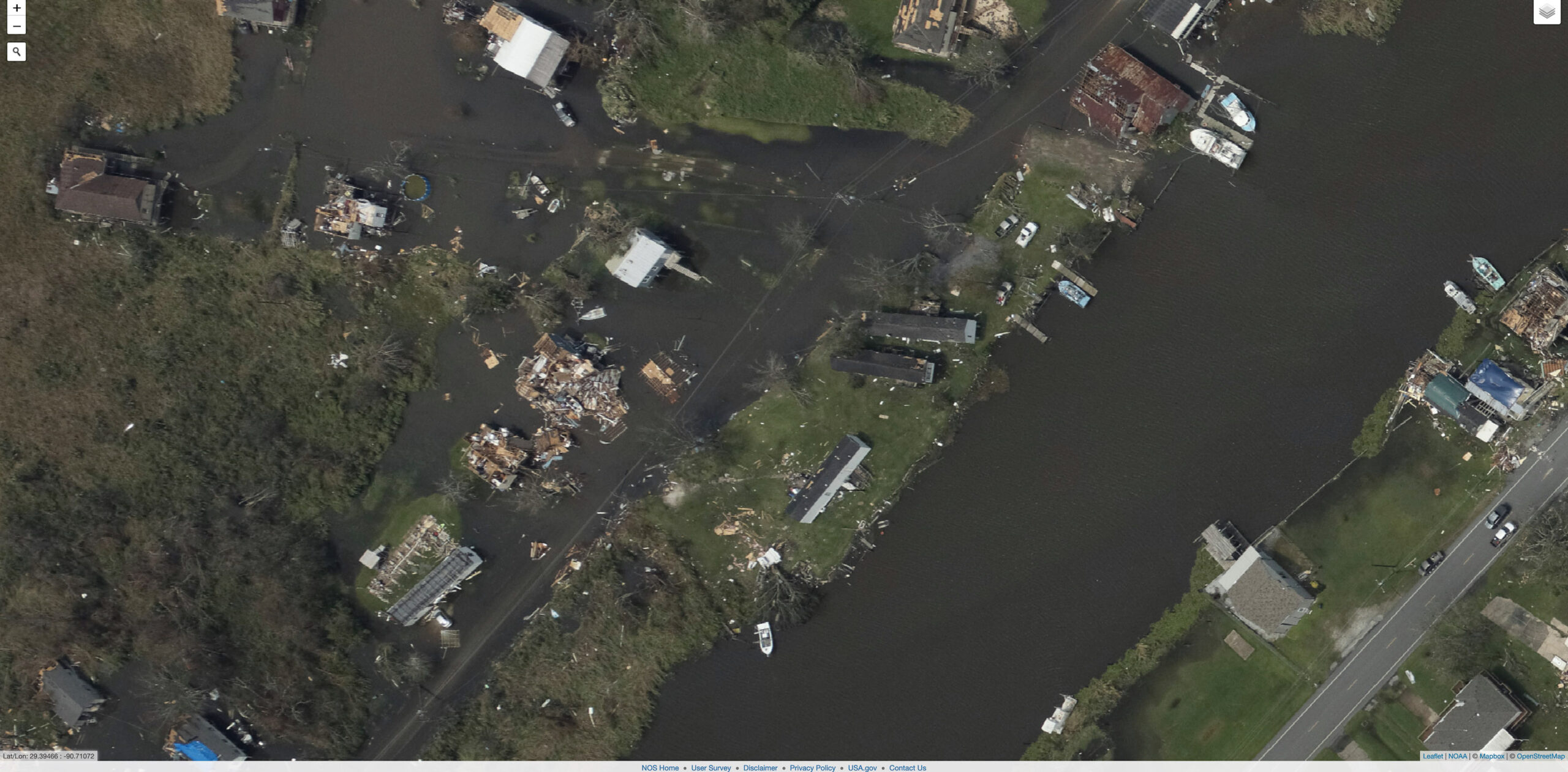
Top photo: NOAA satellite image of Hurricane Ida’s destruction in Terrebonne Parish.
All Blog Posts

Slow Fish 2021: Relationship Matters

  • April 14, 2021October 19, 2021
  • by Colles Stowell
Share it!
Share

Slow Fish is about relationships. Our relationships with seafood, those who harvest and sell that seafood, our broader communities, our oceans and waterways, and with each other.

Since the pandemic shut down our planned Slow Fish 2020 in-person event last March, we’ve been reimagining how we re-establish, strengthen, and explore these connections. Planning a virtual event was new for all of us. We learned you can’t apply the same thought process to a remote event.

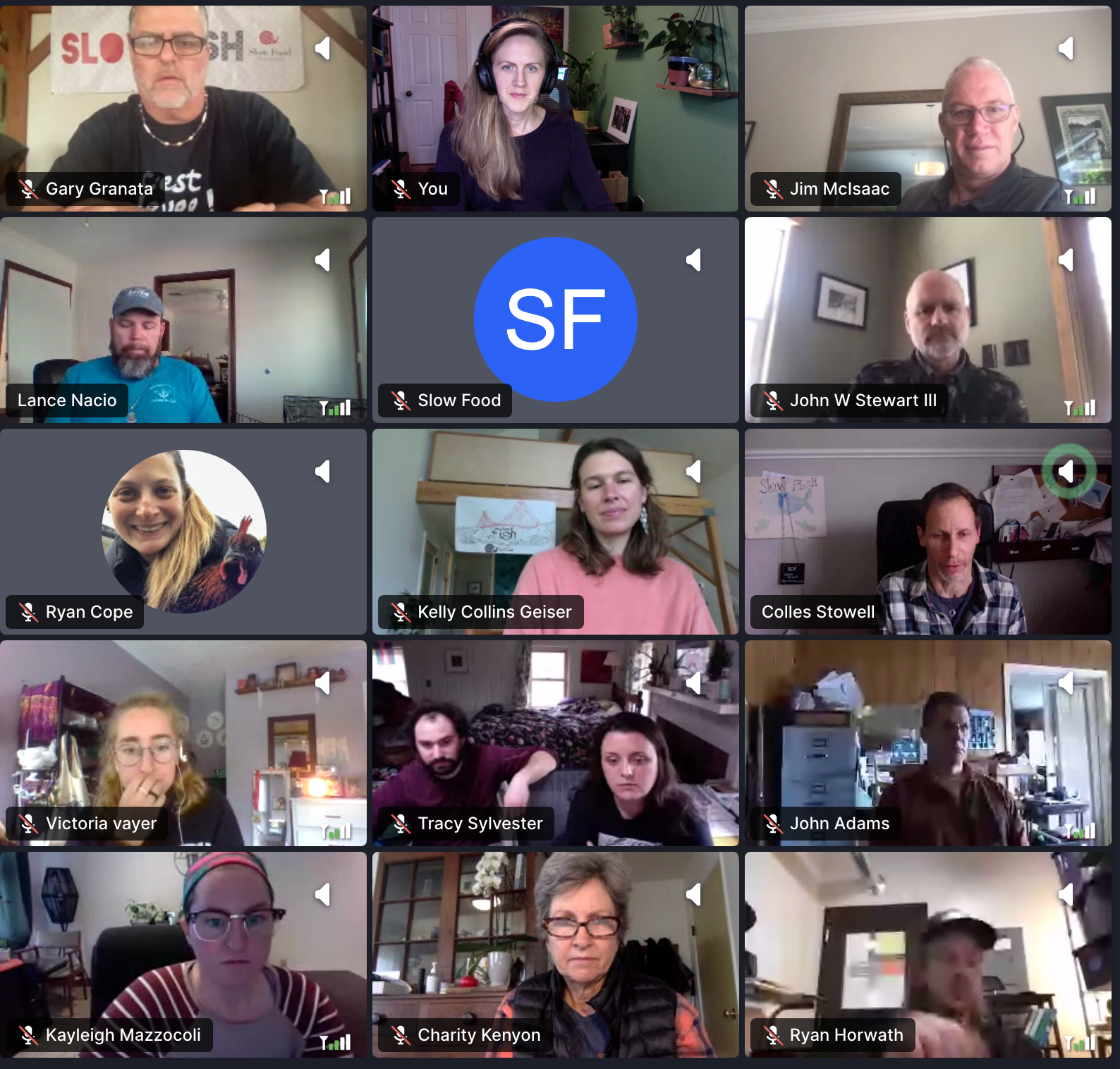
The theme of relationships was prominent throughout Slow Fish 2021, held online from March 18-20 and March 25-27.

We heard it from Jim Embry, who spoke about the importance of striving for equity, inclusion, and justice even as racism persists in our water- and land-based food pathways. Keynote speaker Buck Jones of the Columbia River Intertribal Fisheries Commission reemphasized the importance of preserving both indigenous and non-indigenous connections to food sources.

Know your fishermen and women!

The theme of relationships cropped up again in the Seascape World Café where attendees joined rotating conversations about growing the network, advocacy and action, and young fish harvesters.

One central theme from the Seafood Supply Chain Deep Dive is that direct connections between fish harvesters and customers, retailers, and other harvesters are increasingly essential to growth and survival. Covid’s devastating impact on industrial supply chains continues to wreak havoc. In the end, the definition of “local” is becoming less about geography and more about relationships.

We heard this from several storytellers. Kayla Cox at New England Fishmongers based in NH described customer enthusiasm for the amazing shrimp from Anna Marie Shrimp in LA and wild salmon from Yakobe Fisheries in AK. Lance Nacio explained how these types of business networks have helped both Anna Marie Shrimp and its customers who buy all of the scallops he can get from New England Fishmongers.

These are the kinds of relationships that help fishermen and women troubleshoot logistical challenges like collective marketing, business questions, or mentorship. These are the connections that grow the network of folks that share Slow Fish values of good, clean, fair seafood.

Natural connections

Relationships to the land, the water, the fish, the birds, animals and Nature in general is at the center of Indigenous culture, and it was the foundation for many powerfully spiritual stories in the Indigenous Access to Food Sources Deep Dive. We heard perspectives from Indigenous communities from Martha’s Vineyard, MA. all the way to AK., including stories from smaller and bigger river systems in northern CA. and OR.

We heard resilience in the stories of opposing a massive proposed mine in the Bristol Bay, AK watershed, restoration of Indigenous access to wild salmon runs on the Columbia River; preservation of cultural knowledge around seasonal, balanced ocean and land harvests in northern California, and the continued efforts from all geographies to protect treaty rights around access to natural resources. The upshot? If we take care of our natural resources, they will take care of us. Protecting Indigenous access to cultural food sources is an important part of that equation.

This connection to natural resources and marine habitats played a crucial role in the Aquaculture Deep Dive, where we learned about small-scale, ecosystem-balanced operations like an oyster farm near Miami, seaweed farming in Maine, and wild seaweed harvest in British Columbia. We also heard about collective efforts to oppose industrial-scale finfish and shrimp farming and other operations, which upset marine ecological balance and often socio-economically displace coastal communities that depend on local fisheries for their lives.

The Rivers Connect the World discussion featured compelling stories of habitat restoration and preservation from the Mississippi, Danube, Snake, and Copper rivers as well as the rivers of Cork, Ireland. These efforts continue to succeed because of the collaboration within and among communities along those rivers, regardless of political borders.

Shared Resources

The Blue Commons Deep Dive explored how the industrial-scale development of the Blue Economy typically saps the lifeblood from coastal communities and their local economies, and cripples the independent fish harvesters living in those communities. Blue Economy plays such as massive fish farms, huge offshore wind farms, or large, investment-backed no-fish zones essentially privatize large sections of the ocean and have the most devastating impacts on independent, artisanal, and subsistence fishermen.

The Blue Commons is a counter-narrative to the Blue Economy, in which communities gather around a shared set of values to treat marine and estuarine water bodies as shared resources. We again heard stories of resilience, such as how the Okanagan Nation’s Alliance worked to restore wild sockeye salmon runs on the Snake River in their home waters in British Columbia. We learned about a Rhode Island community working to re-establish a vibrant, locally managed quahog fishery and provide more access to more fishermen despite consolidation by market forces.

We also learned how a fishing community in Sitka, AK worked to ban trawl nets in sensitive fishing areas to minimize halibut bycatch; develop a collaborative science approach to monitor rockfish biomass to ensure healthy stocks; and create an innovative program to train young fish harvesters. These types of commoning fortify the relationships between communities and their surrounding natural resources.

All of these discussions prompted thoughtful idea exchanges and questions in very active chat sessions, with 2,424 messages spread out over both weekends. This does not include the very vibrant feedback during the live panel discussions following the screenings of “Last Man Fishing” and “The Wild” films during the first weekend.

On the final day of the event, Slow Fish North America Oversight Team members Tasha Sutcliffe and Kevin Scribner provided a thorough synthesis of common threads arising from these discussions. Relationships, food sovereignty, equity and social justice, habitat protections, and intergenerational knowledge transfer or mentorship were some of the most common threads woven into the fabric of the event and of Slow Fish values. To see the full synopsis from Kevin and Tasha, follow this link.

Follow this link in case you’d like to see recordings of the different discussions from Slow Fish 2021. Scroll down the library until you see “Aquaculture.” The eight videos following Aquaculture were all part of the event.

A team of between 30 or so people worked tirelessly for several weeks to coordinate what turned out to be a stellar event. We met or exceeded our goals of strengthening and growing the community; empowering folks in the network to share their stories and become our values standard-bearers; spark meaningful conversations around several crucial topics to the Slow Fish network; and celebrate the community and collective energy of our shared values.

I am truly thankful to everyone who participated. Hopefully, the next event is in person!


Top photo: Screenshot from the final day of Slow Fish 2021. Credit: Sister Denisa Livingston of Slow Food Turtle Island

All Blog Posts

Seafood Lovers and the Supply Chain

  • October 17, 2019October 19, 2021
  • by Colles Stowell
Share it!
Share

Most American consumers don’t know where their seafood comes from. In fact, a recent report from the Food Marketing Institute suggests that less than 30% of domestic consumers consider themselves knowledgeable about the seafood they eat.

 So why is that? And what can we do about it? What is the consumer’s role in the supply chain? It would be a fair assumption that the remaining 70% of those surveyed by FMI take a passive role. That is, they either rely on third-party information like eco-labels or they just don’t care. They surrender responsibility of the decision to someone else.

 No wonder our markets are so jammed with cheap, unhealthy imports.

 This topic was the crux of the fifth installment in the SlowFish webinar series, Slow Fish 201: Role of the Consumer, held on Sept. 23. To follow is a blog written by One Fish Foundation Intern Jennifer Halstead. In it, she captures some of the most salient points about how fishermen, fishmongers and others in the supply chain can help engage consumers in conversations about why they should care where, when, how and even by whom their seafood was harvested.


by Jennifer Halstead

Throughout the Slow Fish 201 Webinar series, expert panelists from different backgrounds, geographies and perspectives shared thoughts on how each link in the supply chain can help ensure the availability of responsibly harvested seafood. During the most recent webinar, Role of the Consumer, each panelist was thought-provoking, sharing their stories on how to engage consumers in the supply chain. Attendees left the discussion with a clear understanding of how consumers can become better informed (ASK QUESTIONS!!!) and assume a more active role in the supply chain.

On the panel were:

Patty Lovera, Food and Water Program Director, Food & Water Watch

Chef Evan Mallett, Chef, Co-owner, Black Trumpet

Capt. Tim Rider, New England Fishmongers

Charlie Lambert, Fisherman, Co-founder, Ocean2Table

Kirk Hardcastle, Premium Sales Accounts, Seafood Producers Cooperative

Colles Stowell, President, One Fish Foundation

Jessica Hathaway, Editor and Chief, National Fisherman, served as moderator

Each of them views the supply chain from a different perspective. But all of them agree that change within the supply chain is not only possible, but that it in many ways depends on consumers making smarter choices.

Fraud, mislabeling and a lack of transparency continue to cast a shadow over seafood sales in the U.S. It’s easy to see how consumers can feel helpless when it comes to fixing such issues. There are so many eco-labels providing conflicting guidelines and grocery store displays touting green-label “fresh, sustainably raised farmed salmon from Chile.”

As discussed during the webinar, well-informed seafood eaters have the power to pressure suppliers into knowing more about the products they are selling and to source from community-based fishermen who care about the resource.

Where to start

Panelists agreed that consumers should be asking restaurants and grocers a couple of questions just to get a part of the story of the seafood. It doesn’t have to be complicated or intimidating. You learn much just asking where, when and how it was harvested or grown. Even better if you can find out who harvested it. Is it local? Regional? Domestic? The U.S. has some of the best seafood safety and fisheries management policies in the world. If you can’t get domestic seafood, you’re better off choosing something else. Imported products carry a high risk of having been unsustainably farm raised or harvested.

“There is a lot of burden on the consumer,” said Patty Lovera. “We have to ask a lot of questions. The status quo in the supply chain isn’t good enough.” She and Colles Stowell both mentioned the influence consumers can have over retail seafood sourcing. If suppliers don’t know the answer to these questions, they will either feel compelled to learn, or responsible consumers will feel compelled to spend their money elsewhere.

What’s in season?

Chef Evan Mallett, Capt. Tim Rider and Charlie Lambert spoke about the importance of consumers better understanding seasonality. Just like when you go to the grocery store or market for vegetables and find different items available throughout the year, fish have their own seasonality. In New England, the height of the scallop season is in winter, while squid are generally available for a few weeks in the spring. Understanding what should be available during different times of the year will help consumers filter out which purveyors are supplying fresh, local fish and which are importing or using frozen, stored fish. “Being a chef is understanding sense of place, seasonal food, and the changes that the seasons bring,” said Mallet. That should also be true for consumers.

Eating seasonally enables consumers to enjoy fresh product throughout the year, experience cooking and preparing new species, support local fishermen, and promote healthy ecosystems by reducing fishing pressure on more popular species.

Location, location, location

Some tools, such as the Local Catch nation-wide Seafood Finder, can help seafood eaters find local, responsibly harvested fish, shellfish and seaweed. In a map or list view, you can search for purveyors by location and species.

All agreed that consumer education is critical. Once consumers have enough information, they’ll feel empowered to own those decisions and will likely make smarter decisions again in the future. “Instead of telling people what to buy, which is what eco-labels do, we need to educate and equip them with tools to make the decision on their own,” said Colles. Charlie added, “We’re providing them with information and letting them complete the thought process on their own, … and not force-feeding the consumer.”

Buying local benefits the consumer, economies, and even the ecosystem. Fewer food miles, fresher products, strengthening local economies by building relationships with fishermen, and supporting healthy ecosystems are all advantages that consumers can feel good about.

Charlie acknowledged that carbon footprint is a growing concern for his customers. The average distance seafood travels from boat to plate in the U.S. is an astounding 5,000 miles. “The supply chain was largely hidden, and when it was exposed, it was very nasty. The West Coast is famous for market squid and calamari, but the supply chain is tumultuous. [The squid] is landed, frozen, shipped overseas, thawed, processed, refrozen, shipped back, thawed, then distributed to local businesses and consumers. The amount of food miles is not right,”he  said.

Quality is everything

Distance traveled can also (but not always) affect freshness. A fresher product tastes better and has a better shelf life. Rider said both his restaurant and retail customers note the long shelf life of his product because his crew properly bleeds and brines the fish on board the vessel at the time of catch, ensuring the fish is as fresh as possible for as long as possible. “Shelf life is huge. If something comes up and you can’t cook it when planned, it’s still good four days later.”

Chef Evan agreed: “ It was really with the first fish I got from Tim that I saw a marked difference between everything that I was getting from the Gulf of Maine before that.”

Product quality is integral to attracting and keeping customers. Kirk Hardcastle drove this point home, drawing on his decades of experience as fisherman, chef, distributor and now marketer with Seafood Producers Cooperative. “It starts with the fishermen, not the eco-labels, … making sure the quality of the product really comes through. … If it gets to someone’s house and the fish is poorly handled… You can put millions into messaging and you’ve burned it all away with the first bite of fish. Go for quality first and everything after that is easy,” he said.

Know your fisherman!

Charlie and Capt. Tim both sell directly to consumers: Charlie providing product from the network of fish harvesters he sources from in Monterey Bay up to San Francisco to his community supported fishery (CSF) customers, and Capt. Tim from the two boats he and his crew operate out of Maine and Mass. via drop-off points and farmer’s markets. When fishermen come off their boats into the community to sell their fish and meet customers, they’re building relationships that help support a stronger local economy.

These relationships build trust and help harvesters and consumers alike have open discussions about the industry, fishing methods, problems and challenges that fishermen have.

In the end, failure to know the story of seafood surrenders consumer decisions to other elements in the supply chain, which is often driven by industrial players with only profit in mind. Complacency in the supply chain will only ensure that consumers receive sub-par products, and the supply chain grows more opaque, rather than transparent. Lack of communication and interest can lead to what started this conversation last year, intentional mislabeling to turn a buck.

Smarter, responsible consumers and the relationships they forge with fishermen and fishmongers will help shift supply chains away from industrial-driven structures and toward a supply chain rooted in trust and knowledge.

In short, the role of the consumer is to ask questions and make responsible decisions. However, fishermen, chefs, retailers, distributors, educators, advocates and others in and around the supply chain should help consumers get smarter. That means telling the story of the seafood they’re selling.

Not sure where to start? Seafood eaters should ask the questions mentioned above. Check out the 7 C’s of Sustainable Seafood. If you can, buy local. If you can’t buy local, buy US caught and processed.

Fishermen, chefs and retailers should get to know their customers and tell them more about the seafood they’re selling them.

A supply chain built on trust is the best path forward.


Resources

7 C’s of Sustainable Seafood

Local Catch Core Values: Another reference point for how to think about the seafood supply chain.

Slow Fish Values: More values regarding seafood’s journey from boat to plate.

Eating with the Ecosystem, The 5 Anchors: A New England-focused view of values to consider when choosing seafood.

To view a recording of the webinar, follow this link.


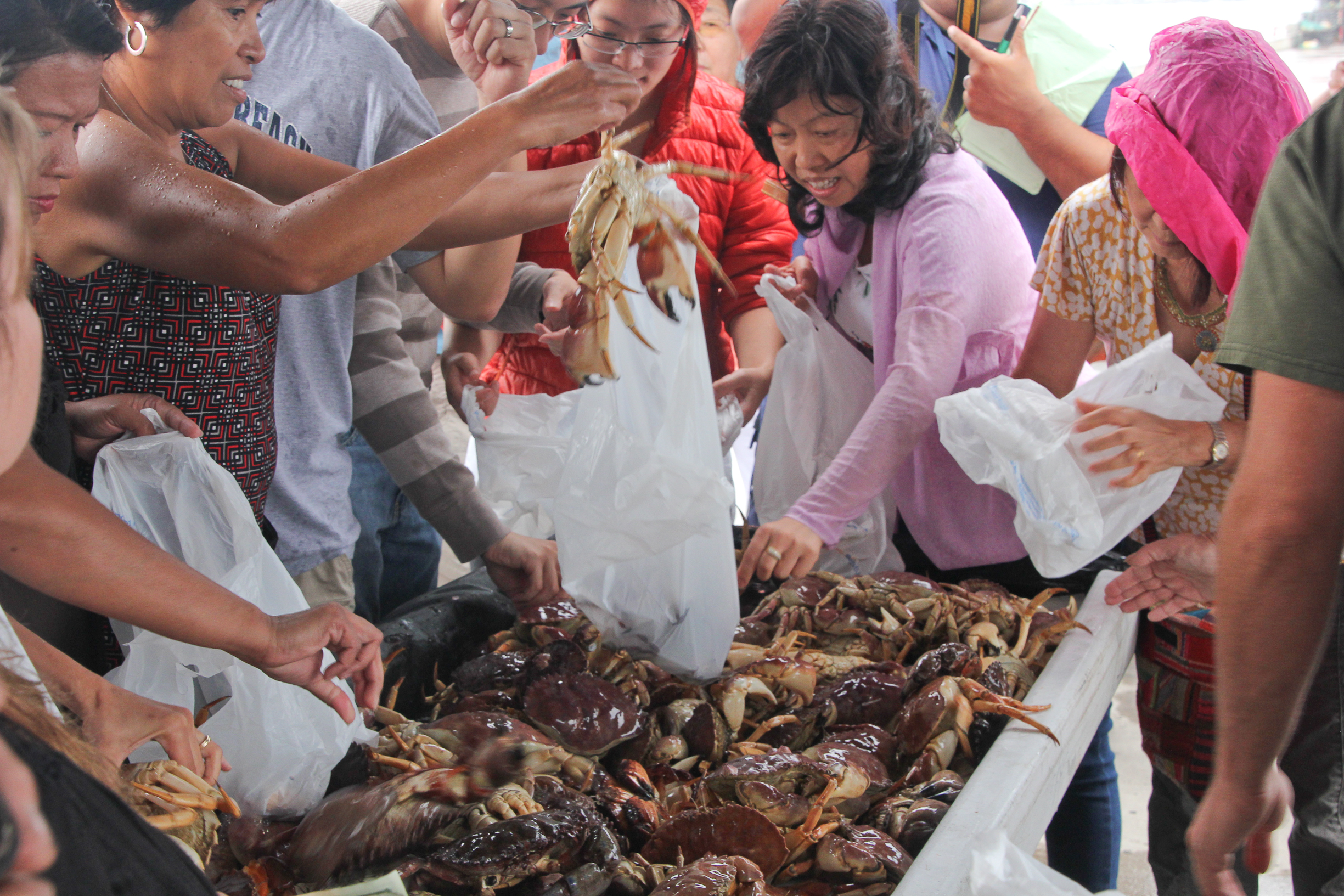
Top photo: Boat to consumer…literally.  Opening day for the Tuna Harbor Dockside Market in San Diego. Credit: Eric Buchanan

All Blog Posts

Fishing, Passion and Bad Music

  • June 20, 2017October 20, 2021
  • by Colles Stowell
Share it!
Share

I don’t know if it was Queensryche, Dokken or Whitesnake. Whatever flavor of 80’s hair band, the music was pulverizing my ear drums. As they pulsed laterally, the fluid in my ears splashed up and down every time the bow of the boat jumped six feet and plunged back down on the back side of a wave, punctuated by the incessant hammering of the kick drum in the background.

What were we doing?

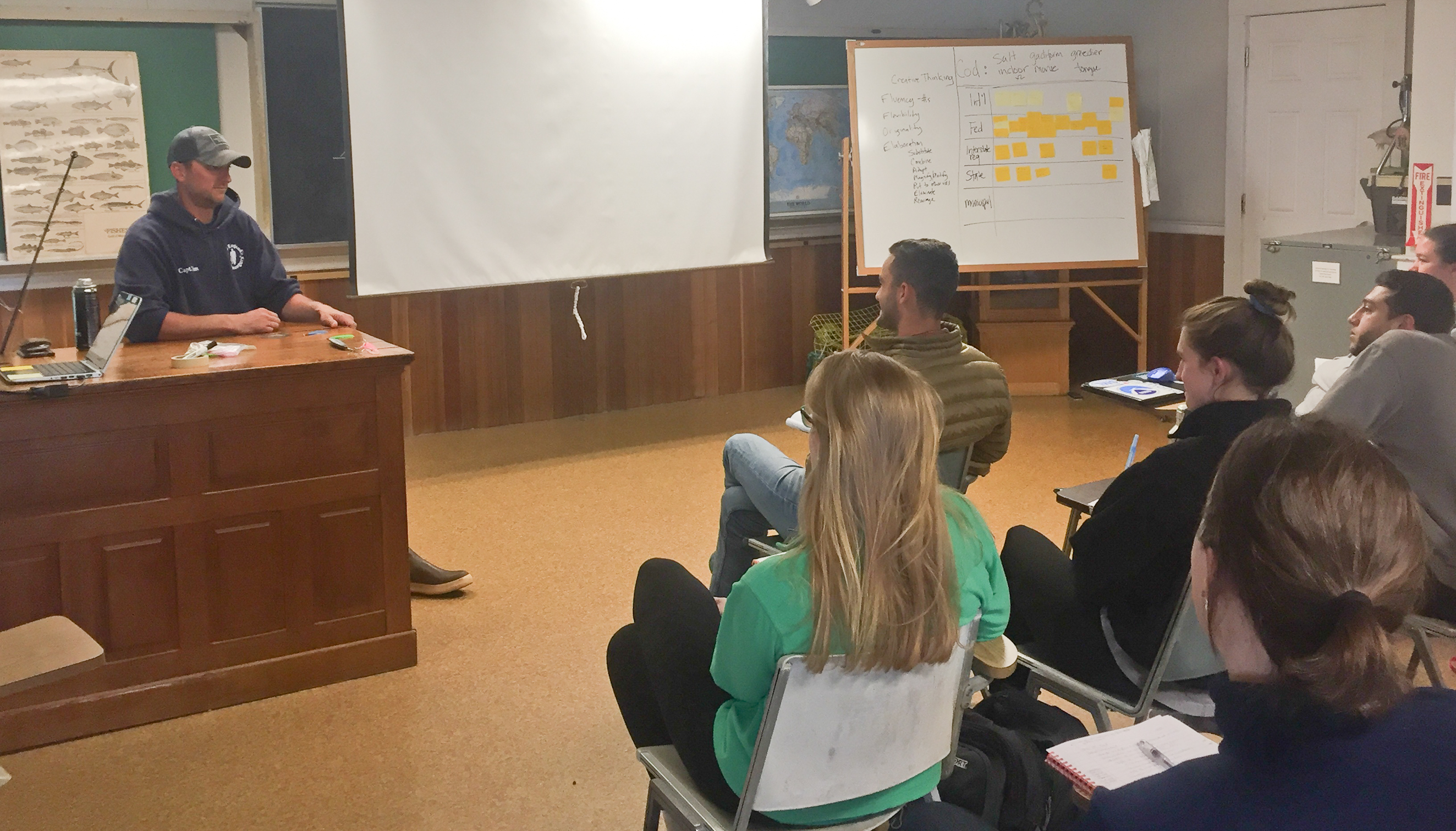
I was heading out to the Shoals Marine Laboratory on Appledore Island off the coast of Portsmouth, N.H. to talk with some students from the University of New Hampshire, Cornell University and Carleton College about regional, domestic and global seafood markets, consumer choices, market influences and climate change impacts. The students were participating in a two-week intensive sustainable fisheries course coordinated by N.H. Seagrant. I was riding with Capt. Tim Rider, whose fondness for that particular XM station was amplified by the conditions.

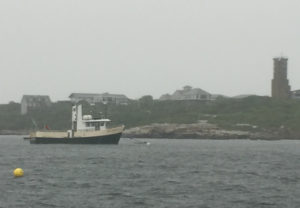
June in New England. Heading to the lab in wind-driven rain, but fortunately out of the six-foot waves … and the music. Photo: Tim Rider

A fisherman’s tale

If you’ve ever attended one of the KNOW FISH dinners, you know Tim is very passionate about what he does: bucking the trend toward high-bycatch harvesting by fishing for groundfish in up to 500 feet of water 80 miles offshore with rod and reel. And he’s not shy about sharing his feelings on current management policies, consolidation of the fleet (forcing small-scale fishermen out) and the need for change.

Perhaps it is this passion and willingness to speak out that has alternately cast him as either a pioneer striving to do the right thing against many odds or a loud-mouthed maverick who refuses to get in line. Perhaps that’s why he’s been lauded by restaurant chefs and consumers for the quality of his product, and vilified – even threatened – by others in the industry who don’t share his views.

That passion, along with a lifelong obsession of fishing and the experiences he’s had trying to survive make for a compelling, if a bit incessant, narrative. He keeps on talking, he says, because he has a lot to say.

The unsuspecting students at the Shoals Marine Laboratory heard stories of being shut down from speaking in New England Fisheries Management Council meetings, excessive and unfounded accusations from law enforcement, and confrontations with other fishermen who don’t like him rocking the boat.

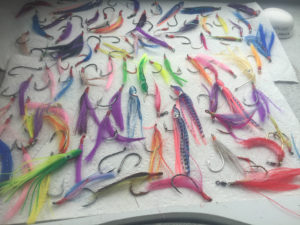
“Bait,” or the tools of the trade.

Struggling against poor policy

He provides a firsthand account of how the current management system has pushed him to the brink of bankruptcy multiple times, even as he’s trying to support his wife and young son and his crew. He talks about the money trail that has played a significant role in dictating fisheries management policy, including controversial catch shares.

Set up to allow fishermen to self-regulate by creating a marketplace for access to different fisheries, catch shares have spawned a money-driven resource grab in which access is bought and sold like stocks. The result is now an unfair system that too often privatizes the resource at the expense of small-scale fishermen who don’t have the money to buy quota or to compete in the limited fisheries allotted to fishermen with no specific quota.

Tim has joined a sector, or group of fishermen with quota, that is primarily “geared” toward fishermen using hooks rather than nets. The hope is to work collectively to promote low-impact fishing and perhaps gain a stronger voice during council meetings.

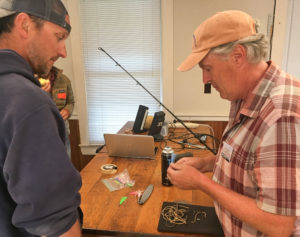
Reviewing new and old fishing gear with Dr. Nathan Hamilton, professor of archaeology at Univ. of Southern Maine. Photo: Owen Nichols

And for as many stories Tim told, the students on Appledore Island were engaged. They asked pertinent and insightful questions. They wanted to know about possible management solutions. They even laughed at some of his jokes.

Most importantly, they took advantage of a special opportunity to speak with a fisherman who gives his blood and sweat 12 days out of 14 (sometimes more than that), leaving the dock at 1 a.m. and returning at 9 p.m. because he believes in what he’s doing.

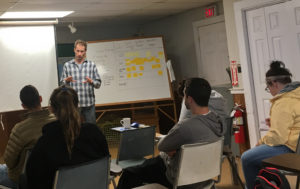
Talking about how consumer habit driven by price and convenience have opened the flood gates to cheap seafood imports. Photo: Owen Nichols

Changing habits

The students also asked smart questions about the big picture of local, national and global seafood dynamics. While Tim pointed to access and quota as two of the biggest issues with fisheries here, I added habit: Policy maker habit in keeping a faulty, skewed system in play; and fishermen and operator habit to own the most quota and to resist change for obvious reasons.

And worse still: Consumer habit. One of the most significant drivers for the amount of imported seafood eaten in the U.S. is consumer choices, dictated largely by price and convenience. We discussed how getting smarter about seafood systems and how to get closer to the domestic source (local fishermen) is crucial to changing that dynamic.

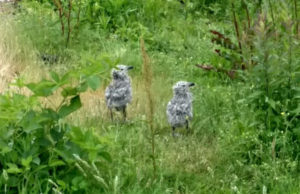
As a annoying as the adults can be, seagull chicks register high on the cute scale. At least we didn’t get attacked by the mamma. Photo: Tim Rider

We also talked about climate change and its impact on everything from native and invasive species to ocean acidification and changing currents. We talked about the need to keep diving into these issues and pursue careers in marine science, climatology, ecology, etc. to help solve some of the complex challenges climate change presents.

Students thanked us for coming and talked about some of the projects they were working on and their planned study focus in college.

Departure, before the fog really set in.

On the ride home, as the grey skies grew darker into dusk and the bow bobbed to the pounding beat of blaring rap music, Tim and I remembered why we took a full day off to plow through some fairly gnarly weather and talk to a handful of college students from across the northeast.


Top photo: Capt. Tim Rider telling fish tales.

All Blog Posts

UN Report: We’re Growing More Seafood Than We’re Catching

  • August 11, 2016October 20, 2021
  • by Colles Stowell
Share it!
Share

So what happens when the world’s wild-caught seafood supply is tapped beyond its capacity to feed the growing population? How do we sustain a human population that could reach 9.7 billion by 2050 when nearly a third of that number currently relies on seafood for 20% of their diet?

These are some of the questions posed, and somewhat answered in the United Nations Food and Agriculture Organization State of the World’s Fisheries 2016 report issued in July. However, the net results may leave many consumers conflicted over the need to fight hunger with the need to address industrial aquaculture’s ecological impacts. This is especially true since producing more food won’t necessarily fix the root causes of hunger.

Aquaculture on the rise…

The report’s authors suggest that aquaculture has, and will continue to play a critical role in meeting this demand. They point to aquaculture’s substantial growth to back this assertion. In 2000, aquaculture produced 27.3 million tons of seafood globally. Wild capture produced 94.8 million tons. In 2014 (the latest year for global UN FAO data), aquaculture was 73.8 million tons, and wild capture was little changed at 93.4 million tons. So as wild capture has remained relatively flat in 14 years, aquaculture increased 170%.

Global per capita fish consumption has risen above 20 kg for the first time in history. If we assume that wild capture stays flat based on global efforts to fish to maximum sustainable yield – the most we can fish without harming stocks’ ability to replenish themselves – then, yes, we need to meet the growing global demand in the face of expected population growth to 9.7 billion by 2050. The questions are how do we do that responsibly and at what cost?

aqua1Let’s dig a bit deeper into the numbers. The general aquaculture totals: Finfish, 49.8 million tons; mollusks, 16.1 million tons; crustaceans, 6.9 million tons; other aquatic animals including amphibians, 7.3 million tons.
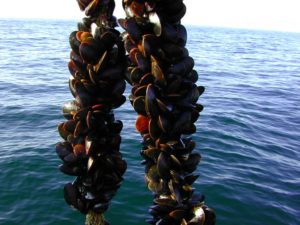
The report also states that about half of the 73.8 million tons of farmed seafood comes from fish, shellfish and plants that are non-fed species. That is, carp, mussels, kelp and similar organisms that don’t require the financial and environmental cost of fish pellets, often derived from forage fish, critically important links in the seafood web.

Additionally, for the first time, farmed fish exceeded wild caught fish for food consumption in 2014.

Think about that. We’re making more seafood than we’re harvesting.

…at what cost?

So all of this suggests we’re ramping up to meet the growing demand. Several countries are chipping in. No surprise that China is the big dog, accounting for nearly 60% of all aquaculture products, followed by India, Viet Nam, Bangladesh and Egypt. Salmon and trout are the top produced fish or shellfish (wild caught and farmed) on the planet, taking over the spot long held by shrimp. Norway and Chile are the top salmon producers.

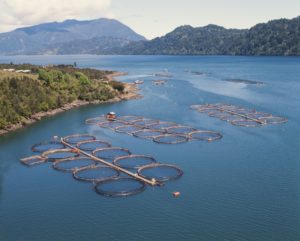
It is the legacy of farmedchile-salmon-farm shrimp and salmon that raises red flags. Yes, Chile is the second-largest salmon grower. But its industry is reeling from a disastrous start of the year: posting nearly $1 billion in losses due to ravaging algal blooms that destroyed millions of fish; crippling protests from commercial fishermen who blocked delivery of surviving farmed salmon; and, recent reports of staggeringly high (and ineffective) use of antibiotics.

Couple this with widespread reports of problems with shrimp farming, largely in Asia and South and Central America. Again heavy dosing of antibiotics, hormones to accelerate growth, and destruction of critical mangrove habitat are major issues. Look no further than frequent U.S. Food and Drug Administration alerts on imported farmed shrimp containing antibiotics the agency deems carcinogenic.

As with industrial agriculture, the push to increase seafood production and profits often storms past responsible practices. The result is often product that compares poorly to wild caught species from a nutritional, taste and environmental impact perspective.

The trouble with industrial Ag and Aq

All of these numbers and the consequent narratives of industrial aquaculture gone wrong overseas suggest we need to reassess industrial scale finfish and shrimp production to eliminate collateral damage. It can leave many people conflicted. Yes, hunger and rapid population growth are significant challenges that require global collaboration. And perhaps aquaculture can continue to play a role in addressing those problems.

But there are inherent flaws in the logic that industrial agriculture and aquaculture can “feed the world” or end hunger. First, the industrialization of food systems seeks to increase food supplies. But that model doesn’t address root causes of hunger such as poverty, inequity and fairness. In fact, some researchers believe the world produces more than enough food to feed everyone on the planet…up to 1.5 times as much.

Unfortunately, much of that food goes toward production of grains for industrial agriculture feed and corn for ethanol. This food system does little to address undernourishment. How can someone in Mali eat industrial-produced grains if he or she can’t afford it, much less find it? What about the small-scale fisherman in Oceana who can’t even afford the fresh seafood he harvests?

So no. Aquaculture is not a panacea for world hunger. But small-scale operations, which take a smart, balanced approach tLong-Line-Mussel-Aquaculture_NOAAhat minimizes ecological damage, can benefit local and regional food systems by providing locally produced seafood with minimal environmental costs.
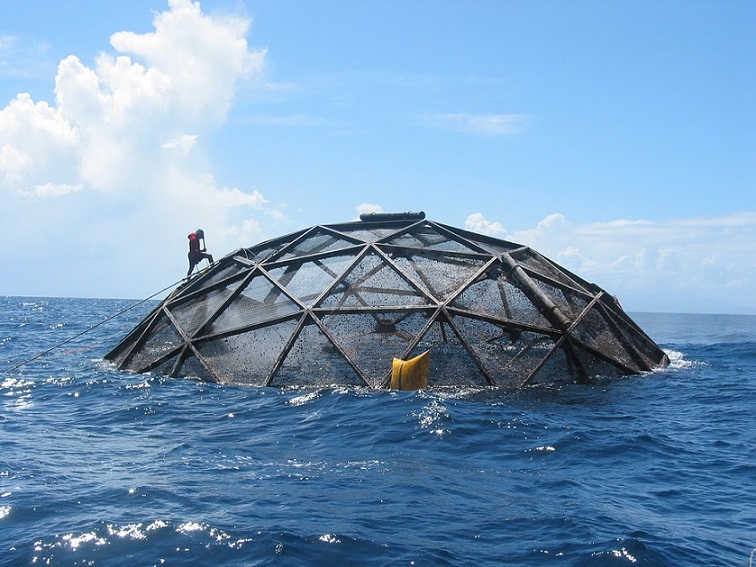
For example, raising mollusks like oysters, mussels, clams and scallops is generally cleaner and even beneficial because it requires no feed, and as filter feeders, they actually clean bays and estuaries. Production of aquatic plants falls into the same category. Farming kelp, seaweed and other plants has increased substantially in the past decade, jumping 102% from 13.5 million tons in 2005 to 27.3 million tons in 2014 at a market value of $5.6 billion in 2014. New approaches, such as Bren Smith’s 3D Ocean Farming, are creating clean, self-sustaining and diverse marine polyculture farms that produce shellfish and plants.

A better way neededsalmon pen

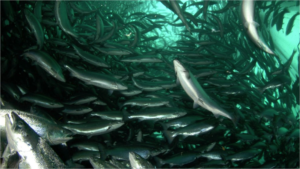
Since industrial aquaculture is already embedded in global food systems, we need to devote more energy to minimize or eliminate the downstream impacts of current industrial scale finfish and shrimp aquaculture. The rapidity with which the deadly virus spread among fish farms in Chile earlier this year confirms a long-held belief by some scientists and environmentalists that cramming tens of thousands of salmon into tight pens creates fertile ground for deadly diseases to spread rapidly. We need to figure out better ways to produce farmed fish and shellfish to minimize those hazards.

We need to devote more money, time and effort into making closed re-circulating systems – which reduce environmental impacts of escapes, disease spread to wild stocks, and resource depletion – more affordable and accessible to more operators around the world.

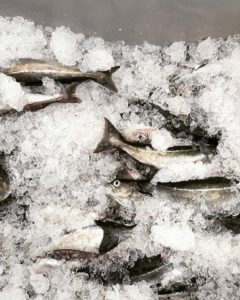
Pollock from Finlander
Fresh, abundant pollock from the M/V Finlander out of Eliot, Me.

Aquaculture practices and regulations vary widely around the world. Regulations are tighter domestically than most anywhere else in the world, significantly restricting the use of antibiotics and hormones. But we can do more to make the industry more sustainable and accountable from a resource, environmental, and health standpoint. We have to. The current situation leaves many consumers conflicted over current practices despite the increasing need to feed the planet and frustrated there hasn’t been enough effort to improve the industry.

A consumer’s best tool is knowledge. Find out more about the provenance of the fish or shellfish we eat, and we can at least safeguard what we and our families eat. When in doubt, ask questions and buy locally caught, responsibly harvested species that are abundant. Together, an informed customer base could perhaps spur some of the change discussed above.


Recent Posts

  • Hurricane Ida wreaks havoc on Louisiana’s seafood industry
  • EPA Should Use Clean Water Act To Kill Zombie Mine
  • Slow Fish 2021: Relationship Matters
  • Faith, Façades, and Futility
  • Pebble Permit Paused: Politics at Play

Archives

  • September 2021
  • August 2021
  • April 2021
  • December 2020
  • August 2020
  • June 2020
  • February 2020
  • December 2019
  • November 2019
  • October 2019
  • July 2019
  • May 2019
  • April 2019
  • March 2019
  • January 2019
  • December 2018
  • November 2018
  • June 2018
  • May 2018
  • March 2018
  • February 2018
  • January 2018
  • December 2017
  • November 2017
  • October 2017
  • September 2017
  • August 2017
  • July 2017
  • June 2017
  • May 2017
  • April 2017
  • March 2017
  • January 2017
  • December 2016
  • November 2016
  • October 2016
  • September 2016
  • August 2016
  • July 2016
  • June 2016
  • May 2016
  • April 2016
  • March 2016
  • February 2016
  • January 2016
  • December 2015
  • November 2015
  • October 2015
  • September 2015
  • July 2015
  • June 2015
  • May 2015
  • April 2015
  • March 2015
  • February 2015
  • January 2015
Theme by Colorlib Powered by WordPress