 All Blog Posts
Starting the Sustainable Seafood Conversation Early

The moment you realize you’re doing the right thing in life is a special one. It’s not a frequent enough occasion (at least not for me). I stumble, literally and figuratively, make mistakes and then do my best not to repeat them.
Sometimes I’m even successful.
I pondered this yesterday while loading up a lobster trap and turtle excluder device in my car after talking to my daughter’s pre-school class for a half hour. This bunch of four-year-olds was remarkably engaged and blissfully quiet while I talked to them about how we catch lobsters and some ground fish. I also described some of the ways we try to take care of the species we catch, such as releasing lobsters that are too small or that have eggs, and developing gear that allows turtles to escape nets.
To be sure, several fixated on how lobstermen avoid getting their fingers pinched. But collectively, they understood fairly well that we have an impact on the oceans and on seafood, and the importance of taking care of both. Some even figured out why buying local seafood is important.
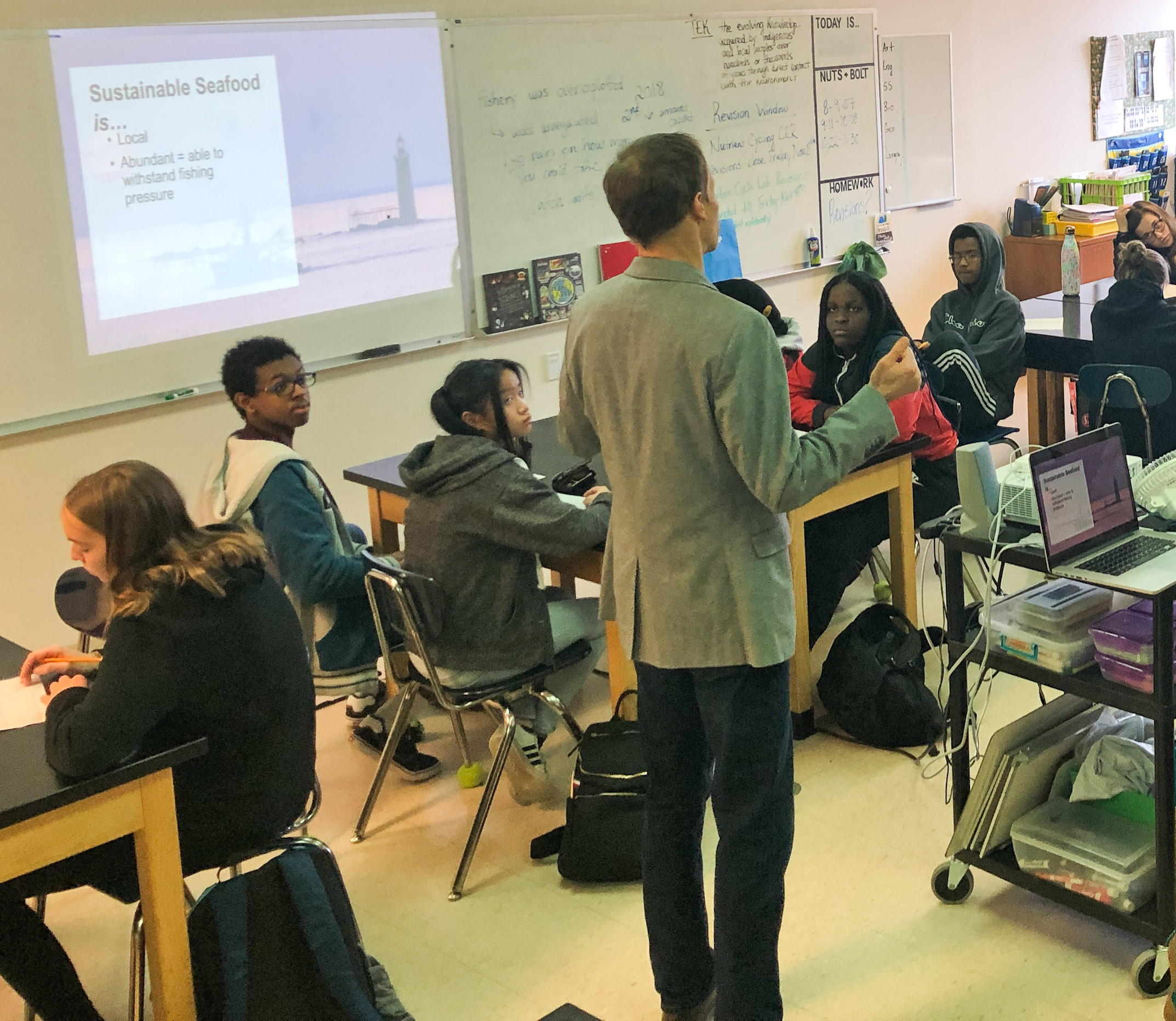
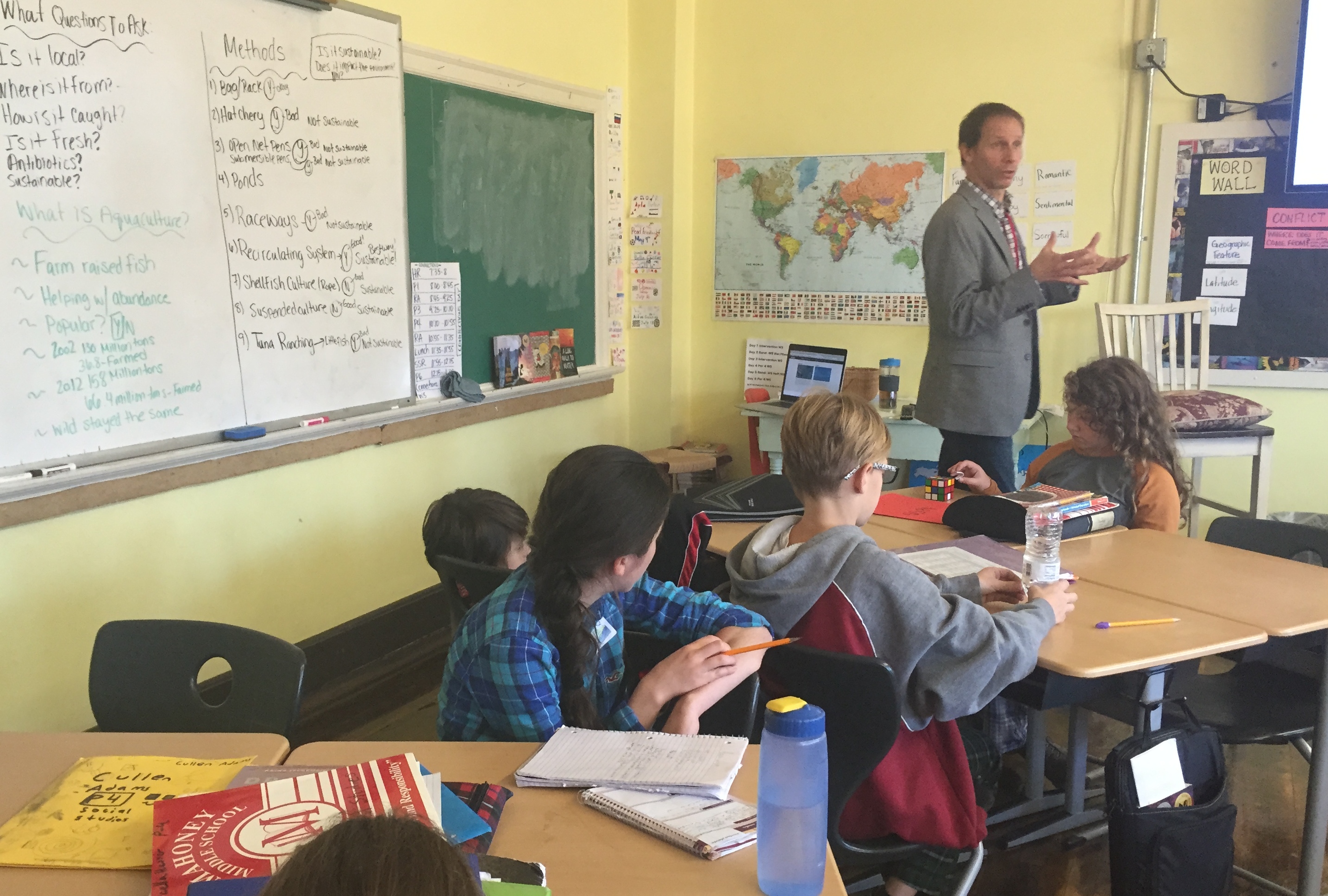
That experience capped off a week and a half in which I brought a more in-depth version of this message to four 6th grade Geography classes at the Mahoney Middle School in South Portland. We discussed what sustainable seafood is and how to view it based on a variety of different factors including abundance, harvest and farming methods, ecosystem impact, social issues and climate change.
In the first week, I showed them different harvest methods in detail, and how warming Gulf of Maine waters are affecting local species and inviting more southern species like black sea bass into the region. We also talked about how quickly invasive green crabs have expanded their range because of this warming, eating local shellfish and eelgrass as they go.
We discussed aquaculture the second week, defining what it is and why it has nearly doubled in growth, and how different methods do and don’t affect the ecosystem. Students were surprised to hear that 90% of the fish and shellfish we eat in this country is imported, and more surprised that roughly half of that is farmed in other countries where quality and safety standards aren’t as good as our own.
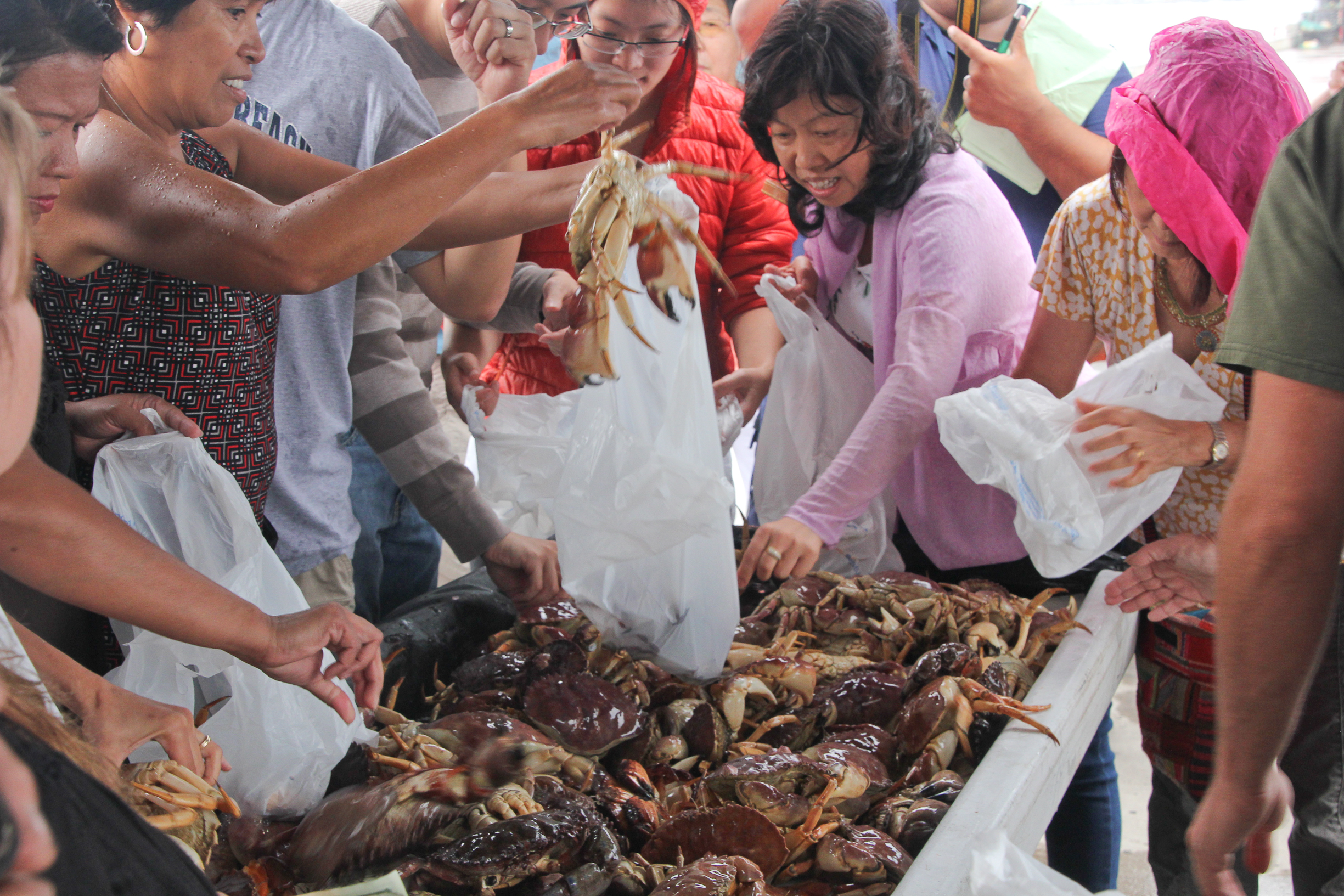
And we dug into the reasons for choosing local seafood. We also talked about how to use this information to make their own decisions.
When I apply for grants as a non-profit to help fund One Fish Foundation, I must often answer the question: How will you measure success? This is a tough question to quantify. There are no standardized tests that measure this information. I believe this kind of testing gives an incomplete picture at best, anyway.
Would before-and-after surveys work? Yes, that’s something we’re doing just to get a glimpse of comprehension. But it’s also a limited view.
Do I measure success in the applause from some of the students after a couple of the classes this week? It’s certainly nice, and at least tells me I made some connections. Do I measure success in the fact that some of the students said they’d asked questions about the seafood they had eaten at restaurants after the first class. It’s a start.
There will be no definitive quantitative analysis. At least not for a while. Perhaps for now I should measure success in the meaningful conversations I had with these 4-, 10- and 11-year-olds about where seafood comes from, and some of the most important issues about how it goes from boat or farm to plate. Perhaps I measure it by the thoughtful questions many asked as they were beginning to form their own opinions.
Perhaps I should measure success by all of this, and the resulting certainty I feel that I have a compelling story to share, and its message will resonate with my target audience.
Perhaps starting that conversation early will lead to better, long-range solutions in the future.
That’s what One Fish Foundation is about.