 All Blog Posts
NOAA Mandated Observer Costs a Bad Precedent

Imagine two months after tax day you get a notice in the mail that the IRS wants to audit you. In order to prove that you did everything right, you also have to pay the IRS $700 for this unpleasant process.
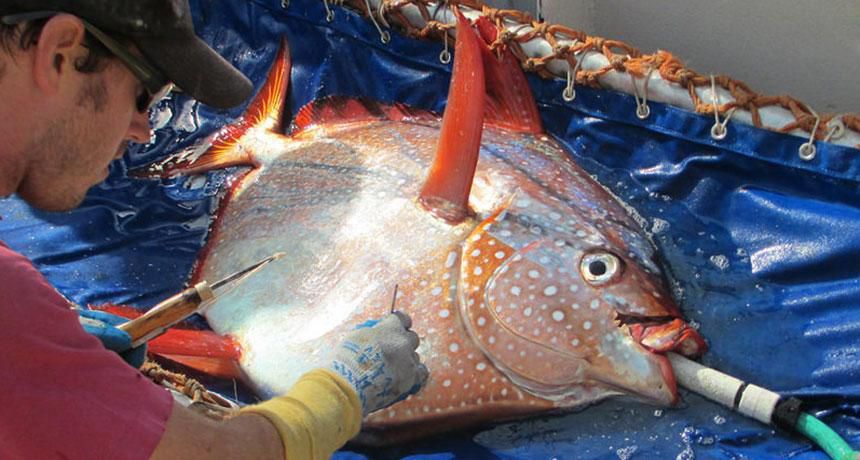
I guess that’s why many fishermen along U.S. coasts are pretty ticked at National Oceanic and Atmospheric Administration (NOAA) for demanding that fishermen now pay to have federally mandated observers on their boats. Many fear that the per-trip cost of $710 will cripple small fishermen already saddled with boat debt, fuel costs, shifting markets and insurance.
NOAA says that funding is down, and therefore, these costs have to be passed on to fishermen. Three years ago, fishermen were supposed to start paying to have observers on their boats, but federal managers delayed that transition because of the industry’s financial woes.
The behemoth agency also says the observer program is essential as a first line of enforcement to accurately gauge the health of different fisheries and to keep fishermen honest. Illegal, unreported and unregulated fishing, (black market operations not playing by the rules) is an increasing problem that hurts local markets, NOAA says.
“This equates to an unfunded mandate that could lead to the end of the New England Groundfish Fishery as we know it.”
Massachusetts Governor Charles Baker
Coastal elected officials have reacted with solidarity. Massachusetts Governor Charles Baker recently fired off a letter co-signed by the state’s congressional delegation asking NOAA to foot the bill and expedite electronic monitoring. Electronic monitoring would ultimately reduce the costs and burdens on local fishermen by eliminating the need for on-board, third-party observers. The letter cites NOAA studies predicting the cost of shifting observer coverage to New England fishermen at $2.64 million, and would force roughly 60% of Massachusetts boats to operate at a loss. Following close on the heels of cutting the cod harvest by 75%, this additional cost “…equates to an unfunded mandate that could lead to the end of the New England Groundfish Fishery as we know it,” the letter states.
There are several problems with the observer program, and cost is only one. Federal observers have filed 377 complaints claiming intimidation, harassment and interference from fishermen, according to a recent article in The Boston Globe. How much more resentment arises when you ask cash-strapped fishermen to pay for these same observers?
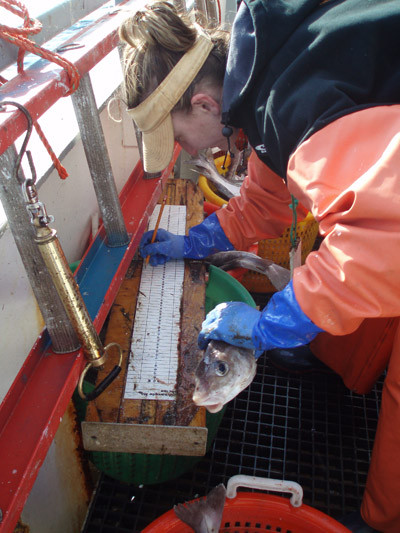
To be sure, many fishermen agree that transparency is necessary and work with observers to get the data they need to make a proper assessment. I’ve attended several workshops where fishermen have been eager to collaborate on research and planning to figure out better ways to gauge population health and climate change impacts.
But the cost is significant, and no one seems to have a solution that everyone can agree on. NOAA Northeast Regional Administrator John Bullard has suggested fishermen pool their resources to pay for the costs. He’s also suggested fishermen use the disaster aid funded by Congress after then Secretary of Commerce Rebecca Blank declared the New England Groundfishery a commercial fishery failure in 2012. Gov. Blake argues those funds were intended for “…the future viability of the fishing industry,” not NOAA’s “…inability to fund their own budget gap.”
In principle, I agree local fishermen are often the best resource for up-to-date information about the health of the fishery, and their input should be taken into account more often. Unfortunately, there are still enough people breaking the rules that third-party observation is necessary to minimize IUU.
Until someone comes up with a better policy to stem issues like overharvest, size violations, fishing at inappropriate times, bycatch discard (tossing non-targeted species overboard so they aren’t counted toward quota), etc., the observer program is what we have. There could be some merit in electronic monitoring if there were a way to defray some of the initial costs.
That said, asking fishermen to bear the observer program costs sets a bad precedent. NOAA needs to find a better way. Here’s why. If NOAA’s analysis is correct and 60% of New England’s boats would operate in the red, there will be a significant shake out. My biggest concern is that as smaller local fishing operations bow out, their quota permits will be sold to bigger operations that may no longer be local.
Once we surrender that kind of local control, we surrender the community relationship with the seafood in our backyard. And if we’re not careful, our best scallops and lobsters will be going offshore to International conglomerates selling it for a premium, and we’ll be seeing even more cheap, farmed seafood from Thailand and China in our local stores and restaurants.




1 COMMENT
[…] track of marine ecosystem health is expensive, as discussed in the last blog about the NOAA observer program. Monitoring what species are swimming or living where, and in what […]
Comments are closed.