Skip to content
One Fish Foundation
  • Blog
    • Aquaculture
    • Education
    • Environment
    • Policy
    • Wild Harvest
    • Fish Tales
  • About
    • About One Fish
    • About Colles Stowell
  • Education
    • Elementary School
    • Middle School
    • High School
  • KNOW FISH Dinners®
  • Resources
    • One Fish Podcast
    • One Fish Foundation in the news
    • The 7 C’s of Sustainable Seafood
    • Newsletter Archive
    • Recipes
      • Skate with Capers and Butter — Chef Rizwan Ahmed
      • Grandma Davis’ Fish Chowder — Jane Almeida
      • Ginger Garlic Tamari Scallops — Colles Stowell
      • Fish Stock — Evan Mallett
      • Mussels San Remo — Chef Rob Martin
      • Salted Pollock Croquettes – Chef Mark Segal
  • Connect
    • Contact OneFish
    • Social
      • Instagram
      • Facebook
      • Twitter
All Blog Posts

Slow Fish 2021: Relationship Matters

  • April 14, 2021October 19, 2021
  • by Colles Stowell
Share it!
Share

Slow Fish is about relationships. Our relationships with seafood, those who harvest and sell that seafood, our broader communities, our oceans and waterways, and with each other.

Since the pandemic shut down our planned Slow Fish 2020 in-person event last March, we’ve been reimagining how we re-establish, strengthen, and explore these connections. Planning a virtual event was new for all of us. We learned you can’t apply the same thought process to a remote event.

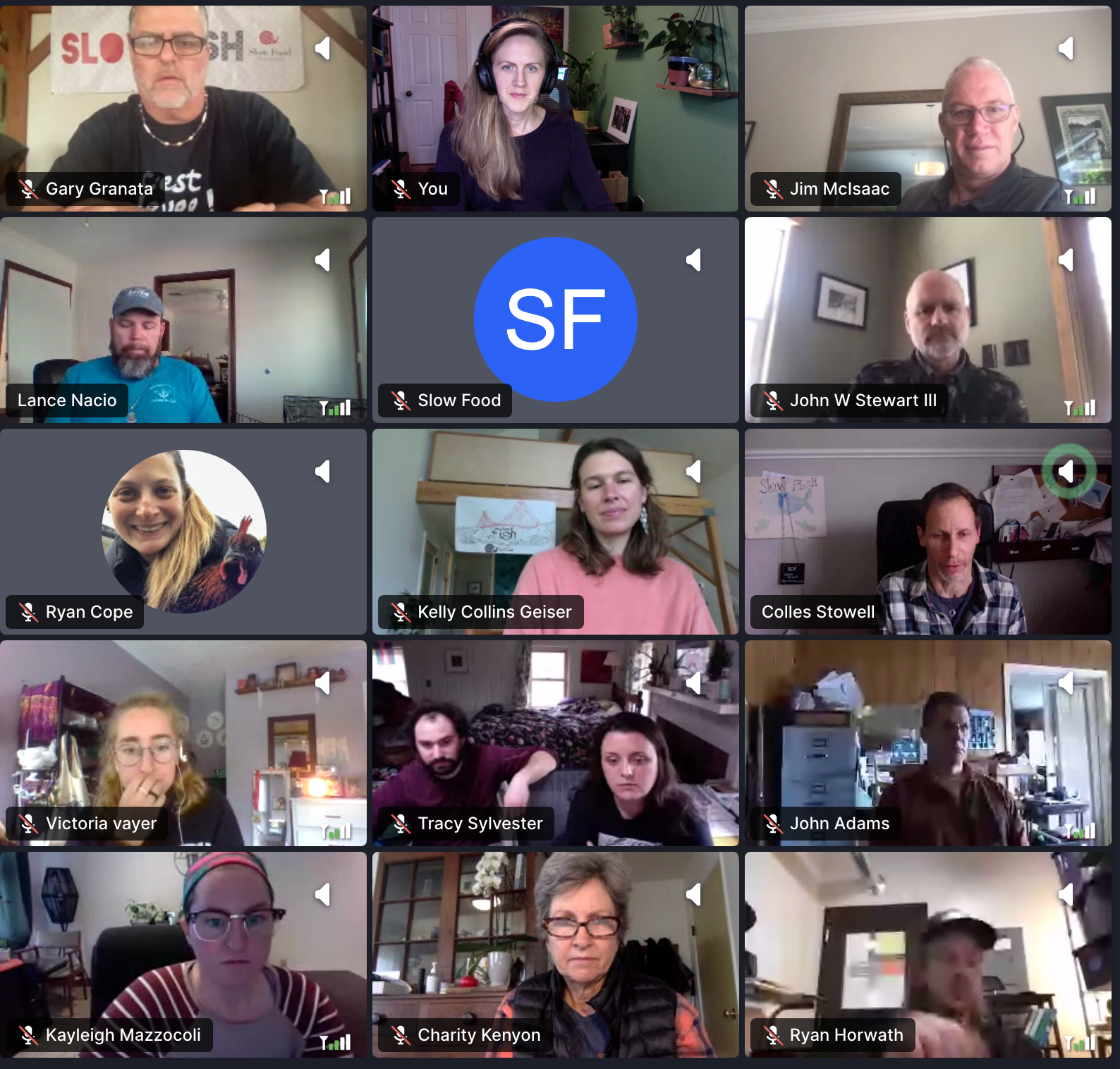
The theme of relationships was prominent throughout Slow Fish 2021, held online from March 18-20 and March 25-27.

We heard it from Jim Embry, who spoke about the importance of striving for equity, inclusion, and justice even as racism persists in our water- and land-based food pathways. Keynote speaker Buck Jones of the Columbia River Intertribal Fisheries Commission reemphasized the importance of preserving both indigenous and non-indigenous connections to food sources.

Know your fishermen and women!

The theme of relationships cropped up again in the Seascape World Café where attendees joined rotating conversations about growing the network, advocacy and action, and young fish harvesters.

One central theme from the Seafood Supply Chain Deep Dive is that direct connections between fish harvesters and customers, retailers, and other harvesters are increasingly essential to growth and survival. Covid’s devastating impact on industrial supply chains continues to wreak havoc. In the end, the definition of “local” is becoming less about geography and more about relationships.

We heard this from several storytellers. Kayla Cox at New England Fishmongers based in NH described customer enthusiasm for the amazing shrimp from Anna Marie Shrimp in LA and wild salmon from Yakobe Fisheries in AK. Lance Nacio explained how these types of business networks have helped both Anna Marie Shrimp and its customers who buy all of the scallops he can get from New England Fishmongers.

These are the kinds of relationships that help fishermen and women troubleshoot logistical challenges like collective marketing, business questions, or mentorship. These are the connections that grow the network of folks that share Slow Fish values of good, clean, fair seafood.

Natural connections

Relationships to the land, the water, the fish, the birds, animals and Nature in general is at the center of Indigenous culture, and it was the foundation for many powerfully spiritual stories in the Indigenous Access to Food Sources Deep Dive. We heard perspectives from Indigenous communities from Martha’s Vineyard, MA. all the way to AK., including stories from smaller and bigger river systems in northern CA. and OR.

We heard resilience in the stories of opposing a massive proposed mine in the Bristol Bay, AK watershed, restoration of Indigenous access to wild salmon runs on the Columbia River; preservation of cultural knowledge around seasonal, balanced ocean and land harvests in northern California, and the continued efforts from all geographies to protect treaty rights around access to natural resources. The upshot? If we take care of our natural resources, they will take care of us. Protecting Indigenous access to cultural food sources is an important part of that equation.

This connection to natural resources and marine habitats played a crucial role in the Aquaculture Deep Dive, where we learned about small-scale, ecosystem-balanced operations like an oyster farm near Miami, seaweed farming in Maine, and wild seaweed harvest in British Columbia. We also heard about collective efforts to oppose industrial-scale finfish and shrimp farming and other operations, which upset marine ecological balance and often socio-economically displace coastal communities that depend on local fisheries for their lives.

The Rivers Connect the World discussion featured compelling stories of habitat restoration and preservation from the Mississippi, Danube, Snake, and Copper rivers as well as the rivers of Cork, Ireland. These efforts continue to succeed because of the collaboration within and among communities along those rivers, regardless of political borders.

Shared Resources

The Blue Commons Deep Dive explored how the industrial-scale development of the Blue Economy typically saps the lifeblood from coastal communities and their local economies, and cripples the independent fish harvesters living in those communities. Blue Economy plays such as massive fish farms, huge offshore wind farms, or large, investment-backed no-fish zones essentially privatize large sections of the ocean and have the most devastating impacts on independent, artisanal, and subsistence fishermen.

The Blue Commons is a counter-narrative to the Blue Economy, in which communities gather around a shared set of values to treat marine and estuarine water bodies as shared resources. We again heard stories of resilience, such as how the Okanagan Nation’s Alliance worked to restore wild sockeye salmon runs on the Snake River in their home waters in British Columbia. We learned about a Rhode Island community working to re-establish a vibrant, locally managed quahog fishery and provide more access to more fishermen despite consolidation by market forces.

We also learned how a fishing community in Sitka, AK worked to ban trawl nets in sensitive fishing areas to minimize halibut bycatch; develop a collaborative science approach to monitor rockfish biomass to ensure healthy stocks; and create an innovative program to train young fish harvesters. These types of commoning fortify the relationships between communities and their surrounding natural resources.

All of these discussions prompted thoughtful idea exchanges and questions in very active chat sessions, with 2,424 messages spread out over both weekends. This does not include the very vibrant feedback during the live panel discussions following the screenings of “Last Man Fishing” and “The Wild” films during the first weekend.

On the final day of the event, Slow Fish North America Oversight Team members Tasha Sutcliffe and Kevin Scribner provided a thorough synthesis of common threads arising from these discussions. Relationships, food sovereignty, equity and social justice, habitat protections, and intergenerational knowledge transfer or mentorship were some of the most common threads woven into the fabric of the event and of Slow Fish values. To see the full synopsis from Kevin and Tasha, follow this link.

Follow this link in case you’d like to see recordings of the different discussions from Slow Fish 2021. Scroll down the library until you see “Aquaculture.” The eight videos following Aquaculture were all part of the event.

A team of between 30 or so people worked tirelessly for several weeks to coordinate what turned out to be a stellar event. We met or exceeded our goals of strengthening and growing the community; empowering folks in the network to share their stories and become our values standard-bearers; spark meaningful conversations around several crucial topics to the Slow Fish network; and celebrate the community and collective energy of our shared values.

I am truly thankful to everyone who participated. Hopefully, the next event is in person!


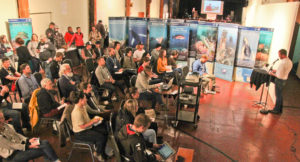
Top photo: Screenshot from the final day of Slow Fish 2021. Credit: Sister Denisa Livingston of Slow Food Turtle Island
All Blog Posts

Swimming On: the Slow Fish USA gathering from 2016…

  • February 8, 2020October 19, 2021
  • by Colles Stowell
Share it!
Share

The inaugural Slow Fish event in North America took place in New Orleans in 2016. It was an enormous first step, fraught with last-minute adaptation forced by a 500-year flood event in a city that is rather accustomed to flooding. Who knew we’d be eating shrimp and oysters in a warehouse full of floats from perhaps the most raunchy Mardi Gras parade in the city? Nothing says seafood like having every part of outsized human anatomy in lewd, brightly decorated papier-mâché looming over you.

But we made it work! Everyone adapted to the unforeseen circumstances and we had great conversations about consolidation, youth in fisheries and overall messaging and values. We capped Slow Fish 2016 off with an incredible Cajun hog harvest celebration called a “boucherie” across the Mississippi River.

We gathered in San Francisco for Slow Fish 2018 following an intense, but amazingly productive four-month planning period that was delayed by the threat and lingering angst of devastating forest fires in the region. But for the commitment, creativity, and sheer will of everyone involved, Slow Fish San Francisco wouldn’t have happened. That gathering made space for fabulous networking, collective problem-solving, and energy dedicated to shared values for our seas and their stewards.

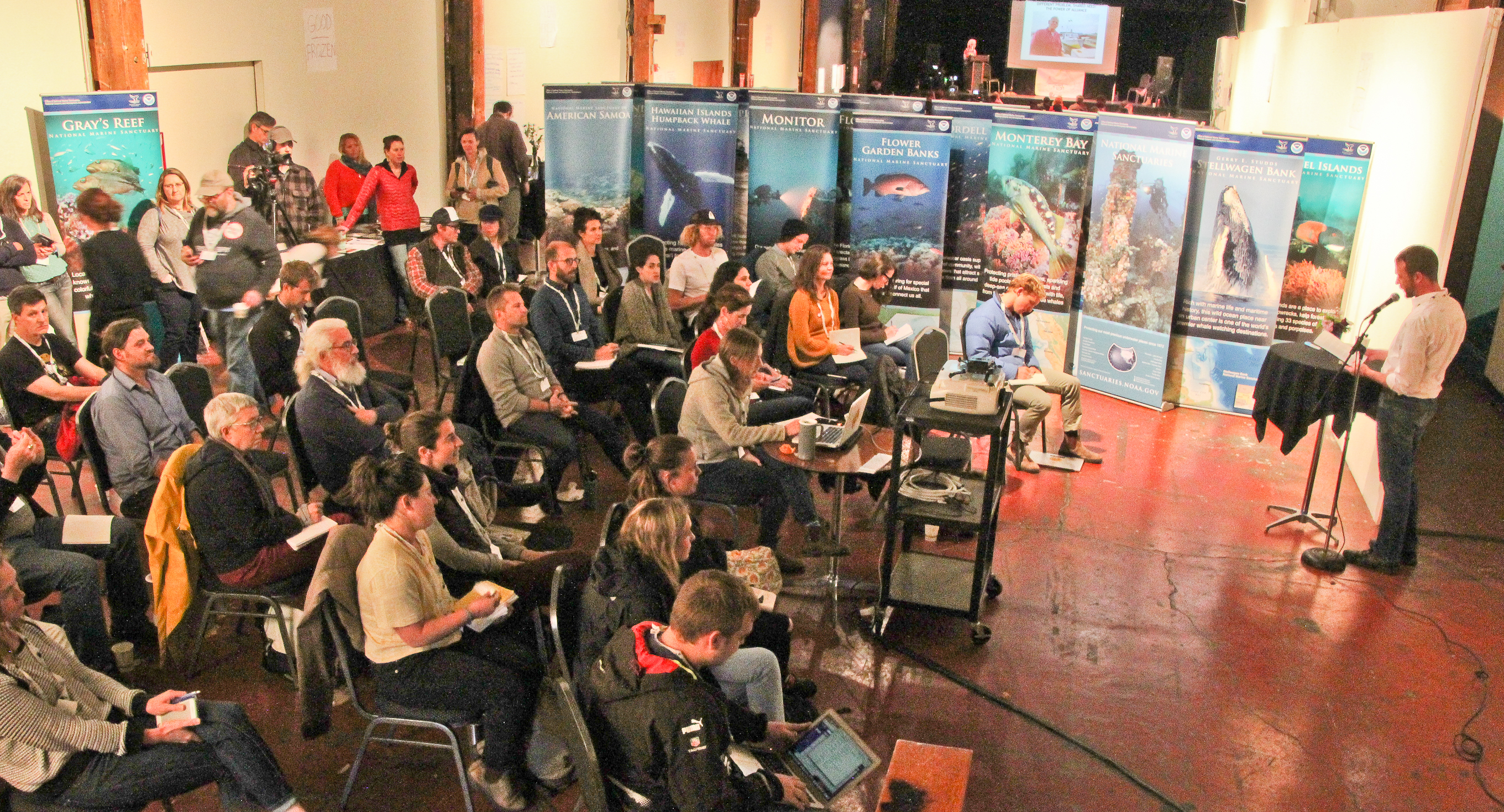
The San Francisco event took place in a cool warehouse (no sex floats) that we adapted to suit large group discussions, as well as smaller World Café roundtables and PechaKucha (or “Peche” Kucha) mini slide presentations/stories. We also had a Seafood Throwdown, off-site oyster, dinner, and movie events..

Fast forward two years and that energy is still strong. This year, Slow Fish 2020 will go down on March 19-22 in Seacoast N.H., with a Working Waterfront Tour, kick-off dinner, Sunday Fishtival and the programming of a two-day conference at the University of New Hampshire Peter T. Paul College of Business and Economics in Durham.

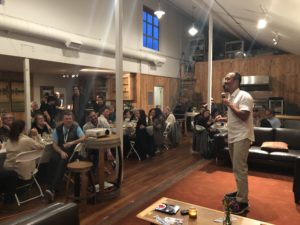
Setting the tone with the Slow Fish 101 presentation in San Franciso. Photo credit: Lance Nacio.

Circling back to Slow Fish USA origins on campus

We chose New England for 2020 to continue varying the geography of these events and give fish harvesters, fishmongers, and others from the region a chance to engage in these conversations.
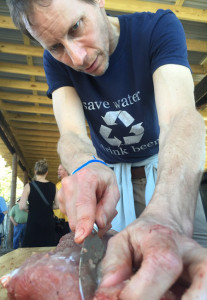
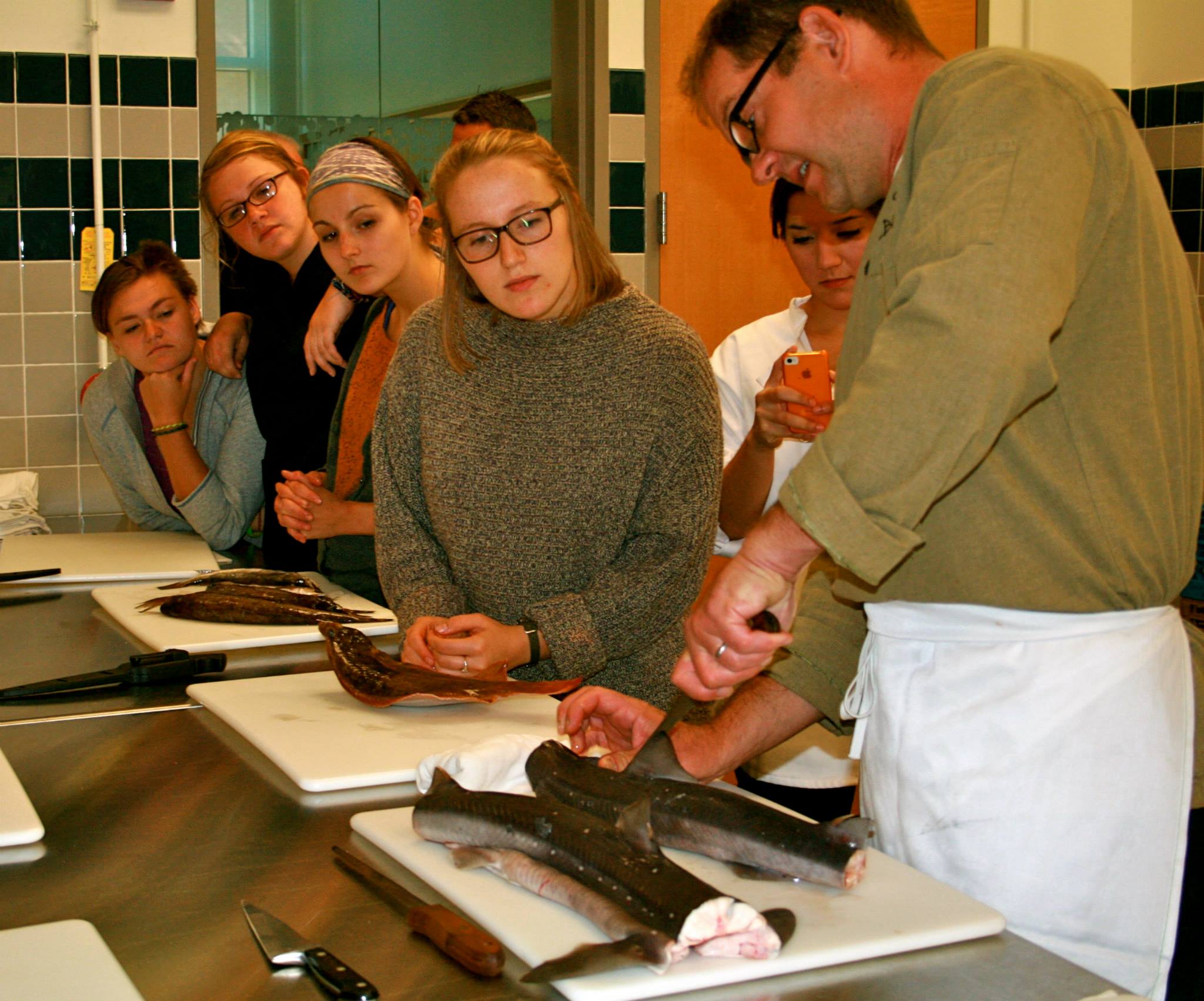
New Hampshire is important because students at UNH were among the first in the country to embrace Slow Fish values back in 2013. At the time, they encouraged UNH Dining Services to sign a pact to source responsibly harvested seafood and  adhere to Slow Fish values. That pact is still in effect today. Bringing the conference to New Hampshire this year affirms how much the movement has grown in the years since and the importance of youth in the movement.
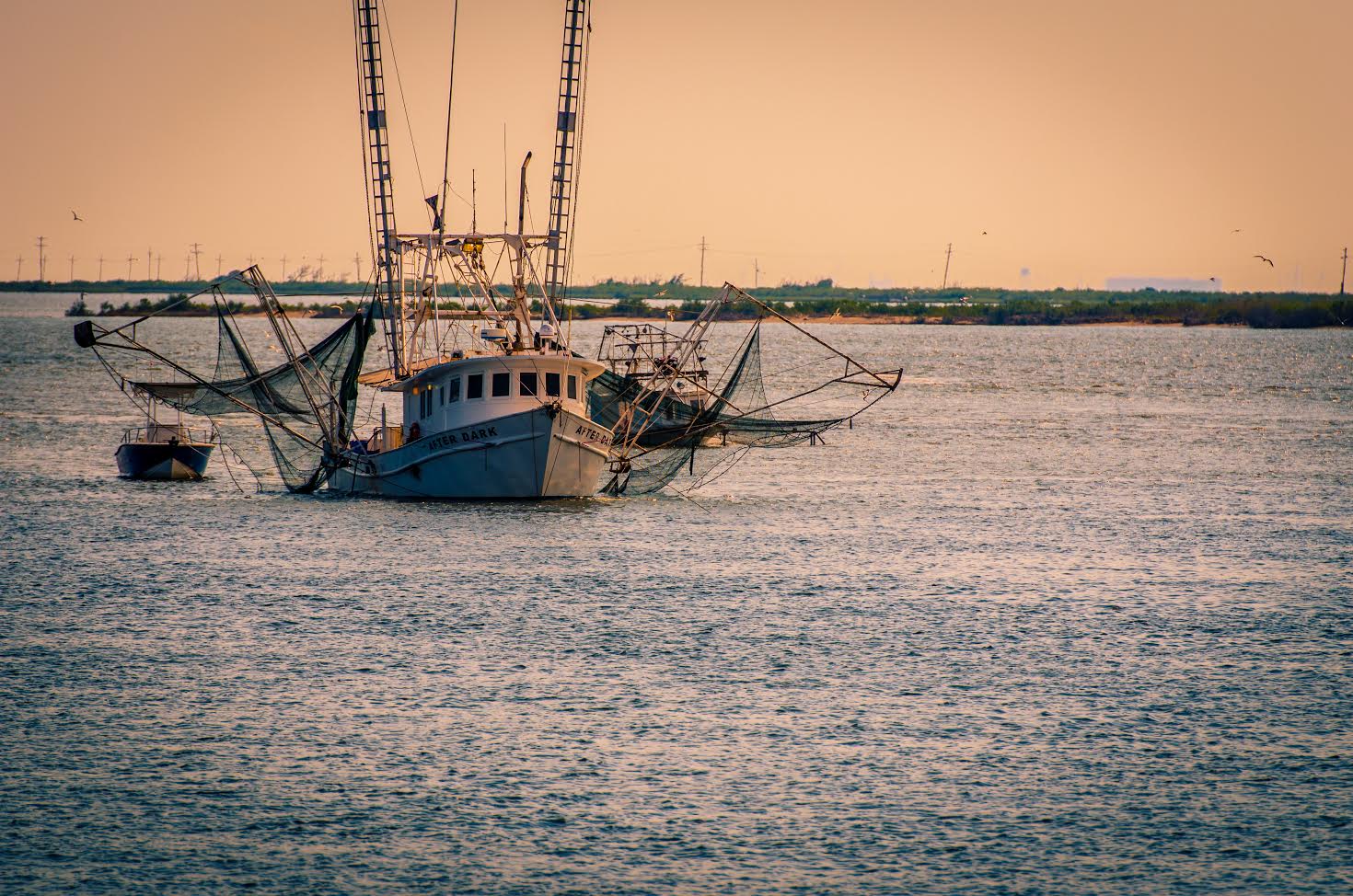
Rallying young people is especially important in New England as fish harvesters here are fighting against restrictive policies and well-funded efforts to consolidate the industry. This monopolization has created impossibly high barriers of entry for young fishermen and led to an ever-increasing age of the average fisherman, often called the “graying of the fleet.”

Moving the event around to key fisheries regions helps democratize the impact. Slow Fish continues to aim to create an open table for meaningful thinking around the core values of providing good, clean, and fair seafood to all.

At a time when equity, inclusion, and justice issues are increasingly visible, Slow Fish aims to ensure that small-scale and indigenous fish harvesters have fair access to the resource in a market too often dominated by billion-dollar corporations that only care about profits.


Sharing ideas, asking questions, expanding network connections, and collaborating on meaningful change. That’s the Slow Fish formula that will be at work at Slow Fish 2020 in New Hampshire. Photo credit: Eric Buchanan.

Diving deep

We’re going to talk about these and other critical issues in New Hampshire this year. For the first time, we’re going to merge the Slow Fish North America gathering and a regional Slow Food Northeast event, allowing members of both groups to get a better sense of how each group is working to shorten the distance from food source to plate.

Here is a sneak peek of what’s on tap for Slow Fish 2020, and why you should consider joining the conversation:

  • Deep Dive discussions on issues like aquaculture, climate change, and the Blue Commons;
  • Interactive World Café roundtables to explore challenges and opportunities facing youth, women, and indigenous fish harvesters; alternative seafood business leaders; and the Slow Fish Ark of Taste;
  • “Pesce” Kucha storytelling with slides;
  • Delicious food from all over the continent;
  • Tour of the seacoast N.H. working waterfront followed by an opening night feast;
  • Seacoast Restaurant Fish Week from Feb. 13 through Feb. 21 (restaurants in Seacoast NH and Maine provide a special Slow Fish menu and donate a portion of proceeds to Slow Fish);
  • Closing dinner event with music at the Paul College at UNH;
  • Fishtival on Sunday at Throwback Brewery (more food, music, beer, and hands-on demonstrations);
  • Several hands-on demonstrations of nose-to-tail, oyster shucking, etc.
  • A chance to dig into issues, collaborate, and kick it with old and new friends.

I can tell you first-hand that we are planning this year’s gathering with as much, if not more energy and drive as with NOLA and San Fran, and hopefully without any major and unexpected meteorological or other events.

So come join the conversation, expand your network, make new friends, hug old friends, eat fabulous food, and see what the New England Slow Fish and Slow Food communities have to offer!


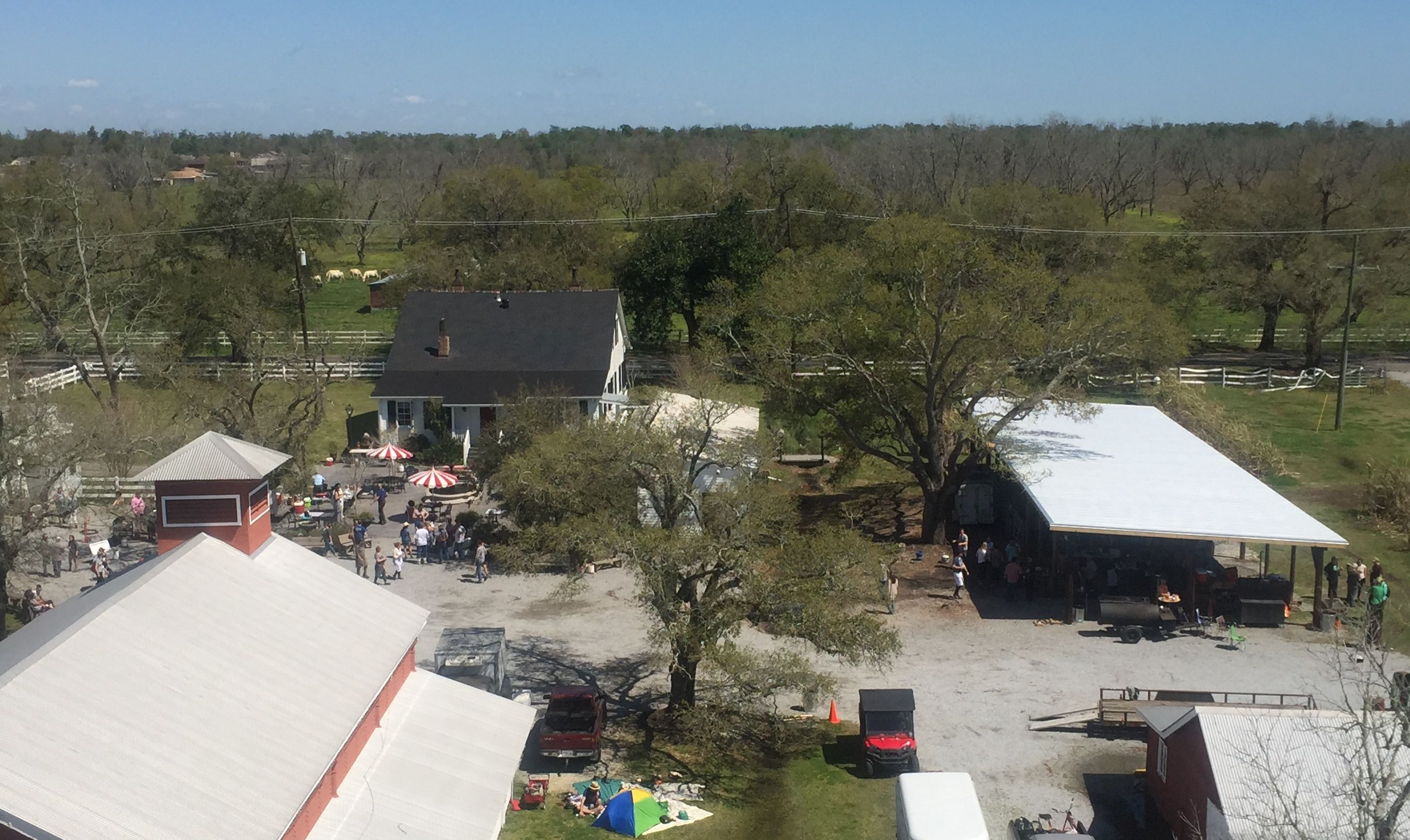
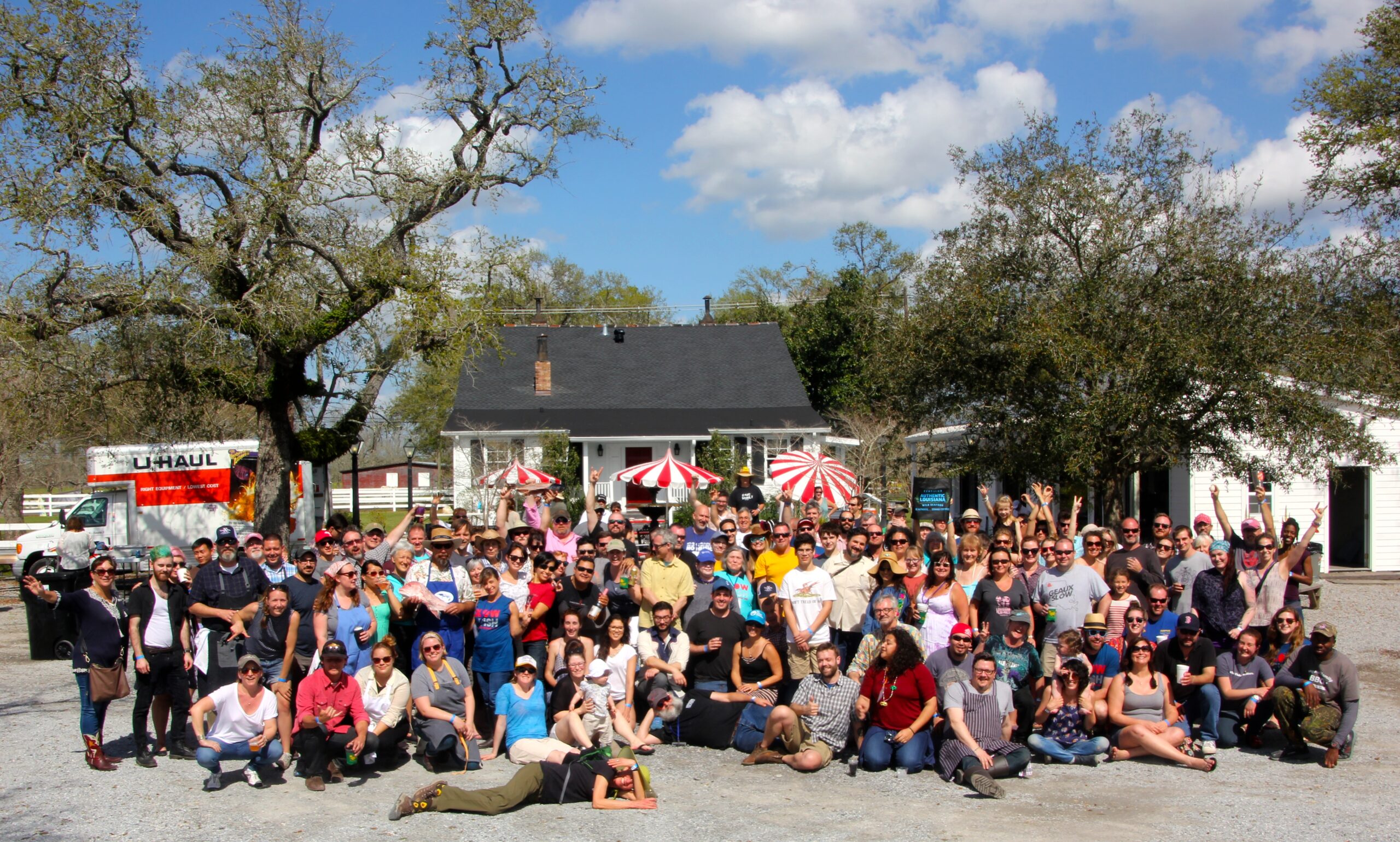
Top photo: Slow Fish 2016 in New Orleans, during the boucherie at Docville Farm. Credit: Eric Buchanan.

All Blog Posts

Seafood Lovers and the Supply Chain

  • October 17, 2019October 19, 2021
  • by Colles Stowell
Share it!
Share

Most American consumers don’t know where their seafood comes from. In fact, a recent report from the Food Marketing Institute suggests that less than 30% of domestic consumers consider themselves knowledgeable about the seafood they eat.

 So why is that? And what can we do about it? What is the consumer’s role in the supply chain? It would be a fair assumption that the remaining 70% of those surveyed by FMI take a passive role. That is, they either rely on third-party information like eco-labels or they just don’t care. They surrender responsibility of the decision to someone else.

 No wonder our markets are so jammed with cheap, unhealthy imports.

 This topic was the crux of the fifth installment in the SlowFish webinar series, Slow Fish 201: Role of the Consumer, held on Sept. 23. To follow is a blog written by One Fish Foundation Intern Jennifer Halstead. In it, she captures some of the most salient points about how fishermen, fishmongers and others in the supply chain can help engage consumers in conversations about why they should care where, when, how and even by whom their seafood was harvested.


by Jennifer Halstead

Throughout the Slow Fish 201 Webinar series, expert panelists from different backgrounds, geographies and perspectives shared thoughts on how each link in the supply chain can help ensure the availability of responsibly harvested seafood. During the most recent webinar, Role of the Consumer, each panelist was thought-provoking, sharing their stories on how to engage consumers in the supply chain. Attendees left the discussion with a clear understanding of how consumers can become better informed (ASK QUESTIONS!!!) and assume a more active role in the supply chain.

On the panel were:

Patty Lovera, Food and Water Program Director, Food & Water Watch

Chef Evan Mallett, Chef, Co-owner, Black Trumpet

Capt. Tim Rider, New England Fishmongers

Charlie Lambert, Fisherman, Co-founder, Ocean2Table

Kirk Hardcastle, Premium Sales Accounts, Seafood Producers Cooperative

Colles Stowell, President, One Fish Foundation

Jessica Hathaway, Editor and Chief, National Fisherman, served as moderator

Each of them views the supply chain from a different perspective. But all of them agree that change within the supply chain is not only possible, but that it in many ways depends on consumers making smarter choices.

Fraud, mislabeling and a lack of transparency continue to cast a shadow over seafood sales in the U.S. It’s easy to see how consumers can feel helpless when it comes to fixing such issues. There are so many eco-labels providing conflicting guidelines and grocery store displays touting green-label “fresh, sustainably raised farmed salmon from Chile.”

As discussed during the webinar, well-informed seafood eaters have the power to pressure suppliers into knowing more about the products they are selling and to source from community-based fishermen who care about the resource.

Where to start

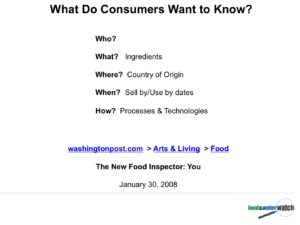
Panelists agreed that consumers should be asking restaurants and grocers a couple of questions just to get a part of the story of the seafood. It doesn’t have to be complicated or intimidating. You learn much just asking where, when and how it was harvested or grown. Even better if you can find out who harvested it. Is it local? Regional? Domestic? The U.S. has some of the best seafood safety and fisheries management policies in the world. If you can’t get domestic seafood, you’re better off choosing something else. Imported products carry a high risk of having been unsustainably farm raised or harvested.

“There is a lot of burden on the consumer,” said Patty Lovera. “We have to ask a lot of questions. The status quo in the supply chain isn’t good enough.” She and Colles Stowell both mentioned the influence consumers can have over retail seafood sourcing. If suppliers don’t know the answer to these questions, they will either feel compelled to learn, or responsible consumers will feel compelled to spend their money elsewhere.

What’s in season?

Chef Evan Mallett, Capt. Tim Rider and Charlie Lambert spoke about the importance of consumers better understanding seasonality. Just like when you go to the grocery store or market for vegetables and find different items available throughout the year, fish have their own seasonality. In New England, the height of the scallop season is in winter, while squid are generally available for a few weeks in the spring. Understanding what should be available during different times of the year will help consumers filter out which purveyors are supplying fresh, local fish and which are importing or using frozen, stored fish. “Being a chef is understanding sense of place, seasonal food, and the changes that the seasons bring,” said Mallet. That should also be true for consumers.

Eating seasonally enables consumers to enjoy fresh product throughout the year, experience cooking and preparing new species, support local fishermen, and promote healthy ecosystems by reducing fishing pressure on more popular species.

Location, location, location

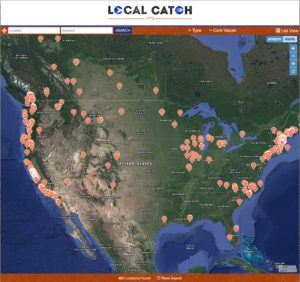
Some tools, such as the Local Catch nation-wide Seafood Finder, can help seafood eaters find local, responsibly harvested fish, shellfish and seaweed. In a map or list view, you can search for purveyors by location and species.

All agreed that consumer education is critical. Once consumers have enough information, they’ll feel empowered to own those decisions and will likely make smarter decisions again in the future. “Instead of telling people what to buy, which is what eco-labels do, we need to educate and equip them with tools to make the decision on their own,” said Colles. Charlie added, “We’re providing them with information and letting them complete the thought process on their own, … and not force-feeding the consumer.”

Buying local benefits the consumer, economies, and even the ecosystem. Fewer food miles, fresher products, strengthening local economies by building relationships with fishermen, and supporting healthy ecosystems are all advantages that consumers can feel good about.

Charlie acknowledged that carbon footprint is a growing concern for his customers. The average distance seafood travels from boat to plate in the U.S. is an astounding 5,000 miles. “The supply chain was largely hidden, and when it was exposed, it was very nasty. The West Coast is famous for market squid and calamari, but the supply chain is tumultuous. [The squid] is landed, frozen, shipped overseas, thawed, processed, refrozen, shipped back, thawed, then distributed to local businesses and consumers. The amount of food miles is not right,”he  said.

Quality is everything

Distance traveled can also (but not always) affect freshness. A fresher product tastes better and has a better shelf life. Rider said both his restaurant and retail customers note the long shelf life of his product because his crew properly bleeds and brines the fish on board the vessel at the time of catch, ensuring the fish is as fresh as possible for as long as possible. “Shelf life is huge. If something comes up and you can’t cook it when planned, it’s still good four days later.”

Chef Evan agreed: “ It was really with the first fish I got from Tim that I saw a marked difference between everything that I was getting from the Gulf of Maine before that.”

Product quality is integral to attracting and keeping customers. Kirk Hardcastle drove this point home, drawing on his decades of experience as fisherman, chef, distributor and now marketer with Seafood Producers Cooperative. “It starts with the fishermen, not the eco-labels, … making sure the quality of the product really comes through. … If it gets to someone’s house and the fish is poorly handled… You can put millions into messaging and you’ve burned it all away with the first bite of fish. Go for quality first and everything after that is easy,” he said.

Know your fisherman!

Charlie and Capt. Tim both sell directly to consumers: Charlie providing product from the network of fish harvesters he sources from in Monterey Bay up to San Francisco to his community supported fishery (CSF) customers, and Capt. Tim from the two boats he and his crew operate out of Maine and Mass. via drop-off points and farmer’s markets. When fishermen come off their boats into the community to sell their fish and meet customers, they’re building relationships that help support a stronger local economy.

These relationships build trust and help harvesters and consumers alike have open discussions about the industry, fishing methods, problems and challenges that fishermen have.

In the end, failure to know the story of seafood surrenders consumer decisions to other elements in the supply chain, which is often driven by industrial players with only profit in mind. Complacency in the supply chain will only ensure that consumers receive sub-par products, and the supply chain grows more opaque, rather than transparent. Lack of communication and interest can lead to what started this conversation last year, intentional mislabeling to turn a buck.

Smarter, responsible consumers and the relationships they forge with fishermen and fishmongers will help shift supply chains away from industrial-driven structures and toward a supply chain rooted in trust and knowledge.

In short, the role of the consumer is to ask questions and make responsible decisions. However, fishermen, chefs, retailers, distributors, educators, advocates and others in and around the supply chain should help consumers get smarter. That means telling the story of the seafood they’re selling.

Not sure where to start? Seafood eaters should ask the questions mentioned above. Check out the 7 C’s of Sustainable Seafood. If you can, buy local. If you can’t buy local, buy US caught and processed.

Fishermen, chefs and retailers should get to know their customers and tell them more about the seafood they’re selling them.

A supply chain built on trust is the best path forward.


Resources

7 C’s of Sustainable Seafood

Local Catch Core Values: Another reference point for how to think about the seafood supply chain.

Slow Fish Values: More values regarding seafood’s journey from boat to plate.

Eating with the Ecosystem, The 5 Anchors: A New England-focused view of values to consider when choosing seafood.

To view a recording of the webinar, follow this link.


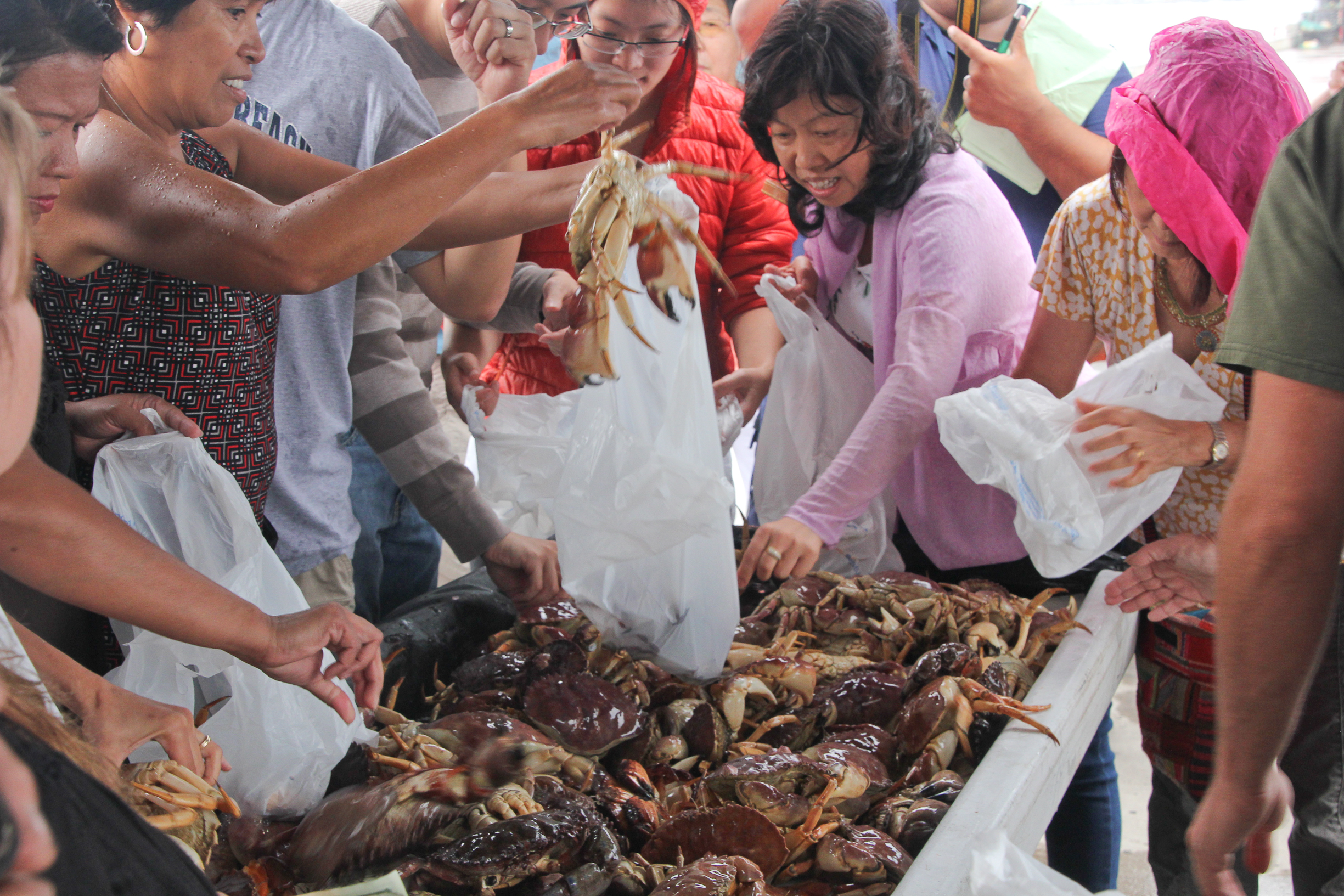
Top photo: Boat to consumer…literally.  Opening day for the Tuna Harbor Dockside Market in San Diego. Credit: Eric Buchanan

All Blog Posts

Slow Fish 201: Building Accountability in Seafood

  • January 31, 2019October 19, 2021
  • by Colles Stowell
Share it!
Share

Sometimes it’s tough to see the forest through the trees. Or in this case, effective fisheries enforcement through the quagmire of domestic fishing regulations.

Consider that laws established to ensure responsible harvest, proper trade/market practices and truth in advertising throughout the supply chain are enforced by at least four different federal agencies with different agendas, priorities, authority, funding and resources. Factor in state and local agencies involved in the process, and you’ve got layer upon layer of bureaucracy. And yet, there are still gaps.

This is why we conducted the Slow Fish 201 webinar: Building Accountability in Seafood Weds. Jan. 23. We wanted to shed light on this complexity and the challenges it presents as well as some innovative thinking on how to create markets that organically root out fraud (more on that later).

Alphabet soup: NOAA, FDA, CBP, USDA

In broad terms, the National Oceanic and Atmospheric Administration’s Office of Law Enforcement has jurisdiction over seafood entering the U.S., and can conduct warrantless inspections on vessels as they enter US waters. But it does not have the same broad authority once the seafood has crossed the border. The Department of Homeland Security’s Customs and Border Protection also has some authority to inspect and ensure proper labeling of seafood entering the U.S.

Once seafood has passed beyond US borders, the responsibility to enforce labeling, country of origin, food safety and related laws generally belongs to the Food and Drug Administration and to a lesser degree, the US Department of Agriculture (primarily for farm-raised seafood). There are of course, exceptions to these rules where, for example, NOAA does have some jurisdiction on product within US borders (which makes the situation all the more confusing to those in and outside the supply chain.

With all of these layers of protection, intelligence and resources, you’d think we’d have a good handle on fraud.

And still, less than 1% of the seafood we import in this country, representing some 90% of domestic consumption, is inspected. That doesn’t even account for what happens within the domestic seafood supply chain, such as the co-optation of core trusted values, as happened with the Sea To Table news last summer.

No wonder consumers, fish harvesters, retailers and everyone else in the supply chain is confused and likely frustrated. How do you keep tabs on all of that?

A label’s cautionary tale

Patty Lovera, food and water policy director for Food & Water Watch, has spent decades navigating the domestic food policy system. She began the webinar with a high-level view of the matrix of federal agencies and laws responsible for safeguarding the stream of seafood in the supply chain. In short, the very Jenga-like structure leaves many gaps in enforcement, too much room for interpretation and hence, exploitation, and some confusion among supply chain players about how to honestly comply with the law.

As Patty Lovera mentioned and others echoed, consumer education is critical in the seafood supply chain.

She presented the Certified Organic label as a cautionary tale when laws and values don’t gibe. Established to distinguish farmers who adhere to a set of standards that prohibits hormones, antibiotics, certain pesticides and other additives and destructive practices, the label became a battle cry in the conflict with huge multinational corporations seeking to own the food system.

Millions of dollars, countless hours, political wrangling, lawsuits, arm-twisting, scheming and in some cases, outright capitulation have led to a severely diluted label bearing no resemblance to the original mission. More than three decades of haggling, and products either owned or supported by the likes of industrial agriculture giants Monsanto, Dow Chemical and Tyson foods bear the Certified Organic seal.

The message? Labeling schemes and the values they promote can be co-opted if not rooted in strong values backed by stronger laws.

Congressional commitment

We were fortunate to have Congressman Jared Huffman (D-Calif.) join the conversation. He’s quite busy as he’s just taken the gavel for the powerful House Natural Resources Subcommittee on Water, Oceans and Wildlife, which is responsible for reauthorizing the Magnuson Stevens Act (MSA), otherwise known as the Fish Bill.

“I believe we’ve got to be supporting U.S. fishermen in an increasingly competitive international market.”

Congressman Jared Huffman

In outlining some of his priorities for the subcommittee, he said we need to preserve the health of the oceans, fix some of the environmental rollbacks established by the current administration and do what is necessary to help U.S. fishermen make a good living. “I believe we’ve got to be supporting U.S. fishermen in an increasingly competitive international market,” said Huffman.

He also mentioned “…ways to improve traceability throughout the supply chain. There may be new technology that could be utilized, examples from businesses that are doing some of this work. It’s clear to me that we need to better enforce, maybe even strengthen, existing policies to ensure accurate labeling, increased transparency and consumer trust.”

Marketing, education and leveling the playing field

Noah Oppenheim, executive director of the Pacific Coast Federation of Fishermen’s Associations and the Institute for Fisheries Resources, followed on that theme, saying that fraud has a significant impact on community-based fish harvesters who are trying to abide by the law.

“It’s only fair that the accountability that fishermen have been holding themselves to is rewarded in the marketplace.”

Noah Oppenheim

“Fraud can occur at any place in the market,” Oppenheim said. “It’s a huge problem, and we have to find comprehensive solutions that make it harder for anybody on the end of the chain of custody to mislabel or fraudulently market their product.”

He also spoke of the need to enhance education and marketing to help consumers better understand the value of domestic fisheries. “It’s only fair that the accountability that fishermen have been holding themselves to is rewarded in the marketplace.”

Jes Hathaway, editor in chief of National Fisherman, a national trade publication, echoed Oppenheim’s call for better education and more funding for marketing programs.

She zeroed in on increased funding to boost the infrastructure at our ports to level the playing field between domestic seafood standards and standards for imports. “As long as it’s easier to bring seafood into port in a container than to bring it in your fish holds, we are doing our seafood industry, our fishermen and our citizens a disservice.”

“As long as it’s easier to bring seafood into port in a container than to bring it in your fish holds, we are doing our seafood industry, our fishermen and our citizens a disservice.”

Jes Hathaway

Hathaway also proposed “encouraging region- and fisheries-specific solutions to the problem beyond Magnuson.” One such approach, in her view, would be to provide funding for test programs to track seafood from boat to plate in different regions. While some programs exist, she would like to see more cooperation and investment in such programs, rooted in common values across different supply chains and geographies.

Pier to peer community accountability

One of the webinar’s recurring themes hinged on supplementing better, more comprehensive enforcement of stronger laws with cultural changes within the fishing community. As Hathaway suggested, “Federal legislation is rarely a panacea for every issue in fisheries.” However, one possible path toward ensuring stakeholder buy-in while potentially reducing fraud involves a community accountability model.

Kevin Scribner, owner/operator of Forever Wild Seafood and one of Slow Fish national’s team leaders, described the notion of creating a seafood community accountability program, in effect, a cooperative rooted in a shared set of values. If you agree to uphold the values, you become part of the community that will support those values, identify and address any violation of those values (fraud), and offer support to those who need it.

This type of community accountability promotes a self-policing model that discourages any missteps while promoting the values that engender public trust. Scribner described it as a system in which “We take care of and manage our own.” But it would also be a system that is open to anyone willing to embrace the core values, which may be similar to the Slow Fish values of good, clean, fair, and/or the Local Catch Core Values embracing community-based fishermen.

“…a reliable trusted knowledge-based system of accountability can be developed and maintained by a seafood community that is committed to and guided by core values.”

Kevin Scribner

“We have confidence that with the proliferation of direct and immediate communication tools plus refined methods of traceability and a commitment to transparency, that a reliable trusted knowledge-based system of accountability can be developed and maintained by a seafood community that is committed to and guided by core values,” Scribner said.

A seafood community accountability framework would not seek to rebel against nor replace existing federal, state and local laws in place. Rather, it would operate under the umbrella of existing fisheries laws, augmenting the overall effort to minimize fraud while uplifting the values that support responsibly managed fisheries.

There’s much more to discuss on this topic, including different values and traceability and transparency technologies to support those values, all of which we’ll revisit in the third webinar in the Slow Fish 201 Webinar Series on Feb. 27. Stay tuned for more information regarding time, panelists and questions to be asked and answered.

The webinar closed out with some insightful questions from the audience regarding fair pay for seafood processing employees, economic justice to ensure fair pricing and access to quality seafood for all demographics and ways to measure success in the mission to uphold values and minimize fraud.

We will revisit all of these topics in some form in one of the following webinars.


Resources

If you’d like to watch the video recording of this webinar, follow this link.

If you’d like to watch the video recording of the first webinar, follow this link.

If you’d like to continue the discussion, visit the Local Catch Forum here.

If you’d like to communicate directly with one of the panelists, send an e-mail to colles@onefishfoundation.org.

Want a more in-depth understanding of the federal agencies at work against seafood fraud? Follow these links:

Congressional Research Foundation report on Seafood Fraud

University of Minnesota Food Policy Center Report


All Blog Posts

Slow Fish 2018: Telling tales

  • May 9, 2018October 20, 2021
  • by Colles Stowell
Share it!
Share

Slow Fish is making a difference.

Think of it as a collaboration of fish harvesters, scientists, chefs, students, food-lovers and activists around the world working toward one goal: good, clean fair seafood for all. This was on display throughout the three-day Slow Fish 2018 event in San Francisco April 14-16.

Setting the tone with the Slow Fish 101 presentation. Credit: Lance Nacio

Some of these successes were writ large on the main screen on the first morning of content programming in the Slow Fish 101 presentation.

  • Melanie Brown, a set net fish harvester from Bristol Bay, Alaska, spoke of indigenous ties to the land, the water and the resource. She spoke passionately about how wild salmon runs have sustained her family over time, and why that way of life is under threat from the proposed Pebble Mine. She also spoke of the coalition of disparate groups not normally siding with one another that oppose the mine: indigenous tribes, commercial fish harvesters, recreational fishing groups, environmental activists and politicians among others.
  • Jordyn Kastlunger reminded everyone of the importance of family connections and supporting the youth movement in fisheries as she described the trajectory of the Tuna Harbor Dockside Market in San Diego. Born of a coordinated effort of fishermen, food policy activists and lawmakers, the market features fisher folk docking on the pier and selling directly to customers. About 500 customers come every Saturday to buy about 12,500 pounds of locally harvested seafood.

    Jacquelyn Ross tells the story of abalone from Bodega Bay at the World Cafe. Credit: Eric Buchanan
  • Jacquelyn Ross of the Southern Pomo/Coast Miwok tribes spoke about her indigenous fishing lineage along Bodega Bay, hand harvesting abalone, and witnessing the changes to the fishery wrought by temperature, current and acidification. She too spoke of family love and respect for the resource, the land and the water and the importance of sharing those stories in the hopes that others will appreciate those connections to natural resources.
  • Paula Barbeito came from Italy to describe the work of Slow Fish International and highlight the story of the Thorupstrand Fishing Guild in Denmark. Several years ago, fishermen in the community of Thorupstrand pooled their resources to buy quota so they could provide access to the fishery without being overrun by industrial operations. The guild is a reminder of how fishermen can self-identify and protect their access by working together.

    World Cafe action. Just some of the discussions where things happen. Credit: Eric Buchanan

A parade of perspectives

These compelling narratives were just a few among many shared over the weekend. We heard from longtime fish harvester and policy activist Linda Behnken, who has fished commercially in the Gulf of Alaska and Bering Sea for over 30 years. She has drawn on that experience at the helm of her boat as she helped shape policy to protect small-scale fishing as a member of the North Pacific Fishery Management Council.

We also heard from Anne Mosness, who like Linda, has spent decades at the helm and in the trenches battling industrial scale operations. Anne described her longstanding campaigns against industrial aquaculture and genetically engineered salmon to the discussion, as well as the need to honor women’s voices and rights in fishing.

Filmmaker Mark Titus talked about his upcoming feature, The Wild, which shines a bright spotlight on the world’s largest wild sockeye salmon run in Bristol Bay, and what’s at stake in the battle against the Pebble Mine.

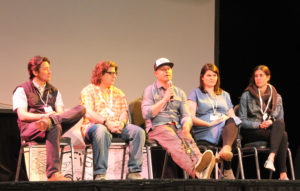
Know Your Supply Chain: Kenny Belov talks about choosing and selling responsibly harvested seafood. Left to right: Alan Lovewell, Real Good Fish; Joe Falcone, FishLine; Kenny; Anna Larsen, Dock to Dish; Jordyn Kastlunger, Tuna Harbor Dockside Market. Credit: Eric Buchanan

Kenny Belov talked about his mission in opening Fish. Restaurant in Sausalito and the TwoXSea sustainable seafood distribution company to provide responsibly harvested, abundant species to customers. Minimizing bycatch and other ecological impacts are critical factors in determining which fish harvesters he will work with.

Lance Nacio’s (right in hat) fried soft shell shrimp were very, very popular. Credit: Eric Buchanan

We heard from a broad range of seafood perspectives. Lance Nacio spoke about investing in new technologies such as the plate freezers used to individually quick freeze fresh caught shrimp to preserve the out-of-the-water freshness for shipping around the country. Several oyster growers provided insight on their operations and the myriad factors that go into a successful, delicious oyster harvest. Jack Crofts brought his energy and entrepreneurial spirit to the event, trying to raise visibility and money for this mobile oyster bar, called the Oyster Barrow. Lucas Raymond, a trawl fisherman from New Hampshire, also represented the youth movement at the event.

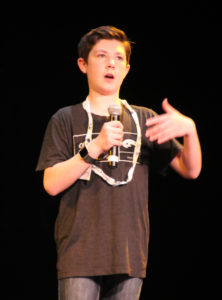
Young entrepreneur Jack Crofts (he’s 12 going on 13!) wows the crowd with his energy and enthusiasm. Credit: Eric Buchanan

We heard from chefs talking about smart sourcing, as well from seaweed growers like Amanda Swinimer, who described her journey harvesting, by hand, edible wild seaweeds for 17 years for her Dakini Tidal Wilds. Arielle Moinester talked about launching a company that promotes eating invasive species such as Asian Carp. Her GoWild Foods has made “The Silver Skipper” (aka asian carp) the poster child for managing an ecological problem in America’s rivers by eating it.

Christopher Wang describes his connection to fishing for salmon in Bristol Bay and why he started The Gypsy Fish Company as attendees listened at the We Are Bristol Bay Dinner.

Ideas, food and fun

More than 150 people from as far away as Italy, Maine, Alaska, Louisiana, Massachusetts and British Columbia, and as near as Washington, Oregon and right there in San Francisco descended on SOMArts and other venues. We held more than 6 separate events, including the Oyster Social, Seafood Throwdown, We Are Bristol Bay Dinner, and the final Seafood Dinner and film screenings at AirBnB. Core programming on Sunday and Monday included the World Café, 36 Pesce Kucha presentations and lots of interaction.

Stellar sticky salmon at the Bristol Bay Dinner.

We feasted on delicious wild salmon from Bristol Bay and oysters from Alaska down to Baja. We had fried soft-shell Louisiana shrimp and herring roe captured in a traditional method of submerging hemlock boughs in the bay during the spawn.

The Slow Fish 2018 planning team took on a monumental task to coordinate all of these events in a very short time period ahead of the California salmon season. The small, but very dedicated Slow Food San Francisco board of directors managed countless on-the-ground logistics to ensure everything went smoothly. It was the collective passion of the planners and attendees for the Slow Fish mission to grow the network, share our core values and collaborate on more projects that drove the event’s success.

Chef Matthew Dolen honors winner Chef Aaronette King at the Seafood Throwdown at the Ferry Plaza Farmer’s Market to kick off Slow Fish 2018. The crowd engaged in the process, tasted the food and asked great questions. Credit: Eric Buchanan

We discussed new projects on the horizon, such as a YouTube channel for sharing videos focusing on Slow Fish values, success stories and fisheries-related topics. We also discussed launching a Slow Fish website that will become a destination for those seeking Slow Fish updates, bait boxes to help launch community-based projects like a community supported fishery, Seafood Throwdowns, KNOW FISH Dinners® and more. To enable Slow Fish folks to to ask questions and discuss issues within an informed community, we may launch an online forum. We also discussed an ambitious project to reduce domestic imports from 90% to 50% by 2050. This 50 by 50 project models similar food system-related measures aimed at eating locally (or domestically) produced food.

And so we charted a course for Slow Fish’s future. To most effectively create change, we need to grow the Slow Fish family and foster continued collaboration on future success stories that will help change that massive import dynamic in this country.

And we will.

Stay tuned for Slow Fish 2020.


Top photo: Tyson Rasor of Ecotrust emcees the Know Your Fish Pesce Kucha session. Credit: Eric Buchanan.

All Blog Posts

How I Became a Slow Fish

  • February 28, 2018October 20, 2021
  • by Colles Stowell
Share it!
Share

While planning some events for Slow Fish 2018 (April 14-16 in San Francisco), I wondered how I became steeped in Slow Fish and the idea of seafood sustainability.

I’m a journalist by trade. I started at a small town daily that required rushing to the scene of a fire, car accident or a moose running loose downtown to prove to editors we were at the scene. After 12 years of crappy pay, frayed nerves and some lifetime friendships, I jumped ship and spent a decade writing about hardware and software at a PR agency representing companies like IBM and Nokia.

I learned much in both of those jobs: How to uncover the hidden story, and how to tell it in a fashion that makes sense to a broader audience.

I backed into writing about fisheries and seafood issues after re-vamping the website of a San Diego-based sustainable fisheries apparel company in 2011. The more I learned about the complexities of fisheries policy, market dynamics, climate change and ecological impacts of different harvest and aquaculture methods, the more I wanted to know and share. A New Orleans native, I grew up with fresh local seafood all around me.


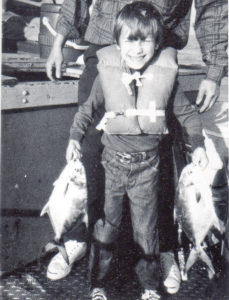
Pampano! It’s what was for dinner.

So in 2015, I started One Fish Foundation, a non-profit whose mission is to bring the sustainable seafood message into communities and classrooms from kindergarten through college.

Some people bristle at “sustainable seafood” as a meaningless cliché. I get it. “Sustainable” has been green-washed to the point of abstraction. And yet, I’ve not come across a term that is as concise and generally widely understood on first reference.

Target audience

The people I’m trying to reach when I’m talking about the perils of industrial finfish aquaculture or climate impacts on different marine species aren’t necessarily those who would react to “sustainable.”

I seek the people who go into their local grocery store and buy frozen, pre-cooked and peeled shrimp without knowing it came from Thailand. I want to talk to those who buy farmed salmon from Chile out of habit because it is cheap, and supposedly “healthy” salmon.

Lobster take-out building. Yes, they walk in and out to feed as they please. It’s just the saps who happen to be in the trap that get caught.

I remember making a poignant connection in one of my first classroom visits. It was a 6th grade geography class I’d visited two weeks before, and we’d talked about why students should care about where, how and by whom their seafood was harvested. We’d rehearsed key questions to ask when they were at a restaurant or grocery store.

At the outset of the follow-up class, one girl said she stopped her mom from ordering shrimp at a restaurant because it was from Vietnam.

I felt like I’d hit a home run.

Breaking the habit

Perhaps that’s at the heart of why I’m so deeply connected with Slow Fish. Most people nod their heads when they learn that 90% of the seafood we eat in this country is imported. But they shudder to learn that a staggering amount of that seafood is coming from countries that pound their products with hormones to make them grow fast or antibiotics to fight disease.

We won’t change that import dynamic without many frank conversations. The Slow Fish mission to ensure everyone has access to good, clean and fair seafood is at the core of these conversations. When I’m talking to a large group of people, I ask them why they think that 90% figure persists. They mention price, policy and complex market dynamics. All of these are key drivers.

Anyone who loves seafood and cares about the resource and the fishermen who harvest it sustainably can be part of the Slow Fish movement. Photo: Kate Masury at Slow Food Nations, Denver, July 2017

But I think another critical factor is habit. Consumer habit drives the equation because people buy what is cheap without checking the provenance of the food they eat. Policy habit also plays a role. There seems to be no urgency to fix policy that allows cheap foreign imports to flood U.S. markets, while a big chunk of domestically harvested seafood goes offshore for astronomical prices.

And the disconnect continues.

The Slow Fish San Francisco mission

Slow Fish aims to change that. While combating inequities in the system that often favor concentrating power and influence in the hands of a few big fishing operations, we also highlight the successes of small-scale operations to bring local, responsibly harvested seafood to their communities and beyond. We encourage people and groups to collaborate on complex issues.

Witness the fierce opposition to the proposed Pebble Mine at the headwaters of the world’s most significant wild salmon run in Bristol Bay, Alaska. But for the persistent collaboration between commercial, recreational and indigenous fishermen, along with advocates and regional politicians, that copper mine would already be up and running. (Check out the We Are Bristol Bay fundraiser dinner at Slow Fish San Francisco on April 15 to eat delicious wild sockeye salmon and talk to the fishermen who may have caught it and learn about why opposing the mine matters.)

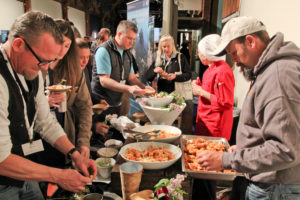
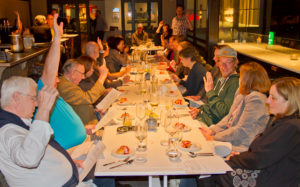
Dinner and conversation give attendees the chance to engage in the seafood issues that matter. A similar scene will take place on April 15 in San Francisco at the We are Bristol Bay Dinner.

This is just one of the topics we’ll cover at Slow Fish San Francisco April 14-16. We’ll talk about the graying of the fleet and innovative ways to attract and support more young fishermen into the profession. We’ll talk about women in fisheries, how to support artisanal fisheries and explore a new mission to reduce domestic seafood imports from 90% to 50% by 2050.

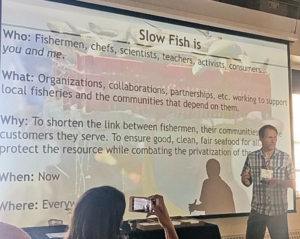
And we’ll have an interactive group discussion on Slow Fish 101, discussing what Slow Fish is and does, what its values are, and how we can grow the network. As the Slow Fish network expands, we fuel collaboration and innovation to solve some of the challenges we face in ensuring good, clean and fair seafood for all.

Come join us! Learn about why you should care, and what you can do to help affect positive change. Here is a link to the Slow Fish website where you’ll find tickets, a schedule and more information about why you’ll want to attend.


All Blog Posts

Making Do at Slow Food Nations, Denver

  • July 19, 2017October 20, 2021
  • by Colles Stowell
Share it!
Share

Attending Slow Food Nations in Denver this past weekend, I had some expectations about the Slow Fish 101 presentation I would co-lead and the gumbo I would make.

As often happens, those expectations capsized last minute and I and many others had to adapt on the fly. For the second year in a row, the Slow Fish USA team had to respond quickly to a variety of circumstances outside our control.

In the midst of towed vehicles, last-minute technical presentation difficulties, and a bit of a cluster around the commissary kitchen, we scrambled to help each other out. And just as we did last year at the Slow Fish gathering in New Orleans, we made it work… well.

Blame it on the weather

Again, weather played a role, as it did last year when we had to change venues because a flood warning closed down the original host site. This time, I learned my Slow Fish 101 co-presenter Paul Molyneaux was stranded in Portland, Maine because of weather and would miss the presentation. Having fished commercially and written several books and articles about fisheries, Paul not only brings 40 years of experience to the conversation, he has also made important connections all over the world.

Anyone who loves seafood, cares about the resource and the fishermen who harvest it sustainably can be part of the Slow Fish movement. Photo: Kate Masury

We each had developed a portion of the deck, and his relied heavily on his global travels learning from and supporting artisanal fishermen and their efforts to thrive. I learned much about these issues from our discussions, but I didn’t feel good about trying to put my perspective on the narrative of all of his slides. So I was up until 11:30 the night before tweaking the slide deck to convey many of the same messages, but from a perspective I’m more comfortable with.

Slow Fish USA luminary Kevin Scribner prefaced the presentation next morning with a history of Slow Fish and provided valuable context for questions and discussion flow.

And it was a good discussion. The audience was a mix of Slow Fish representatives and Slow Food delegates interested in fisheries issues. We reviewed some compelling statistics demonstrating how current industrial seafood markets are stacked against small- and mid-scale fishermen.

We also discussed how Slow Fish empowers these fishermen around the world to compete in local and global markets using examples such as the Tuna Harbor Dockside Market in San Diego, Know Fish Dinners in New Hampshire and Maine, and projects that support artisanal fishermen in Uganda and Thorupstrand, Denmark.

Tuna Harbor Dockside Market, San Diego. Photo: courtesy THDM.

Tuna Harbor Dockside Market is a shining example of multi-tiered collaboration between fishermen, activists and government. More than three years ago, a group of San Diego fishermen sought a way to sell to consumers direct off the boat. Though there was no specific permit that would allow that type of retail setup, the city, county and state worked together to create legislation that supports the market.

The result?

  • Fishermen have created relationships with customers.
  • They’ve earned more money: sea urchin prices jumped from $.80 to $5 per lb. and mackerel rose from $.30 to processors to $4 per lb. to consumers.
  • Fishermen have changed the way they fish to accommodate market demand.
  • Fishermen’s families work the tents, getting their children’s hands on the product.

The audience posed great questions about aquaculture, fisheries management and the long-term prospects of wild harvest in the face of growing demand. The conversations continued even after we were kicked out of the room as the next group set up.

First mission accomplished.

Blood, sweat and gumbo

The plan was to highlight the story behind the fabulous shrimp and crabs from Lance Nacio’s Anna Marie Shrimp in Louisiana via gumbo. I also secured some of the best andouille sausage I’ve ever had from Toby Rodriguez, a born-on-the-bayou, pig whisperer, traditional butcher and co-owner of Lache Pas Boucherie and Cuisine in Lafayette, La. He had me at “I call bullshit on all commercially available andouille!”

The BIG challenge was logistics, such as sourcing a 40-quart stockpot, stirrer, ladle and all of the flour, vegetables, oil etc. I’d need to deliver my standard of gumbo. I also needed a place to prep and make a stock. Even with weeks of planning, this still proved to be much more challenging than we expected or was necessary.

Thanks guidance from some chef friends, this was NOT a disaster.

Fortunately, because of the connections I’ve forged with Slow Fish and some outstanding chefs, I found what I needed. A couple of chefs, Kelly Whitaker of Basta in Boulder, and my dear friend Evan Mallett of Black Trumpet in Portsmouth, NH helped me figure out how to cook up about 30 pounds of rice (which was way out of my comfort zone.) Evan also chopped and connected me with a chef for the pot and three locally sourced chickens.

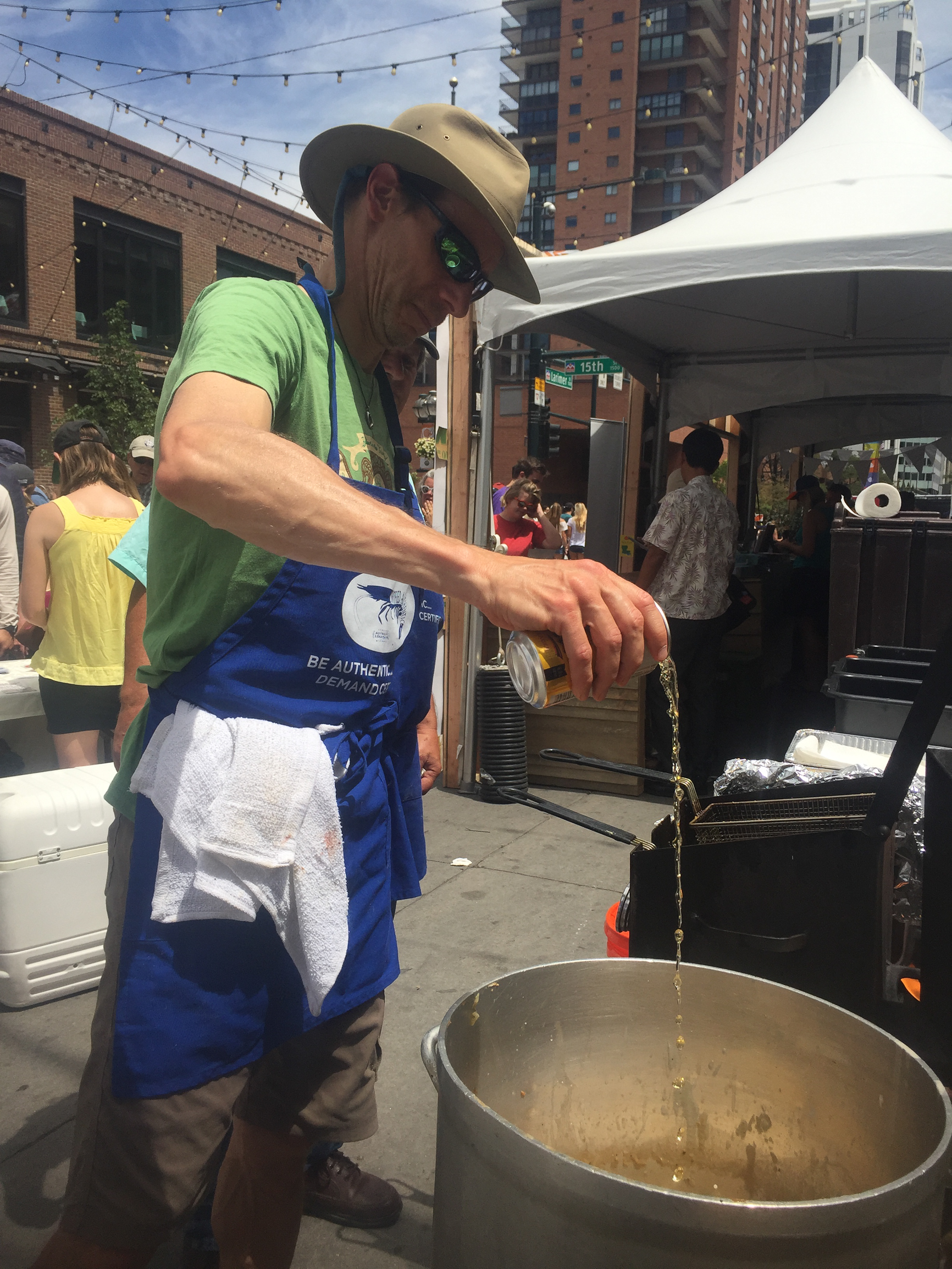
I prepped with help from old and new friends for nearly seven hours after presenting. The morning of the food service, I got a late start because we had to wait for the health inspector and I had to try and figure out how to get 50+ pounds of food in different containers and 12 quarts of stock from the commissary kitchen 5 blocks to the site where I’d cook the gumbo. With a dolly and someone’s truck, we made it work.

Lance’s blue claw crabs added flavor…and some down-and-dirty eating for lucky patrons.

Four hours, a few laughs, a couple of cuss words, a stream of sweat and an unfortunate slip of a knife later, and I was ladling gumbo to praise. We had three tents serving fried shrimp, Baja oysters, miso and seaweed, Alaska salmon, salmon poke and black cod. All of it delicious. The quality and freshness of each product was exceptional.

The moment of truth for me came late that afternoon when an elderly African American man sporting a comfortable sun hat and shades asked, “What you got in that gumbo, son?”

I told him the ingredients, mentioning Toby’s sausage, and the fact I smoked the chicken over apple wood that morning.

“Where you from?”

“New Orleans, sir.”

“Who taught you?”

“A Creole woman who took care of me when both my parents were working. Nothing written down. All oral tradition. Took two years of her whacking me over the head with a wooden spoon every time I messed up for me to start getting it right.”

“Ok. Let’s try it,” he said, dropping his ticket in the cup.

Nervously, I spooned out some rice and carefully selected a ladle that had shrimp, crab, two different kinds of sausage, chicken and as many vegetables as could fit.

The man took a spoonful and seemed to swirl the gumbo around in his mouth like a sommelier, which made me uncomfortable. If he didn’t like it, my day was lost.

He raised his head, sniffed, then a slight smile curled his mouth.

“A lot of flavors that work well together.”

“You like it?” I asked, for confirmation.

“Yes. You done good. Thank you.”

“Thank you, sir!!!”

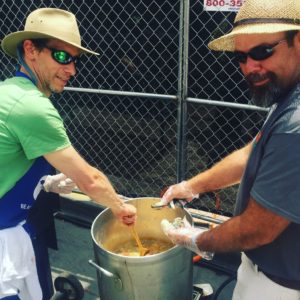
Notice the gloved hand.

So what if I may have shaved some time off the back end of my life stressing over logistics. So what if I’m now struggling to type with nine fingers because I damn near sliced off the tip of my index finger early in the morning before really getting going on the gumbo. Someone in the tent trained in wilderness survival did a field repair to stop the bleeding so I could complete the mission. I got four stitches only after most of the gumbo was gone and I received “official” validation.

Group effort

All of this goes back to something Slow Food USA director (and former New Orleans high school classmate) Richard McCarthy said in opening remarks that Slow Food is about pluralism. Change doesn’t come from any one person. It comes from a collective force.

So it is true with Slow Fish and specifically, my mission with One Fish Foundation. Changing attitudes about consumer food and seafood purchases requires a group effort. It requires communication, collaboration, partnerships and adaptation. Adapting to unforeseen challenges to event execution is becoming an illustrative trend for Slow Fish USA. It’s because of the connections and friendships we’ve formed that we’ve been able to overcome some last-minute hurdles, working together to send our message.

It’s because of those connections, and the new connections we make that we will continue to steer the conversation toward preserving the seafood resource and the way of life of the fishermen who harvest and care for it.


Top Photo: Don’t forget the secret ingredient! Credit: Lance Nacio.


All Blog Posts

Slow Fish Gumbo

  • July 8, 2017October 20, 2021
  • by Colles Stowell
Share it!
Share

I like farmer’s markets. I like talking to farmers about how they grow food, from discussing the subtle flavor profiles of 40 different types of garlic to the homemade sticky buns some breeders feed heritage pigs. That’s because I like good food and the interesting story behind it. I like connecting with the farmers who produce the food my wife and I prepare for our family. I no longer can stand walking into a big grocery store chain where all too often the story behind the food is muddled, glossed over or fabricated.

Slow Food has done much to shift the paradigm away from the agribusiness, industrial food system culture that so dominates local, regional, national and international grocery store shelves. Its central premise is to make good, clean, fair food accessible to all. That is, Slow Food promotes food that hasn’t been grown in industrial environments flecked with chemicals and other additives; food that hasn’t traveled long distances; and, food that is sold at a fair price by the farmer to the consumer.

Slow Fish has the same essential mission: to ensure good, clean, fair seafood is available to all. This mission also promotes shortening the supply chain between the producer – in this case, fishermen – and the consumer, while ensuring fishermen have a chance to earn a fair market price.

Representing One Fish Foundation, I will have the opportunity to discuss the Slow Fish mission at the Slow Food Nations Conference in Denver next week. I’ll be co-leading a presentation on how Slow Fish aims to shine a spotlight on local seafood producers providing fresh, local, responsibly harvested fish and shellfish to their communities and beyond. We’ll talk about why so much of the seafood eaten in the U.S. is imported, and ways that small scale fishermen have banded together to change that dynamic. We’ll encourage attendees to get involved by starting a community supported fishery (same as a CSA, but for seafood), join the discussion on improving management policies, or simply demand local seafood at nearby restaurants and grocery stores.

It will be a good discussion.

I will also help drive the point home by making gumbo with shrimp and blue claw crabs from the Gulf of Mexico harvested by Lance Nacio and Anna Marie Shrimp. For me, this will be a treat because it’s been far too long since I’ve been able to cook with the seafood of my New Orleans heritage (now that I live in Maine).

I will also be cooking with andouille sausage made by Toby Rodriguez, a butcher, chef, and authority on Cajun food traditions who gives dissertations on why commercially available andouille is crap. I can still remember the smell of traditional andouille as it was rendered before the roux was made when I was young. I’ve not really had that rich, dense, somewhat spicy flavor in decades, but it will grace the gumbo I make at Slow Food Nations.

The gumbo in effect will be a metaphor for Slow Food and Slow Fish. Standing up to industrial food systems often means establishing a relationship with your food producer and weaving their narratives into the dish you’re preparing. It’s a shared narrative, steeped in tradition, trust, good will and that not-too-subtle, nutty-sweet aroma of the trinity (celery, peppers and onions) after you first stir it into the roux.

All Blog Posts

Slow Fish Rises to the Challenge

  • March 22, 2016October 20, 2021
  • by Colles Stowell
Share it!
Share

To say Slow Fish 2016 (March 10-13) in New Orleans was a success is an understatement. Overcoming last-minute weather challenges that shut down the planned venue, moving several thousand pounds of food around and getting people to deliver and attend informative, compelling presentations at three different, distinct venues was a stroke of genius from the event organizers and their motivated team. Here is the blog I wrote about the experience. 

It’s a surreal, if a bit funny experience to eat oysters surrounded by larger-than-life representations of male and female anatomy. Kind of a Harold-Robbins-meets-Jules-Verne aura.

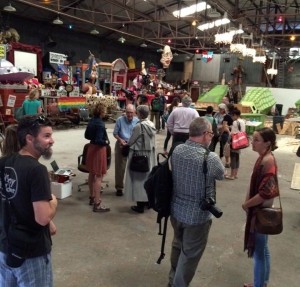
How a bunch of fishermen, chefs, scientists and seafood activists from around the world ended up in a dilapidated warehouse surrounded by lewdly, yet very craftily decorated Mardi Gras floats for the Krewe du Vieux (pronounced “croo du voo” and which pulls no punches lambasting anything/anyone political or sexual) is a study in adaptation.

We had gathered for the Slow Fish 2016 event in New Orleans to discuss important fisheries issues, make connections and celebrate locally caught, fresh and delicious seafood. Naturally, intense Louisiana spring weather turned carefully planned scheduling on its head with impending violent thunderstorms and potential flooding. Not one hour into the 150-person event at the Old US Mint, the state called for emergency evacuations and closed our base of operations for the next three days.

Krewe du Vieux warehouse, where Slow Fish 2016 attendees got an eyeful in New Orleans.
Krewe du Vieux warehouse, where Slow Fish 2016 attendees got an eyeful.

So instead of celebrating the gathering on the grounds of a historic building, we found ourselves feasting on pompano and sea bass in the shadows of papier-mâché sex. Ironically, that kind of mandatory last-minute logistical two-step closely parallels the rapid fire challenges many family fishermen face, constantly having to adapt to ever-shifting polices, seafood markets, climate, etc. beyond their control. We banned together at Slow Fish to pull it off, perhaps serving as proof that collaboration and flexibility are critical to addressing broader policy and market challenges ahead. That was the first of several truly unique experiences at Slow Fish 2016.

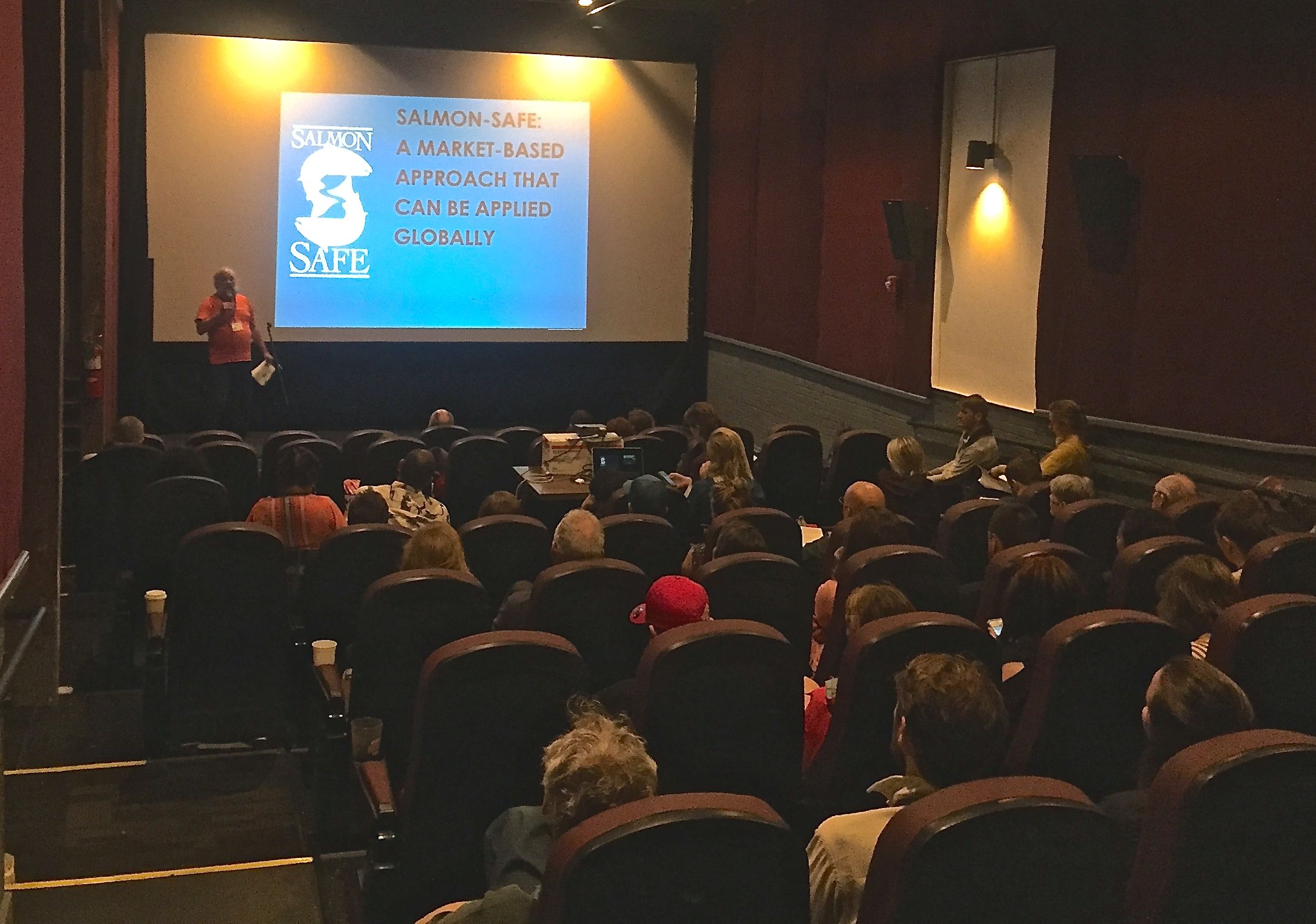
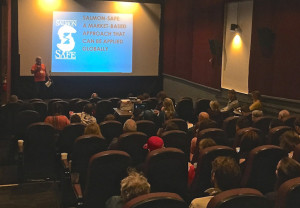
The next was the following day at the quirky Broad Theater in Mid City, a neighborhood at the heart of New Orleans. There, fishermen ranging from Alaska to California, and from Louisiana to Maine shared stories about their watersheds, community-based fisheries traditions and the management policies changing the landscape of how, when and where they can fish.Kevin Scribner discusses Salmon Safe's success.

Kevin Scribner highlights Salmon Safe's success.
Kevin Scribner highlights Salmon Safe’s success.

They discussed challenges such as privatization and resource allocation, biodiversity, policy impacts and ways to protect watersheds and fishing community heritage. Former Alaskan salmon fishermen and current Slow Fish board member Kevin Scribner described how the Salmon Safe program has worked with farmers, businesses and urban planners to reduce downstream impacts on native salmon habitat. This means the owners or tenants of more than 95,000 acres of agricultural and urban land (including the Nike campus, and several major farms) in three states and British Columbia have committed to reducing harmful nutrient and pollutant discharge into precious streams.

Kindra Arnesen spoke passionately about the challenges facing fishing families on the Mississippi River delta. She described her Herculean efforts to unite struggling fishermen after the BP oil disaster, first to get jobs helping with cleanup, then to challenge BP, the EPA, NOAA and other local, state and federal agencies on their methods of cleanup, cover-up and compensation. It was yet another story of adaptation and survival.

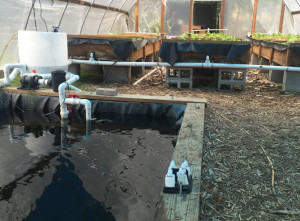
Happy Recirculating Farms Coalition catfish swimming in water filtered through lava rocks holding the lettuce in the background.

Other presenters discussed creating direct channels between fishermen, retailers and chefs to bring fresh seafood inland from the coast. Marianne Cufone, executive director of Recirculating Farms Coalition, showed the audience how a motivated team was able to start a clean, productive aquaponics operation right in a Central City neighborhood. Restaurants have already expressed interest in the fresh lettuce and catfish growing in recirculated water.

Set to the backdrop of compelling images, each story brought to life some of the common struggles many fishermen and coastal communities face, and some of the successful solutions to those challenges.

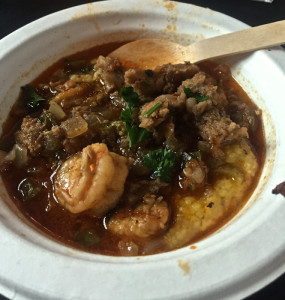
Alligator, shrimp and grits, down and dirty in New Orleans.

The adaptation of the Slow Fish 2016 continued Saturday at the Dryades Market, whose previous life had been a public school in Central City, another neighborhood steeped in diversity. Groups of concerned fishermen spoke about adequately addressing quotas and fairness issues and ways to promote local fisheries management. One common theme that emerged, perhaps prophetically, was the issue of adaptation.

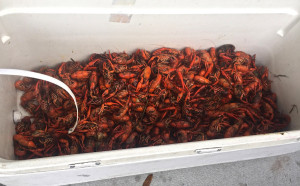
And of course crawfish. Deeper down, dirtier and delicious!
And of course, crawfish. Deeper down, dirtier and delicious!

Louisiana fishermen are constantly forced to adapt to changing ecosystem habitats, based on the chilling statistic that the coastline loses a football field of marsh every 45 minutes. Okanagan tribes have to adapt to the ebb and flow of wild sockeye migrating several hundred miles into incredibly diverse watersheds straddling the border between British Columbia and Washington state. Maine fishermen have to navigate the fluctuations in their fisheries due to the rapidly warming Gulf of Maine and the seemingly arbitrary nature of regional management.

Two of about three hundred dozen oysters brought to the event.

Perhaps it was divinely appropriate that Mother Nature decided to throw a curveball and forced organizers to scramble. Because it is that instinct to go into auto pilot in the face of adversity and figure out a solution that determines success. For a Pacific salmon, that instinct to swim several hundred miles to its natal waters to spawn, die and give sustenance to its young is pure survival. For fishermen, it’s the ability to chase different available species when Nature or policy forces their hands. It’s in banding together to work toward a common cause to bring communities closer to their seafood.

Through all of the rain and high wind and last-minute venue changes, the shuttling of food from here to there…and back again, the audio-visual challenges, the taxis, carpools and long walks through a noisy French Quarter, Slow Fish 2016 attendees made connections. They found common ground. They discussed ways to organize, set goals and pursue them. They made friends.

I learned some skills from Chef Zack Engel (chef de cuisine at Shaya Restaurant) and pit master Howard Conyers.

Perhaps the skies dawned on a warm,bluebird day on the tail end of the gathering at Docville Farm in Violet, La., a boucherie and seafood feast, as a reckoning of sorts. Adapt. Persevere. Hope. Something good will come out of it.

The memory of the food, the conversation, the energy and camaraderie will stay with all of us for a long time.


All Blog Posts

The Telltale Cod

  • February 26, 2016October 20, 2021
  • by Colles Stowell
Share it!
Share

This is a blog written by my good friend Chef Evan Mallett for the Slow Fish 2016 website. Slow Fish 2016 is an international gathering of fishermen, chefs, scientists, policy makers and other activists to discuss and share local fishing community challenges and solutions from around the country and the world. One Fish Foundation will be attending. Evan speaks with a clear, informed and passionate voice on why we should care about seafood sustainability.


By Evan Mallet

In 2012, I wrote a blog entitled “Grandpa, What’s a Cod?” The motive for writing that blog was a dramatic realization that my children’s children might someday ask me such a question. Perhaps, I projected, they will see an old menu or read an article, or visit the Cape that bears the name of a mystery fish.

Entire books have been written about cod—citing the fish’s dominion over our national heritage, how it inspired colonization and later, an inestimably rich global seafood trade. As our New World and its human population have expanded from the shores where codfishing boats first landed, cod has been there every step of the way. Until now.

Since I wrote the blog, assessments of the cod population in the Gulf of Maine (my backyard) have only brought more bad news. I am a chef, and I have grown up alongside the bounty of North Atlantic fisheries. In recent years, I have watched those fisheries, and the small family-owned boats that ply our local waters, dwindle to the point of near-extinction. It is clear that a revolutionary shift in mindset is the only solution to a problem we have created over decades of fishing a species to the brink.

Some experts point to changing water temperatures, locally and globally, that might explain a shift in breeding grounds for Atlantic cod and other coldwater species. And, whether as a result of this shift or a three-decade moratorium on cod fishing, there is evidence that Newfoundland—where annual cod harvests once numbered over a million metric tons—might be experiencing a cod comeback of sorts.

It’s not that I personally hold cod up as the all-seeing banner of virtue and supremacy that our founding fathers did when they marched a “sacred cod” wooden replica to the Massachusetts State House, where it still hangs today. The truth is, I definitely revere cod’s flavor, texture and utility. However, a simple reality check tells us that we have no choice but to consider other species as alternatives to our New England culture’s longtime staple fish. I am one of those few chefs who sells Pollock, Acadian redfish, even dogfish, on my menu, because I believe with all of my heart that we have no choice but to ignite a new awareness now, before the fish we grew up eating are gone.

When I attended Slow Food’s Terra Madre and Salone del Gusto in 2010, I heard a fisherman from Oceania talk about how his family could afford frozen farmed salmon from Northern Europe, purchased in his local supermarket, but could not afford to eat his own fresh, local catch, upon which his livelihood depended. That fisherman’s story started my trip down the undercurrent of insanity that is our global seafood distribution system.

I have yet to understand how the economics of food have so egregiously ignored the ecology of food for so long, and I don’t know if even radical change will come too late. But I do know that right now, every community on our planet needs to wake up to a seafood crisis. At stake is not only the human diet’s most nutritious animal protein, but also the trophic balance of all aquatic ecosystems.

Slow Fish is uniquely positioned to spread this gospel like no other organization, and I look forward to seeing talk of change lead to actions that will preserve both fisheries and fishermen.

Evan Mallett is chef/owner of Black Trumpet in Portsmouth, N.H. He also sits on the national Chef’s Collaborative Board of Overseers, the Slow Food Seacoast Board of Directors and the NOAA Seafood Marketing Steering Committee.

photo: Chef Evan Mallett showing Slow Food UNH students how to prepare dogfish.


SLOW FISH 2106 INFO

REGISTER for Slow Fish 2016.
JOIN our Facebook Event Page.
SUPPORT our Indiegogo fundraising campaign.
HOST a Fisher-Chef Alliance dinner.


All Blog Posts

Fish Tales at Slow Fish 2016

  • January 28, 2016October 20, 2021
  • by Colles Stowell
Share it!
Share

I’ve had the privilege of connecting with various organizations on the front lines of fisheries issues, including Cape Ann Fresh Catch, Northwest Atlantic Marine Alliance, Gulf of Maine Research Institute, and others. I’ve recently been working with Slow Fish, the fisheries movement under the Slow Food organization, aimed at ensuring fair, affordable, local and sustainable seafood. As part of the promotion to shine a light on Slow Fish 2016, Gateway to the Americas (March 10-13) several people are blogging about their fisheries experiences. Read more “Fish Tales at Slow Fish 2016” →

Recent Posts

  • Hurricane Ida wreaks havoc on Louisiana’s seafood industry
  • EPA Should Use Clean Water Act To Kill Zombie Mine
  • Slow Fish 2021: Relationship Matters
  • Faith, Façades, and Futility
  • Pebble Permit Paused: Politics at Play

Archives

  • September 2021
  • August 2021
  • April 2021
  • December 2020
  • August 2020
  • June 2020
  • February 2020
  • December 2019
  • November 2019
  • October 2019
  • July 2019
  • May 2019
  • April 2019
  • March 2019
  • January 2019
  • December 2018
  • November 2018
  • June 2018
  • May 2018
  • March 2018
  • February 2018
  • January 2018
  • December 2017
  • November 2017
  • October 2017
  • September 2017
  • August 2017
  • July 2017
  • June 2017
  • May 2017
  • April 2017
  • March 2017
  • January 2017
  • December 2016
  • November 2016
  • October 2016
  • September 2016
  • August 2016
  • July 2016
  • June 2016
  • May 2016
  • April 2016
  • March 2016
  • February 2016
  • January 2016
  • December 2015
  • November 2015
  • October 2015
  • September 2015
  • July 2015
  • June 2015
  • May 2015
  • April 2015
  • March 2015
  • February 2015
  • January 2015
Theme by Colorlib Powered by WordPress