Skip to content
One Fish Foundation
  • Blog
    • Aquaculture
    • Education
    • Environment
    • Policy
    • Wild Harvest
    • Fish Tales
  • About
    • About One Fish
    • About Colles Stowell
  • Education
    • Elementary School
    • Middle School
    • High School
  • KNOW FISH Dinners®
  • Resources
    • One Fish Podcast
    • One Fish Foundation in the news
    • The 7 C’s of Sustainable Seafood
    • Newsletter Archive
    • Recipes
      • Skate with Capers and Butter — Chef Rizwan Ahmed
      • Grandma Davis’ Fish Chowder — Jane Almeida
      • Ginger Garlic Tamari Scallops — Colles Stowell
      • Fish Stock — Evan Mallett
      • Mussels San Remo — Chef Rob Martin
      • Salted Pollock Croquettes – Chef Mark Segal
  • Connect
    • Contact OneFish
    • Social
      • Instagram
      • Facebook
      • Twitter
All Blog Posts

Building Mussels

  • November 29, 2018October 20, 2021
  • by Colles Stowell
Share it!
Share

Why in hell didn’t I schedule this on a more temperate day?

It was 21 degrees at 5:30 a.m. when I scraped the first significant frost coat off my car’s windshield to drive down to the Maine Wharf in Portland. Dawn was slowly breaking over the Atlantic, faint whisps of light harkening a chilly day on the water.

Though I was layered up, prepared to don some brand new, drab green Grundens oil slicks to shield myself from the forecasted wind and hopefully stay dry, I did begin to wonder what I’d gotten myself into.

What better way to get a sense of how mussel farms work than to get muddy? Doing it in mid-November in Maine just adds some texture to the experience. For me, this was research. I spend a lot of time talking about shellfish and finfish aquaculture in classrooms and at different speaking engagements. I wanted to have firsthand knowledge of what it takes to seed, grow and harvest some of the best mussels available.

Fortunately, Matt Moretti, co-owner of Bangs Island Mussels is happy to welcome visitors to the operation and let them get muddy if they so choose. They just need to understand that harvest days are fixed, regardless of the weather, because that’s how market demand works. Selling high-quality, responsibly grown mussels to restaurants and wholesalers across the country means you don’t get to choose the harvest conditions.
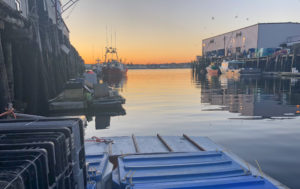
Portland has 12 working piers, including the Maine Wharf. Some of these piers are under threat from developers.

And so we pulled away from the dock as an early winter sunrise painted the sky pink, orange and light blue. Bangs Island lies just east of Chebeague Island, and not far from Portland’s historic working waterfront as the crow flies. But it still takes about an hour in a re-purposed fishing boat that doesn’t cruise over 15 mph.

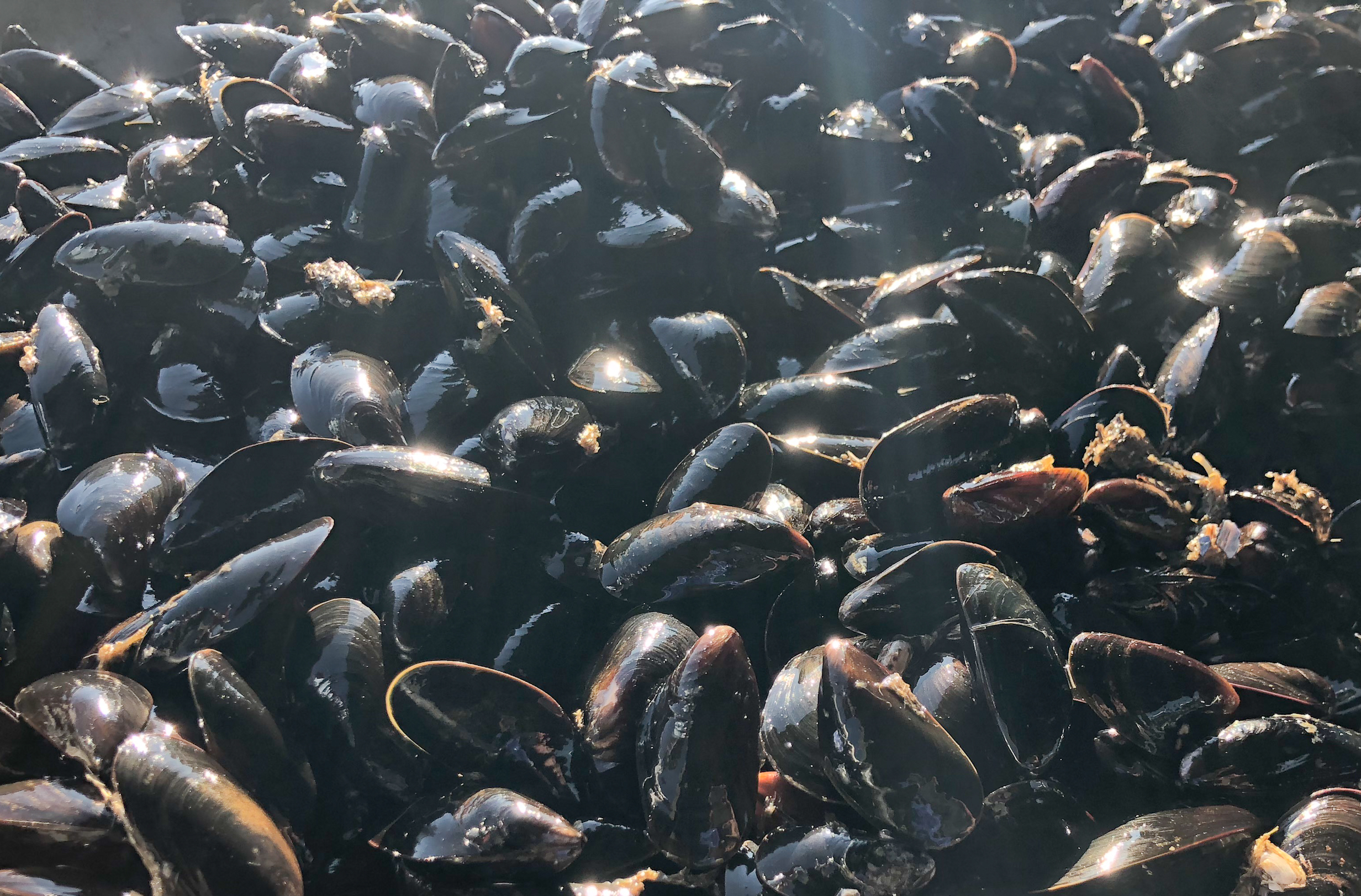
The mussels live, eat and grow on hundreds of ropes dangling from solid wood beams on three large rafts securely anchored a couple hundred yards from shore. The entire operation spans about 3 acres. Each raft has up to 2 million mussels or so in different stages of development, from newly seeded spat (the small seed that grows into three-inch adults) to dinner-size.
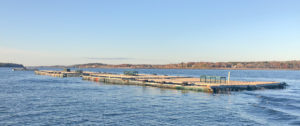
Millions of mussels at different stages of the three-year growth cycle.

Bivalve aquaculture 101

When discussing different harvest methods in classrooms or community events, I also talk about aquaculture practices. Since aquaculture has surpassed wild caught seafood for global direct human consumption, farmed fish, shellfish and seaweed play critical roles in any sustainable seafood discussion.

Just as with wild harvest methods, different aquaculture methods have a range of ecological impacts, some of which are beneficial, but many of which are disastrous. Industrial finfish aquaculture promises “to feed the world.” Yet the litany of debilitating ecological impacts ranging from massive fish escapes (threatening wild populations) to disease, antibiotic use, algal blooms (from excess nutrients from waste and undigested food), sea lice, feed (grinding up wild forage fish populations to make feed pellets), etc. have called into question the overall benefit of such operations.

Bivalve aquaculture avoids almost all of these issues. Mussels, clams and oysters are filter feeders. They eat plankton, not ground up forage fish, thereby reducing the particulate matter in bays and estuaries and rendering those ecosystems healthier for a broad swath of marine species. Properly siting them in areas with good current enhances their food source and minimizes oversaturation of nutrients and disease.

That said, they are constantly tested to make sure they are safe to eat, particularly after heavy rain events, which can elevate the amount of unhealthy nutrients and toxins they filter.

Yes, quality control is paramount.

From mud to tote

Bangs Island Mussels currently operates from a barge with shed walls and a roof to protect the crew and the mussels from the elements: driving rain, snow, sleet or blazing sun.
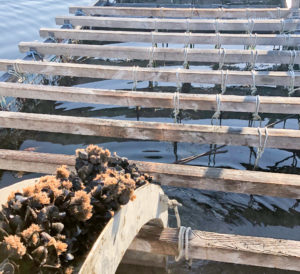
The hauler starts the harvest process.

The process begins with a large winch that hauls up the long, heavy (up to 500 pounds) ropes of mussels and millions of other tiny organisms that attach themselves to the biomass overtime. The winch slowly brings the rope up to a gateway that, with the help of someone standing there, strips the mussels from the rope. Sometimes the clumps can be the size of a soccer ball, but mussels and all have to come off the rope.

After the rope has passed through the gate and is mussel-free, you set it aside to be hosed off and re-seeded later with mussels that are too small for market (more on this later). Then you wind up the next rope.

Once stripped, the mussels go up a conveyor belt to a brush declumper, a big machine with a series of rollers and stiff bristles that appear to gobble up the black shells. In fact, these bristles are helping to break up clusters of mussels and remove barnacles, seaweed and other organisms such as sea squirts that can attach themselves to the mussels and the rope. Someone stationed above the “mouth” of this machine physically pushes the mussels into the narrow gaps of the bristled rollers. It’s a physically taxing process.

The mussels that come out of the first section of that machine are relatively clean. They are dropped onto a grader, which has another system of adjacent rollers with spirals, like giant screws, that are closely spaced. This array weeds out the mussels Moretti and his crew deem too small for market size. As the screws turn, the smaller mussels slip through the cracks onto a chute and into a waiting bin to be re-seeded onto ropes and dropped back into the water to grow.

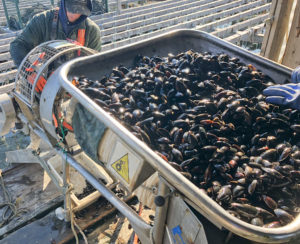
Market size mussels feed out into another bin that is dragged to the boat and packed in ice in huge totes arranged on the boat deck. Someone stands near the area where the market size mussels arrive and sorts through any remaining clumps held together by seaweed and their beards.
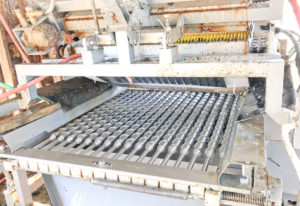
The declumper at the top of the photo uses yellow bristled rollers to separate and clean mussels before depositing them on the grader, which separates the market-sized product from the soon-to-be-re-seeded.

We processed about 2400 pounds of mussels (about average for this time of year) in a little over three hours. I was pretty damn happy to sit down and eat lunch … at 10:30 a.m. I felt satisfied with the teamwork involved in a surprisingly smooth and efficient operation considering the task at hand. Everyone had a role, and rotated around a bit to help each other. And the crew patiently coached me on technique and timing.

Measuring up

After lunch, we began re-seeding the ropes with mussels that were too small. I say too small – we returned mussels averaging just a little over two inches in length on the long edge – even though I’ve been served Canadian mussels that size in New England restaurants.

Getting mussels back on a rope and into the water is an intricate process aided by a machine that looks like a product of Jules Verne’s imagination. Called the seeder, or socking machine, this contraption draws clean rope through a type of snare where the mussels are dropped from a hopper onto the rope and enclosed by a thin cotton mesh that wraps the mussels like a sock. This sock will hold the mussels in place until they attach to the rope, before the net naturally biodegrades.

It’s a bit of a painstaking process in that you want to ensure the mesh goes on properly and ties off the mussels so they stay on the rope. We loaded several ropes back onto the raft.
The seeder, or socking machine in action. Not quite ready for prime time, these mussels need a little more time “on the vine” to get to Bangs Island size. (Turn up the volume).

Quality is everything

Next we took water samples for the state Division of Marine Resources to check the level of nutrients and toxins in the water. These tests, and direct mussel samples, are frequent, and ensure the safety of the mussels that go to market.

Back at the Maine Wharf, the mussels were hoisted off the boat with a powerful hydraulic lift, and brought into the warehouse where a team waited to do final sorting, grading, cleaning and bagging for market. As with the harvest operation, the final steps toward market readiness are meticulous.

Bangs Island has a reputation among chefs and foodies for big meats. That is, not only are the shells generally bigger than most other mussels on the market, but the meat inside them is bigger too.

Having opted for Bangs Island’s harvest for over a decade in restaurants and my home cooking (an excellent addition to gumbo!), it was with a deeper appreciation the next day as I set out to cook a couple pounds for my family. Harvested with my own hands not far from where I live, with a very coordinated process rooted in getting the details right, these mussels drove home one of my classroom and restaurant mantras: Know your seafood. Know your fisherman, or seafood producer.
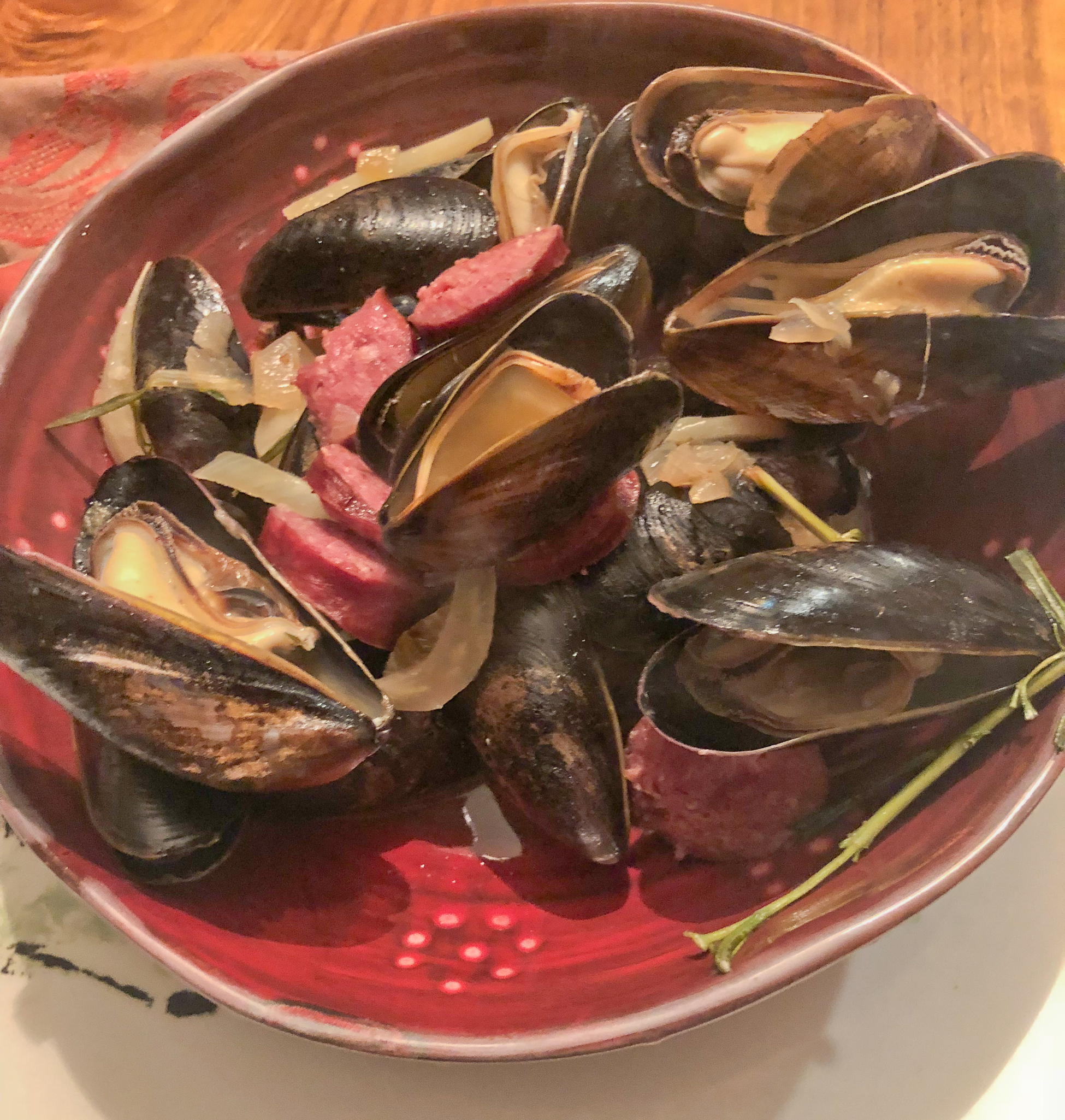
The fruits of spending a chilly day on the water. Follow this link to a recipe for mussels San Remo from my friend Chef Rob Martin at 1652 Restaurant in York, Maine.


Thanks to Matt Moretti and my crew mates John, Zack and Ben for welcoming me aboard and teaching me the ropes! It was worth muddying my new Grundens on that chilly morning to build a valuable experience that I’ll share in classrooms and restaurants.
 

All Blog Posts

Fifth KNOW FISH Dinner zooms in on critical questions

  • October 15, 2017October 20, 2021
  • by Colles Stowell
Share it!
Share

“How do you know if it’s truly local?”

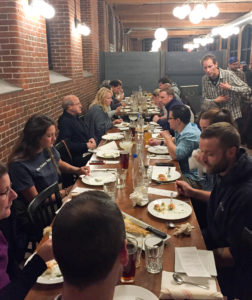
The question from Jordan Pike of Two Toad Farm in Lebanon, ME. during Thursday night’s KNOW FISH Dinner™ at 7th Settlement Brewery  in Dover, NH was seemingly simple. It is a question any farmer, fisherman, chef, baker or food producer encounters on a regular basis. But its implications are more significant because the complexity of the seafood system in the U.S.

We were discussing the dynamics of the domestic seafood system and some of the drivers behind the fact we import more than 90 percent of the seafood we eat in this country. That’s ironic when you consider we harvest over 5 million tons of seafood domestically on an annual basis… plenty enough to meet the demand.

Brian Gennaco of Virgin Oysters explains why oyster aquaculture is a labor of love. Three years from seed to harvest.

Breaking the habit

One of the largest hurdles is habit. We discussed how habit drives much of the seafood purchases linked to foreign sources. For example, consider the widespread habit of buying the same thing weekly, at the lowest price, without trying to find out more about where things like frozen shrimp or salmon fillets come from. Similarly, there is the habit of continuing with a flawed management system that opens the gate for cheap imports to feed the consumer habit.

Asking questions is one of the most effective ways to change these habits. I told the 35 attendees one of the first questions to ask is “Where is it from?” Buying locally sourced seafood is at least an initial step away from imports.

But Jordan’s question is also at the crux of getting to know our food and improving the relationship we have to our seafood. At its core, the question pits small local food producers against big operators like Monsanto, Thai Union, and the now somewhat defrocked “Codfather”, Carlos Rafael. Rafael, the largest fishing operator on the East Coast, was recently sentenced to nearly four years in prison, three years of additional probation and more than $200,000 in fines after pleading guilty to 28 counts of fisheries fraud. The court also seized a small portion of his assets.

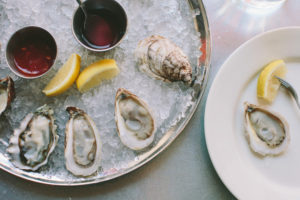
One of Brian’s delicious oysters.

Jordan took the “local” question further. “How do you know the scallops you eat aren’t coming from boats owned by Rafael?”

Become a seafood detective

The answer isn’t simple. The U.S. is lagging in terms of comprehensive, transparent labeling systems that provide easily accessible information. The EU has such a system, and both consumers and fishermen are generally happy with it; consumers for obvious reasons, fishermen because they see it as a competitive advantage.

Absent such labeling, we must try to find such information by owning the responsibility to ask questions. Thursday night, we discussed the importance of forming relationships with fishermen in our communites or with restaurants and stores that buy seafood directly from fishermen in the community or the nearby region.

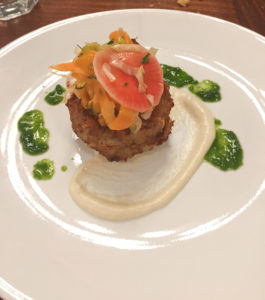
Potato fish cake (pollock), parsley two ways and a bright pickled vegetable salad.

The seafood counters and many of the restaurants I patronize know me and know I’m going to ask questions. They also know I can tell visually how relatively fresh different fish and shellfish are. They may not be able to tell exactly what boat Acadian Redfish on display is from, but they can tell me if it was caught in Casco Bay and when it was cut.

The truth is you may not really be able to learn the provenance of every piece of seafood you buy. Terms like “local” and “organic” have been co-opted improperly so often that their meanings have been diluted. So you ask questions, observe and make educated assumptions. And once you have established a relationship with a fisherman and/or a fishmonger or restaurateur you trust, you will have significantly increased the chance the seafood was harvested responsibly.

It was an excellent question that sparked a good conversation about what we as consumers can do to understand and embrace our relationship to the seafood we eat.

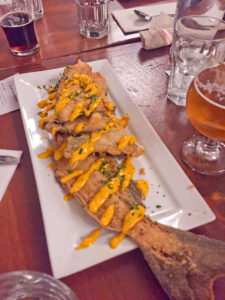
Look at all of that fried goodness! The remoulade was outstanding.

Good food, good convo

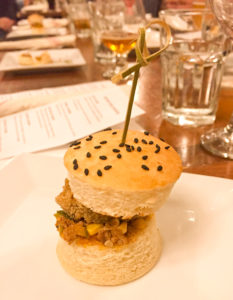
And it was just one part of a great evening of storytelling and diving into key issues with perspectives from Capt. Tim Rider of New England Fishmongers who donated the fish, Brian Gennaco of Virgin Oyster Co. who provided the oysters, and Chef Taylor Miller who put on a feast. (How about delightfully seasoned tuna pastrami, perfectly fried pollock carcasses and collars with plenty of meat on the bones, cornmeal dusted fried oyster with chorizo on brioche with garlic aioli, and some especially delicious gin-brined baked pollock served with cornmeal fried pollock with dill salt???)

We also heard from Joe Letourneau, the only other full-time, rod and reel groundfish commercial fisherman in the Gulf of Maine (aside from Capt. Rider); and, Kevin Jackson, who has a unique perspective as a NOAA observer that accompanies fishermen like Tim and Joe to research a variety of species, like wolfish. Kevin’s work is an example of scientists collaborating with fishermen on critical research to learn more about ocean resources.

Conversation upon conversation, building a movement.

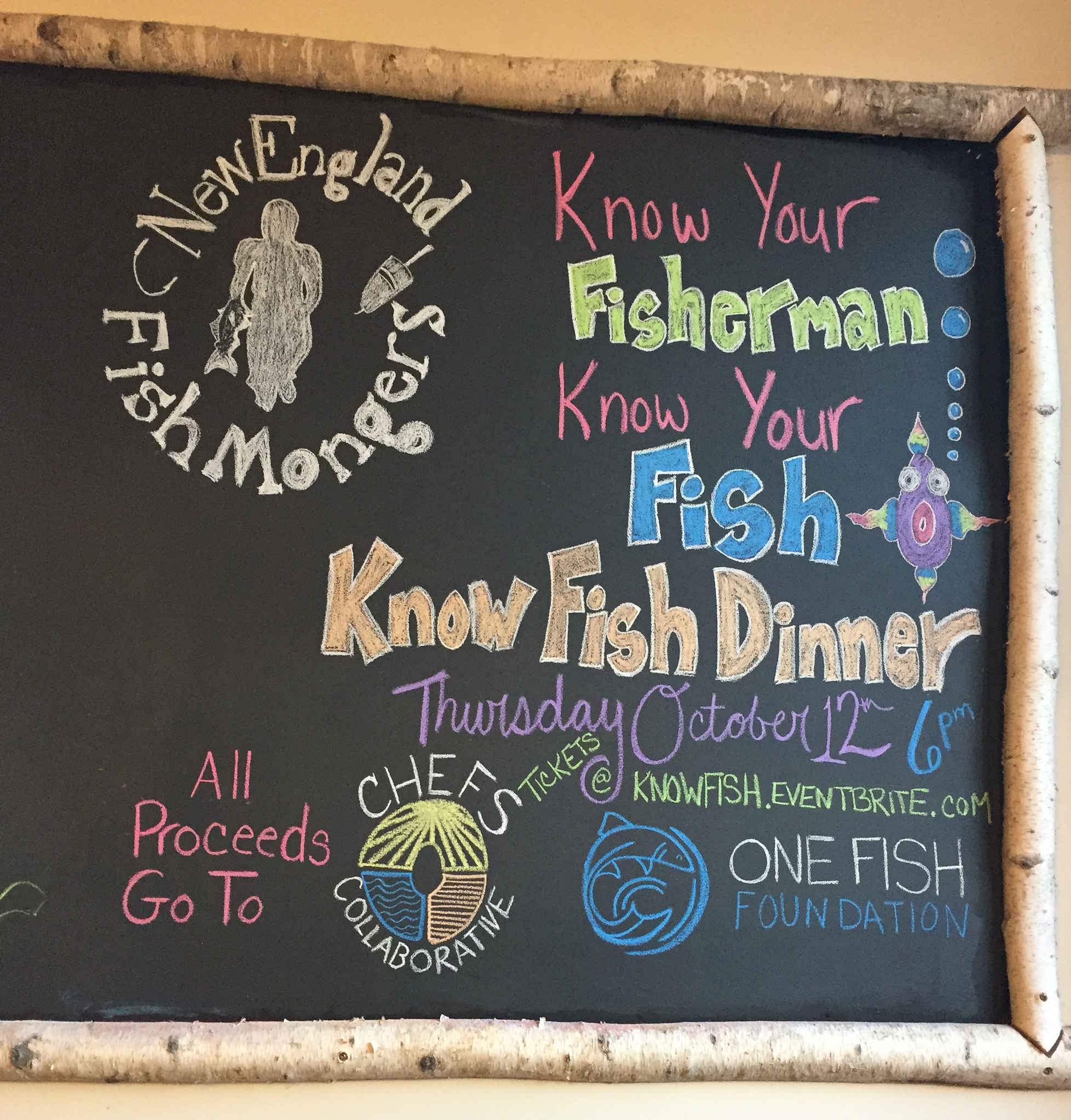
This was the 5th dinner in the KNOW FISH Dinner series, and it is a continuation of our mission to change minds one conversation at a time. Attendees left with several compelling conversations to think about, as well as a menu with the 7 C’s of Sustainability printed on the back.

The next KNOW FISH Dinner will be at Otis Restaurant in Exeter, N.H. on Nov. 2.

Come join us for great food and a broader seafood perspective!

Get tickets here.

All Blog Posts

KNOW FISH Dinners: A Second Helping

  • April 21, 2017October 20, 2021
  • by Colles Stowell
Share it!
Share

You’d call a dinner and conversation event a success if the parting words of many of the attendees echoed this theme: “We should be having more of these conversations.” By that measure, last fall’s KNOW FISH dinners were a big success. Attendees learned about the provenance of the fish they were eating, they heard from the fisherman who sustainably caught their fish that day and they had a great conversation about why it all matters and what they can do.

So we’re doing it again. This spring’s KNOW FISH dinners will be held at Franklin Oyster House in Portsmouth on May 9, and Tinos Greek Kitchen in Hampton on May 23. Both events will begin at 6 p.m.

This is your chance to learn why the domestic seafood picture is so skewed. Yes, many people know the oft-cited statistic that more than 90% of seafood eaten in the U.S. is imported. But the reasons why are a compelling motivator for finding out where, when and how your seafood was harvested.

New England Fishmongers Partner Amanda Parks getting it done.

At the KNOW FISH dinners, you’ll be able to ask Capt. Tim Rider of New England Fishmongers why he risks life and limb to haul up to 80 miles offshore in the 36-foot F/V Finlander to fish with rod and reel in up to 400 feet of water. You’ll be able to ask an oysterman like Tim Henry of Bay Point Oyster Company about what it takes to grow oysters and why that is so important. You’ll learn about how their passion for what they do drives them to overcome obstacles and stay focused even as management policies change around them.

And you’ll feast on spectacular meals prepared by Chefs Matt Louis and Matt Decker of Franklin Oyster House and Chef Mark Segal of Tinos, using incredibly fresh, undeniably sustainable seafood. The fish and oysters will be whatever the ocean yields that day.

You’ll learn about some of the key domestic and global market dynamics that affect seafood sustainability. That information will help you better understand why your choices matter at restaurants and seafood stores. We’ll provide you with some memorable tips on buying seafood that is local, abundant, compliant and that minimizes ecosystem and environmental harm.

And we’ll talk about ways you can carry these messages forward into the community, and perhaps effect a sea change in seafood buying habits.

After all, this kind of change happens one conversation at a time … from the ground/sea floor up.

Come join us for great food, conversation and fun!

Get your tickets by following this link to Eventbrite.

Recent Posts

  • Hurricane Ida wreaks havoc on Louisiana’s seafood industry
  • EPA Should Use Clean Water Act To Kill Zombie Mine
  • Slow Fish 2021: Relationship Matters
  • Faith, Façades, and Futility
  • Pebble Permit Paused: Politics at Play

Archives

  • September 2021
  • August 2021
  • April 2021
  • December 2020
  • August 2020
  • June 2020
  • February 2020
  • December 2019
  • November 2019
  • October 2019
  • July 2019
  • May 2019
  • April 2019
  • March 2019
  • January 2019
  • December 2018
  • November 2018
  • June 2018
  • May 2018
  • March 2018
  • February 2018
  • January 2018
  • December 2017
  • November 2017
  • October 2017
  • September 2017
  • August 2017
  • July 2017
  • June 2017
  • May 2017
  • April 2017
  • March 2017
  • January 2017
  • December 2016
  • November 2016
  • October 2016
  • September 2016
  • August 2016
  • July 2016
  • June 2016
  • May 2016
  • April 2016
  • March 2016
  • February 2016
  • January 2016
  • December 2015
  • November 2015
  • October 2015
  • September 2015
  • July 2015
  • June 2015
  • May 2015
  • April 2015
  • March 2015
  • February 2015
  • January 2015
Theme by Colorlib Powered by WordPress