Skip to content
One Fish Foundation
  • Blog
    • Aquaculture
    • Education
    • Environment
    • Policy
    • Wild Harvest
    • Fish Tales
  • About
    • About One Fish
    • About Colles Stowell
  • Education
    • Elementary School
    • Middle School
    • High School
  • KNOW FISH Dinners®
  • Resources
    • One Fish Podcast
    • One Fish Foundation in the news
    • The 7 C’s of Sustainable Seafood
    • Newsletter Archive
    • Recipes
      • Skate with Capers and Butter — Chef Rizwan Ahmed
      • Grandma Davis’ Fish Chowder — Jane Almeida
      • Ginger Garlic Tamari Scallops — Colles Stowell
      • Fish Stock — Evan Mallett
      • Mussels San Remo — Chef Rob Martin
      • Salted Pollock Croquettes – Chef Mark Segal
  • Connect
    • Contact OneFish
    • Social
      • Instagram
      • Facebook
      • Twitter
All Blog Posts

Fifth KNOW FISH Dinner zooms in on critical questions

  • October 15, 2017October 20, 2021
  • by Colles Stowell
Share it!
Share

“How do you know if it’s truly local?”

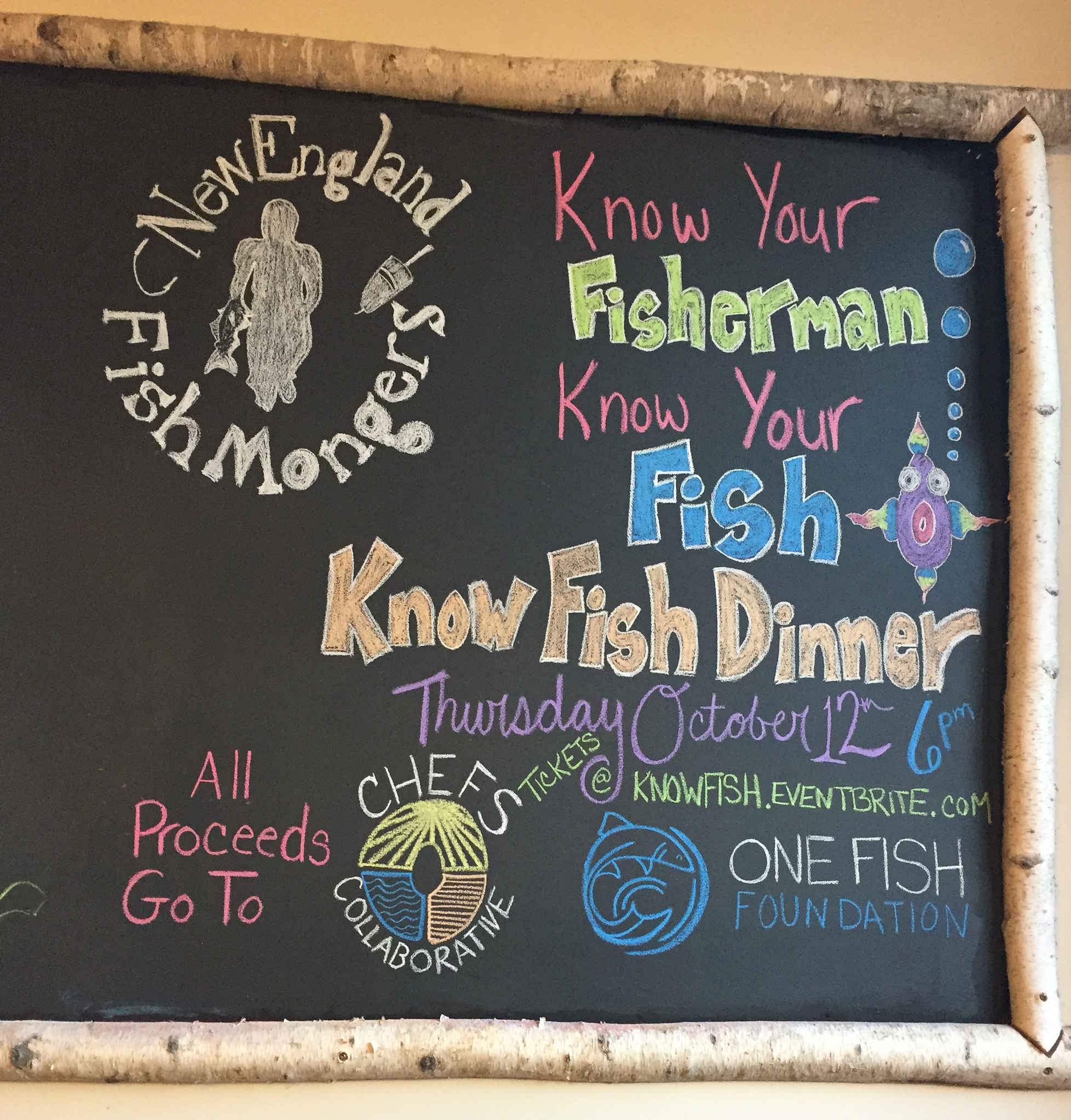
The question from Jordan Pike of Two Toad Farm in Lebanon, ME. during Thursday night’s KNOW FISH Dinner™ at 7th Settlement Brewery  in Dover, NH was seemingly simple. It is a question any farmer, fisherman, chef, baker or food producer encounters on a regular basis. But its implications are more significant because the complexity of the seafood system in the U.S.

We were discussing the dynamics of the domestic seafood system and some of the drivers behind the fact we import more than 90 percent of the seafood we eat in this country. That’s ironic when you consider we harvest over 5 million tons of seafood domestically on an annual basis… plenty enough to meet the demand.
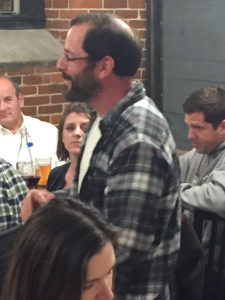
Brian Gennaco of Virgin Oysters explains why oyster aquaculture is a labor of love. Three years from seed to harvest.

Breaking the habit

One of the largest hurdles is habit. We discussed how habit drives much of the seafood purchases linked to foreign sources. For example, consider the widespread habit of buying the same thing weekly, at the lowest price, without trying to find out more about where things like frozen shrimp or salmon fillets come from. Similarly, there is the habit of continuing with a flawed management system that opens the gate for cheap imports to feed the consumer habit.

Asking questions is one of the most effective ways to change these habits. I told the 35 attendees one of the first questions to ask is “Where is it from?” Buying locally sourced seafood is at least an initial step away from imports.

But Jordan’s question is also at the crux of getting to know our food and improving the relationship we have to our seafood. At its core, the question pits small local food producers against big operators like Monsanto, Thai Union, and the now somewhat defrocked “Codfather”, Carlos Rafael. Rafael, the largest fishing operator on the East Coast, was recently sentenced to nearly four years in prison, three years of additional probation and more than $200,000 in fines after pleading guilty to 28 counts of fisheries fraud. The court also seized a small portion of his assets.
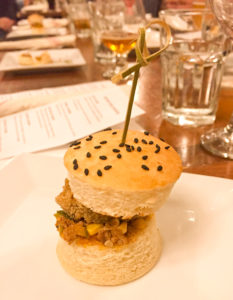
One of Brian’s delicious oysters.

Jordan took the “local” question further. “How do you know the scallops you eat aren’t coming from boats owned by Rafael?”

Become a seafood detective

The answer isn’t simple. The U.S. is lagging in terms of comprehensive, transparent labeling systems that provide easily accessible information. The EU has such a system, and both consumers and fishermen are generally happy with it; consumers for obvious reasons, fishermen because they see it as a competitive advantage.

Absent such labeling, we must try to find such information by owning the responsibility to ask questions. Thursday night, we discussed the importance of forming relationships with fishermen in our communites or with restaurants and stores that buy seafood directly from fishermen in the community or the nearby region.
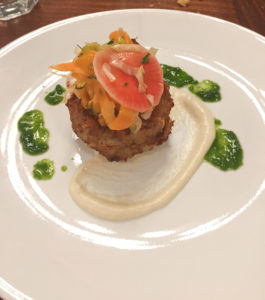
Potato fish cake (pollock), parsley two ways and a bright pickled vegetable salad.

The seafood counters and many of the restaurants I patronize know me and know I’m going to ask questions. They also know I can tell visually how relatively fresh different fish and shellfish are. They may not be able to tell exactly what boat Acadian Redfish on display is from, but they can tell me if it was caught in Casco Bay and when it was cut.

The truth is you may not really be able to learn the provenance of every piece of seafood you buy. Terms like “local” and “organic” have been co-opted improperly so often that their meanings have been diluted. So you ask questions, observe and make educated assumptions. And once you have established a relationship with a fisherman and/or a fishmonger or restaurateur you trust, you will have significantly increased the chance the seafood was harvested responsibly.

It was an excellent question that sparked a good conversation about what we as consumers can do to understand and embrace our relationship to the seafood we eat.
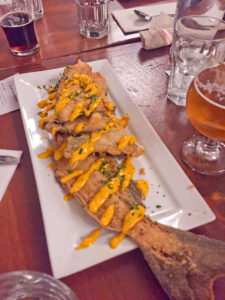
Look at all of that fried goodness! The remoulade was outstanding.

Good food, good convo

And it was just one part of a great evening of storytelling and diving into key issues with perspectives from Capt. Tim Rider of New England Fishmongers who donated the fish, Brian Gennaco of Virgin Oyster Co. who provided the oysters, and Chef Taylor Miller who put on a feast. (How about delightfully seasoned tuna pastrami, perfectly fried pollock carcasses and collars with plenty of meat on the bones, cornmeal dusted fried oyster with chorizo on brioche with garlic aioli, and some especially delicious gin-brined baked pollock served with cornmeal fried pollock with dill salt???)

We also heard from Joe Letourneau, the only other full-time, rod and reel groundfish commercial fisherman in the Gulf of Maine (aside from Capt. Rider); and, Kevin Jackson, who has a unique perspective as a NOAA observer that accompanies fishermen like Tim and Joe to research a variety of species, like wolfish. Kevin’s work is an example of scientists collaborating with fishermen on critical research to learn more about ocean resources.
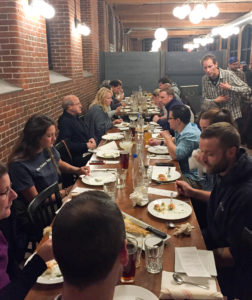
Conversation upon conversation, building a movement.

This was the 5th dinner in the KNOW FISH Dinner series, and it is a continuation of our mission to change minds one conversation at a time. Attendees left with several compelling conversations to think about, as well as a menu with the 7 C’s of Sustainability printed on the back.

The next KNOW FISH Dinner will be at Otis Restaurant in Exeter, N.H. on Nov. 2.

Come join us for great food and a broader seafood perspective!

Get tickets here.
All Blog Posts

Day in the Life of a New England Groundfish…

  • September 1, 2016October 20, 2021
  • by Colles Stowell
Share it!
Share

As the last sprays of daylight faded to black, I stepped off the M/V Finlander in Eliot, Maine and tried to get grounded. I was tired. Damn tired. And a bit sore. We’d left the dock at 1 a.m., traveled four hours to the fishing grounds 65 miles out, fished hard for 9 hours with rod and reel and chugged back to port, docking at about 8:30 p.m.

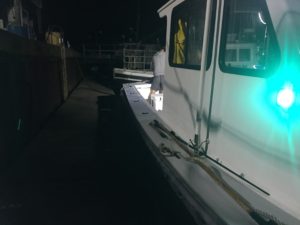
Loading up just after 1 a.m.

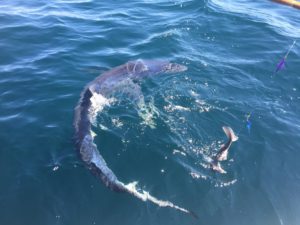
This wasn’t recreational fishing. To get comfortable, I dangled a leg over the gunwale of the 36-foot commercial fishing boat and rested the heavy-duty rod on my leg while jigging a 20-ounce shiny lure and three flies just a foot off the bottom, 400 feet down. When a fish hit, I’d have to crank it all the way up with an industrial-strength reel and hope the 10-foot blue sharks circling the boat wouldn’t steal the fish. Hoist the fish in, measure it after removing the hook, toss it in the tub. Do it again.

Get two fish and you’re likely to be winding 25 lbs or so up 400 feet. POW! A shark hits near the boat and starts smoking line off the reel. The telltale snap two minutes later signals the end of the fight, and you reel up nothing. Time to re-rig. Crank up a couple hundred pounds of fish or so in a few hours, and you’re going to feel it. At least I did. I managed to get past the queasiness and avoid any embarrassment on deck. Any concept of a toilet was sacrificed for an extra bunk to “conserve” some energy on the long rides. The head was a 5-gallon bucket.

It was a long day.

So I had one question for Capt. Tim Rider before I trekked back to my car. “You do this every day?”

Narrow miss
Narrow miss on a dogfish. Check out the video of five sharks circling the boat.

“Just about,” he said, as he cleaned the cabin for the next trip. He’d decided not to fish the next day. We’d brought back 800 lbs. of pollock and haddock, and he would need to drive it to the auction in Portland. (He often sells his catch directly to chefs who share the same beliefs on protecting the resource.) He hadn’t seen much of his family in the past two weeks, having slept in his own bed only two nights in 14 days. The rest of the time he was on the boat.

Paying the price

Fighting to stay awake on I-95 on the way home, I thought about that commitment. Fishing courses through Rider’s veins. It would have to. Otherwise, it sure would be a hell of a lot of work for not a lot of reward. This is particularly true because Rider is part of the Common Pool, a fisheries policy that often forces fishermen like Rider to fish way out because they didn’t have the capital, timing, luck or patience to get the permit to fish the Catch Share sectors. Catch shares are another fisheries policy that operates like a cap-and- trade quota system, often favoring those with the most capital, which can mean access to more desirable fishing grounds.

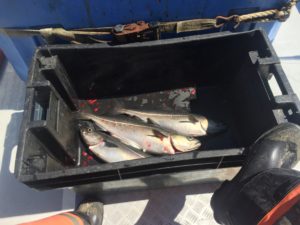
Quality control Step 1. Bleed the fish.

Currently, the outer edge of where Common Pool fishermen are allowed to fish fluctuates seasonally from 18 to 80 miles out. The difference means a couple of hours of travel and probably $300 or so in fuel, tackle and ice.

But the difference runs deeper than that.

When the Maine Department of Marine Resources distributed NOAA funds to offset losses from the groundfish (read cod) disaster relief last year, the money went to fishermen with quota who had the largest landings of groundfish. Those in the common pool were not invited to the table, and therefore, did not receive any disaster relief.

Many ironies exist in fisheries management. And this is one of the starkest examples. Those most hurt by the reduced fishing income were overlooked when it came time to provide financial support. Those like Rider who are so passionate about protecting the fishery that they jig fish in up to 500 feet of water to reduce bycatch seemingly face steeper hurdles than larger scale trawl fishermen, whose bycatch is much more significant.

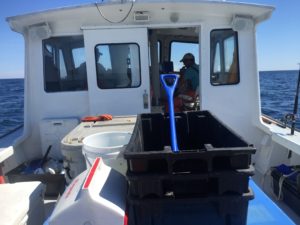
Strategizing the next fishing stop.

Sector inequality

It is easy to say this is purely a situation of the haves and have-nots. But fisheries management is much more complex than that. Current New England groundfish regulations were initially established in 2010 on the principal that fishermen would more equitably manage and effectively safeguard the resource by creating a free-market environment. The total allowable catch of groundfish such as cod, haddock, Pollock, flounder and other species was divided and allocated to groups of fishermen in sectors, or harvesting cooperatives, based on who had the largest landings between 1995-2005. Fishermen purchased permits that allowed them to fish for certain species in certain areas within the sector during certain seasons. Under this Catch Share system, they are allowed to continue catching fish during the season until they reach the quota limit for each species.

http://qkl.fa0.mwp.accessdomain.com/wp-content/uploads/2016/08/cabin-sound.mp4

The Finlander’s “purr”…

Unfortunately the Catch Share model overlooks a fundamental truth about fisheries economics: If financial resources determines access, then those with the most financial resources will have the most access. And so, an inequitable system was born and small-scale fishermen like Rider are squeezed … hard. Large-scale operators with the resources are encouraged by the very nature of the “get big or get out” system to grow and gobble up more quota, potentially leading to the type of abuses that led to the arrest of the largest distributor in New England last February.  Carlos Rafael’s arrest underscores another truth about the current system: the bigger players don’t necessarily think in terms of good stewardship.

Ocean classroom

Which brings me back to the reason I wanted to go out with Tim for what was pre-ordained to be a very full day. He’d tried to convince me soon after we passed the Isles of Shoals on the way out under a half moon sky. “Colles. I’m not kidding. Get some sleep. It’s a long @#$%&*! day. You’re going to need it.”

The Finlander heads home. Arrived at dock at 8:30 p.m.

I wanted a glimpse, however brief, of what it’s like to be a New England groundfish fisherman, passionate about the work and the resource, and riding the anxiety of an ever-changing fishery with continually tightening restrictions and razor-thin margins. Debt. Changing ecosystems, but slow-to-change consumer palettes. Perpetually bone tired, fueled on adrenaline and Monster drinks (not me) and taking in what the ocean has to offer: whether it be a full hold to bring back to the dock, un-forecasted six-foot seas, a tuna crashing bait or a giant ocean sunfish lazily cruising the surface.

I’ll think of that experience every time I stand in front of a group of people in a classroom or a restaurant to discuss what sustainable seafood means.


Check out the latest news updates about Capt. Tim Rider and the M/V Finlander crew at New England Fishmonger’s Facebook page. There, you’ll see some of the Seacoast restaurants the Finlander supplies.

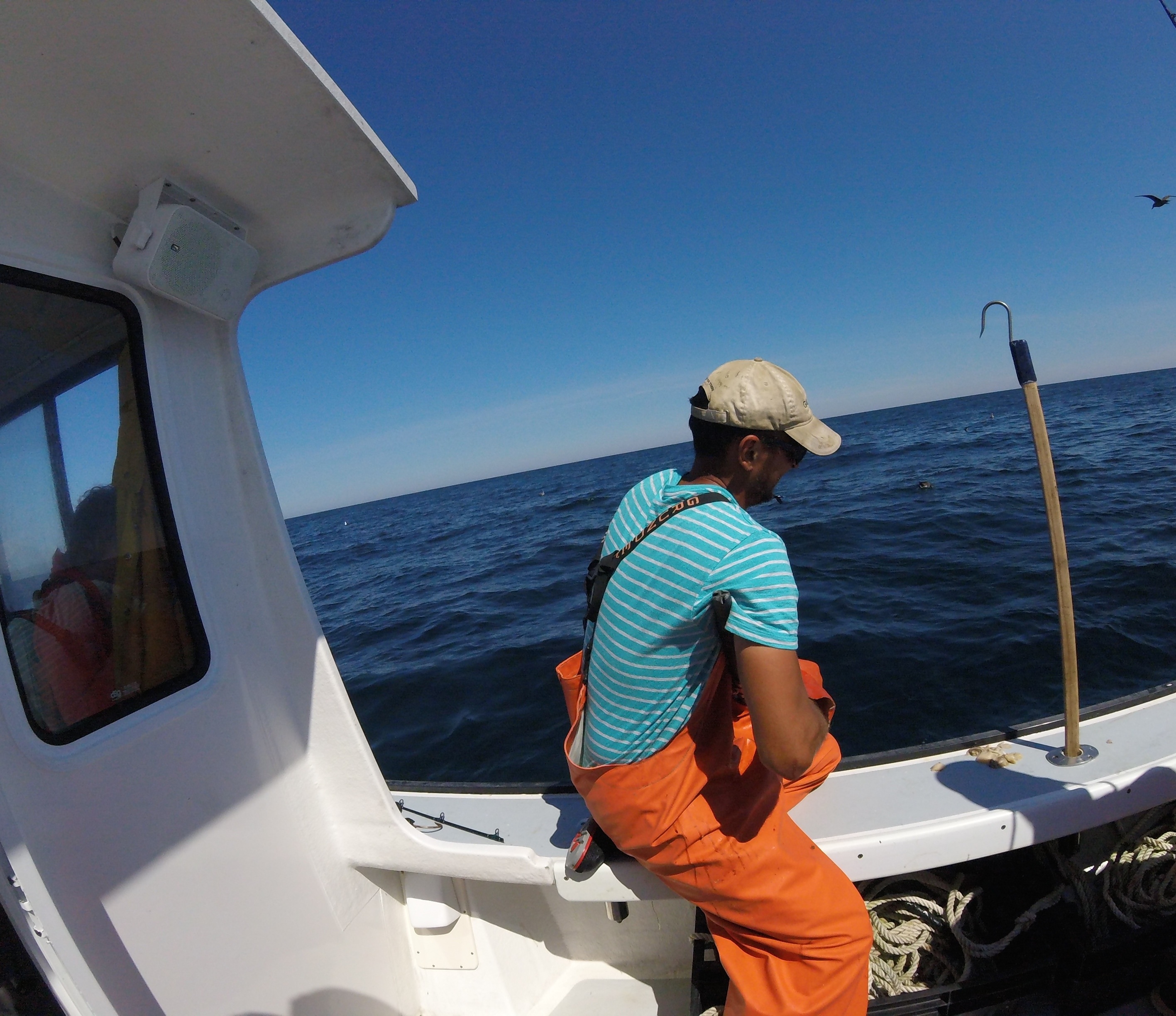
Top photo: Capt. Tim Rider tries … unsuccessfully … to finagle his gear back from a blue shark.

Recent Posts

  • Hurricane Ida wreaks havoc on Louisiana’s seafood industry
  • EPA Should Use Clean Water Act To Kill Zombie Mine
  • Slow Fish 2021: Relationship Matters
  • Faith, Façades, and Futility
  • Pebble Permit Paused: Politics at Play

Archives

  • September 2021
  • August 2021
  • April 2021
  • December 2020
  • August 2020
  • June 2020
  • February 2020
  • December 2019
  • November 2019
  • October 2019
  • July 2019
  • May 2019
  • April 2019
  • March 2019
  • January 2019
  • December 2018
  • November 2018
  • June 2018
  • May 2018
  • March 2018
  • February 2018
  • January 2018
  • December 2017
  • November 2017
  • October 2017
  • September 2017
  • August 2017
  • July 2017
  • June 2017
  • May 2017
  • April 2017
  • March 2017
  • January 2017
  • December 2016
  • November 2016
  • October 2016
  • September 2016
  • August 2016
  • July 2016
  • June 2016
  • May 2016
  • April 2016
  • March 2016
  • February 2016
  • January 2016
  • December 2015
  • November 2015
  • October 2015
  • September 2015
  • July 2015
  • June 2015
  • May 2015
  • April 2015
  • March 2015
  • February 2015
  • January 2015
Theme by Colorlib Powered by WordPress