Skip to content
One Fish Foundation
  • Blog
    • Aquaculture
    • Education
    • Environment
    • Policy
    • Wild Harvest
    • Fish Tales
  • About
    • About One Fish
    • About Colles Stowell
  • Education
    • Elementary School
    • Middle School
    • High School
  • KNOW FISH Dinners®
  • Resources
    • One Fish Podcast
    • One Fish Foundation in the news
    • The 7 C’s of Sustainable Seafood
    • Newsletter Archive
    • Recipes
      • Skate with Capers and Butter — Chef Rizwan Ahmed
      • Grandma Davis’ Fish Chowder — Jane Almeida
      • Ginger Garlic Tamari Scallops — Colles Stowell
      • Fish Stock — Evan Mallett
      • Mussels San Remo — Chef Rob Martin
      • Salted Pollock Croquettes – Chef Mark Segal
  • Connect
    • Contact OneFish
    • Social
      • Instagram
      • Facebook
      • Twitter
All Blog Posts

Fish, Tamales and Community

  • December 13, 2018October 19, 2021
  • by Colles Stowell
Share it!
Share


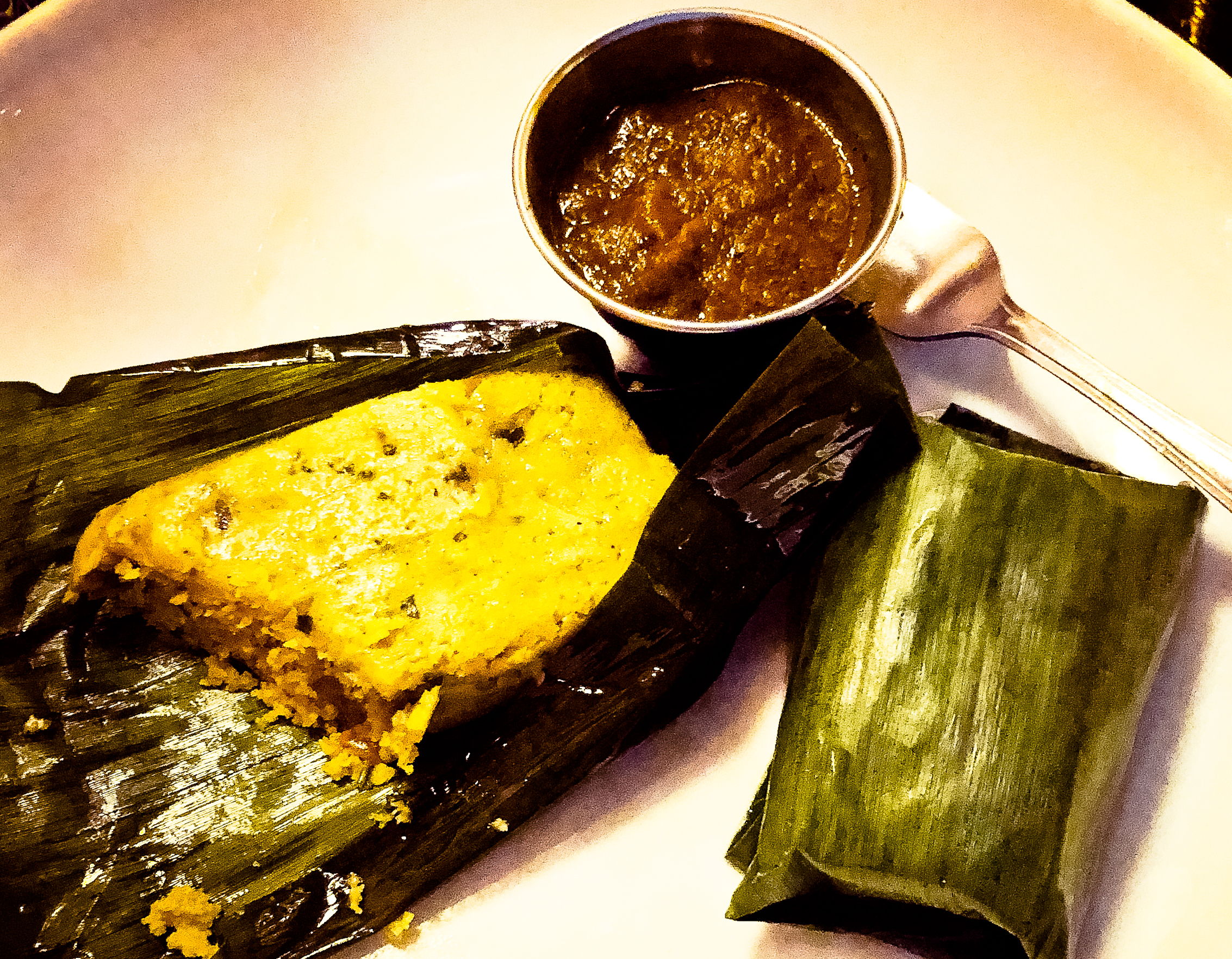
The banana leaf pollock dressed in a cilantro peanut tamale did it. I am no chef, but I like to cook and explore new interpretations of dishes I thought I knew. Growing up in New Orleans meant a vast menu of cool, authentic dishes that often transcended expectations.

I still remember the smell, taste and texture of the corn husk-wrapped tamales the neighborhood kids would buy from the old man pushing his cart up and down Napoleon Ave. We had no concept at the time of ingredient sourcing, labor, etc. We just knew that a couple of those tamales for $1 after playing football in the streets made for a great cap to the afternoon.

So biting into Chef David Vargas’ spin on the cod tamale opened my eyes and fired my taste buds. I would not have thought of this combination as a kid (I may not have wanted to try it). But it was a stark reminder of the beauty of culturally diverse approaches to seafood.
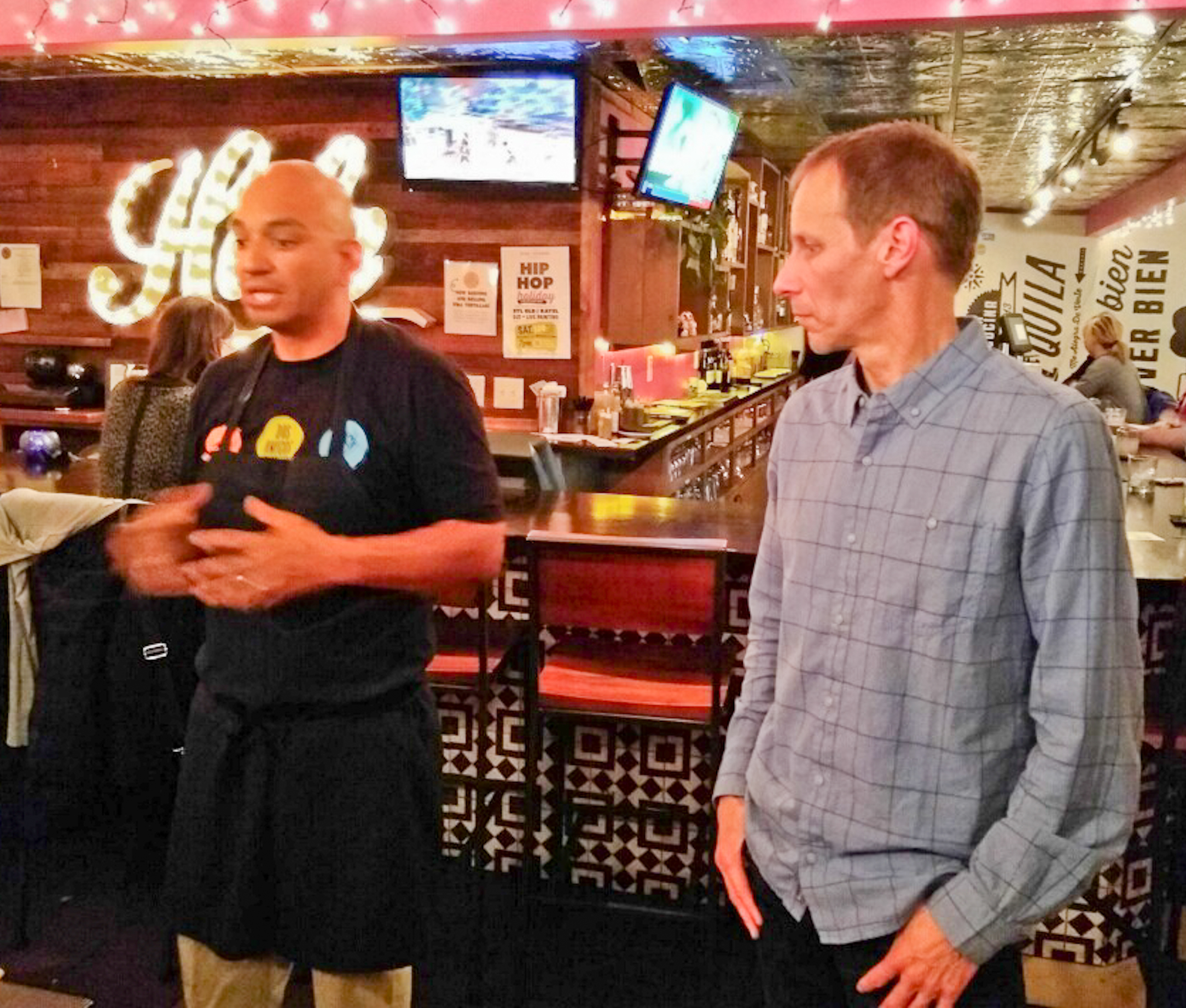
Chef David Vargas discusses his roots in local sourcing.

Deep roots

Chef David spoke about growing up in a Santa Ana (California) neighborhood of little means but deep cultural roots and strong food traditions. His family grew its own vegetables. If they wanted fresh seafood, they went to the local pier and caught it themselves. Local sourcing is ingrained in his DNA and is the bedrock of his menu at Vida Cantina in Portsmouth, N.H.

Chef David spoke about growing up in a Santa Ana (California) neighborhood of little means but deep cultural roots and strong food traditions. His family grew its own vegetables. If they wanted fresh seafood, they went to the local pier and caught it themselves. For him, local sourcing is ingrained in his DNA and is the bedrock of his menu at Vida Cantina in Portsmouth, N.H.

That explains his enthusiasm for hosting a KNOW FISH Dinner®. It was not too far of a leap from the community dining he grew up with, and the embracing of locally sourced food.
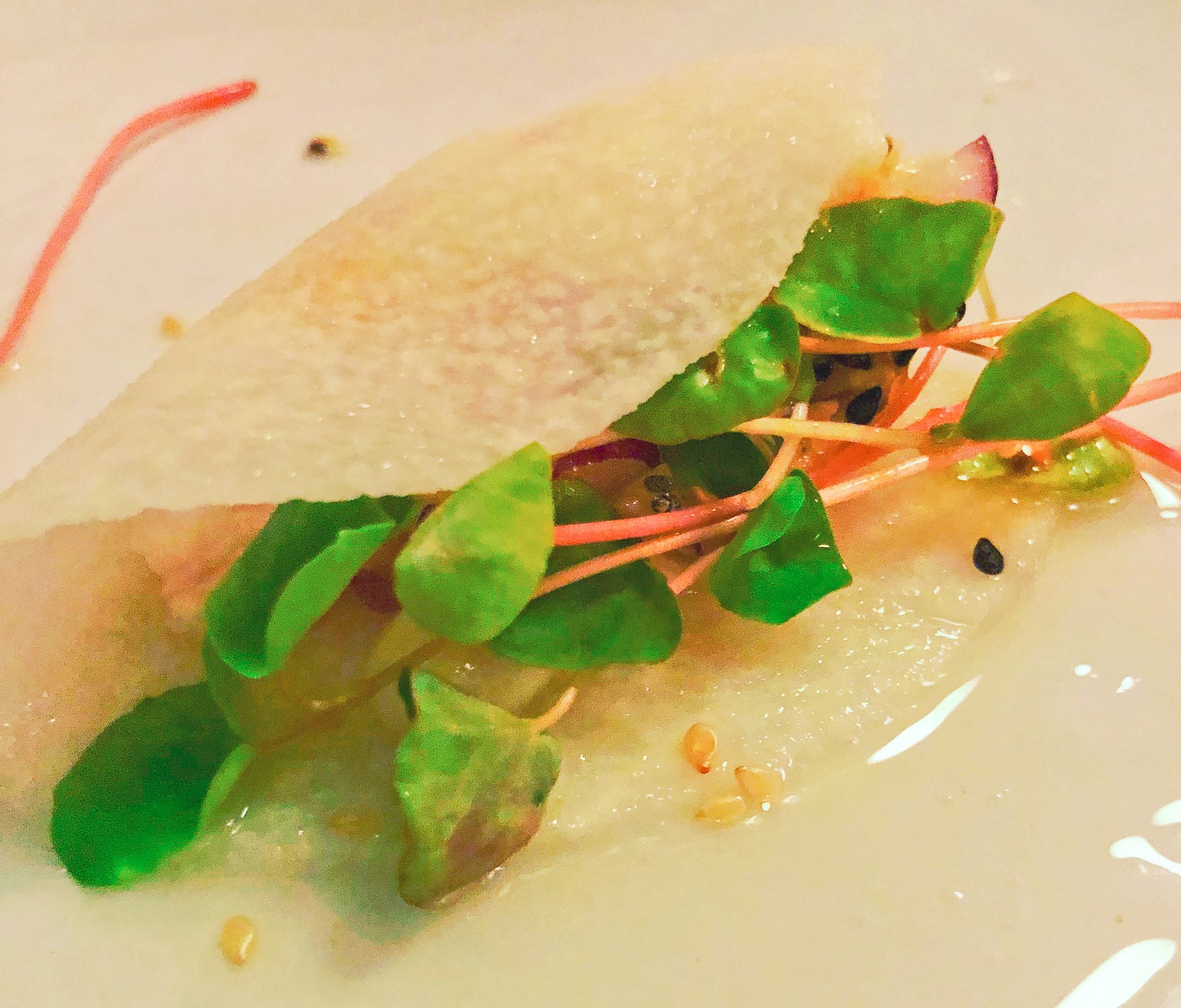
Cod ceviche, courtesy of Chef David Vargas and Capt. Tim Rider. Now that’s boat to table…with flair!

Capt. Tim Rider of New England Fishmongers provided the cod, haddock and pollock (that had been swimming the day before) Chef David turned into south-of-the-border feast fancies: cod ceviche served with a thin, but lightly crisp jicama tortilla and fresh mango, serrano and seeds; charred haddock taco paired with a crispy caper tartar sauce and marinated avocado; and the aforementioned tamale that also came with a mouth-warming charred arbol salsa.

Appreciating fish tales

Capt. Tim also provided some perspective on fishing for a living. He shed light on the passion, drive and unrelenting commitment required just to survive. The long hours, sometimes 20-hour days, sometimes 36 hours, are physically and psychologically draining to be sure.
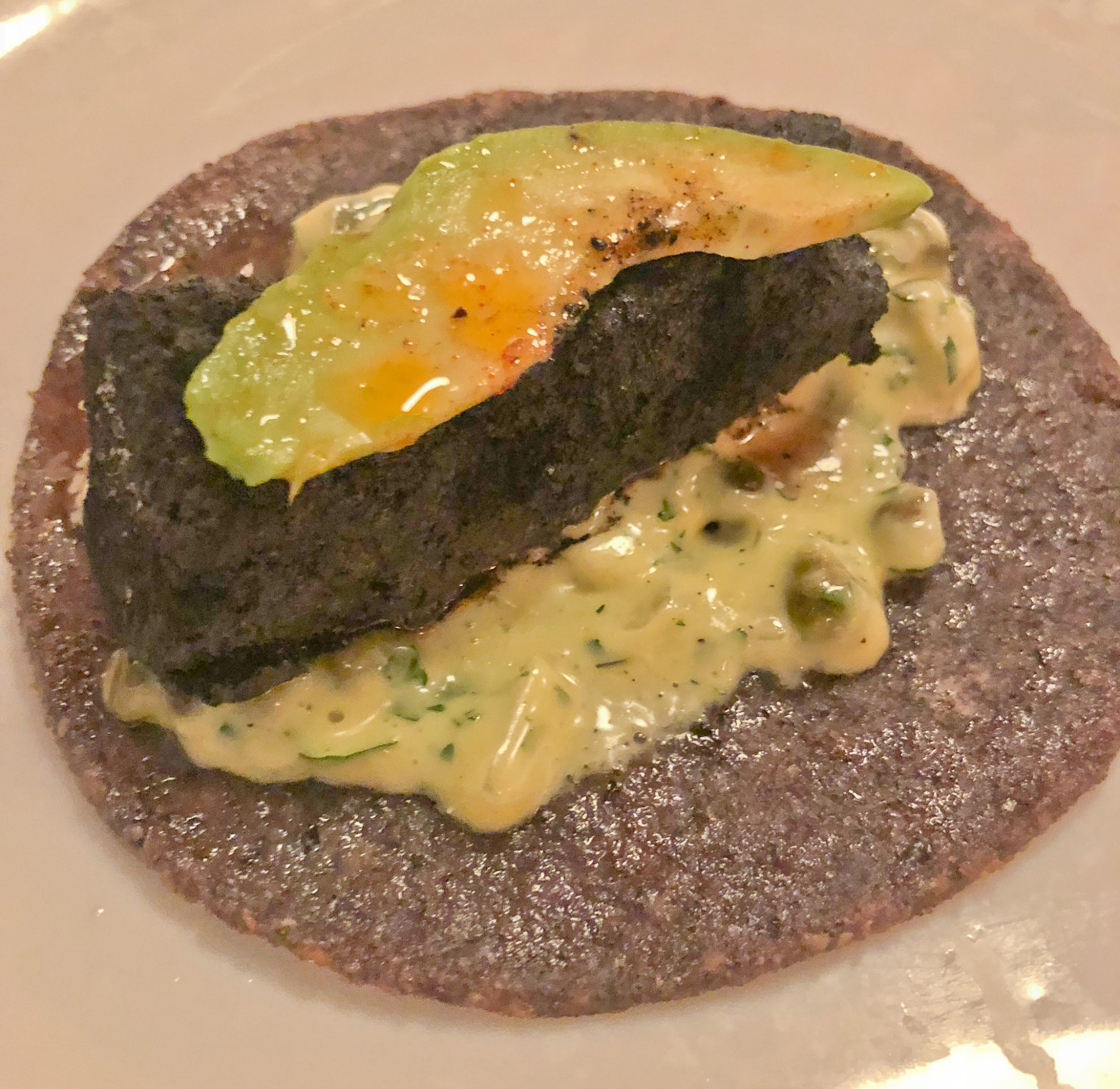
Charred haddock taco. That marinated avocado complemented the charred coating on the haddock beautifully.

But the attendant pressures to make a living for a captain and crew outside of the actual harvest can be staggering. The expenses can drain bank accounts quickly, which leads to heavy debt. Beyond the table stakes of boat costs such as monthly payments, insurance, fuel, gear, maintenance etc. are, for many, the staggering fees just to be allowed to fish. Someone like Tim may have to pay in excess of $100,000 a year to someone else for the right to fish for cod, pollock, haddock, scallops, flounder and a host of other species in the Gulf of Maine.

It’s the complex, and often debilitating nature of the current fisheries management structure in New England and elsewhere in the United States. Without passion and commitment, facing those kinds of costs and demands on personal well-being would be a short-lived fool’s errand.

And so, KNOW FISH Dinner attendees at Vida Cantina last week gained new appreciation for the fish harvesters who produced the seafood they were eating.
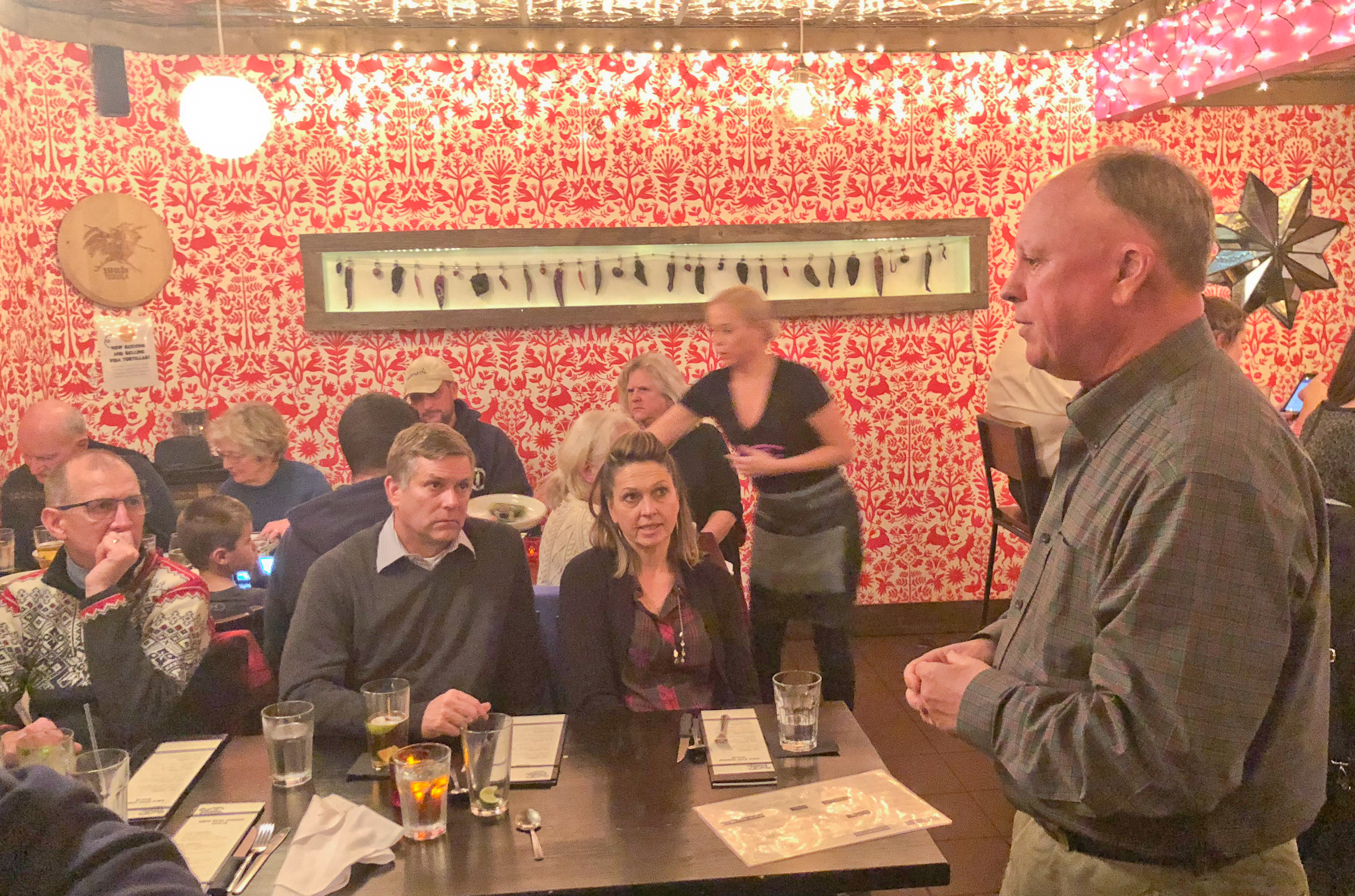
Tim Henry of Bay Point Oyster Company describes the extraordinary patience and commitment to start and run a successful oyster farm.

They also heard from Tim Henry, owner of Bay Point Oyster Company, LLC., who also described the effort to produce top quality oysters right out of Great Bay in New Hampshire. It’s a three-year commitment, requiring tons of patience, significant capital, physical fortitude and an ability to adapt to constantly changing circumstance. Heavy rains can force the state to shut down the harvest, and alter scheduled deliveries, for example.
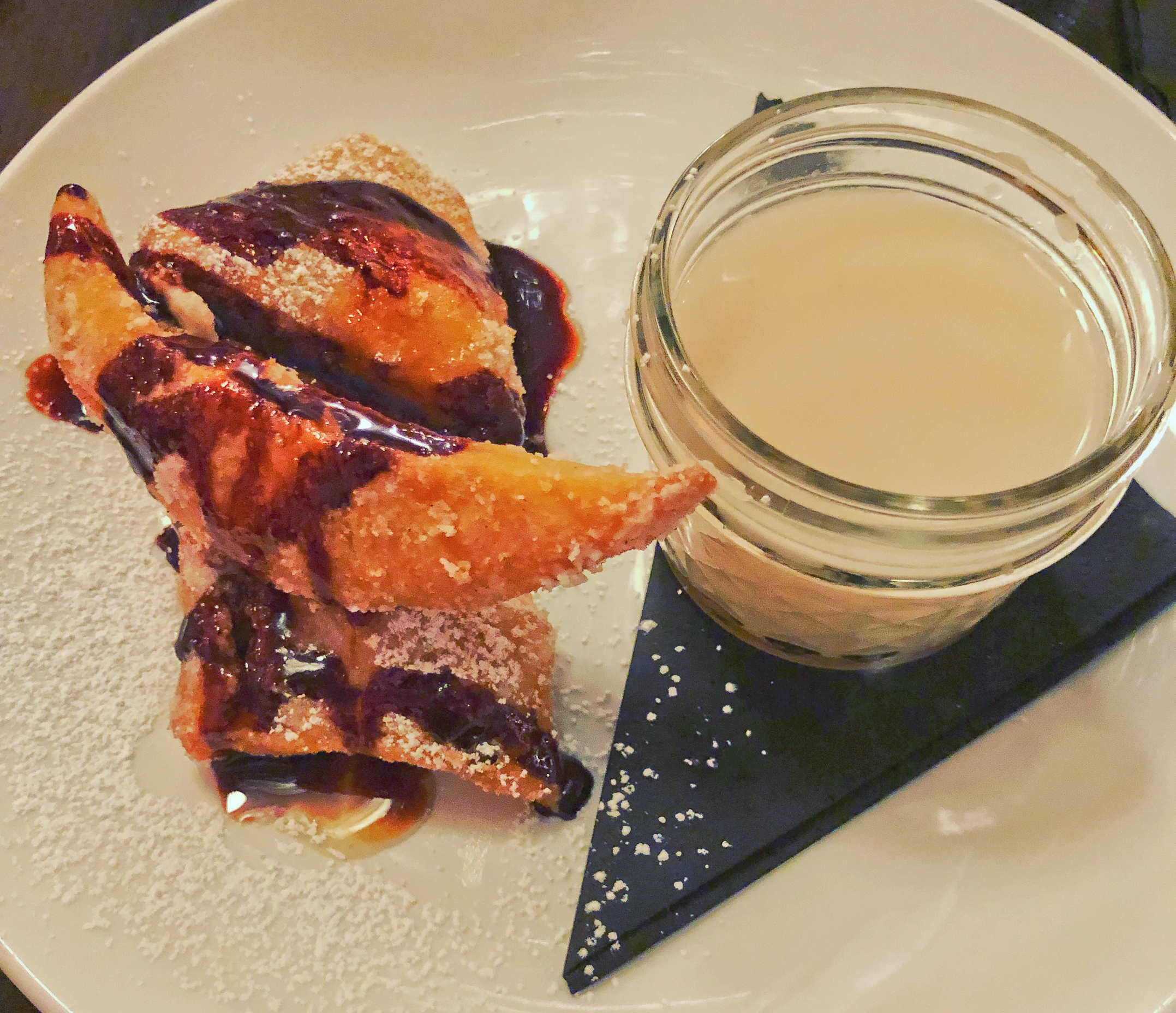
Dessert. This is the first good sopapilla I’d had since childhood.

As we dined on light, crisp sopapillas drizzled in chocolate sauce and local honey, we discussed why knowing the story behind the food we eat, especially the seafood we eat, matters. This is an important point for both classroom and community discussions. When you know when, where, how and by whom your seafood was harvested, you can appreciate the effort that went into producing that seafood. Moreover, you can trust it.

Frozen shrimp from Thailand? Not so much.
All Blog Posts

KNOW FISH: Know your fishermen and make a difference

  • May 11, 2017October 20, 2021
  • by Colles Stowell
Share it!
Share

Relating sustainable seafood concepts is not always a linear conversation. Sure, you can cover the essentials: Buy local; buy abundant; avoid harmful harvest methods; be aware of any regulatory compliance issues. But getting the message to sink in involves an emotional trigger from the consumer. They have to care about it.

So I told the crowd at the KNOW FISH dinner at Franklin Oyster House in Portsmouth, NH Tuesday night that they might approach their next seafood purchase the same way they do when buying eggs or produce at a farmer’s market. That direct-from-the-producer purchase almost instantly resolves many of the trust issues that arise with buying seafood at a store or restaurant.

Seafood consumers have the right to ask the same questions standing at a seafood counter or sitting in front of a menu that they would have buying ground beef from the farmer. Where does it come from? How was it harvested? When was it harvested? If it was farmed, what was it fed?

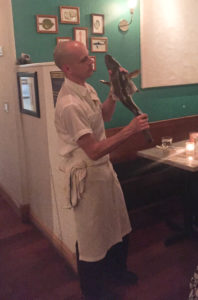
Franklin Oyster House Chef/Owner Matt Louis telling the tale of the cod. photo credit: Stephen Martin.

One conversation at a time

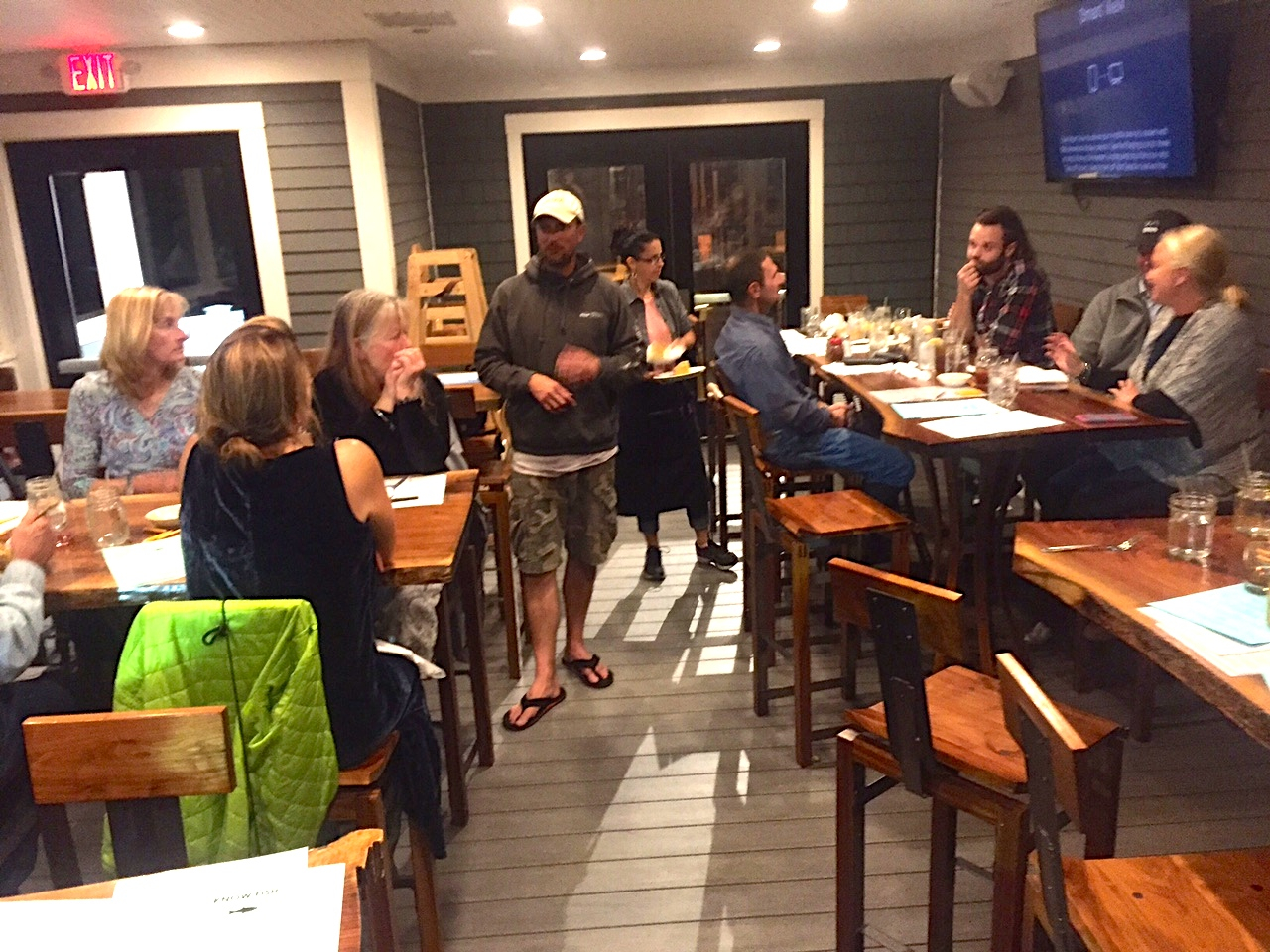
It was anything but a quiet dinner. It was an engaging conversation and everyone was involved. The food curious. The fishermen. The locals looking for an interesting evening discussion and dinner. The oystermen. The foodies. The activists.

At the outset, I invited everyone into the conversation by asking them to either announce why they’d attended the KNOW FISH dinner or to mention a key factor in their seafood buying decisions.

From there, the conversation took off, and we covered topics such as sustainable seafood definitions, the shockingly high proportion of imported seafood consumed in the U.S., industrial scale fishing impacts on global and domestic markets, climate change, what to look for in local seafood and how to support local fishermen.

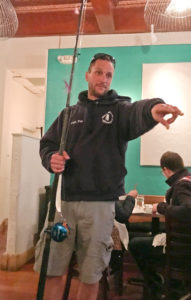
Capt. Tim Rider and the fishing gear responsible for the evening’s tasty meal. Photo credit: Kate Masury, Eating with the Ecosystem

Fish tales

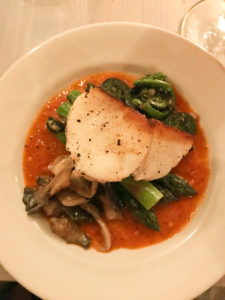
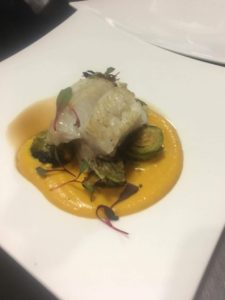
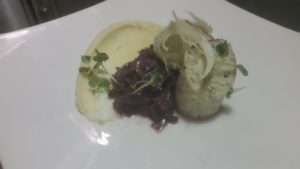
People were able to ask Capt. Tim Rider about how and why he fishes with rod and reel for ground fish. They wanted to know where they could get his fish, which was brilliantly prepared by Chefs Matt Louis and Matt Decker. Salt Cod Brandade with a killer ramp pesto and Roasted Cod that was swimming about five hours before it arrived on our plates. And what a treat it is was to taste the spring bounty of fresh fiddleheads, asparagus and ramps!

Got fresh? How about swimming in 100 feet of cold North Atlantic water 5 hours before appearing as roasted cod in this photo? Photo credit: Kate Masury

Capt. Tim suggested attendees patronize restaurants like Franklin Oyster House Black Trumpet and 7th Settlement in Seacoast N.H., and When Pigs Fly Pizzeria in Kittery, Me. (as well as other area restaurants) that buy fish from New England Fishmongers, the company he and business partner Amanda Parks operate. He also mentioned that they have started a local community supported fishery, which like a CSA, allows people to buy shares of the upcoming catch every week during a season. This model replicates the farmer’s market buying experience.

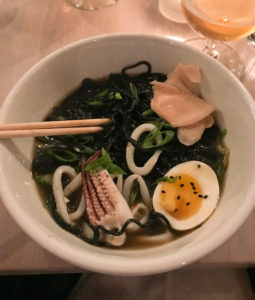
Attendees asked oysterman Tim Henry of Bay Point Oyster Company about the Franklin Oyster, which was served at the beginning of the meal, and which Tim grows expressly for Chef Matt Louis at Franklin Oyster House. They talked about some aquaculture details such as the process of nurturing the spat that grows into adult oysters with oysterman Brian Gennaco of Virgin Oyster Co. This conversation was set to the backdrop of an otherworldly Asian-inspired dish featuring grilled squid served over squid ink ramen cooked in a green crab stock. That stock fed the conversation about why green crabs do so much ecological harm and the ways of trying to popularize their use in cooking.

REALLY tempted to ask for seconds! photo credit: Kate Masury

As everyone tucked into a chocolate-coma-inducing dessert called “Phish food” (a “fudgy” cookie topped with chocolate ice cream, caramel and a torched marshmallow), we talked about how individually and together we can make a difference. Individually, attendees can refer to seven sustainable seafood principles printed on the back of the evening’s menu when considering seafood. Together, we all need to spread the message. When, where, how, and by whom seafood is harvested matters. It matters, locally to our diets, our conscience, the fishermen in our communities, the communities themselves, and the seafood resource. It also has global significance.

The next KNOW FISH dinner at Tinos Greek Kitchen on May 23 will continue this conversation.

The more we have these conversations, the more we shift the current domestic dynamic.

Here’s how to get your tickets and get in on the discussion.


Top photo credit: Stephen Martin


All Blog Posts

Sustainable Seafood: One Conversation at a Time

  • October 18, 2016October 20, 2021
  • by Colles Stowell
Share it!
Share

“We need to be having more of these conversations.”

Yes, we do.

The overriding dynamic we need to change in this country regarding seafood is this: more than 90% of the seafood we eat is imported. This is an oft-cited statistic that seems to raise eyebrows … then disappears into the ether as we go about our business.

That statistic doesn’t really begin to take on significant meaning for people until they see it in context and start connecting the dots as to why this is happening, and what we can do about it.

I launched One Fish Foundation to bring this message to schools and communities. I started the KNOW FISH dinner series with a great team to spark the type of community discussions that get people to ask questions, seek answers and understand they have an impact, however small, on the resource. Hopefully, their decisions and their understanding can spark other conversations and even, dare I say it, start a groundswell.

kfwpfpollock
Pan-seared pollock from the F/V Finlander

Thus, the first KNOW FISH dinner held last week at When Pigs Fly in Kittery was a success. Attendees sat next to fishermen, fishmongers and activists and asked questions. They discussed the domestic seafood picture and why we should care when, where, how and importantly, by whom our seafood is harvested.

They heard from Capt. Tim Rider, of the F/V Finlander and New England Fishmongers about how small-scale New England fishermen are getting squeezed out by unfair regulations and big operations with deep pockets. They learned what questions to ask and how to get smarter about the choices they make. They learned from Spencer Montgomery of Dole & Bailey and New England Fishmongers why it’s important to shorten the supply chain and buy locally caught seafood. He told them some signs to look for to tell if a fish has been sitting around too long.

They learned interesting trivia about New England and its fisheries. They learned how climate change is impacting the Gulf of Maine.

kfwpfsausage
Unbelievably delicious cusk (local, abundant) sausage from M/V Finlander.

And Chef Robert Martin put on a feast: delicious cusk sausage (trust me here!), pan-seared pollock, and roast cod (all fresh caught and graciously donated by Capt. Rider) and accompanied by tasty, artfully presented seasonal vegetables.

I was encouraged with the comment above and others like it as departing attendees expressed a new perspective and perhaps reflected even a bit of my enthusiasm for sharing the sustainable seafood message. Our decisions make a difference.

Perhaps if we keep having these discussions, that 90% statistic will become a distant memory and the narrative will shift to one of widespread support for domestic, local, sustainable fisheries. One conversation at a time.

The next will be the KNOW FISH dinner on Oct. 27 at Black Trumpet in Portsmouth. Get tickets here.

Come join the conversation … and the feast.

All Blog Posts

Day in the Life of a New England Groundfish…

  • September 1, 2016October 20, 2021
  • by Colles Stowell
Share it!
Share

As the last sprays of daylight faded to black, I stepped off the M/V Finlander in Eliot, Maine and tried to get grounded. I was tired. Damn tired. And a bit sore. We’d left the dock at 1 a.m., traveled four hours to the fishing grounds 65 miles out, fished hard for 9 hours with rod and reel and chugged back to port, docking at about 8:30 p.m.

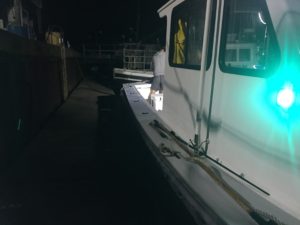
Loading up just after 1 a.m.

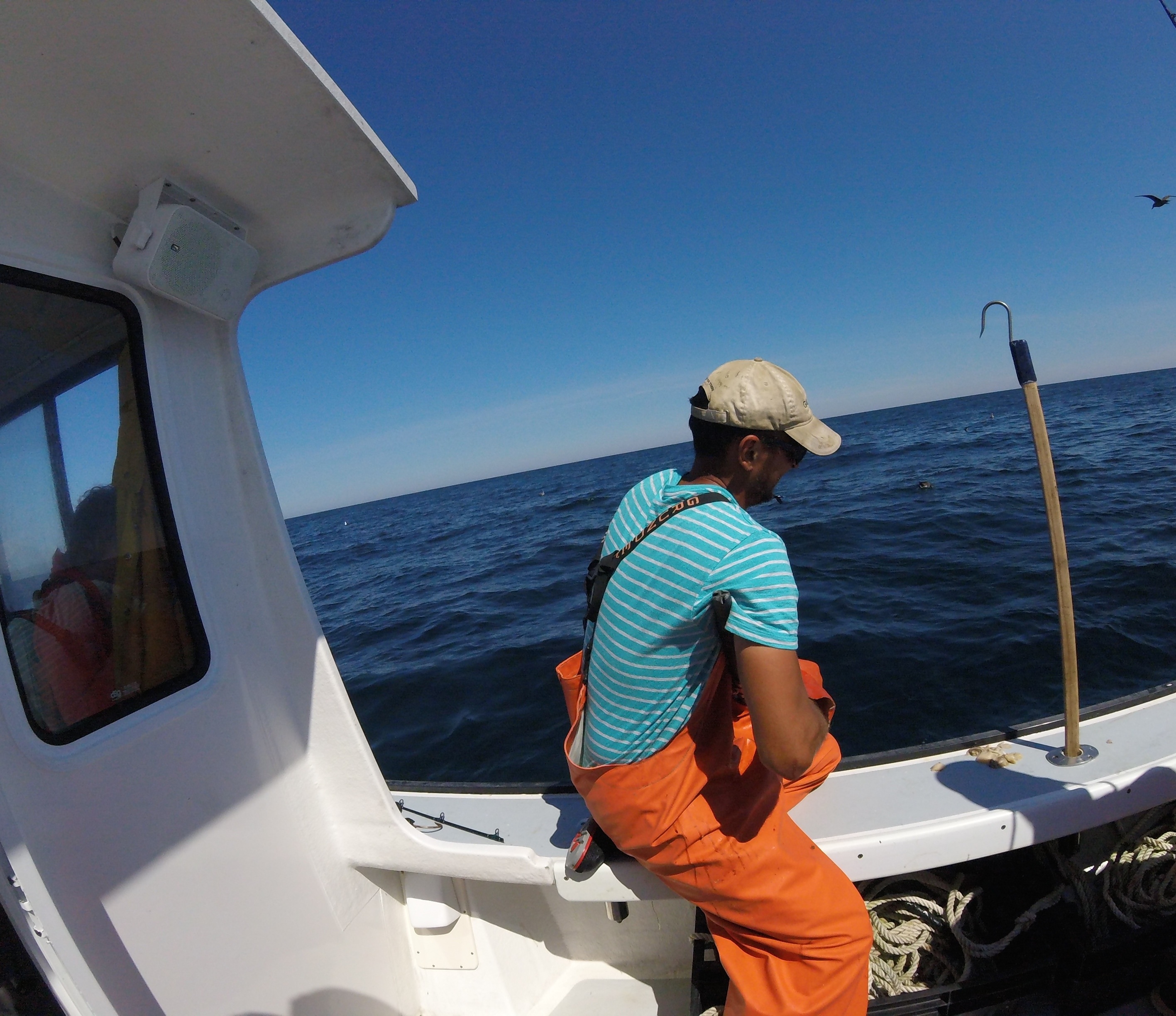
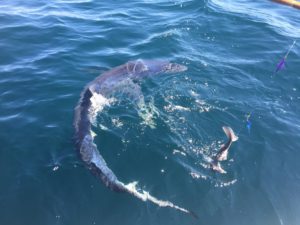
This wasn’t recreational fishing. To get comfortable, I dangled a leg over the gunwale of the 36-foot commercial fishing boat and rested the heavy-duty rod on my leg while jigging a 20-ounce shiny lure and three flies just a foot off the bottom, 400 feet down. When a fish hit, I’d have to crank it all the way up with an industrial-strength reel and hope the 10-foot blue sharks circling the boat wouldn’t steal the fish. Hoist the fish in, measure it after removing the hook, toss it in the tub. Do it again.

Get two fish and you’re likely to be winding 25 lbs or so up 400 feet. POW! A shark hits near the boat and starts smoking line off the reel. The telltale snap two minutes later signals the end of the fight, and you reel up nothing. Time to re-rig. Crank up a couple hundred pounds of fish or so in a few hours, and you’re going to feel it. At least I did. I managed to get past the queasiness and avoid any embarrassment on deck. Any concept of a toilet was sacrificed for an extra bunk to “conserve” some energy on the long rides. The head was a 5-gallon bucket.

It was a long day.

So I had one question for Capt. Tim Rider before I trekked back to my car. “You do this every day?”

Narrow miss
Narrow miss on a dogfish. Check out the video of five sharks circling the boat.

“Just about,” he said, as he cleaned the cabin for the next trip. He’d decided not to fish the next day. We’d brought back 800 lbs. of pollock and haddock, and he would need to drive it to the auction in Portland. (He often sells his catch directly to chefs who share the same beliefs on protecting the resource.) He hadn’t seen much of his family in the past two weeks, having slept in his own bed only two nights in 14 days. The rest of the time he was on the boat.

Paying the price

Fighting to stay awake on I-95 on the way home, I thought about that commitment. Fishing courses through Rider’s veins. It would have to. Otherwise, it sure would be a hell of a lot of work for not a lot of reward. This is particularly true because Rider is part of the Common Pool, a fisheries policy that often forces fishermen like Rider to fish way out because they didn’t have the capital, timing, luck or patience to get the permit to fish the Catch Share sectors. Catch shares are another fisheries policy that operates like a cap-and- trade quota system, often favoring those with the most capital, which can mean access to more desirable fishing grounds.

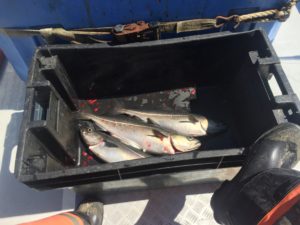
Quality control Step 1. Bleed the fish.

Currently, the outer edge of where Common Pool fishermen are allowed to fish fluctuates seasonally from 18 to 80 miles out. The difference means a couple of hours of travel and probably $300 or so in fuel, tackle and ice.

But the difference runs deeper than that.

When the Maine Department of Marine Resources distributed NOAA funds to offset losses from the groundfish (read cod) disaster relief last year, the money went to fishermen with quota who had the largest landings of groundfish. Those in the common pool were not invited to the table, and therefore, did not receive any disaster relief.

Many ironies exist in fisheries management. And this is one of the starkest examples. Those most hurt by the reduced fishing income were overlooked when it came time to provide financial support. Those like Rider who are so passionate about protecting the fishery that they jig fish in up to 500 feet of water to reduce bycatch seemingly face steeper hurdles than larger scale trawl fishermen, whose bycatch is much more significant.

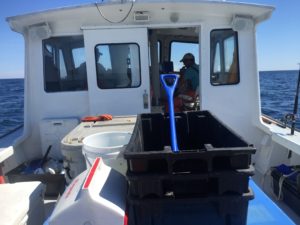
Strategizing the next fishing stop.

Sector inequality

It is easy to say this is purely a situation of the haves and have-nots. But fisheries management is much more complex than that. Current New England groundfish regulations were initially established in 2010 on the principal that fishermen would more equitably manage and effectively safeguard the resource by creating a free-market environment. The total allowable catch of groundfish such as cod, haddock, Pollock, flounder and other species was divided and allocated to groups of fishermen in sectors, or harvesting cooperatives, based on who had the largest landings between 1995-2005. Fishermen purchased permits that allowed them to fish for certain species in certain areas within the sector during certain seasons. Under this Catch Share system, they are allowed to continue catching fish during the season until they reach the quota limit for each species.

http://qkl.fa0.mwp.accessdomain.com/wp-content/uploads/2016/08/cabin-sound.mp4

The Finlander’s “purr”…

Unfortunately the Catch Share model overlooks a fundamental truth about fisheries economics: If financial resources determines access, then those with the most financial resources will have the most access. And so, an inequitable system was born and small-scale fishermen like Rider are squeezed … hard. Large-scale operators with the resources are encouraged by the very nature of the “get big or get out” system to grow and gobble up more quota, potentially leading to the type of abuses that led to the arrest of the largest distributor in New England last February.  Carlos Rafael’s arrest underscores another truth about the current system: the bigger players don’t necessarily think in terms of good stewardship.

Ocean classroom

Which brings me back to the reason I wanted to go out with Tim for what was pre-ordained to be a very full day. He’d tried to convince me soon after we passed the Isles of Shoals on the way out under a half moon sky. “Colles. I’m not kidding. Get some sleep. It’s a long @#$%&*! day. You’re going to need it.”

The Finlander heads home. Arrived at dock at 8:30 p.m.

I wanted a glimpse, however brief, of what it’s like to be a New England groundfish fisherman, passionate about the work and the resource, and riding the anxiety of an ever-changing fishery with continually tightening restrictions and razor-thin margins. Debt. Changing ecosystems, but slow-to-change consumer palettes. Perpetually bone tired, fueled on adrenaline and Monster drinks (not me) and taking in what the ocean has to offer: whether it be a full hold to bring back to the dock, un-forecasted six-foot seas, a tuna crashing bait or a giant ocean sunfish lazily cruising the surface.

I’ll think of that experience every time I stand in front of a group of people in a classroom or a restaurant to discuss what sustainable seafood means.


Check out the latest news updates about Capt. Tim Rider and the M/V Finlander crew at New England Fishmonger’s Facebook page. There, you’ll see some of the Seacoast restaurants the Finlander supplies.

Top photo: Capt. Tim Rider tries … unsuccessfully … to finagle his gear back from a blue shark.

All Blog Posts

Climate Change Could Threaten Several Northeast Fisheries New Study…

  • February 6, 2016October 20, 2021
  • by Colles Stowell
Share it!
Share

Go ask Long Island lobstermen … if you can find any … what they think about climate change. Trouble is, there aren’t many left because there aren’t many lobsters left in Long Island Sound. Same thing with Atlantic cod fishermen. There aren’t nearly as many boats targeting cod compared to 25 years ago because there are fewer fish.

We can blame climate change to a degree. No, it would be shortsighted to blame all fisheries depletions on warming waters. Myriad factors including fishing pressure can conspire to harm stock health. But a new study from NOAA underscores a concern many scientists and fishermen share: ever warming waters will continue to dramatically impact fisheries.

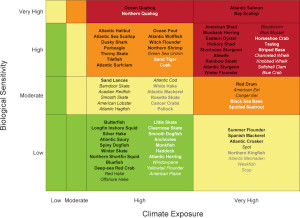
Published in the journal PLOS ONE, the study relies on a new methodology to look at how 82 species in the Northeast region have been and will be affected by climate change. Specifically, the study measures which species will be most vulnerable to climate change effects, including ocean acidification, as well as which species’ migratory patterns will most likely change because of ocean warming. In a nutshell, species that live along the ocean floor such as cod, mussels and lobsters, and those like salmon and sturgeon that migrate between salt and fresh water are most at risk.

Some of the species’ responses we already know. As the Gulf of Maine warms faster than 99% of all ocean climates on earth (at a rate of a half a degree Fahrenheit increase per year for the past decade), several native species have reacted. Lobsters have moved north and east along the coast, leaving fisheries in Long Island and Cape Cod in succession. The Northern Shrimp fishery has collapsed in the past few years. Scientists speculate the combination of warming waters limiting spawning and reducing the amount of plankton the shrimp eat is largely to blame. Scientists also say these warming waters limit cod reproduction and health and survivability of juveniles.

European green crab. Credit: NOAA

Gulf of Maine temperature increases have opened the door to invasive species like black sea bass and scup, and have made bays and estuaries more hospitable to European green crabs, whose numbers have risen exponentially in the past few years. Green crabs wreak havoc on eelgrass flats as they burrow in to eat larval mussels, clams and oysters.

Jon Hare, a fisheries oceanographer at NOAA Fisheries’ Northeast Fisheries Science Center (NEFSC) and lead study author, said the main purpose of this study is to give fisheries managers and other stakeholders tools to take climate change into account when devising management policy.

“We’re never going to have perfect information,” he said. “The ecosystem is going to change because of a combination of anthropogenic influence such as greenhouse gas and natural climate variability.” To keep up with the pace of that change, which has been dramatic in the past 10 years, Hare and his colleagues developed a methodology that incorporates already established research and factors in expert extrapolation. This methodology helps them predict things like how mussels will respond to warming waters or how they will react to increased acidity in their ecosystem in the next 10 years.


Overall climate vulnerability is denoted by color: low (green), moderate (yellow), high (orange), and very high (red). Certainty in score is denoted by text font and text color: very high certainty (>95%, black, bold font), high certainty (90–95%, black, italic font), moderate certainty (66–90%, white or gray, bold font), low certainty (<66%, white or gray, italic font). Source: Hare et al (2016)

The scientists graded each of the 82 species’ vulnerabilities taking into account different variables, and set those grades to peer review. The result is a composite view of how likely a species may suffer reproductive pressures from increased temperatures or how likely a species may change migratory patterns.

Hare said other studies are beginning in the Bering Sea and off the coast of California, and the National Marine Fisheries Service wants to conduct these studies on all U.S. coasts.

No doubt much discussion will arise from this study and others like it. Some will question the study’s approach, efficacy or even need. Some fishermen may view the study as simply another tool for regulatory bodies like the New England Fisheries Management Council to further restrict fishing without real stakeholder permit. Others might ask why this hasn’t occurred before.

I see a couple of potential positive outcomes. First, the fact that NOAA is not only acknowledging climate change, but also actively trying to take steps to factor that into management decisions is significant. Like any federal agency, NOAA moves at a glacial pace (I wonder how long we’ll be able to use that descriptor…). But Hare and his colleagues eschewed the traditional approach to ecosystem-based management via species-specific analyses, which could take decades, to adopt a faster, potentially more efficient methodology for studying the issue. This is largely because climate change has been transforming ecosystems faster than we can study them.

Secondly, Hare says he hopes this tool becomes iterative — that in fact it will adapt as ecosystems change so scientists and researchers will have a chance to keep closer tabs of impacts than before. Some of fishermen’s frustrations with past NOAA research/policies is that that they are static, and don’t change dynamically with ecosystems. But Hare hopes the iterative process for this methodology will take into account fishermen input when considering which species may be affected by climate change. “Fishing communities will be impacted as well,” he said.

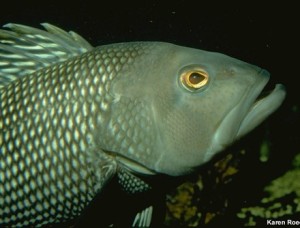
One impact is that some of these communities will start adapting to the changing marine ecosystems and harvest “locally abundant” species that were once considered invasive species. For example, black sea bass have started showing up in lobster traps in Maine because they’ve followed the warming trend north. Now they are an available seafood choice in local stores and restaurants.

black sea bass Credit: NOAA

I too hope this process becomes more collaborative. Because without that interactive participation in the science and policy making, the process will continue to be viewed by many as a set of unilateral decisions curtailing fisheries at the expense of small scale fishermen. As Hare said, even if we magically stopped all green house emissions now, the lingering effects of warming oceans would continue for decades.

Acting now, collaboratively, is the best chance at present for ensuring we effectively manage fisheries even as warming waters seek to change the dynamics. I attended a workshop a year ago in which scientists (including Hare), fishermen, and policy makers discussed how to better predict climate change impacts on fisheries and how to communicate that to fishermen.

Perhaps this is the first step.


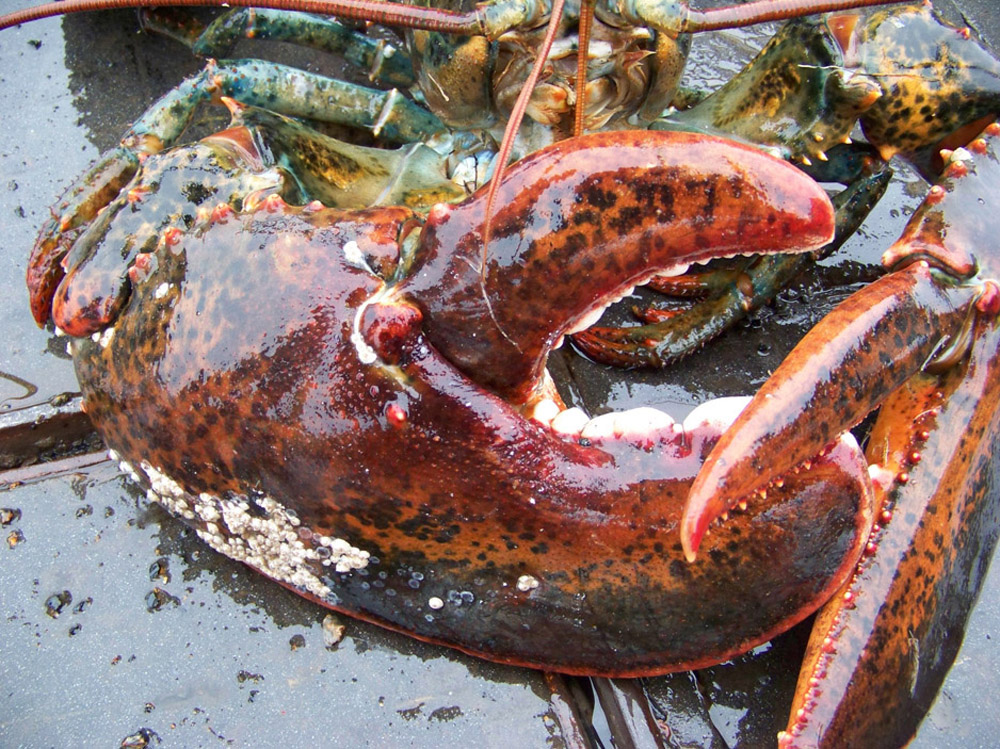
Lobster photo credit: NOAA

All Blog Posts

Rising Temperatures Raising Global Warming Alarms

  • January 28, 2016October 20, 2021
  • by Colles Stowell
Share it!
Share

Summers in New Orleans can all but suffocate the uninitiated. The heat and humidity in August make a five block walk feel like a five mile run in normal conditions. The last time I experienced it for any length of time was in 1985, when I rode the streetcar to and from downtown for a summer job as an accounting clerk. After a couple of days of showing up drenched in my suit and tie, I began tucking my office clothes in a backpack and wearing shorts for the commute. Read more “Rising Temperatures Raising Global Warming Alarms” →

All Blog Posts

Climate Change Hampering Cod Recovery, Study Says

  • October 31, 2015October 20, 2021
  • by Colles Stowell
Share it!
Share

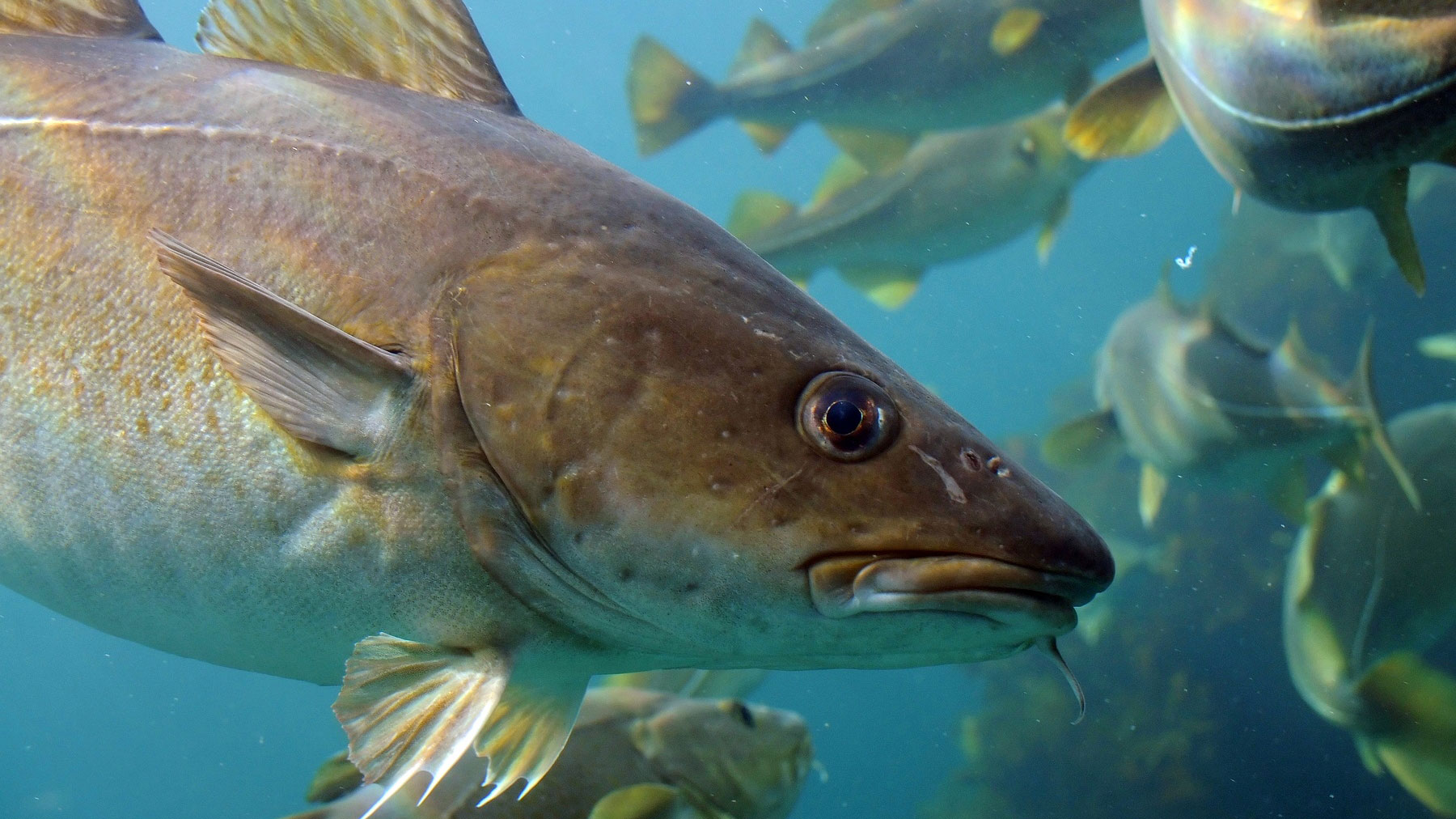
Cold water species like cod don’t like warm water. This we knew. What we didn’t know for sure was just how much. While there are still many questions, a new study published in the journal Science suggests that the warming Gulf of Maine is largely responsible for the inability of cod populations to recover.

For the past five years, environmentalists and some marine scientists have sounded the alarm that Atlantic cod populations have plummeted below the ability to recover from historic harvest levels. They worried adults would not reproduce enough to maintain healthy stocks in the face of such harvests.

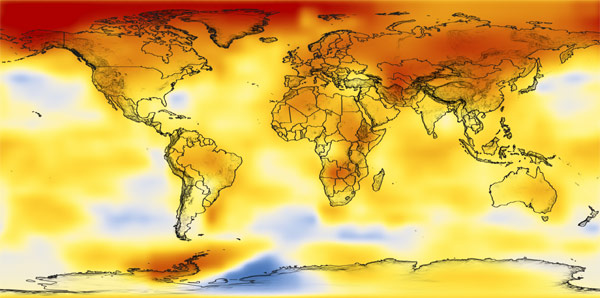
Now scientists believe the warming temperatures in the Gulf of Maine are making life very difficult for juvenile cod. The Gulf of Maine, which runs from Cape Cod up to the tip of Nova Scotia, is warming faster than 99% of the world’s oceans, at a rate of .4 degrees F from 2004 to 2013, or nearly half a degree a year for 10 years.

That warmer water has coincided with a dramatic drop in the number of cod that survive to be adults. Scientists now speculate that food for juveniles, temperature-related stress and the growing number of predators brought in by the warmer water may play a role. They suggest that warmer waters may have caused a drop in some of the zooplankton the larval cod feed on.

Of note in the Science article are a couple of not-so-veiled accusations that fisheries managers didn’t react quickly or as aggressively as they should have to reduce the cod harvest in time to allow it to bounce back. The study’s authors, from the Gulf of Maine Research Institute and 11 other institutions, claim that while previous studies pointed to the damage warmer waters could do to cod reproduction and harvest levels, the fishing quota system and subsequent area closures last year were too little too late.

Additionally, the study suggests that going forward, fisheries managers need to take climate change and ocean warming further into account if they want to establish meaningful regulations.

I agree. Here’s why. The warmer climate has attracted some non-native species that alter the existing ecosystem balance. Invasive green crabs are moving north and having a devastating effect on young shellfish like mussels and clams, and they’re destroying the eelgrass habitats – crucial nurseries for a variety of fish and shellfish.

Black sea bass, typically a mid-Atlantic species, are showing up in lobster pots throughout northern New England. Researchers have found young lobsters in black sea bass bellies. Blue crabs so dear to Chesapeake Bay are now showing up in New England as well. Turns out they seem to chase the green crabs around and perhaps eat them. There’s also an Asian sea squirt that is blanketing large seafloor swaths, choking out native colonies of mussels, sea sponges and other organisms.

These are just some of the new players we know of. The Gulf of Maine is fast becoming a canary in a coalmine regarding climate change impact on marine ecosystems. It is an unwilling test case on what happens when environmental changes alter everything from migration patterns to predator-prey relationships. And as this study suggests, these changes have occurred more quickly than fisheries managers have reacted, creating situations where they’re effectively putting out fires rather than preventing them.

I attended an informative workshop last year in which scientists, fishermen, policy makers and activists discussed how to better predict climate change impacts and how to translate that into better management policies and better communication with fishermen. This was a very productive meeting, and one that needs to happen more frequently and with more stakeholder involvement. It bears repeating that more collaboration with all parties is essential to finding solutions to climate-induced marine ecosystem changes.

Here are some additional resources:

Portland Press Herald: has had a very well researched six-part series on this issue. It’s worth the read.

The Boston Globe: Story on the journal Science report.

NOAA report on current global temperature records.


photo: © Joachim S. Mueller for Pew Trusts

All Blog Posts

Sustainable Seafood Class Is in Session

  • October 26, 2015October 20, 2021
  • by Colles Stowell
Share it!
Share

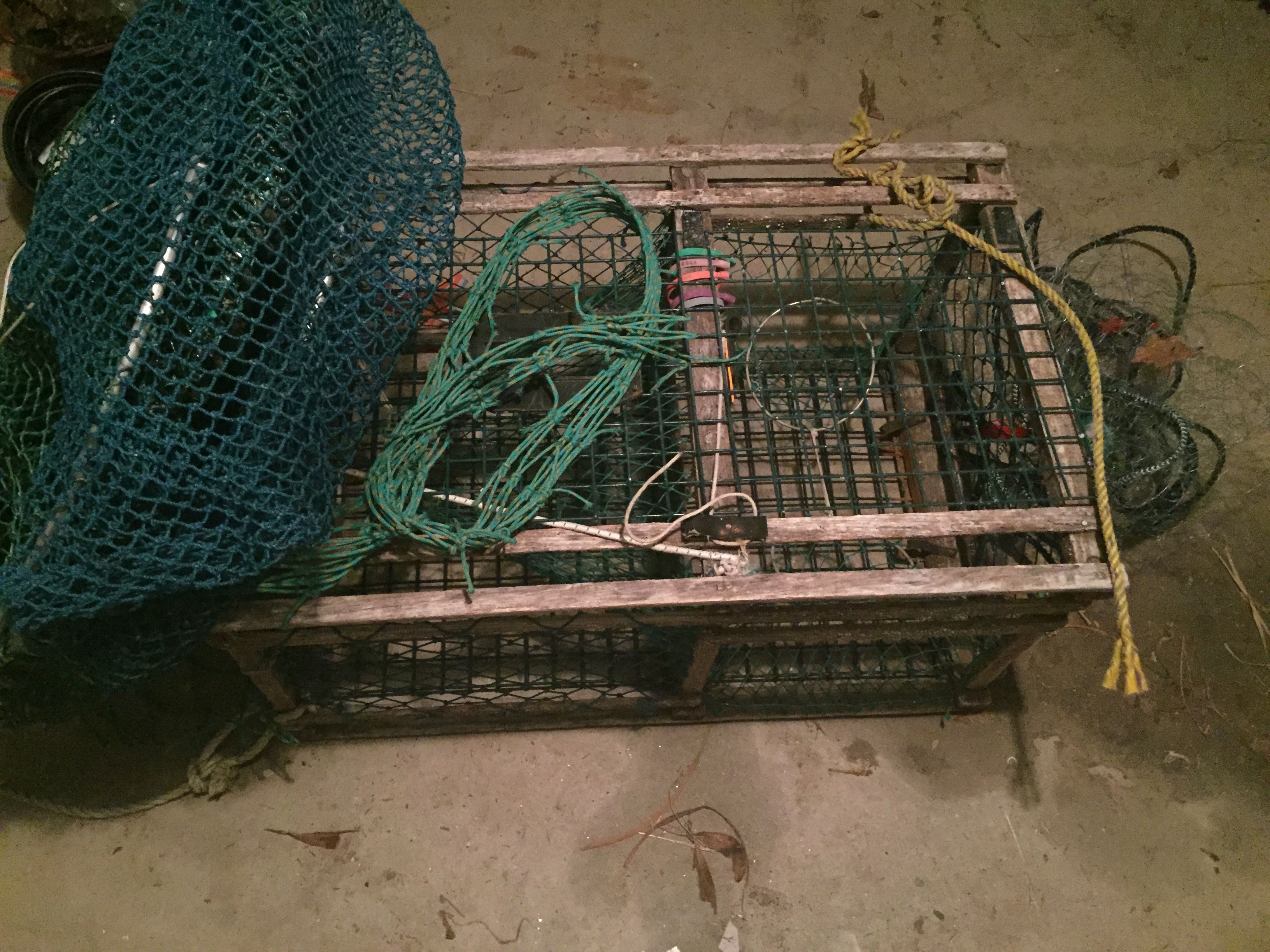
Lobster trap? Check.

Gillnet? Check.

Turtle excluder device? Check.

I’m going in.

Tomorrow One Fish Foundation is headed to the Mahoney Middle School in South Portland to talk to 6th grade Geography students about sustainable seafood.

I think back to the moment a couple of years ago when I first thought about telling students where seafood comes from and how it gets on their plates. I had just served as an “expert” listening to the in-depth sustainability expeditions of 9th graders at the Casco Bay High School for Expeditionary Learning in Portland Maine. The school steeps students in long-term, real-life projects called expeditions, which are focused on a single topic.

I was blown away.

One minute into the first student’s description of his research into the 2014 closure of the Maine shrimp season I realized this curriculum was more creative, more compelling and more rigorous than anything I faced in the early 80s. The student eloquently and accurately explained the reason for the closure – an Atlantic States Marine Fisheries Commission ASMFC decision based on the precipitous drop in landed shrimp in 2012 and 2013. He also pointed to research from the Gulf of Maine Research Institute and other sites suggesting that warmer water fueled by climate change, along with a decrease in phytoplankton and increased predation may have affected reproduction and survival rates.

This 14-year-old had done much of the same research I had done, and he had the interest and drive to keep digging for answers to questions like: What is the cause? What is the sustainable solution? How do we learn from past lessons?

I came away from the experience enlightened, jealous (that I didn’t have that experience in school) and motivated. I’d been writing about sustainable seafood and sustainable fisheries for four years. Why not bring those messages into classrooms where kids are beginning to ask questions about where food comes from, and what they can do to learn more?

So here I am, putting the finishing touches on a lesson plan that will ask 10- and 11 year-olds to think about how their local geography dictates what seafood is available to them, how some of that seafood is caught, and which seafood is abundant. Most importantly, I want to get them confident enough to ask questions in stores and restaurants, and to perhaps even discuss with their families why making sustainable choices is important.

If I can achieve that, I’ll have succeeded.

Recent Posts

  • Hurricane Ida wreaks havoc on Louisiana’s seafood industry
  • EPA Should Use Clean Water Act To Kill Zombie Mine
  • Slow Fish 2021: Relationship Matters
  • Faith, Façades, and Futility
  • Pebble Permit Paused: Politics at Play

Archives

  • September 2021
  • August 2021
  • April 2021
  • December 2020
  • August 2020
  • June 2020
  • February 2020
  • December 2019
  • November 2019
  • October 2019
  • July 2019
  • May 2019
  • April 2019
  • March 2019
  • January 2019
  • December 2018
  • November 2018
  • June 2018
  • May 2018
  • March 2018
  • February 2018
  • January 2018
  • December 2017
  • November 2017
  • October 2017
  • September 2017
  • August 2017
  • July 2017
  • June 2017
  • May 2017
  • April 2017
  • March 2017
  • January 2017
  • December 2016
  • November 2016
  • October 2016
  • September 2016
  • August 2016
  • July 2016
  • June 2016
  • May 2016
  • April 2016
  • March 2016
  • February 2016
  • January 2016
  • December 2015
  • November 2015
  • October 2015
  • September 2015
  • July 2015
  • June 2015
  • May 2015
  • April 2015
  • March 2015
  • February 2015
  • January 2015
Theme by Colorlib Powered by WordPress