Skip to content
One Fish Foundation
  • Blog
    • Aquaculture
    • Education
    • Environment
    • Policy
    • Wild Harvest
    • Fish Tales
  • About
    • About One Fish
    • About Colles Stowell
  • Education
    • Elementary School
    • Middle School
    • High School
  • KNOW FISH Dinners®
  • Resources
    • One Fish Podcast
    • One Fish Foundation in the news
    • The 7 C’s of Sustainable Seafood
    • Newsletter Archive
    • Recipes
      • Skate with Capers and Butter — Chef Rizwan Ahmed
      • Grandma Davis’ Fish Chowder — Jane Almeida
      • Ginger Garlic Tamari Scallops — Colles Stowell
      • Fish Stock — Evan Mallett
      • Mussels San Remo — Chef Rob Martin
      • Salted Pollock Croquettes – Chef Mark Segal
  • Connect
    • Contact OneFish
    • Social
      • Instagram
      • Facebook
      • Twitter
All Blog Posts

DNA, Fraud and Next-Gen Scientists

  • March 27, 2019October 19, 2021
  • by Colles Stowell
Share it!
Share

Imagine a team of scientists collecting DNA samples to see if the seafood sold at local restaurants and stores is correctly labeled. They go to sushi shops, grocery stores and other retail venues and carefully place tiny samples of the fish in a small vial containing ethanol.

Then they take it to the lab where they will use genetic techniques, including Chelex extractions and polymerase chain reaction (PCR), to analyze the DNA of the sample to see if the snapper they purchased is actually Pacific rockfish. Their work is crucial. It will provide a deeper understanding of the rate at which seafood is mislabeled in area retail stores.

Now imagine these scientists are in high school.

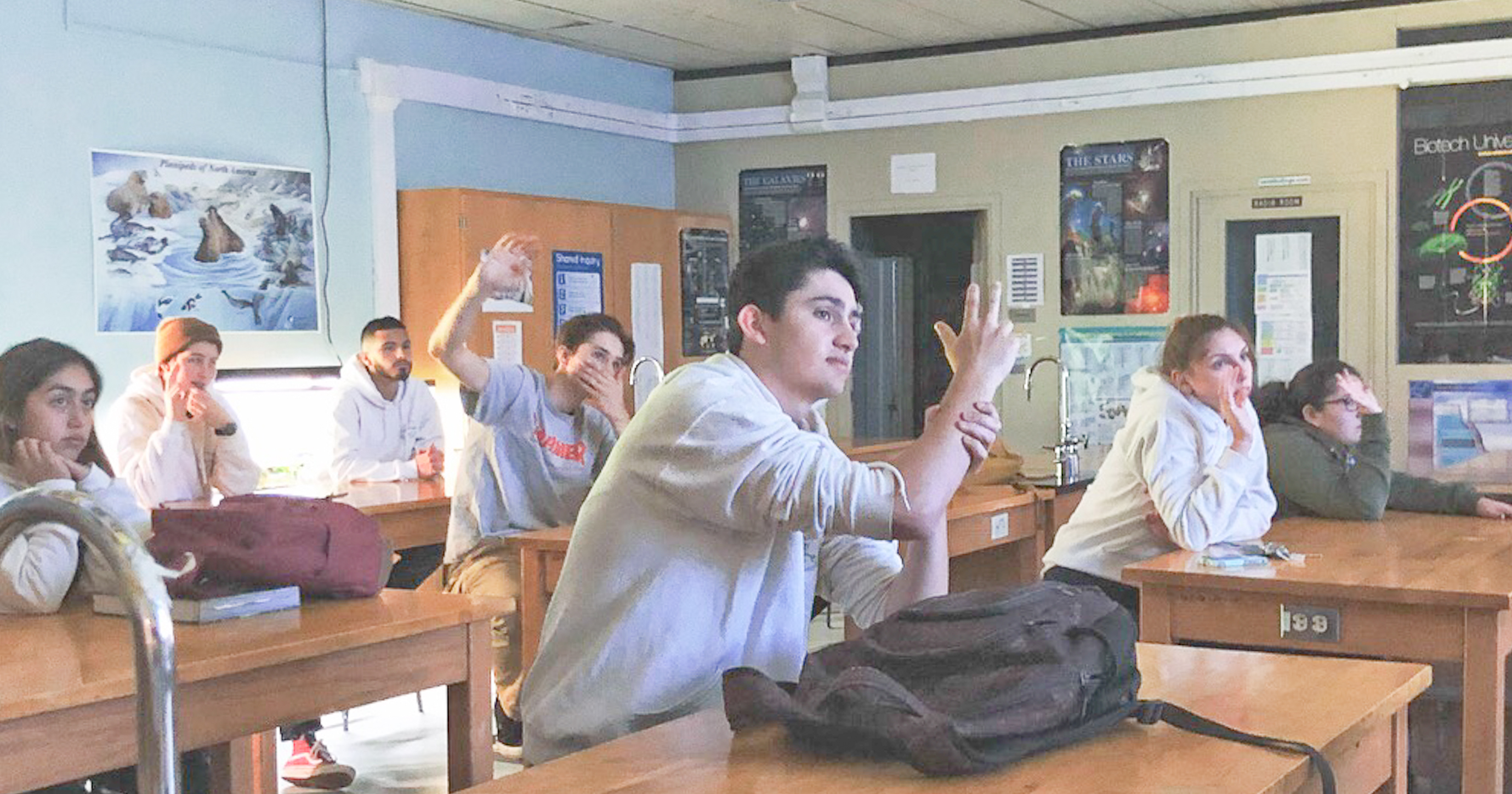
I was inspired by the senior biotech class I visited March 18 at Harbor High School in Santa Cruz, California. I was even more inspired by teacher Nehal Pfeiffer, who developed this project to combine classroom/lab study with real-world challenges. To get students thinking about how the process would work, she started students on testing different foods for genetically modified organisms (GMO).

The students were somewhat surprised to see high GMO content in Cheetos (corn) and veggie burgers (soy). Then the teacher had them break out into groups representing different players in the food industry such as farmers and Monsanto and try to get at the heart of the discussion.

You can guess how this ends up. Lively discussion. Engaged questions. Thoughtful conclusions.

Fraud talk

So I was honored to be invited to speak to these students about fraud in the seafood supply chain. I was there to give them a broader perspective of how and why it happens, the larger dynamic of US and global seafood consumption and what we can do about it.
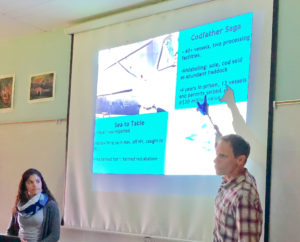
“Codfather” Carlos Rafael and Sea To Table are poster children for what can go wrong with fraud in the supply chain. Arina Favilla (left) helped coordinate the DNA sampling project. Photo credit: Stephanie Webb


After holding up Carlos Rafael and Sea To Table as prime examples of different types of fraud and their impacts on consumer trust, one student raised her hand and asked, “How can they get away with that? Who do we sue?”

Great question that prompted an excellent, interactive discussion. The truth is that current management policy, combined with a clunky mishmash of federal oversight spread over four disparate agencies with a confusing web of priorities and powers enables these types of fraud.

Rafael, the self-styled Codfather, was enabled by the catch share system in the New England groundfish fishery to amass a giant horde of access (permits) to essentially “own” the right to catch more groundfish than anyone else in and around the Gulf of Maine. He then used that power to force out many small-scale fishermen while vertically integrating so that his team of captains could work with his on-shore processing facilities to mask the cod and Dover sole he was catching as abundant (and less subject to expensive quota limits) haddock. He then sold this fish to New York restaurants for bags of cash.

Fortunately, he got caught bragging about the scheme to undercover IRS agents posing as Russian mafia.

I then explained the Sea to Table story as one of co-optation of values. One of the early pioneers of the national boat-to-plate sustainable seafood movement, Sea to Table was outed in an in-depth Associated Press exposé last summer, in which the Brooklyn-based company was alleged to have claimed some of its tuna had been locally harvested off Montauk, NY, when in fact it was caught in North Carolina. Other allegations include selling domestic seafood that may have been linked to international slave trade and offering wild harvested sea urchin that was actually farmed.

Taking initiative

My goal was to give Harbor High students an understanding of why this matters. Beyond the science, which is super cool and something I lament not having access to way back in my time, the understanding of how and why this type of fraud matters hopefully inspires these students to dig in. I’d love to see them discover the level of mislabeling in their communities, put that in context, and do something about it.

I hope they spread the message about why knowing where their (our) seafood comes from matters. I hope they ask questions and share the 7 C’s of Sustainable Seafood with family and friends. And I really hope they get involved in marine science, biotech, climate science or any related field. Seafood fraud is a significant problem and erodes the trust necessary to make community-based fisheries markets work.

And it is just one very complex problem in the domestic and global seafood supply chain.

So I would like to thank Nehal Pfeiffer at Harbor High, and University of California Santa Cruz graduate students Stephanie Webb, Arina Favilla and May Roberts, all of whom coordinated this year’s seafood project with Nehal, for inviting me to speak with the students.

My discussion with these thoughtful, determined students inspired me, giving me hope that we can address these complex issues together.


All Blog Posts

Re-Thinking Current Policy, Data Analysis: a Webinar 11/3/17

  • October 17, 2017October 20, 2021
  • by Colles Stowell
Share it!
Share

Very little in fisheries management is black and white. This is a constant refrain in any conversations I have in classrooms or restaurants. It is often filled with paradoxes. For example, restrictions such as quotas are aimed at preserving a given species, but loopholes, vagaries in the law and profiteering have led to abuses that have jeopardized some stocks.

Look no further than the recent sentencing of Carlos Rafael, AKA the Codfather, after pleading guilty to 28 counts of fisheries fraud, or the administration’s overturning of a federal agency ruling that New Jersey fishermen had landed too many summer flounder (fluke). Both issues are fraught with complexity, and both point to flaws in the current management system.

That’s why we’re hosting a Webinar next month – not to try to solve all of these complex issues, but rather to hone in on one critical piece of the puzzle that often gets overlooked: How to improve fish stock assessments and strengthen collaborative efforts between fishermen, scientists, and managers. We’re going to discuss the idea of turning the current top-down management model on its head by localizing fisheries management and bringing fishermen further into the process of collecting data and determining policy.

We’ll discuss long-term goals and obstacles to achieving a more balanced approach to ensuring the health of marine resources while supporting local fishermen and the coastal communities they serve. This type of approach would allow scientists, policymakers and fishermen working together, to respond more quickly to regional climate-induced ecosystem shifts.

This Webinar will posit these questions: What can we do to bridge the gap between fishermen, scientists and policy makers? Can we build fishermen’s trust in management and data while still safeguarding the resource? Should we re-think the current fisheries management schema, including the data collection model, to respond more nimbly to rapid, often localized climate change impacts? Can we create a system that better protects the resource, supports local fishermen and strengthens coastal communities with a fishing heritage? How would such a system impact individual seafood consumers and institutional buyers?

The hope is this discussion will lay the foundation for more constructive dialogue, which could eventually lead to a framework for fundamental, meaningful change. We recognize that bucking the system carries additional barriers and challenges. That’s why we have Health Care Without Harm (HCWH) joining us. HCWH has a proven track record of leveraging institutional buying power to shift major policy. By breaking out of the fisheries bubble and engaging HCWH, we can lay the groundwork for real change.

Join us online on Nov. 3 at 3 p.m. and become part of the discussion. Would you change fisheries policy now? What does a better management model look like to you? The panel discussion will last for an hour, followed by a moderated audience Q&A.

Here is the link to sign up for the discussion.

Panelists will include:

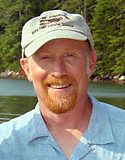
Bob Steneck: Professor of Oceanography, Marine Biology and Marine Policy School of Marine Sciences, University of Maine Darling Marine Center. Bob has been at the forefront of important research on lobsters, kelp and groundfish in the Gulf of Maine, as well as coral in the Caribbean for decades. He has a unique perspective on the dynamic ecosystem changes in the Gulf of Maine and the Caribbean and the recent history of data-driven policy.

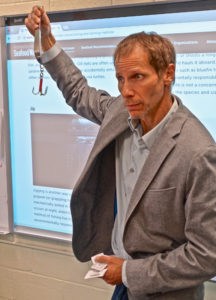
David Goethel: Commercial fisherman out of Hampton, NH and a three-term member of the New England Fishery Management council, which establishes many of the rules regarding groundfish harvest in the Gulf of Maine. He has also served as an advisor to several panels for the Atlantic States Marine Fisheries Commission, which also regulates many New England fisheries species. David brings a powerful perspective having been on both sides of the fisheries management dilemma.


John Stoddard: New England Regional Coordinator for Health Care Without Harm’s Healthy Food in Health Care program. John brings a compelling perspective from working with healthcare food services on what healthcare patients, staff and food buyers look for in sustainably harvested seafood. We know that improved science also affects individual consumers and institutional seafood buyers like hospitals. What role can seafood buyers play in helping improve the system?
Moderator

Colles Stowell: President of One Fish Foundation, a sustainable seafood education non-profit teaching consumers about why they should care where, when, how and by whom their seafood was harvested. Colles works with students in classrooms from kindergarten through college, and adults via community events to discuss a variety of crucial seafood sustainability topics ranging from harvest and aquaculture methods to climate change impacts and policy.


All Blog Posts

Judge Makes Codfather Offer He Can’t Refuse: 46 Months…

  • September 26, 2017October 20, 2021
  • by Colles Stowell
Share it!
Share

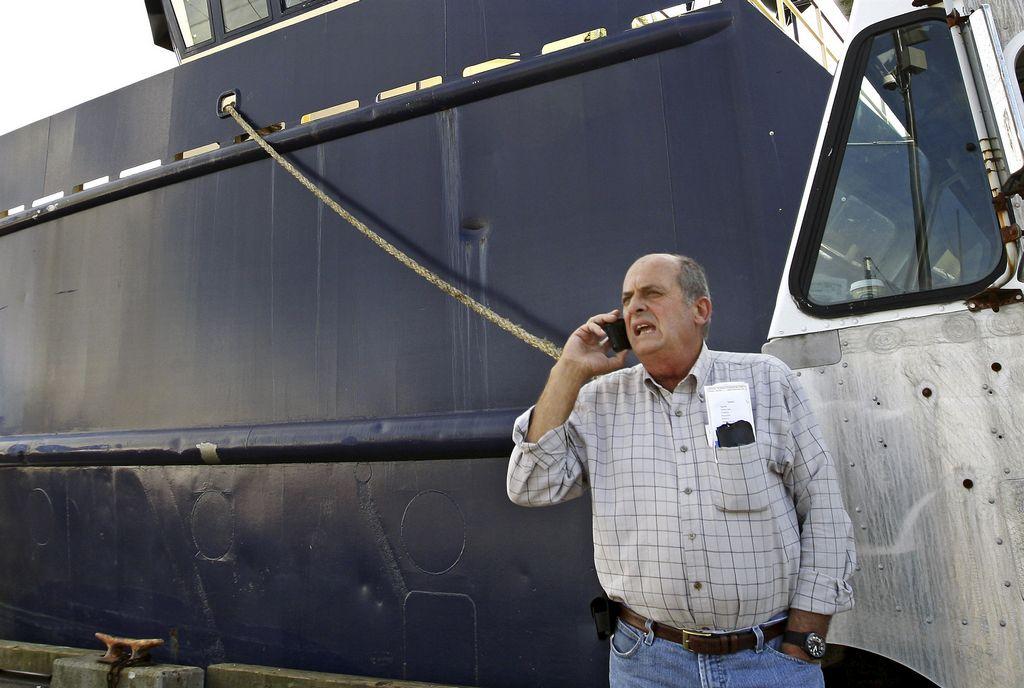
New Bedford fishing kingpin Carlos Rafael was sentenced to 46 months in prison and ordered to pay $200,000 in fines yesterday after pleading guilty to fraudulently mislabeling fish and sending hundreds of thousands of dollars in cash out of the country. He must also pay $108,929 restitution to the U.S. Treasury.

Rafael has become a divisive flashpoint in New England fisheries discussions as activists and smaller scale fishermen have pointed to his case as a glaring example of what’s wrong with much of the current groundfish management system. In court yesterday, his attorney read a statement in which Rafael claimed he essentially committed the crimes he was accused of to benefit his employees, and that it was the stupidest thing he ever did.

Judge William Young wasn’t buying it. “This was not stupid. This was corrupt. This was a corrupt course of action from start to finish,” Young said to Rafael. “… (It was) designed to benefit you. To line your pockets. That’s what it was, and that’s why the court has sentenced you as it has.”

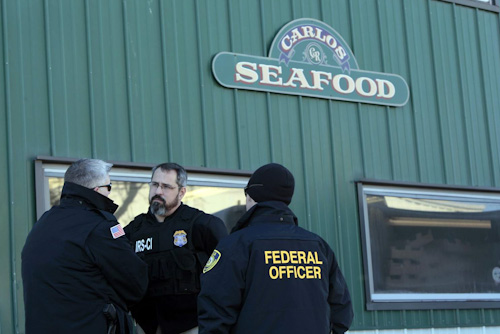
Rafael was arrested a year and half ago after boasting about skirting federal fisheries laws and hiding cash in offshore banks to undercover Internal Revenue Service agents posing as Russian mafia. At the time, he was running the East Coast’s largest fishing operation, with more than 40 fishing vessels and a couple of on-shore processing centers.

A tall tale

How Carlos Seafood got to that point is a story of greed, capitalism and a knack for taking advantage of a flawed management system. The predominant regulation governing New England groundfish is catch shares, which treat access to fishing areas like a market commodity to be traded like stocks, ultimately leading to fleet consolidation. This consolidation raises the cost of doing business so high that many small-scale fishermen are forced out of business.

In Rafael’s case, he not only gobbled up quota and permits, he also controlled a processing facility in New Bedford. Mislabeling fish became much easier when he controlled the captains and crew on the water, and people in the processing plant.

Now, he will serve nearly four years in prison, followed by three years of supervised release. Judge Young also banished him from having anything to do with commercial fishing during his supervised release … which amounts to nearly seven years out of the business.

The underlying issue

Case closed? Not quite. The larger question now is what happens to Rafael’s assets. What happens to the quota he acquired and how will that decision affect regional fisheries markets and fishermen?

The answer to that brings us back to the ever louder claims that the current quota system enabled Carlos Rafael’s rise. What several fishermen and activists have called for is to liquidate the permits and make them available to a broader range of fishermen throughout New England, not just New Bedford. The mayor of New Bedford and several fishermen there said the permits should remain local. Mass. Governor Charlie Baker wants them to stay in the state. At stake are the 13 vessels and the permits that were directly linked to the fraudulent activities, estimated in court documents to be between $27 million and $30 million.

One of the options mentioned in yesterday’s sentencing was to sell all of Rafael’s assets to Richard and Raymond Canastra, the brothers who own and operate the Whaling City Seafood Display Auction as well as the Boston Seafood Display auction. Some fishermen and activists oppose this possibility because Rafael has ties to the Canastras, and because they fear it would result in another vertically integrated entity controlling a large amount of quota. Read: Another version of the Codfather.

The judge essentially said that it is not exclusively up to him to determine allocation of quota, which is governed by NOAA. The hope is NOAA will take the long view on the situation and make a recommendation that benefits a wider swath of fishermen and their communities. In the end, the best decision would also benefit the resource by turning over control of those permits to fishermen who are more likely to obey the law.


For additional reading:

Northwest Atlantic Marine Alliance victim impact statement delivered at sentencing.

South Coast Today news story.

Boston Globe news story

Politico in-depth analysis of the evolution of Carlos Rafael as the Codfather.

Photo credit: Peter Pereira/Standard-Times File/SCMG

All Blog Posts

Fish Mogul’s Arrest Raises Questions About Fisheries Policy

  • April 1, 2016October 20, 2021
  • by Colles Stowell
Share it!
Share

To hear Carlos Rafael tell it, the oceans are there to make a profit on. It’s up to those who have the most resources to make the most profit.

Or so you might think if you looked at the pending federal criminal charges he faces. Or the electronic bracelet around his ankle, which lets law enforcement know if he’s abiding by his curfew, and that he’s likely not trying to slip another fast one past authorities.

According to federal allegations, he’s slipped several million dollars worth of illegally harvested and labeled seafood through his Carlos Seafood operation in New Bedford, Mass. past authorities for decades. In court documents filed last month, investigators from the Internal Revenue Service claim Rafael, the largest seafood distributor in New England with more than 40 boats in his company’s name, intentionally defrauded the government by hiding his actual catch volumes and mislabeling fish. Prosecutors allege the mislabeling involved an intricate scheme whereby less abundant, more regulated and higher priced species like sole were labled as more abundant lower priced haddock arriving at port. Rafael allegedly misrepresented those species on federal catch quota forms he filed by mail or online. Then the species were sold at a higher price to a New York wholesaler who allegedly paid for the fish with bags of cash.

The brazenness with which he allegedly bragged about how he “did the dance,” as he described his activities, is astounding. “When the [inspector] disappears, that’s when we got a chance to make the fish disappear,” he allegedly told undercover agents posing as Russian mafia interested in buying his business, describing the ease of the deception when investigators did not meet his boats at dock. He boasted of netting $668,000 in less than six months, and that he smuggled some of the cash to bank accounts in Portugal, according to the affidavit.

Rafael is out on a million-dollar bond, wearing the ankle bracelet as a constant reminder of what went wrong after he allegedly tried to sell his business for $175 million, even though his books only reported $21 million in combined assets. The rest, he told undercover agents, was unreported profit, according to the affidavit filed in federal court.

As of last week, the court granted a prosecution request for an extension in seeking an indictment.

The news of Rafael’s arrest on Feb. 26 shook the industry from coast to coast. The aftershocks continue to send ripples throughout the entire supply chain and beyond.

Many commercial fishermen spoke out, pointing to Rafael as an example of how existing fisheries management policy has created an environment that breeds the kind of abuses Rafael is accused of. Specifically, they point to current catch share programs that allow deep-pocketed operations like Rafael’s to buy up the quota and essentially control fisheries. Not only do they gobble up quota and permits, they also snatch up processing facilities on shore, so that defrauding the management system, as prosecutors allege Rafael did, is easier. If you control the captains and crew on the water, the boat, the processor and the supply chain, mislabeling becomes a much easier process.

This schema has several negative impacts. First, it forces out smaller scale fishermen, many of whom are family operations in business for generations and just barely scraping by. If they don’t have the profit to pay for the ever-escalating quota costs, they can’t compete. Secondly, placing control over select fisheries into the hands of a few well-funded operations means there are fewer disparate voices on the water actually taking care of the resource. Put another way, there are fewer people self-policing the fishery to make sure peers aren’t cheating. Also, more eyes on the water can be a first alert to dramatic changes in the fishery, hopefully triggering a fast response to protect the resource.

But here’s another problem that arose in the wake of the news of Rafael’s arrest: Public image. It takes one or two people getting caught cheating the system on a grand scale to cast a long shadow on commercial fishermen. It’s the case of one bad apple taking out the whole bushel. The arrest of Rafael, who is a fleet owner and distributor, not a fisherman, has fueled questions about how rampant this kind of fraud is within the current quota system. Witness this blog from the Conservation Law Foundation. I’ve seen recreational fishing guides discussing this on social media.

The reality is that most commercial fishermen in the U.S. are just trying to make a living. Most know that if they don’t take care of the resource, they could put themselves out of business.

The U.S. has one of the most closely regulated fishing industries in the world. Any fraud or other illegal operations that occur here pale in comparison to what happens in Asia, for example. [Quick side note: It’s kind of frightening to think of what could happen if trade agreements like the Trans Pacific Partnership are fully ratified. Domestic fishermen already fighting an uphill battle against foreign imports and large quota grabs will likely be pushed out even faster, as cheap, largely uninspected foreign seafood floods the market.]

The close scrutiny of U.S. investigators led to the charges against Rafael. Perhaps the fact he’s been convicted of tax evasion and making false statements on landing slips and was acquitted of price fixing charges in the past 30 years helped focus that scrutiny.

If there is a silver lining in this mess, it’s this: First, a significant operator was caught allegedly cheating the system on several boldface fronts. Second, those charges have elevated the discussion of how and why such alleged crimes occurred. Third, the discussion will continue to focus on the current quota system, and how it promotes an uneven system of the “haves” controlling fisheries at the expense of the “have nots.” Fourth, it will hopefully unify commercial fishermen to speak out against current catch share policy, and perhaps take a renewed approach to self-policing violations that could further damage the industry image.


Further reading

Here are two additional examples where operators have exploited weaknesses in current catch share policy … and got caught.

Arne Fuglvog: Alaska fisherman, turned policy maker, turned federal inmate, turned lobbyist.

American Seafood, one of the largest businesses in U.S. Seafood, controlling Pollock quota system, convicted of tampering with the scales used to weigh and report Pollock catches.


photo credit: PETER PEREIRA/THE STANDARD-TIMES/SCMG


Recent Posts

  • Hurricane Ida wreaks havoc on Louisiana’s seafood industry
  • EPA Should Use Clean Water Act To Kill Zombie Mine
  • Slow Fish 2021: Relationship Matters
  • Faith, Façades, and Futility
  • Pebble Permit Paused: Politics at Play

Archives

  • September 2021
  • August 2021
  • April 2021
  • December 2020
  • August 2020
  • June 2020
  • February 2020
  • December 2019
  • November 2019
  • October 2019
  • July 2019
  • May 2019
  • April 2019
  • March 2019
  • January 2019
  • December 2018
  • November 2018
  • June 2018
  • May 2018
  • March 2018
  • February 2018
  • January 2018
  • December 2017
  • November 2017
  • October 2017
  • September 2017
  • August 2017
  • July 2017
  • June 2017
  • May 2017
  • April 2017
  • March 2017
  • January 2017
  • December 2016
  • November 2016
  • October 2016
  • September 2016
  • August 2016
  • July 2016
  • June 2016
  • May 2016
  • April 2016
  • March 2016
  • February 2016
  • January 2016
  • December 2015
  • November 2015
  • October 2015
  • September 2015
  • July 2015
  • June 2015
  • May 2015
  • April 2015
  • March 2015
  • February 2015
  • January 2015
Theme by Colorlib Powered by WordPress