Skip to content
One Fish Foundation
  • Blog
    • Aquaculture
    • Education
    • Environment
    • Policy
    • Wild Harvest
    • Fish Tales
  • About
    • About One Fish
    • About Colles Stowell
  • Education
    • Elementary School
    • Middle School
    • High School
  • KNOW FISH Dinners®
  • Resources
    • One Fish Podcast
    • One Fish Foundation in the news
    • The 7 C’s of Sustainable Seafood
    • Newsletter Archive
    • Recipes
      • Skate with Capers and Butter — Chef Rizwan Ahmed
      • Grandma Davis’ Fish Chowder — Jane Almeida
      • Ginger Garlic Tamari Scallops — Colles Stowell
      • Fish Stock — Evan Mallett
      • Mussels San Remo — Chef Rob Martin
      • Salted Pollock Croquettes – Chef Mark Segal
  • Connect
    • Contact OneFish
    • Social
      • Instagram
      • Facebook
      • Twitter
All Blog Posts

Re-Thinking Current Policy, Data Analysis: a Webinar 11/3/17

  • October 17, 2017October 20, 2021
  • by Colles Stowell
Share it!
Share

Very little in fisheries management is black and white. This is a constant refrain in any conversations I have in classrooms or restaurants. It is often filled with paradoxes. For example, restrictions such as quotas are aimed at preserving a given species, but loopholes, vagaries in the law and profiteering have led to abuses that have jeopardized some stocks.

Look no further than the recent sentencing of Carlos Rafael, AKA the Codfather, after pleading guilty to 28 counts of fisheries fraud, or the administration’s overturning of a federal agency ruling that New Jersey fishermen had landed too many summer flounder (fluke). Both issues are fraught with complexity, and both point to flaws in the current management system.

That’s why we’re hosting a Webinar next month – not to try to solve all of these complex issues, but rather to hone in on one critical piece of the puzzle that often gets overlooked: How to improve fish stock assessments and strengthen collaborative efforts between fishermen, scientists, and managers. We’re going to discuss the idea of turning the current top-down management model on its head by localizing fisheries management and bringing fishermen further into the process of collecting data and determining policy.

We’ll discuss long-term goals and obstacles to achieving a more balanced approach to ensuring the health of marine resources while supporting local fishermen and the coastal communities they serve. This type of approach would allow scientists, policymakers and fishermen working together, to respond more quickly to regional climate-induced ecosystem shifts.

This Webinar will posit these questions: What can we do to bridge the gap between fishermen, scientists and policy makers? Can we build fishermen’s trust in management and data while still safeguarding the resource? Should we re-think the current fisheries management schema, including the data collection model, to respond more nimbly to rapid, often localized climate change impacts? Can we create a system that better protects the resource, supports local fishermen and strengthens coastal communities with a fishing heritage? How would such a system impact individual seafood consumers and institutional buyers?

The hope is this discussion will lay the foundation for more constructive dialogue, which could eventually lead to a framework for fundamental, meaningful change. We recognize that bucking the system carries additional barriers and challenges. That’s why we have Health Care Without Harm (HCWH) joining us. HCWH has a proven track record of leveraging institutional buying power to shift major policy. By breaking out of the fisheries bubble and engaging HCWH, we can lay the groundwork for real change.

Join us online on Nov. 3 at 3 p.m. and become part of the discussion. Would you change fisheries policy now? What does a better management model look like to you? The panel discussion will last for an hour, followed by a moderated audience Q&A.

Here is the link to sign up for the discussion.

Panelists will include:

Bob Steneck: Professor of Oceanography, Marine Biology and Marine Policy School of Marine Sciences, University of Maine Darling Marine Center. Bob has been at the forefront of important research on lobsters, kelp and groundfish in the Gulf of Maine, as well as coral in the Caribbean for decades. He has a unique perspective on the dynamic ecosystem changes in the Gulf of Maine and the Caribbean and the recent history of data-driven policy.
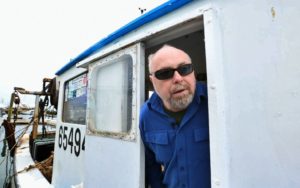
David Goethel: Commercial fisherman out of Hampton, NH and a three-term member of the New England Fishery Management council, which establishes many of the rules regarding groundfish harvest in the Gulf of Maine. He has also served as an advisor to several panels for the Atlantic States Marine Fisheries Commission, which also regulates many New England fisheries species. David brings a powerful perspective having been on both sides of the fisheries management dilemma.


John Stoddard: New England Regional Coordinator for Health Care Without Harm’s Healthy Food in Health Care program. John brings a compelling perspective from working with healthcare food services on what healthcare patients, staff and food buyers look for in sustainably harvested seafood. We know that improved science also affects individual consumers and institutional seafood buyers like hospitals. What role can seafood buyers play in helping improve the system?
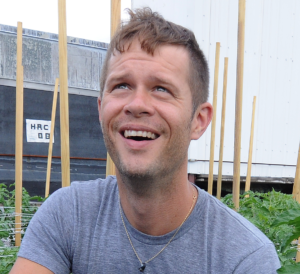
Moderator
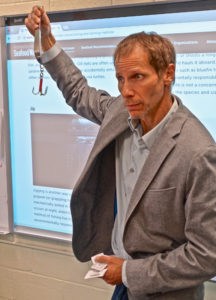
Colles Stowell: President of One Fish Foundation, a sustainable seafood education non-profit teaching consumers about why they should care where, when, how and by whom their seafood was harvested. Colles works with students in classrooms from kindergarten through college, and adults via community events to discuss a variety of crucial seafood sustainability topics ranging from harvest and aquaculture methods to climate change impacts and policy.


All Blog Posts

Judge Makes Codfather Offer He Can’t Refuse: 46 Months…

  • September 26, 2017October 20, 2021
  • by Colles Stowell
Share it!
Share

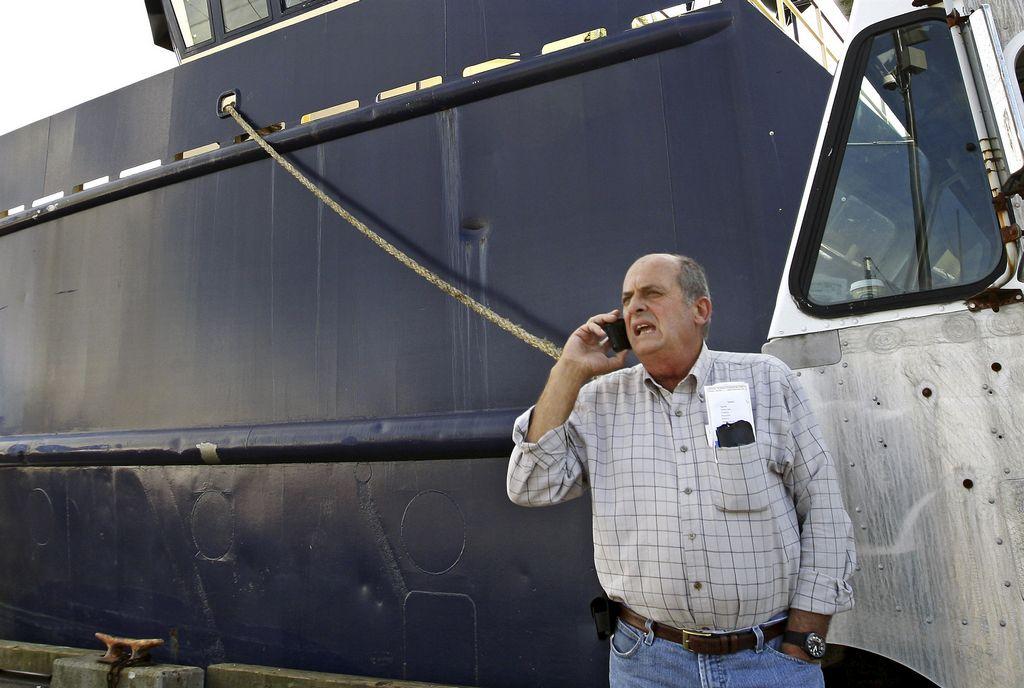
New Bedford fishing kingpin Carlos Rafael was sentenced to 46 months in prison and ordered to pay $200,000 in fines yesterday after pleading guilty to fraudulently mislabeling fish and sending hundreds of thousands of dollars in cash out of the country. He must also pay $108,929 restitution to the U.S. Treasury.

Rafael has become a divisive flashpoint in New England fisheries discussions as activists and smaller scale fishermen have pointed to his case as a glaring example of what’s wrong with much of the current groundfish management system. In court yesterday, his attorney read a statement in which Rafael claimed he essentially committed the crimes he was accused of to benefit his employees, and that it was the stupidest thing he ever did.

Judge William Young wasn’t buying it. “This was not stupid. This was corrupt. This was a corrupt course of action from start to finish,” Young said to Rafael. “… (It was) designed to benefit you. To line your pockets. That’s what it was, and that’s why the court has sentenced you as it has.”

Rafael was arrested a year and half ago after boasting about skirting federal fisheries laws and hiding cash in offshore banks to undercover Internal Revenue Service agents posing as Russian mafia. At the time, he was running the East Coast’s largest fishing operation, with more than 40 fishing vessels and a couple of on-shore processing centers.

A tall tale

How Carlos Seafood got to that point is a story of greed, capitalism and a knack for taking advantage of a flawed management system. The predominant regulation governing New England groundfish is catch shares, which treat access to fishing areas like a market commodity to be traded like stocks, ultimately leading to fleet consolidation. This consolidation raises the cost of doing business so high that many small-scale fishermen are forced out of business.

In Rafael’s case, he not only gobbled up quota and permits, he also controlled a processing facility in New Bedford. Mislabeling fish became much easier when he controlled the captains and crew on the water, and people in the processing plant.

Now, he will serve nearly four years in prison, followed by three years of supervised release. Judge Young also banished him from having anything to do with commercial fishing during his supervised release … which amounts to nearly seven years out of the business.

The underlying issue

Case closed? Not quite. The larger question now is what happens to Rafael’s assets. What happens to the quota he acquired and how will that decision affect regional fisheries markets and fishermen?

The answer to that brings us back to the ever louder claims that the current quota system enabled Carlos Rafael’s rise. What several fishermen and activists have called for is to liquidate the permits and make them available to a broader range of fishermen throughout New England, not just New Bedford. The mayor of New Bedford and several fishermen there said the permits should remain local. Mass. Governor Charlie Baker wants them to stay in the state. At stake are the 13 vessels and the permits that were directly linked to the fraudulent activities, estimated in court documents to be between $27 million and $30 million.

One of the options mentioned in yesterday’s sentencing was to sell all of Rafael’s assets to Richard and Raymond Canastra, the brothers who own and operate the Whaling City Seafood Display Auction as well as the Boston Seafood Display auction. Some fishermen and activists oppose this possibility because Rafael has ties to the Canastras, and because they fear it would result in another vertically integrated entity controlling a large amount of quota. Read: Another version of the Codfather.

The judge essentially said that it is not exclusively up to him to determine allocation of quota, which is governed by NOAA. The hope is NOAA will take the long view on the situation and make a recommendation that benefits a wider swath of fishermen and their communities. In the end, the best decision would also benefit the resource by turning over control of those permits to fishermen who are more likely to obey the law.


For additional reading:

Northwest Atlantic Marine Alliance victim impact statement delivered at sentencing.

South Coast Today news story.

Boston Globe news story

Politico in-depth analysis of the evolution of Carlos Rafael as the Codfather.

Photo credit: Peter Pereira/Standard-Times File/SCMG

All Blog Posts

Whose protein is it anyway? Industrial fishing and it’s…

  • May 3, 2017October 20, 2021
  • by Colles Stowell
Share it!
Share

When we talk about food security, we broadly mean the ability of a people to have access to healthy, affordable food on a consistent basis. This dynamic assumes that the food has been legally harvested, has not been treated with tons of chemicals and is most often the product of local farmers and fishermen. From a global seafood perspective, the approach to food security has furthered the divide between the haves and the have-nots because food security overlooks two critical aspects: scale and community control.

Sure, money dictates the conversation, but the issue really comes down to scale. Artisanal fishermen, who either fish to eat or make a small living at local markets have a particular vested interest in the health and survival of the fishery. But larger operations have a different perspective. Because of their scale, they absolutely must focus on profit. Otherwise, they don’t survive. That viewpoint often puts fragile fisheries in peril.

A very long trawl

Take the fisheries off the coast of West Africa. Artisanal fishermen there typically harvest the migrating mackerel, anchovy, sardinella and other species passing through their waters. Unfortunately, their catches have plummeted as scores of foreign vessels have plundered their waters, scooping up millions of tons of fish illegally. A recent story in The New York Times spotlights illegal fishing off the coasts of Mauritania, Senegal, The Gambia, Guinea Bissau, Guinea, and Sierra Leone. This illegal harvest has cost these nations more than $2.3 billion in lost revenue, according to a report in the journal Frontiers in Marine Science.

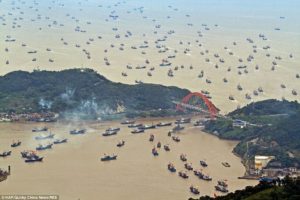
Want scale? Chinese fleet leaving busy harbor in Zhejiang Province.

The dominant foreign fleet is not surprisingly China, whose long-range fishing fleet has swelled to between 2,600 and 3,400 vessels (depending on whom you ask), which is at least ten times larger than that of the U.S. This fleet is government subsidized to both sate China’s enormous seafood appetite (which accounts for a third of global consumption, according to the U.N.), but also to grow foreign market revenue. China owns the global seafood export market and is responsible for more than 60% of the world’s exported farmed seafood.

China’s long-range fishing vessels working off the coast of Africa have increased from a dozen in 1985 to more than 450, according to Greenpeace. Much of the foreign fishing off the coast of Africa is illegal, whether because of intrusion within the 200-mile exclusive state waters, overharvest or other violations. Like other foreign fleets fishing illegally here, Chinese vessels fly local flags. They turn off their electronic monitoring devices. They fish in Senegalese (and other country’s) waters at night. They operate off the coast of other West African nations that don’t have much enforcement infrastructure.

By some estimates, one of China’s larger boats can theoretically haul in as much fish in one week as a Senegalese boat might harvest in an entire year.

So why should we care?

This should get our attention for several reasons. First, as foreign fleets deplete fish stocks off the coast of West Africa, they’re pushing small scale, artisanal fishermen out of business. Worse, they’re driving steep fish price increases in nations where food is already scarce in many regions, even as coastal populations increase.

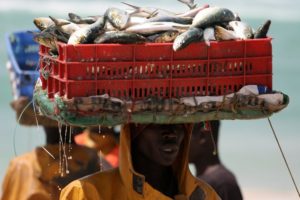
Senegal fish stocks have plummeted as the foreign industrial harvest has grown. Credit: Linda Schonknecht/Marine Photobank

Many of the migrating anchovy, mackerel and sardinella harvested there are ground up into fishmeal in processing plants in nearby Mauritania and elsewhere and sold to feed farmed shrimp, tuna and salmon (as well as pigs and chickens) shipped around the world.

Sadly, those fish fill much of the direct protein needs of people in coastal West Africa (as well as developing nations around the world). According to the UN Food and Agriculture Organization, seafood accounts for 20% of the protein intake of more than 3 billion people. In Senegal, those fish account for more than 40% of the country’s protein intake. A recent study states that 90% of the huge global harvest of these types of small oily fish could be consumed directly by humans rather than ground into fishmeal.

Food sovereignty imbalance

This is a regional food sovereignty issue because coastal Senegalese fishermen have little control over the massive Chinese fleet harvest that is taking their resource. This over-harvest crushes local communities and sends shock waves through global markets.

Here’s the kicker for U.S. seafood markets. That 90% of the seafood eaten in this country is imported has become a widely cited statistic. If China is by far the world’s largest exporter, and we import 90% of the seafood we eat here, there’s a damn good chance that the frozen fish sticks, farmed shrimp and salmon sold in supermarkets here are the byproducts of this illegal fishery off West Africa.

Again, the profit margins to feed higher priced farmed salmon and shrimp to the more well-to-do at the expense of the cheaper more readily accessible protein for the coastal impoverished seems a Faustian bargain. This type of “ocean grabbing” is global in scope and threatens the health of vital fish stocks as well as the lives of the people that depend on them.

Now think about small-scale fishermen in the United States, trying to earn a living, mostly complying with regulations and caring about the resource because their lives depend on it. Our markets are jammed with cheap, imported seafood, much of which is harvested in similar circumstances as mentioned above. And this seafood is pushing down market prices here because of its volume, making it harder for small-scale fishermen to compete.

Compounding the pressure on these small-scale fishermen are domestic policies like catch shares, which treat access to fishing areas like a market commodity to be traded like stocks and that encourage fleet consolidation. This consolidation raises the cost of doing business so high that many small-scale fishermen are forced out of business.

Some communities are fighting back against “ocean grabbing” by finding ways to gain local control over their fisheries and re-establishing their food sovereignty. Here is a link to The International Planning Committee for Food Sovereignty that is providing small-scale food producers and local organizations the infrastructure and guidance to strengthen their local markets.

What can we do about it?

Here are a few steps people can take in their personal lives to support local seafood systems and community fisheries:

  1. Know your seafood. I tell all of my classes, the best thing consumers can do is ask questions. Find out where, when, how and (if possible) by whom their seafood was harvested.
  2. Think about scale. Was this seafood caught by a local fisherman, or an industrial-scale operation?
  3. Find stores and restaurants that sell local, sustainably harvested seafood.
  4. Is there a community supported fishery near you? Like a CSA, CSFs, cut out the middle man and allow you to deal directly with fishermen. Get to know your fishermen and you’ll appreciate the work they put into it.
  5. Eat seasonally. Fish and shellfish aren’t necessarily available in one region throughout the year. So learn what is seasonally available near you.
  6. Do your research. Learn about local, regional and global fisheries issues. Learn about the different types of aquaculture and their environmental, social and economic impacts.
  7. Get involved. If these issues matter to you, be an evangelist. Share the message that our seafood decisions have an impact locally, regionally, nationally and globally.


Top photo credit: Inoussa Maiga


All Blog Posts

Boom and Bust of Gulf of Maine Scallops

  • March 25, 2017October 20, 2021
  • by Colles Stowell
Share it!
Share

Northern Atlantic sea scallops are a good example of how fisheries management has rescued a stock from the perils of overfishing. Sadly, they are also proof of how those same policies could just as easily doom the stock in the not too distant future.

How does this happen?

It comes down to fishery access. Several decades ago, the scallop fishery in the Northern Gulf of Maine (NGOM) was teetering because the annual harvest had reduced the stock’s ability to sustain its population. So limits were put in place to reduce the overall harvest in that area.

As the stocks rebounded, fisheries managers established a new system that would guarantee smaller boat operators with specific permits to scallop in a designated area up to 60 miles off shore from Downeast Maine to Cape Cod. They were allowed to catch 200 lbs a day up until the point all of these fishermen landed a total allowable catch (determined by stock assessment), which is now 70,000 pounds.

The managers also allowed larger boats with federal permits to not only scallop beyond the 60-mile limit, but also inside the 60-mile limit. The managers said that these larger boats, fishing under what is called a limited access permit, could land as many scallops as permissible under the federal permit during a set number of days while they were in the 60-mile zone the smaller boats fish. Once the smaller boats hit their 70,000 lb total allowable catch, the entire fishery would shut down.

Photo: NOAA

For example, in the 2015-2016 season, limited access boats caught more than 300,000 lbs of scallops in the northern gulf of Maine area before the smaller boats hit their 70,000 lb quota and the fishery was shut down.

Sound fair? No. And these limited access boats are fishing within their permitted rights. As an attorney for a lobby group representing scallopers was quoted in the Boston Globe, “These vessels are doing what they’re allowed to do.”

Here’s the worst part. NOAA projects that the current season will end with over 1 million pounds of scallops being harvested, still with only 70,000 lbs coming from the smaller boats. NOAA scientists said last year that the fishery could withstand a total haul of 400,000 lbs from this area this year.

Consumer impact

So why does this matter to consumers?

If the stock tumbles as it did a couple of decades ago, there will be fewer local scallops and the price will skyrocket. More importantly, you should be concerned if you care about the resource and the people in and around your community whose livelihoods depend on it.

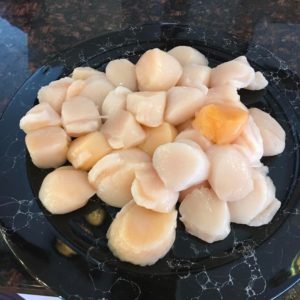
Here’s another concern. Small-boat scallopers in Maine and Cape Cod deliver a higher quality product called “dry scallops,” which have not been soaked to preserve freshness and potentially add market weight to the product. This is a common practice among the larger limited access boats. Soaked scallops lose flavor and don’t cook well. A collapse of the NGOM stocks could reduce or eliminate dry scallop availability.

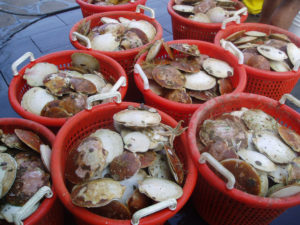
Dry scallops. Photo: Cape Ann Fresh Food

I attended a discussion about the scallop fishery at the Maine Fisherman’s Forum a couple of weeks ago, and several small boat scallopers who operate in the NGOM zone complained about seeing larger boats from New Bedford and elsewhere hoovering up all of the scallops. Their complaints hinged on two fronts: 1. The unfairness of being hamstrung by a low total allowable catch in a fishery that a NOAA scientist had claimed a few minutes earlier was strong, and NOT experiencing overfishing. 2. They worried about the long-term survival of this fishery in the face of the massive hauls taken by the limited access boats.

The NOAA staff fielding the questions were sympathetic to the plight of the small-boat fishermen. But they repeatedly said that any comprehensive change would have to come from a rule change established by the New England Fishery Management Council (NEFMC), which manages scallops in New England waters.

A slow process

And therein lies the rub. The council’s mission is to protect the resource and those who use it. Unfortunately, the council can be slow to react, and it doesn’t always stand up for the access/rights of small operators.

As Ben Martens, executive director of Maine Coast Fishermen’s Association wrote in a recent blog, “The system as it is currently structured is destined to fail. User conflicts between permit types have become unavoidable since the biomass returned, and instead of putting a band-aid on this issue, the council must go through the process of fully protecting and planning for the long-term future of this fishery.”

I asked Ben what a fair solution would look like. He suggested a rule giving all stakeholders the same trip limit of scallops harvested, so one user group wouldn’t be favored over another.

I agree.

The NEFMC discussed the scallop harvest and fishermen’s concerns at a meeting last November. The council will entertain recommendations from the scallop subcommittee that meets next week and possibly take action in April.

Hopefully, they can get this straight…and fast.

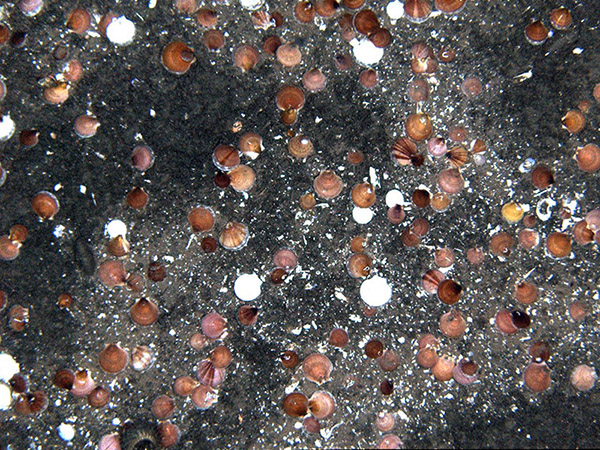
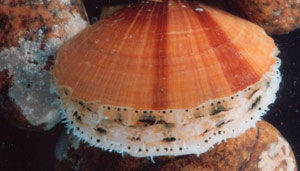
Eyes of the scallop. Photo: NOAA

I like scallops. But there is an environmental cost of dragging a 400- to 2500-pound steel cage across the ocean bottom. Bycatch is one. Disturbing the ecosystem on the ocean floor is another. Yes, some areas are more resilient than others and can bounce back fairly quickly. But there is still a consideration.

So we don’t eat scallops as often as we used to. Hopefully, we’re not forced into a situation where our local options for scallops are further limited and prohibitively expensive because our fisheries managers couldn’t find a comprehensive solution that is fair and that protects the resource.


Top photo credit: NOAA

All Blog Posts

Fake News: Making Mountains Out Of The Pebble Mine

  • January 27, 2017October 20, 2021
  • by Colles Stowell
Share it!
Share

If there’s any question that money is directly tied to resource management, look no further than the Dakota Access Pipeline, Keystone XL pipeline and the Pebble Mine. Two of them were dormant for a while, and the first was on hold.

No longer.

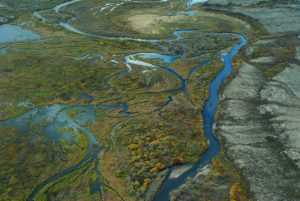
That the proposed Pebble Mine in Bristol Bay, Alaska has reared its ugly head again is both alarming and telling. It is alarming because the project, which had been on life support for years, directly threatens one of the world’s largest and last wild sockeye salmon runs. It is telling that the changing political climate has created an atmosphere more weighted toward corporate profits and against environmental protections.

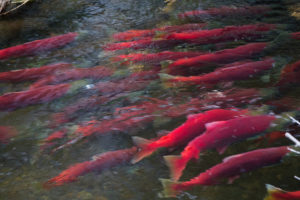
Sockeye approaching spawning beds. Photo: Bristol Bay Regional Seafood Development Authority

The massive copper and gold mine again became a discussion topic earlier this week when its sole investor, Northern Dynasty, claimed it expected to have its permitting issues resolved with the EPA by April, and that it was actively seeking an investor.

Northern Dynasty has been mired in three federal lawsuits aimed at handcuffing the EPA’s authority to reject the mine’s permit because the mine would violate protections in the Clean Water Act. In 2014, the EPA ruled the mine presents a potentially irreversible threat to the stability of the Bristol Bay watershed. At the moment, Northern Dynasty’s only on-site operations include geology tests and equipment storage.

Not surprisingly, three days after the new administration took office, Northern Dynasty’s CEO Ronald Thiessen said President Donald Trump’s administration has “a desire to permit Pebble.” He added, “We will come to a resolution within 100 days” with the U.S. Environmental Protection Agency.

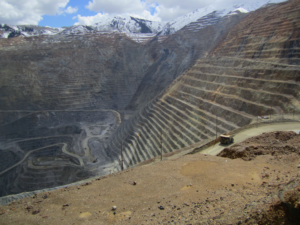
Copper mine in Utah run by Rio Tinto, which backed out of the Pebble Mine. If built, Pebble would be bigger than this. Photo: Deep Green Resistance

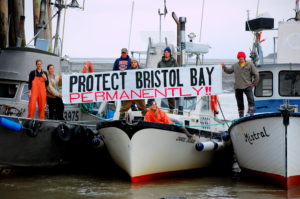
Opposition to the mine has been surprisingly universal from a broad range of user groups. That’s likely because Bristol Bay’s salmon population supports 14,000 full-time jobs and a $1.5 billion a year industry, according to federal and industry figures. In a rare instance, commercial and recreational fishermen are speaking with one voice: “Don’t destroy one of the last significant wild sockeye salmon populations!” Many of Alaska’s tribal leaders and several environmental groups have joined the chorus.

Is this Fake News?

That depends. To date I’ve seen no direct statement from the president saying he was going to drive the Pebble Mine through to operation. I’ve only seen Northern Dynasty say that.

If noted anti-resource attorney Scott Pruitt becomes head of the EPA, that could streamline federal permit approval, which accounts for a small number of significant permits.

That leaves the state of Alaska, which would have to issue more than 60 permits before the mine begins in earnest. And that won’t necessarily be an easy process for Northern Dynasty. An interesting political sea change has occurred in the past two years. Prior to the election the mine’s biggest opponent was the Obama administration and the EPA, while the Alaska state legislature was more supportive of the mine.

Photo: EPA

The tables flipped a bit in Nov. when the State House gained a bipartisan majority, with the Speaker of the House being from Bristol Bay. So while the federal administration appears to favor projects like the mine, the governor’s office and much of the legislature are signaling support for the state’s natural resources like salmon.

“Pebble doesn’t necessarily have an EPA problem,” says Sam Snyder, Trout Unlimited Alaska Engagement Director and a key figure in the fight against the mine. “But they have an Alaska problem. Sixty-five percent of Alaska residents in every precinct voted against it. Bristol Bay Tribes, villages and residents overwhelmingly oppose Pebble. Eventually this will also have to go through the state legislature.”

Photo: Seafood News

Here are some harsh realities that make the approval process a steep uphill climb for Northern Dynasty:

  • The political climate in Alaska has brought more scrutiny of the environmental risks of such a mine. The legislature recently put a 90-day delay on a routine permit to allow Northern Dynasty to maintain base operations (testing and equipment storage on site, etc.), because lawmakers wanted a closer look at impacts.
  • While there have been several reports about Northern Dynasty’s stock performance in the past few weeks since the Trump victory, there is context. Yes, the stock jumped nearly 300% in that time … from 75 cents to $2.89 on Jan. 26. That is a shell of the $22 stock price the company had in Feb. of 2011. It’s a penny stock.
  • Two major partners have backed away from the project because of widespread opposition and losses: Anglo American, PLC in 2013 and Rio Tinto in 2014.
  • In 2014, 65% of Alaskans approved a measure that would allow the legislature to ban mines lawmakers believe would harm wild salmon stocks. So a majority of Alaskans are skeptical.
  • That opposition continues. There is support for a new proposal to strengthen laws governing protection of fisheries habitats, which would have to be considered with any state permit for development that impacts salmon habitat.
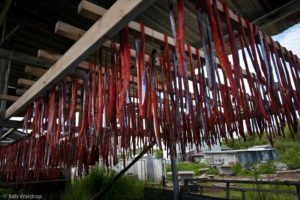
Sockeye drying. Photo: Bob Waldrop

What does this all mean? It means there are several roadblocks and years before the mine would have any chance of operation … if at all. Northern Dynasty would likely have to spend close to $200 million dollars just to secure all of the necessary permits. It would then need another several hundred million dollars to begin operations.

It also means that opposition must continue, within and without the state of Alaska, if opponents want to ensure the safety of the resource.

As the current mantra goes: wrong mine, wrong place.

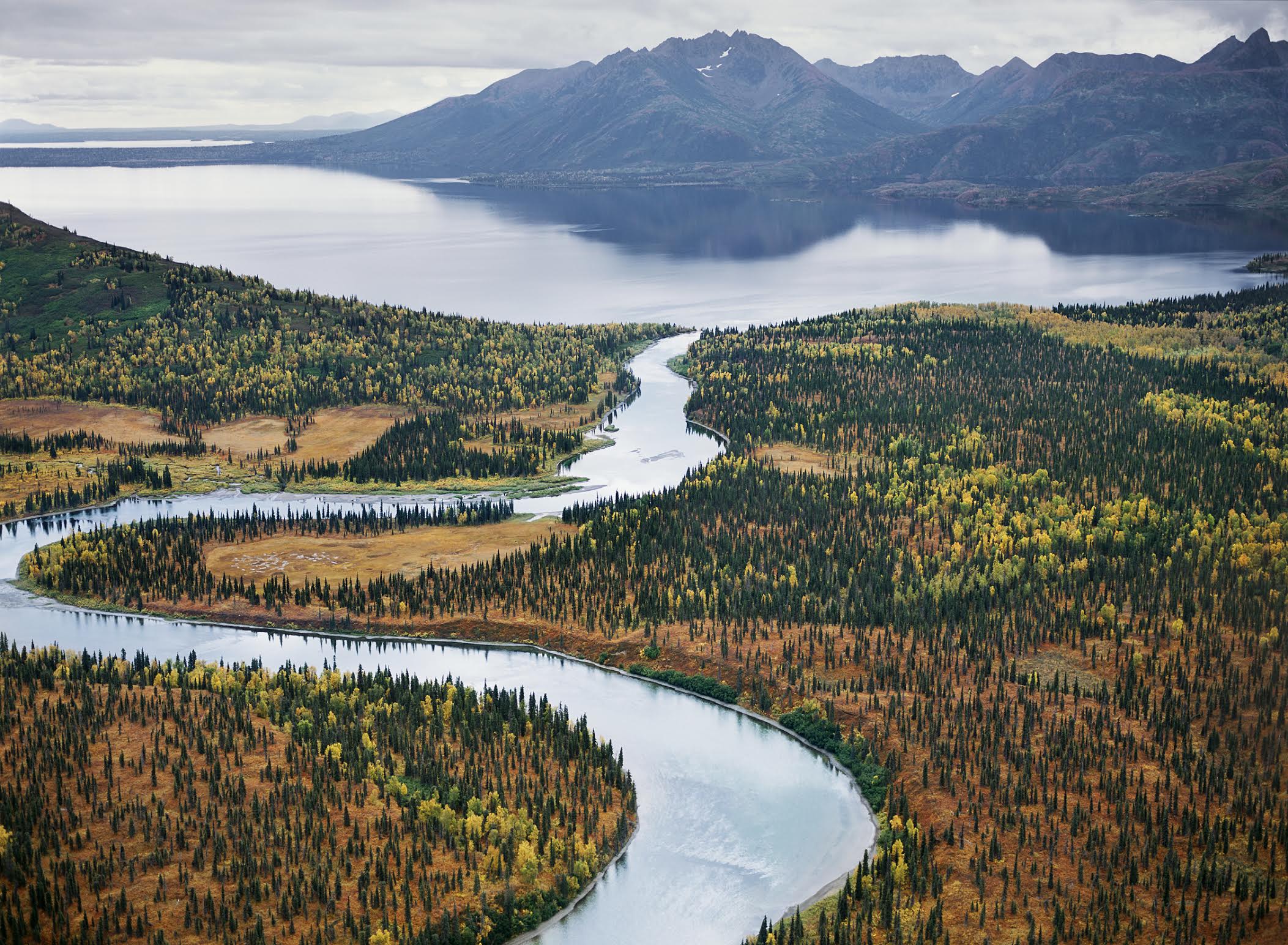
Top photo credit: Robert Glenn Ketchum

Other resources:

Save Bristol Bay : Good resource for background and the mine’s impacts.

One Fish Blog: Further background

Homer News: Public comments on state fisheries protections.

Alaska Daily News OpEd: Wrong mine, wrong place.

All Blog Posts

MSC Ecolabel Trashed by Founder

  • December 7, 2016October 20, 2021
  • by Colles Stowell
Share it!
Share

The question invariably arises at sustainable seafood dinner events or even in casual conversation.

“What about the MSC (Marine Stewardship Council) standard?”

Involuntarily, I shake my head, before explaining the complex nature of ecolabels, which seek to certify seafood as sustainably harvested, but often raise more questions than they answer.

That complexity came to the fore last week when the World Wide Fund for Nature (WWF) ignited a firestorm with a detailed … and leaked … report castigating the MSC, one of the best known labeling organizations. The report questions the non-profit’s neutrality, process and overall effectiveness in adequately protecting the resource and objectively informing consumers about the sustainability of the seafood they purchase.

The colossal irony here is that WWF was one of the key founders of MSC, a non-governmental organization (NGO). And now it has become an outspoken critic. Here is a link to the leaked WWF report. WWF claims the report was not finalized and has tried to backtrack. However, the 58-page document has detailed citations and thoroughly explained timelines noting the events that led to the drafting of the report, which by the way, is marked “FINAL.”

What rules?

The catalyst for this report was the MSC certification of certain tuna fisheries in the Indian Ocean. One of the key principles of the original MSC guidelines for certification was that fisheries have a set of harvest control rules (HCRs) that ensure the health of the fishery. WWF now claims there are “several troubling systemic flaws” in the MSC certification process and that the mission appears to have become more about profits from the royalties paid to have the MSC logo than the original mission.

That’s a stinging accusation from one of the organization’s original founders.

Some of the most damning accusations include:

  • Certification of fisheries where no credible HCRs exist;
  • Changing the process language on the fly to accommodate certification of fisheries whose certification has been challenged;
  • A clunky appeals/challenge process that generally falls on deaf ears; MSC admits that very few stakeholder comments (13%) have any impact on the process;
  • A system of contracting third-party certifiers that do not respond to stakeholder comments;
  • Conflict of interest whereby MSC profits from the royalties on the logo fees while “objectively” certifying the fisheries.

And if this report weren’t enough, Brendan May, MSC’s former CEO for five years wrote a blog about the WWF report. While he doesn’t directly indict MSC, the fact he is taking time to acknowledge the report says something about its significance.

An ecolabel’s complicated path

When I started writing about sustainable fisheries six years ago, I initially supported the concept of transparency in labeling. There were a few emerging standards, Friend of the Sea, Dolphin Safe and the Marine Stewardship Council among them. MSC’s goals were broad and ambitious. The U.K. based non-profit set a goal to certify 20% of the world’s fisheries by 2020.

But as I dug deeper in my research, I started seeing inconsistencies. Accusations from within and outside the industry arose, claiming MSC certified fisheries that aren’t sustainably managed and that the NGO instituted a system that isn’t objective. Witness the certification of the North Atlantic longline swordfish operation. The fishery was certified despite the high bycatch of sharks. The further I dug in, the more I realized how complex and thorny implementing proper transparency schemes really is.

So when asked, I explain this complexity, and some of the issues with all ecolabeling systems, then go into some detail about MSC.

This leaked report further underscores that complexity, and where good intentions can get thoroughly clouded by money. I still strongly advocate for transparency in seafood distribution from boat to plate. The U.S. has a long way to go, as do many other countries.

But if you aren’t going to really be transparent or objective, why bother?

When in doubt, ask questions

I tell my students and interested adults their best line of defense is knowledge. Get smart about some of the issues around seafood sustainability. Learn more about the environmental, ecosystem, socio-economic impact of different harvest and aquaculture methods.

Ask questions:

  1. Is it local? Was it caught, cleaned and/or filleted locally?
  2. How was it harvested?
  3. If it was farmed, were there any antibiotics, hormones or pesticides used?
  4. When was it harvested?

If you can’t get answers to these questions from your fishmonger or restaurant, perhaps you should consider something else.

I suggest people take a look at the Local Catch core values, which gives a good overview of how local, transparent community-based fisheries benefit both consumers and fishermen. These principles are rooted in accountability and trust: accountability in the fishermen who strive to take care of the resource and trust from the community that the fishermen are delivering sustainably harvested seafood.

Additional resources:

Marine Stewardship Council standards

World Wide Fund for Nature Overview of Tuna fisheries and relationship with MSC

The Times article, in which the publication first announced the leaked WWF report.

Undercurrent News article, in which MSC responds to the WWF report.

Ecolabel Index — gives a quick overview of different ecolabels from building design to farming and seafood.

All Blog Posts

What’s in This Fish?

  • October 3, 2016October 20, 2021
  • by Colles Stowell
Share it!
Share

I was sitting at a quiet sushi bar in Wilmington, N.C. at lunchtime a few years ago when the owner asked me a question that would have a lasting impact.

“Want to try some special tuna? It’s called white tuna.” This was several years ago, and I hadn’t yet delved into the world of seafood awareness. But I knew just enough to be sure there was no such species swimming in the ocean. When I asked exactly what species it was, he said it was escolar. “It’s just as delicious as tuna, but much cheaper.”

My skepticism gave way to curiosity, which gave way to the first lasting impact of gastrointestinal distress. Only later did I find out escolar has proteins that can wreak havoc on your bowels.

Deceptive marketing is nothing new. But I had to ask why someone would take that approach knowing the downstream impact. I wondered how someone could get away with that. Eventually the ramifications would catch up to them, right?

Ecolabeling’s initial steps

This was one of the seminal episodes that started me on my path. A year later, I wrote a blog on eco-labeling, suggesting it was a new tool to provide necessary information to consumers, like where and how the seafood was caught. Then I dug a bit deeper to find that while the practice was great in principal, there were issues.

Some leading labels ran into problems, such as certifying fisheries that weren’t really sustainable (see North Atlantic longline swordfish and its huge bycatch), or allowing fisheries to hire the “third-party” certifiers (the fox minding the henhouse).

I have written and spoken about seafood fraud several times since. It is a key classroom topic exemplifying the need to be smarter about the seafood we eat. We talk about the implications when someone substitutes cheaper farmed salmon for wild-caught at a restaurant or lower-priced pollock for cod at a seafood store.

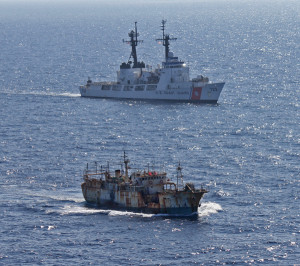
iuu_coastguard
Illegal, unreported and unregulated fishing clouds the supply chain.

Trailing the pack

One outcome from the most recent seafood fraud report by ocean conservancy Oceana is that while the U.S. is a leader in stock management and preservation, its oversight of the supply chain compared to the European Union and other countries is wanting.

This is ironic. The current administration has made combating illegal, unreported and unregulated (IUU) fishing a priority. Global IUU – which covers everything from human trafficking to mislabeling – costs the seafood industry up to $23 billion a year, according to the United Nations Food and Agriculture Organization. There is a new rule under consideration in the U.S. that would require labeling on 13 key species before they are imported into the country.

But the current administration also embraces the Trans Pacific Partnership, a trade deal that would essentially encourage larger exports of U.S. caught seafood and larger imports of cheaper, less regulated seafood. Many in the U.S. industry fear such a deal would flood the market with lower quality seafood that may not even be correctly labeled. Worse, language in the deal would render the U.S. virtually helpless to prevent that product from entering the market.

The Oceana report cites the European Union’s labeling standard as a potential role model for the U.S. According to Kimberly Warner, one of the report’s authors, the EU has reduced its seafood mislabeling to about 9% of the seafood sold there (excluding restaurants). This compares with 19% for the global average and a whopping 28% for the U.S.dna-sampling-2

“When we found fraud at 18% at the retail level in stores in Boston (in 2014), people were cheering,” said Warner. “But people in the EU were aghast. The question becomes, what level of mislabeling are you comfortable with?”

Indeed.

I’ve said before that increased transparency and labeling standards will only work if US fishermen have a say in developing the process and they aren’t completely saddled with the cost. Otherwise, any such proposal will fail before it gets started.

The National Fisheries Institute says better enforcement of the laws on the books, not increased labeling standards is the answer. But Warner counters that domestic laws leave a lot of room for the type of mislabeling found in the report. “You need strong laws to enforce,” she said. Vague or voluntary labeling (as has been discussed with genetically engineered salmon) don’t help.

Consumers want more info

Oceana released a poll yesterday that says 83% of Americans support new traceability requirements, including proper labeling of the seafood and where and how it was caught (or farmed). Of the 1,000 respondents, 76% said they would pay more to know their seafood was caught legally and labeled correctly and honestly.

Consumer desire is there. But we need the political will to make it happen. The EU program relies mostly on government subsidies as well as some infrastructure costs born by seafood processors. The EU seafood processors and traders association said in 2011 that implementing the new rules governing labeling and other IUU measures did not have long-term impacts on their businesses. And several links in the supply chain now view labeling as a competitive advantage.

catfish-mislabel
Imported catfish marked as sole. This shipment was seized before entering U.S. markets.

A handful of small operations have cropped up in the U.S. aimed at digitizing supply chain records to elevate transparency. That’s a start. But, we need to bring all stakeholders to the table and make transparency and adequate labeling happen on a national scale. Otherwise, it’s just a process of randomly putting out small fires.

Our best defense is information. A national, verifiable schema for tracing the seafood from boat to retailer, and developed with fishermen’s input, would be helpful and widely embraced by consumers.


Photo credits: NOAA

All Blog Posts

Day in the Life of a New England Groundfish…

  • September 1, 2016October 20, 2021
  • by Colles Stowell
Share it!
Share

As the last sprays of daylight faded to black, I stepped off the M/V Finlander in Eliot, Maine and tried to get grounded. I was tired. Damn tired. And a bit sore. We’d left the dock at 1 a.m., traveled four hours to the fishing grounds 65 miles out, fished hard for 9 hours with rod and reel and chugged back to port, docking at about 8:30 p.m.

Loading up just after 1 a.m.

This wasn’t recreational fishing. To get comfortable, I dangled a leg over the gunwale of the 36-foot commercial fishing boat and rested the heavy-duty rod on my leg while jigging a 20-ounce shiny lure and three flies just a foot off the bottom, 400 feet down. When a fish hit, I’d have to crank it all the way up with an industrial-strength reel and hope the 10-foot blue sharks circling the boat wouldn’t steal the fish. Hoist the fish in, measure it after removing the hook, toss it in the tub. Do it again.

Get two fish and you’re likely to be winding 25 lbs or so up 400 feet. POW! A shark hits near the boat and starts smoking line off the reel. The telltale snap two minutes later signals the end of the fight, and you reel up nothing. Time to re-rig. Crank up a couple hundred pounds of fish or so in a few hours, and you’re going to feel it. At least I did. I managed to get past the queasiness and avoid any embarrassment on deck. Any concept of a toilet was sacrificed for an extra bunk to “conserve” some energy on the long rides. The head was a 5-gallon bucket.

It was a long day.

So I had one question for Capt. Tim Rider before I trekked back to my car. “You do this every day?”

Narrow miss
Narrow miss on a dogfish. Check out the video of five sharks circling the boat.

“Just about,” he said, as he cleaned the cabin for the next trip. He’d decided not to fish the next day. We’d brought back 800 lbs. of pollock and haddock, and he would need to drive it to the auction in Portland. (He often sells his catch directly to chefs who share the same beliefs on protecting the resource.) He hadn’t seen much of his family in the past two weeks, having slept in his own bed only two nights in 14 days. The rest of the time he was on the boat.

Paying the price

Fighting to stay awake on I-95 on the way home, I thought about that commitment. Fishing courses through Rider’s veins. It would have to. Otherwise, it sure would be a hell of a lot of work for not a lot of reward. This is particularly true because Rider is part of the Common Pool, a fisheries policy that often forces fishermen like Rider to fish way out because they didn’t have the capital, timing, luck or patience to get the permit to fish the Catch Share sectors. Catch shares are another fisheries policy that operates like a cap-and- trade quota system, often favoring those with the most capital, which can mean access to more desirable fishing grounds.

Quality control Step 1. Bleed the fish.

Currently, the outer edge of where Common Pool fishermen are allowed to fish fluctuates seasonally from 18 to 80 miles out. The difference means a couple of hours of travel and probably $300 or so in fuel, tackle and ice.

But the difference runs deeper than that.

When the Maine Department of Marine Resources distributed NOAA funds to offset losses from the groundfish (read cod) disaster relief last year, the money went to fishermen with quota who had the largest landings of groundfish. Those in the common pool were not invited to the table, and therefore, did not receive any disaster relief.

Many ironies exist in fisheries management. And this is one of the starkest examples. Those most hurt by the reduced fishing income were overlooked when it came time to provide financial support. Those like Rider who are so passionate about protecting the fishery that they jig fish in up to 500 feet of water to reduce bycatch seemingly face steeper hurdles than larger scale trawl fishermen, whose bycatch is much more significant.

Strategizing the next fishing stop.

Sector inequality

It is easy to say this is purely a situation of the haves and have-nots. But fisheries management is much more complex than that. Current New England groundfish regulations were initially established in 2010 on the principal that fishermen would more equitably manage and effectively safeguard the resource by creating a free-market environment. The total allowable catch of groundfish such as cod, haddock, Pollock, flounder and other species was divided and allocated to groups of fishermen in sectors, or harvesting cooperatives, based on who had the largest landings between 1995-2005. Fishermen purchased permits that allowed them to fish for certain species in certain areas within the sector during certain seasons. Under this Catch Share system, they are allowed to continue catching fish during the season until they reach the quota limit for each species.

http://qkl.fa0.mwp.accessdomain.com/wp-content/uploads/2016/08/cabin-sound.mp4

The Finlander’s “purr”…

Unfortunately the Catch Share model overlooks a fundamental truth about fisheries economics: If financial resources determines access, then those with the most financial resources will have the most access. And so, an inequitable system was born and small-scale fishermen like Rider are squeezed … hard. Large-scale operators with the resources are encouraged by the very nature of the “get big or get out” system to grow and gobble up more quota, potentially leading to the type of abuses that led to the arrest of the largest distributor in New England last February.  Carlos Rafael’s arrest underscores another truth about the current system: the bigger players don’t necessarily think in terms of good stewardship.

Ocean classroom

Which brings me back to the reason I wanted to go out with Tim for what was pre-ordained to be a very full day. He’d tried to convince me soon after we passed the Isles of Shoals on the way out under a half moon sky. “Colles. I’m not kidding. Get some sleep. It’s a long @#$%&*! day. You’re going to need it.”

The Finlander heads home. Arrived at dock at 8:30 p.m.

I wanted a glimpse, however brief, of what it’s like to be a New England groundfish fisherman, passionate about the work and the resource, and riding the anxiety of an ever-changing fishery with continually tightening restrictions and razor-thin margins. Debt. Changing ecosystems, but slow-to-change consumer palettes. Perpetually bone tired, fueled on adrenaline and Monster drinks (not me) and taking in what the ocean has to offer: whether it be a full hold to bring back to the dock, un-forecasted six-foot seas, a tuna crashing bait or a giant ocean sunfish lazily cruising the surface.

I’ll think of that experience every time I stand in front of a group of people in a classroom or a restaurant to discuss what sustainable seafood means.


Check out the latest news updates about Capt. Tim Rider and the M/V Finlander crew at New England Fishmonger’s Facebook page. There, you’ll see some of the Seacoast restaurants the Finlander supplies.

Top photo: Capt. Tim Rider tries … unsuccessfully … to finagle his gear back from a blue shark.

All Blog Posts

UN Report: We’re Growing More Seafood Than We’re Catching

  • August 11, 2016October 20, 2021
  • by Colles Stowell
Share it!
Share

So what happens when the world’s wild-caught seafood supply is tapped beyond its capacity to feed the growing population? How do we sustain a human population that could reach 9.7 billion by 2050 when nearly a third of that number currently relies on seafood for 20% of their diet?

These are some of the questions posed, and somewhat answered in the United Nations Food and Agriculture Organization State of the World’s Fisheries 2016 report issued in July. However, the net results may leave many consumers conflicted over the need to fight hunger with the need to address industrial aquaculture’s ecological impacts. This is especially true since producing more food won’t necessarily fix the root causes of hunger.

Aquaculture on the rise…

The report’s authors suggest that aquaculture has, and will continue to play a critical role in meeting this demand. They point to aquaculture’s substantial growth to back this assertion. In 2000, aquaculture produced 27.3 million tons of seafood globally. Wild capture produced 94.8 million tons. In 2014 (the latest year for global UN FAO data), aquaculture was 73.8 million tons, and wild capture was little changed at 93.4 million tons. So as wild capture has remained relatively flat in 14 years, aquaculture increased 170%.

Global per capita fish consumption has risen above 20 kg for the first time in history. If we assume that wild capture stays flat based on global efforts to fish to maximum sustainable yield – the most we can fish without harming stocks’ ability to replenish themselves – then, yes, we need to meet the growing global demand in the face of expected population growth to 9.7 billion by 2050. The questions are how do we do that responsibly and at what cost?

aqua1Let’s dig a bit deeper into the numbers. The general aquaculture totals: Finfish, 49.8 million tons; mollusks, 16.1 million tons; crustaceans, 6.9 million tons; other aquatic animals including amphibians, 7.3 million tons.
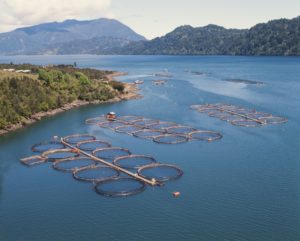
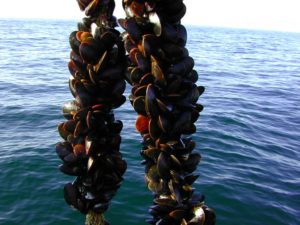
The report also states that about half of the 73.8 million tons of farmed seafood comes from fish, shellfish and plants that are non-fed species. That is, carp, mussels, kelp and similar organisms that don’t require the financial and environmental cost of fish pellets, often derived from forage fish, critically important links in the seafood web.

Additionally, for the first time, farmed fish exceeded wild caught fish for food consumption in 2014.

Think about that. We’re making more seafood than we’re harvesting.

…at what cost?

So all of this suggests we’re ramping up to meet the growing demand. Several countries are chipping in. No surprise that China is the big dog, accounting for nearly 60% of all aquaculture products, followed by India, Viet Nam, Bangladesh and Egypt. Salmon and trout are the top produced fish or shellfish (wild caught and farmed) on the planet, taking over the spot long held by shrimp. Norway and Chile are the top salmon producers.

It is the legacy of farmedchile-salmon-farm shrimp and salmon that raises red flags. Yes, Chile is the second-largest salmon grower. But its industry is reeling from a disastrous start of the year: posting nearly $1 billion in losses due to ravaging algal blooms that destroyed millions of fish; crippling protests from commercial fishermen who blocked delivery of surviving farmed salmon; and, recent reports of staggeringly high (and ineffective) use of antibiotics.

Couple this with widespread reports of problems with shrimp farming, largely in Asia and South and Central America. Again heavy dosing of antibiotics, hormones to accelerate growth, and destruction of critical mangrove habitat are major issues. Look no further than frequent U.S. Food and Drug Administration alerts on imported farmed shrimp containing antibiotics the agency deems carcinogenic.

As with industrial agriculture, the push to increase seafood production and profits often storms past responsible practices. The result is often product that compares poorly to wild caught species from a nutritional, taste and environmental impact perspective.

The trouble with industrial Ag and Aq

All of these numbers and the consequent narratives of industrial aquaculture gone wrong overseas suggest we need to reassess industrial scale finfish and shrimp production to eliminate collateral damage. It can leave many people conflicted. Yes, hunger and rapid population growth are significant challenges that require global collaboration. And perhaps aquaculture can continue to play a role in addressing those problems.

But there are inherent flaws in the logic that industrial agriculture and aquaculture can “feed the world” or end hunger. First, the industrialization of food systems seeks to increase food supplies. But that model doesn’t address root causes of hunger such as poverty, inequity and fairness. In fact, some researchers believe the world produces more than enough food to feed everyone on the planet…up to 1.5 times as much.

Unfortunately, much of that food goes toward production of grains for industrial agriculture feed and corn for ethanol. This food system does little to address undernourishment. How can someone in Mali eat industrial-produced grains if he or she can’t afford it, much less find it? What about the small-scale fisherman in Oceana who can’t even afford the fresh seafood he harvests?

So no. Aquaculture is not a panacea for world hunger. But small-scale operations, which take a smart, balanced approach tLong-Line-Mussel-Aquaculture_NOAAhat minimizes ecological damage, can benefit local and regional food systems by providing locally produced seafood with minimal environmental costs.
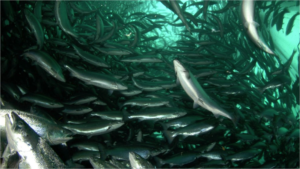
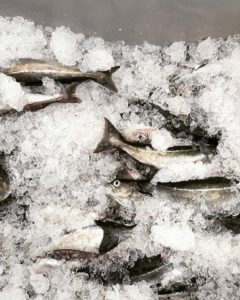
For example, raising mollusks like oysters, mussels, clams and scallops is generally cleaner and even beneficial because it requires no feed, and as filter feeders, they actually clean bays and estuaries. Production of aquatic plants falls into the same category. Farming kelp, seaweed and other plants has increased substantially in the past decade, jumping 102% from 13.5 million tons in 2005 to 27.3 million tons in 2014 at a market value of $5.6 billion in 2014. New approaches, such as Bren Smith’s 3D Ocean Farming, are creating clean, self-sustaining and diverse marine polyculture farms that produce shellfish and plants.

A better way neededsalmon pen

Since industrial aquaculture is already embedded in global food systems, we need to devote more energy to minimize or eliminate the downstream impacts of current industrial scale finfish and shrimp aquaculture. The rapidity with which the deadly virus spread among fish farms in Chile earlier this year confirms a long-held belief by some scientists and environmentalists that cramming tens of thousands of salmon into tight pens creates fertile ground for deadly diseases to spread rapidly. We need to figure out better ways to produce farmed fish and shellfish to minimize those hazards.

We need to devote more money, time and effort into making closed re-circulating systems – which reduce environmental impacts of escapes, disease spread to wild stocks, and resource depletion – more affordable and accessible to more operators around the world.

Pollock from Finlander
Fresh, abundant pollock from the M/V Finlander out of Eliot, Me.

Aquaculture practices and regulations vary widely around the world. Regulations are tighter domestically than most anywhere else in the world, significantly restricting the use of antibiotics and hormones. But we can do more to make the industry more sustainable and accountable from a resource, environmental, and health standpoint. We have to. The current situation leaves many consumers conflicted over current practices despite the increasing need to feed the planet and frustrated there hasn’t been enough effort to improve the industry.

A consumer’s best tool is knowledge. Find out more about the provenance of the fish or shellfish we eat, and we can at least safeguard what we and our families eat. When in doubt, ask questions and buy locally caught, responsibly harvested species that are abundant. Together, an informed customer base could perhaps spur some of the change discussed above.


Aquaculture

Canada Greenlights GE Salmon

  • June 5, 2016October 20, 2021
  • by Colles Stowell
Share it!
Share

Congrats Canada! You may become the first nation in the world to sell genetically modified animals as food.

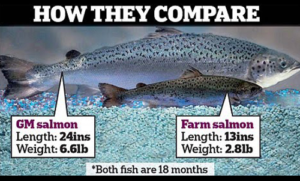
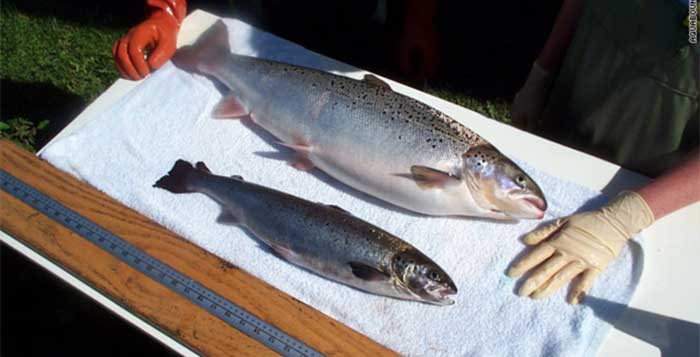
That’s because the health ministry approved Mass.-based AquaBounty’s genetically engineered (GE) salmon as a safe food source for sale May 19. Dubbed “Frankenfish” by critics, AquAdvantage salmon are grown from eggs developed in Prince Edward Island and raised in land-based pens in Panama. AquAdvantage salmon promises to grow to market size twice as fast, requiring about a quarter of the feed than other farmed salmon. Proponents see this as reducing environmental impact while meeting increasing demand. Critics see it as a dangerous money grab setting a bad precedent.

From the Health Canada statement announcing the approval:

“GM [genetically modified] foods are becoming more common every day and are part of the regular diets of Canadians. GM foods that have been approved by Health Canada have been consumed in Canada for many years, and are safe and nutritious. Changes to the genes of plants and animals can improve food quality and production – for instance by reducing the need for pesticides, making crops resistant to drought, preventing bruising, or allowing foods to be grown more quickly.”

I’ll get back to that last sentence. First, some background. The U.S. Food and Drug Administration actually approved AquaAdvantage Salmon for sale last November, but ran into a wall of opposition, including a legal challenge filed by several environmental groups such as the Center for Food Safety, Food and Water Watch and Friends of the Earth. They claim the FDA does not have the authority to regulate GE animals based on a decades-old law used to regulate animal drugs and cosmetics. To wit, the FDA used the 1938 Food and Drug Cosmetic act to qualify the gene manipulation in GE salmon as an animal drug safe for human consumption.

Huh? As I’ve blogged before, this just seems like a ridiculous premise to be basing an important food safety issue potentially affecting millions of U.S. consumers.

So, the U.S. market may have to wait a bit longer for its shot at GE salmon than Canada. Unless there is another legal challenge in Canada. Ecology Action Centre in Halifax is currently appealing a federal court ruling against the centre’s previous suit challenging Canada’s approval of production of the eggs at a plant in PEI.

AquaBounty says it won’t have any market-ready salmon for a year.

Transparency and fairness

The issues surrounding GE salmon are many, but they generally center on transparency and fairness. Most critics want — at a minimum — mandatory labeling of all GE salmon, not to mention all GE foods. But the industry has fought this tooth and nail, claiming that it would unfairly bias consumer decisions because of the negative connotation widely associated with the genetically modified food industry.salmon comp

This has been borne out by several studies showing that despite scientists’ proclamations that GE foods are safe for human consumption, an overwhelming majority of consumers, up to two-thirds or more, do not trust the science. Not only do they think GE salmon isn’t safe, they also don’t think scientists have a clear understanding of all of the potential health risks. Not coincidentally, a majority of scientists in a poll by the Pew Research Center and U.S. members of the American Association for the Advancement of Science suggests 88% of scientists polled believe genetically modified foods are safe to eat, while only 37% of the U.S. public thinks it’s safe.

I am in the same camp. I don’t think enough long-term, independent research has ruled out all risks associated with ingesting this type of hormone. Consider that FDA approval is based on the agency’s analysis of the test results paid for and submitted by AquaBounty … not by an independent third-party group with no vested interest in the outcome. For reference, see page 16 of this Congressional Research Service report, noting concerns over the FDA review process. To me, this leaves too much room to force the results into pre-determined conclusions, and perhaps explains in part why there is so much general skepticism about safety.

As such, I think the transparency issue is paramount. If the FDA or Health Canada deem GE salmon safe, they should require all such products be clearly labeled. One would think that if AquaBounty wants to appear trustworthy, it would label its product to demonstrate it’s not hiding anything from customers.

Ah, but there’s the problem. AquaBounty is following Monsanto’s playbook, spending tons of money to prevent labeling. Both the FDA and Health Canada claim that labeling is not necessary because “scientific research” suggests that there will be no “material difference” in the nutritional profiles between GE products and a non-GE counterpart. The FDA is offering GE producers like AquaBounty the option of voluntarily labeling the product, which is code for “You don’t have to do this.”

Here’s the fairness issue. Consumers wishing to buy organic pancake mix can look at the product to see a seal indicating the producer has paid a fee to have the product inspected and certified, along with a label that clearly indicates all of the ingredients. Hell, the same is true for a box of non-organic cookies. Salt, sugar, fat grams. All of that stuff must be listed somewhere. So why shouldn’t AquaBounty be compelled to tell the public that a hormone from an ocean pout (a completely different species) has been used in the “manufacturing” of that salmon fillet? Even if you can argue that doesn’t change the nutritional profile, it sure changes the ingredient list that yielded the end product.

Several big-name stores like Whole Foods, Trader Joes, Safeway and Kroger have pledged to not sell GE salmon.

It’s a slippery slope. Approving GE salmon using antiquated animal drug legislation or whatever other rationale without a fully thorough, third-party, long-term analysis is bad enough. Allowing AquaBounty to hide its product in a veil of secrecy, deliberately misinforming consumers, is egregious.


Top photo credit: AquaBounty

All Blog Posts

What’s In Your Imported Farm-Raised Shrimp?

  • May 3, 2016October 20, 2021
  • by Colles Stowell
Share it!
Share

A recent Food and Drug Administration alert about farmed shrimp from Asia raises health questions about the food system that delivers imported shrimp to the U.S. and the rest of the world. The notice also serves as a warning to consumers to know more about where the seafood comes from and how it was grown or harvested.

Forty-five out of 138 shipments (32%) from the Malaysian Peninsula sampled between October 1, 2014, through September 30, 2015 were found to have carcinogenic substances the FDA doesn’t want in our food. So the FDA has given inspectors the authority to reject all shrimp shipments from the Malaysian peninsula, save for a few exceptions, without a physical inspection.

What did they find? Antibiotics called nitrofurans and chloramphenicol, both of which have proved harmful to human health with prolonged exposure. Additionally, prolonged use can create antibiotic-resistant bacteria that can make matters worse.

So carcinogenic antibiotics were found in aquaculture shrimp from Asia.

Shock. Surprise.

The question is why. To better understand, let’s take a quick look at how shrimp farming typically works, and why it should give anyone pause when at a grocery store, seafood market or restaurant.

Big business, big risks

Shrimp farming is a huge business. Some estimates have global farmed shrimp at 3.7 million metric tons in 2014, worth between $12 billion and $15 billion dollars. The drive to grow profits as well as shrimp means increasing production.

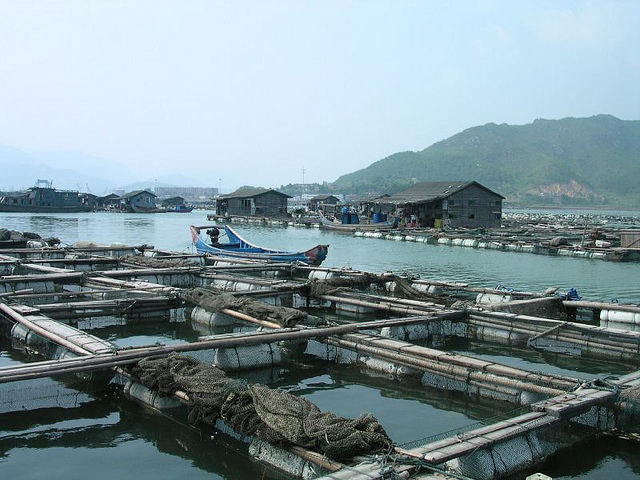
Shrimp farming often starts by destroying and removing ecologically critical mangrove ecosystems (nurseries for many species) to create retention ponds where the shrimp will grow. These ponds are usually fed with seawater that passes through the ponds and often re-enters the ocean … carrying much of the waste filtered through ponds carrying thousands of pounds of shrimp and their feces. Many operations claim they filter the water before it enters the ocean, but…

But because shrimp are the number one consumed seafood around the world, many operations in Third World countries in Central and South America and Asia jam as many shrimp into these ponds as possible. Without proper filtration, those shrimp are highly susceptible to disease, because, you know, they’re swimming in their own poop.

Bad medicine

For the past decade or so, many operators have found it easier to use antibiotics and other potentially harmful materials to fend off the bacteria that could cause disease. Those antibiotics don’t just disappear overnight. They don’t always fend off disease either, resulting in huge losses. Just witness recent cases of “early mortality syndrome (EMS)” in Asia.asianshrimpfarm_405x250

EMS is a devastating disease borne of a microorganism found in estuaries around the world, and showing up in overcrowded ponds that have poor filtration. The bacteria shut down the shrimp’s digestive system, killing the shrimp. Its infection rate is fast and efficient, meaning it can quickly kill all of the shrimp in a pond. EMS has mostly been found in Asia, but has also cropped up in Mexico.

To try and avoid catastrophic losses, growers choose from a menu of preventative measures, such as chlorine, superphosphates and ozone to disinfect the water, probiotics to fight off the bad bacteria and stabilize the water quality and antibiotics to treat illness. Aside from the potential threats to human health, another issue with these approaches appears to be that they may actually make the ponds more susceptible to infection, according to some scientists.

None of this is good for the shrimp or consumers.

Market impact

The Global Aquaculture Alliance estimates EMS causes $1 billion in losses annually. This explains why shrimp farmers are willing to do most anything to bring “healthy” shrimp to market … including using antibiotics the US FDA deems carcinogenic.

Here are some problems with this food system:

  • 90% of the seafood eaten in the U.S. is imported;
  • 50% of the seafood consumed in the U.S. is farm raised;
  • Only 5% of the seafood consumed in the U.S. is farm raised domestically;
  • 90% of the world’s shrimp exports come from Asia and India;
  • 55% of global shrimp production is aquaculture;
  • The U.S. is far more strict about safe aquaculture practices than most of the world;
  • The FDA is understaffed for inspectors, particularly those inspecting incoming seafood.

Source: UN Food and Agriculture Organization 2014 Status of the Stocks

This all means that most of the farmed shrimp consumed in this country was farm-raised in Asia, where there is a greater chance that it was treated with chemicals deemed unsafe to consume by the FDA. And there aren’t enough inspectors checking all of the imports.

How could this situation get much worse? If the latest trade deal, the Trans-Pacific Partnership, is approved in Congress, the few inspectors checking U.S. imports may have their hands tied. The pact allows signatories like Thailand, Viet Nam and yes, Malaysia to sue the U.S. claiming that applying more strict U.S. health codes to imported seafood constitutes unfair trade practices. The result could be sanctions, fines and an open door to products tainted with carcinogenic substances.

Get smart

In the classroom the message always comes back to awareness. I encourage students to question where their seafood comes from. I considered it a shrimp-diseasemoral victory a few months ago when a 6th grader told the class she stopped her mom from ordering shrimp because it was from Thailand.
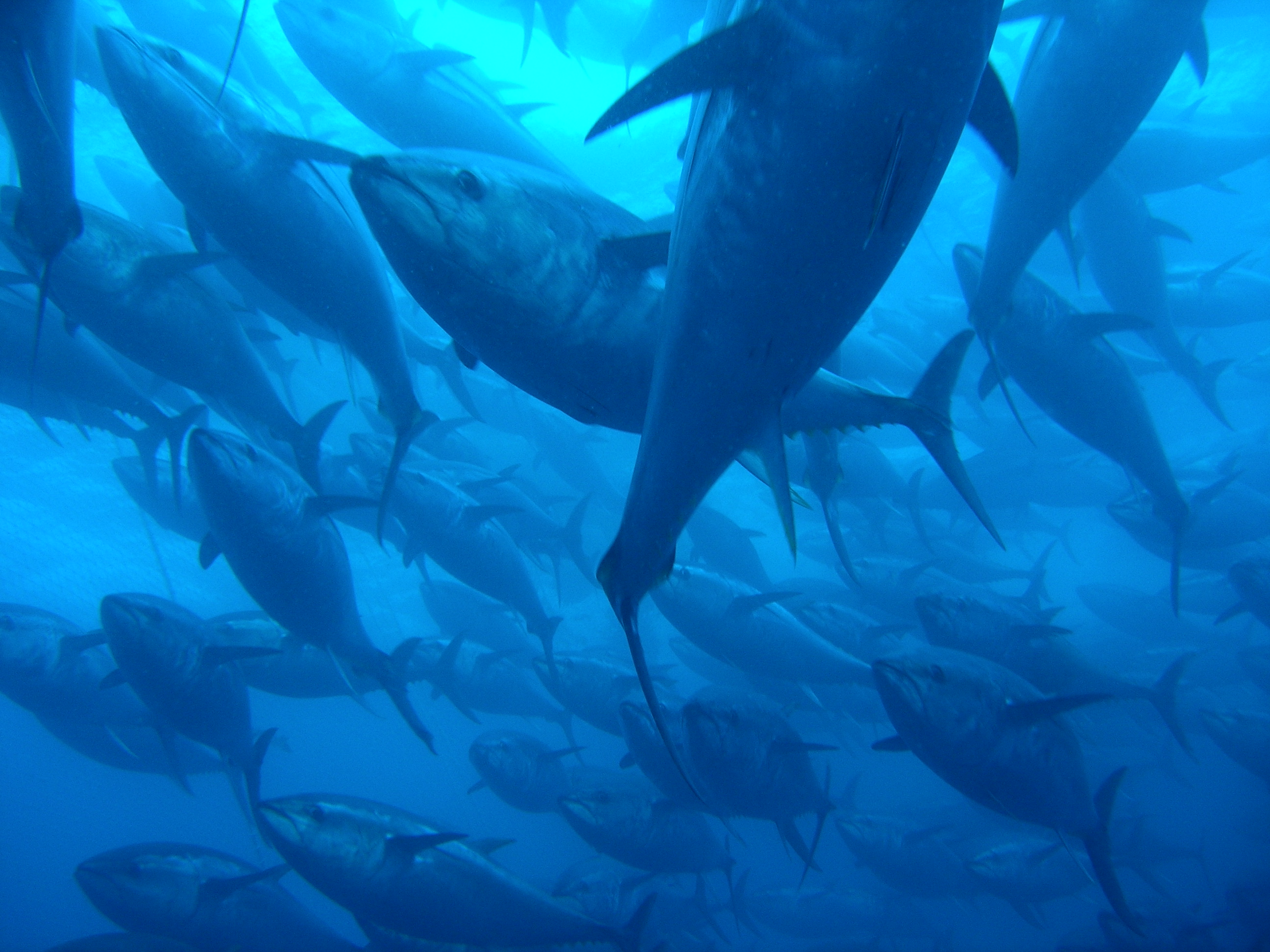
It’s that kind of awareness that helps students, their parents and anyone else understand that shrimp coming from Asia, or anywhere outside the U.S. is a good thing to avoid.

So you may want to pause before ordering the shrimp cocktail. Try to find the country of origin. If the shrimp isn’t from the U.S., you may want to consider another option. Because when the FDA sends up a red flag like this, it’s a good idea to take note.


Photo credits in order: Eco News Network, Food Safety News, U.S. Bureau of Labor Statistics

All Blog Posts

Fisheries Policy A Mixed Bag

  • April 26, 2016October 20, 2021
  • by Colles Stowell
Share it!
Share

The Magnuson-Stevens Fishery Conservation and Management Act (MSA) turns 40 this year. This is significant for fisheries because the law has been the backbone for management policy since its implementation in 1976.

And that fisheries policy is largely working, according to the 2015 Status of the Stocks released by NOAA last week. In short, the annual report boasted the percentage of domestic fish species that are overfished is near record lows. Thirty-nine fish stocks have been rebuilt since 2000 because of effective management policies, (up from 37 stocks in 2014), says the report. The number of stocks experiencing overfishing (when the harvest rate exceeds the stock’s ability to sustain harvest) has increased by 2 since 2014. The number of stocks that are overfished (when the population is too low and may not be able to support harvest) has increased by one to 38 since 2014.

Some of the lowlights of species still considered under threat by NOAA’s standards: Atlantic cod (no surprise), Atlantic and Pacific bluefin tuna (no surprise), Atlantic salmon (longtime resident on this list), red snapper (ditto), different species of flounder, different shark species, Chinook and Coho salmon in different areas of Washington state, Atlantic halibut and Pacific swordfish.

To be sure, a lot of work goes into compiling these reports. And it gives a general barometer of fisheries in US waters, even if some of the species, such as bluefin tuna, are highly migratory and thus, fished by international fleets.

NOAA calls out the annual catch limit as an effective tool for ensuring against overfishing. One of the more recent “tools” added to the NOAA anti-overfishing toolbox is the individual transfer quota (ITQ). In essence, a certain fishery has a certain amount of quota that is available to fishermen…for a price. Fishermen can buy and sell quota within their regulated area just like stock traders can with stocks. The concept was to allow fishermen to self-regulate while managing to a catch limit.

scr_235573_24667

Unintended consequences

The unintended consequence shifted control from the pool of local fishermen to a select few with the money to buy up all of the quota. As quota became more expensive, more smaller scale fishermen were forced out of the equation. So not only is the ITQ system skewing access and control of the fishery away from local commercial fishermen, but it’s actually encouraging greater fishing pressure on the resource by larger operations who care more about profit than the health of the resource.

Many fishermen argue it is this environment that fueled the ascent of large operators, such as Carlos Rafael, the New Bedford distributor arrested last month on fraud charges. Authorities allege that he hid actual catch volumes and mislabeled fish in a scheme to sell regulated species to buyers in New York for bags of cash. He is currently under “house arrest” wearing an ankle bracelet that monitors his whereabouts and ensures he abides by his curfew.

Fisheries management is a complex issue. There’s no one-size-fits-all formula that provides equal protections for Atlantic Striped bass and Pacific Ocean perch. Different species in different ecosystems with different complexes of predator prey relationships and environmental factors require specific, targeted policies to account for all of these variables. And that doesn’t fully encompass the calculus of ecosystem-based management (managing fisheries not just by the narrow window of one specific species at a time, but as an entire ecosystem from plants up to alpha predators like sharks).

It’s hard to get it 100% right.

Magnuson-Stevens provided the framework that has evolved to the point where specific species management is possible. But the scale of the framework and sheer administration needed to manage such a menagerie of diverse fisheries has created what some fishermen see as a type of caste system where the well funded “inherit” the right to control large chunks of the US fishery. Smaller-scale fishermen who depend on the resource for their lives are forced out, and the resource suffers.

Mssing in this equation is a key tenet described in the amendment and renaming of the law in 1996: “Conservation and management measures shall not discriminate between residents of different States. If it becomes necessary to allocate or assign fishing privileges among various United States fishermen, such allocation shall be (A) fair and equitable to all such fishermen; (B) reasonably calculated to promote conservation; and (C) carried out in such manner that no particular individual, corporation, or other entity acquires an excessive share of such privileges.”

So yes, Magnuson-Stevens has provided a critical framework for managing a hugely diverse network of fisheries in U.S. waters. Better science gives us a more realistic idea of what is happening in our marine ecosystems, and policies are in place to help avoid fishing beyond capacity. But there is also room for improvement. Effective fisheries policy must include all stakeholders, including small-scale fishermen. Failure to do so has made the system vulnerable to fraud and disparity that hurts fishermen, consumers and the resource.

A better, more democratic approach that lets everyone have an equal voice is surely available. We just need to break the longstanding habit of repeating the same mistakes.


Photo credits: NOAA

Posts pagination

1 2 3 4

Recent Posts

  • Hurricane Ida wreaks havoc on Louisiana’s seafood industry
  • EPA Should Use Clean Water Act To Kill Zombie Mine
  • Slow Fish 2021: Relationship Matters
  • Faith, Façades, and Futility
  • Pebble Permit Paused: Politics at Play

Archives

  • September 2021
  • August 2021
  • April 2021
  • December 2020
  • August 2020
  • June 2020
  • February 2020
  • December 2019
  • November 2019
  • October 2019
  • July 2019
  • May 2019
  • April 2019
  • March 2019
  • January 2019
  • December 2018
  • November 2018
  • June 2018
  • May 2018
  • March 2018
  • February 2018
  • January 2018
  • December 2017
  • November 2017
  • October 2017
  • September 2017
  • August 2017
  • July 2017
  • June 2017
  • May 2017
  • April 2017
  • March 2017
  • January 2017
  • December 2016
  • November 2016
  • October 2016
  • September 2016
  • August 2016
  • July 2016
  • June 2016
  • May 2016
  • April 2016
  • March 2016
  • February 2016
  • January 2016
  • December 2015
  • November 2015
  • October 2015
  • September 2015
  • July 2015
  • June 2015
  • May 2015
  • April 2015
  • March 2015
  • February 2015
  • January 2015
Theme by Colorlib Powered by WordPress