Skip to content
One Fish Foundation
  • Blog
    • Aquaculture
    • Education
    • Environment
    • Policy
    • Wild Harvest
    • Fish Tales
  • About
    • About One Fish
    • About Colles Stowell
  • Education
    • Elementary School
    • Middle School
    • High School
  • KNOW FISH Dinners®
  • Resources
    • One Fish Podcast
    • One Fish Foundation in the news
    • The 7 C’s of Sustainable Seafood
    • Newsletter Archive
    • Recipes
      • Skate with Capers and Butter — Chef Rizwan Ahmed
      • Grandma Davis’ Fish Chowder — Jane Almeida
      • Ginger Garlic Tamari Scallops — Colles Stowell
      • Fish Stock — Evan Mallett
      • Mussels San Remo — Chef Rob Martin
      • Salted Pollock Croquettes – Chef Mark Segal
  • Connect
    • Contact OneFish
    • Social
      • Instagram
      • Facebook
      • Twitter
All Blog Posts

Boom and Bust of Gulf of Maine Scallops

  • March 25, 2017October 20, 2021
  • by Colles Stowell
Share it!
Share

Northern Atlantic sea scallops are a good example of how fisheries management has rescued a stock from the perils of overfishing. Sadly, they are also proof of how those same policies could just as easily doom the stock in the not too distant future.

How does this happen?

It comes down to fishery access. Several decades ago, the scallop fishery in the Northern Gulf of Maine (NGOM) was teetering because the annual harvest had reduced the stock’s ability to sustain its population. So limits were put in place to reduce the overall harvest in that area.

As the stocks rebounded, fisheries managers established a new system that would guarantee smaller boat operators with specific permits to scallop in a designated area up to 60 miles off shore from Downeast Maine to Cape Cod. They were allowed to catch 200 lbs a day up until the point all of these fishermen landed a total allowable catch (determined by stock assessment), which is now 70,000 pounds.

The managers also allowed larger boats with federal permits to not only scallop beyond the 60-mile limit, but also inside the 60-mile limit. The managers said that these larger boats, fishing under what is called a limited access permit, could land as many scallops as permissible under the federal permit during a set number of days while they were in the 60-mile zone the smaller boats fish. Once the smaller boats hit their 70,000 lb total allowable catch, the entire fishery would shut down.
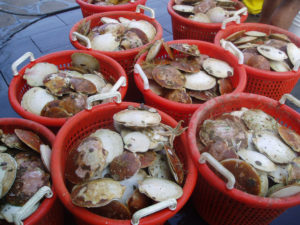
Photo: NOAA

For example, in the 2015-2016 season, limited access boats caught more than 300,000 lbs of scallops in the northern gulf of Maine area before the smaller boats hit their 70,000 lb quota and the fishery was shut down.

Sound fair? No. And these limited access boats are fishing within their permitted rights. As an attorney for a lobby group representing scallopers was quoted in the Boston Globe, “These vessels are doing what they’re allowed to do.”

Here’s the worst part. NOAA projects that the current season will end with over 1 million pounds of scallops being harvested, still with only 70,000 lbs coming from the smaller boats. NOAA scientists said last year that the fishery could withstand a total haul of 400,000 lbs from this area this year.

Consumer impact

So why does this matter to consumers?

If the stock tumbles as it did a couple of decades ago, there will be fewer local scallops and the price will skyrocket. More importantly, you should be concerned if you care about the resource and the people in and around your community whose livelihoods depend on it.

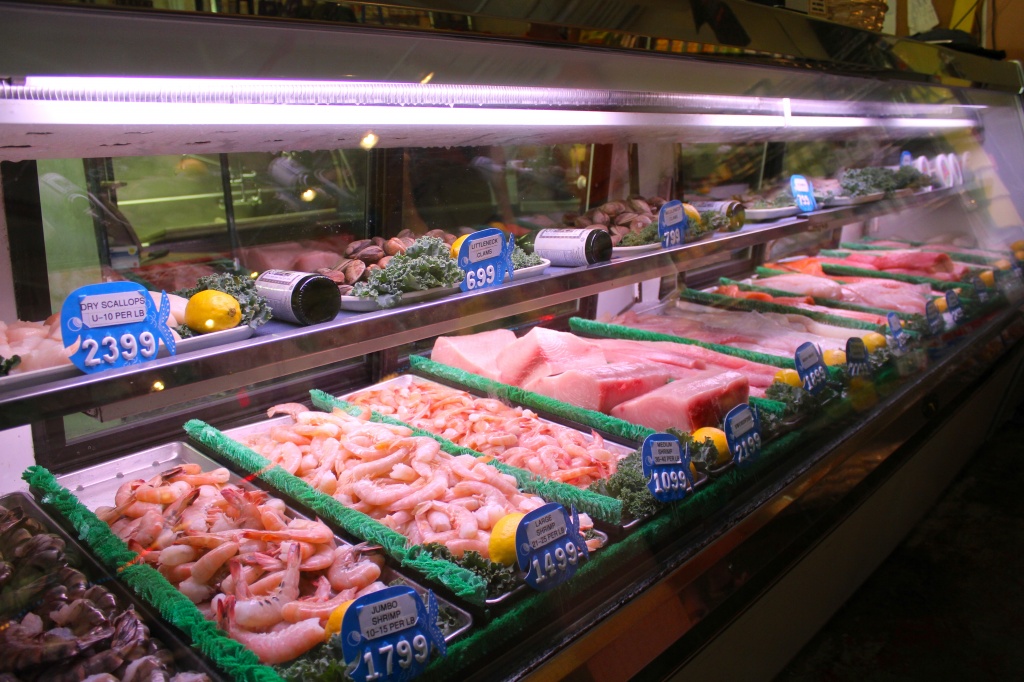
Here’s another concern. Small-boat scallopers in Maine and Cape Cod deliver a higher quality product called “dry scallops,” which have not been soaked to preserve freshness and potentially add market weight to the product. This is a common practice among the larger limited access boats. Soaked scallops lose flavor and don’t cook well. A collapse of the NGOM stocks could reduce or eliminate dry scallop availability.
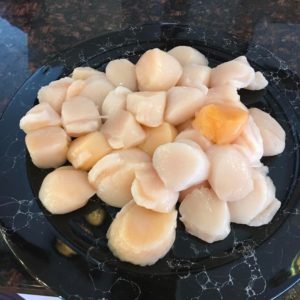
Dry scallops. Photo: Cape Ann Fresh Food

I attended a discussion about the scallop fishery at the Maine Fisherman’s Forum a couple of weeks ago, and several small boat scallopers who operate in the NGOM zone complained about seeing larger boats from New Bedford and elsewhere hoovering up all of the scallops. Their complaints hinged on two fronts: 1. The unfairness of being hamstrung by a low total allowable catch in a fishery that a NOAA scientist had claimed a few minutes earlier was strong, and NOT experiencing overfishing. 2. They worried about the long-term survival of this fishery in the face of the massive hauls taken by the limited access boats.

The NOAA staff fielding the questions were sympathetic to the plight of the small-boat fishermen. But they repeatedly said that any comprehensive change would have to come from a rule change established by the New England Fishery Management Council (NEFMC), which manages scallops in New England waters.

A slow process

And therein lies the rub. The council’s mission is to protect the resource and those who use it. Unfortunately, the council can be slow to react, and it doesn’t always stand up for the access/rights of small operators.

As Ben Martens, executive director of Maine Coast Fishermen’s Association wrote in a recent blog, “The system as it is currently structured is destined to fail. User conflicts between permit types have become unavoidable since the biomass returned, and instead of putting a band-aid on this issue, the council must go through the process of fully protecting and planning for the long-term future of this fishery.”

I asked Ben what a fair solution would look like. He suggested a rule giving all stakeholders the same trip limit of scallops harvested, so one user group wouldn’t be favored over another.

I agree.

The NEFMC discussed the scallop harvest and fishermen’s concerns at a meeting last November. The council will entertain recommendations from the scallop subcommittee that meets next week and possibly take action in April.

Hopefully, they can get this straight…and fast.
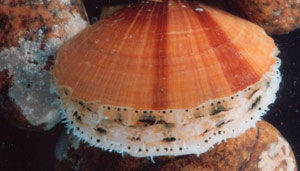
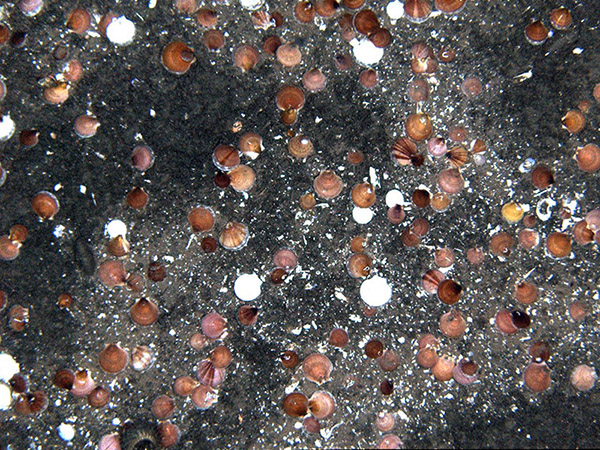
Eyes of the scallop. Photo: NOAA

I like scallops. But there is an environmental cost of dragging a 400- to 2500-pound steel cage across the ocean bottom. Bycatch is one. Disturbing the ecosystem on the ocean floor is another. Yes, some areas are more resilient than others and can bounce back fairly quickly. But there is still a consideration.

So we don’t eat scallops as often as we used to. Hopefully, we’re not forced into a situation where our local options for scallops are further limited and prohibitively expensive because our fisheries managers couldn’t find a comprehensive solution that is fair and that protects the resource.


Top photo credit: NOAA
All Blog Posts

Challenging Next-Gen Scientists

  • March 21, 2017October 20, 2021
  • by Colles Stowell
Share it!
Share

Call it irony.

Last week I was putting the finishing touches on a presentation about climate change impacts on seafood for two classes when I saw a news brief about how ocean acidification is spreading quickly in the western Arctic Ocean.

Specifically, a report from NOAA cited a new study showing how high acidity waters have spread more than 300 nautical miles almost to the North Pole and have increased in depth from 325 feet to 800 feet in the past 20 years. This rate of expansion is more than twice the global average, and it could harm mussel, clam and sea snail (food for salmon) populations.

So I had some fresh, relevant news to discuss with these students.

The classes were part of a statewide symposium bringing high school students interested in marine sciences to Salem State University. I was one of a dozen or so teachers speaking with students that day. I focused on four significant but interrelated climate factors that affect seafood webs in and around the Gulf of Maine: temperature increase, changes in current and salinity, and ocean acidification.

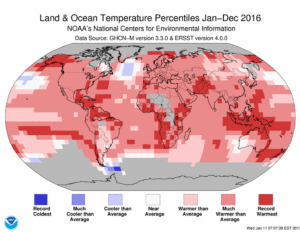
2016 was the warmest year on record. NOAA graphic

First, I briefly discussed seafood as an economic resource, and why we should care about where, when, how and by whom it was harvested. Next we talked about 2016 being the fifth year in a row for setting global land and ocean temperature records, and that the first 16 years of the 21st century are among the 17 warmest on record (138 years). We talked about how the Gulf of Maine is warming four times faster than 99% of the oceans on the planet.

Influential currents

Students asked questions about new research showing that some key currents in the Atlantic Ocean may be slowing down because of warming waters in the Arctic. The Atlantic Meridional Overturning Circulation or AMOC, (known as the ocean conveyor belt), drives global ocean currents and climates.

http://qkl.fa0.mwp.accessdomain.com/wp-content/uploads/2017/03/thermohaline_conveyor_30fps.mp4

Scientists think that if warming continues, the collision of warm and cold water in the Arctic that drives the global currents could slow or even stall, eventually putting Europe in a deep freeze and baking the southern hemisphere. This could significantly change the number and intensity of Atlantic hurricanes and Pacific Monsoons.

It could also have major impacts on a wide swath of seafood in the Gulf of Maine. These types of temperature and current fluctuations dramatically affect salinity and ocean acidification. All of these changes can alter ecosystems, including spawning areas and timing, migration, plankton production (which is the base layer of the ecosystem) and predator-prey relationships.

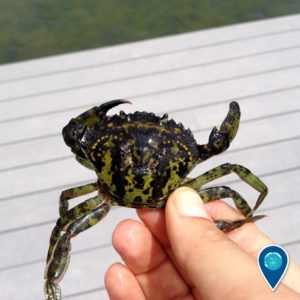
NOAA photo

To drive the point home, I brought out some live green crabs. The students were all about hearing how the green crab can wipe out entire mini-ecosystems of eel grass as they root out mussels and clams to devour. They also learned about increasing efforts to determine how to best control green crab populations as they’ve become omnipresent in the Gulf of Maine as temperatures increase. Though they’ve been around since the early 1800s, they’ve become much more populous here because they have adapted to the seasonal temperature changes and they are prolific.

Throwing down a challenge

I ended the class with a challenge. I described discussions I’ve had with scientists on the forefront of the research on climate impacts on seafood … all leading to the same conclusion. We currently know a fair amount about the impacts of temperature, current, salinity and OA on different ecosystems. But we don’t have a real good, long-term, predictive view of how these (and other) factors work in concert to affect ecosystems and even specific species.

We need the next generation of scientists to help us find these answers. As Marcus Carson, lead scientist on the in-depth Arctic Resilience Report on climate change said, “It’s frustrating always being two or three steps behind climate change.”

We need bright minds to dive into the advanced geophysical, meteorological, metabolic and organic shifts climate change will impose on our marine ecosystems to help us better understand how to adapt to these changes. It’s unlikely we’ll fully stop climate change. But perhaps if we begin collectively cutting carbon emissions and planning ahead, we can slow it down enough for future scientists to help us better anticipate, rather than react to these changes. That’s how we take care of seafood as a resource.

So yes, the NOAA acidification report was timely, if a bit ironic … another unfortunate red flag that should serve as a call to arms.


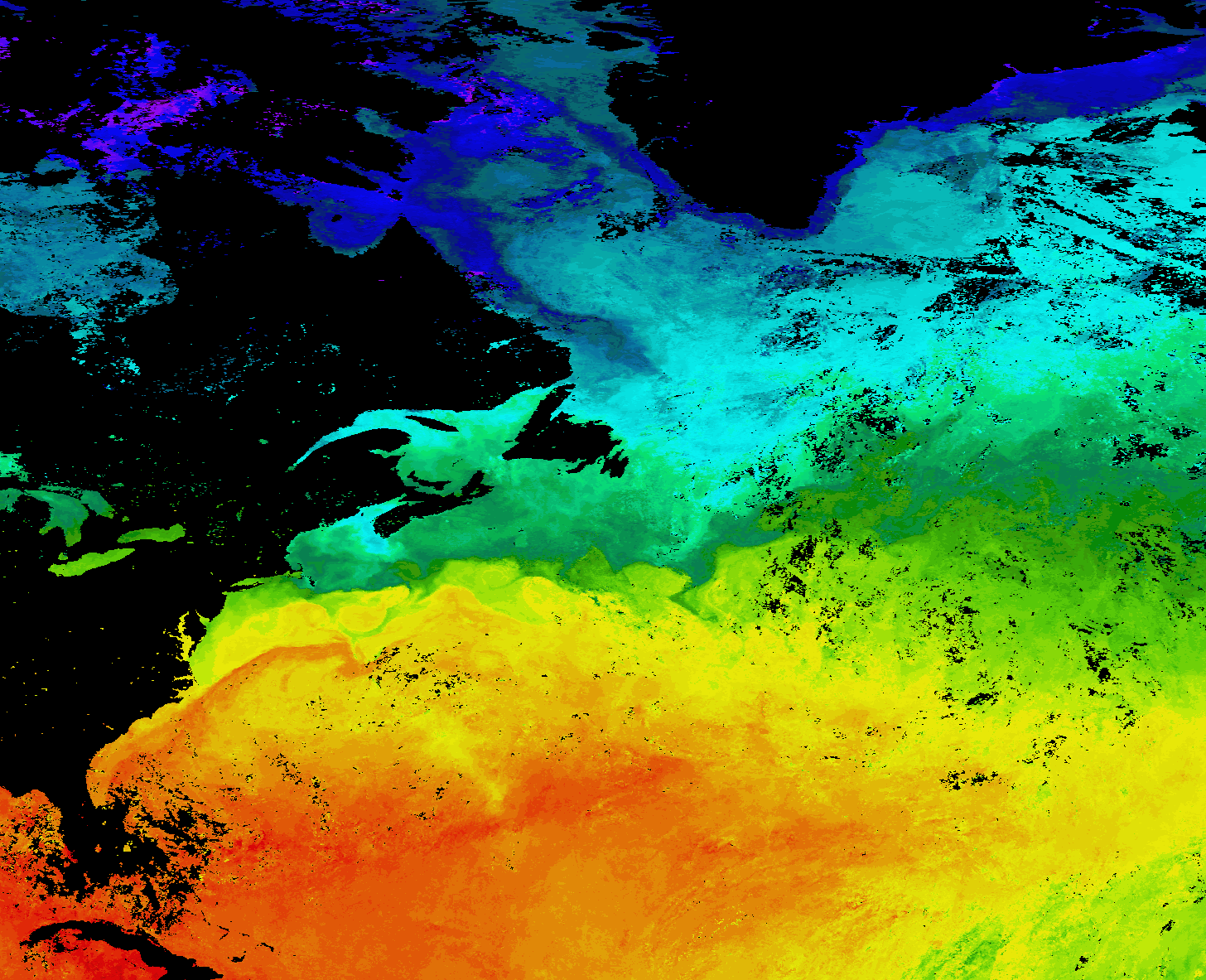
Top image credit: NASA spectroradiometer view of thermal variations in the Northwest Atlantic ocean. The warm Gulf Stream is the orange streak along the Eastern seaboard.


All Blog Posts

“One Word: Plastics” … and the damage to our…

  • March 6, 2017October 20, 2021
  • by Colles Stowell
Share it!
Share

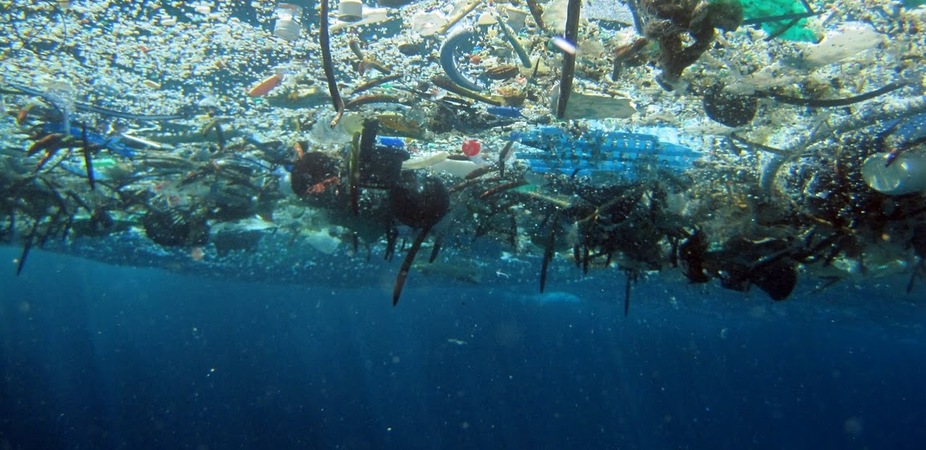
Here’s a sobering thought: There will be more tonnage of plastic than fish in the world’s oceans by 2050 if we continue to produce, consume and dispose of plastic as we are now.

Think about the implications. In fact, some scientists estimate that a minimum of 5 trillion pieces of plastic weighing more than 250,000 tons are floating in our oceans. That’s just the plastic that is floating. Another study from 2015 suggests that oceans now hold more than 4.8 million metric tons of plastic, much of which now rests on the sea floor. The most offensive item? Plastic bags. Approximately 500 billion plastic bags, or 150 per person on the planet, make their way into the waste stream. And those numbers are rising. They can take up to a 1,000 years to break down, and are often mistaken for jellyfish by a wide variety of marine species.

You don’t have to look far to find horrifying stories and gruesome pictures of dead whales, seabirds, turtles and other marine organisms with organs jammed full of plastic bags, containers, expanded polysterene products (Styrofoam™) and other human detritus. As many as 100,000 marine animals die from interactions with plastic, as do 1 million sea birds. It’s not hard to see that the more plastic that floods into oceans, the less healthy marine ecosystems become.

A recent study released last month by the World Economic Forum suggests a major re-think of how we produce, consume and reuse plastic items.

Here are some highlights:

  • More than 40 years since the recycling symbol appeared, we only recycle 14% of plastic produced today.
  • Every year up to $120 billion worth of plastic packaging material is lost to the economy as single-use plastic. Much of which ends up in our oceans.
  • UNEP suggests the cost of all of this packaging spilling into the environment at $40 billion.
  • 30% of plastic packaging (such as lids, straws, plastic tear offs, polysterene cups and to-go packages, etc.) will never be recycled and likely will continue to be loosed on the environment unless we significantly re-design and reconfigure them.
  • 20% of packaging can be reused as a result of new designs that replace single-use packaging for such items as cleaning and personal care products.
  • A retooling of the recycling system, including the design of packaging products and the materials could render the remaining 50% of plastic packaging products economically feasible for recycling. This is a big deal. To date, most recycling operations have been money-losing operations. This was certainly the case for the omnipresent plastic bags doled out at grocery stores. The Clean Air Council has estimated that recycling one ton of plastic bags costs $4,000. The recycled product can be sold for $32.
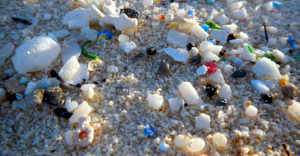
Microplastics are insidious because they’re hard to clean up, and they find their way into marine food webs, causing sickness and death. NOAA photo

It’s not just the big visible plastic bags, lids, floating polysterene etc. that may appear as food to some sea creatures, which ingest it then die of suffocation or starvation. It’s the tiny particles as well.

But truly addressing this problem is about people and their actions, not plastic.

Those microplastics that were once touted as the most efficient way to clean your bathtub or restore vitality to your cheeks? They hitchhike a ride through municipal water systems and into streams, rivers, lakes, marine estuaries and bays. Once there, they disperse and end up in seafood webs because they take a long time to break down.

In a study published last year in the Proceedings of the National Academy of Sciences, researchers found that filter feeders such as oysters, mussels, sea cucumbers and zooplankton are particularly vulnerable to the hazards of plastic.

The study focused on the impacts to oysters, which feed on the plastics they filter in. Researchers observed these oysters experienced drops in fertility, reproduction and larval development (some affected larva grew 18% smaller than healthy specimens).

Yes, the convenience of plastics have proved minor in the face of the mounting waste heap of trash floating, drifting or sinking in our oceans and the impact that has on seafood.

But truly addressing this problem is about people and their actions, not plastic. We first have to change our thinking on plastic so it is no longer  the daily, disposable necessity we take for granted. We need to think of it in terms of how to minimize global environmental impact. As such, I agree with the larger premise of the PNAS report that we should re-think how we manufacture, consume and recycle plastic to minimize production, and single-use products.

Similarly, I agree with one researcher’s  conclusion about ocean conservation. In a recent National Geographic op-ed piece, she writes “…ocean conservation is not about fish. It’s about people.”

She’s right. We have to change our attitudes about how we look at ocean conservation. I may not agree with her concept of zoning the ocean into areas that are and aren’t open to fishing as that would be very controversial and impractical on a global scale. But her approach to starting from the ground up, in this case, talking with local fishermen and using their input to manage the fishery, is essential to their buy-in. That investment in the outcome by the fishermen is crucial to the success of the fishery management and to the conservation of the resource.

Here are some additional resources:

  • National Geographic article on the volume of plastics in the ocean
  • National Geographic article on plastics and the great Pacific Garbage Patch.
  • Reuters story on using shrimp shells to make biodegradable plastic bags.
  • Statistics from Ocean Crusaders.
  • More statistics from Save the Bay.
  • Huffington Post graphic on how plastic enters marine ecosystems.

Top photo credit: NOAA
All Blog Posts

Fake News: Making Mountains Out Of The Pebble Mine

  • January 27, 2017October 20, 2021
  • by Colles Stowell
Share it!
Share

If there’s any question that money is directly tied to resource management, look no further than the Dakota Access Pipeline, Keystone XL pipeline and the Pebble Mine. Two of them were dormant for a while, and the first was on hold.

No longer.

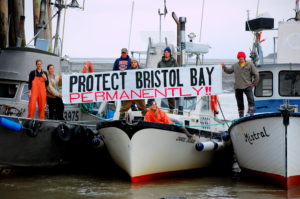
That the proposed Pebble Mine in Bristol Bay, Alaska has reared its ugly head again is both alarming and telling. It is alarming because the project, which had been on life support for years, directly threatens one of the world’s largest and last wild sockeye salmon runs. It is telling that the changing political climate has created an atmosphere more weighted toward corporate profits and against environmental protections.

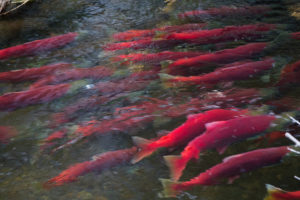
Sockeye approaching spawning beds. Photo: Bristol Bay Regional Seafood Development Authority

The massive copper and gold mine again became a discussion topic earlier this week when its sole investor, Northern Dynasty, claimed it expected to have its permitting issues resolved with the EPA by April, and that it was actively seeking an investor.

Northern Dynasty has been mired in three federal lawsuits aimed at handcuffing the EPA’s authority to reject the mine’s permit because the mine would violate protections in the Clean Water Act. In 2014, the EPA ruled the mine presents a potentially irreversible threat to the stability of the Bristol Bay watershed. At the moment, Northern Dynasty’s only on-site operations include geology tests and equipment storage.

Not surprisingly, three days after the new administration took office, Northern Dynasty’s CEO Ronald Thiessen said President Donald Trump’s administration has “a desire to permit Pebble.” He added, “We will come to a resolution within 100 days” with the U.S. Environmental Protection Agency.

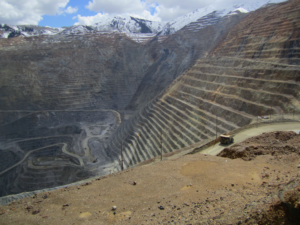
Copper mine in Utah run by Rio Tinto, which backed out of the Pebble Mine. If built, Pebble would be bigger than this. Photo: Deep Green Resistance

Opposition to the mine has been surprisingly universal from a broad range of user groups. That’s likely because Bristol Bay’s salmon population supports 14,000 full-time jobs and a $1.5 billion a year industry, according to federal and industry figures. In a rare instance, commercial and recreational fishermen are speaking with one voice: “Don’t destroy one of the last significant wild sockeye salmon populations!” Many of Alaska’s tribal leaders and several environmental groups have joined the chorus.

Is this Fake News?

That depends. To date I’ve seen no direct statement from the president saying he was going to drive the Pebble Mine through to operation. I’ve only seen Northern Dynasty say that.

If noted anti-resource attorney Scott Pruitt becomes head of the EPA, that could streamline federal permit approval, which accounts for a small number of significant permits.

That leaves the state of Alaska, which would have to issue more than 60 permits before the mine begins in earnest. And that won’t necessarily be an easy process for Northern Dynasty. An interesting political sea change has occurred in the past two years. Prior to the election the mine’s biggest opponent was the Obama administration and the EPA, while the Alaska state legislature was more supportive of the mine.

Photo: EPA

The tables flipped a bit in Nov. when the State House gained a bipartisan majority, with the Speaker of the House being from Bristol Bay. So while the federal administration appears to favor projects like the mine, the governor’s office and much of the legislature are signaling support for the state’s natural resources like salmon.

“Pebble doesn’t necessarily have an EPA problem,” says Sam Snyder, Trout Unlimited Alaska Engagement Director and a key figure in the fight against the mine. “But they have an Alaska problem. Sixty-five percent of Alaska residents in every precinct voted against it. Bristol Bay Tribes, villages and residents overwhelmingly oppose Pebble. Eventually this will also have to go through the state legislature.”

Photo: Seafood News

Here are some harsh realities that make the approval process a steep uphill climb for Northern Dynasty:

  • The political climate in Alaska has brought more scrutiny of the environmental risks of such a mine. The legislature recently put a 90-day delay on a routine permit to allow Northern Dynasty to maintain base operations (testing and equipment storage on site, etc.), because lawmakers wanted a closer look at impacts.
  • While there have been several reports about Northern Dynasty’s stock performance in the past few weeks since the Trump victory, there is context. Yes, the stock jumped nearly 300% in that time … from 75 cents to $2.89 on Jan. 26. That is a shell of the $22 stock price the company had in Feb. of 2011. It’s a penny stock.
  • Two major partners have backed away from the project because of widespread opposition and losses: Anglo American, PLC in 2013 and Rio Tinto in 2014.
  • In 2014, 65% of Alaskans approved a measure that would allow the legislature to ban mines lawmakers believe would harm wild salmon stocks. So a majority of Alaskans are skeptical.
  • That opposition continues. There is support for a new proposal to strengthen laws governing protection of fisheries habitats, which would have to be considered with any state permit for development that impacts salmon habitat.
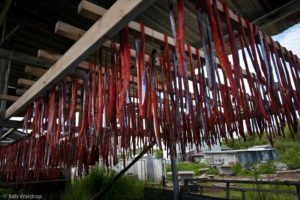
Sockeye drying. Photo: Bob Waldrop

What does this all mean? It means there are several roadblocks and years before the mine would have any chance of operation … if at all. Northern Dynasty would likely have to spend close to $200 million dollars just to secure all of the necessary permits. It would then need another several hundred million dollars to begin operations.

It also means that opposition must continue, within and without the state of Alaska, if opponents want to ensure the safety of the resource.

As the current mantra goes: wrong mine, wrong place.

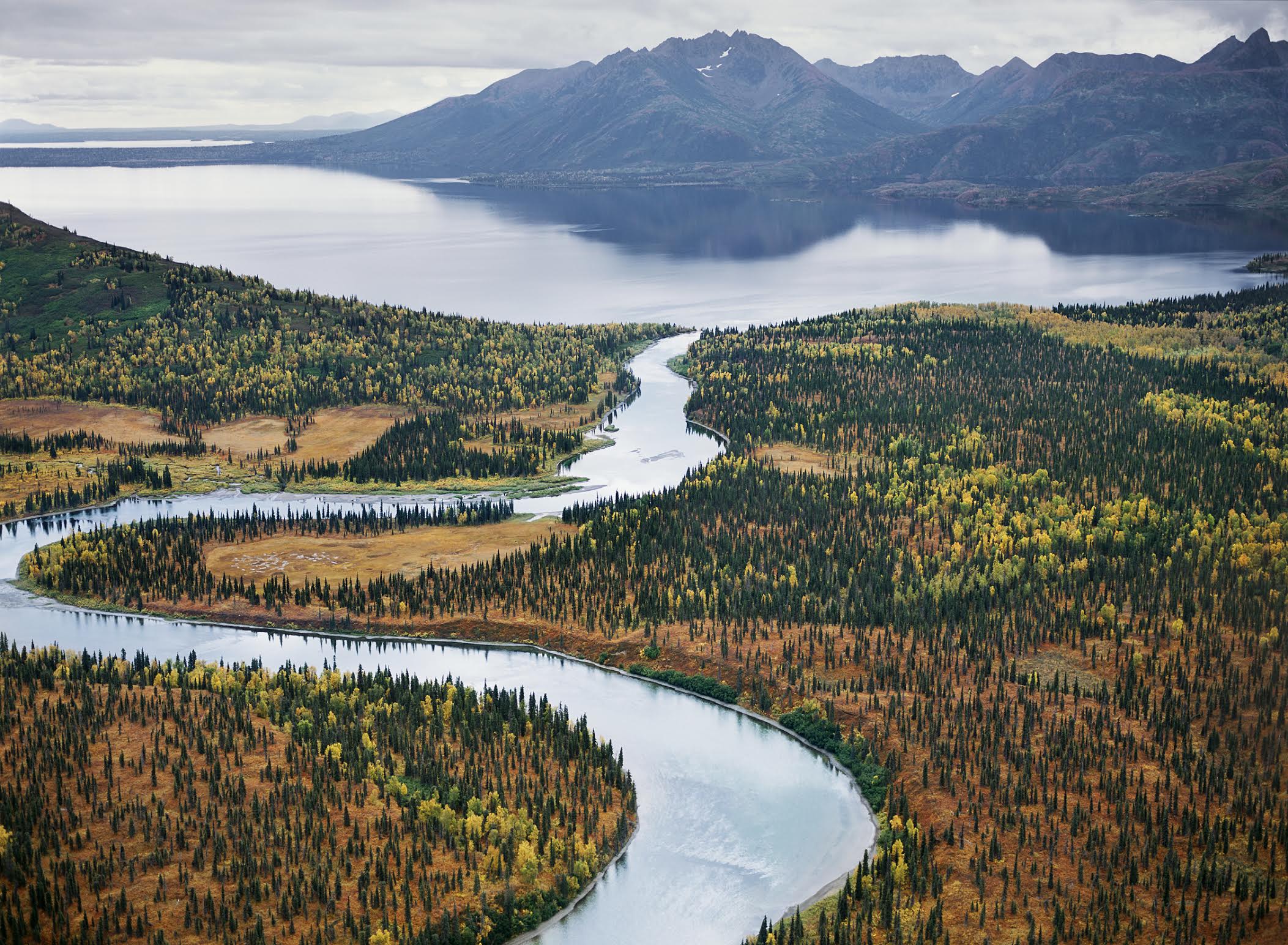
Top photo credit: Robert Glenn Ketchum

Other resources:

Save Bristol Bay : Good resource for background and the mine’s impacts.

One Fish Blog: Further background

Homer News: Public comments on state fisheries protections.

Alaska Daily News OpEd: Wrong mine, wrong place.

All Blog Posts

Aquaculture, Antibiotics and Their Dark Path to Our Diets

  • January 17, 2017October 20, 2021
  • by Colles Stowell
Share it!
Share

“Why does that matter?”

It’s one of the first questions I get when I tell middle school students that 90% of the seafood eaten in this country is imported.

So I begin with the big picture, that much of that seafood is coming from countries that put a lot of chemicals in their seafood. Countries like China, Thailand, Chile and Ecuador don’t have the same health safety standards the U.S. does. I watch their facial expressions as I start talking about how and why antibiotics, hormones, bleach and other chemicals are used.

In just a few minutes, it does matter. They care where their seafood comes from.

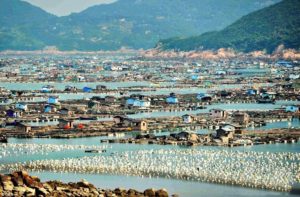
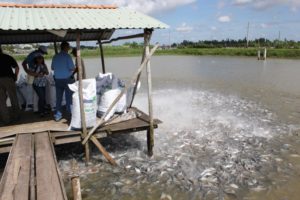
Massive floating community of fish farms in Luoyuan Bay, in south-eastern China’s Fujian province.

Why this happens

Sometimes the middle school students ask why this happens. More often though, that question comes from high school students and adults. I then explain how the FDA is outgunned simply by the fact agents only inspect 1-2% of all seafood imports. Over the past few years, I’ve watched the FDA issue more and more alerts authorizing agents to outright halt various shrimp and other seafood shipments from China, Malaysia, India and other countries because of links to US-banned antibiotics.

But the answer is really more complicated than that. Part of it has to do with U.S. consumption habits. We eat a lot of shrimp, but we don’t want to pay much for it. So the much cheaper product from Asia or South America floods supermarkets where consumers scoop it up without looking at the label or questioning the origin.

Fish farm in Viet Nam.

Lack of transparency

Part of the answer has to do with profit and the complex international seafood export industry. Bloomberg Business last month released an exhaustively researched, but well narrated story about this complex system. The report details how much of the seafood from China, which owns 60% of the $90 billion global aquaculture market, is shipped through other countries before arriving in the Western Hemisphere, thereby avoiding steep tariffs and close inspection (when it happens). This process is called transshipping, and it’s becoming widespread and difficult to track down, further masking true seafood origin.

I recommend reading the story if you have 20 minutes or so. Here is the link.

Here are a couple of highlights:

  • Asia has a centuries-old tradition of linking aquaculture and agriculture. Waste from pigs goes into ponds where tilapia and geese are raised. The tilapia gets much of their protein and nutrients from that waste.
  • As diseases have increased in pigs, farmers have increased the use of antibiotics to fight the disease. The antibiotics pass to the fish and/or shrimp.
  • Larger operations treat shrimp and fish with antibiotics to ward off disease.
  • Increased antibiotic use has given rise to potentially lethal antibiotic-resistant superbugs, which are becoming more common.
  • A recent study found that between 42% and 83% of Chinese shrimp carry bacteria that can destroy penicillin and most of its variants.
  • A 2006 FDA study found a quarter of all Asian seafood tested had traces of chemicals banned in the U.S. This has led to a succession of FDA bans and alerts.
  • The increased scrutiny has pushed some foreign seafood export operations into transshipping through countries like Malaysia that don’t have the high tariffs and increased inspection standards imposed by the FDA on China, for example.
  • Tracking the origin of transshipped seafood can be difficult. The Bloomberg report cites examples of companies that have been accused by the FDA, and that have folded, with new export companies cropping up shortly thereafter.
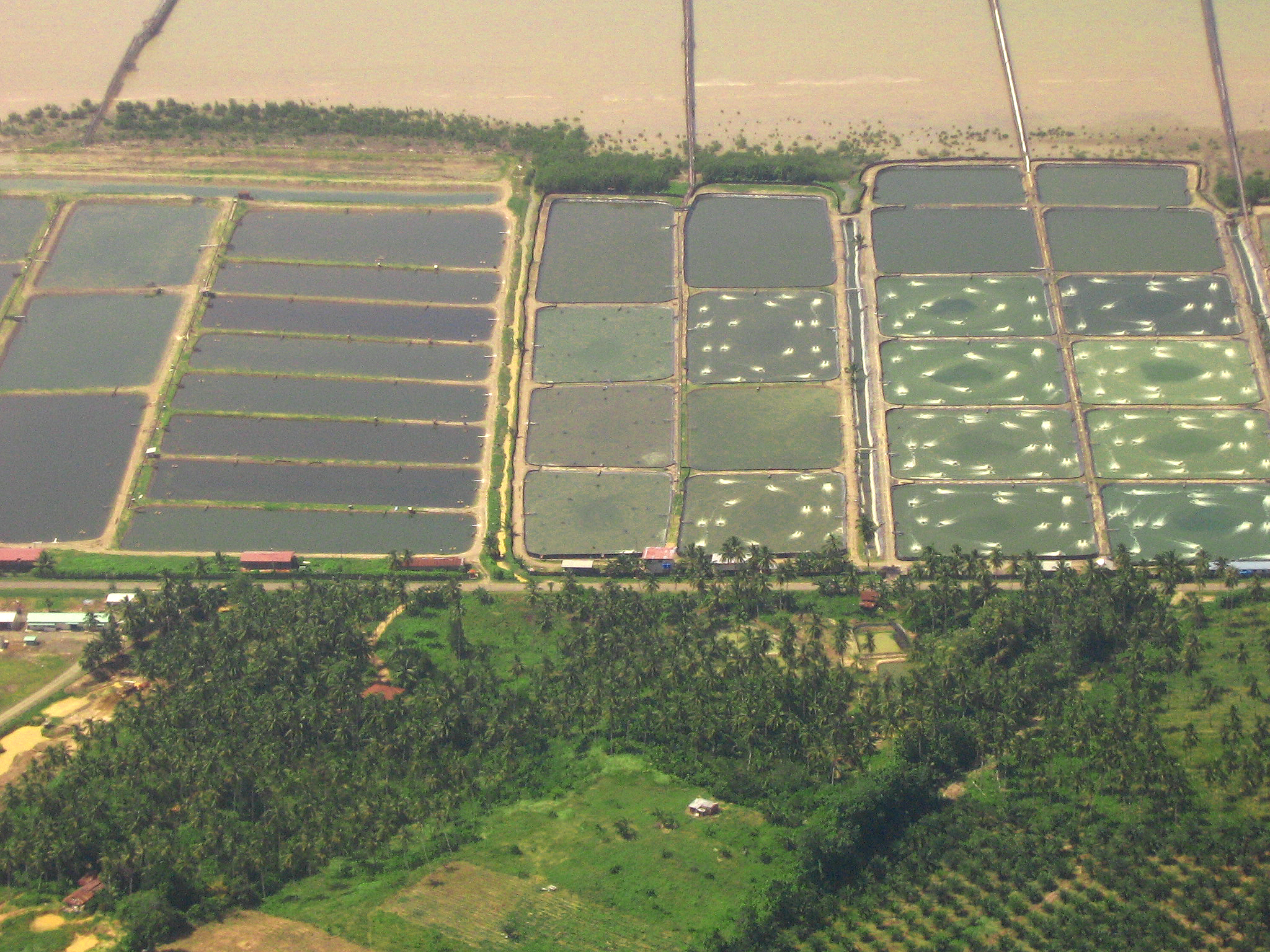
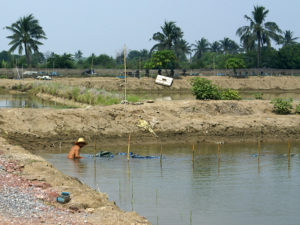
Shrimp pond in Thailand.

So what’s the lesson? Read labels. Ask questions. And if you can’t get seafood that is local or at least domestic to the U.S., consider other options. If you just absolutely have to have the farmed shrimp from Thailand because of the price, understand the implications … to your health and to the support of exporters more concerned with profit than customer health.

We can’t effect change in the domestic seafood web without at least first getting smarter about it.

That we can do.


Top photo: Tiger prawn farm in Malaysia.

All Blog Posts

One Fish Foundation 2017

  • January 8, 2017October 20, 2021
  • by Colles Stowell
Share it!
Share

Happy New Year from One Fish Foundation!

2016 was a year of continued growth, broadened horizons, hands-on experiences, shared stories and several firsts. One Fish remains committed to educating students, parents and communities about why they should care where their seafood comes from, how it was caught and by whom.

Here are a few of the highlights from the past year, including some important firsts that set a precedent for spreading the sustainable seafood message in communities.

  1. The first sustainable seafood dinner was staged at Rosemont Market in Portland in June, bringing interested residents to the historic bakery to have a frank, thoughtful discussion about myriad factors affecting seafood choices.
  2. The KNOW FISH dinners hosted at When Pigs Fly in Kittery, Me. and Black Trumpet in Portsmouth, NH. extended the discussion of the June event to include fishermen, chefs and fishmongers talking about different links in the seafood supply chain. Attendees learned about one fisherman’s unfailing drive to catch groundfish such as haddock and pollock by hand, on rod and reel, up to 80 miles offshore to reduce bycatch and preserve the species.
  3. One Fish Foundation expanded its educational reach into New Hampshire schools.
  4. One Fish Foundation has been featured in the media:
    1. CBSNews.com
    2. The Portland Press Herald
    3. The Coastal Table
  5. One Fish Foundation helped plan and attended Slow Fish 2016 in New Orleans, an international event aimed at sharing fisheries stories from around the world and addressing some of the challenges to fishermen and seafood sustainability.

We have set some ambitious goals for 2017.

  1. We will hire a social media communications coordinator to expand One Fish Foundation’s presence on Facebook, Instagram, and Twitter.
  2. We will extend the website to include more content for students.
  3. We will grow our footprint in Maine, New Hampshire and Massachusetts.
  4. We will host more KNOW FISH dinners along the coast, inviting more fishermen and chefs to share stories about seafood sustainability and offer tips for consumers.
  5. We will launch a newsletter that brings the latest news and events regarding sustainable seafood and what’s going on at One Fish Foundation.
  6. Hats and T-shirts sporting the One Fish logo will be available online, proceeds directed toward the foundation.
  7. One Fish will attend key conferences focused on the front edge of seafood sustainability issues, including climate change impacts, policy changes, new science, community involvement, etc.

It’s going to be an exciting year. Through the blog, the KNOW FISH dinners and in the classroom, we’ve found one inescapable truth: change happens one conversation at a time. The more people we can reach with the message about learning where their seafood comes from, the more we can improve the resource, and the lives of the fishermen who depend on it.

Come join us!

All Blog Posts

Arctic Climate Change Could Have Irreversible Global Impact

  • December 21, 2016October 20, 2021
  • by Colles Stowell
Share it!
Share

Every time I read a story with dire predictions about climate change impacts I imagine a gong the size of a barn door sending a warning echo off the mountains in the distance.

A team of scientists recently released a report stating that changes in the Arctic climate, everything from melting polar ice caps to warming waters and changing ocean salinity is happening faster than previously predicted. Currently, the atmospheric temperatures there are about 20 degrees Celsius warmer than normal and water temperatures are 4 degrees warmer than normal. The likelihood of no summer sea ice forming this century is very high.

Arctic tipping points

The Arctic Resilience Report states that all of this could push conditions in the Arctic toward 19 regime shifts or tipping points – climate situations that if reached, may prove to be irreversible. For example, the Greenland ice sheet is widely considered the Northern Hemisphere’s air conditioner. It is massive, nearly 1.1 million square miles, and it serves a critical role in keeping temperatures above the equator from getting too hot. This massive sheet of ice acts like a mirror, reflecting the sun’s powerful rays back into space and minimizing solar radiation warming.

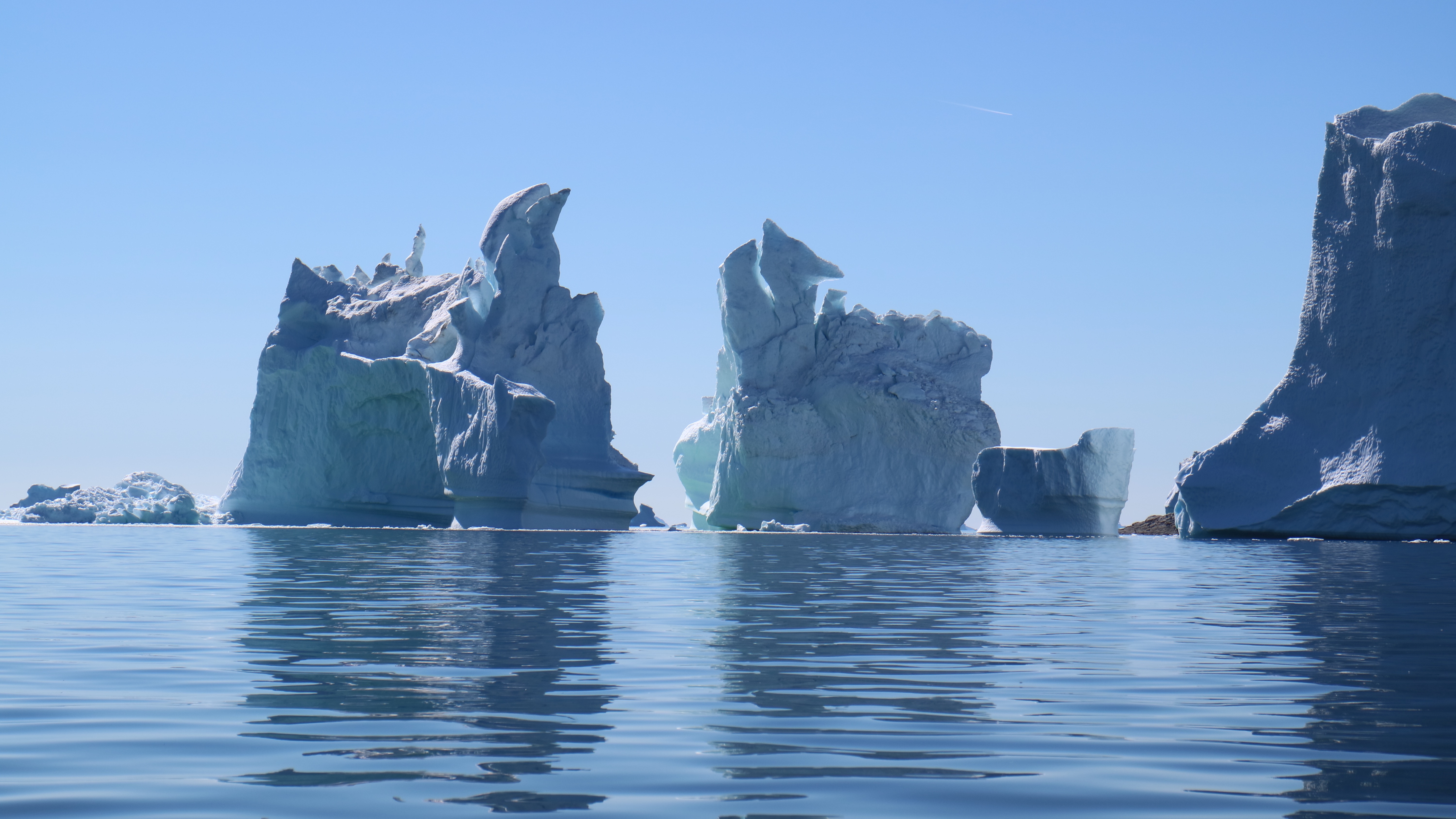
The melting Greenland ice sheet. Photo by Marcus Carson

But as global temperatures have risen, the ice sheet has become thinner and smaller, and as waters around the sheet have become warmer, they have accelerated melting. This creates a cycle in which the sheet’s shrinking could accelerate localized climate change, which could further accelerate the ice sheet’s shrinking. If the ice sheet disappears (which could take centuries), scientists predict it could cause global sea levels to rise by more than 20 feet.

This is just one of the 19 tipping points. Others include: Arctic sea ice loss, which would have some of the same effects as the melting of the Greenland ice sheet; changes in ocean salinity and current, which could spread warmer water faster than normal, with global implications; changes in land-based ecosystems that could release more greenhouse gases and reduce ice/snow reflectivity; and changes in Arctic snow patterns, which could also increase global ocean temperatures that effect climate patterns such as the monsoon season in Asia.

Fisheries impact

And then there is the impact on fisheries. The report cites manmade climate change (greenhouse gases, warming oceans, pollution, etc.) as well as other external factors like fishing pressure, as drivers for what could result in fisheries collapses in the Arctic. This could play out in a couple of different ways. First, a combination of warming water, shifting current, salinity and acidification could alter the vital nutrient upwellings that produce the plankton forage fish feed on. If the forage fish don’t thrive, neither do commercially important species like salmon, cod, pollock and shrimp. Couple that with continued fishing pressure, and you’ve got a recipe for collapse.

Climate change could cause fisheries collapse in the Arctic and elsewhere. Photo by Marcus Carson

The question is, how could fisheries collapse in the Arctic affect fisheries elsewhere?

This is no small question.

Complex challenges

So I asked Marcus Carson, one of the lead authors of the 218-page report. He talked about what we know and don’t know about how rapidly things are changing. “Often, when we see these things, it’s really hard to set in motion the processes we need to take them back,” he said from his home in Sweden.

“The challenge is the relational understanding. We understand the silos [warming oceans, ice melt, carbon storage in peat bogs, etc.] pretty well. What we’re lacking is how these connections in these really complex systems really work.”

Marcus Carson. Photo by Mark Tozer

For example, he mentioned that ocean acidification, the process by which the overall acidity of the ocean increases due to increased environmental carbon release, was not included as one of the tipping points in the report because scientists couldn’t pinpoint how it will behave in concert with other factors like salinity, temperature, current, etc. What scientists do know is that the rate of acidification in the Arctic has increased twice as high as almost anywhere on earth, and that acidification is generally higher in colder water.

“What we don’t understand is the exact relation between climate change and ocean acidification where fisheries are involved,” he said. Many species follow temperature, which is the case with some species here in the Gulf of Maine. For example, as waters have warmed off Long Island Sound, lobsters have pushed north and east, and there is no sustainable lobster fishery there anymore.

We also know as we dump more carbon into the atmosphere and put more chemicals into our estuaries, the acidity goes up. But as Carson said, we don’t yet know how changes in acidification from these types of drivers will work in concert with temperature, salinity, current to affect marine food webs. Species that are more tolerant of some or all of these drivers will likely thrive more in a changing Arctic climate than others.

We need to better understand how all climate change factors could affect entire food webs. Photo by Mark Tozer

“There may be some biological variability that might get species competing with each other moving into the same space,” he said.

When it comes to impact on climate change in the Arctic affecting fisheries there and elsewhere, we still have to take a broad view. There will undoubtedly be an impact, especially when considering how currents will channel warmer, denser water globally.

A global climate

“There’s a saying around the working groups of the Arctic Council. ‘What happens in the Arctic doesn’t stay there.’ A lot of changes beyond seasonal fluctuations aren’t generated there. They start outside the Arctic, and get in there,” he said. And the changes in the Arctic may have global impacts.

“The implication with these 19 potential shifts … is that when these things start interacting with one another, the concern is that we could be setting forces in motion that are wildly out of our control,” he said.

The cycle continues. Melting ice sheet allows more solar rays to warm oceans and atmosphere, accelerating ice melt. Photo by Marcus Carson

Not surprisingly, almost every response option cited in the report for the 19 tipping points calls for some form of reducing global greenhouse gases and shifting toward renewable energy.

This is the same message a majority of scientists have been saying in ever growing numbers and volume. However, the incoming administration has virtually declared war on climate change science.

Asked about threats to defund NASA’s climate science regimen, Carson used the analogy of “tearing the instrument panel out of your plane while in flight. It’s like you want to poke our eyes out while we’re heading into these big changes.”

Indeed.

That gong is getting louder. Do you hear it?


All Blog Posts

MSC Ecolabel Trashed by Founder

  • December 7, 2016October 20, 2021
  • by Colles Stowell
Share it!
Share

The question invariably arises at sustainable seafood dinner events or even in casual conversation.

“What about the MSC (Marine Stewardship Council) standard?”

Involuntarily, I shake my head, before explaining the complex nature of ecolabels, which seek to certify seafood as sustainably harvested, but often raise more questions than they answer.

That complexity came to the fore last week when the World Wide Fund for Nature (WWF) ignited a firestorm with a detailed … and leaked … report castigating the MSC, one of the best known labeling organizations. The report questions the non-profit’s neutrality, process and overall effectiveness in adequately protecting the resource and objectively informing consumers about the sustainability of the seafood they purchase.

The colossal irony here is that WWF was one of the key founders of MSC, a non-governmental organization (NGO). And now it has become an outspoken critic. Here is a link to the leaked WWF report. WWF claims the report was not finalized and has tried to backtrack. However, the 58-page document has detailed citations and thoroughly explained timelines noting the events that led to the drafting of the report, which by the way, is marked “FINAL.”

What rules?

The catalyst for this report was the MSC certification of certain tuna fisheries in the Indian Ocean. One of the key principles of the original MSC guidelines for certification was that fisheries have a set of harvest control rules (HCRs) that ensure the health of the fishery. WWF now claims there are “several troubling systemic flaws” in the MSC certification process and that the mission appears to have become more about profits from the royalties paid to have the MSC logo than the original mission.

That’s a stinging accusation from one of the organization’s original founders.

Some of the most damning accusations include:

  • Certification of fisheries where no credible HCRs exist;
  • Changing the process language on the fly to accommodate certification of fisheries whose certification has been challenged;
  • A clunky appeals/challenge process that generally falls on deaf ears; MSC admits that very few stakeholder comments (13%) have any impact on the process;
  • A system of contracting third-party certifiers that do not respond to stakeholder comments;
  • Conflict of interest whereby MSC profits from the royalties on the logo fees while “objectively” certifying the fisheries.

And if this report weren’t enough, Brendan May, MSC’s former CEO for five years wrote a blog about the WWF report. While he doesn’t directly indict MSC, the fact he is taking time to acknowledge the report says something about its significance.

An ecolabel’s complicated path

When I started writing about sustainable fisheries six years ago, I initially supported the concept of transparency in labeling. There were a few emerging standards, Friend of the Sea, Dolphin Safe and the Marine Stewardship Council among them. MSC’s goals were broad and ambitious. The U.K. based non-profit set a goal to certify 20% of the world’s fisheries by 2020.

But as I dug deeper in my research, I started seeing inconsistencies. Accusations from within and outside the industry arose, claiming MSC certified fisheries that aren’t sustainably managed and that the NGO instituted a system that isn’t objective. Witness the certification of the North Atlantic longline swordfish operation. The fishery was certified despite the high bycatch of sharks. The further I dug in, the more I realized how complex and thorny implementing proper transparency schemes really is.

So when asked, I explain this complexity, and some of the issues with all ecolabeling systems, then go into some detail about MSC.

This leaked report further underscores that complexity, and where good intentions can get thoroughly clouded by money. I still strongly advocate for transparency in seafood distribution from boat to plate. The U.S. has a long way to go, as do many other countries.

But if you aren’t going to really be transparent or objective, why bother?

When in doubt, ask questions

I tell my students and interested adults their best line of defense is knowledge. Get smart about some of the issues around seafood sustainability. Learn more about the environmental, ecosystem, socio-economic impact of different harvest and aquaculture methods.

Ask questions:

  1. Is it local? Was it caught, cleaned and/or filleted locally?
  2. How was it harvested?
  3. If it was farmed, were there any antibiotics, hormones or pesticides used?
  4. When was it harvested?

If you can’t get answers to these questions from your fishmonger or restaurant, perhaps you should consider something else.

I suggest people take a look at the Local Catch core values, which gives a good overview of how local, transparent community-based fisheries benefit both consumers and fishermen. These principles are rooted in accountability and trust: accountability in the fishermen who strive to take care of the resource and trust from the community that the fishermen are delivering sustainably harvested seafood.

Additional resources:

Marine Stewardship Council standards

World Wide Fund for Nature Overview of Tuna fisheries and relationship with MSC

The Times article, in which the publication first announced the leaked WWF report.

Undercurrent News article, in which MSC responds to the WWF report.

Ecolabel Index — gives a quick overview of different ecolabels from building design to farming and seafood.

All Blog Posts

Hearing Nature’s Lessons in the Classroom

  • November 22, 2016October 20, 2021
  • by Colles Stowell
Share it!
Share

“Nature has it right. It’s set things up that work. When we interfere, we mess it up.”

We’ve seen a lot of words of wisdom from different mindfulness gurus and healing practitioners in the past couple of weeks. Sometimes they come from a place of unclouded truth, such as the perspective of a fifth grade student.

rye-elem-lobster-trap_
Yes, lobsters can waltz in and out of these traps pretty much as they please.

The quote above stemmed from a conversation about genetically engineered salmon at Rye Elementary School yesterday. We were talking about finfish farming and some of the drawbacks of the fish pellets used as feed, including the demand on ecologically critical forage fish and the reduced nutritional value. We discussed how farmed salmon have been found to have lower beneficial Omega 3s because of their feed than the naturally high Omega 3s of wild salmon. We discussed the same issues with GE salmon, as well as the various unknown risks of engineering fish as food and it’s ecological impact.

So when the student spoke about interfering with Nature’s design, I smiled and asked him to repeat it so that everyone in the class of 20 or so could hear it. Several in the class nodded their agreement.

rye-elem-jigs
Discussing the low bycatch of jig fishing.

I’d made a connection.

Every dialogue with students, their parents, sustainable seafood dinner attendees, etc. is based on telling a story and making connections. A connection that will resonate. A connection that will knit together the information into one cohesive, compelling narrative. A connection that will inform decisions in the future.

When I’ve made a good connection, the effect is immediate and sometimes profound. It is especially rewarding when someone who is 11 years old comes up with such clarity. It is also enlightening. I often learn something about myself and the message I’m sending just by listening to students.

Turtle excluder device: always a crowd pleaser, and a good teaching tool.

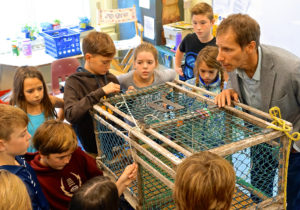
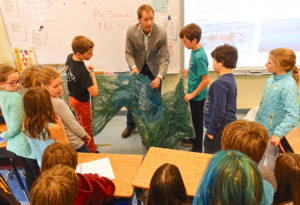
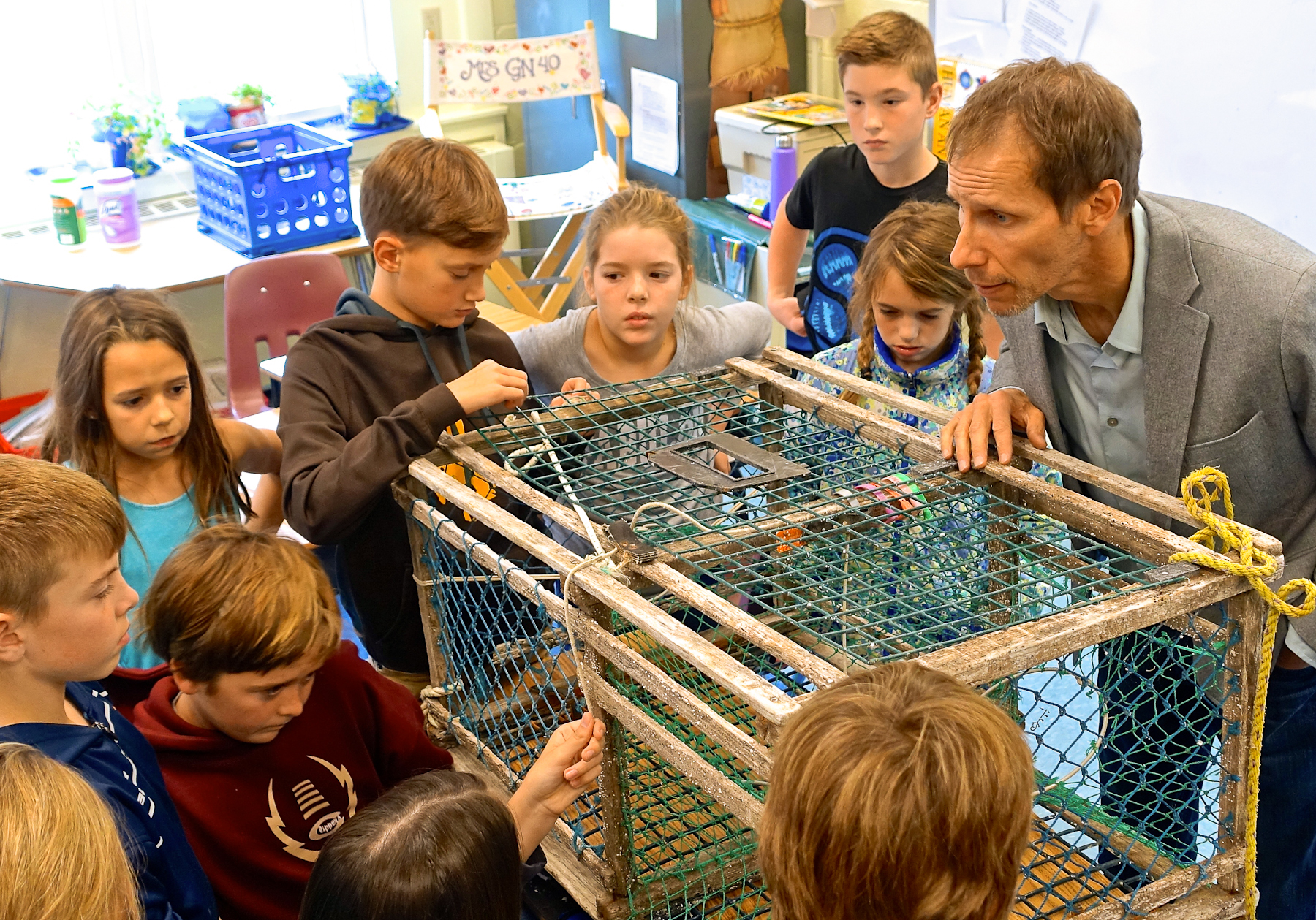
The students at Rye Elementary asked thoughtful questions. They were truly engaged in the conversation. We poked at a lobster trap. We stretched out a turtle excluder device and talked about how it is an example of what we’re doing to reduce bycatch. We touched on how climate change is affecting the Gulf of Maine.

By the end of each of the three classes I visited, students seemed to take ownership of the fact that they do have a choice at restaurants or grocery stores and that their choice matters.

They left armed with questions to ask:

Where is it from? How was it caught? Was it farmed? Were there any hormones, antibiotics or pesticides used?

Perhaps they will spread the word … one connection at a time.


Photo credit: Denise Wheeler

All Blog Posts

Getting to KNOW FISH

  • November 4, 2016October 20, 2021
  • by Colles Stowell
Share it!
Share

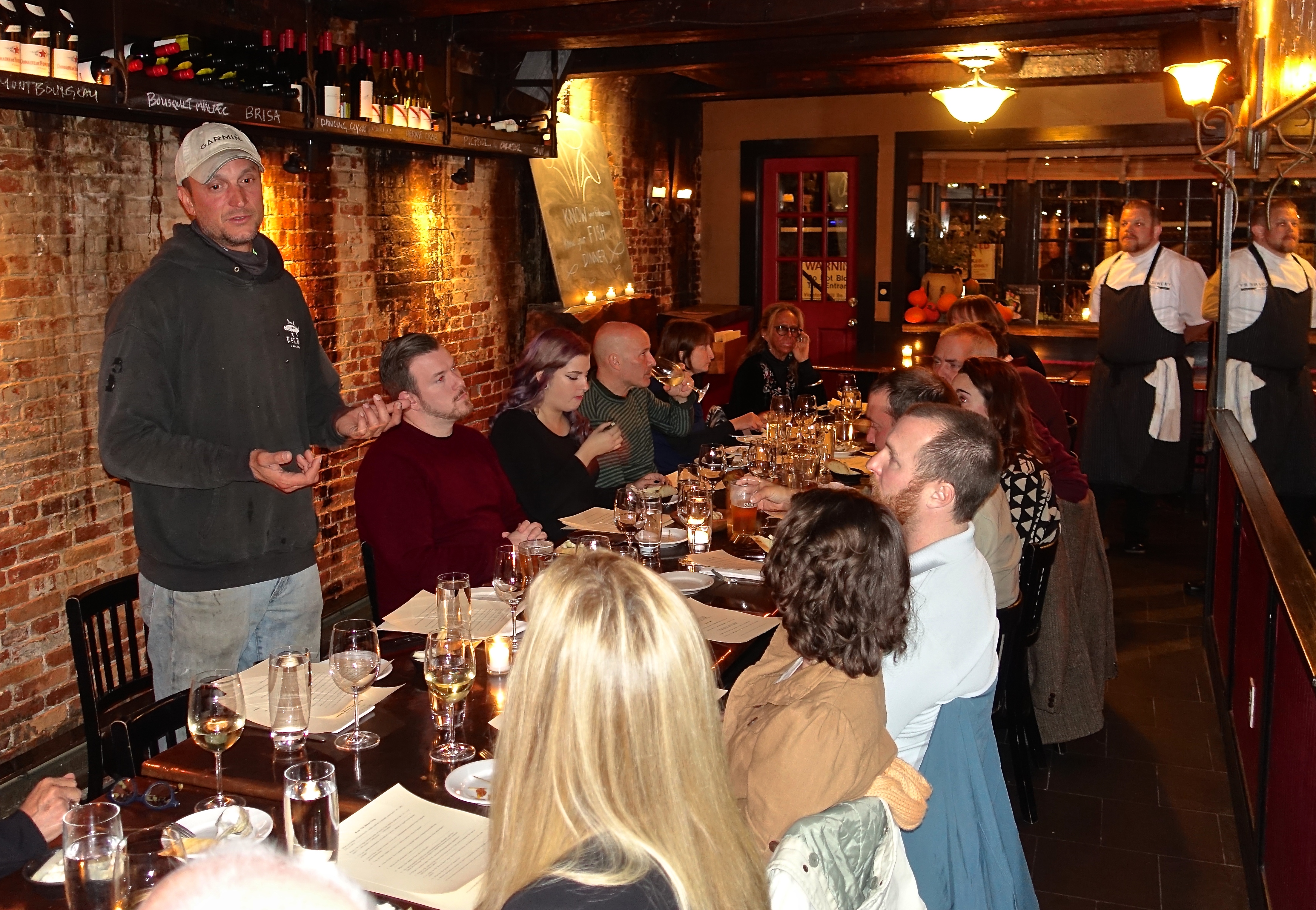
The spiny dogfish, abundant in these waters, showed up about two hours before guests arrived. As did the cod.

Want fresh?

Dogfish intimidates some people because, well, it’s a shark, even if less than the length of your arm. But when chefs Evan Mallett of Black Trumpet and Brendan Vesey of Joinery Restaurant put their magic to this fearsome looking creature, the result was a perfectly battered seafood experience driven home by Black Trumpet’s Raisin Hell sauce.

That and the Pemaquid aquaculture oysters served with a tangy tursija (pickled vegetables) were just the greeting for those attending the second KNOW FISH dinner, which was held at Black Trumpet last week.

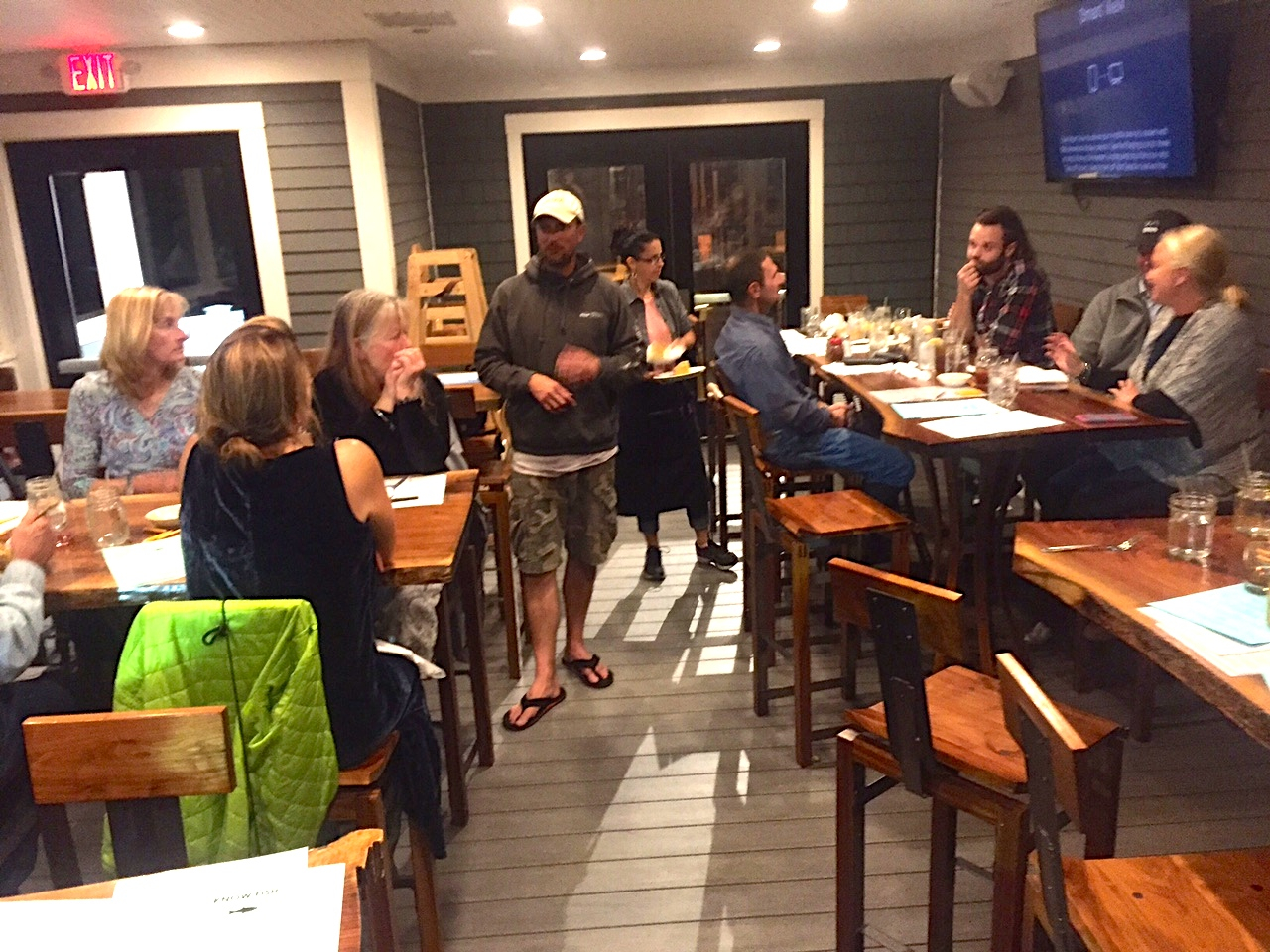
The food was fabulous, and it was an excellent backdrop for the interactive conversation about why our seafood choices matter.

kf-brandade-10-27-16
Cusk Brandade

As I explained why we import more than 90% of the seafood we eat in the U.S., we feasted on locally abundant and delicious cusk, which is a bottom fish that worked wonderfully in a brandade. This is a traditional Provence dish featuring salted fish, olive oil and seasoning blended into a paté-like spread accompanied by house-made baguette and kohlrabi sticks.

Cusk made another appearance as Capt. Tim Rider described the extraordinary effort just to get the fish to the restaurant that day because the weather for several days had been inhospitable for his 36-foot F/V Finlander. He and his crew left at 2 a.m. the day of the event, only to turn around shortly after leaving the harbor because the conditions were too dangerous. Fortunately, the crew was able to leave port at 7 a.m. and find enough fish for the dinner and to bring to other customers.

As we feasted on delicately poached cusk and scallop dumplings served with golden beet and green crab broth, Tim shared why he travels up to 80 miles offshore in a small boat to fish for pollock, cusk, haddock, cod and other groundfish with rod and reel. For him, the impact of trawl nets, long lines and similar commercial fishing methods on the resource and the ecosystem is devastating.

kf-cod-10-27-16
Codfish a la Provencal en Papillote

Attendees heard how the existing quota system used to manage the fishery, run like an open stock market, transfers ownership of the resource away from small-scale fishermen like him to larger operations with multiple boats. The irony is that small-scale fishermen are more likely to take care of the resource. He described efforts to increase the number of fishermen fishing with rod and reel as we dined on beautifully prepared Cod a la Provencal en Papillote (baked in paper).

Amanda Parks, Tim’s partner in New England Fishmongers, spoke of the superior quality of fish that is delivered direct, rather than passing through a series of processors and distributors in the supply chain. She shared tips on how to tell if a fish is fresh, which is crucial given that on average, seafood travels more than 5,000 miles from boat to plate in the U.S.

Black Trumpet co-owner Denise Dwinnells Mallett related a story of how she persistently asked staff at her local grocery store’s seafood counter in Maine when they would carry seafood from the Gulf of Maine. She asked until eventually, locally sourced seafood arrived. Her point? Consumers do have the power to affect change.

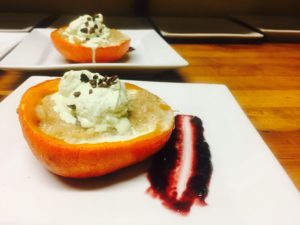
evanChef Evan explained the importance of working with fishermen like Tim practicing sustainable harvest methods, and using sustainability as a guide when choosing menu options. The coconut rice pudding baked in red Kuri squash was a refreshingly sweet and colorful taste of autumn.
kf-pudding-10-27-16
Coconut rice pudding baked in a red Kuri squash

For the second time in a row, the KNOW FISH dinner sparked curiosity and fueled compelling conversation with fishermen, fishmongers, chefs and activists. It proved that engaging the community in intimate discussions about why seafood choices matter can increase public awareness of issues like ocean health, climate change, stock health and fairness for fishermen like Tim.

We want to continue this community dialogue in an effort to spark a groundswell of change at restaurants and seafood counters. We are looking at continuing the KNOW FISH dinner series in the spring.

Stay tuned.


All Blog Posts

Sustainable Seafood: One Conversation at a Time

  • October 18, 2016October 20, 2021
  • by Colles Stowell
Share it!
Share

“We need to be having more of these conversations.”

Yes, we do.

The overriding dynamic we need to change in this country regarding seafood is this: more than 90% of the seafood we eat is imported. This is an oft-cited statistic that seems to raise eyebrows … then disappears into the ether as we go about our business.

That statistic doesn’t really begin to take on significant meaning for people until they see it in context and start connecting the dots as to why this is happening, and what we can do about it.

I launched One Fish Foundation to bring this message to schools and communities. I started the KNOW FISH dinner series with a great team to spark the type of community discussions that get people to ask questions, seek answers and understand they have an impact, however small, on the resource. Hopefully, their decisions and their understanding can spark other conversations and even, dare I say it, start a groundswell.

kfwpfpollock
Pan-seared pollock from the F/V Finlander

Thus, the first KNOW FISH dinner held last week at When Pigs Fly in Kittery was a success. Attendees sat next to fishermen, fishmongers and activists and asked questions. They discussed the domestic seafood picture and why we should care when, where, how and importantly, by whom our seafood is harvested.

They heard from Capt. Tim Rider, of the F/V Finlander and New England Fishmongers about how small-scale New England fishermen are getting squeezed out by unfair regulations and big operations with deep pockets. They learned what questions to ask and how to get smarter about the choices they make. They learned from Spencer Montgomery of Dole & Bailey and New England Fishmongers why it’s important to shorten the supply chain and buy locally caught seafood. He told them some signs to look for to tell if a fish has been sitting around too long.

They learned interesting trivia about New England and its fisheries. They learned how climate change is impacting the Gulf of Maine.

kfwpfsausage
Unbelievably delicious cusk (local, abundant) sausage from M/V Finlander.

And Chef Robert Martin put on a feast: delicious cusk sausage (trust me here!), pan-seared pollock, and roast cod (all fresh caught and graciously donated by Capt. Rider) and accompanied by tasty, artfully presented seasonal vegetables.

I was encouraged with the comment above and others like it as departing attendees expressed a new perspective and perhaps reflected even a bit of my enthusiasm for sharing the sustainable seafood message. Our decisions make a difference.

Perhaps if we keep having these discussions, that 90% statistic will become a distant memory and the narrative will shift to one of widespread support for domestic, local, sustainable fisheries. One conversation at a time.

The next will be the KNOW FISH dinner on Oct. 27 at Black Trumpet in Portsmouth. Get tickets here.

Come join the conversation … and the feast.

All Blog Posts

What’s in This Fish?

  • October 3, 2016October 20, 2021
  • by Colles Stowell
Share it!
Share

I was sitting at a quiet sushi bar in Wilmington, N.C. at lunchtime a few years ago when the owner asked me a question that would have a lasting impact.

“Want to try some special tuna? It’s called white tuna.” This was several years ago, and I hadn’t yet delved into the world of seafood awareness. But I knew just enough to be sure there was no such species swimming in the ocean. When I asked exactly what species it was, he said it was escolar. “It’s just as delicious as tuna, but much cheaper.”

My skepticism gave way to curiosity, which gave way to the first lasting impact of gastrointestinal distress. Only later did I find out escolar has proteins that can wreak havoc on your bowels.

Deceptive marketing is nothing new. But I had to ask why someone would take that approach knowing the downstream impact. I wondered how someone could get away with that. Eventually the ramifications would catch up to them, right?

Ecolabeling’s initial steps

This was one of the seminal episodes that started me on my path. A year later, I wrote a blog on eco-labeling, suggesting it was a new tool to provide necessary information to consumers, like where and how the seafood was caught. Then I dug a bit deeper to find that while the practice was great in principal, there were issues.

Some leading labels ran into problems, such as certifying fisheries that weren’t really sustainable (see North Atlantic longline swordfish and its huge bycatch), or allowing fisheries to hire the “third-party” certifiers (the fox minding the henhouse).

I have written and spoken about seafood fraud several times since. It is a key classroom topic exemplifying the need to be smarter about the seafood we eat. We talk about the implications when someone substitutes cheaper farmed salmon for wild-caught at a restaurant or lower-priced pollock for cod at a seafood store.

iuu_coastguard
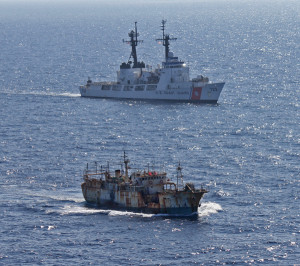
Illegal, unreported and unregulated fishing clouds the supply chain.

Trailing the pack

One outcome from the most recent seafood fraud report by ocean conservancy Oceana is that while the U.S. is a leader in stock management and preservation, its oversight of the supply chain compared to the European Union and other countries is wanting.

This is ironic. The current administration has made combating illegal, unreported and unregulated (IUU) fishing a priority. Global IUU – which covers everything from human trafficking to mislabeling – costs the seafood industry up to $23 billion a year, according to the United Nations Food and Agriculture Organization. There is a new rule under consideration in the U.S. that would require labeling on 13 key species before they are imported into the country.

But the current administration also embraces the Trans Pacific Partnership, a trade deal that would essentially encourage larger exports of U.S. caught seafood and larger imports of cheaper, less regulated seafood. Many in the U.S. industry fear such a deal would flood the market with lower quality seafood that may not even be correctly labeled. Worse, language in the deal would render the U.S. virtually helpless to prevent that product from entering the market.

The Oceana report cites the European Union’s labeling standard as a potential role model for the U.S. According to Kimberly Warner, one of the report’s authors, the EU has reduced its seafood mislabeling to about 9% of the seafood sold there (excluding restaurants). This compares with 19% for the global average and a whopping 28% for the U.S.dna-sampling-2

“When we found fraud at 18% at the retail level in stores in Boston (in 2014), people were cheering,” said Warner. “But people in the EU were aghast. The question becomes, what level of mislabeling are you comfortable with?”

Indeed.

I’ve said before that increased transparency and labeling standards will only work if US fishermen have a say in developing the process and they aren’t completely saddled with the cost. Otherwise, any such proposal will fail before it gets started.

The National Fisheries Institute says better enforcement of the laws on the books, not increased labeling standards is the answer. But Warner counters that domestic laws leave a lot of room for the type of mislabeling found in the report. “You need strong laws to enforce,” she said. Vague or voluntary labeling (as has been discussed with genetically engineered salmon) don’t help.

Consumers want more info

Oceana released a poll yesterday that says 83% of Americans support new traceability requirements, including proper labeling of the seafood and where and how it was caught (or farmed). Of the 1,000 respondents, 76% said they would pay more to know their seafood was caught legally and labeled correctly and honestly.

Consumer desire is there. But we need the political will to make it happen. The EU program relies mostly on government subsidies as well as some infrastructure costs born by seafood processors. The EU seafood processors and traders association said in 2011 that implementing the new rules governing labeling and other IUU measures did not have long-term impacts on their businesses. And several links in the supply chain now view labeling as a competitive advantage.

catfish-mislabel
Imported catfish marked as sole. This shipment was seized before entering U.S. markets.

A handful of small operations have cropped up in the U.S. aimed at digitizing supply chain records to elevate transparency. That’s a start. But, we need to bring all stakeholders to the table and make transparency and adequate labeling happen on a national scale. Otherwise, it’s just a process of randomly putting out small fires.

Our best defense is information. A national, verifiable schema for tracing the seafood from boat to retailer, and developed with fishermen’s input, would be helpful and widely embraced by consumers.


Photo credits: NOAA

Posts pagination

1 … 3 4 5 6 7 … 9

Recent Posts

  • Hurricane Ida wreaks havoc on Louisiana’s seafood industry
  • EPA Should Use Clean Water Act To Kill Zombie Mine
  • Slow Fish 2021: Relationship Matters
  • Faith, Façades, and Futility
  • Pebble Permit Paused: Politics at Play

Archives

  • September 2021
  • August 2021
  • April 2021
  • December 2020
  • August 2020
  • June 2020
  • February 2020
  • December 2019
  • November 2019
  • October 2019
  • July 2019
  • May 2019
  • April 2019
  • March 2019
  • January 2019
  • December 2018
  • November 2018
  • June 2018
  • May 2018
  • March 2018
  • February 2018
  • January 2018
  • December 2017
  • November 2017
  • October 2017
  • September 2017
  • August 2017
  • July 2017
  • June 2017
  • May 2017
  • April 2017
  • March 2017
  • January 2017
  • December 2016
  • November 2016
  • October 2016
  • September 2016
  • August 2016
  • July 2016
  • June 2016
  • May 2016
  • April 2016
  • March 2016
  • February 2016
  • January 2016
  • December 2015
  • November 2015
  • October 2015
  • September 2015
  • July 2015
  • June 2015
  • May 2015
  • April 2015
  • March 2015
  • February 2015
  • January 2015
Theme by Colorlib Powered by WordPress