 All Blog Posts
“One Word: Plastics” … and the damage to our…

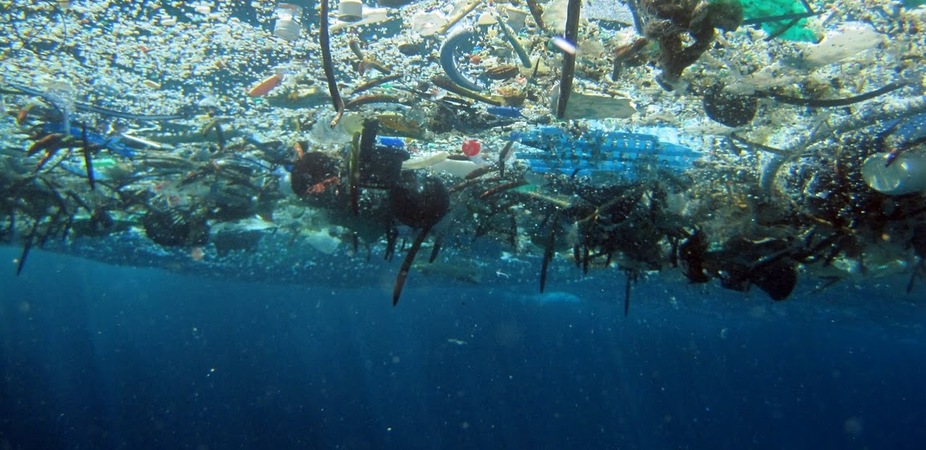
Here’s a sobering thought: There will be more tonnage of plastic than fish in the world’s oceans by 2050 if we continue to produce, consume and dispose of plastic as we are now.
Think about the implications. In fact, some scientists estimate that a minimum of 5 trillion pieces of plastic weighing more than 250,000 tons are floating in our oceans. That’s just the plastic that is floating. Another study from 2015 suggests that oceans now hold more than 4.8 million metric tons of plastic, much of which now rests on the sea floor. The most offensive item? Plastic bags. Approximately 500 billion plastic bags, or 150 per person on the planet, make their way into the waste stream. And those numbers are rising. They can take up to a 1,000 years to break down, and are often mistaken for jellyfish by a wide variety of marine species.
You don’t have to look far to find horrifying stories and gruesome pictures of dead whales, seabirds, turtles and other marine organisms with organs jammed full of plastic bags, containers, expanded polysterene products (Styrofoam™) and other human detritus. As many as 100,000 marine animals die from interactions with plastic, as do 1 million sea birds. It’s not hard to see that the more plastic that floods into oceans, the less healthy marine ecosystems become.
A recent study released last month by the World Economic Forum suggests a major re-think of how we produce, consume and reuse plastic items.
Here are some highlights:
- More than 40 years since the recycling symbol appeared, we only recycle 14% of plastic produced today.
- Every year up to $120 billion worth of plastic packaging material is lost to the economy as single-use plastic. Much of which ends up in our oceans.
- UNEP suggests the cost of all of this packaging spilling into the environment at $40 billion.
- 30% of plastic packaging (such as lids, straws, plastic tear offs, polysterene cups and to-go packages, etc.) will never be recycled and likely will continue to be loosed on the environment unless we significantly re-design and reconfigure them.
- 20% of packaging can be reused as a result of new designs that replace single-use packaging for such items as cleaning and personal care products.
- A retooling of the recycling system, including the design of packaging products and the materials could render the remaining 50% of plastic packaging products economically feasible for recycling. This is a big deal. To date, most recycling operations have been money-losing operations. This was certainly the case for the omnipresent plastic bags doled out at grocery stores. The Clean Air Council has estimated that recycling one ton of plastic bags costs $4,000. The recycled product can be sold for $32.
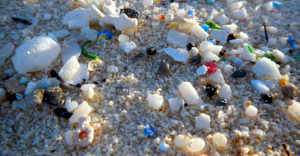
It’s not just the big visible plastic bags, lids, floating polysterene etc. that may appear as food to some sea creatures, which ingest it then die of suffocation or starvation. It’s the tiny particles as well.
But truly addressing this problem is about people and their actions, not plastic.
Those microplastics that were once touted as the most efficient way to clean your bathtub or restore vitality to your cheeks? They hitchhike a ride through municipal water systems and into streams, rivers, lakes, marine estuaries and bays. Once there, they disperse and end up in seafood webs because they take a long time to break down.
In a study published last year in the Proceedings of the National Academy of Sciences, researchers found that filter feeders such as oysters, mussels, sea cucumbers and zooplankton are particularly vulnerable to the hazards of plastic.
The study focused on the impacts to oysters, which feed on the plastics they filter in. Researchers observed these oysters experienced drops in fertility, reproduction and larval development (some affected larva grew 18% smaller than healthy specimens).
Yes, the convenience of plastics have proved minor in the face of the mounting waste heap of trash floating, drifting or sinking in our oceans and the impact that has on seafood.
But truly addressing this problem is about people and their actions, not plastic. We first have to change our thinking on plastic so it is no longer the daily, disposable necessity we take for granted. We need to think of it in terms of how to minimize global environmental impact. As such, I agree with the larger premise of the PNAS report that we should re-think how we manufacture, consume and recycle plastic to minimize production, and single-use products.
Similarly, I agree with one researcher’s conclusion about ocean conservation. In a recent National Geographic op-ed piece, she writes “…ocean conservation is not about fish. It’s about people.”
She’s right. We have to change our attitudes about how we look at ocean conservation. I may not agree with her concept of zoning the ocean into areas that are and aren’t open to fishing as that would be very controversial and impractical on a global scale. But her approach to starting from the ground up, in this case, talking with local fishermen and using their input to manage the fishery, is essential to their buy-in. That investment in the outcome by the fishermen is crucial to the success of the fishery management and to the conservation of the resource.
Here are some additional resources:
- National Geographic article on the volume of plastics in the ocean
- National Geographic article on plastics and the great Pacific Garbage Patch.
- Reuters story on using shrimp shells to make biodegradable plastic bags.
- Statistics from Ocean Crusaders.
- More statistics from Save the Bay.
- Huffington Post graphic on how plastic enters marine ecosystems.
Top photo credit: NOAA