Skip to content
One Fish Foundation
  • Blog
    • Aquaculture
    • Education
    • Environment
    • Policy
    • Wild Harvest
    • Fish Tales
  • About
    • About One Fish
    • About Colles Stowell
  • Education
    • Elementary School
    • Middle School
    • High School
  • KNOW FISH Dinners®
  • Resources
    • One Fish Podcast
    • One Fish Foundation in the news
    • The 7 C’s of Sustainable Seafood
    • Newsletter Archive
    • Recipes
      • Skate with Capers and Butter — Chef Rizwan Ahmed
      • Grandma Davis’ Fish Chowder — Jane Almeida
      • Ginger Garlic Tamari Scallops — Colles Stowell
      • Fish Stock — Evan Mallett
      • Mussels San Remo — Chef Rob Martin
      • Salted Pollock Croquettes – Chef Mark Segal
  • Connect
    • Contact OneFish
    • Social
      • Instagram
      • Facebook
      • Twitter
All Blog Posts

Slow Fish 2018: Telling tales

  • May 9, 2018October 20, 2021
  • by Colles Stowell
Share it!
Share

Slow Fish is making a difference.

Think of it as a collaboration of fish harvesters, scientists, chefs, students, food-lovers and activists around the world working toward one goal: good, clean fair seafood for all. This was on display throughout the three-day Slow Fish 2018 event in San Francisco April 14-16.
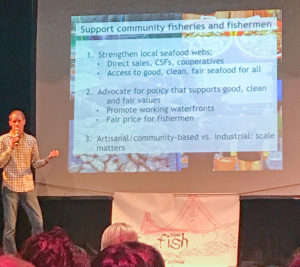
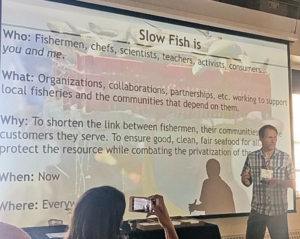
Setting the tone with the Slow Fish 101 presentation. Credit: Lance Nacio

Some of these successes were writ large on the main screen on the first morning of content programming in the Slow Fish 101 presentation.

  • Melanie Brown, a set net fish harvester from Bristol Bay, Alaska, spoke of indigenous ties to the land, the water and the resource. She spoke passionately about how wild salmon runs have sustained her family over time, and why that way of life is under threat from the proposed Pebble Mine. She also spoke of the coalition of disparate groups not normally siding with one another that oppose the mine: indigenous tribes, commercial fish harvesters, recreational fishing groups, environmental activists and politicians among others.
  • Jordyn Kastlunger reminded everyone of the importance of family connections and supporting the youth movement in fisheries as she described the trajectory of the Tuna Harbor Dockside Market in San Diego. Born of a coordinated effort of fishermen, food policy activists and lawmakers, the market features fisher folk docking on the pier and selling directly to customers. About 500 customers come every Saturday to buy about 12,500 pounds of locally harvested seafood.
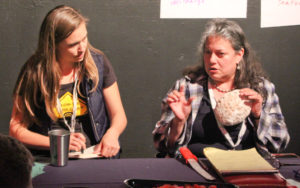
    Jacquelyn Ross tells the story of abalone from Bodega Bay at the World Cafe. Credit: Eric Buchanan
  • Jacquelyn Ross of the Southern Pomo/Coast Miwok tribes spoke about her indigenous fishing lineage along Bodega Bay, hand harvesting abalone, and witnessing the changes to the fishery wrought by temperature, current and acidification. She too spoke of family love and respect for the resource, the land and the water and the importance of sharing those stories in the hopes that others will appreciate those connections to natural resources.
  • Paula Barbeito came from Italy to describe the work of Slow Fish International and highlight the story of the Thorupstrand Fishing Guild in Denmark. Several years ago, fishermen in the community of Thorupstrand pooled their resources to buy quota so they could provide access to the fishery without being overrun by industrial operations. The guild is a reminder of how fishermen can self-identify and protect their access by working together.
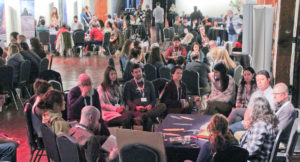
    World Cafe action. Just some of the discussions where things happen. Credit: Eric Buchanan

A parade of perspectives

These compelling narratives were just a few among many shared over the weekend. We heard from longtime fish harvester and policy activist Linda Behnken, who has fished commercially in the Gulf of Alaska and Bering Sea for over 30 years. She has drawn on that experience at the helm of her boat as she helped shape policy to protect small-scale fishing as a member of the North Pacific Fishery Management Council.

We also heard from Anne Mosness, who like Linda, has spent decades at the helm and in the trenches battling industrial scale operations. Anne described her longstanding campaigns against industrial aquaculture and genetically engineered salmon to the discussion, as well as the need to honor women’s voices and rights in fishing.

Filmmaker Mark Titus talked about his upcoming feature, The Wild, which shines a bright spotlight on the world’s largest wild sockeye salmon run in Bristol Bay, and what’s at stake in the battle against the Pebble Mine.
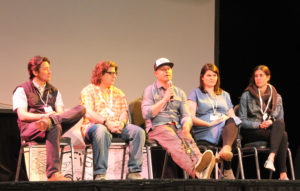
Know Your Supply Chain: Kenny Belov talks about choosing and selling responsibly harvested seafood. Left to right: Alan Lovewell, Real Good Fish; Joe Falcone, FishLine; Kenny; Anna Larsen, Dock to Dish; Jordyn Kastlunger, Tuna Harbor Dockside Market. Credit: Eric Buchanan

Kenny Belov talked about his mission in opening Fish. Restaurant in Sausalito and the TwoXSea sustainable seafood distribution company to provide responsibly harvested, abundant species to customers. Minimizing bycatch and other ecological impacts are critical factors in determining which fish harvesters he will work with.
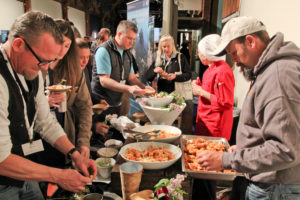
Lance Nacio’s (right in hat) fried soft shell shrimp were very, very popular. Credit: Eric Buchanan

We heard from a broad range of seafood perspectives. Lance Nacio spoke about investing in new technologies such as the plate freezers used to individually quick freeze fresh caught shrimp to preserve the out-of-the-water freshness for shipping around the country. Several oyster growers provided insight on their operations and the myriad factors that go into a successful, delicious oyster harvest. Jack Crofts brought his energy and entrepreneurial spirit to the event, trying to raise visibility and money for this mobile oyster bar, called the Oyster Barrow. Lucas Raymond, a trawl fisherman from New Hampshire, also represented the youth movement at the event.
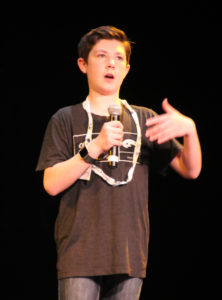
Young entrepreneur Jack Crofts (he’s 12 going on 13!) wows the crowd with his energy and enthusiasm. Credit: Eric Buchanan

We heard from chefs talking about smart sourcing, as well from seaweed growers like Amanda Swinimer, who described her journey harvesting, by hand, edible wild seaweeds for 17 years for her Dakini Tidal Wilds. Arielle Moinester talked about launching a company that promotes eating invasive species such as Asian Carp. Her GoWild Foods has made “The Silver Skipper” (aka asian carp) the poster child for managing an ecological problem in America’s rivers by eating it.
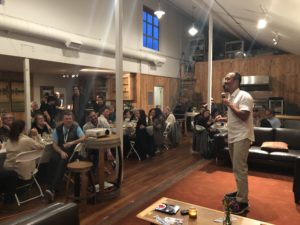
Christopher Wang describes his connection to fishing for salmon in Bristol Bay and why he started The Gypsy Fish Company as attendees listened at the We Are Bristol Bay Dinner.

Ideas, food and fun

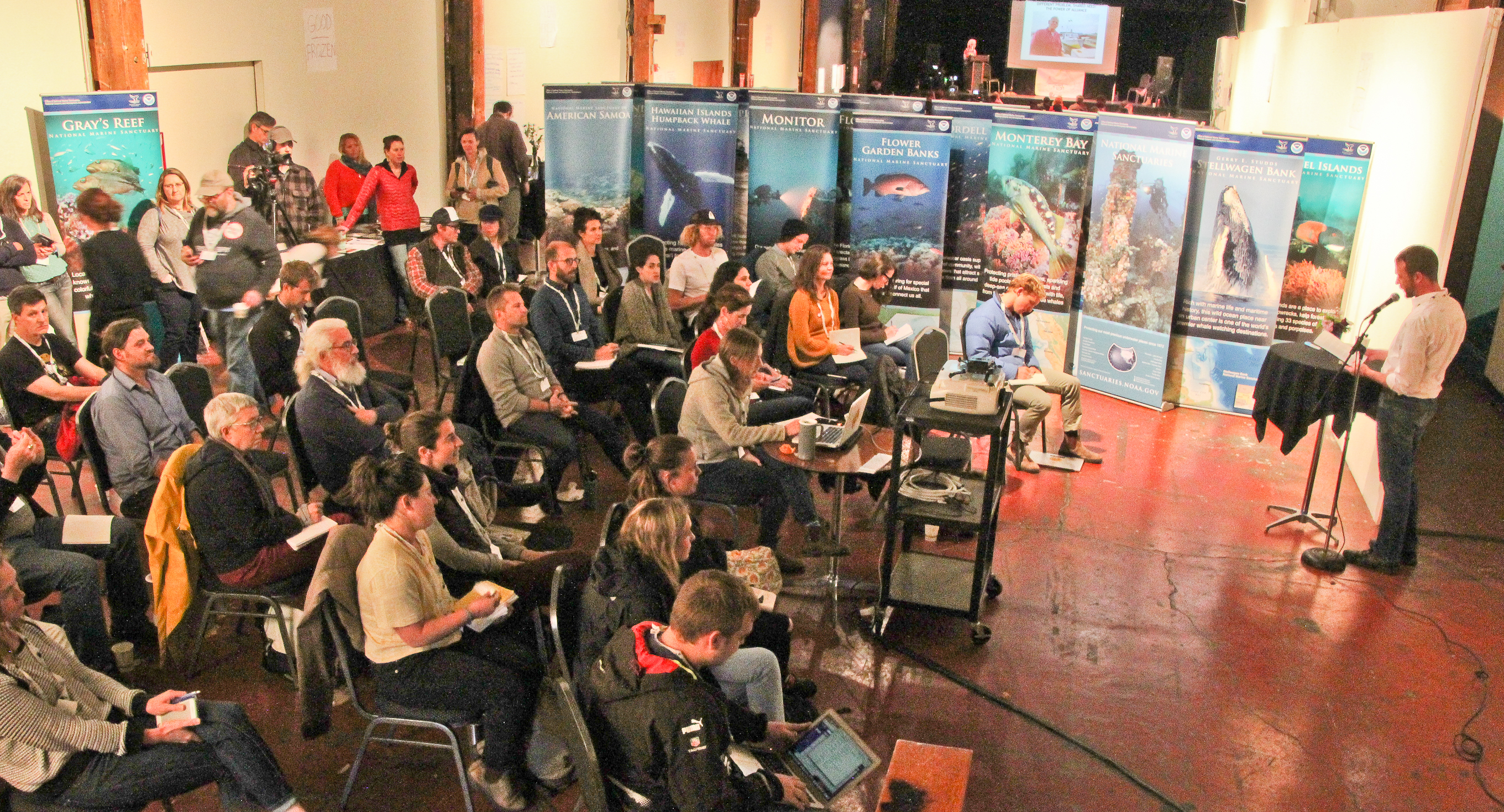
More than 150 people from as far away as Italy, Maine, Alaska, Louisiana, Massachusetts and British Columbia, and as near as Washington, Oregon and right there in San Francisco descended on SOMArts and other venues. We held more than 6 separate events, including the Oyster Social, Seafood Throwdown, We Are Bristol Bay Dinner, and the final Seafood Dinner and film screenings at AirBnB. Core programming on Sunday and Monday included the World Café, 36 Pesce Kucha presentations and lots of interaction.
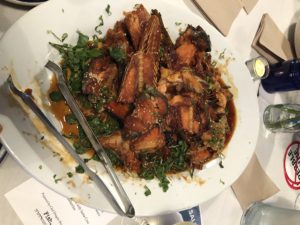
Stellar sticky salmon at the Bristol Bay Dinner.

We feasted on delicious wild salmon from Bristol Bay and oysters from Alaska down to Baja. We had fried soft-shell Louisiana shrimp and herring roe captured in a traditional method of submerging hemlock boughs in the bay during the spawn.

The Slow Fish 2018 planning team took on a monumental task to coordinate all of these events in a very short time period ahead of the California salmon season. The small, but very dedicated Slow Food San Francisco board of directors managed countless on-the-ground logistics to ensure everything went smoothly. It was the collective passion of the planners and attendees for the Slow Fish mission to grow the network, share our core values and collaborate on more projects that drove the event’s success.
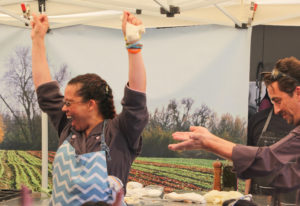
Chef Matthew Dolen honors winner Chef Aaronette King at the Seafood Throwdown at the Ferry Plaza Farmer’s Market to kick off Slow Fish 2018. The crowd engaged in the process, tasted the food and asked great questions. Credit: Eric Buchanan

We discussed new projects on the horizon, such as a YouTube channel for sharing videos focusing on Slow Fish values, success stories and fisheries-related topics. We also discussed launching a Slow Fish website that will become a destination for those seeking Slow Fish updates, bait boxes to help launch community-based projects like a community supported fishery, Seafood Throwdowns, KNOW FISH Dinners® and more. To enable Slow Fish folks to to ask questions and discuss issues within an informed community, we may launch an online forum. We also discussed an ambitious project to reduce domestic imports from 90% to 50% by 2050. This 50 by 50 project models similar food system-related measures aimed at eating locally (or domestically) produced food.

And so we charted a course for Slow Fish’s future. To most effectively create change, we need to grow the Slow Fish family and foster continued collaboration on future success stories that will help change that massive import dynamic in this country.

And we will.

Stay tuned for Slow Fish 2020.
 

Top photo: Tyson Rasor of Ecotrust emcees the Know Your Fish Pesce Kucha session. Credit: Eric Buchanan.
All Blog Posts

Making Do at Slow Food Nations, Denver

  • July 19, 2017October 20, 2021
  • by Colles Stowell
Share it!
Share

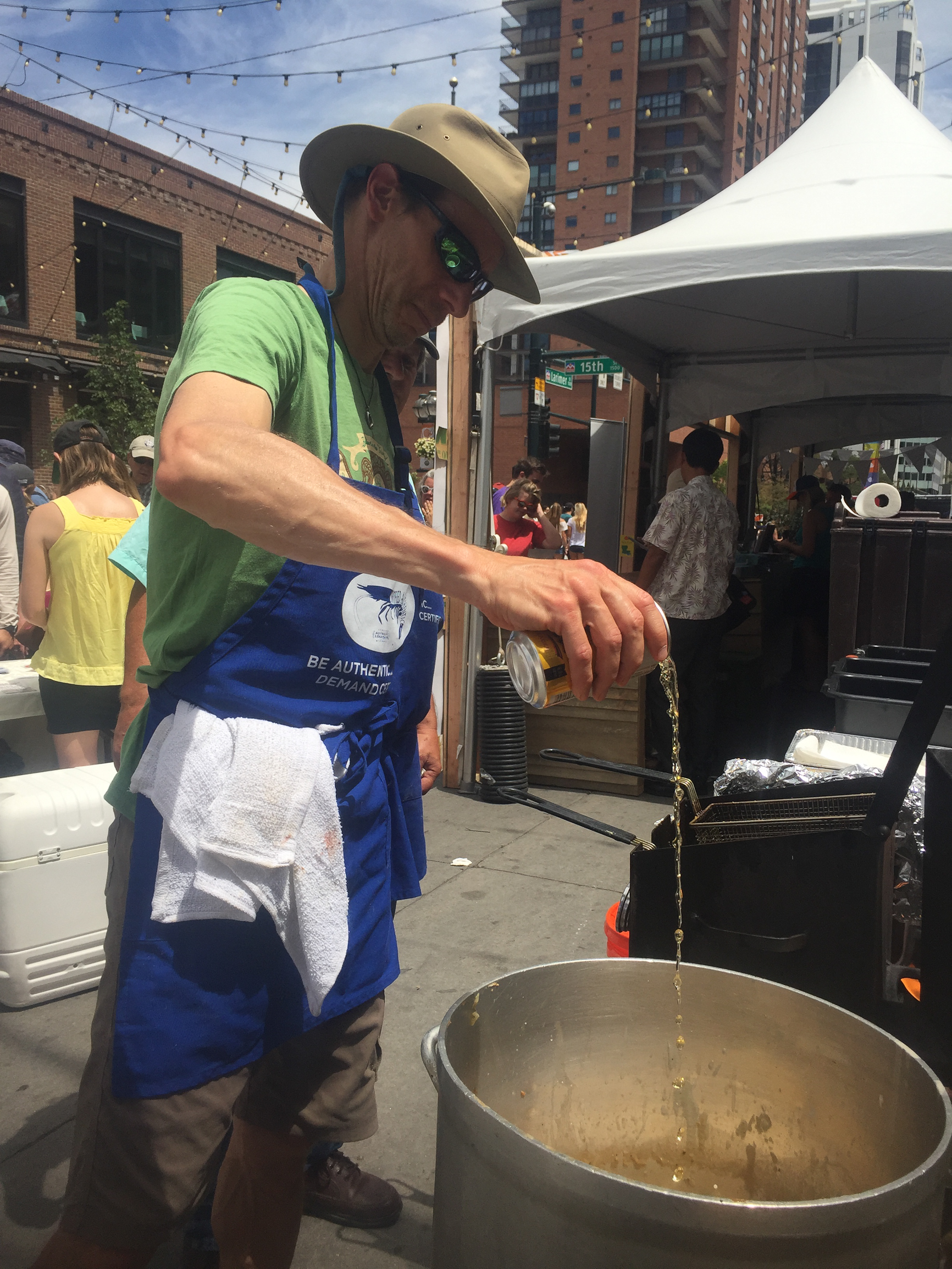
Attending Slow Food Nations in Denver this past weekend, I had some expectations about the Slow Fish 101 presentation I would co-lead and the gumbo I would make.

As often happens, those expectations capsized last minute and I and many others had to adapt on the fly. For the second year in a row, the Slow Fish USA team had to respond quickly to a variety of circumstances outside our control.

In the midst of towed vehicles, last-minute technical presentation difficulties, and a bit of a cluster around the commissary kitchen, we scrambled to help each other out. And just as we did last year at the Slow Fish gathering in New Orleans, we made it work… well.

Blame it on the weather

Again, weather played a role, as it did last year when we had to change venues because a flood warning closed down the original host site. This time, I learned my Slow Fish 101 co-presenter Paul Molyneaux was stranded in Portland, Maine because of weather and would miss the presentation. Having fished commercially and written several books and articles about fisheries, Paul not only brings 40 years of experience to the conversation, he has also made important connections all over the world.

Anyone who loves seafood, cares about the resource and the fishermen who harvest it sustainably can be part of the Slow Fish movement. Photo: Kate Masury

We each had developed a portion of the deck, and his relied heavily on his global travels learning from and supporting artisanal fishermen and their efforts to thrive. I learned much about these issues from our discussions, but I didn’t feel good about trying to put my perspective on the narrative of all of his slides. So I was up until 11:30 the night before tweaking the slide deck to convey many of the same messages, but from a perspective I’m more comfortable with.

Slow Fish USA luminary Kevin Scribner prefaced the presentation next morning with a history of Slow Fish and provided valuable context for questions and discussion flow.

And it was a good discussion. The audience was a mix of Slow Fish representatives and Slow Food delegates interested in fisheries issues. We reviewed some compelling statistics demonstrating how current industrial seafood markets are stacked against small- and mid-scale fishermen.

We also discussed how Slow Fish empowers these fishermen around the world to compete in local and global markets using examples such as the Tuna Harbor Dockside Market in San Diego, Know Fish Dinners in New Hampshire and Maine, and projects that support artisanal fishermen in Uganda and Thorupstrand, Denmark.

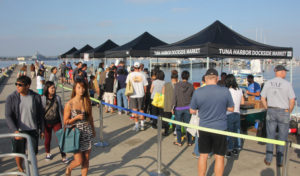
Tuna Harbor Dockside Market, San Diego. Photo: courtesy THDM.

Tuna Harbor Dockside Market is a shining example of multi-tiered collaboration between fishermen, activists and government. More than three years ago, a group of San Diego fishermen sought a way to sell to consumers direct off the boat. Though there was no specific permit that would allow that type of retail setup, the city, county and state worked together to create legislation that supports the market.

The result?

  • Fishermen have created relationships with customers.
  • They’ve earned more money: sea urchin prices jumped from $.80 to $5 per lb. and mackerel rose from $.30 to processors to $4 per lb. to consumers.
  • Fishermen have changed the way they fish to accommodate market demand.
  • Fishermen’s families work the tents, getting their children’s hands on the product.

The audience posed great questions about aquaculture, fisheries management and the long-term prospects of wild harvest in the face of growing demand. The conversations continued even after we were kicked out of the room as the next group set up.

First mission accomplished.

Blood, sweat and gumbo

The plan was to highlight the story behind the fabulous shrimp and crabs from Lance Nacio’s Anna Marie Shrimp in Louisiana via gumbo. I also secured some of the best andouille sausage I’ve ever had from Toby Rodriguez, a born-on-the-bayou, pig whisperer, traditional butcher and co-owner of Lache Pas Boucherie and Cuisine in Lafayette, La. He had me at “I call bullshit on all commercially available andouille!”

The BIG challenge was logistics, such as sourcing a 40-quart stockpot, stirrer, ladle and all of the flour, vegetables, oil etc. I’d need to deliver my standard of gumbo. I also needed a place to prep and make a stock. Even with weeks of planning, this still proved to be much more challenging than we expected or was necessary.

Thanks guidance from some chef friends, this was NOT a disaster.

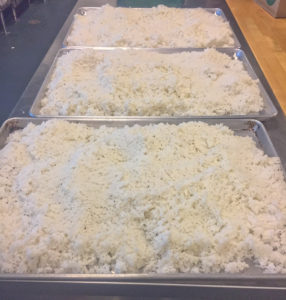
Fortunately, because of the connections I’ve forged with Slow Fish and some outstanding chefs, I found what I needed. A couple of chefs, Kelly Whitaker of Basta in Boulder, and my dear friend Evan Mallett of Black Trumpet in Portsmouth, NH helped me figure out how to cook up about 30 pounds of rice (which was way out of my comfort zone.) Evan also chopped and connected me with a chef for the pot and three locally sourced chickens.

I prepped with help from old and new friends for nearly seven hours after presenting. The morning of the food service, I got a late start because we had to wait for the health inspector and I had to try and figure out how to get 50+ pounds of food in different containers and 12 quarts of stock from the commissary kitchen 5 blocks to the site where I’d cook the gumbo. With a dolly and someone’s truck, we made it work.

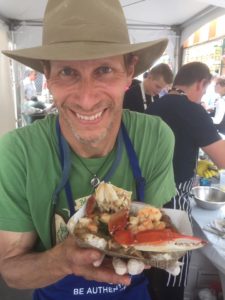
Lance’s blue claw crabs added flavor…and some down-and-dirty eating for lucky patrons.

Four hours, a few laughs, a couple of cuss words, a stream of sweat and an unfortunate slip of a knife later, and I was ladling gumbo to praise. We had three tents serving fried shrimp, Baja oysters, miso and seaweed, Alaska salmon, salmon poke and black cod. All of it delicious. The quality and freshness of each product was exceptional.

The moment of truth for me came late that afternoon when an elderly African American man sporting a comfortable sun hat and shades asked, “What you got in that gumbo, son?”

I told him the ingredients, mentioning Toby’s sausage, and the fact I smoked the chicken over apple wood that morning.

“Where you from?”

“New Orleans, sir.”

“Who taught you?”

“A Creole woman who took care of me when both my parents were working. Nothing written down. All oral tradition. Took two years of her whacking me over the head with a wooden spoon every time I messed up for me to start getting it right.”

“Ok. Let’s try it,” he said, dropping his ticket in the cup.

Nervously, I spooned out some rice and carefully selected a ladle that had shrimp, crab, two different kinds of sausage, chicken and as many vegetables as could fit.

The man took a spoonful and seemed to swirl the gumbo around in his mouth like a sommelier, which made me uncomfortable. If he didn’t like it, my day was lost.

He raised his head, sniffed, then a slight smile curled his mouth.

“A lot of flavors that work well together.”

“You like it?” I asked, for confirmation.

“Yes. You done good. Thank you.”

“Thank you, sir!!!”

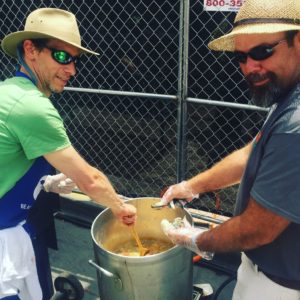
Notice the gloved hand.

So what if I may have shaved some time off the back end of my life stressing over logistics. So what if I’m now struggling to type with nine fingers because I damn near sliced off the tip of my index finger early in the morning before really getting going on the gumbo. Someone in the tent trained in wilderness survival did a field repair to stop the bleeding so I could complete the mission. I got four stitches only after most of the gumbo was gone and I received “official” validation.

Group effort

All of this goes back to something Slow Food USA director (and former New Orleans high school classmate) Richard McCarthy said in opening remarks that Slow Food is about pluralism. Change doesn’t come from any one person. It comes from a collective force.

So it is true with Slow Fish and specifically, my mission with One Fish Foundation. Changing attitudes about consumer food and seafood purchases requires a group effort. It requires communication, collaboration, partnerships and adaptation. Adapting to unforeseen challenges to event execution is becoming an illustrative trend for Slow Fish USA. It’s because of the connections and friendships we’ve formed that we’ve been able to overcome some last-minute hurdles, working together to send our message.

It’s because of those connections, and the new connections we make that we will continue to steer the conversation toward preserving the seafood resource and the way of life of the fishermen who harvest and care for it.


Top Photo: Don’t forget the secret ingredient! Credit: Lance Nacio.


All Blog Posts

“One Word: Plastics” … and the damage to our…

  • March 6, 2017October 20, 2021
  • by Colles Stowell
Share it!
Share

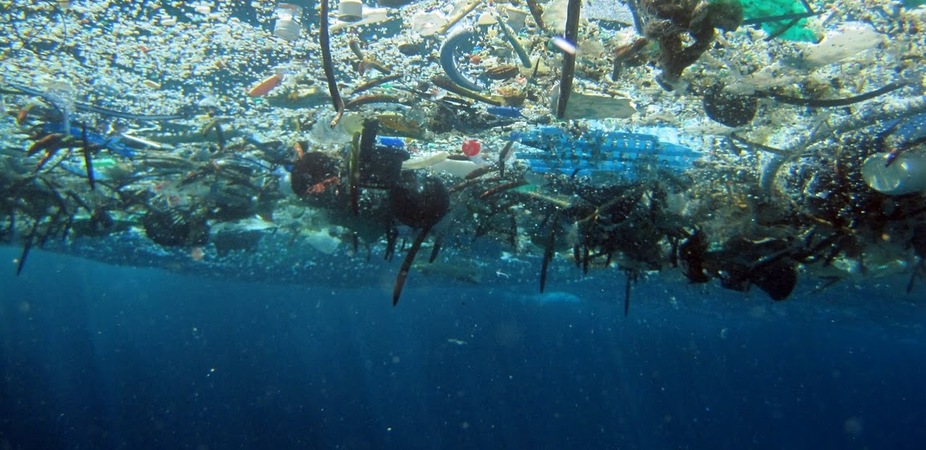
Here’s a sobering thought: There will be more tonnage of plastic than fish in the world’s oceans by 2050 if we continue to produce, consume and dispose of plastic as we are now.

Think about the implications. In fact, some scientists estimate that a minimum of 5 trillion pieces of plastic weighing more than 250,000 tons are floating in our oceans. That’s just the plastic that is floating. Another study from 2015 suggests that oceans now hold more than 4.8 million metric tons of plastic, much of which now rests on the sea floor. The most offensive item? Plastic bags. Approximately 500 billion plastic bags, or 150 per person on the planet, make their way into the waste stream. And those numbers are rising. They can take up to a 1,000 years to break down, and are often mistaken for jellyfish by a wide variety of marine species.

You don’t have to look far to find horrifying stories and gruesome pictures of dead whales, seabirds, turtles and other marine organisms with organs jammed full of plastic bags, containers, expanded polysterene products (Styrofoam™) and other human detritus. As many as 100,000 marine animals die from interactions with plastic, as do 1 million sea birds. It’s not hard to see that the more plastic that floods into oceans, the less healthy marine ecosystems become.

A recent study released last month by the World Economic Forum suggests a major re-think of how we produce, consume and reuse plastic items.

Here are some highlights:

  • More than 40 years since the recycling symbol appeared, we only recycle 14% of plastic produced today.
  • Every year up to $120 billion worth of plastic packaging material is lost to the economy as single-use plastic. Much of which ends up in our oceans.
  • UNEP suggests the cost of all of this packaging spilling into the environment at $40 billion.
  • 30% of plastic packaging (such as lids, straws, plastic tear offs, polysterene cups and to-go packages, etc.) will never be recycled and likely will continue to be loosed on the environment unless we significantly re-design and reconfigure them.
  • 20% of packaging can be reused as a result of new designs that replace single-use packaging for such items as cleaning and personal care products.
  • A retooling of the recycling system, including the design of packaging products and the materials could render the remaining 50% of plastic packaging products economically feasible for recycling. This is a big deal. To date, most recycling operations have been money-losing operations. This was certainly the case for the omnipresent plastic bags doled out at grocery stores. The Clean Air Council has estimated that recycling one ton of plastic bags costs $4,000. The recycled product can be sold for $32.
Microplastics are insidious because they’re hard to clean up, and they find their way into marine food webs, causing sickness and death. NOAA photo

It’s not just the big visible plastic bags, lids, floating polysterene etc. that may appear as food to some sea creatures, which ingest it then die of suffocation or starvation. It’s the tiny particles as well.

But truly addressing this problem is about people and their actions, not plastic.

Those microplastics that were once touted as the most efficient way to clean your bathtub or restore vitality to your cheeks? They hitchhike a ride through municipal water systems and into streams, rivers, lakes, marine estuaries and bays. Once there, they disperse and end up in seafood webs because they take a long time to break down.

In a study published last year in the Proceedings of the National Academy of Sciences, researchers found that filter feeders such as oysters, mussels, sea cucumbers and zooplankton are particularly vulnerable to the hazards of plastic.

The study focused on the impacts to oysters, which feed on the plastics they filter in. Researchers observed these oysters experienced drops in fertility, reproduction and larval development (some affected larva grew 18% smaller than healthy specimens).

Yes, the convenience of plastics have proved minor in the face of the mounting waste heap of trash floating, drifting or sinking in our oceans and the impact that has on seafood.

But truly addressing this problem is about people and their actions, not plastic. We first have to change our thinking on plastic so it is no longer  the daily, disposable necessity we take for granted. We need to think of it in terms of how to minimize global environmental impact. As such, I agree with the larger premise of the PNAS report that we should re-think how we manufacture, consume and recycle plastic to minimize production, and single-use products.

Similarly, I agree with one researcher’s  conclusion about ocean conservation. In a recent National Geographic op-ed piece, she writes “…ocean conservation is not about fish. It’s about people.”

She’s right. We have to change our attitudes about how we look at ocean conservation. I may not agree with her concept of zoning the ocean into areas that are and aren’t open to fishing as that would be very controversial and impractical on a global scale. But her approach to starting from the ground up, in this case, talking with local fishermen and using their input to manage the fishery, is essential to their buy-in. That investment in the outcome by the fishermen is crucial to the success of the fishery management and to the conservation of the resource.

Here are some additional resources:

  • National Geographic article on the volume of plastics in the ocean
  • National Geographic article on plastics and the great Pacific Garbage Patch.
  • Reuters story on using shrimp shells to make biodegradable plastic bags.
  • Statistics from Ocean Crusaders.
  • More statistics from Save the Bay.
  • Huffington Post graphic on how plastic enters marine ecosystems.

Top photo credit: NOAA

Recent Posts

  • Hurricane Ida wreaks havoc on Louisiana’s seafood industry
  • EPA Should Use Clean Water Act To Kill Zombie Mine
  • Slow Fish 2021: Relationship Matters
  • Faith, Façades, and Futility
  • Pebble Permit Paused: Politics at Play

Archives

  • September 2021
  • August 2021
  • April 2021
  • December 2020
  • August 2020
  • June 2020
  • February 2020
  • December 2019
  • November 2019
  • October 2019
  • July 2019
  • May 2019
  • April 2019
  • March 2019
  • January 2019
  • December 2018
  • November 2018
  • June 2018
  • May 2018
  • March 2018
  • February 2018
  • January 2018
  • December 2017
  • November 2017
  • October 2017
  • September 2017
  • August 2017
  • July 2017
  • June 2017
  • May 2017
  • April 2017
  • March 2017
  • January 2017
  • December 2016
  • November 2016
  • October 2016
  • September 2016
  • August 2016
  • July 2016
  • June 2016
  • May 2016
  • April 2016
  • March 2016
  • February 2016
  • January 2016
  • December 2015
  • November 2015
  • October 2015
  • September 2015
  • July 2015
  • June 2015
  • May 2015
  • April 2015
  • March 2015
  • February 2015
  • January 2015
Theme by Colorlib Powered by WordPress