Skip to content
One Fish Foundation
  • Blog
    • Aquaculture
    • Education
    • Environment
    • Policy
    • Wild Harvest
    • Fish Tales
  • About
    • About One Fish
    • About Colles Stowell
  • Education
    • Elementary School
    • Middle School
    • High School
  • KNOW FISH Dinners®
  • Resources
    • One Fish Podcast
    • One Fish Foundation in the news
    • The 7 C’s of Sustainable Seafood
    • Newsletter Archive
    • Recipes
      • Skate with Capers and Butter — Chef Rizwan Ahmed
      • Grandma Davis’ Fish Chowder — Jane Almeida
      • Ginger Garlic Tamari Scallops — Colles Stowell
      • Fish Stock — Evan Mallett
      • Mussels San Remo — Chef Rob Martin
      • Salted Pollock Croquettes – Chef Mark Segal
  • Connect
    • Contact OneFish
    • Social
      • Instagram
      • Facebook
      • Twitter
All Blog Posts

The Bluefish Mercury Telltale

  • July 27, 2015October 20, 2021
  • by Colles Stowell
Share it!
Share

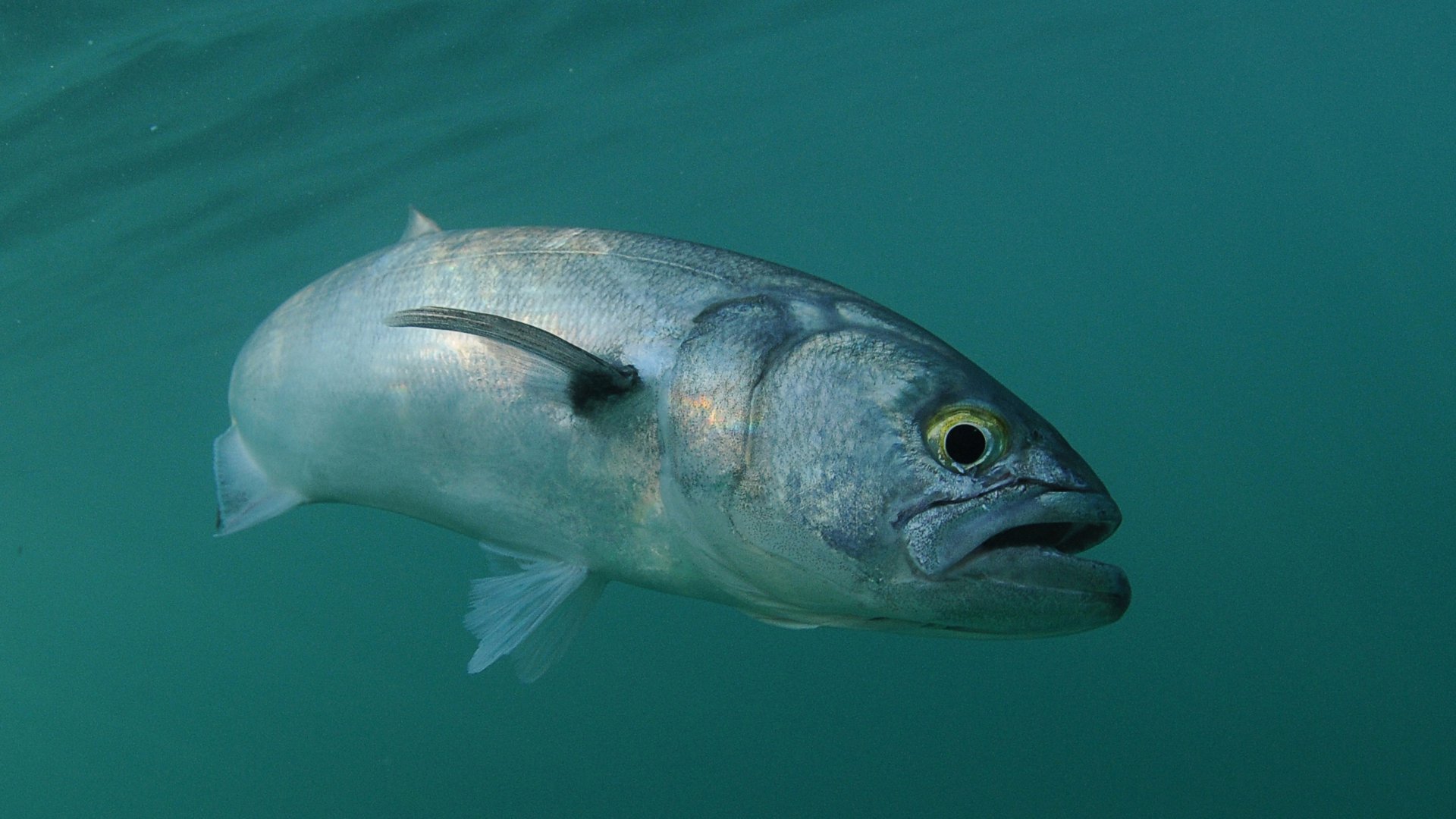
It seems as though we’ve had some success in reducing the amount of mercury our coal stacks spew into the atmosphere. And this isn’t just measured in the reduction of coal plants in the past few decades. We’re now seeing the impact in bluefish along the Mid-Atlantic Bight.

So says a recent study written by researchers at NOAA’s National Ocean Service, Center for Fisheries and Habitat Research, and Duke University’s Marine Lab. In essence, as mercury levels have decreased in the atmosphere, they have also declined in the muscle tissue of bluefish from 1972 to 2011.

What surprised the study’s authors most was that marine concentrations of mercury dropped in decades in tandem with atmospheric concentrations. Most scientists expected the marine response would take a century or more. Mercury concentrations in bluefish decreased by 43% in that timeframe, or about 10% per decade. That decrease dovetails with “reductions of mercury observed in atmospheric deposition, riverine input, seawater, freshwater lakes, and freshwater fish across northern North America,” according to the study’s authors.

What do you know? Cutting back the filth we put into the atmosphere actually produces tangible results. In this case, regulations actually reduced the amount of mercury in the bluefish the American public consumed in that time period. The study further postulates that if bluefish are proxies for similar species in the same region of the Atlantic, this reduction in consumed mercury may be more widespread. The evidence also suggests predatory fish like bluefish may have been exposed to mercury for over a century, according to the study.

One cautionary note: These results are good news for North America, and should be a blueprint on how to protect our food sources from ourselves. But this is only domestic cause-and-effect. As global emissions continue to rise, so does the potential impact for increasing mercury levels in domestic species. In other words, we need to keep monitoring mercury levels in seafood diets, and more importantly, keep pushing for global emissions reductions.

Additional research:
Revised FDA advice on fish consumption (draft)

New Trade Deal Could Handcuff Local Seafood Systems
NOAA Mandated Observer Costs a Bad Precedent
wpadmin
bluefish coal Duke University global emissions mercury NOAA seafood diet

Related articles

Hurricane Ida wreaks havoc on…
EPA Should Use Clean Water…
Slow Fish 2021: Relationship Matters
Faith, Façades, and Futility
Pebble Permit Paused: Politics at…
Keeping Salmon Wild
Frankenmine: Pebble’s Worst-Case Scenario
Swimming On: the Slow Fish…
Seafood Learning Expeditions
Building Community Over Seafood
Seafood Lovers and the Supply…
Administration Forces EPA About-Face, Revokes…

Recent Posts

  • Hurricane Ida wreaks havoc on Louisiana’s seafood industry
  • EPA Should Use Clean Water Act To Kill Zombie Mine
  • Slow Fish 2021: Relationship Matters
  • Faith, Façades, and Futility
  • Pebble Permit Paused: Politics at Play

Archives

  • September 2021
  • August 2021
  • April 2021
  • December 2020
  • August 2020
  • June 2020
  • February 2020
  • December 2019
  • November 2019
  • October 2019
  • July 2019
  • May 2019
  • April 2019
  • March 2019
  • January 2019
  • December 2018
  • November 2018
  • June 2018
  • May 2018
  • March 2018
  • February 2018
  • January 2018
  • December 2017
  • November 2017
  • October 2017
  • September 2017
  • August 2017
  • July 2017
  • June 2017
  • May 2017
  • April 2017
  • March 2017
  • January 2017
  • December 2016
  • November 2016
  • October 2016
  • September 2016
  • August 2016
  • July 2016
  • June 2016
  • May 2016
  • April 2016
  • March 2016
  • February 2016
  • January 2016
  • December 2015
  • November 2015
  • October 2015
  • September 2015
  • July 2015
  • June 2015
  • May 2015
  • April 2015
  • March 2015
  • February 2015
  • January 2015
Theme by Colorlib Powered by WordPress