Skip to content
One Fish Foundation
  • Blog
    • Aquaculture
    • Education
    • Environment
    • Policy
    • Wild Harvest
    • Fish Tales
  • About
    • About One Fish
    • About Colles Stowell
  • Education
    • Elementary School
    • Middle School
    • High School
  • KNOW FISH Dinners®
  • Resources
    • One Fish Podcast
    • One Fish Foundation in the news
    • The 7 C’s of Sustainable Seafood
    • Newsletter Archive
    • Recipes
      • Skate with Capers and Butter — Chef Rizwan Ahmed
      • Grandma Davis’ Fish Chowder — Jane Almeida
      • Ginger Garlic Tamari Scallops — Colles Stowell
      • Fish Stock — Evan Mallett
      • Mussels San Remo — Chef Rob Martin
      • Salted Pollock Croquettes – Chef Mark Segal
  • Connect
    • Contact OneFish
    • Social
      • Instagram
      • Facebook
      • Twitter
All Blog Posts

Keeping Salmon Wild

  • June 16, 2020October 19, 2021
  • by Colles Stowell
Share it!
Share
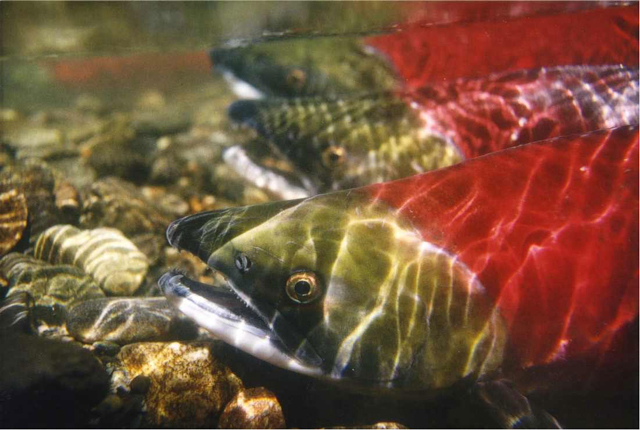
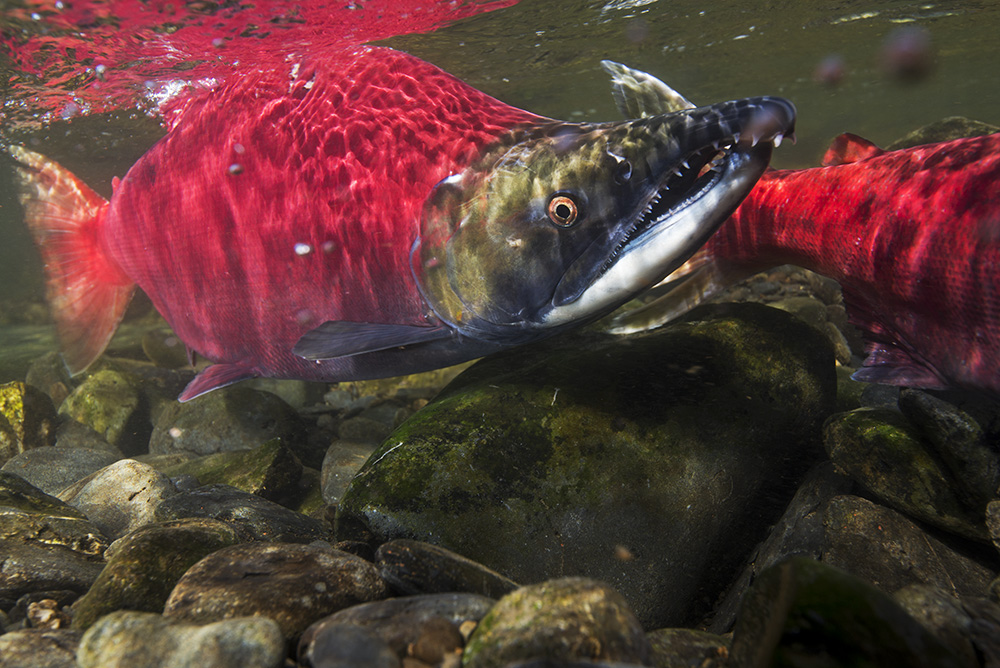
Top photo: Spawning sockeye salmon
From the book, The Salmon Way: An Alaska State of Mind, by Amy Gulick
©Amy Gulick/amygulick.com
To buy the book: www.thesalmonway.org


If we humans were to be judged by how we treat natural resources, we’d be up a creek … likely a toxic creek.

We don’t need to look far for evidence. Oceanic and atmospheric pollution, polluted groundwater, dammed rivers, etc. Bad policies, bad habits, and slow reaction to warning signs have compounded the problem.

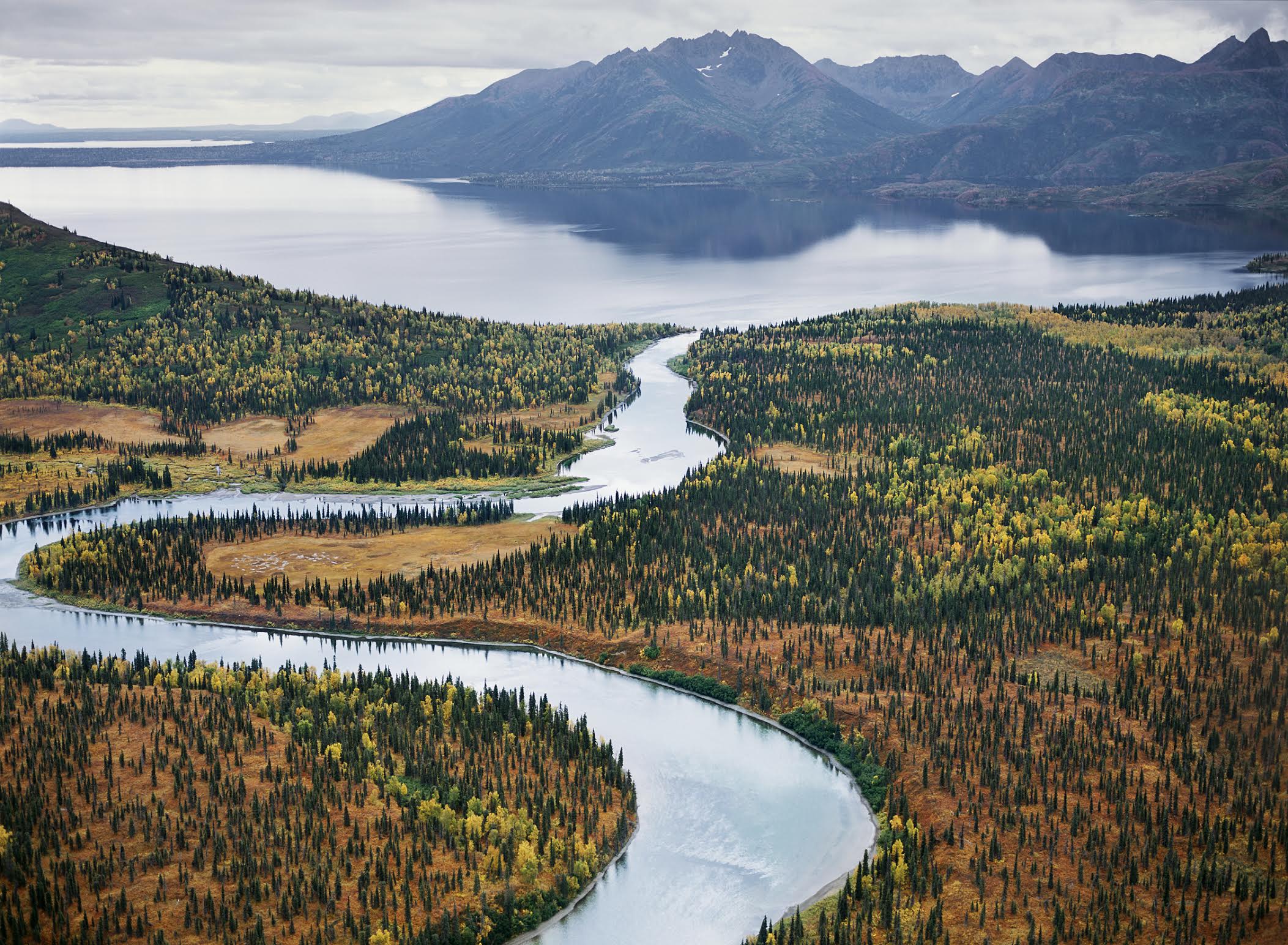
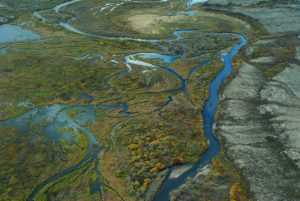
I’ve focused on the proposed Pebble Mine in Bristol Bay, Alaska for several years. This would be a massive open pit copper and gold mine at the headwaters of the world’s largest wild sockeye salmon run. It would jeopardize the runs of several salmon species and the water supply and food source for thousands in and around the bay as well as the livelihoods of thousands of fish harvesters and those working at processors. Not to mention the impact on millions of Americans who eat wild Alaska salmon.

These types of mines generate billions of tons of highly toxic waste like cyanide, arsenic, and copper that are deadly to fish and their habitat. And they have a long and incontrovertible history of failure.

The Pebble mine’s Canadian owner, Northern Dynasty Minerals, has spent millions of dollars on lobbying Alaska’s governor and the Trump Administration to steamroll its scientifically flawed, questionably ethical permit application through the Army Corps of Engineers. The Corps has already said it will NOT take into account the worst-case scenario of a tailings (toxic waste) dam failure because it does not consider it likely … despite the fact the site is in a very seismically active area and tailings dam failures have happened elsewhere around the world.
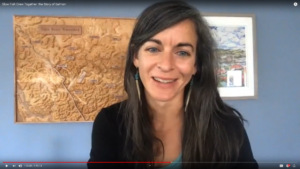
Elizabeth Herendeen of SalmonState providing some good perspective on opposition to the Pebble Mine during the Slow Fish Crew Together Webinar.

As Elizabeth Herendeen of SalmonState mentioned during the last Slow Fish Crew Together Webinar on June 5, a majority of folks in Bristol Bay and throughout Alaska have consistently opposed the mine. And yet, Pebble sits on the precipice of gaining the federal permit it needs to move forward. The Corps of Engineers could make an announcement some time in June or early July.

Others we heard from during the webinar about the perils of the mine and what we can do now include dear friends Captain Katherine Carscallen, “The Wild” film director Mark Titus, Melanie Brown of SalmonState, and Jon Broderick, who launched the amazing Fisher Poet Gathering in Astoria, Oregon and sang a lament about the loss of the wild salmon in Bristol Bay if the Pebble Mine were to ever be approved.
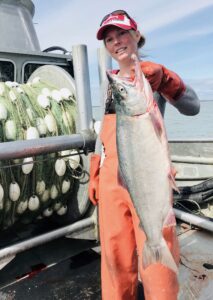
Captain Katherine Carscallen aboard her F/V Sea Hawk.

Born and raised in Dillingham, Alaska, Katherine is a drift netter who shared a heartfelt  and compelling viewpoint about her deep personal connection to the bay, the fish and the community, and why she has been fighting this mine for more than a decade. “Our concern is that it would be a permanent, and irreversible and hugely damaging change to our entire region. It’s salmon country. That’s what Bristol Bay is about, and this [mine] is proposing to change that entirely,” she said.

“The only reason we don’t have a mine and a mine hasn’t been built in the past 16 years since it’s been threatened is because not just Bristol Bay residents and Alaskans, but really people all over the nation have come together to help us on this issue and speak out about it,” Katherine said. “It really makes my heart swell that so many people who’ve never even been to Bristol Bay care so much about this issue.”

Mark Titus shared an equally personal story about starting to film “The Wild” shortly after leaving rehab for addiction in 2016. He returned to the bay to tell this story in part as a way to reconnect to the bay, the land, the salmon, and the community that he’d fallen in love with decades before.
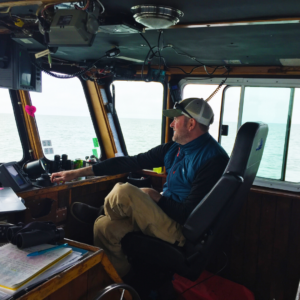
“The Wild” Film Director Mark Titus reconnecting with Bristol Bay.

“I was really called back from this place that I was in by this love for these wild salmon which are the ultimate symbol to me of sacrifice and of giving of themselves so that life itself can continue,” he said. “This film is about that journey and using the metaphor of my own recovery from addiction to paint the picture about where we are as a people and as a species and how we treat this planet.”

Melanie Brown began the webinar with a spiritual tone, telling the story of her great grandparents who were orphaned by the Spanish flu in 1918, and who had to make their way into adulthood on their own. Her great grandfather transferred his setnet lease to her. Last summer, Melanie taught me how to pick sockeye out of the net from the same spot.

“I truly believe it was the salmon who gave the people who were in despair hope and taught them a path forward, and were their guides literally,” she said. “I’m here because of the salmon and because of the strength of my great grandparents. My people ended up here in Bristol Bay because they followed the salmon. I’m so blessed to be of this land.”
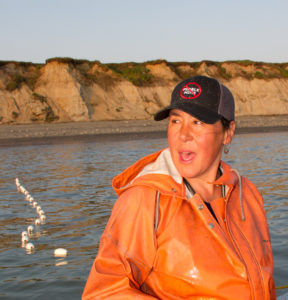
Melanie exudes good cheer and hope, even during the fourth set of the day heading toward midnight.

Speaking of the mine, she said, “It instills in me great fear. But that fear is overridden by the hope that salmon give me. I hope that you find hope in the salmon stories that you hear today.”

And it was that hope and a general call to get involved that resonated from everyone’s words.

As I said at the outset of the webinar, “In many ways, the story of salmon and how we treat them and their environment reflects the story of ourselves.”

We need to get this right. We want our children and successive generations to be able to experience wild places like Bristol Bay, where crystal clear waters call the wild salmon home every year to keep sustaining this magical life force.

Elizabeth, who’s spent more than a decade at the forefront of the opposition to the mine, encapsulated the urgency of the situation: “I think this is a really critical moment for anyone who cares about wild fish and wild salmon. This is our last chance to do it right the first time. We all need to share responsibility and take the time to be engaged.”

I’ve included some links below on how to learn more and get involved. These next few months for Bristol Bay will be important, and every voice matters.


Resources

  • Defend Bristol Bay Take Action page (to contact your elected officials in Washington, D.C.)
  • Information about “The Wild” film and upcoming screenings by Mark Titus. Here’s a link to the official trailer.
  • Save Bristol Bay website
  • United Tribes of Bristol Bay video update on current status of the mine
  • Slow Fish Crew Together Webinar: The Story of Salmon Youtube recording
 

All Blog Posts

Farmed Salmon Jailbreak Exposes Systemic Industry Flaws

  • August 31, 2017October 20, 2021
  • by Colles Stowell
Share it!
Share

UPDATE Sept. 3, 2017  Recent reports indicate Cooke Aquaculture Pacific (subsidiary of Cooke Aquaculture) acknowledged in permit filings in February that the three-pen farm that failed in August was “nearing the end of its serviceable life” with visible rust and corrosion. Part of the permit application was to re-align the net pens so they would not be broadside to one of the strongest currents on the west coast. The application was filed shortly after Cooke bought the farm from Icicle Seafoods in 2016. But Cooke never fixed or replaced the pens, and a last-ditch attempt to stop the pens from drifting in the powerful currents in July proved futile on Aug. 19 when structures collapsed and more than 160,000 fish escaped.

Cooke reports that it has recovered over 140,000 fish from a total of 305,000, leaving about 160,000 fish that escaped.

There is increasing pressure from several fronts, including some state legislators and several regional native American tribes to stop the expansion of aquaculture in Puget Sound.


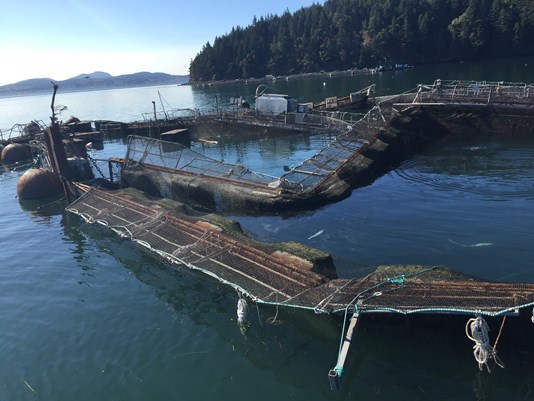
August 30, 2017 — In case you missed it, several thousand (potentially more than 300,000) Atlantic salmon escaped from net pens off Cypress Island in Washington state last week.

The idea that such high numbers of Atlantic salmon could potentially out-compete wild, native Pacific salmon for food, spawning grounds, etc. or even mate with them, has several environmental groups and commercial fishermen sounding alarms.

We should all be concerned.

Fish escapes from net pens are nothing new. It has happened several times with different ecological and social impacts in the past 30 years. Net pens are vulnerable to big storms which can crumple them up and leaving gaping holes.

Containment…?

This particular incident, which happened on August 19 at a facility owned by the massive Canadian firm Cooke Seafoods, is particularly notable for several reasons.

  • Cooke initially blamed the crumpling of the net on extreme high tide and strong currents related to the solar eclipse. Cooke has walked back that claim, instead blaming only abnormally high tides and strong currents. Scientists say the tides that day were actually milder than earlier in the summer.
  • In 2016, Cooke purchased the 30-year-old pens, which are located in an area that has one of the strongest currents (up to 4 mph) on the West Coast. Yes, you want strong enough currents to flush all of the waste and undigested food, antibiotics, what have you, to prevent the growth of lethal algal blooms. But you’re also setting up the inherent risk of net pen damage.
  • Cooke initially said that 4,000 fish escaped. Now they say they won’t know how many fish escaped until the final harvest (both in and around the farm and further out to sea) is complete. That could be never.
  • The state of Washington has frozen any new permitting for marine aquaculture. This is significant for Cooke, which has plans to extend its operations in the Strait of San Juan de Fuca.
  • Washington state aquaculture operations produce about 17 million pounds of farmed salmon per year, making it the state with the largest marine farmed finfish production in the U.S.
  • The state of Washington Dept. of Natural Resources has sent a notice of default to Cooke, claiming that Cooke violated its lease agreement (the co. leases the undersea land from the state) because of the environmental harm from the net pen failure.
  • Environmentalist organization Wild Fish Conservancy has filed an intent to sue Cooke for violating the Clean Water Act as a result of the “escape.”
  • The state asked for help from commercial and recreational anglers to catch/harvest/kill the Atlantic salmon in the wild.
  • Based in New Brunswick, Cooke has operations in Eastern Canada, Spain, Scotland, Chile, and Maine and claims they will produce more than 275,000 metric tons of seafood every year and generate $1.8 billion annually.

Long-term implications

So what does this all mean?

For me, it is yet another illustration that industrial scale finfish aquaculture has a long way to go before it truly delivers a net environmental, ecological, sociological and yes, financial positive.

The Cooke operation is sited perilously close to native Pacific salmon migratory routes. Subsistence and artisanal fishermen in the Lummi Nation, a Native American tribe in Washington State, join their voices with environmentalists fearing the ecological impacts of several hundred thousand non-native fish competing with struggling native Pacific salmon species like Chinook for food and habitat.

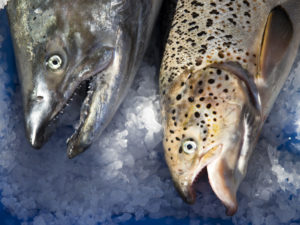
Washington state posted an identification guide to help fishers distinguish Atlantic salmon (right) from native Pacific salmon species. (Photo by Megan Farmer/KUOW)

Young Chinook are now leaving West Coast rivers to head to sea, and could be a prime food source for the 10-pound Atlantic salmon swimming about. Other potential impacts the farmed fish could have on wild stocks such as Chinook and Coho salmon now returning to spawn include increased competition for food, the potential for spreading disease and potentially weakening the gene pool from inter-breeding.

Many scientists agree we don’t have enough information to really know the impact of farmed salmon escapes. Some researchers doubt whether farmed Atlantic salmon can survive in the wild. Others doubt that they would really mate with wild, genetically different species, or that if a few did, the consequences would be negligible.

In the absence of real, credible data, I side with those who are concerned. Just because we don’t know with certainty all of the ecological threats escaped farmed salmon could pose on wild populations, we should NOT ignore the potentially significant damage. Put another way, this issue should serve as yet another warning that profit-driven finfish aquaculture, sometimes deemed marine feedlots because of industrial approach, is inherently dangerous.

It’s dangerous because these types of issues: escapes, algal blooms, disease, antibiotic use, etc. continue despite corporate attempts at greenwashing. Witness the mess created by the Chilean farmed salmon industry, which lost over a billion dollars last year after a huge algal bloom sparked a deadly bacteria outbreak that killed millions of fish.

Just because there isn’t tons of research doesn’t mean there aren’t readily identifiable stories supporting the need for caution. For example, one study from the University of Victoria relies on DNA sampling to confirm that some escaped Atlantic salmon had spawned in the Tsitik River in British Columbia in the late ‘90s. Another study showed that Atlantic salmon inhabited more than half of 41 known Pacific salmon rivers on Vancouver Island.

Scale

All of this is set against a new industry dynamic in which global aquaculture operations are scooping up smaller wild harvest operations. Last year, Cooke purchased Icicle Seafoods, Inc. of Alaska, a longtime, well-recognized company specializing in wild harvest of Alaska seafood and farmed Atlantic salmon.

Is this simply an attempt to diversify its seafood portfolio to minimize the financial risks of salmon farming, or is it an attempt at greenwashing the mounting concerns of farmed salmon by providing wild caught product? As my colleagues and executives of the Sitka Salmon Shares community supported fishery Nic Mink and Marsh Skeele write in their latest blog, “You buy farmed fish: they win. You buy wild fish: they win.”

I am not opposed to aquaculture in principal. I know several bivalve farmers who are doing good things with oysters, mussels and clams and are taking care not to over-crowd their beds. I know there are certain small-scale, artisanal finfish operations that provide subsistence to impoverished communities in Africa with minimal ecological footprint.

But as with many issues in fisheries, scale simply magnifies the damage when something goes wrong. So we need to do more research on the potential impacts of escaped farmed finfish on wild populations and ecosystems. We also need to look deeper into lowering the cost and technology barriers to land-based re-circulating systems that reuse the water and minimize the ecological impact of net pen operations. Finally, we have to re-think how we feed these farmed fish because grinding up millions of tons of forage fish like Menhaden for fish pellets every year stresses a critical layer in marine food webs.

Would that the industry takes note … sooner rather than later.


Additional reading:

Scientific American article diving into the issues surrounding last week’s Cooke Aquaculture escape.

Seattle Times story providing more detail about the Lummi Nation response to the escapes.

Youtube video by activist Alexandra Morton with some intense footage showing disease spread in Atlantic salmon net pens in Pacific Northwest.

TED talk with activist chef Dan Barber discussing an innovative and ecologically beneficial fish farm in Spain.

Cascadia Weekly column by former fisherman and activist Anne Mosness providing a good historical perspective on how industrial finfish aquaculture, or marine feedlots, rose to prominence in the Pacific Northwest.

Wild Fish Conservancy petition to Washington state Governor Jay Inslee to stop the expansion of salmon farming in Puget Sound.

Video of sea lice dispersal from salmon farms into wild rivers in Norway posted by Clayoquot Action.


Top Photo credit: Wild Fish Conservancy

All Blog Posts

Fake News: Making Mountains Out Of The Pebble Mine

  • January 27, 2017October 20, 2021
  • by Colles Stowell
Share it!
Share

If there’s any question that money is directly tied to resource management, look no further than the Dakota Access Pipeline, Keystone XL pipeline and the Pebble Mine. Two of them were dormant for a while, and the first was on hold.

No longer.

That the proposed Pebble Mine in Bristol Bay, Alaska has reared its ugly head again is both alarming and telling. It is alarming because the project, which had been on life support for years, directly threatens one of the world’s largest and last wild sockeye salmon runs. It is telling that the changing political climate has created an atmosphere more weighted toward corporate profits and against environmental protections.

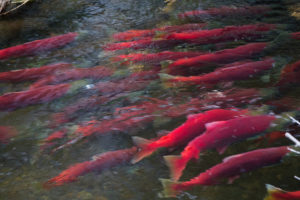
Sockeye approaching spawning beds. Photo: Bristol Bay Regional Seafood Development Authority

The massive copper and gold mine again became a discussion topic earlier this week when its sole investor, Northern Dynasty, claimed it expected to have its permitting issues resolved with the EPA by April, and that it was actively seeking an investor.

Northern Dynasty has been mired in three federal lawsuits aimed at handcuffing the EPA’s authority to reject the mine’s permit because the mine would violate protections in the Clean Water Act. In 2014, the EPA ruled the mine presents a potentially irreversible threat to the stability of the Bristol Bay watershed. At the moment, Northern Dynasty’s only on-site operations include geology tests and equipment storage.

Not surprisingly, three days after the new administration took office, Northern Dynasty’s CEO Ronald Thiessen said President Donald Trump’s administration has “a desire to permit Pebble.” He added, “We will come to a resolution within 100 days” with the U.S. Environmental Protection Agency.

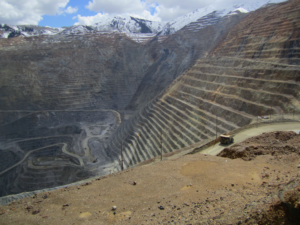
Copper mine in Utah run by Rio Tinto, which backed out of the Pebble Mine. If built, Pebble would be bigger than this. Photo: Deep Green Resistance

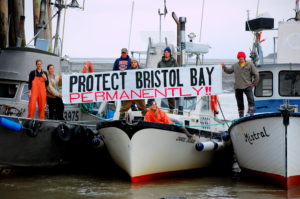
Opposition to the mine has been surprisingly universal from a broad range of user groups. That’s likely because Bristol Bay’s salmon population supports 14,000 full-time jobs and a $1.5 billion a year industry, according to federal and industry figures. In a rare instance, commercial and recreational fishermen are speaking with one voice: “Don’t destroy one of the last significant wild sockeye salmon populations!” Many of Alaska’s tribal leaders and several environmental groups have joined the chorus.

Is this Fake News?

That depends. To date I’ve seen no direct statement from the president saying he was going to drive the Pebble Mine through to operation. I’ve only seen Northern Dynasty say that.

If noted anti-resource attorney Scott Pruitt becomes head of the EPA, that could streamline federal permit approval, which accounts for a small number of significant permits.

That leaves the state of Alaska, which would have to issue more than 60 permits before the mine begins in earnest. And that won’t necessarily be an easy process for Northern Dynasty. An interesting political sea change has occurred in the past two years. Prior to the election the mine’s biggest opponent was the Obama administration and the EPA, while the Alaska state legislature was more supportive of the mine.

Photo: EPA

The tables flipped a bit in Nov. when the State House gained a bipartisan majority, with the Speaker of the House being from Bristol Bay. So while the federal administration appears to favor projects like the mine, the governor’s office and much of the legislature are signaling support for the state’s natural resources like salmon.

“Pebble doesn’t necessarily have an EPA problem,” says Sam Snyder, Trout Unlimited Alaska Engagement Director and a key figure in the fight against the mine. “But they have an Alaska problem. Sixty-five percent of Alaska residents in every precinct voted against it. Bristol Bay Tribes, villages and residents overwhelmingly oppose Pebble. Eventually this will also have to go through the state legislature.”

Photo: Seafood News

Here are some harsh realities that make the approval process a steep uphill climb for Northern Dynasty:

  • The political climate in Alaska has brought more scrutiny of the environmental risks of such a mine. The legislature recently put a 90-day delay on a routine permit to allow Northern Dynasty to maintain base operations (testing and equipment storage on site, etc.), because lawmakers wanted a closer look at impacts.
  • While there have been several reports about Northern Dynasty’s stock performance in the past few weeks since the Trump victory, there is context. Yes, the stock jumped nearly 300% in that time … from 75 cents to $2.89 on Jan. 26. That is a shell of the $22 stock price the company had in Feb. of 2011. It’s a penny stock.
  • Two major partners have backed away from the project because of widespread opposition and losses: Anglo American, PLC in 2013 and Rio Tinto in 2014.
  • In 2014, 65% of Alaskans approved a measure that would allow the legislature to ban mines lawmakers believe would harm wild salmon stocks. So a majority of Alaskans are skeptical.
  • That opposition continues. There is support for a new proposal to strengthen laws governing protection of fisheries habitats, which would have to be considered with any state permit for development that impacts salmon habitat.
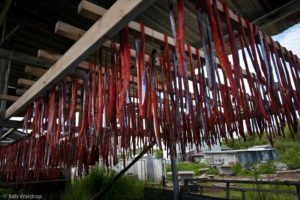
Sockeye drying. Photo: Bob Waldrop

What does this all mean? It means there are several roadblocks and years before the mine would have any chance of operation … if at all. Northern Dynasty would likely have to spend close to $200 million dollars just to secure all of the necessary permits. It would then need another several hundred million dollars to begin operations.

It also means that opposition must continue, within and without the state of Alaska, if opponents want to ensure the safety of the resource.

As the current mantra goes: wrong mine, wrong place.

Top photo credit: Robert Glenn Ketchum

Other resources:

Save Bristol Bay : Good resource for background and the mine’s impacts.

One Fish Blog: Further background

Homer News: Public comments on state fisheries protections.

Alaska Daily News OpEd: Wrong mine, wrong place.

All Blog Posts

Allowing Wild Pacific Salmon to Define Sustainability

  • April 29, 2015October 20, 2021
  • by Colles Stowell
Share it!
Share

I write this blog primarily to spread the word about sustainable seafood. “Sustainable” has become a bit of a cliché as marketers stretch and pull the definition in directions that weren’t part of its original meaning. Unfortunately, that leaves many of us with more questions than answers about where our seafood comes from.

Read more “Allowing Wild Pacific Salmon to Define Sustainability” →

Recent Posts

  • Hurricane Ida wreaks havoc on Louisiana’s seafood industry
  • EPA Should Use Clean Water Act To Kill Zombie Mine
  • Slow Fish 2021: Relationship Matters
  • Faith, Façades, and Futility
  • Pebble Permit Paused: Politics at Play

Archives

  • September 2021
  • August 2021
  • April 2021
  • December 2020
  • August 2020
  • June 2020
  • February 2020
  • December 2019
  • November 2019
  • October 2019
  • July 2019
  • May 2019
  • April 2019
  • March 2019
  • January 2019
  • December 2018
  • November 2018
  • June 2018
  • May 2018
  • March 2018
  • February 2018
  • January 2018
  • December 2017
  • November 2017
  • October 2017
  • September 2017
  • August 2017
  • July 2017
  • June 2017
  • May 2017
  • April 2017
  • March 2017
  • January 2017
  • December 2016
  • November 2016
  • October 2016
  • September 2016
  • August 2016
  • July 2016
  • June 2016
  • May 2016
  • April 2016
  • March 2016
  • February 2016
  • January 2016
  • December 2015
  • November 2015
  • October 2015
  • September 2015
  • July 2015
  • June 2015
  • May 2015
  • April 2015
  • March 2015
  • February 2015
  • January 2015
Theme by Colorlib Powered by WordPress