Skip to content
One Fish Foundation
  • Blog
    • Aquaculture
    • Education
    • Environment
    • Policy
    • Wild Harvest
    • Fish Tales
  • About
    • About One Fish
    • About Colles Stowell
  • Education
    • Elementary School
    • Middle School
    • High School
  • KNOW FISH Dinners®
  • Resources
    • One Fish Podcast
    • One Fish Foundation in the news
    • The 7 C’s of Sustainable Seafood
    • Newsletter Archive
    • Recipes
      • Skate with Capers and Butter — Chef Rizwan Ahmed
      • Grandma Davis’ Fish Chowder — Jane Almeida
      • Ginger Garlic Tamari Scallops — Colles Stowell
      • Fish Stock — Evan Mallett
      • Mussels San Remo — Chef Rob Martin
      • Salted Pollock Croquettes – Chef Mark Segal
  • Connect
    • Contact OneFish
    • Social
      • Instagram
      • Facebook
      • Twitter
All Blog Posts

Swimming On: the Slow Fish USA gathering from 2016…

  • February 8, 2020October 19, 2021
  • by Colles Stowell
Share it!
Share

The inaugural Slow Fish event in North America took place in New Orleans in 2016. It was an enormous first step, fraught with last-minute adaptation forced by a 500-year flood event in a city that is rather accustomed to flooding. Who knew we’d be eating shrimp and oysters in a warehouse full of floats from perhaps the most raunchy Mardi Gras parade in the city? Nothing says seafood like having every part of outsized human anatomy in lewd, brightly decorated papier-mâché looming over you.

But we made it work! Everyone adapted to the unforeseen circumstances and we had great conversations about consolidation, youth in fisheries and overall messaging and values. We capped Slow Fish 2016 off with an incredible Cajun hog harvest celebration called a “boucherie” across the Mississippi River.

We gathered in San Francisco for Slow Fish 2018 following an intense, but amazingly productive four-month planning period that was delayed by the threat and lingering angst of devastating forest fires in the region. But for the commitment, creativity, and sheer will of everyone involved, Slow Fish San Francisco wouldn’t have happened. That gathering made space for fabulous networking, collective problem-solving, and energy dedicated to shared values for our seas and their stewards.

The San Francisco event took place in a cool warehouse (no sex floats) that we adapted to suit large group discussions, as well as smaller World Café roundtables and PechaKucha (or “Peche” Kucha) mini slide presentations/stories. We also had a Seafood Throwdown, off-site oyster, dinner, and movie events..

Fast forward two years and that energy is still strong. This year, Slow Fish 2020 will go down on March 19-22 in Seacoast N.H., with a Working Waterfront Tour, kick-off dinner, Sunday Fishtival and the programming of a two-day conference at the University of New Hampshire Peter T. Paul College of Business and Economics in Durham.
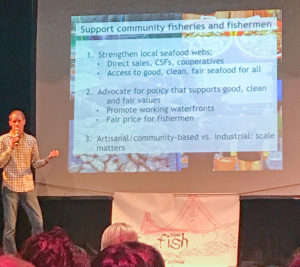
Setting the tone with the Slow Fish 101 presentation in San Franciso. Photo credit: Lance Nacio.

Circling back to Slow Fish USA origins on campus

We chose New England for 2020 to continue varying the geography of these events and give fish harvesters, fishmongers, and others from the region a chance to engage in these conversations.

New Hampshire is important because students at UNH were among the first in the country to embrace Slow Fish values back in 2013. At the time, they encouraged UNH Dining Services to sign a pact to source responsibly harvested seafood and  adhere to Slow Fish values. That pact is still in effect today. Bringing the conference to New Hampshire this year affirms how much the movement has grown in the years since and the importance of youth in the movement.

Rallying young people is especially important in New England as fish harvesters here are fighting against restrictive policies and well-funded efforts to consolidate the industry. This monopolization has created impossibly high barriers of entry for young fishermen and led to an ever-increasing age of the average fisherman, often called the “graying of the fleet.”

Moving the event around to key fisheries regions helps democratize the impact. Slow Fish continues to aim to create an open table for meaningful thinking around the core values of providing good, clean, and fair seafood to all.

At a time when equity, inclusion, and justice issues are increasingly visible, Slow Fish aims to ensure that small-scale and indigenous fish harvesters have fair access to the resource in a market too often dominated by billion-dollar corporations that only care about profits.
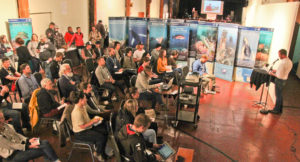
 

Sharing ideas, asking questions, expanding network connections, and collaborating on meaningful change. That’s the Slow Fish formula that will be at work at Slow Fish 2020 in New Hampshire. Photo credit: Eric Buchanan.

Diving deep

We’re going to talk about these and other critical issues in New Hampshire this year. For the first time, we’re going to merge the Slow Fish North America gathering and a regional Slow Food Northeast event, allowing members of both groups to get a better sense of how each group is working to shorten the distance from food source to plate.

Here is a sneak peek of what’s on tap for Slow Fish 2020, and why you should consider joining the conversation:

  • Deep Dive discussions on issues like aquaculture, climate change, and the Blue Commons;
  • Interactive World Café roundtables to explore challenges and opportunities facing youth, women, and indigenous fish harvesters; alternative seafood business leaders; and the Slow Fish Ark of Taste;
  • “Pesce” Kucha storytelling with slides;
  • Delicious food from all over the continent;
  • Tour of the seacoast N.H. working waterfront followed by an opening night feast;
  • Seacoast Restaurant Fish Week from Feb. 13 through Feb. 21 (restaurants in Seacoast NH and Maine provide a special Slow Fish menu and donate a portion of proceeds to Slow Fish);
  • Closing dinner event with music at the Paul College at UNH;
  • Fishtival on Sunday at Throwback Brewery (more food, music, beer, and hands-on demonstrations);
  • Several hands-on demonstrations of nose-to-tail, oyster shucking, etc.
  • A chance to dig into issues, collaborate, and kick it with old and new friends.

I can tell you first-hand that we are planning this year’s gathering with as much, if not more energy and drive as with NOLA and San Fran, and hopefully without any major and unexpected meteorological or other events.

So come join the conversation, expand your network, make new friends, hug old friends, eat fabulous food, and see what the New England Slow Fish and Slow Food communities have to offer!


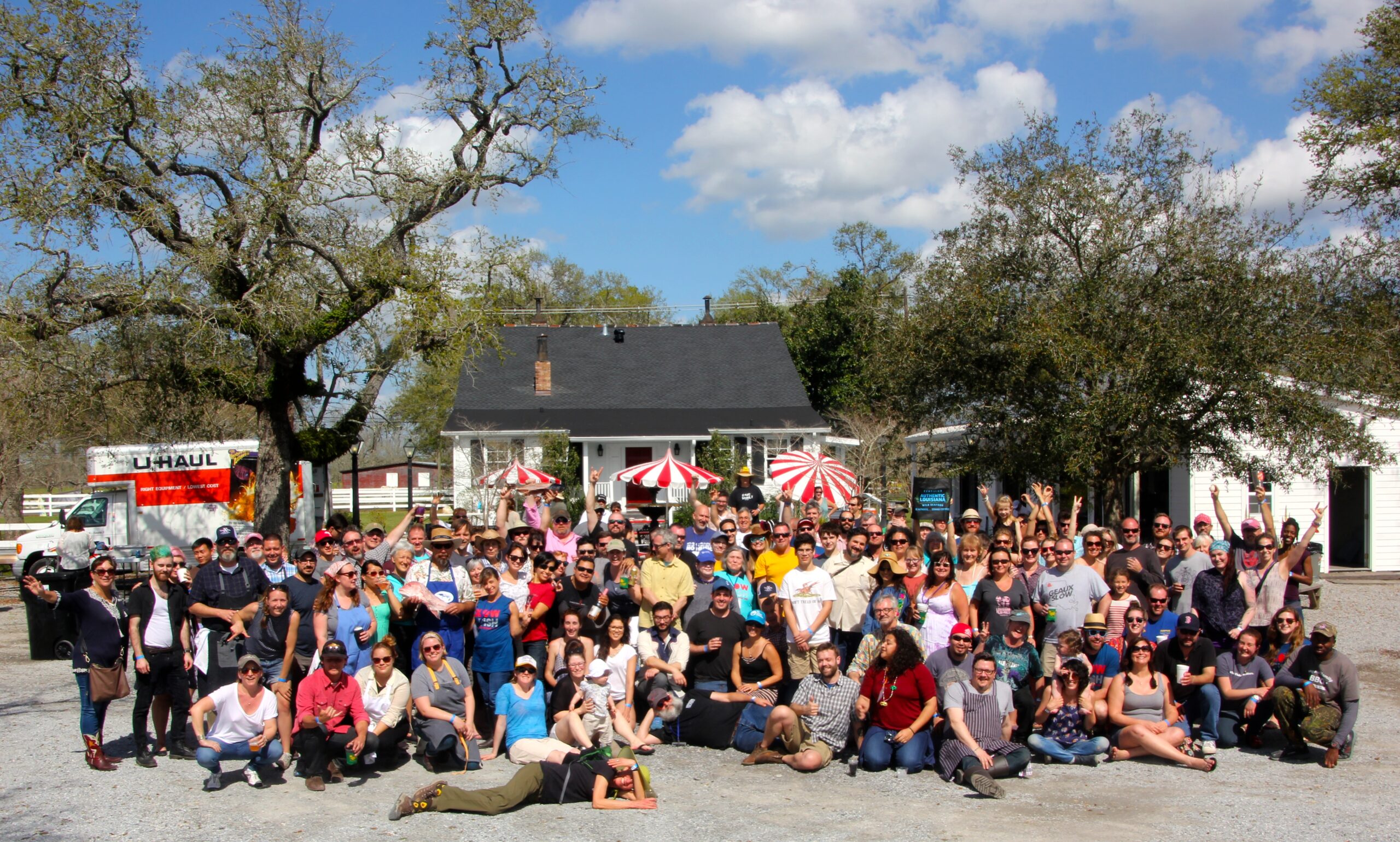
Top photo: Slow Fish 2016 in New Orleans, during the boucherie at Docville Farm. Credit: Eric Buchanan.
All Blog Posts

A College Student Walks into a Webinar…

  • November 23, 2017October 20, 2021
  • by Colles Stowell
Share it!
Share

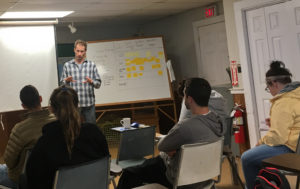
One Fish Foundation Intern Jennifer Halstead is a senior at the University of New Hampshire. She has been instrumental with several One Fish projects, including the coordination of the recent Webinar co-hosted by One Fish Foundation and Local Catch, Fisheries Management: Best Available Science May Not Be Good Enough. Below is her take on the Webinar from the perspective of a college student, and why we should include college students in these discussions more frequently. And she’s right. Why wouldn’t we want to empower future leading researchers, fishermen and policy makers with a broader perspective and a voice?


By Jennifer Halstead

I had to drive to a neighboring town to run some errands immediately following the webinar, and I had a million thoughts swimming around in my head. So, I did what any millennial would do, and I used my smart phone to take notes for me, setting it to record as I drove.

Listening to the recording later, I realized some critical points. First, I was extremely fired up and passionate about the issues, and even a little angry about some of them. Second, I recognized through this webinar that the scientists, fishermen, and others taking part in the conversation represented a broad range of backgrounds and viewpoints, but were united on one theme: that the current fisheries management model doesn’t work for this extremely dynamic, and rapidly changing ecosystem.

Being a college student in marine sciences is exhilarating and intimidating. We’re presented with myriad challenges and questions, and rarely presented with solutions. We’re kind of left in limbo: We have a strong knowledge base, but a wide-open area to apply it, and we’re walking into a field of open-ended questions that have been asked for decades.

The curriculum of marine sciences now has a large portion of time allocated to climate change-related topics and challenges. As students, we’re presented with climate related disasters in all our classes. Not only is this depressing, but the lack of tangible solutions can take away our hope for our future in minutes. Being able to be part of an active discussion about how to change that as part of this Webinar put the last four years of me hearing about these unsolvable problems into a different perspective. I know we need change, because that’s what I’ve paid tuition to learn. An entirely different story starts when I hear other people talking about change, however. Suddenly, there’s a light ahead, collaboration forms, and solutions start to appear to all of those previously unsolvable problems.

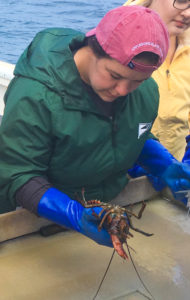
Determining lobster sex aboard the F/V Vivian Mae this summer.

I was emboldened by hearing fishermen and scientists talk about how different, fast-changing dynamics throughout the Gulf of Maine necessitate a different data approach: one that is more localized. Hearing them talk about a solution motivated me to keep moving forward and not feel as overwhelmed by the issues. We as college students will listen and take heart when authoritative voices such as fishermen, council members and scientists uniformly agree on the need for change and discuss possible solutions. Hopefully, these credible voices will resonate with the larger community.

To move forward, we need to analyze the current model and determine what the problems are that are highest in priority to address. In addition to this, we need to keep the conversation going, and keep working toward common goals.

The current data collection model is a One-Size-Fits-All model, but the consensus of the discussion was that one size does not fit all. Therefore, the current model is not doing its job and needs to change. The Gulf of Maine is an extremely dynamic region, with highly productive areas, multiple spawning areas and freshwater inputs. Unfortunately, it is feeling climate change impacts at an alarming rate. In a system with this many moving parts, we should not be employing a model that is rigid. Instead of adjusting this model, however, it may be easier to start with new ideas. Relying on data from random trawl surveys that occurred three years ago is not a solid foundation to build a management plan on.

So, let’s change the way we collect data. Fishermen are out on the water every day in different areas, looking for different target species and making different observations. Why not make their observations available for scientists to use, creating an up-to-date, usable set of data? Up-to-date data means that the moving and fluctuating parts of the system can be more accurately accounted for, and we can develop more accurate and successful management plans more quickly. Collaboration between fishermen and scientists when it comes to collection of data and observations is important. It helps refine the current model and bring the sides together while doing it.

A large part of creating change and addressing these problems exists in the need to have active discussions. Everyone sitting at the table, simply discussing the challenges, could lead to change. Different perspectives bring different ideas, and then solutions can start to form. College students taking part in such discussions and offering their perspectives could be integral to the formation of such solutions. That involvement would also likely encourage them (as it has with me) to dive deeper into the issues and help find solutions, rather than be overwhelmed with fear and gloom.

Along with this, it is imperative that all stakeholders be involved in these discussions. If we want to use data that fishermen collect, for example, we need to make sure they’re on board with the idea, and we need to see how much they’re willing to do to create a better system. If too much is put on the fishermen’s plates, or on the plates of any other group for that matter, the new method will work as effectively as the current one. It won’t.


Jennifer Halstead is a senior at University of New Hampshire studying marine biology, and intern for One Fish Foundation.

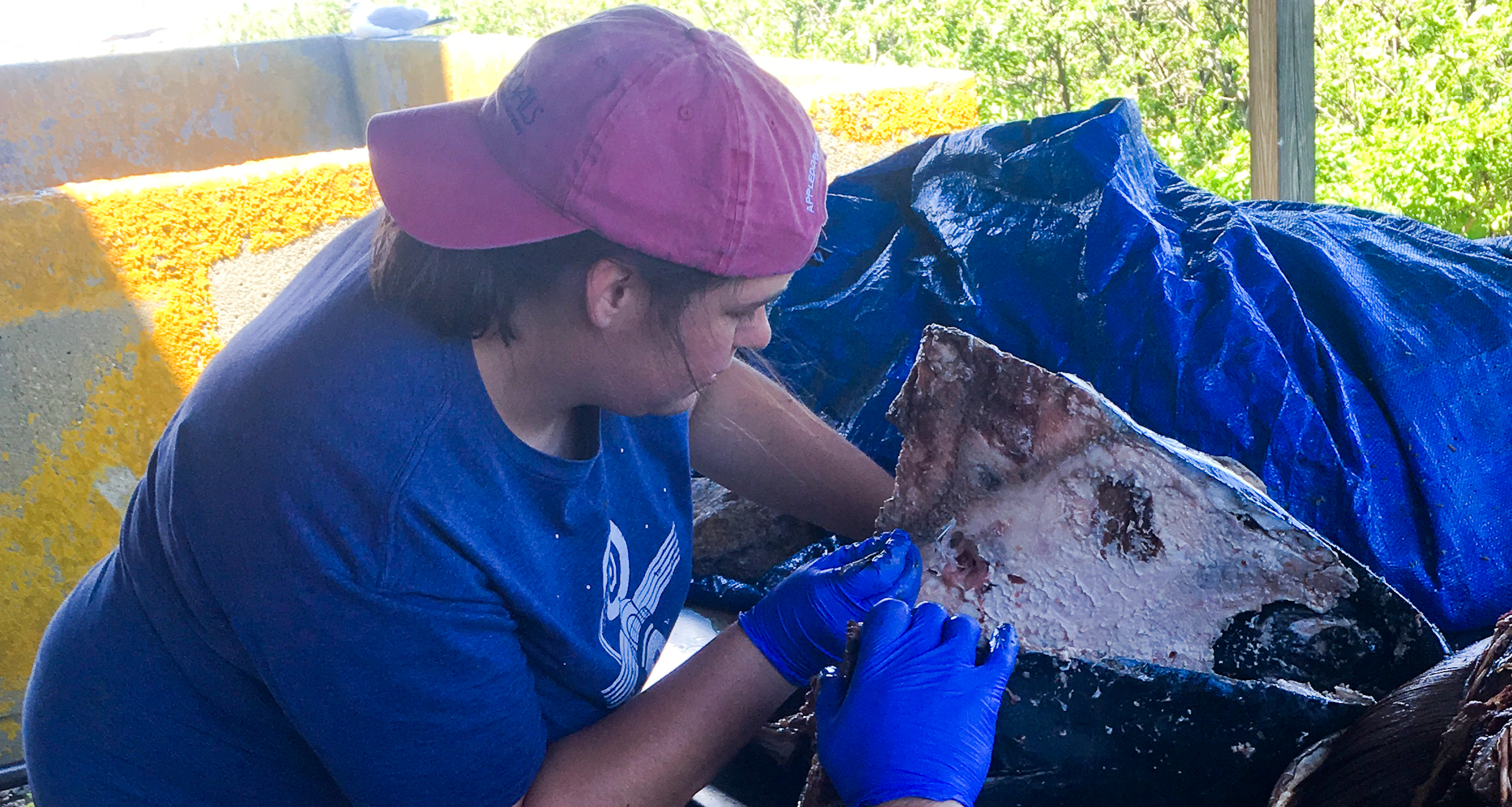
Top Photo: Jennifer extracts the otoliths (ear bones) of a bluefin tuna to determine its age.

All Blog Posts

Fishing, Passion and Bad Music

  • June 20, 2017October 20, 2021
  • by Colles Stowell
Share it!
Share

I don’t know if it was Queensryche, Dokken or Whitesnake. Whatever flavor of 80’s hair band, the music was pulverizing my ear drums. As they pulsed laterally, the fluid in my ears splashed up and down every time the bow of the boat jumped six feet and plunged back down on the back side of a wave, punctuated by the incessant hammering of the kick drum in the background.

What were we doing?

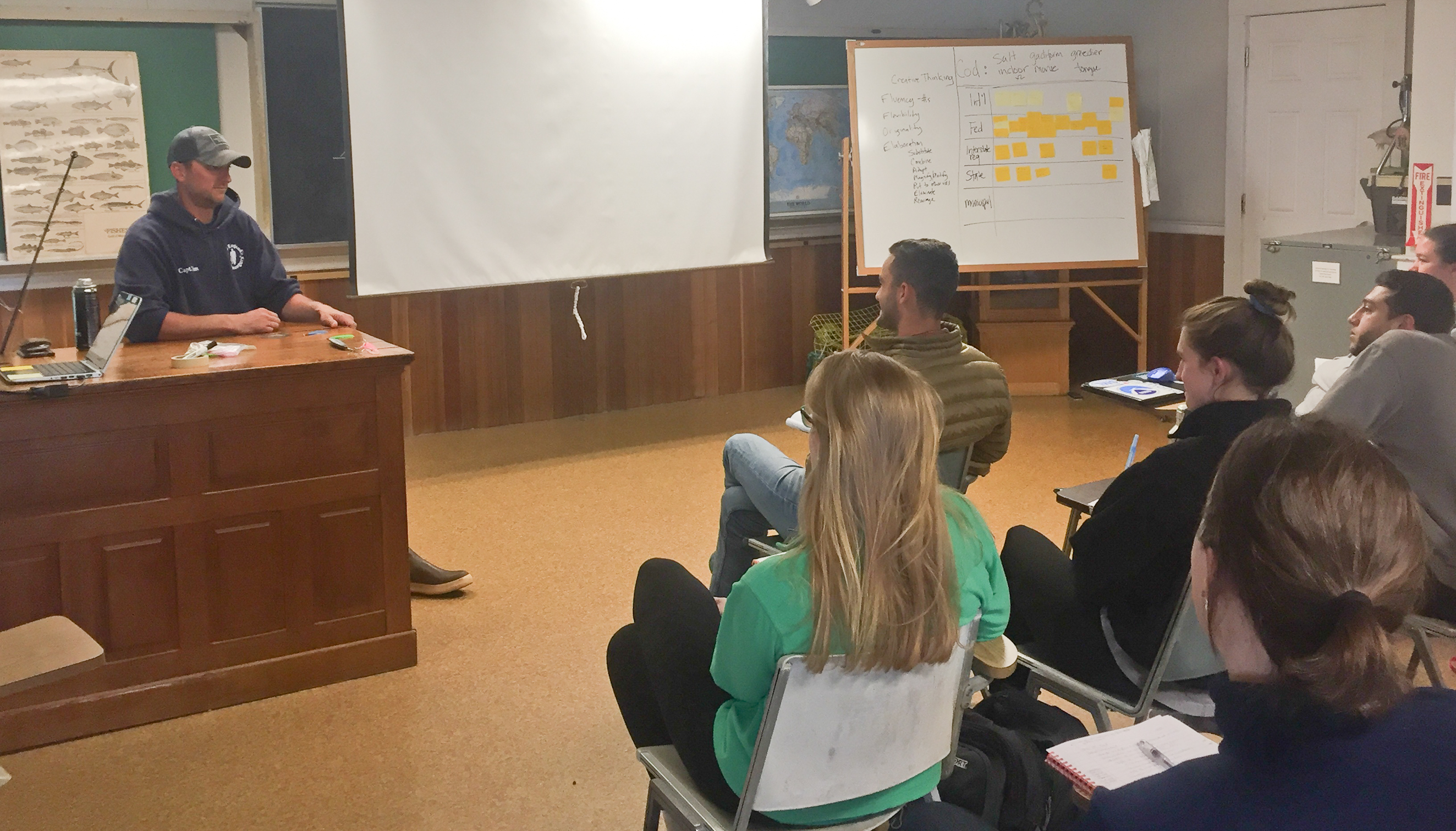
I was heading out to the Shoals Marine Laboratory on Appledore Island off the coast of Portsmouth, N.H. to talk with some students from the University of New Hampshire, Cornell University and Carleton College about regional, domestic and global seafood markets, consumer choices, market influences and climate change impacts. The students were participating in a two-week intensive sustainable fisheries course coordinated by N.H. Seagrant. I was riding with Capt. Tim Rider, whose fondness for that particular XM station was amplified by the conditions.

June in New England. Heading to the lab in wind-driven rain, but fortunately out of the six-foot waves … and the music. Photo: Tim Rider

A fisherman’s tale

If you’ve ever attended one of the KNOW FISH dinners, you know Tim is very passionate about what he does: bucking the trend toward high-bycatch harvesting by fishing for groundfish in up to 500 feet of water 80 miles offshore with rod and reel. And he’s not shy about sharing his feelings on current management policies, consolidation of the fleet (forcing small-scale fishermen out) and the need for change.

Perhaps it is this passion and willingness to speak out that has alternately cast him as either a pioneer striving to do the right thing against many odds or a loud-mouthed maverick who refuses to get in line. Perhaps that’s why he’s been lauded by restaurant chefs and consumers for the quality of his product, and vilified – even threatened – by others in the industry who don’t share his views.

That passion, along with a lifelong obsession of fishing and the experiences he’s had trying to survive make for a compelling, if a bit incessant, narrative. He keeps on talking, he says, because he has a lot to say.

The unsuspecting students at the Shoals Marine Laboratory heard stories of being shut down from speaking in New England Fisheries Management Council meetings, excessive and unfounded accusations from law enforcement, and confrontations with other fishermen who don’t like him rocking the boat.

“Bait,” or the tools of the trade.

Struggling against poor policy

He provides a firsthand account of how the current management system has pushed him to the brink of bankruptcy multiple times, even as he’s trying to support his wife and young son and his crew. He talks about the money trail that has played a significant role in dictating fisheries management policy, including controversial catch shares.

Set up to allow fishermen to self-regulate by creating a marketplace for access to different fisheries, catch shares have spawned a money-driven resource grab in which access is bought and sold like stocks. The result is now an unfair system that too often privatizes the resource at the expense of small-scale fishermen who don’t have the money to buy quota or to compete in the limited fisheries allotted to fishermen with no specific quota.

Tim has joined a sector, or group of fishermen with quota, that is primarily “geared” toward fishermen using hooks rather than nets. The hope is to work collectively to promote low-impact fishing and perhaps gain a stronger voice during council meetings.

Reviewing new and old fishing gear with Dr. Nathan Hamilton, professor of archaeology at Univ. of Southern Maine. Photo: Owen Nichols

And for as many stories Tim told, the students on Appledore Island were engaged. They asked pertinent and insightful questions. They wanted to know about possible management solutions. They even laughed at some of his jokes.

Most importantly, they took advantage of a special opportunity to speak with a fisherman who gives his blood and sweat 12 days out of 14 (sometimes more than that), leaving the dock at 1 a.m. and returning at 9 p.m. because he believes in what he’s doing.

Talking about how consumer habit driven by price and convenience have opened the flood gates to cheap seafood imports. Photo: Owen Nichols

Changing habits

The students also asked smart questions about the big picture of local, national and global seafood dynamics. While Tim pointed to access and quota as two of the biggest issues with fisheries here, I added habit: Policy maker habit in keeping a faulty, skewed system in play; and fishermen and operator habit to own the most quota and to resist change for obvious reasons.

And worse still: Consumer habit. One of the most significant drivers for the amount of imported seafood eaten in the U.S. is consumer choices, dictated largely by price and convenience. We discussed how getting smarter about seafood systems and how to get closer to the domestic source (local fishermen) is crucial to changing that dynamic.

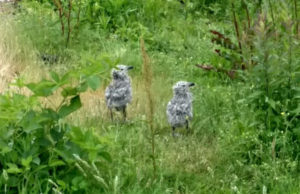
As a annoying as the adults can be, seagull chicks register high on the cute scale. At least we didn’t get attacked by the mamma. Photo: Tim Rider

We also talked about climate change and its impact on everything from native and invasive species to ocean acidification and changing currents. We talked about the need to keep diving into these issues and pursue careers in marine science, climatology, ecology, etc. to help solve some of the complex challenges climate change presents.

Students thanked us for coming and talked about some of the projects they were working on and their planned study focus in college.

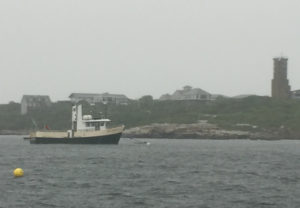
Departure, before the fog really set in.

On the ride home, as the grey skies grew darker into dusk and the bow bobbed to the pounding beat of blaring rap music, Tim and I remembered why we took a full day off to plow through some fairly gnarly weather and talk to a handful of college students from across the northeast.


Top photo: Capt. Tim Rider telling fish tales.

Recent Posts

  • Hurricane Ida wreaks havoc on Louisiana’s seafood industry
  • EPA Should Use Clean Water Act To Kill Zombie Mine
  • Slow Fish 2021: Relationship Matters
  • Faith, Façades, and Futility
  • Pebble Permit Paused: Politics at Play

Archives

  • September 2021
  • August 2021
  • April 2021
  • December 2020
  • August 2020
  • June 2020
  • February 2020
  • December 2019
  • November 2019
  • October 2019
  • July 2019
  • May 2019
  • April 2019
  • March 2019
  • January 2019
  • December 2018
  • November 2018
  • June 2018
  • May 2018
  • March 2018
  • February 2018
  • January 2018
  • December 2017
  • November 2017
  • October 2017
  • September 2017
  • August 2017
  • July 2017
  • June 2017
  • May 2017
  • April 2017
  • March 2017
  • January 2017
  • December 2016
  • November 2016
  • October 2016
  • September 2016
  • August 2016
  • July 2016
  • June 2016
  • May 2016
  • April 2016
  • March 2016
  • February 2016
  • January 2016
  • December 2015
  • November 2015
  • October 2015
  • September 2015
  • July 2015
  • June 2015
  • May 2015
  • April 2015
  • March 2015
  • February 2015
  • January 2015
Theme by Colorlib Powered by WordPress