Skip to content
One Fish Foundation
  • Blog
    • Aquaculture
    • Education
    • Environment
    • Policy
    • Wild Harvest
    • Fish Tales
  • About
    • About One Fish
    • About Colles Stowell
  • Education
    • Elementary School
    • Middle School
    • High School
  • KNOW FISH Dinners®
  • Resources
    • One Fish Podcast
    • One Fish Foundation in the news
    • The 7 C’s of Sustainable Seafood
    • Newsletter Archive
    • Recipes
      • Skate with Capers and Butter — Chef Rizwan Ahmed
      • Grandma Davis’ Fish Chowder — Jane Almeida
      • Ginger Garlic Tamari Scallops — Colles Stowell
      • Fish Stock — Evan Mallett
      • Mussels San Remo — Chef Rob Martin
      • Salted Pollock Croquettes – Chef Mark Segal
  • Connect
    • Contact OneFish
    • Social
      • Instagram
      • Facebook
      • Twitter
All Blog Posts

What’s in This Fish?

  • October 3, 2016October 20, 2021
  • by Colles Stowell
Share it!
Share

I was sitting at a quiet sushi bar in Wilmington, N.C. at lunchtime a few years ago when the owner asked me a question that would have a lasting impact.

“Want to try some special tuna? It’s called white tuna.” This was several years ago, and I hadn’t yet delved into the world of seafood awareness. But I knew just enough to be sure there was no such species swimming in the ocean. When I asked exactly what species it was, he said it was escolar. “It’s just as delicious as tuna, but much cheaper.”

My skepticism gave way to curiosity, which gave way to the first lasting impact of gastrointestinal distress. Only later did I find out escolar has proteins that can wreak havoc on your bowels.

Deceptive marketing is nothing new. But I had to ask why someone would take that approach knowing the downstream impact. I wondered how someone could get away with that. Eventually the ramifications would catch up to them, right?

Ecolabeling’s initial steps

This was one of the seminal episodes that started me on my path. A year later, I wrote a blog on eco-labeling, suggesting it was a new tool to provide necessary information to consumers, like where and how the seafood was caught. Then I dug a bit deeper to find that while the practice was great in principal, there were issues.

Some leading labels ran into problems, such as certifying fisheries that weren’t really sustainable (see North Atlantic longline swordfish and its huge bycatch), or allowing fisheries to hire the “third-party” certifiers (the fox minding the henhouse).

I have written and spoken about seafood fraud several times since. It is a key classroom topic exemplifying the need to be smarter about the seafood we eat. We talk about the implications when someone substitutes cheaper farmed salmon for wild-caught at a restaurant or lower-priced pollock for cod at a seafood store.
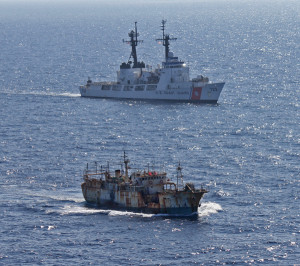
iuu_coastguard
Illegal, unreported and unregulated fishing clouds the supply chain.

Trailing the pack

One outcome from the most recent seafood fraud report by ocean conservancy Oceana is that while the U.S. is a leader in stock management and preservation, its oversight of the supply chain compared to the European Union and other countries is wanting.

This is ironic. The current administration has made combating illegal, unreported and unregulated (IUU) fishing a priority. Global IUU – which covers everything from human trafficking to mislabeling – costs the seafood industry up to $23 billion a year, according to the United Nations Food and Agriculture Organization. There is a new rule under consideration in the U.S. that would require labeling on 13 key species before they are imported into the country.

But the current administration also embraces the Trans Pacific Partnership, a trade deal that would essentially encourage larger exports of U.S. caught seafood and larger imports of cheaper, less regulated seafood. Many in the U.S. industry fear such a deal would flood the market with lower quality seafood that may not even be correctly labeled. Worse, language in the deal would render the U.S. virtually helpless to prevent that product from entering the market.

The Oceana report cites the European Union’s labeling standard as a potential role model for the U.S. According to Kimberly Warner, one of the report’s authors, the EU has reduced its seafood mislabeling to about 9% of the seafood sold there (excluding restaurants). This compares with 19% for the global average and a whopping 28% for the U.S.dna-sampling-2

“When we found fraud at 18% at the retail level in stores in Boston (in 2014), people were cheering,” said Warner. “But people in the EU were aghast. The question becomes, what level of mislabeling are you comfortable with?”

Indeed.

I’ve said before that increased transparency and labeling standards will only work if US fishermen have a say in developing the process and they aren’t completely saddled with the cost. Otherwise, any such proposal will fail before it gets started.

The National Fisheries Institute says better enforcement of the laws on the books, not increased labeling standards is the answer. But Warner counters that domestic laws leave a lot of room for the type of mislabeling found in the report. “You need strong laws to enforce,” she said. Vague or voluntary labeling (as has been discussed with genetically engineered salmon) don’t help.

Consumers want more info

Oceana released a poll yesterday that says 83% of Americans support new traceability requirements, including proper labeling of the seafood and where and how it was caught (or farmed). Of the 1,000 respondents, 76% said they would pay more to know their seafood was caught legally and labeled correctly and honestly.

Consumer desire is there. But we need the political will to make it happen. The EU program relies mostly on government subsidies as well as some infrastructure costs born by seafood processors. The EU seafood processors and traders association said in 2011 that implementing the new rules governing labeling and other IUU measures did not have long-term impacts on their businesses. And several links in the supply chain now view labeling as a competitive advantage.
catfish-mislabel
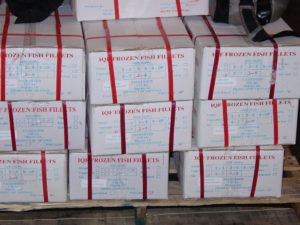
Imported catfish marked as sole. This shipment was seized before entering U.S. markets.

A handful of small operations have cropped up in the U.S. aimed at digitizing supply chain records to elevate transparency. That’s a start. But, we need to bring all stakeholders to the table and make transparency and adequate labeling happen on a national scale. Otherwise, it’s just a process of randomly putting out small fires.

Our best defense is information. A national, verifiable schema for tracing the seafood from boat to retailer, and developed with fishermen’s input, would be helpful and widely embraced by consumers.


Photo credits: NOAA
All Blog Posts

What’s In Your Imported Farm-Raised Shrimp?

  • May 3, 2016October 20, 2021
  • by Colles Stowell
Share it!
Share

A recent Food and Drug Administration alert about farmed shrimp from Asia raises health questions about the food system that delivers imported shrimp to the U.S. and the rest of the world. The notice also serves as a warning to consumers to know more about where the seafood comes from and how it was grown or harvested.

Forty-five out of 138 shipments (32%) from the Malaysian Peninsula sampled between October 1, 2014, through September 30, 2015 were found to have carcinogenic substances the FDA doesn’t want in our food. So the FDA has given inspectors the authority to reject all shrimp shipments from the Malaysian peninsula, save for a few exceptions, without a physical inspection.

What did they find? Antibiotics called nitrofurans and chloramphenicol, both of which have proved harmful to human health with prolonged exposure. Additionally, prolonged use can create antibiotic-resistant bacteria that can make matters worse.

So carcinogenic antibiotics were found in aquaculture shrimp from Asia.

Shock. Surprise.

The question is why. To better understand, let’s take a quick look at how shrimp farming typically works, and why it should give anyone pause when at a grocery store, seafood market or restaurant.

Big business, big risks

Shrimp farming is a huge business. Some estimates have global farmed shrimp at 3.7 million metric tons in 2014, worth between $12 billion and $15 billion dollars. The drive to grow profits as well as shrimp means increasing production.

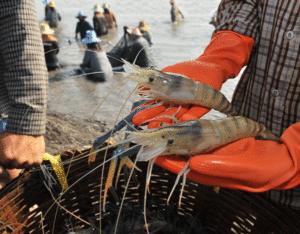
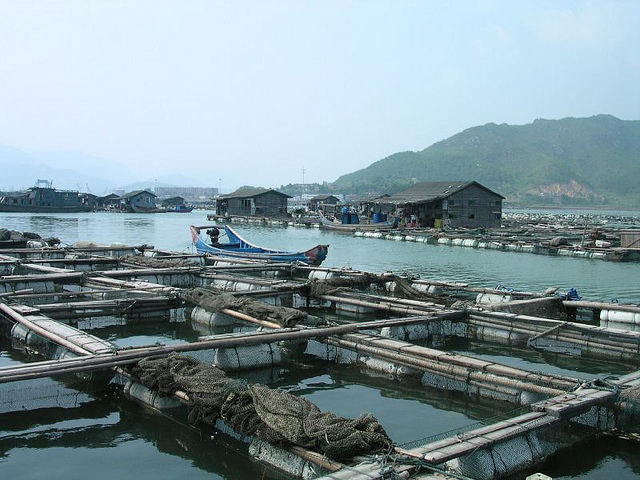
Shrimp farming often starts by destroying and removing ecologically critical mangrove ecosystems (nurseries for many species) to create retention ponds where the shrimp will grow. These ponds are usually fed with seawater that passes through the ponds and often re-enters the ocean … carrying much of the waste filtered through ponds carrying thousands of pounds of shrimp and their feces. Many operations claim they filter the water before it enters the ocean, but…

But because shrimp are the number one consumed seafood around the world, many operations in Third World countries in Central and South America and Asia jam as many shrimp into these ponds as possible. Without proper filtration, those shrimp are highly susceptible to disease, because, you know, they’re swimming in their own poop.

Bad medicine

For the past decade or so, many operators have found it easier to use antibiotics and other potentially harmful materials to fend off the bacteria that could cause disease. Those antibiotics don’t just disappear overnight. They don’t always fend off disease either, resulting in huge losses. Just witness recent cases of “early mortality syndrome (EMS)” in Asia.asianshrimpfarm_405x250

EMS is a devastating disease borne of a microorganism found in estuaries around the world, and showing up in overcrowded ponds that have poor filtration. The bacteria shut down the shrimp’s digestive system, killing the shrimp. Its infection rate is fast and efficient, meaning it can quickly kill all of the shrimp in a pond. EMS has mostly been found in Asia, but has also cropped up in Mexico.

To try and avoid catastrophic losses, growers choose from a menu of preventative measures, such as chlorine, superphosphates and ozone to disinfect the water, probiotics to fight off the bad bacteria and stabilize the water quality and antibiotics to treat illness. Aside from the potential threats to human health, another issue with these approaches appears to be that they may actually make the ponds more susceptible to infection, according to some scientists.

None of this is good for the shrimp or consumers.

Market impact

The Global Aquaculture Alliance estimates EMS causes $1 billion in losses annually. This explains why shrimp farmers are willing to do most anything to bring “healthy” shrimp to market … including using antibiotics the US FDA deems carcinogenic.

Here are some problems with this food system:

  • 90% of the seafood eaten in the U.S. is imported;
  • 50% of the seafood consumed in the U.S. is farm raised;
  • Only 5% of the seafood consumed in the U.S. is farm raised domestically;
  • 90% of the world’s shrimp exports come from Asia and India;
  • 55% of global shrimp production is aquaculture;
  • The U.S. is far more strict about safe aquaculture practices than most of the world;
  • The FDA is understaffed for inspectors, particularly those inspecting incoming seafood.

Source: UN Food and Agriculture Organization 2014 Status of the Stocks

This all means that most of the farmed shrimp consumed in this country was farm-raised in Asia, where there is a greater chance that it was treated with chemicals deemed unsafe to consume by the FDA. And there aren’t enough inspectors checking all of the imports.

How could this situation get much worse? If the latest trade deal, the Trans-Pacific Partnership, is approved in Congress, the few inspectors checking U.S. imports may have their hands tied. The pact allows signatories like Thailand, Viet Nam and yes, Malaysia to sue the U.S. claiming that applying more strict U.S. health codes to imported seafood constitutes unfair trade practices. The result could be sanctions, fines and an open door to products tainted with carcinogenic substances.

Get smart

In the classroom the message always comes back to awareness. I encourage students to question where their seafood comes from. I considered it a shrimp-diseasemoral victory a few months ago when a 6th grader told the class she stopped her mom from ordering shrimp because it was from Thailand.
It’s that kind of awareness that helps students, their parents and anyone else understand that shrimp coming from Asia, or anywhere outside the U.S. is a good thing to avoid.

So you may want to pause before ordering the shrimp cocktail. Try to find the country of origin. If the shrimp isn’t from the U.S., you may want to consider another option. Because when the FDA sends up a red flag like this, it’s a good idea to take note.


Photo credits in order: Eco News Network, Food Safety News, U.S. Bureau of Labor Statistics

All Blog Posts

New Trade Deal Could Handcuff Local Seafood Systems

  • June 16, 2015October 20, 2021
  • by Colles Stowell
Share it!
Share

Tell me if this is your definition of democracy: Ramming through a piece of legislation that Congress is not allowed to amend, that the public is not allowed to review and comment on, and that would ultimately surrender control over local seafood resources to foreign companies, while paving the way for cheaper, less regulated product to flood domestic markets.

Sound farfetched?

Read more “New Trade Deal Could Handcuff Local Seafood Systems” →

Recent Posts

  • Hurricane Ida wreaks havoc on Louisiana’s seafood industry
  • EPA Should Use Clean Water Act To Kill Zombie Mine
  • Slow Fish 2021: Relationship Matters
  • Faith, Façades, and Futility
  • Pebble Permit Paused: Politics at Play

Archives

  • September 2021
  • August 2021
  • April 2021
  • December 2020
  • August 2020
  • June 2020
  • February 2020
  • December 2019
  • November 2019
  • October 2019
  • July 2019
  • May 2019
  • April 2019
  • March 2019
  • January 2019
  • December 2018
  • November 2018
  • June 2018
  • May 2018
  • March 2018
  • February 2018
  • January 2018
  • December 2017
  • November 2017
  • October 2017
  • September 2017
  • August 2017
  • July 2017
  • June 2017
  • May 2017
  • April 2017
  • March 2017
  • January 2017
  • December 2016
  • November 2016
  • October 2016
  • September 2016
  • August 2016
  • July 2016
  • June 2016
  • May 2016
  • April 2016
  • March 2016
  • February 2016
  • January 2016
  • December 2015
  • November 2015
  • October 2015
  • September 2015
  • July 2015
  • June 2015
  • May 2015
  • April 2015
  • March 2015
  • February 2015
  • January 2015
Theme by Colorlib Powered by WordPress