Skip to content
One Fish Foundation
  • Blog
    • Aquaculture
    • Education
    • Environment
    • Policy
    • Wild Harvest
    • Fish Tales
  • About
    • About One Fish
    • About Colles Stowell
  • Education
    • Elementary School
    • Middle School
    • High School
  • KNOW FISH Dinners®
  • Resources
    • One Fish Podcast
    • One Fish Foundation in the news
    • The 7 C’s of Sustainable Seafood
    • Newsletter Archive
    • Recipes
      • Skate with Capers and Butter — Chef Rizwan Ahmed
      • Grandma Davis’ Fish Chowder — Jane Almeida
      • Ginger Garlic Tamari Scallops — Colles Stowell
      • Fish Stock — Evan Mallett
      • Mussels San Remo — Chef Rob Martin
      • Salted Pollock Croquettes – Chef Mark Segal
  • Connect
    • Contact OneFish
    • Social
      • Instagram
      • Facebook
      • Twitter
All Blog Posts

EPA Should Use Clean Water Act To Kill Zombie…

  • August 5, 2021October 19, 2021
  • by Colles Stowell
Share it!
Share

More than 65 million sockeye salmon returned to Bristol Bay, Alaska this year, setting an all-time record and proving, yet again, that healthy habitat and sound management lead to productive fisheries. Home to the world’s largest wild sockeye run, the watershed provides the cold, clear salmon-spawning waters that ultimately support more than 16,000 jobs and a $2.2 billion annual economic boost.

Perhaps recognizing the ecological and economic value Bristol Bay provides to the state, the US Army Corps of Engineers denied the federal permit request for the proposed Pebble Mine last November.

So why are we still talking about it?

In a nutshell, greed. Geologists for Canadian-based Northern Dynasty Minerals, which owns the rights to the mine site at the headwaters of two of the bay’s most productive river systems, believe the area is home to a massive ore deposit of copper, gold and other precious metals. The company and its investors see huge profits.

Everyone else, including a majority of folks in the state, sees a humongous threat to the very lifeblood of Bristol Bay and to the state.

Bumpy ride

I’ve talked to many folks directly connected to the bay during the past five years: commercial fish harvesters, recreational fishing lodge owners, processors, economic development directors, scientists, and indigenous leaders whose communities depend on the salmon for their lives. They are determined and fiercely committed to defending the natural resource.

And they’re tired of the seemingly endless battle to safeguard their livelihoods from the zombie mine that won’t die. Standing up to foreign, well funded mining interests for close to two decades has been an emotional, psychological, and at times physical roller coaster.

The long, pitched battle appeared near an end in 2014 when the Obama Administration Environmental Protection Agency released proposed protections that would block certain mining activities in Bristol Bay’s headwaters. Unfortunately, the EPA wasn’t able to finalize that determination due to a legal challenge from the mine’s owners.

The tug of war over this priceless natural resource continued, as the US Army Corps of Engineers appeared close to approving the federal wetlands permit last August. One tweet from Donald Trump, Jr. and a series of scathing under-cover videos showing Pebble’s owners bragging about political strong-arming and lying about the mine’s scale, and the momentum turned on a dime. Suddenly the mine’s inevitability seemed very tenuous. Optimism for Bristol Bay’s future grew, and the US Army Corps denied the permit in November.
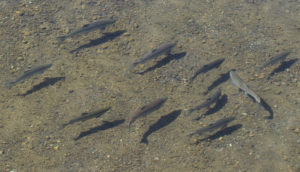
These sockeye are happily swimming in 3-4 feet of gin clear water below Brooks Falls near Naknek and Brooks lakes at the headwaters of the Naknek River.

Closing the door

To be sure, the mine’s owners have vowed to keep fighting, and have filed an appeal with the US Army Corps of Engineers requesting a reconsideration of the permit denial.

That’s why everyone should take notice, regardless of geography. This isn’t a NIMBY issue. What happens in Bristol Bay sends tremors throughout the continental US. If a giant mine can be forced upon people who don’t want it in an ecologically and economically crucial watershed in Alaska, what would stop something similar from going in an equally sensitive and important area elsewhere?

You might ask what could go wrong if Pebble were to be built. This week marks the seven-year anniversary of when the Mt. Polley mine in British Columbia failed, dumping 6.6 billion gallons of toxic waste in the Fraser River watershed, once home to millions of returning wild salmon. The Pebble Mine would produce 10.2 billion tons of toxic waste, which if unleashed, could permanently destroy the Bristol Bay salmon fishery.

Several politicians have changed their tune, now voicing support for Bristol Bay and the effort to compel EPA to outright stop the Pebble project via the Clean Water Act. They’ve done so as the people of Bristol Bay have collectively asked the Biden administration to finish the job started in 2014 of putting Clean Water Act protections in place immediately. In fact, August 8 is the one-year anniversary of candidate Biden’s pledge to protect the bay.

Invoking the Clean Water Act is the most direct and immediate path toward ensuring robust sockeye returns. It’s an important first step that should happen soon to ensure the process can be fully completed … prior to the next presidential election when yet another political momentum shift could again change the dynamic.

Following an EPA Clean Water Act determination, the next step to permanently protect Bristol Bay would be a Congressional declaration that safeguards the entire watershed from any harmful mining projects in perpetuity.

U.S. Senator Lisa Murkowski is exploring what that potential legislative solution could look like, meeting with local Bristol Bay leaders and stakeholders earlier this summer.

Again, Step 1 is to call on the EPA to do its job and protect Bristol Bay and its priceless natural resources.

To learn more or get involved, check out the resources below.

Resources

Stop Pebble Mine Now: Great resource site with direct action links, like telling EPA to do its job.

Brief video from #vetoPebbleMine featuring dear friend and colleague Capt. Kat Carscallen explaining what’s at stake.

Video produced by the United Tribes of Bristol Bay.

Follow these links to hear One Fish Foundation interviews with some of the folks from around Bristol Bay:

  • Kat Carscallen, commercial fisherwoman and executive director of Commercial Fishermen for Bristol Bay: Video on Youtube. Audio-only download.
  • Nanci Morris Lyon, co-owner, Bear Trail Lodge in King Salmon. She’s been fighting Pebble since about the time her daughter, Rylie, now a lodge guide, was born.  Video on Youtube.  Audio-only download.
  • Melanie Brown, community organizer with SalmonState and indigenous commercial fish harvester out of Naknek, AK.  Video on YouTube. Audio-only download.
  • Steve Kurian, captain of the F/V Ava Jane driftnetter fishing out of Naknek and co-owner of Wild for Salmon, a retail and wholesale operation based in Pa.   Video on Youtube.  Audio-only download.
  • Norm Van Vactor, CEO of Bristol Bay Economic Development Corporation and long time Bristol Bay resident, fisherman, and processor.  Video on YouTube. Audio-only download.
  • Gayla Hoseth, director of natural resources with Bristol Bay Native Association, Second Chief of the Curyung Tribal Council, and subsistence fish harvester.  Video on YouTube. Audio-only download.

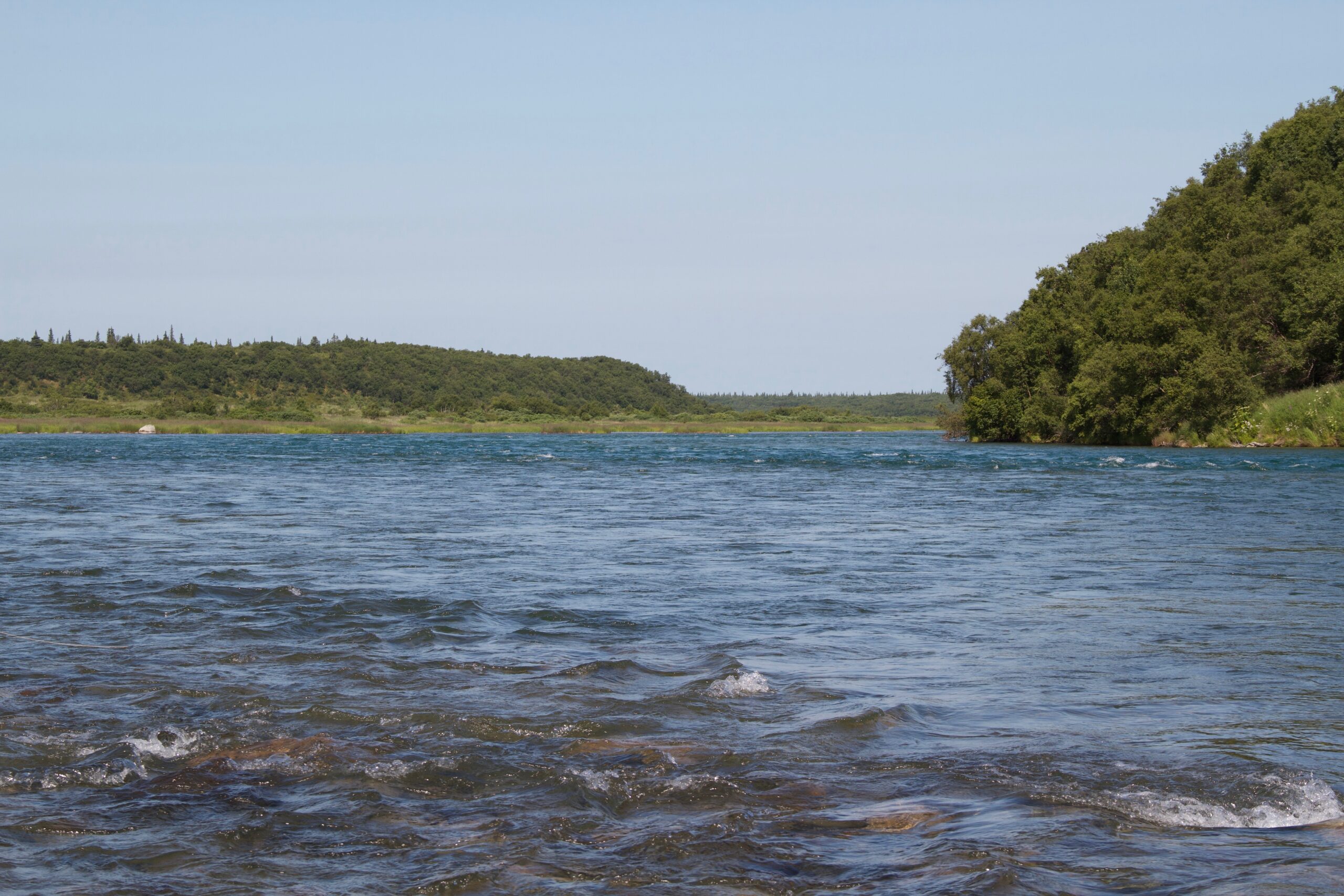
Top Photo: Upper Naknek River, where I watched a steady parade of chrome-colored, pre-spawn sockeye pushing their way upriver in 2019.
All Blog Posts

Climate Change Could Threaten Several Northeast Fisheries New Study…

  • February 6, 2016October 20, 2021
  • by Colles Stowell
Share it!
Share

Go ask Long Island lobstermen … if you can find any … what they think about climate change. Trouble is, there aren’t many left because there aren’t many lobsters left in Long Island Sound. Same thing with Atlantic cod fishermen. There aren’t nearly as many boats targeting cod compared to 25 years ago because there are fewer fish.

We can blame climate change to a degree. No, it would be shortsighted to blame all fisheries depletions on warming waters. Myriad factors including fishing pressure can conspire to harm stock health. But a new study from NOAA underscores a concern many scientists and fishermen share: ever warming waters will continue to dramatically impact fisheries.

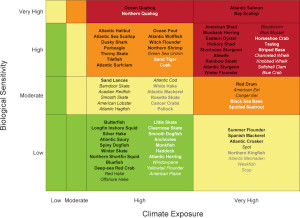
Published in the journal PLOS ONE, the study relies on a new methodology to look at how 82 species in the Northeast region have been and will be affected by climate change. Specifically, the study measures which species will be most vulnerable to climate change effects, including ocean acidification, as well as which species’ migratory patterns will most likely change because of ocean warming. In a nutshell, species that live along the ocean floor such as cod, mussels and lobsters, and those like salmon and sturgeon that migrate between salt and fresh water are most at risk.

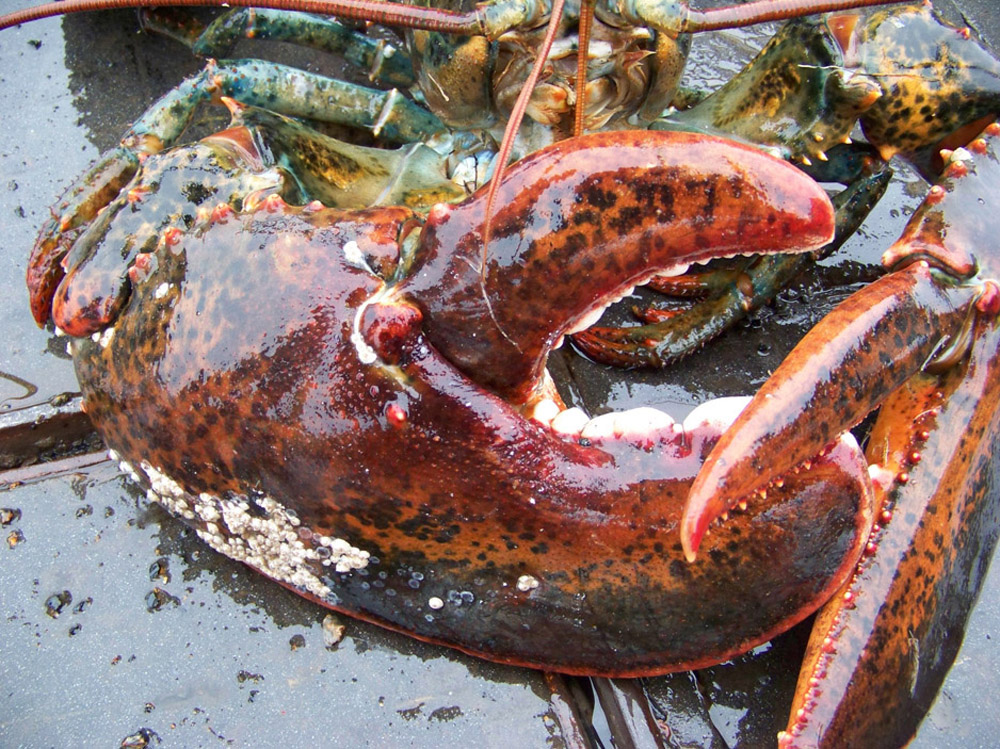
Some of the species’ responses we already know. As the Gulf of Maine warms faster than 99% of all ocean climates on earth (at a rate of a half a degree Fahrenheit increase per year for the past decade), several native species have reacted. Lobsters have moved north and east along the coast, leaving fisheries in Long Island and Cape Cod in succession. The Northern Shrimp fishery has collapsed in the past few years. Scientists speculate the combination of warming waters limiting spawning and reducing the amount of plankton the shrimp eat is largely to blame. Scientists also say these warming waters limit cod reproduction and health and survivability of juveniles.

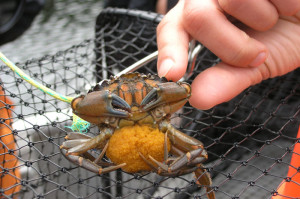
European green crab. Credit: NOAA

Gulf of Maine temperature increases have opened the door to invasive species like black sea bass and scup, and have made bays and estuaries more hospitable to European green crabs, whose numbers have risen exponentially in the past few years. Green crabs wreak havoc on eelgrass flats as they burrow in to eat larval mussels, clams and oysters.

Jon Hare, a fisheries oceanographer at NOAA Fisheries’ Northeast Fisheries Science Center (NEFSC) and lead study author, said the main purpose of this study is to give fisheries managers and other stakeholders tools to take climate change into account when devising management policy.

“We’re never going to have perfect information,” he said. “The ecosystem is going to change because of a combination of anthropogenic influence such as greenhouse gas and natural climate variability.” To keep up with the pace of that change, which has been dramatic in the past 10 years, Hare and his colleagues developed a methodology that incorporates already established research and factors in expert extrapolation. This methodology helps them predict things like how mussels will respond to warming waters or how they will react to increased acidity in their ecosystem in the next 10 years.


Overall climate vulnerability is denoted by color: low (green), moderate (yellow), high (orange), and very high (red). Certainty in score is denoted by text font and text color: very high certainty (>95%, black, bold font), high certainty (90–95%, black, italic font), moderate certainty (66–90%, white or gray, bold font), low certainty (<66%, white or gray, italic font). Source: Hare et al (2016)

The scientists graded each of the 82 species’ vulnerabilities taking into account different variables, and set those grades to peer review. The result is a composite view of how likely a species may suffer reproductive pressures from increased temperatures or how likely a species may change migratory patterns.

Hare said other studies are beginning in the Bering Sea and off the coast of California, and the National Marine Fisheries Service wants to conduct these studies on all U.S. coasts.

No doubt much discussion will arise from this study and others like it. Some will question the study’s approach, efficacy or even need. Some fishermen may view the study as simply another tool for regulatory bodies like the New England Fisheries Management Council to further restrict fishing without real stakeholder permit. Others might ask why this hasn’t occurred before.

I see a couple of potential positive outcomes. First, the fact that NOAA is not only acknowledging climate change, but also actively trying to take steps to factor that into management decisions is significant. Like any federal agency, NOAA moves at a glacial pace (I wonder how long we’ll be able to use that descriptor…). But Hare and his colleagues eschewed the traditional approach to ecosystem-based management via species-specific analyses, which could take decades, to adopt a faster, potentially more efficient methodology for studying the issue. This is largely because climate change has been transforming ecosystems faster than we can study them.

Secondly, Hare says he hopes this tool becomes iterative — that in fact it will adapt as ecosystems change so scientists and researchers will have a chance to keep closer tabs of impacts than before. Some of fishermen’s frustrations with past NOAA research/policies is that that they are static, and don’t change dynamically with ecosystems. But Hare hopes the iterative process for this methodology will take into account fishermen input when considering which species may be affected by climate change. “Fishing communities will be impacted as well,” he said.

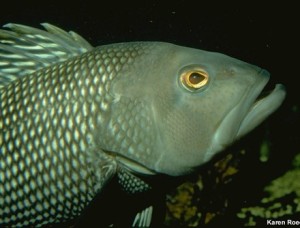
One impact is that some of these communities will start adapting to the changing marine ecosystems and harvest “locally abundant” species that were once considered invasive species. For example, black sea bass have started showing up in lobster traps in Maine because they’ve followed the warming trend north. Now they are an available seafood choice in local stores and restaurants.

black sea bass Credit: NOAA

I too hope this process becomes more collaborative. Because without that interactive participation in the science and policy making, the process will continue to be viewed by many as a set of unilateral decisions curtailing fisheries at the expense of small scale fishermen. As Hare said, even if we magically stopped all green house emissions now, the lingering effects of warming oceans would continue for decades.

Acting now, collaboratively, is the best chance at present for ensuring we effectively manage fisheries even as warming waters seek to change the dynamics. I attended a workshop a year ago in which scientists (including Hare), fishermen, and policy makers discussed how to better predict climate change impacts on fisheries and how to communicate that to fishermen.

Perhaps this is the first step.


Lobster photo credit: NOAA

Recent Posts

  • Hurricane Ida wreaks havoc on Louisiana’s seafood industry
  • EPA Should Use Clean Water Act To Kill Zombie Mine
  • Slow Fish 2021: Relationship Matters
  • Faith, Façades, and Futility
  • Pebble Permit Paused: Politics at Play

Archives

  • September 2021
  • August 2021
  • April 2021
  • December 2020
  • August 2020
  • June 2020
  • February 2020
  • December 2019
  • November 2019
  • October 2019
  • July 2019
  • May 2019
  • April 2019
  • March 2019
  • January 2019
  • December 2018
  • November 2018
  • June 2018
  • May 2018
  • March 2018
  • February 2018
  • January 2018
  • December 2017
  • November 2017
  • October 2017
  • September 2017
  • August 2017
  • July 2017
  • June 2017
  • May 2017
  • April 2017
  • March 2017
  • January 2017
  • December 2016
  • November 2016
  • October 2016
  • September 2016
  • August 2016
  • July 2016
  • June 2016
  • May 2016
  • April 2016
  • March 2016
  • February 2016
  • January 2016
  • December 2015
  • November 2015
  • October 2015
  • September 2015
  • July 2015
  • June 2015
  • May 2015
  • April 2015
  • March 2015
  • February 2015
  • January 2015
Theme by Colorlib Powered by WordPress