Skip to content
One Fish Foundation
  • Blog
    • Aquaculture
    • Education
    • Environment
    • Policy
    • Wild Harvest
    • Fish Tales
  • About
    • About One Fish
    • About Colles Stowell
  • Education
    • Elementary School
    • Middle School
    • High School
  • KNOW FISH Dinners®
  • Resources
    • One Fish Podcast
    • One Fish Foundation in the news
    • The 7 C’s of Sustainable Seafood
    • Newsletter Archive
    • Recipes
      • Skate with Capers and Butter — Chef Rizwan Ahmed
      • Grandma Davis’ Fish Chowder — Jane Almeida
      • Ginger Garlic Tamari Scallops — Colles Stowell
      • Fish Stock — Evan Mallett
      • Mussels San Remo — Chef Rob Martin
      • Salted Pollock Croquettes – Chef Mark Segal
  • Connect
    • Contact OneFish
    • Social
      • Instagram
      • Facebook
      • Twitter
All Blog Posts

Faith, Façades, and Futility

  • December 9, 2020October 19, 2021
  • by Colles Stowell
Share it!
Share

Politics can be a complex cocktail of all three.

Too often our faith that politicians will do the right thing falters behind false promises and frustration.

Such is the case with environmental protections. Heavily influenced by giant corporations spending billions in lobbying efforts to extract oil, natural gas, timber, minerals, etc., folks in Congress walk a fine line between their concern for staying in office (which requires funding), and following up on their promises to constituents. They often defend their positions with vows to increase jobs and boost the economy while still expressing concern for the environment. That is, they want constituents to believe all these things can co-exist with extractive industries, when they rarely can. You can’t have your cake and eat it too.

Witness the roller coaster ride to protect wild salmon habitat throughout Alaska in the past few months.

You may have noticed the US Army Corps of Engineers recently denied the permit for the proposed Pebble Mine in Bristol Bay. This is great news, and it’s an astounding turnabout from as recently as July when the Corps had issued its final environmental impact statement (EIS) essentially paving the way for the permit’s approval.
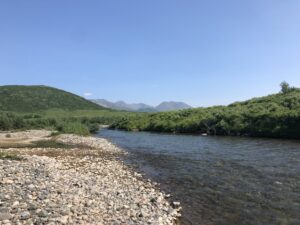
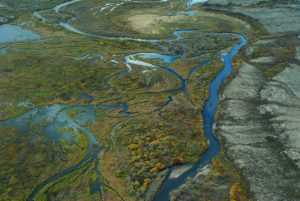
Contact Creek, Bristol Bay. These crystal clear waters invite countless salmon to migrate to their spawning grounds.

The EIS blatantly ignored several glaring environmental threats posed by what would have been North America’s largest open pit copper and gold mine. Chief among those threats is the risk of a failed tailings dam (which holds toxic waste rock from the mining process) because of potential design flaws, earthquakes, and other natural forces. Moreover, because there’s no magic wand that would make several million tons of toxic waste disappear, the threat of a dam failure would be permanent, which the Army Corps failed to address in the EIS.

Changing tides

Then the momentum changed rapidly. First, several prominent Republicans, including Donald Trump, Jr., spoke out against the mine, setting off a chain reaction of other public figures, including President-elect Joe Biden, denouncing the project. The Corps then sent a letter to Pebble’s owners in late August calling for a mitigation plan that would explain how Pebble would mitigate for the wetlands, rivers, and streams its project would permanently destroy. This was the first signal from the Corps that it was willing to acknowledge the science clearly showing the Pebble Mine would cause significant harm to the Bristol Bay watershed and its salmon fishery.

Then a series of damning secret tapes released in September revealed the greed and audacity of the mine’s owners, who bragged about controlling the state’s governor and US Senators. The mine’s owners also boasted on tape that they viewed the mine not as the 20-year project stated in the permit, but as a much larger 200-year mining operation.

The Corps took the next step on Nov. 25 when it announced its denial of Pebble’s permit, stating the project did not meet its mitigation standards and the proposal was contrary to the public interest. The permit denial was a surprising and much welcome gift to the people of Bristol Bay who have been fighting for their homes, livelihoods, and traditions since the Trump Administration re-opened the door for the mine to proceed in 2017.
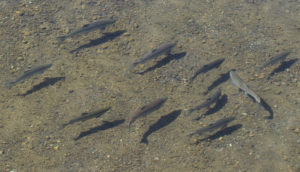
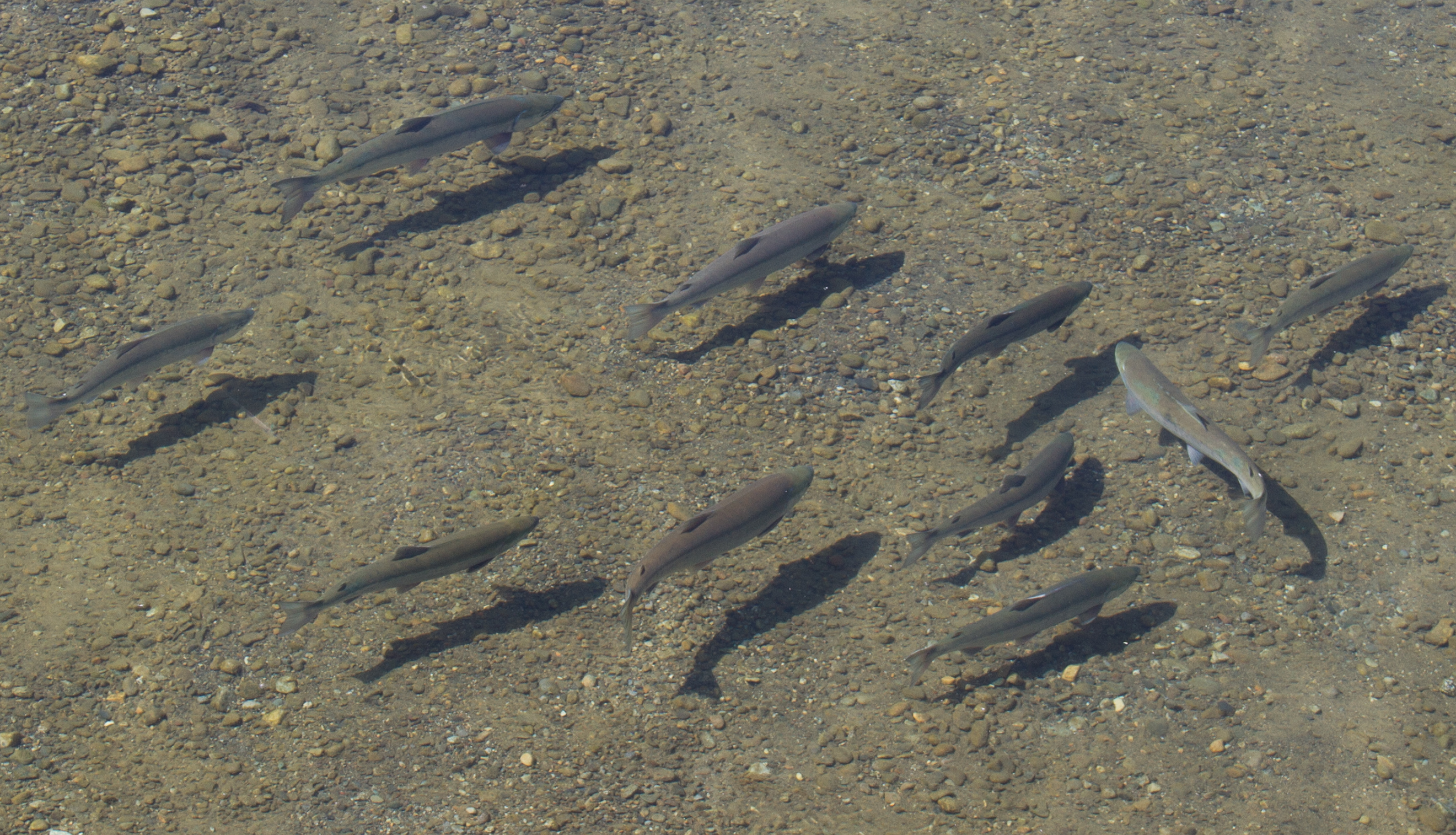
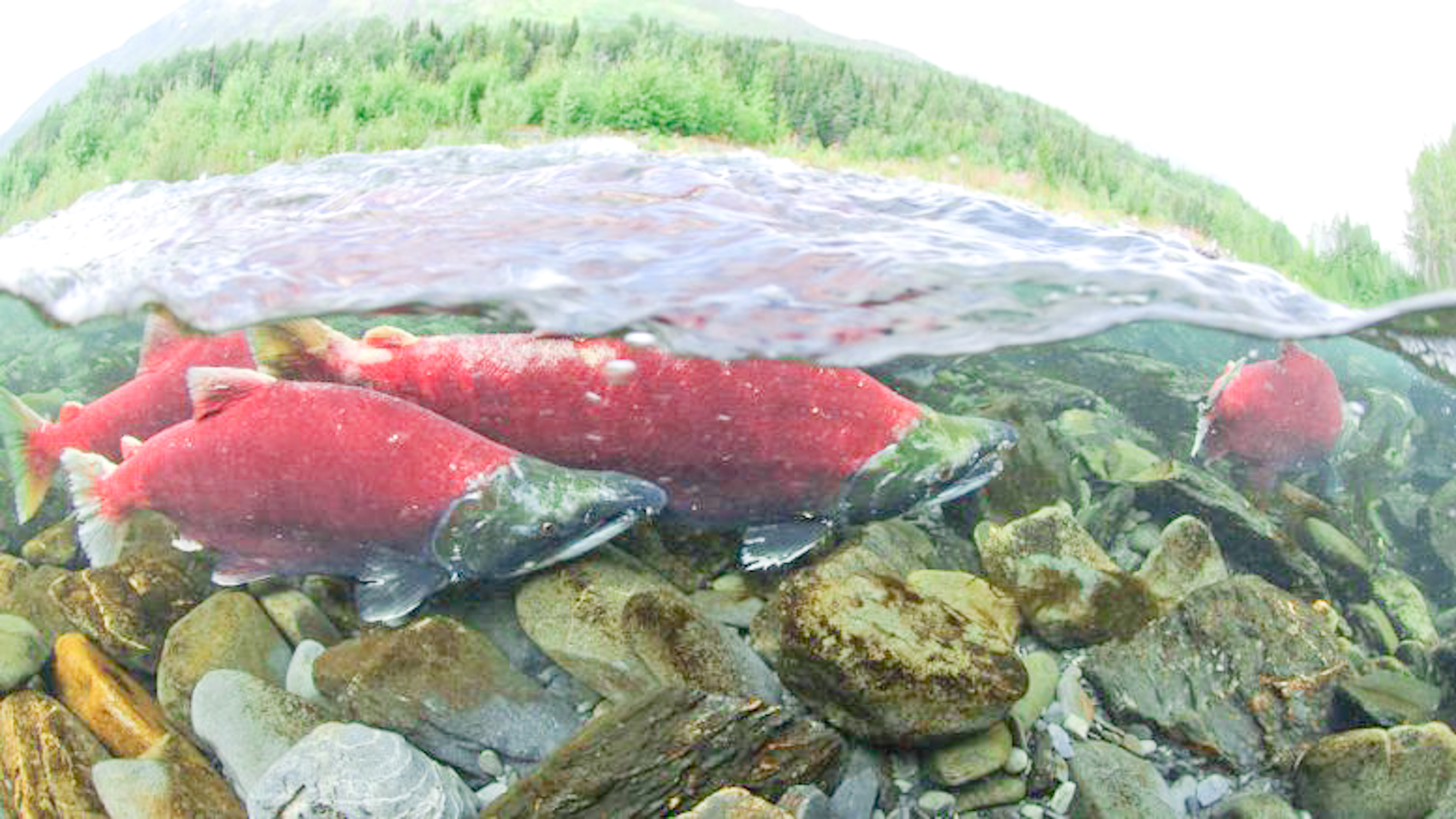
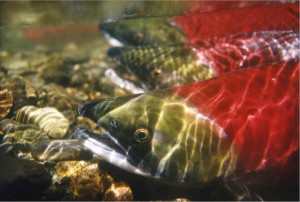
Sockeye on the move in the Brooks River, Bristol Bay.

Seeking permanence

Again, this is great news. I think of all of the salmon warriors I’ve met in the past several years who continue to dedicate so much of themselves to protect the world’s largest intact wild salmon run. I think of the amazing coalition of different user groups like commercial, recreational, and subsistence fishermen and women, who are often at loggerheads, that continue to stand united against this imminent threat to their salmon and their lives.

However, the Bristol Bay watershed is not fully protected. Pebble is stopped for now. But this salmon-rich region will not be fully safe from such threats until permanent protections are in place. If we have learned anything from the last four years, it’s that Bristol Bay is at risk from changes in political winds. So we need to ensure that it is protected for generations to come.

On December 2nd, the Bristol Bay region released its vision for what these long-term protections should look like and a two-step roadmap for how we might get there. First, the EPA needs to use its authority under the Clean Water Act to veto the Pebble Mine and establish clear, science-based restrictions on mining activity in Bristol Bay’s headwaters. The region has been asking for an EPA veto from the outset.

Second, Congress needs to designate a national fisheries area to provide permanent federal protection for the watersheds of Bristol Bay against any toxic mine waste from any project like Pebble.
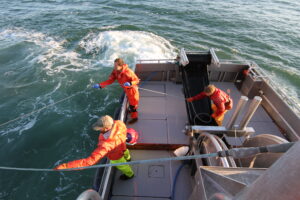
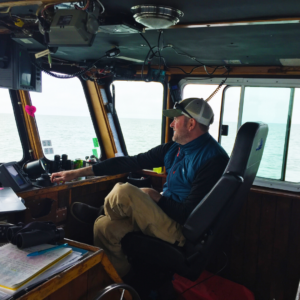
Captain Steve Kurian and crew aboard the F/V Ava Jane, fishing for sockeye in the mouth of the Naknek River.

Copper, wood, and oil 

All of this comes back to the question of why the administration changed its mind so fast. And it speaks to the façades so prominent in politics. Alaska Governor Mike Dunleavy has been quite vocal in his support of the mine, even posing for a photo aboard Air Force One ostensibly during a meeting to promote the mine.

Until recently, Alaska’s US Senators Lisa Murkowski and Dan Suillivan have said they opposed the mine, but they’ve been fairly non-committal about actually stopping Pebble … even after a majority of Alaskans had said they oppose the mine. Neither senator called for a clear, outright rejection of the project until after the release of the Pebble Tapes claiming they were in the pockets of Pebble’s owners and sitting quietly in the corner while the permitting process played out. Strange timing.

Bristol Bay is just one example of the pitched battles to protect vital natural resources across Alaska and throughout the US. During all of the publicity around the mounting political opposition to Pebble, the administration began to redouble efforts to green light other extraction projects it had advocated for in the past couple of years.
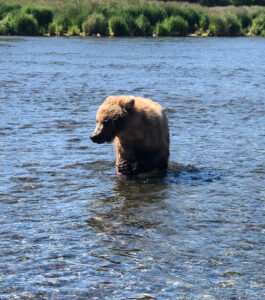
Brown bear on the prowl below Brooks Falls near Naknek and Brooks lakes.

The administration accelerated a push to remove the so-called “roadless rule” protection from the Tongass National Forest, the largest intact temperate rainforest in the world. Removing this protection literally paves the way for clear-cut logging in this pristine, 9 million acre forest, which has been described as the lungs of North America because of its oxygen output and carbon sequestration. It also contains thousands of streams that are home to myriad species, including many anadromous fish like wild salmon and trout.

At the same time, the administration opened up the Arctic National Wildlife Refuge (in Northern Alaska) to oil drilling, having posted the auction for permits on Dec. 7.

Is it a coincidence that these two environmental threats were more actively pushed forward while Pebble was retracted?

Ironically, Murkowski, Sullivan, and Congressman Don Young released a joint statement on Oct. 25 supporting logging in Tongass as creating jobs. The same delegation released another joint statement on Dec. 3 praising the administration’s decision to formally open ANWR to oil drilling by selling leases.

The timing of all of this raises questions considering the Army Corps called for the mitigation plan in late August and denied the permit on Nov. 25. Some observers who closely watch environmental politics suspect a deal was made. Save Bristol Bay, but sweep aside the roadless rule and open up drilling in ANWR.

Perseverance 

Enter the futility of politics. If in fact a deal was made to save Bristol Bay at the expense of the others, the frustration is maddening. The notion of trading precious natural resources like poker chips is appalling. Especially when the pristine ecosystems in question support myriad species as well as Alaska citizens and tens of thousands of jobs in industries that carry a multi-billion dollar economic impact to the state … without the ecological threat of rampant logging and mining.

Sadly, backroom deals happen all the time.

Here’s what we know:

  1. It would be folly to assume that Bristol Bay got the reprieve at the expense of Tongass and ANWR simply because of a backroom deal. There are too many mitigating factors for these decisions to be made solely based on one such deal. The issues are just too complex.
  2. We may never know for sure if any deal may have at least played some role in the overall outcome. Even if so, that doesn’t change the reality that all three regions absolutely need permanent protections.
  3. Bristol Bay’s reprieve remains temporary until protections become permanent.
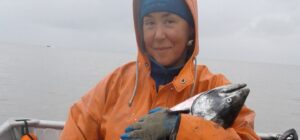
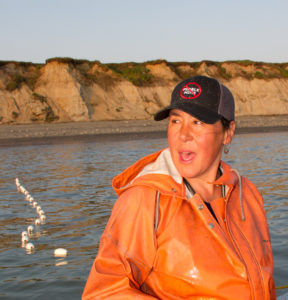
Melanie Brown, salmon warrior. She fishes commercially on the site her great grandfather established on the Naknek River.

The sheer will and collective unity to protect the resource, the people, and the Native cultures that depend on the annual return of Bristol Bay salmon is at the heart of why the Pebble Mine is not now operating. Even when the mine seemed inevitable back in July and countless folks on the frontlines felt burned out from standing up to the mine for as long as 15 years, the fight continued. More people from diverse backgrounds rallied to the cause. This powerful coalition will continue to fight until Bristol Bay gains permanent protection.

Perhaps we should view the collective efforts that put the Pebble Mine on its deathbed as a blueprint for how to address similar threats to important natural resources. It’s a testament of how standing up to heavily funded corporations and confounding politics to protect priceless resources is not only possible, but definitely achievable.

There are already long-standing, dedicated movements to safeguard both Tongass and ANWR (see calls to action below). The success of this opposition, as with every other effort to protect critical habitat, again hinges on the continued persistence, time, energy, and faith of a broad coalition willing to persevere against what seems like long odds. In the end, our voices matter, whether we live in the region, state, or even time zone where these ecological challenges exist.

For if we don’t unite to navigate the political waters to protect our most precious resources wherever they are, the resulting cocktail will prove toxic.


Calls to action

Here are ways to learn more and engage:

Stop Pebble Mine Now: Direct calls to action to ask EPA to veto Pebble Mine and ask Congress to permanently protect Bristol Bay.

Salmonstate Tongass Action Page: Direct appeal to the incoming Biden administration to protect Tongass.

Defend the sacred: Here is a specific month-long targeted call to action.
 

All Blog Posts

Keeping Salmon Wild

  • June 16, 2020October 19, 2021
  • by Colles Stowell
Share it!
Share
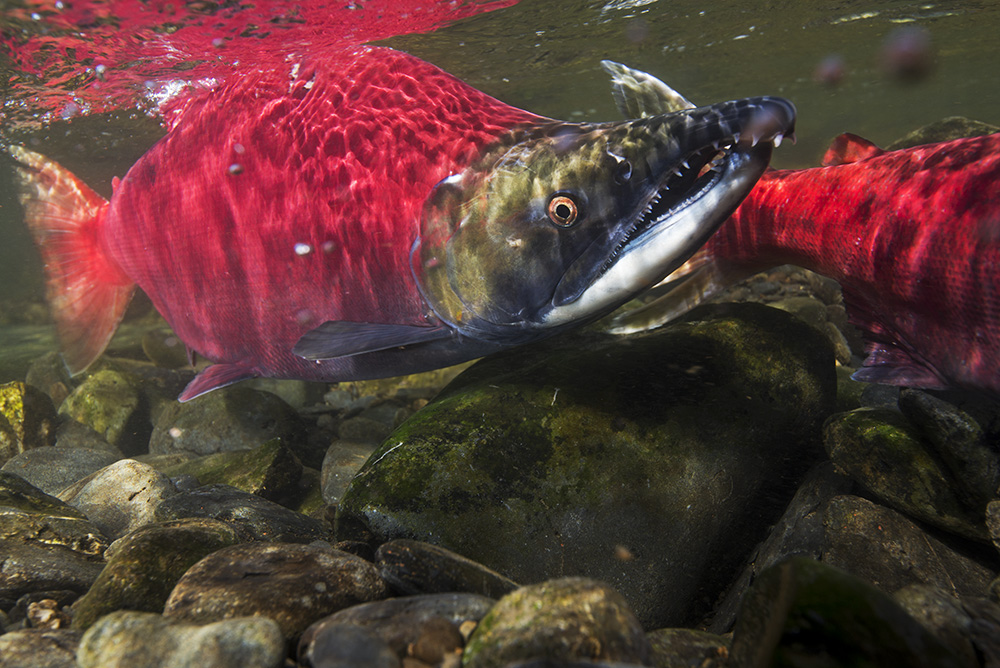
Top photo: Spawning sockeye salmon
From the book, The Salmon Way: An Alaska State of Mind, by Amy Gulick
©Amy Gulick/amygulick.com
To buy the book: www.thesalmonway.org


If we humans were to be judged by how we treat natural resources, we’d be up a creek … likely a toxic creek.

We don’t need to look far for evidence. Oceanic and atmospheric pollution, polluted groundwater, dammed rivers, etc. Bad policies, bad habits, and slow reaction to warning signs have compounded the problem.

I’ve focused on the proposed Pebble Mine in Bristol Bay, Alaska for several years. This would be a massive open pit copper and gold mine at the headwaters of the world’s largest wild sockeye salmon run. It would jeopardize the runs of several salmon species and the water supply and food source for thousands in and around the bay as well as the livelihoods of thousands of fish harvesters and those working at processors. Not to mention the impact on millions of Americans who eat wild Alaska salmon.

These types of mines generate billions of tons of highly toxic waste like cyanide, arsenic, and copper that are deadly to fish and their habitat. And they have a long and incontrovertible history of failure.

The Pebble mine’s Canadian owner, Northern Dynasty Minerals, has spent millions of dollars on lobbying Alaska’s governor and the Trump Administration to steamroll its scientifically flawed, questionably ethical permit application through the Army Corps of Engineers. The Corps has already said it will NOT take into account the worst-case scenario of a tailings (toxic waste) dam failure because it does not consider it likely … despite the fact the site is in a very seismically active area and tailings dam failures have happened elsewhere around the world.

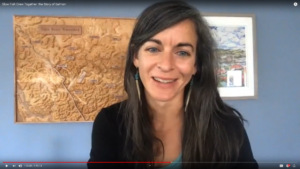
Elizabeth Herendeen of SalmonState providing some good perspective on opposition to the Pebble Mine during the Slow Fish Crew Together Webinar.

As Elizabeth Herendeen of SalmonState mentioned during the last Slow Fish Crew Together Webinar on June 5, a majority of folks in Bristol Bay and throughout Alaska have consistently opposed the mine. And yet, Pebble sits on the precipice of gaining the federal permit it needs to move forward. The Corps of Engineers could make an announcement some time in June or early July.

Others we heard from during the webinar about the perils of the mine and what we can do now include dear friends Captain Katherine Carscallen, “The Wild” film director Mark Titus, Melanie Brown of SalmonState, and Jon Broderick, who launched the amazing Fisher Poet Gathering in Astoria, Oregon and sang a lament about the loss of the wild salmon in Bristol Bay if the Pebble Mine were to ever be approved.

Captain Katherine Carscallen aboard her F/V Sea Hawk.

Born and raised in Dillingham, Alaska, Katherine is a drift netter who shared a heartfelt  and compelling viewpoint about her deep personal connection to the bay, the fish and the community, and why she has been fighting this mine for more than a decade. “Our concern is that it would be a permanent, and irreversible and hugely damaging change to our entire region. It’s salmon country. That’s what Bristol Bay is about, and this [mine] is proposing to change that entirely,” she said.

“The only reason we don’t have a mine and a mine hasn’t been built in the past 16 years since it’s been threatened is because not just Bristol Bay residents and Alaskans, but really people all over the nation have come together to help us on this issue and speak out about it,” Katherine said. “It really makes my heart swell that so many people who’ve never even been to Bristol Bay care so much about this issue.”

Mark Titus shared an equally personal story about starting to film “The Wild” shortly after leaving rehab for addiction in 2016. He returned to the bay to tell this story in part as a way to reconnect to the bay, the land, the salmon, and the community that he’d fallen in love with decades before.

“The Wild” Film Director Mark Titus reconnecting with Bristol Bay.

“I was really called back from this place that I was in by this love for these wild salmon which are the ultimate symbol to me of sacrifice and of giving of themselves so that life itself can continue,” he said. “This film is about that journey and using the metaphor of my own recovery from addiction to paint the picture about where we are as a people and as a species and how we treat this planet.”

Melanie Brown began the webinar with a spiritual tone, telling the story of her great grandparents who were orphaned by the Spanish flu in 1918, and who had to make their way into adulthood on their own. Her great grandfather transferred his setnet lease to her. Last summer, Melanie taught me how to pick sockeye out of the net from the same spot.

“I truly believe it was the salmon who gave the people who were in despair hope and taught them a path forward, and were their guides literally,” she said. “I’m here because of the salmon and because of the strength of my great grandparents. My people ended up here in Bristol Bay because they followed the salmon. I’m so blessed to be of this land.”

Melanie exudes good cheer and hope, even during the fourth set of the day heading toward midnight.

Speaking of the mine, she said, “It instills in me great fear. But that fear is overridden by the hope that salmon give me. I hope that you find hope in the salmon stories that you hear today.”

And it was that hope and a general call to get involved that resonated from everyone’s words.

As I said at the outset of the webinar, “In many ways, the story of salmon and how we treat them and their environment reflects the story of ourselves.”

We need to get this right. We want our children and successive generations to be able to experience wild places like Bristol Bay, where crystal clear waters call the wild salmon home every year to keep sustaining this magical life force.

Elizabeth, who’s spent more than a decade at the forefront of the opposition to the mine, encapsulated the urgency of the situation: “I think this is a really critical moment for anyone who cares about wild fish and wild salmon. This is our last chance to do it right the first time. We all need to share responsibility and take the time to be engaged.”

I’ve included some links below on how to learn more and get involved. These next few months for Bristol Bay will be important, and every voice matters.


Resources

  • Defend Bristol Bay Take Action page (to contact your elected officials in Washington, D.C.)
  • Information about “The Wild” film and upcoming screenings by Mark Titus. Here’s a link to the official trailer.
  • Save Bristol Bay website
  • United Tribes of Bristol Bay video update on current status of the mine
  • Slow Fish Crew Together Webinar: The Story of Salmon Youtube recording


All Blog Posts

Frankenmine: Pebble’s Worst-Case Scenario

  • February 10, 2020October 19, 2021
  • by Colles Stowell
Share it!
Share

Let me know if this makes sense to you.

The US Army Corps of Engineers is the federal agency responsible for ensuring that large civil engineering projects dealing with wetlands and other natural resources meet exacting specifications to ensure minimal impact on those resources.

This same agency announced on Jan. 23 that it would NOT consider a worst-case scenario tailings dam failure for the proposed Pebble Mine at the headwaters of the world’s largest wild sockeye salmon run in Bristol Bay, Alaska. Dam tailings are the highly toxic waste byproduct of open pit mining that must, in theory, be stored forever to preserve surrounding habitat. Any release of this material, which may contain arsenic, sulfur acid and other highly toxic material, could do irreparable harm to the natal streams and rivers that support the $1.5 billion economic engine driven by healthy wild salmon stocks.

Three days after this stunning announcement, Bristol Bay residents near King Salmon woke to an earthquake measuring 3.6 on the Richter scale.

So let’s do the math here. The USACE, which is supposed to ensure all of the nasty mining byproduct doesn’t leach into the landscape, ever, still feels confident nothing could go wrong.


Aftermath of Mt. Polley tailings dam failure in 2014. This dam was initially engineered by the same firm slated to engineer Pebble’s tailings impoundment. What could possibly go wrong? Photo from Mining Watch/Chris Blake.


I guess it’s just a minor inconvenience that the damn tailings dam would be strategically located in a seismically active area along a geologic zone called the Ring of Fire due to constantly grating tectonic plates that force magma up through the earth’s crust and create volcanoes.

How active is it? According to the Alaska Earthquake Center, 2018 and 2019 ranked first and second respectively in the number of earthquakes tracked in Alaska, with only 50,289 reported earthquakes in 2019 ranging in depth between 0 and 165 miles. There were two quakes measuring 6.4 along the Aleutian Islands.

This would be great fodder for a Saturday Night Live skit if it weren’t so staggeringly unconscionable.


Contact Creek just south and a bit west of King Salmon in Bristol Bay. Pristine water like this is essential to salmon spawning. It could be irreversibly damaged by a tailings dam failure. USACE doesn’t seem to think that’s a possiiblity.


Frankenmine is alive…again

Credit goes to the fierce determination of the mine’s opponents that Pebble has not been permitted in the past nearly two decades since it was first proposed.

The twists and turns in the Pebble saga are dizzying. Consider:

  • Three of the world’s largest four mining corporations walked away from the project, citing massive opposition and gigantic economic risks;
  • A fourth, smaller potential financial backer also stepped away for the same reason in 2019;
  • The Obama administration had the mine on its deathbed, concluding after years of scientific review that as initially proposed, the mine would violate the Clean Water Act and threaten precious salmon habitat;
  • A 30-minute conversation between the Pebble Limited Partnership’s CEO and former EPA Administrator Scott Pruitt just a few months after the current administration took office in 2017 reversed course and put the mine back on track;
  • Alaska Governor Mike Dunleavy is a Pebble Limited Partnership puppet who has publicly courted potential backers while working with President Trump to streamline and accelerate approval. In fact, you may have seen this photo of Dunleavy and Trump on Air Force One, planning more “development” that would destroy Alaska’s precious natural resources despite widespread opposition;
  • Dunleavy appointed a former mining industry executive to head the state’s Department of Environmental Conservation;
  • The regional EPA office publicly decried the highly questionable conclusions in the USACE draft environmental impact statement, only to be forced by the administration to walk those comments back a few days later.
  • Most Alaskans don’t want the mine. Annual polls show that opposition has never dropped below 50%, and support has never risen above 40%. This despite all the money giant pro-mining corporations pour into changing opinions.

So the shaker near King Salmon had impeccable timing. It’s as if Mother Nature is rattling a warning.

Melanie Brown on the Naknek River, doing what she loves best on the set net fishing site her great-grandfather established several decades ago.

Here’s the real worst-case scenario writ in big bold lettering so that even pro-mine “executives” in their big white offices should be able to understand. No matter how much you attempt to “store” all that toxic crap piled 500 feet high in a giant 1,000-acre “facility,” you cannot guarantee that an earthquake won’t shake it loose.

And if it does happen, and it likely would, the contamination would have an excellent chance of being near total, and potentially permanent. Thousands of people living downstream would be in danger. Wild salmon would lose their spawning grounds and the ability to ensure the longevity of the species.

I wonder what the Army Corps of Engineers would say then.

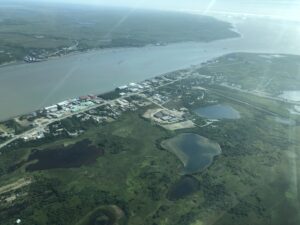
The fishing fleet in the Naknek River. The processing plants are visible along the shore. The population swells by a factor of 10 during the fishing season.

Defend Bristol Bay

For those of us in the lower 48 continuing to endure wave after wave of senseless rollbacks of environmental protections for precious natural resources across the country, the Pebble issue may seem like just another chapter in a painful narrative.

But this issue affects us all. If you eat wild salmon, you’re eating salmon that depends on crisp, clean, clear water in virtually undisturbed wilderness. Even if you don’t eat salmon, the battle to protect wild spaces is one you should care about.

I’ve met several people who have been fighting this fight for years. I’ve seen their land, their water, and their salmon. To those folks in Bristol Bay, this is a battle for their way of life – and their lives. They have no option but to continue to stand up to the blind greed, political bullying, and outright sham of the process.

We would do well to stand with them and set an example of how to change the narrative.

If you want to make your voice heard, contact your congressional representatives here. If you’d like to do more than that, check out the Defend Bristol Bay action page.

If you’d like to see what life is like in Bristol Bay for those who live and fish there, check out The Wild, the award-winning film directed by friend and colleague Mark Titus. Follow this link to see screenings near you.


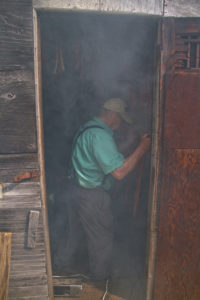
Eighty-eight-year-old Al Aspelund, an Aleut native, working his smoke shack magic as he has done for some six decades. Indigenous subsistence traditions like this are at stake.

Resources

Here are a couple of ways to get more info and get involved:

  • One Fish Foundation Fish Tales Podcasts:
    • Gayla Hoseth: Natural Resources Program Director and Second Chief of the Curyung Tribal Council
      • Audio only (downloadable)
      • Video (with photos)
    • Norm Van Vactor: President and CEO of Bristol Bay Economic Development Corporation
      • Audio only (downloadable)
      • Video (with photos)
  • Salmon State: Good resource for history of project and ways to get involved.
  • Pebblewatch, which also has some cool maps
  • National Park Service in-depth analysis of the long-term effects of tailings impoundment failures.
  • Bristol Bay Native Corporation: Good background on some of the indigenous opposition to the mine.
  • Bristol Bay Native Association: Another organization supporting the tribes of Bristol Bay.
  • Informative Anchorage Daily News Op-Ed about how the Trump and Dunleavy administrations have worked to gut the clean water act and its protections in Alaska.
  • Businesses of Bristol Bay
  • Bristol Bay Economic Development Corporation
  • July 1 EPA Region 10 letter from Administrator Chris Hladick, voicing concerns over Army Corps of Engineers’ Environmental Impact Statement


All Blog Posts

Administration Forces EPA About-Face, Revokes Bristol Bay Protections

  • July 31, 2019October 19, 2021
  • by Colles Stowell
Share it!
Share

Boy, was my Alaska trip’s timing impeccable. I got to see the pulse and vibrance of the fishery and the economy it supports. I got to see the deep connections people of all stripes have to the salmon, the water, the land. I arrived during the heart of the world’s largest sockeye run.

I also arrived just as the Environmental Protection Agency District 10 in Seattle issued a blistering statement castigating the US Army Corps of Engineers’ draft Environmental Impact Statement on the proposed Pebble Mine. The letter claimed the EIS had some serious flaws, and “…may result in substantial impacts to waters of the United States within the Bristol Bay and Cook Inlet watersheds.”

Folks I spoke with about the EPA statement felt bolstered by the statement after fighting the mine for over a decade, particularly given the administration’s push to approve the mine in the past two years.

But as I said before, this is a chess match, and the administration yesterday pulled what I’m sure they consider a “trump” move by rolling back federal Clean Water Act protections for Bristol Bay established during the Obama administration.

Make no mistake. This is outright politics at the expense of natural resources and the 15,000 people who depend directly and indirectly on those resources, whose total economic impact is now valued at over $1.5 billion. At stake is a truly priceless, irreplaceable resource that can continue to fuel the region’s economic engine … or billions in profits for a small group of investors. Do corporate interests really outweigh the rights of citizens?

Think of the colossal irony. Think of Chris Hladick, the EPA Region 10 Administrator who penned the July 1 letter slamming the EIS, only to be forced to publicly backtrack. Several entities supporting the mine claimed they wanted to see the science that this mine could harm the natural resource. Hladick pointed out some of the flaws in the EIS in his July 1 letter. The EIS itself essentially skated over the original finding from the EPA under the Clean Water Act in 2014, declaiming the potential devastating harm of such a mine on the salmon and its habitat.

Yesterday’s announcement demonstrates the folly that mine supporters call “due process,” but is more a proof point of power politics, influence, potential collusion and graft. It screams, “JUST JOKING! We mean to railroad this mine through and strip the very protections we said would preserve the resource in the region.”

I’ve just talked to a couple of people fighting the fight. They are angry and sadly unsurprised at the political arm-twisting from the administrations of both governor and president. Particularly as this arm-twisting is in support of a mining company based in Canada, not the U.S.

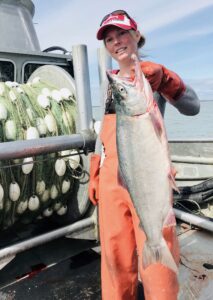
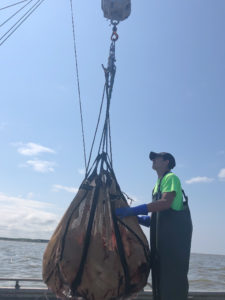
A deckhand on a tender weighs part of Melanie Brown’s set net sockeye harvest during the heart of the season.

But the folks I spoke to are still resolved.

They have to be. In their view, their lives and livelihoods are essentially at stake. As for the mine’s investors, their bank account profits are at stake.

This issue forces people to check their moral compass. If we can’t protect the salmon, their habitat, and the thousands who depend on them, where are we headed? What does this mean for other priceless public spaces?

If this issue has struck a cord, follow this link for more information on how to speak out and get involved. Contact your representatives and senators in Washington, D.C., regardless of where you live. Every voice counts.

Also, stay tuned for the Fish Tales Podcast, which will feature the voices of those on the front lines of the battle to save Bristol Bay from such wanton development. You’ll hear what life is like in Bristol Bay, and why preserving it matters so much to those who live and work there.


Other resources:

Commercial Fishermen for Bristol Bay Press Release regarding EPA’s reversal

United Tribes of Bristol Bay Press Release

July 1 EPA Region 10 letter from Administrator Chris Hladick, voicing concerns over Army Corps of Engineers’ Environmental Impact Statement

All Blog Posts

Something There Is That Doesn’t Love A Mine

  • April 1, 2019October 19, 2021
  • by Colles Stowell
Share it!
Share

Nanci Morris Lyon’s daughter was born the year the Pebble Mine project was first proposed in Bristol Bay, Alaska. Rylie Lyon is now a sophomore in college. She is a guide at her family’s recreational fishing operation, Bear Trail Lodge, in King Salmon, Alaska. Nanci spoke out against the mine then, and she’s still doing it today.

Talk about a telling timeline.

Why is it that this mining project, purported to be resting on one of the world’s largest copper, gold and molybdenum deposits, has neither begun operation nor been abandoned as a bad job in nearly 20 years? Only recently did the U.S. Army Corps of Engineers just release its Environmental Impact Statement (EIS, which would form the basis for considering possible impacts of allowing the mine to operate) for public comment.

Ponder this the next time you use your cell phone, hop online or drive to the store: Those minerals are in more everyday items than most people know. Their claimed abundance in the geologic veins hiding in the Earth’s crust near Bristol Bay has sparked much controversy during the past two decades, sometimes, pitting neighbor against neighbor in Alaska.

Why have Lyon, her family, staff, friends and most everyone else in and around the recreational, commercial and indigenous fishing industries in the Bristol Bay region continued fighting this mine for this long? That such a unified and vocal coalition of very diverse groups and cultures directly tied to the resource continues to stand united says something.

With apologies to Robert Frost, something there is that doesn’t love a mine. Particularly this mine in this spot.


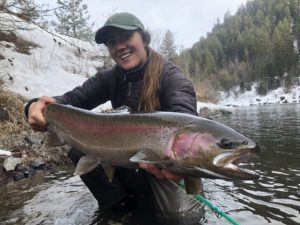
Rylie Lyon with a spring rainbow trout, just a few weeks ago.                        Photo courtesy Nanci Lyon

In perpetuity

The biggest concern is that minerals mining produces highly toxic chemicals that permeate much of the rock and other sedimentary layers exhumed from the earth in the process to extract the desired gold, copper and molybdenum. All of that nasty stuff must be stored safely somewhere forever. Whatever happens in that watershed now has generational impacts on everything, from salmon to water to land.

Mines aren’t supposed to let that crap loose in Nature. Sadly, time and again they do. Look no further than what happened in Brumadinho, Brazil in January, or what happened at the Mt. Polley Mine in 2014.

Aftermath of Mt. Polley tailings impoundment failure. This dam was initially engineered by the same firm engineering Pebble’s dam. National Park Service Photo

People like Lyon, and my friend and colleague Melanie Brown, who fishes for sockeye salmon with her mom and other family members near Naknek, have been fighting Pebble from the beginning. Melanie’s connection to Bristol Bay traces back over generations as her family has fished those waters commercially and for subsistence with the natural rhythms of returning salmon.

Opposition to the mine stems from its proposed location just north of Lake Iliamna, in the watershed of the world’s largest wild sockeye run … and the rivers that Brown, Lyon and thousands of others depend on for their livelihoods.

They don’t view the Pebble Mine as a potential resource for their phones and computers. They view it as a ticking bomb. In their minds, the question isn’t whether something is going to go wrong. It’s when, at what scale, and whether the damage is permanent. What they fear most is the salmon won’t return.

Melanie Brown doing what she loves near Naknek.  Photo courtesy Melanie Brown

Political tide change

Less than three years ago, the mine was left for dead, sentenced to purgatory by the Obama administration’s Environmental Protection Agency, which in 2014 declared the mine would violate the Clean Water Act because of its imminent threat to the wild salmon watershed. This was good news for everyone supporting the natural resource that provides a nearly $2 billion economic boost to the Alaska economy and supports over 14,000 jobs for commercial and recreational fishing businesses as well as countless related operations. Those numbers dwarf any realistic economic impact the mine would have on the state.

Then two elections happened (in 2016 and 2018), dramatically turning the political tides at both the federal and state levels and breathing life back into the project.

A 30-minute conversation between Pebble Limited Partnership CEO Tom Collier and former EPA Administrator Scott Pruitt in 2017 undid all of the work that Lyon, Brown, and many, many others amassed over decades to fight the project.

I wonder if someone uttered, “Good mines make good neighbors” in that meeting.

And now the mine’s permitting process, once estimated at decades if it ever got off the ground, is on a fast track. The Corps of Engineers on Feb. 20 released its draft EIS in “record time” by many accounts. Several critics claim the EIS glazes over if not outright ignores the ample scientific, economic and straightforward concerns voiced by recreational, commercial and indigenous fishermen, business owners, residents, scientists and countless voices from outside the state.

One chief concern is that the EIS does not account for the inevitable expansion the mine would have to undergo just to try and make a profit. Read this scathing economic review by a former permitting expert with one of the world’s largest mining operations (Rio Tinto, which previously pulled away from a financial deal with Pebble Limited Partnership). According to his analysis, the mine as proposed would have a big negative net present value of -$3 billion.

And despite loud protestations to extend the comment period sufficiently to allow thorough examination of the EIS and appropriate response, the Corps seems unwilling to do so. The comment period currently ends May 30, 2019.


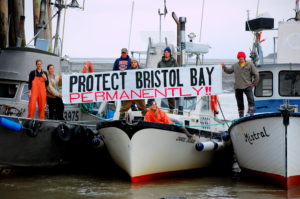
Passion to safeguard Nature and livelihoods. Photo: Seafood News

Worse still, the last election produced a new pro-mine governor, who has appointed pro-mine commissioners (including a former employee of Anglo American, one of the world’s largest mining operations, which also pulled away from a financial deal with Pebble) of the departments of Environmental Conservation and Fish and Game. This move essentially sets the stage to fast-track state permits (of which there are nearly 60 to secure).

Follow the money

So why the rush? If the mine is as much a fait accomplis as its backers would have you think, why are they pushing state and federal agencies, which are supposed to have the state’s best interests (read natural resources and citizens) in mind, to approve everything now?

Perhaps it’s that Pebble’s owners want the appearance of momentum to continue so they might attract yet a fifth financial backer to the altar. The previous four, including three of the four largest mining interests in the world, bailed out citing massive opposition and the risk of economic disaster.

Maybe it’s the nifty clause that promises Collier more than $12.5 million in bonus money if he secures a positive Record of Decision from the Corps of Engineers within 4 years of submission of the permit (in Dec. of 2017). That’s on top of his $2+ million salary.

Talk about scale and incentive. The tailings impoundment to hold the toxic waste produced to extract these minerals would be up to 700 feet deep and extend for several miles. And it must be secured “in perpetuity.”

This is the same Collier recently quoted railing against the mine’s opposition: “I believe that a lot of these environmental organizations choose issues in Alaska. They make them cause celebs so they can raise money around them. And they choose Alaska primarily because they don’t have to suffer the backlash from the economic impact of the project being killed because no one gives a rat’s ass what happens in Alaska.”

Is that so? Within the Bristol Bay region, opposition to the project remains at over 75 percent, with the latest state-wide poll showing 61 percent opposed across Alaska. In 2014, 65% of Alaskans voted in favor of a measure that would require approval by the state legislature (rather than simply the state Department of Environmental Services) of any mine project that would threaten salmon habitat.

Priceless habitat.

But then again, politics and money can make a difference. A ballot measure was defeated last November that would have added enforcement teeth to existing state laws that would have made permitting a mine in crucial salmon habitat harder to do. How did this happen so soon after the 2014 vote?

Because Ballot measure 1’s proponents, which included many of the same collective of fishermen, business owners and residents opposing the mine, were out-spent by several out-of-state companies. Supporters raised close to $2 million. Opponents raised close to $12 million, with the top five cash donors being such “neighbors” as Conoco Phillips ($1.4 million), BP Exploration (Remember Deepwater Horizon! $1.05 million), Donlin gold ($976,000), Hecla Mining Company, (just shy of $1 million), Coeur Alaska, (just shy of $1 million).

Oh, and let’s not forget other outside influences, such as the Koch brothers, who funded the Alaska Policy Forum, Power the Future, and Americans for Prosperity- Alaska Chapter, which operated an influence campaign to defeat Ballot Measure 1.

Profits over living natural resources, anyone?

Rolling boulders, not pebbles up hill

Certainly the mine’s operation would most significantly benefit its owners, managers and shareholders, maybe a few dozen.

On the other side of the fence are tens of thousands currently working in harmony with the salmon resource. This has been a grueling uphill battle for Lyon, Brown and everyone else standing up to outside influence. Years of persistent, grinding effort and emotion, speaking out publicly, holding signs, singing songs and writing letters take an emotional, spiritual and physical toll.

Why keep at it?

Because it’s their way of life. A connection to the land and water and salmon deeply intertwined with who they are.

Perhaps that’s a reminder of what should be important, whether we live in Bristol Bay or not. Yes, we depend on our cell phones and stuff like that. But there’s something else at work here.

Perhaps mining interests/investors/manufacturers should find the raw materials somewhere else, where there isn’t an imminent threat to a priceless resource that may not be able to recover should when something bad happens.

Can the forces working to topple a fabled stone wall in northern New England woods serve as a proxy for what’s really at risk in Bristol Bay?

Would that we could ask the salmon.


Resources

  • Speak out: Your voice matters, whether you live in Alaska or not. Here’s a link to comment on the US Army Corps of Engineers draft EIS.
  • Let Sen. Lisa Murkowski R-Alaska, know what you think. She needs to hear from everyone, in and out of the state. Follow the link and add additional comments if you are out of state but concerned.
  • Good resource for timeline, facts and ways to engage: Save Bristol Bay
  • Pebblewatch, which also has some cool maps
  • National Park Service in-depth analysis of the long-term effects of tailings impoundment failures.
  • A Bristol Bay fisherman speaks out in Juneau Empire op-ed against the mine.
  • Op-ed by Ron Thiessen, CEO of Northern Dynasty Minerals, which owns Pebble Limited Partnership. Funny how this “neighbor” tells people not to buy into “the alarmism” about the mine, but doesn’t mention his salary is over $2 million. Even more ironic is that he encourages people to read the Army Corps of Engineers’ EIS, but fails to mention that it is incomplete and virtually ignores most of the more damning issues raised in the first phase of public comment.
  • Finally, if you love wild Pacific salmon, and would like to do something beyond commenting, check out this offer from Wild for Salmon.


Top photo: Alaska Region U.S. Fish & Wildlife Service/Flickr

All Blog Posts

Fake News: Making Mountains Out Of The Pebble Mine

  • January 27, 2017October 20, 2021
  • by Colles Stowell
Share it!
Share

If there’s any question that money is directly tied to resource management, look no further than the Dakota Access Pipeline, Keystone XL pipeline and the Pebble Mine. Two of them were dormant for a while, and the first was on hold.

No longer.

That the proposed Pebble Mine in Bristol Bay, Alaska has reared its ugly head again is both alarming and telling. It is alarming because the project, which had been on life support for years, directly threatens one of the world’s largest and last wild sockeye salmon runs. It is telling that the changing political climate has created an atmosphere more weighted toward corporate profits and against environmental protections.

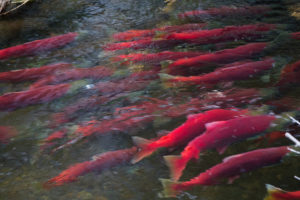
Sockeye approaching spawning beds. Photo: Bristol Bay Regional Seafood Development Authority

The massive copper and gold mine again became a discussion topic earlier this week when its sole investor, Northern Dynasty, claimed it expected to have its permitting issues resolved with the EPA by April, and that it was actively seeking an investor.

Northern Dynasty has been mired in three federal lawsuits aimed at handcuffing the EPA’s authority to reject the mine’s permit because the mine would violate protections in the Clean Water Act. In 2014, the EPA ruled the mine presents a potentially irreversible threat to the stability of the Bristol Bay watershed. At the moment, Northern Dynasty’s only on-site operations include geology tests and equipment storage.

Not surprisingly, three days after the new administration took office, Northern Dynasty’s CEO Ronald Thiessen said President Donald Trump’s administration has “a desire to permit Pebble.” He added, “We will come to a resolution within 100 days” with the U.S. Environmental Protection Agency.

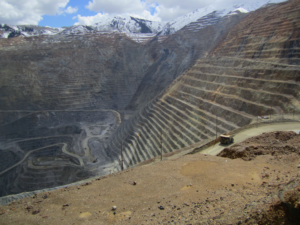
Copper mine in Utah run by Rio Tinto, which backed out of the Pebble Mine. If built, Pebble would be bigger than this. Photo: Deep Green Resistance

Opposition to the mine has been surprisingly universal from a broad range of user groups. That’s likely because Bristol Bay’s salmon population supports 14,000 full-time jobs and a $1.5 billion a year industry, according to federal and industry figures. In a rare instance, commercial and recreational fishermen are speaking with one voice: “Don’t destroy one of the last significant wild sockeye salmon populations!” Many of Alaska’s tribal leaders and several environmental groups have joined the chorus.

Is this Fake News?

That depends. To date I’ve seen no direct statement from the president saying he was going to drive the Pebble Mine through to operation. I’ve only seen Northern Dynasty say that.

If noted anti-resource attorney Scott Pruitt becomes head of the EPA, that could streamline federal permit approval, which accounts for a small number of significant permits.

That leaves the state of Alaska, which would have to issue more than 60 permits before the mine begins in earnest. And that won’t necessarily be an easy process for Northern Dynasty. An interesting political sea change has occurred in the past two years. Prior to the election the mine’s biggest opponent was the Obama administration and the EPA, while the Alaska state legislature was more supportive of the mine.

Photo: EPA

The tables flipped a bit in Nov. when the State House gained a bipartisan majority, with the Speaker of the House being from Bristol Bay. So while the federal administration appears to favor projects like the mine, the governor’s office and much of the legislature are signaling support for the state’s natural resources like salmon.

“Pebble doesn’t necessarily have an EPA problem,” says Sam Snyder, Trout Unlimited Alaska Engagement Director and a key figure in the fight against the mine. “But they have an Alaska problem. Sixty-five percent of Alaska residents in every precinct voted against it. Bristol Bay Tribes, villages and residents overwhelmingly oppose Pebble. Eventually this will also have to go through the state legislature.”

Photo: Seafood News

Here are some harsh realities that make the approval process a steep uphill climb for Northern Dynasty:

  • The political climate in Alaska has brought more scrutiny of the environmental risks of such a mine. The legislature recently put a 90-day delay on a routine permit to allow Northern Dynasty to maintain base operations (testing and equipment storage on site, etc.), because lawmakers wanted a closer look at impacts.
  • While there have been several reports about Northern Dynasty’s stock performance in the past few weeks since the Trump victory, there is context. Yes, the stock jumped nearly 300% in that time … from 75 cents to $2.89 on Jan. 26. That is a shell of the $22 stock price the company had in Feb. of 2011. It’s a penny stock.
  • Two major partners have backed away from the project because of widespread opposition and losses: Anglo American, PLC in 2013 and Rio Tinto in 2014.
  • In 2014, 65% of Alaskans approved a measure that would allow the legislature to ban mines lawmakers believe would harm wild salmon stocks. So a majority of Alaskans are skeptical.
  • That opposition continues. There is support for a new proposal to strengthen laws governing protection of fisheries habitats, which would have to be considered with any state permit for development that impacts salmon habitat.
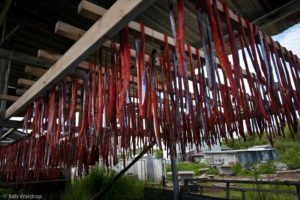
Sockeye drying. Photo: Bob Waldrop

What does this all mean? It means there are several roadblocks and years before the mine would have any chance of operation … if at all. Northern Dynasty would likely have to spend close to $200 million dollars just to secure all of the necessary permits. It would then need another several hundred million dollars to begin operations.

It also means that opposition must continue, within and without the state of Alaska, if opponents want to ensure the safety of the resource.

As the current mantra goes: wrong mine, wrong place.

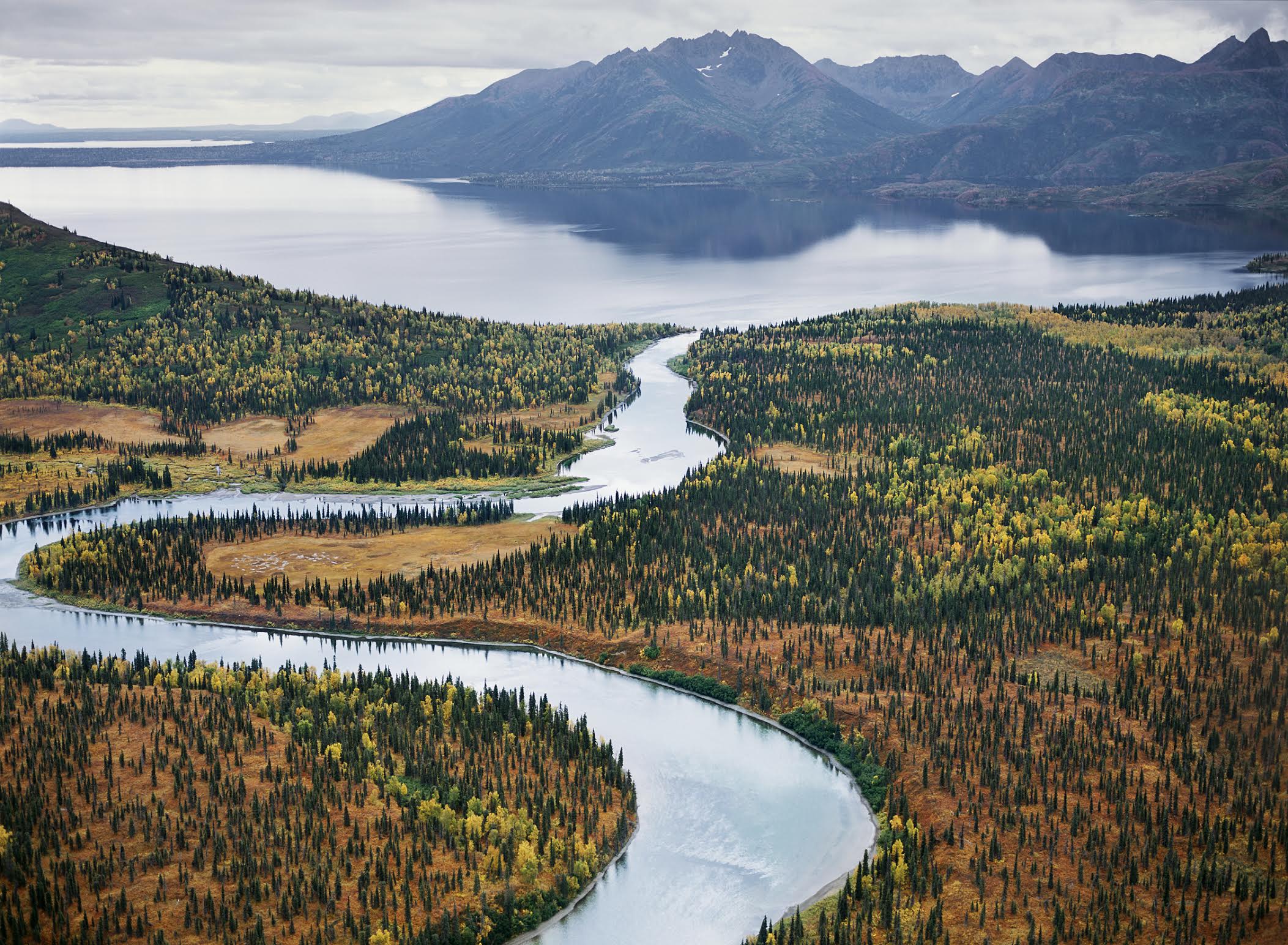
Top photo credit: Robert Glenn Ketchum

Other resources:

Save Bristol Bay : Good resource for background and the mine’s impacts.

One Fish Blog: Further background

Homer News: Public comments on state fisheries protections.

Alaska Daily News OpEd: Wrong mine, wrong place.

Recent Posts

  • Hurricane Ida wreaks havoc on Louisiana’s seafood industry
  • EPA Should Use Clean Water Act To Kill Zombie Mine
  • Slow Fish 2021: Relationship Matters
  • Faith, Façades, and Futility
  • Pebble Permit Paused: Politics at Play

Archives

  • September 2021
  • August 2021
  • April 2021
  • December 2020
  • August 2020
  • June 2020
  • February 2020
  • December 2019
  • November 2019
  • October 2019
  • July 2019
  • May 2019
  • April 2019
  • March 2019
  • January 2019
  • December 2018
  • November 2018
  • June 2018
  • May 2018
  • March 2018
  • February 2018
  • January 2018
  • December 2017
  • November 2017
  • October 2017
  • September 2017
  • August 2017
  • July 2017
  • June 2017
  • May 2017
  • April 2017
  • March 2017
  • January 2017
  • December 2016
  • November 2016
  • October 2016
  • September 2016
  • August 2016
  • July 2016
  • June 2016
  • May 2016
  • April 2016
  • March 2016
  • February 2016
  • January 2016
  • December 2015
  • November 2015
  • October 2015
  • September 2015
  • July 2015
  • June 2015
  • May 2015
  • April 2015
  • March 2015
  • February 2015
  • January 2015
Theme by Colorlib Powered by WordPress