Skip to content
One Fish Foundation
  • Blog
    • Aquaculture
    • Education
    • Environment
    • Policy
    • Wild Harvest
    • Fish Tales
  • About
    • About One Fish
    • About Colles Stowell
  • Education
    • Elementary School
    • Middle School
    • High School
  • KNOW FISH Dinners®
  • Resources
    • One Fish Podcast
    • One Fish Foundation in the news
    • The 7 C’s of Sustainable Seafood
    • Newsletter Archive
    • Recipes
      • Skate with Capers and Butter — Chef Rizwan Ahmed
      • Grandma Davis’ Fish Chowder — Jane Almeida
      • Ginger Garlic Tamari Scallops — Colles Stowell
      • Fish Stock — Evan Mallett
      • Mussels San Remo — Chef Rob Martin
      • Salted Pollock Croquettes – Chef Mark Segal
  • Connect
    • Contact OneFish
    • Social
      • Instagram
      • Facebook
      • Twitter
All Blog Posts

EPA Should Use Clean Water Act To Kill Zombie…

  • August 5, 2021October 19, 2021
  • by Colles Stowell
Share it!
Share

More than 65 million sockeye salmon returned to Bristol Bay, Alaska this year, setting an all-time record and proving, yet again, that healthy habitat and sound management lead to productive fisheries. Home to the world’s largest wild sockeye run, the watershed provides the cold, clear salmon-spawning waters that ultimately support more than 16,000 jobs and a $2.2 billion annual economic boost.

Perhaps recognizing the ecological and economic value Bristol Bay provides to the state, the US Army Corps of Engineers denied the federal permit request for the proposed Pebble Mine last November.

So why are we still talking about it?

In a nutshell, greed. Geologists for Canadian-based Northern Dynasty Minerals, which owns the rights to the mine site at the headwaters of two of the bay’s most productive river systems, believe the area is home to a massive ore deposit of copper, gold and other precious metals. The company and its investors see huge profits.

Everyone else, including a majority of folks in the state, sees a humongous threat to the very lifeblood of Bristol Bay and to the state.

Bumpy ride

I’ve talked to many folks directly connected to the bay during the past five years: commercial fish harvesters, recreational fishing lodge owners, processors, economic development directors, scientists, and indigenous leaders whose communities depend on the salmon for their lives. They are determined and fiercely committed to defending the natural resource.

And they’re tired of the seemingly endless battle to safeguard their livelihoods from the zombie mine that won’t die. Standing up to foreign, well funded mining interests for close to two decades has been an emotional, psychological, and at times physical roller coaster.

The long, pitched battle appeared near an end in 2014 when the Obama Administration Environmental Protection Agency released proposed protections that would block certain mining activities in Bristol Bay’s headwaters. Unfortunately, the EPA wasn’t able to finalize that determination due to a legal challenge from the mine’s owners.

The tug of war over this priceless natural resource continued, as the US Army Corps of Engineers appeared close to approving the federal wetlands permit last August. One tweet from Donald Trump, Jr. and a series of scathing under-cover videos showing Pebble’s owners bragging about political strong-arming and lying about the mine’s scale, and the momentum turned on a dime. Suddenly the mine’s inevitability seemed very tenuous. Optimism for Bristol Bay’s future grew, and the US Army Corps denied the permit in November.
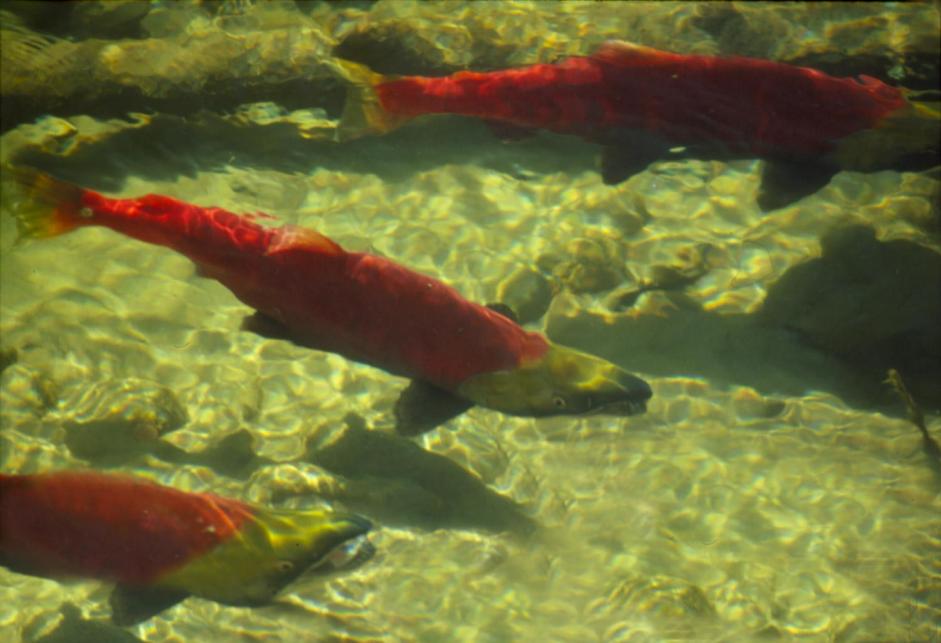
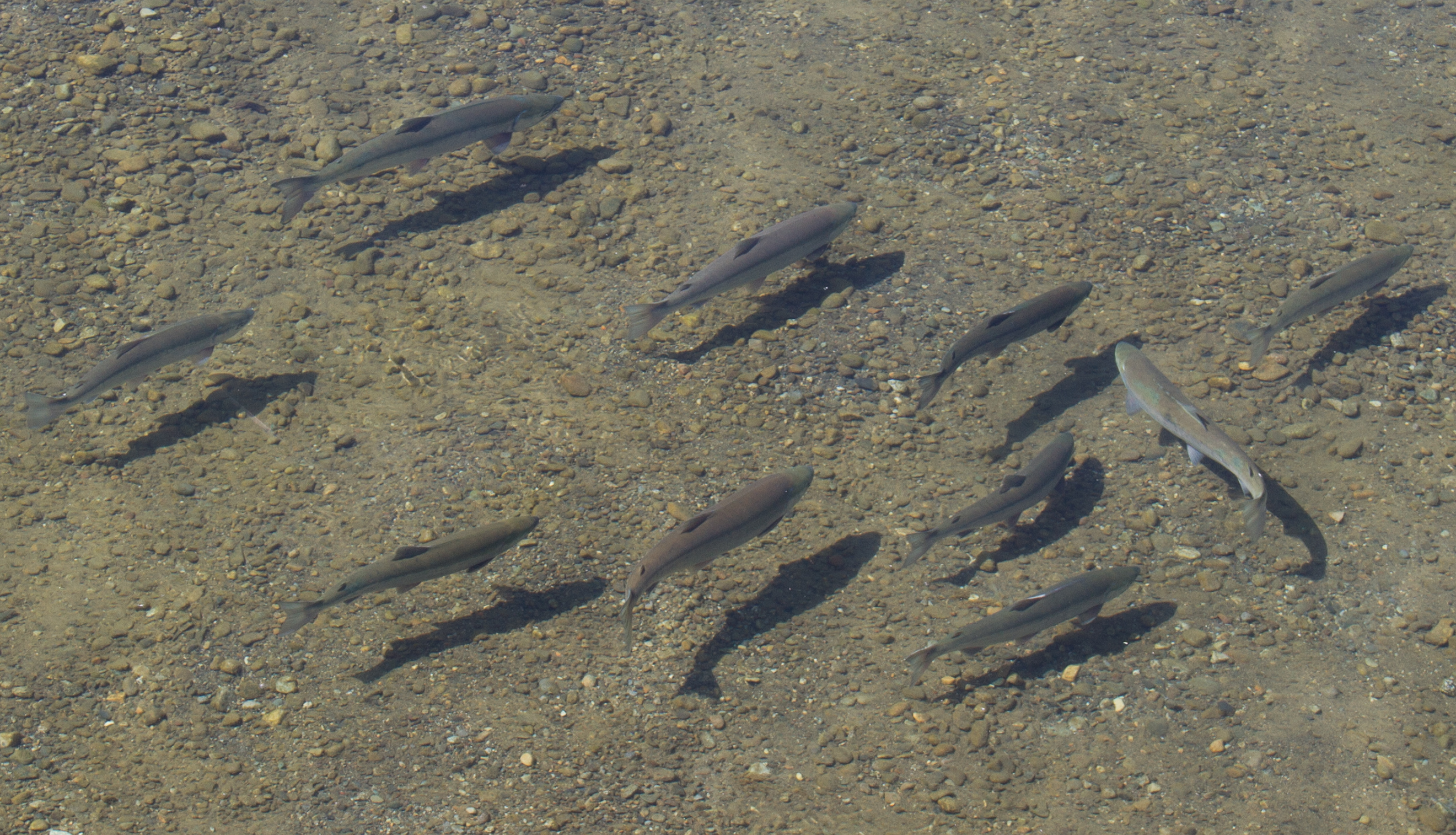
These sockeye are happily swimming in 3-4 feet of gin clear water below Brooks Falls near Naknek and Brooks lakes at the headwaters of the Naknek River.

Closing the door

To be sure, the mine’s owners have vowed to keep fighting, and have filed an appeal with the US Army Corps of Engineers requesting a reconsideration of the permit denial.

That’s why everyone should take notice, regardless of geography. This isn’t a NIMBY issue. What happens in Bristol Bay sends tremors throughout the continental US. If a giant mine can be forced upon people who don’t want it in an ecologically and economically crucial watershed in Alaska, what would stop something similar from going in an equally sensitive and important area elsewhere?

You might ask what could go wrong if Pebble were to be built. This week marks the seven-year anniversary of when the Mt. Polley mine in British Columbia failed, dumping 6.6 billion gallons of toxic waste in the Fraser River watershed, once home to millions of returning wild salmon. The Pebble Mine would produce 10.2 billion tons of toxic waste, which if unleashed, could permanently destroy the Bristol Bay salmon fishery.

Several politicians have changed their tune, now voicing support for Bristol Bay and the effort to compel EPA to outright stop the Pebble project via the Clean Water Act. They’ve done so as the people of Bristol Bay have collectively asked the Biden administration to finish the job started in 2014 of putting Clean Water Act protections in place immediately. In fact, August 8 is the one-year anniversary of candidate Biden’s pledge to protect the bay.

Invoking the Clean Water Act is the most direct and immediate path toward ensuring robust sockeye returns. It’s an important first step that should happen soon to ensure the process can be fully completed … prior to the next presidential election when yet another political momentum shift could again change the dynamic.

Following an EPA Clean Water Act determination, the next step to permanently protect Bristol Bay would be a Congressional declaration that safeguards the entire watershed from any harmful mining projects in perpetuity.

U.S. Senator Lisa Murkowski is exploring what that potential legislative solution could look like, meeting with local Bristol Bay leaders and stakeholders earlier this summer.

Again, Step 1 is to call on the EPA to do its job and protect Bristol Bay and its priceless natural resources.

To learn more or get involved, check out the resources below.

Resources

Stop Pebble Mine Now: Great resource site with direct action links, like telling EPA to do its job.

Brief video from #vetoPebbleMine featuring dear friend and colleague Capt. Kat Carscallen explaining what’s at stake.

Video produced by the United Tribes of Bristol Bay.

Follow these links to hear One Fish Foundation interviews with some of the folks from around Bristol Bay:

  • Kat Carscallen, commercial fisherwoman and executive director of Commercial Fishermen for Bristol Bay: Video on Youtube. Audio-only download.
  • Nanci Morris Lyon, co-owner, Bear Trail Lodge in King Salmon. She’s been fighting Pebble since about the time her daughter, Rylie, now a lodge guide, was born.  Video on Youtube.  Audio-only download.
  • Melanie Brown, community organizer with SalmonState and indigenous commercial fish harvester out of Naknek, AK.  Video on YouTube. Audio-only download.
  • Steve Kurian, captain of the F/V Ava Jane driftnetter fishing out of Naknek and co-owner of Wild for Salmon, a retail and wholesale operation based in Pa.   Video on Youtube.  Audio-only download.
  • Norm Van Vactor, CEO of Bristol Bay Economic Development Corporation and long time Bristol Bay resident, fisherman, and processor.  Video on YouTube. Audio-only download.
  • Gayla Hoseth, director of natural resources with Bristol Bay Native Association, Second Chief of the Curyung Tribal Council, and subsistence fish harvester.  Video on YouTube. Audio-only download.

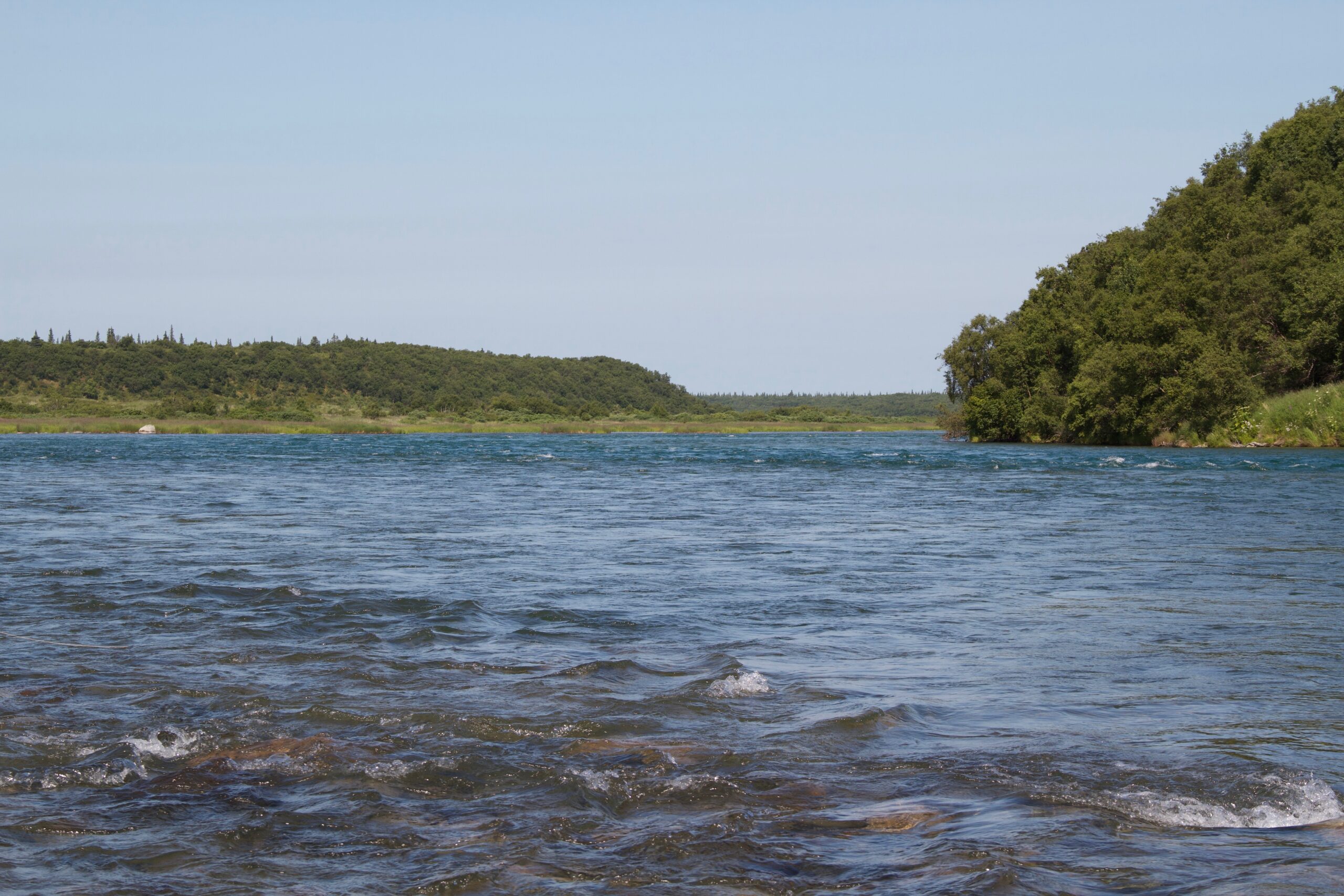
Top Photo: Upper Naknek River, where I watched a steady parade of chrome-colored, pre-spawn sockeye pushing their way upriver in 2019.
All Blog Posts

Administration Forces EPA About-Face, Revokes Bristol Bay Protections

  • July 31, 2019October 19, 2021
  • by Colles Stowell
Share it!
Share

Boy, was my Alaska trip’s timing impeccable. I got to see the pulse and vibrance of the fishery and the economy it supports. I got to see the deep connections people of all stripes have to the salmon, the water, the land. I arrived during the heart of the world’s largest sockeye run.

I also arrived just as the Environmental Protection Agency District 10 in Seattle issued a blistering statement castigating the US Army Corps of Engineers’ draft Environmental Impact Statement on the proposed Pebble Mine. The letter claimed the EIS had some serious flaws, and “…may result in substantial impacts to waters of the United States within the Bristol Bay and Cook Inlet watersheds.”

Folks I spoke with about the EPA statement felt bolstered by the statement after fighting the mine for over a decade, particularly given the administration’s push to approve the mine in the past two years.

But as I said before, this is a chess match, and the administration yesterday pulled what I’m sure they consider a “trump” move by rolling back federal Clean Water Act protections for Bristol Bay established during the Obama administration.

Make no mistake. This is outright politics at the expense of natural resources and the 15,000 people who depend directly and indirectly on those resources, whose total economic impact is now valued at over $1.5 billion. At stake is a truly priceless, irreplaceable resource that can continue to fuel the region’s economic engine … or billions in profits for a small group of investors. Do corporate interests really outweigh the rights of citizens?

Think of the colossal irony. Think of Chris Hladick, the EPA Region 10 Administrator who penned the July 1 letter slamming the EIS, only to be forced to publicly backtrack. Several entities supporting the mine claimed they wanted to see the science that this mine could harm the natural resource. Hladick pointed out some of the flaws in the EIS in his July 1 letter. The EIS itself essentially skated over the original finding from the EPA under the Clean Water Act in 2014, declaiming the potential devastating harm of such a mine on the salmon and its habitat.

Yesterday’s announcement demonstrates the folly that mine supporters call “due process,” but is more a proof point of power politics, influence, potential collusion and graft. It screams, “JUST JOKING! We mean to railroad this mine through and strip the very protections we said would preserve the resource in the region.”

I’ve just talked to a couple of people fighting the fight. They are angry and sadly unsurprised at the political arm-twisting from the administrations of both governor and president. Particularly as this arm-twisting is in support of a mining company based in Canada, not the U.S.

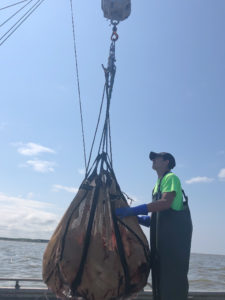
A deckhand on a tender weighs part of Melanie Brown’s set net sockeye harvest during the heart of the season.

But the folks I spoke to are still resolved.

They have to be. In their view, their lives and livelihoods are essentially at stake. As for the mine’s investors, their bank account profits are at stake.

This issue forces people to check their moral compass. If we can’t protect the salmon, their habitat, and the thousands who depend on them, where are we headed? What does this mean for other priceless public spaces?

If this issue has struck a cord, follow this link for more information on how to speak out and get involved. Contact your representatives and senators in Washington, D.C., regardless of where you live. Every voice counts.

Also, stay tuned for the Fish Tales Podcast, which will feature the voices of those on the front lines of the battle to save Bristol Bay from such wanton development. You’ll hear what life is like in Bristol Bay, and why preserving it matters so much to those who live and work there.


Other resources:

Commercial Fishermen for Bristol Bay Press Release regarding EPA’s reversal

United Tribes of Bristol Bay Press Release

July 1 EPA Region 10 letter from Administrator Chris Hladick, voicing concerns over Army Corps of Engineers’ Environmental Impact Statement

All Blog Posts

Don’t Open The Door to the Pebble Mine

  • January 16, 2018October 20, 2021
  • by Colles Stowell
Share it!
Share

Like a bad horror flick with predictable surprises hidden behind closed doors, we are watching an environmental tragedy unfold and we’re screaming at the top of our lungs at the screen…to no avail. Only this time, the protagonist isn’t some likeable, yet extremely naïve teenager. It’s the administrator for the Environmental Protection Agency. And what’s behind the door isn’t a chainsaw brandishing, mask-wearing lunatic. It’s 10 billion tons of toxic waste threatening the watershed for the world’s largest and most significant wild salmon run.

The carnage is not immediate, but its impact would be permanent.

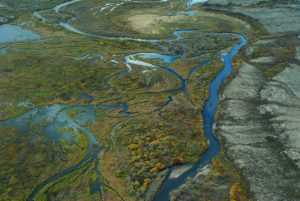
Imagine a flood of toxic waste destroying this wild salmon habitat. NOAA photo

Such is the horror of the proposed Pebble Mine, resuscitated thanks to drastic and surprising reversals of environmental policy under the current administration, which seems to be wielding an axe over the Bristol Bay region of Alaska.

How did we get here?

Talk about drama. Consider that Northern Dynasty Minerals, which acquired leases to begin exploring the region for minerals (copper, gold, molybdenum, etc) in 2001, has said it was ready to begin operations only to backtrack and withdraw promises several times since. It has signed with, then alienated four different financial/mining partners. Two of the largest mining operations in the world, Anglo American and Rio Tinto, pulled out because of massive opposition from Native tribes, commercial fishermen, recreational fishermen, business owners, politicians and US citizens.

Once the financial backing walked, Northern Dynasty’s stock plummeted, and proceeding was fiscally impossible without another partner.

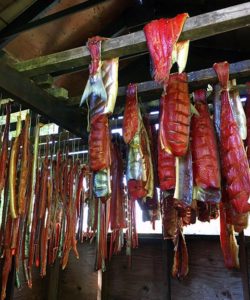
One of many continuing traditions. You know you want some. NOAA photo

The previous administration ruled the mine would violate the Clean Water Act. With its back against the wall, Northern Dynasty filed three separate lawsuits.

Here are some of the concerns scientists and the previous administration had with the project:

  • The initial proposal would have made the Pebble mine the largest in North America and one of the largest in the world, with a 20-square mile footprint (almost the size of Manhattan).
  • The giant pond to hold the tailings, the toxic waste, originally was to be 10 square miles in area, up to 700 feet deep and hold up to 10 billion tons of toxic waste that could devastate critical salmon spawning areas in three major rivers.
  • This tailings impoundment would be “held” by a dam 700 feet high (think the wall in Game of Thrones).
  • The mine’s owners would have to continually treat the toxic waste in that impoundment area to keep it stabilized.
  • The dam would be built over a seismically active area subject to earthquakes.
  • Scientists question whether the proposed dam could withstand a major earthquake, like the one that struck the region in 1964.
  • The dam and the rest of the tailings impoundment are currently scheduled to be designed by the same firm that designed the Mt. Polley Mine dam that failed in 2014, releasing more than 24 million cubic feet of toxic waste into the Fraser River estuary.
  • The toxic waste would have to be held in the Pebble tailings impoundment in perpetuity: translation, forever.

For these reasons and others, the EPA in 2014 preemptively ruled the mine as proposed would pose an imminent threat to the watershed, effectively shutting down the project. In so doing, the administration actively used the Clean Water Act to defend a vital natural resource whose value can be measured in $1.5 billion in revenue from commercial and recreational fishing and supporting 14,000 jobs.

NOAA photo

The difference a year makes

Then we had a regime change, and that haunting piano theme from the original Halloween movie started playing in the background.

Now Northern Dynasty claims it has another financial backer, First Quantum Minerals, which will reportedly pay up to $150 million over four years to secure the federal permitting. The Pebble Limited Partnership filed its permit application with the U.S. Army Corps of Engineers before Christmas. The company claims it is seeking permits for a substantially smaller operation than originally proposed (down to 5.4 square miles with a smaller tailings impoundment). But opponents argue this new plan is a “wolf in sheep’s clothing,” speculating the partnership will quickly move to expand the footprint once operations start.

The question isn’t whether Northern Dynasty will get those permits. That much seems obvious given recent pronouncements from the administration. The question is what happens next in Alaska. Even with the federal permits finalized, the mine’s owners would need to secure some 60 state permits.

This time last year, the political winds in Alaska seemed to have shifted more toward opposing the mine. In 2014, 65% of Alaskans voted in favor of a measure that would require approval by the state legislature (rather than simply the state Department of Environmental Services) of any mine project that would threaten salmon habitat. And people in the legislature and Gov. Bill Walker have voiced strong opposition.

But what are the current political winds in Alaska regarding the mine now that the administration openly favors the project? Is there enough political will to stand up to pressure from the administration? Will legislators and the governor move to protect those 14,000 jobs, which far outnumber the jobs impact of the proposed mine? Do they have the courage to stand for a crucial ecosystem that is woven into the fabric of the state’s identity?

The next few months should be telling.

Today, opponents submitted a ballot initiative accompanied by nearly 50,000 resident signatures to the state legislature that would essentially give the state the same power to review and limit mining projects that would jeopardize wild fish populations as the EPA used under the Clean Water Act in 2014. Called Yes for Salmon, the initiative would be put on the general election ballot next November.

Photo credit: Robert Glenn Ketchum

In the meantime, skip the movie popcorn and go for the computer or phone. If protecting these resources is important to you, then silence is not an option. The EPA has been inundated with more feedback than ever because of this issue. But it’s important to show Alaska state and federal legislators and the governor that people outside of Alaska are concerned.

Once that door is opened, it’s going to be damn hard to shut it again.

Here are some contacts if you want to be heard:

Alaska Governor Bill Walker

Alaska Senator Murkowski – (202) 224-6665
Alaska Senator Sullivan – (202) 224-3004

Here are some links for more info:

Save Bristol Bay: Good resource for the backstory on how we got here and why we should care.

Stand for Salmon: Organization aimed at changing state laws so the legislature has more authority over permitting for operations that could endanger wild salmon populations.

Businesses for Bristol Bay: Advocacy group aimed at supporting the region’s fishery and the industry that it supports.

EPA website explaining why it chose to use Section 404 of Clean Water Act to protect Bristol Bay in 2016. This was before the new EPA administrator reversed that decision last spring in what appears to have been a 30-minute meeting between the administrator and the CEO of Northern Dynasty.

CNN report on the EPA reversal to open the door to the mine last spring.


Recent Posts

  • Hurricane Ida wreaks havoc on Louisiana’s seafood industry
  • EPA Should Use Clean Water Act To Kill Zombie Mine
  • Slow Fish 2021: Relationship Matters
  • Faith, Façades, and Futility
  • Pebble Permit Paused: Politics at Play

Archives

  • September 2021
  • August 2021
  • April 2021
  • December 2020
  • August 2020
  • June 2020
  • February 2020
  • December 2019
  • November 2019
  • October 2019
  • July 2019
  • May 2019
  • April 2019
  • March 2019
  • January 2019
  • December 2018
  • November 2018
  • June 2018
  • May 2018
  • March 2018
  • February 2018
  • January 2018
  • December 2017
  • November 2017
  • October 2017
  • September 2017
  • August 2017
  • July 2017
  • June 2017
  • May 2017
  • April 2017
  • March 2017
  • January 2017
  • December 2016
  • November 2016
  • October 2016
  • September 2016
  • August 2016
  • July 2016
  • June 2016
  • May 2016
  • April 2016
  • March 2016
  • February 2016
  • January 2016
  • December 2015
  • November 2015
  • October 2015
  • September 2015
  • July 2015
  • June 2015
  • May 2015
  • April 2015
  • March 2015
  • February 2015
  • January 2015
Theme by Colorlib Powered by WordPress