Skip to content
One Fish Foundation
  • Blog
    • Aquaculture
    • Education
    • Environment
    • Policy
    • Wild Harvest
    • Fish Tales
  • About
    • About One Fish
    • About Colles Stowell
  • Education
    • Elementary School
    • Middle School
    • High School
  • KNOW FISH Dinners®
  • Resources
    • One Fish Podcast
    • One Fish Foundation in the news
    • The 7 C’s of Sustainable Seafood
    • Newsletter Archive
    • Recipes
      • Skate with Capers and Butter — Chef Rizwan Ahmed
      • Grandma Davis’ Fish Chowder — Jane Almeida
      • Ginger Garlic Tamari Scallops — Colles Stowell
      • Fish Stock — Evan Mallett
      • Mussels San Remo — Chef Rob Martin
      • Salted Pollock Croquettes – Chef Mark Segal
  • Connect
    • Contact OneFish
    • Social
      • Instagram
      • Facebook
      • Twitter
All Blog Posts

Slow Fish 2018: Telling tales

  • May 9, 2018October 20, 2021
  • by Colles Stowell
Share it!
Share

Slow Fish is making a difference.

Think of it as a collaboration of fish harvesters, scientists, chefs, students, food-lovers and activists around the world working toward one goal: good, clean fair seafood for all. This was on display throughout the three-day Slow Fish 2018 event in San Francisco April 14-16.
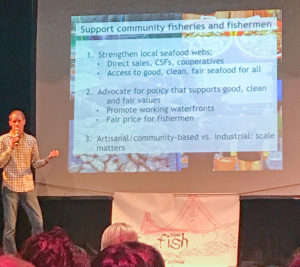
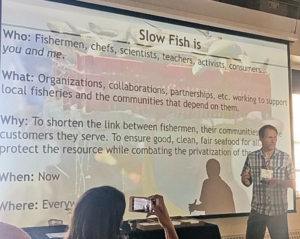
Setting the tone with the Slow Fish 101 presentation. Credit: Lance Nacio

Some of these successes were writ large on the main screen on the first morning of content programming in the Slow Fish 101 presentation.

  • Melanie Brown, a set net fish harvester from Bristol Bay, Alaska, spoke of indigenous ties to the land, the water and the resource. She spoke passionately about how wild salmon runs have sustained her family over time, and why that way of life is under threat from the proposed Pebble Mine. She also spoke of the coalition of disparate groups not normally siding with one another that oppose the mine: indigenous tribes, commercial fish harvesters, recreational fishing groups, environmental activists and politicians among others.
  • Jordyn Kastlunger reminded everyone of the importance of family connections and supporting the youth movement in fisheries as she described the trajectory of the Tuna Harbor Dockside Market in San Diego. Born of a coordinated effort of fishermen, food policy activists and lawmakers, the market features fisher folk docking on the pier and selling directly to customers. About 500 customers come every Saturday to buy about 12,500 pounds of locally harvested seafood.
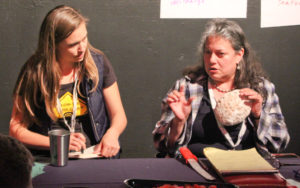
    Jacquelyn Ross tells the story of abalone from Bodega Bay at the World Cafe. Credit: Eric Buchanan
  • Jacquelyn Ross of the Southern Pomo/Coast Miwok tribes spoke about her indigenous fishing lineage along Bodega Bay, hand harvesting abalone, and witnessing the changes to the fishery wrought by temperature, current and acidification. She too spoke of family love and respect for the resource, the land and the water and the importance of sharing those stories in the hopes that others will appreciate those connections to natural resources.
  • Paula Barbeito came from Italy to describe the work of Slow Fish International and highlight the story of the Thorupstrand Fishing Guild in Denmark. Several years ago, fishermen in the community of Thorupstrand pooled their resources to buy quota so they could provide access to the fishery without being overrun by industrial operations. The guild is a reminder of how fishermen can self-identify and protect their access by working together.
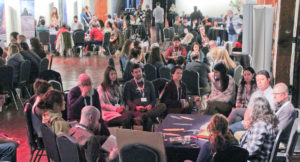
    World Cafe action. Just some of the discussions where things happen. Credit: Eric Buchanan

A parade of perspectives

These compelling narratives were just a few among many shared over the weekend. We heard from longtime fish harvester and policy activist Linda Behnken, who has fished commercially in the Gulf of Alaska and Bering Sea for over 30 years. She has drawn on that experience at the helm of her boat as she helped shape policy to protect small-scale fishing as a member of the North Pacific Fishery Management Council.

We also heard from Anne Mosness, who like Linda, has spent decades at the helm and in the trenches battling industrial scale operations. Anne described her longstanding campaigns against industrial aquaculture and genetically engineered salmon to the discussion, as well as the need to honor women’s voices and rights in fishing.

Filmmaker Mark Titus talked about his upcoming feature, The Wild, which shines a bright spotlight on the world’s largest wild sockeye salmon run in Bristol Bay, and what’s at stake in the battle against the Pebble Mine.
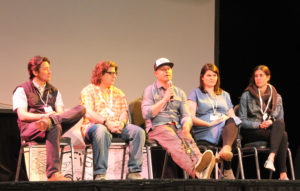
Know Your Supply Chain: Kenny Belov talks about choosing and selling responsibly harvested seafood. Left to right: Alan Lovewell, Real Good Fish; Joe Falcone, FishLine; Kenny; Anna Larsen, Dock to Dish; Jordyn Kastlunger, Tuna Harbor Dockside Market. Credit: Eric Buchanan

Kenny Belov talked about his mission in opening Fish. Restaurant in Sausalito and the TwoXSea sustainable seafood distribution company to provide responsibly harvested, abundant species to customers. Minimizing bycatch and other ecological impacts are critical factors in determining which fish harvesters he will work with.
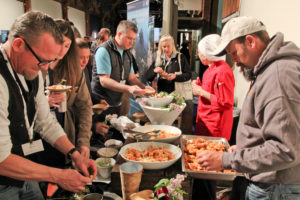
Lance Nacio’s (right in hat) fried soft shell shrimp were very, very popular. Credit: Eric Buchanan

We heard from a broad range of seafood perspectives. Lance Nacio spoke about investing in new technologies such as the plate freezers used to individually quick freeze fresh caught shrimp to preserve the out-of-the-water freshness for shipping around the country. Several oyster growers provided insight on their operations and the myriad factors that go into a successful, delicious oyster harvest. Jack Crofts brought his energy and entrepreneurial spirit to the event, trying to raise visibility and money for this mobile oyster bar, called the Oyster Barrow. Lucas Raymond, a trawl fisherman from New Hampshire, also represented the youth movement at the event.
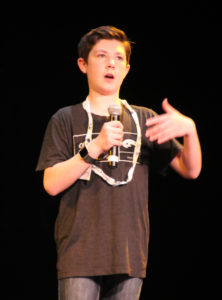
Young entrepreneur Jack Crofts (he’s 12 going on 13!) wows the crowd with his energy and enthusiasm. Credit: Eric Buchanan

We heard from chefs talking about smart sourcing, as well from seaweed growers like Amanda Swinimer, who described her journey harvesting, by hand, edible wild seaweeds for 17 years for her Dakini Tidal Wilds. Arielle Moinester talked about launching a company that promotes eating invasive species such as Asian Carp. Her GoWild Foods has made “The Silver Skipper” (aka asian carp) the poster child for managing an ecological problem in America’s rivers by eating it.
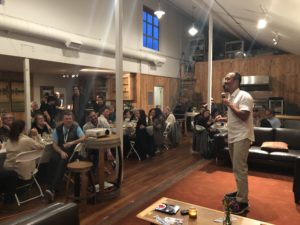
Christopher Wang describes his connection to fishing for salmon in Bristol Bay and why he started The Gypsy Fish Company as attendees listened at the We Are Bristol Bay Dinner.

Ideas, food and fun

More than 150 people from as far away as Italy, Maine, Alaska, Louisiana, Massachusetts and British Columbia, and as near as Washington, Oregon and right there in San Francisco descended on SOMArts and other venues. We held more than 6 separate events, including the Oyster Social, Seafood Throwdown, We Are Bristol Bay Dinner, and the final Seafood Dinner and film screenings at AirBnB. Core programming on Sunday and Monday included the World Café, 36 Pesce Kucha presentations and lots of interaction.
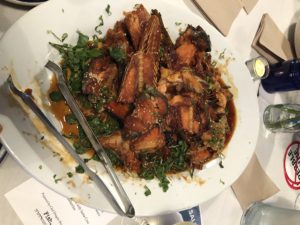
Stellar sticky salmon at the Bristol Bay Dinner.

We feasted on delicious wild salmon from Bristol Bay and oysters from Alaska down to Baja. We had fried soft-shell Louisiana shrimp and herring roe captured in a traditional method of submerging hemlock boughs in the bay during the spawn.

The Slow Fish 2018 planning team took on a monumental task to coordinate all of these events in a very short time period ahead of the California salmon season. The small, but very dedicated Slow Food San Francisco board of directors managed countless on-the-ground logistics to ensure everything went smoothly. It was the collective passion of the planners and attendees for the Slow Fish mission to grow the network, share our core values and collaborate on more projects that drove the event’s success.
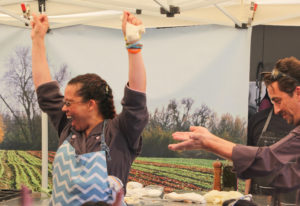
Chef Matthew Dolen honors winner Chef Aaronette King at the Seafood Throwdown at the Ferry Plaza Farmer’s Market to kick off Slow Fish 2018. The crowd engaged in the process, tasted the food and asked great questions. Credit: Eric Buchanan

We discussed new projects on the horizon, such as a YouTube channel for sharing videos focusing on Slow Fish values, success stories and fisheries-related topics. We also discussed launching a Slow Fish website that will become a destination for those seeking Slow Fish updates, bait boxes to help launch community-based projects like a community supported fishery, Seafood Throwdowns, KNOW FISH Dinners® and more. To enable Slow Fish folks to to ask questions and discuss issues within an informed community, we may launch an online forum. We also discussed an ambitious project to reduce domestic imports from 90% to 50% by 2050. This 50 by 50 project models similar food system-related measures aimed at eating locally (or domestically) produced food.

And so we charted a course for Slow Fish’s future. To most effectively create change, we need to grow the Slow Fish family and foster continued collaboration on future success stories that will help change that massive import dynamic in this country.

And we will.

Stay tuned for Slow Fish 2020.
 

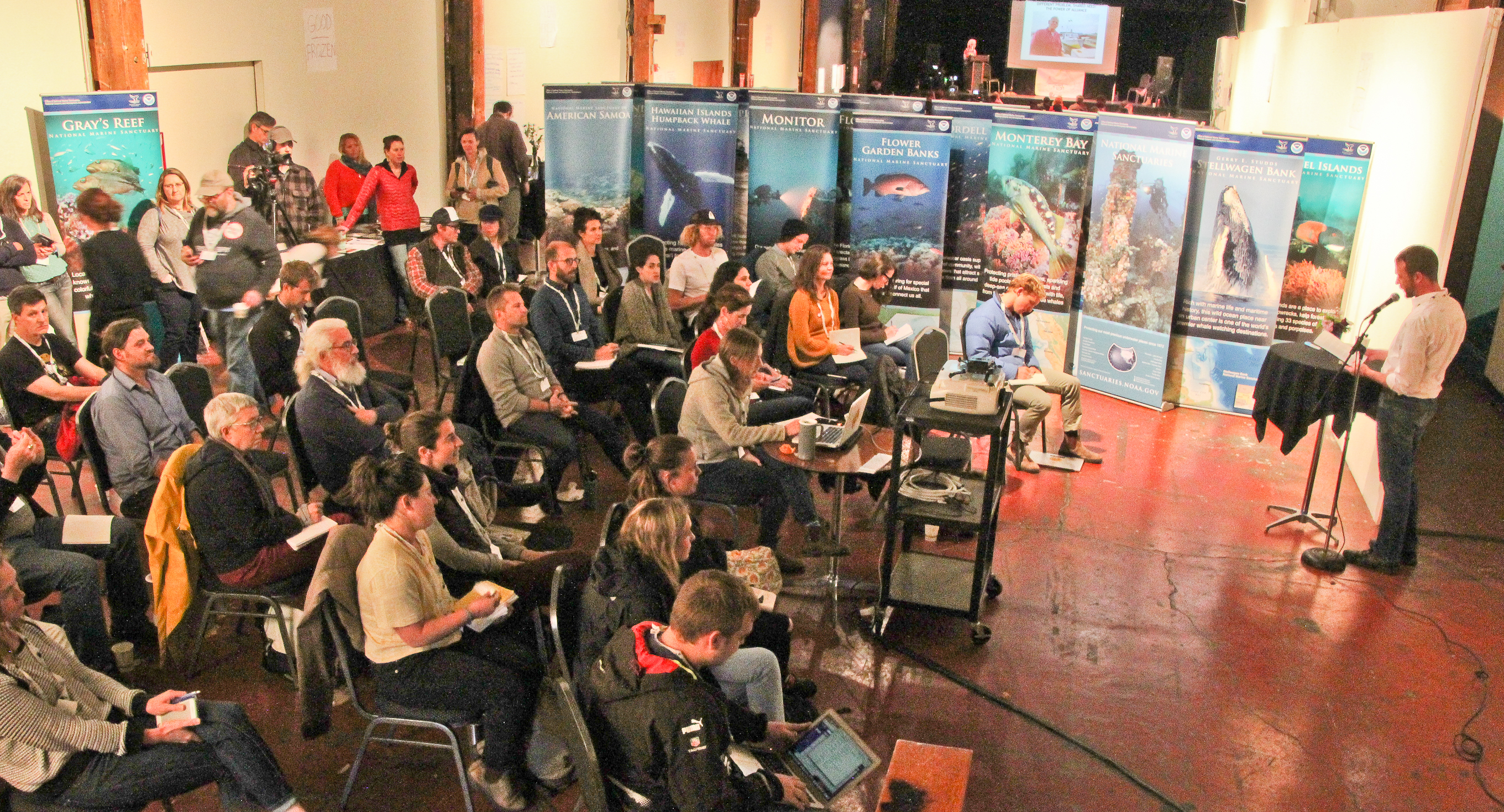
Top photo: Tyson Rasor of Ecotrust emcees the Know Your Fish Pesce Kucha session. Credit: Eric Buchanan.
All Blog Posts

How I Became a Slow Fish

  • February 28, 2018October 20, 2021
  • by Colles Stowell
Share it!
Share

While planning some events for Slow Fish 2018 (April 14-16 in San Francisco), I wondered how I became steeped in Slow Fish and the idea of seafood sustainability.

I’m a journalist by trade. I started at a small town daily that required rushing to the scene of a fire, car accident or a moose running loose downtown to prove to editors we were at the scene. After 12 years of crappy pay, frayed nerves and some lifetime friendships, I jumped ship and spent a decade writing about hardware and software at a PR agency representing companies like IBM and Nokia.

I learned much in both of those jobs: How to uncover the hidden story, and how to tell it in a fashion that makes sense to a broader audience.

I backed into writing about fisheries and seafood issues after re-vamping the website of a San Diego-based sustainable fisheries apparel company in 2011. The more I learned about the complexities of fisheries policy, market dynamics, climate change and ecological impacts of different harvest and aquaculture methods, the more I wanted to know and share. A New Orleans native, I grew up with fresh local seafood all around me.


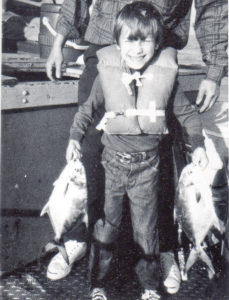
Pampano! It’s what was for dinner.

So in 2015, I started One Fish Foundation, a non-profit whose mission is to bring the sustainable seafood message into communities and classrooms from kindergarten through college.

Some people bristle at “sustainable seafood” as a meaningless cliché. I get it. “Sustainable” has been green-washed to the point of abstraction. And yet, I’ve not come across a term that is as concise and generally widely understood on first reference.

Target audience

The people I’m trying to reach when I’m talking about the perils of industrial finfish aquaculture or climate impacts on different marine species aren’t necessarily those who would react to “sustainable.”

I seek the people who go into their local grocery store and buy frozen, pre-cooked and peeled shrimp without knowing it came from Thailand. I want to talk to those who buy farmed salmon from Chile out of habit because it is cheap, and supposedly “healthy” salmon.

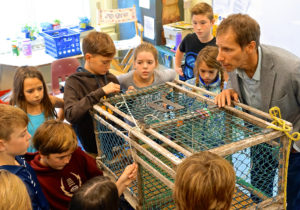
Lobster take-out building. Yes, they walk in and out to feed as they please. It’s just the saps who happen to be in the trap that get caught.

I remember making a poignant connection in one of my first classroom visits. It was a 6th grade geography class I’d visited two weeks before, and we’d talked about why students should care about where, how and by whom their seafood was harvested. We’d rehearsed key questions to ask when they were at a restaurant or grocery store.

At the outset of the follow-up class, one girl said she stopped her mom from ordering shrimp at a restaurant because it was from Vietnam.

I felt like I’d hit a home run.

Breaking the habit

Perhaps that’s at the heart of why I’m so deeply connected with Slow Fish. Most people nod their heads when they learn that 90% of the seafood we eat in this country is imported. But they shudder to learn that a staggering amount of that seafood is coming from countries that pound their products with hormones to make them grow fast or antibiotics to fight disease.

We won’t change that import dynamic without many frank conversations. The Slow Fish mission to ensure everyone has access to good, clean and fair seafood is at the core of these conversations. When I’m talking to a large group of people, I ask them why they think that 90% figure persists. They mention price, policy and complex market dynamics. All of these are key drivers.

Anyone who loves seafood and cares about the resource and the fishermen who harvest it sustainably can be part of the Slow Fish movement. Photo: Kate Masury at Slow Food Nations, Denver, July 2017

But I think another critical factor is habit. Consumer habit drives the equation because people buy what is cheap without checking the provenance of the food they eat. Policy habit also plays a role. There seems to be no urgency to fix policy that allows cheap foreign imports to flood U.S. markets, while a big chunk of domestically harvested seafood goes offshore for astronomical prices.

And the disconnect continues.

The Slow Fish San Francisco mission

Slow Fish aims to change that. While combating inequities in the system that often favor concentrating power and influence in the hands of a few big fishing operations, we also highlight the successes of small-scale operations to bring local, responsibly harvested seafood to their communities and beyond. We encourage people and groups to collaborate on complex issues.

Witness the fierce opposition to the proposed Pebble Mine at the headwaters of the world’s most significant wild salmon run in Bristol Bay, Alaska. But for the persistent collaboration between commercial, recreational and indigenous fishermen, along with advocates and regional politicians, that copper mine would already be up and running. (Check out the We Are Bristol Bay fundraiser dinner at Slow Fish San Francisco on April 15 to eat delicious wild sockeye salmon and talk to the fishermen who may have caught it and learn about why opposing the mine matters.)

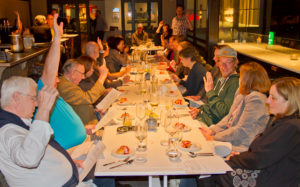
Dinner and conversation give attendees the chance to engage in the seafood issues that matter. A similar scene will take place on April 15 in San Francisco at the We are Bristol Bay Dinner.

This is just one of the topics we’ll cover at Slow Fish San Francisco April 14-16. We’ll talk about the graying of the fleet and innovative ways to attract and support more young fishermen into the profession. We’ll talk about women in fisheries, how to support artisanal fisheries and explore a new mission to reduce domestic seafood imports from 90% to 50% by 2050.

And we’ll have an interactive group discussion on Slow Fish 101, discussing what Slow Fish is and does, what its values are, and how we can grow the network. As the Slow Fish network expands, we fuel collaboration and innovation to solve some of the challenges we face in ensuring good, clean and fair seafood for all.

Come join us! Learn about why you should care, and what you can do to help affect positive change. Here is a link to the Slow Fish website where you’ll find tickets, a schedule and more information about why you’ll want to attend.


Recent Posts

  • Hurricane Ida wreaks havoc on Louisiana’s seafood industry
  • EPA Should Use Clean Water Act To Kill Zombie Mine
  • Slow Fish 2021: Relationship Matters
  • Faith, Façades, and Futility
  • Pebble Permit Paused: Politics at Play

Archives

  • September 2021
  • August 2021
  • April 2021
  • December 2020
  • August 2020
  • June 2020
  • February 2020
  • December 2019
  • November 2019
  • October 2019
  • July 2019
  • May 2019
  • April 2019
  • March 2019
  • January 2019
  • December 2018
  • November 2018
  • June 2018
  • May 2018
  • March 2018
  • February 2018
  • January 2018
  • December 2017
  • November 2017
  • October 2017
  • September 2017
  • August 2017
  • July 2017
  • June 2017
  • May 2017
  • April 2017
  • March 2017
  • January 2017
  • December 2016
  • November 2016
  • October 2016
  • September 2016
  • August 2016
  • July 2016
  • June 2016
  • May 2016
  • April 2016
  • March 2016
  • February 2016
  • January 2016
  • December 2015
  • November 2015
  • October 2015
  • September 2015
  • July 2015
  • June 2015
  • May 2015
  • April 2015
  • March 2015
  • February 2015
  • January 2015
Theme by Colorlib Powered by WordPress