Skip to content
One Fish Foundation
  • Blog
    • Aquaculture
    • Education
    • Environment
    • Policy
    • Wild Harvest
    • Fish Tales
  • About
    • About One Fish
    • About Colles Stowell
  • Education
    • Elementary School
    • Middle School
    • High School
  • KNOW FISH Dinners®
  • Resources
    • One Fish Podcast
    • One Fish Foundation in the news
    • The 7 C’s of Sustainable Seafood
    • Newsletter Archive
    • Recipes
      • Skate with Capers and Butter — Chef Rizwan Ahmed
      • Grandma Davis’ Fish Chowder — Jane Almeida
      • Ginger Garlic Tamari Scallops — Colles Stowell
      • Fish Stock — Evan Mallett
      • Mussels San Remo — Chef Rob Martin
      • Salted Pollock Croquettes – Chef Mark Segal
  • Connect
    • Contact OneFish
    • Social
      • Instagram
      • Facebook
      • Twitter
All Blog Posts

DNA, Fraud and Next-Gen Scientists

  • March 27, 2019October 19, 2021
  • by Colles Stowell
Share it!
Share

Imagine a team of scientists collecting DNA samples to see if the seafood sold at local restaurants and stores is correctly labeled. They go to sushi shops, grocery stores and other retail venues and carefully place tiny samples of the fish in a small vial containing ethanol.

Then they take it to the lab where they will use genetic techniques, including Chelex extractions and polymerase chain reaction (PCR), to analyze the DNA of the sample to see if the snapper they purchased is actually Pacific rockfish. Their work is crucial. It will provide a deeper understanding of the rate at which seafood is mislabeled in area retail stores.

Now imagine these scientists are in high school.

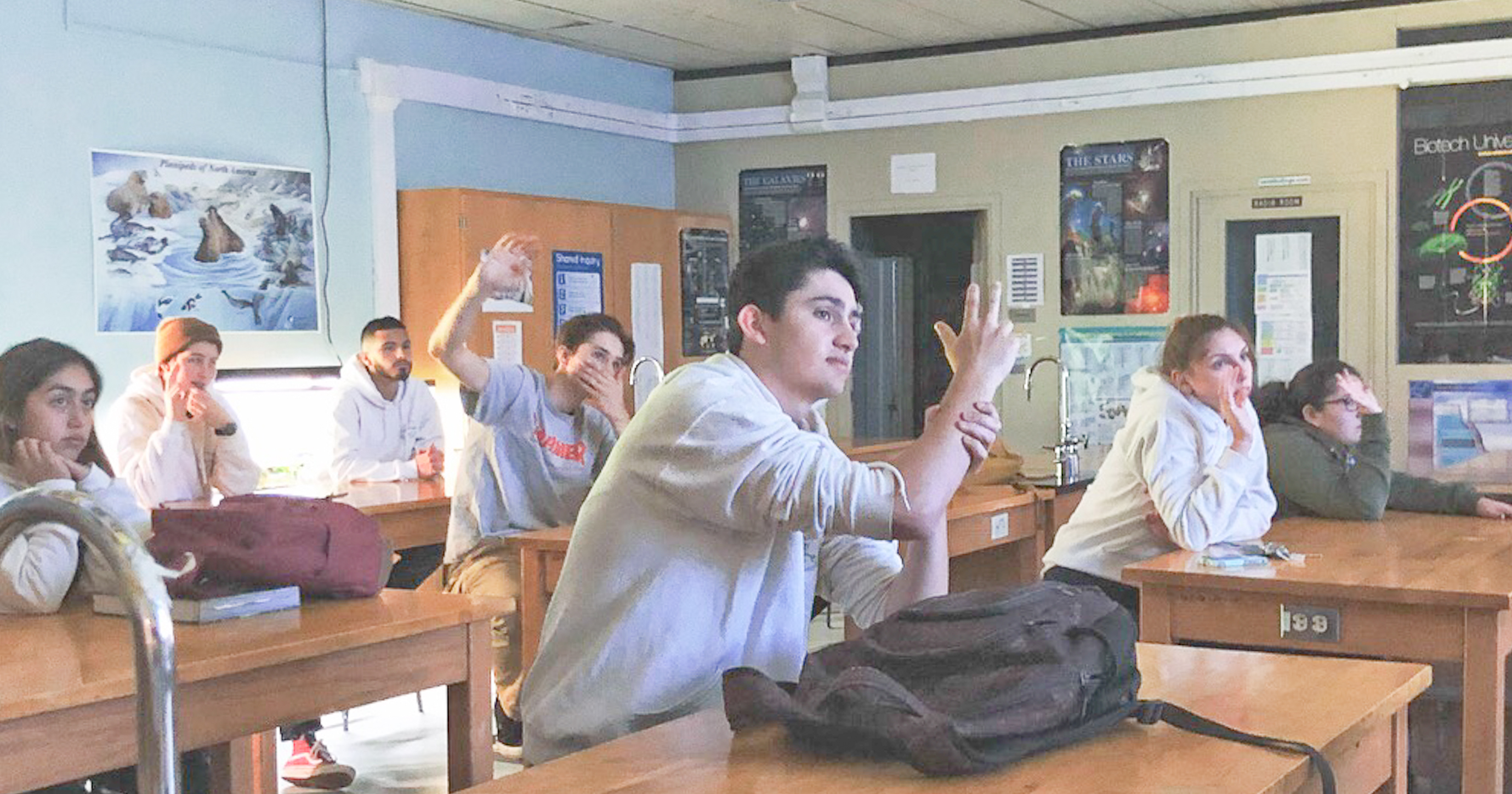
I was inspired by the senior biotech class I visited March 18 at Harbor High School in Santa Cruz, California. I was even more inspired by teacher Nehal Pfeiffer, who developed this project to combine classroom/lab study with real-world challenges. To get students thinking about how the process would work, she started students on testing different foods for genetically modified organisms (GMO).

The students were somewhat surprised to see high GMO content in Cheetos (corn) and veggie burgers (soy). Then the teacher had them break out into groups representing different players in the food industry such as farmers and Monsanto and try to get at the heart of the discussion.

You can guess how this ends up. Lively discussion. Engaged questions. Thoughtful conclusions.

Fraud talk

So I was honored to be invited to speak to these students about fraud in the seafood supply chain. I was there to give them a broader perspective of how and why it happens, the larger dynamic of US and global seafood consumption and what we can do about it.
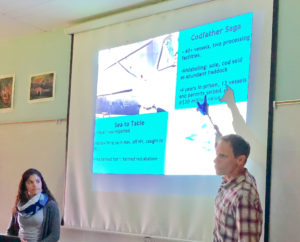
“Codfather” Carlos Rafael and Sea To Table are poster children for what can go wrong with fraud in the supply chain. Arina Favilla (left) helped coordinate the DNA sampling project. Photo credit: Stephanie Webb


After holding up Carlos Rafael and Sea To Table as prime examples of different types of fraud and their impacts on consumer trust, one student raised her hand and asked, “How can they get away with that? Who do we sue?”

Great question that prompted an excellent, interactive discussion. The truth is that current management policy, combined with a clunky mishmash of federal oversight spread over four disparate agencies with a confusing web of priorities and powers enables these types of fraud.

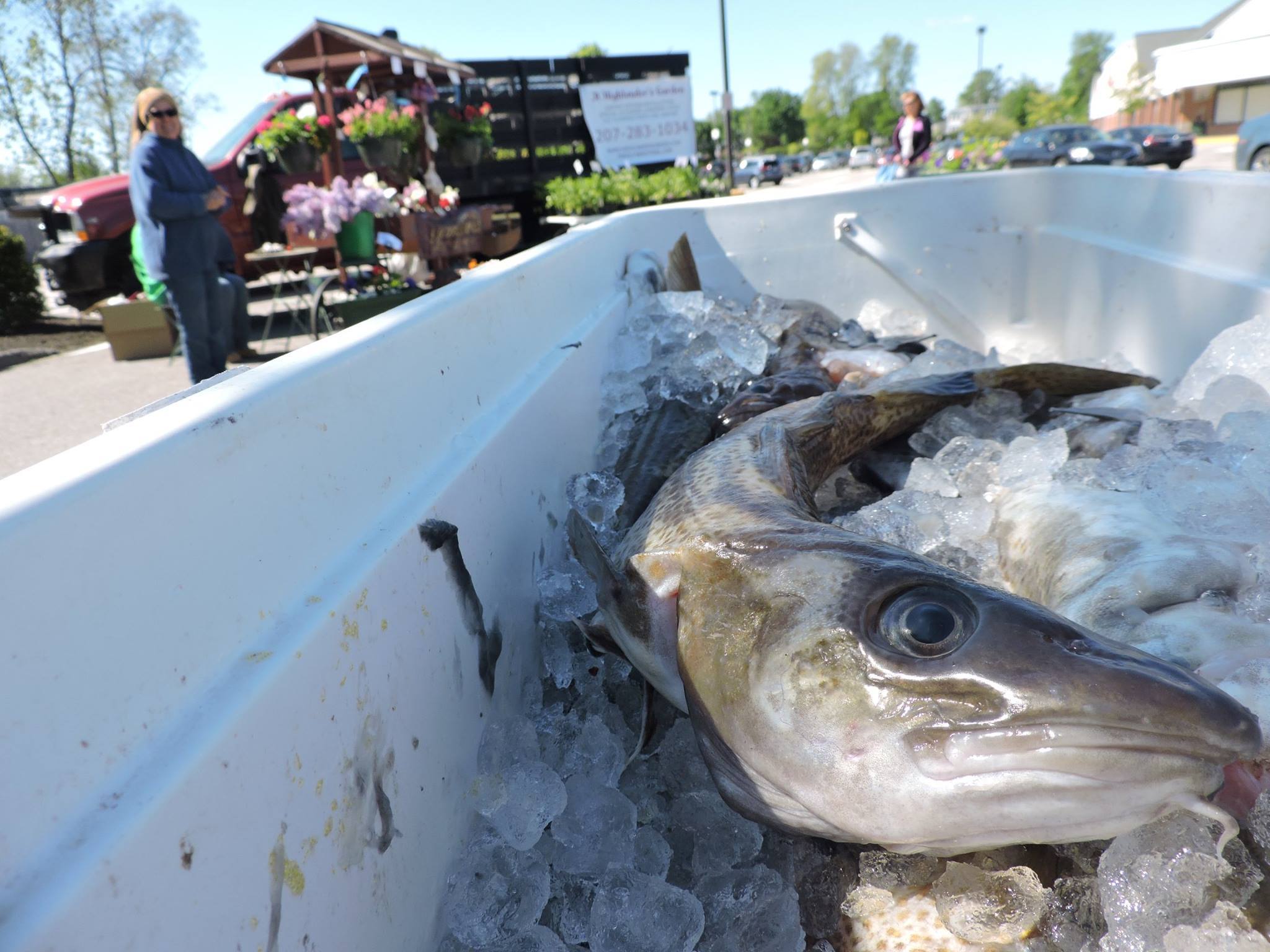
Rafael, the self-styled Codfather, was enabled by the catch share system in the New England groundfish fishery to amass a giant horde of access (permits) to essentially “own” the right to catch more groundfish than anyone else in and around the Gulf of Maine. He then used that power to force out many small-scale fishermen while vertically integrating so that his team of captains could work with his on-shore processing facilities to mask the cod and Dover sole he was catching as abundant (and less subject to expensive quota limits) haddock. He then sold this fish to New York restaurants for bags of cash.

Fortunately, he got caught bragging about the scheme to undercover IRS agents posing as Russian mafia.

I then explained the Sea to Table story as one of co-optation of values. One of the early pioneers of the national boat-to-plate sustainable seafood movement, Sea to Table was outed in an in-depth Associated Press exposé last summer, in which the Brooklyn-based company was alleged to have claimed some of its tuna had been locally harvested off Montauk, NY, when in fact it was caught in North Carolina. Other allegations include selling domestic seafood that may have been linked to international slave trade and offering wild harvested sea urchin that was actually farmed.

Taking initiative

My goal was to give Harbor High students an understanding of why this matters. Beyond the science, which is super cool and something I lament not having access to way back in my time, the understanding of how and why this type of fraud matters hopefully inspires these students to dig in. I’d love to see them discover the level of mislabeling in their communities, put that in context, and do something about it.

I hope they spread the message about why knowing where their (our) seafood comes from matters. I hope they ask questions and share the 7 C’s of Sustainable Seafood with family and friends. And I really hope they get involved in marine science, biotech, climate science or any related field. Seafood fraud is a significant problem and erodes the trust necessary to make community-based fisheries markets work.

And it is just one very complex problem in the domestic and global seafood supply chain.

So I would like to thank Nehal Pfeiffer at Harbor High, and University of California Santa Cruz graduate students Stephanie Webb, Arina Favilla and May Roberts, all of whom coordinated this year’s seafood project with Nehal, for inviting me to speak with the students.

My discussion with these thoughtful, determined students inspired me, giving me hope that we can address these complex issues together.


All Blog Posts

Slow Fish 201: Building Accountability in Seafood

  • January 31, 2019October 19, 2021
  • by Colles Stowell
Share it!
Share

Sometimes it’s tough to see the forest through the trees. Or in this case, effective fisheries enforcement through the quagmire of domestic fishing regulations.

Consider that laws established to ensure responsible harvest, proper trade/market practices and truth in advertising throughout the supply chain are enforced by at least four different federal agencies with different agendas, priorities, authority, funding and resources. Factor in state and local agencies involved in the process, and you’ve got layer upon layer of bureaucracy. And yet, there are still gaps.

This is why we conducted the Slow Fish 201 webinar: Building Accountability in Seafood Weds. Jan. 23. We wanted to shed light on this complexity and the challenges it presents as well as some innovative thinking on how to create markets that organically root out fraud (more on that later).

Alphabet soup: NOAA, FDA, CBP, USDA

In broad terms, the National Oceanic and Atmospheric Administration’s Office of Law Enforcement has jurisdiction over seafood entering the U.S., and can conduct warrantless inspections on vessels as they enter US waters. But it does not have the same broad authority once the seafood has crossed the border. The Department of Homeland Security’s Customs and Border Protection also has some authority to inspect and ensure proper labeling of seafood entering the U.S.

Once seafood has passed beyond US borders, the responsibility to enforce labeling, country of origin, food safety and related laws generally belongs to the Food and Drug Administration and to a lesser degree, the US Department of Agriculture (primarily for farm-raised seafood). There are of course, exceptions to these rules where, for example, NOAA does have some jurisdiction on product within US borders (which makes the situation all the more confusing to those in and outside the supply chain.

With all of these layers of protection, intelligence and resources, you’d think we’d have a good handle on fraud.

And still, less than 1% of the seafood we import in this country, representing some 90% of domestic consumption, is inspected. That doesn’t even account for what happens within the domestic seafood supply chain, such as the co-optation of core trusted values, as happened with the Sea To Table news last summer.

No wonder consumers, fish harvesters, retailers and everyone else in the supply chain is confused and likely frustrated. How do you keep tabs on all of that?

A label’s cautionary tale

Patty Lovera, food and water policy director for Food & Water Watch, has spent decades navigating the domestic food policy system. She began the webinar with a high-level view of the matrix of federal agencies and laws responsible for safeguarding the stream of seafood in the supply chain. In short, the very Jenga-like structure leaves many gaps in enforcement, too much room for interpretation and hence, exploitation, and some confusion among supply chain players about how to honestly comply with the law.

As Patty Lovera mentioned and others echoed, consumer education is critical in the seafood supply chain.

She presented the Certified Organic label as a cautionary tale when laws and values don’t gibe. Established to distinguish farmers who adhere to a set of standards that prohibits hormones, antibiotics, certain pesticides and other additives and destructive practices, the label became a battle cry in the conflict with huge multinational corporations seeking to own the food system.

Millions of dollars, countless hours, political wrangling, lawsuits, arm-twisting, scheming and in some cases, outright capitulation have led to a severely diluted label bearing no resemblance to the original mission. More than three decades of haggling, and products either owned or supported by the likes of industrial agriculture giants Monsanto, Dow Chemical and Tyson foods bear the Certified Organic seal.

The message? Labeling schemes and the values they promote can be co-opted if not rooted in strong values backed by stronger laws.

Congressional commitment

We were fortunate to have Congressman Jared Huffman (D-Calif.) join the conversation. He’s quite busy as he’s just taken the gavel for the powerful House Natural Resources Subcommittee on Water, Oceans and Wildlife, which is responsible for reauthorizing the Magnuson Stevens Act (MSA), otherwise known as the Fish Bill.

“I believe we’ve got to be supporting U.S. fishermen in an increasingly competitive international market.”

Congressman Jared Huffman

In outlining some of his priorities for the subcommittee, he said we need to preserve the health of the oceans, fix some of the environmental rollbacks established by the current administration and do what is necessary to help U.S. fishermen make a good living. “I believe we’ve got to be supporting U.S. fishermen in an increasingly competitive international market,” said Huffman.

He also mentioned “…ways to improve traceability throughout the supply chain. There may be new technology that could be utilized, examples from businesses that are doing some of this work. It’s clear to me that we need to better enforce, maybe even strengthen, existing policies to ensure accurate labeling, increased transparency and consumer trust.”

Marketing, education and leveling the playing field

Noah Oppenheim, executive director of the Pacific Coast Federation of Fishermen’s Associations and the Institute for Fisheries Resources, followed on that theme, saying that fraud has a significant impact on community-based fish harvesters who are trying to abide by the law.

“It’s only fair that the accountability that fishermen have been holding themselves to is rewarded in the marketplace.”

Noah Oppenheim

“Fraud can occur at any place in the market,” Oppenheim said. “It’s a huge problem, and we have to find comprehensive solutions that make it harder for anybody on the end of the chain of custody to mislabel or fraudulently market their product.”

He also spoke of the need to enhance education and marketing to help consumers better understand the value of domestic fisheries. “It’s only fair that the accountability that fishermen have been holding themselves to is rewarded in the marketplace.”

Jes Hathaway, editor in chief of National Fisherman, a national trade publication, echoed Oppenheim’s call for better education and more funding for marketing programs.

She zeroed in on increased funding to boost the infrastructure at our ports to level the playing field between domestic seafood standards and standards for imports. “As long as it’s easier to bring seafood into port in a container than to bring it in your fish holds, we are doing our seafood industry, our fishermen and our citizens a disservice.”

“As long as it’s easier to bring seafood into port in a container than to bring it in your fish holds, we are doing our seafood industry, our fishermen and our citizens a disservice.”

Jes Hathaway

Hathaway also proposed “encouraging region- and fisheries-specific solutions to the problem beyond Magnuson.” One such approach, in her view, would be to provide funding for test programs to track seafood from boat to plate in different regions. While some programs exist, she would like to see more cooperation and investment in such programs, rooted in common values across different supply chains and geographies.

Pier to peer community accountability

One of the webinar’s recurring themes hinged on supplementing better, more comprehensive enforcement of stronger laws with cultural changes within the fishing community. As Hathaway suggested, “Federal legislation is rarely a panacea for every issue in fisheries.” However, one possible path toward ensuring stakeholder buy-in while potentially reducing fraud involves a community accountability model.

Kevin Scribner, owner/operator of Forever Wild Seafood and one of Slow Fish national’s team leaders, described the notion of creating a seafood community accountability program, in effect, a cooperative rooted in a shared set of values. If you agree to uphold the values, you become part of the community that will support those values, identify and address any violation of those values (fraud), and offer support to those who need it.

This type of community accountability promotes a self-policing model that discourages any missteps while promoting the values that engender public trust. Scribner described it as a system in which “We take care of and manage our own.” But it would also be a system that is open to anyone willing to embrace the core values, which may be similar to the Slow Fish values of good, clean, fair, and/or the Local Catch Core Values embracing community-based fishermen.

“…a reliable trusted knowledge-based system of accountability can be developed and maintained by a seafood community that is committed to and guided by core values.”

Kevin Scribner

“We have confidence that with the proliferation of direct and immediate communication tools plus refined methods of traceability and a commitment to transparency, that a reliable trusted knowledge-based system of accountability can be developed and maintained by a seafood community that is committed to and guided by core values,” Scribner said.

A seafood community accountability framework would not seek to rebel against nor replace existing federal, state and local laws in place. Rather, it would operate under the umbrella of existing fisheries laws, augmenting the overall effort to minimize fraud while uplifting the values that support responsibly managed fisheries.

There’s much more to discuss on this topic, including different values and traceability and transparency technologies to support those values, all of which we’ll revisit in the third webinar in the Slow Fish 201 Webinar Series on Feb. 27. Stay tuned for more information regarding time, panelists and questions to be asked and answered.

The webinar closed out with some insightful questions from the audience regarding fair pay for seafood processing employees, economic justice to ensure fair pricing and access to quality seafood for all demographics and ways to measure success in the mission to uphold values and minimize fraud.

We will revisit all of these topics in some form in one of the following webinars.


Resources

If you’d like to watch the video recording of this webinar, follow this link.

If you’d like to watch the video recording of the first webinar, follow this link.

If you’d like to continue the discussion, visit the Local Catch Forum here.

If you’d like to communicate directly with one of the panelists, send an e-mail to colles@onefishfoundation.org.

Want a more in-depth understanding of the federal agencies at work against seafood fraud? Follow these links:

Congressional Research Foundation report on Seafood Fraud

University of Minnesota Food Policy Center Report


All Blog Posts

What It Means To Be Local

  • June 16, 2018October 20, 2021
  • by Colles Stowell
Share it!
Share

Update as of 4:45 p.m. 6-17-18:

Adding a link to the latest response from Sea To Table Founder Sean Dimmin to the AP story. In the response, he goes on the defensive, calling out “numerous misstatements and false allegations,” alluding to shoddy or incomplete reporting. Dimin points out instances where the reporting does seem to leave a bit of detail and process open to question. He also admits Sea To Table could have better communicated with its suppliers (in particular, Gosman’s) and with its customers.

That’s all fine. He’s saying the right things for someone in his predicament. But I don’t think the conversation should end there. Those in the domestic seafood industry, and those who promote it, face a steep challenge. Trust is absolutely essential to trying to convince even small percentages of US consumers to get seafood smart and buy domestically. The original premise behind Sea To Table or any similar minded operation is to promote local seafood, fishermen and waterfronts, often regardless of customer geography. So even if lapses in communication to customers or partners that led to  mislabeling, etc., are the only truly valid mistakes made, we need to be having this conversation. As we’re trying to limit the more than 1.5 million tons of cheap, imported farmed shrimp (among other unsustainably harvested species) flooding markets in this country every year, we need to be honest and forthright.

I do not agree with some who claim the negative attention and likely serious sales hit to Sea To Table is just desserts and the company should go away. I think these communications issues don’t rest with Sea To Table alone in the industry. It’s a tough, and generally laudable mission these companies try to accomplish. But I also don’t think we can make excuses for those whose lapses could set the entire movement back by calling trust in domestic seafood systems into question. We need to have these conversations, find solutions and move forward to turn that 90% domestic import figure around.


It all comes down to trust … and relationships.

This week’s news that one of the rising stars of the locally sourced, sustainable seafood movement may have been selling seafood that wasn’t local, may have been mislabeled and was possibly linked to slave labor in other countries sent shock waves through the industry.

Brooklyn-based Sea To Table has built quite a following with its promise of sustainable, traceable, domestically harvested wild seafood delivered to your doorstep. Clients included celebrity chefs like Rick Bayless national food chains such as Chopt Creative Salad, a bunch of universities like Yale, eateries at the Empire State Building and Chicago O’Hare airport and the home meal kit provider Hello Fresh. It can be found in almost every state.

But an Associated Press report issued earlier this week shed light on some of the issues that can arise with this boat-to-table model and the temptation of entrepreneurs to co-opt, then sweep aside the spirit and intent of terms such as “sustainable seafood” and “local.”

The colossal irony being that they may be knowingly or unknowingly violating the principles they promote, all in an attempt to bring clarity and trust to what Sea to Table Founder Sean Dimin calls “the historically opaque seafood industry.” The Sea To Table business model is to work with some 60 “local” fishermen and fishing operations/distributors to source “traceable” seafood from around the country.

The AP report outlines a lengthy investigation uncovering a slew of allegations that run headlong into the company’s  mission statement. For example, promoting fresh, locally caught yellow fin tuna in the winter off New York, when the migration south occurred several months beforehand and no local fishermen had been out. Or charges that some of the seafood Sea to Table sold was in fact imported and linked to Indonesian operations with a history of labor abuse. Other charges included selling farm-raised seafood despite the wild-only claim.

So yes, this was big news in that it surprised many in the industry. It will also raise lots of questions, piss some people off and confuse the hell out of consumers. What are they supposed to do to be sure they are buying local, sustainable seafood?

Dimin is correct in that the seafood industry is indeed opaque. There are few places that have completely transparent supply chains. Consider that seafood travels more than 5,000 miles on average from boat to plate in this country, often changing hands at least seven times.

The AP report is informative and sad, but it isn’t really broaching any new allegations about industry practices. Check out this exhaustive AP report on slave labor linked to imported seafood. The fact we import 90% of the seafood we eat just means more of the seafood consumed in the U.S. may be linked to brutal labor practices.

But the issue of trust and misrepresentation goes beyond just the seafood industry. The whole concept of questionable food sourcing and marketing practices isn’t new. For example, the Tampa Bay Times ran a series in 2016 about the farm-to-table movement, and how many restaurants and purveyors were glazing over, and sometimes outright lying about the provenance of their food.

What is local?

All of this goes back to a discussion I had this week with Josh Stoll, a research professor at the University of Maine and a co-founder of Local Catch, an organization that promotes community-supported fisheries and other direct-to-consumer operations aimed at bringing people closer to their seafood.

We discussed how the Sea to Table news raises the very valid question of how to define “local” and how to re-build consumer trust. Josh spends much of his time working to streamline and improve community-based fisheries governance for the benefit of fishermen, their communities and consumers.

“The definition of ‘local’ is evolving,” he said. “It’s less about geography and more about relationships.”

He’s exactly right. Just as the terms “organic” and “sustainable” have been stripped of their original intents by overuse and bastardization of meaning, “local” without valid context has become vapid marketing speak. It could mean so many things and nothing at all if there is no valid context to support its use.

Case in point: Sea To Table uses “local” in the first sentence of its mission statement to showcase the quality of the seafood it sources. Now, regardless of whether the company knowingly misled customers, it has much work to do to re-establish credibility. Dimin and his crew can’t just plead that they are still offering “local” seafood. They have to earn back that trust.

How? By going back to the basic mission and working to repair the relationships that the company was built on. Not an easy task.

When I host KNOW FISH Dinners® and invite people to talk to the fish harvester who caught the fish they are eating, I’m creating a direct link to the food producer that more often than not remains a mystery in this “opaque” industry. I tell people I want them to think about their next seafood purchase the same way they think about buying eggs or produce from a farmer at a farmer’s market.

Those are the kinds of relationships that define “local” for me.

Know your seafood, know your provider

So, say you live in Kansas. You probably don’t live next door to a commercial fish harvester. This is where enterprises like Sea To Table have begun to fill the void. The problem arises when customers take the “local” claim on faith without establishing some kind of relationship with the provider. If they get to know the provider, even if the provider is a distributor with direct links to the fish harvester, they get a better sense of the values and ethics used by the provider to promote their product. They should also be able to get the story of the fish harvester as well. Same goes for distributors like Sea To Table. They need to build solid relationships with the fish harvesters and docks providing the seafood to ensure they hew closely to strict guidelines.

That’s how you build trust. The AP story calls the latter point about Sea To Table’s supplier relationships into question.

Sure there are situations when establishing that level of trust isn’t possible. But one of the key points I make with folks is that knowledge really is power. Consumers fare much better ensuring the quality and provenance of the seafood they purchase when they get smart about what is locally and seasonally available, who has the best product, and who is trustworthy. This all takes time.

But it’s worth it.

Owning the relationship

Can things still go awry? Absolutely. Sea To Table is the proof. I’m not sure I believe this was a wholesale willful violation of trust. Read Sean Dimin’s first letter in response to the AP story. As I said, there are no new revelations in the news story about what happens in the industry. And Sea To Table has much work to do to repair its reputation. More so now that Sen. Edward Markey has asked NOAA and the Federal Trade Commission in a letter to investigate the claims against Sea To Table.

The situation underscores the fact there are many gray areas in domestic food systems. But it also reinforces the notion that people should take more ownership of their seafood purchases. Again, it’s all about relationships. We talk about the relationship people have to the seafood they eat during these hosted KNOW FISH Dinners. Their (our) choices have an impact on the resource, the fish harvester and the community. Getting closer to the source, even if that closeness is more relational than geographic, will minimize the risk of being misled.

That 90% import statistic won’t change unless we build, strengthen and multiply these very important relationships.

Check out the Local Catch website as it is a good resource for finding responsibly harvested seafood throughout the country. I believe there are several  operations who are delivering on their promise of responsibly harvested product. You can find some of them listed on the Local Catch website.

Also, stay tuned for more discussion about this topic. It is a fundamental reason for why we should care where, when, how and by whom our seafood was harvested.

If you’d like additional perspective, read Paul Greenberg’s take on the situation here.


Photo courtesy of New England Fishmongers

All Blog Posts

What’s in This Fish?

  • October 3, 2016October 20, 2021
  • by Colles Stowell
Share it!
Share

I was sitting at a quiet sushi bar in Wilmington, N.C. at lunchtime a few years ago when the owner asked me a question that would have a lasting impact.

“Want to try some special tuna? It’s called white tuna.” This was several years ago, and I hadn’t yet delved into the world of seafood awareness. But I knew just enough to be sure there was no such species swimming in the ocean. When I asked exactly what species it was, he said it was escolar. “It’s just as delicious as tuna, but much cheaper.”

My skepticism gave way to curiosity, which gave way to the first lasting impact of gastrointestinal distress. Only later did I find out escolar has proteins that can wreak havoc on your bowels.

Deceptive marketing is nothing new. But I had to ask why someone would take that approach knowing the downstream impact. I wondered how someone could get away with that. Eventually the ramifications would catch up to them, right?

Ecolabeling’s initial steps

This was one of the seminal episodes that started me on my path. A year later, I wrote a blog on eco-labeling, suggesting it was a new tool to provide necessary information to consumers, like where and how the seafood was caught. Then I dug a bit deeper to find that while the practice was great in principal, there were issues.

Some leading labels ran into problems, such as certifying fisheries that weren’t really sustainable (see North Atlantic longline swordfish and its huge bycatch), or allowing fisheries to hire the “third-party” certifiers (the fox minding the henhouse).

I have written and spoken about seafood fraud several times since. It is a key classroom topic exemplifying the need to be smarter about the seafood we eat. We talk about the implications when someone substitutes cheaper farmed salmon for wild-caught at a restaurant or lower-priced pollock for cod at a seafood store.

iuu_coastguard
Illegal, unreported and unregulated fishing clouds the supply chain.

Trailing the pack

One outcome from the most recent seafood fraud report by ocean conservancy Oceana is that while the U.S. is a leader in stock management and preservation, its oversight of the supply chain compared to the European Union and other countries is wanting.

This is ironic. The current administration has made combating illegal, unreported and unregulated (IUU) fishing a priority. Global IUU – which covers everything from human trafficking to mislabeling – costs the seafood industry up to $23 billion a year, according to the United Nations Food and Agriculture Organization. There is a new rule under consideration in the U.S. that would require labeling on 13 key species before they are imported into the country.

But the current administration also embraces the Trans Pacific Partnership, a trade deal that would essentially encourage larger exports of U.S. caught seafood and larger imports of cheaper, less regulated seafood. Many in the U.S. industry fear such a deal would flood the market with lower quality seafood that may not even be correctly labeled. Worse, language in the deal would render the U.S. virtually helpless to prevent that product from entering the market.

The Oceana report cites the European Union’s labeling standard as a potential role model for the U.S. According to Kimberly Warner, one of the report’s authors, the EU has reduced its seafood mislabeling to about 9% of the seafood sold there (excluding restaurants). This compares with 19% for the global average and a whopping 28% for the U.S.dna-sampling-2

“When we found fraud at 18% at the retail level in stores in Boston (in 2014), people were cheering,” said Warner. “But people in the EU were aghast. The question becomes, what level of mislabeling are you comfortable with?”

Indeed.

I’ve said before that increased transparency and labeling standards will only work if US fishermen have a say in developing the process and they aren’t completely saddled with the cost. Otherwise, any such proposal will fail before it gets started.

The National Fisheries Institute says better enforcement of the laws on the books, not increased labeling standards is the answer. But Warner counters that domestic laws leave a lot of room for the type of mislabeling found in the report. “You need strong laws to enforce,” she said. Vague or voluntary labeling (as has been discussed with genetically engineered salmon) don’t help.

Consumers want more info

Oceana released a poll yesterday that says 83% of Americans support new traceability requirements, including proper labeling of the seafood and where and how it was caught (or farmed). Of the 1,000 respondents, 76% said they would pay more to know their seafood was caught legally and labeled correctly and honestly.

Consumer desire is there. But we need the political will to make it happen. The EU program relies mostly on government subsidies as well as some infrastructure costs born by seafood processors. The EU seafood processors and traders association said in 2011 that implementing the new rules governing labeling and other IUU measures did not have long-term impacts on their businesses. And several links in the supply chain now view labeling as a competitive advantage.

catfish-mislabel
Imported catfish marked as sole. This shipment was seized before entering U.S. markets.

A handful of small operations have cropped up in the U.S. aimed at digitizing supply chain records to elevate transparency. That’s a start. But, we need to bring all stakeholders to the table and make transparency and adequate labeling happen on a national scale. Otherwise, it’s just a process of randomly putting out small fires.

Our best defense is information. A national, verifiable schema for tracing the seafood from boat to retailer, and developed with fishermen’s input, would be helpful and widely embraced by consumers.


Photo credits: NOAA

All Blog Posts

Presidential Task Force Sets Sights on Illegal Fishing, Seafood…

  • March 20, 2015October 20, 2021
  • by Colles Stowell
Share it!
Share

This week the Presidential Task Force on Illegal, Unreported and Unregulated (IUU) Fishing and Seafood Fraud released its action plan to help ensure fair seafood markets around the world. The plan follows close on the heels of the report NOAA issued last month identifying the challenges and objectives in combating IUU.

Read more “Presidential Task Force Sets Sights on Illegal Fishing, Seafood Fraud” →

Recent Posts

  • Hurricane Ida wreaks havoc on Louisiana’s seafood industry
  • EPA Should Use Clean Water Act To Kill Zombie Mine
  • Slow Fish 2021: Relationship Matters
  • Faith, Façades, and Futility
  • Pebble Permit Paused: Politics at Play

Archives

  • September 2021
  • August 2021
  • April 2021
  • December 2020
  • August 2020
  • June 2020
  • February 2020
  • December 2019
  • November 2019
  • October 2019
  • July 2019
  • May 2019
  • April 2019
  • March 2019
  • January 2019
  • December 2018
  • November 2018
  • June 2018
  • May 2018
  • March 2018
  • February 2018
  • January 2018
  • December 2017
  • November 2017
  • October 2017
  • September 2017
  • August 2017
  • July 2017
  • June 2017
  • May 2017
  • April 2017
  • March 2017
  • January 2017
  • December 2016
  • November 2016
  • October 2016
  • September 2016
  • August 2016
  • July 2016
  • June 2016
  • May 2016
  • April 2016
  • March 2016
  • February 2016
  • January 2016
  • December 2015
  • November 2015
  • October 2015
  • September 2015
  • July 2015
  • June 2015
  • May 2015
  • April 2015
  • March 2015
  • February 2015
  • January 2015
Theme by Colorlib Powered by WordPress