Skip to content
One Fish Foundation
  • Blog
    • Aquaculture
    • Education
    • Environment
    • Policy
    • Wild Harvest
    • Fish Tales
  • About
    • About One Fish
    • About Colles Stowell
  • Education
    • Elementary School
    • Middle School
    • High School
  • KNOW FISH Dinners®
  • Resources
    • One Fish Podcast
    • One Fish Foundation in the news
    • The 7 C’s of Sustainable Seafood
    • Newsletter Archive
    • Recipes
      • Skate with Capers and Butter — Chef Rizwan Ahmed
      • Grandma Davis’ Fish Chowder — Jane Almeida
      • Ginger Garlic Tamari Scallops — Colles Stowell
      • Fish Stock — Evan Mallett
      • Mussels San Remo — Chef Rob Martin
      • Salted Pollock Croquettes – Chef Mark Segal
  • Connect
    • Contact OneFish
    • Social
      • Instagram
      • Facebook
      • Twitter
All Blog Posts

Swimming On: the Slow Fish USA gathering from 2016…

  • February 8, 2020October 19, 2021
  • by Colles Stowell
Share it!
Share

The inaugural Slow Fish event in North America took place in New Orleans in 2016. It was an enormous first step, fraught with last-minute adaptation forced by a 500-year flood event in a city that is rather accustomed to flooding. Who knew we’d be eating shrimp and oysters in a warehouse full of floats from perhaps the most raunchy Mardi Gras parade in the city? Nothing says seafood like having every part of outsized human anatomy in lewd, brightly decorated papier-mâché looming over you.

But we made it work! Everyone adapted to the unforeseen circumstances and we had great conversations about consolidation, youth in fisheries and overall messaging and values. We capped Slow Fish 2016 off with an incredible Cajun hog harvest celebration called a “boucherie” across the Mississippi River.

We gathered in San Francisco for Slow Fish 2018 following an intense, but amazingly productive four-month planning period that was delayed by the threat and lingering angst of devastating forest fires in the region. But for the commitment, creativity, and sheer will of everyone involved, Slow Fish San Francisco wouldn’t have happened. That gathering made space for fabulous networking, collective problem-solving, and energy dedicated to shared values for our seas and their stewards.

The San Francisco event took place in a cool warehouse (no sex floats) that we adapted to suit large group discussions, as well as smaller World Café roundtables and PechaKucha (or “Peche” Kucha) mini slide presentations/stories. We also had a Seafood Throwdown, off-site oyster, dinner, and movie events..

Fast forward two years and that energy is still strong. This year, Slow Fish 2020 will go down on March 19-22 in Seacoast N.H., with a Working Waterfront Tour, kick-off dinner, Sunday Fishtival and the programming of a two-day conference at the University of New Hampshire Peter T. Paul College of Business and Economics in Durham.
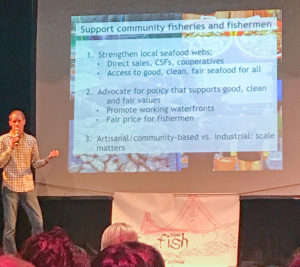
Setting the tone with the Slow Fish 101 presentation in San Franciso. Photo credit: Lance Nacio.

Circling back to Slow Fish USA origins on campus

We chose New England for 2020 to continue varying the geography of these events and give fish harvesters, fishmongers, and others from the region a chance to engage in these conversations.

New Hampshire is important because students at UNH were among the first in the country to embrace Slow Fish values back in 2013. At the time, they encouraged UNH Dining Services to sign a pact to source responsibly harvested seafood and  adhere to Slow Fish values. That pact is still in effect today. Bringing the conference to New Hampshire this year affirms how much the movement has grown in the years since and the importance of youth in the movement.

Rallying young people is especially important in New England as fish harvesters here are fighting against restrictive policies and well-funded efforts to consolidate the industry. This monopolization has created impossibly high barriers of entry for young fishermen and led to an ever-increasing age of the average fisherman, often called the “graying of the fleet.”

Moving the event around to key fisheries regions helps democratize the impact. Slow Fish continues to aim to create an open table for meaningful thinking around the core values of providing good, clean, and fair seafood to all.

At a time when equity, inclusion, and justice issues are increasingly visible, Slow Fish aims to ensure that small-scale and indigenous fish harvesters have fair access to the resource in a market too often dominated by billion-dollar corporations that only care about profits.
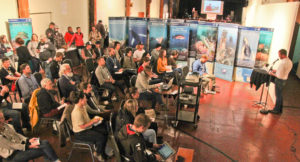
 

Sharing ideas, asking questions, expanding network connections, and collaborating on meaningful change. That’s the Slow Fish formula that will be at work at Slow Fish 2020 in New Hampshire. Photo credit: Eric Buchanan.

Diving deep

We’re going to talk about these and other critical issues in New Hampshire this year. For the first time, we’re going to merge the Slow Fish North America gathering and a regional Slow Food Northeast event, allowing members of both groups to get a better sense of how each group is working to shorten the distance from food source to plate.

Here is a sneak peek of what’s on tap for Slow Fish 2020, and why you should consider joining the conversation:

  • Deep Dive discussions on issues like aquaculture, climate change, and the Blue Commons;
  • Interactive World Café roundtables to explore challenges and opportunities facing youth, women, and indigenous fish harvesters; alternative seafood business leaders; and the Slow Fish Ark of Taste;
  • “Pesce” Kucha storytelling with slides;
  • Delicious food from all over the continent;
  • Tour of the seacoast N.H. working waterfront followed by an opening night feast;
  • Seacoast Restaurant Fish Week from Feb. 13 through Feb. 21 (restaurants in Seacoast NH and Maine provide a special Slow Fish menu and donate a portion of proceeds to Slow Fish);
  • Closing dinner event with music at the Paul College at UNH;
  • Fishtival on Sunday at Throwback Brewery (more food, music, beer, and hands-on demonstrations);
  • Several hands-on demonstrations of nose-to-tail, oyster shucking, etc.
  • A chance to dig into issues, collaborate, and kick it with old and new friends.

I can tell you first-hand that we are planning this year’s gathering with as much, if not more energy and drive as with NOLA and San Fran, and hopefully without any major and unexpected meteorological or other events.

So come join the conversation, expand your network, make new friends, hug old friends, eat fabulous food, and see what the New England Slow Fish and Slow Food communities have to offer!


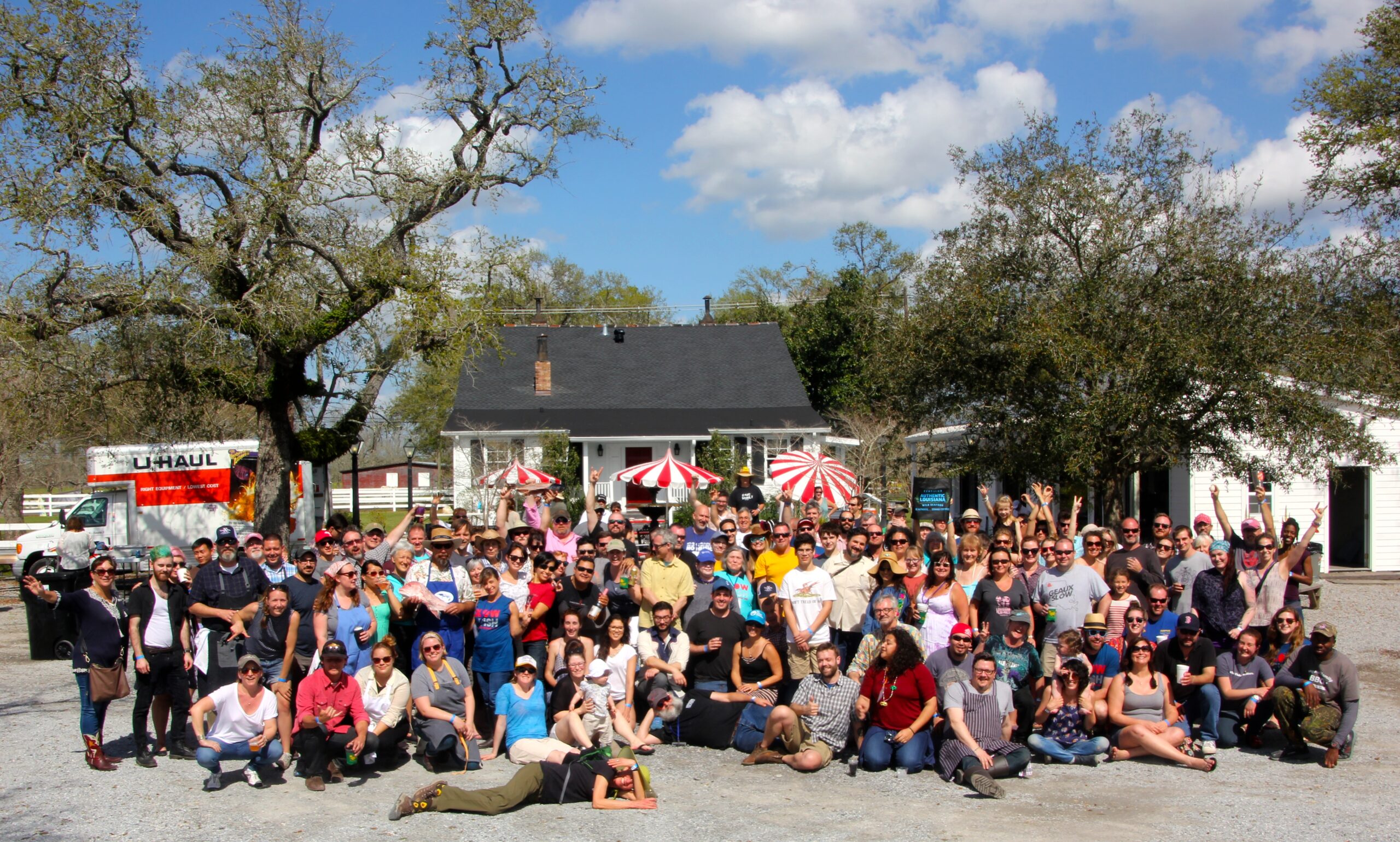
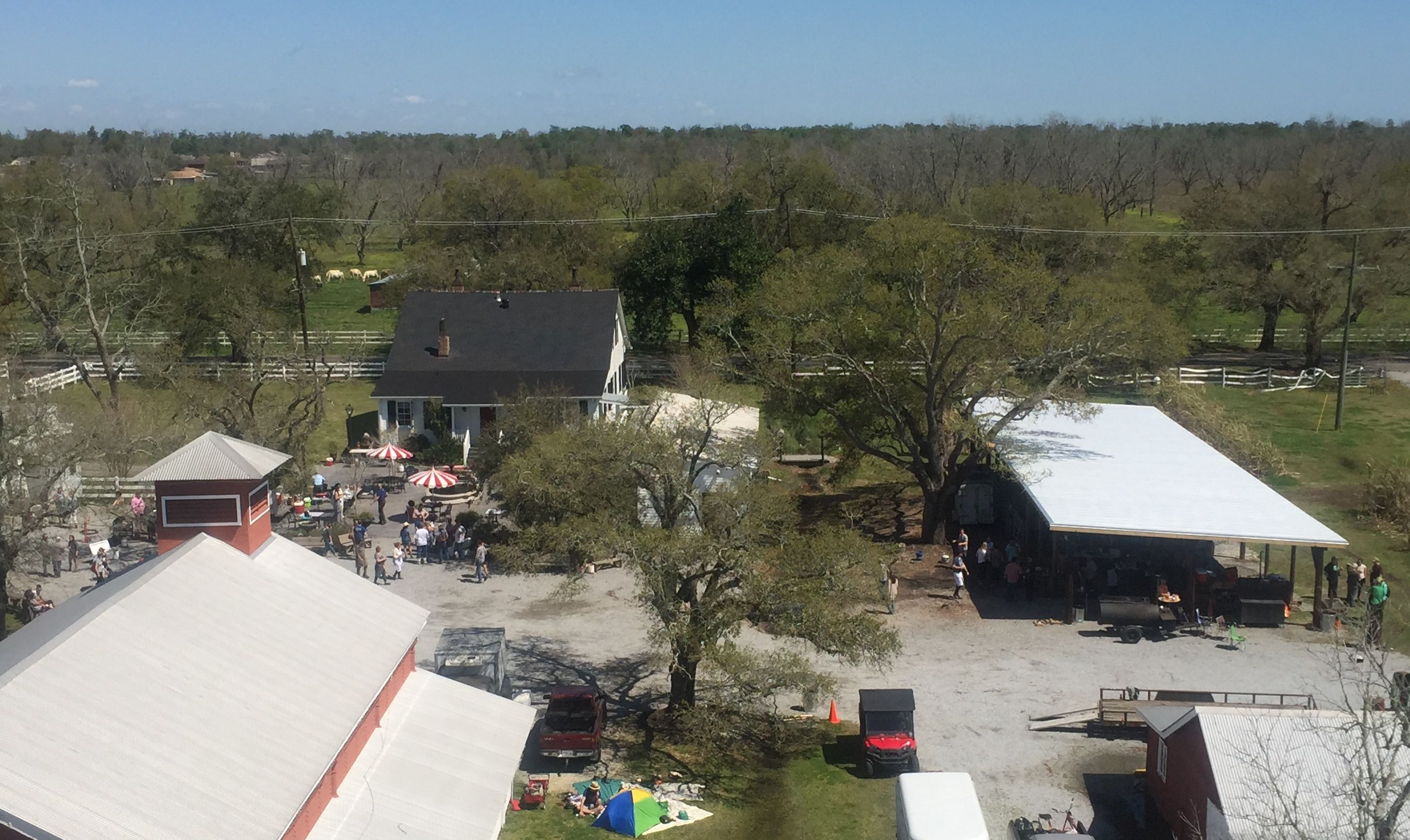
Top photo: Slow Fish 2016 in New Orleans, during the boucherie at Docville Farm. Credit: Eric Buchanan.
All Blog Posts

Slow Fish Rises to the Challenge

  • March 22, 2016October 20, 2021
  • by Colles Stowell
Share it!
Share

To say Slow Fish 2016 (March 10-13) in New Orleans was a success is an understatement. Overcoming last-minute weather challenges that shut down the planned venue, moving several thousand pounds of food around and getting people to deliver and attend informative, compelling presentations at three different, distinct venues was a stroke of genius from the event organizers and their motivated team. Here is the blog I wrote about the experience. 

It’s a surreal, if a bit funny experience to eat oysters surrounded by larger-than-life representations of male and female anatomy. Kind of a Harold-Robbins-meets-Jules-Verne aura.

How a bunch of fishermen, chefs, scientists and seafood activists from around the world ended up in a dilapidated warehouse surrounded by lewdly, yet very craftily decorated Mardi Gras floats for the Krewe du Vieux (pronounced “croo du voo” and which pulls no punches lambasting anything/anyone political or sexual) is a study in adaptation.

We had gathered for the Slow Fish 2016 event in New Orleans to discuss important fisheries issues, make connections and celebrate locally caught, fresh and delicious seafood. Naturally, intense Louisiana spring weather turned carefully planned scheduling on its head with impending violent thunderstorms and potential flooding. Not one hour into the 150-person event at the Old US Mint, the state called for emergency evacuations and closed our base of operations for the next three days.

Krewe du Vieux warehouse, where Slow Fish 2016 attendees got an eyeful in New Orleans.
Krewe du Vieux warehouse, where Slow Fish 2016 attendees got an eyeful.

So instead of celebrating the gathering on the grounds of a historic building, we found ourselves feasting on pompano and sea bass in the shadows of papier-mâché sex. Ironically, that kind of mandatory last-minute logistical two-step closely parallels the rapid fire challenges many family fishermen face, constantly having to adapt to ever-shifting polices, seafood markets, climate, etc. beyond their control. We banned together at Slow Fish to pull it off, perhaps serving as proof that collaboration and flexibility are critical to addressing broader policy and market challenges ahead. That was the first of several truly unique experiences at Slow Fish 2016.

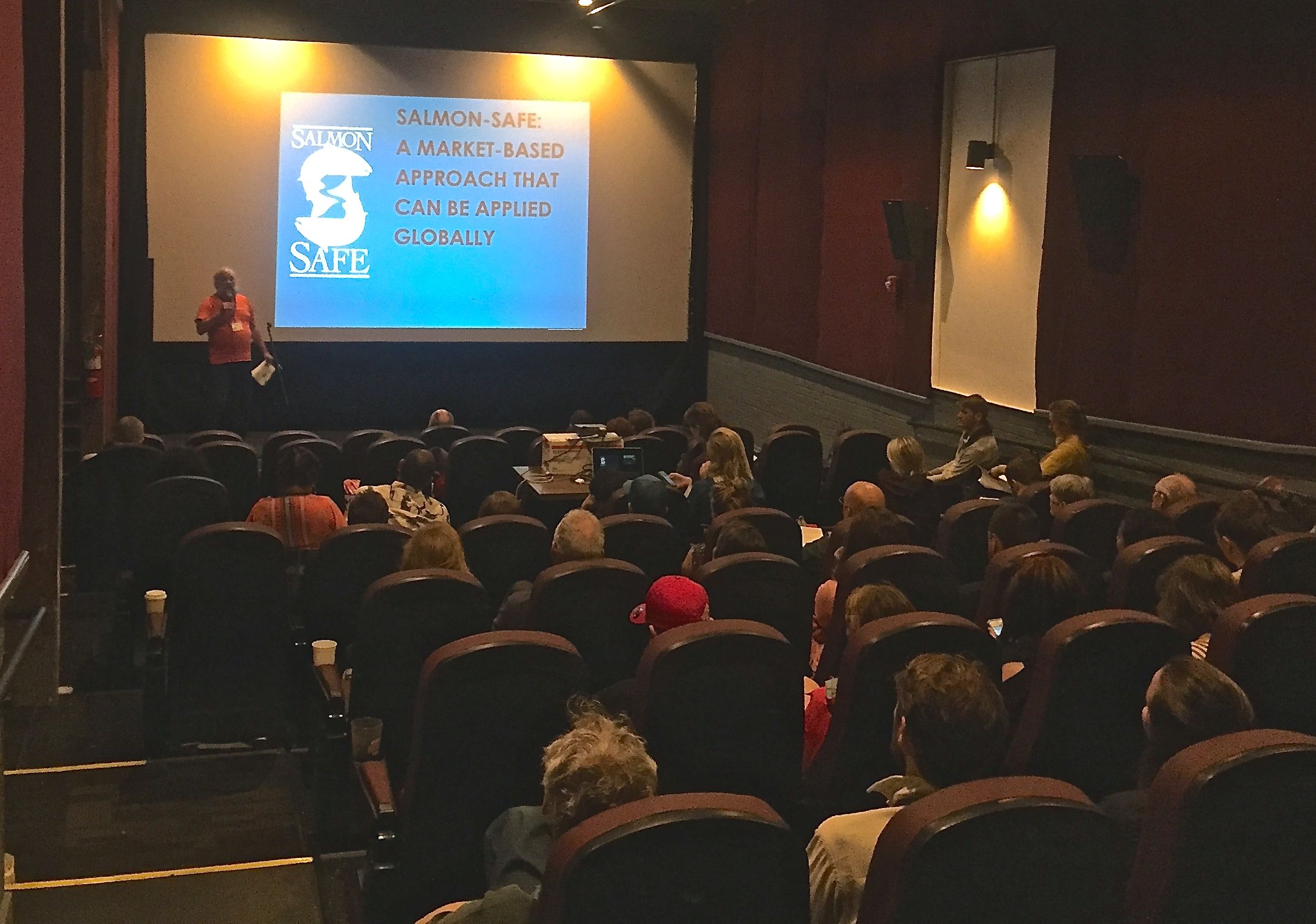
The next was the following day at the quirky Broad Theater in Mid City, a neighborhood at the heart of New Orleans. There, fishermen ranging from Alaska to California, and from Louisiana to Maine shared stories about their watersheds, community-based fisheries traditions and the management policies changing the landscape of how, when and where they can fish.Kevin Scribner discusses Salmon Safe's success.

Kevin Scribner highlights Salmon Safe's success.
Kevin Scribner highlights Salmon Safe’s success.

They discussed challenges such as privatization and resource allocation, biodiversity, policy impacts and ways to protect watersheds and fishing community heritage. Former Alaskan salmon fishermen and current Slow Fish board member Kevin Scribner described how the Salmon Safe program has worked with farmers, businesses and urban planners to reduce downstream impacts on native salmon habitat. This means the owners or tenants of more than 95,000 acres of agricultural and urban land (including the Nike campus, and several major farms) in three states and British Columbia have committed to reducing harmful nutrient and pollutant discharge into precious streams.

Kindra Arnesen spoke passionately about the challenges facing fishing families on the Mississippi River delta. She described her Herculean efforts to unite struggling fishermen after the BP oil disaster, first to get jobs helping with cleanup, then to challenge BP, the EPA, NOAA and other local, state and federal agencies on their methods of cleanup, cover-up and compensation. It was yet another story of adaptation and survival.

Happy Recirculating Farms Coalition catfish swimming in water filtered through lava rocks holding the lettuce in the background.

Other presenters discussed creating direct channels between fishermen, retailers and chefs to bring fresh seafood inland from the coast. Marianne Cufone, executive director of Recirculating Farms Coalition, showed the audience how a motivated team was able to start a clean, productive aquaponics operation right in a Central City neighborhood. Restaurants have already expressed interest in the fresh lettuce and catfish growing in recirculated water.

Set to the backdrop of compelling images, each story brought to life some of the common struggles many fishermen and coastal communities face, and some of the successful solutions to those challenges.

Alligator, shrimp and grits, down and dirty in New Orleans.

The adaptation of the Slow Fish 2016 continued Saturday at the Dryades Market, whose previous life had been a public school in Central City, another neighborhood steeped in diversity. Groups of concerned fishermen spoke about adequately addressing quotas and fairness issues and ways to promote local fisheries management. One common theme that emerged, perhaps prophetically, was the issue of adaptation.

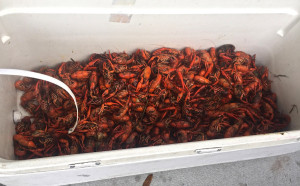
And of course crawfish. Deeper down, dirtier and delicious!
And of course, crawfish. Deeper down, dirtier and delicious!

Louisiana fishermen are constantly forced to adapt to changing ecosystem habitats, based on the chilling statistic that the coastline loses a football field of marsh every 45 minutes. Okanagan tribes have to adapt to the ebb and flow of wild sockeye migrating several hundred miles into incredibly diverse watersheds straddling the border between British Columbia and Washington state. Maine fishermen have to navigate the fluctuations in their fisheries due to the rapidly warming Gulf of Maine and the seemingly arbitrary nature of regional management.

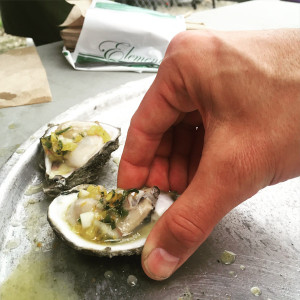
Two of about three hundred dozen oysters brought to the event.

Perhaps it was divinely appropriate that Mother Nature decided to throw a curveball and forced organizers to scramble. Because it is that instinct to go into auto pilot in the face of adversity and figure out a solution that determines success. For a Pacific salmon, that instinct to swim several hundred miles to its natal waters to spawn, die and give sustenance to its young is pure survival. For fishermen, it’s the ability to chase different available species when Nature or policy forces their hands. It’s in banding together to work toward a common cause to bring communities closer to their seafood.

Through all of the rain and high wind and last-minute venue changes, the shuttling of food from here to there…and back again, the audio-visual challenges, the taxis, carpools and long walks through a noisy French Quarter, Slow Fish 2016 attendees made connections. They found common ground. They discussed ways to organize, set goals and pursue them. They made friends.

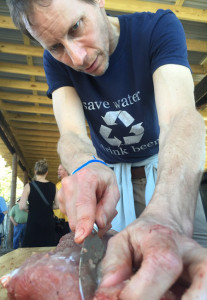
I learned some skills from Chef Zack Engel (chef de cuisine at Shaya Restaurant) and pit master Howard Conyers.

Perhaps the skies dawned on a warm,bluebird day on the tail end of the gathering at Docville Farm in Violet, La., a boucherie and seafood feast, as a reckoning of sorts. Adapt. Persevere. Hope. Something good will come out of it.

The memory of the food, the conversation, the energy and camaraderie will stay with all of us for a long time.


All Blog Posts

Going Home to Nature

  • December 1, 2015October 20, 2021
  • by Colles Stowell
Share it!
Share

I have many things to be thankful for, and I reflect on them with more focus this time of year: my loving wife, my imaginative daughter, close family and friends, a roof over our heads and clean water, to be sure.

A strong bond with Nature is also on that list. Countless hours and days on the water or in the woods with my dad taught me to drink in the sights and sounds of fish swimming, birds flying, frogs croaking, deer grazing, bugs buzzing, etc. I’ve learned to accept what Nature has to offer.

I was reminded of this earlier this month when I flew with my cousin from New England back home to New Orleans to fish for bull red drum in the Mississippi River delta. Since graduating from high school in 1984, I’ve done very little fishing in the waters where I grew up. My dad and I used to fish bayous around Lake Borgne and Lake Pontchartrain, and sometimes we drove down to Venice or Empire to go deep sea fishing.

The excitement was palpable as we left the dock in those days, knowing that in those waters in and around the delta, whether near oil rigs or out in the open, we could catch a wide variety of species. Grouper, snapper, jacks, king mackerel, pompano, sharks. You name it. The Gulf of Mexico had that big of a bounty.

I wondered how things had changed a couple of weeks ago as we stepped onto the Capt. Travis Holeman’s boat heading out of Venice. Several hurricanes, including Katrina, the oil spill and countless other factors had conspired to change the delta dramatically since I’d last been there.

I’d read that the coast is losing up to 30 square miles a year of shoreline, and the problem could get worse as sea levels rise. With 10,000 miles or more of canals dug out of the delta, protective freshwater marshes are being overrun with saltwater that kills the plants and weakens the soil.

Regardless, the biomass in Southeast La. is significant. Even on windy overcast days with fronts that drop the temperature by 10 degrees, marine and avian life seems to bubble over. Multiple shrimp and pogie boats worked offshore, bringing in tons of seafood. The pogies jumped out of the water, often creating enough of a disturbance to entice 20 lb. redfish off the bottom. Pelicans slammed into the water and came up gulping oily mouthfuls of protein. The terns and gulls also worked the water, especially marauding the trail of bait and shrimp left by the shrimp boats.

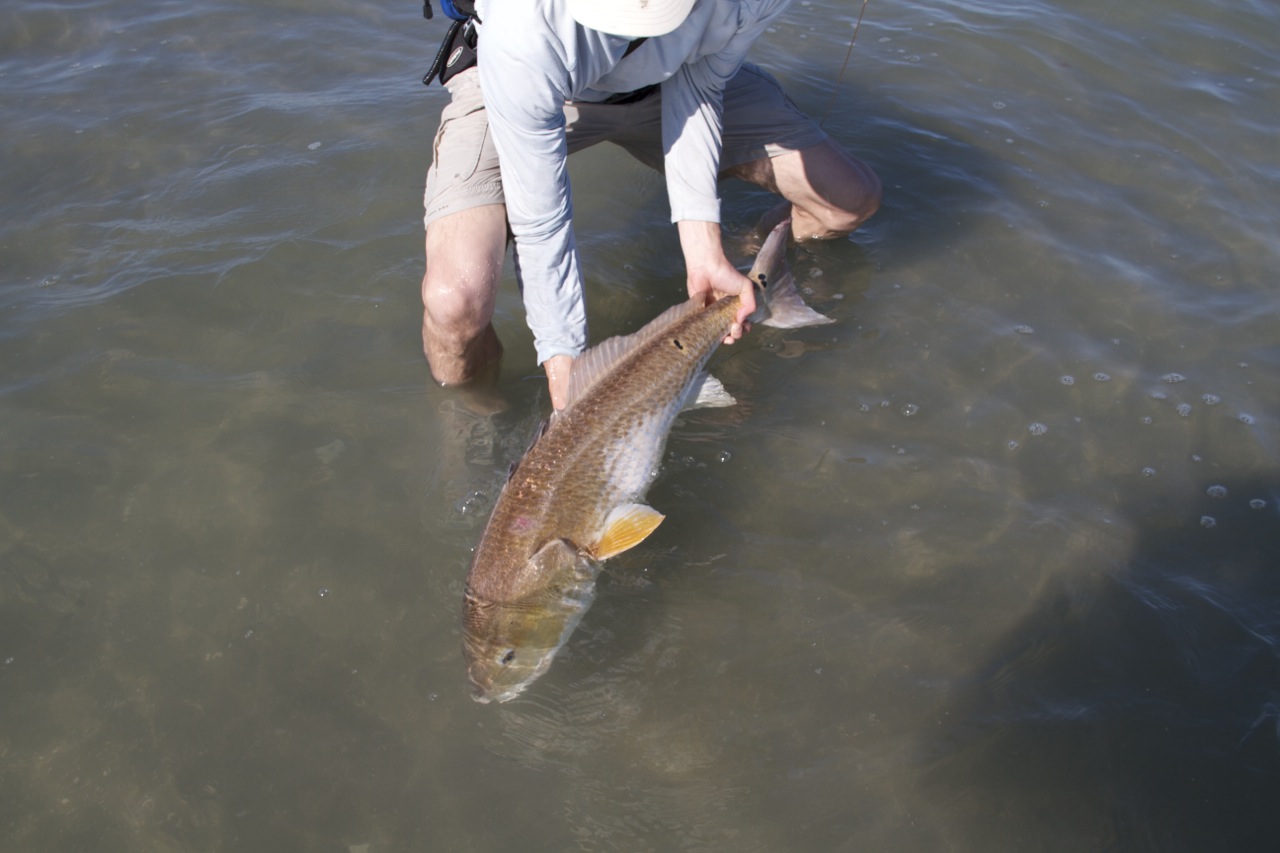
We caught and released several fish ranging from 12 to 30 lbs. We saw sharks and dolphins work the shoreline as giant jacks darted in close to shore to eat, then disappear. We saw how quickly conditions could change out there, based on wind, atmospheric pressure and water clarity spilling out the river, particularly after heavy rains in states up north.Venice grimace

The bottom changes constantly, and even “current” NOAA maps are out of date because lagoons, islands, ponds and other geographic features disappear daily.

That the delta has changed significantly since the last time I was there was evident. That it will continue to change as significantly remains to be seen. But indications are that the coastline will continue to pull back as the ocean gobbles up the fragile, yet protective marshes that are critical nurseries for a variety of important species. The delta is sinking as some scientists predict the Gulf of Mexico could rise about 4.5 feet by the end of the century.

I can only hope the rich biomass can adapt with the coming changes … because it is a special place, unique in its diversity and scope, that holds a strong connection to my past, and the love I’ve always had for Nature.

Recent Posts

  • Hurricane Ida wreaks havoc on Louisiana’s seafood industry
  • EPA Should Use Clean Water Act To Kill Zombie Mine
  • Slow Fish 2021: Relationship Matters
  • Faith, Façades, and Futility
  • Pebble Permit Paused: Politics at Play

Archives

  • September 2021
  • August 2021
  • April 2021
  • December 2020
  • August 2020
  • June 2020
  • February 2020
  • December 2019
  • November 2019
  • October 2019
  • July 2019
  • May 2019
  • April 2019
  • March 2019
  • January 2019
  • December 2018
  • November 2018
  • June 2018
  • May 2018
  • March 2018
  • February 2018
  • January 2018
  • December 2017
  • November 2017
  • October 2017
  • September 2017
  • August 2017
  • July 2017
  • June 2017
  • May 2017
  • April 2017
  • March 2017
  • January 2017
  • December 2016
  • November 2016
  • October 2016
  • September 2016
  • August 2016
  • July 2016
  • June 2016
  • May 2016
  • April 2016
  • March 2016
  • February 2016
  • January 2016
  • December 2015
  • November 2015
  • October 2015
  • September 2015
  • July 2015
  • June 2015
  • May 2015
  • April 2015
  • March 2015
  • February 2015
  • January 2015
Theme by Colorlib Powered by WordPress